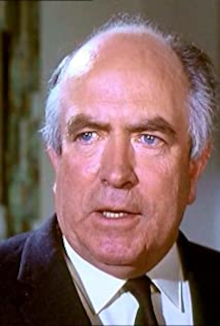
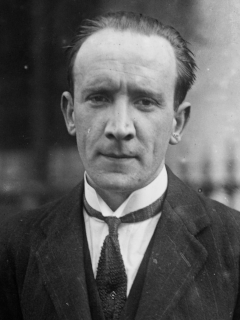
Redmond is one of four children born to cabinet-maker Thomas and Eileen Redmond. Educated at the Christian Brothers schools in Dublin, he later attends University College Dublin and initially reads medicine before moving into drama.
While Director of the Dramatic Society Redmond meets and marries the society’s secretary, Barbara MacDonagh, sister of Donagh MacDonagh and daughter of 1916 Easter Rising leader Thomas MacDonagh and Muriel Gifford. They have four children.
Redmond is invited to join the Abbey Theatre in 1935 as a producer by William Butler Yeats, the Irish poet. Yeats writes his play Death of Cú Chulainn for Redmond to star as Cú Chulainn, hero of one of Ireland’s foundational myths.
Redmond makes his acting debut at the Abbey Theatre in 1935 in Seán O’Casey‘s The Silver Tassie. His first stage appearance is in 1939 in New York City in The White Steed. After returning to Britain at the outbreak of World War II he is a regular on the London stage. He is one of the founders of the Writers’, Artists’, Actors’ and Musicians’ Association (WAAMA), a precursor of the Irish Actors’ Equity Association. His insistence that “part-time professionals” – usually civil servants who act on the side – should be paid a higher rate than professional actors for both rehearsal time and performance, effectively wiping out this class, raising the wages and fees of working actors.
De Valera’s eventful 1919 begins in Lincoln Jail and ends in New York City’s Waldorf Astoria, the largest and most luxurious hotel in the world. Smuggled aboard the SS Lapland in Liverpool in June, he sails for the United States during the closing stages of the Paris Peace Conference. As London’s Sunday Express complains in August 1919, “there is more Irish blood in America than in Ireland,” making the United States the obvious destination for a sustained propaganda and fundraising mission.
After his highly-publicised American debut at New York’s Waldorf Astoria, the self-styled “President of the Irish Republic” embarks on the first leg of what is to be an eighteen-month tour of the United States. The purpose of his mission is twofold: to gain formal recognition of the Irish Republic and to raise funds via a bond issue to support the independence movement and the newly established Dáil Éireann.
Between July and August 1919, de Valera and his entourage travel over 6,000 miles from New York to San Francisco, addressing enormous crowds at dozens of venues. He fills Madison Square Garden to capacity and receives a thirty-minute standing ovation from 25,000 people in Chicago’s Wrigley Field. Twice as many people fill Boston’s Fenway Park on June 29, cheering the arrival of the “Irish Lincoln.” The Sinn Féin envoys also visit less obvious Irish communities of the period, such as Scranton, Savannah, New Orleans and Kansas City. For de Valera’s personal secretary, Seán Nunan, the public meeting in Butte, Montana is like “an election meeting at home – there were so many first-generation Irishmen working on the mines – mainly from around Allihies in West Cork.” In San Francisco de Valera dedicates a statue of Robert Emmet by Irish-born sculptor Jerome Connor in Golden Gate Park, a replica of which stands sentinel in St. Stephen’s Green in Dublin. This is one of many symbolic gestures linking the American and Irish struggles for independence played out before the flashing bulbs of the ubiquitous press photographers. On August 15, The Cork Examiner notes that the enthusiastic American exchanges “indicate that few public missionaries from other lands – possibly only Mr. Parnell – have ever had such receptions as were accorded to the Sinn Féin leader.”
De Valera’s team deserves credit for the incredible logistical triumph that is the U.S. tour. As chief organiser, Liam Mellows travels ahead to each city, ensuring a suitable reception is prepared and a venue secured for a mass meeting. Seán Nunan is de Valera’s fastidious personal secretary and Harry Boland, Sinn Féin TD for South Roscommon and Irish Republican Brotherhood (IRB) envoy, is at his side troubleshooting, speechmaking and shaking hands. As the tour progresses, de Valera’s supporting cast expands to include Kerry-born Kathleen O’Connell who becomes de Valera’s full-time personal secretary from 1919.
The next stage of de Valera’s American odyssey begins on October 1, 1919, in Philadelphia, a city with a rich Irish heritage and rife with symbolism of America’s struggle for independence. Over the next three weeks, de Valera and his team travel from the Atlantic to the Pacific seaboard and back again, delivering seventeen major public speeches and a host of smaller ones to aggregate crowds of over half a million.
The pace is relentless as the Irish team makes its way through middle America. De Valera is received as a visiting dignitary at multiple state legislatures and presented with honorary degrees from six American universities. In line with his secondary objective to foster the interest of “wealthy men of the race in the industrial development of Ireland,” he addresses the Chambers of Commerce in a number of cities and arranges a personal meeting with Henry Ford, the son of an Irish emigrant, during his visit to Detroit in October. In the same month in Wisconsin, he is made a Chief of the Chippewa Nation, an honour he later says meant more to him than all the freedoms of all the cites he was ever given. It is not surprising that by the time they reach Denver on October 30, The Irish World reports that “the President looked tired.” Still, he musters the energy to make high profile visits to Portland, Los Angeles and San Diego before beginning the return journey to New York at the end of November.
After a short break for Christmas, the Irish team prepares for the launch of the Bond Certificate Drive. A week-long frenzy of publicity kicks off on January 17 at New York City Hall where Mayor John F. Hylan presents de Valera with the Freedom of the City. During the spring of 1920, de Valera addresses the Maryland General Assembly at Annapolis before making the swing through the southern states of America.
It is not all plain sailing for the Sinn Féin representatives in America. The tour of the west coast in late 1919 sees increasing tensions with American patriotic bodies who are critical of de Valera’s perceived pro-German stance during World War I. He is heckled during a speech in Seattle and a tricolour is ripped from his car in Portland by members of the American Legion. The trip through the southern states in the spring of 1920 coincides with rising American anti-immigration and anti-Catholic nativism. A small number of counter demonstrations are organised by right-wing Americans. Most notably, members of the Ku Klux Klan make unwelcome appearances at several rallies in the American south, making clear their opposition to de Valera’s presence.
The Irish envoys also contend with antagonism from the leaders of Friends of Irish Freedom (FOIF), the broad-based popular front of Clan na Gael headed by veteran FenianJohn Devoy and Judge Daniel Cohalan. The FOIF uses its significant resources to finance de Valera’s tour and facilitate the Bond Certificate Drive, but behind the scenes there are significant personality clashes and tensions over tactics.
The increasingly public dispute comes to a head in a row over strategies at the Republican National Convention in Chicago in June 1920. Drawing on his influential political contacts, Cohalan persuades the Republican Party to include Irish self-determination in their election platform. However, much to Cohalan’s fury, de Valera leads a separate delegation to the Convention and insists on a resolution calling for recognition of the Irish Republic. The result is that two resolutions are submitted to the Platform Committee, which indicates dissension in the Irish ranks and gives the Committee the excuse to include neither in the final platform. After de Valera also fails to secure the endorsement of the Democratic convention in San Francisco in June, it is clear that the Irish question will not be a significant factor in the ensuing presidential election. Relations between the FOIF and de Valera reach a new low. In November 1920, de Valera makes the final break with the FOIF and sets up a new organisation, the American Association for the Recognition of the Irish Republic.
De Valera is in Washington, D.C. on October 25 when Terence MacSwiney dies after 74 days on hunger strike. Six days later, at the last great meeting of the American tour, 40,000 people fill New York’s Polo Grounds to commemorate MacSwiney’s death. By late November, de Valera knows that it is time to return to Ireland. Smuggled aboard SS Celtic in New York harbour on December 10, he prepares for the nine-day journey home. He had failed to obtain the recognition of the United States Government for the Republic, but his cross-continental tour and associated press coverage raised international awareness and over $5 million for the Irish cause.
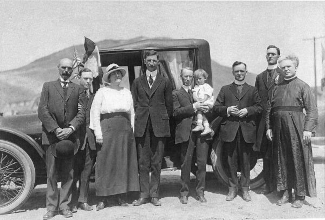
(From: An article by Helene O’Keeffe that was first published in the Irish Examiner on March 24, 2020 | Photo: Eamon de Valera, center, president of the Provisional Government of the Irish Republic, in Butte, Montana, in 1919 to encourage support for Ireland’s fight for independence. Courtesy of Butte-Silver Bow Public Archives)
Curran is the eldest of five children of James Curran, seneschal of the Newmarket manor court, and Sarah, née Philpot. The Curran family are said to have originally been named Curwen, their ancestor having come from Cumberland as a soldier under Oliver Cromwell during the Cromwellian conquest of Ireland, originally settling in County Londonderry.
Curran is educated at Midleton College, County Cork, before studing law at Trinity College Dublin. He continues his legal studies at King’s Inns and the Middle Temple. He is called to the Irish Bar in 1775. Upon his first trial, his nerves get the better of him and he cannot proceed. His short stature, boyish features, shrill voice and a stutter are said to have impacted his career, and earn him the nickname “Stuttering Jack Curran.”
However, Curran can speak passionately in court on subjects close to his heart. He eventually overcomes his nerves and gets rid of his speech impediment by constantly reciting Shakespeare and Henry St. John, 1st Viscount Bolingbroke, in front of a mirror, becoming a noted orator and wit. His championing of popular Irish causes such as Catholic emancipation make him one of the most popular lawyers in Ireland. He is also fluent in the Irish language which is still the language of the majority at the time. He writes a large amount of humorous and romantic poetry.
The case which cements Curran’s popularity is that of Father Neale and St. Leger St. Leger, 1st Viscount Doneraile at the County Cork Assizes in 1780. Having a passion for lost causes, he represents the priest and wins over the jury by setting aside the issue of religion.
A liberal Protestant whose politics are similar to Henry Grattan, Curran employs all his eloquence to oppose the illiberal policy of the Government, and also the Union with Britain. He stands as Member of Parliament (MP) for Kilbeggan in 1783. He subsequently represents Rathcormack (1790-98) and Banagher from 1800 until the Act of Union in 1801, which bitterly disappoints him, forcing him to contemplate emigrating to the United States.
In 1798, Ireland rebels against the British House of Commons and lack of reforms on Catholic emancipation. The British defeat the Irish rebels in numerous battles and soon establish their control over the country by 1799. Many of the Irish ring leaders are charged with treason and are facing death sentences. Curran plays an important role in court defending the leaders of the United Irishmen.
Curran’s youngest daughter Sarah‘s romance with United Irishmen leader Robert Emmet scandalises Curran, who had tried to split them up. He is arrested and agrees to pass their correspondence on to Standish O’Grady, 1st Viscount Guillamore, the Attorney-General for Ireland. In the circumstances he cannot defend Emmet. He is suspected of involvement in Emmet’s Rebellion, but is completely exonerated. However, his friend Arthur Wolfe, 1st Viscount Kilwarden, is killed by the rebels, and he loses any faith in the beliefs of the United Irishmen. Emmet is found guilty of rebelling against the Crown and the union between Great Britain and Ireland and is hanged in 1803. Curran disowns Sarah, who dies of tuberculosis five years later.
Curran is appointed Master of the Rolls in Ireland in 1806, following William Pitt the Younger‘s replacement by a more liberal cabinet.
Curran retires in 1814 and spends his last three years in London. He dies in his home in Brompton on October 14, 1817. In 1837, his remains are transferred from Paddington Cemetery, London to Glasnevin Cemetery in Dublin, where they are laid in an 8-foot-high classical-style sarcophagus. In 1845 a white marble memorial to him, with a carved bust by Christopher Moore, is placed near the west door of St. Patrick’s Cathedral, Dublin.
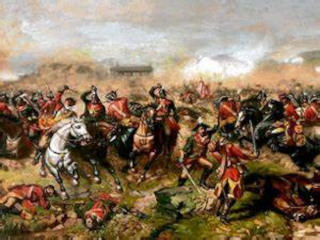
The Battle of Aughrim (Irish: Cath Eachroma), the decisive battle of the Williamite War in Ireland, is fought on July 22, 1691, near the village of Aughrim, County Galway. It is fought between the largely Irish Jacobite army loyal to James II and the forces of William III. The battle is possibly the bloodiest ever fought in the British Isles with 5,000–7,000 people being killed. The Jacobite defeat at Aughrim means the effective end of James’s cause in Ireland, although the city of Limerick holds out until the autumn of 1691.
After heavy mist all morning, Dutch officer Godert de Ginkel, who is leading William’s forces, moves his forces into position by about two o’clock in the afternoon, and both sides cannonade each other for the next few hours. Ginkel planns to avoid fully joining battle until the next day. He orders a probing attack on the Jacobites’ weaker right flank led by a captain and sixteen Danish troopers, followed by 200 of Sir Albert Cunningham‘s 6th (Inniskilling) Dragoons. The Jacobite response demonstrates the strength of their defence, but also means that the attackers are no longer able to break off the engagement as Ginkel had planned. A conference is held at about 4:00 p.m. Ginkel still favours withdrawing, but the Williamite infantry general Hugh Mackay argues for an immediate full-scale attack.
The battle is joined in earnest between five and six o’clock. In the centre, the largely English and Scots regiments under Mackay attempt a frontal assault on Major-GeneralWilliam Dorrington‘s infantry on Kilcommadan Hill. The attackers have to contend with waist-deep water and a tenacious Irish defence of the reinforced hedgelines. They withdraw with heavy losses as the Jacobites pursue them downhill, capturing colonels Thomas Erle and Henry Herbert.
On their left centre, the Williamites advance across low ground exposed to Jacobite fire and take a great number of casualties. The Williamite assault in this area, led by St. John’s and Tiffin’s regiments and the Huguenot foot, is driven back into the bog by the Irish foot fighting with clubbed (reversed) muskets. Many of the attackers are killed or drowned. In the rout, the pursuing Jacobites manage to spike a battery of Williamite guns. The Jacobite regiments of the Royal Irish Regiment of Foot Guards and Gordon O’Neill are said to have fought particularly strongly. The musketry is so intense that “the ridges seemed to be ablaze” according to Andreas Claudianus, a Norwegian fighting with the Danish infantry.
The Jacobite right and centre holding firm, Ginkel tries to force a way across the causeway on the Jacobite left, where any attack would have to pass along a narrow lane covered by Walter Burke’s regiment from their positions in Aughrim castle. Four battalions led by Lieutenant GeneralPercy Kirke secure positions near the castle, following which Sir Francis Compton‘s Royal Horse Guards get across the causeway at the third attempt. Dorrington, having earlier withdrawn two battalions of infantry from this area to reinforce the Jacobite centre, are faced only with weak opposition, reaching Aughrim village. While a force of Jacobite cavalry and dragoons under Henry Luttrell have been tasked with covering this flank, their commander orders them to fall back, following a route now known locally as “Luttrell’s Pass.” He is later alleged to have been in the pay of William, though it seems most probable that Luttrell withdrew as he had little or no infantry support. The cavalry regiments of Henri de Massue, Lanier, Langston and Robert Byerley also cross the causeway, attacking Dorrington’s flank.
Most commentators, even those sympathetic to William, judge that the Irish foot fought exceptionally well. Appearing to believe that the battle could be won, General Charles Chalmot de Saint-Ruhe is heard to shout, “they are running, we will chase them back to the gates of Dublin,” before riding across the battlefield to direct the defence against the Williamite cavalry on his left wing. However, as he rides over to rally his cavalry, he pauses briefly to direct the fire of a battery and is decapitated by a cannonball. His death is said to have occurred around sunset, shortly after eight o’clock.
After Saint-Ruhe’s death the Jacobite leave, devoid of a senior commander, collapse very quickly. The regiment of Horse Guards leave the field almost immediately, followed shortly by the cavalry and dragoon regiments of Luttrell, Dominic Sheldon and Piers Butler. Chevalier de Tessé attempts to head a cavalry counterattack but is seriously wounded shortly afterwards. The Jacobite left flank is now exposed. Mackay and Thomas Tollemache also attack again in the centre, pushing the Jacobites towards the hilltop. Burke and his regiment, still holding the castle, are forced to surrender. Most of the infantry remain unaware of Saint-Ruhe’s death, however, and John Hamilton‘s infantry on the Jacobite right continues to counter-attack, fighting the Huguenot foot to a standstill in an area still known locally as the “Bloody Hollow.” At around nine o’clock towards nightfall the Jacobite infantry is finally pushed to the top of Killcommadan hill and broke, fleeing towards a bog in the left rear of their position, while their cavalry retreat towards Loughrea.
Patrick Sarsfield and Butler briefly try to organise a rearguard action but as in many battles of the period most of the Jacobite casualties occur in the pursuit, which is ended only by darkness and the onset of mist and rain. The defeated infantry is cut down by the Williamite cavalry as they try to get away, many of them having thrown away their weapons in order to run faster.
In addition to the rank and file the Jacobite casualties and prisoners include many of its most experienced infantry officers. The dead include brigadiers Barker, O’Neill and O’Connell, and colonels Moore, Talbot, O’Mahony, Nugent, Felix O’Neil and Ulick Burke, Lord Galway. The two major generals commanding the Jacobite centre, Hamilton and Dorrington, are both taken prisoner, Hamilton dying of wounds shortly afterwards. Though the killing of prisoners to prevent rescue is a common practice at the time, Jacobite soldiers are accused of having “cut to pieces” colonel Herbert after his capture. One contemporary Jacobite source, Charles Leslie, alleges that about 2,000 Jacobites are killed “in cold blood” with many, including Lord Galway and colonel Charles Moore, killed after being promised quarter.
An eyewitness with the Williamite army, George Story, writes that “from the top of the Hill where [the Jacobite] Camp had been,” the bodies “looked like a great Flock of Sheep, scattered up and down the Countrey for almost four Miles round.”
Estimates of the two armies’ losses vary, but they are extremely heavy overall. It is generally agreed that 5,000–7,000 men were killed at Aughrim. Aughrim has been described as “quite possibly the bloodiest battle ever fought in the British Isles,” but earlier medieval battles, although poorly recorded, may rival this battle in casualty numbers. At the time, the Williamites claimed to have lost only 600 and to have killed fully 7,000 Jacobites. Some recent studies put the Williamite losses as high as 3,000, but they are more generally given as between 1,000–2,000, with 4,000 Jacobites killed. Another 4,000 Jacobites deserted, while Ginkel recorded 526 prisoners taken of all ranks. While Ginkel had given word to Dorrington that the captives would be treated as prisoners of war, general officers were instead taken to the Tower of London as prisoners of state, while the majority of the rank and file were incarcerated on Lambay Island where many died of disease and starvation.
Aughrim is the decisive battle of the conflict. The Jacobites lost many experienced officers, along with much of the army’s equipment and supplies. The remnants of the Jacobite army retreat to the mountains before regrouping under Sarsfield’s command at Limerick. Many of their infantry regiments are seriously depleted. The city of Galway surrenders without a fight after the battle, on advantageous terms, while Sarsfield and the Jacobites’ main army surrender shortly afterwards at Limerick after a short siege.
Butlers’s attempts to conclude a peace are blocked by a Catholic faction that advocates complete independence for Ireland. The situation deteriorates further, and in July 1647, he departs from Ireland, leaving the Protestant cause in the hands of the parliamentarians, who had defeated King Charles I in the First English Civil War (1642–46).
Returning to Ireland in September 1648, Butler concludes a peace with the confederacy in January 1649. He then rallies Protestant royalists and Catholic confederates in support of Charles II, son and successor of Charles I. For several months most of Ireland is under his control. But the parliamentarian general Oliver Cromwell lands at Dublin in August 1649 and swiftly conquers the country for Parliament. Butler flees to France and becomes one of Charles II’s closest advisers at his court-in-exile in Paris.
When Charles II returns to England in the Restoration of 1660, Butler, who had urged constitutional rather than military rule, is made commissioner for the treasury and the navy. Appointed Lord Lieutenant of Ireland in 1662, he makes vigorous attempts to encourage Irish commerce and industry. Nevertheless, his enemies at court persuade Charles to dismiss him in 1669. He is restored to royal favour in 1677 and is again appointed Lord Lieutenant of Ireland. Although he is created a duke in the English peerage in 1682, he is recalled from Ireland in 1684 as a result of new intrigues at Charles’s court and because of the determination of James, Duke of York, to strengthen his supporters in Ireland.
Butler dies on July 21, 1688, at the Kingston Lacy estate, Dorset. He is buried in Westminster Abbey on August 4, 1688. His eldest son, Thomas, 6th Earl of Ossory, predeceases him, but Ossory’s eldest son James succeeds as 2nd Duke of Ormonde (1665–1745).
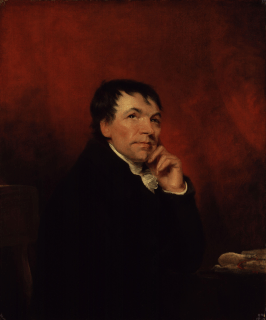
(Pictured: “James Butler, 1st Duke of Ormond,” oil on canvas by William Wissing, National Portrait Gallery)
Sir Maziere Brady, 1st Baronet, PC (Ire), Irish judge, notable for his exceptionally long, though not particularly distinguished tenure as Lord Chancellor of Ireland, is born on July 20, 1796.
The Bradys are an old and distinguished Munster family who are particularly associated with the town of Bandon, County Cork. Probably the most celebrated of his ancestors is the poet and psalmist Nicholas Brady (1659–1726), who collaborated with Nahum Tate, the Poet Laureate, on New Version of the Psalms of David.
Other notable forebears include Hugh Brady, the first ProtestantBishop of Meath (d. 1584), his father-in-law Robert Weston who, like Maziere serves as Lord Chancellor of Ireland, and the judge and author Luke Gernon (d. 1672), who is now best remembered for his work A Discourse of Ireland (1620), which gives a detailed and (from the English colonial point of view) not unsympathetic picture of the state of Ireland in 1620.
In politics Brady is a Liberal and supports Catholic emancipation. He sits on a commission of inquiry into Irish municipal corporations in 1833. He is appointed Solicitor-General for Ireland in 1837 and Attorney-General for Ireland the following year. In 1840 he is appointed Lord Chief Baron of the Irish Exchequer. In 1846 he is appointed Lord Chancellor of Ireland and serves in that office, with short intervals, for the next 20 years. He retires in 1866 and is made a baronet, of Hazelbrook in the County of Dublin, in 1869. His appointment ends the practice which grew after the Acts of Union 1800 of appointing only English lawyers as Lord Chancellor of Ireland. He sits on the Government Commission on Trinity College Dublin in 1851 and is nominated as Vice-Chancellor of Queen’s University Belfast in 1850. All through his life he shows a keen interest in education.
According to Elrington Ball, Brady’s Lord Chancellorship is notable for its length but for nothing else. Ball calls him “a good Chief Baron spoiled to make a bad Chancellor.” By general agreement he had been an excellent Chief Baron of the Exchequer, having a reputation for being fair-minded, courteous and approachable, but in Ball’s view the more onerous (and partly political) office of Lord Chancellor is beyond his capacity. Unlike some judges whose training had been in the common law, he never quite masters the separate code of equity. Delaney takes a somewhat more favourable view of Brady as Lord Chancellor, arguing that while his judgements do not show any great depth of learning they do show an ability to identify the central issue of any case and to apply the correct legal principle to it.
An anonymous pamphlet from 1850, which is highly critical of the Irish judiciary in general, describes Brady as being unable to keep order in his Court, and easily intimidated by counsel, especially by that formidable trio of future judges, Jonathan Christian, Francis Alexander FitzGerald, and Abraham Brewster. The author paints an unflattering picture of Brady as sitting “baffled and bewildered” in a Court where he is “a judge but not an authority.” On the other hand, Jonathan Christian, who had often clashed with Brady in Court, later praises him as “no ordinary man” despite his shortcomings as a judge. He describes him as “independent-minded, patriotic, natural and unaffected.”
Brady is a founder member of the Stephen’s Green Club and a member of the Royal Dublin Society and the Royal Irish Academy. In addition to the arts, he shows a keen interest in science, especially after his retirement. Like most judges of the time, he has both a town house in central Dublin and a place some distance from the city centre. His country house is Hazelbrook, Terenure, Dublin. He changes his town house several times, settling finally in Pembroke Street.
Brady marries firstly Elizabeth Anne Buchanan, daughter of Bever Buchanan, apothecary of Dublin, and his wife Eleanor Hodgson, in 1823 and they have five children. Elizabeth dies in 1858. In 1860, Brady marries Mary Hatchell, daughter of John Hatchell, Attorney-General for Ireland and Elizabeth Waddy, who survives him. He dies at his house in Pembroke Street on April 13, 1871. He is buried in Mount Jerome Cemetery.
McCracken is born in Belfast on August 31, 1767, into two of the city’s most prominent Presbyterian industrial families. He is the son of a shipowner, Captain John McCracken and Ann Joy, daughter of Francis Joy, of French Huguenot descent. The Joy family makes their money in linen manufacture and founds theNews Letter. He is the older brother of political activist and social reformer Mary Ann McCracken, with whom he shares an interest in Irish traditional culture.
In 1792, McCracken helps organise the Belfast Harp Festival which gathers aged harpists from around Ireland and helps preserve the Irish airs by having them transcribed by Edward Bunting. Bunting, who lodges in the McCracken’s Rosemary Lane home, is a classically trained musician.
McCracken becomes interested in republican politics from an early age and along with other Protestants forms the Society of United Irishmen in 1795 which quickly makes him a target of the authorities. He regularly travels throughout the country using his business as a cover for organising other United Irish societies but is arrested in October 1796 and imprisoned in Kilmainham Gaol in Dublin. While imprisoned with other leaders of the United Irishmen, he falls seriously ill and is released on bail in December 1797.
Following the outbreak of the Irish Rebellion of 1798 in Leinster in May 1798, the County Antrim organisation meets on June 3 to decide on their response. The meeting ends inconclusively with a vote to wait for French aid being passed by a narrow margin. A new meeting of delegates is held in Templepatrick on June 5 where McCracken is elected general for Antrim, and he quickly begins planning military operations.
McCracken formulates a plan for all small towns in Antrim to be seized after which rebels will converge upon Antrim town on June 7 where the county’s magistrates are to hold a crisis meeting. Although the plan meets initial success and McCracken leads the rebels in the attack on Antrim, the Catholic Defenders group whom he expects assistance from are conspicuous by their absence. The mainly Ulster Scots rebels led by McCracken are defeated by the English forces and his army melts away.
Although McCracken initially escapes with James Hope, James Orr, and James Dickey and is supported in his month-long period of hiding by his sister Mary Ann, a chance encounter with men who recognize him from his cotton business leads to his arrest. He is offered clemency if he testifies against other United Irishmen leaders, but he refuses to turn on his compatriots.
McCracken is court martialed and hanged at Corn Market, Belfast, on land his grandfather had donated to the city, on July 17, 1798. According to historian Guy Beiner, his corpse is spared the indignity of decapitation in order not to provoke renewed agitation. He is buried in the Parish Church of St. George in Belfast, but a few years later the grave is demolished.
McCracken’s remains are believed to have been re-interred by Francis Joseph Bigger in 1909 at Clifton Street Cemetery, Belfast, alongside his sister Mary Ann. His illegitimate daughter Maria, whose mother is speculated to have been Mary Bodell, is raised by her aunt Mary Ann McCracken.
Lemass is the second of nine children born to John T. Lemass and his wife Frances (née Phelan) Lemass. He is educated at O’Connell School, where he is described as studious (his two best subjects being history and mathematics).
Lemass is persuaded to join the Irish Volunteers. He becomes a member of the A Company of the 3rd Battalion of the Dublin Brigade. The battalion adjutant is Éamon de Valera, future Taoiseach and President of Ireland. While out on a journey in the Dublin mountains during Easter 1916, he is informed of the Easter Rising that is taking place in Dublin. On April 25, Seán and his brother Noel are allowed to join the Volunteer garrison at the General Post Office (GPO). He is equipped with a shotgun and was positioned on the roof. He also is involved in fighting on Moore Street. However, the Rising ends in failure and all involved are imprisoned. He is held for a month in Richmond Barracks but, due to his age, he is released. Following this, his father wants his son to continue with his studies and be called to the Irish Bar.
Lemass opposes the establishment of the Irish Free State as a dominion under the Anglo-Irish Treaty of 1921 and becomes a member of the headquarters staff of the Irish Republican Army in the Irish Civil War (1922–23). He plays a key role in persuading de Valera to found a new republican party, Fianna Fáil, in 1926. After de Valera rises to the premiership in 1932, Lemass holds portfolios in all his cabinets for 21 of the next 27 years, notably as Minister of Industry and Commerce and then as Tánaiste.
When de Valera becomes President of Ireland in 1959, Lemass is appointed Taoiseach on June 23, 1959, on the nomination for Dáil Éireann. Under him the country takes a more outward-looking approach, and he especially presses for Ireland’s entry into the European Economic Community (EEC), now the European Communities, embedded in the European Union, and for reconciliation with Northern Ireland. His greatest legacy, Ireland’s membership in the EEC, is not secured until 1973, after his death.
In 1966, Ireland celebrates the 50th anniversary of the 1916 Easter Rising. Éamon de Valera comes within 1% of defeat in that year’s Irish presidential election, less than two months after the celebrations in which he played such a central part. On November 10, 1966, Lemass announces to the Dáil his decision to retire as Fianna Fáil leader and Taoiseach with his usual penchant for efficiency, “I have resigned.” He retires to the backbenches and remains a TD until 1969. On the day of his retirement, Jack Lynch becomes the new leader of Fianna Fáil and Taoiseach.
During the last few years of his leadership, Lemass’s health begins to deteriorate. He had been a heavy pipe smoker all his life, smoking almost a pound of tobacco a week in later life. At the time of his retirement, it is suspected that he has cancer, but this assumption is later disproved. In February 1971, while attending a rugby game at Lansdowne Road, he becomes unwell. He is rushed to hospital and is told by his doctor that one of his lungs is about to collapse.
Meehan’s father, a native of Manorhamilton, County Leitrim, is a prosperous farmer at Ballymahon, County Longford. He receives his early education in a hedge school and from a local curate at Ballymahon. In 1828 he enters the Pontifical Irish College in Rome, where he is a brilliant student, acquiring fluency in several languages. As a child he had loved to listen to stories of the Flight of the Earls and the Flight of the Wild Geese, and during his time in Rome he discovers the neglected graves of Hugh O’Neill and Hugh O’Donnell in the church of San Pietro in Montorio. He begins his lifelong research on the seventeenth century by locating and transcribing hitherto unstudied documents held in Roman repositories. Ordained in 1835, he is appointed curate at Rathdrum, County Wicklow in August and five months later is transferred to the parish of Saints Michael and John, Dublin. He is an excellent preacher and a strong advocate of temperance, and zealously discharges his parish duties.
A supporter of Daniel O’Connell and the repeal movement, Meehan is particularly attracted by the ideals of Young Ireland and becomes friendly with the principal writers of The Nation, especially Charles Gavan Duffy and James Clarence Mangan. He is Mangan’s confessor and attends his deathbed in 1849. The Young Irelanders often meet in his presbytery in Lower Exchange Street. From 1842 he contributes occasional verse and translations to The Nation using the pseudonym ‘Clericus’ and the initials ‘C. P. M.’ He defends the Young Irelanders from accusations of irreligion. During the debates on physical force in Conciliation Hall in July 1846 he supports the Young Ireland position and is shouted down by O’Connellites.
He secedes with the Young Irelanders from the Repeal Association and becomes a member of their Irish Confederation on its foundation in January 1847. Later that year he becomes president of the St. Patrick’s Confederate Club and delivers lectures to it on Irish history. A strong believer in the importance of history in creating national pride and awareness, he contributes The Confederation of Kilkenny (1846) and a translation of Daniel O’Daly, The Geraldines, their Rise, Increase and Ruin (1847) to The Nation‘s Library of Ireland historical series. He publishes a translation, with a valuable introduction and notes, of John Lynch‘s Latin life of Francis Kirwan, bishop of Killala 1645–61, as Portrait of a Christian Bishop (1848). In 1848 he resigns his presidency of the St. Patrick’s Confederate Club in the hope of becoming librarian or professor of modern languages at Queen’s College Galway but is unsuccessful.
For the rest of his life Meehan devotes himself to parish work and historical research, occasionally publishing articles and poems in the Hibernian Magazine and Irish Catholic Magazine. He also edits six volumes of the second series of James Duffy‘s Duffy’s Hibernian Magazine (1862–65). Having acquired a vast store of anecdotes and curious information from his research, he is an interesting companion who loves the company of poets and scholars and forms friendships with many young nationalist writers, including Denis Florence MacCarthy, John Keegan Casey and John Francis O’Donnell.
Most of Meehan’s research is devoted to Irish history, but he occasionally tackles other subjects, such as his translation from the Italian of Vincenzo Marchese’s Lives of the most eminent sculptors and architects of the order of St Dominic (2 vols, 1852). Although his work is marked by a strong sympathy for Catholicism and Irish nationalism, he is among the more scholarly historians associated with the Young Ireland movement. He is elected Member of the Royal Irish Academy (MRIA) in February 1865. Gavan Duffy lauds his efforts and ranks him with the great patriotic clerical scholars of the past who had devoted their lives to the study of Irish history.
Meehan repeatedly takes the opportunity to amend and expand his published works, producing revised editions of The Geraldines (as The Geraldines, their Rise, Increase and Ruin (reprinted 1878)), Confederation of Kilkenny (1882), and Lynch’s Life of Kirwan (1884). His other important publications are The Fate and Fortunes of the Earls of Tyrone (Hugh O’Neill) and Tyrconnel (Rory O’Donel), their flight from Ireland and death in exile (1868), and Rise and Fall of the Irish Franciscan Monasteries and Memoirs of the Irish Hierarchy in the Seventeenth Century (1870). He edits the essays of the Young Irelanders in The Spirit of the Nation (1882) and publishes editions of the poetry of Mangan in The Poets and Poetry of Munster (1883), with an important biographical memoir. His last scholarly work is to re-edit Literary Remains of the United Irishmen (1887) to include material left in manuscript by Richard R. Madden.
A small man, Meehan always wears a monocle attached to a silk ribbon, a tall silk hat, and a stout blackthorn stick. He suffers badly from indigestion for most of his life, and this aggravates a testy personality and a waspish tongue. He regularly falls out with friends, and few parishioners are foolhardy enough to brave his confessional. He retains strong anti-English views all his life. In the 1880s he encounters the young Arthur Griffith pulling down a union flag from a lamppost in Dublin and astounds the boy by congratulating rather than chastising him. His Young Ireland nationalism and irascible personality ensure that he never progresses beyond the position of curate in his forty-five years at Saints Michael and John. Here, he works alongside Fr. James Healy, a renowned wit, and the two men delight in trading caustic remarks. Healy is present at Meehan’s deathbed and admits to brushing away a tear – the only thing, he remarks, that had been brushed in that room for many years.
Meehan dies on March 14, 1890, at his presbytery in Dublin, and is buried in Glasnevin Cemetery. He is survived by two brothers, one of whom is also a priest. He is commemorated by a mural tablet erected by his parishioners in the church of Saints Michael and John.
(From: “Meehan, Charles Patrick” by James Quinn and Linde Lunney, Dictionary of Irish Biography, http://www.dib.ie)
A man of intellectual power, O’Higgins is described by William Butler Yeats as “a great man in his pride confronting murderous men.” He is in fact murdered by maverick republicans while on his way to church.
O’Higgins is born in Stradbally, Queen’s County (County Laois since 1922) on June 7, 1892. Educated at University College Dublin, he is apprenticed to his uncle, a lawyer. Following the Easter Rising in 1916, he joins the Sinn Féinnationalist movement and is imprisoned. In 1918, while still in jail, he is elected to Parliament from Queen’s County, and in the next year he becomes assistant to the minister of local government, William Thomas Cosgrave. He goes on to become a prominent member of Cumann na nGaedheal.
As Minister for Justice, O’Higgins establishes the Garda Síochána police force and takes summary measures to restore order following the civil war between the Free State forces and the Irish Republican Army. His role in the execution of 77 republicans in 1922–23 makes him many enemies, as does his sardonic wit, his inflammatory speeches during the civil war, and his curtailment of the liquor trade.
On Sunday, July 10, 1927, O’Higgins is assassinated at the age of 35 on the Booterstown Avenue side of Cross Avenue in Booterstown, a coastal suburb of Dublin, while on his way to Mass at the Church of the Assumption. The assassination is carried out by three anti-Treaty members of the IRA, Timothy Coughlan, Bill Gannon and Archie Doyle, in revenge for O’Higgins’ part in the executions of the 77 IRA prisoners during the Irish Civil War.
None of the three assassins is ever apprehended or charged, but Coughlan, a member of Fianna Fáil as well as the IRA, is killed in 1928 in Dublin by a police undercover agent whom he is attempting to murder. The other two benefit from the amnesty to IRA members issued by Éamon de Valera, upon his assumption of power in 1932. Gannon, who dies in 1965, joins the Communist Party of Ireland and plays a central role in organising Irish volunteers for the Spanish Civil War. Doyle remains a prominent IRA militant and takes part in various acts in the early 1940s. He lives to an old age, dying in 1980, and continues to take pride in having killed O’Higgins.