TaoiseachEnda Kenny conveys his resignation to PresidentMichael D. Higgins at Áras an Uachtaráin on March 10, 2016, after failing to get re-elected to the position in a Dáil vote, becoming acting Taoiseach as the Dáil adjourns until March 22. “It’s not the outcome that I personally would have liked to see but I respect the verdict of the people,” Kenny says. The vote for the former Taoiseach stands at: For 57, Against 94, Abstain 5.
Kenny, the MayoTD, says the Cabinet will continue its work while the various parties try to form a government. A government statement issued in the evening reads, “The Taoiseach, Mr. Enda Kenny, T.D., has this evening conveyed to the President his resignation from office. In accordance with the Constitution, the Government and the Taoiseach will continue to carry on their duties until successors have been appointed.”
Kenny says when Fine Gael and the Labour Party entered government five years earlier “our very survival was in doubt.” He adds, “The Government had to face unprecedented sets of difficulties. Many believed the situation was hopeless. The country is in a different place now.”
The outgoing Taoiseach says he is “fully committed” to working with other parties and independents to form a new government. He adds that “a substantial number of people do not want to serve in government.” Fianna Fáil leader Micheál Martin says the situation is not unprecedented and people should put aside the notion that “speed” is an issue in forming a government. “Ireland is relatively unusual in how fast it carries out the formation of government,” he says.
A total of 50 Fine Gael TDs are re-elected to the 32nd Dáil. The five abstentions in the Enda Kenny vote are TDs Michael Harty, Noel Grealish, Denis Naughten, Michael Collins and Mattie McGrath. They say they will abstain on each vote for Taoiseach in an indication they are willing to hold further coalition talks.
The vote for the other nominees are: Fianna Fáil leader Micheál Martin: For 43, Against 108, 5 Abstain. Sinn Féin leader Gerry Adams: For 24, Against 116. AAA-PBP candidate Richard Boyd Barrett: For 9, Against 111.
(From: “Enda Kenny resigns as Taoiseach after failing to get re-elected as leader” by Kevin Doyle and Niall O’Connor, http://www.independent.ie, March 10, 2016)
Glennon is named Coadjutor Archbishop of St. Louis on April 27, 1903. He succeeds Archbishop Kain as the fourth Archbishop of St. Louis upon the latter’s death on October 13 of that year. Realizing the Cathedral of St. Louis can no longer accommodate its growing congregation, he quickly begins raising funds for a new cathedral, the cornerstone of which is later laid on October 18, 1908.
Glennon opens the new Kenrick Seminary in 1915, followed by the minor seminary in Shrewsbury. He delivers the eulogy at the funeral of Cardinal James Gibbons and is appointed an Assistant at the Pontifical Throne on June 28, 1921. He opposes British rule in Ireland and supports the leaders of the Easter Rising. He is an outspoken opponent of divorce, condemns gambling games, and prohibits dancing and drinking at church-sponsored events. He sometimes throws the opening ball for the St. Louis Cardinals, but does not play any sports himself, once saying, “I once tried golf, but I so disfigured the scenery that I never played again, in fear of public indignation and reprisal.”[2]
Despite a rather popular tenure, as Archbishop of St. Louis Glennon opposes racial integration in the city’s Catholic schools, colleges, and universities. During the early 1940s, many local priests, especially Jesuits, challenge the segregationist policies at the city’s Catholic schools. The St. Louis chapter of the Midwest Clergy Conference on Negro Welfare, formed locally in 1938, pushes the all-female Webster College to integrate first. However, in 1943, Glennon blocks the enrollment of a young black woman at the college by speaking privately with the Kentucky-based superior of the Sisters of Loretto, which staffs the college. When approached directly by pro-integration priests, he calls the integration plan a “Jesuit ploy,” and quickly transfers one of the complaining priests away from his mission at an African American parish.
The Pittsburgh Courier, an African American newspaper with national circulation, discovers Glennon’s intervention and runs a front-page feature on the Webster incident. In response, Father Claude Heithaus, professor of Classical Archaeology at the Catholic Saint Louis University, delivers an angry sermon accusing his own institution of immoral behavior in its segregation policies. Saint Louis University begins admitting African American students that summer when its president, Father Patrick Holloran, manages to secure approval from the reluctant Archbishop Glennon. Nevertheless, St. Louis maintains one of the largest numbers of African American parishes and schools in the country.
During the return trip to the United States, Glennon stops in his native Ireland, where he is received by PresidentSeán T. O’Kelly and TaoiseachÉamon de Valera. While in Dublin, he is diagnosed with uremic poisoning and dies on March 9, 1946, ending a 42-year tenure as Archbishop. The Cardinal’s body is returned to St. Louis and then buried at the Cathedral.
The organization is set up to take over the work of the Irish National Land League after its leadership is imprisoned. They raise money for the Land League prisoners and their dependants. They encourage women to resist eviction from their cottages. If families are evicted, the Ladies’ Land League provides wooden huts to the evicted families.
The ladies find themselves with additional work late in 1881. The Land League has started its own paper, United Ireland, in August 1881, but towards the end of the year the government tries to close it down. William O’Brien, the editor, continues to smuggle out copy from Kilmainham Gaol, but it falls to the ladies to get it printed. This is done first in London and then for a while in Paris. Eventually the ladies print and circulate it themselves from an office at 32 Lower Abbey Street.
On Sunday, March 12, 1881, just more than a month after the formation of the league, a pastoral letter of Archbishop of DublinEdward McCabe is read out in all the churches of the diocese. It condemns the league in the strongest terms, deploring that “our Catholic daughters, be they matrons or virgins, are called forth, under the flimsy pretext of charity, to take their stand in the noisy street of life.” McCabe is not representative of all bishops, particularly Archbishop of CashelThomas Croke, a strong supporter of the original league. Croke publishes a letter in the Freeman’s Journal challenging the “monstrous imputations” in McCabe’s pastoral.
The dissension is revived somewhat in the summer of 1882. McCabe, now a Cardinal, and another bishop try to have a public condemnation of the Ladies’ Land League inserted into an address by the Catholic Bishops of Ireland in June. The other bishops resist on the basis that it would probably do more harm than good. They content themselves with expressing their hope that “the women of Ireland will continue to be the glory of their sex and the noble angels of stainless modesty.” When newspapers interpret this as a condemnation of the league, Croke writes again to the Freeman’s Journal to deny that this had been the intention of the bishops.
The order banning the Irish National Land League makes no direct reference to the Ladies’ Land League, but many police officers try to insist that the ban includes the women’s group. Eventually, on December 16, 1881, Inspector General Hillier of the Royal Irish Constabulary (RIC) orders the police to stop the women’s meetings. Anna Parnell defiantly issues a notice to all Ladies’ Land League branches in the country calling on them all to hold a meeting on January 1, 1882.
The prominent resident magistrate, Major Clifford Lloyd, claims that the huts built for evicted tenants are being used as posts from which the evicted tenants can intimidate anyone who attempts to take over their vacated holdings. In April 1882, he threatens that anyone attempting to erect huts will be imprisoned. That month, Anne Kirke is sent down from Dublin to Tulla, County Clare, to oversee the erection of huts for a large number of evicted tenants. Lloyd has her arrested and imprisoned for three months.
The government does not wish to be seen to use the Coercion Act to imprison women, but another stratagem is used. In December 1881 21-year-old Hannah Reynolds is imprisoned under an ancient statute from the reign of Edward III, the original purpose of which was to keep prostitutes off the streets. The statute empowers magistrates to imprison “persons not of good fame” if they do not post bail as a guarantee of their good behavior. Since Reynolds claims her behavior is good, she refuses to pay bail and spends a month in Cork gaol. In all, thirteen women serve jail sentences under this statute.
On May 3, 1882, Parnell and other leaders are released from jail after agreeing to the Kilmainham Treaty. This includes some improvement in the 1881 Land Act. He now wishes to turn his attention more to the Home Rule question. The Irish National Land League is replaced by the Irish National League. Parnell also wants to see an end to the Ladies’ Land League. There had been increased violence while he was in jail, and he sees Anna as too radical. The organization has an overdraft of £5,000 which Parnell agrees to clear from central funds only if the organization is dissolved. At a meeting of the Central Committee on August 10, 1882, the Ladies’ Land League votes to dissolve itself. Anna Parnell herself is not in attendance at that meeting having suffered a physical and mental collapse after the sudden death of her sister Fanny the previous month.
The records of the Ladies’ Land League are lost to history in 1916. Jennie Wyse Power, who had served on the Central Committee, had kept them in her house in Henry Street, Dublin. When fire spreads from Sackville Street during the 1916 Easter Rising, her house is destroyed, and the records perish in the blaze.
(Pictured: Lady Land Leaguers at work at the Dublin office)
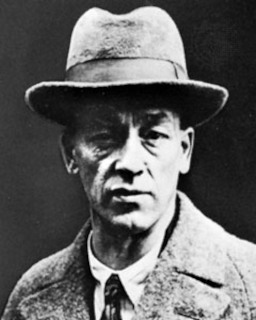
MacBride is born in Paris on January 26, 1904. He is the son of Major John MacBride and Maud Gonne. After his father’s execution for his participation in the Easter Rising of 1916, MacBride is sent to school at Mount St. Benedict’s, Gorey, County Wexford in Ireland. In 1919, at the age of 15, he joins the Irish Volunteers, which fights as part of the Irish Republican Army, and takes part in the Irish War of Independence. He is imprisoned by the Irish Free State but is released in 1924 and resumes his IRA activities. He returns to Dublin in 1927 and becomes the Director of Intelligence of the IRA.
Toward the end of the 1920s, after many supporters have left the IRA to join Fianna Fáil, some members start pushing for a more left-wing agenda. After the IRA Army Council votes down the idea, MacBride launches a new movement, Saor Éire (“Free Ireland”), in 1931. Although it is a non-military organisation, Saor Éire is declared unlawful along with the IRA, Cumann na mBan, and nine other organizations.
In 1936, MacBride becomes Chief of Staff of the IRA after Moss Twomey is sent to prison for three years. At the time, the movement is in a state of disarray, with conflicts between several factions and personalities. In 1937, he is called to the bar and then resigns from the IRA when the Constitution of Ireland is enacted later that year. As a barrister, he frequently defends IRA political prisoners, but is not unsuccessful in stopping the execution of Charlie Kerins in 1944 who is convicted of killing Garda Detective Dennis O’Brien in 1942. In 1946, during the inquest into the death of Seán McCaughey, he embarrasses the authorities by forcing them to admit that the conditions in Portlaoise Prison are inhumane.
In 1946, MacBride founds the republican/socialist party Clann na Poblachta, hoping it would replace Fianna Fáil as Ireland’s major political party. In October 1947, he wins a seat in Dáil Éireann at a by-election in the Dublin County constituency. However, at the 1948 Irish general election Clann na Poblachta wins only ten seats.
Clann na Poblachta is reduced to only two seats after the 1951 Irish general election. MacBride keeps his seat and is re-elected again at the 1954 Irish general election. Opposing the internment of IRA suspects during the Border Campaign (1956–62), he contests both the 1957 and 1961 Irish general elections but fails to be elected both times. He then retires from politics but continues practicing as a barrister. He expresses interest in running as an independent candidate in the 1983 Irish presidential election, but does not receive sufficient backing and ultimately does not enter the contest.
Throughout the 1950s, 1960s, and 1970s, MacBride works tirelessly for human rights worldwide. He is a founding member of Amnesty International and serves as its International chairman from 1961 until 1975. During the 1980s, he initiates the Appeal by Lawyers against Nuclear War which is jointly sponsored by the International Peace Bureau and the International Progress Organization.
MacBride is awarded the Nobel Peace Prize in 1974 as a man who “mobilised the conscience of the world in the fight against injustice.” He later receives the Lenin Peace Prize (1975–76) and the UNESCO Silver Medal for Service (1980).
In his later years, MacBride lives in his mother’s home, Roebuck House, that served as a meeting place for many years for Irish nationalists, as well as in the Parisian arrondissement where he grew up with his mother, and enjoyed strolling along boyhood paths. In 1978, he receives the Golden Plate Award of the American Academy of Achievement.
MacBride dies in Dublin on January 15, 1988, just eleven days shy of his 84th birthday. He is buried in a simple grave in Glasnevin Cemetery, Dublin, with his mother, and wife who died in 1976.
Éamon de Valera’s new constitution, with its assertions of Ireland as a sovereign 32-county state, and its definition of Catholic morality and “women’s place” is approved on January 14, 1937.
De Valera’s 1937 constitution (Bunreacht na hÉireann) evokes a passionate rebuke of the articles defining the role and rights of women. The aspirations of 1916 had been eroded to the extent that the rights of half of the State’s citizens were reduced and effectively became second-class citizens. In 1936, while formulating the new constitution, Éamon de Valera establishes a civil service committee to assist him. They are all men. He also takes extensive advice from the president of the Supreme Court and the High Court. Both again are men. Archbishop of Dublin, John Charles McQuaid, also heavily influences the final text. There are only three women TDs at the time and none of them say a word in the Dáil debates on the draft.
Women are told that marriage should be their highest aspiration, child rearing their only creative outlet, and that economic dependence their civic duty. That in its turn produces levels of misogyny, emotional sterility and civic immaturity.
Article 41.2.1 becomes famous as ‘a woman’s place is in the home’ statement: “the State recognises that by her life within the home, woman gives to the State a support without which the common good cannot be achieved.”
Many women protest in public and in private during the drafting of de Valera’s constitution. The Irish Women Workers Union, many of whose members had been involved in the 1916 Easter Rising, express outrage. A letter from the secretary to de Valera, quoting the clauses which refer to the position of women says, “it would hardly be possible to make a more deadly encroachment upon the liberty of the individual.” The constitution is accepted and a combination of revisionism and isolationism in the years that follow leave the majority of Ireland’s citizens ignorant of the legacy woman had been denied.
The fundamental principle of the 1916 proclamation, which guaranteed religious and civil liberty, equal rights and equal opportunities to all citizens, echoed by the 1922 Constitution of the Irish Free State, guaranteeing those rights to every person “without distinction of sex,” had been changed.
As commander of the Boland’s Mill outpost in 1916, de Valera had been the only leader to refuse women’s participation in the Rising. As with many of the woman who fought in the Rising, in the same streets where Elizabeth O’Farrell walked through gunfire, now with Article 41 of the Constitution, de Valera closes the door on women’s progress in a more definitive way.
Morrison is the son of Daniel and Susan Morrison. His father works as a painter at the Harland & Wolff shipyard in East Belfast. His uncles, including Harry White, had been jailed for their part in the IRA‘s Northern Campaign in the 1940s. He joins Sinn Féin in 1966 and helps to organise 50th anniversary commemorations of the Easter Rising in Belfast. At this time, he later recalls, “as far as we were concerned, there was absolutely no chance of the IRA appearing again. They were something in history books.”
After the 1969 Northern Ireland riots, in which nationalist areas of Belfast are attacked and burned, Morrison joins the newly formed Provisional IRA. After this, he is engaged in clandestine republican activities, but as late as 1971, is still attending Belfast College of Business Studies and editing a student magazine there. He is interned in Long Kesh Detention Centre in 1972.
Morrison’s talents for writing and publicity are quickly recognised within the republican movement and after his release in 1975 he is appointed editor of Republican News. In this journal, he criticises many long-standing policies of the movement. At this time, he becomes associated with a grouping of young, left-wing Belfast based republicans, led by Gerry Adams, who want to change the strategy, tactics and leadership of the IRA and Sinn Féin.
With the rise of Adams’ faction in the republican movement in the late 1970s, Morrison succeeds Seán Ó Brádaigh as Director of Publicity for Sinn Féin. During the 1981 Irish hunger strike, he acts as spokesman for the IRA hunger strikers’ leader Bobby Sands, who is elected to the British Parliament on an Anti H-Block platform.
Morrison is elected as a Sinn Féin Member for Mid Ulster of a short-lived Northern Ireland Assembly from 1982 to 1986. He also stands unsuccessfully for the European Parliament in 1984 and again in 1989. He also stands for the Mid Ulster Westminster seat in 1983 and 1986. Along with Owen Carron, he is arrested on January 21, 1982, while attempting to enter the United States illegally from Canada by car. He is deported and later both men are convicted on a charge of making false statements to US immigration officials.
Morrison is director of publicity for Sinn Féin from 1979 until 1990, when he is charged with false imprisonment and conspiracy to murder a British informer in the IRA, Sandy Lynch. He is sentenced to eight years in prison and is released in 1995.
Since 1989, Morrison has published several novels and plays on themes relating to republicanism and events in the modern history of Belfast. His latest play, The Wrong Man, opens in London in 2005. It is based on his 1997 book of the same name and deals with the career of an IRA man who is suspected by his colleagues of working for the police.
The Bobby Sands Trust (BST) is formed after the 1981 Hunger Strike where ten republican prisoners die due to their hunger strike protest against the UK Government. The legal firm Madden & Finucane continues to act for the Trust whose original members are Gerry Adams, Danny Morrison, Tom Hartley, Tom Cahill, Marie Moore and Danny Devenny. For a time, Bobby’s two sisters, Marcella and Bernadette, are members of the Trust. Current members still include Adams, Morrison and Hartley. The BST claims to hold copyright to all the written works of Bobby Sands. The family of Sands has been critical of the BST, and they have called for it to disband.
Morrison lives in West Belfast with his Canadian-born wife, Leslie. He has two sons from his first marriage.
Stephens’ birth is somewhat shrouded in mystery. He claims to have been born on the same day and same year as James Joyce, February 2, 1882, whereas he is in fact probably the same James Stephens who is on record as being born at the Rotunda Hospital in Dublin, on February 9, 1880, the son of Francis Stephens of 5 Thomas’s Court, Dublin, a vanman and a messenger for a stationer’s office, and his wife, Charlotte Collins. His father dies when he is two years old and, when he was six years old, his mother remarries. He is committed to the Meath Protestant Industrial School for boys in Blackrock for begging on the streets, where he spends much of the rest of his childhood. He attends school with his adoptive brothers Thomas and Richard Collins before graduating as a solicitor‘s clerk. They compete and win several athletic competitions despite James’ tiny 4’10” stature. He is known affectionately as “Tiny Tim.” He is much enthralled by the tales of military valour of his adoptive family and would have become a soldier except for his height.
By the early 1900s Stephens is increasingly inclined to socialism and the Irish language and by 1912 is a dedicated Irish Republican. He is a close friend of the 1916 leader Thomas MacDonagh, who is then editor of The Irish Review and deputy headmaster in St. Enda’s School, the radical bilingual Montessori school run by Patrick Pearse and later manager of the Irish Theatre. He spends much time with MacDonagh in 1911. His growing nationalism brings a schism with his adoptive family, but probably wins him his job as registrar in the National Gallery of Ireland, where he works between 1915 and 1925, having previously had an ill-paid job with the Mecredy firm of solicitors.
Stephens produces many retellings of Irish myths. His retellings are marked by a rare combination of humour and lyricism, with Deirdre and Irish Fairy Tales especially often praised. He also writes several original novels, including The Crock of Gold, Etched in Moonlight and Demi-Gods, based loosely on Irish wonder tales. The Crock of Gold in particular has achieved enduring popularity and has often been reprinted.
Stephens begins his career as a poet under the tutelage of poet and painter Æ (George William Russell). His first book of poems, Insurrections, is published in 1909. His last book, Kings and the Moon (1938), is also a volume of verse. His influential account of the 1916 Easter Rising, Insurrection in Dublin, describes the effect of the deaths by execution of his friend Thomas MacDonagh and others as being “like watching blood oozing from under a door.”
Stephens later lives between Paris, London and Dublin. During the 1930s he is a friend of James Joyce, and they wrongly believe that they share a birthday. Joyce, who is concerned about his ability to finish what later becomes Finnegans Wake, proposes that Stephens assist him, with the authorship credited to JJ & S (for “Jameses Joyce & Stephens”, but also a pun on the popular Jameson Irish Whiskey, made by John Jameson & Sons). The plan is never implemented, as Joyce is able to complete the work on his own.
During the last decade of his life Stephens finds a new audience through a series of broadcasts on the BBC.
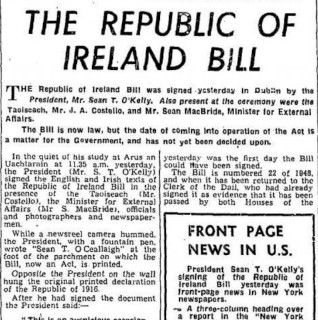
The Republic of Ireland Act 1948 is an Act of the Oireachtas which declares that Ireland may be officially described as the Republic of Ireland, and vests in the President of Ireland the power to exercise the executive authority of the state in its external relations, on the advice of the Government of Ireland. The Act is signed into law on December 21, 1948 and comes into force on April 18, 1949, Easter Monday, the 33rd anniversary of the beginning of the Easter Rising.
The Act repeals the External Relations Act 1936. Under that Act, King George VI acts as the Irish head of state in international relations by accredited ambassadors and on the State’s behalf accepts credentials appointing foreign ambassadors to the State. The Republic of Ireland Act removes this last remaining practical role from the King and vests it instead in the President of Ireland, making the then President of Ireland, Seán T. O’Kelly, unambiguously the Irish head of state.
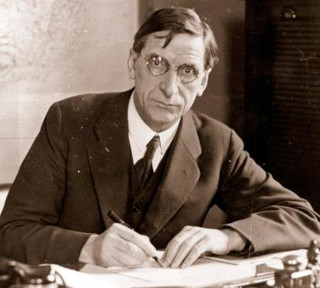
In 1945, when asked if he plans to declare a Republic, the then TaoiseachÉamon de Valera replies, “we are a republic.” He also insists that Ireland has no king, but simply uses an external king as an organ in international affairs. However, that is not the view of constitutional lawyers including de Valera’s Attorneys General, whose disagreement with de Valera’s interpretation only come to light when the state papers from the 1930s and 1940s are released to historians. Nor is it the view in the international arena, who believe that Ireland does have a king, George VI, who had been proclaimed King of Ireland in December 1936, and to whom they accredit ambassadors to Ireland. King George, in turn, as “King of Ireland” accredits all Irish diplomats. All treaties signed by the Irish Taoiseach or Minister for External Affairs are signed in the name of King George.
In October 1947, de Valera asks his Attorney General, Cearbhall Ó Dálaigh, to draft a bill to repeal the External Relations Act. By 1948 a draft of the bill includes a reference to the state as being a republic. In the end, the draft bill is never submitted to the Oireachtas for approval.
The bill to declare Ireland a republic is introduced in 1948 by the new Taoiseach, John A. Costello of the Fine Gael party. Costello makes the announcement that the bill is to be introduced when he is in Ottawa, during an official visit to Canada. David McCullagh suggests that it is a spur of the moment reaction to offence caused by the Governor General of Canada, Lord Alexander, who is of Northern Irish descent, who allegedly places loyalist symbols before an affronted Costello at a state dinner. What is certain is that an agreement that there be separate toasts for the King and for the President of Ireland is broken. The Irish position is that a toast to the King, instead of representing both countries, would not include Ireland. Only a toast to the King is proposed, to the fury of the Irish delegation. Shortly afterwards Costello announces the plan to declare the republic.
However, according to all but one of the ministers in Costello’s cabinet, the decision to declare a republic had already been made before Costello’s Canadian visit. Costello’s revelation of the decision is because the Sunday Independent had discovered the fact and was about to “break” the story as an exclusive. The evidence of what really happens remains ambiguous. There is no record of a prior decision to declare a republic before Costello’s Canadian trip.
At any rate, the Act is enacted with all parties voting for it. De Valera does suggest that it would have been better to reserve the declaration of the republic until Irish unity had been achieved, a comment hard to reconcile with his 1945 claim that the Irish state was already a republic. Speaking in Seanad Éireann Costello tells senators that as a matter of law, the King is indeed “King of Ireland” and Irish head of state and the President of Ireland is in effect no more than first citizen and a local notable, until the new law comes into force.
The United Kingdom responds to the Republic of Ireland Act by enacting the Ireland Act 1949. This Act formally asserts that the Irish state had, when the Republic of Ireland Act came into force, ceased “to be part of His Majesty’s dominions” and accordingly is no longer within the Commonwealth. Nonetheless the United Kingdom statute provides that Irish citizens will not be treated as aliens under British nationality law. This, in effect, grants them a status similar to the citizens of Commonwealth countries.
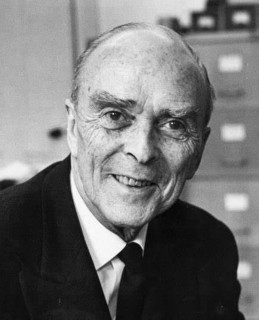
Rising from a domestic Irish political career, MacBride founds or participates in many international organisations of the 20th century, including the United Nations, the Council of Europe and Amnesty International. In addition to the Nobel Peace Prize, he receives the Lenin Peace Prize for 1975–76 and the UNESCO Silver Medal for Service in 1980.
MacBride, nevertheless, has had a violent past. His father is executed following the Easter Rising of 1916, the Irish struggle for liberation from Great Britain. He is only 13 when he joins the Irish Republican Army (IRA). He takes part in the concluding battles of the Irish War of Independence against the British before the Irish Republic is founded in 1921, and in the Irish Civil War that follows. He backs Éamon de Valera in the latter’s refusal to accept Northern Ireland‘s continuing union with England. In the 1930s, he breaks with the IRA and qualifies in law. He defends IRA prisoners in Irish prisons who had been condemned to death.
After World War II he is for a few years Minister for External Affairs for Ireland. He plays a leading part in the establishment of the Council of Europe, and in the preparation of the European Convention on Human Rights of 1950.
MacBride dies in Dublin on January 15, 1988, eleven days before his 84th birthday. He is buried in Glasnevin Cemetery in a grave with his mother and wife, who died in 1976.
Barry is born into a farming family in Riverstick, ten miles south of Cork city, on July 15, 1883. He enjoys Gaelic culture and sport and is a prominent member of the Ballymartlehurling club. He later joins the famous Blackrock National Hurling Club where he wins four senior county championships in a row during the years of 1910 to 1913.
In 1913, Barry joins the newly formed Irish Volunteers. He is a member of the first Cork brigade and has been politically active in Sinn Féin. In 1915, he moves to Kilkenny to take up employment there, where he continues his volunteer activities. Shortly after the Easter Rising in 1916, he is arrested in Kilkenny in a British Government crackdown and sent to Frongoch internment camp in North Wales. In 1917 he becomes election agent for W. T. Cosgrave in the Kilkenny by-election, one in which Cosgrave is successfully elected. However, just six years later he finds himself imprisoned by Cosgrave’s own government.
In 1922 Barry is imprisoned in Newbridge camp in Kildare and takes part in the hunger strike of 1923. On November 20, 1923, after 34 days protesting against the harsh regime and undignified conditions, he dies but even in death he is still refused dignity.
Barry’s body is not released to his family and is instead, on the orders of Minister of Defence, Richard Mulcahy, buried in the grounds of Newbridge internment camp. The Barry family takes legal action against this and eventually receives the body, but this is not the last of their troubles.
Upon their arrival in Cork with Barry’s body, the Bishop of Cork, Daniel Cohalan, instructs his priests not to allow Barry’s funeral in any church. Ironically just a few short years before, Bishop Cohalan had been a strong vocal supporter of Terence MacSwiney, Sinn Féin Lord Mayor of Cork, who died on hunger strike in Brixton Prison.
Shortly after MacSwiney’s death, Bishop Cohalan’s attitude towards the Irish Republican Army (IRA) changes and he issues a decree condemning the IRA in which he states, “Anyone who shall within the diocese of Cork organise or take part in an ambush or in kidnapping or otherwise, shall be guilty of murder or attempted murder and shall incur by the very fact the censure of excommunication.”
On December 10, 1922, Bishop Cohalan preaches publicly his support for the Anglo-Irish Treaty which establishes the Irish Free State, and he urges his flock to do the same. This leads to an even greater wedge between the Catholic Church and many IRA members, yet it is the incident with Barry that seriously taints the Bishop of Cork and the Catholic Church in republican eyes.
Because of Bishop Cohalan’s stern objection to Barry’s body being permitted into a Catholic church, his body has to lay in state in the Cork Sinn Féin headquarters on the Grand Parade in Cork city. He is then taken in a funeral procession to St. Finbarr’s Cemetery where he is buried in the Republican plot next to Terence MacSwiney, whose funeral Bishop Cohalan had presided over three years previously. In place of a priest is David Kent, Sinn Féin Teachta Dála for Cork and brother of Thomas Kent, who was executed for his part in the 1916 Rising. Kent gives an oration, recites the Rosary and sprinkles holy water on the grave.
On November 28, 1923, the day Barry is buried, Bishop Cohalan sends an open letter to The Cork Examiner publicly denying a Christian burial for Barry and urging all men of the cloth to stay away from any such attempts for such a funeral. He goes so far as to write to the Bishop of Kildare and Leighlin, Dr. Patrick Foley, to enquire about Barry getting the last sacraments. Barry did indeed receive the last rites from a Fr. Doyle who was serving as prison chaplain, and this does not impress the Bishop of Cork.
Barry’s funeral precession through Cork City draws massive crowds with people from all walks of Cork’s political, social and sporting life attending to pay their respects to this man who had been at the heart of the revolution in Cork during the last decade of his life. The IRA, Cumann na mBan and Na Fíanna Éireann march in military formations with the funeral party.
Two days after Barry’s death another IRA prisoner, Andrew O’Sullivan, from Cork dies and the strike is called off the following day. Women prisoners are then released while men remain in prison until the following year.
A memorial to Barry is unveiled in Riverstick in 1966.