seamus dubhghaill

Promoting Irish Culture and History from Little Rock, Arkansas, USA


Leave a comment

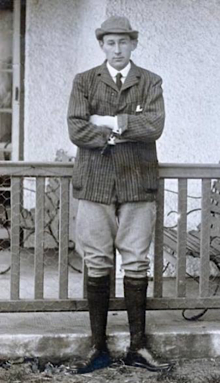
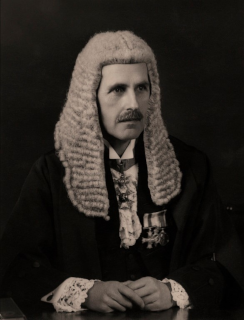
Birth of Sir Anthony Babington, Barrister, Judge & Politician

Sir Anthony Brutus Babington PC (NI)Anglo-Irish barristerjudge and politician, is born on November 24, 1877, at Creevagh House, County Londonderry, to Hume Babington JP, son of Rev. Hume Babington and a landowner of 1,540 acres, and Hester (née Watt), sister of Andrew Alexander Watt.

Babington is born into the Anglo-Irish Babington family that arrives in Ireland in 1610 when Brutus Babington is appointed Bishop of Derry. Notable relations include Robert BabingtonWilliam BabingtonBenjamin Guy Babington and James Melville Babington and author Anthony Babington.

Babington is educated at Glenalmond SchoolPerthshire, and Trinity College, Dublin, where he wins the Gold Medal for Oratory of the College Historical Society in 1899.

Babington is called to the Irish Bar in 1900. He briefly lectures in Equity at King’s Inns, and it is during this time, in 1910, that he re-arranges and re-writes R.E. Osborne’s Jurisdiction and Practice of County Courts in Ireland in Equity and Probate Matters. He takes silk in 1917.

Babington moves to the newly established Northern Ireland in 1921 and practises as a barrister until his election to the House of Commons of Northern Ireland as the Ulster Unionist Party member for Belfast South in the 1925 Northern Ireland general election and subsequent appointment as Attorney General for Northern Ireland the same year in the cabinet of James Craig, 1st Viscount Craigavon. His appointment to the Privy Council of Northern Ireland in 1926 entitles him to the style “The Right Honourable.” From 1929 he is the MP for Belfast Cromac, the Belfast South constituency having been abolished. He is made an honorary bencher of the Middle Temple in 1930.

Babington resigns from politics in 1937 upon his appointment as a Lord Justice of Appeal and is knighted in the 1937 Coronation Honours.

In 1947, Babington chairs the Babington Agricultural Enquiry Committee, named in his honour, which is established in 1943 to examine agriculture in Northern Ireland. The committee’s first recommendation under Babington’s leadership is that Northern Ireland should direct all its energies to the production of livestock and livestock products and to their efficient processing and marketing.

Babington retires from the judiciary in 1949, taking up the chairmanship of the Northern Ireland Transport Tribunal, which exists until 1967, established under the Ulster Transport Act – promoting a car-centred transport policy – and which is largely responsible for the closure of the Belfast and County Down Railway. He endorses the closure on financial grounds and is at cross purposes with his co-chair, Dr. James Beddy, who advises against the closure, citing the disruption of life in the border region between the north and the south as his primary reason in addition to financial grounds.

Babington also chairs a government inquiry into the licensing of clubs, the proceeds of which results in new regulatory legislation at Stormont. While Attorney General, he is a proponent of renaming Northern Ireland as “Ulster.”

Babington is critical of the newly proposed Irish constitution, in which the name of the Irish state is changed to “Ireland,” laying claim to jurisdiction over Northern Ireland.

Michael McDunphy, Secretary to the President of Ireland, then Douglas Hyde, recalls Ernest Alton‘s correspondence with Babington on the question of Irish unity, in which Alton and Babington are revealed to be at cross purposes. The discussion is used as an example by Brian Murphy, in Forgotten Patriot: Douglas Hyde and the Foundation of the Irish Presidency, as an example of the office of the Irish President becoming embroiled in an initiative involving Trinity College Dublin and a senior Northern Ireland legal figure, namely Babington. 

Babington writes to Alton, then Provost of Trinity College, Dublin, expressing his view that, as Murphy summarises, “… Severance between the two parts of Ireland could not continue, that it was the duty of all Irishmen to work for early unification and that in his opinion Trinity College was a very appropriate place in which the first move should be made.” When Alton arrives to meet with Hyde, it emerges, after conversing with Hyde’s secretary McDunphy, that he and Babington are at cross purposes. “It soon became clear that the united Ireland contemplated by Mr. [sic] Justice Babington of the Northern Ireland Judiciary was one within the framework of the British Commonwealth of Nations, involving recognition of the King of England as the Supreme Head, or as Dr. Alton put it, the symbol of unity of the whole system,” writes McDunphy.

On September 5, 1907, Babington marries Ethel Vaughan Hart, daughter of George Vaughan Hart of Howth, County Dublin (the son of Sir Andrew Searle Hart) and his wife Mary Elizabeth Hone, a scion of the Hone family. They have three children.

Babington is a member of the Apprentice Boys of Derry. From 1926 to 1952, he is a member of the board of governors of the Belfast Royal Academy. He serves as warden (chairman) of the board from 1941 to 1943. Through his efforts the school acquires the Castle Grounds from Anthony Ashley-Cooper, 9th Earl of Shaftesbury in 1934.

Babington is a keen golfer. He is an international golfer from 1903 to 1913, during which he is runner-up in the Irish Amateur Golf Championships in 1909 and one of the Irish representatives at an international match in 1913. The Babington Room in the Royal Portrush Golf Club is named after him, as is the 18th hole on the course as a result of the key role he plays in shaping its history.

Babington dies at the age of 94 on April 10, 1972 at his home, Creevagh, Portrush, County Antrim.


Leave a comment

Death of John MacDermott

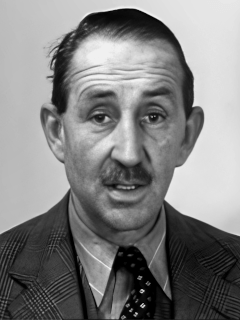
John Clarke MacDermott, Baron MacDermottMCPCPC (NI)Northern Irish politician, barrister, and judge, dies at his home in Belfast on July 13, 1979. He serves as Attorney General for Northern Ireland, a Lord of Appeal in Ordinary, and Lord Chief Justice of Northern Ireland. He is the first law lord to be appointed from Northern Ireland.

MacDermott is born in Belfast on April 12, 1896, the third surviving son and sixth of seven children of the Reverend John MacDermott DD, a Presbyterian clergyman who is minister of Belmont and moderator of the Presbyterian Church in Ireland, and of his wife Lydia Allen MacDermott (née Wilson), the daughter of a Strabane solicitor. He is educated at Campbell College, Belfast, from where he wins a scholarship to read Law at the Queen’s University Belfast (QUB) in 1914.

During the World War I, he serves with the machine gun battalion of the 51st (Highland) Division in France, Belgium and Germany, winning the Military Cross in 1918 and reaching the rank of Lieutenant. After the war he is called to the Bar of Ireland in 1921.

Eight years later MacDermott is appointed to determine industrial assurance disputes in Northern Ireland, and in 1931 becomes a lecturer in Jurisprudence at Queen’s University Belfast, teaching for four years.

In 1936, he is made a King’s Counsel, and two years later he is elected to the Northern Ireland House of Commons as an Ulster Unionist member for Queen’s University.

In 1940, MacDermott is appointed Minister of Public Security in the Government of Northern Ireland, and the following year becomes the Attorney General for Northern Ireland. He is succeeded in this post by William Lowry, whose son, Lord Lowry, would eventually succeed MacDermott as Lord Chief Justice. In 1944, he resigns his parliamentary seat on appointment as a High Court Judge for Northern Ireland, and three years later, on April 23, 1947, is made a Lord of Appeal in Ordinary, becoming a life peer as Baron MacDermott, of Belmont in the city of Belfast.

MacDermott returns from the House of Lords to take up his appointment as Lord Chief Justice of Northern Ireland. His successors to the latter office become Law Lords subsequently. Whilst Lord Chief Justice, he is affectionately known as “the Baron.”

In 1977, aged over eighty, MacDermott offers to redeliver a lecture at the Ulster College, which had been interrupted by a bomb meant for him and which had severely wounded him.

Having been made a Northern Ireland Privy Counsellor seven years earlier, MacDermott is sworn of the British Privy Council in 1947.

Four years later, in 1951, MacDermott is appointed Lord Chief Justice of Northern Ireland, a post he holds for twenty years. He is also Pro-Chancellor of his alma mater from 1951 to 1969. In 1958, he chairs the commission on the Isle of Man Constitution. He dies at his home in Belfast on July 13, 1979.

In 1926, MacDermott weds Louise Palmer Johnston, later Lady MacDermott. Their son, Sir John MacDermott, is also sworn into the British Privy Council in 1987, as a Lord Justice of Appeal in Northern Ireland. He later became a Surveillance Commissioner for Northern Ireland.


Leave a comment

Death of Basil Stanlake Brooke, Third Prime Minister of Northern Ireland

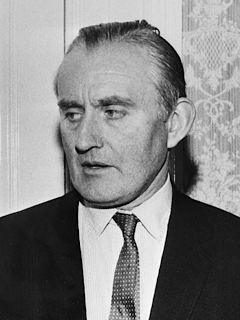
Basil Stanlake Brooke, 1st Viscount Brookeborough, KG, CBE, MC, TD, PC (Ire), Ulster Unionist Party (UUP) politician who serves as the third Prime Minister of Northern Ireland from May 1943 until March 1963, dies on August 18, 1973, at Colebrooke Park, Brookeborough, County Fermanagh, Northern Ireland. He has been described as “perhaps the last Unionist leader to command respect, loyalty and affection across the social and political spectrum.” Equally well, he has also been described as one of the most hardline anti-Catholic leaders of the UUP, and his legacy involves founding his own paramilitary group, which feeds into the reactivation of the Ulster Volunteers.

Brooke is born on June 9, 1888, at Colebrooke Park, his family’s neo-Classical ancestral seat on what is then the several-thousand-acre Colebrooke Estate, just outside Brookeborough, a village near Lisnaskea in County Fermanagh. He is the eldest son of Sir Arthur Douglas Brooke, 4th Baronet, whom he succeeds as 5th Baronet when his father dies in 1907. His mother is Gertrude Isabella Batson. He is a nephew of Field Marshal Alan Brooke, 1st Viscount Alanbrooke, Chief of the Imperial General Staff (CIGS) during World War II, who is only five years his senior. His sister Sheelah marries Sir Henry Mulholland, Speaker of the Stormont House of Commons and son of Lord Dunleath. He is educated for five years at St. George’s School in Pau, France, and then at Winchester College (1901–05).

After graduating from the Royal Military College, Sandhurst, Brooke is commissioned into the Royal Fusiliers on September 26, 1908, as a second lieutenant. He transfers to the 10th Royal Hussars in 1911. He is awarded the Military Cross and Croix de guerre with palm for his service during World War I.

Brooke is a very active Ulster Unionist Party member and ally of Edward Carson. He founds his own paramilitary group, Brooke’s Fermanagh Vigilance, from men returning from the war front in 1918. Although the umbrella Ulster Volunteers had been quiescent during the war, it is not defunct. It re-emerges strongly in 1920, subsuming groups like Brooke’s.

In 1920, having reached the rank of captain, Brooke leaves the British Army to farm the Colebrooke Estate, the family estate in west Ulster, at which point he turns toward a career in politics.

Brooke has a very long political career. When he resigns the Premiership of Northern Ireland in March 1963, he is Northern Ireland’s longest-serving prime minister, having held office for two months short of 20 years. He also establishes a United Kingdom record by holding government office continuously for 33 years.

In 1921, Brooke is elected to the Senate of Northern Ireland, but he resigns the following year to become Commandant of the Ulster Special Constabulary (USC) in their fight against the Irish Republican Army (IRA). He is created a Commander of the Order of the British Empire in 1921.

In 1929 Brooke is elected to the House of Commons of Northern Ireland as Ulster Unionist Party MP for the Lisnaskea division of County Fermanagh. In the words of the Oxford Dictionary of National Biography, “his thin, wiry frame, with the inevitable cigarette in hand, and clipped, anglicised accent were to be a feature of Stormont for the next forty years.”

Brooke becomes Minister of Agriculture in 1933. By virtue of this appointment, he also acquires the rank of Privy Councilor of Northern Ireland. From 1941 to 1943 he is Minister of Commerce.

On May 2, 1943, Brooke succeeds John M. Andrews as Prime Minister of Northern Ireland. In 1952, while Prime Minister, was raised to the peerage as Viscount Brookeborough, the title taken from the village named after the Brookes. Although a peer, he retained his seat in the House of Commons at Stormont and remained Prime Minister for another decade.

As the Northern Ireland economy begins to de-industrialise in the mid-1950s, leading to high unemployment amongst the Protestant working classes, Brooke faces increasing disenchantment amongst UUP backbenchers for what is regarded as his indifferent and ineffectual approach to mounting economic problems. As this disenchantment grows, British civil servants and some members of the UUP combine to exert discreet and ultimately effective pressure on Brooke to resign to make way for Captain Terence O’Neill, who is Minister of Finance.

In 1963, his health having worsened, Brooke resigns as Prime Minister. However, he remains a member of the House of Commons of Northern Ireland until the 1969 Northern Ireland general election, becoming the Father of the House in 1965. During his last years in the Parliament of Northern Ireland he publicly opposes the liberal policies of his successor Terence O’Neill, who actively seeks to improve relationships with the Republic of Ireland, and who attempts to address some of the grievances of Catholics and grant many of the demands of the Northern Ireland Civil Rights Association (NICRA).

Brooke is noted for his casual style toward his ministerial duties. Terence O’Neill later writes of him, “he was good company and a good raconteur, and those who met him imagined that he was relaxing away from his desk. However, they did not realise that there was no desk.”

In his retirement Brooke develops commercial interests as chairman of Carreras (Northern Ireland), a director of Devenish Trade, and president of the Northern Ireland Institute of Directors. He is also made an honorary LL.D. of Queen’s University Belfast.

From 1970 to 1973, years in which the Stormont institution comes under its greatest strain and eventually crumbles, Brooke makes only occasional forays into political life. In 1972, he appears next to William Craig MP on the balcony of Parliament Buildings at Stormont, a diminutive figure beside the leader of the Vanguard Unionist Progressive Party (VUPP) who is rallying right-wing Unionists against the Government of Northern Ireland. He opposes the Westminster white paper on the future of Northern Ireland and causes some embarrassment to his son, Captain John Brooke, the UUP Chief Whip and an ally of Brian Faulkner, by speaking against the Faulkner ministry‘s proposals.

Brooke dies at his home, Colebrooke Park, on the Colebrooke Estate, on August 18, 1973. His remains are cremated at Roselawn Cemetery, East Belfast, three days later, and, in accordance with his wishes, his ashes are scattered on the demesne surrounding his beloved Colebrooke Park.


Leave a comment

Death of Sir James Craig, First Prime Minister of Northern Ireland

James Craig, 1st Viscount Craigavon PC PC (NI) DL, prominent Irish unionist politician, leader of the Ulster Unionist Party and the first Prime Minister of Northern Ireland from 1921 until his death, dies peacefully at his home at Glencraig, County Down, at the age of 69 on November 24, 1940.

Craig is born at Sydenham, Belfast, on January 8, 1871, the seventh of nine children of James Craig (1828–1900), a wealthy whiskey distiller who had entered the firm of Dunville & Co. as a clerk and by age 40 is a millionaire and a partner in the firm. Craig Snr. owns a large house called Craigavon, overlooking Belfast Lough. His mother, Eleanor Gilmore Browne, is the daughter of Robert Browne, a prosperous man who owned property in Belfast and a farm outside Lisburn. Craig is educated at Merchiston Castle School in Edinburgh, Scotland. After school he begins work as a stockbroker, eventually opening his own firm in Belfast.

Craig enlists in the 3rd (Militia) battalion of the Royal Irish Rifles on January 17, 1900, to serve in the Second Boer War. He is seconded to the Imperial Yeomanry, a cavalry force created for service during the war, as a lieutenant in the 13th battalion on February 24, 1900, and leaves Liverpool for South Africa on the SS Cymric in March 1900. After arrival he is soon sent to the front and is taken prisoner in May 1900, but released by the Boers because of a perforated colon. On his recovery he becomes deputy assistant director of the Imperial Military Railways, showing the qualities of organisation that are to mark his involvement in both British and Ulster politics. In June 1901 he is sent home suffering from dysentery, and by the time he is fit for service again the war is over. He is promoted to captain in the 3rd Royal Irish Rifles on September 20, 1902, while still seconded to South Africa.

On his return to Ireland, having received a £100,000 legacy from his father’s will, Craig turns to politics, serving as Member of the British Parliament for East Down from 1906 to 1918. From 1918 to 1921 he represents Mid Down and serves in the British government as Parliamentary Secretary to the Minister for Pensions (1919–20) and Parliamentary Secretary to the Admiralty (1920–21).

Craig rallies Ulster loyalist opposition to Irish Home Rule in Ulster before World War I, organising the paramilitary Ulster Volunteers (UVF) and buying arms from Imperial Germany. The UVF becomes the nucleus of the 36th (Ulster) Division during World War I. He succeeds Edward Carson as leader of the Ulster Unionist Party in February 1921.

In the 1921 Northern Ireland general election, the first ever, Craig is elected to the newly created House of Commons of Northern Ireland as one of the members for Down.

On June 7, 1921, Craig is appointed the first Prime Minister of Northern Ireland by the Lord Lieutenant of Ireland. The House of Commons of Northern Ireland assembles for the first time later that day.

Craig is made a baronet in 1918, and in 1927 is created Viscount Craigavon, of Stormont in the County of Down. He is also the recipient of honorary degrees from Queen’s University Belfast (1922) and the University of Oxford (1926).

Craig had made his career in British as well as Northern Irish politics, but his premiership shows little sign of his earlier close acquaintance with the British political world. He becomes intensely parochial and suffers from his loss of intimacy with British politicians in 1938, when the British government concludes agreements with Dublin to end the Anglo-Irish trade war between the two countries. He never tries to persuade Westminster to protect Northern Ireland‘s industries, especially the linen industry, which is central to its economy. He is anxious not to provoke Westminster, given the precarious state of Northern Ireland’s position. In April 1939, and again in May 1940 during World War II, he calls for conscription to be introduced in Northern Ireland (which the British government, fearing a backlash from nationalists, refuses). He also calls for Winston Churchill to invade Ireland using Scottish and Welsh troops in order to seize the valuable ports and install a Governor-General at Dublin.

While still prime minister, Craig dies peacefully at his home at Glencraig, County Down at the age of 69 on November 24, 1940. He is buried on the Stormont Estate on December 5, 1940, and is succeeded as the Prime Minister of Northern Ireland by the Minister of Finance, J. M. Andrews.

(Pictured: James Craig, 1st Viscount Craigavon, bromide print by Olive Edis, National Portrait Gallery, London)


Leave a comment

Birth of Dehra Parker, MP in the House of Commons of Northern Ireland

The Rt Hon. Dame Dehra S. Parker, GBE, PC (NI), the longest serving female MP in the House of Commons of Northern Ireland, is born in a military hospital in Dehradun, north of Delhi, India, on August 13, 1882.

Parker is born Dehra Kerr-Fisher, the only child of James Kerr-Fisher and his wife Annie. Her father, a native of Kilrea, County Londonderry, is a successful financier. She is educated in the United States, where her father holds extensive property holdings, and in Germany. The surname has been spelled, alternatively, as Ker-Fisher or Ker Fisher.

Parker is married twice. Her first husband is Lieutenant Colonel Robert Peel Dawson Spencer Chichester, MP, with whom she has one son and one daughter, Robert James Spencer Chichester (1902–1920) and Marion Caroline Dehra Chichester (1904–1976). She is predeceased by her son. On June 4, 1928, she marries her second husband, Admiral Henry Wise Parker (CB, CMG).

Parker is first elected as a Member of Parliament (MP) for Londonderry, as Dehra Chichester, as she is known prior to her second marriage in 1928, in the 1921 Northern Ireland general election. She stands down at the 1929 election just before her second marriage but is elected unopposed as Dehra Parker in the March 15, 1933 by-election for the South Londonderry constituency following the death of her son-in-law James Lenox-Conyngham Chichester-Clark. She serves until her resignation on June 15, 1960. Her grandson, James Chichester-Clark, is elected unopposed at the subsequent by-election. He later serves as the fifth Prime Minister of Northern Ireland from 1969 to 1971.

From her re-election in 1933 until her retirement in 1960, Parker faces opposition only once. During the 1949 Northern Ireland general election, with anti-partition agitation a common theme across the region, she is opposed in South Londonderry by a Nationalist Party candidate, T. B. Agnew, whom she defeats. She is a Parliamentary Secretary to the Ministry of Education from December 1, 1937, to March 15, 1944. She is also Chair of the Northern Ireland General Health Services Board from 1948 to 1949. She serves as Minister of Health and Local Government from August 26, 1949, to March 13, 1957, and becomes a member of the Privy Council of Northern Ireland in 1949. She is elevated to Dame Commander of the Order of the British Empire in the 1949 Birthday Honours “for public services,” having previously been appointed as an OBE, and is advanced to be a Dame Grand Cross of the Order of the British Empire (GBE) in 1957.

Parker’s promotion to the Cabinet at the age of 67 under Sir Basil Brooke (later created the 1st Viscount Brookeborough) is part of his so-called “reforming” premiership, his predecessor, J. M. Andrews, having been criticised for appointing elderly members to Cabinet. She is the first woman to serve in the Northern Ireland Cabinet.

Outside of parliamentary activities, Parker is a long-serving local councilor on Magherafelt District Council, president of both the Northern Ireland Physical Training Association and the Girls’ Training Corps, and chairman of the Ancient Monuments Advisory Committee. In 1944, she is appointed senior vice-chairman of the Council for the Encouragement of Music and the Arts (CEMA NI), and in 1949 she succeeds Sir David Lindsay Keir as President for CEMA, a position she holds until 1960. She is made an honorary member of the Ulster Society of Women Artists in 1958.

Parker dies at her home, Shanemullagh House, Castledawson, in the south of County Londonderry, on November 28, 1963, at age 81. She is interred two days later in the grounds of Christ Church, Castledawson.


Leave a comment

Birth of Norman Stronge, 8th Baronet & UUP Politician

Sir Charles Norman Lockhart Stronge, 8th Baronet, senior Ulster Unionist Party (UUP) politician in Northern Ireland, is born on July 23, 1894, in Bryansford, County Down.

Stronge is the only son among two children of Sir Charles Edmond Sinclair Stronge (1862–1939) of Tynan Abbey, County Armagh, and Marian Iliff Stronge (née Bostock) of Walton Heath, Epsom, England. The family holds one of Ulster‘s oldest baronetcies and has a distinguished tradition in public life. Educated at Eton College, he serves in the Royal Inniskilling Fusiliers during World War I and is mentioned in dispatches by Sir Douglas Haig after the opening Battle on the Somme in July 1916. He is awarded the Military Cross (MC) and the Belgian Croix de guerre. After the war he begins farming in County Londonderry. While in Londonderry he serves as High Sheriff of the county from 1934. Seven years later he moves to his ancestral home, Tynan Abbey, on the death of his cousin Sir James Stronge. He becomes the 8th Baronet in 1939, a year after his election to the House of Commons for Northern Ireland for Mid Armagh. He is appointed High Sheriff for Armagh in 1940.

At the outbreak of war in 1939, Stronge joins the North Irish Horse as a lieutenant but has to relinquish his commission the following year due to ill health. He is then granted the rank of captain. Resuming his political career, he becomes Assistant Parliamentary Secretary at the Ministry of Finance (Assistant Whip) (1941–42) and then Parliamentary Secretary at the Ministry of Finance (Chief Whip) (1942–44). His period as Chief Whip is marked by more robust and “fluid” debate within the party and significant backbench discontent in early 1943. In June 1944 he is elected chairman of Armagh County Council, and in the following year is returned unopposed in the general election. He becomes Speaker of the House of Commons of Northern Ireland in 1945 and in this position he earns the respect of, and makes friends with, politicians of every hue, and is regarded as a moderating influence. It has been said of him that he disproved the myth that politicians at Stormont never spoke to each other. He is unopposed in every postwar election up to 1965, when he sees off the challenge of the Liberal candidate. He does not contest the 1969 general election. He is made Chevalier of the Order of Leopold in 1946 and in the same year is appointed to the Privy Council of Northern Ireland. A member of the Commonwealth Parliamentary Association, he is a delegate to its 1950 conference in New Zealand. Another interest is the Royal Over-Seas League, of which he is president for a time.

Stronge is closely associated with Sir Basil Brooke, Dame Dehra Parker and Sir Henry Mulholland. He is president of the Northern Ireland area council of the Royal British Legion, sovereign grand master of the Royal Black Institution, president of the Federation of Boys’ Clubs, and chairman of the Commercial Insurance Co. and of the Central Advisory Council for the Employment of the Disabled. It is this last position that causes a brief interruption of his speakership, with an act of parliament deemed necessary to remove any doubt about it having been an office of profit. A prominent member of the Orange Order, he is also chairman of the BBC appeals advisory committee and the Northern Ireland scout council. His retirement from public life in 1977 is marked by his investiture as a Knight of Grace by Prince Richard, Duke of Gloucester.

A leading member of the Church of Ireland, Stronge becomes Commander of the Order of Saint John in 1952 and is for many years on the Armagh diocesan synod and council. Until his death, he is a nominator for the position of rector and reads the lessons each Sunday morning in Tynan parish church. In September 1921 he marries Gladys Olive, daughter of Major Henry Thomas Hall of Knockbrack, Athenry, County Galway. They have three daughters and a son, James. In his later life he lives with James, a bachelor, on their 800-acre estate near the border. James is educated at Eton College and Christ Church, Oxford. He succeeds his father in the Mid Armagh constituency in 1969, serving as Ulster Unionist MP in the Stormont parliament until 1972. He is firmly opposed to the Sunningdale Agreement of December 1973, which he describes as a “great act of political appeasement.” Although both are known in the locality, neither seeks public attention and both live relatively quiet lives. Stronge likes to work in the garden but has little interest in the farm, most of which is let out to tenants.

Stronge and his son become prominent victims of the Troubles when a unit of the Provisional Irish Republican Army shoots them dead on January 21, 1981, at Tynan Abbey and sets the mansion alight, destroying it. The Provisional IRA statement describes them as “symbols of hated unionism” and their killings as “direct reprisal for a whole series of loyalist assassinations and murder attacks on nationalist people.” The killings come five days after an attempted assassination of the former MP Bernadette Devlin McAliskey and her husband. Tynan Abbey is long held to have been an easy target, given its relative isolation and its proximity to the border. In 1985 a man is tried for their murders but is acquitted. In 1999 the shell of Tynan Abbey is demolished.

(From: “Stronge, Sir Charles Norman Lockhart” by Tom Feeney, Dictionary of Irish Biography, http://www.dib.ie, October 2009)


Leave a comment

The Convening of the Second Dáil

The Second Dáil (Irish: An Dara Dáil) is Dáil Éireann as it convenes on August 16, 1921, following the dissolution of the First Dáil. The Second Dáil runs until June 8, 1922.

From 1919 to 1922, Dáil Éireann is the revolutionary parliament of the self-proclaimed Irish Republic. The Second Dáil consists of members elected at the 1921 Irish elections, but with only members of Sinn Féin taking their seats. On January 7, 1922, it ratifies the Anglo-Irish Treaty by 64 votes to 57 which ends the Irish War of Independence and leads to the establishment of the Irish Free State on December 6, 1922.

Since 1919, those elected for Sinn Féin at the 1918 Irish general election had abstained from the House of Commons and established Dáil Éireann as a parliament of a self-declared Irish Republic, with members calling themselves Teachtaí Dála or TDs. In December 1920, in the middle of the Irish War of Independence, the British Government passes the Government of Ireland Act 1920, which enacts partition by establishing two home rule parliaments in separate parts of Ireland. These provisions arise out of discussions held at the Irish Convention held in 1917, from which Sinn Féin abstains. In May 1921 the first elections to the House of Commons of Northern Ireland and the House of Commons of Southern Ireland are held, by means of the single transferable vote. On May 10, 1921, the Dáil passes a resolution that the elections scheduled to take place later in the month in both parts of the country will be “regarded as elections to Dáil Éireann.”

In the elections for Southern Ireland, all seats are uncontested, with Sinn Féin winning 124 of the 128 seats, and Independent Unionists winning the four seats representing the Dublin University. In the 1921 Northern Ireland general election, the Ulster Unionist Party (UUP) wins 40 of the 52 seats, with Sinn Féin and the Nationalist Party winning 6 seats each. Of the six seats won by Sinn Féin in Northern Ireland, five are held by people who had also won seats in Southern Ireland.

The Second Dáil responds favourably to the proposal from King George V on June 22, 1921, for a truce, which becomes effective from noon on July 11, 1921. This is upheld by nearly all of the combatants while the months-long process of arranging a treaty gets under way. The Truce allows the Dáil to meet openly without fear of arrest for the first time since September 1919, when it had been banned and driven underground.

During the Second Dáil the Irish Republic and the British Government of David Lloyd George agree to hold peace negotiations. As President of Dáil Éireann, Éamon de Valera is the highest official in the Republic at this time but is notionally only the head of government. In August 1921, to strengthen his status in the negotiations, the Dáil amends the Dáil Constitution to grant him the title President of the Republic, and he thereby becomes head of state.

On September 14, 1921, the Dáil ratifies the appointment of Arthur Griffith, Michael Collins, Robert Barton, Eamonn Duggan and George Gavan Duffy as envoys plenipotentiary for the peace conference in England. These envoys eventually sign the Anglo-Irish Treaty on December 6. The debate on the Treaty starts on December 14 and continues until January 7, 1922. On that date, the Dáil approves the treaty by 64 in favour to 57 against. As the leader of the anti-Treaty minority, de Valera resigns as President. He allows himself to be nominated again but is defeated on a vote of 60–58. He is succeeded as president by Arthur Griffith. The anti-Treaty deputies continue to attend the Dáil, with de Valera becoming the first Leader of the Opposition in the Dáil.

The ratification specified by the Treaty is by “a meeting summoned for the purpose of the members elected to sit in the House of Commons of Southern Ireland.” The Dáil vote does not fulfil this because four unionists are absent and one Northern Ireland member is present. The requisite approval comes at a separate meeting on January 14, 1922, attended by the unionists and boycotted by anti-Treaty TDs. The meeting also approves a Provisional Government led by Collins, which runs in parallel to Griffith’s Dáil government and with overlapping membership. The Government of Ireland Act 1920 requires the Commons to be summoned by the Lord Lieutenant and its members to take an oath of allegiance to the king, whereas the meeting on January 14 is summoned by Griffith and the members present do not take an oath.

Under the terms of the Treaty, a Constituent Assembly is to be elected to draft a Constitution for the Irish Free State to take effect by December 6, 1922. The assembly is also to serve as a “Provisional Parliament” to hold the Provisional Government responsible. This election is held on June 16, 1922, pursuant to both a resolution by the Second Dáil on May 20 and a proclamation by the Provisional Government on 27 May 27.

The Third Dáil is elected at the general election held on June 16, 1922. This election is required to be held under the Anglo-Irish Treaty signed on December 6, 1921.

(Pictured: Some members of the Second Dáil at the Grosvenor Hotel in London, seated (L to R) Éamon de Valera and Arthur Griffith, National Library of Ireland, NPA-RPH-10)


Leave a comment

Birth of James Craig, 1st Viscount Craigavon & First Prime Minister of Northern Ireland

James Craig, 1st Viscount Craigavon PC PC (NI) DL, prominent Irish unionist politician, leader of the Ulster Unionist Party and the first Prime Minister of Northern Ireland from 1921 until his death in 1940, is born at Sydenham, Belfast, on January 8, 1871.

Craig is the seventh of nine children of James Craig (1828–1900), a wealthy whiskey distiller who had entered the firm of Dunville & Co. as a clerk and by age 40 is a millionaire and a partner in the firm. Craig Snr. owns a large house called Craigavon, overlooking Belfast Lough. His mother, Eleanor Gilmore Browne, is the daughter of Robert Browne, a prosperous man who owned property in Belfast and a farm outside Lisburn. Craig is educated at Merchiston Castle School in Edinburgh, Scotland. After school he begins work as a stockbroker, eventually opening his own firm in Belfast.

Craig enlists in the 3rd (Militia) battalion of the Royal Irish Rifles on January 17, 1900, to serve in the Second Boer War. He is seconded to the Imperial Yeomanry, a cavalry force created for service during the war, as a lieutenant in the 13th battalion on February 24, 1900, and leaves Liverpool for South Africa on the SS Cymric in March 1900. After arrival he is soon sent to the front and is taken prisoner in May 1900, but released by the Boers because of a perforated colon. On his recovery he becomes deputy assistant director of the Imperial Military Railways, showing the qualities of organisation that are to mark his involvement in both British and Ulster politics. In June 1901 he is sent home suffering from dysentery, and by the time he is fit for service again the war is over. He is promoted to captain in the 3rd Royal Irish Rifles on September 20, 1902, while still seconded to South Africa.

On his return to Ireland, having received a £100,000 legacy from his father’s will, Craig turns to politics, serving as Member of the British Parliament for East Down from 1906 to 1918. From 1918 to 1921 he represents Mid Down and serves in the British government as Parliamentary Secretary to the Minister for Pensions (1919–20) and Parliamentary Secretary to the Admiralty (1920–21).

Craig rallies Ulster loyalist opposition to Irish Home Rule in Ulster before World War I, organising the paramilitary Ulster Volunteers (UVF) and buying arms from Imperial Germany. The UVF becomes the nucleus of the 36th (Ulster) Division during World War I. He succeeds Edward Carson as leader of the Ulster Unionist Party in February 1921.

In the 1921 Northern Ireland general election, the first ever, Craig is elected to the newly created House of Commons of Northern Ireland as one of the members for Down.

On June 7, 1921, Craig is appointed the first Prime Minister of Northern Ireland by the Lord Lieutenant of Ireland. The House of Commons of Northern Ireland assembles for the first time later that day.

Craig is made a baronet in 1918, and in 1927 is created Viscount Craigavon, of Stormont in the County of Down. He is also the recipient of honorary degrees from Queen’s University Belfast (1922) and the University of Oxford (1926).

Craig had made his career in British as well as Northern Irish politics, but his premiership shows little sign of his earlier close acquaintance with the British political world. He becomes intensely parochial and suffers from his loss of intimacy with British politicians in 1938, when the British government concludes agreements with Dublin to end the Anglo-Irish trade war between the two countries. He never tries to persuade Westminster to protect Northern Ireland‘s industries, especially the linen industry, which is central to its economy. He is anxious not to provoke Westminster, given the precarious state of Northern Ireland’s position. In April 1939, and again in May 1940 during World War II, he calls for conscription to be introduced in Northern Ireland (which the British government, fearing a backlash from nationalists, refuses). He also calls for Winston Churchill to invade Ireland using Scottish and Welsh troops in order to seize the valuable ports and install a Governor-General at Dublin.

While still prime minister, Craig dies peacefully at his home at Glencraig, County Down at the age of 69 on November 24, 1940. He is buried on the Stormont Estate on December 5, 1940, and is succeeded as the Prime Minister of Northern Ireland by the Minister of Finance, J. M. Andrews.

(Pictured: James Craig, 1st Viscount Craigavon, bromide print by Olive Edis, National Portrait Gallery, London)


Leave a comment

Birth of Cahir Healy, Irish Nationalist Politician

Cahir Healy, Irish nationalist politician, is born in Mountcharles, County Donegal, on December 2, 1877. He is a leader of northern Nationalists and is a self educated man who makes major contributions to Ireland’s cultural and literary heritage.

Healy becomes a journalist working on various local papers. He joins Sinn Féin on its foundation in 1905. He later campaigns against the inclusion of County Fermanagh and County Tyrone in Northern Ireland, arguing that they have an Irish nationalist majority. He is imprisoned for his activities in 1922, before being elected in the 1922 United Kingdom general election to represent Fermanagh and Tyrone as a Nationalist Party MP, but with the support of Sinn Féin.

Healy is re-elected in 1923, but remains in custody until the following year, in which he does not defend his seat. Instead, he is elected to represent the seat in the House of Commons of Northern Ireland in the 1925 Northern Ireland general election, but does not take his seat until 1927 due to the Nationalist abstentionist policy. In 1928 he becomes a founder of the National League of the North. In 1929, with the break-up of the large Fermanagh and Tyrone constituency, he switches to sit for the new seat of South Fermanagh. In a 1931 Fermanagh and Tyrone by-election he is again elected for Fermanagh and Tyrone to the British Parliament, but stands down again in 1935.

Healy becomes an insurance official but continues to write, his output including journalism, poetry and short stories. He is interned by the United Kingdom government for a year during World War II under Defence Regulation 18B. In 1950 he is elected to the British House of Commons for a third time, on this occasion representing Fermanagh and South Tyrone. He finally sits in the British Parliament in 1952, and holds the seat until he stands down in 1955. He leaves the Northern Ireland House of Commons in 1965, by which point he is the Father of the House.

Healy dies on February 8, 1970, at the age of 92 at Enniskillen, County Fermanagh.

(Pictured: Portrait of Cahir Healy by Lafayette, half-plate nitrate negative, July 7, 1932, given by Pinewood Studios via Victoria and Albert Museum, 1989, National Portrait Gallery, London)


Leave a comment

Birth of Basil Kelly, Northern Irish Barrister, Judge & Politician

Sir John William Basil Kelly, Northern Irish barrister, judge and politician, is born in County Monaghan on May 10, 1920. He rises from poverty to become the last Attorney General of Northern Ireland and then one of the province’s most respected High Court judges. For 22 years he successfully conducts many of the most serious terrorist trials.

A farmer’s son, Kelly is raised amid the horror of the Irish Civil War. The family is burned out when he is five and, penniless, goes north to take a worker’s house near the Harland & Wolff shipyard in Belfast. Even though they are Protestant the Kellys are met with a cold welcome. To counter that, his mother starts a bakery while he and his father sell the hot rolls to the area pubs.

Kelly initially attends a shipyard workers’ school, sometimes without shoes, and then goes on to Methodist College Belfast, where only boys prepared to work hard are welcome. His mother, who had taught him to play the piano by marking out the keyboard on the kitchen table, is so cross when she hears that he has been playing football in the street that she tells the headmaster that he does not have enough homework.

On a visit to an elder sister at Trinity College, Dublin, Kelly is so impressed by her smoking and her painted nails that he decides to follow her to the university, where he reads legal science. After being called to the Bar of Northern Ireland in 1944, he has the usual slow start, traveling up to 100 miles to earn a five-guinea fee. However, aided by a photographic memory and the patronage of Catholic solicitors, he gradually builds up a large practice, concentrating on crime and workers’ compensation while earning a reputation as the finest cross-examiner in the province.

Kelly first makes a mark by his successful defence of an aircraftman accused of killing a judge’s daughter. The man is found guilty but insane, though the complications involved bring it back to court 20 years later. After appointment as Queen’s Counsel in 1958 he skillfully conducts two cases which go to the House of Lords. One involves the liability of a drunken psychopath, the other the question of automatism where a person, acting like a sleepwalker, does not know what he is doing.

In the hope of speeding his way to the Bench, Kelly is elected to the House of Commons of Northern Ireland as Ulster Unionist Party (UUP) member for Mid Down in 1964. His capacity for hard work leads to his being appointed Attorney General four years later.

In March 1972, the entire Government of Northern Ireland resigns, and the Parliament of Northern Ireland is prorogued. As a result, Kelly ceases to be Attorney General. The office of Attorney General for Northern Ireland is transferred to the Attorney General for England and Wales, and he is the last person to serve as Stormont’s Attorney General.

In 1973, Kelly is appointed as a judge of the High Court of Northern Ireland, and then as a Lord Justice of Appeal of Northern Ireland in 1984, when he is also knighted and appointed to the Privy Council of the United Kingdom. On the bench he proves a model of fairness and courtesy with a mastery of facts, but his role often puts him in danger.

A Provisional Irish Republican Army (IRA) gang once targets him with a bomb-laden milk van, intending to drive it through his gates. But the police are alerted and immediately take him to Stormont, where he lives for the next two months.

For a year Kelly presides alone over a non-jury Diplock court, protected by armed police and wearing a bulletproof vest before writing his judgment under Special Air Service (SAS) guard in England. He convicts dozens of people on “supergrass” evidence, though there are subsequently doubts about the informant and some of his judgments are overturned.

One of the accused, Kevin Mulgrew, is sentenced to 963 years in prison, with Kelly telling him, “I do not expect that any words of mine will ever raise in you a twinge of remorse.” While the IRA grumbles about the jail terms he dispenses, and he is often portrayed as an unthinking legal hardliner by Sinn Féin, he is a more subtle figure and is often merciful towards those caught up in events or those whom he considers too young for prison.

Kelly retires in 1995 and moves to England, where he dies at the age of 88 at his home in Berkshire on December 5, 2008, following a short illness. He is survived by his wife, Pamela Colmer.

(From: “Basil Kelly,” Independent.ie (www.independent.ie), January 4, 2009)