seamus dubhghaill

Promoting Irish Culture and History from Little Rock, Arkansas, USA


Leave a comment

Birth of Standish James O’Grady, Author, Journalist & Historian

Standish James O’Grady (Irish: Anéislis Séamus Ó Grádaigh), Irish author, journalist, and historian, is born in Castletownbere, County Cork, on September 18, 1846. He is inspired by Sylvester O’Halloran and plays a formative role in the Celtic Revival, publishing the tales of Irish mythology, as the History of Ireland: Heroic Period (1878), arguing that the Gaelic tradition has rival only from the tales of Homeric Greece.

O’Grady’s father is the Reverend Thomas O’Grady, the scholarly Church of Ireland minister of Castletown Berehaven, County Cork, and his mother Susanna Doe (or Dowe). The Glebe, his childhood home, lies a mile west of Castletownbere near a famine mass grave and ruined Roman Catholic chapel. He is a cousin of Standish Hayes O’Grady, another noted figure in Celtic literature, and of Standish O’Grady, 1st Viscount Guillamore. After a rather severe education at Tipperary Grammar School, he follows his father to Trinity College, Dublin, where he wins several prize medals and distinguishes himself in several sports.

O’Grady is a paradox for his times, proud of his Gaelic heritage, he is also a member of the Church of Ireland, a champion of aristocratic virtues (particularly decrying bourgeois values and the uprooting cosmopolitanism of modernity) and at one point advocates a revitalised Irish people taking over the British Empire and renaming it the Anglo-Irish Empire.

O’Grady proves too unconventional of mind to settle into a career in the church, and takes a job as a schoolmaster at Midleton College, then in a period of expansion. He also qualifies as a barrister, while earning much of his living by writing for the Irish newspapers. Reading Sylvester O’Halloran’s A general history of Ireland (1778) sparks an interest in early Irish history. After an initial lukewarm response to his writing on the legendary past in History of Ireland: The Heroic Period (1878) and Early Bardic Literature of Ireland (1879), he realises that the public wants romance, and so follows the example of James Macpherson in recasting Irish legends in literary form, producing historical novels including Finn and his Companions (1891), The Coming of Cuculain (1894), The Chain of Gold (1895), Ulrick the Ready (1896) and The Flight of the Eagle (1897), and The Departure of Dermot (1913).

O’Grady also studies Irish history of the Elizabethan period, presenting in his edition of Sir Thomas Stafford‘s Pacata Hibernia (1896) the view that the Irish people had made the Tudors into kings of Ireland to overthrow their unpopular landlords, the Irish chieftains. His The Story of Ireland (1894) is not well received, as it sheds too positive a light on the rule of Oliver Cromwell for the taste of many Irish readers. He is also active in social and political campaigns in connection with such issues as unemployment and taxation.

Until 1898, O’Grady works as a journalist for the Daily Express of Dublin, but in that year, finding Dublin journalism in decline, he moves to Kilkenny to become editor of the Kilkenny Moderator, which is printed at 28 High Street. It is here he becomes involved with Ellen Cuffe, Countess of Desart, and Captain Otway Cuffe. He engages in the revival of the local woolen and woodworking industries. In 1900 he founds the All-Ireland Review and returns to Dublin to manage it until it ceases publication in 1908. He also contributes to James Larkins‘ The Irish Worker paper.

O’Grady’s influence crosses the divide of the Anglo-Irish and Irish-Ireland traditions in literature. His influence is explicitly stated by the Abbey Theatre set with Lady Gregory, W. B. Yeats and George William Russell attributing their interest in the Fenian Cycle of Gaelic tradition in part to him. This leads to him being known as the “Father of the Celtic Revival.” Some of the figures associated with the political party Sinn Féin, including its founder Arthur Griffith, have positive things to say about his efforts in helping to retrieve from the past the Gaelic heroic outlook.

O’Grady marries Margaret Allen Fisher, daughter of William Allen Fisher, and they have three sons. Advised to move away from Ireland for the sake of his health, they leave Ireland in 1918. After living in the north of France and Northamptonshire, they move to the Isle of Wight. He is working on a final exposition of his ideas when he dies suddenly on May 18, 1928.

O’Grady’s eldest son, Hugh Art O’Grady, is for a time editor of the Cork Free Press before he enlists in World War I in early 1915. He becomes better known as Dr. Hugh O’Grady, later Professor of the Transvaal University College, Pretoria (later the University of Pretoria), who writes the biography of his father in 1929.


Leave a comment

Birth of Geraldine Kennedy, First Female Editor of “The Irish Times”

Geraldine Kennedy, Irish journalist and politician who serves as the first female editor of The Irish Times newspaper, is born on September 1, 1951, in Tramore, County Waterford. She previously serves as a Teachta Dála (TD) for the Dún Laoghaire constituency from 1987 to 1989.

Kennedy studies at Dublin Institute of Technology (DIT) and begins her journalistic career with a regional newspaper, The Munster Express. She moves to The Cork Examiner after less than a year but spends only a few years there before joining The Irish Times.

On the foundation of the Sunday Tribune in 1980, Kennedy joins it as the paper’s political correspondent. The paper’s publisher, John Mulcahy, had become familiar with Kennedy when she had contributed to his journal, The Hibernia Magazine. When the Tribune briefly ceases production, she moves to the Sunday Press.

In 1982, Kennedy’s telephone, along with those of two other journalists, is tapped by former Minister for Justice Seán Doherty. Early in 1987, she successfully sues the incumbent Charles Haughey-led Fianna Fáil government for illegally tapping her phone. The revelation in 1992 that Charles Haughey had personally ordered the phone taps leads to Haughey’s resignation as Taoiseach.

Kennedy stands in the 1987 Irish general election as a candidate for the newly formed Progressive Democrats party in Dún Laoghaire. She comes in third in the poll, winning 9.4% of the first-preference vote. She is one of fourteen Progressive Democrat TDs elected to Dáil Éireann in that election, a feat the party never achieves again. She is appointed the party’s spokesperson for foreign affairs.

She stands again in the 1989 Irish general election and wins 9% of the first-preference vote but fails to retain her seat.

Following her election defeat, Kennedy returns to The Irish Times, then edited by Conor Brady, whom she had worked with at the Tribune when he was the editor. She avoids party-political journalism for several years, but she returns to covering politics in the early 1990s and becomes the political editor of The Irish Times in 1999. She becomes the newspaper’s first female editor upon the departure of Brady in late 2002. One of her rivals for the editor’s chair is the paper’s high-profile columnist, Fintan O’Toole.

Kennedy is paid more than the editor of Britain’s top non-tabloid newspaper The Daily Telegraph, which has a circulation of about nine times that of The Irish Times. Later columnist Fintan O’Toole tells the Sunday Independent, “We as a paper are not shy of preaching about corporate pay and fat cats but with this there is a sense of excess. Some of the sums mentioned are disturbing. This is not an attack on Ms. Kennedy, it is an attack on the executive level of pay. There is double standard of seeking more job cuts while paying these vast salaries.”

In September 2006, Kennedy approves the publication of an article in The Irish Times giving confidential details of investigations being made into payments purported to have been made in 1993 to Taoiseach Bertie Ahern. She refuses, upon request of the investigating Mahon Tribunal, to provide details of the source of the printed information. She responds that the documents have since been destroyed. Her refusal causes the Tribunal to seek High Court orders compelling her to provide details of the source. On October 23, 2007, the High Court grants the orders compelling her to go before the Tribunal and answer all questions. In its judgment, the High Court, criticising her decision to destroy the documents, says it was an “astounding and flagrant disregard of the rule of law.” In 2009, however, the Supreme Court of Ireland overturns this ruling, holding that the High Court had not struck the correct balance between the journalists’ right to protect their source and the tribunal’s right to confidentiality.

Kennedy announces on March 12, 2011, her intention to retire from The Irish Times by September, after a nine-year term as editor. She actually retires in June and is succeeded by news editor Kevin O’Sullivan on June 23, 2011.

In August 2012, Kennedy is appointed Adjunct Professor of Journalism at the University of Limerick. She has been awarded five honorary doctorates from Irish universities.


Leave a comment

Birth of Desmond Ryan, Revolutionary, Writer & Historian

Desmond Ryan, Irish writer, historian, and in his earlier life a revolutionary in Sinn Féin, is born in London on August 27, 1893.

Ryan is the son of the Templemore, County Tipperary-born London journalist William Patrick Ryan, editor of the Peasant and Irish Nation and assistant editor of the London Daily Herald, and his wife, Elizabeth. He comes to Ireland in 1906, aged 13, with his mother and sister, and studies at St. Enda’s School, Rathfarnham, under headmaster and founder Patrick Pearse. He later teaches in the school and is briefly Pearse’s secretary.

Ryan attributes to Pearse the saying “[G]ive me a hundred men and I will free Ireland!” He becomes part of a group of former students lodging in St. Enda’s while they go to university who join the Irish Republican Brotherhood (IRB). They meet in a safe house at Rathfarnham in 1911. The men take the tram from Rathfarnham to Nelson’s Pillar in central Dublin. Pearse once told his friend, “Let them talk! I am the most dangerous revolutionary of the whole lot of them!” In 1911, the Dungannon Clubs revive the Volunteers Militia movement. These clubs are not initially successful in Dublin but are more so in Belfast amongst nationalists. One of the northern members is the Dubliner Oscar Traynor, in his youth a professional footballer with Belfast Celtic F.C., later a war hero and later again a politician and Minister for Posts and Telegraphs.

At this stage, according to Ryan, Pearse is a constitutional nationalist who speaks for Home Rule from a platform shared with Tom Kettle and John Redmond and refuses to hear any criticism of the Irish Parliamentary Party (IPP). But on the foundation of the Ulster Volunteer Force (UVF) by Edward Carson and the approach of World War I, Pearse becomes increasingly sure that Ireland cannot achieve independence except by force, and begins with Thomas MacDonagh, Éamonn Ceannt, Joseph Plunkett, Tom Clarke, Bulmer Hobson and others to plan the Easter Rising.

Eoin MacNeill is appointed leader of the Irish Volunteers. Ryan writes that Pearse, a risk-taker and idealist, tells him MacNeill is “too tactful.” MacNeill is prepared to entertain the Irish Parliamentary Party with negotiations. Ryan quotes Pearse as saying, “[MacNeill] has the reputation of being tactful, but his tact consists in bowing to the will of the Redmondites every time. He never makes a fight except when they assail his personal honour, when he bridles up at once… very delicate position… he is weak, hopelessly weak.”

Pearse tells Ryan that MacNeill is “a Grattan come to life again.” Henry Grattan is a constitutional orator and MP in the Protestant-only 18th-century Irish House of Commons, but one of those who fiercely opposes the notorious Acts of Union 1800, secured by massive bribery (which is then repaid out of Irish taxes), making Ireland part of the United Kingdom. Moreover, MacNeill is an “inconclusive ditherer.” He wants the Irish Volunteers to be apolitical.

The Easter Rising is preceded by the revelation of the “Castle Document,” a plan by the British government to arrest the leaders of the Irish Volunteers and Irish Citizen Army and other radicals. Ryan claims that this document, presented to MacNeill on the Wednesday before the Rising and said to have been stolen from high-ranking British staff in Dublin Castle, is a forgery. Some claim that it is concocted by Joseph Plunkett with the implicit approval of Catholic Archbishop Cullen of Dublin, a sympathiser with Dublin Castle and Redmond’s war stratagem. “Forgery is a strong word,” Ryan says, “but that in its final form the document was a forgery no doubt can exist whatever.” Modern interpretation from Charles Townshend has judged the document to be genuine, and the opinion attributed to the Archbishop’s Palace as circumstantial. Grace Gifford, Plunkett’s widow, says that she was with Plunkett when he deciphered it at Larkfield House. Prior to his execution, Seán Mac Diarmada is met by a priest, and makes the assumptive response that it is a fraudulent document.

Ryan fights through the Easter Rising from April 24, 1916, in the General Post Office (GPO) under murderous artillery fire and describes the battle vividly in his witness statement to the Bureau of Military History. He describes the garrison retreating to Moore Street and quotes Pearse’s sculptor brother Willie Pearse, who is executed a few days later, as saying “Connolly has been asked out to negotiate. They have decided to go to save the men from slaughter, for slaughter it is.”

Ryan fights in the Irish War of Independence and afterwards writes about his experiences. However, the Irish Civil War which follows from June 1922 to April 1923 repels him. He cannot accept that Irishmen would fight Irishmen.

Ryan returns to his studies in University College Dublin (UCD), and after taking his BA follows his father into journalism, working for the Freeman’s Journal. In 1922, he moves to London to work on the Daily Herald. He writes books on Pearse, James Connolly, Éamon de Valera, Seán Treacy and John Devoy, and on Fenianism as well as writing on the Rising and the War of Independence.

Ryan marries Sarah Hartley in 1933. In 1939 they return to Ireland, where he edits the Torch, a Labour paper. Finding his views at odds with the Labour Party‘s official line, publication ceases in 1944. He and his wife then move to Swords in north County Dublin, where they operate a poultry farm.

Desmond Ryan dies on December 23, 1964.


Leave a comment

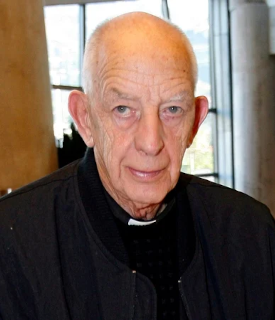
Birth of Fr. Alec Reid, Facilitator in the Northern Ireland Peace Process

Alexander Reid CSsR, Irish Catholic priest noted for his facilitator role in the Northern Ireland peace process, is born in Dublin on August 5, 1931. BBC journalist Peter Taylor subsequently describes Reid’s role as “absolutely critical” to the success of the peace process.

Reid is raised in Nenagh, County Tipperary, from the age of six following the death of his father. He studies English, history and philosophy at University College Galway.

Reid is professed as a Redemptorist in 1950 and ordained a priest seven years later. For the next four years, he gives Parish Missions in Limerick, Dundalk and Galway (Esker), before moving to Clonard Monastery in Belfast, where he spends almost the next forty years. The Redemptorist Monastery at Clonard stands on the interface between the Catholic nationalist Falls Road and the Protestant loyalist Shankill Road areas of west Belfast.

In the late 1980s, Reid facilitates a series of meetings between Gerry Adams and John Hume, in an effort to establish a “Pan-Nationalist front” to enable a move toward renouncing violence in favour of negotiation. Reid, himself a staunch nationalist who favours a united Ireland and the withdrawal of British forces from Northern Ireland, then acts as their contact person with the Irish Government in Dublin from a 1987 meeting with Charles Haughey up to the signing of the Good Friday Agreement in 1998. In this role, which is not public knowledge at the time, he holds meetings with various Taoisigh, and particularly with Martin Mansergh, advisor to various Fianna Fáil leaders. After the eventual success of the peace negotiations, Gerry Adams says, “there would not be a peace process at this time without [Father Reid’s] diligent doggedness and his refusal to give up.”

In 1988 in Belfast, Reid delivers the last rites to two British Army corporals, David Howes and Derek Wood of the Royal Corps of Signals, who are killed by the Provisional Irish Republican Army (IRA) – an event known as the corporals killings – after they drive into the funeral cortège of IRA member Kevin Brady, who had been killed in the Milltown Cemetery attack. A photograph of his involvement in that incident becomes one of the starkest and most enduring images of the Troubles. Unknown until years later, he is carrying a letter from Sinn Féin President Gerry Adams to Social Democratic and Labour Party (SDLP) leader John Hume outlining Adams’ suggestions for a political solution to the Troubles. Adams later tells the BBC in 2019 that Reid also advised U.S Ambassador to Ireland Jean Kennedy Smith during the peace process, stating “He was talking to her on the side and she was talking to her brother Teddy.”

After he moves to Dublin, Reid is involved in peace efforts in the Basque Country. In January 2003, he is awarded the Sabino Arana 2002 “World Mirror” prize, by the Sabino Arana Foundation in Bilbao, in recognition of his efforts at promoting peace and reconciliation. He and a Methodist minister, the Rev. Harold Good, announce that the IRA has decommissioned their arms at a news conference in September 2005.

Reid is involved in controversy in November 2005 when he makes comments during a meeting in Fitzroy Presbyterian Church concerning the Unionist community in Northern Ireland. When the loyalist activist Willie Frazer makes remarks that Catholics had butchered Protestants during the Troubles, Reid angrily responds, “You don’t want to hear the truth. The reality is that the nationalist community in Northern Ireland were treated almost like animals by the unionist community. They were not treated like human beings. They were treated like the Nazis treated the Jews.” Reid later apologises, saying his remarks had been made in the heat of the moment. In an interview with CNN, he says that “The IRA were, if you like, a violent response to the suppression of human rights.”

Reid dies in a Dublin hospital on November 22, 2013. He is survived by two sisters and an aunt, and is buried in Milltown Cemetery, Belfast.


Leave a comment

Birth of Anthony McIntyre, Former IRA Volunteer, Writer & Historian

Anthony McIntyre, a former Provisional Irish Republican Army volunteer, writer and historian, is born on June 27, 1957.

McIntyre is imprisoned for murder for 18 years in Long Kesh Detention Centre, spending four of those years on the dirty protest. Following his release from prison in 1992, he completes a PhD in political science at Queen’s University Belfast and leaves the republican movement in 1998 to work as a journalist and researcher. A collection of his journalism is published as a book in 2008, Good Friday: The Death of Irish Republicanism.

McIntyre is involved with the Boston College oral history project on the Troubles entitled the Belfast Project, conducting interviews with former Provisional IRA members who, like himself, had become disillusioned with the direction the republican movement had taken, such as Brendan Hughes and Dolours Price, and former Ulster loyalist paramilitaries such as David Ervine. The interviews are the basis for the book Voices from the Grave: Two Men’s War in Ireland by Ed Moloney.

In 2011, McIntyre becomes embroiled in controversy when transcripts of the interviews, held by Boston College, are subpoenaed by the Police Service of Northern Ireland (PSNI) in relation to an investigation of the 1972 abduction and killing of Jean McConville. In March 2014, the PSNI announces that it is seeking to question McIntyre over newly released Belfast Project recordings, specifically in reference to the alleged role of Gerry Adams in the kidnapping and murder of Jean McConville.

McIntyre is a prominent critic of modern-day Sinn Féin and its leadership. He has spoken at Republican Sinn Féin party events. He is a co-founder of The Blanket, a journal which casts a critical eye on the Northern Ireland peace process.


Leave a comment

Death of Norman Garstin, Painter, Teacher, Art Critic & Journalist

Norman Garstin, Irish painter, teacher, art critic and journalist associated with the Newlyn School of painters, dies on June 22, 1926, at Penzance, Cornwall, England.

Garstin is born on August 28, 1847, in Caherconlish, County Limerick, to Captain William Garstin and Mary Moore Garstin. He is raised by aunts and grandparents following his father’s suicide and his mother’s incapacitating disabilities.

Garstin attends Victoria College on the island of Jersey and then he works in architecture and engineering for brief periods. He then travels to South Africa where he befriends Cecil Rhodes, works as a journalist and is involved in government in Cape Town.

Pursuing an interest in art, Garstin trains in 1880 in Antwerp at the Royal Academy of Fine Arts. From 1882 to 1884 he studies in Paris at an academy founded by Carolus-Duran. He then travels and paints his way through Spain, Morocco and Venice, Italy.

In 1886, Garstin marries Louisa Jones, also known as Dochie. Many of Garstin’s friends from school in Antwerp had settled in Newlyn. He and Dochie move to Mount Vernon in Newlyn by 1886. They have three children: Crosbie, Denis and Alethea. The boys take up journalism and Alethea becomes an artist. The family moves to Penzance by 1895.

In 1888 Garstin becomes a member of the New English Art Club (NEAC). He becomes a member of the Newlyn Society of Artists (NSA) and is on the Newlyn Art Gallery‘s Provisional Committee for its opening in 1895. Regarding the plein-air approach used by St. Ives and Newlyn artists he says they are “filled with this idea of a fresh unarranged nature to be studied in her fields, and by her streams, and on the margin of her great seas – in these things they were to find the motives of their art.”

Garstin is a teacher and takes groups to “his favorite painting haunts on the Continent.” For instance, Frances Hodgkins, a New Zealand artist, attends Garstin’s 1901 and 1902 summer sketching classes in France. He teaches Harold Harvey, the only Cornish Newlyn School painter, and his daughter, Alethea.

Garstin’s work consists primarily of small oil panels in the plein air style, something he had picked up from the French Impressionists, like Édouard Manet. He is also fascinated by Japanese prints and admires the work of the American painter James Abbott McNeill Whistler. Some of his works are at Tate and Penlee House.

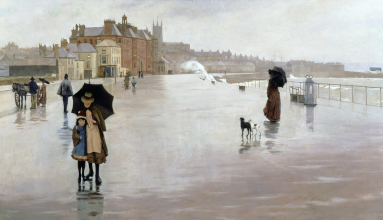
One of Garstin’s best and most famous works is his 1889 painting The Rain, It Raineth Every Day of the Penzance promenade. The title of the work comes from William Shakespeare‘s King Lear and Twelfth Night. “The composition of this painting demonstrates Garstin’s admiration for Japanese art,” says Penlee House.

Garstin dies in Penzance on June 22, 1926.

(Pictured: “The Rain It Raineth Every Day” oil on canvas by Norman Garstin, 1889, Penlee House)


Leave a comment

Birth of Colin Bateman, Novelist, Screenwriter & Journalist

Colin Bateman, novelist, screenwriter and former journalist known mononymously as Bateman, is born on June 13, 1962, in Newtownards, County Down, Northern Ireland.

Bateman attends Bangor Grammar School leaving at the age of 16 when he is hired by Annie Roycroft to join the County Down Spectator as a “cub” reporter, then columnist and deputy editor. A collection of his columns is published as Bar Stool Boy in 1989.

Bateman has been writing novels since his debut, Divorcing Jack, in 1994. Divorcing Jack wins a Betty Trask Award in the same year and is adapted into a 1998 film starring David Thewlis. Several of his novels feature the semi-autobiographical Belfast journalist, Dan Starkey.

Bateman’s book Murphy’s Law is adapted from the BBC television series Murphy’s Law (2001–2007), featuring James Nesbitt. He explains on his website that “Murphy’s Law was written specifically for James Nesbitt, a local actor who became a big TV star through Cold Feet. The ninety-minute pilot for Murphy’s Law on BBC One was seen by more than seven million people, and led to three TV series, on which I was the chief writer.”

Bateman’s eight-part series Scúp is written in English and translated into Irish. It is produced by Stirling Productions and BBC Northern Ireland. A second series has since been commissioned.

Bateman’s children’s book Titanic 2020 is shortlisted for the 2008 Bisto Book of the Year Award and the Bolton Children’s Book Award

Much of Bateman’s work is produced under the name “Bateman” rather than his full name. His 2007 novel I Predict a Riot bears (among others) the dedication: “For my Christian name, gone but not forgotten.” Since 2016, he has moved increasingly into film, writing the screenplays for The Journey, starring Timothy Spall and Colm Meaney, and Driven starring Jason Sudeikis and Lee Pace. Both films are premiered at the Venice Film Festival and selected for the Toronto International Film Festival. He is currently writing films about Fidel Castro in New York, ‘The Hotel Theresa’ and the British double agent George Blake.


Leave a comment

Birth of Patrick Campbell, 3rd Baron Glenavy

Patrick Gordon Campbell, 3rd Baron Glenavy, Irish journalist, humorist and television personality, is born in Dublin on June 6, 1913. He writes sixteen books, including Life in Thin Slices, Rough Husbandry, and How to Become a Scratch Golfer.

Campbell is the first son of Charles Campbell, 2nd Baron Glenavy, and Beatrice, Lady Glenavy (the artist Beatrice Elvery). He is educated Crawley’s preparatory school (St. Stephen’s Green, Dublin), Castle Park preparatory school (Dalkey), Rossall School (Lancashire), and, briefly, Pembroke College, Oxford. He leaves Oxford without completing his degree. In 1935, he is taken on by The Irish Times by R. M. “Bertie” Smyllie and reports on “Courts Day by Day.” During World War II, he serves as a chief petty officer in the Irish Marine Service. After the war he re-joins The Irish Times, using the pseudonym “Quidnunc,” and is given charge of the column “Irishman’s Diary.” He has a weekly column for the Irish edition of the Sunday Dispatch before working on the paper in London from 1947 to 1949. He is assistant editor of Lilliput from 1947 to 1953. His writings also appear in The Sunday Times.

Campbell’s books, mostly collections of humorous pieces that were originally published in newspapers and magazines, include A Long Drink of Cold Water (1949), A Short Trot with a Cultured Mind (1950), An Irishman’s Diary (1950), Life in Thin Slices (1951), Patrick Campbell’s Omnibus (1954), Come Here Till I Tell You (1960), Constantly in Pursuit (1962), How to Become a Scratch Golfer (1963), Brewing Up in the Basement (1963), Rough Husbandry (1965), The P-P-Penguin Patrick Campbell (1965), All Ways on Sundays (1966), A Bunch of New Roses (1967), an autobiography My Life and Easy Times (1967), The Coarse of Events (1968), Gullible Travels (1969), The High Speed Gasworks (1970), Waving All Excuses (1971), Patrick Campbell’s Golfing Book (1972), Fat Tuesday Tails (1972), 35 Years on the Job (1973), and The Campbell Companion (1987). Many of his books are illustrated by Quentin Blake.

Campbell is married three times, first in 1941 to Sylvia Alfreda Willoughby Lee, whom he divorces in 1947. He then marries Chery Louise Munro in 1947. The two divorce in 1966, the year he marries Vivienne Orme.

Campbell speaks with a stammer, but nevertheless delights television audiences with his wit, notably as a regular team captain on the long-running show Call My Bluff, opposite his longtime friend, Frank Muir. Muir notes that “When he was locked solid by a troublesome initial letter he would show his frustration by banging his knee and muttering ‘Come along! Come along!'” Some of his funniest short stories describe incidents involving his stammer. He stands six feet five inches tall, and several of his funniest pieces deal with the problems faced by a man of his build in merely finding shoes or clothes that fit him. He also makes regular appearances in That Was The Week That Was.

Campbell lives for many years in the South of France, commuting to England for his television work and continuing to produce his weekly column in The Sunday Times, which he drops in 1978.

In 1972 a period of illness leads to the discovery that Campbell had suffered an undetected heart attack some years previously and has a permanent heart weakness. An attack of viral pneumonia in 1980 exacerbates this condition, and he dies suddenly on November 9, 1980 while talking to a nurse at University College Hospital, London. He is succeeded as the 4th and last Lord Glenavy by his novelist brother Michael.


Leave a comment

Death of Peadar O’Donnell, Irish Republican & Socialist Activist

Peadar O’Donnell, Irish republican, socialist activist, politician, writer and one of the foremost radicals of 20th-century Ireland, dies in Dublin on May 13, 1986.

O’Donnell is born on February 22, 1893, in Meenmore, near Dungloe, County Donegal, youngest among six sons and three daughters of Biddy and James O’Donnell. He is greatly influenced by his upbringing in the Rosses, in northwest Donegal, one of the poorest and most remote parts of Ireland. His father, a popular local fiddler, earns a living through his smallholding, seasonal labouring in Scotland, and winter work in a local corn mill. His mother, who comes from a radical labour and nationalist political background, works in a local cooperative store. He attends Rampart national school and Roshine national school, near Burtonport, where he is a monitor for four years. In 1911 he wins a scholarship to attend St. Patrick’s College in Drumcondra, Dublin, and returns in 1913 to the Rosses, where he spends two years teaching on the islands of Inishfree. In 1915 he is appointed head of Derryhenny national school, near Dungloe, and the following year becomes principal of a national school on the island of Arranmore, where he begins to write.

O’Donnell had long been concerned by the poor conditions of the local ‘tatie-hokers’ (potato pickers) who migrate annually to Scotland. In the summer of 1918, he travels there to help organise the Scottish Farm Servants’ Union. While there he is influenced by left-wing radicals such as Willie Gallacher, later a communist Member of Parliament (MP), and Emanuel ‘Manny’ Shinwell, later Baron Shinwell. In September 1918, against a background of rising labour militancy, he leaves teaching to become a full-time organiser for the Irish Transport and General Workers’ Union (ITGWU) in the west Ulster area. The following year he organises one of Ireland’s first “soviets” when the attendants and nurses of the Monaghan District Lunatic Asylum occupy the grounds and appoint O’Donnell as governor until their demands are met.

In early 1919 O’Donnell joins the Irish Republican Army (IRA) in Monaghan, resigning from the ITGWU for full-time IRA service in late 1920. He leads the 2nd Battalion, Donegal IRA, from the summer of 1920. In December 1920 he goes “on the run” and leads a flying column in west Donegal until May 1921, when he is wounded. Regarded as insubordinate and militarily inexperienced, he is unpopular among the other senior officers of the 1st Northern Division. He, in turn, is disappointed by the lack of social radicalism among the nationalist leadership. He opposes the Anglo-Irish Treaty, is placed in command of the minority anti-treaty 1st Northern Division and is a member of the IRA executive that occupies the Four Courts in Dublin in defiance of the provisional government.

Arrested in June 1922, O’Donnell shares a prison cell with Liam Mellows and influences his radical “Notes from Mountjoy,” an important document for subsequent left-wing republicans. He spends the next two years in various prisons and internment camps. His execution is widely expected to follow those of December 8, 1922. In August 1923, he is elected as a Sinn Féin Teachta Dála (TD) for Donegal in the general election called after the end of the Irish Civil War. He goes on hunger strike for forty-one days in late 1923 and succeeds in escaping from the Curragh in March 1924. In June 1924, while on the run, he marries Lile O’Donel, a wealthy Cumann na mBan activist who had smuggled communications for republican prisoners. O’Donel, a radical and member of the Communist Party, is the daughter of Ignatius O’Donel, a prominent landowner from Mayo. They have no children but raise their nephew, Peadar Joe, as their own son after the death in New York of O’Donnell’s brother Joe.

O’Donnell begins writing seriously while in jail and remains a prolific writer, journalist, and editor until the 1960s. His first novel, Storm, set in the Irish War of Independence, is published in 1925. One of his most highly regarded books, Islanders, is published in 1928. Adrigoole, like Islanders a story of poverty and starvation in rural Ireland, is published the following year. The Knife (1930) and On the Edge of the Stream (1934) soon follow. The most significant of his later novels is probably The Big Windows (1954). Foremost among his qualities as a writer is his empathy for the people, life, and landscape of rural Ireland. But his novels have been criticised for their slow pace, excessive detail, and didactic nature. He claims his writing is incidental to his political activism. His trilogy of autobiographical non-fiction, The Gates flew Open (1932), Salud! An Irishman in Spain (1936), and There Will Be Another Day (1963), which respectively concern the Irish Civil War, his activism during the Spanish Civil War, and his role in the land annuities agitation, remain highly regarded. His other important literary achievement is with The Bell, an innovative literary and political magazine which plays a useful dissenting role in an insular and conservative period. He founds The Bell with the writer Seán Ó Faoláin in 1940 and edits it from 1946 until it ceases publication in 1954.

O’Donnell exercises an influential role in the interwar IRA, particularly through his editorship of An Phoblacht (1926–29), which he attempts to divert from militarism to socialist agitation. His ultimate aim is for a thirty-two-county socialist republic. His most successful campaign is organising small farmers against the payment of land annuities to the government in the late 1920s and early 1930s. This campaign is later adopted by Fianna Fáil and contributes to their electoral success in 1932. He is less successful in radicalising the IRA. After the failure of Saor Éire, a left-wing IRA front which provokes clerical and popular hostility against the IRA, increasing tensions between the IRA’s left-wing and the leadership lead O’Donnell, along with Frank Ryan and George Gilmore, to split from the IRA to establish the short-lived Republican Congress in 1934.

Although O’Donnell claims he was never a Communist Party member, he plays a central role in forging links between republicans and the revolutionary left both in Ireland and internationally and invariably supports the communist party line at critical junctures. After the failure of Republican Congress, he takes up the cause of the Spanish republic. His championing of unpopular causes such as communism and Spain entail a good deal of frustration. He is physically attacked at political meetings and in 1932, despite having never visited the Soviet Union, loses a high-profile libel action against the Dominican Irish Rosary, which claim he had studied in Moscow‘s Lenin College. He is banned from entering the United States for several decades, although he maintains: “My relations with all the great powers continue to be friendly.”

O’Donnell continues to support radical campaigns until his death. He is an outspoken advocate of Irish emigrants. He is prominent in the Irish Campaign for Nuclear Disarmament and serves as its president in the early 1960s. He is a leading protester against the Vietnam War and a supporter of African anti-colonial movements such as that against apartheid. In later years he is involved in the “Save the west” campaign, highlighting the problems of the west of Ireland.

After several months of ill-health following a heart attack, O’Donnell dies in Dublin, aged 93, on May 13, 1986. He leaves instructions that there are to be “no priests, no politicians and no pomp” at his funeral, and those wishes are granted. He is cremated in Glasnevin Cemetery and his ashes are buried at his wife’s home in Swinford, County Mayo. Although he once remarked that every cause he fought for was a failure, he is now regarded as one of the most influential socialist republican theorists and an important voice of dissent in twentieth-century Ireland.

(From: “O’Donnell, Peadar” by Fearghal McGarry, Dictionary of Irish Biography, http://www.dib.ie)


Leave a comment

Birth of James Sheridan Knowles, Dramatist & Actor

James Sheridan Knowles, Irish dramatist and actor, is born in Cork, County Cork, on May 12, 1784. A relative of Richard Brinsley Sheridan, he enjoys success writing plays for the leading West End theatres. Later in his career he also produces several novels.

Knowles’s father is the lexicographer James Knowles, cousin of Richard Brinsley Sheridan. The family moves to London in 1793, and at the age of fourteen he publishes a ballad entitled The Welsh Harper, which, set to music, is very popular. His talents secure him the friendship of William Hazlitt, who introduces him to Charles Lamb and Samuel Taylor Coleridge. He serves for some time in the Wiltshire and afterwards in the Tower Hamlets militia, leaving the service to become a pupil of Dr. Robert Willan. He obtains the degree of M.D. and is appointed vaccinator to the Jennerian Society.

Although Dr. Willan offers him a share in his practice, Knowles decides to give up medicine for the stage, making his first appearance as an actor probably at Bath, and plays Hamlet at the Crow Street Theatre, Dublin. At Wexford he marries, in October 1809, Maria Charteris, an actress from the Edinburgh Theatre. In 1810, he writes Leo, a successful play in which Edmund Kean appears. Another play, Brian Boroihme, written for the Belfast Theatre in the next year, attracts crowds. Nevertheless, his earnings are so small that he is obliged to become assistant to his father at the Royal Belfast Academical Institution. In 1817 he moves from Belfast to Glasgow, where, besides keeping a flourishing school, he continues to write for the stage.

Knowles first important success is Caius Gracchus, produced at the Belfast Theatre in 1815. His Virginius, written for William Charles Macready, is first performed in 1820 at Covent Garden. In William Tell (1825), he writes for Macready one of his favourite parts. His best-known play, The Hunchback, is produced at Covent Garden in 1832, and he wins praise acting in the work as Master Walter. The Wife is brought out at the same theatre in 1833. The Daughter, better known as The Wrecker’s Daughter, in 1836, and The Love Chase in 1837. His 1839 play Love is praised by Mary Shelley for its “inspiring situations founded on sentiment and passion.” His second wife is the actress, Emma Knowles.

In his later years Knowles forsakes the stage for the pulpit and, as a Baptist preacher, attracts large audiences at Exeter Hall and elsewhere. He publishes two polemical works: the Rock of Rome and the Idol Demolished by Its Own Priests in both of which he combats the special doctrines of the Roman Catholic Church. He is for some years in the receipt of an annual pension of £200, bestowed by Sir Robert Peel in 1849. In old age he befriends the young Edmund Gosse, whom he introduces to Shakespeare. He makes a happy appearance in Gosse’s Father and Son.

Knowles dies at Torquay on November 30, 1862. He is buried under a huge tomb at the summit of the Glasgow Necropolis.

A full list of the works of Knowles and of the various notices of him can be found in The Life of James Sheridan Knowles (1872), privately printed by his son, Richard Brinsley Knowles (1820–1882), who is well known as a journalist. It is translated into German.