seamus dubhghaill

Promoting Irish Culture and History from Little Rock, Arkansas, USA


Leave a comment

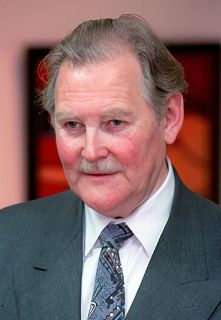
Death of John Costello, Fine Gael Politician & 3rd Taoiseach

John Aloysius Costello, Fine Gael politician who serves as Taoiseach from 1948 to 1951 and from 1954 to 1957, Leader of the Opposition from 1951 to 1954 and from 1957 to 1959, and Attorney General of Ireland from 1926 to 1932, dies in Ranelagh, Dublin, on January 5, 1976. He serves as a Teachta Dála (TD) from 1933 to 1943 and from 1944 to 1969.

Costello is born on June 20, 1891, in Fairview, Dublin, the younger son of John Costello senior, a civil servant, and Rose Callaghan. He is educated at St. Joseph’s, Fairview, and then moves to O’Connell School, for senior classes, and later attends University College Dublin (UCD), where he graduates with a degree in modern languages and law. He studies at King’s Inns to become a barrister, winning the Victoria Prize there in 1913 and 1914. He is called to the Irish Bar in 1914, and practises as a barrister until 1922.

In 1922, Costello joins the staff at the office of the Attorney General in the newly established Irish Free State. Three years later he is called to the inner bar, and the following year, 1926, he becomes Attorney General of Ireland, upon the formation of the Cumann na nGaedheal government, led by W. T. Cosgrave. While serving in this position he represents the Free State at Imperial Conferences and League of Nations meetings.

Costello is also elected a Bencher of the Honourable Society of King’s Inns. He loses his position as Attorney General of Ireland when Fianna Fáil comes to power in 1932. The following year, however, he is elected to Dáil Éireann as a Cumann na nGaedheal TD. Cumann na nGaedheal soon merges with other parties to form Fine Gael.

During the Dáil debate on the Emergency Powers Act 1939, Costello is highly critical of the Act’s arrogation of powers, stating that “We are asked not merely to give a blank cheque, but to give an uncrossed cheque to the Government.” He loses his seat at the 1943 Irish general election but regains it when Éamon de Valera calls a snap election in 1944. From 1944 to 1948, he is the Fine Gael front-bench Spokesman on External Affairs.

In 1948, Fianna Fáil has been in power for sixteen consecutive years and has been blamed for a downturn in the economy following World War II. The 1948 Irish general election results show Fianna Fáil short of a majority, but still by far the largest party, with twice as many seats as the nearest rival, Fine Gael. It appears that Fianna Fáil is headed for a seventh term in government. However, the other parties in the Dáil realise that between them, they have only one seat fewer than Fianna Fáil, and if they band together, they would be able to form a government with the support of seven Independent deputies. Fine Gael, the Labour Party, the National Labour Party, Clann na Poblachta and Clann na Talmhan join to form the first inter-party government in the history of the Irish state.

While it looks as if cooperation between these parties will not be feasible, a shared opposition to Fianna Fáil and Éamon de Valera overcomes all other difficulties, and the coalition government is formed.

Since Fine Gael is the largest party in the government, it has the task of providing a suitable candidate for Taoiseach. Naturally, it is assumed that its leader, Richard Mulcahy, will be offered the post. However, he is an unacceptable choice to Clann na Poblachta and its deeply republican leader, Seán MacBride. This is due to Mulcahy’s record during the Irish Civil War. Instead, Fine Gael and Clann na Poblachta agree on Costello as a compromise candidate. Costello had never held a ministerial position nor was he involved in the Civil War. When told by Mulcahy of his nomination, Costello is appalled, content with his life as a barrister and as a part-time politician. He is persuaded to accept the nomination as Taoiseach by close non-political friends.

During the campaign, Clann na Poblachta had promised to repeal the Executive Authority (External Relations) Act 1936 but does not make an issue of this when the government is being formed. However, Costello and his Tánaiste, William Norton of the Labour Party, also dislike the act. During the summer of 1948, the cabinet discusses repealing the act, however, no firm decision is made.

In September 1948, Costello is on an official visit to Canada when a reporter asks him about the possibility of Ireland leaving the British Commonwealth. For the first time, he declares publicly that the Irish government is indeed going to repeal the External Relations Act and declare Ireland a republic. It has been suggested that this is a reaction to offence caused by the Governor General of Canada at the time, Harold Alexander, 1st Earl Alexander of Tunis, who is of Northern Irish descent and who allegedly arranges to have placed symbols of Northern Ireland in front of Costello at an official dinner. Costello makes no mention of these aspects on the second reading of the Republic of Ireland Bill on November 24 and, in his memoirs, claims that Alexander’s behaviour had in fact been perfectly civil and could have had no bearing on a decision which had already been made.

The news takes the Government of the United Kingdom and even some of Costello’s ministers by surprise. The former had not been consulted and following the declaration of the Republic in 1949, the UK passes the Ireland Act that year. This recognises the Republic of Ireland and guarantees the position of Northern Ireland within the United Kingdom for so long as a majority there want to remain in the United Kingdom. It also grants full rights to any citizens of the Republic living in the United Kingdom. Ireland leaves the Commonwealth on April 18, 1949, when The Republic of Ireland Act 1948 comes into force. Frederick Henry Boland, Secretary of the Department of External Affairs, says caustically that the affair demonstrates that “the Taoiseach has as much notion of diplomacy as I have of astrology.” The British envoy, John Maffey, 1st Baron Rugby, is equally critical of what he calls a “slipshod and amateur” move.

Many nationalists now see partition as the last obstacle on the road to total national independence. Costello tables a motion of protest against partition on May 10, 1949, without result.

In 1950, the independent-minded Minister for Health, Noël Browne, introduces the Mother and Child Scheme. The scheme would provide mothers with free maternity treatment and their children with free medical care up to the age of sixteen, which is the normal provision in other parts of Europe at that time. The bill is opposed by doctors, who fear a loss of income, and Roman Catholic bishops, who oppose the lack of means testing envisaged and fear the scheme could lead to birth control and abortion. The cabinet is divided over the issue, many feeling that the state cannot afford such a scheme priced at IR£2,000,000 annually. Costello and others in the cabinet make it clear that in the face of such opposition they will not support the Minister. Browne resigns from the government on April 11, 1951, and the scheme is dropped. He immediately publishes his correspondence with Costello and the bishops, something which had hitherto not been done. Derivatives of the Mother and Child Scheme are introduced in Public Health Acts of 1954, 1957 and 1970.

The Costello government has a number of noteworthy achievements. A new record is set in housebuilding, the Industrial Development Authority and Córas Tráchtála are established, and the Minister for Health, Noel Browne, with the then new Streptomycin, bring about an advance in the treatment of tuberculosis. Ireland also joins a number of organisations such as the Organization for European Economic Co-operation and the Council of Europe. However, the government refuses to join NATO, allegedly because the British remain in Northern Ireland. The scheme to supply electricity to even the remotest parts of Ireland is also accelerated.

While the “Mother and Child” incident does destabilise the government to some extent, it does not lead to its collapse as is generally thought. The government continues; however, prices are rising, a balance of payments crisis is looming, and two TDs withdraw their support for the government. These incidents add to the pressure on Costello and so he decides to call a general election for June 1951. The result is inconclusive but Fianna Fáil returns to power. Costello resigns as Taoiseach. It is at this election that his son Declan is elected to the Dáil.

Over the next three years while Fianna Fáil is in power a dual-leadership role of Fine Gael is taking place. While Richard Mulcahy is the leader of the party, Costello, who has proved his skill as Taoiseach, remains as parliamentary leader of the party. He resumes his practice at the Bar. In what is arguably his most celebrated case, the successful defence of The Leader against a libel action brought by the poet Patrick Kavanagh, dates from this period. Kavanagh generously praises Costello’s forensic skill, and the two men become friends.

At the 1954 Irish general election Fianna Fáil loses power. A campaign dominated by economic issues results in a Fine Gael-Labour Party-Clann na Talmhan government coming to power. Costello is elected Taoiseach for the second time.

The government can do little to change the ailing nature of Ireland’s economy, with emigration and unemployment remaining high, and external problems such as the Suez Crisis compounding the difficulty. Measures to expand the Irish economy such as export profits tax relief introduced in 1956 would take years have sizable impact. Costello’s government does have some success with Ireland becoming a member of the United Nations in 1955, and a highly successful visit to the United States in 1956, which begins the custom by which the Taoiseach visits the White House each Saint Patrick’s Day to present the U.S. President with a bowl of shamrock. Although the government has a comfortable majority and seems set for a full term in office, a resumption of Irish Republican Army (IRA) activity in Northern Ireland and Great Britain causes internal strains. The government takes strong action against the republicans.

In spite of supporting the government from the backbenches, Seán MacBride, the leader of Clann na Poblachta, tables a motion of no confidence, based on the weakening state of the economy and in opposition to the government’s stance on the IRA. Fianna Fáil also tables its own motion of no confidence, and rather than face almost certain defeat, Costello again asks President Seán T. O’Kelly to dissolve the Oireachtas. The general election which follows in 1957 gives Fianna Fáil an overall majority and starts another sixteen years of unbroken rule for the party. Some of his colleagues questioned the wisdom of his decision to call an election. The view is expressed that he was tired of politics and depressed by his wife’s sudden death the previous year.

Following the defeat of his government, Costello returns to the bar. In 1959, when Richard Mulcahy resigns the leadership of Fine Gael to James Dillon, he retires to the backbenches. He could have become party leader had he been willing to act in a full-time capacity. He remains as a TD until 1969, when he retires from politics, being succeeded as Fine Gael TD for Dublin South-East by Garret FitzGerald, who himself goes onto to become Taoiseach in a Fine Gael-led government.

During his career, Costello is presented with a number of awards from many universities in the United States. He is also a member of the Royal Irish Academy from 1948. In March 1975, he is made a freeman of the city of Dublin, along with his old political opponent Éamon de Valera. He practises at the bar until a short time before his death at the age of 84, in Ranelagh, Dublin, on January 5, 1976. He is buried at Dean’s Grange Cemetery in Dublin.

Leave a comment

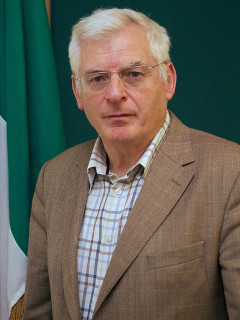
Death of Justin Keating, Politician, Broadcaster & Journalist

Justin Pascal Keating, Irish Labour Party politician, broadcaster, journalist, lecturer and veterinary surgeon, dies at Ballymore Eustace, County Kildare, on December 31, 2009. In later life he is president of the Humanist Association of Ireland.

Keating is twice elected to Dáil Éireann and serves in Liam Cosgrave‘s cabinet as Minister for Industry and Commerce from 1973 to 1977. He also gains election to Seanad Éireann and is a Member of the European Parliament (MEP). He is considered part of a “new wave” of politicians at the time of his entry to the Dáil.

Keating is born in Dublin on January 7, 1930, a son of the noted painter Seán Keating and campaigner May Keating. He is educated at Sandford Park School, and then at University College Dublin (UCD) and the University of London. He becomes a lecturer in anatomy at the UCD veterinary college from 1955 until 1960 and is senior lecturer at Trinity College Dublin from 1960 until 1965. He is RTÉ‘s head of agricultural programmes for two years before returning to Trinity College in 1967. While at RTÉ, he scripts and presents Telefís Feirme, a series for the agricultural community, for which he wins a Jacob’s Award in 1966.

In the 1950s and 1960s Keating is a member of the communist Irish Workers’ Party. He is first elected to the Dáil as a Labour Party Teachta Dála (TD) for the Dublin County North constituency at the 1969 Irish general election. From 1973 to 1977 he serves in the National Coalition government under Liam Cosgrave as Minister for Industry and Commerce. In 1973 he is appointed a Member of the European Parliament from the Oireachtas, serving on the short-lived first delegation.

During 1975 Keating introduces the first substantial legislation for the development of Ireland’s oil and gas. The legislation is modelled on international best practice and intended to ensure the Irish people would gain substantial benefit from their own oil and gas. Under his legislation the state could by right acquire a 50% stake in any viable oil and gas reserves discovered. Production royalties of between 8% and 16% with corporation tax of 50% would accrue to the state. The legislation specifies that energy companies would begin drilling within three years of the date of the issue of an exploration license.

Keating loses his Dáil seat at the 1977 Irish general election but is subsequently elected to Seanad Éireann on the Agricultural Panel, serving there until 1981. He briefly serves again in the European Parliament from February to June 1984 when he replaces Séamus Pattison.

In the aftermath of President of Iran Mahmoud Ahmadinejad‘s “World Without Zionism” speech in 2005, Keating publishes an op-ed in The Dubliner magazine, expressing his views on Israel. The article starts by claiming that “the Zionists have absolutely no right in what they call Israel.” He then proceeds to explain why he thinks Israel has no right to exist, claiming that the Ashkenazi Jews are descended from Khazars.

Keating dies at Ballymore Eustace, County Kildare, on December 31, 2009, at the age of 79, one week before his 80th birthday. Tributes come from the leaders of the Labour Party and Fine Gael at the time of his death, Eamon Gilmore and Enda Kenny, as well as former Fine Gael leader and Taoiseach John Bruton.


Leave a comment

Birth of Tony Gregory, Independent Politician & Teachta Dála

Tony Gregory, Irish independent politician and a Teachta Dála (TD) for the Dublin Central constituency from 1982 to 2009, is born on December 5, 1947, in Ballybough on Dublin‘s Northside.

Gregory is the second child of Anthony Gregory, warehouseman in Dublin Port, and Ellen Gregory (née Judge). He wins a Dublin Corporation scholarship to the Christian BrothersO’Connell School. He later goes on to University College Dublin (UCD), where he receives a Bachelor of Arts degree and later a Higher Diploma in Education, funding his degree from summer work at the Wall’s ice cream factory in Acton, London. Initially working at Synge Street CBS, he later teaches history and French at Coláiste Eoin, an Irish language secondary school in Booterstown. His students at Synge Street and Coláiste Eoin include John Crown, Colm Mac Eochaidh, Aengus Ó Snodaigh and Liam Ó Maonlaí.

Gregory becomes involved in republican politics, joining Sinn Féin and the Irish Republican Army (IRA) in 1964. In UCD he helps found the UCD Republican Club, despite pressure from college authorities, and becomes involved with the Dublin Housing Action Committee. Within the party he is a supporter of Wicklow Republican Seamus Costello. Costello, who is a member of Wicklow County Council, emphasises involvement in local politics and is an opponent of abstentionism. Gregory sides with the Officials in the 1970 split within Sinn Féin. Despite having a promising future within the party, he resigns in 1972 citing frustration with ideological infighting in the party. Later, Costello, who had been expelled by Official Sinn Féin, approaches him and asks him to join his new party, the Irish Republican Socialist Party. He leaves the party after Costello’s assassination in 1977. He is briefly associated with the Socialist Labour Party.

Gregory contests the 1979 local elections for Dublin City Council as a “Dublin Community Independent” candidate. At the February 1982 general election, he is elected to Dáil Éireann as an Independent TD. On his election he immediately achieves national prominence through the famous “Gregory Deal,” which he negotiates with Fianna Fáil leader Charles Haughey. In return for supporting Haughey as Taoiseach, he is guaranteed a massive cash injection for his inner-city Dublin constituency, an area beset by poverty and neglect.

Although Gregory is reviled in certain quarters for effectively holding a government to ransom, his uncompromising commitment to the poor is widely admired. Fianna Fáil loses power at the November 1982 general election, and many of the promises made in the Gregory Deal are not implemented by the incoming Fine GaelLabour Party coalition.

Gregory is involved in the 1980s in tackling Dublin’s growing drug problem. Heroin had largely been introduced to Dublin by the Dunne criminal group, based in Crumlin, in the late 1970s. In 1982 a report reveals that 10% of 15- to 24-year-olds have used heroin at least once in the north inner city. The spread of heroin use also leads to a sharp increase in petty crime. He confronts the government’s handling of the problem as well as senior Gardaí, for what he sees as their inadequate response to the problem. He co-ordinates with the Concerned Parents Against Drugs group in 1986, who protest and highlight the activities of local drug dealers and defend the group against accusations by government Ministers Michael Noonan and Barry Desmond that it is a front for the Provisional IRA. He believes that the solution to the problem is multi-faceted and works on a number of policy level efforts across policing, service co-ordination and rehabilitation of addicts. In 1995 in an article in The Irish Times, he proposes what would later become the Criminal Assets Bureau, which is set up in 1996, catalysed by the death of journalist Veronica Guerin. His role in its development is later acknowledged by then Minister for Justice Nora Owen.

Gregory also advocates for Dublin’s street traders. After attending a sit-down protest with Sinn Féin Councillor Christy Burke, and future Labour Party TD Joe Costello on Dublin’s O’Connell Street in defence of a street trader, he, Burke and four others are arrested and charged with obstruction and threatening behaviour. He spends two weeks in Mountjoy Prison after refusing to sign a bond to keep the peace.

Gregory remains a TD from 1982 and, although he never holds a government position, remains one of the country’s most recognised Dáil deputies. He always refuses to wear a tie in the Dáil chamber stating that many of his constituents could not afford them.

Gregory dies on January 2, 2009, following a long battle with cancer. Following his death, tributes pour in from politicians from every party, recognising his contribution to Dublin’s north inner city. During his funeral, politicians from the Labour Party, Fianna Fáil and Fine Gael are told that although they speak highly of Gregory following his death, during his time in the Dáil he had been excluded by many of them and that they were not to use his funeral as a “photo opportunity.” He is buried on January 7, with the Socialist Party‘s Joe Higgins delivering the graveside oration.

Colleagues of Tony Gregory support his election agent, Dublin City Councillor Maureen O’Sullivan, at the 2009 Dublin Central by-election in June. She wins the subsequent by-election.


Leave a comment

Birth of Patrick Sarsfield Donegan, Fine Gael Politician

Patrick “Paddy” Sarsfield Donegan, Irish Fine Gael politician, is born on October 29, 1923, in Monasterboice, County Louth. He serves as a Senator for the Agricultural Panel from 1957 to 1961, a Teachta Dála (TD) from 1954 to 1957 and 1961 to 1981 and a government minister from 1973 to 1977

Donegan is the son of Thomas Francis Donegan, a publican and farmer, and Rose Ann Donegan (née Butterly). He is educated at Fieldstown and Tenure national schools, a Christian Brothers school in Drogheda, County Louth, and Castleknock College, a voluntary Vincentian secondary school for boys in Castleknock, County Dublin. After working as a buyer of malting barley for Guinness, he purchases and successfully develops a seed merchant’s and milling company. His extensive farming interests include the breeding of Belgian Blue and Limousin cattle, at a time when continental breeds are new to Ireland.

Bypassing the customary apprenticeship on local government bodies prior to a career in national politics, Donegan is elected as a Fine Gael TD for the Louth constituency at the 1954 Irish general election. He loses his seat at the 1957 Irish general election but is elected to Seanad Éireann as a Senator for the Agricultural Panel. He regains his Dáil seat at the 1961 Irish general election.

In the Fine Gael–Labour Party coalition government which takes office after the 1973 Irish general election, Donegan is appointed as Minister for Defence. In October 1976, he makes a speech on an official visit to the opening of new kitchen facilities in an army barracks at Mullingar, County Westmeath in which he describes as a “thundering disgrace” President Cearbhall Ó Dálaigh‘s refusal to sign the Emergency Powers Bill 1976. Ó Dálaigh had instead exercised his powers under Article 26 of the Constitution of Ireland to refer it to the Supreme Court. The Taoiseach, Liam Cosgrave, refuses Donegan’s resignation. On October 21, Fianna Fáil proposes a motion in the Dáil calling on the minister to resign, which is defeated. Ó Dálaigh views the refusal to remove the minister as an affront to his office by the government and resigns on October 22, 1976.

In December 1976, Donegan is appointed as Minister for Lands. In February 1977, this office is restructured as the Minister for Fisheries. He serves in cabinet until the government loses office after the 1977 Irish general election.

Donegan retires from politics at the 1981 Irish general election. He dies at his home in County Louth on November 26,2000, following a long illness. Tributes in the Dáil are led by John Bruton as Fine Gael leader. He is buried in his hometown of Monasterboice, County Louth.


Leave a comment

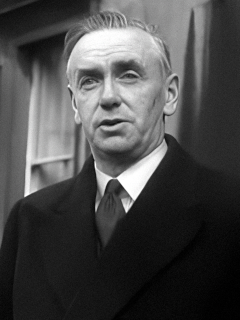
Death of Gerry Fitt, Northern Ireland Politician

Gerard FittNorthern Ireland politician, dies in London on August 26, 2005. He is a founder and the first leader of the Social Democratic and Labour Party (SDLP), a social democratic and Irish nationalist party.

Fitt is born in Belfast on April 9, 1926. He is educated at a local Christian Brothers school in Belfast. He joins the Merchant Navy in 1941 and serves on convoy duty during World War II. His elder brother Geordie, an Irish Guardsman, is killed at the Battle of Normandy.

Living in the nationalist Beechmount neighbourhood of the Falls, he stands for the Falls as a candidate for the Dock Labour Party in a city council by-election in 1956, but loses to Paddy Devlin of the Irish Labour Party, who later becomes his close ally. In 1958, he is elected to Belfast City Council as a member of the Irish Labour Party.

In 1962, he wins a seat in the Parliament of Northern Ireland from the Ulster Unionist Party, becoming the only Irish Labour member. Two years later, he left Irish Labour and joined with Harry Diamond, the sole Socialist Republican Party Stormont MP, to form the Republican Labour Party. At the 1966 general election, Fitt won the Belfast West seat in the Westminster parliament.

Many sympathetic British Members of Parliament (MPs) are present at a civil rights march in Derry on October 5, 1968, when Fitt and others are beaten by the Royal Ulster Constabulary. Fitt also supports the 1969 candidacy of Bernadette Devlin in the Mid Ulster by-election who runs as an anti-abstentionist ‘Unity‘ candidate. Devlin’s success greatly increases the authority of Fitt in the eyes of many British commentators, particularly as it produces a second voice on the floor of the British House of Commons who challenge the Unionist viewpoint at a time when Harold Wilson and other British ministers are beginning to take notice.

In August 1970, Fitt becomes the first leader of a coalition of civil rights and nationalist leaders who create the Social Democratic and Labour Party (SDLP). By this time Northern Ireland is charging headlong towards near-civil war and the majority of unionists remain hostile.

After the collapse of Stormont in 1972 and the establishment of the Northern Ireland Assembly in 1973 Fitt becomes deputy chief executive of the short-lived Power-Sharing Executive created by the Sunningdale Agreement.

Fitt becomes increasingly detached from both his own party and also becomes more outspoken in his condemnation of the Provisional Irish Republican Army. He becomes a target for republican sympathisers in 1976 when they attack his home. He becomes disillusioned with the handling of Northern Ireland by the British government. In 1979, he abstains from a crucial vote in the House of Commons which brings down the Labour government, citing the way that the government had failed to help the nationalist population and tried to form a deal with the Ulster Unionist Party.

In 1979, Fitt is replaced by John Hume as leader of the SDLP and he leaves the party altogether after he agrees to constitutional talks with British Secretary of State Humphrey Atkins without any provision for an ‘Irish dimension’ and then sees his decision overturned by the SDLP party conference. Like Paddy Devlin before him, he claims the SDLP has ceased to be a socialist force.

In 1981, he opposes the hunger strikes in the Maze prison in Belfast. His seat in Westminster is targeted by Sinn Féin as well as by the SDLP. In June 1983, he loses his seat in Belfast West to Gerry Adams, in part due to competition from an SDLP candidate. The following month, on October 14, 1983, he is created a UK life peer as Baron Fitt, of Bell’s Hill in County Down. His Belfast home is firebombed a month later and he moves to London.

Gerry Fitt dies in London on August 26, 2005, at the age of 79, after a long history of heart disease.


Leave a comment

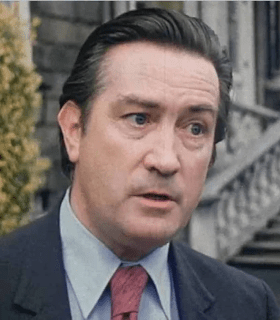
Birth of David Thornley, Irish Labour Party Politician

David Andrew Thornley, Irish Labour Party politician and university professor at Trinity College Dublin, is born in Surrey, England, on July 31, 1935.

Thornley is the youngest child of Welshman Frederick Edward Thornley and Dublin-born Maud Helen Thornley (née Browne). His parents, both civil servants, meet while working in Inland Revenue in Dublin in the 1910s.

Thornley receives a BA and PhD at Trinity College Dublin. His PhD is entitled “Isaac Butt and the creation of an Irish Parliamentary Party (1868–1879)” and is written under the supervision of Theodore William Moody. Working as a presenter on 7 Days since 1963, he is appointed Associate professor of Trinity in 1968. In 1964, he publishes the book Isaac Butt and Home Rule.

After joining Labour in 1969, Thornley is elected to Dáil Éireann as a Labour Party Teachta Dála (TD) for the Dublin North-West constituency at the 1969 Irish general election. He confronts the party leader Brendan Corish, who at the time of the Arms Crisis reportedly rejects out of hand any suggestion of military aid or use of force after the outbreak of violence in Northern Ireland.

Thornley considers himself to be “in the mould of James Connolly,” being a practising Catholic, Marxist and republican.

In December 1972, Thornley calls for the immediate release of Seán Mac Stíofáin, then leader of the Provisional Irish Republican Army. He is re-elected at the 1973 Irish general election. In April 1976, he loses the Labour Party whip after appearing on a Sinn Féin platform during Easter Rising commemorations. In September 1976, he votes for the Criminal Justice (Jurisdiction) Bill despite misgivings. He tells The Irish Times, “When I get very depressed, I drink too much. When I voted for the Criminal Justice (Jurisdiction Bill) I went on the batter for a forthnight [sic].” In February 1977, he is re-admitted to the Labour Parliamentary Party. He loses his seat at the 1977 Irish general election.

In 1978, Thornley joins the newly formed Socialist Labour Party (SLP) stating that he has done so because “There is no man in politics that I respect more than Noël Browne, despite our occasional differences. If the SLP is good for him, it’s good enough for me.”

Overweight, afflicted with undiagnosed diabetes, his judgement increasingly erratic, from the early 1970s Thornley suffers a steady deterioration of health, compounded by his heavy drinking, on which he relies to cope with stress and emotional depression. On one occasion he collapses in the Dáil and is attended by party colleague Dr. John O’Connell. He dies at the age of 42 on June 18, 1978, one week after admission into Jervis Street private nursing home. After a sung Latin Requiem Mass in St. Andrew’s Church, Westland Row, Dublin, he is buried in Bohernabreena Cemetery, County Dublin.

The Trinity College Labour Branch is formerly named the David Thornley Branch in his honour.


Leave a comment

Birth of Proinsias Mac Aonghusa, Journalist, Writer & Presenter

Proinsias Mac Aonghusa (English: Francis McGuinness), Irish journalist, writer, television presenter and campaigner, is born into an Irish-speaking household on June 23, 1933, in Salthill, Galway, County Galway. He becomes one of the most noted Irish language broadcasters and journalists of the 20th century.

Mac Aonghusa is the son of Criostóir Mac Aonghusa, a writer and Irish language activist, and Mairéad Ní Lupain, a nurse and native Irish speaker. The eldest of four siblings, he grows up speaking Irish as his first language and allegedly does not learn English until the age of eleven. His parents are left-wing Irish republicans who support Fianna Fáil and associate with the like-minded Máirtín Ó Cadhain and Peadar O’Donnell. His parents split when he is ten years of age. His mother takes his siblings away to Dublin while he and his father remain in Rosmuc, a remote village and part of the Galway Gaeltacht. As a teenager he is educated at Coláiste Iognáid (also known as St. Ignatius College), a bilingual school in Galway.

Upon leaving school, Mac Aonghusa first works as an actor at the Abbey Theatre in Dublin, performing in Irish language productions. In 1952, he becomes involved in Radio Éireann, first as an actor but later as a reader of short stories before advancing to becoming a newsreader, presenter and interviewer. As he advances his career, he works for RTÉ, UTV and BBC television from the 1960s. In 1962, he begins presenting An Fear agus An Sceal (The Man & his Story) on RTÉ television, an Irish language show which sees him interviewing a different guest of note about their life each episode. That same year he wins a Jacob’s Award for An Fear agus an Sceal, which he continues to host until 1964.

As well as attracting awards, An Fear agus an Sceal also brings controversy. Two interviews, one with Máirtín Ó Cadhain, one with Con Lehane, both criticise the measures practised by the Fianna Fáil government during World War II to suppress and imprison Irish republicans. In response, the Fianna Fáil government intervenes with RTÉ, and those episodes are not aired. This is not to be Mac Aonghusa’s only run-in with the Fianna Fáil government. After he recorded a programme in which he questioned the effectiveness of Ireland’s civil defence measures in the face of nuclear war, then Minister for Defence Kevin Boland has the episode suppressed. He once again runs afoul of the Fianna Fáil government when, after criticising the party in his anonymous weekly political gossip column in the Sunday Independent, then Minister for Agriculture Neil Blaney sees to it that the column is dropped. He is not deterred and returns anonymously as “Gulliver” in The Sunday Press and a gossip column on the back page of The Hibernia Magazine.

The latter half of Mac Aonghusa’s 1960s/70s broadcasting career is primarily associated with the Irish language current events show Féach, which he both presents and edits. He resigns from Féach in 1972 following a bitter dispute with the broadcaster and commentator Eoghan Harris.

Influenced by O’Donnell and Ó Cadhain in his youth, Mac Aonghusa also pursues left-wing republican politics as an adult. In 1958, he becomes, alongside David Thornley, Noël Browne, Owen Sheehy-Skeffington and Desmond Ryan, a member of the “1913 Club,” a group which seeks to ideologically reconcile Irish nationalism and socialism.

In 1959, Mac Aonghusa writes a series of six articles for The Irish Times in which he vehemently opposes the Fianna Fáil government’s proposal to abolish single transferable vote in Ireland in favour of first-past-the-post voting. He contends that first-past-the-post voting gives too much influence to party bosses, while proportional representation gives even small minorities representation, preventing them from feeling excluded by the state such as nationalists in Northern Ireland. In the referendum held on the matter on June 17, 1959, voters reject first past the vote by a margin of 2%. Fianna Fáil attempts to repeal proportional representation again in the late 60s, at which point Mac Aonghusa once again throws himself into the fight, leading a group called “Citizens for PR.” In the referendum of 1968, voters reject the first past the post system by over 20%. He later recalls that his defence of proportional representation his greatest achievement in politics.

In the 1960s, both Mac Aonghusa and his wife, Catherine, join the Sean Connolly branch of the Labour Party in Dublin. The branch had established a reputation as a haven for intellectuals who want a branch to themselves away from the many other Labour branches dominated by trade unionists. The branch comes to advocate for expressly socialist policies combined with on-the-ground grass-roots campaigning. Through the Sean Connolly Branch, both he and his wife begin to develop significant influence over the leader of the Labour party Brendan Corish.

In the 1965 Irish general election, Mac Aonghusa stands on behalf of the Labour party in the Louth constituency but is not elected. In 1966, he publishes a book of speeches by Corish, the speeches themselves mostly having been ghostwritten by his wife Catherine. The introduction of the book proclaims that Corish had developed a “brand of democratic republican socialism … broadened by experience and built firmly on Irish‐Ireland roots” and had rid the party of “do‐nothing backwoodsmen”, thereby becoming the “first plausible and respected Labour leader in Ireland”. It is at this same time that he is elevated to vice-chairman of the party. As vice-chair, he tries to convince Corish to stand in the 1966 Irish presidential election. When he fails to do so, he supports Fine Gael‘s Tom O’Higgins in his bid for the presidency. O’Higgins comes within 0.5% of beating the incumbent, an ageing Éamon de Valera.

It was around this same time that Mac Aonghusa becomes active in the Wolfe Tone Societies, a republican organisation linked almost directly to Sinn Féin. He suggests that republicans with “progressive views” should join the Labour party. In 1966, alongside Máirtín Ó Cadhain and other Gaeilgeoirí, he counter-protests and disrupts the Language Freedom Movement, an organisation seeking the abolition of compulsory Irish in the education system. For this, he and his allies are criticised as acting illiberally, while he maintains that those who oppose the Irish language are “slaves” unworthy of tolerance.

Mac Aonghusa’s open disdain for the conservative and trade union wings of the Labour, as well as his open embrace of republican sensibilities and tendency to make pronouncements on Labour policy without first consulting the party’s structures, bring him many internal enemies. An attempt is made to censure him for backing breakaway trade unions, but he is able to survive this. In 1966, he encourages the formation of the Young Labour League, an unofficial youth wing of the party led by Brian Og O’Higgins, son of former Sinn Féin president Brian O’Higgins. Mirroring his own position, the Youth League are Corish loyalists that openly rebel against the views of Labour’s conservative deputy leader James Tully. When the youth league begins publishing their own weekly newsletter, Labour’s administrative council condemns it after discovering material which is “violently” critical of Tully and other Labour conservatives. An ensuing investigation into the newsletter leads to Mac Aonghusa admitting that he had financed it and written some of the content, but not the anti-Tully material. After he refuses to co-operate with further investigations into the matter, he is expelled on January 12, 1967 for “activities injurious” to the party. In the aftermath, he portrays himself a left-wing martyr purged by a right-wing “Star chamber,” a tactic that garners him sympathy. Nevertheless, his expulsion is confirmed at the October 1967 party conference, despite one last appeal. His wife leaves the party alongside him.

In the aftermath of his expulsion from Labour, Mac Aonghusa expresses an interest in the social democratic wing of Fine Gael, which had been developing under Declan Costello since the mid-1960s. However, he does not join the party and instead runs as an independent candidate in the 1969 Irish general election in Dún Laoghaire–Rathdown. When he is not elected, he begins to refocus on the revival of the Irish language and with nationalist politics rather than being elected himself.

Upon the onset of the Troubles, Mac Aonghusa is initially supportive of Official Sinn Féin, however by 1972 he comes to resent them and, through the Ned Stapleton Cumann, their secret influence over RTÉ. During the Arms Crisis in 1970, he supports Charles Haughey and Neil Blaney, who stand accused of arranging to supply weapons to the Provisional IRA, in the pages of the New Statesman and other left‐wing journals. In this time period, he warns editors not to reprint his material in the Republic of Ireland as there is a de facto ban on him, and indeed, official attempts are made to block the transmission of his telexed reports.

Despite his earlier famed stark criticism of Fianna Fáil, Mac Aonghusa’s defence of Haughey leads to a friendship between the two men which results in him becoming one of Haughey’s loudest defenders throughout the rest of his career. His columns in The Sunday Press and Irish language paper Anois are accused of descending into self-parody in their stringent defences of Haughey.

During the 1970s, Mac Aonghusa writes a number of books covering significant figures in Irish republicanism. In order, he releases books on James Connolly, Patrick Pearse, Wolfe Tone and Éamon de Valera. In his work on De Valera, he emphasises what he perceives as the more radical aspects of the Fianna Fáil founder. During 1974 and 1975, he works as a United Nations Special Representative to the Southern Africa region with Seán MacBride, where they involve themselves in the South African Border War, and during which time Mac Aonghusa becomes involved in setting up a radio station in Namibia, linked to the South West Africa People’s Organisation (SWAPO) nationalist party.

In the 1980s, Haughey twice appoints Mac Aonghusa to the Arts Council as well as naming him president of Bord na Gaeilge (1989-93). This is an issue as Mac Aonghusa is already president of Conradh na Gaeilge. Being head of the main Irish language lobbying body as well as the state body responsible for the Irish language has an obvious conflict of interest. In 1991, following the announcement by Haughey that the government is to fund the creation of an Irish-language television station (launched in 1996 as Teilifís na Gaeilge), an elated Mac Aonghusa suggests that Haughey would be “remembered among the families of the Gael as long as the Gaelic nation shall survive.”

In 1992 there are calls for Mac Aonghusa to step down from Bord na Gaeilge after he pronounces that “every respectable nationalist” in West Belfast should vote for Sinn Féin’s Gerry Adams over the Social Democratic and Labour Party (SDLP) candidate Joe Hendron in the 1992 United Kingdom general election as he considers a defeat for Adams “a victory for British imperialism.” Nevertheless, he simultaneously advises voters in South Down to vote for the SDLP’s Eddie McGrady over Sinn Féin. He rails against his detractors at the Conradh na Gaeilge ardfheis that year, declaring that “The mind of the slave, of the slíomadóir, of the hireling and the vagabond is still fairly dominant in Ireland.”

As of 1995, Mac Aonghusa continues to label himself a socialist. In the foreword to the book, he writes about James Connolly that is released that year, he declares that “the abolition of capitalism is essential if the great mass of the people in all parts of the globe are to be emancipated.”

However, with the recent collapse of the Soviet Union in mind, Mac Aonghusa declares that the Stalinist regimes of Eastern Europe have not been socialist and argues that the social democracies of Scandinavia are what James Connolly had envisioned as the desired socialist society. In the same text, he accuses the Irish education system as well as Ireland’s media of obfuscating Connolly’s views on socialism and nationalism.

Mac Aonghusa battles through ill health in his final years but remains able to continue writing a number of books. His last publication, Súil Tharam (2001), comes just two years before his death in Dublin on September 28, 2003.

In 1955, Mac Aonghusa marries Catherine Ellis, a member of the Church of Ireland from Belfast. For her married name, she chooses to use “McGuinness,” the English language equivalent of Mac Aonghusa. Catherine McGuinness goes on to become a Senator and a Judge of the Circuit Court, High Court and Supreme Court over the course of her legal career. Together they have three children together.


Leave a comment

28th Amendment of the Constitution Bill 2008 Rejected by Irish Voters

The Twenty-eighth Amendment of the Constitution Bill 2008, a proposed amendment to the Constitution of Ireland, is rejected by voters on June 12, 2008, by a margin of 53.4% to 46.6%, with a turnout of 53.1%. The purpose of the proposed amendment is to allow the state to ratify the Treaty of Lisbon of the European Union.

The treaty had been intended to enter into force on January 1, 2009, but has to be delayed following the Irish rejection. However, the Lisbon treaty is approved by Irish voters when the Twenty-eighth Amendment of the Constitution of Ireland is approved in the second Lisbon referendum, held in October 2009.

The Treaty of Lisbon is signed by the member states of the European Union on December 13, 2007. It is in large part a revision of the text of the Treaty establishing a Constitution for Europe (TCE) after its rejection in referendums in France in May 2005 and in the Netherlands in June 2005. The Treaty of Lisbon preserves most of the content of the Constitution, especially the new rules on the functioning of the European Institutions but gives up any symbolic or terminologic reference to a constitution.

Because of the decision of the Supreme Court of Ireland in Crotty v. An Taoiseach (1987), an amendment to the Constitution is required before it can be ratified by Ireland. Ireland is the only one of the then fifteen EU member states to put the Treaty to the people in a referendum. Ratification of the Treaty in all other member states is decided upon by national parliaments alone.

On February 26, 2008, the Government of Ireland approves the text of the changes to the constitution. The Twenty-eighth Amendment of the Constitution Bill is proposed in Dáil Éireann by Minister for Foreign Affairs Dermot Ahern on April 2, 2008. It passes final stages in the Dáil on April 29, with Sinn Féin TDs and Independent TD Tony Gregory rising against, but with insufficient numbers to call a vote. It passes final stages in the Seanad on May 7.

A Referendum Commission is established by Minister for the Environment, Heritage and Local Government John Gormley. It is chaired by former High Court judge Iarfhlaith O’Neill. Its role is to prepare one or more statements containing a general explanation of the subject matter of the proposal and of the text of the proposal in the amendment bill.

The government parties of Fianna Fáil and the Progressive Democrats are in favour of the treaty, but the other government party, the Green Party, is divided on the issue. At a special convention on January 19, 2008, the leadership of the Green Party fails to secure a two-thirds majority required to make support for the referendum official party policy. As a result, the Green Party itself does not participate in the referendum debate, although individual members are free to be involved in whatever side they chose. All Green Party members of the Oireachtas support the Treaty. The main opposition parties of Fine Gael and the Labour Party are also in favour. Only one party represented in the Oireachtas, Sinn Féin, is opposed to the treaty, while minor parties opposed to it include the Socialist Party, the Workers’ Party and the Socialist Workers Party. Independent TD’s Tony Gregory and Finian McGrath, Independent MEP Kathy Sinnott, and Independent members of the Seanad from the universities David Norris, Shane Ross and Rónán Mullen advocate a “No” vote as well.

The Government sends bilingual booklets written in English and Irish, explaining the Treaty, to all 2.5 million Irish households. However, compendiums of the two previous treaties, of which the Lisbon Treaty is intended to be a series of reforms and amendments, remain unavailable in Ireland. Some commentators argue that the treaty remains essentially incomprehensible in the absence of such a compendium.

On March 12, 2008, the Libertas Institute, a lobby group started by businessman Declan Ganley, launches a campaign called Facts, not politics which advocates a “No” vote in the referendum. A month later, the German Chancellor, Angela Merkel, appeals to Irish people to vote “Yes” in the referendum while on a visit to Ireland. The anti-Lisbon Treaty campaign group accuses the government and Fine Gael of a U-turn on their previous policy of discouraging foreign leaders from visiting Ireland during the referendum campaign. The European Commissioner for Internal Market Charlie McCreevy admits he had not read the Treaty from cover to cover and says, “he would not expect any sane person to do so.”

At the start of May, the Irish Alliance for Europe launches its campaign for a “Yes” vote in the referendum this consists of trade unionists, business people, academics and politicians. Its members include Garret FitzGerald, Ruairi Quinn, Pat Cox and Michael O’Kennedy. The Taoiseach Brian Cowen states that should any member of the Fianna Fáil parliamentary party campaign against the treaty, they will likely be expelled from the party.

On May 21, 2008, the executive council of the Irish Congress of Trade Unions votes to support a “Yes” vote in the referendum. Rank and file members of the individual unions are not balloted, and the Technical, Engineering and Electrical Union (TEEU) advises its 45,000 members to vote “No.” The Irish bishops conference states the Catholic Church‘s declaration that the treaty will not weaken Ireland’s constitutional ban on abortion, however the conference does not advocate either a “Yes” or “No” vote. By the start of June, Fianna Fáil, Fine Gael and the Labour Party have united in their push for a “Yes” vote despite earlier divisions. The two largest farming organisations, the Irish Creamery Milk Suppliers Association (ICMSA) and the Irish Farmers’ Association call for a “Yes” vote, the latter giving its support after assurances from Taoiseach Brian Cowen that Ireland will use its veto in Europe if a deal on World Trade reform is unacceptable.

There were 3,051,278 voters on the electoral register. The vast majority of voting takes place on Thursday, June 12, between 7:00 a.m. and 10:00 p.m. Counting begins at 9:00 a.m. the following morning. Several groups vote before the standard polling day, with some casting postal votes before June 9. These include members of the Irish Defence Forces serving in United Nations peacekeeping missions, Irish diplomats and their spouses abroad, members of the Garda Síochána, those unable to vote in person due to physical illness or disability, those who are unable to vote in person due to their employment (including students) and prisoners.

On June 9, several islands off the coast of County Donegal vote: Tory Island, Inishfree, Gola, Inishbofin and Arranmore. These islands are all part of the Donegal South-West constituency. Around 37% of the 745 eligible votes. Two days later, several islands off the coast of counties Galway and Mayo vote: the Aran Islands (Inis Mór, Inis Meáin and Inis Oírr) and Inishboffin form part of Galway West constituency, while Inishturk, Inishbiggle and Clare Island form part of the Mayo constituency. The Galway islands have 1,169 eligible voters, while the Mayo islands have 197.

Votes are counted separately in each Dáil constituency. The overall verdict is formally announced by the Referendum Returning officer in Dublin Castle by accumulating the constituency totals.

(Pictured: Campaign posters in St. Stephen’s Green, Dublin)


Leave a comment

Birth of Joe Higgins, Politician & Member of the European Parliament

Joe Higgins, a former Socialist Party politician who serves as a Teachta Dála (TD) for the Dublin West constituency from 1997 to 2007 and from 2011 to 2016, is born in Lispole, County Kerry, on May 20, 1949. He serves as a Member of the European Parliament (MEP) for the Dublin constituency from 2009 to 2011.

One of nine children of a small farming family, Higgins goes to school in the Dingle Christian Brothers School, and after finishing he enrolls in the priesthood. As part of his training, he is sent to a Catholic seminary school in Minnesota, United States, in the 1960s. He becomes politicised at the time of anti-Vietnam War protests and the civil rights movement. He is a brother of Liam Higgins, who plays football with the Kerry GAA senior team in the 1960s and 1970s. He is bilingual in English and Irish.

Higgins returns to Ireland and attends University College Dublin (UCD), studying English and French. For several years he is a teacher in several Dublin inner city schools. While at university he joins the Labour Party and becomes active in the Militant Tendency, an entryist Trotskyist group that operates within the Labour Party. Throughout his time in the Labour Party, he is a strong opponent of coalition politics, along with TDs Emmet Stagg and Michael D. Higgins. He is elected to the Administrative Council of the Labour Party by the membership in the 1980s. In 1989, he is expelled alongside 13 other members of Militant Tendency by party leader Dick Spring. The group eventually leaves the party and forms Militant Labour, which becomes the Socialist Party in 1996.

Higgins spends over half his salary on the Socialist Party and causes he supports. He is elected to Dublin County Council in 1991 for the Mulhuddart electoral area and is until 2003 a member of Fingal County Council. In 1996, he campaigns against local authority water and refuse charges and contests the Dublin West by-election, losing narrowly to Brian Lenihan Jnr.

Higgins is first elected to Dáil Éireann at the 1997 Irish general election and re-elected at the 2002 general election. He loses his seat at the 2007 general election but regains it at the 2011 general election. From 2002 to 2007, he is a member of the Technical Group in the Dáil which consists of various independent TDs, Sinn Féin and the Green Party grouped together for better speaking time.

Higgins speaks out against the Iraq War while a TD, and addresses the Dublin leg of the March 20, 2003 International Day of Action. He is also prominent in the successful 2005 campaign to bring Nigerian school student Olukunle Eluhanla back to Ireland after he had been deported. He remains an opponent of the deportation policy.

Higgins uses his platform in the Dáil to raise the issue of exploitation of migrant and guest workers in Ireland. He and others claim that many companies are paying migrants below the minimum wage and, in some cases, not paying overtime rates. He expresses opposition in the Dáil to the jailing of the Rossport Five in July 2005. He raises the outsourcing of jobs by Irish Ferries in the Dáil in November 2005, requesting new legislation to regulate what he describes as “these modern slavers.”

Higgins successfully contests the 2009 European Parliament election for the Dublin constituency, beating two incumbents, Mary Lou McDonald of Sinn Féin and Eoin Ryan of Fianna Fáil, for the third and final seat. He is elected on the same day to Fingal County Council for the Castleknock electoral area, topping the poll. As Irish law prohibits politicians having a dual mandate, he vacates the council seat in July 2009 and is replaced by Matt Waine. He was a member of the European United Left–Nordic Green Left (EUL–NGL) group in the European Parliament, the European Parliament’s Committee on International Trade, and the delegation for relations with the countries of South Asia. He is also a substitute member of the Committee on Employment and Social Affairs, the Committee on Petitions and the delegation for relations with the Mercosur countries. Paul Murphy replaces him as an MEP when he is re-elected to the Dáil in 2011.

Higgins is elected again as TD for Dublin West at the 2011 Irish general election. He wins the third seat (of four) with 8,084 first preference votes. In his first speech in the 31st Dáil, he opposed the nomination of Fine Gael‘s Enda Kenny as Taoiseach. On May 4, 2011, Kenny is forced to apologise to Higgins in the Dáil after falsely accusing him of being a supporter of Osama bin Laden after Higgins offers criticism of his assassination by the CIA. He had asked the Taoiseach, “Is assassination only justified if the target is a reactionary, anti-democratic, anti-human rights obscurantist like bin Laden?”

In the Dáil, Higgins accuses Tánaiste Eamon Gilmore of doing nothing for the 14 Irish citizens being held “incommunicado” by Israel in November 2011. In December 2011, he describes as a disgraceful campaign of intimidation the fines imposed by the government on people who are unable to pay a new household charge brought in as part of the latest austerity budget and says to Enda Kenny that he will be “the new Captain Boycott of austerity in this country.” He asks that Minister for Finance Michael Noonan provide EBS staff with the 13th month end-of-year payment they are being denied.

In September 2012, Higgins publicly disagrees with former Socialist Party colleague Clare Daly, saying it is “unfortunate” that she has resigned from the party, but that it is impossible for Daly under the banner of the Socialist Party to continue to offer political support to Mick Wallace, who is at that time embroiled in scandal.

Higgins announces in April 2014 that he will not contest the next Dáil election. At the time he states his belief that the “baton of elected representation” should be carried by another generation of Socialist Party politicians — like Ruth Coppinger and Paul Murphy.


Leave a comment

Birth of John Bruton, Fine Gael Politician & 10th Taoiseach of Ireland

John Gerard Bruton, Irish Fine Gael politician who serves as Taoiseach from 1994 to 1997 and Leader of Fine Gael from 1990 to 2001, is born to a wealthy, Catholic farming family in Dunboyne, County Meath, on May 18, 1947. He plays a crucial role in advancing the process that leads to the Good Friday Agreement in 1998.

Bruton is educated at Clongowes Wood College and then goes on to study economics at University College Dublin (UCD), where he receives an honours Bachelor of Arts degree and qualifies as a barrister from King’s Inns, but never goes on to practice law. He joins the Fine Gael party in 1965 and is narrowly elected to Dáil Éireann in the 1969 Irish general election, as a Fine Gael TD for Meath. At the age of 22, he is one of the youngest ever members of the Dáil at the time. He serves as a parliamentary secretary in the government of Liam Cosgrave (1973–77).

Following Fine Gael’s defeat at the 1977 Irish general election, the new leader, Garret FitzGerald, appoints Bruton to the front bench as Spokesperson on Agriculture. He is later promoted as Spokesperson for Finance. He plays a prominent role in Fine Gael’s campaign in the 1981 Irish general election, which results in another coalition with the Labour Party, with FitzGerald as Taoiseach. He receives a personal vote in Meath of nearly 23%, and at the age of only 34 is appointed Minister for Finance, the most senior position in the cabinet. In light of overwhelming economic realities, the government abandons its election promises to cut taxes. The government collapses unexpectedly on the night of January 27, 1982, when Bruton’s budget, that was to impose an unpopular value-added tax (VAT) on children’s shoes, is defeated in the Dáil.

The minority Fianna Fáil government which follows only lasts until November 1982, when Fine Gael once again returns to power in a coalition government with the Labour Party. However, when the new government is formed, Bruton is moved from Finance to become Minister for Industry and Energy. After a reconfiguration of government departments in 1983, he becomes Minister for Industry, Trade, Commerce and Tourism. In a cabinet reshuffle in February 1986, he is appointed again as Minister for Finance. Although he is Minister for Finance, he never presents his budget. The Labour Party withdraws from the government due to a disagreement over his budget proposals leading to the collapse of the government and another election.

Following the 1987 Irish general election, Fine Gael suffers a heavy defeat. Garret FitzGerald resigns as leader immediately, and a leadership contest ensues between Alan Dukes, Peter Barry and Bruton himself, with Dukes being the ultimate victor. Dukes’s term as leader is lackluster and unpopular. The party’s disastrous performance in the 1990 Irish presidential election, in which the party finishes in a humiliating and then unprecedented third in a national election, proves to be the final straw for the party and Dukes is forced to resign as leader shortly thereafter. Bruton, who is the deputy leader of Fine Gael at the time, is unopposed in the ensuing leadership election.

Bruton’s election is seen as offering Fine Gael a chance to rebuild under a far more politically experienced leader. However, his perceived right-wing persona and his rural background are used against him by critics and particularly by the media. However, to the surprise of critics and of conservatives, in his first policy initiative he calls for a referendum on a Constitutional amendment permitting the enactment of legislation allowing for divorce in Ireland.

By the 1992 Irish general election, the anti-Fianna Fáil mood in the country produces a major swing to the opposition, but that support goes to the Labour Party, not Bruton’s Fine Gael, which actually loses a further 10 seats. Even then, it initially appears that Fine Gael is in a position to form a government. However, negotiations stall in part from Labour’s refusal to be part of a coalition which would include the libertarian Progressive Democrats, as well as Bruton’s unwillingness to take Democratic Left into a prospective coalition. The Labour Party breaks off talks with Fine Gael and opts to enter a new coalition with Fianna Fáil.

In late 1994, the government of Fianna Fáil’s Albert Reynolds collapses. Bruton is able to persuade Labour to end its coalition with Fianna Fáil and enter a new coalition government with Fine Gael and Democratic Left. He faces charges of hypocrisy for agreeing to enter government with Democratic Left, as Fine Gael campaigned in the 1992 Irish general election on a promise not to enter government with the party. Nevertheless, on December 15, 1994, aged 47, he becomes the then youngest ever Taoiseach. This is the first time in the history of the state that a new government is installed without a general election being held.

Bruton’s politics are markedly different from most Irish leaders. Whereas most leaders had come from or identified with the independence movement Sinn Féin (in its 1917–22 phase), Bruton identifies more with the more moderate Irish Parliamentary Party (IPP) tradition that Sinn Féin had eclipsed at the 1918 Irish general election.

Continued developments in the Northern Ireland peace process and Bruton’s attitude to Anglo-Irish relations come to define his tenure as Taoiseach. In February 1995, he launches the Anglo-Irish “Framework Document” with the British prime minister John Major. It foreshadows the 1998 Good Friday Agreement, which, among other things, establishes an elected, power-sharing executive authority to be run by these onetime adversaries, ending 30 years of bloodletting that had claimed more than 3,000 lives. However, he takes a strongly critical position on the British Government‘s reluctance to engage with Sinn Féin during the Irish Republican Army‘s 1994–1997 ceasefire. He also establishes a working relationship with Gerry Adams of Sinn Féin; however, both are mutually distrustful of each other.

Bruton presides over a successful Irish Presidency of the European Union in 1996, and helps finalise the Stability and Growth Pact, which establishes macroeconomic parameters for countries participating in the single European currency, the euro. He is the fifth Irish leader to address a joint session of the United States Congress on September 11, 1996. He presides over the first official visit by a member of the British royal family since 1912, by Charles, Prince of Wales.

The coalition remains in force to contest the 1997 Irish general elections, which are indecisive, and Bruton serves as acting taoiseach until the Dáil convenes in late June and elects a Fianna Fáil–Progressive Democrats government. He retires from Irish politics in 2004 and serves as the European Union Ambassador to the United States (2004–09).

Bruton dies at the age of 76 on February 6, 2024, at the Mater Private Hospital in Dublin, following a long bout with cancer. A state funeral is held on February 10 at St. Peter’s and St. Paul’s Church in Dunboyne.