seamus dubhghaill

Promoting Irish Culture and History from Little Rock, Arkansas, USA


Leave a comment

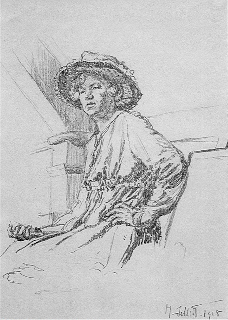
Birth of Sir Shane Leslie, 3rd Baronet

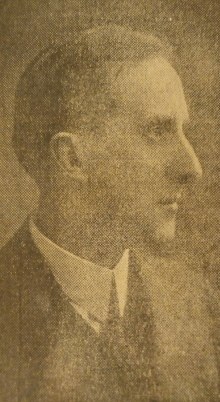
Sir John Randolph Leslie, 3rd Baronet, Anglo-Irish diplomat and writer commonly known as Sir Shane Leslie, is born in Glaslough, County Monaghan, on September 24, 1885. He is a first cousin of Sir Winston Churchill. In 1908, he becomes a Roman Catholic and supports Irish Home Rule.

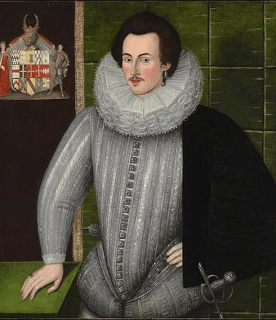
Leslie is born into a wealthy Anglo-Irish landowning family. His father is Sir John Leslie, 2nd Baronet, and his mother, Leonie Jerome, is the sister of Winston Churchill’s mother, Jennie. Both are daughters of Leonard W. Jerome. His ancestor, The Right Reverend John Leslie, Bishop of the Isles, moves from Scotland to Ireland in 1633 when he is made Bishop of Raphoe in County Donegal and is made Bishop of Clogher in 1661. Bishop Leslie is a vocal opponent of Oliver Cromwell.

Together with his brother Norman, Leslie’s early education begins at home where a German governess, Clara Woelke, is their first teacher. As children the brothers have more contact with servants than they have with their parents. His own daughter, Anita, says, “In my parents’ view schools performed the same functions that kennels did for dogs. They were places where pets could be conveniently deposited while their owners travelled.”

Leslie is educated at Ludgrove School, then Eton College and King’s College, Cambridge. While at Cambridge University he becomes a Roman Catholic and a supporter of Irish Home Rule. He adopts an anglicised Irish variant of his name (“Shane”). Not overly impressed by Eton, as a lower boy he and his roommates occupy “an old, battered warren betwixt the chapel cemetery and Wise’s horse yard … [T]he food was wretched and tasteless … As for thrashings which tyrannised rather than disciplined our house, they were excessive. Bullying was endemic and Irish boys were ridiculed, especially on St Patrick’s Day.”

Leslie refuses to send his own sons to Eton. They are educated at Roman Catholic Benedictine schools: Jack at Downside School and Desmond at Ampleforth College.

In the January 1910 United Kingdom general election Leslie stands as the Irish Parliamentary Party (IPP) candidate for the Londonderry City constituency, losing by just 57 votes. In the second general election later that year he is again narrowly defeated by the Unionist candidate.

Before World War I, Leslie travels extensively and in 1912 he marries Marjorie Ide, the youngest daughter of Henry Clay Ide, then United States ambassador to Spain and former Governor-General of the Philippines. His parents and other family members move temporarily to London at the outbreak of war.

During the war Leslie is in a British Ambulance Corps, until invalided out. He is then sent to Washington, D.C. to help the British Ambassador, Sir Cecil Spring Rice, soften Irish American hostility toward England and obtain American intervention in the war in the aftermath of the 1916 Easter Rising in Dublin and the execution of its leaders. But he also looks to Ireland for inspiration when writing and edits a literary magazine that contains much Irish verse. He becomes a supporter of the ideals of Irish nationalism, although not physical force republicanism.

In the 1918 United Kingdom general election in Ireland, the Irish Parliamentary Party loses massively to Sinn Féin, putting an end to Leslie’s political career, but as the first cousin of Winston Churchill he remains a primary witness to much that is said and done outside the official record during the negotiation of the Anglo-Irish Treaty of 1921. Disappointed, he feels unwanted in Ireland and abandoned by the British. Like many members of the landed gentry from the 1880s who were obliged to turn to other occupations, he can no longer rely on income from landholdings.

Leslie writes extensively, in a wide range of styles, in verse, prose, and polemic, over several decades. His writings include The End of a Chapter (1916), while hospitalised during World War I, The Oppidan (1922), a roman à clef about his life and contemporaries at Eton, an edition of the Letters of Herbert Cardinal Vaughan to Lady Herbert of Lea (1942), and a biography Mrs. Fitzherbert: a life chiefly from unpublished sources (1939), together with an edition of her letters (with Maria Anne Fitzherbert), The letters of Mrs. Fitzherbert and connected papers; being the second volume of the life of Mrs. Fitzherbert (1944). He also writes Mark Sykes: His Life and Letters (1923), a biography of the English traveler, Conservative Party politician and diplomatic advisor. He advises budding novelist Scott Fitzgerald on the title of his first novel, they share correspondence with the future Mnsg. William A. Hemmick, who is Fitzgerald’s teacher at the Newman School.

A passionate advocate of reforestation, Leslie finds the business of running an estate uncreative and boring, and transfers the estate entailed to him to his eldest son, John Norman Leslie, who succeeds as the 4th Baronet. He transfers St. Patrick’s Purgatory on Lough Derg to the Roman Catholic Bishop of Clogher, Eugene O’Callaghan.

The wealth of the Leslies wanes by the 1930s following the Wall Street crash of 1929 and a farm that is loss making. In his unpublished memoirs, Leslie writes “a gentleman’s standing in his world was signalled by his list of clubs and it was worth paying hundreds of pounds in subs.” They continue to maintain their lifestyle, involving attendance at the London season and the entertainment of distinguished visitors, including Anthony Eden at Glaslough. At the outbreak of World War II in 1939 he joins the Home Guard. He spends the remainder of his life between Glaslough and London.

Leslie’s first wife, Marjorie, dies on February 8, 1951. On May 30, 1958, at the Catholic Church of St. Peter & Edward, Westminster, he marries Iris Carola Frazer, who is the daughter of Charles Miskin Laing and Etheldreda Janet Laing.

Leslie dies at the age of 85 at 15b Palmeira Court, Hove, East Sussex, on April 14, 1971. A Requiem Mass is held for him in Westminster Cathedral on October 12, 1971.


Leave a comment

Birth of Sir Thomas Drew, Anglo-Irish Architect

Sir Thomas Drew, Anglo-Irish architect, is born in Victoria Place, Belfast, on September 18, 1838.

Drew is the son of the Rev. Thomas Drew, son of a Limerick grocer, and Isabella Drew (née Dalton), daughter of a Dublin attorney. He is one of four sons and eight daughters of the couple, although most of the children die young. His sister, Catherine Drew, is a prominent London journalist and an early champion of women’s rights.

Drew is trained under Sir Charles Lanyon before moving to work in Dublin, where he becomes principal assistant to William George Murray. In 1865, he becomes the diocesan architect of the united dioceses of Down, Connor and Dromore, and from that point forward Church architecture is his principal activity. He is consulting architect for both St. Patrick’s Cathedral and Christ Church Cathedral in Dublin.

Drew marries Adelaide Anne, sister of William George Murray, in 1871.

Among other projects, Drew is responsible for the design of the Ulster Bank on Dame Street, Rathmines Town Hall (completed 1899) and the Graduates Memorial Building at Trinity College Dublin (TCD). He takes an interest in historic buildings and is the first to draw serious attention to the architectural and historic importance of the St. Audoen’s Church, Dublin’s oldest parish church, in 1866. He produces detailed plans of the church for which he wins an award from the Royal Institute of the Architects of Ireland (RIAI), carries out excavations and draws up a paper on the church and its history.

From 1885 to 1892, Richard Orpen works with Drew as a managing assistant. Drew’s most significant work in Belfast is St. Anne’s Cathedral, completed in 1899.

Drew is knighted in the 1900 Birthday Honours and is inaugural president of the Royal Society of Ulster Architects, serving from 1901 to 1903. In addition, he is president of the Royal Institute of the Architects of Ireland (RIAI), the Royal Society of Antiquaries of Ireland (RSAI) and the Royal Hibernian Academy (RHA) and holds the chair in architecture at the National University of Ireland. He lives in Gortnadrew, Monkstown, County Dublin.

Drew dies on March 13, 1910, a month after an unsuccessful operation for appendicitis. He is buried in Dean’s Grange Cemetery.

Selected works:


Leave a comment

Birth of Liam Ó Briain, Irish Language Expert & Political Activist

Liam Ó Briain, Irish language expert and political activist, is born at 10 Church Street, North Wall, Dublin, on September 16, 1888.

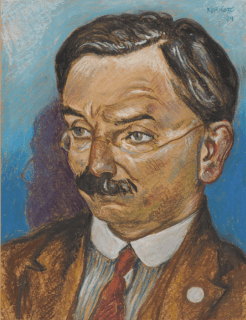
Christened as William O’Brien, the seventh child of Arthur O’Brien, clerk, and Mary O’Brien (née Christie), who is from County Meath, Ó Briain takes an interest in the Irish language from an early age and begins learning Irish by himself from a grammar book, as it is not encouraged by his teachers at the Christian BrothersO’Connell School nor spoken by his parents. While still at the O’Connell School, he starts using the Irish version of his name. He also attends meetings of the Gaelic League, then attends University College Dublin (UCD) on a scholarship, where he studies French, English and Irish, receiving a BA (1909) and an MA (1910).

UCD decides to start awarding one annual scholarship for overseas travel in 1911, and Ó Briain wins the first one, using it to visit Germany and study under Kuno Meyer and Rudolf Thurneysen. After three years, he returns home, where he rejoins the Gaelic League and begins teaching French at UCD. He also joins the Irish Volunteers then, the following year, Seán T. O’Kelly convinces him to join the Irish Republican Brotherhood (IRB).

During the 1916 Easter Rising, Ó Briain sees action with the Irish Citizen Army. He comes into conflict with his commander, Michael Mallin, as he wants to pursue a strategy without the Dublin brigade being “cooped up in the city.” However, Mallin overrules him and insists they should focus on taking Dublin Castle. He spends two months in Wandsworth Prison in London and six months in Frongoch internment camp in Wales before being released to discover that he has been fired from his job. However, he quickly obtains a professorship in Romance languages at University College Galway (UCG).

Around this time, Ó Briain joins Sinn Féin, and he stands unsuccessfully for the party in Mid Armagh at the 1918 United Kingdom general election in Ireland, taking 5,689 votes. His campaign leads, indirectly, to his arrest and three months in jail in Belfast. In 1920, following his release, he is appointed a judge in the then-illegal republican court system in Galway, and visits both France and Italy to try to source weapons for the Irish Republican Army (IRA). In November 1920, he is arrested in the UCG dining room by Black and Tans, and is imprisoned for thirteen months, first in Galway and then in the Curragh camp in County Kildare, thereby missing the conclusion of the Irish War of Independence. By the time he is released, the Anglo-Irish Treaty has been signed. He supports the treaty and takes no further part in militant activity.

In the newly independent Ireland, Ó Briain remains a professor at Galway. He also stands in the 1925 Seanad election, although he is not successful. He is the founding secretary of the Taibhdhearc na Gaillimhe theatre, also acting in many of its productions, and spends much time translating works from English and the Romance languages into Irish. He stands to become president of UCG in 1945, but is not elected, and in the 1940s and 1950s is best known for his many appearances on television and radio.

From his retirement in 1959, Ó Briain lives in Dublin. In 1974, the National University of Ireland (NUI) confers an honorary doctorate on him. He dies on August 12, 1974, at St. Gabriel’s Hospital, Cabinteely, County Dublin. His funeral to Glasnevin Cemetery is almost a state occasion, with a huge attendance of public figures, and a military firing party at the graveside, where the oration is given by Micheál Mac Líammóir and a lesson is read by Siobhán McKenna. For days after his death, the newspapers carry tributes to his many-sided career and personality. On the one hundredth anniversary of his birth, Proinsias Mac Aonghusa and Art Ó Beoláin write commemorative articles in Feasta.

On September 1, 1921, Ó Briain marries Helen Lawlor, of Dublin, who dies two years before him. The couple’s only child is Eibhlín Ní Bhriain, who is a journalist for The Irish Times and other periodicals.


Leave a comment

Birth of Siobhan Fahey, Founding Member of Bananarama

Siobhan Maire Fahey, Irish singer and founding member of the British girl group Bananarama, who have ten top-10 hits including the U.S. number one hit single “Venus,” is born on September 10, 1958, in County Meath. She is the first Irish-born woman to have written two number one singles on the Irish charts. She later forms the musical act Shakespears Sister, who have a UK number one hit with the 1992 single “Stay.” She joins the other original members of Bananarama for a 2017 UK tour, and, in 2018, a North America and Europe tour.

Fahey is the daughter of Helen and Joseph Fahey, both from County Tipperary. She has two younger sisters, Maire (who plays Eileen in the video of the 1982 song “Come On Eileen,” a hit for Dexys Midnight Runners) and Niamh, a producer and editor. She lives in Ireland for several years before her father joins the British Army and the family moves to England, then to Germany for several years, and back to England when she is nine years old. When she is 14, she and her family move to Harpenden, Hertfordshire, and, two years later, she leaves home for London and becomes involved in the punk scene of the late 1970s.

Fahey takes a course in fashion journalism at the London College of Fashion, where she meets Sara Dallin in 1980. Along with Keren Woodward, they found Bananarama and record their first demo “Aie a Mwana” in 1981. Bananarama then works with the male vocal trio Fun Boy Three, releasing two top-five singles with them in early 1982 before having their own top-five hit with “Shy Boy” later that year. Fahey, with Dallin and Woodward, co-write many of the group’s hits, including “Cruel Summer,” “Robert De Niro’s Waiting…,” “I Heard a Rumour,” and “Love in the First Degree.”

In 1988, frustrated with the direction she feels Bananarama is heading, Fahey leaves the group and forms Shakespears Sister. Initially, she effectively is Shakespears Sister, though American singer/songwriter Marcella Detroit later becomes an official member, making the outfit a duo. Their 1992 single “Stay” spends eight weeks at number one on the UK Singles Chart and wins the 1993 Brit Award for Best British Video. At the 1993 Ivor Novello Awards, she, Detroit, and Dave Stewart receive the award for Outstanding Contemporary Song Collection. She often appears in the band’s music videos and on-stage as a vampish glam figure. After two successful albums, tensions begin to rise between Fahey and Detroit and they split up in 1993. That year, Fahey admits herself into a psychiatric unit with severe depression.

In 1996, Fahey continues as Shakespears Sister by herself and releases the single “I Can Drive.” Intended as the first single from Shakespears Sister’s third album and her first record since her split with Marcella Detroit, the single performs disappointingly (UK number 30), which prompts London Records not to release the album. Following this, she leaves the label and, after a lengthy battle, finally obtains the rights to release the album (entitled #3) independently through her own website in 2004.

Fahey briefly re-joins Bananarama in 1998 to record a cover version of ABBA‘s “Waterloo” for the Channel 4 Eurovision special A Song for Eurotrash. She reteams with Bananarama again in 2002 for a “last ever” reunion at the band’s 20th-anniversary concert at G-A-Y in London. The trio performs “Venus” and “Waterloo.”

Fahey continues to make music into the new millennium. In 2005, she independently releases The MGA Sessions, an album recorded with frequent collaborator Sophie Muller in the mid-1990s. Her most recent single under her own name, “Bad Blood,” is released on October 17, 2005.

Fahey’s track “Bitter Pill” is partially covered by the pop band The Pussycat Dolls on their 2005 debut album PCD. The verses, which were slightly altered, and the overall sound of the song are from “Bitter Pill,” but added in is the chorus of Donna Summer‘s “Hot Stuff.” The song is renamed “Hot Stuff (I Want You Back)” and a remix is included as a B-side to their hit single “Beep.”

In 2008, Fahey appears in the Chris Ward-written and directed short film What Shall We Do with the Drunken Sailor, based on the life of artist/model Nina Hamnett, self-styled “Queen of Bohemia,” with Fahey playing the role of Hamnett opposite actor Clive Arrindel, Donny Tourette, frontman with punk band Towers of London, and Honey Bane, former vocalist of the punk band Fatal Microbes.

In 2009, Fahey decides to resurrect the Shakespears Sister name and releases a new album. Entitled Songs from the Red Room, it is released on her own record label, SF Records, and includes various singles she had released under her own name in recent years. She performs her first live show in almost 15 years as Shakespears Sister in Hoxton, London, on November 20, 2009. In 2014 she joins the line-up of Dexys Midnight Runners for some shows, including at Glastonbury Festival.

In 2017, it is announced that Fahey has joined her former Bananarama bandmates for an upcoming UK tour. This is the first live tour she has done as a member of Bananarama.

In 2019, Fahey reunites with Marcella Detroit for Shakespears Sister dates, commencing with an appearance on BBC One‘s The Graham Norton Show on May 10, 2019.

Fahey marries Dave Stewart of Eurythmics in 1987; the couple divorces in 1996. They have two sons, Samuel (born November 26, 1987) and Django James (born 1991). The two brothers form a musical band called Nightmare and the Cat. As an infant, Samuel Stewart appears in early Shakespears Sister videos for “Heroine” and “You’re History.” Django Stewart is also an actor. Samuel is currently the guitarist for the American indie rock band Lo Moon.

Prior to her marriage to Stewart, Fahey is romantically involved with Jim Reilly, the drummer for the Northern Irish punk rock band Stiff Little Fingers and Scottish singer Bobby Bluebell of The Bluebells, with whom she co-writes the UK No. 1 “Young at Heart.”


Leave a comment

Birth of Journalist Terry Keane

Terry Keane, Irish social columnist and fashion journalist, is born in Guildford, Surrey, England, on September 9, 1939.

Born Ann Teresa O’Donnell, she studies medicine at Trinity College Dublin (TCD). She drops out without taking a degree and later marries a young barrister, Ronan Keane. The couple separates in the 1990s, but never divorce. Ronan Keane goes on to become Chief Justice of Ireland (2000-2004).

Keane spends the majority of her career working for the Irish newspaper, the Sunday Independent, where she is the principal contributor of the newspaper’s long-running gossip column, “The Keane Edge.”

In “The Keane Edge” column there are often hints of a relationship with a prominent political figure, named in the column as Sweetie, and her relationship is apparently widely known in certain circles, though never openly confirmed. She leaves the paper on bad terms after selling the story of her 27-year affair with former Taoiseach Charles Haughey to the British newspaper The Sunday Times, a rival to the affiliated London Independent newspapers, though she admits her affair on The Late Late Show in 1999.

Keane’s death on May 31, 2008, after a long illness is announced by her son-in-law, the Irish garden designer and television personality Diarmuid Gavin. She is survived by her children Jane, Madeleine and Justine, who is married to Gavin. Her son Tim dies in 2004. One of her granddaughters, Holly Carpenter, is Miss Ireland in 2011.


Leave a comment

Death of Frederick May, Composer & Arranger

Frederick May, Irish composer and arranger, dies in Dublin on September 8, 1985. His musical career is seriously hindered by a lifelong hearing problem, and he produces relatively few compositions.

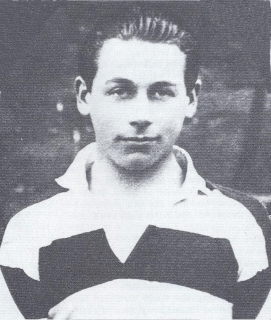
May is born on June 9, 1911, into a Dublin Protestant family who lives in the suburb of Donnybrook. His father, also named Frederick, is employed at the Guinness Brewery. He pursues his musical studies at the Royal Irish Academy of Music, where he is taught composition by John Larchet. In 1930, McCullough Pigott and Co. publishes his Irish Love Song. That same year he is awarded the Esposito Cup at the Feis Ceoil and as a result of this he is nominated as the first recipient of a new scholarship prize worth £100 to be spent on the further study of piano. In July 1930, he takes his preliminary examination for the Bachelor of Music at Trinity College Dublin (TCD) before departing Dublin to utilise his scholarship in London. In September he enrolls at the Royal College of Music (RCM) where his teachers include Charles Kitson, Ralph Vaughan Williams, R. O. Morris and Gordon Jacob. He takes his final TCD examination in December 1931 submitting a string quartet and on December 10 his degree is conferred. During 1932 his study is funded by the RCM’s Foli Scholarship and in October he is awarded the Octavia Travelling Scholarship.

May’s compositions are few in number and he produces most of his small output in the 1930s and early 1940s. His first significant work is the Scherzo for Orchestra, written while he is still a student in London. The first orchestral run through of Scherzo for Orchestra takes place on March 17, 1933, and it receives its first public performance on December 1 when it is heard as part of the Patron’s Concert. Between the months of May and October he composes his Four Romantic Songs, which receive their premiere in London at a Macnaghten-Lemare concert on January 22, 1934. At some point, probably in the second half of 1933, he follows in the footsteps of other Octavia Scholarship winners and travels to Vienna to study with Egon Wellesz.

On January 1, 1936, May takes up the position of Director of Music at the Abbey Theatre in Dublin, a position he retains until he is fired in 1948. His duties mainly consist of leading the piano trio which bears the title “The Abbey Orchestra” in music during the intervals of productions. In 1936, he composes what is today his best-known composition, the String Quartet in C Minor, described in the Grove’s Dictionary of Music and Musicians as “one of the most individual statements from an Irish composer in the first half of the 20th century.” He composes the quartet as his hearing is beginning to deteriorate and he later describes it as “an appeal for release.” String Quartet in C Minor is not premiered until 1948 when it is performed by the Martin Quartet in the Wigmore Hall, London. This is followed by Symphonic Ballad (1937), Suite of Irish Airs (1937), Spring Nocturne (1938), Songs from Prison (1941) and Lyric Movement for Strings (1942). He effectively ceases original composition at this point.

Following a long break from composition, May produces what is to be his valedictory work in 1955, the nine-minute orchestral piece Sunlight and Shadows. It is given its first performance on January 22, 1956, by the Radio Éireann Symphony Orchestra at Dublin’s Gaiety Theatre. Although this is his last original work, he does not abandon music completely. He produces arrangements of Irish music for Radio Éireann, which while not perhaps rewarding artistically, does help to alleviate his always precarious financial situation. He also composes a number of songs for voice and piano and a short piece entitled Idyll for violin and piano. The latter is chosen as a set work for the junior violin competition at the Feis Ceoil in 2017.

Throughout his life May suffers from significant mental health issues which result in hospitalisation. He also experiences otosclerosis, as a result of which he gradually becomes increasingly deaf. In addition, he suffers from severe tinnitus with constant ringing noises in his head. In later life he becomes homeless for a time due to alcoholism and sleeps at night in Grangegorman Asylum, Dublin. He is rescued by some friends led by Garech Browne whose record company, Claddagh Records, records the String Quartet in 1974.

Throughout his career May is an advocate of better musical education in Ireland and expresses his views on this and other musical matters through the medium of The Bell, a monthly journal dealing with the arts. He is a co-founder, along with Brian Boydell and Aloys Fleischmann, of the Music Association of Ireland (now “Friends of Classical Music”), set up in 1948 to promote art music as an integral part of the cultural life of Ireland. Later he becomes a member of Aosdána. He lives the last years of his life at Orthopaedic Hospital of Ireland, Clontarf, Dublin. He dies on September 8, 1985, at the age of 74 and is buried in Mount Jerome Cemetery.


4 Comments

Birth of Fiachra Trench, Musician & Composer

Fiachra Terence Wilbrah Trench, Irish musician and composer, is born on September 7, 1941, in Dublin, County Dublin.

Trench studies chemistry at Trinity College Dublin (TCD) and composition and organ at the Royal Irish Academy of Music with A. J. Potter and George Hewson, before moving on to the University of Georgia in 1963, and then the University of Cincinnati. From 1969 to 1991, he lives and works in London. In 1972, he co-produces, and plays keyboards on, the If album Waterfall, as well as appearing on Solid Gold Cadillac‘s eponymous first album. In 1973, he plays piano on the If album Double Diamond.

Trench and his songwriting partner of the 1980s, Ian Levine, write and produce some popular hi-NRG club hits of the era for Miquel Brown, Barbara Pennington and Evelyn Thomas. It is through Levine that he comes to co-write the theme tune for the 1981 BBC Doctor Who spin-off K-9 and Company. He is credited with the string arrangements on The Boomtown Rats‘ “I Don’t Like Mondays” and “Fairytale of New York” by The Pogues. Other artists he works with include Van Morrison on his 1989 album Avalon Sunset, Elvis Costello, Art Garfunkel, Sinéad O’Connor, The Corrs, Phil Lynott (including the orchestral arrangements on Lynott’s solo hit “Old Town“), Sweet (arrangement and piano on early hits), Joan Armatrading and Paul McCartney. His string arrangements on the Van Morrison song “Have I Told You Lately” are among his most beautiful works. He teaches McCartney’s late wife Linda to play the piano. In 1996, he conducts the French entry in the Eurovision Song Contest, “Diwanit bugale,” composed and performed by Dan Ar Braz.

Trench scores and composes music for films including Pearl Harbor, The Boxer, The Tailor of Panama and The Ring. In 2006, he reworks Clint Mansell‘s “Lux Aeterna” for the 2006 Allied Irish Banks (AIB) Ryder Cup advert “Epic” directed by Enda McCallion.


Leave a comment

The Flight of the Earls

On September 4, 1607, Hugh O’Neill, Earl of Tyrone, and Rory O’Donnell, 1st Earl of Tyrconnell, and about ninety followers depart from Lough Swilly for the European continent. It is known in Irish history as the “Flight of the Earls.” Their permanent exile is a watershed event in Irish history, symbolizing the end of the old Gaelic order.

After the defeat at the Siege of Kinsale in 1601, Hugh Roe O’Donnell of Tyrconnell travels to Spain to seek support from Philip III. Unsuccessful, he dies in Spain and is succeeded by his younger brother Rory O’Donnell.

The O’Neills and O’Donnells retain their lands and titles, although with much-diminished extent and authority. However, the countryside is laid bare in a campaign of destruction in 1602, which induces famine in 1603. Hugh O’Neill, Earl of Tyrone, is pardoned under the terms of the Treaty of Mellifont in March 1603 and submits to the crown.

When King James VI and I takes the English throne in 1603, he quickly proceeds to issue pardons for the Irish lords and their rebel forces. Already reigning as king of Scotland, he has a better understanding of the advantages from working with local chiefs in the Scottish Highlands. However, as in other Irish lordships, the 1603 peace involves O’Neill losing substantial areas of land to his cousins and neighbors, who would be granted freeholds under the English system, instead of the looser arrangements under the former Brehon law system. This is not a new policy but is a well-understood and longstanding practice in the Tudor conquest of Ireland.

On September 10, 1602, the Prince of Tyrconnell has already died, allegedly assassinated, in Spain, and his brother succeeds him as 25th Chieftain of the O’Donnell clan. He is later granted the Earldom of Tyrconnell by King James I on September 4, 1603, and restored to a somewhat diminished scale of territories in Tyrconnell on February 10, 1604.

In 1605, the new Lord Deputy of Ireland, Sir Arthur Chichester, begins to encroach on the former freedoms of the two Earls and The Maguire, enforcing the new freeholds, especially that granted in North Ulster to the O’Cahan chief. The O’Cahan had formerly been important subjects of the O’Neills and required protection; in turn, Chichester wants to reduce O’Neill’s authority. O’Cahan has also wanted to remove himself from O’Neill’s overlordship. An option is to charge O’Neill with treason if he does not comply with the new arrangements. The discovery of the Gunpowder Plot in the same year makes it harder for Catholics to appear loyal to both the crown and the papacy. A lengthy legal battle however finds in O’Neill’s favor.

By 1607, O’Neill’s allies the Maguires and the Earl of Tyrconnell are finding it hard to maintain their prestige on lower incomes. They plan to seek Spanish support before news of the Battle of Gibraltar arrives. When their ship drops anchor, O’Neill seems to have joined them on impulse. He had three options:

  • Flee with his friends and hope for a reinvasion by Spain
  • Go to London and stay at court until his grievances are redressed
  • Do nothing and live on a reduced income as a large landowner in Ulster

Fearing arrest, they choose to flee to Continental Europe, where they hope to recruit an army for the invasion of Ireland with Spanish help. However, earlier in 1607 the main Spanish fleet in Europe had been defeated by the Dutch in the Battle of Gibraltar. But the oft-repeated theory that they are all about to be arrested contradicts writer Tadhg Ó Cianáin, the main historical source on the Flight, who says at the start of his account that O’Neill heard news of the ship anchored at Rathmullen on Thursday September 6, and “took his leave of the Lord Justice (Chichester) the following Saturday.” They had been meeting at Slane for several days, and there is no proof that warrants for his arrest have been drawn up, nor is it a hurried departure.

Also, as the Anglo-Spanish War (1585–1604) has been ended by the Treaty of London in 1604, King Philip III of Spain wants to remain at peace with England under its new Stuart dynasty. As a part of the peace proposals, a Spanish princess is to marry James’ son, Henry, though this never happens. Spain had also gone bankrupt in 1598. Tyrone ignores all these realities, remains in Italy, and persists with his invasion plan until his death in exile in 1616.

The earls set sail from Rathmullan, a village on the shore of Lough Swilly in County Donegal, with some of the leading Gaelic families in Ulster. Several leave their wives behind, hoping either to return or retrieve them later. They travel down Lough Swilly on a French ship. Their departure is the end of the old Gaelic order, in that the earls are descended from Gaelic clan dynasties that had ruled their parts of Ulster for centuries. They finally reach the Continent on October 4, 1607.

Their destination is Spain, but they disembark in France. The party proceeds overland to Spanish Flanders, some remaining in Leuven, while the main party continues to Italy. Tadhg Ó Cianáin subsequently describes the journey in great detail. While the party is welcomed by many important officials in the Spanish Netherlands, he makes no mention of any negotiations or planning between the earls and the Spanish to start a new war to regain the earls’ properties.

James I soon plants the O’Neill and O’Donnell lands with Protestant settlers, helping to sow the seeds of the present “Troubles.” O’Donnell dies in Rome in 1608 and O’Neill dies there also in 1616.

Ó Cianáin’s diary is important as the only continuous and contemporaneous account of the Flight. Its original title, Turas na dTaoiseach nUltach as Éirinn – the departure of the Chiefs of Ulster from Ireland – has been changed since the creation of the more dramatic phrase “Flight of the Earls” to the latter’s modern literal translation, Imeacht na nIarlaí.

The Flight of the Earls is a watershed event in Irish history, as the ancient Gaelic aristocracy of Ulster goes into permanent exile. Despite their attachment to and importance in the Gaelic system, the Earls’ ancestors had accepted their Earldoms from the English-run Kingdom of Ireland in the 1540s, under the policy of surrender and regrant. Some historians argue that their flight is forced upon them by the fallout from the Tudor conquest of Ireland, while others that it is an enormous strategic mistake that clears the way for the Plantation of Ulster.

From 1616, a number of bards outside Ulster have a poetic debate in the “Contention of the bards” and one of the arguments celebrates King James’s Gaelic-Irish Milesian ancestry through Malcolm III of Scotland. So, it is debatable whether the Gaelic order has ended or is evolving.

(Pictured: A bronze sculpture commemorating the Flight in Rathmullan, County Donegal)


Leave a comment

Birth of John Redmond, Irish Nationalist Politician

John Edward Redmond, Irish nationalist politician, barrister, and Member of Parliament (MP) in the House of Commons of the United Kingdom, is born to an old prominent Catholic family in Kilrane, County Wexford on September 1, 1856. He is best known as leader of the moderate Irish Parliamentary Party (IPP) from 1900 until his death. He is also leader of the paramilitary organisation the National Volunteers.

Several of Redmond’s relatives are politicians. He takes over control of the minority IPP faction loyal to Charles Stewart Parnell after Parnell dies in 1891. He is a conciliatory politician who achieves the two main objectives of his political life: party unity and, in September 1914, the passing of the Irish Home Rule Act.

The Irish Home Rule Act grants limited self-government to Ireland, within the United Kingdom. However, implementation of Home Rule is suspended by the outbreak of the World War I. Redmond calls on the National Volunteers to join Irish regiments of the New British Army and support the British and Allied war effort to restore the “freedom of small nations” on the European continent, thereby to also ensure the implementation of Home Rule after a war that is expected to be of short duration. However, after the Easter Rising of 1916, Irish public opinion shifts in favour of militant republicanism and full Irish independence, resulting in his party losing its dominance in Irish politics.

In sharp contrast to Parnell, Redmond lacks charisma. He works well in small committees but has little success in arousing large audiences. Parnell had always chosen the nominees to Parliament. Now they are selected by the local party organisations, giving Redmond numerous weak MPs over whom he has little control. He is an excellent representative of the old Ireland but grows increasingly old-fashioned because he pays little attention to the new forces attracting younger Irishmen, such as Sinn Féin in politics, the Gaelic Athletic Association in sports, and the Gaelic League in cultural affairs.

Redmond never tries to understand the unionist forces emerging in Ulster. He is further weakened in 1914 by the formation of the Irish Volunteers by Sinn Féin members. His enthusiastic support for the British war effort alienates many Irish nationalists. His party has been increasingly hollowed out, and a major crisis, notably the Easter Rising, is enough to destroy it.

Redmond is increasingly eclipsed by ill-health after 1916. An operation in March 1918 to remove an intestinal obstruction appears to progress well initially, but he then suffers heart failure. He dies a few hours later at a London nursing home on March 6, 1918.

Condolences and expressions of sympathy are widely expressed. After a funeral service in Westminster Cathedral his remains are interred, as requested in a manner characteristic of the man, in the family vault at the old Knights Templars‘ chapel yard of Saint John’s Cemetery, Wexford, amongst his own people rather than in the traditional burial place for Irish statesmen and heroes in Glasnevin Cemetery. The small, neglected cemetery near the town centre is kept locked to the public. His vault, which has been in a dilapidated state, has been only partially restored by Wexford County Council.


Leave a comment

Birth of Mary Letitia Martin, Novelist & Philanthropist

Mary Letitia Martin, Irish novelist and philanthropist who is known as the “Princess of Connemara,” is born in Ballynahinch Castle, in the Connemara region of County Galway, on August 28, 1815. She publishes two books in her lifetime, and a third is published posthumously.

Martin is born into the chief landowning family of Connemara, the Martins of Ballynahinch Castle, a branch of the Martyn Tribe of Galway. Her parents are Thomas Barnwall Martin and Julia Kirwin. Her paternal grandfather is Richard Martin, a Member of Parliament (MP) for County Galway also known as “Humanity Dick.”

Educated at home in the upper-class style and by herself, Martin becomes fluent in Irish, English, French and a number of other languages. According to Maria Edgeworth, who meets her during her tour of Connemara in 1833, she is courted in 1834 by Count Adolphe de Werdinsky, whom she had met in London earlier in the year. She refuses to marry and de Werdinsky feigns a suicide attempt at Ballynahinch.

Martin publishes her first novel, St. Etienne, a Tale of the Vendean War, in 1845.

In 1847, Martin marries a cousin, Colonel Arthur Gonne Bell. He takes the name of Martin on marriage, by Royal Licence. In the same year, her father dies of famine fever contracted while visiting his tenants in the Clifden workhouse.

On the death of her father, Martin inherits a heavily encumbered estate of 200,000 acres. In the following two years, her remaining fortune is destroyed in the famine as she attempts to alleviate its effects on her tenants. Penniless, she emigrates with her husband to Belgium. There she contributes to a number of periodicals, notably Encyclopaedie Des Gens Du Monde.

In 1850, Martin’s autobiographical novel, Julia Howard: A Romance, is published. Martin and her husband sail to the United States in 1850, but she dies at the Union Place Hotel in New York City on November 7, 1950, ten days after arrival due to complications of premature childbirth in which the baby does not survive.

Martin’s husband returns to England. He arranges for the posthumous publication of her novel, Deed, not Words (1857). In 1883, he is killed in a railway accident.