seamus dubhghaill

Promoting Irish Culture and History from Little Rock, Arkansas, USA


Leave a comment

Birth of Sean O’Callaghan, Member of the Provisional IRA

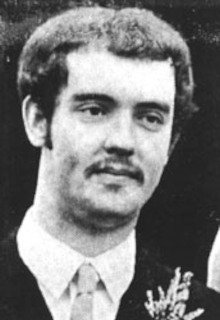
Sean O’Callaghan, a member of the Provisional Irish Republican Army (IRA), who from the late 1970s to the mid-1980s works against the organisation from within as a mole for the Irish Government with the Garda Síochána‘s Special Detective Unit, is born in TraleeCounty Kerry, on October 10, 1954.

O’Callaghan is born into a family with a Fenian paramilitary history. His paternal grandfather had taken the Anti-Treaty side during the Irish Civil War, and his father had been interned by the Irish Government at the Curragh Camp in County Kildare for IRA activity during World War II.

By the late 1960s, O’Callaghan ceases to practise his Catholic faith, adopts atheism and has become interested in the theories of Marxist revolutionary politics, which finds an outlet of practical expression in the sectarian social unrest in Northern Ireland at the time, centered on the activities of the Northern Ireland Civil Rights Association. In 1969, communal violence breaks out in Northern Ireland and believing that British imperialism is responsible, he joins the newly founded Provisional IRA at the age of 17.

Soon afterward, O’Callaghan is arrested by local Gardaí after he accidentally detonates a small amount of explosives, which cause damage to the homes of his parents and their neighbours. After demanding, and receiving, treatment as a political prisoner, he quietly serves his sentence.

After becoming a full-time paramilitary with the IRA, in the early to mid-1970s O’Callaghan takes part in over seventy operations associated with Irish Republican political violence including bomb materials manufacture, attacks on IRA targets in Northern Ireland, and robberies to provide funding for the organisation.

In 1976, O’Callaghan ends his involvement with the IRA after becoming disillusioned with its activities. He later recalls that his disenchantment with the IRA began when one of his compatriots openly hoped that a female police officer who had been blown up by an IRA bomb had been pregnant so they could get “two for the price of one.” He is also concerned with what he perceives as an undercurrent of ethnic hatred in its rank and file toward the Ulster Scots population. He leaves Ireland and moves to London. In May 1978, he marries a Scottish woman of Protestant unionist descent. During the late 1970s, he runs a successful mobile cleaning business. However, he is unable to fully settle into his new life, later recalling, “In truth there seemed to be no escaping from Ireland. At the strangest of times I would find myself reliving the events of my years in the IRA. As the years went on, I came to believe that the Provisional IRA was the greatest enemy of democracy and decency in Ireland.”

In 1979, O’Callaghan is approached by the IRA seeking to recruit him again for its paramilitary campaign. In response, he decides to turncoat against the organisation and becomes an agent within its ranks for the Irish Government. He decides to become a double agent even though he knows that even those who hate the IRA as much as he now does have a low opinion of informers. However, he feels it is the only way to stop the IRA from luring teenagers into their ranks and training them to kill.

Soon after being approached by the IRA to re-join, O’Callaghan returns to Tralee from London, where he arranges a clandestine meeting with an officer of the Garda Special Detective Unit in a local cemetery, at which he expresses his willingness to work with it to subvert the IRA from within. At this point, he is still opposed to working with the British Government. A few weeks later, he makes contact with Kerry IRA leader Martin Ferris and attends his first IRA meeting since 1975. Immediately afterward, he telephones his Garda contact and says, “We’re in”.

During the 1981 hunger strike in the Maze Prison, O’Callaghan attempts to start his own hunger strike in support of the Maze prisoners but is told to desist by the IRA for fear it will detract focus from the prisoners. He successfully sabotages the efforts of republicans in Kerry from staging hunger strikes of their own.

In 1984, O’Callaghan notifies the Garda of an attempt to smuggle seven tons of AK-47 assault rifles from the United States to Ireland aboard a fishing trawler named Valhalla. The guns are intended for the arsenal of the Provisional IRA’s units. As a result of his warning, a combined force of the Irish Navy and Gardaí intercept the boat that received the weaponry, and the guns are seized. The seizure marks the complete end of any major attempt by the IRA to smuggle guns out of the United States.

In 1983, O’Callaghan claims to be tasked by the IRA with placing 25 lbs. of Frangex in the Dominion Theatre in London, in an attempt to kill Prince Charles and Princess Diana who are due to attend a charity pop music concert there. A warning is phoned into the Garda, and the Royal couple are hurriedly ushered from the theatre by their police bodyguard during the concert. The theatre had been searched before the concert and a second search following the warning reveals no device.

In 1985, O’Callaghan is elected as a Sinn Féin councillor for Tralee Urban District Council, and unsuccessfully contests a seat on Kerry County Council.

After becoming disillusioned with his work with the Irish Government following the murder of another of its agents within the IRA, which it had failed to prevent despite O’Callaghan’s warnings of the threat to him, and sensing a growing threat to himself from the organisation which had become suspicious of his own behaviour, he withdraws from the IRA and leaves Ireland to live in England, taking his wife and children with him. His marriage ends in a divorce in 1987, and on November 29, 1988, he walks into a police station in Tunbridge WellsKent, England, where he presents himself to the officer on duty at the desk, confesses to the murder of Ulster Defence Regiment (UDR) Greenfinch (female member) Eva Martin and the murder of D.I. Peter Flanagan during the mid-1970s, and voluntarily surrenders to British prosecution.

Although the Royal Ulster Constabulary (RUC) offers him witness protection as part of the informer policy, O’Callaghan refuses it and is prosecuted under charges of two murders and 40 other crimes, to all of which he pleads guilty, committed in British jurisdiction with the IRA. Having been found guilty, he is sentenced to a total of 539 years in prison. He serves his sentence in prisons in Northern Ireland and England. While in jail, he publishes his story in The Sunday Times. He is released after being granted the royal prerogative of mercy by Queen Elizabeth II in 1996.

In 1998, O’Callaghan publishes an autobiographical account of his experiences in Irish Republican paramilitarism, entitled The Informer: The True Life Story of One Man’s War on Terrorism (1998).

In 2002, O’Callaghan is admitted to Nightingale Hospital, Marylebone, an addiction and rehab center where he undergoes a rehabilitation program for alcohol dependency. His identity and past activities are not revealed to the other patients. He lives relatively openly in London for the rest of his life, refusing to adopt a new identity. He is befriended in the city by the Irish writer Ruth Dudley Edwards, and works as a security consultant, and also occasional advisor to the Ulster Unionist Party (UUP) on how to handle Irish republicanism in general, and Sinn Féin in particular.

In 2006, O’Callaghan appears in a London court with regard to an aggravated robbery that occurs in which he is the victim.

In 2015, O’Callaghan publishes James Connolly: My Search for the Man, the Myth & his Legacy (2015), a book containing a critique of the early 20th century Irish revolutionary James Connolly, and what he considers to be his destructive legacy in Ireland’s contemporary politics.

O’Callaghan dies by drowning after suffering a heart attack at the age of 63 while in a swimming pool in Kingston, Jamaica, on August 23, 2017, while visiting his daughter. A memorial service is held in his memory on March 21, 2018, at St. Martin’s-in-the-Fields, a Church of England parish church at the northeast corner of Trafalgar Square in the City of Westminster, London. The service is attended by representatives from Ulster Unionist parties and the Irish Government.

Leave a comment

Death of Billy McMillen, Official Irish Republican Army Officer

William McMillen, Irish republican activist and an officer of the Official Irish Republican Army (OIRA) from Belfast, Northern Ireland, is killed during a feud with the Irish National Liberation Army (INLA) on April 28, 1975.

McMillen is born in Belfast on May 19, 1927, and joins the Irish Republican Army (IRA) at age 16 in 1943. During the IRA’s border campaign (1956–62), he is interned and held in Crumlin Road Gaol. In 1964, he runs in the British general election as an Independent Republican candidate. When he places the Irish tricolour in the window of his election office in the lower Falls Road area, this sparks a riot between republicans, loyalists and the Royal Ulster Constabulary (RUC). There have been tensions on the issue since the government of Northern Ireland banned the flying of the tricolour under the Flags and Emblems (Display) Act (Northern Ireland) 1954.

In October 1964, during the general election campaign, a photo of McMillen is placed in the window of the election office in Divis Street flanked on one side by the Starry Plough flag and on the other by the tricolour. His campaign draws national attention after Ian Paisley demands that police remove the tricolour from McMillen’s election offices. The RUC raids the premises and confiscates the flag, sparking several days of rioting during which McMillen leads several thousand protesters in defiantly displaying the tricolour. He recalls the IRA gaining a “couple of dozen recruits” following the election, but he finishes at the bottom of the poll with 3,256 votes (6%). Around this time, he succeeds Billy McKee as the Officer commanding (OC) of the Belfast Brigade.

McMillen is keen to work for the unity of Protestant and Catholic workers. Roy Garland recalls that McMillan’s grandfather was master of an Orange lodge in Edinburgh and McMillan knew of that heritage and the meaning of the colours of the Irish flag. He prominently displays in his election offices a verse of a poem by John Frazier, a Presbyterian from County Offaly: “Till then the Orange lily be your badge my patriot brother. The everlasting green for me and we for one and other.”

In 1967, McMillen is involved in the formation of the Northern Ireland Civil Rights Association (NICRA) and is a member of a three-man committee which draws up the Association’s constitution. The NICRA’s peaceful activities result in violent opposition from many unionists, leading to fears that Catholic areas will come under attack. In May 1969, when asked at an IRA army council meeting by Ruairí Ó Brádaigh how many weapons the Belfast Brigade has for defensive operations, McMillen states they have only one pistol, a machine gun and some ammunition.

By August 14, 1969, serious rioting has broken out in Belfast and Catholic districts come under attack from both civilian unionists and the RUC. McMillen’s IRA command by this point still has only a limited number of weapons because the leadership in Dublin are reluctant to release guns. While he is involved in some armed actions on this day, he is widely blamed by those who established the Provisional IRA for the IRA’s failure to adequately defend Catholic neighbourhoods from Ulster loyalist attack. He is arrested and temporarily detained by the RUC on the morning of August 15 but is released shortly afterward.

McMillen’s role in the 1969 riots is very important within IRA circles, as it is one of the major factors contributing to the split in the movement in late 1969. In a June 1972 lecture organised by Official Sinn Féin in Dublin, he defends his conduct, stating that by 1969 the total membership of the Belfast IRA is approximately 120 men, and their armaments have increased to a grand total of 24 weapons, most of which are short-range pistols.

In September, McMillen calls a meeting of IRA commanders in Belfast. Billy McKee and several other republicans arrive at the meeting armed and demand McMillen’s resignation. He refuses, but many of those unhappy with his leadership break away and refuse to take orders from him or the Dublin IRA leadership. Most of them join the Provisional Irish Republican Army, when this group splits off from the IRA in December 1969. McMillen himself remains loyal to the IRA’s Dublin leadership, which becomes known as the Official IRA. The split rapidly develops into a bitter rivalry between the two groups. In April 1970, he is shot and wounded by Provisional IRA members in the Lower Falls area of Belfast.

In June 1970, McMillen’s Official IRA have their first major confrontation with the British Army, which had been deployed to Belfast in the previous year, in an incident known as the Falls Curfew. The British Army mounts an arms search in the Official IRA stronghold of the Lower Falls, where they are attacked with a grenade by Provisional IRA members. In response, the British flood the area with troops and declare a curfew. This leads to a three-day gun battle between 80 to 90 Official IRA members led by McMillen and up to 3,000 British troops. Five civilians are killed in the fighting and about 60 are wounded. In addition, 35 rifles, 6 machine guns, 14 shotguns, grenades, explosives and 21,000 rounds of ammunition, all belonging to the OIRA, are seized. McMillen blames the Provisionals for instigating the incident and then refusing to help the Officials against the British.

This ill-feeling eventually leads to an all-out feud between the republican factions in Belfast in March 1971. The Provisionals attempt to kill McMillen again, as well as his second-in-command, Jim Sullivan. In retaliation, McMillen has Charlie Hughes, a young PIRA member, killed. Tom Cahill, brother of leading Provisional Joe Cahill, is also shot and wounded. After these deaths, the two IRA factions in Belfast negotiate a ceasefire and direct their attention instead at the British Army.

When the Northern Ireland authorities introduce internment in August 1971, McMillen flees Belfast for Dundalk in the Republic of Ireland, where he remains for several months. During this time, the Official IRA carries out many attacks on the British Army and other targets in Northern Ireland. However, in April 1972, the organisation in Belfast is badly weakened by the death of their commander in the Markets area, Joe McCann. In May of that year, the Dublin leadership of the OIRA calls a ceasefire, a move which McMillen supports. Nevertheless, in the year after the ceasefire, his command kills seven British soldiers in what they term “retaliatory attacks.” McMillen serves on the Ard Chomhairle (leadership council) of Official Sinn Féin.

By 1974, a group of OIRA members around Seamus Costello are unhappy with the ceasefire. In December 1974, they break away from the Official movement, forming the Irish Republican Socialist Party (IRSP) and the Irish National Liberation Army (INLA). Some OIRA members under McMillen’s command, including the entire Divis Flats unit, defect to the new grouping. This provokes another intra-republican feud in Belfast. The feud begins with arms raids on OIRA dumps and beatings of their members by the INLA. McMillen, in response is accused of drawing up a “death list” of IRSP/INLA members and even of handing information on them over to the loyalist Ulster Volunteer Force (UVF).

The first killing comes on February 20, 1975, when the OIRA shoot dead an INLA member named Hugh Ferguson in west Belfast. A spate of shootings follows on both sides.

On April 28, 1975, McMillen is shot dead by INLA member Gerard Steenson, as he is shopping in a hardware shop on Spinner Street with his wife Mary. He is hit in the neck and dies at the scene. His killing is unauthorised and is condemned by INLA/IRSP leader Seamus Costello. Despite this, the OIRA tries to kill Costello on May 9, 1975, and eventually kills him two years later. McMillen’s death is a major blow to the OIRA in Belfast.


Leave a comment

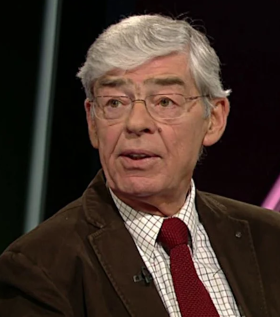
Birth of Alan Dukes, Former Fine Gael Politician

Alan Martin Dukes, former Fine Gael politician, is born in Drimnagh, Dublin, on April 20, 1945. He holds several senior government positions and serves as a Teachta Dála (TD) from 1981 to 2002. He is one of the few TDs to be appointed a minister on their first day in the Dáil.

His father, James F. Dukes, is originally from Tralee, County Kerry, and is a senior civil servant and the founding chairman and chief executive of the Higher Education Authority (HEA), while his mother is from near Ballina, County Mayo.

The Dukes family originally comes from the north of England. His grandfather serves with the Royal Engineers in World War I and settles in County Cork and then County Kerry afterward where he works with the Post Office creating Ireland’s telephone network.

Dukes is educated by the Christian Brothers at Coláiste Mhuire, Dublin, and is offered several scholarships for third level on graduation, including one for the Irish language. His interest in the Irish language continues to this day, and he regularly appears on Irish-language television programmes.

On leaving school he attends University College Dublin (UCD), where he captains the fencing team to its first-ever Intervarsity title.

Dukes becomes an economist with the Irish Farmers’ Association (IFA) in Dublin in 1969. After Ireland joins the European Economic Community (EEC) in 1973, he moves to Brussels where he is part of the IFA delegation. In this role, he is influential in framing Ireland’s contribution to the Common Agricultural Policy (CAP). He is appointed as chief of staff to Ireland’s EEC commissioner Richard Burke, a former Fine Gael politician.

In the 1979 European Parliament election, Dukes stands as a Fine Gael candidate in the Munster constituency. He has strong support among the farming community, but the entry of T. J. Maher, a former president of the IFA, as an independent candidate hurts his chances of election. Maher tops the poll.

He stands again for Fine Gael at the 1981 Irish general election in the expanded Kildare constituency, where he wins a seat in the 22nd Dáil. On his first day in the Dáil, he is appointed Minister for Agriculture by the Taoiseach, Garret FitzGerald, becoming one of only eight TDs so appointed. He represents Kildare for 21 years.

This minority Fine Gael–Labour Party coalition government collapses in February 1982 on the budget but returns to power with a working majority in December 1982. Dukes is again appointed to cabinet, becoming Minister for Finance less than two years into his Dáil career.

He faces a difficult task as finance minister. Ireland is heavily in debt while unemployment and emigration are high. Many of Fine Gael’s plans are deferred while the Fine Gael–Labour Party coalition disagrees on how to solve the economic crisis. The challenge of addressing the national finances is made difficult by electoral arithmetic and a lack of support from the opposition Fianna Fáil party led by Charles Haughey. He remains in the Department of Finance until a reshuffle in February 1986 when he is appointed Minister for Justice.

Fine Gael fails to be returned to government at the 1987 Irish general election and loses 19 of its 70 seats, mostly to the new Progressive Democrats. Outgoing Taoiseach and leader Garret FitzGerald steps down and Dukes is elected leader of Fine Gael, becoming Leader of the Opposition.

This is a difficult time for the country. Haughey’s Fianna Fáil runs on promises to increase spending and government services, and attacking the cutbacks favoured by Fine Gael. However, on taking office, the new Taoiseach and his finance minister Ray MacSharry immediately draw up a set of cutbacks including a spate of ward and hospital closures. This presents a political opportunity for the opposition to attack the government.

However, while addressing a meeting of the Tallaght Chamber of Commerce, Dukes announces, in what becomes known as the Tallaght Strategy that: “When the government is moving in the right direction, I will not oppose the central thrust of its policy. If it is going in the right direction, I do not believe that it should be deviated from its course, or tripped up on macro-economic issues.”

This represents a major departure in Irish politics whereby Fine Gael will vote with the minority Fianna Fáil Government if it adopts Fine Gael’s economic policies for revitalising the economy. The consequences of this statement are huge. The Haughey government is able to take severe corrective steps to restructure the economy and lay the foundations for the economic boom of the nineties. However, at a snap election in 1989, Dukes does not receive electoral credit for this approach, and the party only makes minor gains, gaining four seats. The outcome is the first-ever coalition government for Fianna Fáil, whose junior partner is the Progressive Democrats led by former Fianna Fáil TD Desmond O’Malley.

The party’s failure to make significant gains in 1989 leaves some Fine Gael TDs with a desire for a change at the top of the party. Their opportunity comes in the wake of the historic 1990 Irish presidential election. Fine Gael chooses Austin Currie TD as their candidate. He had been a leading member of the Northern Ireland Civil Rights Association (NICRA) movement in the 1960s and had been a member of the Social Democratic and Labour Party (SDLP) before moving south.

Initially, Fianna Fáil’s Brian Lenihan Snr is the favourite to win. However, after several controversies arise, relating to the brief Fianna Fáil administration of 1982, and Lenihan’s dismissal as Minister for Defence midway through the campaign, the Labour Party’s Mary Robinson emerges victorious. To many in Fine Gael, the humiliation of finishing third is too much to bear and a campaign is launched against Dukes’ leadership. He is subsequently replaced as party leader by John Bruton.

Bruton brings Dukes back to the front bench in September 1992, shortly before the November 1992 Irish general election. In February 1994, Dukes becomes involved in a failed attempt to oust Bruton as leader and subsequently resigns from the front bench. Bruton becomes Taoiseach in December 1994 and Dukes is not appointed to cabinet at the formation of the government.

In December 1996, Dukes returns as Minister for Transport, Energy and Communications following the resignation of Michael Lowry. At the 1997 Irish general election, he tops the poll in the new Kildare South constituency, but Fine Gael loses office. He becomes Chairman of the Irish Council of the European Movement. In this position, he is very involved in advising many of the Eastern European countries who are then applying to join the European Union.

In 2001, Dukes backs Michael Noonan in his successful bid to become leader of Fine Gael.

After 21 years, Dukes loses his Dáil seat at the 2002 Irish general election. This contest sees many high-profile casualties for Fine Gael, including Deputy Leader Jim Mitchell, former deputy leader Nora Owen and others. Many local commentators feel that Dukes’ loss is due to a lack of attention to local issues, as he is highly involved in European projects and has always enjoyed a national profile.

He retires from frontline politics in 2002 and is subsequently appointed Director General of the Institute of International and European Affairs. He remains active within Fine Gael and serves several terms as the party’s vice-president. From 2001 to 2011, he is President of the Alliance française in Dublin, and in June 2004, the French Government appoints him an Officer of the Legion of Honour. In April 2004, he is awarded the Commander’s Cross of the Order of Merit of the Republic of Poland.

In December 2008, Dukes is appointed by Finance Minister Brian Lenihan Jnr as a public interest director on the board of Anglo Irish Bank. The bank is subsequently nationalised, and he serves on the board until the Irish Bank Resolution Corporation (IBRC) is liquidated in 2013.

From 2011 to 2013, Dukes serves as chairman of the Board of Irish Guide Dogs for the Blind. In 2011, he founds the think tank Asia Matters, which inks an agreement with the Chinese People’s Association for Friendship with Foreign Countries in May 2019.

Dukes has lived in Kildare since first being elected to represent the Kildare constituency in 1981. His wife Fionnuala (née Corcoran) is a former local politician and serves as a member of Kildare County Council from 1999 until her retirement in 2009. She serves as Cathaoirleach of the council from 2006 to 2007, becoming only the second woman to hold the position in the body’s one-hundred-year history. They have two daughters.


Leave a comment

Birth of John Kelly, Northern Irish Politician & IRA Volunteer

John Kelly, Northern Irish republican politician, is born in the New Lodge area of Belfast, Northern Ireland, on April 5, 1936. He joins the Irish Republican Army (IRA) in the 1950s and is a founder member and a leader of the Provisional Irish Republican Army in the early 1970s.

Kelly is one of five sons and four daughters born to William Kelly, retail and wholesale fruitier, and his wife Margaret (née Maginness). Living off Carlisle Circus in a flashpoint area of north Belfast and close to Crumlin Road Gaol, the Kellys are a strongly republican family, regularly supplying republican inmates with fruit and assisting them on their release.

Later in life Kelly moves to Maghera, County Londonderry, where he lives until his death in 2007. He and his wife have a daughter. He is a dedicated member of local Gaelic Athletic Association (GAA) club Watty Graham’s GAC, Glen and a keen supporter of Gaelic games and the Irish language.

Kelly joins the IRA in the early 1950s when he is eighteen and takes part in the Border Campaign of 1956–62 but is arrested in December 1956 and imprisoned until 1963. He is a member of the Northern Ireland Civil Rights Association (NICRA) in 1967–69 which leads on to sectarian riots in Belfast. A leader of the newly formed Provisional IRA in 1969, he is involved in the formation of “citizens’ defence groups” to protect nationalist areas of Belfast from loyalist rioters who are largely unhampered by the police.

Kelly is jailed on three occasions for IRA related activity spending a total of fifteen years in prison in Northern Ireland and the Republic of Ireland. His first term is for his activity in the 1956 IRA border campaign. He also serves a six-month term in 1973 in the Republic of Ireland for being a member of the IRA.

Commenting later on the Troubles, Kelly says, “Yes, it was a terrible period. But you can’t turn the clock back. The Irish government did not create the Provisional IRA. What happened was as inevitable as the changing seasons.”

The citizens’ defence groups seek help from the government in Dublin in 1969, then led by Jack Lynch. Several ministers respond and arrange a fund of £100,000 but the planned arms shipment fails. Kelly later says, “These discussions were all about guns. The whole thing was government-sponsored, government-backed and government-related.” The planning includes travel to Britain, Europe, and on to the United States where he meets the founders of NORAID. He is one of the co-defendants in the subsequent Dublin “Arms Trial” with ministers Charles Haughey and Neil Blaney, accused of conspiring to import arms illegally into the Republic of Ireland. The trial eventually collapses from a lack of evidence, as the relevant government files are kept secret, but the Irish government sacks several ministers as a result.

Kelly goes into electoral politics, serving on Magherafelt District Council from 1997. At the 1998 Northern Ireland Assembly election he is elected to the Northern Ireland Assembly as a Sinn Féin member for Mid Ulster. He is deselected before the 2003 election, and criticises the decision by the Sinn Féin leadership to support policing reforms. In January 2006 he co-writes a letter with Brendan Hughes which casts doubt on the claims that dissident republicans have threatened Sinn Féin leaders and claims that the real threats are being made by the Sinn Féin leadership against those who seek a debate on policing. He leaves Sinn Féin which he considers too controlled from the centre, opposing the leadership “deceit and the philosophy of creative ambiguity,” and he retires from politics.

Kelly dies in Maghera following a long battle with cancer on September 5, 2007. Many tributes are paid to him including a minute’s silence before the Derry Senior Football Championship quarter final between St. Patrick’s GAC, Loup, and Dungiven GAC on September 8, 2007, at the home of his local club, Watty Graham GAC, Glen. A Na Piarsaigh Belfast GAC jersey is draped over his coffin before he is interred at Maghera Catholic Graveyard.


Leave a comment

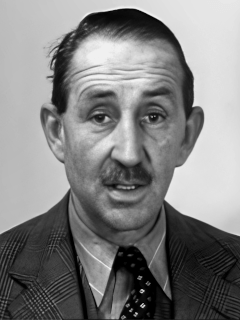
Death of Basil Stanlake Brooke, Third Prime Minister of Northern Ireland

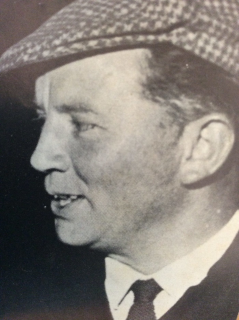
Basil Stanlake Brooke, 1st Viscount Brookeborough, KG, CBE, MC, TD, PC (Ire), Ulster Unionist Party (UUP) politician who serves as the third Prime Minister of Northern Ireland from May 1943 until March 1963, dies on August 18, 1973, at Colebrooke Park, Brookeborough, County Fermanagh, Northern Ireland. He has been described as “perhaps the last Unionist leader to command respect, loyalty and affection across the social and political spectrum.” Equally well, he has also been described as one of the most hardline anti-Catholic leaders of the UUP, and his legacy involves founding his own paramilitary group, which feeds into the reactivation of the Ulster Volunteers.

Brooke is born on June 9, 1888, at Colebrooke Park, his family’s neo-Classical ancestral seat on what is then the several-thousand-acre Colebrooke Estate, just outside Brookeborough, a village near Lisnaskea in County Fermanagh. He is the eldest son of Sir Arthur Douglas Brooke, 4th Baronet, whom he succeeds as 5th Baronet when his father dies in 1907. His mother is Gertrude Isabella Batson. He is a nephew of Field Marshal Alan Brooke, 1st Viscount Alanbrooke, Chief of the Imperial General Staff (CIGS) during World War II, who is only five years his senior. His sister Sheelah marries Sir Henry Mulholland, Speaker of the Stormont House of Commons and son of Lord Dunleath. He is educated for five years at St. George’s School in Pau, France, and then at Winchester College (1901–05).

After graduating from the Royal Military College, Sandhurst, Brooke is commissioned into the Royal Fusiliers on September 26, 1908, as a second lieutenant. He transfers to the 10th Royal Hussars in 1911. He is awarded the Military Cross and Croix de guerre with palm for his service during World War I.

Brooke is a very active Ulster Unionist Party member and ally of Edward Carson. He founds his own paramilitary group, Brooke’s Fermanagh Vigilance, from men returning from the war front in 1918. Although the umbrella Ulster Volunteers had been quiescent during the war, it is not defunct. It re-emerges strongly in 1920, subsuming groups like Brooke’s.

In 1920, having reached the rank of captain, Brooke leaves the British Army to farm the Colebrooke Estate, the family estate in west Ulster, at which point he turns toward a career in politics.

Brooke has a very long political career. When he resigns the Premiership of Northern Ireland in March 1963, he is Northern Ireland’s longest-serving prime minister, having held office for two months short of 20 years. He also establishes a United Kingdom record by holding government office continuously for 33 years.

In 1921, Brooke is elected to the Senate of Northern Ireland, but he resigns the following year to become Commandant of the Ulster Special Constabulary (USC) in their fight against the Irish Republican Army (IRA). He is created a Commander of the Order of the British Empire in 1921.

In 1929 Brooke is elected to the House of Commons of Northern Ireland as Ulster Unionist Party MP for the Lisnaskea division of County Fermanagh. In the words of the Oxford Dictionary of National Biography, “his thin, wiry frame, with the inevitable cigarette in hand, and clipped, anglicised accent were to be a feature of Stormont for the next forty years.”

Brooke becomes Minister of Agriculture in 1933. By virtue of this appointment, he also acquires the rank of Privy Councilor of Northern Ireland. From 1941 to 1943 he is Minister of Commerce.

On May 2, 1943, Brooke succeeds John M. Andrews as Prime Minister of Northern Ireland. In 1952, while Prime Minister, was raised to the peerage as Viscount Brookeborough, the title taken from the village named after the Brookes. Although a peer, he retained his seat in the House of Commons at Stormont and remained Prime Minister for another decade.

As the Northern Ireland economy begins to de-industrialise in the mid-1950s, leading to high unemployment amongst the Protestant working classes, Brooke faces increasing disenchantment amongst UUP backbenchers for what is regarded as his indifferent and ineffectual approach to mounting economic problems. As this disenchantment grows, British civil servants and some members of the UUP combine to exert discreet and ultimately effective pressure on Brooke to resign to make way for Captain Terence O’Neill, who is Minister of Finance.

In 1963, his health having worsened, Brooke resigns as Prime Minister. However, he remains a member of the House of Commons of Northern Ireland until the 1969 Northern Ireland general election, becoming the Father of the House in 1965. During his last years in the Parliament of Northern Ireland he publicly opposes the liberal policies of his successor Terence O’Neill, who actively seeks to improve relationships with the Republic of Ireland, and who attempts to address some of the grievances of Catholics and grant many of the demands of the Northern Ireland Civil Rights Association (NICRA).

Brooke is noted for his casual style toward his ministerial duties. Terence O’Neill later writes of him, “he was good company and a good raconteur, and those who met him imagined that he was relaxing away from his desk. However, they did not realise that there was no desk.”

In his retirement Brooke develops commercial interests as chairman of Carreras (Northern Ireland), a director of Devenish Trade, and president of the Northern Ireland Institute of Directors. He is also made an honorary LL.D. of Queen’s University Belfast.

From 1970 to 1973, years in which the Stormont institution comes under its greatest strain and eventually crumbles, Brooke makes only occasional forays into political life. In 1972, he appears next to William Craig MP on the balcony of Parliament Buildings at Stormont, a diminutive figure beside the leader of the Vanguard Unionist Progressive Party (VUPP) who is rallying right-wing Unionists against the Government of Northern Ireland. He opposes the Westminster white paper on the future of Northern Ireland and causes some embarrassment to his son, Captain John Brooke, the UUP Chief Whip and an ally of Brian Faulkner, by speaking against the Faulkner ministry‘s proposals.

Brooke dies at his home, Colebrooke Park, on the Colebrooke Estate, on August 18, 1973. His remains are cremated at Roselawn Cemetery, East Belfast, three days later, and, in accordance with his wishes, his ashes are scattered on the demesne surrounding his beloved Colebrooke Park.


Leave a comment

Birth of Uinseann MacEoin, Architect & Republican Campaigner

Uinseann Ó Rathaille MacEoin, Irish architect, journalist, republican campaigner and historian, is born in Pomeroy, County Tyrone, on July 4, 1920.

MacEoin is born Vincent O’Rahilly McGuone to Malachy McGuone, owner of the Central Hotel in Pomeroy and a wine and spirit merchant, and Catherine (née Fox). He has three siblings. Both of his parents are nationalists, and name all their children after leaders of the Easter Rising in 1916. Under the First Dáil in 1918, his father is appointed a judge. This results in him being interned on the prison ship Argenta on Larne Lough from 1922 to 1923. The family moves to Dublin after his release. His father dies in 1933, which leads to his wife running a workingmen’s café in East Essex Street. The family later lives on Marlborough Road, Donnybrook.

MacEoin attends boarding school at Blackrock College and is then articled to the architectural practice of Vincent Kelly in Merrion Square. As an active republican, he lives in a house on Northumberland Road from late 1939 to May 1940 where he helps in the production and distribution of an Irish Republican Army (IRA) weekly newspaper, War News. The IRA is banned by the Irish government in 1936, and its bombing campaign in Britain in 1939 is viewed by the government as a threat to Irish neutrality. MacEoin is among a group of republicans arrested in June 1940 and imprisoned in Arbour Hill Prison for a year. Once released, he is rearrested and interned at the Curragh for three years. He is sentenced to 3-months imprisonment in October 1943 for possession of incriminating documents. He is also charged with possession of ammunition, but testifies he was given the rounds against his will and never appears to have engaged in any violence. During his internment, he is taught the Irish language by Máirtín Ó Cadhain and is exposed to the socialist views of his fellow inmates. It is at this time that he adopts the Irish form of his name, Uinseann MacEoin.

While imprisoned in the 1940s, MacEoin continues his studies by correspondence and qualifies as an architect in 1945 at University College Dublin (UCD). His designs for a memorial garden in 1946 to those who died during the Irish War of Independence are commended. In 1959, he designs the site in Ballyseedy, County Kerry, for a monument by Yann Goulet commemorating those killed in the Irish Civil War and members of the IRA from Kerry who died. In 1948, he qualifies in town planning and takes up a position with Michael Scott‘s architectural practice. He works for a short time with Dublin Corporation, with their housing department, before establishing his own practice in 1955.

During the 1950s, MacEoin is a contributing editor on interior design in Hugh McLaughlin‘s magazine Creation, becoming editor of Irish Architect and Contractor in 1955. He enters into a partnership with Aidan Kelly in 1969 as MacEoin Kelly and Associates. In the early 1970s, he designs a shopping and housing development outside Dundalk, called Ard Easmuinn. Throughout the 1960s and 1970s, he continues as an influential architectural journalist, founding and editing Build from 1965 to 1969, and later Plan. His company, Pomeroy Press, publishes Plan along with other serials such as Stream and Field. He writes a large proportion of the copy in these periodicals, much under his own name, but he also uses pseudonyms, in particular in Plan as “Michael O’Brien.” He writes about his strong views on social housing, national infrastructure, and foreign and slum landlords, often libelously.

Despite his republican and socialist views, MacEoin is a staunch advocate for the preservation of Georgian Dublin, and campaigns for their preservation. On this topic, he writes letters to newspapers, takes part in television and radio discussions, writes comment pieces and editorials, speaks at public hearings, and takes part in direct protests such as sit-ins in buildings including those on Baggot Street, Pembroke Street, Hume Street, and Molesworth Street. He is also an active member of the Irish Georgian Society, and he campaigns actively against the road widening schemes in Dublin the 1970s and 1980s.

MacEoin and his wife purchase five Georgian houses on Mountjoy Square and three on Henrietta Street in the 1960s, all almost derelict. They refurbish them and lease them out, under the company name Luke Gardiner Ltd. He renames the 5 Henrietta Street property James Bryson House. His architectural practice moves into one of the Mountjoy Square houses. Along with fellow campaigners, Mariga Guinness and Deirdre Kelly, this demonstrates that these buildings can be salvaged and are not the dangerous structures other architects and developers claim them to be. He also purchases and saves Heath House, near Portlaoise, County Laois, living there toward the end of his life. He offers free conservation and architectural advice to community groups and is a volunteer on the renovation works on projects including Tailors’ Hall.

MacEoin remains politically active, joining Clann na Poblachta, the Wolfe Tone Societies (WTS), the Dublin Civic Group, the Northern Ireland Civil Rights Association (NICRA) and the Irish Anti-Apartheid Movement. To what extent he is involved in republican or IRA activities after 1945 is not clear. However, in March 1963, he is called a witness to a case in Scotland involving a Glasgow bookmaker by the name of Samuel Docherty and the Royal Bank of Scotland. Docherty claims the bank owes him £50,000. MacEoin testifies that in February 1962 he had travelled with £50,000 in cash from Dublin to lodge to Docherty’s account in the Royal Bank of Scotland in Belfast, as a loan. When asked about the origin of this large sum of money, he states it was supplied by another person but does not divulge that person’s name. This immediately triggers the court’s suspicions, and the judge warns MacEoin he will be contempt of court if he does not name the supplier of the money. He is placed in police custody for the day, and eventually he agrees to give the name in writing in confidence to the judge. The judge ultimately rules that Docherty is guilty of attempted fraud and perjury and that MacEoin’s involvement reeks of criminality. However, no further action is ever brought forward against Docherty or MacEoin.

In Sinn Féin‘s 1971 Éire Nua social and economic programme, MacEoin writes the chapter on “Planning,” and attends meetings in Monaghan in the early 1970s on the Dáil Uladh, a parliament for the 9-county Ulster province. In 1981, during the republican hunger strikes, one of his Mountyjoy Square houses is used as the national headquarters of the National H-Block Committee. Following the 1986 Sinn Féin split, he supports Republican Sinn Féin. He is a founding member of the Constitutional Rights Campaign in 1987, a group which aims to protect the rights of Irish citizens in the European Economic Community (EEC), having campaigned against Ireland joining the EEC in the early 1970s. In 1978, he is sentenced to two weeks in Mountjoy Prison for non-payment of a fine issued for not having a television licence. He had refused to buy one to protest the lack of Irish language programming.

As an environmentalist, MacEoin opposes private car ownership, and advocates for cycleways and the redevelopment of the railway lines. He writes about the “greenhouse effect” as early as 1969. As a hill walker and mountaineer, he claims to be the first Irishman to register successful climbs of all 284 Scottish peaks, known as the Munros, in 1987. He also climbs in the Alps and the Pyrenees.

MacEoin writes three books on his memories, and those of his former comrades: Survivors (1980), on the lives of leading Irish republicans, Harry (1986), a part biography part autobiography of Harry White, and The IRA in the twilight years 1923–48 (1997). He also publishes a novel, Sybil: a tale of innocence (1992) with his publishing house, Argenta, under the name Eoin O’Rahilly. He also interviews and records dozens of Republicans as part of his research for his books. These recordings are later converted into a digital oral history archive held in trust by the Irish Defence Forces.

MacEoin marries Margaret Russell in 1956 in Navan, County Meath. They have a daughter and two sons.

MacEoin dies in a nursing home in Shankill, Dublin, on December 21, 2007. His estate at the time of his death is valued at over €3 million. His son, Nuada, takes over his father’s architectural practice.


Leave a comment

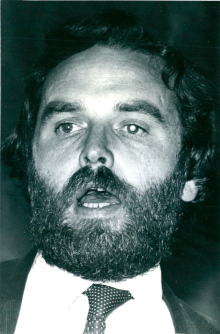
Birth of Hugh Logue, Economist & SDLP Politician

Hugh Anthony Logue, former Social Democratic and Labour Party (SDLP) politician and economist who now works as a commentator on political and economic issues, is born on January 23, 1949, in Derry, County Londonderry, Northern Ireland. He is also a director of two renewable energy companies in Europe and the United States. He is the father of author Antonia Logue.

Logue grows up outside the village of Claudy in County Londonderry, the eldest of nine children born to Denis Logue, a bricklayer, and Kathleen (née Devine). He gains a scholarship to St. Columb’s College which he attends from 1961 to 1967. In 1967, he commences at St. Joseph’s Teacher Training college (Queen’s University) in Belfast from which he qualifies as a teacher of Mathematics in 1970. He first comes to prominence as a member of the executive of the Northern Ireland Civil Rights Association (NICRA), the only SDLP member of the executive. He stands as a candidate in elections to the new Northern Ireland Assembly in 1973 and is elected for Londonderry, at the age of 24, the youngest candidate elected that year. With John Hume and Ivan Cooper, he is arrested by the British Army during a peaceful demonstration in Londonderry in August 1971. Their conviction is ultimately overturned by the Law Lords R. (Hume) v Londonderry Justices (972, N.I.91) requiring the then British Government to introduce retrospective legislation to render legal previous British Army actions in Northern Ireland.

The Northern Ireland State Papers of 1980 show that together with John Hume and Austin Currie, Logue plays a key role in presenting the SDLP’S ‘Three Strands’ approach to the Thatcher Government’s Secretary of State for Northern Ireland Humphrey Atkins in April 1980. The “Three Strands” approach eventually becomes the basis for the Good Friday Agreement. The Irish State papers from 1980 reveal that he is a confidante of the Irish Government of that time, briefing it regularly on the SDLP’s outlook.

Logue is also known for his controversial comments at Trinity College Dublin at the time of the power sharing Sunningdale Agreement, which many blame for helping to contribute to the Agreement’s defeat, to wit, that: [Sunningdale was] “the vehicle that would trundle Unionists into a united Ireland.” The next line of the controversial speech says, “the speed the vehicle moved at was dependent on the Unionist community.” In an article in The Irish Times in 1997 he claims that this implies that unity is always based on consent and acknowledged by Unionist Spokesman John Laird in the NI Assembly in 1973.

Logue unsuccessfully contests the Londonderry seat in the February 1974 and 1979 Westminster Elections. He is elected to the 1975 Northern Ireland Constitutional Convention and the 1982 Northern Ireland Assembly. He is a member of the New Ireland Forum in 1983. In the 1980s he is a member of the Irish Commission for Justice and Peace and plays a prominent part in its efforts to resolve the 1981 Irish hunger strike. His role is credited in Ten Men Dead: The Story of the 1981 Irish Hunger Strike by David Beresford, Biting the Grave by P. O’Malley and, more recently, in Blanketmen: An Untold Story of the H-block Hunger Strike (New Island Books, 2016) and Afterlives: The Hunger Strike and the Secret Offer that Changed Irish History (Lilliput Press, 2011) by former Provisional Irish Republican Army volunteer Richard O’Rawe. Following the New Ireland Forum in 1984 and John Hume’s decision to represent the redrawn Londonderry constituency as Foyle and a safe seat, Logue leaves the Dublin-based, National Board for Science and Technology and joins the European Commission in 1984 in Brussels.

Following the 1994 Irish Republican Army (IRA) ceasefire, Logue, along with two EU colleagues, is asked by EU President Jacques Delors to consult widely throughout Northern Ireland and the Border regions and prepare recommendations for a Peace and Reconciliation Fund to underpin the peace process. Their community-based approach becomes the blueprint for the Peace Programme. In 1997, then EU President Jacques Santer asks the team, led by Logue, to return to review the programme and advise for a renewed Peace II programme. Papers published by National University Galway in 2016 from Logue’s archives indicate that he is the originator of the Peace Fund concept within the European Commission.

At the European Commission from 1984 to 1998, Logue creates Science and Technology for Regional Innovation and Development in Europe (STRIDE). In 1992, he is joint author with Giovanni de Gaetano, of RTD potential in the Mezzogiorno of Italy: the role of science parks in a European perspective and, with A. Zabaniotou and University of Thessaloniki, Structural Support For RTD.

Further publications by Logue follow: Research and Rural Regions (1996) and RTD potential in the Objective 1 regions (1997). With the fall of the Berlin Wall, his attention turns to Eastern Europe and in March 1998 publishes a set of studies Impact of the enlargement of the European Union towards central central and Eastern European countries on RTD- Innovation and Structural policies.

Logue convenes the first EU seminar on “Women in Science” in 1993 and jointly publishes with LM Telapessy Women in Scientific and Technological Research in the European Community, highlighting the barriers to women’s advancement in the Research world.

As the former vice-chairman of the North Derry Civil Rights Association, Logue gives evidence at the Saville Inquiry into Bloody Sunday. He is special adviser to the Office of First and Deputy First Minister from 1998 to 2002 and as an official of the European Commission. In 2002–03, he is a fellow of the Institute for British – Irish Studies at University College Dublin (UCD). In July 2006, he is appointed as a board member of the Irish Peace Institute, based at the University of Limerick and in 2009 is appointed Vice Chairman. He is a Life Member of the Institute of International and European Affairs.

On December 17, 2007, Logue is appointed as a director to InterTradeIreland (ITI), the North-South Body established under the Good Friday Agreement to promote economic development in Ireland. There he chairs the ITI’s Fusion programme, bringing north–south industrial development in Innovation and Research. Integrating Ireland economically is a theme of his writing throughout his career, most recently in The Irish Times and in earlier publications as economic spokesman for the SDLP. He is economist at the Dublin-based National Board for Science and Technology from 1981 to 1984.

Logue, after leaving the European Commission in 2005, becomes involved in Renewable Energy and is chairman of Priority Resources as well as a director of two companies, one in solar energy, the other in wind energy. In November 2011, he is elected to the main board of European Association of Energy (EAE).

In November 2023, Logue is awarded an honorary doctorate by the University of Galway in recognition of “a lifetime dedicated to civil rights, human rights, equality and peace in Northern Ireland, Ireland and Europe.” He donates an archive of material, more than 20 boxes of manuscripts, documents, photographs and political ephemera, on the development of the SDLP from the early 1970s to the University of Galway.


Leave a comment

Birth of John Hume, Northern Ireland Nationalist Politician

John Hume KCSG, Irish nationalist politician from Northern Ireland, is born into a working-class Catholic family in Derry, County Londonderry, on January 18, 1937. He is widely regarded as one of the most important figures in the recent political history of Ireland and is credited as being the thinker behind many political developments in Northern Ireland, from the power sharing Sunningdale Agreement to the Anglo-Irish Agreement and the Good Friday Agreement. He wins the Nobel Peace Prize in 1998 alongside the leader of the Ulster Unionist Party (UUP), David Trimble.

Hume is the eldest of seven children of Samuel Hume, a former soldier and shipyard worker, and Anne “Annie” (née Doherty), a seamstress. He has a mostly Irish Catholic background, though his surname derives from one of his great-grandfathers, a Scottish Presbyterian who migrated to County Donegal. He attends St. Columb’s College and goes on to St. Patrick’s College, Maynooth, the leading Catholic seminary in Ireland and a recognised college of the National University of Ireland, where he intends to study for the priesthood. Among his teachers is Tomás Ó Fiaich, the future cardinal and Primate of All Ireland.

Hume does not complete his clerical studies but does obtain an M.A. degree in French and history from the college in 1958. He then returns home to his native Derry, where he becomes a teacher at his alma mater, St. Columb’s College. He is a founding member of the Credit Union movement in the city and is chair of the University for Derry Committee in 1965, an unsuccessful fight to have Northern Ireland’s second university established in Derry in the mid-1960s.

Hume becomes the youngest ever President of the Irish League of Credit Unions at age 27. He serves in the role from 1964 to 1968. He once says that “all the things I’ve been doing, it’s the thing I’m proudest of because no movement has done more good for the people of Ireland, north and south, than the credit union movement.”

Hume becomes a leading figure in the civil rights movement in the late 1960s along with people such as Hugh Logue. He is a prominent figure in the Derry Citizens’ Action Committee. The DCAC is set up in the wake of the October 5, 1968, march through Derry which had caused much attention to be drawn towards the situation in Northern Ireland. The purpose of the DCAC is to make use of the publicity surrounding recent events to bring to light grievances in Derry that had been suppressed by the Unionist Government for years. The DCAC, unlike the Northern Ireland Civil Rights Association (NICRA), is aimed specifically at a local campaign, improving the situation in Derry for everyone, and maintaining a peaceful stance. The committee also has a Stewards Association that is there to prevent any violence at marches or sit-downs.

Hume becomes an Independent Nationalist member of the Parliament of Northern Ireland in 1969 at the height of the civil rights campaign. He is elected to the Northern Ireland Assembly in 1973 and serves as Minister of Commerce in the short-lived power-sharing Executive in 1974. He stands unsuccessfully for the Westminster Parliament for the Londonderry constituency in October 1974, and is elected for Foyle in 1983.

In October 1971, Hume joins four Westminster MPs in a 48-hour hunger strike to protest at the internment without trial of hundreds of suspected Irish republicans. State papers that have been released under the 30-year rule that an Irish diplomat eight years later in 1979 believes Hume supported the return of internment.

In 1977, Hume challenges a regulation under the Civil Authorities (Special Powers) Act (Northern Ireland) 1922 which allows any soldier to disperse an assembly of three or more people. The Lord Chief Justice of Northern Ireland, Robert Lowry, holds that the regulation is ultra vires under Section 4 of the Government of Ireland Act 1920 which forbids the Parliament of Northern Ireland to make laws in respect of the army.

A founding member of the Social Democratic and Labour Party (SDLP), Hume succeeds Gerry Fitt as its leader in 1979. He also serves as one of Northern Ireland’s three Members of the European Parliament and serves on the faculty of Boston College, from which he receives an honorary degree in 1995.

Hume is directly involved in secret talks with the British government and Sinn Féin, in an effort to bring Sinn Féin to the discussion table openly. The talks are speculated to lead directly to the Anglo-Irish Agreement in 1985.

The vast majority of unionists reject the agreement and stage a massive and peaceful public rally in Belfast City Centre to demonstrate their distaste. Many Republicans and nationalists also reject it, as they see it as not going far enough. Hume, however, continues dialogue with both governments and Sinn Féin. The “Hume–Adams process” eventually delivers the 1994 Irish Republican Army (IRA) ceasefire which ultimately provides the relatively peaceful backdrop against which the Good Friday agreement is brokered.

On February 4, 2004, Hume announces his complete retirement from politics and is succeeded by Mark Durkan as SDLP leader. He does not contest the 2004 European Parliament election where his seat is won by Bairbre de Brún of Sinn Féin, nor does he run in the 2005 United Kingdom general election, in which Mark Durkan retains the Foyle constituency for the SDLP.

Hume and his wife, Pat, continue to be active in promoting European integration, issues around global poverty and the Credit Union movement. He is also a supporter of the Campaign for the Establishment of a United Nations Parliamentary Assembly, an organisation which campaigns for democratic reformation of the United Nations.

In 2015, Hume is diagnosed with Alzheimer’s disease, of which he had first displayed symptoms in the late 1990s. He dies in the early hours of August 3, 2020, at a nursing home in Derry, at the age of 83. On his death, former Labour Party leader and prime minister Tony Blair says, “John Hume was a political titan; a visionary who refused to believe the future had to be the same as the past.” The Dalai Lama says on Twitter, “John Hume’s deep conviction in the power of dialogue and negotiations to resolve conflict was unwavering… It was his leadership and his faith in the power of negotiations that enabled the 1998 Good Friday Agreement to be reached. His steady persistence set an example for us all to follow.”

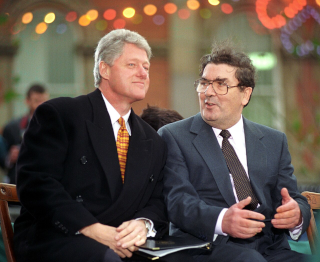
(Pictured: John Hume with U.S. President Bill Clinton in 1995)


Leave a comment

Birth of Brian Faulkner, Sixth & Last Prime Minister of Northern Ireland

Arthur Brian Deane Faulkner, Baron Faulkner of Downpatrick, the sixth and last Prime Minister of Northern Ireland, is born on February 18, 1921, in Helen’s Bay, County Down.

Faulkner is the elder of two sons of James, owner of the Belfast Collar Company, and Nora Faulkner. His younger brother is Colonel Sir Dennis Faulkner. He is educated initially at Elm Park preparatory school, Killylea, County Armagh, but at 14, preferring to stay in Ireland, is sent to the Church of Ireland-affiliated St. Columba’s College at Whitechurch, County Dublin, although he is Presbyterian. His best friend at the school is Michael Yeats, son of W. B. Yeats. He enters Queen’s University Belfast in 1939 to study law, but, with the advent of World War II, he quits his studies to work full-time in the family shirt-making business. He is the only Prime Minister of Northern Ireland to have been educated in the Irish Free State and one of only two to have been educated in Ireland.

Faulkner becomes involved in unionist politics, the first of his family to do so, and is elected to the Parliament of Northern Ireland as the Ulster Unionist Party (UUP) Member of Parliament (MP) for the constituency of East Down in 1949. His vociferous traditional unionist approach to politics ensures him a prominent backbench position. He is, at the time, the youngest ever MP in the Northern Irish Parliament. He is also the first Chairman of the Ulster Young Unionist Council in 1949. In 1956 he is offered and accepts the job of Parliamentary Secretary to the Ministry of Finance, or Government Chief Whip.

In 1959, Faulkner becomes Minister of Home Affairs and his handling of security for most of the Irish Republican Army‘s border campaign of 1956–62 bolsters his reputation in the eyes of the right wing of Ulster unionism.

When Terence O’Neill becomes Prime Minister in 1963, he appoints Faulkner, his chief rival for the job, as Minister of Commerce. He resigns in 1969 over the technicalities of how and when to bring in the local government reforms which the British Labour government is pushing for. This is a factor in the resignation of O’Neill, who resigns as Prime Minister in the aftermath of his failure to achieve a good enough result in the 1969 Northern Ireland general election.

In the ensuing leadership contest, Faulkner loses out again when O’Neill gives his casting vote to his cousin, James Chichester-Clark. In 1970, he becomes the Father of the House. He comes back into government as Minister of Development under Chichester-Clark and in a sharp turn-around, begins the implementation of the political reforms that were the main cause of his resignation from O’Neill’s cabinet. Chichester-Clark himself resigns in 1971 as the political and security situation and the more intensive British interest proves difficult.

Faulkner is elected leader of the Ulster Unionist Party and Prime Minister. In his initial innovative approach to government, he gives a non-unionist, David Bleakley, a former Northern Ireland Labour Party (NILP) MP, a position in his cabinet as Minister for Community Relations. In June 1971, he proposes three new powerful committees at Stormont which would give the opposition salaried chairmanships of two of them.

However, this initiative (radical at the time) is overtaken by events. A shooting by soldiers of two nationalist youths in Derry causes the Social Democratic and Labour Party (SDLP), the main opposition, to boycott the Stormont parliament. The political climate deteriorates further when, in answer to a worsening security situation, Faulkner introduces internment on August 9, 1971. This is a disaster and causes the situation to worsen.

Despite this, Faulkner continues his radical approach to Northern Irish politics and, following Bleakley’s resignation in September 1971 over the internment issue, appointes Dr. G. B. Newe, a prominent lay Catholic, as Minister of State in the Cabinet Office. His administration staggers on through the rest of 1971, insisting that security is the paramount issue.

In January 1972, an incident occurs during a Northern Ireland Civil Rights Association march in Derry, during which paratroopers shoot and killed thirteen unarmed civilians. A fourteenth civilian dies later. What history has come to know as Bloody Sunday is, in essence, the end of Faulkner’s government. In March 1972, he refuses to maintain a government without security powers which the British government under Edward Heath decides to take back. The Stormont parliament is subsequently prorogued, initially for a period of one year, and following the appointment of a Secretary of State for Northern Ireland, William Whitelaw, direct rule is introduced.

In June 1973, elections are held to a new devolved parliament, the Northern Ireland Assembly. The elections split the UUP. Faulkner becomes chief executive in a power-sharing executive with the SDLP and the centre-ground Alliance Party, a political alliance cemented at the Sunningdale Conference that year. The power-sharing Executive lasts only six months and is brought down by a loyalist Ulster Workers’ Council strike in May 1974. In 1974, he loses the leadership of the UUP to anti-Sunningdale elements led by Harry West. He subsequently resigns from the Ulster Unionist Party and forms the Unionist Party of Northern Ireland (UPNI).

The UPNI fares badly in the Northern Ireland Constitutional Convention elections of 1975, winning only five out of the 78 seats contested. Faulkner wins the final seat. In 1976 he announces that he is quitting active politics. He is elevated to the House of Lords in the 1977 New Year Honours list, being created Baron Faulkner of Downpatrick on February 7, 1977.

Faulkner, a keen huntsman, dies on March 3, 1977, following a riding accident while hunting with the County Down Staghounds at the Ballyagherty/Station Road junction near Saintfield, County Down. He is riding at full gallop along a narrow country road when his horse slips, throwing him off and killing him instantly. He is laid to rest at Magherahamlet Presbyterian Church near Spa, County Down where he had been a regular member of the congregation. His twenty-four-day life peerage is thus the shortest-lived until the death of Lord Heywood of Whitehall in 2018 just nine days after ennoblement.


Leave a comment

Assassination of Irish Republican Ronnie Bunting

Ronnie Bunting, a Protestant Irish republican and socialist activist, is assassinated on October 15, 1980, when several gunmen enter his home in the Downfine Gardens area of Andersonstown.

Bunting is born into an Ulster Protestant family in East Belfast. His father, Ronald Bunting, had been a major in the British Army and Ronnie grew up in various military barracks around the world. His father became a supporter and associate of Ian Paisley and ran for election under the Protestant Unionist Party banner.

Having completed his education and graduating from Queen’s University Belfast, Bunting briefly becomes a history teacher in Belfast, but later becomes involved in the Northern Ireland Civil Rights Association and then with Irish republican organisations.

Unlike most Protestants in Northern Ireland, Bunting becomes a militant republican. His father, by contrast, was a committed Ulster loyalist. Despite their political differences, they remain close.

Bunting joins the Official Irish Republican Army (OIRA) around 1970 as he is attracted to their left-wing and secular interpretation of Irish republicanism and believes in the necessity of armed revolution. The other wing of the IRA, the Provisional Irish Republican Army, is seen to be more Catholic and nationalist in its outlook. At this time, the communal conflict known as the Troubles is beginning and the Official IRA is involved in shootings and bombings. He is interned in November 1971 and held in Long Kesh until the following April.

In 1974, Bunting follows Seamus Costello and other militants who disagree with the Official IRA’s ceasefire of 1972, into a new grouping, the Irish National Liberation Army (INLA). Immediately, a violent feud breaks out between the Official IRA and the INLA.

In 1975, Bunting survives an assassination attempt when he is shot in a Belfast street. In 1977, Costello is killed by an Official IRA gunman in Dublin. Bunting and his family hide in Wales until 1978, when he returns to Belfast. For the remaining two years of his life, he is the military leader of the INLA. The grouping regularly attacks the British Army and Royal Ulster Constabulary (RUC) in Belfast. He calls in claims of responsibility to the media by the code name “Captain Green.”

At about 4:30 AM on October 15, 1980, several gunmen wearing balaclavas storm Bunting’s home in the Downfine Gardens area of Andersonstown. They shoot Bunting, his wife Suzanne and another Protestant INLA man and ex-member of the Red Republican Party, Noel Lyttle, who has been staying there after his recent release from detention.

Both Bunting and Lyttle are killed. Suzanne Bunting, who is shot in the face, survives her serious injuries. The attack is claimed by the Ulster Defence Association (UDA), but the INLA claims the Special Air Service are involved.

Upon his death, Bunting’s body is kept in a funeral parlour on the Newtownards Road opposite the headquarters of the UDA. On the day of the funeral, as the coffin is being removed, UDA members jeer from their building. The Irish Republican Socialist Party wants a republican paramilitary-style funeral for Bunting but his father refuses and has his son buried in the family plot of a Church of Ireland cemetery near Donaghadee.