O’Brien marries Mabel Emmeline Smyly, daughter of Sir Philip Crampton Smyly, on March 8, 1902. Together they have five children. His son Brendan, a surgeon in Dublin, marries artist Kitty Wilmer O’Brien. His daughter Rosaleen Brigid becomes an artist, also known as Brigid Ganly after her marriage to Andrew Ganly. Another artistic relative is Geraldine O’Brien.
Unlike many of his Irish contemporaries, after graduating from Cambridge O’Brien does not study art in Dublin, opting instead to travel to Paris, where he studies the paintings at the Louvre. In 1887, he visits galleries in Italy and then enrolls at the Royal Academy of Fine Arts in Antwerp, Belgium. At the Academy he is a fellow student of Walter Osborne. He leaves Antwerp in 1891 and returns to Paris, where he studies at Académie Julian. He relocates to London in 1893 and then Dublin in 1901.
O’Brien is designated an associate of the Royal Hibernian Academy in 1906, a member in 1907, and is later president between 1910 and 1945. He is made an honorary member of the Royal Academy of Arts, London in 1912.
Seamus Murphy, Irish sculptor and stone carver best known for designing the Church of the Annunciation, Blackpool, Cork, dies in Cork, County Cork, on October 2, 1975.
Murphy is born near Mallow, County Cork on July 15, 1907, the son of James Murphy, a railway employee, and Margaret Sheehan of Little Island, County Cork. He attends Saint Patrick’s School on Gardiner’s Hill. In 1921 he enrolls as a part-time student at the Crawford School of Art, Emmet Place, Cork. In 1922 he finds work as an apprentice stone-carver at John Aloysius O’Connell’s Art Marble Works, Watercourse Road, Blackpool. There he specialises in architectural and foliage carving while continuing his studies at Crawford by night.
He is elected associate of the Royal Hibernian Academy in 1944, elected a full member in 1954, and appointed Royal Hibernian Academy Professor of Sculpture in 1964.
Also in 1944, he marries Maighread Higgins, daughter of the Cork sculptor Joseph Higgins, and they go on to have three children – the knitwear designer Bebhinn Marten, the novelist Orla Murphy and the painter and De Dannan member Colm Murphy.
Murphy designs the Church of the Annunciation on Great William O’Brien Street in Blackpool, Cork, for William Dwyer in 1945. The stonework in the church is mostly by Murphy himself. It is officially dedicated on October 7, 1945.
Seamus Murphy dies in Cork on October 2, 1975. He is buried in Rathcooney, County Cork.
Examples of Murphy’s unique carvings of statues, gravestones, monuments and plaques can be seen around Cork and Ireland, including a signed panel of the four evangelists outside the entrance of the church of Our Lady and Saint John in Carrigaline, County Cork.
Banim is born in Kilkenny, County Kilkenny on August 5, 1796. He is educated at Dr. Magrath’s Catholic school. He goes on to study for the bar, but a decline in his father’s business causes him to retire from his studies. He returns home to take over the family business, which he returns to prosperity, restoring his parents to comfort, both material and mental. In 1826 he visits John in London, making the acquaintance of many distinguished men of letters. When the struggle for Catholic emancipation is at its height, he works energetically for the cause.
Around 1822, Banim’s brother John broaches his idea for a series of national tales. He assists John in the O’Hara Tales, where he uses the name “Abel O’Hara,” and there is difficulty in allocating their respective contributions. While John is the more experienced writer, Michael provides material based on his social observations. They revise each other’s work. He writes in such hours as he can snatch from business and is the principal author of about thirteen out of the twenty-four works attributed to the brothers, including Crohoore of the Bill-Hook, The Croppy, and Father Connell. He is amiable, unambitious, modest, and generous to a degree. He keeps himself in the background, letting his younger brother have all the honor of their joint production. In 1828 he has the honor of a visit from the Comte de Montalembert, who has read the O’Hara Tales and is then on a tour through Ireland.
When his brother John is struck down by illness, Banim writes and earnestly invites him to return to Kilkenny and share his home. “You speak a great deal too much,” he observes in one letter, “about what you think you owe me. As you are my brother, never allude to it again. My creed on this subject is, that one brother should not want while the other can supply him.” However, John remains in France, seeking medical care in Paris.
Following his brother’s death in 1842, Banim writes Clough Fionn (1852), and The Town of the Cascades (1864). In 1861 he writes prefaces and notes for a reprint of the “O’Hara” novels by the publishing firm William H. Sadlier, Inc. of New York City. Besides their desire to give a true picture of their country, still crippled and prostrate from the effects of the Penal Laws, the Banims are undoubtedly influenced by the Romantic movement, then at its height.
In 1840, Banim marries Catherine O’Dwyer with whom he has two daughters, Mathilde and Mary. Although a man of means, in less than a year he loses almost the whole of his fortune through the failure of a merchant. Poor health follows. He is appointed postmaster of Kilkenny in 1852, a position he holds until illness forces him to retire in 1873. He also serves a term as mayor. His health failing, he goes with his family to reside at Booterstown, near Dublin, where he dies on August 30, 1874. His widow is granted a civil list pension.
After the Desmond defeat at Battle of Affane in 1565, the 14th Earl and his brother, John of Desmond, are detained in England. During their absence, FitzMaurice becomes captain general of County Desmond with the warrant of the Earl. This means he has authority over the soldiers retained in the service of the Desmond Fitzgeralds. In July 1568, he enters Clanmaurice, the territory of the lord of Lixnaw, to distrain for rent and assert the Desmond authority. Having seized 200 head of cattle and wasted the country, he is confronted by Lixnaw on the way home and utterly defeated.
At the end of 1568, the absent Earl of Desmond grants Sir Warham St. Leger a lease of the barony of Kerricurrihy, which cast FitzMaurice’s inheritance into confusion. In 1569 the Lord Deputy of Ireland, Sir Henry Sidney, is informed by FitzMaurice that he has assembled the people of Desmond to tell them that the Lord Deputy was unable to procure the release of the captive earl, who would be executed or perpetually imprisoned, and that the people should proclaim a new earl or captain. With one voice, the people cry out for FitzMaurice to be captain. The earl’s wife, Eleanor Butler, writes to her husband in November that FitzMaurice is seeking to bring the earl into further disrepute and to usurp his inheritance, “by the example of his father.”
To reassert Geraldine authority, FitzMaurice then launches what becomes known as the first of the Desmond Rebellions. The southern part of Ireland erupts into a general rebellion, owing in part to attempts at establishing plantations. In June 1569, FitzMaurice and the Earl of Clancarty (MacCarthy Mor) invade Kerrycurrihy, spoil the inhabitants, take the castle-abbey of Tracton, hang the garrison, and refuse to depart without the surrender to them of the custody of Lady St. Leger and Lady Grenville, the wives of the principal English colonists. FitzMaurice then joins in league with the turbulent brothers of the Earl of Ormond and enters a bond with the Earl of Thomond and John Burke, son of the Earl of Clanricard. He writes to the mayor and corporation of Cork in July ordering the abolition of the new heresy of Protestantism, at a time when he appears to have been taking instruction from Irish Jesuits.
By September 1569, Sidney has broken the back of the rebellion and leaves Sir Humphrey Gilbert behind to suppress FitzMaurice, who seeks refuge in the woods of Aherlow, and after Gilbert’s departure FitzMaurice raises a new force in February 1570 and by a surprise night attack, takes Kilmallock and after hanging the chief townsmen at the market cross, plunders its wealth and burns the town. In February 1571, Sir John Perrot lands at Waterford as Lord President of Munster and challenges FitzMaurice to a duel, which FitzMaurice declines with the remark, “For if I should kill Sir John Perrot the Queen of England can send another president into this province; but if he do kill me there is none other to succeed me or to command as I do.”
FitzMaurice attacks Perrot but retires on mistaking a small cavalry company for the advance party of a larger force. After a second and successful siege by Perrot of the Geraldine stronghold of Castlemaine, FitzMaurice sues for pardon, which is granted in February 1573, after he prostrates himself in Kilmallock church with the president’s sword point next to his heart. He swears fealty to the crown and gives up his son as hostage.
On the return to Ireland of the Earl of Desmond in 1573, FitzMaurice leaves for the continent, offering his reasons variously as a desire to gain pardon from the Queen through the French court, and the unkindness of the earl. In March 1575 he and his family, along with the Geraldine Seneschal of Imokilly, James Fitzedmund Fitzgerald, and the White Knight, Edmund FitzGibbon, sail on the La Arganys for Saint-Malo, Brittany where they are received by the governor. He has several interviews with Catherine de’ Medici in Paris, offering to help make Henry III of France king of Ireland, and is granted a pension of 5,000 crowns in 1576.
Early in the following year FitzMaurice leaves for the Spanish court, where he offers the crown to the brother of King Philip II, Don John. The king is cautious, however. FitzMaurice leaves his sons Maurice and Gerald with Cardinal Antoine Perrenot de Granvelle, and travels to Italy to meet Pope Gregory XIII.
At the papal court FitzMaurice meets adventurer Captain Thomas Stukley, and together they persuade the pope to underwrite the cost of 1,000 troops to invade Ireland, most of whom, according to Philip O’Sullivan Beare, are desperadoes the pope wishes to get out of Italy. Fitzmaurice and Stukley are to rendezvous in Lisbon and proceed to Ireland, however, Stukley decides to throw his troops and support to King Sebastian‘s expedition to Morocco, where he dies.
Following the diversion of Stukley to Morocco, FitzMaurice sets out with the nuncioNicholas Sanders, and Matthew de Oviedo from Ferrol in Galicia, Spain on June 17, 1579, with a few troops on his vessel and three Spanish shallops. They capture two English vessels in the channel and arrive at Dingle on July 16, 1579, launching the Second Desmond Rebellion.
On July 18 they cast anchor in Ard na Caithne, where they garrison at Dún an Óir (Fort of Gold), and are joined on July 25 by two galleys with 100 troops. Four days later their ships are captured by the English fleet under the command of Sir William Wynter. Having exhorted the Earl of Desmond and the Earl of Kildare, as Geraldine leaders, to fight the heretics, FitzMaurice leaves the fort to await the arrival of Stukley who, unknown to him, had been killed at the Battle of Alcácer Quibir in the previous year, during a campaign by King Sebastian of Portugal.
FitzMaurice goes to make a vow at the monastery of the Holy Cross in County Tipperary but becomes caught in a skirmish with the forces of his cousin, Theobald Burke, during which he is shot with a ball in the hollow of the chest, but cuts his way through to Burke and his brother William, both of whom he kills with single strokes of his sword.
The battle is won, but close to the scene his injuries overcome him. He makes his will and orders his friends to cut off his head after death in order that his enemies might not mutilate his body. He begs his attendants to attest that he had not turned tail on the enemy. They assure him and wish him to be quiet because hostile soldiers are closing in, but he insists, “My wounds are clear, my wounds are clear.” Upon his death, a kinsman orders the decapitation and then wraps the head in cloth. An attempt is made to conceal his trunk under a tree, but it is discovered by a hunter and brought to the town of Kilmallock. For weeks, the trunk is nailed to the gallows, until it is shattered by musket fire and collapses.
Vanston’s time in Paris leaves a lasting impression on her work, including use of primary colours and a strong Cubist influence. She belongs to what critic Brian Fallon calls the “Franco-Irish generation of painters who looked to Paris,” along with Mainie Jellett, Evie Hone, and Norah McGuinness. Her time spent living in Costa Rica in the late 1920s and early 1930s imbues her work with tropical and highly toned colours. In Dublin in 1935, she exhibits 17 paintings, largely Costa Rican landscapes, at Daniel Egan’s gallery on St. Stephen’s Green. This is the closest thing to a solo show she would mount, with this show also featuring Grace Henry, Cecil Ffrench Salkeld, and Edward Gribbon.
Meeting the English artist Basil Rakoczi, who is also living in Dublin during World War II, leads Vanston to become associated with The White Stag group. In November 1941, she exhibits for the first time at a group show with 24 other artists, including Patrick Scott. One work that is shown at this exhibition is the painting Keel dance hall, which demonstrates that she spends time in the west of Ireland. The most important event staged by the group is the Exhibition of subjective art, which takes place at 6 Lower Baggot St. in January 1944. The Dublin Magazine notes her work at this show as the most effective of the experimental vanguard. This work, Dying animal, is a Cubist work with semi-representation forms rendered in bold colours. In 1945, her work is featured in a White Stag exhibition in London of young Irish painters at the Arcade gallery, Old Bond St.
In 1947, Vanston spends almost a year in Costa Rica where she paints primarily in watercolours. Apart from this period, she lives and works in Dublin, living at 3 Mount Street Crescent near St. Stephen’s Church. At the inaugural Irish Exhibition of Living Art in 1943, she exhibits five works. At the first Exhibition of Independent Artists in 1960, of which she is a founder, she exhibits three landscapes and a work entitled War. She largely exhibits with the Independent Artists, the Irish Exhibition of Living Art, and the Oireachtas na Gaeilge, and does not exhibit with the Royal Hibernian Academy. Later in life, she exhibits with the Figurative Image exhibitions in Dublin, and is amongst the first painters chosen for Aosdána. A number of her works are featured in the 1987 exhibition, Irish women artists, from the eighteenth century to the present arranged by the National Gallery of Ireland and The Douglas Hyde Gallery.
Vanston dies on July 12, 1988, in a nursing home in Enniskerry, County Wicklow. Her work is greatly admired, but has received little by way of critical attention, which may have been to do with her slow rate of output. A number of her works have proved difficult to trace. She was a private person, even refusing to cooperate with the Taylor Galleries in the 1980s when they wanted to mount a retrospective of her work. The National Self-Portrait Collection in Limerick holds a work by Vanston.
(Pictured: “Landscape with Lake and Hills” (1964), oil on paper (monotype) by Dairine Vanston)
Yeats is very sick as a child, spending three years in two different hospitals. She then goes to the Pension Henriette, a boarding school in Villars-sur-Bex, Switzerland from 1928–1930. In 1923 her Aunt Elizabeth “Lolly” gives her brush drawing lessons which aids her in winning first prize in the RDS National Art competition for children under eight years old in 1925 and 1926.
Yeats trains in the Royal Hibernian Academy school from 1933 to 1936 and works as a stage designer with the Abbey Theatre in Dublin. In 1936, at the age of 16, she is hired by the Abbey Theatre as assistant to Tanya Moiseiwitsch. She studies for four months at the School of Theatrical Design in Paris with Paul Colin in 1937. At 18, she begins her costume career on sets with Ria Mooney‘s company. At the Abbey, she designs the sets and costumes for revivals of W.B. Yeats’ plays The Resurrection and On Baile’s Strand (1938).
In 1938 Yeats designs the first production of W.B. Yeats’ play Purgatory, which is her most successful achievement. Purgatory is the last play that W.B Yeats sees on stage, and when it is performed it is a full house. When working on Purgatory, Hugh Hunt wants to have a moon on the back cloth of the production but Yeats refuses. “If she does not win, she is going to say that she doesn’t wish to have her name on the programme as a designer of the setting.” This could be the main reason why her name is not on many productions that she works on. She also designs the first play of her uncle Jack Yeats to receive professional production, Harlequin’s Positions.
In 1939 Yeats is promoted to head of design at the Abbey until her departure in May 1941. In 1939 it is commented that her designs are “getting arty” and not in keeping with the style of the Abbey. One of her last designs is her father’s last play, The Death of Cuchulain, for the Lyric Theatre on the Abbey stage, in 1949. She designs and stage-manages for the Peacock Theatre, the Cork Opera House, the Olympia Theatre, the Gaiety Theatre, the Austin Clarke Lyric Theatre, the Abbey Theatre and Players’ Theatre.
Among the work Yeats is credited with in the Abbey Theatre, she is also recorded as having worked on five productions in the Peacock Theatre with the Theatre Company: Alarm Among the Clerks (1937), The Phoenix (1937), Harlequin’s Positions (1939), The Wild Cat (1940), and Cavaliero (The Life of a Hawk) (1948).
Yeats chooses to move towards painting full-time beginning a brief study at the Dublin Metropolitan School of Art in 1941. She experiments with watercolour and wax. She has a touching naive expressionist style and is interested in representing domestic humanity. She designs many of the covers for the books of Irish-language publisher Sáirséal agus Dill over a twenty-year period from 1958. She does illustrations for books by Denis Devlin, Thomas Kinsella and Louis MacNeice, and works with many young designers, such as Louis le Brocquy.
The Royal Hibernian Academy holds a retrospective of her work in 1995, as does the National Gallery of Ireland in 2002. She donates her collection of Jack B. Yeats’ sketch books to the National Gallery of Ireland, leading to the creation of the Yeats Museum within the Gallery. Her brother, Michael, in turn, donates her sketchbooks to the Museum.
(Pictured: “Gossip & Scandal,” 1943 oil on canvas, by Anne Butler Yeats)
O’Kelly is born on August 25, 1882, on Capel Street in the north inner-city of Dublin. He joins the National Library of Ireland in 1898 as a junior assistant. That same year, he joins the Gaelic League, becoming a member of the governing body in 1910 and General Secretary in 1915.
In 1905 O’Kelly joins Sinn Féin who, at the time, supports a dual monarchy. He is an honorary secretary of the party from 1908 until 1925. In 1906 he is elected to Dublin Corporation, which is Dublin’s city council. He retains the seat for the Inns Quay Ward until 1924.
O’Kelly is elected Sinn Féin MP for Dublin College Green in the 1918 Irish general election. Along with other Sinn Féin MPs he refuses to take his seat in the British House of Commons. Instead, they set up an Irish parliament, called Dáil Éireann, in Dublin. O’Kelly is Ceann Comhairle (Chairman) of the First Dáil. He is the Irish Republic’s envoy to the post-World War I peace treaty negotiations at the Palace of Versailles, but the other countries refuse to allow him to speak as they do not recognise the Irish Republic.
O’Kelly is a close friend of Éamon de Valera, and both he and de Valera oppose the Anglo-Irish Treaty of December 1921. When de Valera resigns as President of the Irish Republic on January 6, 1922, O’Kelly returns from Paris to try to persuade de Valera to return to the presidency but de Valera orders him to return to Paris.
During the Irish Civil War, O’Kelly is jailed until December 1923. Afterwards he spends the next two years as a Sinn Féin envoy to the United States.
In 1926 when de Valera leaves Sinn Féin to found his own republican party, Fianna Fáil, O’Kelly follows him, becoming one of the party’s founding members. In 1932, when de Valera is appointed President of the Executive Council of the Irish Free State, he makes O’Kelly the Minister for Local Government and Public Health. He often tries to publicly humiliate the Governor-General of the Irish Free State, James McNeill, which damages O’Kelly’s reputation and image, particularly when the campaign backfires.
In 1938, many believe that de Valera wants to make O’Kelly the Fianna Fáil choice to become President of Ireland, under the new Irish constitution, Bunreacht na hÉireann. When Lord Mayor of Dublin, Alfie Byrne, says he wants to be president there is an all-party agreement to nominate Douglas Hyde, a Protestant Irish Senator, Irish language enthusiast and founder of the Gaelic League. They believe Hyde to be the only person who might win an election against Alfie Byrne. O’Kelly is instead appointed Minister of Finance and helps create Central Bank in 1942.
O’Kelly leaves the cabinet when he is elected President of Ireland on June 18, 1945, in a popular vote of the people, defeating two other candidates. He is re-elected unopposed in 1952. During his second term he visits many nations in Europe and speaks before the United States Congress in 1959. He retires at the end of his second term in 1959, to be replaced by his old friend, Éamon de Valera. Following his retirement, he is described as a model president by the normally hostile newspaper, The Irish Times. Though controversial, he is widely seen as genuine and honest, but tactless.
O’Kelly’s strong Roman Catholic beliefs sometimes cause problems. Éamon de Valera often thinks that O’Kelly either deliberately or accidentally leaks information to the Knights of Saint Columbanus and the Church leaders. He ensures that his first state visit, following the creation of the Republic of Ireland in 1949, is to the Vatican City to meet Pope Pius XII. He accidentally reveals the Pope’s private views on communism. This angers the Pope and Joseph Stalin and is why he is not given the papal Supreme Order of Christ which is given to many Catholic heads of state.
O’Kelly dies in Blackrock, Dublin on November 23, 1966, at the age of 84, fifty years after the Easter Rising that first brought him to prominence. He is buried in Glasnevin Cemetery, Glasnevin, Dublin.
Basil Blackshaw, Northern Irish artist, dies at the age of 83 on May 2, 2016. He is best known for his paintings of dogs, horses, landscapes and people and is regarded as one of the country’s most talented artists.
Blackshaw’s home and studio is in County Antrim by Lough Neagh. He becomes well known for his country scenes including landscapes, farm buildings and horses, painted in an expressionist style.
Blackshaw is initially acclaimed for his mastery of traditional approaches to painting. He continues to develop as an artist, becoming most highly regarded for his very loose gestural application of paint and a very distinctive and subtle use of colour. His paintings of such sports as horse racing and boxing make him particularly popular, but he is also a talented portrait painter.
Blackshaw’s paintings are often figurative in form, but with a non-naturalistic palette which re-balances the composition in an expressionist, even abstract, way. His themes are very Irish and often rural; greyhounds, Irish Travellers, and the landscape. He also produces portraits and designs posters for Derry‘s Field Day Theatre Company.
The Arts Council of Northern Ireland organises a major retrospective of Blackshaw’s work in 1995, which travels from Belfast to Dublin, Cork and many galleries in the United States. In 2001 he receives the GlenDimplex Award for a Sustained Contribution to the Visual Arts in Ireland. The Ulster Museum holds a major exhibition of his work in 2002 and a major book is published by Eamonn Mallie on the artist in 2003.
For a 2005 exhibition at the Fenton Gallery in Cork, Blackshaw works exclusively over a period of 20 months creating a dramatic collection of fifteen new paintings. His choice of arguably mundane subjects, The Studio Door, Car, Wall, Six Trees, express both an engagement with tradition and a watchful detachment.
In 2006 Blackshaw’s work is exhibited at the Irish College in Paris (French: Centre Culturel Irlandais).
Blackshaw is elected as an associate of The Royal Ulster Academy of Arts in 1977 and elected an Academician in 1981. Dublin’s Royal Hibernian Academy describes him as “one of Ireland’s greatest artists” who was “lauded by the art world and his fellow painters.”
Basil Blackshaw dies on May 2, 2016. Father to well-known artist Anya Waterworth, he is buried in a wicker coffin in a humanist funeral, the ceremony ending to Bob Dylan‘s “Mr. Tambourine Man” at Roselawn Cemetery on the outskirts of Belfast. More than 100 mourners come to pay their respects. Among them are artists Jack Pakenham and Neil Shawcross, actor Stephen Rea and boxing legend Barry McGuigan.
Quinn founds the national supermarket chain Superquinn (originally Quinn’s Supermarkets), of which he remains non-executive president for some years after his family sells out their interest in August 2005 for over €400 million. Superquinn is known for its focus on customer service and pioneers a number of innovations, including Ireland’s first supermarket loyalty card in 1993, SuperClub. It also introduces self-scanning of goods by customers in a number of its outlets. Superquinn becomes the first supermarket in the world to guarantee the absolute traceability of all its beef from pasture to plate, using DNA TraceBack, a system developed at Trinity College, Dublin by IdentiGEN.
Quinn becomes the chairman of the Interim Board for Posts and serves as chairman of its successor An Post (the Irish postal administration) until 1989. He also serves on several other public authorities and boards. From 1993 to 1998, he chairs the steering committee which oversees the development of the Leaving Certificate Applied. In 2006, he is appointed an Adjunct Professor in Marketing at National University of Ireland Galway. He is also chairman of Springboard Ireland.
Quinn is a former President of EuroCommerce, the Brussels-based organisation which represents the retail, wholesale and international trade sectors in Europe. He also serves on the board of directors of CIES, the Food Business Forum based in Paris, as well as the American-based Food Marketing Institute.
In 2009, Quinn works with independent shops and helps them to revamp, modernise and stave off stiff competition from multi-national retailers. It airs as RTÉ‘s six-part television series, Feargal Quinn’s Retail Therapy. A second series airs in 2011, and a third series airs in 2012. In 2011, he fronts RTÉ’s Local Heroes campaign in Drogheda, County Louth, which is an assembled team of experts to kick-start the local economy. It airs as RTÉ One‘s six-part television series, Local Heroes – A Town Fights Back.
Quinn is first elected as a senator in 1993 from the National University of Ireland constituency and is re-elected in 1997, 2002, 2007 and 2011. He is a member of the Joint Oireachtas Committee on European Affairs, the Joint Committee on Finance and Public Service and is an Oireachtas member of the National Economic and Social Forum, along with the Joint Committee on Jobs and Innovation.
Quinn is one of the co-founders and is a driving force behind Democracy Matters – a civil society group that is formed to oppose the Government’s plans to abolish Seanad Éireann. In May 2013, with Senators Katherine Zappone and Mary Ann O’Brien, he introduces the Seanad Bill 2013 to reform the system of electing the elected members of Seanad Éireann (as provided for in Article 18.10 of the Constitution of Ireland) through a one-person, one vote franchise. The Seanad Bill 2013 succeeds in being passed at Second Stage in the Seanad. During the Seanad abolition referendum campaign, the Bill demonstrates to the electorate, in a very palpable way, that reform of the Seanad is achievable if they vote for its retention. In a referendum held in October 2013 on the Abolition of Seanad Éireann, the people vote to retain the Seanad by 51.7%.
In 2014, Quinn reveals that since being first elected to Seanad Éireann, he has donated his entire salary to charity and in more recent years he has refused to accept any salary. In March 2015, he opposes the Marriage Equality bill in the Seanad, and votes ‘No’ in the referendum. He serves as Chairman of the Independent Alliance. He does not contest the 2016 Seanad election.
Quinn dies peacefully at his home in Howth, County Dublin, on April 24, 2019, following a short illness. His funeral Mass takes place at St. Fintan’s Church in Sutton, Dublin. In attendance is PresidentMichael D. Higgins, a representative for TaoiseachLeo Varadkar, Minister for Children Katherine Zappone, Senator Michael McDowell, and a host of other current and former politicians, business figures, and past colleagues of the “Superquinn family.” Fittingly, the coffin is carried from the church to the tune of Frank Sinatra’s “My Way.”
Leslie is born on July 27, 1650, in Dublin, the sixth son and one of eight surviving children of John Leslie (1571-1671) and Katherine Conyngham (or Cunningham), daughter of Dr. Alexander Cunningham, Dean of Raphoe. He is allegedly named after the executed Charles I and educated at Enniskillen school and Trinity College, Dublin. After his father dies in 1671, he studies law in London before changing career and being ordained as an Anglican priest in 1681. Shortly afterwards, he returns to the family estate at Glaslough in County Monaghan and marries Jane Griffith. They have a daughter, Vinigar Jane, who appears to have died young and two sons, Robert (1683-1744) and Henry who are also Jacobites and spend time in exile.
Leslie is appointed assistant curate for the Church of Ireland parish of Donagh but as most of his parish is Roman Catholic or Presbyterian, he has few duties. His father had been chaplain to Charles I and a key supporter of Caroline religious reforms, first in Scotland, then in Ireland as Bishop of Raphoe in 1633, while the estate at Glaslough was granted by Charles II in 1660 as a reward for his service. With this background, Leslie is a firm supporter of the Stuart dynasty, although deeply hostile to Catholicism and soon becomes involved in political and theological disputes.
Shortly afterwards, Leslie becomes Clarendon’s personal chaplain and like his patron refuses to take the oath of allegiance to William III and Mary II. Like other non-jurors, he is deprived of his Church offices and becomes instead one of the most prominent Jacobite and Tory propagandists. This includes a long dispute with his Trinity College contemporary William King, who supports the Revolution. Gilbert Burnet, Bishop of Salisbury, later names him ‘the violentest Jacobite’ active in England during these years.
Much of Leslie’s early writing focuses on Scotland, where the 1690 Settlement ends Episcopacy and restores a Presbyterian kirk. He uses this to inspire concern about William’s intentions towards the Church of England. Ironically, his modern fame now rests primarily on a pamphlet written in 1695, called Gallienus Redivivus, or Murther will out, &c. Being a true Account of the De Witting of Glencoe, Gaffney. The focus of this is William’s alleged complicity in the 1672 death of Dutch Republican leader Johan de Witt, with other crimes including Glencoe included as secondary charges. During the Jacobite rising of 1745, Charles Stuart orders Leslie’s pamphlet and the 1695 Parliamentary minutes of the investigation to be reprinted in the EdinburghCaledonian Mercury.
During the 1690s, Leslie serves as a messenger between James’ court in exile at Château de Saint-Germain-en-Laye and the Non-Juror community in England, including the non-juror bishops Jeremy Collier, Thomas Ken and George Hickes. He defends Collier and two other non-juror priests when they become involved in a furor over the execution of Sir John Friend and Sir William Parkyns for their role in the 1696 Jacobite plot to assassinate William. Immediately prior to the execution, the clergymen declare the two absolved of their sins, effectively declaring the correctness of their actions, while also performing a rite not recognised by the Church of England.
In 1702, the accession of Queen Anne, the last Stuart monarch, causes a resurgence in Jacobite activity and in 1704, Leslie begins a weekly periodical initially called The Observator, later The Rehearsal of Observator and finally The Rehearsal. Although his Tory readership shares his High Church principles, he is primarily a Jacobite and violently opposes the common practice of ‘occasional conformity.’ The Rehearsal is forced to close in 1709 and he falls out with his former allies, including Henry Sacheverell whose trial helped the Tories win a landslide victory in the 1710 British general election.
Despite his Tory allies now being in government, a warrant is issued for Leslie’s arrest for his tract The Good Old Cause, or, Lying in Truth. In 1711 he escapes to Paris, where James Francis Edward Stuart has succeeded his father as the Stuart heir in 1701. He continues to write polemics and act as a Jacobite agent. However, after the failed Jacobite rising of 1715, France withdraws support for the Stuarts who are forced to leave France, eventually being invited to settle in Rome by Pope Benedict XIV. The Spanish-sponsored 1719 Rising in Scotland is judged to have done more damage to the Jacobite cause than otherwise, one of its leaders concluding “it bid fair to ruin the King’s Interest and faithful subjects in these parts.”
Despite these failures, Leslie remains a dedicated Jacobite but his lifelong antipathy towards Catholicism makes living in Rome as a Papal pensionary difficult, while hopes of converting James to Anglicanism fades due to his devout personal Catholicism. He returns to Paris in 1717 and in 1719 publishes a two folio-volume edition of his Theological Works. It is later claimed these placed him ‘very high in the list of controversial authors, the ingenuity of the arguments being equalled only by the keenest and pertinacity with which they are pursued.’ He invites friends and supporters to subscribe to these and by 1721, over 500 members of the House of Lords and House of Commons have pledged a total of £750. Charles Spencer, 3rd Earl of Sunderland finally allows him to return home, with the stipulation he cease his political activities.




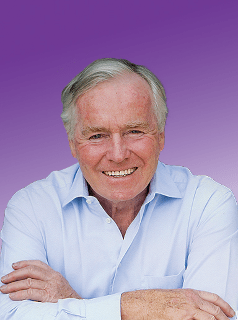

 seamus dubhghaill