Clery is the son of Arthur Clery (who also uses the names Arthur Patrick O’Clery and Arthur Ua Cléirigh), a barrister, and Catherine Moylan. His father, who practises in India, publishes books on early Irish history.
Clery’s principal themes include the difficulties of Roman Catholic graduates seeking professional employment, dramatic criticism (he hails Lady Gregory‘s play Kincora as the Abbey Theatre‘s first masterpiece but is repulsed by the works of John Millington Synge), Catholic-Protestant rivalry, tension within the Dublin professional class, and the vagaries of the Gaelic revival movement.
Clery advocates partition on the basis of a two nations theory, first advanced in 1904–1905, possibly in response to William O’Brien‘s advocacy of securing Home Rule through compromise with moderate Unionists. Several of his articles on the subject are reprinted in his 1907 essay collection, The Idea of a Nation.
Clery derives this unusual view for a nationalist from several motives, including a belief that arguments for Irish nationalists’ right to self-determination can be used to justify Ulster Unionists’ right to secede from Ireland, fear that it might be impossible to obtain Home Rule unless Ulster is excluded, and distaste for both Ulster Protestants and Ulster Catholics, whom he sees as deplorably anglicised. He remains a partitionist for the rest of his life. He is not particularly successful as a barrister, but on the establishment of University College Dublin (UCD) in 1909, he is appointed to the part-time post of Professor of the Law of Property.
Clery does not take his seat and does not contest the September 1927 Irish general election since new legislation obliges candidates to pledge in advance that they will take their seat. He is one of the lawyers who advises Éamon de Valera that the Irish Free State is not legally obliged to pay the Land Annuities which had been agreed in the Anglo-Irish Treaty of 1922.
Clery was a close friend of Tom Kettle, with whom he founds a dining club, the “Cui Bono.” Hugh Kennedy is also a lifelong friend. As Auditor of the L & H, he tries to prevent James Joyce from reading a paper praising Henrik Ibsen, asserting that “the effect of Henrik Ibsen is evil,” but Joyce succeeds in reading it after he argues his case with the college president. The principal influence on Clery is the Irish Ireland editor D. P. Moran, to whose weekly paper, The Leader, Clery becomes a frequent contributor. In addition to The Idea of a Nation, he publishes Dublin Essays (1920) and (as Arthur Synan) The coming of the king.
She is the eldest daughter of John and Anne Gaynor, of Athlone. At the age of fifteen she moves with her family to Dublin where her education is completed. Two of her sisters, Anna and Marcella, become nuns with Religious Sisters of Charity. At twenty-five, she marries the much older George Atkinson, a medical doctor and, with Sir John Gray, joint proprietor of the Freeman’s Journal. They are both interested in art and she accompanies her husband on many trips abroad, taking in the cultural centres of Europe. At home they make the acquaintance of prominent politicians, journalists and musicians. Regular guests at their house are Dr. John Shaw, editor of the Evening Mail, Rosa Mulholland and Katharine Tynan.
The loss of her only child in his fourth year deeply affected Atkinson and she throws herself into charitable and other good works. She moves with her husband to Drumcondra in Dublin, where she makes the acquaintance of Ellen Woodlock. Woodlock, a sister of Francis Sylvester Mahony, is born in Cork, County Cork, in 1811 and is married in 1830 and widowed quite young, just before the birth of her only son. Woodlock is the sister-in-law of Rev. Dr. Bartholomew Woodlock, who is President of All Hallows College. She intends to join a religious community in France but after spending a few years in that country (with her son in a nearby school) returns to Cork and then moves to Dublin. At this time the post-famine city is inundated with poverty-stricken families and abandoned children. Fever and disease are rife, and the Poor Law of the day is insufficient to meet the needs of the starving population. Many evictions are taking place in deplorable circumstances, which force the poor, however reluctantly, to seek refuge in the workhouses. The most vulnerable sections of the community are single women (including widows) and children. Woodlock is totally against placing children in workhouses and founds St. Joseph’s Industrial Institute in 1855 to rescue girls from that situation. With her, Atkinson interests herself in the female paupers of the South Dublin Union. With much difficulty in the 1860s, she gains permission for ladies like herself to enter and inspect the condition of young girls in the North and South Dublin Unions, after which she opens a better home to which many were transferred. She campaigns for years to improve the state of the workhouses and provide better conditions for the poverty-stricken. One of her sisters runs the Our Lady’s Hospice in Dublin, to which she donates funds. She helps Woodlock establish the Children’s Health Ireland at 9 Buckingham Street in 1872, which later moves to Temple Street, which she visits every day. Every week she visits hospitals and prisons, in the 1880s accompanying Katharine Tynan to visit the last of the Land Leaguers incarcerated in Kilmainham Gaol.
From the 1850s Atkinson contributes a large number of historical and biographical articles and essays to several publications, including Duffy’s Hibernian Magazine, The Month, The Nation and the Freeman’s Journal. She later writes for the Irish Monthly after it is established, and for the Irish Quarterly Review. Her Life of Mary Aikenhead is published in 1875 and is very well received. She follows this with biographies of the Irish sculptors John Henry Foley and John Hogan and also a life of Catherine of Siena. A collection of her essays, with a preface and biography by Rosa Mulholland, is published posthumously in 1895.
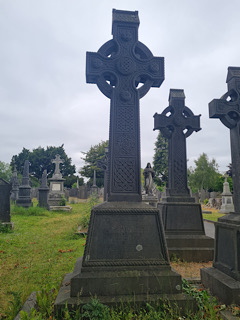
Atkinson dies in County Dublin on July 8, 1893, and is buried in Glasnevin Cemetery, Dublin, where the cemetery committee places a Celtic cross as a monument to her and her husband after his death on December 8, 1893.
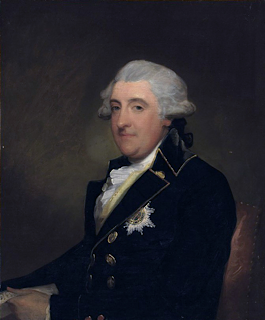
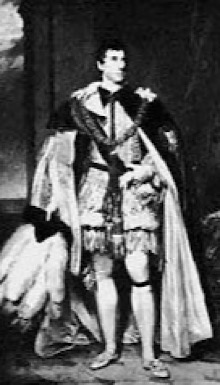
FitzGerald is born on March 13, 1749, in Arlington Place, Piccadilly, London, the second son of nine sons and ten daughters of James Fitzgerald, 20th Earl of Kildare and later 1st Duke of Leinster, and his wife, Lady Emily Lennox. He is educated at Eton College (1758–63). He is the elder brother of the 1790s revolutionary Lord Edward FitzGerald, and is a first cousin of the English liberal politician Charles James Fox.
In November 1775, FitzGerald marries Emilia Olivia Usher, daughter of the 1st Baron Saint George and Elizabeth Dominick and sole grand daughter of Sir Christopher Dominick. They have three sons and six daughters.
In 1770, FitzGerald is chosen Grandmaster of the masonicGrand Lodge of Ireland, a post he holds for two years. He is re-elected for another year in 1777. In 1783, he is among the first knights in the newly created Order of St. Patrick.
In 1788–89, FitzGerald is Master of the Rolls in Ireland. In theory a senior judicial office, it is then largely a sinecure, but so blatant a choice of a man who is wholly unqualified for it gives rise to unfavourable comment, and a few years later it becomes the rule that the Master must be a lawyer of repute.
FitzGerald’s homes are at Carton and Kilkea Castle in County Kildare, and at Leinster House in Dublin (now the home of the Oireachtas). He is a founder member of the Order of St. Patrick in 1783 and of the Royal Irish Academy in 1785, and is a large investor in the Royal Canal company launched in 1790. His family’s estates of 60,000 acres (25,000 Ha) in Kildare are in three main parts, around Maynooth, Rathangan and Athy. He rebuilds the main bridge in Athy over the River Barrow.
FitzGerald dies of strangury, a urinary tract disorder, at Carton House on October 20, 1804. He is buried in Kildare Abbey. His funeral is so well attended that the mourners reach across The Curragh. He is succeeded by his second, but eldest surviving, son, Augustus Frederick Fitzgerald, as 3rd Duke of Leinster.
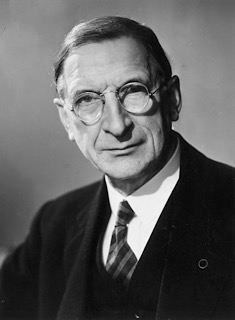
In the 1916 Easter Rising in Dublin, de Valera commands an occupied building and is the last commander to surrender. Because of his American birth, he escapes execution by the British but is sentenced to penal servitude. Released in 1917 but arrested again and deported in May 1918 to England, where he is imprisoned, he is acclaimed by the Irish as the chief survivor of the uprising and in October 1917 is elected president of the Irish republican and democratic socialistSinn Féin political party, which wins three-fourths of all the Irish constituencies in December 1918.
After Dáil Éireann ratifies the treaty by a small majority in 1922, de Valera supports the republican resistance in the ensuing Irish Civil War. W. T. Cosgrave’s Irish Free State ministry imprisons him, but he is released in 1924 and then organizes a republican opposition party that does not sit in Dáil Éireann. In 1927, however, he persuades his followers to sign the oath of allegiance as “an empty political formula,” and his new Fianna Fáil (“Soldiers of Destiny”) party then enters the Dáil, demanding abolition of the oath of allegiance, of the governor-general, of the Seanad Éireann (senate) as then constituted, and of land-purchase annuities payable to Great Britain. The Cosgrave ministry is defeated by Fianna Fáil in 1932, and de Valera, as head of the new ministry, embarks quickly on severing connections with Great Britain. He withholds payment of the land annuities, and an “economic war” results. Increasing retaliation by both sides enables de Valera to develop his program of austere national self-sufficiency in an Irish-speaking Ireland while building up industries behind protective tariffs. In the new Constitution of Ireland, ratified by referendum in 1937, the Irish Free State becomes Ireland, a sovereign, independent democracy tenuously linked with the British Commonwealth (under the Executive Authority (External Relations) Act 1936) only for purposes of diplomatic representation.
De Valera’s prestige is enhanced by his success as president of the council of the League of Nations in 1932 and of its assembly in 1938. He also enters negotiations with British Prime MinisterNeville Chamberlain in which he guarantees that he will never allow Ireland to be used as a base for attacking Britain in the event of war. This culminates in the Anglo-Irish defense agreement of April 1938, whereby Britain relinquishes the naval bases of Cobh, Berehaven, and Lough Swilly (retained in a defense annex to the 1921 treaty), and in complementary finance and trade treaties that end the economic war. This makes possible de Valera’s proclamation in September 1939, upon the outbreak of World War II, that Ireland will remain neutral and will resist attack from any quarter. In secret, however, de Valera also authorizes significant military and intelligence assistance to both the British and the Americans throughout the war. He realizes that a German victory will imperil Ireland’s independence, of which neutrality is the ultimate expression. By avoiding the burdens and destruction of the war, de Valera achieves a relative prosperity for Ireland in comparison with the war-torn countries of Europe, and he retains office in subsequent elections.
In 1948, a reaction against the long monopoly of power and patronage held by de Valera’s party enables the opposition, with the help of smaller parties, to form an interparty government under John A. Costello. Ironically, this precarious coalition collapses within three years after Ireland becomes a republic by means of the repeal of the Executive Authority (External Relations) Act 1936 and the severance of all ties with the British Commonwealth, an act de Valera had avoided. De Valera resumes office until 1954, when he appeals unsuccessfully for a fresh mandate, and Costello forms his second interparty ministry. No clearly defined difference now exists between the opposing parties in face of rising prices, continued emigration, and a backward agriculture. De Valera claims, however, that a strong single-party government is indispensable and that all coalitions must be weak and insecure. On this plea he obtains, in March 1957, the overall majority that he demands.
In 1959, de Valera agrees to stand as a candidate for the presidency. He resigns his position as Taoiseach and leader of the Fianna Fáil party. In June he is elected president, and is reelected in 1966. He retires to a nursing home near Dublin in 1973 and dies there on August 29, 1975.
De Valera’s career spans the dramatic period of Ireland’s modern cultural and national revolution. As an anticolonial leader, a skillful constitutionalist, and a symbol of national liberation, he dominates Ireland in the half century following the country’s independence.
(From: “Éamon de Valera, president of Ireland,” Encyclopedia Britannica, http://www.britannica.com, last updated August 14, 2025)
Cuffe is the son of John Otway Cuffe, 2nd Earl of Desart, and Catherine, daughter of Maurice O’Connor. He succeeds in the earldom in November 1820, aged two, on the early death of his father. He is educated at Eton College and enters Christ Church, Oxford in 1836 but takes no degree.
Cuffe marries Lady Elizabeth Lucy Campbell, daughter of John Campbell, 1st Earl Cawdor, in 1842. They have three sons and a daughter. He dies at the age of 46 at his home in Belgravia, City of Westminster, Greater London on April 1, 1865, due to a fall suffered during an attack of paralysis. He is buried in Castleinch Cemetery, Kilkenny, County Kilkenny. He is succeeded in the earldom by his son, William. The Countess of Desart dies in April 1898, aged 76.
In the mid-1750s, Fitzsimons’s family immigrates to Philadelphia, Pennsylvania, where his father dies soon thereafter. He has enough education that he begins work as a clerk in a mercantile house. He marries Catherine Meade on November 23, 1761, and forms a business partnership with her brother George. Their firm, which specializes in the West Indies trade, operates successfully for over 41 years.
The firm is soon hit by the new revenue measures created to help support the finances of the British Empire, including the much reviled Stamp Act of 1765. Concerned with these ideas, Fitzsimons becomes active in the Irish merchant community in Philadelphia. He is a founding member of the Friendly Sons of St. Patrick in 1771 and later, in 1774, a steering committee organized to protest the Coercive Acts.
When Pennsylvania begins mobilizing and organizing a militia to fight the British, Fitzsimons is soon involved. He serves as captain of a company of home guards under the command of Colonel John Caldwalader. Initially his company serves as part of the soldiers who man posts along the New Jersey coast. His unit later serves as part of the reserve at the Battle of Trenton in 1776. Later in the war, he serves on the Pennsylvania Council of Safety and heads a board to oversee the newly formed Pennsylvania Navy.
Fitzsimons enters active politics as a delegate to the Continental Congress in 1782 and 1783. He is a member of the Pennsylvania House of Representatives from 1786 until 1795. He is also a delegate to the U.S. Constitutional Convention in 1787. Although not a leading member of that convention, he supports a strong national government, the end of slavery, the United States Congress‘s powers to impose a tariff on imports and exports, the granting the House of Representatives, and power in equal to the United States Senate in making treaties. He is one of only two Catholic signers of the Constitution of the United States, the other being Daniel Carroll of Maryland.
After the Constitution is established, Fitzsimons serves in the first three sessions of the House of Representatives as a Federalist, where he favors protective tariffs and a strong navy, co-drafting the Naval Act of 1794 authorizing the original six frigates of the United States Navy. He fails to win re-election in 1794. This is partially attributed to public opinion turning against the Federalist Party over the forceful suppression of the Whiskey Rebellion. Although he never holds elective office again, he serves in 1798 as head of the committee of merchants overseeing the subscription-loan to build a warship at private expense for use in the Quasi-War.
In 1796, Fitzsimons, along with James Innes of Virginia, is appointed by President John Adams to serve as one of two American members on the five-man debt commission charged under Article VI of the Jay Treaty with examining the claims of British subjects unable to collect debts incurred by Americans prior to the American Revolution. Fitzsimons, Innes and Samuel Sitgreaves, who replaces Innes upon the latter’s death, become annoyed with the arguments used by their British counterparts to inflate the claims total. Fitzsimons and Sitgreaves angrily and permanently secede from the board in July 1799. The claims are eventually disposed of by a lump-sum payment, agreed upon by United States Minister to BritainRufus King with British Foreign SecretaryRobert Banks Jenkinson and approved by PresidentThomas Jefferson and the Senate in 1802.
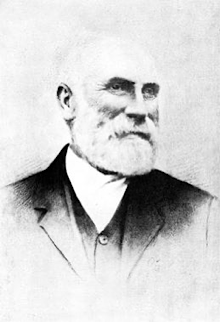
Kettle is one among six children of Thomas Kettle, a prosperous farmer, and his wife, Alice (née Kavanagh). His maternal grandmother, Mary O’Brien, had smuggled arms to United Irishmen in the district in 1798, while her future husband, Billy Kavanagh, had been a senior figure in the movement. He is educated at Ireland’s most prestigious Catholicboarding school, Clongowes Wood College. His education is cut short when he is called to help full-time on the farm. Though an autodidact and always a forceful writer, he is beset later by an exaggerated sense of his “defective education and want of talking powers.” Fascinated by politics, he enjoys the repeal excitement of 1841–44 and in his late teens speaks once or twice at Tenant Right League meetings in Swords. Through the 1850s and most of the 1860s he sets about expanding the family farm into a composite of fertile holdings in Swords, St. Margaret’s, Artane, and Malahide (c.150 acres). Getting on well with the Russell-Cruise family of Swords, his first landlords, he benefits from a favourable leasehold arrangement on their demesne in the early 1860s. The farm is mostly in tillage, though Kettle also raises some fat cattle and Clydesdale horses, which he eventually sells to Guinness’s.
Kettle first enters politics in 1867, when he disagrees with John Paul Byrne of Dublin Corporation in public and in print over the right of graziers to state aid during an outbreak of cattle distemper. In 1868, he joins an agricultural reform group initiated by Isaac Butt. He becomes friendly with Butt and later claims to have converted him to support tenant-right. His memoirs, which are somewhat egocentric, contain a number of such questionable claims. It is, however, the case that he habitually writes up, for his own use, cogent summaries of the direction of current political tendencies, which sometimes become useful confidential briefs for Butt and later Charles Stewart Parnell. He is among the published list of subscribers to the Home Rule League in July 1870.
In 1872, disappointed by the Landlord and Tenant (Ireland) Act 1870, Kettle organises a Tenants’ Defence Association (TDA) in north County Dublin, soon sensing the need for a central body to coordinate the grievances of similar groups around the country. The Dublin TDA effectively acts as this central body, under his guidance as honorary secretary. At the 1874 United Kingdom general election in Ireland, the Dublin TDA decides to challenge the electoral control of certain corporation interests in County Dublin. Kettle secures the cautious approval of CardinalPaul Cullen for any candidate supporting the principle of denominational education. He is also one of a deputation to ask Parnell to fight the constituency, which the latter loses. He becomes closely acquainted with Parnell, who frequently attends Dublin TDA meetings after his election for Meath in April 1875.
Taking a sombre view of the threat of famine in the west of Ireland after evidence of crop failure appears in early summer 1879, Kettle calls a conference of TDA delegates at the European Hotel in Bolton Street, Dublin, in late May. After a heated debate in which a proposal for a rent strike is greatly modified, Parnell comes to seek Kettle’s advice on whether to become involved in the evolving land agitation in County Mayo. Kettle urges him to go to the Westport meeting set for June 8, 1879, and claims later to have stressed in passing that “if you keep in the open you can scarcely go too far or be too extreme on the land question.” If the incident is correctly recounted, this is a most important statement, which virtually defines Parnell’s oratorical strategy throughout the land war. In October 1879, Kettle agrees to merge the TDA with a new Irish National Land League, set up at a meeting in the Imperial Hotel, Dublin, chaired by Kettle. As honorary secretary of the Land League, Kettle frankly admits that he is able to attend meetings without “the necessity of working.” His attendance is, however, among the most regular of all League officers, with him taking part in 73 of 107 meetings scheduled between December 1879 and October 1881.
In March 1880, Kettle disputes Michael Davitt‘s reluctance to use League funds in the general election. He canvasses vigorously together with Parnell in Kildare, Carlow, and Wicklow and is later pressed by his party leader into standing for election in County Cork, though aware that the local tenant movement has already prepared their own candidates. His association with Parnell antagonises the catholic hierarchy in Munster, who issues a condemnation of his candidacy. The hurly-burly of this election creates the persistent impression that Kettle is anti-clerical in politics, and he is defeated by 151 votes.
On a train journey to Ballinasloe in early April 1880, Kettle confides to Parnell his idea that land purchase can be facilitated by the recovery of tax allegedly charged in excess on Ireland by the British government since the act of union. At League meetings in June and July 1880, he advances his “catastrophist” plan: to cease attempts to prevent the development of an irresistible crisis among the Irish smallholding population, by diverting the application of League funds from general relief solely to the aid of evicted tenants, who might be temporarily housed “encamped like gypsies and the land lying idle,” in the belief that the British government will thereby be compelled to introduce radical remedial legislation. Smallholders do not have enough faith in either League or parliamentary politicians to listen.
At a meeting of the League executive in London and in Paris, before and after Davitt’s arrest on February 3, 1881, Kettle presents his plan that the parliamentary party should, if faced with coercive legislation, withdraw from Westminster, “concentrate” in Ireland, and call a general rent strike. Republicans on the League executive continually find themselves embarrassed by Kettle’s radical calls to action motivated solely by the project of agrarian reform. Parnell is later supposed to have lamented party failure to execute the plan at this juncture.
Kettle is arrested in June 1881 for calling for a collective refusal of rent. After two weeks in Naas jail he is transferred to Kilmainham Gaol, where in October he is, with some misgivings, one of the signatories to the No Rent Manifesto. Discharged from Kilmainham in late December 1881 owing to poor health, he returns principally to work on the family farm for most of the 1880s, though he claims to have formulated a draft solution for the plight of the agricultural labourer and “pushed it through” in correspondence with Parnell. He reemerges in 1890 to defend Parnell after the divorce scandal breaks. Attempting to establish a new ”centre” party independent of extreme Catholic and Protestant interests, he stands for election as a Parnellite at the 1891 County Carlow by-election, where he is comprehensively beaten, having endured weeks of insinuating harangues by Tim Healy, and raucous mob insults to the din of tin kettles bashed by women and children at meetings around the county. He is intermittently involved in County Dublin politics in the 1890s and 1900s and maintains a brusque correspondence on matters of the day in the national press.
Kettle dies on September 22, 1916, at his residence, St. Margaret’s, County Dublin, anguished by the death on September 9 of his brilliant son, Tom Kettle, near the village of Ginchy during the Battle of the Somme. He is buried at St. Colmcille’s cemetery, Swords.
Kettle marries Margaret McCourt, daughter of Laurence McCourt of Newtown, St. Margaret’s, County Dublin, farmer and agricultural commodity factor. They have five sons and six daughters.
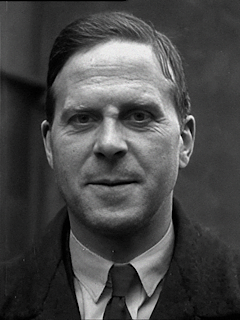
In March 1917, Ryan passes his final medical examinations. That June he sets up medical practice in Wexford. In 1921, he moves to Dublin where he opens a doctor’s practice at Harcourt Street, specialising in skin diseases at the Skin and Cancer Hospital on Holles Street. He leaves medicine in 1925, after he purchases Kindlestown, a large farm near Delgany, County Wicklow. He lives there and it remains a working farm until his death.
In July 1919, Ryan marries Máirín Cregan, originally from County Kerry and a close friend of Sinéad de Valera throughout her life. Cregan, like her husband, also fought in the Easter Rising and is subsequently an author of children’s stories in Irish. They have three children together.
While studying at university in 1913, Ryan joins the Gaelic League at Clonmel. The company commander recruits the young Catholicnationalist, who becomes a founder-member of the Irish Volunteers and is sworn into the Irish Republican Brotherhood (IRB) the following year. In 1916, he goes first to Cork to deliver a message from Seán Mac Diarmada to Tomás Mac Curtain that the Easter Rising is due to happen on Easter Sunday, then to Cork again in a 12-hour journey in a car to deliver Eoin MacNeill‘s cancellation order, which attempts to stop the rising. When he arrives back on Tuesday, he serves as the medical officer in the General Post Office (GPO) and treats many wounds, including James Connolly‘s shattered ankle, a wound which gradually turns gangrenous. He is, along with Connolly, one of the last people to leave the GPO when the evacuation takes place. Following the surrender of the garrison, he is deported to HM Prison Stafford in England and subsequently Frongoch internment camp. He is released in August 1916.
Ryan rejoins the Volunteers immediately after his release from prison, and in June 1917, he is elected Commandant of the Wexford Battalion. His political career begins the following year when he is elected as a Sinn Féin candidate for the constituency of South Wexford in the 1918 United Kingdom general election in Ireland. Like his fellow Sinn Féin MPs, he refuses to attend the Westminster Parliament. Instead he attends the proceedings of the First Dáil on January 21, 1919. As the Irish War of Independence goes on, he becomes Brigade Commandant of South Wexford and is also elected to Wexford County Council, serving as chairman on one occasion. In September 1919, he is arrested by the British and interned on Spike Island and later Bere Island. In February 1921, he is imprisoned at Kilworth Internment Camp, County Cork. He is later moved on Ballykinlar Barracks in County Down and released in August 1921.
In 1926, Ryan is among the Sinn Féin TDs who follow leader Éamon de Valera out of the party to found Fianna Fáil. They enter the Dáil in 1927 and spend five years on the opposition benches.
In 1947, after spending fifteen years as Minister for Agriculture, Ryan is appointed to the newly created positions of Minister for Health and Minister for Social Welfare. Following Fianna Fáil’s return to power at the 1951 Irish general election, he returns as Minister for Health and Social Welfare. Following the 1954 Irish general election, Fianna Fáil loses power and he moves to the backbenches once again.
Following the 1957 Irish general election, Fianna Fáil are back in office and de Valera’s cabinet has a new look to it. In a clear message that there will be a change to economic policy, Ryan, a close ally of Seán Lemass, is appointed Minister for Finance, replacing the conservative Seán MacEntee. The first sign of a new economic approach comes in 1958, when Ryan brings the First Programme for Economic Development to the cabinet table. This plan, the brainchild of T. K. Whitaker, recognises that Ireland will have to move away from self-sufficiency toward free trade. It also proposes that foreign firms should be given grants and tax breaks to set up in Ireland.
When Lemass succeeds de Valera as Taoiseach in 1959, Ryan is re-appointed as Minister for Finance. Lemass wants to reward him for his loyalty by also naming him Tánaiste. However, the new leader feels obliged to appoint MacEntee, one of the party elders to the position. Ryan continues to implement the First Programme throughout the early 1960s, achieving a record growth rate of 4 percent by 1963. That year an even more ambitious Second Programme is introduced. However, it overreaches and has to be abandoned. In spite of this, the annual growth rate averages five percent, the highest achieved since independence.
Ryan does not stand in the 1965 Irish general election, after which he is nominated by the Taoiseach to Seanad Éireann, where he joins his son, Eoin Ryan Snr. At the 1969 dissolution he retires to his farm at Kindlestown, County Wicklow, where he dies at age 77 on September 25, 1970. He is buried at Redford Cemetery, Greystones, County Wicklow. His grandson, Eoin Ryan Jnr, serves in the Oireachtas from 1989 to 2007 and later in the European Parliament from 2004 to 2009.
A serious interest in poetry and literature begins to manifest itself during his years at TCD. In 1900, he makes the acquaintance of W. B. Yeats and George Moore and begins to frequent Dublin literary circles. In 1904 and 1905 he publishes several short poems in the London publication The Venture and in John Eglinton‘s journal Dana. His name also appears in print as the renegade priest Fr. Oliver Gogarty in George Moore’s 1905 novel The Lake.
In 1905, Gogarty becomes one of the founding members of Arthur Griffith‘s Sinn Féin, a non-violent political movement with a plan for Irish autonomy modeled after the Austro-Hungarian dual monarchy.
In July 1907, his first son, Oliver Duane Odysseus Gogarty, is born, and in autumn of that year he leaves for Vienna to finish the practical phase of his medical training. Returning to Dublin in 1908, he secures a post at Richmond Hospital, and shortly afterward purchases a house in Ely Place opposite George Moore. Three years later, he joins the staff of the Meath Hospital and remains there for the remainder of his medical career.
Gogarty maintains close friendships with many of the Dublin literati and continues to write poetry in the midst of his political and professional duties. He also tries his hand at playwriting, producing a slum drama in 1917 under the pseudonym “Alpha and Omega,” and two comedies in 1919 under the pseudonym “Gideon Ouseley,” all three of which are performed at the Abbey Theatre. He devotes less energy to his medical practice and more to his writing during the twenties and thirties.
With the onset of World War II, Gogarty attempts to enlist in the Royal Air Force (RAF) and the Royal Army Medical Corps (RAMC) as a doctor. He is denied on grounds of age. He then departs in September 1939 for an extended lecture tour in the United States, leaving his wife to manage Renvyle House, which has since been rebuilt as a hotel. When his return to Ireland is delayed by the war, he applies for American citizenship and eventually decides to reside permanently in the United States. Though he regularly sends letters, funds, and care-packages to his family and returns home for occasional holiday visits, he never again lives in Ireland for any extended length of time.
Gogarty suffers from heart complaints during the last few years of his life, and in September 1957 he collapses in the street on his way to dinner. He dies on September 22, 1957. His body is flown home to Ireland and buried in Cartron Church, Moyard, near Renvyle, County Galway.
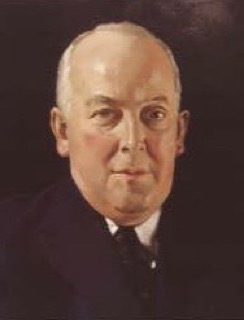
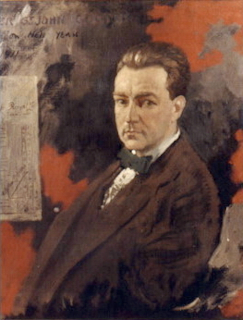
(Pictured: 1911 portrait of Oliver St. John Gogarty painted by Sir William Orpen, currently housed at the Royal College of Surgeons in Ireland)
Hanafin marries Mona Brady, daughter of J. P. Brady, on August 2, 1958, in Clonmel, County Tipperary. The wedding is followed by a reception at the Galtee Hotel, Cahir, which is attended by various notables including Rev. Father J. J. Hampson, president of Blackrock College. Their first child, Mary Hanafin, is born in June 1959, followed by John Hanafin in September 1960. Mary Hanafin is a former Fianna Fáil TD and government minister, and John Hanafin is a former Fianna Fáil senator.
Hanafin operates the Anner Hotel, located in Thurles during the 1960s. Initially successful, the business fails in 1967, which Mary Hanafin later blames on her father’s excess drinking. Subsequently, Hanafin is a director of the Transinternational Oil Company.
Hanafin’s first attempt for election to public office proves unsuccessful. In 1953, he seeks to be co-opted to fill the vacancy on North Tipperary County Council created by the death of his father. In the event councillors co-opt a Labour Party nominee, Michael Treacy, by eleven votes to seven.
Hanafin is elected a member of North Tipperary County Council in 1955, polling 934 first preference votes. Subsequently, in 1956, drawing support from the Clann na Poblachta representatives, he is elected Chairman of the County Council.
Hanafin is re-elected to North Tipperary County Council in 1960, polling 797 first preference votes. In 1961, he votes against the Fianna Fáil nominee for Chair of the County Council, Thomas F. Meagher, and in favour of the Clann na Poblachta nominee, Michael F. Cronin, who is elected by 10 votes to 9. In 1964, he controversially votes in favour of Jeremiah Mockler, “a former school mate,” who is elected by 10 votes to 9 to the office of Rate Collector for Borrisokane, County Tipperary.
Hanafin holds the seat until 1985. He is first elected to Seanad Éireann in 1969 and retains his seat until the 1993 Seanad election at which he loses his seat by one vote. He regains his seat in the 1997 elections, and in 2002 announces his retirement from politics. He unsuccessfully contests the 1977 and 1981 Irish general elections for the Tipperary North constituency. He is a chief fundraiser of the Fianna Fáil party for many years.
In May 2015, Hanafin accuses “Yes” campaigners in the same-sex marriage referendum of spreading a “palpable climate of fear,” and calls for a “No” vote.
Hanafin opposes the legalisation of divorce, which is introduced in 1995, and attempts to overturn the referendum result in the Supreme Court, but is refused by the court.
An opponent of abortion, Hanafin is one of the promoters of the constitutional amendment that enshrines the legal ban on abortion in the Constitution of Ireland. He is co-founder, chairman and later honorary president of the Pro Life Campaign.
Hanafin dies in County Tipperary at the age of 86 on June 22, 2017. A Requiem Mass is held at the Cathedral of the Assumption, Thurles, on June 25, with burial afterward in St. Patrick’s Cemetery.



 seamus dubhghaill