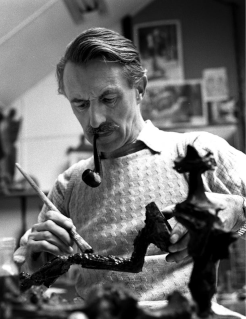
Frederick Edward McWilliamCBERA, Northern Irish surrealistsculptor, is born in Banbridge, County Down, on April 30, 1909. He works chiefly in stone, wood and bronze. His style of work consists of sculptures of the human form contorted into strange positions, often described as modern and surreal.
McWilliam is the son of Dr. William McWilliam, a local general practitioner. Growing up in Banbridge has a great influence on his work. He makes references to furniture makers such as Carson the Cooper and Proctors in his letters to his friend, Marjorie Burnett.
McWilliam attends Campbell College in Belfast and later attends Belfast College of Art from 1926. After 1928, he continues to study at the Slade School of Fine Art in London. He originally intends to become a painter, but influenced by Alfred Horace Gerrard, head of the sculpture department at the Slade, and by Henry Moore whom he meets there, he turns to sculpture. He receives the Robert Ross Leaving Scholarship which enables him and his wife, Beth (née Crowther), to travel to Paris where he visits the studio of Constantin Brâncuși.
During the first year of World War II, he joins the Royal Air Force and is stationed in England for four years where he is engaged in interpreting aerial reconnaissance photographs. He is then posted to India. While there he teaches art in the Hindu Art School in New Delhi.
After his return from India, McWilliam teaches for a year at the Chelsea School of Art. He is then invited by A. H. Gerrard to teach sculpture at the Slade. He continues in this post until 1968.
During the Northern IrelandTroubles McWilliam produces a series of bronzes in 1972 and 1973 known as Women of Belfast in response to the bombing at the Abercorn Tea-Rooms.
In 1964 McWilliam is awarded an Honorary Doctor of Letters from Queen’s University Belfast. In 1966 he is appointed CBE and in 1971 he wins the Oireachtas Gold Medal. He is represented in many public collections, including the Museum of Modern Art in New York City and Tate Britain in London. In 1984 the National Self-Portrait Gallery purchases a McWilliam self-portrait amongst acquisitions from fellow Northerners Brian Ballard, Brian Ferran and T. P. Flanagan.
A Luftwaffe bomb kills thirteen people in Belfast, Northern Ireland, on the night of April 7, 1941. Ultimately, the city is devastated by air raids. Seven hundred people are killed and 400 seriously injured in what becomes known as the Belfast Blitz. The Blitz consists of four German air raids on strategic targets in Belfast, in April and May 1941 during World War II.
There had been a number of small bombings, probably by planes that missed their targets over the River Clyde in Glasgow or the cities of North West England. On March 24, 1941, John MacDermott, Minister for Public Security, writes to the Prime Minister of Northern Ireland, John Andrews, expressing his concerns that Belfast is so poorly protected. “Up to now we have escaped attack. So had Clydeside until recently. Clydeside got its blitz during the period of the last moon. There [is] ground for thinking that the … enemy could not easily reach Belfast in force except during a period of moonlight. The period of the next moon from say the 7th to the 16th of April may well bring our turn.” MacDermott is proved right.
The first deliberate raid takes place on the night of April 7. It targets the docks. Neighbouring residential areas are also hit. Six Heinkel He 111 bombers, from Kampfgruppe 26, flying at 7,000 feet, drop incendiaries, high explosive and parachute mines. By British mainland blitz standards, casualties are light. Thirteen die, including a soldier killed when an anti-aircraft gun at the Balmoral show-grounds misfires. The most significant loss is a 4.5-acre factory floor for manufacturing the fuselages of Short Stirling bombers. The Royal Air Force (RAF) announces that Squadron Leader J.W.C. Simpson shot down one of the Heinkels over Downpatrick. The Luftwaffe crews return to their base in Northern France and report that Belfast’s defences are “inferior in quality, scanty and insufficient.” This raid overall causes relatively little damage, but a lot is revealed about Belfast’s inadequate defences.
On Easter Tuesday, April 15, 1941, spectators watching a football match at Windsor Park notice a lone LuftwaffeJunkers Ju 88 aircraft circling overhead. That evening over 150 bombers leave their bases in northern France and the Netherlands and head for Belfast. There are Heinkel He 111s, Junkers Ju 88s and Dornier Do 17s. At 10:40 p.m. the air-raid sirens sound. Accounts differ as to when flares are dropped to light up the city. The first attack is against the city’s waterworks, which had been attacked in the previous raid. High explosives are dropped. Initially it is thought that the Germans had mistaken this reservoir for the harbour and shipyards, where many ships, including HMS Ark Royal are being repaired. However, that attack is not an error. Three vessels nearing completion at Harland & Wolff are hit as is its power station. Wave after wave of bombers drop their incendiaries, high explosives and landmines. When incendiaries are dropped, the city burns as water pressure is too low for effective firefighting. There is no opposition. In the mistaken belief that they might damage RAF fighters, the anti-aircraft batteries cease firing. But the RAF does not respond. The bombs continued to fall until 5:00 a.m.
Outside of London, with some 900 dead, this is the greatest loss of life in a night raid during the Blitz. A stray bomber attacks Derry, killing fifteeen. Another attacks Bangor, County Down, killing five. By 4:00 a.m. the entire city seems to be in flames. At 4:15 a.m., John MacDermott, the Minister of Public Security, manages to contact Minister of AgricultureBasil Brooke seeking permission to seek help from the Irish government. Brooke notes in his diary, “I gave him authority as it is obviously a question of expediency.” Since 1:45 a.m. all telephones have been cut. Fortunately, the railway telegraphy link between Belfast and Dublin is still operational. The telegram is sent at 4:35 a.m. asking the Irish Taoiseach, Éamon de Valera, for assistance.
By 6:00 a.m., within two hours of the request for assistance, 71 firemen with 13 fire tenders from Dundalk, Drogheda, Dublin, and Dún Laoghaire are on their way to cross the Irish border to assist their Belfast colleagues. In each station volunteers are requested, as it is beyond their normal duties. In every instance, all step forward. They remain in Belfast for three days, until they are sent back by the Northern Ireland government. By then 250 firemen from Clydeside have arrived.
There is a second massive air raid on Belfast on Sunday, May 4-5, 1941, three weeks after the Easter Tuesday raid. Around 1:00 a.m., Luftwaffe bombers fly over the city, concentrating their attack on the Harbour Estate and Queen’s Island. Nearby residential areas in east Belfast are also hit when “203 metric tonnes of high explosive bombs, 80 land mines attached to parachutes, and 800 firebomb canisters containing 96,000 incendiary bombs” are dropped. Over 150 people die in what becomes known as the “Fire Blitz.” Casualties are lower than at Easter, partly because the sirens sound at 11:45 p.m. while the Luftwaffe attack more cautiously from a greater height. St. George’s Church in High Street is damaged by fire. Again, the Irish emergency services cross the border, this time without waiting for an invitation.
(Pictured: Rescue workers search through the rubble of Eglington Street in Belfast, Northern Ireland, after a German Luftwaffe air raid, May 7, 1941)
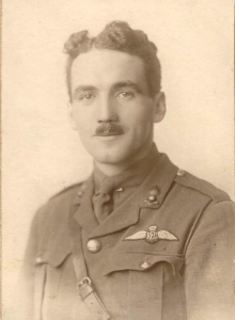
Soon afterwards Hazell transfers to the Royal Flying Corps. In April and May he is assigned to No. 5 Reserve Squadron, based at Castle Bromwich. He is appointed a flying officer on June 5 and survives a severe crash before completing his training. He eventually joins No. 1 Squadron on the Western Front. Flying Nieuport 17 Scouts, he shoots down 20 enemy aircraft between March and August 1917, being appointed a flight commander with the acting rank of captain on May 25, and is awarded the Military Cross on July 26.
After serving as an instructor at the Central Flying School in 1918, Hazell takes command of “A” Flight, No. 24 Squadron, flying the S.E.5a. On August 22, 1918, he shoots down an observation balloon despite its escort of seven Fokker D.VIIs. The escort is led by German ace Ernst Udet, who attacks and riddles Hazell’s petrol tank, propeller, and two longerons with bullets. In spite of this Hazell fights his way back, eyes full of petrol, and lands safely. Udet thinks he has forced the British pilot to crash and actually claims him as his 60th victory. Hazell finishes the war with 43 confirmed kills, the top British surviving ace of the war (excluding Dominion airmen). He is twice awarded the Distinguished Flying Cross. On June 11, 1927, he returns to the RAF Depot at Uxbridge and is placed on the retired list on July 20, 1927, at his own request.
In 1944, at the age of 52, Hazell becomes the commander of “D” Company, 24th (Tettenhall) Battalion, South Staffordshire Home Guard during the later part of World War II.
Hazell dies in Newport, County Mayo, on September 4, 1946, and is buried at the BurrishooleChurch of Ireland Cemetery there. In 2014 his grave, which had been largely forgotten and neglected, is restored, repaired, and re-dedicated in a ceremony on August 4, 2014, the 100th anniversary of the declaration of World War I.
O’Shannon first becomes a journalist with The Irish Times on leaving the RAF in 1947. Later he joins the Irish state broadcasting service Raidió Teilifís Éireann (RTÉ).
In July 1972 O’Shannon records a notable television interview with 31-year-old Muhammad Ali, when Ali is in Dublin to compete at Croke Park in a bout with Alvin Lewis.
O’Shannon receives a Jacob’s Award for his 1976 TV documentary, Even the Olives are Bleeding, which details the activities of the “Connolly Column” in the Spanish Civil War. Two years later he is honoured with a second Jacob’s Award for his television biography Emmet Dalton Remembers (1978).
In 1978, O’Shannon leaves RTÉ to join Canadian company Alcan, which is setting up an aluminum plant at Aughinish, County Limerick, in 1978. He is head-hunted to become its Director of Public Affairs, an important post at a time when there are environmental concerns about the effects of aluminium production. He admits that he was attracted by the salary, “five times what RTÉ were paying me,” but he also later says that one of the reasons for the move is that he had become unhappy with working at RTÉ, stating in an interview that “The real reason I got out of RTÉ was that they wouldn’t let me do what I wanted to do journalistically.” He had submitted proposals to the station’s editors for a television documentary series on the Irish Civil War, and also one on the wartime Emergency period, but they had been rejected. While he enjoys the social life with lavish expenses which his public relations duties involve, his friends believe that he missed the varied life and travel of journalism. He retires early from Aughinish in 1992 and returns to making television documentaries with RTÉ.
O’Shannon announces his retirement at the age of 80 on January 12, 2007.
O’Shannon is awarded lifetime membership in the Irish Film & Television Academy in 2010, to which he says is “particularly gratifying that it occurs before I pop my clogs.”
After weakening health for two years, and spending his last days in hospice at Blackrock, O’Shannon dies at the Beacon Hospital in Dublin on October 22, 2011. His body is reposed at Fanagans Funeral Home in Dublin on October 25, 2011, followed by a funeral the following day at Glasnevin Cemetery Chapel, where it is afterwards cremated.
O’Shannon’s wife, Patsy, whom he met while they were working for The Irish Times office in London, dies in 2006. They are married for more than 50 years. In a 2008 television documentary O’Shannon admits that throughout his marriage he had been a serial womaniser, who had repeatedly engaged in extra-marital affairs unbeknownst to his wife.
Director-General of RTÉNoel Curran says O’Shannon had brought into being “some of the great moments in the RTÉ documentary and factual schedule over the past five decades.” In tribute, RTÉ One shows the documentary Cathal O’Shannon: Telling Tales on November 10, 2011. It had originally aired in 2008 to mark his 80th birthday.
McElroy is born on May 14, 1893, at Donnybrook, County Dublin, to Samuel and Ellen McElroy. He enlists promptly at the start of World War I in August 1914 and is shipped out to France two months later. He is serving as a corporal in the Motor Cyclist Section of the Royal Engineers when he is first commissioned as a second lieutenant on May 9, 1915. While serving in the Royal Irish Regiment he is severely affected by mustard gas and is sent home to recuperate. He is in Dublin in April 1916, during the Easter Rising, and is ordered to help quell the insurrection. He refuses to fire upon his fellow Irishmen and is transferred to a southerly garrison away from home.
On June 1, 1916, McElroy relinquishes his commission in the Royal Irish Regiment when awarded a cadetship at the Royal Military Academy, Woolwich, from which he graduates on February 28, 1917, and is commissioned as a second lieutenant in the Royal Garrison Artillery.
McElroy is promptly seconded to the Royal Flying Corps, being trained as a pilot at the Central Flying School at Upavon Aerodrome and appointed a flying officer on June 28. On July 27 his commission is backdated to February 9, 1916, and he is promoted to lieutenant on August 9. On August 15 he joins No. 40 Squadron RFC, where he benefits from mentoring by Edward “Mick” Mannock. He originally flies a Nieuport 17, but with no success in battle. By the year’s end he is flying Royal Aircraft Factory S.E.5s and claims his first victory on December 28.
An extremely aggressive dogfighter who ignores often overwhelming odds, McElroy’s score soon grows rapidly. He shoots down two German aircraft in January 1918, and by February 18 has run his string up to 11. At this point, he is appointed a flight commander with the temporary rank of captain and transferred to No. 24 Squadron RFC. He continues to steadily accrue victories by ones and twos. By March 26, when he is awarded the Military Cross, he is up to 18 “kills.” On April 1, the Army’s Royal Flying Corps (RFC) and the Royal Naval Air Service (RNAS) are merged to form the Royal Air Force, and his squadron becomes No. 24 Squadron RAF. He is injured in a landing accident on April 7 when he brushes a treetop while landing. By then he has run his score to 27. While he is sidelined with his injury, on April 22, he is awarded a bar to his Military Cross. Following his convalescence, he returns to No. 40 Squadron in June, scoring three times, on June 26, June 28, and June 30. The latter two triumphs are observation balloons and run his tally to 30.
In July, McElroy adds to his score almost daily, a third balloon busting on July 1, followed by one of the most triumphant months in the history of fighter aviation, adding 17 victims during the month. His run of success is threatened on July 20 by a vibrating engine that entails breaking off an attack on a German two-seater and a rough emergency landing that leaves him with scratches and bruises. There is a farewell luncheon that day for his friend Gwilym Hugh “Noisy” Lewis. Their mutual friend “Mick” Mannock pulls McElroy aside to warn him about the hazards of following a German victim down within range of ground fire.
On July 26, “Mick” Mannock is killed by ground fire. Ironically, on that same day, “McIrish” McElroy receives the second Bar to his Military Cross. He is one of only ten airmen to receive the second Bar.
McElroy’s continues apparent disregard for his own safety when flying and fighting can have only one end. On July 31, 1918, he reports destroying a Hannover C for his 47th victory. He then sets out again. He fails to return from this flight and is posted missing. Later it is learned that he had been killed by ground fire. He is 25 years old.
McElroy receives the Distinguished Flying Cross posthumously on August 3, citing his shooting down 35 aeroplanes and three observation balloons. The Bar would arrive still later, on September 21, and would laud his low-level attacks. In summary, he shoots down four enemy aircraft in flames and destroys 23 others, one of which he shares destroyed with other pilots. He drives down 16 enemy aircraft “out of control” and out of the fight. In one of those cases, it is a shared success. He also destroys three balloons.
McElroy is interred in Plot I.C.1 at the Laventie Military Cemetery in La Gorgue, northern France.
The Irish Citizen Army also becomes involved in the battle, supporting the anti-Treaty IRA in the O’Connell Street area. The fighting begins with an assault by Provisional Government forces on the Four Courts building and ends in a decisive victory for the Provisional Government.
On April 14, 1922, about 200 Anti-Treaty IRA militants, with Rory O’Connor as their spokesman, occupy the Four Courts in Dublin, resulting in a tense stand-off. They want to spark a new armed confrontation with the British, which they hope will bring down the Anglo-Irish Treaty, unite the two factions of the IRA against their former common enemy and restart the fight to create an all-Ireland Irish Republic. At the time the British Army still has thousands of soldiers concentrated in Dublin, awaiting evacuation.
Winston Churchill and the British cabinet have been applying pressure on the Provisional Government to dislodge the rebels in the Four Courts, as they consider their presence a violation of the Treaty. Such pressure falls heaviest on Michael Collins, President of the Provisional Government Cabinet and effective head of the regular National Army. Collins, a chief IRA strategist during the War of Independence from Britain, has resisted giving open battle to the anti-Treaty militants since they occupied Four Courts in April. His colleagues in the Provisional Government Cabinet, including Arthur Griffith, agree that Collins must mount decisive military action against them.
In June 1922 the Provisional Government engages in intense negotiations with the British Cabinet over a draft Constitution that seeks to avert the impending civil war. They particularly seek to remove the requirement of an oath to the British Crown by all members of the Dublin government, a key point of contention with anti-Treaty partisans. However, the conservative British Cabinet refuses to cooperate. The pro-treaty element of Sinn Féin wins the elections on June 16.
Following the assassination of Sir Henry Wilson in London on June 22, 1922, and the arrest by Four Courts troops of National Army Deputy Chief of Staff Gen. J. J. “Ginger” O’Connell, British pressure on the Provisional Government intensifies. The British now threaten to invade and re-occupy all of Ireland. On June 27 the Provisional Government Cabinet agrees on an ultimatum to the Four Courts garrison to evacuate or face immediate military action.
Churchill offers a loan of British artillery for use by the National Army, along with 200 shells from their store of 10,000 at Kilmainham, three miles away. It is possible that some British special troops are also covertly loaned. Two 18-pounder field guns are placed on Bridge Street and Winetavern Street, across the River Liffey from the Four Courts complex. After an ultimatum is delivered to the anti-Treaty garrison in the early hours of June 28, the National Army commences the bombardment of Four Courts.
No authoritative record exists regarding the order to commence bombardment. Historians tend to attribute the order to Collins, but some biographers dispute this. Anti-Treaty survivors allege that they are preparing for an 8:00 a.m. evacuation when the bombardment begins at 4:00 a.m.
Inside the building are 12 members of the Irish Republican Army Executive, including Chief of StaffJoe McKelvey, Director of Engineering Rory O’Connor, Quartermaster General Liam Mellows and Director of Operations Ernie O’Malley. The garrison consists of roughly 180 men drawn from the 1st and 2nd Battalions of the IRA’s 1st Dublin Brigade, commanded by Commandant Paddy O’Brien, armed for the most part only with small arms apart from one captured armoured car, which they name “The Mutineer.” The members of the IRA Army Executive are the political leaders of the garrison but serve as common soldiers under the command of O’Brien. The Anti-Treaty side fortifies the Four Courts to some extent, planting mines around the complex and barricading the doors and windows, but their leadership orders them not to fire first, in order to retain the moral high ground, and so the Free State troops are allowed to surround the Four Courts.
After the first day’s bombardment proves ineffective, the British give the Free State two more 18-pounder cannon and proffer 60-pounder howitzers along with an offer to bomb the Four Courts from the air. Collins turns down the latter two offers because of the risk of causing heavy civilian casualties. On June 29, Free State troops storm the eastern wing of the Four Courts, losing three killed and 14 wounded and taking 33 prisoners. The republicans’ armoured car is disabled and abandoned by its crew. Early the next day O’Brien is injured by shrapnel and O’Malley takes over military command in the Four Courts. By this time the shelling has caused the Four Courts to catch fire. In addition, orders arrive from Oscar Traynor, the anti-treaty IRA commander in Dublin, for the Four Courts garrison to surrender, as he cannot reach their position to help them. O’Malley rules this order invalid, as the Four Courts is a GHQ operation. However, in view of the rapidly deteriorating situation, at 3:30 p.m. on June 30, O’Malley surrenders the Four Courts to Brigadier GeneralPaddy Daly of the Free State’s Dublin Guard unit. Three of the republican garrison die in the siege.
Several hours before the surrender, the Public Record Office of Ireland (PRO) block located in the western block of the Four Courts, which is used as an ammunition store by the Four Courts garrison, is the centre of a huge explosion, destroying Irish state records going back to the Anglo-Norman conquest. Forty advancing Free State troops are badly injured. Assigning blame for the explosion remains controversial. It is alleged by the National Army Headquarters that the Anti-treaty forces deliberately booby-trapped the PRO to kill advancing Free State troops. Tim Healy, a government supporter, later claims that the explosion is the result of land mines laid before the surrender, which explode after the surrender. However, a study of the battle concludes that the explosion is caused by fires ignited by the shelling of the Four Courts, which eventually reach two truckloads of gelignite in the munitions factory. A towering mushroom cloud rises 200 feet over the Four Courts.
At this stage in the battle troops on each side still have a sense of kinship with the other, as most of them had fought together in the Irish Republican Army during the Irish War of Independence. By appealing to friends on the Free State side, several anti-Treaty leaders among the Four Courts garrison, notably Ernie O’Malley and Seán Lemass, escape from captivity to continue the fight.
Despite the Free State force’s success in taking the Four Courts, fighting continues in Dublin until July 5. On June 29 anti-Treaty IRA units from the Dublin Brigade led by Oscar Traynor have occupied O’Connell Street, part of Parnell Square, York Street and some of other locations to try to distract Free State attention from their attack on the Four Courts. Not all the IRA units in the capital are prepared to fight against the new Irish government, however, and their numbers are probably about 500 throughout the city. Their numbers are supplemented by about 150 Citizen Army men and women who bring with them arms and ammunition dumped since the insurrection of Easter 1916.
The republicans occupy the northeastern part of O’Connell Street, with their strong point at “the block,” a group of buildings that the Anti-Treatyites had connected by tunneling through the walls. They had also taken over the adjoining Gresham, Crown, Granville and Hammam hotels. Their only position on the western side of the street is in the YMCA building. Additionally, they have an outpost south of the River Liffey at the Swan Pub on Aungier Street. Oscar Traynor apparently hopes to receive reinforcements from the rest of the country, but only Anti-Treaty units in Belfast and Tipperary reply and both of them arrive too late to take part in the fighting.
The Provisional Government troops, commanded by General Tom Ennis, start by clearing out the outlying anti-treaty garrisons, which is accomplished by July 1. They then draw a tighter cordon around O’Connell Street. Artillery is used to drive the Anti-Treaty fighters out of positions on Parnell Street and Gardiner Street, which gives the Free State troops a clear field of fire down O’Connell Street.
The republican outpost in the YMCA is eliminated when Free State troops tunnel underneath it and detonate a bomb. Traynor’s men in “the block” hold out until artillery is brought up, under the cover of armored cars, to bombard them at point-blank range. Incendiary bombs are also planted in the buildings. Traynor and most of his force make their escape when the buildings they are occupying catch fire. They mingle with civilian crowds and make their way to Blessington.
Left behind is Republican leader Cathal Brugha and a rear guard of 15 men, who stay behind in the Hammam Hotel after Traynor, and most other IRA men have left. At 5:00 p.m. on July 5, when the fires make the hotel untenable, Brugha orderes his men to surrender. He, however, stays behind, only to emerge from the building alone, armed with a revolver. He is shot in the thigh by Free State troops and dies later from blood loss. There are some further sporadic incidents of fighting around the city as Free State troops disperse anti-treaty IRA groups.
Cathal Brugha is the last casualty in the Battle of Dublin, which costs the lives of at least 80 people (15 anti-Treaty IRA Volunteers, 29 National Army soldiers, one British Royal Air Force serviceman and 35 civilians) and over 280 wounded. In addition, the Free State takes over 450 Republican prisoners. The high civilian casualties are doubtless the result of the use of heavy weapons, especially artillery, in a densely populated urban area.
When the fighting in Dublin dies down, the Free State government is left firmly in control of the Irish capital and the anti-treaty forces disperse around the country. Roundups after the fighting result in more Republican prisoners and the death of prominent anti-Treaty activist Harry Boland who is shot dead in Skerries, Dublin, on July 31.
Oscar Traynor, Ernie O’Malley and the other anti-Treaty fighters who escape the fighting in Dublin regroup in Blessington, around 30 km southwest of the city. An anti-Treaty IRA force from County Tipperary had arrived there but too late to participate in the Dublin fighting. Instead, this force heads south and takes a string of towns, including Enniscorthy and Carlow, but quickly abandons them when faced with superior Free State forces. Most of the Republicans then retreat further south to the so-called Munster Republic, territory southwest of a line running from Limerick to Waterford. This in turn is taken by the Free State in an offensive from July to August 1922.
Four of the Republican leaders captured in the Four Courts, Rory O’Connor, Liam Mellows, Joe McKelvey and Richard Barrett, are later executed by the government in reprisal for the Anti-Treaty side’s killing of TDSeán Hales. The street where Cathal Brugha is killed is later renamed Cathal Brugha Street in his honour.
Thomas Joseph Clancy, a member of the Irish folk group the Clancy Brothers, dies in Cork, County Cork, on November 7, 1990. He has the most powerful voice of the brothers and has previously been an actor in numerous stage productions, appearing with Orson Welles in King Lear. He also performs often on television and occasionally in the movies.
Discharged from the RAF at the end of the war, Clancy tours with a British repertory company. In 1947 he and his brother Paddy emigrate to Canada. They then move to New York where he meets his first wife and his oldest daughter is born in 1950. They then soon move to Cleveland, Ohio, to live with relatives. He works for a while as a repertory actor at the Cleveland Play House, before returning temporarily to Ireland. While in Ireland, Clancy works for the Shakespeareana Internationale company run by English actor and manager Geoffrey Kendal. After Paddy sends him extra money, he returns to the United States. The brothers plan to move to California, but their car breaks down. They decide to try New York City instead and find work as actors, both on and off Broadway.
In 1956 their brother Liam Clancy joins them, accompanied by his friend Tommy Makem. Liam and Tommy begin singing together, and in 1959 are joined by the older Clancy brothers as The Clancy Brothers and Tommy Makem. The group performs together until Liam leaves in 1976. Makem had left in 1969 to be replaced for a brief time by Bobby Clancy and later Louis Killen.
Clancy continues singing with The Clancy Brothers until 1976, when the group is disbanded. The group reforms in 1977 with a new line-up. Clancy performs with his brothers Paddy and Bobby and their nephew Robbie O’Connell until his death. He also performs with Paddy, Liam, and Tommy Makem during their reunion tour from 1984 to 1985.
After an absence of fifteen years, Clancy returns to Broadway in May 1974 in Eugene O’Neill‘s A Moon for the Misbegotten. The Irish Times reviews his performance of Phil Hogan: “In ‘Moon’ he deftly measures up to the formidable company in which he finds himself – a wily, sly rogue with a whimsical humour and a genuine concern for his daughter.” The play is a hit and wins three Tony Awards.
Clancy dies from stomach cancer at the age of 66 on November 7, 1990 at Mercy University Hospital in Cork, County Cork. He is survived by his wife Joan and their three daughters, Rayleen, Blawneen and Rosie. Prior to his marriage to Joan, he has children, Eileen and Thomas, with Yvonne Marcus, in Cleveland, Ohio. He also has a daughter, Cait, with his second wife Laine, in the mid-1950s.
Clancy’s last recording is made in 1988 with Robbie O’Connell, Bobby Clancy, and Paddy Clancy at Saint Anselm College in Goffstown, New Hampshire. Unfortunately, the recording is marred by unevenly mixed instruments and voices. After his death, Liam returns to the Clancy Brothers to fill in his place.
Sir William Basil Goulding, Irish cricketer, squash player, art collector and prominent businessman, is born in Dublin on November 4, 1909. He is an important art collector of contemporary art in Ireland and is renowned for his extensive collection which is dispersed posthumously. He is an adept businessman and sits on the boards of many companies.
Goulding is educated at Winchester College and Christ Church, Oxford. He inherits the family business W & HM Goulding Ltd. and succeeds his father as Chairperson in 1935. Goulding Ltd. is a well-established fertiliser manufacturer based in Dublin and Cork. The factory closes and is demolished in the mid-20th century and very little of it remains today. The land is donated to the people of Cork by Goulding in the late 1960s and is subsequently developed as an amenity park.
The Arts Act of 1951 establishes the Arts Council in response to the Bodkin Report which outlines the sad condition of the arts in Ireland. Goulding is a co-opted member of the Council from its formative years and is instrumental in acting on many of its policies.
Goulding is the founding Chairperson of the Contemporary Irish Art Society in 1962, along with Gordon Lambert, Cecil King, Stanley Mosse, James White and Michael Scott. The enthusiasm and vision of these founding members of the society is the catalyst which leads to the development of many important art collections in Ireland. The purpose of the society is to encourage a greater level of patronage of living Irish artists which, at the time, is extremely low. This is mainly achieved by raising funds to purchase artworks by living artists, which are then donated to public collections. The first purchase in 1962 is an important painting by Patrick Scott, donated to the Municipal Gallery of Modern Art (now the Hugh Lane Gallery). Over the following 12 years the society purchases 37 works for the gallery, until in 1974, Dublin Corporation starts to provide an annual purchasing fund for the gallery.
Following completion of the report ‘Design in Ireland,’ the Kilkenny Design Workshops (KDW) is set up in 1963. It endeavours to nurture native Irish crafts particularly textiles, metalwork, ceramics, glass and furniture to have a modern yet distinctly Irish sensibility. The KDW is the first State sponsored design agency in the world and is held as a model of governmental intervention in design. Goulding sits on the board of the KDW from its origination and occupies the role of Chairperson from 1977 until 1981.
A right-handed batsman and wicket-keeper, Goulding plays twice for the Ireland cricket team against the Marylebone Cricket Club (MCC) in 1934, the year in which his father is president of the Irish Cricket Union. He makes his debut in July in a two-day match, scoring seven runs in the Ireland second innings and taking one catch in the MCC first innings. The following month, he plays his only first-class match, not scoring in either inning. In addition to playing cricket, he also represents Ireland at squash, and captains Oxford University at football.
David Whyte, Anglo-Irishpoet, is born in Mirfield, West Yorkshire, England on November 2, 1955. He has said that all of his poetry and philosophy are based on “the conversational nature of reality.” His book The Heart Aroused: Poetry and the Preservation of the Soul in Corporate America (1994) topped the best-seller charts in the United States.
Whyte’s mother is from Waterford, County Waterford, and his father is a Yorkshireman. He attributes his poetic interest to both the songs and the poetry of his mother’s Irish heritage and to the landscape of West Yorkshire. He grows up in West Yorkshire and comments that he had “a Wordsworthian childhood,” in the fields and woods and on the moors. He has a degree in marine zoology from Bangor University, a public university in Bangor, Gwynedd, Wales.
During his twenties, Whyte works as a naturalist and lives in the Galápagos Islands, where he experiences a near drowning on the southern shore of Hood Island. He leads anthropological and natural history expeditions in the Andes, the Amazon and the Himalayas.
Whyte moves to the United States in 1981 and begins a career as a poet and speaker in 1986. From 1987, he begins taking his poetry and philosophy to larger audiences, including consulting and lecturing on organisational leadership models in the United States and UK exploring the role of creativity in business. He has worked with companies such as Boeing, AT&T, NASA, Toyota, the Royal Air Force and the Arthur Andersen accountancy group.
Work and vocation, and “Conversational Leadership” are the subjects of several of Whyte’s prose books, including Crossing the Unknown Sea: Work as Pilgrimage of Identity, The Three Marriages: Reimagining Work, Self and Relationship, and The Heart Aroused: Poetry and the Preservation of The Soul in Corporate America which tops the business best seller lists, selling 155,000 copies.
Whyte has written ten volumes of poetry and four books of prose. Pilgrim, published in May 2012, is based on the human need to travel, “From here to there.” The House of Belonging looks at the same human need for home. He describes his collection Everything Is Waiting For You (2003) as arising from the grief at the loss of his mother. His latest book is Consolations: The Solace, Nourishment and Underlying Meaning of Everyday Words, an attempt to ‘rehabilitate’ many everyday words we often use only in pejorative or unimaginative ways. He has also written for newspapers, including The Huffington Post and The Observer. He leads group poetry and walking journeys regularly in Ireland, England and Italy.
Whyte has spent a portion of every year for the last twenty-five years in County Clare. Over the years and over a number of volumes of poetry he has built a cycle of poems that evoke many of the ancient pilgrimage sites of The Burren mountains of North Clare and of Connemara.
Whyte runs the “Many Rivers” organisation and “Invitas: The Institute for Conversational Leadership,” which he founds in 2014. He has lived in Seattle and on Whidbey Island and currently lives in the U.S. Pacific Northwest. He holds U.S., British and Irish citizenship. He is married to Gayle Karen Young, former Chief Talent and Culture Officer of the Wikimedia Foundation. He has a son, Brendan, from his first marriage to Autumn Preble and a daughter, Charlotte, from his second marriage to Leslie Cotter. He has practised Zen and was a regular rock climber. He is a close friend of the late Irish poet John O’Donohue.
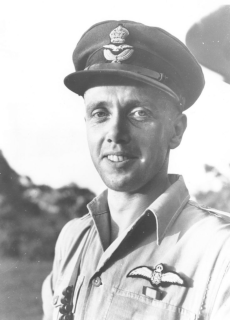
Lord enlists in the Royal Air Force on August 6, 1936. After reaching the rank of corporal in August 1938, he applies to undertake pilot training, which he begins in October 1938. Successfully gaining his pilot’s wings, he becomes a sergeant pilot in April 1939, and is posted to No. 31 Squadron RAF, based in Lahore, India. He later flies the Vickers Type 264 Valentia biplane transport. In 1941, No. 31 Squadron is the first unit to receive the Douglas DC-2 which is followed by both the Douglas DC-3 and Dakota C-47 Skytrain transports. That year he is promoted to flight sergeant and then warrant officer. He flies in North Africa, supporting troops in Libya and Egypt for four months, before being posted back to India. Commissioned as a pilot officer in May 1942, he flies supply missions over Burma, for which he is mentioned in despatches.
The Battle of Arnhem is part of Operation Market Garden, an attempt to secure a string of bridges through the Netherlands. At Arnhem, the British 1st Airborne Division and Polish 1st Independent Parachute Brigade are tasked with securing bridges across the Lower Rhine, the final objectives of the operation. However, the airborne forces that drop on September 17 are not aware that the 9th SS and 10th SS Panzer divisions are also near Arnhem for rest and refit. Their presence adds a substantial number of Panzergrenadiers, tanks and self-propelled guns to the German defences and the Allies suffer heavily in the ensuing battle. Only a small force manages to hold one end of the Arnhem road bridge before being overrun on September 21. The rest of the division becomes trapped in a small pocket west of the bridge and has to be evacuated on September 25. The Allies fail to cross the Rhine, which remains under German control until Allied offensives in March 1945.
Lord is 30 years old, and a flight lieutenant serving with No. 271 Squadron, Royal Air Force during World War II when he is awarded the Victoria Cross. On September 19, 1944, during the Battle of Arnhem in the Netherlands, the British 1st Airborne Division is in desperate need of supplies. His Dakota III “KG374” encounters intense enemy anti-aircraft fire and is hit twice, with one engine burning. He manages to drop his supplies, but at the end of the run finds that there are two containers remaining. Although he knows that one of his wings might collapse at any moment, he nevertheless makes a second run to drop the last supplies, then orders his crew to bail out. A few seconds later, the Dakota crashes in flames with its pilot and six crew members.
Only the navigator, Flying Officer Harold King, survives, becoming a prisoner of war. It is only on his release in mid-1945, as well as the release of several paratroops from the 10th Parachute Battalion, that the story of Lord’s action becomes known. He is awarded a posthumous Victoria Cross.
Several aircraft have carried tributes to Lord. Between 1993 and 1998, the RAF Battle of Britain Memorial Flight‘s Dakota, serial “ZA947”, is painted in the colours of Lord’s aircraft during the Arnhem battle and bears the same code letters: YS-DM. Between 1973 and 2005, the Dakota displayed at RAF Museum Cosford is similarly painted and coded to represent Lord’s aircraft. From 1966 until its disbandment in 2005, No. 10 Squadron RAF is equipped with Vickers VC-10s, each of which is named after a Royal Air Force or Royal Flying Corps VC recipient. Aircraft serial number ‘XR810’ is named David Lord VC.
Lord’s Victoria Cross is presented to his parents at Buckingham Palace in December 1945. In 1997, his Victoria Cross, along with his other decorations and medals, are sold at auction by Spinks to Lord Ashcroft. As of 2014, the medal group is on display at the Imperial War Museum.





 seamus dubhghaill