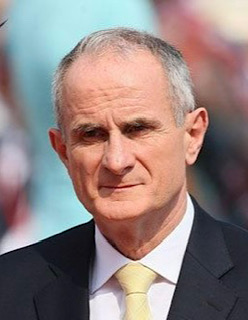
McAleese marries Mary Leneghan in 1976. The couple resides in Scholarstown, Dublin, for a short period, and then for almost twelve years near Ratoath, County Meath. In 1980, he returns to full-time education at Trinity College Dublin (TCD), to study as a dentist, subsequently moving back, with his family, to Northern Ireland, where he practises as a dentist in Crossmaglen and Bessbrook, County Armagh.
While his wife serves as President of Ireland, McAleese initiates a series of meetings with senior Ulster loyalistparamilitary leaders to pursue peace negotiations. These actions do not take place without controversy, but are widely viewed as instrumental in bringing loyalist paramilitary groups to peace talks.
In May 2011, McAleese is appointed as a Senator by the Taoiseach Enda Kenny. In August 2011, he is appointed the Chancellor of Dublin City University, taking over from David Byrne.
On February 1, 2013, McAleese announces his intention to resign as a member of Seanad Éireann.
McAleese accepts an appointment as Chairman of the Inter-Departmental Committee which is set up by the Government of Ireland to investigate the Magdalene laundries. His findings have been criticised by some survivors and researchers from the Magdalene Names project.
On October 18-19, 2014, McAleese attends the One Young World Summit in Dublin as a keynote speaker. Here, he hosts a special session for the One Young World Peace and Conflict Resolution Project alongside former Ulster Defence Association (UDA) prisoner Jackie McDonald and former Irish Republican Army (IRA) prisoner Sean Murray. They address young people from 191 countries to share and develop ideas to strengthen efforts at conflict resolution in their own countries.
McAleese and his wife Mary have three children. The family moves to Rostrevor, County Down, in 1987, when he sets up practice in County Armagh.
Mitchel is born in Camnish, near Dungiven, County Derry, on November 3, 1815, the son of a Presbyterian minister. At the age of four, he is sent to a classical school, run by an old minister named Moor, nicknamed “Gospel Moor” by the students. He reads books from a very early age. When a little over five years old, he is introduced to Latin grammar by his teacher and makes quick progress. In 1830, not yet 15 years old, he enters Trinity College, Dublin (TCD) and obtains a law degree in 1834.
In the spring of 1836, Mitchel meets Jane Verner, the only daughter of Captain James Verner. Though both families are opposed to the relationship, they become engaged in the autumn and are married on February 3, 1837, by the Rev. David Babington in Drumcree Church, the parish church of Drumcree.
Mitchel works in a law office in Banbridge, County Down, where he eventually comes into conflict with the local Orange Order. He meets Thomas Davis and Charles Gavan Duffy during visits to Dublin. He joins the Young Ireland movement and begins to write for The Nation. Deeply affected by the misery and death caused by the Great Famine, he becomes convinced that nothing will ever come of the constitutional efforts to gain Irish freedom. He then forms his own paper, United Irishmen, to advocate passive resistance by Ireland’s starving masses.
In May 1848, the British tire of Mitchel’s open defiance. Ever the legal innovators in Ireland, they invent a crime especially for the Young Irelanders – felony-treason. They arrest him for violating this new law and close down his paper. A rigged jury convicts him, and he is deported first to Bermuda and then to Australia. However, in June 1853, he escapes to the United States.
Mitchel works as a journalist in New York City and then moves to the South. When the American Civil War erupts, he is a strong supporter of the Southern cause, seeing parallels with the position of the Irish. His family fully backs his commitment to the Southern cause. He loses two sons in the war, one at the Battle of Gettysburg in 1863 and another at the Battle of Fort Sumter in 1864, and another son loses an arm. His outspoken support of the Confederacy causes him to be jailed for a time at Fort Monroe, where one of his fellow prisoners is Confederate PresidentJefferson Davis.
In 1874, the British allow Mitchel to return to Ireland and in 1875 he is elected in a by-election to be a member of the Parliament of the United Kingdom representing the Tipperary constituency. However, his election is invalidated on the grounds that he is a convicted felon. He contests the seat again in the resulting by-election and is again elected, this time with an increased vote.
Unfortunately, Mitchel, one of the staunchest enemies to English rule of Ireland in history, dies in Newry on March 20, 1875. He is buried in his parents’ grave in the unitarian cemetery, High Street, Newry, where a monument is later erected by his widow. He is also commemorated by a statue in Newry. Thirty-eight years later, his grandson, John Purroy Mitchel, is elected Mayor of New York City.
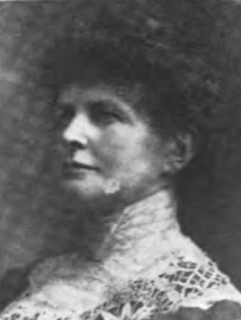
Shannon is the eldest child of solicitor George William Shannon and Emily Shannon (née Goodman). She has two sisters and two brothers. She attends Alexandra College, and later lectures for women at Trinity College Dublin (TCD). On July 27, 1875, she marries Maurice Dockrell, eldest son of Thomas Dockrell, a well known Dublin merchant, and Anne Morgan Dockrell (née Brooks). The couple has seven children, one daughter and six sons. She goes on to become a director and member of the board of her husband’s family company: Messrs Thomas Dockrell & Sons & Co. Ltd.[1]
Dockrell is an active member of the committee of the Dublin Women’s Suffrage and Local Government Association, later known as the Irish Women’s Suffrage and Local Government Association (IWSLGA), founded in 1876 to promote women’s suffrage by democratic methods. She attends international women’s suffrage conferences in Stockholm in 1911 and Budapest in 1913. She is also a committee member of the London Women’s Suffrage Society, speaking on the role of women in local government at the International Congress of Women in London in 1899. The Irish Citizen lists her as a suitable woman candidate to run for the senate seat proposed by the Home rule bill in 1912.
Dockell is a member of the National Union of Women Workers, sitting as a member of its public services committee. Like many of her contemporaries, she believes that women are best placed to address issues around health, societal moral well-being, and housing. From 1898, the Local Government (Ireland) Act, allows women to be candidates for local government elections. Dockrell first runs as a candidate in the Urban District Council (UDC) of the Monkstown ward of Blackrock, Dublin in the 1898 local elections, where she is returned as the third of nine elected, becoming one of only four women councillors elected in Ireland.
Dockrell describes herself as a unionist and a Protestant, sitting as a council on the Blackrock UDC until her death. She is the only woman councillor on that UDC until 1925 and the election of Ellen O’Neill. She is also the first woman chair of a UDC when she is elected to the position in 1906.
Despite the political and societal turmoil of the early 20th century in Ireland and the establishment of the Irish Free State, Dockrell continues in her commitment to local politics. This includes being the first woman to be elected to a Dublin county council in 1920. Despite remaining a committed unionist, she works with the Free State government. Following her husband’s knighthood, she is also known as Lady Dockrell.
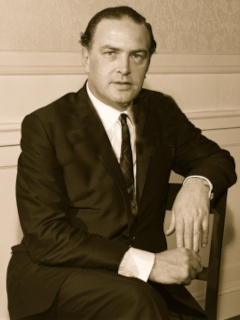
O’Malley is born on January 18, 1921, in Limerick, one of eight surviving children of Joseph O’Malley, civil engineer, and his wife, Mary “Cis” (née Tooher). Born into a wealthy middle-class family, he is educated by the Jesuits at Crescent College and later at Clongowes Wood College, County Kildare. He later studies at University College Galway (UCG), where he is conferred with a degree in civil engineering in 1943. He later returns to Limerick, where he works as an engineer before becoming involved in politics.
O’Malley plays rugby at provincial level for Munster, Leinster and Connacht and at club level for Bohemians and Shannon RFC. His chances at an international career are ruined by the suspension of international fixtures during World War II. It is at a rugby match in Tralee that he first meets Dr. Hilda Moriarty, who he goes on to marry in August 1947.
Although O’Malley runs as a Fianna Fáil candidate, he is born into a politically active family who supports Cumann na nGaedheal until a falling-out with the party in the early 1930s. He first becomes involved in local politics as a member of Limerick Corporation. He becomes Mayor of Limerick in 1961, the third O’Malley brother to hold the office (Desmond from 1941-43 and Michael from 1948-49). He is a strong electoral performer, topping the poll in every general election he runs in.
O’Malley is first elected to Dáil Éireann as a Fianna Fáil TD for Limerick East at the 1954 Irish general election. Fianna Fáil is not returned to government on that occasion. He spends the rest of the decade on the backbenches. However, his party is returned to power in 1957. Two years later, the modernising process begins when Seán Lemass takes over from Éamon de Valera as Taoiseach. Lemass introduces younger cabinet ministers, as the old guard who has served the party since its foundation in 1926 begin to retire.
In 1961, O’Malley joins the government as Parliamentary Secretary to the Minister for Finance. He is part of a new, brasher style of politician that emerges in the 1960s, sometimes nicknamed “the men in the mohair suits.” It is expected that this generation of politician, born after the Irish Civil War, will be a modernising force in post-de Valera Ireland.
Although his sporting background is in rugby and swimming, it is association football which O’Malley gets involved in at a leadership level, becoming President of the Football Association of Ireland despite never having played the sport.
Following Fianna Fáil’s retention of power in the 1965 Irish general election, O’Malley joins the cabinet as Minister for Health. He spends just over a year in this position before he is appointed Minister for Education, a position in which he displays renowned dynamism. Having succeeded Patrick Hillery, another dynamic young minister, he resolves to act swiftly to introduce the recommendations of an official report on education.
As Minister for Education, O’Malley extends the school transport scheme and commissions the building of new non-denominational comprehensive and community schools in areas where they are needed. He introduces Regional Technical Colleges (RTCs), now called Institutes of Technology, in areas where there is no third level college. The best example of this policy is the University of Limerick, originally an Institute of Higher Education, where O’Malley is credited with taking the steps to ensure that it becomes a university. His plan to merge Trinity College Dublin and University College Dublin arouses huge controversy, and is not successful, despite being supported by his cabinet colleague Brian Lenihan. Access to third-level education is also extended, the old scholarship system being replaced by a system of means-tested grants that give easier access to students without well-off parents.
Mid-twentieth century Ireland experiences significant emigration, especially to the neighbouring United Kingdom where, in addition to employment opportunities, there is a better state provision of education and healthcare. Social change in Ireland and policies intending to correct this deficit are often met with strong resistance, such as Noël Browne‘s proposed Mother and Child Scheme. As a former Health Minister, O’Malley has first-hand experience of running the department which had attempted to introduce this scheme and understood the processes that caused it to fail, such as resistance from Department of Finance and John Charles McQuaid. This influences his strategy in presenting the free-education proposal.
Shortly after O’Malley is appointed, he announces that from 1969 all education up to Intermediate Certificate level will be without cost, and free buses will bring students in rural areas to their nearest school, seemingly making this decision without consulting other ministers. However, he does discuss it with Lemass. Jack Lynch, who, as Minister for Finance, has to find the money to pay for the programme, is not consulted and is dismayed at the announcement.
By announcing the decision first to journalists and on a Saturday (during a month when the Dáil is in recess), the positive public reaction tempers resistance to the idea before the next cabinet meeting. O’Malley’s proposals are hugely popular with the public, and it is impossible for the government to go back on his word.
Some Irish commentators consider that O’Malley’s extension of education, changing Ireland from a land where the majority are schooled only to the age of 14 to a country with universal secondary-school education, indirectly leads to the Celtic Tiger boom of the 1990s-2000s when it is followed for some years by an extension of free education to primary degree level in university, a scheme that is launched in 1996 by the Labour Party and axed in 2009 by Fianna Fáil’s Batt O’Keeffe.
In 1967, O’Malley appoints Justice Eileen Kennedy to chair a committee to carry out a survey and report on the reformatory and industrial school systems. The report, which is published in 1970, is considered ground-breaking in many areas and comes to be known as the Kennedy Report. The Report makes recommendations about a number of matters, including the Magdalene laundries, in relation to which they are not acted upon. The report recommends the closure of a number of reformatories, including the latterly infamous reformatory at Daingean, County Offaly.
O’Malley’s reforms make him one of the most popular members of the government. He is affectionately known as “the School Man” for his work in education. His sudden death in Limerick on March 10, 1968, before his vision for the education system is completed, comes as a shock to the public. He is buried with a full Irish state funeral.
Following O’Malley’s death, his widow, Hilda O’Malley, does not run in the subsequent by-election for the seat he has left vacant. It is won narrowly by their nephew Desmond O’Malley. Hilda seeks the Fianna Fáil nomination for the 1969 Irish general election, but Fianna Fáil gives the party nomination to Desmond, as the sitting TD. Hilda runs as an Independent candidate in that election. After what proves a bitter campaign against her nephew, she fails to get the fourth seat in Limerick East by just 200 votes.
Stokes is educated at St. Columba’s College where he is taught the Irish language by Denis Coffey, author of Primer of the Irish Language. Through his father he comes to know the Irish antiquariesSamuel Ferguson, Eugene O’Curry, John O’Donovan and George Petrie. He enters Trinity College Dublin in 1846 and graduates with a BA in 1851. His friend and contemporary Rudolf Thomas Siegfried (1830–63) becomes assistant librarian at TCD in 1855, and the college’s first professor of Sanskrit in 1858. Stokes likely learns both Sanskrit and comparative philology from Siegfried, thus acquiring a skill-set rare among Celtic scholars in Ireland at the time.
Stokes qualifies for the bar at Inner Temple. His instructors in the law are Arthur Cayley, Hugh McCalmont Cairns, and Thomas Chitty. He becomes an English barrister on November 17, 1855, practicing in London before going to India in 1862, where he fills several official positions. In 1865 he marries Mary Bazely by whom he has four sons and two daughters. One of his daughters, Maïve, compiles a book of Indian Fairy Tales in 1879 when she is 12 years old, based on stories told to her by her Indian ayahs and a man-servant. It also includes some notes by Mrs. Mary Stokes. Mary dies while the family is still living in India. In 1877, Stokes is appointed legal member of the viceroy’s council, and he drafts the codes of civil and criminal procedure and does much other valuable work of the same nature. In 1879 he becomes president of the commission on Indian law. Nine books he writes on Celtic studies are published in India. He returns to settle permanently in London in 1881 and marries Elizabeth Temple in 1884. In 1887 he is made a Companion of the Order of the Star of India (CSI), and two years later an Order of the Indian Empire (CIE). He is an original fellow of the British Academy, an honorary fellow of Jesus College, Oxford and foreign associate of the Institut de France.
Stokes is perhaps most famous as a Celtic scholar, and in this field he works both in India and in England. He studies Irish, Breton and Cornish texts. His chief interest in Irish is as a source of material for comparative philology. Despite his learning in Old Irish and Middle Irish, he never acquires Irish pronunciation and never masters Modern Irish. In the hundred years since his death he continues to be a central figure in Celtic scholarship. Many of his editions have not been superseded during this time and his total output in Celtic studies comes to over 15,000 pages. He is a correspondent and close friend of Kuno Meyer from 1881 onwards. With Meyer he establishes the journal Archiv für celtische Lexicographie and is the co-editor, with Ernst Windisch, of the Irische Texteseries. In 1876 his translation of Vita tripartita Sancti Patricii, along with a written introduction, is published.
Stokes dies at his London home, 15 Grenville Place, Kensington, on April 13, 1909, and is buried in Paddington Old Cemetery, Willesden Lane, where his grave is marked by a Celtic cross. Another Celtic cross is erected as a memorial to him at St. Fintan’s Cemetery, Sutton, Dublin. The Gaelic League newspaper An Claidheamh Soluis calls him “the greatest of the Celtologists” and expresses pride that an Irishman has excelled in a field which is at that time dominated by continental scholars. In 1929 the Canadian scholar James F. Kenney describes him as “the greatest scholar in philology that Ireland has produced, and the only one that may be ranked with the most famous of continental savants.”
A conference entitled “Ireland, India, London: The Tripartite Life of Whitley Stokes” takes place at the University of Cambridge on September 18-19, 2009. The event is organised to mark the centenary of Stokes’s death. A volume of essays based on the papers delivered at this conference, The Tripartite Life of Whitley Stokes (1830–1909), is published by Four Courts Press in autumn 2011.
In 2010 Dáibhí Ó Cróinín publishes Whitley Stokes (1830–1909): The Lost Celtic Notebooks Rediscovered, a volume based on the scholarship in Stokes’s 150 notebooks which had been resting unnoticed at the Leipzig University Library, Leipzig since 1919.
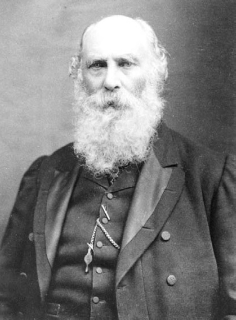
George Johnstone StoneyFRS, Irish physicist, is born on February 15, 1826, at Oakley Park, near Birr, County Offaly, in the Irish Midlands. He is most famous for introducing the term “electron” as the “fundamental unit quantity of electricity.” He introduces the concept, though not the word, as early as 1874, initially naming it “electrine,” and the word itself comes in 1891. He publishes around 75 scientific papers during his lifetime.
Stoney is the son of George Stoney and Anne (née Bindon Blood). His only brother is Bindon Blood Stoney, who becomes chief engineer of the Dublin Port and Docks Board. The Stoney family is an old-established Anglo-Irish family. During the time of the famine (1845–52), when land prices plummet, the family property is sold to support his widowed mother and family. He attends Trinity College Dublin (TCD), graduating with a BA degree in 1848. From 1848 to 1852 he works as an astronomy assistant to William Parsons, 3rd Earl of Rosse, at Birr Castle, County Offaly, where Parsons had built the world’s largest telescope, the 72-inch Leviathan of Parsonstown. Simultaneously he continues to study physics and mathematics and is awarded an MA by TCD in 1852.
From 1852 to 1857, Stoney is professor of physics at Queen’s College Galway. From 1857 to 1882, he is employed as Secretary of the Queen’s University of Ireland, an administrative job based in Dublin. In the early 1880s, he moves to the post of superintendent of Civil Service Examinations in Ireland, a post he holds until his retirement in 1893. He continues his independent scientific research throughout his decades of non-scientific employment duties in Dublin. He also serves for decades as honorary secretary and then vice-president of the Royal Dublin Society (RDS), a scientific society modeled after the Royal Society of London and, after his move to London in 1893, he serves on the council of that society as well. Additionally, he intermittently serves on scientific review committees of the British Association for the Advancement of Science from the early 1860s.
Stoney publishes seventy-five scientific papers in a variety of journals, but chiefly in the journals of the Royal Dublin Society. He makes significant contributions to cosmic physics and to the theory of gases. He estimates the number of molecules in a cubic millimeter of gas, at room temperature and pressure, from data obtained from the kinetic theory of gases. His most important scientific work is the conception and calculation of the magnitude of the “atom of electricity.” In 1891, he proposes the term “electron” to describe the fundamental unit of electrical charge, and his contributions to research in this area lays the foundations for the eventual discovery of the particle by J. J. Thomson in 1897.
Stoney proposes the first system of natural units in 1881. He realizes that a fixed amount of charge is transferred per chemical bond affected during electrolysis, the elementary chargee, which can serve as a unit of charge, and that combined with other known universal constants, namely the speed of lightc and the Newtonian constant of gravitationG, a complete system of units can be derived. He shows how to derive units of mass, length, time and electric charge as base units. Due to the form in which Coulomb’s law is expressed, the constant 4πε0 is implicitly included, ε0 being the vacuum permittivity.
Like Stoney, Max Planck independently derives a system of natural units (of similar scale) some decades after him, using different constants of nature.
Hermann Weyl makes a notable attempt to construct a unified theory by associating a gravitational unit of charge with the Stoney length. Weyl’s theory leads to significant mathematical innovations, but his theory is generally thought to lack physical significance.
Stoney marries his cousin, Margaret Sophia Stoney, by whom he has had two sons and three daughters. One of his sons, George Gerald Stoney FRS, is a scientist. His daughter Florence StoneyOBE is a radiologist while his daughter Edith is considered to be the first woman medical physicist. His most scientifically notable relative is his nephew, the Dublin-based physicist George Francis FitzGerald. He is second cousin of the grandfather of Ethel Sara Turing, mother of Alan Turing.
After moving to London, Stoney lives first at Hornsey Rise, north London, before moving to 30 Chepstow Crescent, Notting Hill, West London. In his later years illness confines him to a single floor of the house, which is filled with books, papers, and scientific instruments, often self-made. He dies at his home in Notting Hill, on July 5, 1911. His cremated ashes are buried in St. Nahi’s Church, Dundrum, Dublin.
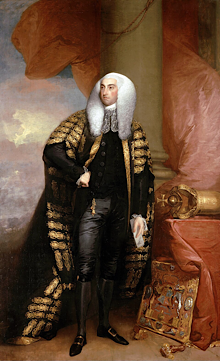
Fitzgibbon is an early and extremely militant opponent of Catholic emancipation. The Earl is possibly the first person to suggest to King George III that granting royal assent to any form of Catholic Emancipation will violate his coronation oath.
FitzGibbon is born in 1748 near Donnybrook, Dublin, the son of John FitzGibbon of Ballysheedy, County Limerick, and his wife Isabella Grove, daughter of John Grove, of Ballyhimmock, County Cork. His father is born a Catholic but converts to the state religion in order to become a lawyer, and amasses a large fortune. He has three sisters, Arabella, Elizabeth, and Eleanor.
When appointed Lord Chancellor for Ireland in 1789, FitzGibbon is granted his first peerage as Baron FitzGibbon, of Connello Lower in County Limerick, in the peerage of Ireland that year. This does not entitle him to a seat in the British House of Lords, only in the Irish House of Lords. His later promotions come mostly in the peerage of Ireland, being advanced to a Viscountcy (1793) and the Earldom of Clare in 1795. He finally achieves a seat in the British House of Lords in 1799 when created Baron FitzGibbon, of Sidbury in the County of Devon, in the Peerage of Great Britain.
FitzGibbon is a renowned champion of the Protestant Ascendancy and an opponent of Catholic emancipation. He despises the Parliament of Ireland‘s popular independent Constitution of 1782. He is also personally and politically opposed to the Irish politician Henry Grattan who urges a moderate course in the Irish Parliament, and is responsible for defeating Grattan’s efforts to reform the Irish land tithe system (1787–1789) under which Irish Catholic farmers (and all non-Anglican farmers) are forced to financially support the minority Anglican Church of Ireland. These are not fully repealed until 1869 when the Church of Ireland is finally disestablished, although Irish tithes are commuted after the Tithe War (1831–1836).
FitzGibbon opposes the Irish Roman Catholic Relief Act 1793, for which, in a “magnificently controlled vituperation in vigorous, colloquial heroic couplets,” The Gibbonade, he is pilloried by the satirist Henrietta Battier. But acceding to pressure exerted through the Irish executive by government of William Pitt in London, intent, in advance of war with the new French Republic, to placate Catholic opinion, he is persuaded to recommend its acceptance in the Irish House of Lords. Pitt, and King George III, who had been petitioned by delegates from the Catholic Committee in Dublin, expects Ireland to follow the British Roman Catholic Relief Act 1791 and admit Catholics to the parliamentary franchise (although not to Parliament itself), enter the professions and assume public office.
FitzGibbon’s role in the recall, soon after his arrival, of the popular pro-Emancipation Lord Lieutenant of Ireland, William Fitzwilliam, 4th Earl Fitzwilliam, is debatable. Although he is probably politically opposed to the Lord Lieutenant of Ireland, Fitzwilliam is recalled, apparently due to his own independent actions. Fitzwilliam is known to be friendly to the Ponsonby family (he is married to one of their daughters), and is generally a Foxite liberal Whig. His close association with and patronage of Irish Whigs led by Grattan and Ponsonby during his short tenure, along with his alleged support of an immediate effort to secure Catholic emancipation in a manner not authorized by the British cabinet is probably what leads to his recall. Thus, if any is to blame in the short-lived “Fitzwilliam episode” it is the great Irish politician Henry Grattan and the Ponsonby brothers – presumably William Ponsonby, later Lord Imokilly, and his brother John Ponsonby—not to mention Lord Fitzwilliam himself. Irish Catholics at the time and later naturally see things very differently and blame hardline Protestants such as FitzGibbon.
Irish Catholics and FitzGibbon agree on one point apparently – Irish political and economic union with Great Britain, which eventually takes place in 1801. Pitt wants Union with Ireland concomitantly with Catholic emancipation, commutation of tithes, and the endowment of the Irish Catholic priesthood. Union is opposed by most hardline Irish Protestants, as well as liberals such as Grattan. FitzGibbon has been a strong supporter of the Union since 1793 but refuses to have Catholic emancipation with the Union.
In a speech to the Irish House of Lords on February 10, 1800, FitzGibbon elucidates his point of view on union: “I hope and feel as becomes a true Irishman, for the dignity and independence of my country, and therefore I would elevate her to her proper station, in the rank of civilised nations. I wish to advance her from the degraded post of mercenary province, to the proud station of an integral and governing member of the greatest empire in the world.”
In the end, FitzGibbon’s views win out, leading to the Union of Ireland with Great Britain to form the United Kingdom of Great Britain and Ireland without any concessions for Ireland’s Catholic majority (or for that matter, Catholics in the rest of the new United Kingdom). He later claims that he had been duped by the way in which the Act was passed with the new Viceroy Charles Cornwallis, 1st Marquess Cornwallis, promising reforms to Irish Catholics, and is bitterly opposed to any concessions during the short remainder of his life.
The role of the Earl of Clare (as FitzGibbon becomes in 1795) as Lord Chancellor of Ireland during the period of the Irish Rebellion of 1798 is questionable. According to some, he supports a hardline policy which uses torture, murder and massacre to crush the rebellion, or that as Lord Chancellor, he has considerable influence on military affairs, and that martial law cannot be imposed without his consent. Others allege that as Lord Chancellor, he has no say in military affairs and the Encyclopædia Britannica states that he is “neither cruel nor immoderate and was inclined to mercy when dealing with individuals.” However, the same source also states that “(FitzGibbon)… was a powerful supporter of a repressive policy toward Irish Catholics”. His former side is displayed by sparing the lives of the captured United Irish leaders, “State prisoners,” in return for their confession of complicity and provision of information relating to the planning of the rebellion. However, this willingness of the prisoners to partake of the agreement is spurred by the execution of the brothers John and Henry Sheares on July 14, 1798.
In contrast to the leniency shown to the largely upper-class leadership, the full weight of military repression is inflicted upon the common people throughout the years 1797–98 with untold thousands suffering imprisonment, torture, transportation and death. FitzGibbon is inclined to show no mercy to unrepentant rebels and, in October 1798, he expresses his disgust upon the capture of Wolfe Tone that he has been granted a trial, and his belief that Tone should be hanged as soon as he set foot on land.
FitzGibbon is quick to recognise that sectarianism is a useful ally to divide the rebels and prevent the United Irishmen from achieving their goal of uniting Protestant, Catholic and Dissenter, writing in June 1798, “In the North nothing will keep the rebels quiet but the conviction that where treason has broken out the rebellion is merely popish.”
Another anecdote is to the effect of FitzGibbon’s callousness. Supposedly, upon being informed during a debate in the Irish Parliament that innocent as well as guilty are suffering atrocities during the repression, he replies, “Well suppose it were so…,” his callous reply purportedly shocking William Pitt.
FitzGibbon is noted by some as a good, improving landlord to both his Protestant and Catholic tenants. Some claim that the tenants of his Mountshannon estate call him “Black Jack” FitzGibbon. There is, however, no evidence to support this claim, although there is little to no evidence on his dealings as a landlord. Irish nationalists and others point out that while he might be interested in the welfare of his own tenants on his own estate, he treats other Irish Catholics very differently. Without further evidence, his role as a Protestant landowner in mainly Catholic Ireland is of little importance against his known dealings as Lord Chancellor.
FitzGibbon dies at home, 6 Ely Place near St. Stephen’s Green, Dublin, on January 28, 1802, and is buried in St. Peter’s Churchyard. A hero to Protestant hardliners, but despised by the majority Catholic population, his funeral cortege is the cause of a riot and, according to a widespread story, a number of dead cats are thrown at his coffin as it departs Ely Place.
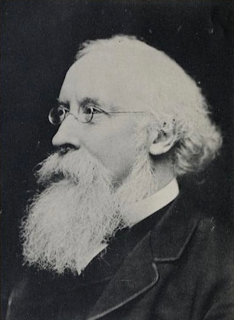
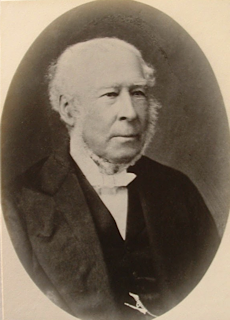
Babington is born on September 1, 1804, to the Rev. Richard Babington and his wife Mary Boyle, both members of the Anglo-Irishlanded gentry. His father, the rector of Lower Comber (Diocese of Derry), leads an extravagant lifestyle and leaves debts of £40,000 on his death in 1831, aged 66, equivalent to some £4.1 million as of 2019. His father’s debt is paid off by his two brothers Richard (1795-1870) and Anthony of Creevagh (1800-1869). Another brother is Major GeneralWilliam Babington. He is educated at Trinity College Dublin (TCD).
Babington begins his career as a curate of Lower Cumber, where his father is rector, in 1827. He becomes rector of Moviddy in 1833, at the age of 29. As rector, he carries out improvements worth the equivalent of £166,766 in 2019. As a clergyman he is part of a wave toward secular education in Ireland in the 1800s. In this capacity he is remembered as a “very forward thinking individual.” He is one of the signatories of a progressive booklet titled Declaration in Favour of United Secular Education in Ireland in 1866. The declaration notes, on behalf of the united Church of England and Ireland, “We entirely admit the justice and policy of the rule which protects scholars from interference with their religious principles and thus enables members of different denominations, to receive together in harmony and peace, the benefits of a good education.”
Babington is also, notably, in 1843, an addressee of the “Crookstown letter,” a famous incident at the time covered by The Cork Examiner and Cork Commercial Courier. He publishes, in the Cork Constitution, the contents of a threatening letter he had received in which it threatens him, among others, with murder if he does not become a repealer of the Acts of Union 1800 and with making a bonfire of hay in his farmyard if he does not show the letter to its other addresses. The letter is allegedly to have been written by a Roman Catholic resident of Crookstown, County Cork. The Roman Catholic parish priest, Fr. Daly, and parishioners refute the allegation that the letter had been authored by a Roman Catholic and claim that, conversely, the letter is an invention of a local Protestant who wrote “repeal or die” on the Crookstown Bridge. A local magistrate, J. B. Warren, to whom the letter has also been addressed, pledges to carry out an investigation but Babington does not hand over the original letter, causing the local Roman Catholic population to regard his publication of the letter in the press as “prejudiced, premature and defamatory of the character of the people whose industry he derives his income.” Babington states that he has always been on friendly terms with the Roman Catholic parish priest and his Roman Catholic parishioners and has no intention of offending them but is in fact pushing to publish it by local magistrates. He continues as rector of Moviddy for another 43 years following this incident.
Babington is also involved with the Society for Promoting the Education of the Poor of Ireland.
In 1836, Babington marries Esther, daughter of Richard Nettles, Esq., JP, of Nettleville, County Cork, with whom he has five sons and eight daughters.
Babington dies at the age of 81 on January 23, 1886, at Moviddy Rectory, County Cork. He is buried with his wife, Esther, who died at the age of 70 on August 29, 1878.
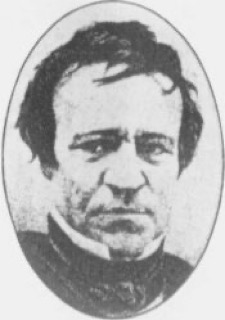
In 1849, O’Donoghue, together with William Smith O’Brien, Terence MacManus, Thomas Francis Meagher and many others, are on board the prisoner transport ship The Swift for a six-month, 14,000-mile journey under difficult conditions on which some fellow prisoners do not survive.
On January 26, 1850, “Using materials he had begged and borrowed” as one account gives it, O’Donoghue starts publishing in Hobart a weekly newspaper named The Irish Exile, aimed mainly at fellow Irish prisoners and deportees and considered to be the first Irish Nationalist paper to be published in Australia.
The paper features Irish ballads and poetry, articles about Irish history, and a regular column by John Martin reporting on the situation of the Repeal Movement, a campaign to repeal the Acts of Union 1800 under which the Irish Parliament had been abolished. There is also local news of the Irish deportee community, then numbering in the thousands, and of Hobart daily life in general.
O’Donoghue uses The Irish Exile to publish excerpts of his journal aboard The Swift, which are reprinted in Australian, British and Irish newspapers. Brisbane‘s The Moreton Bay Courier, reprinted from Dublin’s The Nation, finds that the journal “will show how severely the tyrannical government of England visited the offences of the Ballingarry cabbage-tree heroes. The studies of Messrs. O’Brien, Meagher (afterwards O’), and O’Donoghoe, will amuse the reader”. While in Van Diemen’s Land, The Examiner, the daily newspaper of Launceston, Tasmania, reprints London‘s The Examiner‘s view that “a singularly large amount of mercy has been shown to those grown-up children who made the escapade from Dublin to raise the standard of Irish rebellion at Ballingarry. One of the worthies, Mr. Patrick O’Donoghue, has published an account of his deportation; and certainly a more pleasureable [sic] voyage could not have been under taken at the expanse of government. A roomy cabin, a capital library, a fair dinner, with a couple of glasses of wine, and cigars upon deck, from the dietary and the entertainment of the political exiles.”
Publication of the paper is not in itself illegal, but is highly displeasing to the Governor, Sir William Denison, who finds that the paper can be suppressed by arresting O’Donoghue and charging him with having “left his allocated district.” He is sentenced to one year’s work in a chain gang – a time spent at hard labour, living in a convict station and wearing a convict uniform, mainly in the company of non-political prisoners such as “rapists, muggers and thieves.”
In March 1851, O’Donoghue is released and taken back to Hobart. Undeterred, he immediately restarts his paper, prominently featuring an extensive personal account of his year with the chain gang. The governor reacts by sending him again to a chain gang, at a more distant location this time – the Cascades Penal Station. Three months later the governor orders him released from there and sent to Launceston.
On the way there, O’Donoghue succeeds in escaping from his guards with the help of fellow-prisoners, who manage to smuggle him on board the ship Yarra Yara, on its way to Melbourne. There, he successfully hides from the British authorities and, with further help from Irish sympathisers, manages to get to San Francisco, where some of his fellows such as MacManus and Meagher have also ended up.
O’Donoghue dies in New York City on January 22, 1854, shortly before the arrival of his wife on a ship from Ireland. The time spent in the chain gang may have contributed to undermining his health. The other escaped state prisoners do not attend his funeral, although Michael Doheny and Michael Cavanagh, fellow Young Irelanders who are living in New York City at the time, are in attendance.
The local Sinn Féin branch in Carlow is named after O’Donoghue.
Congreve is born on January 24, 1670, at Bardsley, West Yorkshire, England, the son of William Congreve, an army officer, and Mary Browning of Doncaster. In 1674, his father gains a commission as lieutenant in the army in Ireland, and moves with his family to the garrison port of Youghal, County Cork, where they remain until 1678. After a brief period at Carrickfergus, they move in 1681 to Kilkenny, where his father is assigned to the Duke of Ormond‘s regiment. This service entitles Congreve to a free education at the renowned Kilkenny College, where Jonathan Swift is also a student, and where he receives an excellent schooling in classics. He forms a lasting friendship with another pupil, Joseph Kelly, a lawyer and MP for Doneraile (1705–13), with whom he later maintains a lengthy correspondence. In April 1686, he enters Trinity College Dublin (TCD) as a classical scholar and, again like Swift, is taught by St. George Ashe. It seems likely that his degree is disrupted by the political upheaval of 1688 as the college is forced to close in 1689 and his BA is not recorded.
At this point, Congreve leaves Ireland and spends the spring and summer of 1689 with relatives in Staffordshire. He subsequently moves to London, and in March 1691 enters the Middle Temple. He is not assiduous in his legal studies, preferring to socialise with intellectuals and writers, notably John Dryden, to pursue literary projects. In 1692, under the pseudonym “Cleophil,” he published Incognita, or, Love and Duty Reconciled, a romantic novella reputedly written while he is a student in Dublin. He also contributes some verse to Charles Gildon‘s Miscellany (1692), as well as two translations from Homer and three odes to Dryden’s Examen poeticum (1693). Dryden evidently thinks highly of the young writer, and with his advice and approbation Congreve’s first play, The Old Batchelor, is recommended by the Irish playwright Thomas Southerne to Thomas Davenant, manager of the Theatre Royal, Drury Lane. A fast-paced and witty comedy, concerning amorous appetites, The Old Batchelor is accepted and opens on March 9, 1693, to popular acclaim, enjoying an unusually long run of fourteen nights. Among the cast are Thomas Doggett, still relatively unknown, as Fondlewife, and a young English actress and singer, Anne Bracegirdle as Amarinta, with whom Congreve falls in love and begins a prolonged relationship. The play is dedicated to his friend Charles Boyle, eldest son of Richard Boyle, 1st Earl of Burlington, whose estates Congreve’s father had begun to manage in 1690.
After this early success, Congreve is dismayed by the poor reception of his next play, a domestic comedy with dark undertones entitled The Double Dealer, which is staged in December 1693 and criticised as immoral and unflattering in its representation of women. Its popularity improves somewhat when Mary II, Queen of England, soon after its undistinguished debut, commands a performance. When the queen dies the following year, Congreve eulogises her in The Mourning Muse of Alexis, a Pastoral. Regarded by contemporaries as his finest literary work, it is rewarded by a gift of £100 from King William III. Production of his next play is delayed by the revolt of the Drury Lane actors against the management of Christopher Rich. Congreve supports the actors and their petition to the Lord Chamberlain to reopen the theatre at Lincoln’s Inn Fields. When their request is granted, the renovated theatre opens on April 30, 1695, with Congreve’s enduring romantic comedy Love for Love, and the playwright being made a shareholder in the new company. A characteristically witty and well-plotted comedy, the production of Love for Love is particularly notable for Doggett’s sparkling performance as Sailor Ben. Congreve’s dramatic success also brings political advancement, as he receives his first government appointment as commissioner for hackney coaches.
Congreve returns to Ireland for most of 1696, where, with Southerne, he receives an MA from TCD, and probably visits his parents, then living at Lismore Castle, County Waterford. He also begins work on a tragedy entitled The Mourning Bride, which becomes an instant hit at Lincoln’s Inn Fields when it is first performed in February 1697 and running for thirteen nights. Despite his considerable success and popularity, he is deeply disconcerted by Jeremy Collier‘s aggressively anti-theatrical pamphlet, Short View of the Immorality and Profaneness of the English Stage (1698), which targets John Vanbrugh, Dryden, and Congreve. He is stung into a response, publishing Amendments of Mr. Collier’s False and Imperfect Citations (1698), which eloquently defends his dramatic methodology, but is rendered less effective by an emotional and ill-judged tone. His theatrical acumen seems to be at odds with the times, for in the dedication to his next play, The Way of the World, he observes that “little of it was prepar’d for that general taste which seems now to be predominant in the pallats of our audience.” Nevertheless, he is still bitterly disappointed by the disparaging response to its first performance on March 12, 1700. Dryden, however, realises the merit of the play, which is now recognised as Congreve’s masterpiece and a landmark in the dramatic tradition of the comedy of manners.
Disheartened, Congreve abandons play-writing, but he maintains his theatrical connections and embarks upon several collateral projects, producing a libretto for The Judgement of Paris (1701), and collaborating with Vanbrugh and the poet William Walsh on a translation of Molière‘s Monsieur de Pourceaugnac, staged as Squire Trelooby at the Lincoln’s Inn Fields theatre in 1704. Less successfully, he makes an ill-advised investment with Vanbrugh in a new theatre and opera house in the Haymarket, from which he withdraws with financial losses in 1705. His opera libretto Semele, written for the opening of the new theatre, is not performed until 1744, when it is scored by George Frideric Handel, though John Eccles writes a score in 1707 which remains unperformed until 1972. In the early 1700s his relationship with Anne Bracegirdle falters, though they remain lifelong friends.
In 1710, Congreve publishes The Works of Mr. William Congreve in three volumes. He continues throughout his life to write poetry, ballads, essays, and other miscellaneous pieces. He remains active and influential in literary and theatrical circles, often assisting young writers such as Charles Hopkins, son of Ezekiel Hopkins, Bishop of Derry, and Alexander Pope, who dedicates to him The Iliad (1715). Financially, however, he becomes increasingly dependent upon various minor government posts. He belongs for many years to the celebrated Kit-Cat Club, alongside such prominent writers, wits, and whigs as Richard Boyle, 2nd Earl of Cork, Richard Steele, Joseph Addison, Walsh, and Vanbrugh. Through the good offices of his friend Jonathan Swift, he retains his government position as Commissioner of Wines during the Tory administration of 1710–14. His party loyalty is rewarded in 1714 when he receives a lucrative government appointment as Secretary of the island of Jamaica. His personal life also improves around this time, as a friendship with Lady Henrietta Godolphin develops into a love affair that lasts for the rest of his life. They have one daughter, Mary (1723–64).
Congreve suffers for much of his life from gout and failing eyesight. These afflictions worsen with age, though friends remark that his cheerful temper survived unaffected. He is involved in a coach accident in September 1728, and dies January 19, 1729, at his home in Surrey Street, likely from a related injury. He names Francis Godolphin, 2nd Earl of Godolphin, his lover’s husband, as his executor, and bequeaths almost his entire estate to Henrietta, thereby discreetly leaving his property to his daughter. He is buried in Poet’s Corner, Westminster Abbey, on January 26.
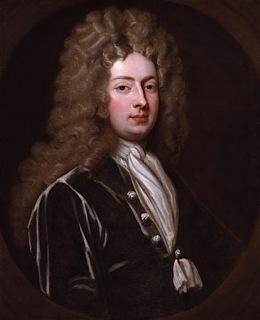
(From: “Congreve, William” by Sinéad Sturgeon, Dictionary of Irish Biography, http://www.dib.ie, October 2009; Pictured: Portrait of William Congreve (1709) by Sir Godfrey Kneller)


 seamus dubhghaill