seamus dubhghaill

Promoting Irish Culture and History from Little Rock, Arkansas, USA


Leave a comment

Death of Grace Henry, Landscape Artist

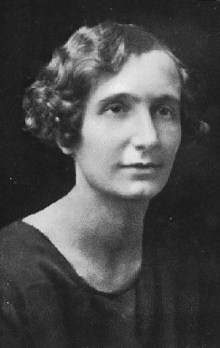
Grace Henry HRHA, Scottish landscape artist who spends a large part of her career painting in Ireland, dies in Dublin on August 11, 1953.

Henry is born Emily Grace Mitchell at Kirktown St. Fergus, near Peterhead, Aberdeenshire, Scotland, on February 10, 1868. She is the ninth of ten children of the Rev. John Mitchell and Jane Mitchell (née Gardner). Lord Byron is a cousin of her maternal grandmother. She is educated at home, spending time at the family’s home in Piccadilly, where she experiences London society. After the death of her father, and the reduced circumstances she finds herself in, she leaves home in 1895 to pursue a career as an artist. The first record of her work being exhibited is with the Aberdeen Artists Society in 1896 and 1898. These paintings have not been traced since. In 1899, she leaves Scotland for the continent, visiting Holland and Belgium, studying at the Blanc‐Guerrins Academy in Brussels. She goes on to attend the Delacluze Academy in Paris. While in Paris, she meets Paul Henry, an Irish artist. The couple marries in September 1903 in London.

The Henrys live at a few different residences outside London until 1910. A small number of her works are known from this time, such as The Girl in White, which is in the collections of the Hugh Lane Gallery. This piece shows the influence of fellow artist James Abbott McNeill Whistler, whom she meets in Paris through her husband. The couple travels to Achill Island for the first time in 1910, intending to stay two-weeks, but going on to live there until 1919. During this time, she paints numerous night scenes, including Achill Cottages (Hugh Lane Gallery). One of her well-known works is Top of the Hill, on display in the Limerick City Gallery of Art, which shows a group of island women. The period spent on the island places a strain on the Henrys marriage, as she is not as happy living there.

The couple returns to Dublin in 1919 and are founding members of the Society of Dublin Painters in 1920 alongside Letitia Marion Hamilton, Mary Swanzy, and Jack Butler Yeats. The Society offers an outlet for younger Irish artists to exhibit. Five of Henry’s works are featured at the Irish Exhibition in Paris in 1922, and at a similar exhibition in Brussels in 1930.

Around 1920, Henry has a romantic association with Stephen Gwynn who is an important political, cultural and literary figure from the lost world of late-nineteenth and early-twentieth century Ireland. During this period, she travels with Gwynn in France and Italy and later paints a number of portraits of him. Invariably, during this time, the Henrys’ marriage continues to have problems, with the couple breaking up in 1924. Her affair with Gwynn, who she depicts in two known oil paintings including The Orange Man (Limerick City Gallery of Art) and Portrait of a Man, which depicts a much more distinguished Gwynn in later life, contribute to the breakup. The couple legally separates in 1930.

Henry develops her own style through the 1920s and 1930s, spending time in France and Italy. From 1924 to 1925, she studies with André Lhote, a cubist painter who also works with Mainie Jellett, Evie Hone, and Mary Swanzy. She goes on to display little of his influence in her work. She paints in Venice and in the environs of the Italian lakes, painting with the fauvist style, with free brushwork and vibrant colours. She also experiments with expressionism, which can be seen in Spring in Winter. Upon the outbreak of World War II, she returns to Ireland. She does not have a permanent residence during this period, instead stayed with friends or living in hotels. She also experiences periods of melancholy during these later years, though she continues to exhibit. Her work is regularly displayed at the Royal Hibernian Academy (RHA), and she has solo shows at the Waddington and Dawson galleries. She is made an honorary member of the RHA in 1949.

Henry dies in Dublin on August 11, 1953, and is buried at Mount Jerome Cemetery. During her career, and for a number of years after her death, she is largely overshadowed by her husband, sometimes being referred to as “Mrs. Paul Henry.” She is even omitted from Paul Henry’s two-volume autobiography. Her body of work is re-examined in the 1970s, which leads to wider public recognition and her inclusion in a number of exhibitions such as The Paintings of Paul and Grace Henry at the Hugh Lane Gallery in 1991. She is deemed to be a much bolder painter than her husband, incorporating more elements of the modernist movement, as evident in The Long Grey Road of Disting (1915). Her popularity has been growing since her rediscovery.

(Pictured: “Road to Destiny,” oil on board by Grace Henry)


Leave a comment

Death of John Havelock Nelson, Composer & Conductor

John Havelock Nelson, composer and conductor, dies in Belfast, Northern Ireland, on August 5, 1996. He makes an immense contribution to the development of the cultural life of the province – and beyond – over the second half of the 20th century.

Nelson is born of middle-class parents in Cork, County Cork, on May 25, 1917, his distinctive forename being taken from a cousin of his mother who lost his life in World War I. Despite his birthplace, both his parents’ ancestral roots lie firmly in Northern Ireland.

Nelson’s father Robert comes from Larne, County Antrim, where he was raised. However, the early years of his mother Grace are quite eventful. She is born in the Belgian Congo on account of her father’s placement there as a missionary in the latter years of the 19th century (his family hail from Tobermore, County Londonderry). She is eventually sent home at an early age, due to the threat of malaria, and is raised in Belfast by an aunt and uncle who have no family of their own. It appears that Nelson inherits his musical genes from both parents. Although his father is trained as a chartered accountant, he is a capable baritone singer who studies in the early 1900s with C. J. Brennan, later to become the organist and choirmaster at St. Anne’s Cathedral, Belfast). Meanwhile, his mother shows talent as a pianist during her upbringing in her adopted city and by her early 20s is offering her services as an accompanist.

By chance, this is how his parents meet. They marry in 1916, shortly before their arrival in Cork where Robert takes up his first accountancy job. Within a month of Nelson’s birth, the family moves to Dublin where his father has secured a better post, eventually settling near Dún Laoghaire, just south of the capital city. From the age of five, now the eldest of four brothers born a year apart, he starts piano lessons and makes such rapid progress that, by the age of ten, he is able to play in a piano trio and to accompany his father in informal concerts. By the age of twelve, he wins a scholarship to the Royal Irish Academy of Music, Dublin, giving him the opportunity to study piano and theory and helping him to establish his core musical skills. Soon he adds conducting and organ lessons to his study programme.

As far as Nelson’s general education is concerned, this is completed at St. Andrew’s College, Dublin, where he excels in English, history and the sciences. By his late teens, he is determined to pursue a professional career as a musician. His father, however, exercises caution in this regard, advising him to take a science degree in the first instance. Consequently, he gains entry to Trinity College Dublin (TCD) in 1935 to read Natural Science, then makes a decision the following year to change to Medical Science. By 1939, he completes his primary degree in Medical Science, leading to doctoral research in bacteriology. At the same time, he begins a 4-year music degree at TCD while remaining musically active outside the university in relation to his piano studies, and also co-founds and conducts the Dublin Orchestral Players, a body that continues to provide an invaluable platform for amateur performers. He completes his university studies in 1943, graduating with a PhD in Medical Science and a primary Music degree. Seven years later he also completes a doctorate in Music from the same university.

His university career now behind him, like many fellow Irishmen, Nelson feels a desire to contribute to the World War II effort and applies for a commission in the medical branch of the Royal Air Force (RAF) in 1944. Eventually, he is called up and located at RAF Halton, Buckinghamshire, where he remains until after the end of the War, only returning to Dublin for his marriage in 1945. By nature, an outgoing, sociable person, he wastes no time in immersing himself in music-making activities when off duty, both inside and outside his RAF base. It is during this immediate post-war period that he becomes convinced that he wants to pursue a career in music. By chance, his attention is drawn to a BBC advertisement regarding a number of regional posts for staff accompanists, including Northern Ireland. His application is successful, and he reports for duty at BBC Northern Ireland in March 1947, where he remains for the next 30 years. In his new post, his main role is to play and accompany on the piano. To this end, he becomes involved in a number of new radio programmes, notably Children’s Hour. Elsewhere, he composes and arranges music for adult dramas and serials, the best known being The McCooeys. Another responsibility is to assist in auditioning local musicians for broadcasting opportunities, a process that uncovers much local talent, including a young James Galway. While his activities revolve around radio work in the 1950s, the next 20 years embrace opportunities arising from the new medium of television, including the popular Songs of Praise which involve him as conductor.

Nelson’s decision to retire from the BBC in 1977 enables him to focus fully on his free-lance career which had been running parallel, up until then, with his broadcasting work. In this capacity he is able to give full rein to his diverse range of musical skills as choral and orchestral conductor, chamber musician, music-festival adjudicator, composer and arranger. One should not overlook his role as animateur in founding the Studio Symphony Orchestra (1947) and the Studio Opera Group (1950). Both became integral parts of the local cultural scene during Nelson’s lifetime. His contribution as a festival adjudicator is an important activity, notably when undertaking tours abroad, including to Canada and the Caribbean. His visits to the latter area lead him to form the Trinidad and Tobago Opera Company shortly after his BBC retirement. In his busy lifestyle, he makes time to satisfy his creative energy as a composer and arranger. In total he publishes over 100 pieces, many inspired by his love of Irish traditional song and are of short duration and scored for a variety of vocal combinations. His enjoyment of his reputation as a piano accompanist of international standing is confirmed by his association with some of the leading Irish and British professional singers of the period, including Bernadette Greevy (soprano), Margaret Marshall (soprano), Peter Pears (tenor) and Ian Wallace (bass-baritone).

During his lifetime, Nelson’s outstanding services to music, both inside and outside the province, are recognised by a number of awards. The first of these is an OBE in 1966, followed in the latter part of his life by four honorary doctorates, three from local universities. A gifted and versatile musician, his personality is described by one colleague as “magnetic”- he has the unique ability to reach out to everybody irrespective of their age, status and position in life in whatever role he performs. In his best-known role as a conductor, a critic says of him that, “Dr. Nelson has a remarkable touch in getting people to do what he wants in the pleasantest way possible.” His vision and determination help to establish a vibrant music culture throughout Northern Ireland, an achievement that will remain his lasting legacy.

Nelson is survived by his three children and eight grandchildren; his wife Hazel having predeceased him in 1983.

(From: “John Havelock Nelson (1917-1996),” Dictionary of Ulster Biography, http://www.newulsterbiography.co.uk)


4 Comments

Death of American-Born Painter Charles Brady

Charles Brady, American-born painter who spends most of his life in Ireland, dies in Dublin on August 1, 1997.

Brady is born on July 27, 1926, in New York City, the son of Arthur Brady, an industrial hardware merchant. He is best known for small-scale paintings of still life and landscape. At the end of World War II, while serving with the United States Navy, he suffers an accident which results in his discharge. As a result of this, he has the opportunity of pursuing further study. In 1948, he enrolls at the Art Students League of New York. Founded in 1875 and distinguished by its progressive approach to art education, it is one of the most important art schools in the United States in the early twentieth century.

Initially, Brady studies design and fashion before studying fine art under John Groth and Morris Kantor. In 1949, he becomes Groth’s assistant. In 1950, his work is included in the exhibition “American Painting 1950,” held at the Metropolitan Museum of Art, New York, where he is employed as a guard at the time. Around this time, he meets artists associated with abstract expressionism such as Franz Kline, Willem de Kooning, and Jackson Pollock, and exhibits with them in exhibitions such as the “9th Street Show” (1951). Four years later, his first solo exhibition is held at the Urban Gallery, New York. By this time, his father, mother, and a younger brother have all died. In 1956 he decides to leave New York and spend some time in Ireland.

On his arrival, Brady bases himself in Lismore, County Waterford, where the landscapes he begins to paint are in contrast to the abstract style he had developed in New York. In May 1956, he joins his aunt and uncle on a tour that include London and Paris. He remains in Ireland until early in 1958 and during this time becomes acquainted with such figures as Camille Souter, Frank Morris and Desmond McAvock. Though he spends the next year in the United States, he soon decides to return to Ireland. In 1959 he is living in Dublin, where, along with artists such as Noel Sheridan and Patrick Pye, he is involved in founding the Independent Artists group. His work is included in the group’s first exhibition in 1960.

Also in 1960, Brady marries Eelagh Noonan, and the couple go to live in Spain. On their return to Ireland in 1961, they settle in Dún Laoghaire, where he begins to produce still lifes of objects such as envelopes and boxes painted in muted tones. Though figurative, the painterly quality of these works and the way in which they assert the flat nature of the picture plane suggest something of his experience of postwar American abstract art. Soft, hazy light, another key characteristic of his work, can also be seen in his paintings of Sandymount Strand, which might be compared with the work of Nathaniel Hone the Younger, whose work Brady had seen on his first trip to Ireland. He also works in other media, producing lithographs and, from the mid-1980s, small bronzes of such mundane objects as discarded bus tickets.

From 1976 to 1983 Brady lectures in painting at the National College of Art and Design. In 1981 he becomes a member of Aosdána and in 1994 he is elected an honorary member of the Royal Hibernian Academy (RHA). He exhibits regularly in Ireland at venues such as the RHA. He receives a number of awards including the P. J. Carroll award at the Irish Exhibition of Living Art as well as the Douglas Hyde Gold Medal and the landscape award at the Oireachtas exhibitions of 1973 and 1989 respectively.

Brady dies of cancer at the age of 71 on August 1, 1997, in Dublin. He is buried in Shanganagh Cemetery, Shankill, County Dublin. His work can be found in collections such as those of the Arts Council of Ireland, Bank of Ireland, Ulster Museum, Allied Irish Bank, and Dublin City Gallery The Hugh Lane.

(From: “Brady, Charles” by Rebecca Minch, Dictionary of Irish Biography, http://www.dib.ie, October 2009 | Pictured: “Charles Brady, 1967,” oil on board by Koert Delmonte)


Leave a comment

Death of “Mick” Mannock, British-Irish Flying Ace

Edward Corringham “Mick” Mannock VC, DSO & Two Bars, MC & Bar, a British-Irish flying ace who serves in the Royal Flying Corps (RFC) and Royal Air Force (RAF) during World War I, is killed on July 26, 1918, when his plane crashes behind German lines. He is a pioneer of fighter aircraft tactics in aerial warfare. At the time of his death, he has amassed 61 aerial victories, making him the fifth highest scoring pilot of the war. He is among the most decorated men in the British Armed Forces. He is honoured with the Military Cross (MC) twice, is one of the rare three-time recipients of the Distinguished Service Order (DSO) and is posthumously awarded the Victoria Cross (VC).

Mannock was born on May 24, 1887, to an English father, Edward Mannock, and an Irish mother, Julia Sullivan. His father serves in the British Army and in 1893, deeply in debt and exasperated with civilian life, he re-enlists, and the family moves to Meerut, India when he is five years old. In his early years, he is sickly and develops several ailments. Soon after arriving in Asia, he contracts malaria, narrowly avoiding death. Upon his return to England, he becomes a fervent supporter of Irish nationalism and the Irish Home Rule movement but becomes a member of the Independent Labour Party (ILP).

In 1914, Mannock is working as a telephone engineer in Turkey. After the Ottoman Empire‘s entry into the war on the side of the Central Powers he is interned. Poorly fed and cared for, his health rapidly declines in prison. Dysentery racks his intestines, and he is confined to a small cell. Turkish authorities repatriate him to Britain believing him to be unfit for war service. He recovers and joins the Royal Engineers (RE) and then the Royal Army Medical Corps (RAMC). He moves services again and in 1916 joins Royal Flying Corps (RFC). After completing his training, he is assigned to No. 40 Squadron RFC. He goes into combat on the Western Front, participating in three separate combat tours. After a slow start he begins to prove himself as an exceptional pilot, scoring his first victory on May 7, 1917.

By February 1918, Mannock has achieved sixteen victories and is appointed a Flight Commander in No. 74 Squadron. He amasses thirty-six more victories from April 12 — June 17, 1918. After returning from leave he is appointed commanding officer of No. 85 Squadron in July 1918, and scores nine more victories that month.

On July 26, Major Mannock offers to help a new arrival, Lt. Donald C. Inglis from New Zealand, obtain his first victory. After shooting down an enemy LVG two-seater behind the German front-line, Mannock is believed to have dived to the crash site to view the wreckage, seemingly breaking one of the unwritten rules of fellow pilots about the hazards of flying low into ground fire. In consequence, while crossing the trenches the fighters are met with a massive volley of ground fire. The engine of his aircraft is hit and immediately catches fire, and shortly thereafter the plane crashes behind German lines. His body is believed to have been found, though this is unproven, about 250 yards (250m) from the wreck of his plane, perhaps thrown, perhaps jumped. The body shows no gunshot wounds although he had vowed to shoot himself if shot down in flames.

The exact cause of Mannock’s death remains uncertain. A year later, after intensive lobbying by Ira Jones and many of his former comrades, he is awarded the Victoria Cross (VC).

Mannock’s body is not subsequently recovered by the Commonwealth War Graves Commission (CWGC), so officially he has no known grave. His name is commemorated on the Arras Flying Services Memorial to the missing at the Faubourg d’Amiens CWGC Cemetery in Arras, France. There is also a memorial plaque in his honour in Canterbury Cathedral.

Mannock’s name is listed on the Wellingborough War Memorial with the other fallen men from the town and the local Air Training Corps (ATC) unit bears his name – 378 (Mannock) Squadron. Additionally, Mannock Road, a residential street in Wellingborough, is named after him.

On June 24, 1988, a plaque is unveiled at 183 Mill Road, Wellingborough, by top scoring World War II British fighter pilot Air Vice-Marshal Johnnie Johnson. Mannock had lived at that address prior to the war after being befriended by the Eyles family.


Leave a comment

Birth of Sean P. Keating, IRA Volunteer & New York Politician

Sean P. Keating, an Irish Republican Army (IRA) volunteer who opposes the Anglo-Irish Treaty and later becomes Deputy Mayor of New York City and Regional Director of the United States Postal Service, is born in Kanturk, County Cork, on July 14, 1903.

Raised in Kanturk, Keating is a volunteer in the Irish Republican Army during the Irish War of Independence and fights for the Anti-Treaty Forces against the Irish Free State during the Irish Civil War. He moves to the United States, where he advocates for Irish nationalist causes and for British withdrawal from Northern Ireland. He is involved in Democratic Party politics and a close associate of Irish American political activist Paul O’Dwyer and his brother, New York City Mayor William O’Dwyer. He is involved in the campaigns of President John F. Kennedy and Senator Robert F. Kennedy.

Keating is the youngest of six surviving children of Michael Keating, baker, and his wife Johanna, a native of County Kerry. He was educated at a local school and was an active member of the Gaelic Athletic Association (GAA), playing football and hurling. After the 1916 Easter Rising, he leaves school at the age of thirteen to join the Irish Volunteers, which later becomes the IRA, serving in the 4th Cork Brigade. He is arrested by British troops in November 1920 and badly beaten. He spends a month in the Cork jail and is then interned for a year in Ballykinlar internment camp until December 1921. While interned he participates in several hunger strikes and makes several escape attempts. Following his release, he opposes the Anglo-Irish Treaty and serves in the Fianna Cork 4th Brigade on the Republican side under Seán Moylan during the Irish Civil War.

Keating emigrates to New York City in 1927 and becomes involved in Irish cultural organizations and Democratic party politics. He is a founder of American Friends of Irish Neutrality, which opposes Irish involvement in World War II, ostensibly fearing it will result in British re-occupation of Ireland.

Following World War II, Keating is chairman of the executive council of the 1947 Irish Race Convention and president of the American League for an Undivided Ireland, lobbying in support of the Fogarty Amendment, which unsuccessfully attempts to tie the release of Marshall Plan funds to British withdrawal from Northern Ireland.

Between the 1940s and 1960s, Keating serves as president of the County Corkmen Association, president of the United Irish Counties Association, and president of the Irish Institute. In 1956, he serves as Grand Marshal of the New York City St. Patrick’s Day Parade.

Keating serves in various positions under New York City mayors William O’Dwyer, Vincent R. Impellitteri, and Robert F. Wagner, Jr., rising to the position of Deputy Mayor, under Wagner. He is reportedly the first to publicly introduce future President Kennedy as “the next President of the United States” at an Irish Institute event in 1957. He is appointed Regional Director of the United States Postal Service by President Kennedy and serves in that position from 1961 until his retirement in 1966.

Following President Kennedy’s assassination, Keating serves as National Chairman of the President Kennedy Memorial Committee, which secures the lands and raises the funds for the John F. Kennedy Arboretum in New Ross, County Wexford.

In retirement, Keating returns to Kanturk and continues to advocate for the reunification of Ireland. Keating dies at his home in Kanturk on July 2, 1976, and is buried in a local cemetery with military honors. He represents an emigrant political and social milieu which is often treated dismissively by later, more cosmopolitan Irish commentators, but his career reflects not only his own considerable talents but the ways in which this milieu sustains a generation of immigrants, and the contribution of Irish America to Irish development in the post-war decades.


Leave a comment

Birth of Proinsias Mac Aonghusa, Journalist, Writer & Presenter

Proinsias Mac Aonghusa (English: Francis McGuinness), Irish journalist, writer, television presenter and campaigner, is born into an Irish-speaking household on June 23, 1933, in Salthill, Galway, County Galway. He becomes one of the most noted Irish language broadcasters and journalists of the 20th century.

Mac Aonghusa is the son of Criostóir Mac Aonghusa, a writer and Irish language activist, and Mairéad Ní Lupain, a nurse and native Irish speaker. The eldest of four siblings, he grows up speaking Irish as his first language and allegedly does not learn English until the age of eleven. His parents are left-wing Irish republicans who support Fianna Fáil and associate with the like-minded Máirtín Ó Cadhain and Peadar O’Donnell. His parents split when he is ten years of age. His mother takes his siblings away to Dublin while he and his father remain in Rosmuc, a remote village and part of the Galway Gaeltacht. As a teenager he is educated at Coláiste Iognáid (also known as St. Ignatius College), a bilingual school in Galway.

Upon leaving school, Mac Aonghusa first works as an actor at the Abbey Theatre in Dublin, performing in Irish language productions. In 1952, he becomes involved in Radio Éireann, first as an actor but later as a reader of short stories before advancing to becoming a newsreader, presenter and interviewer. As he advances his career, he works for RTÉ, UTV and BBC television from the 1960s. In 1962, he begins presenting An Fear agus An Sceal (The Man & his Story) on RTÉ television, an Irish language show which sees him interviewing a different guest of note about their life each episode. That same year he wins a Jacob’s Award for An Fear agus an Sceal, which he continues to host until 1964.

As well as attracting awards, An Fear agus an Sceal also brings controversy. Two interviews, one with Máirtín Ó Cadhain, one with Con Lehane, both criticise the measures practised by the Fianna Fáil government during World War II to suppress and imprison Irish republicans. In response, the Fianna Fáil government intervenes with RTÉ, and those episodes are not aired. This is not to be Mac Aonghusa’s only run-in with the Fianna Fáil government. After he recorded a programme in which he questioned the effectiveness of Ireland’s civil defence measures in the face of nuclear war, then Minister for Defence Kevin Boland has the episode suppressed. He once again runs afoul of the Fianna Fáil government when, after criticising the party in his anonymous weekly political gossip column in the Sunday Independent, then Minister for Agriculture Neil Blaney sees to it that the column is dropped. He is not deterred and returns anonymously as “Gulliver” in The Sunday Press and a gossip column on the back page of The Hibernia Magazine.

The latter half of Mac Aonghusa’s 1960s/70s broadcasting career is primarily associated with the Irish language current events show Féach, which he both presents and edits. He resigns from Féach in 1972 following a bitter dispute with the broadcaster and commentator Eoghan Harris.

Influenced by O’Donnell and Ó Cadhain in his youth, Mac Aonghusa also pursues left-wing republican politics as an adult. In 1958, he becomes, alongside David Thornley, Noël Browne, Owen Sheehy-Skeffington and Desmond Ryan, a member of the “1913 Club,” a group which seeks to ideologically reconcile Irish nationalism and socialism.

In 1959, Mac Aonghusa writes a series of six articles for The Irish Times in which he vehemently opposes the Fianna Fáil government’s proposal to abolish single transferable vote in Ireland in favour of first-past-the-post voting. He contends that first-past-the-post voting gives too much influence to party bosses, while proportional representation gives even small minorities representation, preventing them from feeling excluded by the state such as nationalists in Northern Ireland. In the referendum held on the matter on June 17, 1959, voters reject first past the vote by a margin of 2%. Fianna Fáil attempts to repeal proportional representation again in the late 60s, at which point Mac Aonghusa once again throws himself into the fight, leading a group called “Citizens for PR.” In the referendum of 1968, voters reject the first past the post system by over 20%. He later recalls that his defence of proportional representation his greatest achievement in politics.

In the 1960s, both Mac Aonghusa and his wife, Catherine, join the Sean Connolly branch of the Labour Party in Dublin. The branch had established a reputation as a haven for intellectuals who want a branch to themselves away from the many other Labour branches dominated by trade unionists. The branch comes to advocate for expressly socialist policies combined with on-the-ground grass-roots campaigning. Through the Sean Connolly Branch, both he and his wife begin to develop significant influence over the leader of the Labour party Brendan Corish.

In the 1965 Irish general election, Mac Aonghusa stands on behalf of the Labour party in the Louth constituency but is not elected. In 1966, he publishes a book of speeches by Corish, the speeches themselves mostly having been ghostwritten by his wife Catherine. The introduction of the book proclaims that Corish had developed a “brand of democratic republican socialism … broadened by experience and built firmly on Irish‐Ireland roots” and had rid the party of “do‐nothing backwoodsmen”, thereby becoming the “first plausible and respected Labour leader in Ireland”. It is at this same time that he is elevated to vice-chairman of the party. As vice-chair, he tries to convince Corish to stand in the 1966 Irish presidential election. When he fails to do so, he supports Fine Gael‘s Tom O’Higgins in his bid for the presidency. O’Higgins comes within 0.5% of beating the incumbent, an ageing Éamon de Valera.

It was around this same time that Mac Aonghusa becomes active in the Wolfe Tone Societies, a republican organisation linked almost directly to Sinn Féin. He suggests that republicans with “progressive views” should join the Labour party. In 1966, alongside Máirtín Ó Cadhain and other Gaeilgeoirí, he counter-protests and disrupts the Language Freedom Movement, an organisation seeking the abolition of compulsory Irish in the education system. For this, he and his allies are criticised as acting illiberally, while he maintains that those who oppose the Irish language are “slaves” unworthy of tolerance.

Mac Aonghusa’s open disdain for the conservative and trade union wings of the Labour, as well as his open embrace of republican sensibilities and tendency to make pronouncements on Labour policy without first consulting the party’s structures, bring him many internal enemies. An attempt is made to censure him for backing breakaway trade unions, but he is able to survive this. In 1966, he encourages the formation of the Young Labour League, an unofficial youth wing of the party led by Brian Og O’Higgins, son of former Sinn Féin president Brian O’Higgins. Mirroring his own position, the Youth League are Corish loyalists that openly rebel against the views of Labour’s conservative deputy leader James Tully. When the youth league begins publishing their own weekly newsletter, Labour’s administrative council condemns it after discovering material which is “violently” critical of Tully and other Labour conservatives. An ensuing investigation into the newsletter leads to Mac Aonghusa admitting that he had financed it and written some of the content, but not the anti-Tully material. After he refuses to co-operate with further investigations into the matter, he is expelled on January 12, 1967 for “activities injurious” to the party. In the aftermath, he portrays himself a left-wing martyr purged by a right-wing “Star chamber,” a tactic that garners him sympathy. Nevertheless, his expulsion is confirmed at the October 1967 party conference, despite one last appeal. His wife leaves the party alongside him.

In the aftermath of his expulsion from Labour, Mac Aonghusa expresses an interest in the social democratic wing of Fine Gael, which had been developing under Declan Costello since the mid-1960s. However, he does not join the party and instead runs as an independent candidate in the 1969 Irish general election in Dún Laoghaire–Rathdown. When he is not elected, he begins to refocus on the revival of the Irish language and with nationalist politics rather than being elected himself.

Upon the onset of the Troubles, Mac Aonghusa is initially supportive of Official Sinn Féin, however by 1972 he comes to resent them and, through the Ned Stapleton Cumann, their secret influence over RTÉ. During the Arms Crisis in 1970, he supports Charles Haughey and Neil Blaney, who stand accused of arranging to supply weapons to the Provisional IRA, in the pages of the New Statesman and other left‐wing journals. In this time period, he warns editors not to reprint his material in the Republic of Ireland as there is a de facto ban on him, and indeed, official attempts are made to block the transmission of his telexed reports.

Despite his earlier famed stark criticism of Fianna Fáil, Mac Aonghusa’s defence of Haughey leads to a friendship between the two men which results in him becoming one of Haughey’s loudest defenders throughout the rest of his career. His columns in The Sunday Press and Irish language paper Anois are accused of descending into self-parody in their stringent defences of Haughey.

During the 1970s, Mac Aonghusa writes a number of books covering significant figures in Irish republicanism. In order, he releases books on James Connolly, Patrick Pearse, Wolfe Tone and Éamon de Valera. In his work on De Valera, he emphasises what he perceives as the more radical aspects of the Fianna Fáil founder. During 1974 and 1975, he works as a United Nations Special Representative to the Southern Africa region with Seán MacBride, where they involve themselves in the South African Border War, and during which time Mac Aonghusa becomes involved in setting up a radio station in Namibia, linked to the South West Africa People’s Organisation (SWAPO) nationalist party.

In the 1980s, Haughey twice appoints Mac Aonghusa to the Arts Council as well as naming him president of Bord na Gaeilge (1989-93). This is an issue as Mac Aonghusa is already president of Conradh na Gaeilge. Being head of the main Irish language lobbying body as well as the state body responsible for the Irish language has an obvious conflict of interest. In 1991, following the announcement by Haughey that the government is to fund the creation of an Irish-language television station (launched in 1996 as Teilifís na Gaeilge), an elated Mac Aonghusa suggests that Haughey would be “remembered among the families of the Gael as long as the Gaelic nation shall survive.”

In 1992 there are calls for Mac Aonghusa to step down from Bord na Gaeilge after he pronounces that “every respectable nationalist” in West Belfast should vote for Sinn Féin’s Gerry Adams over the Social Democratic and Labour Party (SDLP) candidate Joe Hendron in the 1992 United Kingdom general election as he considers a defeat for Adams “a victory for British imperialism.” Nevertheless, he simultaneously advises voters in South Down to vote for the SDLP’s Eddie McGrady over Sinn Féin. He rails against his detractors at the Conradh na Gaeilge ardfheis that year, declaring that “The mind of the slave, of the slíomadóir, of the hireling and the vagabond is still fairly dominant in Ireland.”

As of 1995, Mac Aonghusa continues to label himself a socialist. In the foreword to the book, he writes about James Connolly that is released that year, he declares that “the abolition of capitalism is essential if the great mass of the people in all parts of the globe are to be emancipated.”

However, with the recent collapse of the Soviet Union in mind, Mac Aonghusa declares that the Stalinist regimes of Eastern Europe have not been socialist and argues that the social democracies of Scandinavia are what James Connolly had envisioned as the desired socialist society. In the same text, he accuses the Irish education system as well as Ireland’s media of obfuscating Connolly’s views on socialism and nationalism.

Mac Aonghusa battles through ill health in his final years but remains able to continue writing a number of books. His last publication, Súil Tharam (2001), comes just two years before his death in Dublin on September 28, 2003.

In 1955, Mac Aonghusa marries Catherine Ellis, a member of the Church of Ireland from Belfast. For her married name, she chooses to use “McGuinness,” the English language equivalent of Mac Aonghusa. Catherine McGuinness goes on to become a Senator and a Judge of the Circuit Court, High Court and Supreme Court over the course of her legal career. Together they have three children together.


Leave a comment

Death of Seán Lester, Last Secretary-General of the League of Nations

Seán Lester, Irish diplomat who is the last secretary-general of the League of Nations from August 31, 1940, to April 18, 1946, dies at Recess, County Galway, on June 13, 1959.

Lester is born on September 28, 1888, in Carrickfergus, County Antrim, as John Ernest Lester, the son of a Protestant grocer Robert Lester and his wife, the former Henrietta Ritchie. Although the town of Carrickfergus is strongly Unionist, he joins the Gaelic League as a youth and is won over to the cause of Irish nationalism. As a young man, he joins the Irish Republican Brotherhood (IRB). He works as a journalist for the North Down Herald and a number of other northern papers before he moves to Dublin, where he finds a job at the Freeman’s Journal. By 1919, he has risen to its news editor.

After the Irish War of Independence, a number of Lester’s friends join the new government of the Irish Free State. He is offered and accepts the position as director of publicity.

Lester marries Elizabeth Ruth Tyrrell in 1920 by whom he has three daughters.

In 1923, Lester joins Ireland’s Department of External Affairs. He is sent to Geneva in 1929 to replace Michael MacWhite as Ireland’s Permanent Delegate to the League of Nations. In 1930, he succeeds in organising Ireland’s election to the Council (or executive body) of the League of Nations for three years. He often represents Ireland at Council meetings and stands in for the Minister for External Affairs. He becomes increasingly involved in the work of the League, particularly in its attempts to bring a resolution to two wars in South America. His work brings him to the attention of the League Secretariat and begins his transformation from national to international civil servant.

When Peru and Colombia have a dispute over a town in the headwaters of the Amazon River, Lester presides over the committee that finds an equitable solution. He also presides over the less-successful committee when Bolivia and Paraguay go to war over the Gran Chaco.

In 1933, Lester is seconded to the League’s Secretariat and sent to Danzig (now Gdańsk, Poland), as the League of Nations’ High Commissioner from 1934 to 1937. The Free City of Danzig is the scene of an emerging international crisis between Nazi Germany and the international community over the issue of the Polish Corridor and the Free City’s relationship with the Third Reich. He repeatedly protests to the German government over its persecution and discrimination of Jews and warns the League of the looming disaster for Europe. He is boycotted by the representatives of the German Reich and the representatives of the Nazi Party in Danzig.

Lester returns to Geneva in 1937 to become Deputy Secretary General of the League of Nations. In 1940, he becomes Secretary General of the body, becoming the League’s leader a year after the beginning of World War II which shows that the League has failed its primary purpose. The League has only 100 employees, including guards and janitors, out of the original 700.

Lester remains in Geneva throughout the war and keeps the League’s technical and humanitarian programs in limited operation for the duration of the war. In 1946, he oversees the League’s closure and turns over the League’s assets and functions to the newly established United Nations.

Lester is given the Woodrow Wilson Award in 1945 and a doctorate of the National University of Ireland (NUI) in 1948.

Despite rumours that he would be prepared to stand for election as President of Ireland, Lester seeks no permanent office and retires to Recess, County Galway, in the west of Ireland, where he dies on June 13, 1959. In its obituary, The Times describes him as an “international conciliator and courageous friend of refugees.”

In August 2010, a room in the Gdańsk City Hall, the building that had been Lester’s residence during his stay, is renamed by Mayor Paweł Adamowicz as the Seán Lester Room.

Lester’s granddaughter, Susan Denham, is Chief Justice of Ireland for the Supreme Court of Ireland from 2011 to 2017.


Leave a comment

Death of Andrew O’Connor, American Irish Sculptor

Andrew O’Connor, American Irish sculptor whose work is represented in museums in the United States, Ireland, Britain and France, dies in Dublin on June 9, 1941.

O’Connor is born on June 7, 1874, at Worcester, Massachusetts, the eldest of three sons and two daughters of Andrew O’Connor, a stonecutter from Lanarkshire, Scotland, who becomes a professional sculptor, and Marie Anne O’Connor (née McFadden), of County Antrim. Educated in Worcester public schools, at the age of 14 he becomes apprenticed to his father, helping him to design monuments for cemeteries. He is employed in the early 1890s on sculptural work for the World’s Columbian Exposition (Chicago World’s Fair), being active in the studio of William Ordway Partridge, and assisting Daniel Chester French on his colossal Statue of the Republic, a landmark of the 1893 Columbian exposition.

Moving to London (1894–98), O’Connor works on bas-reliefs in the studio of the painter John Singer Sargent, who uses him as a model for his mural Frieze of Prophets for the Boston Public Library. His first independent work, Sea Dreams, a relief of a head, is exhibited at the Royal Academy of Arts in 1896. Returning to the United States (1898–1903), he becomes a studio assistant of French, through whom he receives his first public commission, for the Vanderbilt Memorial Doors for St. Bartholomew’s Episcopal Church, Manhattan, New York, a project completed in 1902 to wide critical acclaim. He also executes the tympanum and lateral friezes.

Around 1900, O’Connor marries an artist’s model named Nora, by whom he has a daughter. In 1902, he hires as studio model Jessie Phoebe Brown from New Jersey and of County Down parentage. The following year he elopes with her to Paris, where they marry and have four sons, the youngest of whom, Patrick O’Connor, becomes an artist and gallery curator. Jessie continues for many years as his primary model, sitting for the heads of both female and male figures, O’Connor coarsening the features for the latter.

During his years in Paris (1903–14), O’Connor is influenced by the work of Auguste Rodin, whom he befriends. Among his pupils in Paris is the American sculptor and heiress Gloria Vanderbilt Whitney. He continues to fulfil numerous commissions for funerary and public monuments in the United States, an example of the former being the Recuillement in Sleepy Hollow Cemetery, near Tarrytown, New York. From 1906 he exhibits annually at the Salon in Paris, where he is the first foreigner to win a second-class medal, for his bronze statue of Gen. Henry Lawton. Included in his only exhibition at the Royal Hibernian Academy (1907) is a bronze relief of the prophet Nehemiah adapted from a panel of the Vanderbilt doors. The relief is subsequently included in his one-man show at the Galerie Hébrard, Paris in 1909.

In 1909, O’Connor wins a competition open to sculptors of Irish descent to execute a monument to Commodore John Barry, the County Wexford-born “father of the American navy,” for Washington, D.C. His design includes a frieze depicting events in Irish history, flanked by a group of three nude Irish emigrants entitled Exile from Ireland, and another group representing the Genius of Ireland, which includes a female figure of the “Motherland.” Probably owing to opposition from the Barry family to the depiction of their ancestor as a rough-and-ready sailor, the commission is not completed. His marble statue of Gen. Lew Wallace (author of Ben-Hur: A Tale of the Christ), a plaster of which is exhibited at the Salon in Paris in 1909, is placed by the state of Indiana in the National Statuary Hall in the United States Capitol, Washington, D.C. Another marble, Peace by Justice, is commissioned as a gift from the United States to the Peace Palace in The Hague in 1913.

O’Connor returns with his family to the United States on the outbreak of World War I, and sets up a studio in Paxton, Massachusetts. In 1918, his standing statue of the youthful Abraham Lincoln is placed outside the Illinois State Capitol at Springfield, Illinois. He later presents a marble head of Lincoln to the American ambassador’s residence, Phoenix Park, Dublin. His memorial in Chicago to President Theodore Roosevelt (1919) is commissioned as a tribute to Roosevelt’s associations with the Boy Scouts of America. The design of four standing scouts, modelled on O’Connor’s sons, is exhibited at the Philadelphia Art Alliance in 1920. He becomes an associate of the National Academy of Design, New York in 1919. In the early 1920s he executes an equestrian statue of the Marquis de Lafayette for South Park, at Mount Vernon, Baltimore, Maryland.

Returning to Paris in the mid-1920s, O’Connor becomes the first foreigner to win a gold medal at the Salon des Artistes in 1928, for the marble sculpture Tristan and Iseult, now held in the Brooklyn Museum, New York. The French government makes him a Chevalier of the National Order of the Legion of Honour in 1929. In 1926 he had exhibited a plaster group, Monument aux morts de la Grande Guerre, at the Salon in Paris. The sculpture is requested in 1932 by the people of Dún Laoghaire, County Dublin, as a memorial to Christ the King, O’Connor obligingly altering the interpretation of his iconography. Imposed on a “Tree of life” are three figures of Christ, representing in turn “Desolation,” “Consolation” and “Triumph.” Cast in bronze, throughout World War II the statue remains hidden in Paris to avoid its being melted down for the valuable metal. Transported to Dún Laoghaire in 1949, due to clerical opposition to its unconventional iconography, it is not at first erected, but for years lay on its side in a garden in Rochestown Avenue until its eventual unveiling in 1978 as Triple Cross in Haigh Terrace, where it stands in Moran Park. His other chief work in Ireland is a bronze statue of Daniel O’Connell in the Bank of Ireland, College Green, Dublin. Inspired by Rodin’s famous Monument to Balzac, the work is executed at his studio in a converted stable at Leixlip Castle, County Kildare in 1931–32.

During the 1930s, O’Connor lives and works in London and Ireland, where he has residences at Glencullen House, County Wicklow, and 77 Merrion Square, Dublin. He dies at the latter address on June 9, 1941, and is buried in Glasnevin Cemetery. His own bronze relief, Le feu sacré, marks the grave. A portrait painting, executed by his son Patrick in 1940, is in Dublin City Gallery The Hugh Lane, which also holds twenty-six sculptures presented by O’Connor late in his life, and posthumously by his family. The collection includes a marble self-portrait bust of 1940, a bronze of the Lafayette cast by the gallery in 1984 from a reduced plaster model presented by the artist, and a bronze group entitled The Victim, on view in Merrion Square Park, from an uncommissioned and uncompleted war memorial conceived by O’Connor under the general title Le Débarquement. The National Gallery of Ireland has the Desolation maquette for the Triple Cross. A centenary exhibition of his work is held at Trinity College Dublin in 1974. His widow dies in Dublin in 1974.

(From: “O’Connor, Andrew” by Lawrence William White and Carmel Doyle, Dictionary of Irish Biography, http://www.dib.ie, October 2009)


Leave a comment

Death of Alexander McCabe, Teacher, Revolutionary & Politician

Alexander McCabe (Irish: Alasdar Mac Cába), teacher, revolutionary, Sinn Féin politician, and founder of the Educational Building Society (EBS), dies in Dublin on May 31, 1972.

McCabe is born in Keash, County Sligo, on June 5, 1886. He is educated at Summerhill College, Sligo. He wins a scholarship to St. Patrick’s College of Education, Drumcondra, Dublin, and later obtains a diploma from University College Dublin (UCD). He is appointed headmaster of Drumnagranchy national school, County Sligo, in 1907. He joins the Irish Republican Brotherhood (IRB) in 1913.

McCabe is elected as a Sinn Féin MP for the South Sligo constituency at the 1918 Irish general election. In January 1919, Sinn Féin MPs refuse to recognise the Parliament of the United Kingdom and instead assemble at the Mansion House in Dublin as a revolutionary parliament called Dáil Éireann, though McCabe does not attend as he is in prison in Lincoln Gaol.

At the 1921 Irish elections, McCabe is re-elected for Sligo–Mayo East. He supports the Anglo-Irish Treaty and votes in favour of it. He is again re-elected for Sligo–Mayo East at the 1922 Irish general election, this time as pro-Treaty Sinn Féin Teachta Dála (TD). During the Treaty debate, he asserts that the counties of Ulster which comprise “Northern Ireland” can never be incorporated into an Irish Republic while the British Empire is what it is.

At the 1923 Irish general election, McCabe is elected as a Cumann na nGaedheal TD for Leitrim–Sligo. He resigns from Cumann na nGaedheal in 1924 because of dissatisfaction with government attitude to certain army officers and joins the National Party led by Joseph McGrath.

McCabe resigns his Dáil seat on October 30, 1924, along with several other TDs, and the resulting by-election on March 11, 1925, is won by the Cumann na nGaedheal candidate Martin Roddy. He does not stand for public office again and returns to his post as a schoolteacher.

In the 1930s McCabe is involved with the short-lived but widely followed Irish Christian Front (ICF), serving as the organisation’s secretary and announcing its creation to the public on August 22, 1936. He is also a member of the Blueshirts during this period and later the Irish Friends of Germany (later known as the “National Club”) during World War II, a would-be Nazi Collaborator group in the event Germany were to invade Ireland. He chairs their meetings, denies the group is a fifth column and expresses the belief that a German victory will lead to a United Ireland. He is interned in 1940–41 because of his pro-German sympathies, which he claims resulted from the desire to “see the very lifeblood squeezed out of England.”

In 1935, McCabe co-founds the Educational Building Society with Thomas J. O’Connell. He retires from teaching in the 1940s and becomes the full-time managing director of the EBS.

McCabe dies in Dublin on May 31, 1972, leaving his wife, son, and three daughters. There is a bronze bust of him in the headquarters of the Educational Building Society, Westmoreland Street, Dublin.


Leave a comment

Death of Surrealist Sculptor F. E. McWilliam

Frederick Edward McWilliam CBE RA, Northern Irish surrealist sculptor, dies in London on May 13, 1992. He works chiefly in stone, wood and bronze. His style of work consists of sculptures of the human form contorted into strange positions, often described as modern and surreal.

McWilliam is born in Banbridge, County Down, on April 30, 1909, the son of Dr. William McWilliam, a local general practitioner. Growing up in Banbridge has a great influence on his work. He makes references to furniture makers such as Carson the Cooper and Proctors in his letters to his friend, Marjorie Burnett.

McWilliam attends Campbell College in Belfast and later attends Belfast College of Art from 1926. After 1928, he continues to study at the Slade School of Fine Art in London. He originally intends to become a painter, but influenced by Alfred Horace Gerrard, head of the sculpture department at the Slade, and by Henry Moore whom he meets there, he turns to sculpture. He receives the Robert Ross Leaving Scholarship which enables him and his wife, Beth (née Crowther), to travel to Paris where he visits the studio of Constantin Brâncuși.

During the first year of World War II, he joins the Royal Air Force and is stationed in England for four years where he is engaged in interpreting aerial reconnaissance photographs. He is then posted to India. While there he teaches art in the Hindu Art School in New Delhi.

After his return from India, McWilliam teaches for a year at the Chelsea School of Art. He is then invited by A. H. Gerrard to teach sculpture at the Slade. He continues in this post until 1968.

The 1950s see McWilliam receive many commissions including the Four Seasons Group for the Festival of Britain exhibition in 1951. A major commission in 1957 is Princess Macha for Altnagelvin Area Hospital in Waterside, Derry.

During the Northern Ireland Troubles McWilliam produces a series of bronzes in 1972 and 1973 known as Women of Belfast in response to the bombing at the Abercorn Tea-Rooms.

In 1964 McWilliam is awarded an Honorary Doctor of Letters from Queen’s University Belfast. In 1966 he is appointed CBE and in 1971 he wins the Oireachtas Gold Medal. He is represented in many public collections, including the Museum of Modern Art in New York City and Tate Britain in London. In 1984 the National Self-Portrait Gallery purchases a McWilliam self-portrait amongst acquisitions from fellow Northerners Brian Ballard, Brian Ferran and T. P. Flanagan.

The Arts Council of Northern Ireland organises a retrospective of his work in 1981 and a second retrospective is shown at the Tate Gallery in 1989 for his 80th birthday.

McWilliam continues carving up to his death. He dies of cancer in London on May 13, 1992.

In September 2009 Banbridge District Council opens a gallery and studio dedicated to the work of and named after McWilliam.