seamus dubhghaill

Promoting Irish Culture and History from Little Rock, Arkansas, USA


Leave a comment

Birth of Lydia Mary Foster, Writer & Teacher

Lydia Mary Foster, Irish writer and teacher, is born on June 18, 1867, in Newmills, County Tyrone, in what is now Northern Ireland. She writes three books drawing on the experiences of growing up in rural Ulster in the 19th century in the Kailyard school genre.

Foster is the fourth of the six children of Presbyterian minister of Newmills congregation, James Foster, and Lydia (née Harkness). She has three brothers and two sisters. She is educated at home and is later sent to board at Miss Black’s school in Holywood, County Down. She, with her sisters Jane and Bessie, move to Belfast to establish a girls’ school, the Ladies’ Collegiate School, in the Balmoral suburbs, first at Myrtlefield Park, at 434 Lisburn Road, and then in Maryfield Park. This is after Bessie graduates from Trinity College Dublin in 1896 having studied modern languages. Their school teaches boys and girls, both day pupils and boarders. Foster and Jane teach music, and possibly other subjects as well. Their brother Henry, who works in Belfast, lives with them. All four of the siblings attend the Malone Presbyterian Church and are members of the temperance movement. Throughout her life, Foster remains attached to Newmills, visiting regularly and laying the foundation stone for the new manse in 1910. Her brother, Nevin, is the only one of the six siblings to marry and is an Irish ornithological expert.

The school closes after the deaths of Bessie in December 1917 and Jane in October 1918. The death of Henry in December 1922 leaves Foster alone, and having lost her hearing almost completely, she is in difficult circumstances. To support herself, she begins to write literary sketches and dialect verse for a number of publications such as the Northern WhigIreland’s Own, and the annual miscellany Ulster Parade. A selection of these writings are published as a volume, Tyrone Among the Bushes, in 1933. She also writes plays, but these are not collected or produced. She is best known for her three books which are set in rural County Tyrone around the time of Foster’s parents and her childhood. The books, The Bush that Burned (1931), Manse Larks (1936), and Elders’ Daughters (1942) are published by Quota Press in Belfast and are seen as part of the Scottish Kailyard school genre of writing. The Bush that Burned details the story of a young man becoming a minister despite opposition, and is widely read in Ulster and beyond. Aodh de Blácam references the book as evidence that there is little difference between rural Ulster Protestants and their Catholic counterparts. Manse Larks recounts a rural childhood of six siblings growing up in the minister’s house. Foster’s fondness for animals is clear from the book, she is a supporter of the Royal Society for the Prevention of Cruelty to Animals (RSPCA), and her companion in later years is a dog named Stewart. Elders’ Daughters explores the experiences, romantic dreams and misadventures of young women subject to paternal authority in rural County Tyrone.

As Foster’s health declines and after the Belfast Blitz of April 1941, she goes to live with a married niece in Hollowbridge House near Royal Hillsborough, County Down. It is to this niece that she dictates the last chapters of Elders’ Daughters. She dies at Hollowbridge House on December 13, 1943. She is buried at Newmills Presbyterian Church, with her parents and siblings.


Leave a comment

Birth of Nannie Dryhurst, Writer, Translator, Activist & Nationalist

Nannie Florence Dryhurst, Irish writer, translator, activist and nationalist, is born Hannah Anne Robinson in Dublin on June 17, 1856.

Dryhurst is born to Alexander Robinson and Emily Egan. Her father is a dyer. She is known as Nannie to her sisters and she decides to change her name to Nannie Florence in honour of a young friend who had died. As a result she is known variously (and following her marriage) as N.F. Dryhurst, Nannie, Nora and Florence Dryhurst.

After the death of her father, Dryhurst takes a position as a governess as she speaks fluent FrenchGerman and Irish, as well as having considerable skill as an artist. She works first in Ireland and then in London. She looks after a doctor’s daughter, Nellie Tenison, and through them she meets the Dryhurst family. In 1882, she becomes engaged to British Museum official Alfred Robert Dryhurst and marries him in August 1884. Their first daughter, Norah, is born in 1885 and the second, Sylvia, in 1888.

Dryhurst soon gets involved with an anarchist group and writes regularly for the Freedom newspaper. She is friends with Charlotte Wilson and acts as editor when Wilson is away. In the early 1890s she takes over as editor completely for a period of time. She also works as a translator for Peter Kropotkin‘s works. She spends time teaching with Wilson, Agnes Henry, and Cyril Bell at the International Anarchist School set up in Fitzroy Square in London by Louise Michel. She gives active support to Spanish refugees fleeing repression and gives money to support the colony at Clousden Hill from 1895 to 1902.

Dryhurst supports a number of different countries attempting to gain independence. She becomes secretary of the Nationalities and Subject Races Committee and uses her writing in working toward Irish independence. She writes for various Irish newspapers and assists with the creation of The Irish Citizen. A friend of W. B. Yeats, she appears in his play The Land of Heart’s Desire in June 1904. She speaks Georgian, having learned it from Varlam Cherkezishvili, a close associate of Kropotkin. In 1906, she is a member of the Georgian Relief Committee and travels to the country. She speaks at an international conference at The Hague in support of Georgia. She is also a supporter of Indian independence.

It was through Dryhurst that the Gifford sisters get their connection to the Irish independence movement. She introduces Muriel Gifford to Thomas McDonagh and Grace Gifford to James Plunkett. After the executions of fifteen leaders of the Easter Rising in Dublin, she spends her time campaigning unsuccessfully for the reprieve of Roger Casement. Not all her activities are purely political. She is a neighbour of Martin Shaw and on her suggestion he founds the Purcell Operatic Society in 1899. She becomes the Society’s secretary. He rents accommodation near her and through her friends they find talented amateurs to put on their productions.

Dryhurst has a long affair with Henry Nevinson, a journalist she meets in 1892. The affair ends in 1912. She dies in 1930. Her papers are kept in the National Library of Ireland.


Leave a comment

Birth of Catherine Drew, Journalist & Writer

Catherine Drew, Anglo-Irish journalist and writer, is born in Broughshane, County Antrim, on May 27, 1832.

Drew’s parents are the Rev. Thomas Drew and Isabella (née Dalton) Drew. She is the third of the couple’s eight daughters and four sons, although most of her siblings die young. She spends her childhood in Belfast, where her father is the rector of Christ Church in Durham Street from 1833 to 1859. In 1866, she moves to 60 Upper Sackville Street, Dublin, to live with her brother, the architect Thomas Drew.

From here she appears to begin her journalist career, writing articles for the Irish Builder, going on to eventually become its assistant editor. She goes on to write for Belfast’s News Letter, and following advice from its proprietor James Alexander Henderson, she moves to London in 1871 becoming the paper’s London correspondent. She writes two columns, Metropolitan gossip and Ladies’ letter, which are among some of the earliest regular columns written specifically for women, providing society news for her readers in Belfast. Articles by her also appear in The Literary WorldThe British Architect and London Society.

Drew is one of the founding members of the Ladies’ Press Association, and campaigns for greater rights for women journalists. She becomes a prominent figure in the Institute of Journalists, representing the Institute at several international congresses. She is serving as the vice-president of the Institute at the time of her death. She also works on its Orphan Fund for many years, an initiative she originally suggests in 1891.

In 1894, Drew is one of the signatories of the Frances Power Cobbe memorial campaigning for greater recognition and rights for women journalists, alongside Millicent Fawcett and Jessie Boucherett. She writes a number of novels, including Harry Chalgraves’s Legacy (1876) and The Lutanistes of St. Jacobi’s (1881). In March 1885, she gives a lecture titled Dress, Economic and Technical at the Loan Exhibition of Women’s Industries in Bristol, which later appears as a pamphlet.

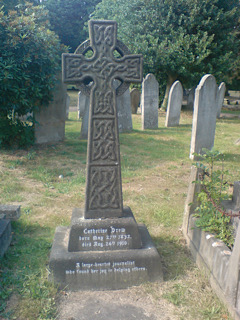
Drew dies at her home in Holland Street, Kensington, on August 26, 1910, and is buried at the Royal Borough of Kensington and Chelsea Cemetery, Hanwell. Lady Drew, her sister-in-law, erects a Celtic cross memorial there in her honour. She bequeaths a jewel-studded gold bracelet to the Institute of Journalists, which had been presented to her by the Institute to mark her retirement in 1908. It is worn by women presidents or the wives of male presidents, and is known as the “Drew Bracelet.”


Leave a comment

Birth of Tim Pat Coogan, Journalist, Writer & Broadcaster

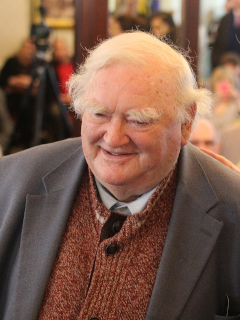
Timothy Patrick “Tim Pat” Coogan, Irish journalist, writer and broadcaster, is born in Monkstown, County Dublin, on April 22, 1935. He serves as editor of The Irish Press newspaper from 1968 to 1987. He is best known for such books as The IRA (1970) and On the Blanket: The H Block Story (1980), and biographies of Michael Collins and Éamon de Valera.

Coogan’s particular focus is on Ireland’s nationalist/independence movement in the 20th century, a period of unprecedented political upheaval. He blames the Troubles in Northern Ireland on “Paisleyism.”

Coogan is the first of three children born to Beatrice (née Toal) and Eamonn Coogan, a native of Kilkenny who is an Irish Republican Army (IRA) volunteer during the Irish War of Independence and later serves as the first Deputy Commissioner of the newly established Garda Síochána, then a Fine Gael TD for the Kilkenny constituency. His mother, the daughter of a policeman, is a Dublin socialite who is crowned Dublin’s Civic Queen of Beauty in 1927. She writes for the Evening Herald and takes part in various productions in the Abbey Theatre and Radio Éireann. He spends many summer holidays in the town of Castlecomer, County Kilkenny, his father’s hometown.

A former student of the Irish Christian Brothers in Dún Laoghaire and Belvedere College in Dublin, Coogan spends most of his secondary studies at Blackrock College in Dublin.

In 2000, Irish writer and editor Ruth Dudley Edwards is awarded £25,000 damages and a public apology by the High Court in London against Coogan for factual errors in references to her in his book Wherever Green is Worn: The Story of the Irish Diaspora (2000). In the book, he writes that Dudley Edwards had “groveled to and hypocritically ingratiated herself with the English establishment to further her writing career.” He also alleges that Dudley Edwards “had abused the position of chairwoman of the British Association for Irish Studies (BAIS) by trying to impose her political views on it” and that her commission to write True Brits had been awarded because of political favouritism.

When Taoiseach Enda Kenny causes confusion following a speech at Béal na Bláth by incorrectly claiming Michael Collins had brought Lenin to Ireland, Coogan comments, “Those were the days when bishops were bishops and Lenin was a communist. How would that have gone down with the churchyard collections?”

In November 2012, for reasons that are uncertain, the United States embassy in Dublin refuses to grant Coogan a visa to visit the United States. As a result, a planned book tour for his book The Famine Plot, England’s role in Ireland’s Greatest Tragedy (2012) is cancelled. After representations to then Secretary of State Hillary Clinton by United States Senator Chuck Schumer (D-NY) and Congressman Peter T. King (R-NY), he receives his visa.

Coogan has been criticised by the Irish historians Liam Kennedy and Diarmaid Ferriter, as well as Cormac Ó Gráda, for a supposed lack of thoroughness in his research and bias:

“Well, I waited in this book to hear some great revelation, and it just isn’t there. It’s anticlimactic. I could not see the great plot, and indeed there is no serious historian who … I can’t think of a single historian who has researched the Famine in depth – and Tim Pat has not researched it in depth” (The Famine Plot).

“Coogan is not remotely interested in looking at what others have written on 20th-century Irish history…. he does not appear interested in context and shows scant regard for evidence. He does not attempt to offer any sustained analysis in relation to the challenges of state building, the meaning of sovereignty, economic and cultural transformations, or comparative perspectives on the evolution of Irish society. There is no indication whatsoever that Coogan has engaged with the abundant archival material relating to the subject matter he pronounces on. There is no rhyme or reason when it comes to the citation of the many quotations he uses; the vast majority are not referenced. For the 300-page text, 21 endnotes are cited and six of them relate to Coogan’s previous books, a reminder that much of this tome consists of recycled material…. Tim Pat Coogan… he is a decent, compassionate man who has made a significant contribution to Irish life. But he has not read up on Irish history; indeed, such is the paucity of his research efforts that this book amounts to a travesty of 20th-century Irish history” (1916: The Mornings After).


Leave a comment

Death of Irish Writer Michael McLaverty

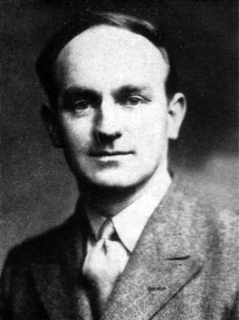
Michael McLaverty, Irish writer of novels and short stories, dies on March 22, 1992, in County Down, Northern Ireland.

McLaverty is born on July 5, 1904, at Magheross, near Carrickmacross, County Monaghan, the son of Michael McLaverty, a waiter, and Kathleen McLaverty (née Brady). His father works in a hotel in the town until they move to Rathlin Island, and later to Belfast, when he is five years old. He attends St. Malachy’s College in the city, where an inspiring teacher instills in him a love of William Shakespeare‘s writings. He entered Queen’s University Belfast (QUB) in October 1924 and studies physics. He obtains a B.Sc. in 1928 and immediately takes his H.Dip.Ed., completing his teaching practice in St. Mary’s University College, Strawberry Hill, London. The following year he begins teaching at St. John’s Primary School in Colinward Street, west Belfast. He is admitted to the degree of M.Sc. at QUB in 1933.

In 1933, McLaverty marries Mary Conroy (formerly Giles), a young widow and fellow teacher at St. John’s. They have two sons and two daughters.

During his time at St. John’s, McLaverty writes his first five novels and fifteen short stories. In the 1930s he has developed a distinctive style in precise, unsentimental, but compassionate short stories. By the late 1930s, however, he switches his energies from short stories to the novel. Call My Brother Back (1939) contrasts the traditional world of Rathlin Island with the northern troubles in a family context. Another novel, Lost Fields (1941), and his collection of short stories, The White Mare (1943), explore the Belfast of his childhood and deal with the underlying tensions in Irish rural life. In the period 1949–55 he publishes five other novels: Three Brothers (1948), Truth in the Night (1951), School for Love (1954), The Choice (1958), and Brightening Day (1965). These novels deal with ordinary people and the dilemmas they encounter in their families and communities. His writings are influenced by Anton Chekhov, Leo Tolstoy, Katherine Mansfield, Gerard Manley Hopkins, and the Irish short story writers Liam O’Flaherty and Daniel Corkery.

As headmaster of St. Thomas’s intermediate school, a large school for boys in Ballymurphy, off the Falls Road, McLaverty gives his first job to the young Seamus Heaney, in whom he cultivates an interest in the writings of Chekhov and Tolstoy and the Irish writers Mary Lavin and Patrick Kavanagh. He deems Heaney to be the only genius he has ever met, and his work and success are a great source of pride and joy to him. His encouragement of the young John McGahern is of as much benefit to McLaverty himself, as their short but intense correspondence give him the energy to resume his writings.

Between his resignation from St. Thomas’s in 1963 and the early 1970s he teaches part-time at St. Joseph’s training college and St. Dominic’s High School, one of Belfast’s best-known grammar schools. In 1981 his old alma mater recognises his contribution to literature by awarding him an honorary master’s degree. In the same year he wins the American Irish literary fellowship, a prestigious literary award of $10,000, in recognition of his “impressive body of work as a short story writer and novelist.”

McLaverty dies on March 22, 1992, in County Down, Northern Ireland.

(From: “McLaverty, Michael” by Éamonn Ó Ciardha, Dictionary of Irish Biography, http://www.dib.ie, October 2009)


Leave a comment

Birth of Nuala O’Faolain, Journalist, TV Producer, Teacher & Writer

Nuala O’Faolain, Irish journalist, television producer, book reviewer, teacher and writer, is born in Clontarf, Dublin on March 1, 1940. She becomes well known after the publication of her memoirs Are You Somebody? and Almost There. She also writes a biography of Irish criminal Chicago May and two novels.

O’Faolain is the second eldest of nine children. Her father, known as ‘TerryO’ is a well-known Irish journalist, writing the “Dubliners Diary” social column under the pen name Terry O’Sullivan for the Evening Press. She is educated at University College Dublin (UCD), the University of Hull, and the University of Oxford. She teaches for a time at Morley College in London and works as a television producer for the BBC and Raidió Teilifís Éireann.

O’Faolain describes her early life as growing up in a Catholic country which, in her view, fears sexuality and forbids her even information about her body. In her writings she often discusses her frustration at the sexism and rigidity of roles in Catholic Ireland that expect her to marry and have children, neither of which she does.

O’Faolain becomes internationally well known for her two volumes of memoir, Are You Somebody? and Almost There; a novel, My Dream of You; and a history with commentary, The Story of Chicago May. The first three are all featured on The New York Times Best Seller list. Her posthumous novel Best Love, Rosie is published in 2009.

O’Faolain’s formative years coincide with the emergence of the women’s movement, and her ability to expose misogyny in all its forms is formidable, forensic and unremitting. However, her feminism stems from a fundamental belief in social justice. Unlike most commentators, who maintain a detached, lofty tone, she places herself at the centre of things, a high-risk strategy that works because of her broad range of erudition, worn lightly, her courage and a truthfulness that sometimes borders on the self-destructive.

O’Faolain is engaged at least once but never marries. In Are You Somebody? she speaks candidly about her fifteen-year relationship with the journalist Nell McCafferty, who publishes her own memoir, Nell. From 2002 until her death, she lives much of the time with Brooklyn-based attorney John Low-Beer and his daughter Anna. They are registered as domestic partners in 2003.

O’Faolain splits her time between Ireland and New York City. She is diagnosed with metastatic cancer and is interviewed on the Marian Finucane radio show on RTÉ Radio 1 on April 12, 2008, in relation to her terminal illness. She tells Finucane, “I don’t want more time. As soon as I heard I was going to die, the goodness went from life.”

In a last attempt to grasp as much of life as she can, O’Faolain holidays with family members in Sicily and visits Berlin with a group of friends to hear music and see art. She previously tended to avoid Berlin because, through contact with Jewish friends and lovers, she associated it with the Holocaust. She dies at the Blackrock Hospice, Dublin, on May 9, 2008.

O’Faolain wins a Jacob’s Award in 1985 for her work as the producer of the RTÉ One television programme Plain Tales. In 2006, she wins the Prix Femina étranger, a French literary award, for The Story of Chicago May.

O’Faolain is the subject of a film documentary, Nuala: A Life and Death (2011), directed by Patrick Farrelly and Kate O’Callaghan, and produced and narrated by Marian Finucane. Hugo Hamilton‘s novel Every Single Minute (2014) is based on his experiences when accompanying O’Faolain to Berlin shortly before her death.


Leave a comment

Birth of Peadar O’Donnell, Irish Republican Politician & Writer

Peadar O’Donnell, Irish republican, socialist activist, politician, writer and one of the foremost radicals of 20th-century Ireland, is born on February 22, 1893, in Meenmore, near Dungloe, County Donegal.

O’Donnell is the youngest among six sons and three daughters of Biddy and James O’Donnell. He is greatly influenced by his upbringing in the Rosses, in northwest Donegal, one of the poorest and most remote parts of Ireland. His father, a popular local fiddler, earns a living through his smallholding, seasonal labouring in Scotland, and winter work in a local corn mill. His mother, who comes from a radical labour and nationalist political background, works in a local cooperative store. He attends Rampart national school and Roshine national school, near Burtonport, where he is a monitor for four years. In 1911 he wins a scholarship to attend St. Patrick’s College in Drumcondra, Dublin, and returns in 1913 to the Rosses, where he spends two years teaching on the islands of Inishfree. In 1915 he is appointed head of Derryhenny national school, near Dungloe, and the following year becomes principal of a national school on the island of Arranmore, where he begins to write.

O’Donnell had long been concerned by the poor conditions of the local ‘tatie-hokers’ (potato pickers) who migrate annually to Scotland. In the summer of 1918, he travels there to help organise the Scottish Farm Servants’ Union. While there he is influenced by left-wing radicals such as Willie Gallacher, later a communist Member of Parliament (MP), and Emanuel ‘Manny’ Shinwell, later Baron Shinwell. In September 1918, against a background of rising labour militancy, he leaves teaching to become a full-time organiser for the Irish Transport and General Workers’ Union (ITGWU) in the west Ulster area. The following year he organises one of Ireland’s first “soviets” when the attendants and nurses of the Monaghan District Lunatic Asylum occupy the grounds and appoint O’Donnell as governor until their demands are met.

In early 1919 O’Donnell joins the Irish Republican Army (IRA) in Monaghan, resigning from the ITGWU for full-time IRA service in late 1920. He leads the 2nd Battalion, Donegal IRA, from the summer of 1920. In December 1920 he goes “on the run” and leads a flying column in west Donegal until May 1921, when he is wounded. Regarded as insubordinate and militarily inexperienced, he is unpopular among the other senior officers of the 1st Northern Division. He, in turn, is disappointed by the lack of social radicalism among the nationalist leadership. He opposes the Anglo-Irish Treaty, is placed in command of the minority anti-treaty 1st Northern Division and is a member of the IRA executive that occupies the Four Courts in Dublin in defiance of the provisional government.

Arrested in June 1922, O’Donnell shares a prison cell with Liam Mellows and influences his radical “Notes from Mountjoy,” an important document for subsequent left-wing republicans. He spends the next two years in various prisons and internment camps. His execution is widely expected to follow those of December 8, 1922. In August 1923, he is elected as a Sinn Féin Teachta Dála (TD) for Donegal in the general election called after the end of the Irish Civil War. He goes on hunger strike for forty-one days in late 1923 and succeeds in escaping from the Curragh in March 1924. In June 1924, while on the run, he marries Lile O’Donel, a wealthy Cumann na mBan activist who had smuggled communications for republican prisoners. O’Donel, a radical and member of the Communist Party, is the daughter of Ignatius O’Donel, a prominent landowner from Mayo. They have no children but raise their nephew, Peadar Joe, as their own son after the death in New York of O’Donnell’s brother Joe.

O’Donnell begins writing seriously while in jail and remains a prolific writer, journalist, and editor until the 1960s. His first novel, Storm, set in the Irish War of Independence, is published in 1925. One of his most highly regarded books, Islanders, is published in 1928. Adrigoole, like Islanders a story of poverty and starvation in rural Ireland, is published the following year. The Knife (1930) and On the Edge of the Stream (1934) soon follow. The most significant of his later novels is probably The Big Windows (1954). Foremost among his qualities as a writer is his empathy for the people, life, and landscape of rural Ireland. But his novels have been criticised for their slow pace, excessive detail, and didactic nature. He claims his writing is incidental to his political activism. His trilogy of autobiographical non-fiction, The Gates flew Open (1932), Salud! An Irishman in Spain (1936), and There Will Be Another Day (1963), which respectively concern the Irish Civil War, his activism during the Spanish Civil War, and his role in the land annuities agitation, remain highly regarded. His other important literary achievement is with The Bell, an innovative literary and political magazine which plays a useful dissenting role in an insular and conservative period. He founds The Bell with the writer Seán Ó Faoláin in 1940 and edits it from 1946 until it ceases publication in 1954.

O’Donnell exercises an influential role in the interwar IRA, particularly through his editorship of An Phoblacht (1926–29), which he attempts to divert from militarism to socialist agitation. His ultimate aim is for a thirty-two-county socialist republic. His most successful campaign is organising small farmers against the payment of land annuities to the government in the late 1920s and early 1930s. This campaign is later adopted by Fianna Fáil and contributes to their electoral success in 1932. He is less successful in radicalising the IRA. After the failure of Saor Éire, a left-wing IRA front which provokes clerical and popular hostility against the IRA, increasing tensions between the IRA’s left-wing and the leadership lead O’Donnell, along with Frank Ryan and George Gilmore, to split from the IRA to establish the short-lived Republican Congress in 1934.

Although O’Donnell claims he was never a Communist Party member, he plays a central role in forging links between republicans and the revolutionary left both in Ireland and internationally and invariably supports the communist party line at critical junctures. After the failure of Republican Congress, he takes up the cause of the Spanish republic. His championing of unpopular causes such as communism and Spain entail a good deal of frustration. He is physically attacked at political meetings and in 1932, despite having never visited the Soviet Union, loses a high-profile libel action against the Dominican Irish Rosary, which claim he had studied in Moscow‘s Lenin College. He is banned from entering the United States for several decades, although he maintains: “My relations with all the great powers continue to be friendly.”

O’Donnell continues to support radical campaigns until his death. He is an outspoken advocate of Irish emigrants. He is prominent in the Irish Campaign for Nuclear Disarmament and serves as its president in the early 1960s. He is a leading protester against the Vietnam War and a supporter of African anti-colonial movements such as that against apartheid. In later years he is involved in the “Save the west” campaign, highlighting the problems of the west of Ireland.

After several months of ill-health following a heart attack, O’Donnell dies in Dublin, aged 93, on May 13, 1986. He leaves instructions that there are to be “no priests, no politicians and no pomp” at his funeral, and those wishes are granted. He is cremated in Glasnevin Cemetery and his ashes are buried at his wife’s home in Swinford, County Mayo. Although he once remarked that every cause he fought for was a failure, he is now regarded as one of the most influential socialist republican theorists and an important voice of dissent in twentieth-century Ireland.

(From: “O’Donnell, Peadar” by Fearghal McGarry, Dictionary of Irish Biography, http://www.dib.ie)


Leave a comment

Death of P. S. O’Hegarty, Writer, Editor & Historian

Patrick Sarsfield O’Hegarty (Irish: Pádraig Sáirséal Ó hÉigeartaigh), Irish writer, editor and historian and a member of the Supreme Council of the Irish Republican Brotherhood, dies on December 17, 1955.

O’Hegarty is born on December 29, 1879, at Carrignavar, County Cork, to John and Katherine (née Hallahan) Hegarty. His parents’ families emigrate to the United States after the Great Famine, and his parents are married in Boston, Massachusetts. His father is a member of the Irish Republican Brotherhood (IRB).

He is educated at North Monastery CBS, where he forms an enduring friendship with Terence MacSwiney. In 1888, his father dies of tuberculosis at the age of 42. Left destitute, his mother pawns her wedding ring to pay for an advertisement looking for work, and eventually becomes a cook.

He joins the postal service in Cork in 1897. Along with J. J. Walsh, he plays on the Head Post Office hurling team. He joins the IRB and represents Munster on the IRB Supreme Council. He starts writing for Arthur Griffith‘s United Irishman and the Shan van Vocht, a periodical established by Alice Milligan and Ethna Carbery.

He serves at the main Postal Sorting Office in Mount Pleasant, London, from 1902 to 1913. Along with J. J. Walsh, he spends three years at King’s College London, studying for the Secretary’s Office. While he succeeds in his studies, Walsh does not and returns to Ireland. O’Hegarty becomes the IRB representative for South East England and joins the Gaelic League and Sinn Féin and becomes a strong advocate of the Irish language. In 1905, he is elected secretary of the local Dungannon Club, which draws in as members Robert Lynd, Herbert Hughes and George Cavan. In 1907, as Sinn Féin’s London Secretary, he approves and signs the membership card of Michael Collins, later becoming friend and mentor to Collins.

He has to return to Ireland for a break due to overwork in 1909 and gives up some of his work for the Gaelic League. However, he takes over as editor of the IRB publication, Irish Freedom. It is in this publication that he famously writes, concerning the visit of King George V to Ireland in 1911: “Damn your concessions, England: we want our country!” In 1912, at the height of the Playboy riots, he writes four articles entitled “Art and the Nation” in Irish Freedom, which take a very liberal and inclusionist approach to Anglo-Irish literature and art in general but invokes the wrath of many of the paper’s readers.

In 1913, he is re-posted to Queenstown (present-day Cobh) as postmaster. He continues editing nationalist newspapers such as Irish Freedom (founded in 1910 and suppressed in December 1914 on account of its seditious content) and An tÉireannach and joins the Irish Volunteers. At the outbreak of war he is moved to Shrewsbury, probably on account of his political activities. In 1915, he marries Wilhelmina “Mina” Smyth, a schoolteacher and suffragist, and is then moved to Welshpool, Montgomeryshire. In the aftermath of the 1916 Easter Rising, he is opposed to physical force. In 1918, he refuses to take the British Oath of Allegiance and resigns his position in the Post Office.

O’Hegarty feels that the Abbey Theatre is “doing good for Ireland” and supports W. B. Yeats against attacks from Arthur Griffith and like-minded Nationalists. He opposes the extremist views of D. P. Moran, who seeks a Roman Catholic Irish-speaking Ireland.

He is Secretary of the Irish Department of Post and Telegraphs from 1922 to 1945. He is elected a member of the Irish Academy of Letters in 1954.

His son, Seán Ó hÉigeartaigh, is a founder of the Irish-language publishing house Sáirséal agus Dill. His daughter Gráinne, a harpist, marries Senator Michael Yeats, son of W. B. Yeats.

O’Hegarty’s papers are acquired by the Kenneth Spencer Research Library at the University of Kansas. This includes an outstanding collection of books, pamphlets and periodicals of W. B. Yeats.

(Pictured: “P. S. O’Hegarty, 1929,” pastel on paper by Harry Kernoff, RHA, property from the Yeats family)


Leave a comment

Death of Katy French, Socialite, Model & TV Personality

Katy Ellen French, Irish socialite, model, writer, television personality and charity worker, dies on December 6, 2007, in Navan, County Meath, after collapsing at a friend’s house on December 2. According to the BBC, “in the space of less than two years, she had become one of Ireland’s best-known models and socialites.” Her cause of death is given as hypoxic ischemic brain injury caused by cocaine and ephedrine.

French is born on October 31, 1983, in Basel, Switzerland, to John and Janet French, from Australia and Britain respectively. At the age of two, she moves with her family to Ireland, briefly living in the Sandyford area before settling in Enniskerry, County Wicklow, and later to Stillorgan, County Dublin. She attends Alexandra College in Milltown, Dublin, from the age of seven. While still in school she works part-time as a hostess at the Dublin branch of the Planet Hollywood restaurant chain.

French studies psychology and marketing before working for the Assets Modelling Agency and later writing articles for several Dublin magazines and newspapers. She represents Sony Ericsson and Suzuki among many other brands, becoming more famous in 2007 as a result of her fiancé, restaurateur Marcus Sweeney, ending their relationship in a very public fashion after she is photographed for a lingerie shoot for the Sunday Independent in his restaurant in January of that year. As a result of this publicity, her image appears more regularly in daily Irish tabloid newspapers, and she makes numerous television appearances on shows such as RTÉ‘s The Podge and Rodge Show in April 2007 and Tubridy Tonight a week before her death.

French is known for deliberately courting controversy to promote her career. On Tubridy Tonight she speaks of her appearance on Celebrities Go Wild as well as her relationship break up with Sweeney. Mention is also made of her birthday party which she is to celebrate the following week, having missed her birthday due to Celebrities Go Wild. Host Ryan Tubridy is invited to the event. Footage is shown of the charity single “Down in the Bog” which is to be released as a Christmas single. She works for several Irish charities including Our Lady’s Children’s Hospital, Crumlin and GOAL in Calcutta, India. She writes a column for Social & Personal magazine.

In an interview with Hot Press‘s Jason O’Toole, French says that she would consider having an abortion if she became pregnant during the peak of her career, a controversial statement in Ireland where abortion is at that time effectively illegal, and that she loves fur despite being a “massive animal lover.” She also airs her religious beliefs, being a member of the Church of England as well as a practising Catholic and speaks highly of Islam and her Muslim friends saying, “When you read the Koran, you realise that Islam is a beautiful religion.” In the same interview she is asked if she has ever used cocaine and denies ever having done so. In November 2007, she tells an Irish tabloid that she has used cocaine but has stopped. A week before she dies, she celebrates her 24th birthday with celebrity and media friends.

French dies on the evening of December 6, 2007, in Our Lady’s Hospital, Navan, County Meath, having collapsed at a house in Kilmessan, County Meath, in the early hours of Sunday, December 2. There is widespread speculation in the media that her death is the result of a drug overdose. A postmortem finds she has suffered brain damage, and that traces of cocaine are found in her body. A senior Garda states, “We strongly suspect that drugs contributed to her death. This was a previously healthy person being brought to hospital in a collapsed state.” In 2010 two people are charged with supplying cocaine to French and in failing to get medical assistance in a timely fashion. She is buried in her hometown of Enniskerry, County Wicklow, on December 10. Taoiseach Bertie Ahern‘s aide de camp, Captain Michael Tracey, attends her funeral.

On November 13, 2012, two friends of French, Kieron Ducie and Ann Corcoran, plead guilty to possession of cocaine with intent to supply on the weekend of French’s death. Trim Circuit Court is told that a second charge against the pair is not being pursued, that they had intentionally or recklessly engaged in behaviour relating to the supply of cocaine to French and failed to get medical assistance in a timely fashion. In July 2013 the pair are sentenced to a 2-1⁄2 year suspended sentence and three-year good behaviour bond, and a two-year suspended sentence and two-year good behaviour bond respectively. At the verdict, French’s cause of death is given as hypoxic ischemic brain injury caused by cocaine and ephedrine.


Leave a comment

Death of Edward John Moreton Drax Plunkett, 18th Baron Dunsany

Edward John Moreton Drax Plunkett, 18th Baron of Dunsany FRSL, Anglo-Irish writer and dramatist, dies in hospital in Dublin on October 25, 1957, following an attack of appendicitis. Over 90 volumes of fiction, essays, poems and plays appear in his lifetime, and a modest amount of material is published posthumously.

Plunkett, known to his family as “Eddie,” is born in London, England, on July 24, 1878, the first son of John William Plunkett, 17th Baron of Dunsany (1853–1899), and his wife, Ernle Elizabeth Louisa Maria Grosvenor Ernle-Erle-Drax, (née Burton) (1855–1916). From a historically wealthy and famous family, he is related to many well-known Irish figures. He is a kinsman of the Catholic Saint Oliver Plunkett, the martyred Archbishop of Armagh. He is also related to the prominent Anglo-Irish unionist and later nationalist Home Rule politician Sir Horace Plunkett and George Noble Plunkett, Papal Count and Republican politician, father of Joseph Plunkett, executed for his part in the 1916 Easter Rising.

Plunkett’s only grown sibling, a younger brother, from whom he is estranged from about 1916, for reasons not fully clear but connected to his mother’s will, is the noted British naval officer Sir Reginald Drax. Another younger brother dies in infancy.

Plunkett grows up at the family properties, notably, Dunstall Priory in Shoreham, Kent, and Dunsany Castle in County Meath, but also in family homes such as in London. His schooling is at Cheam School, Eton College and the Royal Military College, Sandhurst, which he enters in 1896.

The title passes to Plunkett at his father’s death in 1899 at a fairly young age. The young Lord Dunsany returns to Dunsany Castle in 1901 after war duty. In that year he is also confirmed as an elector for the Representative Peers for Ireland in the House of Lords.

In 1903, Plunkett meets Lady Beatrice Child Villiers (1880–1970), youngest daughter of Victor Child Villiers, 7th Earl of Jersey, who is then living at Osterley Park. They marry in 1904. Their one child, Randal, is born in 1906. Lady Beatrice is supportive of her husband’s interests and helps him by typing his manuscripts, selecting work for his collections, including the 1954 retrospective short story collection, and overseeing his literary heritage after his death.

The Plunketts are socially active in Dublin and London and travel between homes in Meath, London and Kent, other than during the First and Second World Wars and the Irish War of Independence. He circulates with many literary figures of the time. To many of these in Ireland he is first introduced by his uncle, the co-operative pioneer Sir Horace Plunkett, who also helps to manage his estate and investments for a time. He is friendly, for example, with George William Russell, Oliver St. John Gogarty, and for a time, W. B. Yeats. He also socialises at times with George Bernard Shaw and H. G. Wells and is a friend of Rudyard Kipling.

In 1910 Plunkett commissions a two-story extension to Dunsany Castle, with a billiard room, bedrooms and other facilities. The billiard room includes the crests of all the Lords Dunsany up to the 18th.

Plunkett serves as a second lieutenant in the Coldstream Guards in the Second Boer War. Volunteering in World War I and appointed Captain in the Royal Inniskilling Fusiliers, he is stationed for a time at Ebrington Barracks in Derry, Northern Ireland. Hearing while on leave of disturbances in Dublin during the Easter Rising of 1916, he drives in to offer help and is wounded by a bullet lodged in his skull. After recovery at Jervis Street Hospital and what is then the King George V Hospital (now St. Bricin’s Military Hospital), he returns to duty. His military belt is lost in the episode and later used at the burial of Michael Collins. Having been refused forward positioning in 1916 and listed as valuable as a trainer, he serves in the later war stages in the trenches and in the final period writing propaganda material for the War Office with MI7b. There is a book at Dunsany Castle with wartime photographs, on which lost members of his command are marked.

During the Irish War of Independence, Plunkett is charged with violating the Restoration of Order in Ireland Act 1920, tried by court-martial on February 4, 1921, convicted, and sentenced to pay a fine of 25 pounds or serve three months in prison without labour. The Crown Forces had searched Dunsany Castle and had found two double-barreled shotguns, two rook rifles, four Very pistols, an automatic pistol and a large quantity of pistol ammunition, along with shotgun and rifle ammunition.

During World War II, Plunkett signs up for the Irish Army Reserve and the British Home Guard, the two countries’ local defence forces, and is especially active in Shoreham, Kent, the English village bombed most during the Battle of Britain.

Plunkett’s fame arises chiefly from his prolific writings. He is involved in the Irish Literary Revival. Supporting the Revival, he is a major donor to the Abbey Theatre, and he moves in Irish literary circles. He is well acquainted with W. B. Yeats, Lady Gregory, Percy French, George “AE” Russell, Oliver St. John Gogarty, Padraic Colum and others. He befriends and supports Francis Ledwidge, to whom he gives the use of his library, and Mary Lavin.

Plunkett makes his first literary tour to the United States in 1919 and further such visits up to the 1950s, in the early years mostly to the eastern seaboard and later, notably, to California. His own work and contribution to the Irish literary heritage are recognised with an honorary degree from Trinity College Dublin.

In 1940, Plunkett is appointed Byron Professor of English in the University of Athens in Greece. Having reached Athens by a circuitous route, he is so successful that he is offered a post as Professor of English in Istanbul. However, he has to be evacuated due to the German invasion of Greece in April 1941, returning home by an even more complex route, his travels forming a basis for a long poem published in book form (A Journey, in 5 cantos: The Battle of Britain, The Battle of Greece, The Battle of the Mediterranean, Battles Long Ago, The Battle of the Atlantic, special edition January 1944). Olivia Manning‘s character Lord Pinkrose in her novel sequence the Fortunes of War is a mocking portrait of Dunsany in that period.

In 1947, Plunkett transfers his Meath estate in trust to his son and heir and settles in Kent at his Shoreham house, Dunstall Priory, not far from the home of Rudyard Kipling. He visits Ireland only occasionally thereafter and engages actively in life in Shoreham and London. He also begins a new series of visits to the United States, notably California, as recounted in Hazel Littlefield-Smith’s biographical Dunsany, King of Dreams.

In 1957, Plunkett becomes ill while dining with the Earl and Countess of Fingall at Dunsany, in what proves to be an attack of appendicitis. He dies in hospital in Dublin, at the age of 79, on October 25, 1957. He is buried in the churchyard of the ancient church of St. Peter and St. Paul, Shoreham, Kent. His funeral is attended by many family members, representatives of his old regiment and various bodies in which he had taken an interest, and figures from Shoreham. A memorial service is held at Kilmessan in County Meath, with a reading of “Crossing the Bar,” which coincides with the passing of a flock of geese.

Beatrice survives Plunkett, living mainly at Shoreham and overseeing his literary legacy until her death in 1970. Their son Randal succeeds to the barony and is in turn succeeded by his grandson, the artist Edward Plunkett. Plunkett’s literary rights pass from Beatrice to Edward.