seamus dubhghaill

Promoting Irish Culture and History from Little Rock, Arkansas, USA


Leave a comment

Death of Oliver Cromwell, English Statesman & Military Leader

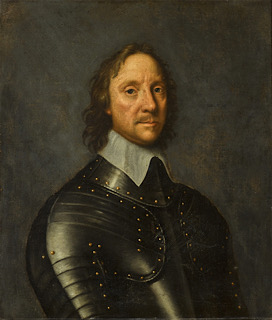
Oliver Cromwell, the English statesman and military leader who leads Parliamentarian forces in the English Civil War and serves as Lord Protector of the Commonwealth of England, Scotland, and Ireland from 1653 until his death, dies on September 3, 1658, in Westminster, London. He is 59 years old at the time. He is probably the most reviled man in Irish history following his scorched earth policy of destruction and death during his campaign in Ireland.

Cromwell’s death is the result of a painful urinary tract infection that leads to blood poisoning. He has been in declining health for some time, and his final days are marked by illness and discomfort. His death comes just over nine years after the Siege of Drogheda in Ireland, which begins in August 1649 and becomes one of the most infamous episodes of his military career.

The Siege of Drogheda, in which Cromwell’s forces execute thousands of Irish defenders, remains a major point of controversy in his legacy. His death in 1658 is met with celebration by many in England, as it paves the way for the restoration of the monarchy under Charles II in 1660. After his death, his body is exhumed in 1661 and publicly hanged in chains before being thrown into a pit to ensure he is dead.

Cromwell is remembered as a decisive military leader who helps restore England’s status as a leading European power, but also as a controversial figure whose actions in Ireland leave a lasting scar on Anglo-Irish relations. His death on September 3, 1658, thus marks both the end of his political and military influence and a turning point in the post-Civil War period in Britain.


Leave a comment

The Gregorian Calendar is Adopted in Ireland and Britain

On September 2, 1752, the British Empire — including Ireland and its American colonies — adopts the Gregorian calendar, aligning its dating system with most of Western Europe, which had made the change over a century earlier.

The Julian calendar, introduced by Julius Caesar in 45 BCE, has a leap year rule that adds a day every four years. This makes the average year 365.25 days long, about 11 minutes and 14 seconds longer than the true solar year. Over centuries, this small error accumulates, causing the calendar to drift out of sync with the seasons. By 1752, the Julian calendar is 11 days ahead of the equinoxes, affecting the date of Easter and other seasonal events.

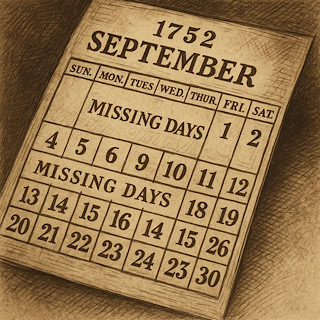
The Calendar (New Style) Act 1750 mandates the switch. To correct the drift, the Act declares that Wednesday, September 2, 1752, is immediately followed by Thursday, September 14, 1752 — effectively skipping September 3–13. This also adjusts the leap year rules to match the Gregorian system, omitting leap years in century years not divisible by 400.

The change is controversial. Britain and Ireland have been on the Julian calendar since 1582, with the New Year starting on March 25 (Lady Day). Adopting the Gregorian system means shortening 1751 to 282 days (March 25 to December 31) and aligning with Continental Europe, which had already made the switch in the 16th century.

Political debates, especially between the Whigs and Tories, reflect fears of losing sovereignty and of embracing “Popery.” While there are rumors of “calendar riots” demanding the return of the “lost” 11 days, these are likely exaggerated.

There are several impacts with making the change. There is historical confusion as dual dating (e.g., “Feb 10, 1750/51”) is common for decades. There are economic and social effects as birthdays, rent payments, and holidays are thrown off. The change also allows for international alignment as the change facilitates trade and communication with Europe.

The 1752 switch marks a turning point in British and Irish history, bringing the calendar into line with most of Europe and setting the stage for the Gregorian calendar’s eventual global dominance. Today, the Gregorian calendar is the world’s standard civil calendar, a legacy of this 18th-century reform.


Leave a comment

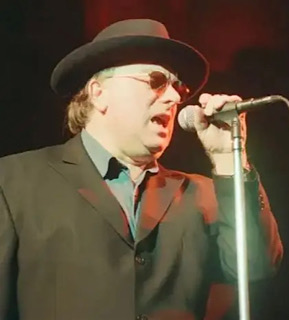
Van Morrison Inducted Into Hot Press Irish Music Hall of Fame

Rock legend Van Morrison becomes the first inductee into the Hot Press Irish Music Hall of Fame in Dublin on September 1, 1999. The honour is presented at a special ceremony hosted by poet Brendan Kennelly, with countryman Bob Geldof delivering the tribute. Morrison, 54 at the time, performs at the event, showcasing his signature blend of soul, jazz, and rock.

The Hot Press Irish Music Hall of Fame is created to celebrate and preserve the best of Irish musical talent over decades, from traditional acts like Christy Moore and The Dubliners to modern icons such as U2, Boyzone, and Ash. It is based around a new multimedia exhibition in Dublin city centre, highlighting the history and development of Irish rock and pop.

Morrison, born in Belfast, Northern Ireland, is widely regarded as Ireland’s greatest living legend. Hall of Fame director Niall Stokes, the editor of Hot Press, praises him as a “multi-talented creative force” with an “astonishing body of work of great depth and beauty.” Geldof calls him “the only genius in Irish music.”

This induction marks Morrison’s first major honour in Ireland, though he has already been inducted into the Rock and Roll Hall of Fame in Cleveland, Ohio, in 1993. The Hot Press Irish Music Hall of Fame is distinct from the U.S. Rock and Roll Hall of Fame, which has been operating since 1983.

The 1999 induction cements Morrison’s status not only as a global rock icon but also as a defining figure in Irish music history. It is a milestone moment for the Hall of Fame, setting the stage for future inductees chosen by a panel of industry experts.