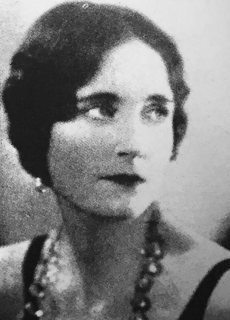
O’Connor is one of five children of Irish Republican Brotherhood (IRB) Supreme Council member and later MPJames O’Connor. He is IRB treasurer in 1870 and party to the discussions on the New Departure, a collaboration between constitutional and physical force nationalists, the open and the secret movements. Her uncle, John O’Connor, is a leading member of the Supreme Council.
In 1890, when O’Connor’s father is a journalist, her mother, Mary O’Connor, and four of her sisters – Annie, Aileen, Kathleen and Norah – die after eating contaminated mussels gathered on the seashore near where they lived in what became known as the Seapoint tragedy. She becomes violently ill, but survives.
O’Connor travels to London after a falling out with her stepmother six years later. She finds work as a civil servant and a paid speaker for the Liberal Party, through which she meets Crompton Llewelyn Davies, adviser to David Lloyd George and solicitor to the General Post Office, brother of Arthur Llewelyn Davies and uncle of the boys who inspire the creation of Peter Pan. They marry on December 8, 1910. The marriage produces two children: Richard and Catherine.
Davies is an orthodox home ruler but is radicalised by the 1916 Easter Rising. Davies and her husband raise funds for Roger Casement‘s legal defence and later lobby for his death sentence to be commuted. She is saluted as one of the “fond ones” in a letter from Casement to Margaret Gavan Duffy on the eve of his August 3, 1916, execution in Pentonville Prison.
Following the Easter Rising, Davies takes her two children to Ireland and purchases Furry Park, a crumbling mansion near Dublin. She collaborates with Michael Collins during the Irish War of Independence and her home in Clontarf becomes one of Collins’ many safe houses as he directs the war. She is arrested and imprisoned in 1920. Collins also stays at her Portmarnock house, using it as a safe house.
Davies says in later life that she and Michael Collins had been lovers, but the historian Peter Hart claims her to be a stalker. It has been suggested that Collins is the father of her son Richard. Historian Meda Ryan denies this saying “Letters from him and a phone call confirmed that he was born December 24, 1912, before his mother met Collins.”
Historian Tim Pat Coogan in his book Michael Collins says that Davies claimed on the night that Collins learned that Éamon de Valera was going to reject the Anglo-Irish Treaty “he was so distressed that I gave myself to him.” Coogan refuses to give a source and in the footnotes, he says, “Confidential source.”
Davies makes a lasting contribution to Irish literature with a translation, with George Thomson, of the Muiris Ó Súilleabháin book Fiche Bliain faoi Bhláth as Twenty Years a-Flowering. She is thought to have helped Collins write his book The Path to Freedom.
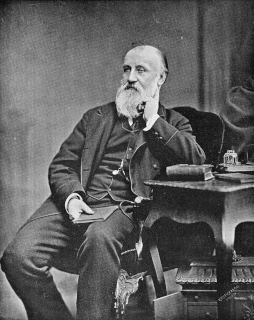
Stewart is born on December 16, 1825, the second of two sons of Charles Frederick Stewart of 6 Pitt Street (now Balfe Street), Dublin, librarian of King’s Inns. Nothing is known of his mother other than that she studies music with one of the Logier family, presumably the noted military musician and piano teacher Johann Bernhard Logier, a resident of Dublin from 1809.
Stewart is educated at Christ Church Cathedral school in Dublin, where he is a chorister. He begins to accompany choral services in his early teens, and in 1844 is appointed organist of Christ Church Cathedral and the Trinity College Dublin (TCD) chapel. In addition, in 1852 he becomes de facto organist of St. Patrick’s Cathedral, and holds all three positions concurrently for the rest of his life.
Stewart’s first conducting appointment is with the Dublin University Choral Society in 1846, to which he later adds similar appointments in Dublin, Bray, and Belfast. He is active as a teacher, both privately and from 1869 at the Royal Irish Academy of Music (RIAM), and as a critic with the Dublin Daily Express. On occupying the University of Dublin‘s chair of music in 1862, he takes steps to formalise requirements for the music baccalaureate, introducing examinations in a modern language, Latin (or a second modern language), English (literature and composition), arithmetic, and music history. As a result, though not until 1878, similar examinations are introduced at the University of Oxford and the University of Cambridge. In his professorial capacity he delivers in the 1870s public lectures on Bach, Handel, Wagner, church music, music education, organology, and, most notably, Irish music, in which he reveals an uncanny knowledge of the wire-strung harp and the uilleann pipes. He also contributes entries on Irish music and musicians to the first edition of George Grove‘s A Dictionary of Music and Musicians.
By all accounts, Stewart is a very adept musician, having perfect pitch, a formidable memory, and astonishing facility in transposition. Apparently an autodidact, he is the first Irish organist to cultivate pedal technique, while in the art of improvisation both Joseph Robinson and Sir John Stainer hold him to be the equal of Mendelssohn.
Intent on broadening his musical horizons, Stewart travels widely. From 1851 he is a regular visitor to London, and from 1857 makes frequent trips to Continental Europe, attending the Beethoven and Schumann festivals at Bonn in 1871 and 1873 respectively and Wagner’s first Bayreuth Festival in 1876. On the initiative of the Dublin University Choral Society, he is conferred with the simultaneous degrees of Mus.B. and Mus.D. at a special ceremony on April 9, 1851. On February 28, 1872, he is knighted at Dublin Castle by John Poyntz Spencer, 5th Earl Spencer, a social climb that Stewart, who has no independent income, can afford only by accumulating professional appointments and by relentless private teaching. In addition to successive townhouses in the vicinity of Merrion Square, he owns a smaller property on Bray Esplanade, named Holyrood.
Among Stewart’s compositions, his disciple James Culwick lists about forty part songs (of which several win prizes), more than twenty solo songs, fifteen anthems, several church services, a quantity of shorter liturgical music, and sixteen choral cantatas with orchestra. Three of the cantatas set texts by John Francis Waller: the 24-movement A Winter Night’s Wake (1858), The Eve of St. John (1860) and Inauguration Ode for the Opening of the National Exhibition of Cork (1852) for the opening of the Irish Industrial Exhibition in Cork. Other occasional pieces are Who Shall Raise the Bell? (The Belfry Cantata) for the inauguration of Trinity College campanile in 1854, Ode to Shakespeare (1870) for the Birmingham Triennial Music Festival, Orchestral Fantasia (1872) for the Boston Peace Festival, How Shall We Close Our Gates? (1873) for the Dublin Exhibition and Tercentenary Ode (1892) for the tercentenary of Trinity College Dublin.
Though Stewart destroys many of his works, his surviving music is consistently well crafted, and the rapid decline in the popularity of the odes is at least partly attributable to the tawdry and ephemeral character of their texts. Yet despite his esteem for Wagner, he never shakes off the conservative stylistic influences of Handel, Beethoven, and Mendelssohn, and the posthumous performance of his music has been restricted almost entirely to the Dublin cathedrals.
In August 1846 Stewart marries Mary Emily Browne, the daughter of Peter Browne of Rahins House, Castlebar, County Mayo. They have four daughters, of whom the eldest dies in 1858. Following Mary’s death on August 7, 1887, he marries on August 9, 1888, Marie Wheeler of Hyde, Isle of Wight, the daughter of Joseph Wheeler of Westlands, Queenstown (now Cobh).
Stewart dies in Dublin on March 24, 1894, and is buried at Mount Jerome Cemetery alongside his first wife and eldest daughter. Portraits of him are in the possession of the Dublin University Choral Society and the Royal Irish Academy of Music (RIAM), and his statue, erected on Leinster Lawn in 1898, still stands.
(From: “Stewart, Sir Robert Prescott” by Andrew Johnstone, Dictionary of Irish Biography, http://www.dib.ie, October 2009)
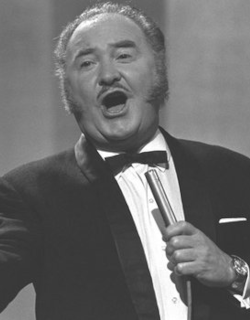
McLaughlin is one of ten children of Patrick McLaughlin, butcher and cattle dealer, and Annie McLaughlin (née Doherty). He starts singing in local churches in the Bogside at the age of seven, and as a teenager adds two years to his age to enlist in the Irish Guards, later serving abroad with the Palestine Police Force, before returning in the late 1930s to join the Royal Ulster Constabulary (RUC).
Known as The Singing Bobby, McLaughlin becomes a local celebrity before starting to work in the UK variety circuit, where he also plays summer seasons in English seaside resorts. The renowned Irish tenor John McCormack (1884–1945) advises him that his voice is better suited to a lighter repertoire than the operatic one he has in mind and urges him to find an agent. He finds the noted impresario Jack Hylton (1892–1965) who books him but is unable to fit his full name on the bill, thus Joseph McLaughlin becomes Josef Locke.
Locke makes an immediate impact when featured in “Starry Way,” a twenty-week summer show at the Opera House Theatre in Blackpool, Lancashire, England in 1946 and is rebooked for the following summer, then starring for three seasons at the Blackpool Hippodrome. He appears in ten Blackpool seasons from 1946 to 1969, not the nineteen seasons he later claims.
Locke makes his first radio broadcast in 1949 and subsequently appears on television programmes such as Rooftop Rendezvous, Top of the Town, All-star Bill and The Frankie Howerd Show. He is signed to the Columbia label in 1947, and his first releases are the two Italian songs “Santa Lucia” and “Come Back to Sorrento.”
In 1947, Locke releases “Hear My Song, Violetta,” which becomes forever associated with him. It is based on a 1936 tango “Hör’ mein Lied, Violetta” by Othmar Klose and Rudolf Lukesch. The song “Hör’ mein Lied, Violetta” is often covered, including by Peter Alexander and is itself based on Giuseppe Verdi‘s La traviata. His other songs are mostly a mixture of ballads associated with Ireland, excerpts from operettas, and familiar favourites.
In 1948, Locke appears in several films produced by Mancunian Films, usually as versions of himself. He plays himself in the film Holidays with Pay. He also appears as “Sergeant Locke” in the 1949 comedy What a Carry On!
In 1958, after Locke has appeared in five Royal Variety Performancetelecasts, and while he is still at the peak of his career, the British tax authorities begin to make substantial demands that he declines to meet. Eventually he flees the country for Ireland, where he lays low for several years. When his differences with the taxman are eventually settled, he relaunches his career in England with tours of the northern variety clubs and summer seasons at Blackpool’s Queen’s Theatre in 1968 and 1969, before retiring to County Kildare, emerging for the occasional concert in England. He later appears on British and Irish television, and in November 1984 is given a lengthy 90-minute tribute in honour of the award he is to receive at the Olympia Theatre commentating his career in show business on Gay Byrne‘s The Late Late Show. He also makes many appearances on the BBC Television‘s long running variety show The Good Old Days.
In 1991, the Peter Chelsom film Hear My Song is released. It is a fantasy based on the notion of Locke returning from his Irish exile in the 1960s to complete an old love affair and save a Liverpool-based Irish night-club from ruination. Locke is played by Ned Beatty, with the singing voice of Vernon Midgley. The film leads to a revival in Locke’s career. A compilation CD is released, and he appears on This Is Your Life in March 1992. He performs in front of the Prince and Princess of Wales at the 1992 Royal Variety Performance, singing “Goodbye,” the final song performed by his character in the film. He announces prior to the song that this will be his final public appearance.
Locke dies at the age of 82 at a nursing home in Clane, County Kildare on October 15, 1999, and is cremated at Glasnevin Cemetery. He is survived by his wife, Carmel, and a son.
On March 22, 2005, a bronze memorial to Locke is unveiled outside the City Hotel on Queen’s Quay in Derry by Phil Coulter and John Hume. The memorial is designed by Terry Quigley. It takes the form of a spiraling scroll divided by lines, representing a musical stave. The spiral suggests the flowing melody of a song and is punctuated by images illustrating episodes in his life, including Locke in police uniform, Blackpool Tower, Carnegie Hall, and the musical notes of the opening lines of “Hear My Song.”
A biography of the singer, entitled Josef Locke: The People’s Tenor, by Nuala McAllister Hart is published in March 2017, the centenary of his birth. The book corrects many myths that the charismatic Locke circulated about his career.
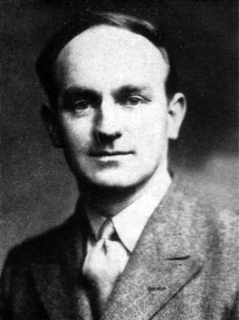
McLaverty is born on July 5, 1904, at Magheross, near Carrickmacross, County Monaghan, the son of Michael McLaverty, a waiter, and Kathleen McLaverty (née Brady). His father works in a hotel in the town until they move to Rathlin Island, and later to Belfast, when he is five years old. He attends St. Malachy’s College in the city, where an inspiring teacher instills in him a love of William Shakespeare‘s writings. He entered Queen’s University Belfast (QUB) in October 1924 and studies physics. He obtains a B.Sc. in 1928 and immediately takes his H.Dip.Ed., completing his teaching practice in St. Mary’s University College, Strawberry Hill, London. The following year he begins teaching at St. John’s Primary School in Colinward Street, west Belfast. He is admitted to the degree of M.Sc. at QUB in 1933.
In 1933, McLaverty marries Mary Conroy (formerly Giles), a young widow and fellow teacher at St. John’s. They have two sons and two daughters.
During his time at St. John’s, McLaverty writes his first five novels and fifteen short stories. In the 1930s he has developed a distinctive style in precise, unsentimental, but compassionate short stories. By the late 1930s, however, he switches his energies from short stories to the novel. Call My Brother Back (1939) contrasts the traditional world of Rathlin Island with the northern troubles in a family context. Another novel, Lost Fields (1941), and his collection of short stories, The White Mare (1943), explore the Belfast of his childhood and deal with the underlying tensions in Irish rural life. In the period 1949–55 he publishes five other novels: Three Brothers (1948), Truth in the Night (1951), School for Love (1954), The Choice (1958), and Brightening Day (1965). These novels deal with ordinary people and the dilemmas they encounter in their families and communities. His writings are influenced by Anton Chekhov, Leo Tolstoy, Katherine Mansfield, Gerard Manley Hopkins, and the Irish short story writers Liam O’Flaherty and Daniel Corkery.
As headmaster of St. Thomas’s intermediate school, a large school for boys in Ballymurphy, off the Falls Road, McLaverty gives his first job to the young Seamus Heaney, in whom he cultivates an interest in the writings of Chekhov and Tolstoy and the Irish writers Mary Lavin and Patrick Kavanagh. He deems Heaney to be the only genius he has ever met, and his work and success are a great source of pride and joy to him. His encouragement of the young John McGahern is of as much benefit to McLaverty himself, as their short but intense correspondence give him the energy to resume his writings.
Between his resignation from St. Thomas’s in 1963 and the early 1970s he teaches part-time at St. Joseph’s training college and St. Dominic’s High School, one of Belfast’s best-known grammar schools. In 1981 his old alma mater recognises his contribution to literature by awarding him an honorary master’s degree. In the same year he wins the American Irish literary fellowship, a prestigious literary award of $10,000, in recognition of his “impressive body of work as a short story writer and novelist.”
McLaverty dies on March 22, 1992, in County Down, Northern Ireland.
(From: “McLaverty, Michael” by Éamonn Ó Ciardha, Dictionary of Irish Biography, http://www.dib.ie, October 2009)
Butler succeeds to the title at the age of fifteen and was educated at the University of Oxford, taking the degree of LL.D. in 1677. In 1678, he is commissioned as a captain in Colonel Thomas Dongan‘s regiment, which is disbanded before he takes up his post.
In 1692, Butler is created Earl of Newcastle in County Limerick in the Jacobite peerage of Ireland. In France he is named Colonel of the 2nd Queen’s Regiment of Irish Horse in the service of that country and serves with distinction in various battles of the War of the Spanish Succession, also becoming a Lieutenant-General in the Spanish army. He is at the Siege of Roses in 1693, and in 1694 is a Brigadier attached to the army of Germany. He serves in Italy and other parts of Continental Europe from 1701 to 1703, sharing all the fortunes of the Irish Brigade. He later serves in the French army as a Lieutenant-General. He is created Brigadier of Cavalry in 1694.
Butler dies at the age of eighty-eight in Paris on June 18, 1740, and is buried at St. Paul’s there. John C. O’Callaghan writes in Irish Brigades in the Service of France (Glasgow, 1870): “The successive claimants of the title of Galmoy were officers in France down to the Revolution; in whose armies, as well as in others, various gentlemen have honourably represented a name, of which the illustrious General Lafayette is related to have said, in the war for the independence of the United States of America, that ‘whenever he wanted anything well done, he got a Butler to do it.'”
Notwithstanding the attainder, the viscountcy is assumed by his nephew, James Butler of the Irish Brigade in France, the son of the Viscount’s brother, Richard Butler of Galmoye.
Church is born on February 23, 1784, the second son of Matthew Church, a Quaker merchant in the North Mall area of Cork, County Cork, and Anne Dearman, originally from Braithwaith, Yorkshire, England. At the age of sixteen, he runs away from home and enlists in the British Army. For this violation of its principles, he is disowned by the Religious Society of Friends, but his father buys him a commission, dated July 3, 1800, in the 13th Somerset Light Infantry. He serves in the demonstration against Ferrol, Spain, and in the expedition to Egypt under Sir Ralph Abercromby in 1801, where he takes part in the Battle of Abukir and the taking of Alexandria. After the expulsion of the French from Egypt he returns home but goes back to the Mediterranean in 1805 among the troops sent to defend the island of Sicily. He accompanies the expedition which lands in Calabria and fights a successful battle against the French at the Battle of Maida on July 4, 1806. He is present on this occasion as captain of a recently raised company of Royal Corsican Rangers. His zeal attracts the notice of his superiors, and he has begun to show his capacity for managing and drilling foreign levies. His Corsicans form part of the garrison of Capri from October 1806 until the island is taken by an expedition directed against it by Joachim Murat, in September 1808, at the very beginning of his reign as king of Naples. Church, who has distinguished himself in the defence, returns to Malta after the capitulation.
In the summer of 1809 Church sails with the expedition sent to occupy the French-occupied Ionian Islands. Here he increases the reputation he has already gained by forming a Greek regiment in British pay. On September 9, 1809, he takes the position of Major in the 1st Regiment Greek Light Infantry. On November 19, 1812, he becomes Lieutenant-Colonel of the unit, by then renamed The Duke of York’s Greek Light Infantry Regiment. Having gained the experience of managing foreign troops, he commands the regiments made up of Greeks he recruits himself in 1813, when he forms a second regiment composed of 454 Greeks (2nd Regiment Greek Light Infantry) to occupy Paxoi islands. These regiments include many of the men who are afterward among the leaders of the Greeks in the Greek War of Independence including Theodoros Kolokotronis, with whom he keeps a friendship and correspondence. He commands this regiment at the taking of the island of Santa Maura (Lefkada), on which occasion his left arm is shattered by a bullet.
During his slow recovery Church travels in northern Greece, in Macedonia, and to Constantinople. In the years of the fall of Napoleon (1813 and 1814) he is present as British military representative with the Austrian troops until the campaign which terminates in the expulsion of Murat from Naples. He draws up a report on the Ionian Islands for the Congress of Vienna, in which he argues in support, not only of the retention of the islands under the British flag, but of the permanent occupation by Britain of Parga and other formerly Venetian coastal towns on the mainland, then in the possession of Ali Pasha of Ioannina. The peace and the disbanding of his Greek regiment leaves him without employment, though his reputation is high at the war office, and his services are recognized by the grant of a Companion of the Order of the Bath.
In 1817, Church enters the service of King Ferdinand I of Naples as lieutenant-general, with a commission to suppress the brigandage then rampant in Apulia. Ample powers are given him, and he attains a full measure of success. In 1820 he is appointed governor of Palermo and commander-in-chief of the troops in Sicily. The revolution which breaks out in that year leads to the termination of his services in Naples. He escapes from violence in Sicily with some difficulty. At Naples he is imprisoned and put on trial by the government but is acquitted and released in January 1821. King George IV confers on him a Knight Commander of the Royal Guelphic Order in 1822. He is further promoted to Knight Grand Cross by William IV in 1837.
The rising of the Greeks against the Turks has his full sympathy from the beginning. But for some years he has to act only as the friend of the insurgents in England. In 1827 he takes the honourable but unfortunate step of accepting the commandership-in-chief of the Greek army. At the point of anarchy and indiscipline to which they have now fallen, the Greeks can no longer form an efficient army and can look for salvation only to foreign intervention. Church, who lands in March, is sworn archistrategos on April 15, 1827, but cannot secure loyal co-operation or obedience. The rout of his army in an attempt to relieve the Acropolis of Athens, then besieged by the Ottomans, proves that it is incapable of conducting regular operations. With the acropolis capitulated, he turns to partisan warfare in western Greece.
After the Battle of Navarino, and during the Kapodistrias period, Church is placed commander-in-chief of the Greek regular forces in Central Greece, together with Demetrios Ypsilantis. However, he surrenders his commission as a protest against the unfriendly government of Capodistrias on August 25, 1829. He lives the remainder of his life in Greece.
Church’s activity has beneficial results and leads to a rectification in 1832, in a sense favourable to Greece, of the frontier drawn by the Great Powers in the London Protocol (1830). Under King Otto, he occupies senior military positions. On October 3, 1833, he is promoted to lieutenant general in the Hellenic Army, and in January 1835 becomes commander of the forces in Continental Greece. On June 10, 1835, he is appointed head of the Secretariat of State for Military Affairs (Army Minister), becoming Inspector-General of the Army on October 28, 1836. He serves as a senator from 1844 to 1845. He is promoted to full general in February 1854, the grade being established for the first time for this purpose in the Hellenic Army.
Church dies following an illness on March 20, 1873. The funeral service takes place in the Anglican Church in Filellinon Street in the presence of King George I and a large number of official guests. Panagiotis Chalkiopoulos, the Minister of Justice, gives the funeral speech in Greek, while John Gennadius gives a speech in English. He is buried at the First Cemetery of Athens at public expense on March 27. The funeral monument has an inscription in English on the front and Greek on the back.
(Pictured: Portrait of Sir Richard Church, oil on cardboard by an unidentified artist, 1873)
Kelly is the oldest child in a Roman Catholic family of five. He lives in Carrickfergus until he is sixteen, at which time the family returns to live in Dungannon. His uncle is the Irish Republican activist and elected official Liam Kelly.
Kelly becomes a member of the Provisional Irish Republican Army at the beginning of the 1970s and becomes one of the most experienced IRA men in County Tyrone. He is arrested in February 1982 based on testimony from an informant named Patrick McGurk but is released in October 1983 due to lack of evidence, after a trial that lasts fifteen minutes.
In 1985, Kelly becomes brigade commander in East Tyrone and begins developing tactics for attacking isolated Royal Ulster Constabulary (RUC) bases in his area. Under his leadership the East Tyrone Brigade becomes the most active IRA unit.
In 1986, Kelly attends the IRA Army Convention where the main topic of discussion is the principle of abstentionism. Gerry Adams and others argue that the abstentionist rule should be dropped and the Provisional movement should become involved in constitutional politics. Kelly votes against dropping the rule, and a rift with the majority of the IRA Army Council ensues.
Kelly is killed by the Special Air Service (SAS) on May 8, 1987, while he is participating in an attack on Loughgall police station, in which seven other IRA men, Pádraig McKearney, Declan Arthurs, Seamus Donnelly, Tony Gormley, Eugene Kelly, Jim Lynagh, and Gerard O’Callaghan, also die. His funeral in Dungannon is one of the largest in Tyrone during the Troubles.
Kelly is buried in Edendork Cemetery, two miles from his home in Dungannon.
Sterne is born on November 24, 1713, in Clonmel, County Tipperary, to a British military officer stationed there. Following his father’s postings, the family moves briefly to Yorkshire before returning to Ireland, where they live largely in poverty and move frequently throughout the rest of Sterne’s youth. When the elder Sterne is dispatched to Jamaica, where he would die in 1731, he places his son with a wealthy uncle who supports the boy’s education.
Sterne attends Jesus College, Cambridge, following in the footsteps of his grandfather, Richard Sterne, who had been Master of the College. After being ordained as an Anglican priest, he takes up the vicarship of Sutton-on-the-Forest, where he marries Elizabeth Lumley. The couple lives there for the next 20 years.
Through his paternal family line, Sterne is connected to several powerful clergymen. His uncle, Archdeacon Jaques Sterne, encourages him to contribute to Whig political journals, and consequently he writes several articles supporting Sir Robert Walpole. However, when his political fervency fails to match his uncle’s, prompting him to abandon the role of political controversialist, Jaques Sterne cuts ties with his nephew and refuses to support his career. Nevertheless, Sterne continues writing.
Sterne’s first long work, a sharp satire of the spiritual courts entitled A Political Romance, makes him as many enemies as allies. Though the work is not widely distributed and indeed is burned at the request of those targeted by its Swiftian-style criticism, it represents Sterne’s first foray into the kind of humorous satire for which he would become famous. At age 46, he steps back from managing his parishes and turns his full attention to writing.
Sterne begins what becomes his best-known work, The Life and Opinions of Tristram Shandy, Gentleman, at a moment of personal crisis. He and his wife are both ill with tuberculosis and, in the same year that the first volumes of his long comic novel appear, his mother and uncle Jaques die. The blend of sentiment, humour and philosophical exploration that characterises his works matures during this difficult period. Tristram Shandy is an enormous success, and Sterne becomes, for the first time in his life, a famous literary figure in London. Still suffering from tuberculosis, he leaves England for Continental Europe, where his travels influence his second major work, A Sentimental Journey Through France and Italy (1768).
Sterne’s narrator in A Sentimental Journey is Parson Yorick, a sensitive but also comic figure who first appears in Tristram Shandy and who becomes Sterne’s fictive alter ego. In A Sentimental Journey, Parson Yorick wears a “little picture of Eliza around his neck,” and in the last year of his life Sterne writes the autobiographical Journal to Eliza under the pseudonym Yorick. Eliza is Eliza Draper, the wife of an East India Company official, and the literary and emotional muse of Sterne’s final years. After Draper returns to India, the two continue to exchange letters, some of which Draper allows to be published after Sterne’s death in the volume Letters from Yorick to Eliza.
In early 1768, less than a month after A Sentimental Journey is published, Sterne’s strength fails him and he dies in his lodgings at 41 Old Bond Street in London on March 18, 1768, at the age of 54. He is buried in the churchyard of St. George’s Hanover Square Church.
(Pictured: Portrait of Laurence Sterne (1713-1768), oil on canvas by Joshua Reynolds, 1760)
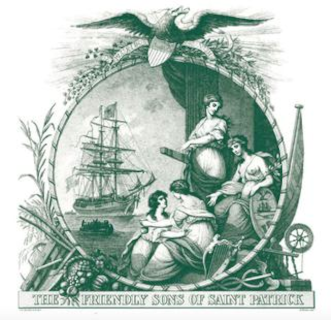
Originally founded as a charitable organization with the intent of aiding migrants from Ireland, the organization has since developed a focus on encouraging “greater interest in ties of friendship between America and Ireland,” in addition to sponsoring scholarships, cultural events, charity activities, and educational endowments.
On March 17, 1784, a group of New York City‘s Irish officers who had served in the Continental Army form the Society of the Friendly Sons of St. Patrick in the City of New York. Its founder and first president is Daniel McCormick, a merchant who is one of the first directors of the Bank of New York.
Branches of the Society have also been founded in cities such as Cincinnati, Detroit, Providence, San Diego and Spokane. The Cincinnati branch has an active glee club which has performed hundreds of benefit and goodwill performances for over 25 years.
Each branch operates independently. Originally all-male, the Philadelphia branch first admits women in 2016. The New York branch admits women to its annual pre-St. Patrick’s Day fundraising dinner for the first time in 2018, and votes to amend its by-laws on January 10, 2020, in order to permit women to apply for membership.
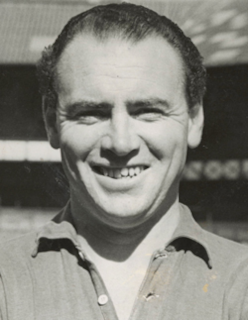
Peter Desmond Farrell, Irish footballer who plays as a right-half for, among others, Shamrock Rovers, Everton and Tranmere Rovers, dies in Dublin on March 16, 1999. As an international, he also plays for both Ireland teams – the FAI XI and the IFA XI. His playing career follows a similar path to that of Tommy Eglington. As well as teaming up at international level, they also play together at three clubs.
Farrell is born on August 16, 1922, and raised in the Convent Road area of Dalkey, County Dublin, and is educated at Harold Boy’s National School and the Christian Brothers in Dún Laoghaire, from which he wins a scholarship. He is playing football with Cabinteely Schoolboys when spotted by a Shamrock Rovers scout and subsequently joins Rovers on his 17th birthday in August 1939. Among his early teammates is the veteran Jimmy Dunne. With a team that also includes Jimmy Kelly, Tommy Eglington, Jimmy McAlinden and Paddy Coad, he later helps Rovers reach three successive FAI Cup finals. They win the competition in 1944 and 1945 and finish as runners up in 1946.
In July 1946, together with Tommy Eglington, Farrell signs for Everton. In eleven seasons with the club, he plays 421 league games and scores 14 goals. He also plays a further 31 games in the FA Cup and scores an additional four goals. In 1951 he is appointed Everton captain and during the 1953–54 season leads them to the runners up place in the Second Division, thus gaining promotion to the First Division. During his time with the club his teammates, apart from Eglington, also include Alex Stevenson, Peter Corr, Harry Catterick, Wally Fielding, Tommy E. Jones, Brian Labone and Dave Hickson. He is never sent off during his time at Goodison Park.
Farrell leaves Everton in October 1957 and follows Tommy Eglington to Tranmere Rovers where he becomes player-manager. He plays 114 league games for Tranmere, before leaving in December 1960. After a time as manager at Sligo Rovers, he becomes manager of Holyhead Town and, helped by a number of former Everton and Tranmere players, guides them to the Welsh Football League (North) title.
When Farrell begins his international career in 1946 there are, in effect, two Ireland teams, chosen by two rival associations. Both associations, the Northern Ireland–based IFA and the Ireland–based FAI claim jurisdiction over the whole of Ireland and select players from the entire island. As a result, several notable Irish players from this era, including Farrell, play for both teams.
Farrell makes 28 appearances and scores three goals for the FAI XI. While still at Shamrock Rovers, he captains the FAI XI on his international debut on June 16, 1946, against Portugal. On September 21, 1949, together with Johnny Carey and Con Martin, he is a member of the FAI XI that defeats England 2–0 at Goodison Park, becoming the first non-UK team to beat England at home. After Martin puts the FAI XI ahead with a penalty in the 33rd minute, Farrell makes victory certain in the 85th minute. Tommy O’Connor slips the ball to Farrell and as the English goalkeeper Bert Williams advances, he lofts the ball into the unguarded net. He scores his second goal for the FAI XI on October 9, 1949, a in 1–1 draw with Finland, a qualifier for the 1950 FIFA World Cup. His third goal comes on May 30, 1951, as Farrell scores the opening goal in a 3–2 win against Norway.
Farrell also makes seven appearances for the IFA XI between 1946 and 1949. On November 27, 1946, he makes his debut for the IFA XI in a 0–0 draw with Scotland. Together with Johnny Carey, Con Martin, Bill Gorman, Tommy Eglington, Alex Stevenson and Davy Walsh, he is one of seven players born in the Irish Free State to play for the IFA XI on that day. The draw helps the team finish as runners-up in the 1946-47 British Home Championship. He also helps the IFA XI gain some other respectable results, including a 2–0 win against Scotland on October 4, 1947, and a 2–2 draw with England at Goodison Park on November 5, 1947.
After returning to Ireland following his retirement, Farrell settles in Dublin and follows his father into the insurance business. He dies on March 16, 1999, following a long illness. He is buried in Dean’s Grange Cemetery in Deansgrange, Dún Laoghaire–Rathdown, County Dublin.




 seamus dubhghaill