seamus dubhghaill

Promoting Irish Culture and History from Little Rock, Arkansas, USA


4 Comments

Death of Gusty Spence, UVF Leader & Loyalist Politician

Augustus Andrew Spence, a leader of the paramilitary Ulster Volunteer Force (UVF) and a leading loyalist politician in Northern Ireland, dies in a Belfast hospital on September 25, 2011. One of the first UVF members to be convicted of murder, he is a senior figure in the organisation for over a decade.

Spence, the sixth of seven children, is born and raised in the Shankill Road area of West Belfast in Northern Ireland, the son of William Edward Spence, a member of the Ulster Volunteers who fought in World War I, and Isabella “Bella” Hayes. The family home is 66 Joseph Street in an area of the lower Shankill known colloquially as “the Hammer.” He is educated at the Riddel School on Malvern Street and the Hemsworth Square school, finishing his education at the age of fourteen. He is also a member of the Church Lads’ Brigade, a Church of Ireland group, and the Junior Orange Order. His family has a long tradition of Orange Order membership.

Spence takes various manual jobs in the area until joining the British Army in 1957 as a member of the Royal Ulster Rifles. He rises to the rank of Provost Sergeant (battalion police). He is stationed in Cyprus and sees action fighting against the forces of Colonel Georgios Grivas. He serves until 1961 when ill-health forces him to leave. He then finds employment at the Harland & Wolff shipyard in Belfast, where he works as a stager (builder of the scaffolding in which the ships are constructed), a skilled job that commands respect among working class Protestants and ensures for him a higher status within the Shankill.

From an early age Spence is a member of the Prince Albert Temperance Loyal Orange Lodge, where fellow members include John McQuade. He is also a member of the Royal Black Institution and the Apprentice Boys of Derry. Due to his later involvement in a murder, he is expelled from the Orange Order and the Royal Black Institution. The Reverend Martin Smyth is influential in his being thrown out of the Orange Order.

Spence’s older brother Billy is a founding member of Ulster Protestant Action (UPA) in 1956, and he is also a member of the group. He is frequently involved in street fights with republicans and garners a reputation as a “hard man.” He is also associated loosely with prominent loyalists such as Ian Paisley and Desmond Boal and is advised by both men in 1959 when he launches a protest against Gerry Fitt at Belfast City Hall after Fitt had described Spence’s regiment as “murderers” over allegations that they had killed civilians in Cyprus. He, along with other Shankill Road loyalists, break from Paisley in 1965 when they side with James Kilfedder in a row that follows the latter’s campaigns in Belfast West. Paisley intimates that Kilfedder, a rival for the leadership of dissident unionism, is close to Fine Gael after learning that he had attended party meetings while a student at Trinity College Dublin (TCD). The Shankill loyalists support Kilfedder and following his election as MP send a letter to Paisley accusing him of treachery during the entire affair.

Spence claims that he is approached in 1965 by two men, one of whom was an Ulster Unionist Party MP, who tells him that the Ulster Volunteer Force is to be re-established and that he is to have responsibility for the Shankill. He is sworn in soon afterward in a ceremony held in secret near Pomeroy, County Tyrone. Because of his military experience, he is chosen as the military commander and public face of the UVF when the group is established. However, RUC Special Branch believes that his brother Billy, who keeps a much lower public profile, is the real leader of the group. Whatever the truth of this intelligence, Spence’s Shankill UVF team is made up of only around 12 men on its formation. Their base of operations is the Standard Bar, a pub on the Shankill Road frequented by Spence and his allies.

On May 7, 1966, a group of UVF men led by Spence petrol bomb a Catholic-owned pub on the Shankill Road. Fire also engulfs the house next door, killing the elderly Protestant widow, Matilda Gould (77), who lives there. On May 27, he orders four UVF men to kill an Irish Republican Army (IRA) member, Leo Martin, who lives on the Falls Road. Unable to find their target, the men drive around in search of any Catholic instead. They shoot dead John Scullion (28), a Catholic civilian, as he walks home. Spence later writes “at the time, the attitude was that if you couldn’t get an IRA man you should shoot a Taig, he’s your last resort.” On June 26, the same gang shoots dead Catholic civilian Peter Ward (18) and wounds two others as they leave a pub on Malvern Street in the lower Shankill. Two days later, the government of Northern Ireland uses the Special Powers Act to declare the UVF illegal. Shortly after, Spence and three others are arrested.

In October 1966, Spence is sentenced to life imprisonment for the murder of Ward, although he has always claimed his innocence. He is sent to Crumlin Road Prison. During its July 12, 1967, march, the Orange lodge to which he belongs stops outside the prison in tribute to him. This occurs despite him having been officially expelled from the Orange Order following his conviction. His involvement in the killings gives him legendary status among many young loyalists and he is claimed as an inspiration by the likes of Michael Stone. Tim Pat Coogan describes Spence as a “loyalist folk hero.” The murder of Ward is, however, repudiated by Paisley and condemned in his Protestant Telegraph, sealing the split between the two.

Spence appeals against his conviction and is the subject of a release petition organised by the Ulster Constitution Defence Committee, although nothing comes of either initiative. Despite the fact that control of the UVF lay with his closest ally, Samuel “Bo” McClelland, from prison he is often at odds with the group’s leadership, in particular with regards to the 1971 McGurk’s Bar bombing. Spence now argues that UVF members are soldiers and soldiers should not kill civilians, as had been the case at McGurk’s Bar. He respects some Irish republican paramilitaries, who he feels also live as soldiers, and to this end he writes a sympathetic letter to the widow of Official IRA leader Joe McCann after he is killed in 1972.

Spence is granted two days leave in early July 1972 to attend the wedding of his daughter Elizabeth to Winston Churchill “Winkie” Rea. The latter had formally asked Spence for his daughter’s hand in marriage during a prison visit. Met by two members of the Red Hand Commando upon his release, Spence is informed of the need for a restructuring within the UVF and told not to return to prison. He initially refuses and goes on to attend his daughter’s wedding. Afterward a plot is concocted where Jim Curry, a Red Hand Commando member, will drive Spence back to prison but the car is to be stopped and Spence “kidnapped.” As arranged, the car in which he is a passenger is stopped in Springmartin and he is taken away by UVF members. He remains at large for four months and during that time gives an interview to ITV‘s World in Action in which he calls for the UVF to take an increased role in the Northern Ireland conflict against the Provisional IRA. At the same time, he distances himself from any policy of random murders of Catholics. He also takes on responsibility for the restructuring, returning the UVF to the same command structure and organisational base that Edward Carson had utilised for the original UVF, with brigades, battalions, companies, platoons and sections. He also directs a significant restocking of the group’s arsenal, with guns mostly taken from the security forces. He gives his permission for UVF brigadier Billy Hanna to establish the UVF’s Mid-Ulster Brigade in Lurgan. His fugitive status earns him the short-lived nickname the “Orange Pimpernel.” He is arrested along with around thirty other men at a UVF drinking club in Brennan Street, but after giving a false name, he is released.

Spence’s time on the outside comes to an end on November 4 when he is captured by Colonel Derek Wilford of the Parachute Regiment, who identifies him by tattoos on his hands. He is sent directly to Long Kesh Detention Centre soon afterward, where he shares a cell with William “Plum” Smith, one of the Red Hand Commandos whom he had met upon his initial release and who had since been jailed for attempted murder.

Spence soon becomes the UVF commander within the Long Kesh Detention Centre. He runs his part of Long Kesh along military lines, drilling inmates and training them in weapons use while also expecting a maintenance of discipline. As the loyalist Long Kesh commander, he initially also has jurisdiction over the imprisoned members of the Ulster Defence Association (UDA), although this comes to an end in 1973 when, following a deterioration in relations between the two groups outside the prison walls, James Craig becomes the UDA’s Maze commander. By this time Spence polarises opinion within the UVF, with some members fiercely loyal to a man they see as a folk hero and others resenting his draconian leadership and increasing emphasis on politics, with one anonymous member even labelling him “a cunt in a cravat.”

Spence begins to move toward a position of using political means to advance one’s aims, and he persuades the UVF leadership to declare a temporary ceasefire in 1973. Following Merlyn Rees‘ decision to legalise the UVF in 1974, Spence encourages them to enter politics and support the establishment of the Volunteer Political Party (VPP). However, his ideas are abandoned as the UVF ceasefire falls apart that same year following the Ulster Workers’ Council strike and the Dublin and Monaghan bombings. The carnage of the latter shocks and horrifies Spence. Furthermore, the VPP suffers a heavy defeat in West Belfast in the October 1974 United Kingdom general election, when the DUP candidate, John McQuade, captures six times as many votes as the VPP’s Ken Gibson.

Spence is increasingly disillusioned with the UVF, and he imparts these views to fellow inmates at Long Kesh. According to Billy Mitchell, Spence quizzes him and others sent to Long Kesh about why they are there, seeking an ideological answer to his question. When the prisoner is unable to provide one, Spence then seeks to convince them of the wisdom of his more politicised path, something that he accomplishes with Mitchell. David Ervine and Billy Hutchinson are among the other UVF men imprisoned in the mid-1970s to become disciples of Spence. In 1977, he publicly condemns the use of violence for political gain, on the grounds that it is counterproductive. In 1978, he leaves the UVF altogether. His brother Bobby, also a UVF member, dies in October 1980 inside the Maze, a few months after the death of their brother Billy.

Released from prison in 1984, Spence soon becomes a leading member of the UVF-linked Progressive Unionist Party (PUP) and a central figure in the Northern Ireland peace process. He initially works solely for the PUP but eventually also sets up the Shankill Activity Centre, a government-supported scheme to provide training and leisure opportunities for unemployed youths.

Spence is entrusted by the Combined Loyalist Military Command (CLMC) to read out their October 13, 1994, statement that announces the loyalist ceasefire. Flanked by his PUP colleagues Jim McDonald and William Plum Smith, as well as Ulster Democratic Party (UDP) members Gary McMichael, John White and David Adams, he reads the statement from Fernhill, a former Cunningham family home on their former Glencairn estate in Belfast’s Glencairn area. This building had been an important training centre for members of Edward Carson’s original UVF. A few days after the announcement, he makes a trip to the United States along with the PUP’s David Ervine and Billy Hutchinson and the UDP’s McMichael, Adams and Joe English. Among their engagements is one as guests of honour of the National Committee on American Foreign Policy. He goes on to become a leading advocate for the Good Friday Agreement.

In August 2000, Spence is caught up in moves by Johnny Adair‘s “C” Company of the UDA to take control of the Shankill by forcing out the UVF and other opponents. Due to his involvement in the peace process and the eventual Good Friday Agreement, the authorities insist against his wishes to install additional security measures to the doors and windows. As a result, when Adair’s men try to force their way into Spence’s Shankill home, they only manage to push a long stick through a partially open window of the bungalow and dislodge a few of his military frames off the opposite wall. There is no other damage and other than that small disruption no one is able to gain any physical entry into the property. When Spence’s wife dies three years later, he says that C Company is responsible for her death, as the events had taken on her health.

On May 3, 2007, Spence reads out the statement by the UVF announcing that it will keep its weapons but put them beyond the reach of ordinary members. The statement also includes a warning that activities could “provoke another generation of loyalists toward armed resistance.” He does not specify what activities or what is being resisted.

Spence marries Louie Donaldson, a native of the city’s Grosvenor Road, on June 20, 1953, at Wellwood Street Mission, Sandy Row. The couple has three daughters, Elizabeth (born 1954), Sandra (1956) and Catherine (1960). Louie dies in 2003. Spence, a talented footballer in his youth with Old Lodge F.C., is a lifelong supporter of Linfield F.C.

Spence dies in a Belfast hospital at the age of 78 on September 25, 2011. He had been suffering from a long-term illness and was admitted to hospital 12 days prior to his death. He is praised by, among others, PUP leader Brian Ervine, who states that “his contribution to the peace is incalculable.” Sinn Féin‘s Gerry Kelly claims that while Spence had been central to the development of loyalist paramilitarism, “he will also be remembered as a major influence in drawing loyalism away from sectarian strife.”

However, a granddaughter of Matilda Gould, a 74-year-old Protestant widow who had died from burns sustained in the UVF’s attempted bombing of a Catholic bar next door to her home, objects to Spence being called a “peacemaker” and describes him as a “bad evil man.” The unnamed woman states, “When you go out and throw a petrol bomb through a widow’s window, you’re no peacemaker.”

Spence’s funeral service is held in St. Michael’s Church of Ireland on the Shankill Road. Notable mourners include Unionist politicians Dawn Purvis, Mike Nesbitt, Michael McGimpsey, Hugh Smyth and Brian Ervine, UVF chief John “Bunter” Graham and UDA South Belfast brigadier Jackie McDonald. In accordance with his wishes, there are no paramilitary trappings at the funeral or reference to his time in the UVF. Instead, his coffin is adorned with the beret and regimental flag of the Royal Ulster Rifles, his former regiment. He is buried in Bangor, County Down.


Leave a comment

Birth of Sir Shane Leslie, 3rd Baronet

Sir John Randolph Leslie, 3rd Baronet, Anglo-Irish diplomat and writer commonly known as Sir Shane Leslie, is born in Glaslough, County Monaghan, on September 24, 1885. He is a first cousin of Sir Winston Churchill. In 1908, he becomes a Roman Catholic and supports Irish Home Rule.

Leslie is born into a wealthy Anglo-Irish landowning family. His father is Sir John Leslie, 2nd Baronet, and his mother, Leonie Jerome, is the sister of Winston Churchill’s mother, Jennie. Both are daughters of Leonard W. Jerome. His ancestor, The Right Reverend John Leslie, Bishop of the Isles, moves from Scotland to Ireland in 1633 when he is made Bishop of Raphoe in County Donegal and is made Bishop of Clogher in 1661. Bishop Leslie is a vocal opponent of Oliver Cromwell.

Together with his brother Norman, Leslie’s early education begins at home where a German governess, Clara Woelke, is their first teacher. As children the brothers have more contact with servants than they have with their parents. His own daughter, Anita, says, “In my parents’ view schools performed the same functions that kennels did for dogs. They were places where pets could be conveniently deposited while their owners travelled.”

Leslie is educated at Ludgrove School, then Eton College and King’s College, Cambridge. While at Cambridge University he becomes a Roman Catholic and a supporter of Irish Home Rule. He adopts an anglicised Irish variant of his name (“Shane”). Not overly impressed by Eton, as a lower boy he and his roommates occupy “an old, battered warren betwixt the chapel cemetery and Wise’s horse yard … [T]he food was wretched and tasteless … As for thrashings which tyrannised rather than disciplined our house, they were excessive. Bullying was endemic and Irish boys were ridiculed, especially on St Patrick’s Day.”

Leslie refuses to send his own sons to Eton. They are educated at Roman Catholic Benedictine schools: Jack at Downside School and Desmond at Ampleforth College.

In the January 1910 United Kingdom general election Leslie stands as the Irish Parliamentary Party (IPP) candidate for the Londonderry City constituency, losing by just 57 votes. In the second general election later that year he is again narrowly defeated by the Unionist candidate.

Before World War I, Leslie travels extensively and in 1912 he marries Marjorie Ide, the youngest daughter of Henry Clay Ide, then United States ambassador to Spain and former Governor-General of the Philippines. His parents and other family members move temporarily to London at the outbreak of war.

During the war Leslie is in a British Ambulance Corps, until invalided out. He is then sent to Washington, D.C. to help the British Ambassador, Sir Cecil Spring Rice, soften Irish American hostility toward England and obtain American intervention in the war in the aftermath of the 1916 Easter Rising in Dublin and the execution of its leaders. But he also looks to Ireland for inspiration when writing and edits a literary magazine that contains much Irish verse. He becomes a supporter of the ideals of Irish nationalism, although not physical force republicanism.

In the 1918 United Kingdom general election in Ireland, the Irish Parliamentary Party loses massively to Sinn Féin, putting an end to Leslie’s political career, but as the first cousin of Winston Churchill he remains a primary witness to much that is said and done outside the official record during the negotiation of the Anglo-Irish Treaty of 1921. Disappointed, he feels unwanted in Ireland and abandoned by the British. Like many members of the landed gentry from the 1880s who were obliged to turn to other occupations, he can no longer rely on income from landholdings.

Leslie writes extensively, in a wide range of styles, in verse, prose, and polemic, over several decades. His writings include The End of a Chapter (1916), while hospitalised during World War I, The Oppidan (1922), a roman à clef about his life and contemporaries at Eton, an edition of the Letters of Herbert Cardinal Vaughan to Lady Herbert of Lea (1942), and a biography Mrs. Fitzherbert: a life chiefly from unpublished sources (1939), together with an edition of her letters (with Maria Anne Fitzherbert), The letters of Mrs. Fitzherbert and connected papers; being the second volume of the life of Mrs. Fitzherbert (1944). He also writes Mark Sykes: His Life and Letters (1923), a biography of the English traveler, Conservative Party politician and diplomatic advisor. He advises budding novelist Scott Fitzgerald on the title of his first novel, they share correspondence with the future Mnsg. William A. Hemmick, who is Fitzgerald’s teacher at the Newman School.

A passionate advocate of reforestation, Leslie finds the business of running an estate uncreative and boring, and transfers the estate entailed to him to his eldest son, John Norman Leslie, who succeeds as the 4th Baronet. He transfers St. Patrick’s Purgatory on Lough Derg to the Roman Catholic Bishop of Clogher, Eugene O’Callaghan.

The wealth of the Leslies wanes by the 1930s following the Wall Street crash of 1929 and a farm that is loss making. In his unpublished memoirs, Leslie writes “a gentleman’s standing in his world was signalled by his list of clubs and it was worth paying hundreds of pounds in subs.” They continue to maintain their lifestyle, involving attendance at the London season and the entertainment of distinguished visitors, including Anthony Eden at Glaslough. At the outbreak of World War II in 1939 he joins the Home Guard. He spends the remainder of his life between Glaslough and London.

Leslie’s first wife, Marjorie, dies on February 8, 1951. On May 30, 1958, at the Catholic Church of St. Peter & Edward, Westminster, he marries Iris Carola Frazer, who is the daughter of Charles Miskin Laing and Etheldreda Janet Laing.

Leslie dies at the age of 85 at 15b Palmeira Court, Hove, East Sussex, on April 14, 1971. A Requiem Mass is held for him in Westminster Cathedral on October 12, 1971.


Leave a comment

Birth of Thomas Sinclair, Businessman & Politician

Thomas Sinclair, Ulster Scots businessman and politician who drafted the Ulster Covenant, is born in Belfast on September 23, 1838.

Sinclair’s parents are Thomas (1811–1867), merchant and ship-owner, and Sarah Sinclair (née Archer) (1800–1849). His father goes into business with his brother John (1808–1856), setting up a provisions and general merchant store at 5–11 Tomb Street, Belfast. John marries Eliza Pirrie, a relative of the prominent ship builder William Pirrie, 1st Viscount Pirrie. After the death of his father in 1867, Sinclair inherits £35,000 as his mother, brother and sister are all deceased.

In 1876, Sinclair marries Mary Duffin of Strandtown Lodge, Belfast. They have a daughter, Frances Elizabeth Crichton, and a son. She dies in 1879. He marries Elizabeth Richardson in 1882. She is the niece of John Grubb Richardson and the widow of Sinclair’s cousin, John M. Sinclair. They have three sons and two daughters.

Sinclair attends Royal Belfast Academical Institution and Queen’s College Belfast, graduating with a BA with gold medal for mathematics in 1856, and an MA with gold medals in logic, political economy, and English literature in 1859. After his father’s death, he takes over running the family business. He expands and grows it by merging it with another large provisions business with American branches, Kingan & Co. He is related to the Kingans through his cousin Sarah, who is married to the owner, Samuel Kingan.

Despite numerous requests, Sinclair never stands for parliament, instead serving as deputy lieutenant, justice of the peace, president of the Ulster chamber of commerce in 1876 and 1902, and privy councilor in 1896. Having been a supporter of William Ewart Gladstone, he joins the Ulster Liberal Party in 1868, supporting the land acts of 1870 and 1881. Following the home rule bill of 1886, he convenes a meeting in the Ulster Hall of liberals on April 30, 1886, which passes a resolution in condemnation of the bill. Forming the Ulster Liberal Unionist Association, of which he is chair, he organises the Ulster Convention in Belfast. Held on June 17, 1892, it sees 11,879 Ulster unionists meet to protest home rule. Nine months after the convention, he is appointed to the executive committee of the new unionist clubs, which are founded to protect the union. The defeat of the British Liberal Party in 1895 significantly decreases the threat of home rule, leading to the unionists’ clubs being suspended, and Sinclair returning to his activities in liberal reform. He is the leading Ulster member of the recess committee from 1895, which is founded by Horace Plunkett. He supports Plunkett’s backing of T. P. Gill as secretary of the Irish Agricultural Organisation Society (IAOS) in 1899, in the face of strong protest by conservative unionists.

Despite his unionist politics, Sinclair is nonsectarian, and during his time as chairman of the convocation of the Queen’s University he defends the core non-sectarian principles of the institution and refuses to allow any form of denominational teaching. Through his work with the recess committee, he ensures that the new Department of Agriculture’s vocational and technical education will remain secular.

By 1904 and the devolution crisis, Sinclair sides with conservative unionists, being of the 30 members of the standing committee of the Ulster Unionist Council on its foundation in December 1904. He proposes that all suspended unionist clubs be reestablished in January 1911, with the purpose of increasing their membership and responsibilities. This results in the clubs taking up arms, with over 80 groups drilling by April 1911, which goes on to form the core of the Ulster Volunteers. On September 25, 1911, he is appointed to a five-man commission tasked with writing a constitution for a provisional government of Ulster. He is one of the contributors to the 1912 collection of essays from the unionist party, Against home rule. He identifies the six county Ulster, proffering the idea of a two-nation island, warning that Ulster will never form part of an independent Ireland. Later in 1912, he is tasked with drafting Ulster’s Solemn League and Covenant, a pledge for signatories to oppose and defeat home rule and never recognise an Irish parliament.

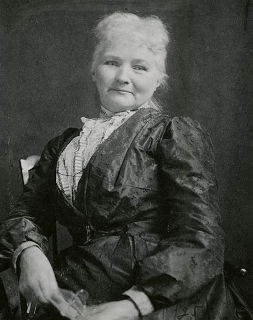
Sinclair dies from kidney failure on February 14, 1914, at his home, Hopefield House, Belfast. His funeral procession on February 18 is headed by 200 UVF officers. The Ulster Museum holds a portrait of Sinclair by Frank McKelvey, and QUB holds one by Henrietta Rae (pictured above). A memorial window at Church House, the headquarters of the Presbyterian Church, is unveiled in his memory on June 8, 1915, and there is a Sinclair Memorial Hall opened in his honour on September 10, 1915. A blue plaque is erected to him on the Duncairn Centre for Arts & Culture.

The Sinclair Ward in the Royal Victoria Hospital, Belfast, is originally funded by Sinclair’s father, in honour of his wife Sarah under the Sinclair Memorial Fund. The surgeon and politician Thomas Sinclair is also a relative.


3 Comments

Birth of Lucy Gwynn, First Woman Registrar of Trinity College Dublin

Lucy Penelope Gwynn, the first woman registrar of Trinity College Dublin (TCD), is born in County Donegal on September 22, 1865.

Gwynn’s father, John Gwynn, is a Syriacist and Regius Professor of Divinity at TCD. Her mother is Lucy O’Brien, daughter of MP William Smith O’Brien. Her eight brothers include the author and politician Stephen Gwynn, the academic Edward Gwynn, the career soldier Major General Sir Charles Gwynn, the cricketers Lucius Gwynn and Arthur Gwynn, the academic cleric and social reformer Robert (Robin) Gwynn, the Indian civil servant and journalist John Tudor (Jack) Gwynn and the Irish civil servant Brian Gwynn. She has one sister, Mary Gwynn, the wife of Henry Bowen and stepmother of the writer Elizabeth Bowen. She is a niece of Harriet Monsell.

Gwynn is appointed first lady registrar of Trinity College Dublin in February 1905. Women had only been admitted to the university the previous year. Despite coming from a family of academics, she had been unable to get a university education herself. She is 39 years old when appointed to her position in the university.

Students describe Gwynn as a pioneer. Her role as women’s registrar is described by one of her charges as “to control our movements to some extent and to protect the college and the students from criticism.”

In 1907, Gwynn is summoned before the Fry Commission on Dublin University to defend the position of women at Trinity. She is supported by the parents of the students. The result is that the commission endorses the principle of women’s admission to the university.

In 1922, the Dublin University Women Graduates’ Association is founded, under Gwynn’s presidency.

Gwynn never marries. As an eldest daughter she is required to assist in the management of her parents’ household and attend to them in their old age. From her mother’s brother, architect Robert Donough O’Brien, she inherits the house he had designed and built at Parteen-a-Lax in County Clare, close to Limerick. It is there that she retires at the end of her working life. Her hobby is tending its beautiful garden which lay next to the River Shannon.

Gwynn dies in County Clare in 1947.

Founded, by subscription, in 1948 in memory of Lucy Gwynn, the Lucy Gwynn Memorial Prize is awarded annually in the Michaelmas term to a Junior Sophister woman student for distinction in her course. The award is made by two women on the university staff nominated by the Board, and one of the female tutors. The value of the prize is €1,207.


Leave a comment

Birth of Paddy Killoran, Fiddle Player & Bandleader

Patrick J. Killoran, Irish traditional fiddle player, bandleader and recording artist is born on September 21, 1903, in Emlaghgissan (also spelled “Emlagation”), a townland in the civil parish of Emlaghfad near the town of Ballymote, County Sligo. He is regarded, along with James Morrison and Michael Coleman, as one of the finest exponents of the south Sligo fiddle style in the “golden age” of the ethnic recording industry of the 1920s and 1930s.

Killoran’s father Patrick plays the flute and his mother Mary the concertina, but he is also influenced by local fiddle master Philip O’Beirne, who had earlier tutored Michael Coleman. As a teenager, he is a volunteer with the Ballymote-based 3rd Battalion of the south Sligo Brigade of the Irish Republican Army (IRA) during the Irish War of Independence.

In 1925, Killoran emigrates to New York City, arriving on May 19 on the Cunard liner Scythia. Within a few months, he officially declares his intention to become a citizen of the United States, listing his address as 227 East 126th Street in east Harlem and his occupation as “laborer.” He later lodges with fellow Sligo fiddler James Morrison in a Columbus Avenue apartment on Manhattan‘s Upper West Side. A 1927 newspaper ad for “Morrison’s Orchestra” offers “Irish music by P. Killoran and J. Morrison, celebrated violinists,” giving 507 West 133d Street in west Harlem as the contact address. He soon launches his own career as a soloist and bandleader. A publicity photo of his quartet c. 1928 includes button accordionist D. Casey, tenor banjo player Richard Curran and second fiddler Denis Murphy. By the next year, he is performing on a weekly radio program sponsored by the Pride of Erin Ballrooms, located at the corner of Bedford and Atlantic Avenues in Brooklyn. He also tries another side occupation as his 1931 naturalization petition lists his occupation as “Music store owner.”

At the Pride of Erin, and later at the Sligo Ballroom at 125th Street and St. Nicholas Avenue in Harlem, Killoran’s “Irish Orchestra” provides music for Irish dancing, while Jack Healy, another Ballymote native, leads a group for “American” dancing. Healy, as a singer and tenor saxophone player, also performs and records with Killoran’s group, the membership of which over the course of the 1930s includes fiddler Paddy Sweeney, another Sligo native, fiddle and clarinet player Paul Ryan, Ryan’s brother Jim on the C Melody saxophone, pianists Eileen O’Shea, Edmund Tucker and Jim McGinn, drummer Mickey Murphy, button accordionists Tommy Flanagan and William McElligott and tenor banjo/tenor guitar player Michael “Whitey” Andrews.

Killoran’s band is variously billed as his “Pride of Erin Orchestra,” “Radio Dance Orchestra,” “Sligo Ballroom Orchestra,” “Lakes of Sligo Orchestra” and “Irish Barn Dance Boys.” The group is a popular choice for county association functions, particularly those of Sligo and Roscommon. In 1932, he leads a band that accompanies Cardinal William Henry O’Connell of Boston to the Eucharistic Congress in Ireland and briefly bills his group as the “Pride of Erin Eucharistic Congress Orchestra.” He regularly performs at Irish beach resorts on the Rockaway peninsula and in East Durham in the Catskill Mountains.

Uniquely among the major New York Irish musicians of the pre-World War II era, Killoran continues his musical career through the 1950s. He issues new recordings, including duets with flute player Mike Flynn and some fiddle-and-viola sides with Paul Ryan, and leads an active dance band. Age and illness eventually force him to retire, and in 1962 he turns over leadership of the band, a fixture at the City Center Ballroom, to button accordionist Joe Madden, father of Cherish the Ladies flute player Joanie Madden.

In 1956, Killoran is a co-founder of the Dublin Recording Company, later better known simply as Dublin Records, which is organized to record new Irish discs in New York.

Killoran is a founding member of the Emerald Irish Musicians Benevolent Society, a group that stages “Night of Shamrocks” concerts to raise money for the benefit of sick and deceased Irish musicians in New York. He is also a member of the Irish Musicians Association of America, and a New York branch of that organization, which later merges with Comhaltas Ceoltóirí Eireann, is named for him.

In addition to the 1932 trip to the Eucharistic Congress, Killoran returns to Ireland at least twice. In 1949, he plays on a Radio Éireann program hosted by piper and folklorist Séamus Ennis. Some selections from that broadcast are recorded on a private disc and are later released on CD. On a 1960 visit, he visits Sligo and Clare and performs at a concert in County Longford.

Killoran is married twice. His first wife, Anna Gorman, a native of County Roscommon, dies in 1935. His second wife is Betty (Bridget) Hayes, an immigrant from Shanaway West, County Clare, who survives him. He dies in New York City on April 24, 1965.

A “Paddy Killoran Traditional Festival” is celebrated in the third week of June in Ballymote, where a monument in Killoran’s honor is erected in 2012.


Leave a comment

The Battle of Moyry Pass

The Battle of Moyry Pass begins on September 20, 1600, ending on October 9, in counties Armagh and Louth, in the north of Ireland, during the Nine Years’ War. It is the first significant engagement of forces following the cessation of arms agreed in the previous year between the Irish leader Hugh O’Neill and the English Crown commander, Robert Devereux, 2nd Earl of Essex.

The battle is fought by the armies of O’Neill and Charles Blount, 8th Baron Mountjoy, a follower of the late Earl of Essex. Mountjoy is determined to pierce O’Neill’s heartland in central and western Ulster by the Moyry Pass. In the course of the two-week assault the English troops establish a garrison near Armagh, taking heavy casualties, and Mountjoy retires with difficulty to Dundalk.

Mountjoy’s strategy for putting down O’Neill’s rebellion is gradually to constrict his territory in Ulster with a ring of fortified garrisons on the borders. To this end, he lands seaborne forces at Derry in the north of the province and at Carrickfergus in the east of Ulster. In September 1600, Mountjoy moves north from Dublin and concentrates at Dundalk in order to mount an expedition further into Ulster and re-establish a garrison at Armagh, which position had been evacuated by the English Crown forces after O’Neill’s victory at the Battle of the Yellow Ford in 1598.

On September 17, 1600, Mountjoy sets out from Dundalk, intending to march to Newry and then on to Armagh. The Moyry Pass (or “Gap of the North”) is the sole point of entry to Ulster as much of the terrain is wooded and mountainous, and it has been well fortified by O’Neill with trenches and barricades. There are three lines of trenches, barricaded with earth and stone, and on the flanks the Irish have made further earth and stone works and “plashed” (twisted) the branches of low-growing trees in order to provide cover for themselves and prevent the English occupying the heights on either side of the Pass.

The English reach the pass on September 20 and set up camp just outside, to the south on Faughart Hill. Taking advantage of a misty day on the 25th, an officer named Thomas Williams (who had commanded the Blackwater Fort during the Battle of the Yellow Ford) makes a sortie into the pass. After heavy fighting he identifies the Irish defence works and returns to the English camp with 12 dead and 30 wounded. For six days heavy rain holds up the fighting, until the weather clears on October 2. The weather is important because the matchlock muskets of the day do not work in wet conditions. On October 2, Sir Samuel Bagnall leads his regiment of infantry into the Pass at the head of four other regiments. The English breach the first barricade, and Thomas Bourke’s regiment leads the way to the second and third lines of defence. The English take the second line only to find themselves in a trap, with gunfire concentrated from three sides. They try to dislodge the Irish from their remaining positions for three more hours before retreating, with the Irish in close pursuit. The English admit 46 killed and 120 wounded, but it is thought that they understated their losses throughout the campaign.

On October 5, Mountjoy sends two regiments on a flanking march over the hill to the west, with one further regiment supported by horsemen advancing up the centre of the Pass. No significant gains are made, and the regiments turn back, reporting casualties of 50 dead and 200 wounded.

By October 9 the privy councilor Geoffrey Fenton complains, “we are now but where we were in the beginning.” Mountjoy retires to Dundalk on either October 8 or 9, but on October 14 word reaches the English camp that O’Neill has abandoned the Pass and retreated to a crannog stronghold at Lough Lurcan. The most likely explanation for O’Neill’s withdrawal from his position of strength is that he is short of ammunition and food and fears a flanking attack on his rear from Newry.

Mountjoy occupies the Moyry Pass on October 17 and dismantles O’Neill’s earthworks. He marches on to Carrickban, just outside Newry, and by Sunday, November 2, sets up camp at Mountnorris, halfway between Newry and Armagh. There he builds an earthwork fort and leaves a garrison of 400 men under the command of Captain Edward Blaney. He then marches back to Dundalk via Carlingford, but is attacked on November 13 by O’Neill, close to the Fathom Pass. Mountjoys men force their way through, and the Lord Deputy claims the army lost 15–20 killed and 60–80 wounded, but a later report suggests the losses are much heavier, with 80 killed.

The battle of Moyry Pass is a stalemate as Mountjoy cannot take the Pass and O’Neill cannot keep it. Mountjoy does establish a garrison at Mountnorris, but has to retire to Dundalk after taking substantial casualties. Mountjoy claims his force lost only 200 men killed and 400 wounded in the fighting from September 20 to November 13, though this may be a considerable underestimate. More, he says, died of disease. The Irish casualties are given by the English as an incredible 900–1,200 killed and wounded, but this is questionable given that the Irish were in a strong defensive position of their own choosing, behind the protection of fieldworks. These figures probably say more about what Mountjoy wanted Queen Elizabeth I to hear than about the actual casualty figures. The following year Mountjoy builds Moyry Castle to secure the pass.

(Pictured: View of the entrance to the Moyry Pass looking north from Faghart Hill)


Leave a comment

The Battle of Chickamauga

On September 19, 1863, the 5th Confederate Infantry, consisting of a large number of Irish from Memphis, fight in one of the bloodiest battles of the American Civil War at Chickamauga, Georgia. One of the commanders is Cork-born Patrick Cleburne whom historians universally recognize as one of the most capable officers on either side during the awful conflict, although Chickamauga might not have been his finest hour. Cleburne is known as the “Stonewall of the West.” He is one of six Confederate generals to die in the Battle of Franklin.

The Battle of Chickamauga marks the end of a Union Army offensive, the Chickamauga campaign, in southeastern Tennessee and northwestern Georgia. It is the first major battle of the war fought in Georgia, the most significant Union Army defeat in the Western Theater, and involves a high number of casualties, second only to the casualties suffered at the Battle of Gettysburg.

The battle is fought between the Army of the Cumberland, one of the principal Union armies in the Western Theater, under Major General William Rosecrans and the Confederate Army of Tennessee under General Braxton Bragg and is named for Chickamauga Creek. The West Chickamauga Creek meanders near and forms the southeast boundary of the battle area and the park in northwest Georgia. The South Chickamauga ultimately flows into the Tennessee River about 3.5 miles northeast of downtown Chattanooga.

After his successful Tullahoma campaign, Rosecrans renews the offensive, aiming to force the Confederates out of Chattanooga. In early September, he consolidates his forces scattered in Tennessee and Georgia and forces Bragg’s army out of Chattanooga, heading south. The Union troops follow it and brush with it at Davis’s Cross Roads. Bragg is determined to reoccupy Chattanooga and decides to meet a part of Rosecrans’s army, defeat it, and then move back into the city. On September 17 he heads north, intending to attack the isolated XXI Corps. As Bragg marches north on September 18, his cavalry and infantry fight with Union cavalry and mounted infantry, which are armed with Spencer repeating rifles. The two armies fight at Alexander’s Bridge and Reed’s Bridge, as the Confederates try to cross the West Chickamauga Creek.

Fighting begins in earnest on the morning of September 19. Bragg’s men strongly assault but cannot break the Union Army line. The next day, Bragg resumes his assault. In late morning, Rosecrans is misinformed that he has a gap in his line. In moving units to shore up the supposed gap, Rosecrans accidentally creates an actual gap directly in the path of an eight-brigade assault on a narrow front by Confederate Lieutenant General James Longstreet, whose corps has been detached from the Army of Northern Virginia. In the resulting rout, Longstreet’s attack drives one-third of the Union Army, including Rosecrans himself, from the field.

Union Army units spontaneously rally to create a defensive line on Horseshoe Ridge (“Snodgrass Hill“), forming a new right wing for the line of Major General George H. Thomas, who assumes overall command of remaining forces. Although the Confederates launch costly and determined assaults, Thomas and his men hold until twilight. Union forces then retire to Chattanooga while the Confederates occupy the surrounding heights, besieging the city.

Thomas withdraws the remainder of his units to positions around Rossville Gap after darkness falls. The Army of Tennessee camps for the night, unaware that the Union Army has slipped from their grasp. Bragg is not able to mount the kind of pursuit that would be necessary to cause Rosecrans significant further damage. Many of his troops had arrived hurriedly at Chickamauga by rail, without wagons to transport them, and many of the artillery horses had been injured or killed during the battle. The Tennessee River is now an obstacle to the Confederates and Bragg has no pontoon bridges to affect a crossing. Bragg’s army pauses at Chickamauga to reorganize and gather equipment lost by the Union Army. Although Rosecrans had been able to save most of his trains, large quantities of ammunition and arms are left behind.

Army of Tennessee historian Thomas L. Connelly has criticized Bragg’s performance, claiming that for over four hours on the afternoon of September 20, he missed several good opportunities to prevent the Union escape, such as by a pursuit up the Dry Valley Road to McFarland’s Gap, or by moving a division to the north to seize the Rossville Gap or McFarland’s Gap via the Reed’s Bridge Road.

The battle is damaging to both sides in proportions roughly equal to the size of the armies: Union losses are 16,170 (1,657 killed, 9,756 wounded, and 4,757 captured or missing), Confederate losses are 18,454 (2,312 killed, 14,674 wounded, and 1,468 captured or missing). Among the dead are Confederate generals Benjamin Hardin Helm (husband of Abraham Lincoln‘s sister-in-law), James Deshler, and Preston Smith, and Union general William H. Lytle. Confederate general John Bell Hood, who had already lost the use of his left arm from a wound at Gettysburg, is severely wounded with a bullet in his leg, requiring it to be amputated. Although the Confederates are technically the victors, driving Rosecrans from the field, Bragg did not achieve his objectives of destroying Rosecrans or of restoring Confederate control of East Tennessee, and the Confederate Army suffers casualties that they can ill afford.


Leave a comment

Birth of Sir Thomas Drew, Anglo-Irish Architect

Sir Thomas Drew, Anglo-Irish architect, is born in Victoria Place, Belfast, on September 18, 1838.

Drew is the son of the Rev. Thomas Drew, son of a Limerick grocer, and Isabella Drew (née Dalton), daughter of a Dublin attorney. He is one of four sons and eight daughters of the couple, although most of the children die young. His sister, Catherine Drew, is a prominent London journalist and an early champion of women’s rights.

Drew is trained under Sir Charles Lanyon before moving to work in Dublin, where he becomes principal assistant to William George Murray. In 1865, he becomes the diocesan architect of the united dioceses of Down, Connor and Dromore, and from that point forward Church architecture is his principal activity. He is consulting architect for both St. Patrick’s Cathedral and Christ Church Cathedral in Dublin.

Drew marries Adelaide Anne, sister of William George Murray, in 1871.

Among other projects, Drew is responsible for the design of the Ulster Bank on Dame Street, Rathmines Town Hall (completed 1899) and the Graduates Memorial Building at Trinity College Dublin (TCD). He takes an interest in historic buildings and is the first to draw serious attention to the architectural and historic importance of the St. Audoen’s Church, Dublin’s oldest parish church, in 1866. He produces detailed plans of the church for which he wins an award from the Royal Institute of the Architects of Ireland (RIAI), carries out excavations and draws up a paper on the church and its history.

From 1885 to 1892, Richard Orpen works with Drew as a managing assistant. Drew’s most significant work in Belfast is St. Anne’s Cathedral, completed in 1899.

Drew is knighted in the 1900 Birthday Honours and is inaugural president of the Royal Society of Ulster Architects, serving from 1901 to 1903. In addition, he is president of the Royal Institute of the Architects of Ireland (RIAI), the Royal Society of Antiquaries of Ireland (RSAI) and the Royal Hibernian Academy (RHA) and holds the chair in architecture at the National University of Ireland. He lives in Gortnadrew, Monkstown, County Dublin.

Drew dies on March 13, 1910, a month after an unsuccessful operation for appendicitis. He is buried in Dean’s Grange Cemetery.

Selected works:


Leave a comment

Birth of Thomas Finlay, Judge, Politician & Barrister

Thomas Aloysius Finlay, Irish judge, politician and barrister, is born on September 17, 1922, in Blackrock, Dublin. He serves as a Teachta Dála (TD) for the Dublin South-Central constituency from 1954 to 1957, a Judge of the High Court from 1971 to 1985, President of the High Court from 1974 to 1985 and Chief Justice of Ireland and a Judge of the Supreme Court from 1985 to 1994.

Finlay is the second son of Thomas Finlay, a politician and senior counsel whose career is cut short by his early death in 1932. He is educated at Clongowes Wood College, University College Dublin (UCD) and King’s Inns. While attending UCD, he is elected Auditor of the University College Dublin Law Society. His older brother, William Finlay, serves as a governor of the Bank of Ireland.

Finlay is called to the Bar in 1944, practicing on the Midlands circuit and becomes a senior counsel in 1961.

Finlay is elected to Dáil Éireann as a Fine Gael TD for the Dublin South-Central constituency at the 1954 Irish general election. He loses his seat at the 1957 Irish general election.

Following his exit from politics in 1957, having lost his Dáil seat, Finlay resumes practicing as a barrister. He successfully defends Captain James Kelly in the infamous 1970 arms trial.

In 1971, Finlay is tasked by the Fianna Fáil government with representing Ireland before the European Commission of Human Rights, when, in response to the ill treatment of detainees by security forces in Northern Ireland, they charge the British government with torture. Despite the notional recourse such prisoners would have within the British legal system, the Commission rules the complaint admissible.

Finlay is subsequently appointed a High Court judge and President of the High Court in January 1974. In 1985, Taoiseach Garret FitzGerald and his government nominates him to the Supreme Court and to the office of Chief Justice of Ireland. On October 10, 1985, he is appointed by President Patrick Hillery to both roles.

During this period Finlay presides over a number of landmark cases, including Attorney General v X in 1992, when he overturns a High Court injunction preventing a pregnant teenage rape victim travelling to the UK for an abortion.

When, in the same year, Judge Liam Hamilton of the High Court, chair of the Beef Tribunal, seeks disclosure of the cabinet’s minutes for a particular meeting, Chief Justice Finlay along with the majority of the Supreme Court deny the request ruling that the concept of collective government responsibility in the Constitution takes precedence.

Finlay announces his resignation as Chief Justice of Ireland and retirement as a judge in 1994.

After his retirement, Finlay presides over a number of public inquiries.

In 1996, Finlay oversees the inquiry into the violence by English fans at the aborted 1995 friendly soccer match versus the Republic of Ireland at Lansdowne Road. His report to Bernard Allen, Minister for Sport, is critical of security arrangements on the night and recommends improvements to ticketing, seat-allocation, fan-vetting and policing arrangements. The Irish Government shares his report with the British Home Office.

After the collapse of The Irish Press group in 1995, the Minister for Enterprise and Employment, John Bruton, receives a damming report from the Competition Authority that Independent Newspapers has abused its dominant position and acted in an anti-competitive manner by purchasing a shareholding in The Irish Press. In September 1995, Bruton announces the Commission on the Newspaper Industry with an extremely wide remit to examine diversity and ownership, competitiveness, editorial freedom and standards of coverage in Irish newspapers as well as the impact of the sales of the British press in Ireland. Minister Bruton appoints 21 people to the commission and appoints Finlay chair. Due to the wide remit and huge number of submissions, the commission’s report is delayed but is eventually published at the end of July recommending widespread reforms.

Following the discovery of the BTSB anti-D scandal, in 1996, Finlay is appointed the chair and singular member of the Tribunal of Inquiry into the Blood Transfusion Service Board. The speed and efficiency with which his BTSB Tribunal conducts its business, restores confidence in the Tribunal as a mechanism of resolving great controversies in the public interest.

Finlay also sits on an Irish Rugby Football Union (IRFU) panel to adjudicate on the cases of Rugby players accused of using banned performance-enhancing substances.

Finlay is married to Alice Blayney, who predeceases him in 2012. They have five children, two of whom follow in his family’s legal tradition: his son John being a Senior Counsel and his daughter Mary Finlay Geoghegan a former judge of the High Court, Court of Appeal and Supreme Court. Whenever his work schedule allows, he escapes to County Mayo where he indulges his passion for fishing.

Thomas Finlay dies at the age of 95 in Irishtown, Dublin, on December 3, 2017.


Leave a comment

Birth of Liam Ó Briain, Irish Language Expert & Political Activist

Liam Ó Briain, Irish language expert and political activist, is born at 10 Church Street, North Wall, Dublin, on September 16, 1888.

Christened as William O’Brien, the seventh child of Arthur O’Brien, clerk, and Mary O’Brien (née Christie), who is from County Meath, Ó Briain takes an interest in the Irish language from an early age and begins learning Irish by himself from a grammar book, as it is not encouraged by his teachers at the Christian BrothersO’Connell School nor spoken by his parents. While still at the O’Connell School, he starts using the Irish version of his name. He also attends meetings of the Gaelic League, then attends University College Dublin (UCD) on a scholarship, where he studies French, English and Irish, receiving a BA (1909) and an MA (1910).

UCD decides to start awarding one annual scholarship for overseas travel in 1911, and Ó Briain wins the first one, using it to visit Germany and study under Kuno Meyer and Rudolf Thurneysen. After three years, he returns home, where he rejoins the Gaelic League and begins teaching French at UCD. He also joins the Irish Volunteers then, the following year, Seán T. O’Kelly convinces him to join the Irish Republican Brotherhood (IRB).

During the 1916 Easter Rising, Ó Briain sees action with the Irish Citizen Army. He comes into conflict with his commander, Michael Mallin, as he wants to pursue a strategy without the Dublin brigade being “cooped up in the city.” However, Mallin overrules him and insists they should focus on taking Dublin Castle. He spends two months in Wandsworth Prison in London and six months in Frongoch internment camp in Wales before being released to discover that he has been fired from his job. However, he quickly obtains a professorship in Romance languages at University College Galway (UCG).

Around this time, Ó Briain joins Sinn Féin, and he stands unsuccessfully for the party in Mid Armagh at the 1918 United Kingdom general election in Ireland, taking 5,689 votes. His campaign leads, indirectly, to his arrest and three months in jail in Belfast. In 1920, following his release, he is appointed a judge in the then-illegal republican court system in Galway, and visits both France and Italy to try to source weapons for the Irish Republican Army (IRA). In November 1920, he is arrested in the UCG dining room by Black and Tans, and is imprisoned for thirteen months, first in Galway and then in the Curragh camp in County Kildare, thereby missing the conclusion of the Irish War of Independence. By the time he is released, the Anglo-Irish Treaty has been signed. He supports the treaty and takes no further part in militant activity.

In the newly independent Ireland, Ó Briain remains a professor at Galway. He also stands in the 1925 Seanad election, although he is not successful. He is the founding secretary of the Taibhdhearc na Gaillimhe theatre, also acting in many of its productions, and spends much time translating works from English and the Romance languages into Irish. He stands to become president of UCG in 1945, but is not elected, and in the 1940s and 1950s is best known for his many appearances on television and radio.

From his retirement in 1959, Ó Briain lives in Dublin. In 1974, the National University of Ireland (NUI) confers an honorary doctorate on him. He dies on August 12, 1974, at St. Gabriel’s Hospital, Cabinteely, County Dublin. His funeral to Glasnevin Cemetery is almost a state occasion, with a huge attendance of public figures, and a military firing party at the graveside, where the oration is given by Micheál Mac Líammóir and a lesson is read by Siobhán McKenna. For days after his death, the newspapers carry tributes to his many-sided career and personality. On the one hundredth anniversary of his birth, Proinsias Mac Aonghusa and Art Ó Beoláin write commemorative articles in Feasta.

On September 1, 1921, Ó Briain marries Helen Lawlor, of Dublin, who dies two years before him. The couple’s only child is Eibhlín Ní Bhriain, who is a journalist for The Irish Times and other periodicals.