McCann is educated at primary level at St. Gall’s Primary School, Belfast, and at St. Mary’s Grammar School, Belfast. He does not finish his education as he is arrested after becoming involved in rioting. He is charged and convicted of “riotous behaviour” and sentenced to six months in prison. Later that year he joins the Provisional IRA. He is later convicted and sentenced to two years imprisonment for the possession of explosives.
In 1988, McCann and Savage, along with Mairead Farrell, another IRA member, are sent to the British overseas territory of Gibraltar to plant a bomb in the town area, targeting a British Army band which parades weekly in connection with the changing of the guard in front of The Convent, the official residence of the governor of Gibraltar.
The British Government knows in advance about the operation, and specially dispatches to Gibraltar a British Army detachment to intercept the IRA team. While McCann, Savage and Farrell are engaged on March 6, 1988, on a reconnaissance trip in Gibraltar before driving in a car bomb, soldiers from the Special Air Service (SAS) regiment wearing civilian clothes confronts them in the streets of the town. McCann is shot five times at close range, the SAS soldiers later claiming that he had made an “aggressive move” when approached. Farrell, who is with McCann, is also shot dead. Savage is walking separately behind McCann and Farrell within eyesight distance, and seeing them ahead being confronted and fired upon, flees, running several hundred yards back into Gibraltar town closely pursued on foot by another SAS soldier, who catches up with him and shoots him dead also. All three IRA members are subsequently found to be unarmed.
A car bomb created by McCann, Savage and Farrell and ready to be driven into Gibraltar is found 36 miles away in Spain by the Spanish Police two days after their deaths, containing 140 lbs. (64 kg) of Semtex with a device timed to go off during the changing of the guard in Gibraltar.
A documentary entitled Death on the Rock, is produced and broadcast on British television about the failed IRA operation in Gibraltar shortly after it takes place, detailing the British and Spanish Government’s actions and that of the IRA team, in an operation that the British Government code-names Operation Flavius. The documentary also interviews civilian eyewitnesses to the shooting of the Provisional IRA members, raising questions about the veracity of the British Government and its involved soldiers’ accounts of it, focusing on whether the three IRA members had been offered the chance to surrender by the soldiers confronting them before they had been fired upon. It also questions whether the violence used had been proportionate, in line with ongoing rumours in the British media of a purported “Shoot to Kill” policy that the British Government is pursuing against the Provisional IRA during The Troubles.
At an IRA-sponsored collective funeral on March 16, 1988, for McCann along with Savage and Farrell at the IRA plot in Milltown Cemetery in West Belfast, as the bodies are being lowered into the ground, the funeral party comes under a hand grenadeattack from a lone Loyalist paramilitary. The funeral immediately descends into chaotic scenes, as a running fight occurs between the lone gunman firing a handgun and throwing more grenades at a group of mourners, as they pursue him through the cemetery’s grounds. Three mourners are killed and scores wounded in the incident.
Moore is the eldest son of Queen Victoria‘s honorary physician in Ireland, Dr. William Moore of Rosnashane, Ballymoney, and Sidney Blanche Fuller. His ancestors came to Ulster during the Plantation of Ulster, settling at Ballymoney, at which time they were Quakers. The Moore Lodge estate is inherited from a relative. The family owns several other houses: Moore’s Grove and Moore’s Fort. He goes on to become a Deputy Lieutenant for County Antrim and a Justice of the Peace.
In 1903, Moore is one of the first landowners of Ireland to sell off their estates under the land acts. By the early 1920s he owns a Belfastpied-à-terre called “Glassnabreedon,” in the village of Whitehouse, four miles north of Belfast. This house is once owned by the son of Nicholas Grimshaw, Ireland’s first cotton pioneer.
Moore becomes a member of the General Synod of the Church of Ireland and is a founder member of the Ulster Council. He is a passionate Orangeman: his vehemence in defending Ulster’s right to oppose Irish Home Rule is said to alarm even those who share his views. Speaking in England on March 10, 1913, he makes his feelings clear on the possibility of Irish Home Rule: “I have no doubt, if Home Rule is carried, its baptism in Ireland will be a baptism in blood.” He shows little respect for English politicians, and has nothing but contempt for Southern Unionists. The eventual political settlement in 1921 meets with his approval.
Moore dies at his home, Moore Lodge, in Ballymoney on November 28, 1944, less than a week after his 80th birthday. He is buried in the family burial ground, “Lamb’s Fold,” two days later.
Norman Derek Mahon, Irish poet, is born in Belfast, Northern Ireland, on November 23, 1941, but lives in a number of cities around the world. At his death it is noted that his “influence in the Irish poetry community, literary world and society at large, and his legacy, is immense.” President of IrelandMichael D. Higgins says of Mahon, “he shared with his northern peers the capacity to link the classical and the contemporary but he brought also an edge that was unsparing of cruelty and wickedness.”
At Inst Mahon encounters fellow students who share his interest in literature and poetry. The school produces a magazine in which he produces some of his early poems. According to the critic Hugh Haughton, his early poems are highly fluent and extraordinary for a person so young. His parents cannot see the point of poetry, but he sets out to prove them wrong after he wins his school’s Forrest Reid Memorial Prize for the poem ”The power that gives the water breath.”
At times expressing anti-establishment values, Mahon describes himself as an “aesthete” with a penchant “for left-wingery […] to which, perhaps naively, I adhere.”
In March 2020, at the beginning of the COVID-19 pandemic, RTÉ News ends its evening broadcast with Mahon reading his poem Everything Is Going to Be All Right.
Mahon dies in Cork, County Cork, on October 1, 2020, after a short illness, aged 78. He is survived by his partner, Sarah Iremonger, and his three children, Rory, Katy, and Maisie. His papers are held at Emory University.
Mahon features on the Irish Leaving Certificate course with ten of his poems (Grandfather, Day Trip to Donegal, Ecclesiastes, After the Titanic, As It Should Be, A Disused Shed in Co. Wexford, Rathlin, The Chinese Restaurant in Portrush, Kinsale and Antarctica)
Craig, known as Jim, grows up in an Ulster Protestant family on the Shankill Road. In the early 1970s, he, a former boxer, is sent to the HM Prison Maze for a criminal offence unrelated to paramilitary activities. While serving his sentence at the Maze he joins the Ulster Defence Association (UDA), and is asked by the organisation’s commander at the time, Charles Harding Smith, to take control of the UDA prisoners inside, on account of his reputation as a “hard man.”
After his release in 1976, Craig sets up a large protection racket and becomes the UDA’s chief fundraiser. By 1985, he has managed to blackmail and extort money from a number of construction firms, building sites, as well as pubs, clubs, and shops in Belfast and elsewhere in Northern Ireland, whose intimidated owners pay protection money out of fear of Craig and his associates. It is alleged that the UDA receives hundreds of thousands of pounds, some of which also find their way inside Craig’s pockets as part of his “commission.” He is acquitted on a firearm charge and Ulster Freedom Fighters (a cover name for the UDA) membership on March 18, 1982. In 1985, he is brought to court after a number of businessmen decide to testify against him, with the condition that their identities remained hidden. The case falls apart when Craig’s defence argues that his client’s rights were violated by the concealment of the witnesses’ identities.
Craig allegedly is involved in the double killing of a Catholic man and a Protestant man on the Shankill Road in 1977. The men, both colleagues, had entered a loyalist club and were later stabbed, shot and put into a car which was set on fire. By this time the UDA West Belfast Brigade no longer wants him in their ranks, as they claim they can no longer “afford him.” Craig, who is ordered to leave the Shankill Road, goes on to join forces with John McMichael’sSouth Belfast Brigade. In addition to being the principal fundraiser, he also sits on the UDA’s Inner Council. He usually travels in the company of his bodyguard, Artie Fee, a UDA member from the Shankill Road.
The rival Ulster Volunteer Force (UVF) carries out an investigation after it is rumoured Craig has been involved in the death of UVF major William Marchant, who is gunned down by Provisional Irish Republican Army gunmen from a passing car on the Shankill Road on April 28, 1987. Marchant is the third high-ranking UVF man to be killed by the IRA during the 1980s. Although their inquiries reveal that Craig had quarrelled with Marchant as well as Lenny Murphy and John Bingham prior to their killings, the UVF feel that there is not enough evidence to warrant an attack on such a powerful UDA figure as Craig.
In December 1987, when UDA South Belfast brigadier John McMichael is blown up by an IRA booby-trap car bomb outside his home in Lisburn‘s Hilden estate, it is believed that Craig had organised his death with the IRA. Allegedly Craig fears McMichael is about to expose his racketeering business, thus putting an end to his lucrative operation. McMichael reportedly sets up an inquiry and discovers that Craig is spending money on a lavish scale, going on holidays at least twice a year and indulging in a “champagne lifestyle.” At the same time, it is suggested that Craig has made certain deals with Irish republican paramilitary groups, dividing up the rackets in west Belfast, and he would be doing the IRA a favour by helping them to eliminate a high-profile loyalist such as McMichael. Craig has established links with republicans during his time in prison, and the profitable deals and exchanges of information between them ensures he will most likely not be a target for IRA assassination.
Craig is named as an extortionist in Central Television’s 1987 programme The Cook Report. He plans to sue the programme’s producers for libel. In January 1988, Jack Kielty (father of future television presenter Patrick Kielty), a building contractor from County Down who had promised to testify as a key witness against Craig, is murdered by the UDA. This killing is attributed to Craig, although it is never proven.
Craig is shot dead by two gunmen from the UDA in “The Castle Inn” (later called “The Bunch of Grapes”), a pub in Beersbridge Road, east Belfast on October 15, 1988, where he has been lured in the belief that there is to be a UDA meeting. He is playing pool in the pub at the time of his fatal shooting by the two men, both of whom are wearing boilersuits and ski masks and carrying automatic weapons. Upon spotting Craig they open fire, spraying the room with gunfire. Craig dies instantly. A bystander pensioner is also murdered in the attack, and four other bystanders are wounded by stray bullets. The UDA claims the killing is carried out due to Craig’s “treason” and involvement in John McMichael’s murder as they know he had provided the IRA with information to successfully carry out the assassination. They apologise for the unintentional death of the pensioner. Craig is not given a paramilitary funeral, and none of the UDA’s command attend it.
Lyons is a lecturer in history at the University of Hull and then at Trinity College Dublin. He becomes the founding Professor of Modern History at the University of Kent in 1964, serving also as Master of Eliot College from 1969 to 1972.
Lyons principal works include Ireland Since the Famine, the standard university textbook for Irish history from the mid-19th to late-20th century, which The Times calls “the definitive work of modern Irish history” and a biography of Charles Stewart Parnell.
Lyons is critical of Cecil Woodham-Smith‘s much-acclaimed history of the Great Irish Famine and has generally been considered among the “revisionist” historians who reconsiders the role of the British state in events like the Famine.
Lyons marries Jennifer Ann Stuart McAlister in 1954, and has two sons, one of whom, Nicholas, is a former Lord Mayor of London.
On September 15, 1983, Lyons is nominated, unopposed, as chancellor of Queen’s University Belfast (QUB). But less than a week later he is dead, succumbing in Dublin on September 21 to acute pancreatitis, which had struck him in mid-August. He had begun to write the first draft of his W. B. Yeats biography (having accumulated a great archive of material) only a few weeks before. His ashes are buried beside Trinity College chapel.
Johnny Adair, leader of “C Company” of the Ulster Loyalistparamilitary organisation Ulster Freedom Fighters (UFF), a cover name of the Ulster Defence Association, is born in Belfast, Northern Ireland, on October 27, 1963. He is known as Mad Dog. He is expelled from the organisation in 2002 following a violent power struggle. Since 2003, he, his family and a number of supporters have been forced to leave Northern Ireland by other loyalists.
Adair is born into a working class loyalist background and raised in Belfast. He grows up in the Lower Oldpark area, a site of many sectarian clashes during “The Troubles.” By all accounts, he has little parental supervision, and does not attend school regularly. He takes to the streets, forming a skinheadstreet gang with a group of young loyalist friends, who “got involved initially in petty, then increasingly violent crime.” Eventually, he starts a rock band called Offensive Weapon, which during performances espouses support for the British National Front.
While still in his teens, Adair joins the Ulster Young Militants (UYM), and later the Ulster Defence Association, a loyalist paramilitary organisation which also calls itself the Ulster Freedom Fighters.
By the early 1990s, Adair has established himself as head of the UDA/UFF’s “C Company” based on the Shankill Road. When he is charged with terrorist offences in 1995, he admits that he had been a UDA commander for three years up to 1994. During this time, he and his colleagues are involved in multiple and random murders of Catholic civilians. At his trial in 1995, the prosecuting lawyer says he is dedicated to his cause against those whom he “regarded as militant republicans – among whom he had lumped almost the entire Roman Catholic population.” Royal Ulster Constabulary (RUC) detectives believe his unit killed up to 40 people during this period.
Adair once remarks to a Catholic journalist from the Republic of Ireland upon the discovery of her being Catholic, that normally Catholics travel in the boot of his car. According to a press report in 2003, he is handed details of republican suspects by British Army intelligence, and is even invited for dinner in the early 1990s. In his autobiography, he claims he was frequently passed information by sympathetic British Army members, while his own whereabouts were passed to republican paramilitaries by the RUC Special Branch, who, he claims, hated him.
The Provisional Irish Republican Army (IRA) bombing of a fish shop on the Shankill Road in October 1993 is an attempt to assassinate Adair and the rest of the UDA’s Belfast leadership in reprisal for attacks on Catholics. The IRA claims that the office above the shop is regularly used by the UDA for meetings and one is due to take place shortly after the bomb is set to explode. The bomb goes off early, killing one IRA man, Thomas Begley, and nine Protestant civilians. The UFF retaliates with a random attack on the Rising Sun bar in Greysteel, County Londonderry, which kills eight civilians, two of whom are Protestants. Adair survives 13 assassination attempts, most of which are carried out by the IRA and Irish National Liberation Army (INLA).
During this time, undercover officers from the Royal Ulster Constabulary record months of discussions with Adair, in which he boasts of his activities, producing enough evidence to charge him with directing terrorism. He is convicted and sentenced to 16 years in HM Prison Maze. In prison, according to some reports, he sells drugs such as cannabis, ecstasy tablets and amphetamines to other loyalist prisoners, earning him an income of £5000 a week.
In January 1998, Adair is one of five loyalist prisoners visited in the prison by British Secretary of State for Northern Ireland, Mo Mowlam. She persuades them to drop their objection to their political representatives continuing the talks that leads to the Good Friday Agreement in April. In 1999, he is released early as part of a general amnesty for political prisoners after the Agreement.
Following his release, much of Adair’s activities are bound up with violent internecine feuds within the UDA and between the UDA and other loyalist paramilitary groupings. The motivation for such violence is sometimes difficult to piece together. It involves a combination of political differences over the loyalist ceasefires, rivalry between loyalists over control of territory and competition over the proceeds of organised crime.
In 1999, shortly after his release from prison, Adair is shot at and grazed in the head by a bullet at a UB40 concert in Belfast. He blames the shooting on republicans, but it is thought that rival loyalists are to blame.
In August 2000, Adair is again mildly injured by a pipe bomb he is transporting in a car. He again attempts to blame the incident on an attack by republicans, but this claim is widely discounted. A feud breaks out at the time between the UDA and the Ulster Volunteer Force (UVF) leaving several loyalists dead. As a result of Adair’s involvement in the violence, the then Secretary of State for Northern Ireland, Peter Mandelson, revokes his early release and returns him to prison.
In May 2002, Adair is released from prison again. Once free, he is a key part of an effort to forge stronger ties between the UDA/UFF and the Loyalist Volunteer Force (LVF), a small breakaway faction of the UVF loyalist paramilitary organization in Northern Ireland. The most open declaration of this is a joint mural depicting Adair’s UDA “C company” and the LVF. Other elements in the UDA/UFF strongly resist these movements, which they see as an attempt by Adair to win external support in a bid to take over the leadership of the UDA. Some UDA members dislike his overt association with the drugs trade, with which the LVF are even more heavily involved. A loyalist feud begins, and ends with several men dead and scores evicted from their homes.
On September 25, 2002, Adair is expelled from the UDA/UFF along with close associate John White, and the organisation almost splits as Adair tries to woo influential leaders such as Andre Shoukri, who are initially sympathetic to him. There are attempts on Adair’s and White’s lives.
Adair returns to prison in January 2003, when his early release licence is revoked by Secretary of State for Northern Ireland, Paul Murphy, on grounds of engaging in unlawful activity. On February 1, 2003, UDA divisional leader John Gregg is shot dead along with another UDA member, Rab Carson, on returning from a Rangers F.C. match in Glasgow. The killing is widely blamed on Adair’s C Company as Gregg is one of those who organised his expulsion from the UDA. Five days later, on February 6, about twenty Adair supporters, including White, flee their homes for Scotland, widely seen as a response to severe intimidation.
Adair is released from prison again on January 10, 2005. He immediately leaves Northern Ireland and joins his family in Bolton, Lancashire, where it is claimed he stays with supporters of Combat 18 and the Racial Volunteer Force.
The police in Bolton question Adair’s wife, Gina, about her involvement in the drugs trade, and his son, nicknamed both “Mad Pup” and “Daft Dog,” is charged with selling crack cocaine and heroin. Adair is arrested and fined for assault and threatening behaviour in September 2005. He had married Gina Crossan, his partner for many years and the mother of his four children, at HM Prison Maze on February 21, 1997. She is three years Adair’s junior and grew up in the same Lower Oldpark neighbourhood.
After being released, Adair is almost immediately arrested again for violently assaulting Gina, who suffers from ovarian cancer. Since this episode he reportedly moves to Scotland, living in Troon in Ayrshire.
In May 2006, Adair reportedly receives £100,000 from John Blake publishers for a ghost-written autobiography.
In November 2006, the UK’s Five television channel transmits an observational documentary on Adair made by Dare Films.
Adair appears in a documentary made by Donal MacIntyre and screened in 2007. The focus of the film centers around Adair and another supposedly reformed character, a Neo-Nazi from Germany called Nick Greger, and their trip to Uganda to build an orphanage. Adair is seen to fire rifles, stating it is the first time he has done so without wearing gloves. He also admits to being “worried sick” and “pure sick with worry” after Greger disappears in Uganda for days on end. It turns out that he had gone off and married a Ugandan lady. Adair confesses via telephone that he “thought something might have happened to Nick.”
On July 20, 2015, three Irish republicans, Antoin Duffy, Martin Hughes and Paul Sands, are found guilty of planning to murder Adair and Sam McCrory. Charges against one of the accused in the trial are dropped on July 1.
On September 10, 2016, Adair’s son, Jonathan Jr., is found dead in Troon, aged 32. He dies from an accidental overdose while celebrating the day after his release from prison for motoring offences. He had been in and out of prison since the family fled Northern Ireland. He served a five-year sentence for dealing heroin and crack cocaine. The year before, he had been cleared of a gun raid at a party and in 2012 is the target of a failed bomb plot. He was also facing trial later that year on drugs charges.
In December 2023, while recording a podcast with far-right activist Tommy Robinson, Adair surprisingly expresses a grudging respect for the IRA hunger strikers, describing the manner of their deaths as “dedication at the highest level” for a political cause and admitting that he would not have volunteered to do the same if asked.
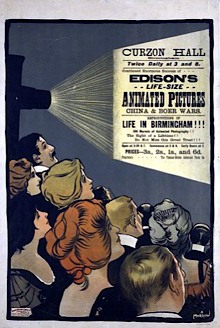
Morrow is born on April 26, 1863, in Comber, County Down, the second son of George Morrow, a painter and decorator from Clifton Street in west Belfast. Of his seven brothers, four, George, Jack, Edwin, and Norman, are also illustrators and all but one are artists. He is a keen ornithologist in his youth. In later life he is a keen walker and paints landscapes for leisure.
While studying under T. M. Lindsay at the Government School of Art in 1880, Morrow is awarded a £10 prize for drawing from the eminent publishers Cassell, Petter and Galpin. In 1881, while still learning his trade, he paints a mural of Belfast for the Working Men’s Institute in Rosemary Street, where his father is chairman. Later in that same year he exhibits a watercolour sketch of a standing figure entitled Meditative at the gallery of Rodman & Company, Belfast.
Morrow then wins a three-year scholarship worth £52 per year which he takes to the National Art Training School at South Kensington in 1882, where he begins a lifelong friendship with the British sculptor Albert Toft. In 1883, while still attending South Kensington, he joins the staff of The English Illustrated Magazine in preparation for the launch of the first edition. Two of his works are published in the Sunday at Home magazine in September of the same year.
J. Comyns Carr, first editor of TheEnglish Illustrated Magazine, commissions Morrow to complete a series on English industry when he has yet to complete his studies at South Kensington.
In 1890, Morrow begins illustrating for Bits and Good Words. He exhibits nine works at the Royal Academy of Arts between 1890 and 1904, all of which are watercolours, and another in 1917, and an offering in chalk at the 159th Exhibition, in the year of his death.
Morrow becomes a member of the Belfast Art Society in 1895, exhibiting with them in the same year. In 1896, a Morrow print is published in Volume 2 of the limited-edition print-collection Les Maîtres de l’Affiche selected by “Father of the Poster” Jules Chéret. In the same year he shows a watercolour of a Gurkha at the Earls Court in the Empire of India and Ceylon exhibition. In 1900, he exhibits with two Ulster artists, Hugh Thomson and Arthur David McCormick, at the Linen Hall Library in Belfast, who along with Morrow had contributed to the early success of TheEnglish Illustrated Magazine.
Morrow is one of the founders of the Ulster Arts Club in November 1902 along with five of his brothers, an organisation that has a nonsectarian interest in Celtic ideas, language and aesthetics. In November 1903, he exhibits at the first annual exhibition of the Club when he shows alongside John Lavery, Hans Iten, James Stoupe and F. W. Hull. He exhibits The Itinerant Musician, a watercolour that he had previously shown at the Royal Academy in 1902. Honorary membership is conferred upon him the following year. Three years later he is honoured with a solo exhibition of sketches and posters in conjunction with the Ulster Arts Club, at the Belfast Municipal Gallery.
In 1908, Morrow joins his brothers in an exhibition at 15 D’Olier Street, Dublin, an address which is later registered to the family business in 1913. Among his contributions to the family exhibition is his painting of Brandon Thomas, The Clarionette Player, which had previously been exhibited at the Royal Academy, and a poster entitled Irving in Dante.
In 1917, Morrow joins his brother George and 150 artists and writers, in petitioning the British Prime MinisterDavid Lloyd George to find a way of enacting the unsigned codicil to Hugh Lane’s will and establish a gallery to house Lane’s art collection in Dublin. Among the 32 notable artists who sign this petition are Jack B. Yeats, Sir William Orpen, Sir John Lavery, and Augustus John.
Morrow illustrates books for children and adults, but he is best known for the hundreds of posters he designs for the theatre, with the bulk of his commissions coming from just one lithographical printer, David Allen and Sons. As a cartoonist he draws for children’s annuals, and contributes three cartoons to Punch in 1923, 1925 and posthumously in 1931.
Morrow dies at his home in West Hoathly, West Sussex, on October 26, 1927, at the age of 64. He is survived by his wife and two children. His headstone in the local churchyard at All Saints Church, Highbrook is designed by his friend, the sculptor and architect, Albert Toft.
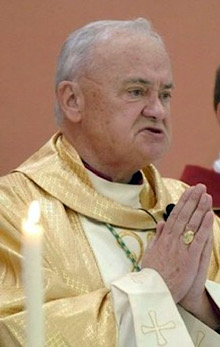
Magee serves as a missionary priest in Nigeria for almost six years before being appointed Procurator General of St. Patrick’s Society in Rome. In 1969, he is an official of the Congregation for the Evangelization of Peoples in Rome, when he is chosen by Pope Paul VI to be one of his private secretaries. On Pope Paul’s death he remains in service as a private secretary to his successor, Pope John Paul I and Pope John Paul II. He is the only man to hold the position of private secretary to three Popes in Vatican history. He also acts as chaplain to the Vatican’s Swiss Guard.
On April 28, 1981, Magee travels, without the knowledge or approval of the Vatican’s Secretariat of State, to the Long Kesh Detention Centre outside Belfast to meet with Irish Republican Army (IRA) hunger strikerBobby Sands. He seeks, unsuccessfully, to convince Sands to end his hunger strike. Sands dies the following week.
Magee plays a role in the Irish Catholic Bishops’ Conference where he is featured in the modernisation of the liturgy in Ireland. His pastoral approach places heavy emphasis on the promotion of vocations to the priesthood but, after some initial success, the number of vocations in the diocese of Cloyne declines, a trend reflected across the island of Ireland. He appoints Ireland’s first female “faith developer” and entrusts her with the task of transforming an Irish rural diocese into a cosmopolitan pastoral model using techniques borrowed from several urban dioceses in the United States.
Magee involves himself in a dispute with the Friends of St. Colman’s Cathedral, a local conservationist group in Cobh which organises an effective and professional opposition to the Bishop’s plans to re-order the interior of the cathedral, plans similar to previous re-orderings in Killarney, Cork and Limerick cathedrals. In an oral hearing conducted by An Bord Pleanála, the Irish Planning Board, it emerges that irregularities have occurred in the planning application that are traced to Cobh Town Council, which accommodates the Bishop’s plans to modify the Victorian interior designed by E. W. Pugin and George Ashlin. On June 2, 2006, when Bishop Magee was in Lourdes, An Bord Pleanála directs Cobh Town Council to refuse the Bishop’s application.
On July 25, 2006, Magee publishes a pastoral letter stating: “As a result of An Bord Pleanála’s decision, the situation concerning the temporary plywood altar still remains unresolved and needs to be addressed. The Diocese will initiate discussions with the planning authorities in an attempt to find a solution, which would be acceptable from both the liturgical and heritage points of view.”
A diocesan official explains that the bishop does not wish to institute a judicial review in the Irish High Court because of the financial implications of such an action and because of the bishop’s desire to avoid a Church-State clash.
Claims that the decision of An Bord Pleanála infringes the constitutional property rights of religious bodies are dismissed when it is revealed that the cathedral is the property of a secular trust established in Irish law. It is estimated that Bishop Magee spent over €200,000 in his bid to re-order the cathedral. The controversy is reported even outside Ireland.
A February 2006 article by Kieron Wood in The Sunday Business Post claims that Magee does not have the backing of the Vatican in his proposals for St. Colman’s. At the oral hearing of An Bord Pleanála he is requested to provide a copy of the letter from the Vatican in which he claims he has been given approval for the modernising of the cathedral. The letter that he produces is a congratulatory message dated December 9, 2003 to the team of architects who worked on the cathedral project from Cardinal Francis Arinze, Prefect of the Dicastery for Divine Worship and the Discipline of the Sacraments. The whole text of this letter is then reproduced in a publication called Conserving Cobh Cathedral: The Case Stated pp. 108–109.
At a meeting of his liturgical advisers and diocesan clergy in November 2006, Bishop Magee speaks of his conversation with the Pope in the course of that ad limina visit at the end of the previous month. He mentions that he has been closely questioned on several aspects of his proposals to re-order St. Colman’s Cathedral. It is obvious, he says, that the Pope has been kept well informed of the entire issue.
Bishop Magee’s contribution to the ad limina visit concerns not only his diocese of Cloyne but also ceremonial matters on behalf of the Conference. He also facilitates the broadcasting, in coincidence with the visit, of a life of Pope John Paul I prepared some months earlier by Italian state television (RAI). In an interview published on the Italian Catholic daily Avvenire on October 26, 2006, Cardinal Secretary of State Tarcisio Bertone criticises the image that the programme presents of Pope John Paul I.
After the ad limina visit, Bishop Magee represents the Irish bishops at a meeting in Rome of the International Commission for Eucharistic Congresses.
In 2007, for the third year in succession, Magee fails to complete his personal schedule of confirmations in Cloyne diocese. On May 12, 2007, he is admitted to the Bon Secours Hospital in Cork to undergo a knee replacement operation. All official engagements are cancelled for the next ten weeks to allow him to recuperate, after which he resumes work.
In December 2008, Magee is at the centre of a controversy concerning his handling of child sexual abuse cases by clergy in the diocese of Cloyne. Calls for his resignation follow. On March 7, 2009, he announces that, at his request, the Pope has placed the running of the diocese in the hands of Dermot Clifford, metropolitan archbishop of the Archdiocese of Cashel and Emly, to whose ecclesiastical province the diocese of Cloyne belongs. Magee remains Bishop of Cloyne, but withdraws from administration in order, he says, to dedicate his full-time to the matter of the inquiry. On March 24, 2010, the Holy See announces that Magee has formally resigned from his duties as Bishop of Cloyne. He is eventually succeeded by Canon William Crean whose appointment comes on November 25, 2012.
The subsequent report of the Irish government judicial inquiry, The Cloyne Report, published on July 13, 2011, finds that Bishop Magee’s second in command, Monsignor Denis O’Callaghan, then the parish priest of Mallow, had falsely told the Government and the HSE in a previous inquiry that the diocese was reporting all allegations of clerical child sexual abuse to the civil authorities.
The inquiry into Cloyne – the fourth examination of clerical abuse in the Church in Ireland – finds the greatest flaw in the diocese is repeated failure to report all complaints. It finds nine allegations out of 15 were not passed on to the Garda.
Speaking in August 2011, Magee says that he felt “horrified and ashamed” by abuse in his diocese. He says he accepts “full responsibility” for the findings. “I feel ashamed that this happened under my watch – it shouldn’t have and I truly apologise,” he says. “I did endeavour and I hoped that those guidelines that I issued in a booklet form to every person in the diocese were being implemented but I discovered they were not and that is my responsibility.”
Magee also offers to meet abuse victims and apologise “on bended knee.” He says he had been “truly horrified” when he read the full extent of the abuse in the report. However, a victim says apologies would “never go far enough.” “It’s too late for us now, the only thing it’s not too late for is that maybe there will be a future where people will be more enlightened, more aware and protect their children better,” she says. Asked about restitution for victims, Magee says it is a matter for the Cloyne Diocese.
Farquhar is assistant priest at Dunsford and Ardglass Parish. He is a hospital chaplain in 1966. He is later assigned to teach Latin at St. MacNissi’s College, Garron Tower, where he stays as a teacher from 1966 to 1970. From 1970 to 1975 he is assistant chaplain, along with Ambrose Macaulay, to Queen’s University Belfast, and finally as Chaplain/Lecturer at the University of Ulster from 1975 to 1983.
On April 6, 1983, aged 42, Farquhar is appointed Titular Bishop of Hermiana and, with Patrick Walsh, as Auxiliary Bishop of Down and Connor. The principal consecrator is the Bishop of Down and Connor, Cahal Daly, (later Cardinal Archbishop of the Archdiocese of Armagh) and principal co-consecrators are Archbishop Gaetano Alibrandi, the Apostolic Nuncio to Ireland and William J. Philbin (Bishop Emeritus of Down and Connor). During the ordination ceremony, the assistant Priests to Bishop Farquhar are his priest uncles, Canon Walter Larkin and Fr. Thomas Aquinas Larkin O.C.D.
Farquhar’s episcopal motto is “Sapientia Proficere” (“to increase in wisdom”) from Luke 2:52. He takes an active and ongoing interest in interchurch relations and serves as Chairman of the Irish Catholic Bishops’ Conference on Ecumenism.
In December 2007, he officiates at the dedication of the new altar in the Church of the Good Shepherd in his native parish of the Most Holy Rosary, Belfast, following the renovation programme.
A book titled Inter-Church Relations: Developments and Perspectives, published by Veritas Communications to mark the 25th anniversary of Farquhar’s ordination as a bishop, contains contributions by a number of people praising Farquhar’s work. Seán Brady notes he was “engaged actively in promoting bonds of friendship and understanding at times when it has been far from easy to do so.”
On December 3, 2015, Pope Francis accepts Farquhar’s resignation on the grounds of age. He is at the time the longest serving bishop in Ireland.
Farquhar dies in Belfast on November 18, 2023, at the age of 83. His funeral requiem mass is celebrated in the Church of the Good Shepherd, Ormeau Road, Belfast, on November 23 followed by interment in the adjoining cemetery.
McGeown joins the IRA’s youth wing, Fianna Éireann, in 1970. He is first arrested at the age of 14, and in 1973 he is again arrested and interned in Long Kesh Detention Centre until 1974. In November 1975, he is arrested and charged with possession of explosives, bombing the Europa Hotel, and IRA membership. At his trial in 1976 he is convicted and receives a five-year sentence for IRA membership and two concurrent fifteen-year sentences for the bombing and possession of explosives, and is imprisoned at Long Kesh with Special Category Status.
In March 1978, McGeown attempts to escape along with Brendan McFarlane and Larry Marley. The three have wire cutters and dress as prison officers, complete with wooden guns. The escape is unsuccessful, and results in McGeown receiving an additional six-month sentence and the loss of his Special Category Status.
McGeown is transferred into the Long Kesh Detention Centre’s H-Blocks where he joins the blanket protest and dirty protest, attempting to secure the return of Special Category Status for convicted paramilitary prisoners.He describes the conditions inside the prison during the dirty protest in a 1985 interview:
“There were times when you would vomit. There were times when you were so run down that you would lie for days and not do anything with the maggots crawling all over you. The rain would be coming in the window and you would be lying there with the maggots all over the place.“
In late 1980, the protest escalates and seven prisoners take part in a fifty-three-day hunger strike, aimed at restoring political status by securing what are known as the “Five Demands:”
The right not to wear a prison uniform.
The right not to do prison work.
The right of free association with other prisoners, and to organise educational and recreational pursuits.
The right to one visit, one letter and one parcel per week.
Full restoration of remission lost through the protest.
The strike ends before any prisoners die and without political status being secured. A second hunger strike begins on March 1, 1981, led by Bobby Sands, the IRA’s former Officer Commanding (OC) in the prison. McGeown joins the strike on July 9, after Sands and four other prisoners have starved themselves to death. Following the deaths of five other prisoners, his family authorises medical intervention to save his life after he lapses into a coma on August 20, the 42nd day of his hunger strike.
McGeown is released from prison in 1985, resuming his active role in the IRA’s campaign and also working for Sinn Féin, the republican movement’s political wing. In 1988, he is charged with organising the Corporals killings, an incident where two plain-clothes British Army soldiers are killed by the IRA. At an early stage of the trial his solicitor, Pat Finucane, argues there is insufficient evidence against McGeown, and the charges are dropped in November 1988. McGeown and Finucane are photographed together outside Crumlin Road Courthouse, a contributing factor to Finucane being killed by the Ulster Defence Association (UDA) in February 1989. Despite suffering from heart disease as a result of his participation in the hunger strike, McGeown is a member of Sinn Féin’s Ard Chomhairle and is active in its Prisoner of War Department. In 1993, he is elected to Belfast City Council.
McGeown is found dead in his home on October 1, 1996, after suffering a heart attack. Sinn Féin chairman Mitchel McLaughlin says his death is “a great loss to Sinn Féin and the republican struggle.” McGeown is buried in the republican plot at Belfast’s Milltown Cemetery. His death is often referred to as the “11th hunger striker.” In 1998, the Pat McGeown Community Endeavour Award is launched by Sinn Féin president Gerry Adams, with Adams describing McGeown as “a modest man with a quiet, but total dedication to equality and raising the standard of life for all the people of the city.” A plaque in memory of McGeown is unveiled outside the Sinn Féin headquarters on the Falls Road on November 24, 2001, and a memorial plot on Beechmount Avenue is dedicated to the memory of McGeown, Kieran Nugent and Alec Comerford on March 3, 2002.




 seamus dubhghaill