seamus dubhghaill

Promoting Irish Culture and History from Little Rock, Arkansas, USA


Leave a comment

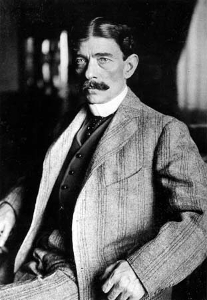
Birth of Robert Wilson Lynd, Writer & Irish Nationalist

robert-wilson-lynd

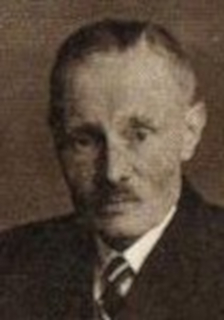
Robert Wilson Lynd, Irish writer, editor of poetry, urbane literary essayist and strong Irish nationalist, is born in Belfast on April 20, 1879.

Lynd is born to Robert John Lynd, a Presbyterian minister, and Sarah Rentoul Lynd, the second of seven children. His paternal great-grandfather emigrated from Scotland to Ireland. He is educated at Royal Belfast Academical Institution and Queen’s University Belfast. His father serves a term as Presbyterian Church Moderator, but he is just one of a long line of Presbyterian clergy in the family.

Lynd begins as a journalist with the Northern Whig in Belfast. He moves to London in 1901, via Manchester, sharing accommodation with his friend the artist Paul Henry. Initially he writes drama criticism for Today, edited by Jerome K. Jerome. He also writes for The Daily News (later the News Chronicle), being its literary editor from 1912 until 1947.

Lynd marries the writer Sylvia Dryhurst on April 21, 1909. They meet at Gaelic League meetings in London. Their daughters Máire and Sigle become close friends of Isaiah Berlin. Sigle’s son, born in 1941, is artist Tim Wheeler. In March 1924, they move to what is to be their long-term married home, the elegant Regency house of 5 Keats Grove in the leafy suburb of Hampstead in northwest London. The house had been lived in by various members of Sylvia’s family.

The Lynds are literary hosts, in the group including J. B. Priestley. They are on good terms also with Hugh Walpole. Priestley, Walpole and Sylvia Lynd are founding committee members of the Book Society. Irish guests include James Joyce and James Stephens. On one occasion reported by Victor Gollancz in Reminiscences of Affection, Joyce intones Anna Livia Plurabelle to his own piano accompaniment. Joyce and his wife Nora Barnacle hold their wedding lunch at the Lynds’ house after getting married at Hampstead Town Hall on July 4, 1931.

Lynd uses the pseudonym Y.Y. in writing for the New Statesman. According to C. H. Rolph‘s Kingsley, Lynd’s weekly essay, which runs from 1913 to 1945, is “irreplaceable.” In 1941, editor Kingsley Martin decides to alternate it with pieces by James Bridie on Ireland, but the experiment is not at all a success.

Lynd’s political views are at a certain point radicalised by his experience of how Ulster and Home Rule develop in the 1912–1914 period. He is appalled at the threat of the use of violence to deliver Ulster from Home Rule and the later decision to postpone the implementation of the Third Home Rule Bill. He later writes, “Then came August 1914 and England began a war for the freedom of small nations by postponing the freedom of the only small nation in Europe which it was within her power to liberate with the stroke of a pen.”

Lynd becomes fluent in the Irish language and is a Gaelic League member. As a Sinn Féin activist, he uses the name Robiard Ó Flionn/Roibeard Ua Flionn. He dies in Hampstead, London on October 6, 1949. He is buried in Belfast City Cemetery.

Leave a comment

Birth of Cyril Falls, Military Historian & Journalist

cyril-bentham-falls

Cyril Bentham Falls, British military historian, journalist and academic, noted for his works on World War I, is born in Dublin on March 2, 1888.

Falls is the eldest son of Sir Charles Falls, an Ulster landowner in County Tyrone. He receives his formal education at the Portora Royal School, Enniskillen, and the University of London. At the age of 27 he publishes his first book, Rudyard Kipling: A Critical Study (1915).

During World War I Falls receives a commission into the British Army as a subaltern in the Royal Inniskilling Fusiliers. He serves as a Staff Officer in the Head Quarters of the 36th (Ulster) Division and the 62nd (2nd West Riding) Division during the conflict. He receives the French Croix de guerre and is discharged from the British Armed Forces with the rank of Captain.

Immediately after leaving the British Army Falls writes a history of one of the Divisions that he had served with during the war, entitled The History of the 36th (Ulster) Division, which is published in 1922.

From 1923 to 1939 Falls is employed by the Historical Section of the United Kingdom Government‘s Committee of Imperial Defence, researching and writing the text of several volumes of the British Government’s official History of the Great War. He serves as the military correspondent for The Times during World War II from 1939 to 1945.

Falls holds the post of Chichele Professor of Military History at All Souls College, Oxford from 1946 to 1953. From the late 1940s through to the end of his life in the early 1970s he is a productive writer of military histories, publishing in-depth detailed studies as well as general works for the commercial market, his final two titles being published posthumously.

The historian Sir Michael Howard later describes Falls’ work The History of the 36th (Ulster) Division (1922) as “containing some of the finest descriptions of conditions on the Western Front to be found anywhere in the literature of the war.”

Cyril Falls dies at the age of 84 in Walton-on-Thames, Surrey, on April 23, 1971.


Leave a comment

Claire McCollum Proposes to Alastair Clarke

claire-mccollum

Claire McCollum, newsreader at Downtown Radio in Newtownards, County Down, Northern Ireland, makes headlines herself on February 29, 2000 when she proposes on air to Dungannon and Ulster rugby star Alastair Clarke and he accepts.

McCollum is born on June 5, 1974 in Carrickfergus, County Antrim. An MA graduate at the University of Dundee, she begins her career in broadcasting with Macmillan Media in 1997. She also works as a researcher for CNN and as a newsreader on Downtown Radio.

McCollum joins UTV in March 2000. As well as presenting and reporting for UTV Sport, she has also presented UTV News bulletins and Sport on Sunday.

In February 2009, McCollum announces she is leaving UTV as part of a voluntary redundancy scheme at the station. In an interview with a regional newspaper, she announces her intention to become a freelance broadcast journalist.

Following her departure from UTV, McCollum builds up her portfolio with BBC Northern Ireland. She becomes synonymous with many of Northern Ireland television’s highest profile events. She co-hosts BBC Proms in the Park at Titanic Slipways, the Olympic flame arriving at Belfast City Hall and the Clipper Homecoming in Derry.

McCollum also presents and reports on two series of the popular BBC Northern Ireland consumer programme In Your Corner and covers many major sporting events including the North West 200, Commonwealth Games in Manchester, Northern Ireland’s Football World Cup qualifiers, Tennis Legends in Belfast and the Belfast International Horse Show. She is also a regular presenter on Balmoral Agricultural Show and Children In Need programmes and hosts the second glittering ‘Celebrity Strictly Come Dancing’ extravaganza for Children in Need.

McCollum and Clarke have two children and reside in her hometown of Newtownabbey, County Antrim.


2 Comments

Ciaran Carty Hails Irish Language Film “Poitín”

ciaran-cartyOn February 26, 1978, film critic Ciaran Carty hails the Irish language film Poitín for its deromanticization of the west.

Poitín is partially conceived as a response to The Quiet Man, also set in the coastal area of Connemara, and its sentimental portrayal of the Irish landscape. Poitín tells of a small community centered on a home-distiller of Irish moonshine whiskey, or poteen.

In Gaelic dialogue, using local actors, with Cyril Cusack as the moonshiner, it shifts between a humorous, whimsical account of two men’s bumbling attempts at theft and a harsh series of revenges. Director Bob Quinn, a strong advocate of Gaelic culture, calls it “a horror story told amusingly.” Carty suggests that Quinn “implicitly deromanticizes the Robert Flaherty image of the rugged West as a place of primal dignity where man does noble battle with the elements.”

Since incurring the wrath of his first editor in 1960 by making Alfred Hitchcock’s Psycho his film of the year, Carty has consistently championed the arts, developing a career as one of Ireland’s leading critics and broadcasters. He serves as deputy editor of the Sunday Independent (1961–65) before becoming arts editor for the Sunday Tribune (1985–2011). Since 1988 he has edited the New Irish Writing page for both the Tribune and the Irish Independent, and is curator of the prestigious annual Hennessy Literary Awards. He is the author of Confessions of a Sewer Rat (1995), a two-volume biography of the artist Robert Ballagh (1985, 2011), and has co-edited, with Dermot Bolger, two anthologies of Hennessy fiction (1995, 2006).


Leave a comment

Birth of Frank Harris, Journalist & Novelist

frank-harris

Frank Harris, Irish American editor, novelist, short story writer, journalist and publisher, is born James Thomas Harris to Welsh parents in Galway, County Galway on February 14, 1855. He is friendly with many well-known figures of his day.

Harris’s father, Thomas Vernon Harris, is a naval officer from Fishguard, Pembrokeshire, Wales. While living with his older brother he is, for a year or more, a pupil at The Royal School, Armagh. At the age of twelve he is sent to Wales to continue his education as a boarder at the Ruabon Grammar School in Denbighshire, a time he is to remember later in My Life and Loves. He is unhappy at the school and runs away within a year.

Harris runs away to the United States in late 1869, arriving in New York City virtually penniless. The 13-year-old takes a series of odd jobs to support himself, working first as a shoeshiner, a porter, a general laborer, and a construction worker on the erection of the Brooklyn Bridge. He later turns these early occupational experiences into art, incorporating tales from them into his book The Bomb (1908).

From New York Harris moves to Chicago, where he takes a job as a hotel clerk and eventually a manager. Owing to Chicago’s central place in the meat packing industry, he makes the acquaintance of various cattlemen, who inspire him to leave the big city to take up work as a cowboy. He eventually grows tired of life in the cattle industry and enrolls at the University of Kansas, where he studies law and earns a degree, gaining admission to the Kansas Bar Association.

Harris is not cut out to be a lawyer and soon decides to turn his attention to literature. He returns to England in 1882, later traveling to various cities in Germany, Austria, France, and Greece on his literary quest. He works briefly as an American newspaper correspondent before settling down in England to seriously pursue the vocation of journalism.

Harris first comes to general notice as the editor of a series of London papers including The Evening News, The Fortnightly Review and the Saturday Review, the latter being the high point of his journalistic career, with H. G. Wells and George Bernard Shaw as regular contributors.

From 1908 to 1914 Harris concentrates on working as a novelist, authoring a series of popular books such as The Bomb, The Man Shakespeare, and The Yellow Ticket and Other Stories. With the advent of World War I in the summer of 1914, he decides to return to the United States.

From 1916 to 1922 Harris edits the U.S. edition of Pearson’s Magazine, a popular monthly which combines short story fiction with socialist-tinted features on contemporary news topics. One issue of the publication is banned from the mails by United States Postmaster General Albert S. Burleson during the period of American participation in World War I. Despite this Harris manages to navigate the delicate situation which faces the left-wing press and keeps Pearson’s Magazine functioning and solvent during the war years.

Harris becomes an American citizen in April 1921. In 1922 he travels to Berlin to publish his best-known work, his four-volume autobiography My Life and Loves (1922–1927). It is notorious for its graphic descriptions of his purported sexual encounters and for its exaggeration of the scope of his adventures and his role in history. A fifth volume, supposedly taken from his notes but of doubtful provenance, is published in 1954, long after his death.

Harris also writes short stories and novels, two books on William Shakespeare, a series of biographical sketches in five volumes under the title Contemporary Portraits and biographies of his friends Oscar Wilde and George Bernard Shaw. His attempts as a playwright are less successful. Only Mr. and Mrs. Daventry (1900), which is based on an idea by Oscar Wilde, is produced on the stage.

Married three times, Harris dies of a heart attack in Nice, France on August 26, 1931. He is buried at Cimetière Sainte-Marguerite, adjacent to the Cimetière Caucade, in Nice. Just after his death a biography written by Hugh Kingsmill (pseudonym of Hugh Kingsmill Lunn) is published.


Leave a comment

Publication of the First Issue of “The United Irishman”

john-mitchel

John Mitchel, Irish nationalist activist, author, and political journalist, publishes the first issue of The United Irishman on February 12, 1848.

Mitchel is one of the great propagandists of his day, although the causes he espouses often place him on the wrong side, he is loved and loathed in equal measure. He is one of the few Irishmen to have incurred the wrath of the British government and of the Federal administration of the United States.

Mitchel is born near Dungiven, County Derry in what is now Northern Ireland on November 3, 1815. The son of a Presbyterian clergyman, he creates his own pulpit in a series of journalistic enterprises in Dublin, Tennessee, Virginia and New York.

Mostly raised in Newry, County Down, Mitchel’s first political association is with the Young Ireland movement of the 1840s and the famous The Nation newspaper, founded by Charles Gavan Duffy, Thomas Davis and John Blake Dillon in 1842. But long before the abortive Young Ireland Rebellion of 1848 he has moved on, finding the editorial policies of The Nation rather too bland for his tastes.

Inflamed by the suffering he witnesses on a trip to Galway, it is Mitchel, more than any other writer or politician, who shapes the nationalist perception of an Gorta Mór (Great Famine):

“I could see, in front of the cottages, little children leaning against a fence when the sun shone out for they could not stand, their limbs fleshless, their bodies half-naked, their faces bloated yet wrinkled, and of a pale, greenish hue… I saw Trevelyan’s claw in the vitals of those children: his red tape would draw them to death: in his government laboratory he had prepared for them the typhus poison.”

Responding to such writing, Ireland simmers, angry and ready for rebellion. Fearful of Mitchel’s power, London’s Punch magazine emphasises his international standing by portraying him as an Irish monkey challenging the Great British Lion. The Times thunders against him. When Mitchel produces his own republican newspaper, The United Irishman, which, in its inaugural edition, claims that “the world was weary of Old Ireland and also of Young Ireland” thus attacking both Daniel O’Connell and his younger antagonists with the same broadsword. He aims to be an equal opportunities offender and succeeds admirably.

The United Irishman sells out and is shut down by the British authorities after a mere sixteen issues. In order to silence Mitchel, to rob him of his heroic status and his possible martyrdom, the British government passes the Treason Felony Act 1848, which seeks to treat treason as a common crime. He is later tried before an elegantly and efficiently packed jury, found guilty of treason-felony, and deported to Van Diemen’s Land (Tasmania). The result is one of the greatest works of Irish political history, The Jail Journal, in which Mitchel writes about his own experience of deportation and advocates a far more militaristic approach to Ireland’s “English problem” than would have been popular heretofore.

Mitchel is acclaimed by Patrick Pearse, who declares The Jail Journal to be “the last of the four gospels of the New Testament of Irish nationality, the last and the fieriest and the most sublime.” Éamon de Valera reveres Mitchel, and when in 1943 he imagines Ireland as “the home of a people who valued material wealth only as a basis for right living, of a people who, satisfied with frugal comfort, devoted their leisure to the things of the spirit,” he too is delving into The Jail Journal for his inspiration.

(From: #OTD in 1848 – John Mitchel Publishes First United Irishman, Stair na hÉireann | History of Ireland)


2 Comments

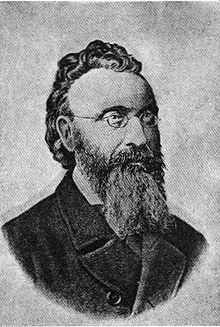
Imprisonment of Fenian Charles Kickham

charles-kickham

Sentenced to fourteen years hard labour for treason, Irish nationalist and Fenian Charles Kickham is incarcerated in Pentonville Prison on February 10, 1865. He is released in 1869, partly due to ill health. He is a contributor to The Irish People and the organiser of the Fenian movement and the Irish Republican Brotherhood (IRB), which the English authorities deem seditious. He also authors a number of novels including the critically acclaimed Knocknagow (1873).

The revolutionary movement which comes to be known as Fenianism is unlike that of 1848 in the character of its leaders. The older political agitation is associated with a brilliant outburst of intellectual effort. The majority of the leaders have left behind high intellectual heritage, or asserted under other skies, and in more favourable circumstances, their possession of great intellectual powers. The Fenian movement, on the other hand, is poor in its literary products. Few of its leading spirits reach to any lofty position since its collapse. The best part of Fenian literature is found in The Irish People, the journalistic organ of the association. Along with Kickham, the chief contributors to the journal are Thomas Clarke Luby and John O’Leary.

Kickham is born at Mullenahone, County Tipperary on May 9, 1828. At the age of thirteen he meets with an accident that deprives him of his hearing. He probably owes the many fine productions of his pen to this accident. At around 18 years of age, he begins to contribute poems and tales to Irish journals and magazines and when The Irish People is started, he becomes one of its chief lead writers. As a result of his involvement in the Fenian movement, he draws the attention of the government and is tried, convicted and sentenced to fourteen years of penal servitude. His comment at the conclusion of the trial is terse: “I have endeavoured to serve Ireland, and now I am prepared to suffer for Ireland.” Four years after his conviction he is released.

Kickham publishes two complete stories, Sally Cavanagh, or The Untenanted Graves, and Knocknagow, or The Homes of Tipperary. These stories have been read wherever there is an Irish home and have made sad or joyous thousands of Irish hearts. They have also found approval in the columns of English and not friendly journals, which have found themselves able to meet him in friendliness on the impartial ground of literature. His books deserve their popularity with the peasant and the approval of the critic. His pictures of life, especially of peasant life, are wonderfully true to nature, full of keen observation, humour, and fidelity. In his attention to minute details and homely incident he resembles in a great degree the style of Erckmann-Chatrian.

Kickham’s ballads are equally popular and are just what ballads for the people should be – simple in language, direct in purpose, and in an easy and common measure. A collected edition of his works is published by Duffy & Son of Dublin.

Charles Kickham dies at the age of 54 on August 22, 1882, at the house of James O’Connor, a former member of the IRB and afterwards MP for Wicklow, 2 Montpelier Place, Blackrock, Dublin, where he had been living for many years and had been cared for by the poet Rose Kavanagh. He is buried in Mullinahone, County Tipperary.

(From: The Cabinet of Irish Literature, Volume 4, edited by T. P. O’Connor)


Leave a comment

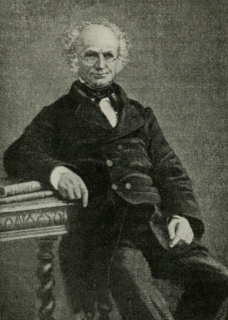
Death of Charles Gavan Duffy

charles-gavin-duffy

Charles Gavan Duffy, Irish nationalist, journalist, poet, and Australian politician, dies on February 9, 1903, in Nice, France. He is the 8th Premier of Victoria and one of the most colourful figures in Victorian political history.

Duffy is born on April 12, 1816, in Dublin Street, Monaghan, County Monaghan. Both of his parents die while he is still a child and his uncle, Fr. James Duffy, who is the Catholic Parish Priest of Castleblayney, becomes his guardian for a number of years. He is educated at St. Malachy’s College in Belfast and is admitted to the Irish Bar in 1845. Duffy becomes a leading figure in Irish literary circles.

Duffy, along with Thomas Osborne Davis and John Blake Dillon, founds The Nation and becomes its first editor. Davis and Dillon later become Young Irelanders. All three are members of Daniel O’Connell‘s Repeal Association. This paper, under Duffy, transforms from a literary voice into a “rebellious organisation.”

In August 1850, Duffy forms the Tenant Right League to bring about reforms in the Irish land system and protect tenants’ rights, and in 1852 is elected to the House of Commons for New Ross. By 1855, the cause of Irish tenants seems more hopeless than ever. Broken in health and spirit, Duffy publishes a farewell address to his constituency, declaring that he has resolved to retire from parliament, as it is no longer possible to accomplish the task for which he has solicited their votes.

In 1856, emigrates with his family to Australia, settling in the newly formed Colony of Victoria. A public appeal is held to enable him to buy the freehold property necessary to stand for the colonial Parliament. He is immediately elected to the Legislative Assembly for Villiers and Heytesbury in the Western District in 1856. He later represented Dalhousie and then North Gippsland. With the collapse of the Victorian Government‘s Haines Ministry during 1857, another Irish Catholic, John O’Shanassy, unexpectedly becomes Premier with Duffy his second-in-charge.

In 1871, Duffy leads the opposition to Premier Sir James McCulloch‘s plan to introduce a land tax, on the grounds that it unfairly penalises small farmers. When McCulloch’s government is defeated on this issue, Duffy becomes Premier and Chief Secretary.  The majority of the colony is Protestant, and Duffy is accused of favouring Catholics in government appointments. In June 1872, his government is defeated in the Assembly on a confidence motion allegedly motivated by sectarianism.

When Graham Berry becomes Premier in 1877, he makes Duffy Speaker of the Legislative Assembly, a post he holds without much enthusiasm until 1880, when he quits politics and retires to the south of France. He remains interested in both the politics of his adoptive country and of Ireland. He is knighted in 1873 and is made KCMG in 1877. Sir Charles Gavan Duffy dies in Nice, France, at the age of 86 in 1903.


Leave a comment

Birth of Francis Sylvester Mahony, Humorist & Journalist

francis-sylvester-mahony

Francis Sylvester Mahony, Irish humorist and journalist also known by the pen name Father Prout, is born on December 31, 1804, in Cork, County Cork.

Mahony is born to Martin Mahony and Mary Reynolds. He is educated at the Jesuit Clongowes Wood College, in County Kildare, and later in the Abbey of Saint-Acheul, a similar school in Amiens, France and then at Rue de Sèvres, Paris, and later in Rome. He begins teaching at the Jesuit school of Clongowes as master of rhetoric but is soon after expelled. He then goes to London and becomes a leading contributor to Fraser’s Magazine, under the signature of “Father Prout” (the original Father Prout, whom Mahony knew in his youth, born in 1757, was parish priest of Watergrasshill, County Cork). At one point he is director of this magazine.

Mahony is witty and learned in many languages. One form which his humour takes is the professed discovery of the originals in Latin, Greek, or mediaeval French of popular modern poems and songs. Many of these jeux d’esprit are collected as Reliques of Father Prout. He pretends that these poems had been found in Fr. Prout’s trunk after his death. He wittily describes himself as “an Irish potato seasoned with Attic salt.” Later he acts as foreign correspondent to various newspapers, and during the last eight years of his life his articles form a main attraction of The Globe.

In his native Cork Mahoney is best remembered for his poem “The Bells of Shandon” and his penname is synonymous with the city and the Church of St. Anne, Shandon.

Mahony spends the last two years of his life in a monastery and dies on May 18, 1866, in Paris reconciled to the Church.

The Reliques of Father Prout originally appear in two volumes in 1836 with illustrations by Maclise. They are reissued in Henry George Bohn‘s Bohn’s Libraries in 1860. Another volume, Final Reliques, is edited by Douglas Jerrold and published in 1876. The Works of Father Prout, edited by Charles Kent, is published in 1881. Facts and Figures from Italy (1847) is made from his Rome letters to London’s The Daily News.


Leave a comment

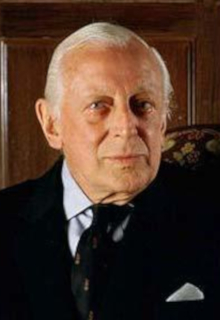
Birth of Alistair Cooke, Journalist & Broadcaster

alistair-cooke

Alistair Cooke, British journalist, television personality, and broadcaster, who describes himself as a “Lancastrian Irishman,” is born in Salford, Lancashire, England on November 20, 1908. He is best known for his lively and insightful interpretations of American history and culture.

The son of Samuel Cooke, a Wesleyan Methodist lay preacher, and Mary Elizabeth (Byrne) from County Sligo, He is educated at Blackpool Grammar School, Blackpool and wins a scholarship to Jesus College, Cambridge, where he gains an honours degree in English. Later he wins a Commonwealth Fund fellowship to study in the United States, first at Yale University (1932–33), then at Harvard University (1933–34). His cross-country travels during the summers of these years have a profound influence on his professional life.

Following a brief period as a scriptwriter in Hollywood, Cooke returns to England to become a film critic for the British Broadcasting Corporation (BBC) and later serves as London correspondent for the National Broadcasting Company (NBC) of the United States. In 1937 he returns to the United States, settles in New York City, and becomes an American citizen in 1941.

From the late 1930s, Cooke reports and comments on American affairs for BBC Radio and several major British newspapers. His weekly 15-minute program, Letter from America, broadcast from 1946 to 2004, is one of the longest-running series on radio. The texts of many broadcasts are collected in One Man’s America (1952) and Talk About America (1968). From 1956 to 1961 he hosts and narrates the weekly television “magazine” Omnibus, which wins numerous broadcasting awards.

Cooke’s interpretation of the American experience culminates in his BBC-produced television series America: A Personal History of the United States (1972–1973). In thirteen installments, filmed on location throughout the United States, he surveys some 500 years of American history in an eclectic and personal but highly coherent narrative. Alistair Cooke’s America (1973), the book based on the award-winning program, is a best-seller in the United States. From the 1970s to the early 1990s, as host of Masterpiece Theatre, he serves as an interpreter of British culture through the presentation of BBC dramatic television programming to American audiences.

Cooke’s other works include the critical biography Douglas Fairbanks: The Making of a Screen Actor (1940), Generation on Trial: The USA v. Alger Hiss (1950), based on his coverage of a celebrated Congressional investigation, The Vintage Mencken (1955), The Patient Has the Floor (1986), America Observed (1988), Memories of the Great and the Good (2000) and, with Robert Cameron, The Americans (1977).

On March 2, 2004, at the age of 95, following advice from his doctors, Cooke announces his retirement from Letter from America—after 58 years, the longest-running speech radio show in the world.

Alistair Cooke dies at midnight on March 30, 2004 at his home in New York City. He had been ill with heart disease, but dies of lung cancer, which had spread to his bones. He is cremated and his ashes are clandestinely scattered by his family in New York’s Central Park.