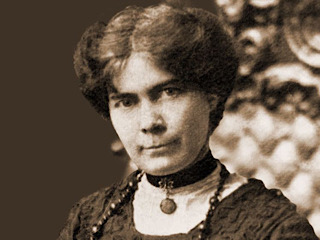
Brayton is born Teresa Coca Boulanger in Kilbrook, the youngest daughter and fifth child of Hugh Boylan and Elizabeth Boylan (née Downes). Her family are long-time nationalists, with her great grandfather previously leading a battalion of pikesmen at the Battle of Prosperous.
Brayton is educated from the age of 5 in Newtown National School. She writes her first poem at the age of twelve, and soon after wins her first literary award. Later on, she trains to be a teacher, and then becomes an assistant teacher to her older sister Elizabeth in the same school she received her education.
Brayton’s father is a tenant farmer, and from a young age she witnesses the effects of the land wars in Ireland. She is a supporter of Parnell, the Irish National Land League and the Irish Home Rule movement. Her work is largely influenced by her family history and Irish nationalism.
In September 1895, Brayton emigrates to the United States at the age of 27. She first lives in Boston, Chicago, and later moves to New York City. She meets Richard H. Brayton, a French-Canadian who works as an executive in the Municipal Revenue Department, who she then marries. She looks after their home and focuses on her career as a freelance journalist. She lives in the United States for 40 years and becomes well known in Irish American circles as a prominent figure in the Celtic Fellowship. It was in the United States that her reputation is established.
In the 1880s, Brayton begins her career as a poet, writing poetry for both national and provincial Irish newspapers, including Young Ireland and the King’s County Chronicle. She uses the pseudonym “T. B. Kilbrook” while contributing to these papers.
Brayton continues writing under the pseudonym until moving to the United States, where she becomes an acclaimed writer and continues to contribute to papers including the Boston newspaper The Pilot, New York Monitor and Rosary Magazine. Her target audience is the Irish immigrant population of the United States. After establishing herself she releases her poetry in collections including Songs of Dawn (1913) and The Flame of Ireland (1926).
Brayton makes return trips to Ireland regularly and develops a relationship with nationalist peers, and the leaders of the Easter Rising. Upon returning to the United States, she becomes an activist for the Irish Republic and participates in organising the distribution of information to the Irish population through pamphlets and public speaking. Her contribution is acknowledged by Constance Markievicz. Her patriotism to Ireland admit her to the Celtic Fellowship in America, where she shares her poetry at events.
Brayton’s best-known poem is “The Old Bog Road,” which is later set to music by Madeline King O’Farrelly. It has since been recorded and released by many Irish musicians including Finbar Furey, Daniel O’Donnell and Eileen Donaghy, among many others. Many more of her best-known ballads include, The Cuckoo’s Call, By the Old Fireside and Takin’ Tea in Reilly’s.
Brayton makes her permanent return to Ireland at the age of 64 following the death of her husband in 1932 and continues her career as a journalist writing for Irish newspapers and publishes religious poetry in the volume Christmas Verses in 1934. A short story called The New Lodger written by Brayton is published by the Catholic Trust Society in 1933. She dedicates much of her work to the exiled Irish living in the United States, incorporating themes of nostalgia, the familiarity of home and religion throughout her poetry.
Initially upon moving back to Ireland, she lives for a few years with her sister in Bray, County Wicklow. She then moves to Waterloo Avenue, North Strand, County Dublin. Here, she witnesses the bombing of the North Strand on May 31, 1941 during World War II. Shortly after the bombing, she eventually settles back in Kilbrook, where she was born, and lives there for the rest of her life. She spends a brief period of time in the Edenderry Hospital before her death. During her stay there she becomes a good friend with Padraig O’Kennedy, the “Leinster Leader,” who is able to reveal to her something that is linked to a family member of his. A copy of her The Old Bog Road which had been set to music and autographed by her while she was living in the United States. She had it sent to O’Kennedy’s eldest son and on it she wrote the words: “To the boy who sings the Old Bog Road so sweetly.”
Two years after her return to Kilbrook, on August 19, 1943, Brayton dies in the same room where her mother had given birth to her over 75 years previously. She is buried at the Cloncurry cemetery in County Kildare. Her funeral is attended by many, including the then Taoiseach, Éamon de Valera.
From the vivid imagery she speaks of in her poetry, Brayton, both a poet and a novelist, is described by some as “the poet of the homes of Ireland.” Such scenes include the vivid imagery of the fireside chats, the sound of her latch lifting as neighbours in to visit at night from her poem “The Old Boreen” and about her home cooking and work from “When the Leaves Begin to Fall.” Such images can be compared to most Irish households and can depict a vivid picture to those reading her poetry.
Brayton’s poetry leaves a lasting sense of Irish beauty and community. This can be seen in such poems as “A Christmas Blessing” where she speaks of “taking and giving in friendship” during Christmas. Since her passing she has continued to keep an audience from overseas from Boston and New York primarily, this as a result of the reminder her poems give to Irish exiles of Irish traditions and music which was close to them. While her poems are more often serious, some portray an almost comical undertone tone. In an article in The Irish Times, her poetry is also said to have a racy feel to them.
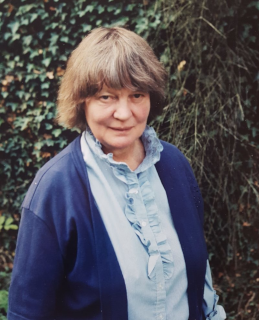
Murdoch is the daughter of Irene Alice (née Richardson) and Wills John Hughes Murdoch. Her father, a civil servant, comes from a mainly Presbyterian sheep farming family from Hillhall, County Down. In 1915, he enlists as a soldier in King Edward’s Horse and serves in France during World War I before being commissioned as a second lieutenant. Her mother trains as a singer before Iris is born and is from a middle-class Church of Ireland family in Dublin. Her parents first meet in Dublin when her father is on leave and are married in 1918. Iris is the couple’s only child. When she is a few weeks old the family moves to London, where her father had joined the Ministry of Health as a second-class clerk. She is a second cousin of the Irish mathematician Brian Murdoch.
From 1947 to 1948 Murdoch studies philosophy as a postgraduate at Newnham College, Cambridge. She meets Ludwig Wittgenstein at Cambridge but does not hear him lecture, as he had left his Trinity College professorship before she arrives. In 1948 she becomes a fellow of St. Anne’s College, Oxford, where she teaches philosophy until 1963. From 1963 to 1967 she teaches one day a week in the General Studies department at the Royal College of Art.
In 1956 Murdoch marries John Bayley, a literary critic, novelist, and from 1974 to 1992 Warton Professor of English at Oxford University, whom she had met in Oxford in 1954. The unusual romantic partnership lasts more than forty years until Murdoch’s death. Bayley thinks that sex is “inescapably ridiculous.” She in contrast has “multiple affairs with both men and women which, on discomposing occasions, Bayley witnesses for himself.”
Murdoch’s first novel, Under the Net, is published in 1954 and is selected in 1998 as one of Modern Library’s 100 best English-language novels of the 20th century. She had previously published essays on philosophy, and the first monograph about Jean-Paul Sartre published in English. She goes on to produce 25 more novels and additional works of philosophy, as well as poetry and drama.
Murdoch’s last novel, Jackson’s Dilemma, is published in 1995. She is diagnosed with Alzheimer’s disease in 1997 and dies on February 8, 1999, in Oxford, England. There is a bench dedicated to her in the grounds of Lady Margaret Hall, Oxford, where she enjoyed walking.
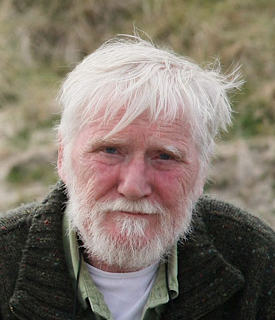
Dermot Healy, Irish novelist, playwright, poet and short story writer, dies at his home in Ballyconnell, Sligo, County Sligo, on June 29, 2014. A member of Aosdána, he is also part of its governing body, the Toscaireacht. He is described variously as a “master,” a “Celtic Hemingway” and as “Ireland’s finest living novelist.”
Healy is born in Finnea, County Westmeath, on November 9, 1947, the son of a Guard. As a child the family moves to Cavan, County Cavan, where he attends the local secondary school. In his late teens he moves to London and works in a succession of jobs, including barman, security man and as a labourer. He later returns to Ireland, settling in Ballyconnell, County Sligo, a small settlement on the Atlantic coast.
Often overlooked due to his relatively low public profile, Healy’s work is admired by his Irish literary predecessors, peers and successors alike, many of whom idolise him. Among the writers to have spoken highly of him are Seamus Heaney, Eugene McCabe, Roddy Doyle, Patrick McCabe and Anne Enright.
Healy dies at his home in Ballyconnell on June 29, 2014, while awaiting an ambulance after suddenly being taken ill. He is laid to rest at Carrigans Cemetery following funeral mass by Fr. Michael Donnelly at St. Patrick’s Church in Maugherow, County Sligo.
Foster is the fourth of the six children of Presbyterian minister of Newmills congregation, James Foster, and Lydia (née Harkness). She has three brothers and two sisters. She is educated at home and is later sent to board at Miss Black’s school in Holywood, County Down. She, with her sisters Jane and Bessie, move to Belfast to establish a girls’ school, the Ladies’ Collegiate School, in the Balmoral suburbs, first at Myrtlefield Park, at 434 Lisburn Road, and then in Maryfield Park. This is after Bessie graduates from Trinity College Dublin in 1896 having studied modern languages. Their school teaches boys and girls, both day pupils and boarders. Foster and Jane teach music, and possibly other subjects as well. Their brother Henry, who works in Belfast, lives with them. All four of the siblings attend the Malone Presbyterian Church and are members of the temperance movement. Throughout her life, Foster remains attached to Newmills, visiting regularly and laying the foundation stone for the new manse in 1910. Her brother, Nevin, is the only one of the six siblings to marry and is an Irish ornithological expert.
The school closes after the deaths of Bessie in December 1917 and Jane in October 1918. The death of Henry in December 1922 leaves Foster alone, and having lost her hearing almost completely, she is in difficult circumstances. To support herself, she begins to write literary sketches and dialect verse for a number of publications such as the Northern Whig, Ireland’s Own, and the annual miscellany Ulster Parade. A selection of these writings are published as a volume, Tyrone Among the Bushes, in 1933. She also writes plays, but these are not collected or produced. She is best known for her three books which are set in rural County Tyrone around the time of Foster’s parents and her childhood. The books, The Bush that Burned (1931), Manse Larks (1936), and Elders’ Daughters (1942) are published by Quota Press in Belfast and are seen as part of the Scottish Kailyard school genre of writing. The Bush that Burned details the story of a young man becoming a minister despite opposition, and is widely read in Ulster and beyond. Aodh de Blácam references the book as evidence that there is little difference between rural Ulster Protestants and their Catholic counterparts. Manse Larks recounts a rural childhood of six siblings growing up in the minister’s house. Foster’s fondness for animals is clear from the book, she is a supporter of the Royal Society for the Prevention of Cruelty to Animals (RSPCA), and her companion in later years is a dog named Stewart. Elders’ Daughters explores the experiences, romantic dreams and misadventures of young women subject to paternal authority in rural County Tyrone.
As Foster’s health declines and after the Belfast Blitz of April 1941, she goes to live with a married niece in Hollowbridge House near Royal Hillsborough, County Down. It is to this niece that she dictates the last chapters of Elders’ Daughters. She dies at Hollowbridge House on December 13, 1943. She is buried at Newmills Presbyterian Church, with her parents and siblings.
Dryhurst is born to Alexander Robinson and Emily Egan. Her father is a dyer. She is known as Nannie to her sisters and she decides to change her name to Nannie Florence in honour of a young friend who had died. As a result she is known variously (and following her marriage) as N.F. Dryhurst, Nannie, Nora and Florence Dryhurst.
After the death of her father, Dryhurst takes a position as a governess as she speaks fluent French, German and Irish, as well as having considerable skill as an artist. She works first in Ireland and then in London. She looks after a doctor’s daughter, Nellie Tenison, and through them she meets the Dryhurst family. In 1882, she becomes engaged to British Museum official Alfred Robert Dryhurst and marries him in August 1884. Their first daughter, Norah, is born in 1885 and the second, Sylvia, in 1888.
Dryhurst soon gets involved with an anarchist group and writes regularly for the Freedom newspaper. She is friends with Charlotte Wilson and acts as editor when Wilson is away. In the early 1890s she takes over as editor completely for a period of time. She also works as a translator for Peter Kropotkin‘s works. She spends time teaching with Wilson, Agnes Henry, and Cyril Bell at the International Anarchist School set up in Fitzroy Square in London by Louise Michel. She gives active support to Spanish refugees fleeing repression and gives money to support the colony at Clousden Hill from 1895 to 1902.
Dryhurst supports a number of different countries attempting to gain independence. She becomes secretary of the Nationalities and Subject Races Committee and uses her writing in working toward Irish independence. She writes for various Irish newspapers and assists with the creation of The Irish Citizen. A friend of W. B. Yeats, she appears in his play The Land of Heart’s Desire in June 1904. She speaks Georgian, having learned it from Varlam Cherkezishvili, a close associate of Kropotkin. In 1906, she is a member of the Georgian Relief Committee and travels to the country. She speaks at an international conference at The Hague in support of Georgia. She is also a supporter of Indian independence.
It was through Dryhurst that the Gifford sisters get their connection to the Irish independence movement. She introduces Muriel Gifford to Thomas McDonagh and Grace Gifford to James Plunkett. After the executions of fifteen leaders of the Easter Rising in Dublin, she spends her time campaigning unsuccessfully for the reprieve of Roger Casement. Not all her activities are purely political. She is a neighbour of Martin Shaw and on her suggestion he founds the Purcell Operatic Society in 1899. She becomes the Society’s secretary. He rents accommodation near her and through her friends they find talented amateurs to put on their productions.
Dryhurst has a long affair with Henry Nevinson, a journalist she meets in 1892. The affair ends in 1912. She dies in 1930. Her papers are kept in the National Library of Ireland.
Duff is the eldest of seven children of John Duff, a civil servant with the local government board, and his wife, Susan Letitia (née Freehill), a civil servant with the post office. The wealthy family lives in the city at St. Patrick’s Road, Drumcondra. He attends Blackrock College.
In 1908, Duff enters the Civil Service and is assigned to the Irish Land Commission. In 1913, he joins the Society of Saint Vincent de Paul and is exposed to the real poverty of Dublin. Many who live in tenement squalor are forced to attend soup kitchens for sustenance, and abject poverty, alcoholism, street gangs, and organized prostitution are rife in parts of Dublin. He joins and soon rises through the ranks to become President of the Saint Patrick’s Conference at Saint Nicholas of Myra Parish. Having concern for people he sees as materially and spiritually deprived, he has the idea to picketProtestant soup kitchens as he considers they are giving aid in the form of food and free accommodation at hostels, in return for not attending Catholic services. He sets up rival Catholic soup kitchens and, with his friend, Sergeant Major Joe Gabbett, who has already been working at discouraging Catholics from patronizing Protestant soup kitchens. They succeed in closing down two of them over the years.
In 1916, Duff publishes his first pamphlet, Can we be Saints?, where he expresses the conviction that all are called to be saints without exception, and that through Christian faith, all have the means necessary.
In 1918, a friend gifts Duff a copy of the book True Devotion to Mary by the seventeenth-century French cleric Louis de Montfort, which influences his views on Mary. He is additionally influenced by the writings of John Henry Newman.
On September 7, 1921, along with Fr. Michael Toher and fifteen predominantly young women, he is present at the first meeting of the association which he would forge as the Legion of Mary. He models the Legion on the Roman legions, naming the local unit the “praesidium,” and he immerses himself in the apostolic work which dominates the rest of his life.
In 1922, Duff establishes the Sancta Maria hostel in Dublin as a refuge for prostitutes, and is the driving force behind the closure of “Monto,” Dublin’s notorious red-light district. In 1927, he establishes the Morning Star hostel for homeless men in Dublin, and in 1930 the Regina Coeli hostel for homeless women, which provides special units for unmarried mothers and their children at a time when neither church nor state favour helping unmarried women to keep their children.
While Duff enjoys the support of W. T. Cosgrave, Ireland’s head of government, and in May 1931 is granted an audience with Pope Pius XI, his efforts are opposed internally in the Dublin diocese. In the 1930s and 1940s, he creates the Mercier Society, a study group designed to bring together Catholics and Protestants, as well as the Pillar of Fire, a group designed to promote dialogue between Irish Catholics with Ireland’s Jewish community.
Duff retires from the Civil Service in 1934 to devote all of his time to the Legion of Mary. For the rest of his life, with the help of many others, he guides the Legion’s worldwide extension.
In 1965, Pope Paul VI invites Duff to attend the Second Vatican Council as a lay observer. When he is introduced to the assembly by Archbishop John Heenan of Liverpool, he receives a standing ovation.
Duff makes the promotion of devotion to the Sacred Heart of Jesus part of the Legion’s apostolate.
Duff dies in Dublin at the age of 91 on November 7, 1980. He Is interred in Glasnevin Cemetery. In July 1996, the cause of Duff’s beatification is introduced by Cardinal Desmond Connell.
Today, the Legion of Mary has an estimated four million active members and 10 million auxiliary members in close to 200 countries in almost every diocese in the Catholic Church.
Campbell is born in Belfast on July 15, 1879, into a Catholic and Irish nationalist family from County Down. He is educated at St. Malachy’s College, Belfast. After working for his father he teaches for a while. He travels to Dublin in 1902, meeting leading nationalist figures. His literary activities begin with songs, as a collector in Antrim, County Antrim and working with the composer Herbert Hughes. He is then a founder of the Ulster Literary Theatre in 1904. He contributes a play, The Little Cowherd of Slainge, and several articles to its journal Uladh edited by Bulmer Hobson. The Little Cowherd of Slainge is performed by the Ulster Literary Theatre at the Clarence Place Hall in Belfast on May 4, 1905, along with Lewis Purcell’s The Enthusiast.
Campbell moves to Dublin in 1905 and, failing to find work, moves to London the following year where he is involved in Irish literary activities while working as a teacher. He marries Nancy Maude in 1910, and they move shortly thereafter to Dublin, and then later to County Wicklow. His play Judgement is performed at the Abbey Theatre in April 1912.
Campbell takes part as a supporter in the Easter Rising of 1916, doing rescue work. The following year he publishes a translation from Irish of the short stories of Patrick Pearse, one of the leaders of the Rising.
Campbell becomes a Sinn FéinCouncillor in Wicklow in 1921. Later in the Irish Civil War he is on the Republican side, and is interned in 1922-23. His marriage breaks up, and he emigrates to the United States in 1925 where he settles in New York City. He lectures at Fordham University, and works in academic Irish studies, founding the University’s School of Irish Studies in 1928, which lasts four years. He is the editor of The Irish Review (1934), a short lived “magazine of Irish expression.” The business manager is George Lennon, former Officer Commanding of the County WaterfordFlying Column during the Irish War of Independence. The managing editor is Lennon’s brother-in-law, George H. Sherwood.
Campbell returns to Ireland in 1939, settling at Glencree, County Wicklow. He dies at Lacken Daragh, Enniskerry, County Wicklow on June 6, 1944.
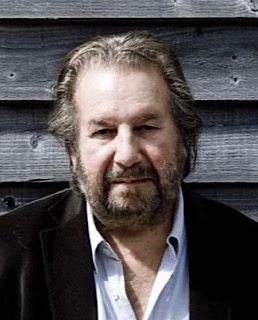
In 1977, Tullio takes over Armstrong’s Barn, serving food in a traditional Irish style. The restaurant closes in 1988. He does not sell the building when he closes the restaurant, instead he changes it into a recording studio. It is not a big hit so he holds several other jobs to pay the bills such as acting as a voice-over artist for commercials. After the demise of the studio, he renovates the building and turns it into a house.
Tullio sells “Annaglen,” the dwelling house attached to Armstrong’s Barn, and moves into Armstrong’s Barn itself. Before selling off Armstrong’s Barn in 2003, he builds a smaller house in a field close by.
Tullio receives several culinary awards for his cooking. In 1978, Armstrong’s Barn is awarded one Michelin star. The Michelin Guide awards the restaurant the “Red M,” indicating “good food at a reasonable price,” in 1980 and 1981.
He marries watercolour artist Susan Morley in 1975 after they meet each other at Trinity College Dublin. They have two children, but separate in 2004.
Tullio becomes a familiar face on television and even movies, acting as a guest critic on the popular RTÉ series The Restaurant. He writes restaurant reviews for the Irish Independent up until late 2014.
As an author, he pens North of Naples, South of Rome (1994), a book about where he is from in Italy and Mushroom Man (1998). He is also a frequent guest on Newstalk radio with Seán Moncrieff.
Tullio’s press manager, Noel Kelly, speaks of his passing: “The world is missing an incredible chef and culinary expert. He was one of life’s true gentlemen, a word overused but not in this case as Paolo was a gentleman to the core.”
The eldest of the three sons and one daughter of Daniel Sheehan, tenant farmer, and his wife, Ellen (née Fitzgerald). He is educated at the local primary school. In his book Ireland since Parnell (1921) he states that witnessing the ragged poverty of labourers’ and smallholders’ children who attended the school made him determined to do something for the poor. The family’s Fenian tradition and his parents’ eviction from their holding in 1880 form his early years. At the age of sixteen he becomes a schoolteacher.
In 1890, Sheehan takes up journalism, serving as correspondent of the Kerry Sentinel and special correspondent of the Cork Daily Herald in Killarney. He also becomes correspondence secretary to the Kanturk trade and labour council, which campaigns on behalf of agricultural labourers. He manages to get reports of meetings into the Cork papers, and this helps the rapid spread of the association, which in 1890 becomes the Irish Democratic Trade and Labour Federation, under the leadership of Michael Davitt. It is, however, fatally disrupted by the Parnell split. While Sheehan continues to admire Davitt, and despite the pre-split Irish party leadership having opposed the federation as a threat to Charles Stewart Parnell‘s leadership, he becomes a Parnellite, and always remembers his only meeting with Parnell at Tralee, when the chief is presented with a loyal address (drafted by Sheehan) from his Killarney supporters. After Parnell’s death and the defeat of the Second Home Rule Bill, he temporarily drops out of Irish politics.
Following his marriage on February 6, 1894, to Mary Pauline O’Connor of Tralee, Sheehan joins the staff of the Glasgow Observer in pursuit of journalistic experience, then becomes editor of the Catholic News in Preston, Lancashire. In 1898, he returns to Ireland and works on various papers, including the Cork Constitution, before serving as editor of the Skibbereen-based Cork County Southern Star (1899–1901), where his Parnellism brings him into conflict with the Bishop of Ross, Denis Kelly. He expresses sympathy for the newly founded United Irish League (UIL), established by William O’Brien in Connacht with the dual aim of representing western smallholders and using a new land agitation as a vehicle for Irish Party reunion. He does not, however, join the UIL himself.
In August 1894, the Clonmel solicitor J. J. O’Shee, anti-Parnellite MP for West Waterford from 1895, forms the Irish Land and Labour Association (ILLA) to agitate on behalf of agricultural labourers and small tenant farmers. Its appearance reflects the breakdown of the centralised party discipline which had existed before the Parnell split, and recognition that the land war’s prime beneficiaries had been large and middle-sized tenant farmers rather than the nation as a whole. On returning from Britain in 1898, Sheehan throws himself into organising the ILLA and becomes its president. In 1900 there are 100 branches, mostly in Cork, Tipperary, and Limerick. The Irish Party leadership look on this organisation with some suspicion.
At the 1900 United Kingdom general election in Ireland Sheehan seeks the Irish Parliamentary Party (IPP) nomination for South Cork but was defeated by Edward Barry. After the death of Dr Charles Tanner, however, he succeeds in obtaining the IPP nomination for the constituency of Mid Cork, despite the party leadership’s attempts to deny recognition to ILLA branches in order to hand the nomination to its favoured candidate. Sheehan is elected unopposed on May 17, 1901. At the age of 28, he is the youngest Irish member of parliament. Although he has been admitted to the party, his position as a labour representative and his perceived independent base make him something of an outsider.
From October 1904 Sheehan allies himself with O’Brien, writing regularly for the latter’s weekly a TheIrish People. Redmondites accuse him of opportunism, but he always maintains that his personal inclination as an old Parnellite has been towards John Redmond and that his support for O’Brien derives from the older man’s willingness from 1904 to identify himself with the labourers’ campaign. Although their alliance originally likely contains elements of expediency, Sheehan and O’Brien develop a deep personal friendship.
Sheehan’s support for O’Brien leads to a split in the ILLA in 1906, with Tipperary and Waterford branches following O’Shee and Redmond, and Sheehan retaining the support of his Cork base and of some branches in Limerick and Kerry. He serves on the Cork advisory committee which represents tenant interests in land purchase negotiations under the Wyndham Land Act. It’s policy of “conference plus business” combines an offer to negotiate with willing landlords and a threat of agitation against those unwilling to give satisfactory terms. His faction of the ILLA becomes the basis for the grassroots organisation of O’Brien’s followers, and sporadic attempts, financed by O’Brien, are made to spread it outside its Munster base. Both factions of the ILLA claim credit for the passage of the 1906 and 1911 Labourers’ (Ireland) Acts which provide for the allocation of cottages and smallholdings to labourers. In Cork and some other parts of Munster these buildings become popularly known as “Sheehan’s cottages,” a term which long outlives Sheehan’s political career. He also helps to bring about the creation of a “model village” at Tower, near Blarney, the result of cooperation between the local ILLA branch and the rural district council.
At the 1906 general election the Redmond leadership attempts to avoid an open split by allowing O’Brien’s supporters to return unopposed. However, the continuing conflict between the two factions rapidly leads to a formal break. Shortly after the election Sheehan is excluded from the IPP, and thereby deprived of the parliamentary stipend paid to MPs with insufficient resources to maintain themselves. With the support of O’Brien and the small group of O’Brienite MPs, he maintains that the party has no right to exclude an elected MP willing to take the party pledge. After resigning his seat to which he was re-elected without opposition on December 31, 1906, he demands readmission to the party and mounts an unsuccessful lawsuit demanding payment of the stipend. He is subsequently supported from the proceeds of collections outside church gates on Sundays.
Sheehan and the other O’Brienite MPs are readmitted to the party in 1908 as part of an attempt at general reconciliation after the disruptions following the rejection of the Irish Council Bill. Dissensions rapidly reappear over Augustine Birrell‘s 1909 land act, which the O’Brienites see as wriggling out of the financial responsibilities accepted by the British government in the Wyndham land act and as sabotaging land purchase, since landlords will not accept the terms offered. Sheehan’s section of the ILLA is denied official recognition and thereby prevented from sending delegates to a party convention called to consider the bill. At the convention, groups of “heavies”recruited from Joseph Devlin‘s Ancient Order of Hibernians (AOH) exclude delegates with Cork accents, while O’Brienite speakers are howled down. This leads to the formation in March 1909 of the All-for-Ireland League (AFIL), a body based on the existing O’Brienite organisation and advocating O’Brien’s policy of gradually implementing home rule through step-by-step cooperation with moderate unionist supporters of devolution. Although O’Brien’s temporary retirement for health reasons in April 1909 leads to the suspension of the AFIL, it is revived in response to an attempted purge of the O’Brienite MPs by the leadership and by O’Brien’s reappearance in response to the January 1910 general election. Sheehan writes regularly for its paper, the Cork Free Press.
In the general election the O’Brienites hold their seats while two Cork Redmondites are displaced. Sheehan is re-elected for Mid Cork, defeating the Redmondite W. G. Fallon in a campaign marked by widespread rioting and impassioned clerical denunciations of Sheehan. Fallon subsequently attempts to get up a “red scare” against the ILLA. The Cork ILLA later splits over Sheehan’s slightly erratic leadership. While the split is initially personality-driven, the breakaway faction, led by Patrick Bradley and centred in east Cork, moves back toward alignment with Redmond. At the December 1910 election the AFIL consolidates its position in Cork, but is defeated everywhere else. Sheehan retains his Mid Cork seat against a local candidate but is defeated in a simultaneous contest in East Limerick. He is also defeated when he stands for Cork County Council in June 1911, though the AFIL wins control of that body.
Sheehan studies law at University College Cork (UCC) (1908–09), where he is an exhibitioner and prizeman, and at King’s Inns, where he graduated with honours. He is called to the bar in 1911 and practised on the Munster circuit. In 1913–14 he is active in the AFIL’s attempts to avert partition by trying to recruit sections of British political opinion in favour of a conference between the parties. He becomes vice-chairman of the Imperial Federation League. This receives considerable attention among the British political classes but contributes to the decline of the AFIL’s electoral base. The policy of conciliation has been driven to a considerable extent by the belief that it is the only way of achieving home rule. The abolition of the House of Lords’ veto and the introduction of the third home rule bill by the Asquith government undercuts this argument and increases Redmond’s prestige, while AFIL denunciations of Redmondism are seen as driven by personal resentment and playing into the hands of unionists. The decision of the AFIL MPs to abstain from supporting the bill on its final passage through the House of Commons in 1914 as a protest against the prospect of a partition-based compromise is represented by Redmondites as a vote against home rule itself and contributed to AFIL loss of Cork County Council in June 1914.
On the outbreak of World War I, Sheehan supports O’Brien in calling for Irish enlistment for foreign service. In November 1914, at the age of forty-two, he enlists himself and is gazetted as a lieutenant in the Royal Munster Fusiliers. It is claimed that he is almost single-handedly responsible for raising the 9th (service) battalion of this regiment. Three of his sons also enlist. Two of his sons are killed in action with the Royal Flying Corps, and a daughter is disabled by injuries received in an air raid while serving as a nurse. In the spring and summer of 1915 he organises and leads recruiting campaigns in Cork, Limerick, and Clare. This is part of a nationwide drive for recruits, aimed in particular at the farming community, which reflects the realisation that the war is going to last much longer than expected.
In 1915, Sheehan is promoted to the rank of captain and serves with his battalion on the Loos-en-Gohellesalient and at the Battle of the Somme, contributing a series of articles from the trenches to the London Daily Express. Various ailments, including deafness caused by shellfire, and hospitalisation necessitate his transfer to the 3rd Royal Munster Fusiliers (Reserve) Battalion, and he resigns his commission on January 13, 1918, due to ill health. In April 1918 he speaks at Westminster against the bill extending conscription to Ireland, threatening to resist it by force. One of his last parliamentary speeches (in October 1918) is in support of a bill providing land grants for Irish ex-servicemen. With the growth of Sinn Féin and the virtual demise of the AFIL, his position in Cork grows increasingly untenable. The Sheehan family faces intimidation and are obliged to leave their home on the Victoria Road for London, where he has secured the Labour Party nomination for the Limehouse–Stepney division of the East End, later represented by Clement Attlee.
Sheehan is unsuccessful in the 1918 United Kingdom general election, and is obliged to leave politics after a financially disastrous involvement in an Achill Island mining company leads to his bankruptcy. Unable to practise at the bar because of the hearing loss caused by his war service, he returns to journalism and becomes editor and publisher of TheStadium, a daily newspaper for sportsmen. In 1921, shortly before the Anglo-Irish truce, he publishes Ireland since Parnell, a history of recent events heavily dependent on the writings of O’Brien but incorporating some personal reminiscences. It concludes by blaming the outbreak of the IRA guerrilla campaign on provocation by Crown forces, denouncing reprisals, and pleading for British recognition of Dáil Éireann and dominion home rule for an undivided Ireland.
Sheehan moves to Dublin in 1926 after hearing that the threats against him have been lifted. His wife, who has never fully recovered from the stresses and bereavements she has experienced since 1914, dies soon afterward. Sheehan himself becomes managing editor of Irish Press and Publicity Services and, in 1928, publisher and editor of the South Dublin Chronicle. The paper gives critical support to the Irish Labour Party, publishes campaigning articles on slum conditions, and advocates housing reform. In September 1930, he is an unsuccessful Labour candidate for Dublin County Council. In the 1930s, as his health deteriorates further, he works as coordinator for the ex-servicemen’s group the Old Comrades’ Association, editing both northern and southern editions of its annual journal. In 1942, he offers himself to Richard Mulcahy as a Fine Gael candidate for Cork South-East, but is turned down. He dies on November 28, 1948, while visiting his daughter at Queen Anne Street, London. Both he and his wife are buried in Glasnevin Cemetery.
(From: “Sheehan, Daniel Desmond (‘D. D.’)” by Patrick Maume, Dictionary of Irish Biography, http://www.dib.ie, October 2009)
Kickham’s father, John Kickham, is the proprietor of the principal drapery in the locality and is held in high esteem for his patriotic spirit. His mother, Anne O’Mahony, is related to the Fenian leader John O’Mahony. He grows up largely deaf and almost blind, the result of an explosion with a powder flask when he is thirteen. He is educated locally, where it is intended that he study for the medical profession. During his boyhood the campaign for a repeal of the Acts of Union 1800 between Great Britain and Ireland is at its height, and he soon becomes versed in its arguments and is inspired by its principles. He often hears the issues discussed in his father’s shop and at home amongst all his friends and acquaintances.
From a young age Kickham is imbued with these patriotic ideals. He becomes acquainted with the teaching of the Young Irelanders through their newspaper The Nation from its foundation in October 1842. His father read the paper aloud every week for the family. Like all the young people of the time, and a great many of the old ones, his sympathies are with the Young Irelanders on their secession from the Repeal Association.
When he is 22 years old, Kickham contributes The Harvest Moon sung to the air of “The Young May Moon,” to The Nation on August 17, 1850. Other verses are to follow, but the finest of his poems according to A. M. O’Sullivan, appear in other journals. Rory of the Hill, The Irish Peasant Girl, and Home Longings, better known as Slievenamon, are published in the Celt. The First Felon appears in the Irishman. Patrick Sheehan, the story of an old soldier, is published in the Kilkenny Journal, and becomes very popular as an anti-recruiting song.
Kickham begins to write for a number of papers, including The Nation, but also the Celt, the Irishman, the Shamrock, and becomes one of the leading writers of The Irish People, the Fenian newspaper, in which many of his poems appear. His writings are signed using his initials, his full name, or the pseudonyms, “Slievenamon” and “Momonia.”
Kickham is the leading member of the Confederation Club in Mullinahone, which he is instrumental in founding. When the revolutionary spirit begins to grip the people in 1848, he turns out with a freshly made pike to join William Smith O’Brien and John Blake Dillon when they arrive in Mullinahone in July 1848. On hearing of the progress of O’Brien through the country, he sets to work manufacturing pikes and is in the forge when news reaches him that the leaders are looking for him. It is here that he meets James Stephens for the first time. At O’Brien’s request, he rings the chapel bell to summon the people and before midnight a Brigade has answered the summons. He later writes a detailed account about this period which brings his connection with the attempted Rising of 1848 to a close.
After the failed 1848 uprising at Ballingarry, Kickham has to hide for some time, as a result of the part he had played in rousing the people of his native village to action. When the excitement has subsided, he returns to his father’s house and resumes his interests in the sports of fishing and fowling and spends much of his time in literary pursuits. Some of the authors in which he is well versed are Alfred Tennyson and Charles Dickens and he greatly admires George Eliot, and after William Shakespeare, is Robert Burns.
In the autumn of 1857, a messenger arrives from New York with a message for James Stephens from members of the Emmet Monument Association, calling on him to get up an organization in Ireland. On December 23, Stephens dispatches Joseph Denieffe to the United States with his reply and outlines his conditions and his requirements from the organisation in America. Denieffe returnd on March 17, 1858, with the acceptance of Stephens’ terms and £80. That evening the Irish Republican Brotherhood commences. Those present in Langan’s, lathe-maker and timber merchant, 16 Lombard Street, for that first meeting are Stephens, Kickham, Thomas Clarke Luby, Peter Langan, Denieffe and Garrett O’Shaughnessy. Later it includes members of the Phoenix National and Literary Society, which is formed in 1856 by Jeremiah O’Donovan Rossa in Skibbereen, County Cork.
In mid-1863, Stephens informs his colleagues that he wishes to start a newspaper, with financial aid from O’Mahony and the Fenian Brotherhood in America. The offices are established at 12 Parliament Street, almost at the gates of Dublin Castle. The first issue of The Irish People appears on November 28, 1863. The staff of the paper along with Kickham are Luby and Denis Dowling Mulcahy as the editorial staff, O’Donovan Rossa and James O’Connor in charge of the business office, with John Haltigan being the printer. John O’Leary is brought from London to take charge in the role of Editor. Shortly after the establishment of the paper, Stephens departs on an America tour, and to attend to organizational matters. Before leaving, he entrusts to Luby a document containing secret resolutions on the Committee of Organization or Executive of the IRB. Though Luby intimates its existence to O’Leary, he does not inform Kickham as there seems no necessity. This document later forms the basis of the prosecution against the staff of The Irish People.
Kickham’s first contribution to The Irish People, entitled Leaves from a Journal, appears in the third issue and is based on a journal he kept on his way to America in 1863. This article leaves no doubt as to his literary capacity according to O’Leary. It falls to Kickham, as a good Catholic, to tackle the priests, though not exclusively with articles such as “Two Sets of Principles,” a rebuff to the doctrines laid down by Lord Carlisle, and “A Retrospect,” dealing with the tenant-right movement chiefly but also the events of the recent past and their bearing on the present. Kickham articulates the attitude held by the IRB in relation to priests, or more particularly in politics.
On July 15, 1865, American-made plans for a rising in Ireland are discovered when the emissary loses them at Kingstown railway station. They find their way to Dublin Castle and to Superintendent Daniel Ryan, head of G Division. Ryan has an informer within the offices of The Irish People named Pierce Nagle. He supplies Ryan with an “action this year” message on its way to the IRB unit in Tipperary. With this information, Ryan raids the offices of The Irish People on September 15, followed by the arrests of O’Leary, Luby, and O’Donovan Rossa. Kickham is caught after a month on the run. Stephens is also caught but with the support of Fenian prison warders John J. Breslin and Daniel Byrne is less than a fortnight in Richmond Bridewell when he vanishes and escapes to France. The last issue of The Irish People is dated September 16, 1865.
On November 11, 1865, Kickham is convicted of treason. Judge William Keogh, with many expressions of sympathy for the prisoner, and many compliments in reference to his intellectual attainments, sentences him to fourteen years’ penal servitude. The prisoners’ refusal to disown their opposition to British rule in any way, even when facing charges of life-imprisonment, earn them the nickname of “the bold Fenian men.” Kickham spends time from 1866 until his release in the Woking Convict Invalid Prison.
Kickham is given a free pardon from Queen Victoria on February 24, 1869, because of ill-health, and upon his release he is made Chairman of the Supreme Council of the IRB and the unchallenged leader of the reorganized movement. He is an effective orator and chairman of meetings despite his physical handicaps. He wears an ear trumpet and can only read when he holds books or papers within a few inches of his eyes. For many years he carries on conversations by means of the deaf and dumb alphabet.
Kickham is the author of three well-known stories, dealing sympathetically with Irish life and manners and the simple faith, the joys and sorrows, the quaint customs and the insuppressible humour of the peasantry. Knocknagow is deemed one of the finest tales of peasant life ever written. Sally Cavanagh is a touching story illustrating the evils of landlordism and emigration. For the Old Land deals with the fortunes of a small farmer’s family.
Kickham dies on August 22, 1882, at the house of James O’Connor, a former member of the IRB and afterward MP for West Wicklow, 2 Montpelier Place, Blackrock, Dublin, where he had been living for many years, and had been cared for by the poet Rose Kavanagh. He is buried in Mullinahone, County Tipperary.




 seamus dubhghaill