seamus dubhghaill

Promoting Irish Culture and History from Little Rock, Arkansas, USA


Leave a comment

The Roman Catholic Relief Act 1829 Receives Royal Assent

The Roman Catholic Relief Act 1829, also known as the Catholic Emancipation Act 1829, receives royal assent on April 13, 1829. The act removes the sacramental tests that bar Roman Catholics in the United Kingdom from Parliament and from higher offices of the judiciary and state. It is the culmination of a fifty-year process of Catholic emancipation which had offered Catholics successive measures of “relief” from the civil and political disabilities imposed by Penal Laws in both Great Britain and in Ireland in the seventeenth and early eighteenth centuries.

Convinced that the measure is essential to maintain order in Catholic-majority Ireland, Arthur Wellesley, 1st Duke of Wellington, helps overcome the opposition of King George IV and of the House of Lords by threatening to step aside as Prime Minister and retire his Tory government in favour of a new, likely-reform-minded Whig ministry.

In Ireland, the Protestant Ascendancy has the assurance of the simultaneous passage of the Parliamentary Elections (Ireland) Act 1829. Its substitution of the British ten-pound for the Irish forty-shilling freehold qualification disenfranchises over 80% of Ireland’s electorate. This includes a majority of the tenant farmers who had helped force the issue of emancipation in 1828 by electing to parliament the leader of the Catholic Association, Daniel O’Connell.

O’Connell had rejected a suggestion from “friends of emancipation,” and from the English Roman Catholic bishop, John Milner, that the fear of Catholic advancement might be allayed if the Crown were accorded the same right exercised by continental monarchs: a veto on the confirmation of Catholic bishops. O’Connell insists that Irish Catholics would rather “remain forever without emancipation” than allow the government “to interfere” with the appointment of their senior clergy. Instead, he relies on their confidence in the independence of the priesthood from Ascendancy landowners and magistrates to build his Catholic Association into a mass political movement. On the basis of a “Catholic rent” of a penny a month (typically paid through the local priest), the Association mobilises not only the Catholic middle class, but also poorer tenant farmers and tradesmen. Their investment enables O’Connell to mount “monster” rallies that stay the hands of authorities and embolden larger enfranchised tenants to vote for pro-emancipation candidates in defiance of their landlords.

O’Connell’s campaign reaches its climax when he himself stands for parliament. In July 1828, he defeats a nominee for a position in the British cabinet, William Vesey-FitzGerald, in a County Clare by-election, 2057 votes to 982. This makes a direct issue of the parliamentary Oath of Supremacy by which, as a Catholic, he will be denied his seat in the Commons.

As Lord Lieutenant of Ireland, Wellington’s brother, Richard Wellesley, had attempted to placate Catholic opinion, notably by dismissal of the long-serving Attorney-General for Ireland, William Saurin, whose rigid Ascendancy views and policy made him bitterly unpopular, and by applying a policy of prohibitions and coercion against not only the Catholic Ribbonmen but also the Protestant Orangemen. But now both Wellington and his Home Secretary, Robert Peel, are convinced that unless concessions are made, a confrontation is inevitable. Peel concludes, “though emancipation was a great danger, civil strife was a greater danger.” Fearing insurrection in Ireland, he drafts the Relief Bill and guides it through the House of Commons. To overcome the vehement opposition of both the King and of the House of Lords, Wellington threatens to resign, potentially opening the way for a new Whig majority with designs not only for Catholic emancipation but also for parliamentary reform. The King initially accepts Wellington’s resignation and the King’s brother, Ernest Augustus, Duke of Cumberland, attempts to put together a government united against Catholic emancipation. Though such a government would have considerable support in the House of Lords, it would have little support in the Commons and Ernest abandons his attempt. The King recalls Wellington. The bill passes the Lords and becomes law.

The key, defining, provision of the Acts is its repeal of “certain oaths and certain declarations, commonly called the declarations against transubstantiation and the invocation of saints and the sacrifice of the mass, as practised in the Church of Rome,” which had been required “as qualifications for sitting and voting in parliament and for the enjoyment of certain offices, franchises, and civil rights.” For the Oath of Supremacy, the act substitutes a pledge to bear “true allegiance” to the King, to recognise the Hanoverian succession, to reject any claim to “temporal or civil jurisdiction” within the United Kingdom by “the Pope of Rome” or “any other foreign prince … or potentate,” and to “abjure any intention to subvert the present [Anglican] church establishment.”

This last abjuration in the new Oath of Allegiance is underscored by a provision forbidding the assumption by the Roman Church of episcopal titles, derived from “any city, town or place,” already used by the United Church of England and Ireland. (With other sectarian impositions of the Act, such as restrictions on admittance to Catholic religious orders and on Catholic-church processions, this is repealed with the Roman Catholic Relief Act 1926.)

The one major security required to pass the Act is the Parliamentary Elections (Ireland) Act 1829. Receiving its royal assent on the same day as the relief bill, the act disenfranchises Ireland’s forty-shilling freeholders, by raising the property threshold for the county vote to the British ten-pound standard. As a result, “emancipation” is accompanied by a more than five-fold decrease in the Irish electorate, from 216,000 voters to just 37,000. That the majority of the tenant farmers who had voted for O’Connell in the Clare by-election are disenfranchised as a result of his apparent victory at Westminster is not made immediately apparent, as O’Connell is permitted in July 1829 to stand unopposed for the Clare seat that his refusal to take the Oath of Supremacy had denied him the year before.

In 1985, J. C. D. Clark depicts England before 1828 as a nation in which the vast majority of the people still believed in the divine right of kings, and the legitimacy of a hereditary nobility, and in the rights and privileges of the Anglican Church. In Clark’s interpretation, the system remained virtually intact until it suddenly collapsed in 1828, because Catholic emancipation undermined its central symbolic prop, the Anglican supremacy. He argues that the consequences were enormous: “The shattering of a whole social order. … What was lost at that point … was not merely a constitutional arrangement, but the intellectual ascendancy of a worldview, the cultural hegemony of the old elite.”

Clark’s interpretation has been widely debated in the scholarly literature, and almost every historian who has examined the issue has highlighted the substantial amount of continuity before and after the period of 1828 through 1832.

Eric J. Evans in 1996 emphasises that the political importance of emancipation was that it split the anti-reformers beyond repair and diminished their ability to block future reform laws, especially the great Reform Act of 1832. Paradoxically, Wellington’s success in forcing through emancipation led many Ultra-Tories to demand reform of Parliament after seeing that the votes of the rotten boroughs had given the government its majority. Thus, it was an ultra-Tory, George Spencer-Churchill, Marquess of Blandford, who in February 1830 introduced the first major reform bill, calling for the transfer of rotten borough seats to the counties and large towns, the disfranchisement of non-resident voters, the preventing of Crown officeholders from sitting in Parliament, the payment of a salary to MPs, and the general franchise for men who owned property. The ultras believed that a widely based electorate could be relied upon to rally around anti-Catholicism.

In Ireland, emancipation is generally regarded as having come too late to influence the Catholic-majority view of the union. After a delay of thirty years, an opportunity to integrate Catholics through their re-emerging propertied and professional classes as a minority within the United Kingdom may have passed. In 1830, O’Connell invites Protestants to join in a campaign to repeal the Act of Union and restore the Kingdom of Ireland under the Constitution of 1782. At the same, the terms under which he is able to secure the final measure of relief may have weakened his repeal campaign.

George Ensor, a leading Protestant member of the Catholic Association in Ulster, protests that while “relief” bought at the price of “casting” forty-shilling freeholders, both Catholic and Protestant, “into the abyss,” might allow a few Catholic barristers to attain a higher grade in their profession, and a few Catholic gentlemen to be returned to Parliament, the “indifference” demonstrated to parliamentary reform will prove “disastrous” for the country.

Seeking, perhaps, to rationalise the sacrifice of his freeholders, O’Connell writes privately in March 1829 that the new ten-pound franchise might actually “give more power to Catholics by concentrating it in more reliable and less democratically dangerous hands.” The Young Irelander John Mitchel believes that the intent is to detach propertied Catholics from the increasingly agitated rural masses.

In a pattern that had been intensifying from the 1820s as landlords clear land to meet the growing livestock demand from England, tenants have been banding together to oppose evictions and to attack tithe and process servers.

One civil disability not removed by 1829 Act are the sacramental tests required for professorships, fellowships, studentships and other lay offices at universities. These are abolished for the English universities – Oxford, Cambridge and Durham – by the Universities Tests Act 1871, and for Trinity College Dublin by the “Fawcett’s Act” 1873.

Section 18 of the 1829 act, “No Roman Catholic to advise the Crown in the appointment to offices in the established church,” remains in force in England, Wales and Scotland, but is repealed with respect to Northern Ireland by the Statute Law Revision (Northern Ireland) Act 1980. The entire act is repealed in the Republic of Ireland by the Statute Law Revision Act 1983.


Leave a comment

Birth of James Whiteside, Politician & Judge

James Whiteside, Irish politician and judge, is born at Delgany, County Wicklow, on August 12, 1804.

Whiteside is the son of William Whiteside, a clergyman of the Church of Ireland. His father is transferred to the parish of Rathmines but dies when his son is only two years old, leaving his widow in straitened circumstances. She schools her son personally in his early years. He is educated at Trinity College Dublin, enters the Middle Temple, and is called to the Irish bar in 1830.

Whiteside very rapidly acquires a large practice, and after taking silk in 1842 he gains a reputation for forensic oratory surpassing that of all his contemporaries and rivalling that of his most famous predecessors of the 18th century. He defends Daniel O’Connell in the state trial of 1843, and William Smith O’Brien in 1848. His greatest triumph is in the Yelverton case in 1861. He is elected Member of Parliament (MP) for Enniskillen in 1851, and in 1859 becomes an MP for Dublin University. In Parliament, he is no less successful as a speaker than at the bar, and in 1852 is appointed Solicitor-General for Ireland in the first administration of Prime Minister Edward Smith-Stanley, becoming Attorney-General for Ireland in 1858, and again in 1866. In the same year he is appointed Lord Chief Justice of the Queen’s Bench, having previously turned down offers of a junior judgeship. His reputation as a judge does not equal his reputation as an advocate, although he retains his great popularity. In 1848, after a visit to Italy, he publishes Italy in the Nineteenth Century. In 1870 he collects and republishes some papers contributed many years before to periodicals, under the title Early Sketches of Eminent Persons.

In July 1833, Whiteside marries Rosetta, daughter of William and Rosetta Napier, and sister of Sir Joseph Napier, Lord Chancellor of Ireland. Like his brother-in-law, Joseph, he is devoted to the Church of Ireland and strongly opposes its disestablishment.

Whiteside is universally well-liked, being noted for charm, erudition and a sense of humour. Barristers who practise before him say that his charm, courtesy and constant flow of jokes make appearing in his Court a delightful experience.

Whiteside’s last years on the bench ware affected by ill health. He dies on November 25, 1876, at Brighton, Sussex, England. His brother-in-law, from whom he is estranged in later years, is overcome with grief at his death and collapses at the funeral. He is buried at Mount Jerome Cemetery in Dublin.

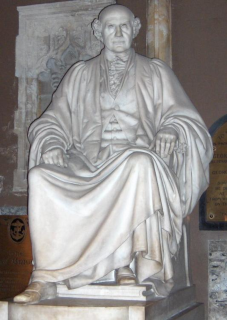
(Pictured: Statue of James Whiteside by Albert Bruce-Joy on display in St. Patrick’s Cathedral)


Leave a comment

Preparations Commence for the Plantation of Ulster

On July 19, 1608, preparations commence for the plantation of six Ulster counties of Armagh, Cavan, Coleraine, Donegal, Fermanagh, and Tyrone.

The Plantation of Ulster is the organised colonisation, or plantation, of the Irish province of Ulster by people from Great Britain during the reign of King James I. Most of the settlers, or planters, come from southern Scotland and northern England. Their culture differs from that of the native Irish. Small privately funded plantations by wealthy landowners begin in 1606, while the official plantation begins in 1609. Most of the colonised land had been confiscated from the native Gaelic chiefs, several of whom had fled Ireland for mainland Europe in 1607 following the Nine Years’ War against English rule. The official plantation comprises an estimated half a million acres of arable land in counties Armagh, Cavan, Fermanagh, Tyrone, Donegal, and Coleraine. Land in counties Antrim, Down, and Monaghan is privately colonised with the king’s support.

Among those involved in planning and overseeing the plantation are King James, the Lord Deputy of Ireland, Arthur Chichester, and the Attorney-General for Ireland, John Davies. They see the plantation as a means of controlling, anglicising, and “civilising” Ulster. The province is almost wholly Gaelic, Catholic, and rural and has been the region most resistant to English control. The plantation is also meant to sever Gaelic Ulster’s links with the Gaelic Highlands of Scotland. The colonists, or “British tenants,” are required to be English-speaking, Protestant and loyal to the king. Some of the undertakers and settlers, however, are Catholic. The Scottish settlers are mostly Presbyterian Lowlanders and the English mostly Anglican Northerners. Although some “loyal” natives are granted land, the native Irish reaction to the plantation is generally hostile, and native writers bewail what they see as the decline of Gaelic society and the influx of foreigners.

The Plantation of Ulster is the biggest of the Plantations of Ireland. It leads to the founding of many of Ulster’s towns and creates a lasting Ulster Protestant community in the province with ties to Britain. It also results in many of the native Irish nobility losing their land and leads to centuries of ethnic and sectarian animosity, which at times spills into conflict, notably in the Irish Rebellion of 1641 and, more recently, the Troubles.


Leave a comment

Birth of Sir Richard Levinge, 1st Baronet

Sir Richard Levinge, 1st Baronet, Irish politician and judge who plays a leading part in Irish public life for more than 30 years, is born at Leek, Staffordshire, England, on May 2, 1656.

Levinge is the second son of Richard Levinge of Parwich Hall, Derbyshire, Recorder of Chester, and Anne Parker, daughter of George Parker of Staffordshire and his wife Grace Bateman. The Levinges (sometimes spelled “Levin”) are a long-established Derbyshire family with a tradition of public service. Through his mother he is a first cousin of Thomas Parker, 1st Earl of Macclesfield, Lord High Chancellor of Great Britain.

Levinge is educated at Audlem School, Derbyshire, and St. John’s College, Cambridge. He enters the Inner Temple in 1671 and is called to the Bar in 1678. He is a Member of Parliament (MP) of the House of Commons of England for City of Chester from 1690 to 1695. He is also, like his father, Recorder of Chester in 1686-87, but is summarily removed from this office by King James II of England.

Levinge is one of the first to declare for William III of England at the Glorious Revolution and is sent by the new Government to Ireland as Solicitor-General in 1689. In 1692 he is elected as a member of the Irish House of Commons for Belfast and for Blessington, but chooses to sit for Blessington, a seat he holds until 1695. During this time, he serves as Speaker of the Irish House of Commons. In politics he is a moderate Tory, noted throughout his career for his desire to conciliate. In an age of bitter political faction this earns him the uncharitable nickname “Tom Double.” Although he supports the Penal Laws, as no Irish officeholder then could do otherwise, he is very tolerant in religious matters and has several Roman Catholic friends, including his predecessor as Solicitor-General, Sir Theobald Butler.

Levinge later represents Longford Borough from 1698 to September 1713 and Kilkenny City from 1713 to November 1715 in the Irish Parliament. In 1713 he is also returned for Gowran but chooses to sit for Kilkenny. He is created a Baronet of High Park in the County of Westmeath, in the Baronetage of Ireland on October 26, 1704.

Levinge also serves as Solicitor-General for Ireland from 1689, from which office he is dismissed in 1695 following a quarrel with Henry Capell, 1st Baron Capell of Tewkesbury, the Lord Lieutenant of Ireland. He returns to office as Solicitor-General in 1705 through the good offices of James Butler, 2nd Duke of Ormonde, who has acted as his patron for some years past. History repeats itself when the Lord Lieutenant, Thomas Wharton, 1st Earl of Wharton, dismisses him from office in 1709 with what is regarded by many, including Jonathan Swift, as brutal suddenness. He once again becomes a member of the Parliament of Great Britain representing Derby from 1710 to 1711. He becomes Attorney-General for Ireland in 1711, after Ormonde replaces Wharton as Lord Lieutenant.

Levinge had expressed his interest in being appointed to the English Bench but meets with no success in his efforts to achieve office in England. Under George I of Great Britain, despite being of the “wrong” political persuasion, and his growing age, his famous moderation, and his 30 years’ experience of Irish public life make him acceptable as an Irish judge to the Government, in which he has a powerful supporter in his cousin Lord Macclesfield. In 1721 he becomes Chief Justice of the Irish Common Pleas for Ireland and a member of the Privy Council of Ireland. He complains bitterly of the poor quality of his junior judges, and asks for suitable replacements, although he complains equally about some of those whose names are put forward as possible replacements. Despite being in great pain from gout in his last years, he remains on the Bench until his death on July 13, 1724.

Levinge divides his time between his ancestral home, Parwich Hall, which he purchases from his childless elder brother, and his newly acquired property Knockdrin Castle, County Westmeath. Most of his estates passes to his eldest son, who extensively rebuilds Parwich.

(Pictured: Knockdrin Castle, County Westmeath, the main Levinge residence in Ireland)


Leave a comment

Birth of Arthur Wolfe, 1st Viscount Kilwarden

Arthur Wolfe, 1st Viscount Kilwarden KC, Anglo-Irish peer, politician and judge, who held office as Lord Chief Justice of Ireland, is born on January 19, 1739, at Forenaughts House, Naas, County Kildare.

Wolfe is the eighth of nine sons born to John Wolfe (1700–60) and his wife Mary (d. 1763), the only child and heiress of William Philpot, a successful merchant at Dublin. One of his brothers, Peter, is the High Sheriff of Kildare, and his first cousin Theobald is the father of the poet Charles Wolfe.

Wolfe is educated at Trinity College Dublin, where he is elected a Scholar, and at the Middle Temple in London. He is called to the Irish Bar in 1766. In 1769, he marries Anne Ruxton (1745–1804) and, after building up a successful practice, takes silk in 1778. He and Anne have four children, John, Arthur, Mariana and Elizabeth.

In 1783, Wolfe is returned as Member of Parliament for Coleraine, which he represents until 1790. In 1787, he is appointed Solicitor-General for Ireland, and is returned to Parliament for Jamestown in 1790.

Appointed Attorney-General for Ireland in 1789, Wolfe is known for his strict adherence to the forms of law, and his opposition to the arbitrary measures taken by the authorities, despite his own position in the Protestant Ascendancy. He unsuccessfully prosecutes William Drennan in 1792. In 1795, Lord Fitzwilliam, the new Lord Lieutenant of Ireland, intends to remove him from his place as Attorney-General to make way for George Ponsonby. In compensation, Wolfe’s wife is created Baroness Kilwarden on September 30, 1795. However, the recall of Fitzwilliam enables Wolfe to retain his office.

In January 1798, Wolfe is simultaneously returned to Parliament for Dublin City and Ardfert. However, he leaves the Irish House of Commons when he is appointed Chief Justice of the Kings Bench for Ireland and created Baron Kilwarden on July 3, 1798.

After the Irish Rebellion of 1798, Wolfe becomes notable for twice issuing writs of habeas corpus on behalf of Wolfe Tone, then held in military custody, but these are ignored by the army and forestalled by Tone’s suicide in prison. In 1795 he had also warned Tone and some of his associates to leave Ireland to avoid prosecution. Tone’s godfather, Theobald Wolfe of Blackhall (the father of Charles Wolfe), is Wolfe’s first cousin, and Tone may have been Theobald’s natural son. These attempts to help a political opponent are unique at the time.

After the passage of the Acts of Union 1800, which he supports, Wolfe is created Viscount Kilwarden on December 29, 1800. In 1802, he is appointed Vice-Chancellor of the University of Dublin.

In 1802 Wolfe presides over the case against Town Major Henry Charles Sirr in which the habitual abuses of power used to suppress rebellion are exposed in court.

In the same year Wolfe orders that the well-known Catholic priest Father William Gahan be imprisoned for contempt of court. In a case over the disputed will of Gahan’s friend John Butler, 12th Baron Dunboyne, the priest refuses to answer certain questions on the ground that to do so would violate the seal of the confessional, despite a ruling that the common law does not recognize the seal of the confessional as a ground for refusing to give evidence. The judge apparently feels some sympathy for Gahan’s predicament, as he is released from prison after only a few days.

During the Irish rebellion of 1803, Wolfe, who had never been forgiven by the United Irishmen for the execution of William Orr, is clearly in great danger. On the night of July 23, 1803, the approach of the Kildare rebels induces him to leave his residence, Newlands House, in the suburbs of Dublin, with his daughter Elizabeth and his nephew, Rev. Richard Wolfe. Believing that he will be safer among the crowd, he orders his driver to proceed by way of Thomas Street in the city centre. However, the street is occupied by Robert Emmet‘s rebels. Unwisely, when challenged, he gives his name and office, and he is rapidly dragged from his carriage and stabbed repeatedly with pikes. His nephew is murdered in a similar fashion, while Elizabeth is allowed to escape to Dublin Castle, where she raises the alarm. When the rebels are suppressed, Wolfe is found to be still alive and is carried to a watch-house, where he dies shortly thereafter. His last words, spoken in reply to a soldier who called for the death of his murderers, are “Murder must be punished; but let no man suffer for my death, but on a fair trial, and by the laws of his country.”

Wolfe is succeeded by his eldest son John Wolfe, 2nd Viscount Kilwarden. Neither John nor his younger brother Arthur, who dies in 1805, have male issue, and on John’s death in 1830 the title becomes extinct.

(Pictured: Portrait of Lord Chief Justice of Ireland, Arthur Wolfe (later Viscount Kilwarden) by Hugh Douglas Hamilton, between 1797 and 1800, Gallery of the Masters)


Leave a comment

Birth of John Philpot Curran, Orator, Politician, Lawyer & Judge

John Philpot Curran, Irish orator, politician, wit, lawyer and judge, who holds the office of Master of the Rolls in Ireland, is born in Newmarket, County Cork, on July 24, 1750.

Curran is the eldest of five children of James Curran, seneschal of the Newmarket manor court, and Sarah, née Philpot. The Curran family are said to have originally been named Curwen, their ancestor having come from Cumberland as a soldier under Oliver Cromwell during the Cromwellian conquest of Ireland, originally settling in County Londonderry.

Curran is educated at Midleton College, County Cork, before studing law at Trinity College Dublin. He continues his legal studies at King’s Inns and the Middle Temple. He is called to the Irish Bar in 1775. Upon his first trial, his nerves get the better of him and he cannot proceed. His short stature, boyish features, shrill voice and a stutter are said to have impacted his career, and earn him the nickname “Stuttering Jack Curran.”

However, Curran can speak passionately in court on subjects close to his heart. He eventually overcomes his nerves and gets rid of his speech impediment by constantly reciting Shakespeare and Bolingbroke in front of a mirror, becoming a noted orator and wit. His championing of popular Irish causes such as Catholic emancipation make him one of the most popular lawyers in Ireland. He is also fluent in the Irish language which is still the language of the majority at the time. He writes a large amount of humorous and romantic poetry.

The case which cements Curran’s popularity is that of Father Neale and St. Leger St. Leger, 1st Viscount Doneraile at the County Cork Assizes in 1780. Having a passion for lost causes, he represents the priest and wins over the jury by setting aside the issue of religion.

A liberal Protestant whose politics are similar to Henry Grattan, Curran employs all his eloquence to oppose the illiberal policy of the Government, and also the Union with Britain. He stands as Member of Parliament (MP) for Kilbeggan in 1783. He subsequently represents Rathcormack (1790-98) and Banagher from 1800 until the Act of Union in 1801, which bitterly disappoints him, forcing him to contemplate emigrating to the United States.

In 1798, Ireland rebels against the British House of Commons and lack of reforms on Catholic emancipation. The British defeat the Irish rebels in numerous battles and soon establish their control over the country by 1799. Many of the Irish ring leaders are charged with treason and are facing death sentences. Curran plays an important role in court defending the leaders of the United Irishmen.

Curran’s youngest daughter Sarah‘s romance with United Irishmen leader Robert Emmet scandalises Curran, who had tried to split them up. He is arrested and agrees to pass their correspondence on to Standish O’Grady, 1st Viscount Guillamore, the Attorney-General for Ireland. In the circumstances he cannot defend Emmet. He is suspected of involvement in Emmet’s Rebellion, but is completely exonerated. However, his friend Arthur Wolfe, 1st Viscount Kilwarden, is killed by the rebels, and he loses any faith in the beliefs of the United Irishmen. Emmet is found guilty of rebelling against the Crown and the union between Great Britain and Ireland and is hanged in 1803. Curran disowns Sarah, who dies of tuberculosis five years later.

Curran is appointed Master of the Rolls in Ireland in 1806, following William Pitt the Younger‘s replacement by a more liberal cabinet.

Curran retires in 1814 and spends his last three years in London. He dies in his home in Brompton on October 14, 1817. In 1837, his remains are transferred from Paddington Cemetery, London to Glasnevin Cemetery in Dublin, where they are laid in an 8-foot-high classical-style sarcophagus. In 1845 a white marble memorial to him, with a carved bust by Christopher Moore, is placed near the west door of St. Patrick’s Cathedral, Dublin.


Leave a comment

Birth of Sir Maziere Brady, 1st Baronet & Lord Chancellor of Ireland

Sir Maziere Brady, 1st Baronet, PC (Ire), Irish judge, notable for his exceptionally long, though not particularly distinguished tenure as Lord Chancellor of Ireland, is born on July 20, 1796.

Brady is born on Parliament Street, Dublin, the second son of Francis Tempest Brady of Booterstown, a manufacturer of gold and silver thread, and his wife Charlotte Hodgson, daughter of William Hodgson of Castledawson, County Londonderry. He is baptised at St. Werburgh’s Church, Dublin. He is the brother of Sir Nicholas Brady, Lord Mayor of Dublin, and uncle of the eminent ecclesiastical historian William Maziere Brady.

The Bradys are an old and distinguished Munster family who are particularly associated with the town of Bandon, County Cork. Probably the most celebrated of his ancestors is the poet and psalmist Nicholas Brady (1659–1726), who collaborated with Nahum Tate, the Poet Laureate, on New Version of the Psalms of David.

Other notable forebears include Hugh Brady, the first Protestant Bishop of Meath (d. 1584), his father-in-law Robert Weston who, like Maziere serves as Lord Chancellor of Ireland, and the judge and author Luke Gernon (d. 1672), who is now best remembered for his work A Discourse of Ireland (1620), which gives a detailed and (from the English colonial point of view) not unsympathetic picture of the state of Ireland in 1620.

Brady is educated at Trinity College Dublin and takes his Bachelor of Arts degree in 1816. He enters the Middle Temple in 1816, is called to the Bar in 1819 and becomes King’s Counsel in 1835.

In politics Brady is a Liberal and supports Catholic emancipation. He sits on a commission of inquiry into Irish municipal corporations in 1833. He is appointed Solicitor-General for Ireland in 1837 and Attorney-General for Ireland the following year. In 1840 he is appointed Lord Chief Baron of the Irish Exchequer. In 1846 he is appointed Lord Chancellor of Ireland and serves in that office, with short intervals, for the next 20 years. He retires in 1866 and is made a baronet, of Hazelbrook in the County of Dublin, in 1869. His appointment ends the practice which grew after the Acts of Union 1800 of appointing only English lawyers as Lord Chancellor of Ireland. He sits on the Government Commission on Trinity College Dublin in 1851 and is nominated as Vice-Chancellor of Queen’s University Belfast in 1850. All through his life he shows a keen interest in education.

According to Elrington Ball, Brady’s Lord Chancellorship is notable for its length but for nothing else. Ball calls him “a good Chief Baron spoiled to make a bad Chancellor.” By general agreement he had been an excellent Chief Baron of the Exchequer, having a reputation for being fair-minded, courteous and approachable, but in Ball’s view the more onerous (and partly political) office of Lord Chancellor is beyond his capacity. Unlike some judges whose training had been in the common law, he never quite masters the separate code of equity. Delaney takes a somewhat more favourable view of Brady as Lord Chancellor, arguing that while his judgements do not show any great depth of learning they do show an ability to identify the central issue of any case and to apply the correct legal principle to it.

An anonymous pamphlet from 1850, which is highly critical of the Irish judiciary in general, describes Brady as being unable to keep order in his Court, and easily intimidated by counsel, especially by that formidable trio of future judges, Jonathan Christian, Francis Alexander FitzGerald, and Abraham Brewster. The author paints an unflattering picture of Brady as sitting “baffled and bewildered” in a Court where he is “a judge but not an authority.” On the other hand, Jonathan Christian, who had often clashed with Brady in Court, later praises him as “no ordinary man” despite his shortcomings as a judge. He describes him as “independent-minded, patriotic, natural and unaffected.”

Brady is a founder member of the Stephen’s Green Club and a member of the Royal Dublin Society and the Royal Irish Academy. In addition to the arts, he shows a keen interest in science, especially after his retirement. Like most judges of the time, he has both a town house in central Dublin and a place some distance from the city centre. His country house is Hazelbrook, Terenure, Dublin. He changes his town house several times, settling finally in Pembroke Street.

Brady marries firstly Elizabeth Anne Buchanan, daughter of Bever Buchanan, apothecary of Dublin, and his wife Eleanor Hodgson, in 1823 and they have five children. Elizabeth dies in 1858. In 1860, Brady marries Mary Hatchell, daughter of John Hatchell, Attorney-General for Ireland and Elizabeth Waddy, who survives him. He dies at his house in Pembroke Street on April 13, 1871. He is buried in Mount Jerome Cemetery.


Leave a comment

Birth of Hugh Holmes, MP & Judge of the Court of Appeal in Ireland

Hugh Holmes QC, an Irish Conservative Party, then after 1886 a Unionist Member of Parliament (MP) in the Parliament of the United Kingdom and subsequently a Judge of the High Court and Court of Appeal in Ireland, is born in Dungannon, County Tyrone, on February 17, 1840.

Holmes is the son of William Holmes of Dungannon and Anne Maxwell. He attends the Royal School Dungannon and Trinity College, Dublin. He is called to the English bar in 1864 and to the Bar of Ireland in 1865.

Holmes becomes a Queen’s Counsel (QC) in 1877. He is appointed Solicitor-General for Ireland on December 14, 1878, and serves until the Conservative government is defeated in 1880. He becomes Attorney-General for Ireland in 1885–1886 and 1886–1887. He is made a member of the Privy Council of Ireland on July 2, 1885. He is a MP for Dublin University from 1885 to 1887.

Holmes resigns from the House of Commons when he is appointed a Judge in 1887. He is a Justice of the Common Pleas division of the High Court of Justice in Ireland until 1888 when he becomes a Justice of the Queen’s Bench division. He is promoted to be a Lord Justice of Appeal in 1897. Ill health causes his retirement in 1914.

Holmes appears to be a stern judge, who does not suffer fools gladly and often imposes exceptionally severe sentences in criminal cases. Although the story is often thought to be apocryphal, Maurice Healy maintains that Holmes did once sentence a man of great age to 15 years in prison, and when the prisoner pleaded that he could not do 15 years, replied “Do as much of it as you can.” His judgments do however display some good humour and humanity, and the sentences he imposes often turned out to be less severe in practice than those he announces in Court.

The quality of his judgments is very high and Holmes, together with Christopher Palles and Gerald FitzGibbon, is credited with earning for the Irish Court of Appeal its reputation as perhaps the strongest tribunal in Irish legal history. His retirement, followed by that of Palles (FitzGibbon had died in 1909), causes a loss of expertise in the Court of Appeal from which its reputation never recovers. Among his more celebrated remarks is that the Irish “have too much of a sense of humour to dance around a maypole.” His judgment in The SS Gairloch remains the authoritative statement in Irish law on the circumstances in which an appellate court can overturn findings of fact made by the trial judge.

In 1869 Holmes marries Olivia Moule, daughter of J.W. Moule of Sneads Green House, Elmley Lovett, Worcestershire. She dies in 1901. Their children include Hugh junior, Sir Valentine Holmes KC (1888-1956), who like his father is a very successful barrister and a noted expert on the law of libel, Violet (dies in 1966), who married Sir Denis Henry, 1st Baronet, the first Lord Chief Justice of Northern Ireland, Elizabeth, who marries the politician and academic Harold Lawson Murphy, author of a well-known History of Trinity College Dublin, and Alice (dies in 1942), who marries the politician and judge Edward Sullivan Murphy, Attorney General for Northern Ireland and Lord Justice of Appeal of Northern Ireland.

Holmes dies on April 19, 1916, five days before the beginning of the Easter Rising.


Leave a comment

Birth of John Toler, 1st Earl of Norbury

John Toler, 1st Earl of Norbury PC, KC, Irish lawyer, politician and judge known as The Lord Norbury between 1800 and 1827, is born at Beechwood, Nenagh, County Tipperary, on December 3, 1745. A greatly controversial figure in his time, he is nicknamed the “Hanging Judge” and is considered to be one of the most corrupt legal figures in Irish history. He is Chief Justice of the Common Pleas for Ireland between 1800 and 1827.

Toler is the youngest son of Daniel Toler, MP, and Letitia, daughter of Thomas Otway (1665–1724), of Lissenhall, Nenagh, County Tipperary. His elder brother Daniel Toler is also a politician, serving as High Sheriff for Tipperary and also as MP for Tipperary. The Toler family is originally from Norfolk, East Anglia, England, but settles in County Tipperary in the 17th century. He is educated at Kilkenny College and at Trinity College, Dublin.

After graduating from university Toler enters the legal profession and is called to the Irish Bar in 1770. In 1781 he is appointed a King’s Counsel. He is returned to the Parliament of Ireland for Tralee in 1773, a seat he holds until 1780, and later represents Philipstown between 1783 and 1790 and Gorey from 1790 until the Acts of Union 1800. In 1789 he is appointed Solicitor-General for Ireland, which he remains until 1798 when he is promoted to Attorney-General for Ireland and sworn of the Privy Council of Ireland. In his role as Attorney-General he is responsible for the prosecution of those involved in the Irish Rebellion of 1798. According to the Dictionary of National Biography “his indifference to human suffering … disgusted even those who thought the occasion called for firmness on the part of government.” In 1799, he brings forward a law which gives the Lord Lieutenant of Ireland power to suspend the Habeas Corpus Act and to impose martial law.

In 1800 Toler is appointed Chief Justice of the Common Pleas for Ireland and raised to the Peerage of Ireland as Baron Norbury, of Ballycrenode in the County of Tipperary. His appointment to the bench is controversial and John FitzGibbon, 1st Earl of Clare, the Lord Chancellor of Ireland, is said to have quipped, “Make him a bishop, or even an archbishop, but not a chief justice.” His tenure as Chief Justice lasts for 27 years, despite the fact that, the Dictionary of National Biography opines, “his scanty knowledge of the law, his gross partiality, his callousness, and his buffoonery, completely disqualified him for the position. His court was in constant uproar owing to his noisy merriment. He joked even when the life of a human being was hanging in the balance.” This earns him the nickname the “Hanging Judge.” His most famous trial is that of Irish nationalist leader Robert Emmet. He interrupts and abuses Emmet throughout the trial before sentencing him to death. In spite of this, with his strong belief in the Protestant Ascendancy, he is considered to have had great influence over the government in Ireland in the early part of the nineteenth century.

However, Toler’s position eventually becomes untenable even to his strongest supporters, especially with the British government‘s aim of establishing a better relationship with the Catholic majority. His reputation is tainted in 1822, when a letter written to him by William Saurin, the Attorney-General for Ireland, is discovered, in which Saurin urges him to use his influence with the Irish Protestant gentry which makes up local juries against the Catholics. Saurin is dismissed soon afterwards. He finds his greatest adversary in Daniel O’Connell, to whom Toler is “an especial object of abhorrence.” At O’Connell’s instigation the case of Saurin’s letter is brought before the House of Commons of the United Kingdom by Henry Brougham. Toler survives this as well as an 1825 petition drawn up by O’Connell, which calls for his removal on the grounds of him falling asleep during a murder trial and later being unable to present any account of the evidence given. However, it is not until George Canning becomes Prime Minister in 1827 that Toler, then 82, is finally induced to resign. His resignation is sweetened by him being created Viscount Glandine and Earl of Norbury, of Glandine in King’s County, in the Peerage of Ireland. Unlike the barony of Norbury these titles are created with remainder to his second son Hector John. His eldest son Daniel is then considered mentally unsound.

Toler marries Grace, daughter of Hector Graham, in 1778. They have two sons and two daughters. In 1797 Grace is raised to the Peerage of Ireland as Baroness Norwood, of Knockalton in the County of Tipperary, in honour of her husband. She dies in 1822 and is succeeded in the barony by her eldest son, Daniel. Toler survives her by nine years and dies at the age of 85 at his Dublin home at 3 Great Denmark Street on July 27, 1831. He is succeeded in the barony of Norbury by his eldest son Daniel and in the viscountcy and earldom according to the special remainder by his second son, Hector. In 1832 the latter also succeeds his elder brother in the baronies of Norwood and Norbury. He is considered to be the father of the astronomer John Brinkley.

(Pictured: John Toler, 1st Earl of Norbury, coloured etching by unknown artist, early 19th century, National Portrait Gallery, NPG D9303)


Leave a comment

Death of Sir Denis Stanislaus Henry, 1st Baronet

Sir Denis Stanislaus Henry, 1st Baronet, KBE, PC (Ire), QC, Irish lawyer and politician who becomes the first Lord Chief Justice of Northern Ireland, dies in Belfast on October 1, 1925.

Henry is born on March 7, 1864, in Cahore, Draperstown, County Londonderry, the son of a prosperous Roman Catholic businessman. He is educated at Marist College, Dundalk, Mount St. Mary’s College, Chesterfield, Derbyshire (a Jesuit foundation) and Queen’s College, Belfast, where he wins every law scholarship available to a student in addition to many other prizes and exhibitions. In 1885, he is called to the Bar of Ireland.

During the 1895 United Kingdom general election in Ireland campaign, Henry speaks in support of unionist candidates in two constituencies: Thomas Lea in South Londonderry, Henry’s native constituency, and E. T. Herdman in East Donegal.

Henry’s legal career flourishes. He becomes Queen’s Counsel in 1896, a Bencher of the King’s Inns in 1898 and ultimately Father of the North-West Circuit – but his interest in politics does not diminish. In March 1905, he is a delegate at the inaugural meeting of the Ulster Unionist Council and in the 1907 North Tyrone by-election he is the Unionist candidate, losing by a mere seven votes.

On May 23, 1916, Henry is elected as an MP in the South Londonderry by-election, the first by-election to be held in Ireland after the Easter Rising, which occurred a month earlier. The rebellion has had no discernible impact on the contest.

In November 1918, Henry becomes Solicitor-General for Ireland and in July 1919, Attorney-General for Ireland. He later serves as the first Lord Chief Justice of Northern Ireland from 1921 to 1925. In 1923, he becomes a Baronet, of Cahore in the County of Londonderry.

Henry marries Violet Holmes, daughter of Hugh Holmes, a judge of the Court of Appeal in Ireland, and Olivia Moule. They have five children, including James Holmes Henry, who succeeds as second baronet. It is a mixed marriage as Violet is and remains a staunch member of the Church of Ireland. Despite their religious differences, the marriage is said to be happy.

Henry dies in Belfast on October 1, 1925, aged 61, and is buried near his native Draperstown.

(Pictured: Sir Denis Stanislaus Henry, 1st Baronet, bromide print by Walter Stoneman, 1920, National Portrait Gallery, London)