seamus dubhghaill

Promoting Irish Culture and History from Little Rock, Arkansas, USA


Leave a comment

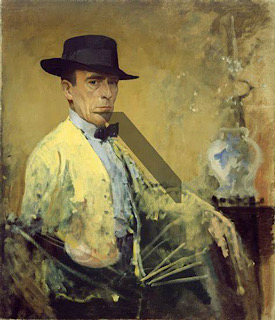
Death of Leo Whelan, Portrait & Genre Painter

(Michael) Leo Whelan, portrait and genre painter, dies from leukemia on November 6, 1956, at the Mater private nursing home in Dublin.

Whelan is born on January 17, 1892, at 20 St. George’s Villas, Fairview, Dublin, one of two sons and three daughters of Maurice Whelan, a draper, of County Kerry ancestry, and Mary Whelan (née Cruise), from County Roscommon. The family subsequently moves to 65 Eccles Street, where his parents operated a small hotel. Educated at Belvedere College, Dublin, he then attends the Dublin Metropolitan School of Art (DMSA) (1908–14), where he is a student of William Orpen, who has a huge influence on his artistic style. His fellow students at the school include Patrick Tuohy and Séan Keating.

Whelan is awarded many prizes in the Royal Dublin Society (RDS) Taylor art competitions, including one in 1912 for a portrait of his sister Lena, entitled On the Moors, rendered in a strongly academic technique. In 1916, he wins the Taylor scholarship for the Royal Hibernian Academy (RHA) schools for his finest early work, The Doctor’s Visit, an adroitly executed composition of contrasting shadows and light. Typical of many of his genre interiors, the painting depicts a room in the family home, with relatives as models: Whelan’s mother sits by the bed watching over his ill cousin, while his sister, dressed in a Mater hospital nurse’s uniform, is in the background opening the door for the doctor. The subtly evoked atmosphere of restrained emotion foreshadowed a hallmark of his mature style.

Whelan exhibits annually at the RHA for forty-five years (1911–56), averaging six works per year. He is elected an RHA associate in 1920, becoming a full member in 1924. He participates in the Exposition d’art irlandais at the Galerie Barbazanges in Paris in 1922. A visiting teacher at the RHA schools in 1924, he also teaches in the DMSA for a time. He has studios at 64 Dawson Street (1914–27) and 7 Lower Baggot Street (1931–56). Beginning in the 1910s, he receives regular commissions for portraits, constituting his primary source of income. Having become the family’s main breadwinner following his parents’ deaths in the 1920s, he concentrates most of his production on this lucrative activity, portraying numerous leading figures in the spheres of politics, academia, religion, society, medicine, and law.

Coming from a family of militant nationalist sympathies, in 1922 he begins a large group portrait, GHQ Staff of the Pre-Treaty IRA, including Michael CollinsRichard MulcahyRory O’ConnorLiam Mellows and nine others, composed from individual studies of the men rendered during clandestine sittings in his home and studio. The painting, which he leaves unfinished, is in McKee Barracks, Dublin. He receives special praise for his portraits of John Henry Bernard, Provost of Trinity College Dublin (TCD) and of Louis Claude Purser, TCD vice-provost. The latter is awarded a medal at the 1926 Tailteann Games. He exhibits seventeen paintings at the Royal Society of Portrait Painters, London, of which he is a member, and shows two works at the Royal Academy of Arts, London. His 1929 portrait of John McCormack, one of his major patrons, is presented by the tenor’s family some fifty years later to the National Concert Hall, Dublin.

Situated securely in the academic tradition, in most of his portraits Whelan favours a sombre, restricted palette, with the sitter placed, in grave demeanour, against a monotone background with few accessories. In a 1943 interview he asserts that twentieth-century portraiture suffers from the drabness of modern costume, for which the artist must compensate by careful rendition of the subject’s hands. He tends to depart from his prevailing portrait style when painting women, whom he characteristically depicts in meticulously observed interiors, a notable example being his portrait of Society hostess Gladys Maccabe (c.1946; NGI).

Whelan’s commercial concentration on portraiture notwithstanding, he expresses his true talent in genre compositions, especially kitchen interiors, in which he emulates the technique of the Dutch painter Johannes Vermeer. Two of the most accomplished of these depict his sister Frances in the basement kitchen of the family home: The Kitchen Window (1927; Crawford Art Gallery, Cork) demonstrates a particularly skillful use of light, while Interior of a Kitchen (1935) is notable for the dexterous handling of objects of varied shapes and textures. His genre works include both urban and rural scenes, with a distinctive interest in portraying occupations and other activities. Gypsy (1923), an Orpenesque composition of a shawled woman in a west-of-Ireland landscape with a caravan in the background, receives wide contemporary critical acclaim. Jer (c.1925), depicting a man seated by the fire in a cottage interior, is reproduced in J. Crampton Walker’s Irish Art and Landscape (1927). The Fiddler (c.1932), a naturalistic, sensitively characterised study, is first shown at an Ulster Academy exhibition at Stranmillis, Belfast. A Kerry Cobbler is reproduced in Twelve Irish Artists (1940), introduced by Thomas Bodkin, as among the works denoting the development of a distinctively Irish school of painting.

In 1929, Whelan designs the first Irish Free State commemorative stamp, a portrait of Daniel O’Connell for the centenary of Catholic emancipation. Commissioned by the Thomas Haverty trust to paint an incident from the life of Saint Patrick for the 1932 Eucharistic Congress, he executes The Baptism by St. Patrick of Ethna the Fair and Fedelmia the Ruddy, Daughters of the Ard Rí Laoghaire, a work highly conservative in style. He rapidly completes an oil study of the papal legate, Lorenzo Lauri, also for the Eucharistic Congress. He is represented in the art competitions at the 1932 Summer Olympics in Los Angeles. His depiction of Saint Brigid, shown at the Academy of Christian Art exhibition (1940), becomes a familiar image owing to the wide circulation of reproductions.

Whelan’s political portraits are influential in creating a strong, assured image of the newly formed Irish state, and thus retain an historical significance. His posthumous portrait, The Late General Michael Collins, exhibited at the RHA in 1943 and now held in Leinster House, is an iconic, heroic image of the fallen leader. His portraits of Arthur Griffith and Kevin O’Higgins – commissioned posthumously, as is the Collins, by Fine Gael – also hang in Leinster House, while that of John A. Costello, exhibited at the RHA in 1949, is now held in the King’s Inns, Dublin. He paints two presidents, Douglas Hyde and Seán T. O’Kelly, both works currently in Áras an Uachtaráin. A portrait of Éamon de Valera, painted in 1955 when the sitter is Leader of the Opposition, is in Leinster House. In 1954, he designs a second commemorative stamp, picturing a reproduction of a portrait bust of John Henry Newman, to mark the centenary of the Catholic University of Ireland.

Whelan is elected an honorary academician of both the Ulster Academy of Arts (1931), and the Royal Ulster Academy (1950). He becomes a member of the United Arts Club in 1934. As a representative of the RHA, he sits on the board of governors of the National Gallery of Ireland for many years, and is on the advisory committee of the Municipal Gallery of Modern Art. Unmarried, he resides until his death at the Eccles Street address, with two sisters who continue to manage the family hotel. He dies on November 6, 1956, from leukemia at the Mater private nursing home in Dublin. He is buried in Glasnevin Cemetery.

(From: “Whelan, (Michael) Leo,” by Carmel Doyle, Dictionary of Irish Biography, http://www.dib.ie, October 2009)

Leave a comment

Birth of Dairine Vanston, Landscape Artist

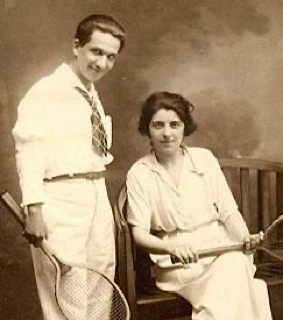
Dairine (Doreen) Vanston, Irish landscape artist who works in a Cubist style, is born in Dublin on October 19, 1903.

Vanston is the daughter of solicitor John S. B. Vanston, and sculptor Lilla Vanston (née Coffey). She attends Alexandra College, going on to study at Goldsmiths College, London under Roger Bissière. She then goes to Paris to the Académie Ranson, being sent there following the advice of Paul Henry. While in Paris she meets Guillermo Padilla, a Costa Rican law student at the University of Paris. They marry in 1926 and she takes the name Vanston de Padilla. The couple lives for a time in Italy, before moving to San José, Costa Rica. The marriage breaks down in the early 1930s, at which point she returns to Paris with her son and studies with André Lhote. She is living in France at the outbreak of World War II with Jankel Adler, but is able to escape to London in 1940, and later to Dublin.

Vanston’s time in Paris leaves a lasting impression on her work, including use of primary colours and a strong Cubist influence. She belongs to what critic Brian Fallon calls the “Franco-Irish generation of painters who looked to Paris,” along with Mainie JellettEvie Hone, and Norah McGuinness. Her time spent living in Costa Rica in the late 1920s and early 1930s imbues her work with tropical and highly toned colours. In Dublin in 1935, she exhibits 17 paintings, largely Costa Rican landscapes, at Daniel Egan’s gallery on St. Stephen’s Green. This is the closest thing to a solo show she would mount, with this show also featuring Grace HenryCecil Ffrench Salkeld, and Edward Gribbon.

Meeting the English artist Basil Rakoczi, who is also living in Dublin during World War II, leads Vanston to become associated with The White Stag group. In November 1941, she exhibits for the first time at a group show with 24 other artists, including Patrick Scott. One work that is shown at this exhibition is the painting Keel dance hall, which demonstrates that she spends time in the west of Ireland. The most important event staged by the group is the Exhibition of subjective art, which takes place at 6 Lower Baggot St. in January 1944. The Dublin Magazine notes her work at this show as the most effective of the experimental vanguard. This work, Dying animal, is a Cubist work with semi-representation forms rendered in bold colours. In 1945, her work is featured in a White Stag exhibition in London of young Irish painters at the Arcade gallery, Old Bond Street.

In 1947, Vanston spends almost a year in Costa Rica where she paints primarily in watercolours. Apart from this period, she lives and works in Dublin, living at 3 Mount Street Crescent near St. Stephen’s Church. At the inaugural Irish Exhibition of Living Art in 1943, she exhibits five works. At the first Exhibition of Independent Artists in 1960, of which she is a founder, she exhibits three landscapes and a work entitled War. She largely exhibits with the Independent Artists, the Irish Exhibition of Living Art, and the Oireachtas na Gaeilge, and does not exhibit with the Royal Hibernian Academy. Later in life, she exhibits with the Figurative Image exhibitions in Dublin, and is amongst the first painters chosen for Aosdána. A number of her works are featured in the 1987 exhibition, Irish women artists, from the eighteenth century to the present arranged by the National Gallery of Ireland and The Douglas Hyde Gallery.

Vanston dies on July 12, 1988, in a nursing home in Enniskerry, County Wicklow. Her work is greatly admired, but has received little by way of critical attention, which may have been to do with her slow rate of output. A number of her works have proved difficult to trace. She was a private person, even refusing to cooperate with the Taylor Galleries in the 1980s when they wanted to mount a retrospective of her work. The National Self-Portrait Collection in Limerick holds a work by Vanston.

(Pictured: Dairine Vanston with Guillermo Padilla in Paris)


Leave a comment

Birth of Singer-Songwriter Sinéad O’Connor

Sinéad Marie Bernadette O’Connor, Irish singer-songwriter dubbed the first superstar of the 1990s by Rolling Stone magazine, is born on December 8, 1966, in Dublin. During her career she attracts publicity not only for her voice, which is alternately searing and soothing, but also for her controversial actions and statements.

O’Connor is born at the Cascia House Nursing Home on Baggot Street in Dublin, the third of five children of John Oliver “Seán” O’Connor, a structural engineer later turned barrister and chairperson of the Divorce Action Group, and Johanna Marie O’Grady, who marry in 1960 at the Church of Our Lady of Good Counsel, Drimnagh, Dublin. She is named Sinéad after Sinéad de Valera, the mother of Éamon de Valera, Jnr., the doctor who presides over her delivery, and Bernadette in honour of Saint Bernadette of Lourdes. An older brother is the novelist, Joseph O’Connor. She attends Dominican College Sion Hill school in Blackrock, Dublin.

O’Connor’s parents divorce when she is eight years old, and she and her siblings are sent to live with their abusive mother, who beats the children on a regular basis. Eventually, she leaves to live with her father and stepmother, but the child, who habitually shoplifts, proves to be too troublesome for the couple, and they send her to reform school. Although she hates the reform school, it is there that she makes her first contacts with the music world. A teacher introduces her to the drummer of a local band, In Tua Nua, and for a brief period she works with the band and even cowrites one of their hit singles. After a year and a half at the reform school, she is transferred to a boarding school in Waterford, but it proves unbearable. She eventually returns to Dublin, where she attempts to start her own music career.

In Dublin O’Connor eventually joins the pub rock band Ton Ton Macoute. In 1985, while singing with the group, she attracts the attention of the London-based record label Ensign Records, which asks her for a demo tape. Soon afterward she signs a contract with the label and begins work on her debut album, The Lion and the Cobra, which is released in 1987 to critical praise. She follows the album with the largely autobiographical I Do Not Want What I Haven’t Got (1990). The album is propelled to the top of the U.S. pop charts on the strength of the number one single “Nothing Compares 2 U”—a transcendent cover of a 1985 Prince song.

In the following year O’Connor attracts attention not only for her singing but also for a series of controversial statements, actions, and appearances, including refusing to appear on NBC’s Saturday Night Live because of objections to the week’s guest host, boycotting the 1991 Grammy Awards ceremony and declining to sing there, and refusing to allow the U.S. national anthem to be played before one of her performances. She also attracts criticism for her public support of the Irish Republican Army (IRA) and for tearing up a picture of Pope John Paul II on Saturday Night Live in 1992. Nevertheless, she wins the Grammy Award for Best Alternative Music Album in 1991 for “I Do Not Want What I Haven’t Got” and continues to be highly regarded for her musical abilities.

In 1992 O’Connor releases an album of torch songs, Am I Not Your Girl?, which receives only minor publicity, and she releases a fourth album, Universal Mother, in 1994. Soon afterward she takes a hiatus from public life, spending time with her children and attending therapy in order to work through problems that linger from her harsh childhood. Her struggles with mental health continue throughout her life.

O’Connor occasionally actes, appearing in such films as Hush-a-Bye Baby (1990), Emily Brontë’s Wuthering Heights (1992; as novelist Emily Brontë), and The Butcher Boy (1997; as the Virgin Mary). She is ordained a priest in a controversial religious group led by Bishop Michael Cox, the leader of a religious sect that has broken off from the Roman Catholic Church. In 2000 she releases her fifth album, Faith and Courage, which includes the hit song “No Man’s Woman.” The album is praised by several music reviewers as one of the best albums of the year. Subsequent albums include Sean-Nós Nua (2002), Throw Down Your Arms (2005), Theology (2007), How About I Be Me (and You Be You)? (2012), and I’m Not Bossy, I’m the Boss (2014).

In 2018 O’Connor announces that she has converted to Islam and changes her name to Shuhadāʾ Sadaqat, although she states that she will continue to perform as Sinéad O’Connor. Her memoir, Rememberings (2021), receives broad critical praise, and she is the subject of the documentary Nothing Compares (2022).

O’Connor’s sudden death in her flat in Herne Hill, south London, at the age of 56 on July 26, 2023, prompts a massive outpouring of public grief. Irish President Michael D. Higgins praises her for her “beautiful, unique voice.” A year later, upon the registration of her death certificate, it is revealed that she had died of chronic obstructive pulmonary disease and bronchial asthma.

(From: “Sinéad O’Connor,” written and fact checked by The Editors of Encyclopedia Britannica, http://www.britannica.com, last updated September 30, 2024)


Leave a comment

Death of Muriel Gifford MacDonagh

Muriel MacDonagh (née Gifford), Irish nationalist and member of Inghinidhe na hÉireann, dies in Skerries, Dublin, on July 9, 1917. Her husband, Thomas MacDonagh, is one of the signees of the Proclamation of the Irish Republic, which leads to the Easter Rising of 1916.

Muriel Enid Gifford is born at 12 Cowper Road, Rathmines, on December 18, 1884. She is the fourth daughter and eighth child of twelve of Frederick and Isabella Gifford. As a child, she suffers at different times from rheumatic fever and phlebitis. She attends Alexandra College and spends a brief time in England training to as a poultry instructor. Returning to Ireland, she trains at Sir Patrick Dun’s Hospital, Dublin, as a student nurse, but her health suffers from the work.

Along with her sisters, MacDonagh is active in the Irish Women’s Franchise League and Inghinidhe na hÉireann, a nationalist organisation. She is involved in the school meals programme of 1910 to 1911, takes part in a 1914 Women’s Franchise League fundraiser, appearing in a tableau vivant as Maeve, the Warrior Queen. Less ardently feminist than her sisters, she takes delight in inviting home activists and artists for a “proper meal.” In an outgoing family, she is shy and reserved, known for her gentle manner. In 1908, she is introduced to Thomas MacDonagh by suffragette journalist Nannie Dryhurst along with her sisters, Grace and Sidney, on a visit to St. Enda’s School. Dryhurst advises Thomas to “fall in love with one of these girls and marry her,” to which he replies laughingly, “That would be easy; the only difficulty would be to decide which one.” The Gifford sisters remain acquaintances with Thomas until the autumn of 1911, when the couple has a short and intense courtship. They meet secretly in galleries and museums and have copious correspondence. When he is appointed assistant lecturer to University College Dublin (UCD) in December 1911, they marry on January 3, 1912. They have one son, Donagh MacDonagh, and one daughter, Barbara MacDonagh Redmond. The family lives first at 32 Baggot Street, and later at 29 Oakley Road, Rathmines.

MacDonagh suffers with poor health and depression, which leads to periods of convalescence and confinement. When her husband is arrested after the Easter Rising, she is unable to see him before his execution on May 3, 1916, which heightens the intensity of her bereavement. Devastated by his death and estranged from her parents due to their disapproval of his involvement in the Rising, she briefly lives with the Plunketts at Larkfield, Kimmage, and then with relatives of her husband in Thurles, County Tipperary. She later returns to Dublin to rent rooms in a Plunkett family property, 50 Marlborough Road. With two young children to support, she is nearly destitute, but like the other widows and orphans of the executed leaders of the Rising, they are aided by the Irish Volunteers Dependents’ Fund, in her case with £250. She also serves as an officer and committee member on this aid association. Her husband had named her as his literary executor, and she prepares a collected edition of his poetry that is published in October 1916. The success of this volume, and his bestselling Literature in Ireland, published at the time he is executed, ease her financial difficulties somewhat.

MacDonagh converts to Catholicism on May 3, 1917.

MacDonagh dies while swimming in the sea during a holiday with other 1916 widows and orphans in Skerries, County Dublin, on July 9, 1917. She almost does not attend the holiday, as her son is in hospital having been injured in a fall. It is believed that she is attempting to swim to Shenick Island from Skerries, possibly to place a tricolour flag on the island’s Martello tower. Her body is found near Loughshinny Beach and, as there is no water in her lungs, it is concluded that she died of heart failure and not drowning. As there is great interest in the 1916 widows and their families, her funeral at Glasnevin Cemetery attracts a large crowd of mourners estimated at 5,000 in the funeral procession.

Following MacDonagh’s death, there is a legal custody battle between the Giffords and the MacDonaghs over Donagh and Barbara. Their aunt Mary MacDonagh, a nun known as Sister Francesca and with whom MacDonagh had grown close, wins custody. Even though several of her siblings offer to take the children, she places them in a foster home.

On the centenary of MacDonagh’s death, a festival takes place in Skerries in her memory.


Leave a comment

Birth of Uinseann MacEoin, Architect & Republican Campaigner

Uinseann Ó Rathaille MacEoin, Irish architect, journalist, republican campaigner and historian, is born in Pomeroy, County Tyrone, on July 4, 1920.

MacEoin is born Vincent O’Rahilly McGuone to Malachy McGuone, owner of the Central Hotel in Pomeroy and a wine and spirit merchant, and Catherine (née Fox). He has three siblings. Both of his parents are nationalists, and name all their children after leaders of the Easter Rising in 1916. Under the First Dáil in 1918, his father is appointed a judge. This results in him being interned on the prison ship Argenta on Larne Lough from 1922 to 1923. The family moves to Dublin after his release. His father dies in 1933, which leads to his wife running a workingmen’s café in East Essex Street. The family later lives on Marlborough Road, Donnybrook.

MacEoin attends boarding school at Blackrock College and is then articled to the architectural practice of Vincent Kelly in Merrion Square. As an active republican, he lives in a house on Northumberland Road from late 1939 to May 1940 where he helps in the production and distribution of an Irish Republican Army (IRA) weekly newspaper, War News. The IRA is banned by the Irish government in 1936, and its bombing campaign in Britain in 1939 is viewed by the government as a threat to Irish neutrality. MacEoin is among a group of republicans arrested in June 1940 and imprisoned in Arbour Hill Prison for a year. Once released, he is rearrested and interned at the Curragh for three years. He is sentenced to 3-months imprisonment in October 1943 for possession of incriminating documents. He is also charged with possession of ammunition, but testifies he was given the rounds against his will and never appears to have engaged in any violence. During his internment, he is taught the Irish language by Máirtín Ó Cadhain and is exposed to the socialist views of his fellow inmates. It is at this time that he adopts the Irish form of his name, Uinseann MacEoin.

While imprisoned in the 1940s, MacEoin continues his studies by correspondence and qualifies as an architect in 1945 at University College Dublin (UCD). His designs for a memorial garden in 1946 to those who died during the Irish War of Independence are commended. In 1959, he designs the site in Ballyseedy, County Kerry, for a monument by Yann Goulet commemorating those killed in the Irish Civil War and members of the IRA from Kerry who died. In 1948, he qualifies in town planning and takes up a position with Michael Scott‘s architectural practice. He works for a short time with Dublin Corporation, with their housing department, before establishing his own practice in 1955.

During the 1950s, MacEoin is a contributing editor on interior design in Hugh McLaughlin‘s magazine Creation, becoming editor of Irish Architect and Contractor in 1955. He enters into a partnership with Aidan Kelly in 1969 as MacEoin Kelly and Associates. In the early 1970s, he designs a shopping and housing development outside Dundalk, called Ard Easmuinn. Throughout the 1960s and 1970s, he continues as an influential architectural journalist, founding and editing Build from 1965 to 1969, and later Plan. His company, Pomeroy Press, publishes Plan along with other serials such as Stream and Field. He writes a large proportion of the copy in these periodicals, much under his own name, but he also uses pseudonyms, in particular in Plan as “Michael O’Brien.” He writes about his strong views on social housing, national infrastructure, and foreign and slum landlords, often libelously.

Despite his republican and socialist views, MacEoin is a staunch advocate for the preservation of Georgian Dublin, and campaigns for their preservation. On this topic, he writes letters to newspapers, takes part in television and radio discussions, writes comment pieces and editorials, speaks at public hearings, and takes part in direct protests such as sit-ins in buildings including those on Baggot Street, Pembroke Street, Hume Street, and Molesworth Street. He is also an active member of the Irish Georgian Society, and he campaigns actively against the road widening schemes in Dublin the 1970s and 1980s.

MacEoin and his wife purchase five Georgian houses on Mountjoy Square and three on Henrietta Street in the 1960s, all almost derelict. They refurbish them and lease them out, under the company name Luke Gardiner Ltd. He renames the 5 Henrietta Street property James Bryson House. His architectural practice moves into one of the Mountjoy Square houses. Along with fellow campaigners, Mariga Guinness and Deirdre Kelly, this demonstrates that these buildings can be salvaged and are not the dangerous structures other architects and developers claim them to be. He also purchases and saves Heath House, near Portlaoise, County Laois, living there toward the end of his life. He offers free conservation and architectural advice to community groups and is a volunteer on the renovation works on projects including Tailors’ Hall.

MacEoin remains politically active, joining Clann na Poblachta, the Wolfe Tone Societies (WTS), the Dublin Civic Group, the Northern Ireland Civil Rights Association (NICRA) and the Irish Anti-Apartheid Movement. To what extent he is involved in republican or IRA activities after 1945 is not clear. However, in March 1963, he is called a witness to a case in Scotland involving a Glasgow bookmaker by the name of Samuel Docherty and the Royal Bank of Scotland. Docherty claims the bank owes him £50,000. MacEoin testifies that in February 1962 he had travelled with £50,000 in cash from Dublin to lodge to Docherty’s account in the Royal Bank of Scotland in Belfast, as a loan. When asked about the origin of this large sum of money, he states it was supplied by another person but does not divulge that person’s name. This immediately triggers the court’s suspicions, and the judge warns MacEoin he will be contempt of court if he does not name the supplier of the money. He is placed in police custody for the day, and eventually he agrees to give the name in writing in confidence to the judge. The judge ultimately rules that Docherty is guilty of attempted fraud and perjury and that MacEoin’s involvement reeks of criminality. However, no further action is ever brought forward against Docherty or MacEoin.

In Sinn Féin‘s 1971 Éire Nua social and economic programme, MacEoin writes the chapter on “Planning,” and attends meetings in Monaghan in the early 1970s on the Dáil Uladh, a parliament for the 9-county Ulster province. In 1981, during the republican hunger strikes, one of his Mountyjoy Square houses is used as the national headquarters of the National H-Block Committee. Following the 1986 Sinn Féin split, he supports Republican Sinn Féin. He is a founding member of the Constitutional Rights Campaign in 1987, a group which aims to protect the rights of Irish citizens in the European Economic Community (EEC), having campaigned against Ireland joining the EEC in the early 1970s. In 1978, he is sentenced to two weeks in Mountjoy Prison for non-payment of a fine issued for not having a television licence. He had refused to buy one to protest the lack of Irish language programming.

As an environmentalist, MacEoin opposes private car ownership, and advocates for cycleways and the redevelopment of the railway lines. He writes about the “greenhouse effect” as early as 1969. As a hill walker and mountaineer, he claims to be the first Irishman to register successful climbs of all 284 Scottish peaks, known as the Munros, in 1987. He also climbs in the Alps and the Pyrenees.

MacEoin writes three books on his memories, and those of his former comrades: Survivors (1980), on the lives of leading Irish republicans, Harry (1986), a part biography part autobiography of Harry White, and The IRA in the twilight years 1923–48 (1997). He also publishes a novel, Sybil: a tale of innocence (1992) with his publishing house, Argenta, under the name Eoin O’Rahilly. He also interviews and records dozens of Republicans as part of his research for his books. These recordings are later converted into a digital oral history archive held in trust by the Irish Defence Forces.

MacEoin marries Margaret Russell in 1956 in Navan, County Meath. They have a daughter and two sons.

MacEoin dies in a nursing home in Shankill, Dublin, on December 21, 2007. His estate at the time of his death is valued at over €3 million. His son, Nuada, takes over his father’s architectural practice.


Leave a comment

Birth of Bethel Solomons, Medical Doctor & Rugby Player

Bethel Albert Herbert Solomons, gynaecologist and international rugby player for the Ireland national rugby union team, is born into a prominent Jewish family, one of the oldest continuous Jewish families in Ireland, at 32 Waterloo Road, Dublin, on February 27, 1885. He is also a supporter of the 1916 Easter Rising.

The Solomons come to Ireland from England in 1824. Solomons is the son of Maurice Solomons (1832–1922), an optician whose practice is mentioned in James Joyce‘s Ulysses. His grandmother, Rosa Jacobs Solomons (1833–1926), is born in Hull in England. His elder brother Edwin (1879–1964) is a stockbroker and prominent member of the Dublin Jewish community. His sister Estella Solomons (1882–1968) is a leading artist, and a member of Cumann na mBan during the 1916 Easter Rising. She marries poet and publisher Seumas O’Sullivan. His younger sister Sophie is a trained opera singer.

Solomons attends St. Andrew’s College, Dublin, where he is very interested in rugby. He earns ten international rugby caps for Ireland between 1908 and 1910. He studies medicine at Trinity College, Dublin, becomes a medical doctor, and is Master of the Rotunda Hospital in Dublin from 1926 to 1933, surprising those who felt that a Jew would never hold the post. When his term ends in 1933, his name is intimately linked with that of the hospital when James Joyce writes in Finnegans Wake, “in my bethel of Solyman’s I accouched my rotundaties.” He serves as president of the Royal College of Physicians of Ireland (RCPI) in the late 1940s and practices from No. 30 Lower Baggot Street.

In a biography of Solomons he is described as “World famous obstetrician & gynaecologist, Rugby international, horseman, leader of Liberal Jewry & of Irish literary & artistic renaissance.”

Following a brief courtship, Solomons marries Gertrude Levy, who had studied with his sister Sophie at the Royal Academy of Music, London, in the liberal synagogue in London in 1916. His second son, Dr. Michael Solomons (1919–2007), is a distinguished gynaecologist, a pioneer of family planning in Ireland, and a veteran of the bitter and divisive 1983 constitutional amendment campaign.

Solomons is a friend of the founder of Sinn Féin and TD, Arthur Griffith. He contributes to the purchase of a house for Griffith. He is a founding member and the first president of the Liberal Synagogue in Dublin. He establishes a dispensary for Jewish women with Ada Shillman. In retirement he is inspector of qualifying examinations and visitor of medical schools in midwifery for the general medical council. A volume of memoirs is published in 1956. He is an art collector, including the works of Jean Cooke.

Solomons dies on September 11, 1965, at his home, Laughton Beg, Rochestown Avenue, Dún Laoghaire. The Bethel Solomons medal is awarded annually to an outstanding student in midwifery at the hospital.


Leave a comment

Gorbachev Samples Pint of Guinness During Ireland Visit

Former Soviet leader Mikhail Gorbachev samples a pint of Guinness with Lord Mayor of Dublin Michael Mulcahy in the famous Doheny & Nesbitt pub in Baggot Street, Dublin, on Tuesday, January 8, 2002.

Gorbachev arrives in Dublin earlier in the day for a two-day visit to the Republic of Ireland. He attends a series of events in Dublin where he meets the President of Ireland, Mary McAleese, and is granted the Freedom of the City of Dublin.

Gorbachev, the man who led Russia through the most difficult days of his country’s shift to democracy, is also conferred with an honorary degree. On his arrival he goes to Trinity College Dublin to receive the honour before launching the new European Russian Trust. He later dines as a guest of the Irish Government in Dublin Castle.

On the following day, Gorbachev is accompanied by Dublin’s Lord Mayor Michael Mulcahy during a visit to see members of the city’s Russian community at the Hugh Lane Gallery. He also chats with local shop owners and residents during an informal tour of The Liberties area. After addressing the Institute of European Affairs and lunching with President McAleese at Áras an Uachtaráin, the president’s official residence and principal workplace, he is granted freedom of the Irish capital at a special ceremony.

Following his visit with President McAleese, Gorbachev jokes with Mulcahy that he fully intends to exercise his right to graze sheep in the city. Mulcahy says, “This visit will help to cement relations between us, as well as doing appropriate honour to a genuinely great man whose place in history is already secure.”

Gorbachev formally announced his resignation as Soviet President and Commander-in-Chief on December 25, 1991. The following day, the Soviet of the Republics, the upper house of the Supreme Soviet of the Soviet Union, formally voted the Soviet Union out of existence. The Soviet Union officially ceased to exist at midnight on December 31, 1991. As of that date, all Soviet institutions that had not been taken over by Russia ceased to function.

(Pictured: Mikhail Gorbachev samples a pint of Guinness watched by Dublin’s Lord Mayor Michael Mulcahy, in Doheny & Nesbitt’s pub in Merrion Row. Picture by Donal Doherty)


Leave a comment

Birth of Ophthalmologist Arthur Jacob

Arthur Jacob, Irish ophthalmologist, is born on June 13, 1790, at Knockfin, near Maryborough, Queens County (now Portlaoise, County Laois). He is known for founding several hospitals, a medical school, and a medical journal. He contributes to science and academia through his 41-year term as Professor of Anatomy at the Royal College of Surgeons in Ireland (RCSI) and as the first Irish ocular pathologist. He is elected President of RCSI in 1837 and 1864.

Jacob is the second son of John Jacob, M.D. (1754–1827), surgeon to the Queen’s County infirmary, Maryborough, by his wife Grace (1765–1835), only child of Jerome Alley of Donoughmore. He studies medicine with his father and at Dr. Steevens’s Hospital, Kilmainham, Dublin, under Abraham Colles. Having graduated M.D. at the University of Edinburgh in 1814, he sets out on a walking tour through the United Kingdom, crossing the English Channel at Dover, and continuing his walk from Calais to Paris.

Jacob studies at Paris until Napoleon‘s return from Elba. He subsequently pursues his studies in London under Sir Benjamin Collins Brodie, Sir Astley Cooper, and Sir W. Lawrence. In 1819 he returns to Dublin and becomes demonstrator of anatomy under Dr. James Macartney at Trinity College Dublin. Here his anatomical research gains for him a reputation, and he collects a museum, which Macartney afterwards sells to the University of Cambridge.

On leaving Macartney, Jacob joins with Robert James Graves and others in founding the Park Street School of Medicine. In 1826 he is elected Professor of Anatomy and Physiology at Royal College of Surgeons in Ireland (RCSI) and holds the chair until 1869. He is elected President of RCSI in 1837 and 1864. He founds an Ophthalmic Hospital in Pitt (now Balfe) Street in 1829 and in 1832, in conjunction with Charles Benson and others, he founds the Baggot Street Hospital, Baggot Street, and later practices there after the opening of a dedicated eye ward. His younger rival, Sir William Wilde, subsequently founds the competing St. Mark’s Ophthalmic Hospital in Lincoln Place (beside Trinity College) in 1844.

In 1839, with Dr. Henry Maunsell, Jacob starts the Dublin Medical Press, a weekly journal of medical science, and edits forty-two volumes from 1839 to 1859, in order “to diffuse useful knowledge… to instil honourable principles, and foster kind feelings in the breast of the student” among other desirable aims. He also contributes to the Dublin Journal of Medical Science. He takes an active part in founding the Royal Medical Benevolent Fund Society of Ireland and the Irish Medical Association.

At the age of seventy-five Jacob retires from the active pursuit of his profession. His fame rests on his anatomical and ophthalmological discoveries.

In December 1860 a medal bearing Jacob’s likeness is struck and presented to him, and his portrait, bust, and library are later placed in the Royal College of Surgeons in Ireland. He dies at Newbarnes, Barrow-in-Furness, Cumbria, England, on September 21, 1874. He is buried at Mount Jerome Cemetery, Dublin.

In 1819 Jacob announces the discovery, which he had made in 1816, of a previously unknown membrane of the eye, in a paper in the Philosophical Transactions of the Royal Society. The membrane has been known since as membrana Jacobi and forms the retina. Apart from his discovery of the membrana Jacobi, he describes Jacob’s ulcer, and revives cataract surgery through the cornea with a curved needle, Jacob’s needle. To the Cyclopædia of Anatomy he contributes an article on the eye, and to the Cyclopædia of Practical Medicine treatises on Ophthalmia and Amaurosis.

In 1824 Jacob marries Sarah, daughter of Coote Carroll, of Ballymote, County Sligo. The marriage produces five sons. She dies on January 6, 1839.

(Pictured: Photograph of a marble bust of Arthur Jacob on the main staircase of the Royal Victoria Eye and Ear Hospital, Dublin, Ireland)


Leave a comment

Death of Sister Catherine McAuley, Founder of the Sisters of Mercy

Catherine Elizabeth McAuley, Irish religious sister who founds the Sisters of Mercy in 1831, dies in Dublin on November 11, 1841. The Sisters of Mercy has always been associated with teaching, especially in Ireland, where the sisters teach Catholics, and at times Protestants, at a time when education is mainly reserved for members of the established Church of Ireland.

McAuley is born on September 29, 1778, at Stormestown House in Dublin to James and Elinor (née Conway) McAuley. Her father dies in 1783 when she is five and her mother dies in 1798. She first goes to live with a maternal uncle, Owen Conway, and later joins her brother James and sister Mary at the home of William Armstrong, a Protestant relative on her mother’s side. In 1803, she becomes the household manager and companion of William and Catherine Callaghan, an elderly, childless, and wealthy Protestant couple and friends of the Armstrongs, at their estate in Coolock, a village northeast of Dublin. For 20 years she gives catechetical instruction to the household servants and the poor village children. Catherine Callaghan, who is raised in the Quaker tradition, dies in 1819. When William Callaghan dies in 1822, McAuley becomes the sole residuary legatee of their estate.

McAuley inherits a considerable fortune and chooses to use it to build a house where she and other compassionate women can take in homeless women and children to provide care and education for them. A location is selected at the junction of Lower Baggot Street and Herbert Street in Dublin, and in June 1824, the cornerstone is laid by the Rev. Dr Blake. As it is being refurbished, she studies current educational methods in preparation for her new endeavour. On the feast of Our Lady of Mercy, September 24, 1827, the new institution for destitute women, orphans, and schools for the poor is opened and McAuley, with two companions, undertake its management.

For three years, McAuley and her companions continue their work as lay women. She never intends to found a community of religious women. Her initial intention is to assemble a lay corps of Catholic social workers. In 1828 Archbishop of Dublin Daniel Murray permits the staff of the institute to assume a distinctive dress and to publicly visit the sick. The uniform adopted is a black dress and cape of the same material reaching to the belt, a white collar and a lace cap and veil – such a costume as is now worn by the postulants of the congregation. In the same year the archbishop desires McAuley to choose some name by which the little community might be known, and she chooses that of “Sisters of Mercy,” having the design of making the works of mercy the distinctive feature of the institute.

McAuley is desirous that the members should combine with the silence and prayer of the Carmelites, with the active labours of a Sister of Charity. The position of the institute is anomalous, its members are not bound by vows nor are they restrained by rules. The clergy and people of the church of the time, however, are not supportive of groups of laywomen working independently of church structures. The main concern is for the stability and continuity of the works of mercy which the women had taken on. Should any of them get married or lose interest, the poor and the orphans whom they are caring for would then be at a loss.

McAuley’s clerical mentor urges her to form a religious institute. Along with two other women, Mary Ann Doyle and Mary Elizabeth Harley, she enters the novitiate of the Presentation Sisters to formally prepare for life as women religious in September 1830. On December 12, 1831, they profess vows and return to the House of Mercy. The Sisters of Mercy consider December 12, 1831, as the day of their founding as a religious community. Archbishop Murray assists McAuley in founding the Sisters of Mercy and professes the first three members. He then appoints her Mother Superior.

Between 1831 and 1841 McAuley founds additional Convents in Tullamore, Charleville, Cork, Carlow, Galway, Limerick, Birr, Bermondsey and Birmingham and branch houses in Kingstown and Booterstown. A cholera epidemic hits Dublin in 1832, and she agrees to staff a cholera hospital on Townsend Street.

The rule of the Sisters of Mercy is formally confirmed by Pope Gregory XVI on June 6, 1841. McAuley lives only ten years as a Sister of Mercy, Sister Mary Catherine.

McAuley dies of tuberculosis at the age of sixty-three on November 11, 1841, at Baggot Street. She is buried at Baggot Street Cemetery. At the time of her death, there are 100 Sisters of Mercy in ten foundations. Shortly thereafter, small groups of sisters leave Ireland to establish new foundations on the east and west coasts of the United States, in Newfoundland, Australia, New Zealand, and Argentina.

Total worldwide membership consists of about 5,500 Sisters of Mercy, 5,000 Associates, and close to half a million partners in ministry. The Mercy International Centre in Dublin is the international “home” of Mercy worldwide and the mercyworld.org website is the virtual home.

In 1978, the cause for the beatification of the Servant of God Catherine McAuley is opened by Pope Paul VI. In 1990, upon recognition of her heroic virtues, Pope John Paul II declares her Venerable.


Leave a comment

Death of Landscape Artist Dairine Vanston

Dairine (Doreen) Vanston, Irish landscape artist who works in a Cubist style, dies in Enniskerry, County Wicklow on July 12, 1988.

Vanston is born in Dublin on October 19, 1903. She is the daughter of solicitor John S. B. Vanston, and sculptor Lilla Vanston (née Coffey). She attends Alexandra College, going on to study at Goldsmith’s College, London under Roger Bissière. She then goes to Paris to the Académie Ranson, being sent there following the advice of Paul Henry. While in Paris she meets Guillermo Padilla, a Costa Rican law student at the University of Paris. They marry in 1926 and she takes the name Vanston de Padilla. The couple lives for a time in Italy, before moving to San José, Costa Rica. The marriage breaks down in the early 1930s, at which point she returns to Paris with her son and studies with André Lhote. She is living in France at the outbreak of World War II with Jankel Adler, but is able to escape to London in 1940, and later to Dublin.

Vanston’s time in Paris leaves a lasting impression on her work, including use of primary colours and a strong Cubist influence. She belongs to what critic Brian Fallon calls the “Franco-Irish generation of painters who looked to Paris,” along with Mainie Jellett, Evie Hone, and Norah McGuinness. Her time spent living in Costa Rica in the late 1920s and early 1930s imbues her work with tropical and highly toned colours. In Dublin in 1935, she exhibits 17 paintings, largely Costa Rican landscapes, at Daniel Egan’s gallery on St. Stephen’s Green. This is the closest thing to a solo show she would mount, with this show also featuring Grace Henry, Cecil Ffrench Salkeld, and Edward Gribbon.

Meeting the English artist Basil Rakoczi, who is also living in Dublin during World War II, leads Vanston to become associated with The White Stag group. In November 1941, she exhibits for the first time at a group show with 24 other artists, including Patrick Scott. One work that is shown at this exhibition is the painting Keel dance hall, which demonstrates that she spends time in the west of Ireland. The most important event staged by the group is the Exhibition of subjective art, which takes place at 6 Lower Baggot St. in January 1944. The Dublin Magazine notes her work at this show as the most effective of the experimental vanguard. This work, Dying animal, is a Cubist work with semi-representation forms rendered in bold colours. In 1945, her work is featured in a White Stag exhibition in London of young Irish painters at the Arcade gallery, Old Bond St.

In 1947, Vanston spends almost a year in Costa Rica where she paints primarily in watercolours. Apart from this period, she lives and works in Dublin, living at 3 Mount Street Crescent near St. Stephen’s Church. At the inaugural Irish Exhibition of Living Art in 1943, she exhibits five works. At the first Exhibition of Independent Artists in 1960, of which she is a founder, she exhibits three landscapes and a work entitled War. She largely exhibits with the Independent Artists, the Irish Exhibition of Living Art, and the Oireachtas na Gaeilge, and does not exhibit with the Royal Hibernian Academy. Later in life, she exhibits with the Figurative Image exhibitions in Dublin, and is amongst the first painters chosen for Aosdána. A number of her works are featured in the 1987 exhibition, Irish women artists, from the eighteenth century to the present arranged by the National Gallery of Ireland and The Douglas Hyde Gallery.

Vanston dies on July 12, 1988, in a nursing home in Enniskerry, County Wicklow. Her work is greatly admired, but has received little by way of critical attention, which may have been to do with her slow rate of output. A number of her works have proved difficult to trace. She was a private person, even refusing to cooperate with the Taylor Galleries in the 1980s when they wanted to mount a retrospective of her work. The National Self-Portrait Collection in Limerick holds a work by Vanston.

(Pictured: “Landscape with Lake and Hills” (1964), oil on paper (monotype) by Dairine Vanston)