seamus dubhghaill

Promoting Irish Culture and History from Little Rock, Arkansas, USA


Leave a comment

Birth of Sarah Atkinson, Writer & Philanthropist

Sarah (née Gaynor) Atkinson, Irish writer, biographer, essayist and philanthropist, is born in Athlone, County Westmeath, on October 23, 1823.

She is the eldest daughter of John and Anne Gaynor, of Athlone. At the age of fifteen she moves with her family to Dublin where her education is completed. Two of her sisters, Anna and Marcella, become nuns with Religious Sisters of Charity. At twenty-five, she marries the much older George Atkinson, a medical doctor and, with Sir John Gray, joint proprietor of the Freeman’s Journal. They are both interested in art and she accompanies her husband on many trips abroad, taking in the cultural centres of Europe. At home they make the acquaintance of prominent politicians, journalists and musicians. Regular guests at their house are Dr. John Shaw, editor of the Evening MailRosa Mulholland and Katharine Tynan.

The loss of her only child in his fourth year deeply affected Atkinson and she throws herself into charitable and other good works. She moves with her husband to Drumcondra in Dublin, where she makes the acquaintance of Ellen Woodlock. Woodlock, a sister of Francis Sylvester Mahony, is born in Cork, County Cork, in 1811 and is married in 1830 and widowed quite young, just before the birth of her only son. Woodlock is the sister-in-law of Rev. Dr. Bartholomew Woodlock, who is President of All Hallows College. She intends to join a religious community in France but after spending a few years in that country (with her son in a nearby school) returns to Cork and then moves to Dublin. At this time the post-famine city is inundated with poverty-stricken families and abandoned children. Fever and disease are rife, and the Poor Law of the day is insufficient to meet the needs of the starving population. Many evictions are taking place in deplorable circumstances, which force the poor, however reluctantly, to seek refuge in the workhouses. The most vulnerable sections of the community are single women (including widows) and children. Woodlock is totally against placing children in workhouses and founds St. Joseph’s Industrial Institute in 1855 to rescue girls from that situation. With her, Atkinson interests herself in the female paupers of the South Dublin Union. With much difficulty in the 1860s, she gains permission for ladies like herself to enter and inspect the condition of young girls in the North and South Dublin Unions, after which she opens a better home to which many were transferred. She campaigns for years to improve the state of the workhouses and provide better conditions for the poverty-stricken. One of her sisters runs the Our Lady’s Hospice in Dublin, to which she donates funds. She helps Woodlock establish the Children’s Health Ireland at 9 Buckingham Street in 1872, which later moves to Temple Street, which she visits every day. Every week she visits hospitals and prisons, in the 1880s accompanying Katharine Tynan to visit the last of the Land Leaguers incarcerated in Kilmainham Gaol.

From the 1850s Atkinson contributes a large number of historical and biographical articles and essays to several publications, including Duffy’s Hibernian MagazineThe MonthThe Nation and the Freeman’s Journal. She later writes for the Irish Monthly after it is established, and for the Irish Quarterly Review. Her Life of Mary Aikenhead is published in 1875 and is very well received. She follows this with biographies of the Irish sculptors John Henry Foley and John Hogan and also a life of Catherine of Siena. A collection of her essays, with a preface and biography by Rosa Mulholland, is published posthumously in 1895.

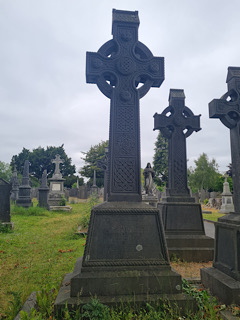
Atkinson dies in County Dublin on July 8, 1893, and is buried in Glasnevin Cemetery, Dublin, where the cemetery committee places a Celtic cross as a monument to her and her husband after his death on December 8, 1893.


Leave a comment

Birth of Cahal Daly, Archbishop of Armagh

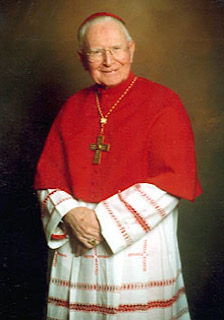
Cahal Brendan Daly KGCHS, a Roman Catholic cardinaltheologian and writer, is born Charles Brendan Daly on October 1, 1917, in Ballybraddin, Loughguile, a village near Ballymoney in County Antrim.

Daly serves as the Catholic Primate of All Ireland and Archbishop of Armagh from late 1990 to 1996, the oldest man to take up this role in nearly 200 years. He is later created a Cardinal-Priest of San Patrizio by Pope John Paul II in the papal consistory of June 28, 1991.

Daly is the third child of seven born to Charles Daly and Susan Connolly. His father is a primary school teacher originally from KeadueCounty Roscommon, and his mother a native of Antrim. He is educated at St. Patrick’s National School in Loughguile, and then as a boarder in St. Malachy’s CollegeBelfast, in 1930. The writer Brian Moore is a near contemporary.

Daly studies Classics at Queen’s University Belfast (QUB). He earns his BA with Honours and also the Henry Medal in Latin Studies in 1937 and completes his MA the following year. He enters St. Patrick’s College, Maynooth and is ordained to the priesthood on June 22, 1941. He continues studies in theology in Maynooth, from where he obtains a doctorate in divinity (DD) in 1944. His first appointment is as Classics Master in St. Malachy’s College (1944–45).

In 1945, Daly is appointed Lecturer in Scholastic Philosophy at Queen’s University, Belfast, retaining the post for 21 years. In the academic year 1952–53 QUB grants him sabbatical leave, which he spends studying at the Catholic University of Paris where he receives a licentiate in philosophy. He returns to France at many points, particularly for holidays. He persists with his studies well into his retirement. He is a popular figure with the university and fondly remembered by his students. He is named a Canon of the Cathedral Chapter of Diocese of Down and Connor in 1966.

Daly is a peritus, or theological expert, at the Second Vatican Council (1962–65) to Bishop William Philbin during the first session of the Council and to Cardinal William Conway for the rest of the council. He dedicates himself to scholarship for 30 years, and publishes several books seeking to bring about understanding between the warring factions in Northern Ireland.

Daly is appointed Reader in Scholastic Philosophy at QUB in 1963, a post he holds until 1967, when he is appointed Bishop of Ardagh and Clonmacnoise on May 26.

Daly converts his forename Charles into Cahal ahead of his episcopal consecration in St. Mel’s CathedralLongford, on July 16, 1967, from Cardinal William Conway, with Archbishop Giuseppe Sensi and Bishop Neil Farren serving as co-consecrators.

Daly spends 15 years as bishop in Longford and is diligent about parish visitation and confirmations gradually assume a greater national profile. From 1974 onward, he devotes himself especially to ecumenical activities for the Pontifical Council for Promoting Christian Unity. His pastoral letter to Protestants, written in 1979, pleads for Christian unity.

Daly succeeded William Philbin as the 30th Bishop of Down and Connor when he is installed as bishop of his native diocese at a ceremony in St. Peter’s Cathedral, Belfast, on October 17, 1982.

On November 6, 1990, Daly is appointed Archbishop of Armagh and, as such, Primate of All Ireland. His age makes him an unexpected occupant of the post. Despite this it is requested that he stay in the role for three years before usual age of episcopal retirement at 75. Cardinal Daly takes a notably harder line against the Irish Republican Army (IRA) than his predecessor, Cardinal Tomás Ó Fiaich.

Daly is respectful of Protestant rights and opposes integrated education of Catholics and Protestants. This policy is criticised by those who see segregated education as one of the causes of sectarianism in Northern Ireland, but is seen by the Catholic clergy as important for passing on their faith to future generations. He is utterly orthodox in opposing divorce, contraception, abortion, the ordination of women and any idea of dropping clerical celibacy.

Daly is heckled by the audience on live television during a broadcast of The Late Late Show on RTÉ One on the topic of pedophilia in the 1990s. After his retirement in 1996, he makes no public statement on the issue.

Daly retires as Archbishop of Armagh on his 79th birthday, October 1, 1996, and subsequently suffers ill health. Although it is announced that he will attend the funeral of Pope John Paul II, he stays home on the advice of his doctors. His age makes him ineligible to participate in the 2005 conclave that elects Pope Benedict XVI.

Daly is admitted to the coronary unit of Belfast City Hospital on December 28, 2009. His health has already been declining, leading to prayers being ordered for him. He dies in hospital in Belfast on December 31, 2009, aged 92. His family are at his bedside at the time. His death brings to an end a two-year period during which Ireland has, for the first time in its history, three living Cardinals.

Daly lay in state in Belfast and then his remains are taken to Armagh. Pope Benedict XVI pays tribute at this stage. Large numbers of people travel from as far as County Westmeath to attend Mass at Armagh on January 4, at which Monsignor Liam McEntaggart, the former parish priest of Coalisland, says, “When the history of peace making in Ireland comes to be written, the contribution of Cardinal Daly will be accorded a high place.” Monsignor McEntaggart himself dies on August 22, 2010, aged 81, less than eight months after Cardinal Daly’s passing.

Daly’s funeral is held on January 5, 2010, and is attended by the president Mary McAleese and Taoiseach Brian Cowen. Daly is buried in the grounds of St. Patrick’s Roman Catholic Cathedral, Armagh, next to his three predecessors in the see, Cardinals Ó Fiaich, Conway and D’Alton.


Leave a comment

The Battle of Ballinamuck

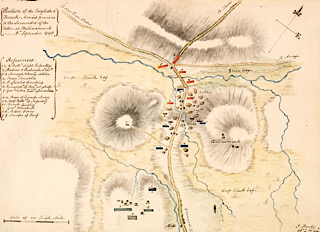
The Battle of Ballinamuck takes place at Ballinamuck, County Longford, on September 8, 1798, marking the defeat of the main force of the French incursion during the Irish Rebellion of 1798.

The victory of General Jean Joseph Amable Humbert at the Battle of Castlebar, despite gaining him around 5,000 extra Irish recruits, did not lead to a renewed outbreak of the rebellion in other areas as hoped. The defeat of the earlier revolt devastated the Irish republican movement to the extent that few are willing to renew the struggle. A massive British force of 26,000 men is assembled under Charles Cornwallis, 1st Marquess Cornwallis, the new Lord Lieutenant of Ireland, and is steadily moving west. Humbert abandons Castlebar and moves toward Ulster, with the apparent intention of igniting an uprising there. He defeats a blocking force of government troops at Collooney in County Sligo. Following reports that rebellions have broken out in County Westmeath and County Longford, he alters course.

Humbert crosses the River Shannon at Ballintra Bridge on September 7, destroying it behind them, and continues to Drumshanbo where they spend the night – halfway between his landing-point and Dublin. News reaches him of the defeat of the Westmeath and Longford rebels at Wilson’s Hospital School at Multyfarmham and Granard from the trickle of rebels who have survived the slaughter and reached his camp. With Cornwallis’ huge force blocking the road to Dublin, facing constant harassment of his rearguard and the pending arrival of General Gerard Lake‘s command, Humbert decides to make a stand the next day at the townland of Ballinamuck on the Longford/Leitrim county border.

Humbert faces over 12,000 Irishmen and English forces. General Lake is close behind with 14,000 men, and Cornwallis is on his right at Carrick-on-Shannon with 15,000. The battle begins with a short artillery duel followed by a dragoon charge on exposed Irish rebels. There is a brief struggle when French lines are breached which only ceases when Humbert signals his intention to surrender and his officers order their men to lay down their muskets. The battle lasts little more than an hour.

While the French surrender is being taken, the 1,000 or so Irish allies of the French under Colonel Bartholomew Teeling, an Irish officer in the French army, hold onto their arms without signaling the intention to surrender or being offered terms. An attack by infantry followed by a dragoon charge breaks and scatters the Irish who are pursued into a bog where they are either bayoneted or drowned.

A total of 96 French officers and 746 men are taken prisoner. British losses are initially reported as 3 killed and 16 wounded or missing, but the number of killed alone is later reported as twelve. Approximately 500 French and Irish lay dead on the field. Two hundred Irish prisoners are taken in the mopping-up operations, almost all of whom are later hanged, including Matthew Tone, brother of Wolfe Tone. The prisoners are moved to the Carrick-on-Shannon Gaol. The French are given prisoner or war status however the Irish are not and some are hanged and buried in St. Johnstown, today known as Ballinalee, where most are executed in a field that is known locally as Bully’s Acre.

Humbert and his men are transported by canal to Dublin and exchanged for British prisoners of war. Government forces subsequently slowly spread out into the rebel-held “Irish Republic,” engaging in numerous skirmishes with rebel holdouts. These sweeps reach their climax on September 23 when Killala is captured by government forces. During these sweeps, suspected rebels are frequently summarily executed while many houses thought to be housing rebels are burned. French prisoners of war are swiftly repatriated, while United Irishmen rebels are executed. Numerous rebels take to the countryside and continue guerrilla operations, which take government forces some months to suppress. The defeat at Ballinamuck leaves a strong imprint on Irish social memory and features strongly in local folklore. Numerous oral traditions are later collected about the battle, principally in the 1930’s by historian Richard Hayes and the Irish Folklore Commission.

(Pictured: Watercolour plan by an I. Hardy of the Battle of Ballinamuck in County Longford on September 8, 1798, showing position of the English & French Armies previous to the surrender of the latter at Balinamuck)


Leave a comment

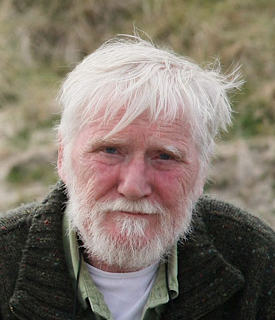
Death of Dermot Healy, Novelist, Playwright, Poet & Short Story Writer

Dermot Healy, Irish novelistplaywrightpoet and short story writer, dies at his home in Ballyconnell, Sligo, County Sligo, on June 29, 2014. A member of Aosdána, he is also part of its governing body, the Toscaireacht. He is described variously as a “master,” a “Celtic Hemingway” and as “Ireland’s finest living novelist.”

Healy is born in FinneaCounty Westmeath, on November 9, 1947, the son of a Guard. As a child the family moves to Cavan, County Cavan, where he attends the local secondary school. In his late teens he moves to London and works in a succession of jobs, including barman, security man and as a labourer. He later returns to Ireland, settling in Ballyconnell, County Sligo, a small settlement on the Atlantic coast.

Often overlooked due to his relatively low public profile, Healy’s work is admired by his Irish literary predecessors, peers and successors alike, many of whom idolise him. Among the writers to have spoken highly of him are Seamus HeaneyEugene McCabeRoddy DoylePatrick McCabe and Anne Enright.

Healy’s work is influenced by an eclectic range of writers from around the world, including Anna AkhmatovaJohn ArdenIsaac BabelMatsuo BashōSamuel BeckettJorge Luis BorgesAngela CarterJ. M. CoetzeeEmily DickinsonMaria EdgeworthT. S. EliotHermann HesseNâzım HikmetAidan HigginsMiroslav HolubEugène IonescoFranz KafkaMary LavinFederico García LorcaGuy de MaupassantEdgar Allan PoeSylvia PlathEzra PoundWilliam Shakespeare and Robert Louis Stevenson. Healy writes in a shed and is fascinated by etymology. However, on being a writer, he is quoted as saying, “I know writing is what I do but I still don’t see myself as one.”

Healy is longlisted for the Booker Prize with his novel A Goats Song. He wins the Hennessy Literary Award (1974 and 1976), the Tom-Gallon Trust Award (1983), and the Encore Award (1995). In 2011, he is shortlisted for the Poetry Now Award for his 2010 poetry collection, A Fool’s ErrandLong Time, No See is nominated for the International Dublin Literary Award, the world’s most valuable literary award for a single work in the English language, by libraries in Russia and Norway.

Healy dies at his home in Ballyconnell on June 29, 2014, while awaiting an ambulance after suddenly being taken ill. He is laid to rest at Carrigans Cemetery following funeral mass by Fr. Michael Donnelly at St. Patrick’s Church in Maugherow, County Sligo.


Leave a comment

Birth of Catherine O’Brien, Irish Stained Glass Artist

Catherine Amelia “Kitty” O’Brien, Irish stained glass artist and a member and director of An Túr Gloine, is born in Durra House, Spancill Hill, County Clare, on June 19, 1881.

O’Brien is one of five children of Pierce O’Brien, a gentleman landowner, and Sophia Angel St John O’Brien. Her first cousin is woodcarver Sophia St John Whitty. She attends the Mercy Convent in Ennis, going on to win a scholarship to the Dublin Metropolitan School of Art. While there she studies under William Orpen and Alfred E. Child who teach her the art of stained glass.

Among O’Brien’s first commissions is the St. Ita window for St. Brendan’s cathedral in Loughrea, County Galway, in 1904, which is designed by Sarah Purser. She joins An Túr Gloine in 1906, beginning her career there by designing Angel of the Annunciation window in the Enniskillen convent chapel. For a window in the Wilson private chapel at Coolcarrigan House, NaasCounty Kildare, in 1912, she incorporates Celtic design, some drawing on the Book of Durrow. In 1914, she tours the cathedrals of ParisRouen, and Chartres with Purser and Wilhelmina Geddes. She designs three windows depicting St. John, St. Flannan, and St. Munchin, for the Honan Chapel at University College Cork in 1916. Her 1923 design of the centenary memorial window in St. Andrew’s church, Lucan, represents the parable of the Good Shepherd. When in 1925 An Túr Gloine becomes a cooperative society, she becomes a shareholder along with Ethel RhindEvie Hone, and Michael Healy.

O’Brien’s 1926 lunette The Spirit of Night represents night, twilight, and dawn, and is for the private home of Keng Chee in Singapore, which is later demolished. The window of St. Catherine of Siena for the Sacred Heart convent chapel in Newton, Massachusetts dates from 1927. Her 1931 St. Patrick window, for the De La Salle school, East Coast Rd., Singapore, commissioned by architect Denis Santry, is the only extant stained-glass work by an Irish artist in that country. Much like Rhind, O’Brien also employs opus sectile, such as in her 1936 Mass in Penal Days in the Franciscan friary, AthloneCounty Westmeath. She contributes two windows, Pelican and Lamb and Host and Chalice: Wheat and Grapes, to the ten windows An Túr Gloine produces for Brophy College ChapelPhoenix, Arizona in 1937. From 1937 until 1947, she works on 22 opus sectile panels for the Protestant Church in Ennis.

Purser retires from An Túr Gloine in 1940, and O’Brien succeeds her as director, going on to purchase it and the contents in 1944. She rents a section of the premises to fellow stained-glass artist Patrick Pollen from 1954 onwards. She exhibits at the 1953 Irish Exhibition of Living Art, and the 1958 exhibition of the Arts and Crafts Society of Ireland. When the An Túr Gloine studios are damaged by fire in 1958, she rebuilds them and reopens by 1959. She is an active member of the Soroptimists and the Guild of Irish Art Workers. The last work she completes is a three-light window for the Church of St. MultoseKinsale, County Cork, in 1962. A commission for two windows for the private chapel of Áras an Uachtaráin for President Éamon de Valera is left unfinished at her death.

O’Brien dies in Dublin on July 18, 1963, and is buried in Whitechurch Parish Graveyard, County Dublin. She is commemorated in a window designed by Pollen in St. Laurence O’Toole chapel, Christ Church Cathedral, Dublin, where for forty years she made floral arrangements. Over 150 of her An Túr Gloine drawings from notebooks are now in the National Gallery of Ireland.

(Pictured: Stained glass window in the south wall of Ferns Cathedral, Ferns, County Wexford)


2 Comments

Death of Thomas Mulvany, Roman Catholic Bishop of Meath

Thomas Mulvany, the Roman Catholic Bishop of Meath from 1929 until his death, dies on June 16, 1943, in Mullingar, County Westmeath.

Mulvany is born in MoynaltyCounty Meath, 8 km (5 mi) north of Kells, on March 1, 1864, to James Mulvany and Mary Monaghan. He is ordained a priest of the Diocese of Meath on March 6, 1892.

Following his predecessors death, Pope Pius XI names him Bishop of Meath on April 12, 1929, and he is consecrated on June 30, with Cardinal Joseph MacRory being the principal consecrator. He retains that position until his death.

At the time of his appointment, Mulvaney becomes involved with plans for a new cathedral for Mullingar and the Diocese of Meath to replace the aging Cathedral of the Immaculate Conception (1836–1936). He takes the plans to Pope Pius XI, who is supportive and requests that the new building be dedicated as the Cathedral of Christ the King. Construction begins in 1932 and the building is completed in 1936.

Mulvany opens St. Patrick’s Classical School in Navan, County Meath, in the former study hall of St. Finian’s College, Navan, which moved to Mullingar at the beginning of the twentieth century.

Mulvany dies at the age of 75 as a result of hypertension and cerebral hemorrhage, in the Bishops Palace, Mullingar, on June 16, 1943. His death is registered on June 24, 1943, by Margaret Walsh, a nurse who is present at his death. He is buried in the grounds of the Cathedral of Christ the King, Mullingar.


Leave a comment

Death of Charlotte Brooke, Poet, Dramatist & Author

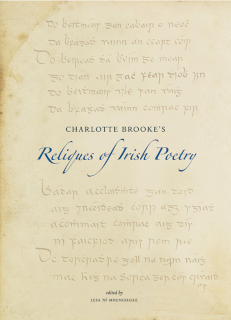
Charlotte Brooke, author of Reliques of Irish Poetry, a pioneering volume of poems collected by her in the Irish language, with facing translations, dies in Longford, County Longford, on March 29, 1793, of a malignant fever.

Brooke is born around 1740 in Rantavan House, Mullagh, County Cavan. She is one of twenty-two children of the writer Henry Brooke, author of the play Gustavus Vasa, and Catherine Brooke (née Meares) of County Westmeath. Only she and her brother Arthur survive childhood.

Brooke is educated by her father and immerses herself in reading history and literature at an early age. While the rest of her family is sleeping, she often goes down to the study where she spends hours reading.

Brooke is part of the first generation of the Protestant Anglo-Irish settler class who take a strong interest in the Irish language and Gaelic history. Her primary interest in Irish language and literature is generated by her hearing it being spoken and recited by the labourers in County Cavan and on the County Kildare estates where her family moves around 1758. She is led to the study of the Irish language, and in less than two years she finds herself in love with it. From reading Irish poetry and admiring its beauties, she proceeds to translate it into English, one of her earliest efforts being a song and monody by Turlough O’Carolan, which appears in Joseph Cooper Walker‘s Historical Memoirs of Irish Bards (1786).

Brooke, who is frail herself, takes care of her father after her mother dies in 1773. Meanwhile, the family has moved back to County Cavan, where they begin living in a house they name Longfield which has been built near the Rantavan Estate. A few years after her father dies in 1783, she runs into financial troubles, after a model industrial village set up in County Kildare by her cousin Captain Robert Brooke goes bankrupt in 1787. Walker and other members of the recently created Royal Irish Academy (RIA) seek to make an income for her, but she realises she has to rely on her writings and translations.

In 1792, though in declining health and poor circumstances, Brooke publishes a selection of her father’s writings in three volumes, prefacing the work with a memoir of her father and a defence of his reputation as a writer. She also publishes a direct and simple presentation of Christian doctrine for children using her father’s didactic method, The school for Christians in dialogue for the use of children (1791). She dies of a malignant fever on March 29, 1793, at Longford, County Longford, in the home of the Brownes, friends with whom she has lived for some years.


Leave a comment

Birth of Patrick Sarsfield Donegan, Fine Gael Politician

Patrick “Paddy” Sarsfield Donegan, Irish Fine Gael politician, is born on October 29, 1923, in Monasterboice, County Louth. He serves as a Senator for the Agricultural Panel from 1957 to 1961, a Teachta Dála (TD) from 1954 to 1957 and 1961 to 1981 and a government minister from 1973 to 1977

Donegan is the son of Thomas Francis Donegan, a publican and farmer, and Rose Ann Donegan (née Butterly). He is educated at Fieldstown and Tenure national schools, a Christian Brothers school in Drogheda, County Louth, and Castleknock College, a voluntary Vincentian secondary school for boys in Castleknock, County Dublin. After working as a buyer of malting barley for Guinness, he purchases and successfully develops a seed merchant’s and milling company. His extensive farming interests include the breeding of Belgian Blue and Limousin cattle, at a time when continental breeds are new to Ireland.

Bypassing the customary apprenticeship on local government bodies prior to a career in national politics, Donegan is elected as a Fine Gael TD for the Louth constituency at the 1954 Irish general election. He loses his seat at the 1957 Irish general election but is elected to Seanad Éireann as a Senator for the Agricultural Panel. He regains his Dáil seat at the 1961 Irish general election.

In the Fine Gael–Labour Party coalition government which takes office after the 1973 Irish general election, Donegan is appointed as Minister for Defence. In October 1976, he makes a speech on an official visit to the opening of new kitchen facilities in an army barracks at Mullingar, County Westmeath in which he describes as a “thundering disgrace” President Cearbhall Ó Dálaigh‘s refusal to sign the Emergency Powers Bill 1976. Ó Dálaigh had instead exercised his powers under Article 26 of the Constitution of Ireland to refer it to the Supreme Court. The Taoiseach, Liam Cosgrave, refuses Donegan’s resignation. On October 21, Fianna Fáil proposes a motion in the Dáil calling on the minister to resign, which is defeated. Ó Dálaigh views the refusal to remove the minister as an affront to his office by the government and resigns on October 22, 1976.

In December 1976, Donegan is appointed as Minister for Lands. In February 1977, this office is restructured as the Minister for Fisheries. He serves in cabinet until the government loses office after the 1977 Irish general election.

Donegan retires from politics at the 1981 Irish general election. He dies at his home in County Louth on November 26,2000, following a long illness. Tributes in the Dáil are led by John Bruton as Fine Gael leader. He is buried in his hometown of Monasterboice, County Louth.


Leave a comment

Death of Al Smith, Irish American Four Term Governor of New York

Alfred Emanuel Smith, Irish American politician who serves four terms as the 42nd governor of New York and is the Democratic Party‘s presidential nominee in 1928 United States presidential election, dies on October 4, 1944, in New York City.

Smith is born at 174 South Street, New York City, on December 30, 1873, and raised in the Fourth Ward on the Lower East Side of Manhattan. He resides there for his entire life. His mother, Catherine (née Mulvihill), is the daughter of Maria Marsh and Thomas Mulvihill, who are immigrants from County Westmeath, Ireland. His father, baptised Joseph Alfred Smith in 1839, is a Civil War–veteran and the son of Emanuel Smith, an Italian marinaro.

Although Smith remains personally untarnished by corruption, he — like many other New York Democrats — is linked to the notorious Tammany Hall political machine that controls New York City politics during his era. He serves in the New York State Assembly from 1904 to 1915 and holds the position of Speaker of the Assembly in 1913. He also serves as sheriff of New York County from 1916 to 1917. He is first elected governor of New York in 1918, loses his 1920 bid for re-election, and is elected governor again in 1922, 1924, and 1926. He is the foremost urban leader of the efficiency movement in the United States and is noted for achieving a wide range of reforms as the New York governor in the 1920s.

Smith is the first Roman Catholic to be nominated for president of the United States by a major party. His 1928 presidential candidacy mobilizes both Catholic and anti-Catholic voters. Many Protestants, including German American Lutherans and Southern Baptists, fear his candidacy, believing that the Pope in Rome would dictate his policies. He is also a committed “wet” (i.e., an opponent of Prohibition in the United States) and as New York governor, he repeals the state’s prohibition law. As a “wet,” he attracts voters who want beer, wine and liquor without having to deal with criminal bootleggers, along with voters who are outraged that new criminal gangs have taken over the streets in most large and medium-sized cities. Incumbent Republican Secretary of Commerce Herbert Hoover is aided by national prosperity, the absence of American involvement in war and anti-Catholic bigotry, and he defeats Smith in a landslide in 1928.

Smith then enters business in New York City and becomes involved in the construction and promotion of the Empire State Building. He seeks the 1932 Democratic presidential nomination but is defeated by Franklin D. Roosevelt, his former ally and successor as governor of New York. During the Roosevelt presidency, he becomes an increasingly vocal opponent of Roosevelt’s New Deal.

Smith is an early and vocal critic of the Nazi regime in Germany. He supports the Anti-Nazi boycott of 1933 and addresses a mass-meeting at Madison Square Garden against Nazism in March 1933. His speech is included in the 1934 anthology Nazism: An Assault on Civilization. In 1938, he takes to the airwaves to denounce Nazi brutality in the wake of Kristallnacht. His words are published in The New York Times article “Text of the Catholic Protest Broadcast” of November 17, 1938.

Like most New York City businessmen, Smith enthusiastically supports American military involvement in World War II. Although he is not asked by Roosevelt to play any role in the war effort, he is an active and vocal proponent of FDR’s attempts to amend the Neutrality Act in order to allow “Cash and Carry” sales of war equipment to be made to the British. He speaks on behalf of the policy in October 1939, to which FDR responds directly: “Very many thanks. You were grand.”

In 1939, Smith is appointed a Papal Chamberlain of the Sword and Cape, one of the highest honors which the Papacy bestows on a layman.

Smith dies of a heart attack at the age of 70 at the Rockefeller Institute Hospital on October 4, 1944. He had been broken-hearted over the death of his wife from cancer five months earlier, on May 4, 1944. He is interred at Calvary Cemetery, a Catholic cemetery in Maspeth and Woodside, Queens, New York City.

Smith is memorialized by The Alfred E. Smith Foundation, founded by Cardinal Francis Spellman. Today it is a significant fund raiser for charity. Each election year, presidential candidates are expected to attend, make witty remarks, and profound commentary about Smith. In 2008, then candidate Barack Obama speaks eloquently of “a man who fought for many years to give Americans nothing more than fair shake and a chance to succeed. He touched the lives of millions as a result.”

(Pictured: Official Gubernatorial portrait of Alfred E. “Al” Smith by Douglas Volk)


Leave a comment

Birth of Maurice Dease, First WWI Victoria Cross Recipient

Maurice James Dease VC, British Army officer during World War I, is born on September 28, 1889, in Gaulstown, Coole, County Westmeath. He is one of the first British officer battle casualties of the war and the first posthumous recipient of the Victoria Cross in the war.

Dease is born to Edmund Fitzlaurence and Katherine Murray Dease. He is educated at Stonyhurst College and the Army Department of Wimbledon College before attending the Royal Military College, Sandhurst. He is 24 years old, and a lieutenant in the 4th Battalion, the Royal Fusiliers, and is awarded the Victoria Cross for his actions on August 23, 1914, at Mons, Belgium.

Nimy Bridge is being defended by a single company of the 4th Royal Fusiliers and a machine gun section with Dease in command. The gunfire is intense and the casualties very heavy, but the lieutenant continues to fire in spite of his wounds, until he is hit for the fifth time and is carried away.

Dease wins the first Victoria Cross to be awarded in the Great War and he receives it on the first day of the first significant British encounter in that war.

When Lieutenant Dease has been mortally wounded, Private Sidney Godley offers to defend the Railway Bridge while the rest of the section retreats and is also awarded the Victoria Cross. He is taken prisoner of war.

Dease is buried at St. Symphorien Military Cemetery, two kilometres east of Mons, Belgium. He is remembered with a plaque under the Nimy Railway Bridge, Mons and in Westminster Cathedral. His name is on the wayside cross in Woodchester, Stroud, Gloucestershire, on a cross at Exton, Rutland and on a plaque installed in St. Martin’s Church, Culmullen, County Meath. His Victoria Cross is displayed at the Royal Fusiliers Museum in the Tower of London. Victoria Cross holders are honoured with commemorative paving stones. and Dease’s stone is the first to be unveiled on August 23, 2014, at Glasnevin Cemetery, Dublin.

Dease is portrayed in the BBC Three series Our World War (2014) by Dominic Thorburn.