seamus dubhghaill

Promoting Irish Culture and History from Little Rock, Arkansas, USA


Leave a comment

The Battle of Newtownbutler

The Battle of Newtownbutler takes place on July 31, 1689, near EnniskillenCounty Fermanagh. It is part of the Williamite War in Ireland between the forces of William III and Mary II and those of King James II.

In Enniskillen, armed Williamite civilians drawn from the local Protestant population organise a formidable irregular military force. The armed civilians of Enniskillen ignore an order from Robert Lundy that they should fall back to Derry and instead launch guerrilla attacks against the Jacobites. Operating with Enniskillen as a base, they carry out raids against the Jacobite forces in Connacht and Ulster, plundering Trillick, burning Augher Castle, and raiding Clones.

A Jacobite army of about 3,000 men, led by Justin McCarthy, Viscount Mountcashel (in the Jacobite peerage), advance on them from Dublin. Lord Mountcashel’s men consist of three regiments of infantry and two of dragoons. The regiments include his own regiment, Mountcashel (approx. 650 men in 13 companies), The O’Brien regiment (also 13 companies of 650 men), and the Lord Bophin (Burke) regiment. He also has the dragoon regiments of Cotter and Clare, each with seven companies of about 350 dragoons. On July 28, 1689, Mountcashel’s force encamps near Enniskillen and bombards the Williamite outpost of Crom Castle to the southeast of Enniskillen. Crom Castle is almost 20 miles (32 km) from Enniskillen by road and about 5 miles (8.0 km) from Newtownbutler.

Two days later, they are confronted by about 2,000 Williamite ‘Inniskilliniers’ under Colonel Berry, Colonel William Wolseley and Gustave Hamilton. The Jacobite dragoons under Antoine Hamilton stumble into an ambush laid by Berry’s men near Lisnaskea and are routed, taking 230 casualties. Mountcashel manages to drive off Berry’s cavalry with his main force but is then faced with the bulk of the Williamite strength under Wolseley. There is some debate in the sources over troop numbers, though it is believed that Mountcashel has a large number of poorly armed conscripts. Unwisely, Mountcashel halts and draws up his men for battle about a mile south of Newtownbutler.

Williamite histories claim that many of the Jacobite troops flee as the first shots are fired. Up to 1,500 of them are hacked down or drowned in Upper Lough Erne when pursued by the Williamite cavalry. Of the 500 men who try to swim across the Lough, only one survives. Approximately 400 Jacobite officers, along with Lord Mountcashel, the Jacobite commander, are captured and later exchanged for Williamite prisoners, with the other Jacobites being killed. These claims seem unlikely, for several reasons. Each Irish regiment includes approximately 40 officers. The entire force, therefore, would include only about 200 officers. Many of these officers are accounted for in an October 1689 roll call, which shows approximately a 15–20% change in the officer roll call since July for the infantry regiments and 5% for the dragoons. This totals some 20–30 officers in all. Also, the Mountcashel regiment’s roll call for October shows that companies which would normally have 50–60 men, have around 25, which results in a loss of approximately 300–400 men for this regiment. The Cotter and Clare dragoons who ride away from the battle do not have significant losses, based on the October 1689 roll call. Assuming the other two infantry regiments suffer similar losses, gives a total loss of 1,200–1,300. Given their officers are recorded in the October roll and show fewer losses than the Mountcashel regiment among officers, there may be fewer losses in the ranks as well. The Williamite histories acknowledge that they captured approximately 400, including men who are later sent to Derry, which would indicate a total loss of killed, wounded, and missing of 800–900, and likely less. This number is necessarily an estimate based on the available data but should be contrasted with Williamite claims that they killed and drowned 2,000. It appears likely that a couple of hundred men from Mountcashel’s regiment may have fled into the bogs toward Lough Erne, and some of them who made it to the river tried to swim and were drowned, leading to the story of the hundreds drowned.

Lord Mountcashel is wounded by a bullet and narrowly avoids being killed. He later escapes from Enniskillen and returns to lead the Irish Brigade in the French Royal Army. The Jacobite colonel, Sir Thomas Newcomen, 5th Baronet, is killed.

The Williamite victory at Newtownbutler ensures that a landing by Frederick Schomberg, 1st Duke of Schomberg, in County Down in August 1689 is unopposed.

The battle is still commemorated by the Orange Order in Ulster and is mentioned in the traditional unionist song, “The Sash.”

The battle is significant in another way: the regiments on both sides go on to have long and famous histories. On the Williamite side, the Innsikilling Regiment (27th Foot), and on the Jacobite side, the Clare and Mountcashel/Lee/Bulkeley regiments of the Irish Brigade. The two Irish regiments face off again at the Battle of Fontenoy in 1745, where the Irish Brigade famously drives the British army from the battlefield with a charge in the final stage of the battle.


Leave a comment

Birth of Lord Henry FitzGerald, Diplomat & Soldier

Lord Henry FitzGeraldPC (Ire), diplomat, soldier, and younger brother of revolutionary Lord Edward FitzGerald, is born on July 30, 1761. He is the fourth son among nine sons and ten daughters of James FitzGerald, 1st Duke of Leinster, and Emily FitzGerald, Duchess of Leinster (née Lady Emily Lennox).

FitzGerald joins the British Army and becomes a lieutenant in the 66th (Berkshire) Regiment of Foot in 1788, transferring as a captain in 1779 to the newly raised 85th Regiment of Foot (Westminster Volunteers), which is posted to garrison duty in Jamaica for the duration of the American Revolutionary War. He is there promoted to major in 1781 and lieutenant colonel in 1783, taking over command of the regiment from General Charles Stanhope, 3rd Earl of Harrington. After the 85th is disbanded in 1783 he becomes a captain and lieutenant colonel in the 2nd Foot Guards in 1789 and retires from active service in 1792.

FitzGerald is a Member of Parliament (MP) for Kildare Borough between 1783 and 1790 and represents Athy between 1790 and 1791. From 1790 to 1798, he sits in the Irish House of Commons for Dublin City. On July 8, 1806, he is appointed to the Privy Council of Ireland, and from 1807 until 1814, he serves in the Parliament of the United Kingdom for Kildare. He also holds the position of one of the joint Postmasters General of Ireland from April 1806 until May 1807.

FitzGerald is a member of the Kildare Street Club in Dublin. He dies at Boyle FarmThames Ditton, Surrey, England, on July 9, 1829. He is buried at St. Mary’s Paddington Green Churchyard, PaddingtonCity of WestminsterGreater London, England

FitzGerald marries Charlotte Boyle Walsingham in London on August 3, 1791. Together they live at Boyle Farm, Thames Ditton. In 1806, his wife succeeds to the Baron de Ros, the premier baron in the Peerage of England, as 20th Baroness de Ros. The family then takes the surname FitzGerald-de Ros. The couple has 13 children in 21 years, of which nine survive to adulthood.


Leave a comment

The Bachelor’s Walk Massacre

The Bachelor’s Walk massacre occurs in Dublin on July 26, 1914, when a column of troops of the King’s Own Scottish Borderers is accosted by a crowd on Bachelor’s Walk following the Howth gun-running operation. After some verbal baiting, the troops attack “hostile but unarmed” protesters with rifle fire and bayonets, resulting in the deaths of four civilians and injuries to in excess of 30 more. The four killed are Mary Duffy (50), Patrick Quinn (50), James Brennan (18) and Sylvester Pidgeon (40) who succumbs to his wounds on September 24. One of those shot is Luke Kelly, the father of folk singer Luke Kelly.

The events follow the landing of 1,500 rifles and ammunition, purchased for the Irish Volunteers in Hamburg, Germany, in May 1914. In a counter operation to the Unionists running guns into UlsterErskine Childers lands the cargo in Howth, County Dublin, and a thousand rifle-carrying Irish Volunteers marched into Dublin. The quantity is negligible when compared to the far greater numbers of weapons landed and distributed by the Ulster Volunteers, completely without hindrance, but the reaction this time is severe from the British ruling authorities.

The incident proves a moment of political opportunity for Irish nationalists as it sharply brings out the different treatment for the Unionists and for unarmed Dublin civilians. Patrick Pearse declares, “The army is an object of odium, and the Volunteers are the heroes of the hour. The whole movement, the whole country, has been re-baptised by bloodshed for Ireland.”


Leave a comment

Beginning of the Battle of Kilmallock

The Battle of Kilmallock begins on July 25, 1922, in County Limerick, ending on August 5. It is one of the largest engagements of the Irish Civil War.

The battle consists of ten days of fighting in the countryside around Kilmallock in County Limerick, in which the National Army of the Irish Free State, advancing south from Limerick city, find their path blocked by anti-Treaty IRA troops, dug into a number of villages at BruffBruree and Patrickswell. The fighting end with the retreat of the anti-Treaty fighters and the occupation of Kilmallock by Free State forces.

The prelude to the battle is the fall of Limerick city to Free State forces. The Republican forces in the city under Liam Deasy withdraw from their positions after a week of fighting and concentrate in Kilmallock and the nearby towns of Bruff and Bruree. The Free State forces, advancing south from the city, find their path blocked by the Republicans dug in at the three hilltop towns.

The National Army’s attempt to break through this position produces the only “line battle” of the war with the two sides facing each other along clear front-lines. The Kilmallock-Bruff-Bruree triangle sees some of the war’s most intense fighting.

Whereas in the fighting in Dublin, Limerick and Waterford, Free State troops equipped with artillery overcome Anti-Treaty resistance relatively easily, at Kilmallock they have a much harder time. The main reason for this is that the Free State troops, most of whom are new recruits, are facing some of the best of the IRA forces without an advantage in numbers or firepower. General Eoin O’Duffy complains of shortage of arms and ammunition. He estimates that while his forces have about 1,300 rifles, the Republicans could muster over 2,000. He is also critical of the quality of the troops at his disposal, whom he describes as, “a disgruntled, undisciplined and cowardly crowd.”

The Republicans know this and are confident of success. Nevertheless, the Republican commanders have their own issues with logistical support and lack of co-operation between forces from different counties. Deasy’s command includes Volunteers from counties Limerick itself, Cork and Kerry, all of whom have their own commanders. They have three improvised armoured cars, some mortars and heavy machine guns but no artillery.

O’Duffy draws up plans for the advance on Kilmallock with the assistance of his second-in-command Major General W. R. E. Murphy who had been a lieutenant colonel in World War I. His experience in the trenches has a major effect on his approach – pre-disposing him to cautious advances and use of trenches for cover.

The Republican forces have the better of the first clashes. On Sunday, July 23, Free State forces take Bruff and begin their advance on Kilmallock, but are twice beaten back by determined Republican resistance. The following day, the Republicans manage to retake Bruff in a counter-attack, taking 76 prisoners. As a result of this setback, O’Duffy calls off the advance for the time being and waits for reinforcements.

National Army forces quickly retake Bruff after reinforcements arrive. However, things get worse for the National Army as the week goes on. They make slow progress in taking the Republican strongpoints, and their casualties also mount. On Tuesday, July 25, a unit of the Dublin Guard under Tom Flood is ambushed on a narrow road. They fight their way clear, but only after losing four men. Three more Free State soldiers are killed two days later. On July 30, Major General Murphy launches an attack to take Bruree. The Dublin Guards attack the town from the southeast, supported by armoured cars and an 18-pound field gun. The Republicans hold out for five hours until Free State artillery is brought into action. At least 13 Free State soldiers and nine Anti-Treaty fighters are killed in the action and more are wounded before the Free State troops secure Bruree.

The Republican commander, Deasy, knows how important Bruree is to the defence of Kilmallock and draws up plans to recapture the town using three armoured cars, trench mortars and machine guns. On August 2, Republicans capture Patrickswell south of Limerick. The armoured cars then attack Bruree, taking Free State forces by surprise. One car attacks Commandant Flood’s headquarters at the Railway Hotel. The Commandant and his men manage to escape out the back of the building under the cover of Lewis gun fire. The second armoured car rams the front door of another post in the school house, which persuades the twenty-five troops inside to surrender.

However, when Free State reinforcements, along with armoured cars arrive, the Republican counter-attack stalls. The Free State reinforcements are led by Commandant General Seamus Hogan, who personally leads his forces, riding in the armoured car nicknamed “The Customs House.” Having failed to secure the surrender of the town, Republican forces retreat.

Having held Bruree against a Republican counterattack, Free State forces prepare to capture Kilmallock itself, but anticipate there will be heavy fighting. Republican Adjutant General Con Moloney comments on August 2, “Up to yesterday we have had the best of the operations there [the Kilmallock area]. There will, I fear, be a big change there now as the enemy have been reinforced very considerably.” In the 3rd Western Division area they have all but disbanded, unwilling to fight Free Staters, destroy roads, and now discouraged by the Catholic church.

On Thursday, August 3, a force of 2,000 Free State troops, backed up by armoured cars and artillery, advance on Kilmallock from Bruree, Dromin and Bulgaden. Seven hundred troops arrive the next day with an armoured car and a field gun. By Saturday, the town is surrounded by Free State forces. The Dublin Guard are also on hand to prevent Republican forces from escaping. Three miles away, Free State artillery is deployed and shells Republican forces on Kilmallock Hill and Quarry Hill. The two hills are soon controlled by Free State forces.

The National Army has, therefore, assembled sufficient force to smother resistance at Kilmallock. They are still, however, expecting hard fighting before they take the town. To their surprise, when the Free State troops enter the town, they encounter only light resistance from a Republican rearguard (volunteers from Cork). Most of the Republican troops have already abandoned their positions and retreated to Charleville.

They departed not because the Free State troops are stronger, but because they have been outflanked by Free State seaborne landings on the coasts of County Kerry and County Cork on August 2 and 8 respectively. The landings in Cork and Kerry force Commandant General Deasy to release units from this area to return home to their own areas. Although the landings in Cork occur after the retreat from Kilmallock, the subsequent loss of brigades from Cork adds to Commandant General Deasy’s problems. The final phase of the fighting in County Limerick comes when the Free State advance south is held up at Newcastle West. Another day of heavy fighting ensues in which the National Army troops have to bring up armoured cars and artillery to dislodge the Republicans, who reportedly lose up to 12 men before they retreat in the direction of Cork.

(Pictured: National Army troops lined up for a roll call during the Irish Civil War with local children casting an eye over the proceedings)


Leave a comment

Death of Sir Denis Pack, British Army General

Sir Denis Pack, British Army major general who serves in the French Revolutionary and Napoleonic Wars, dies in London on July 24, 1823.

Pack is born on October 7, 1775 in Kilkenny, County Kilkenny, the younger son of Rev. Thomas Pack, Dean of Ossory, and Catherine Pack (née Sullivan), of St. Andrew’s parish, Dublin. In June 1790, he enters Trinity College Dublin (TCD), aged 15, but does not take his degree. His elder brother, Thomas Pack, previously attends TCD, but dies in December 1786.

Pack enters the army in November 1791, being commissioned as a cornet in the 14th Light Dragoons, and serves with this regiment in Flanders in 1794 as part of Francis Rawdon-Hastings‘s expedition. Transferring to the 8th Light Dragoons, he is promoted to lieutenant In March 1795 and takes part in the expedition to Quiberon Bay. He is promoted to captain in February 1796 and serves with the 5th Dragoon Guards in Ireland during the Irish Rebellion of 1798. Promoted to major In August 1798, he is attached to the 4th Royal Irish Dragoon Guards, and after the surrender of the French expeditionary force at Ballinamuck, County Longford, on September 8, 1798 he commands the troops that escort General Jean Joseph Amable Humbert and the other French officers to Dublin.

Promoted to lieutenant colonel in December 1800, Pack commands the 71st (Highland) Regiment of Foot and takes part in the expedition to the Cape of Good Hope in 1806. He then takes part in General John Whitelocke‘s expedition to South America and is captured after an unsuccessful attack on Montevideo. His fellow-prisoner is William Carr Beresford, later 1st Viscount Beresford, and the two men remain friends for the rest of their lives. Refusing to give their parole to General Santiago de Liniers, they escape from La Plata in a boat, meeting a British cruiser at sea. Pack later takes part in the successful attack on Montevideo on February 9, 1807.

Pack is posted to Portugal in 1808 and is present at the Battle of Roliça on August 17 and the Battle of Vimeiro on August 21. In 1809, he takes part in the Walcheren Campaign and, promoted to colonel in July 1810, he is made aide-de-camp to George III. Returning to Portugal in 1810, he serves under Beresford, commanding a Portuguese brigade, and takes part in the Battle of Bussaco on September 27, 1810. Promoted to brigadier general in January 1812, he takes part in the Siege of Ciudad Rodrigo and is present at the Battle of Salamanca on July 22, 1812. In June 1813, he is promoted to major general and later is present at the battles of Vitoria (June 21, 1813), Nivelle (November 10, 1813), Nive (December 10-13, 1813), Orthez (February 27, 1814) and the final French defeat at Toulouse (April 10, 1814). In January 1815, he is made a Knight Commander of the Order of the Bath (KCB) in recognition of his services in the Peninsula.

During the Waterloo campaign of 1815, Pack commands one of the brigades in General Sir Thomas Picton‘s division. Present at the Battle of Quatre Bras (June 16, 1815), he plays a prominent part in the Battle of Waterloo, bringing his brigade forward at a crucial moment to stop the advance of the French 3rd Division under General Pierre-Louis Binet de Marcognet. During the course of his career he is wounded several times and is awarded numerous honours including the Peninsular Gold Cross (with seven clasps), the Military Order of the Tower and Sword (Portugal) and the Order of Saint Vladimir (Russia). In 1819, he is appointed Lieutenant-Governor of Plymouth, and is later made honorary colonel of the 84th (York and Lancaster) Regiment of Foot in 1822.

In July 1816, Pack marries Lady Elizabeth Louisa de la Poer Beresford, daughter of George Beresford, 1st Marquess of Waterford. They have two sons and two daughters. His descendants adopted “Pack-Beresford” as their family name. He dies on July 24, 1823, at Lord Beresford’s house in Upper Wimpole Street, London. A monument to him is later erected in St. Canice’s Cathedral, Kilkenny. A portrait by G. L. Saunders is in family possession; another by Charles Turner, showing Pack wearing his numerous orders and decorations, is in the National Portrait Gallery, London. A collection of his papers is held by the University of Southampton.


Leave a comment

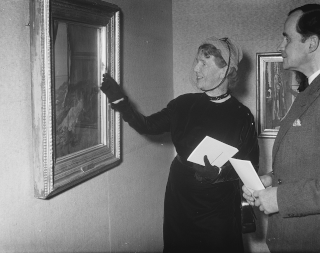
Death of Joan O’Hara, Stage, Film & Television Actress

Joan O’Hara, Irish stagefilm and television actress, dies in Dublin on July 23, 2007. She is one of Ireland’s most popular actresses and is, at the time of her death, recognisable to television viewers as Eunice Dunstan, a gossip in Fair City on RTÉ One.

O’Hara is born in Rosses PointCounty Sligo, on October 10, 1930, the daughter of Major John Charles O’Hara, an officer in the British Corps of Royal Engineers and his wife, Mai (née Kirwan). One of her sisters, Mary (born 1935), is a soprano/harpist. Her brother Dermot (born 1934) now lives with his family in Canada. She attends the same Ursuline convent school as fellow actress and friend Pauline Flanagan.

O’Hara lives most of her life in Monkstown, Dublin, with a stay in London, with her husband, the poet and architect Francis J. Barry. The couple has four children: Siubhan, Jane, Guy, and Sebastian, an author/playwright, whose works include The Steward of Christendom, and the Booker-shortlisted novels A Long Long Way and The Secret Scripture. She is also a year-round sea-swimmer.

O’Hara is a member of the renowned Abbey Players and performs in many plays in the Abbey Theatre in Dublin, including those by Seán O’CaseyLady Gregory and W.B. Yeats. She appears as Maurya in the 1988 film The Dawning. She appears in a number of other films, including Ron Howard‘s Far and AwayDaFootfallsHome is the Hero and just before her death, How About You. In this her final film, she stars with Vanessa Redgrave and her friend Brenda Fricker. The strength of her performance and bravery in carrying it out is acknowledged by the cast and crew in a standing ovation.

More recently, O’Hara is best known for appearing in the popular Irish television soap opera Fair City, broadcast on RTÉ One. She joins the soap in 1994, portraying the character Eunice Dunstan until her death in 2007. Thus, she is described as both one of Ireland’s most popular actresses and as one of the finest actors of her generation on her death. She admires in particular Samuel BeckettFederico García Lorca and Ingmar Bergman. While she takes a no-nonsense approach to her craft, famously giving the advice that when in doubt, one should relate to the fireplace, she is educated at the Abbey School of Acting and has a deep appreciation and knowledge of theoretical approaches to acting and is an admirer of the European and American avant-garde. As actor Alan Stanford says after her death, “She had the most amazing energy. She was in the truest sense one of the last of the greats.”

Joan O’Hara Barry (she keeps her maiden name as her stage name) dies in Dublin on July 23, 2007, of complications from heart disease, aged 76. Her death is announced on RTÉ News the following day.


Leave a comment

Death of John Bowes, 1st Baron Bowes

John Bowes, 1st Baron BowesPC (I), Anglo-Irish peer, politician and judge, dies in Dublin on July 22, 1767. He is noted for his great legal ability, but also for his implacable hostility to Roman Catholics.

Bowes is born in London, the second son of Thomas Bowes, a merchant and member of the Worshipful Company of Turners, and his wife, a Miss North, and is called to the Bar in 1712. He comes to Ireland as a member of the staff of Richard West, the Lord Chancellor of Ireland, in 1723. He builds up a large practice at the Irish Bar and is appointed Solicitor-General for Ireland in 1730, and Attorney-General for Ireland in 1739. He is raised to the Bench as Lord Chief Baron of the Irish Exchequer in 1741, having previously failed to become third Baron (which is a surprisingly lucrative office, as the Baron receives several extra fees). He is appointed Lord Chancellor of Ireland by King George II in 1757, despite the chronic ill-health which afflicts him. In his last years, his legs are so swollen that he can scarcely walk.

Bowes epitomizes the severity of the 18th century Penal Laws against Irish Catholics when he rules, in about 1759, that: “The law does not suppose any such person to exist as an Irish Roman Catholic, nor could such a person draw breath without the Crown’s permission”. Such views, given that Roman Catholics make up more than 90% of the Irish population at the time, inevitably make him bitterly unpopular, and in 1760 he is assaulted during a riot outside the House of Commons.

In spite of his religious bigotry, Bowes is considered one of the outstanding judges of his time. In particular, he is a reforming Lord Chancellor, who is praised for making the Court of Chancery “a terror for fraud, and a comfort and protection for honest men”. As Attorney-General he shows considerable courage in going on assize during the Irish Famine (1740–1741) despite the infectious fever which is raging at the time, and which claims the lives of three other judges who decide to brave the dangers.

Between 1731 and 1742, Bowes represents Taghmon in the Irish House of Commons.

Bowes is considered one of the finest speakers of his time. His speech for the prosecution at the trial of Henry Barry, 4th Baron Barry of Santry, who is charged with murder in 1739, is described by those who hear it as a masterpiece of eloquence and logic, and leads to the Irish House of Lords bringing in a unanimous verdict of guilty against Santry.

Bowes is raised to the peerage of Ireland in 1758 as Baron Bowes, of Clonlyon in the County of Meath.

Bowes dies in Dublin on July 22, 1767, his mental faculties fully intact despite his bodily infirmities. He is buried in Christ Church Cathedral, Dublin, where his brother raises a memorial to him. He never marries, and his title becomes extinct on his death. He lives at Belvedere House, Drumcondra. His estates passes to his brother Rumsey Bowes of BinfieldBerkshire.


Leave a comment

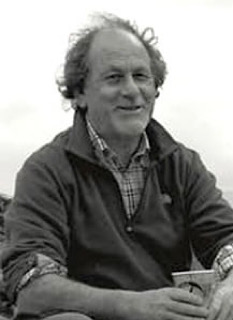
Birth of Banjo Player Gerry O’Connor

Gerry O’Connor, traditional tenor banjo player, is born on July 21, 1960, in Nenagh, County Tipperary. As Earl Hitchener, music critic for The Wall Street Journal, says, O’Connor can be considered at the moment “the single best four-string banjoist in the history of Irish Music.” He also plays mandolinfiddle, guitar and tenor guitar.

O’Connor releases four solo albums and his third one, titled No Place Like Home, is named by The Irish Times as Number 1 Traditional/Folk album of the year in 2004. After the sudden death of banjo player Barney McKenna on April 5, 2012, he joins The Dubliners to complete their planned tour, until the final shows at Vicar Street in Dublin, on December 28-30. McKenna himself says about Gerry O’Connor: “He’s my best pupil ever.” Together with Eamonn CampbellPatsy Watchorn and Seán Cannon, O’Connor keeps touring in 2013 as The Dublin Legends.

In addition to his solo performances and recordings, O’Connor is a member of Four Men and a Dog. He also works on Michael Flatley‘s Lord of the Dance soundtrack and guests over the years with many famous Irish artists such as The WaterboysMary Black, Arcady, Moya BrennanLuka BloomSharon Shannon and performs for U.S. President Bill Clinton in Belfast during his historic visit to Ireland. More recently he guests on Christy Moore‘s album Folk Tale (2011).

O’Connor is one of four musicians brought together by blues rock singer/guitar player Joe Bonamassa to perform on a variety of instruments in an acoustic concert at the Vienna State Opera on July 3, 2012. None of the five had ever worked together nor even met until they arrive in Vienna, where three days later they put on a live performance. The event is released on March 12, 2013, on CD and DVD/Blu-Ray, titled An Acoustic Evening At The Vienna Opera House, and in 2014 is broadcast as a PBS special.

O’Connor mainly plays CGDA tuned tenor banjo, instead of the usual Irish tuning GDAE. He plays a David Boyle banjo on almost every tour since 1996, but usually records with an Epiphone Recording A banjo.


Leave a comment

Death of Donal McCann, Stage, Film & Television Actor

Donal McCann, Irish stage, film, and television actor, dies from pancreatic cancer in Dublin on July 17, 1999. He is best known for his roles in the works of Brian Friel and for his lead role in John Huston‘s last film, The Dead (1987). In 2020, he is listed as number 45 on The Irish Times list of Ireland’s greatest film actors.

McCann is born on May 7, 1943, in Terenure, Dublin. His father is John J. McCann, a playwright and politician who serves twice as Lord Mayor of Dublin. Although he acts in a production of his father’s Give Me a Bed of Roses at Terenure College in 1962, he briefly studies architecture before taking a job as a trainee sub-editor at the Evening Press which allows him to pursue part-time acting classes at the Abbey School of Acting at the same time. He joins the Abbey Players in the late 1960s.

Among his most important early roles are Cú Chulainn in W. B. Yeats‘s On Baile Strand (1966), and as Estragon in a seminal production of Samuel Beckett‘s Waiting for Godot, partnering with Peter O’Toole as Vladimir (1969).

McCann’s career includes parts in many plays from the Irish literary canon, including Tarry FlynnThe Shaughran, and the Gate Theatre‘s highly acclaimed production of Seán O’Casey‘s classic Juno and the Paycock in the 1980s (McCann plays the “Paycock” (Captain Boyle) opposite Geraldine Plunkett as Juno and John Kavanagh as Joxer Daly) as well as a subsequent production of O’Casey’s The Plough and the Stars.

McCann develops a particularly fruitful relationship with the playwright Brian Friel. He plays the role of Gar O’Donnell, the public figure, in a film adaptation of Philadelphia, Here I Come! in 1970 and, despite popular belief, he never plays either public or private Gar on stage. He gives a landmark performance as Frank Hardy, the title character, in Faith Healer in 1980 (a role he reprised in 1994), continuing his relationship with Friel through productions of Translations (1988) and Wonderful Tennessee (1993).

Friel says that McCann’s work “contains extraordinary characteristics that go beyond acting … it is deeply spiritual.” Perhaps McCann’s most renowned role is as Thomas Dunne in Sebastian Barry‘s The Steward of Christendom. He wins the London Critics’ Circle Theatre Award (Drama Theatre) as best actor for this role in 1995. He reprises this role in a 1996 production at the Gate Theatre, Dublin and, following a twelve-week run at the Brooklyn Academy of Music in 1997, his “performance of unarguable greatness” (The New York Observer) had Newsweek hailing him as “a world-class star,” and The New York Times referring to this “astonishing Irish actor…widely regarded as the finest of them all.”

On the London stage, McCann plays in Prayer for My Daughter opposite Antony Sher (1978), and is Jean to Dame Helen Mirren‘s Julie in Miss Julie (1971). This is filmed for the BBC, and he much later plays Judge Brack with Fiona Shaw in the title role of Henrik Ibsen‘s Hedda Gabler, a production filmed for the BBC in 1993.

McCann begins his film career early, in 1966, in Walt Disney Pictures’s The Fighting Prince of Donegal (this later becomes a TV series). More significant roles include the title character’s father Shamie in Cal and one of the feuding brothers in Thaddeus O’Sullivan‘s December Bride (1990). He works a number of times with Neil Jordan (in AngelThe Miracle and High Spirits).

His best-known film role is as Gabriel Conroy in The Dead (1987), starring opposite Anjelica Huston and directed by her father, John Huston. Significant late roles include Bernardo Bertolucci‘s Stealing Beauty (1996) and in John Turturro‘s Illuminata (released in 1999, after McCann’s death).

McCann’s television work includes the featured role of Phineas Finn in the BBC’s serialised adaptation of Anthony Trollope‘s The Pallisers, Willie Burke in RTÉ‘s Prix Italia drama entry The Burke Enigma (1979) and Barney Mulhall in RTÉ’s Strumpet City (1980), as well as many one-off parts.

McCann plays in Bob Quinn‘s Irish language film Poitín (1979) and in Quinn’s somewhat experimental The Bishop’s Story (1995). After hearing that McCann is ill, Tom Collins asks Quinn to make a TV documentary about McCann for RTÉ called It Must Be Done Right (1999), after a remark by McCann on his craft. The film airs on RTÉ a week before McCann’s death.

In his private life, McCann is a quiet and unassuming man, but he battles both depression and alcoholism all his life. He has many friends in Irish theatre and artistic circles but also across all strata of life. His hobbies include sketching and he is passionate about horse racing.

Remembering McCann on the 25th anniversary of his death, Gerald Smyth writes, “In the melancholy of that life-worn voice could be heard the cadences of a lyric heart.”


Leave a comment

Birth of James Kilfedder, Northern Ireland Unionist Politician

Sir James Alexander Kilfedder, Northern Irish unionist politician usually known as Sir Jim Kilfedder, is born on July 16, 1928, in KinloughCounty Leitrim, in what is then the Irish Free State. He is the last unionist to represent Belfast West in the House of Commons.

Kilfedder’s family later moves to Enniskillen in neighbouring County Fermanagh in Northern Ireland, where he is raised. He is educated at Portora Royal School in Enniskillen and at Trinity College, Dublin (TCD). During his time at TCD, he acts as Auditor of the College Historical Society (CHS), one of the oldest undergraduate debating societies in the world. He becomes a barrister, called to the Irish Bar at King’s Inns, Dublin, in 1952 and to the English Bar at Gray’s Inn in 1958. He practises law in London.

At the 1964 United Kingdom general election, Kilfedder is elected as an Ulster Unionist Party (UUP) Member of Parliament for Belfast West. During the campaign, there are riots in Divis Street when the Royal Ulster Constabulary(RUC) remove an Irish flag from the Sinn Féin offices of Billy McMillen. This follows a complaint by Kilfedder in the form of a telegram to the Minister of Home Affairs, Brian McConnell. It reads, “Remove tricolour in Divis Street which is aimed to provoke and insult loyalists of Belfast.” Kilfedder loses his seat at the 1966 United Kingdom general election to Gerry Fitt. He is elected again in the 1970 United Kingdom general election for North Down, and holds the seat until his death in 1995.

Kilfedder is elected for North Down in the 1973 Northern Ireland Assembly election, signing Brian Faulkner‘s pledge to support the White Paper which eventually establishes the Sunningdale Agreement, but becoming an anti-White Paper Unionist after the election. In 1975, he stands for the same constituency in the Northern Ireland Constitutional Convention election, polling over three quotas as a UUP member of the United Ulster Unionist Council (UUUC) although he refuses to sign the UUUC’s pledge of conduct.

Kilfedder leaves the UUP in 1977 in opposition to the party’s policies tending to integrationism, preferring to advocate the restoration of the Stormont administration. For a time he sits as an “Independent Ulster Unionist.” He contests the 1979 European Parliament election under that label, finishing fourth in the count for the three seats, having overtaken the UUP leader Harry West on transfers.

In 1980, Kilfedder forms the Ulster Popular Unionist Party (UPUP) and is re-elected under that label in all subsequent elections. He again tops the poll in the 1982 Northern Ireland Assembly election and is elected as Speaker of the Assembly, serving in the position until 1986. He generally takes the Conservative whip at Westminster. While Speaker, he is paid more than the Prime Minister.

On March 20, 1995, while traveling by train into London from Gatwick Airport, Kilfedder dies of a heart attack. This is the same day that the Belfast Telegraph carries a front-page story saying that an Ulster MP has been targeted as one of twenty MPs invited by the LGBT rights organisation OutRage! in a letter to come out. He dies unmarried and is survived by two sisters.

Kilfedder is described by Democratic Unionist Party MLA Peter Weir as “the best MP North Down ever had.”

The UPUP does not outlive Kilfedder, and the by-election for his Commons seat is won by Robert McCartney, standing for the UK Unionist Party (UKUP). McCartney had fought the seat in the 1987 United Kingdom general election as a “Real Unionist” with the backing of the Campaign for Equal Citizenship. At the 1987 election count, in his victory speech, Kilfedder “attacked his rival’s supporters as ‘a rag tag collection of people who shame the name of civil rights.’ He said they included communists, Protestant paramilitaries and Gay Rights supporters and he promised to expose more in future.” McCartney loses North Down in 2001 to Sylvia Hermon of the UUP.

Kilfedder’s personal and political papers (including constituency affairs) are held at the Public Record Office of Northern Ireland, reference D4127.

Kilfedder is buried in Roselawn Cemetery in East Belfast.