On December 5, 2011, Pringle delivers a televised address to the nation, representing the technical group of TDs in Dáil Éireann. He does so in response to TaoiseachEnda Kenny‘s address to the nation of the previous evening. Later that month, he calls on people for support in a campaign not to pay a new household charge brought in as part of the latest austerity budget and announces that he will not register for the tax or pay it.
In February 2012, Pringle publishes his expenses online. He is elected leader of the technical group in Dáil Éireann in March 2012.
In May 2012, Pringle brings an unsuccessful High Court challenge over the 2012 European Fiscal Compact referendum and the European Stability Mechanism (ESM) Treaty which is appealed to the Supreme Court in July 2012. In July 2012, the Irish Supreme Court decides to refer three questions to the Court of Justice of the European Union (CJEU) arising out of his challenge of the European Stability Mechanism Treaty and doubts about the ESM’s legality under the Treaties of the European Union. The CJEU holds an oral hearing on the referral on October 23, 2012. It is the first time that the full court sits to hear a reference from a member state of the Union. The 27 judges hear oral arguments from the counsel for Pringle, Ireland, nine other member states, the Commission, the Council, and the European Parliament. On November 27, 2012, the EU Court of Justice dismisses Pringle’s arguments and rules that the ESM is in accordance with the Treaties.
In the 2016 Irish general election, after a re-drawing of constituency boundaries, Pringle campaigns in the new five-seater Donegal constituency. He is re-elected to the final seat by a margin of just 184 votes over Sinn Féin’s Pádraig Mac Lochlainn. During negotiations to form a government, Pringle says he is glad not to have signed up to the Independent Alliance, after that group enters talks with Taoiseach Enda Kenny. He says that unless Kenny or Fianna Fáil leader Micheál Martin sign up to Right2Change, he will not support either as Taoiseach.
As of April 2016, Pringle had become a member of the Independents 4 Change technical group in the Dáil.
In May 2016, Pringle introduces legislation designed to retain water in public ownership and avoid further privatisation.
Pringle puts forward a bill calling on the government to end public spending from fossil fuels, which passes, making Ireland the first country to fully divest public money from fossil fuels. In June 2022, he puts forward a bill proposing a referendum on lowering the voting age to sixteen.
Hogan is called to the Bar in July 1984 and becomes a Senior Counsel in 1997. He appears domestically in cases in the High Court and the Supreme Court and internationally at the European Court of Human Rights and the European Court of Justice.
Hogan is noted in particular for his experience in constitutional law. He acts for the Attorney General of Ireland in references made by President Mary Robinson under Article 26 of the Constitution of Ireland to the Supreme Court regarding the Information (Termination of Pregnancies) Bill 1995 and the Employment Equality Bill of 1997. He appears again for the Attorney General (with Dermot Gleeson and Paul Gallagher) in another reference made by President Mary McAleese regarding the Health (Amendment) (No. 2) Bill 2004.
Hogan is a law lecturer and fellow at Trinity College Dublin from 1982 to 2007. He lectures on constitutional law, competition law and the law of tort. He is regarded as “one of the foremost constitutional and administrative lawyers in Ireland.” He is the co-author of Administrative Law in Ireland and JM Kelly: The Irish Constitution, the core Irish legal texts in Irish administrative and constitutional law respectively. He also writes a text on political violence and a book chronicling the origins of the Constitution of Ireland.
Hogan appears for Katherine Zappone and Ann Louise Gilligan in Zappone v. Revenue Commissioners in the High Court and Miss D in her case related to the rights to travel abroad for an abortion. He represents the State in the High Court and the Supreme Court in litigation that emerges following a court finding that an offence of unlawful carnal knowledge is unconstitutional. In 2008, he acts for Colm Murphy and Seamus Daly in the Supreme Court who are contesting an action taken by families of victims of the Omagh bombing when they are refused access to books of evidence.
Hogan is the first barrister to appear in an Irish court without a wig, following the enactment of the Courts and Court Officers Act 1995.
Throughout his career, Hogan has been a member of committees and boards in areas requiring legal expertise. He chairs the Department of Justice‘s Balance in Criminal Law Review Group and is a member of three other review groups: the Constitution Review Group, the Competition and Mergers Review Group and the Offences Against the State Acts Review Group. He is also a member of the Competition Authority‘s Advisory Panel and the Committee on Court Practice and Procedure.
Hogan is appointed a Judge of the High Court in 2010. Soon after his appointment, he holds an emergency hearing in his home regarding a blood transfusion for a sick baby. He is one of three judges who hears a case taken by Marie Fleming, seeking a right to die in 2012. His reference to the European Court of Justice in 2014 regarding the International Safe Harbor Privacy Principles, results in a declaration by the Grand Chamber that the Safe Harbour Decision is invalid. He subsequently becomes a Judge of the Court of Appeal upon its establishment in October 2014.
In May 2018, Hogan is nominated by the Government of Ireland for appointment as the Advocate General to the European Court of Justice. His term begins in October 2018 and was scheduled to expire in October 2024. Anthony Collins is appointed in 2021 to complete his term following his appointment to the Supreme Court. He concludes his term on October 7, 2021.
In one of his first opinions, on a reference from the French Conseil d’État, Hogan finds that Regulation (EU) No 1169/2011 of the European Parliament and of the Council of October 25, 2011, requires that products originating from Israeli-occupied territories should indicate if these products come from such a territory. His opinion is followed by the Court of Justice.
In April 2021, the Irish government nominates Hogan to the Supreme Court of Ireland. He is appointed in October 2021.
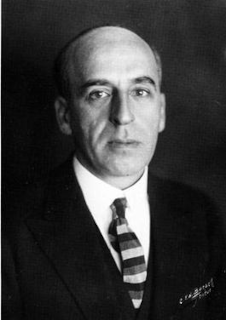
Lester is born on September 28, 1888, in Carrickfergus, County Antrim, as John Ernest Lester, the son of a Protestant grocer Robert Lester and his wife, the former Henrietta Ritchie. Although the town of Carrickfergus is strongly Unionist, he joins the Gaelic League as a youth and is won over to the cause of Irish nationalism. As a young man, he joins the Irish Republican Brotherhood (IRB). He works as a journalist for the North Down Herald and a number of other northern papers before he moves to Dublin, where he finds a job at the Freeman’s Journal. By 1919, he has risen to its news editor.
After the Irish War of Independence, a number of Lester’s friends join the new government of the Irish Free State. He is offered and accepts the position as director of publicity.
Lester marries Elizabeth Ruth Tyrrell in 1920 by whom he has three daughters.
In 1923, Lester joins Ireland’s Department of External Affairs. He is sent to Geneva in 1929 to replace Michael MacWhite as Ireland’s Permanent Delegate to the League of Nations. In 1930, he succeeds in organising Ireland’s election to the Council (or executive body) of the League of Nations for three years. He often represents Ireland at Council meetings and stands in for the Minister for External Affairs. He becomes increasingly involved in the work of the League, particularly in its attempts to bring a resolution to two wars in South America. His work brings him to the attention of the League Secretariat and begins his transformation from national to international civil servant.
When Peru and Colombia have a dispute over a town in the headwaters of the Amazon River, Lester presides over the committee that finds an equitable solution. He also presides over the less-successful committee when Bolivia and Paraguay go to war over the Gran Chaco.
In 1933, Lester is seconded to the League’s Secretariat and sent to Danzig (now Gdańsk, Poland), as the League of Nations’ High Commissioner from 1934 to 1937. The Free City of Danzig is the scene of an emerging international crisis between Nazi Germany and the international community over the issue of the Polish Corridor and the Free City’s relationship with the Third Reich. He repeatedly protests to the German government over its persecution and discrimination of Jews and warns the League of the looming disaster for Europe. He is boycotted by the representatives of the German Reich and the representatives of the Nazi Party in Danzig.
Lester returns to Geneva in 1937 to become Deputy Secretary General of the League of Nations. In 1940, he becomes Secretary General of the body, becoming the League’s leader a year after the beginning of World War II which shows that the League has failed its primary purpose. The League has only 100 employees, including guards and janitors, out of the original 700.
Lester remains in Geneva throughout the war and keeps the League’s technical and humanitarian programs in limited operation for the duration of the war. In 1946, he oversees the League’s closure and turns over the League’s assets and functions to the newly established United Nations.
Despite rumours that he would be prepared to stand for election as President of Ireland, Lester seeks no permanent office and retires to Recess, County Galway, in the west of Ireland, where he dies on June 13, 1959. In its obituary, The Times describes him as an “international conciliator and courageous friend of refugees.”
In August 2010, a room in the Gdańsk City Hall, the building that had been Lester’s residence during his stay, is renamed by Mayor Paweł Adamowicz as the Seán Lester Room.
The treaty had been intended to enter into force on January 1, 2009, but has to be delayed following the Irish rejection. However, the Lisbon treaty is approved by Irish voters when the Twenty-eighth Amendment of the Constitution of Ireland is approved in the second Lisbon referendum, held in October 2009.
The Treaty of Lisbon is signed by the member states of the European Union on December 13, 2007. It is in large part a revision of the text of the Treaty establishing a Constitution for Europe (TCE) after its rejection in referendums in France in May 2005 and in the Netherlands in June 2005. The Treaty of Lisbon preserves most of the content of the Constitution, especially the new rules on the functioning of the European Institutions but gives up any symbolic or terminologic reference to a constitution.
Because of the decision of the Supreme Court of Ireland in Crotty v. An Taoiseach (1987), an amendment to the Constitution is required before it can be ratified by Ireland. Ireland is the only one of the then fifteen EU member states to put the Treaty to the people in a referendum. Ratification of the Treaty in all other member states is decided upon by national parliaments alone.
The government parties of Fianna Fáil and the Progressive Democrats are in favour of the treaty, but the other government party, the Green Party, is divided on the issue. At a special convention on January 19, 2008, the leadership of the Green Party fails to secure a two-thirds majority required to make support for the referendum official party policy. As a result, the Green Party itself does not participate in the referendum debate, although individual members are free to be involved in whatever side they chose. All Green Party members of the Oireachtas support the Treaty. The main opposition parties of Fine Gael and the Labour Party are also in favour. Only one party represented in the Oireachtas, Sinn Féin, is opposed to the treaty, while minor parties opposed to it include the Socialist Party, the Workers’ Party and the Socialist Workers Party. Independent TD’s Tony Gregory and Finian McGrath, Independent MEPKathy Sinnott, and Independent members of the Seanad from the universities David Norris, Shane Ross and Rónán Mullen advocate a “No” vote as well.
The Government sends bilingual booklets written in English and Irish, explaining the Treaty, to all 2.5 million Irish households. However, compendiums of the two previous treaties, of which the Lisbon Treaty is intended to be a series of reforms and amendments, remain unavailable in Ireland. Some commentators argue that the treaty remains essentially incomprehensible in the absence of such a compendium.
On March 12, 2008, the Libertas Institute, a lobby group started by businessman Declan Ganley, launches a campaign called Facts, not politics which advocates a “No” vote in the referendum. A month later, the German Chancellor, Angela Merkel, appeals to Irish people to vote “Yes” in the referendum while on a visit to Ireland. The anti-Lisbon Treaty campaign group accuses the government and Fine Gael of a U-turn on their previous policy of discouraging foreign leaders from visiting Ireland during the referendum campaign. The European Commissioner for Internal MarketCharlie McCreevy admits he had not read the Treaty from cover to cover and says, “he would not expect any sane person to do so.”
At the start of May, the Irish Alliance for Europe launches its campaign for a “Yes” vote in the referendum this consists of trade unionists, business people, academics and politicians. Its members include Garret FitzGerald, Ruairi Quinn, Pat Cox and Michael O’Kennedy. The TaoiseachBrian Cowen states that should any member of the Fianna Fáil parliamentary party campaign against the treaty, they will likely be expelled from the party.
On May 21, 2008, the executive council of the Irish Congress of Trade Unions votes to support a “Yes” vote in the referendum. Rank and file members of the individual unions are not balloted, and the Technical, Engineering and Electrical Union (TEEU) advises its 45,000 members to vote “No.” The Irish bishops conference states the Catholic Church‘s declaration that the treaty will not weaken Ireland’s constitutional ban on abortion, however the conference does not advocate either a “Yes” or “No” vote. By the start of June, Fianna Fáil, Fine Gael and the Labour Party have united in their push for a “Yes” vote despite earlier divisions. The two largest farming organisations, the Irish Creamery Milk Suppliers Association (ICMSA) and the Irish Farmers’ Association call for a “Yes” vote, the latter giving its support after assurances from Taoiseach Brian Cowen that Ireland will use its veto in Europe if a deal on World Trade reform is unacceptable.
There were 3,051,278 voters on the electoral register. The vast majority of voting takes place on Thursday, June 12, between 7:00 a.m. and 10:00 p.m. Counting begins at 9:00 a.m. the following morning. Several groups vote before the standard polling day, with some casting postal votes before June 9. These include members of the Irish Defence Forces serving in United Nations peacekeeping missions, Irish diplomats and their spouses abroad, members of the Garda Síochána, those unable to vote in person due to physical illness or disability, those who are unable to vote in person due to their employment (including students) and prisoners.
Votes are counted separately in each Dáil constituency. The overall verdict is formally announced by the Referendum Returning officer in Dublin Castle by accumulating the constituency totals.
(Pictured: Campaign posters in St. Stephen’s Green, Dublin)
The fourth of four paramilitary bombings in the centre of Dublin takes place in Sackville Place on January 20, 1973.
The first bombing takes place in Burgh Quay on November 26, 1972. The next two bombings take place on December 1, 1972, in Eden Quay and Sackville Place. Three civilians are killed and 185 people are injured in the four bombings. No group has ever claimed responsibility for the attacks, and nobody has ever been charged in connection with the bombings.
On Saturday, January 20, 1973, at 3:08 p.m., a male caller with an English accent calls the telephone exchange in Exchequer Street, Dublin, with the following bomb warning: “Listen love, there is a bomb in O’Connell Street at the Bridge.” Although the call is placed from a coin box in the Dublin area, the exact location is never determined. The receiver of the call immediately contacts the Garda Síochána. The streets of central Dublin are more crowded than usual as Ireland is playing the All Blacks at an international rugby match being held that afternoon in Lansdowne Road.
At 3:18 p.m., a man leaving Kilmartin’s betting shop in Sackville Place notices smoke or steam emanating from the boot of a red Vauxhall Victor car parked outside Egan’s pub facing the direction of O’Connell Street. Its registration number was EOI 1229. About five seconds later the bomb inside the red car’s boot explodes, scattering sections of the vehicle and throwing the man off his feet. The explosion is so powerful that it hurls the car’s roof over adjacent Abbey Street where it lands in Harbour Place. The right-hand rear hub and axle sections are blasted through a metal grill on a shop window.
A CIÉ bus conductor, 21-year-old Thomas Douglas, originally from Stirling, Scotland, is passing the betting shop just as the bomb goes off and the force of the blast hurls him through a shop front window where he dies minutes later of shock and hemorrhage from the multiple injuries he received in the explosion. The entire shop front is devastated and spattered with blood. Fourteen people are badly injured in the bombing which causes bedlam as hysterical Saturday afternoon shoppers seek to flee the area in panic and confusion. The car bomb detonates at almost the exact location of the December 1 bomb. Later eyewitness accounts suggest that the car had been parked at the curb several hours before it exploded. According to journalists Jim Cusack and Henry McDonald in their book UVF: The Endgame (Poolbeg Press, 2008), the bomb is designed to cause widespread chaos and alarm throughout the city, and to inflict massive injuries upon shoppers and pedestrians as Saturday is traditionally the busiest shopping day of the week for Dubliners.
Suspicion initially falls on the Provisional Irish Republican Army (IRA) and other republican groups. Shortly afterwards, however the blame shifts to loyalist paramilitary organisations, in particular, the Ulster Volunteer Force (UVF). Gardaí receives a telephone call from a male caller in Belfast who gives the names of five men who he claims are responsible for January 20 car bombing. The caller says that the five men were originally from Belfast’s Sailortown area but had since relocated to new housing estates in the city. It is not known what action, if any, was ever undertaken by the Garda Síochána to follow up this telephone call. The UVF has never admitted responsibility for the bombing.
Irish Supreme Court Justice Henry Barron commissions an official inquiry into the four bombings. The findings are published in a report in November 2004. The Inquiry concludes that it “seemed more likely than not” that the bombing of the Film Centre Cinema on November 26, 1972, was “carried out by Republican subversives as a response to a Government ‘crackdown’ on the IRA and their associates” and to influence the outcome of the voting in the Dáil regarding the passage of the controversial amendment to the Offences Against the State Acts. Regarding December 1, 1972, and January 20, 1973, car bombings, the Inquiry concludes that confidential information obtained by the Gardaí indicates the three attacks were perpetrated by the UVF, “but no evidence was ever found to confirm this. Nor was there any evidence to suggest the involvement of members of the security forces in the attacks.”
Four paramilitary bombings take place in the centre of Dublin between November 26, 1972, and January 20, 1973. On December 1, 1972, two separate car bombs explode within a 20-minute period in Eden Quay and Sackville Place. The bombings occur at the end of what is the bloodiest year in the entire 30-year-old religious-political conflict known as the Troubles, which had erupted at the end of the 1960s.
The first of the four bombs had exploded on November 26, 1972, in the laneway connecting Burgh Quay with Leinster Market outside the rear exit door of the Film Centre Cinema.
On Friday, December 1, 1972, at 7:58 p.m., a blue Hillman Avenger, registration number OGX 782 K, explodes at 29 Eden Quay close to Liberty Hall tower block. The blast blows the Avenger apart and what remains of the vehicle is catapulted 18 feet away to rest outside an optician’s office. A wall of flame shoots up which is visible to people across the River Liffey on the opposite Burgh Quay. Six cars parked in the vicinity of the Avenger are set on fire and piled on top of each other. Most of the windows of Liberty Hall and other nearby buildings implode and the edifices are damaged. Although a number of people suffer injuries – some horrific – nobody is killed. One of the injured is a pregnant woman. Customers inside the quayside Liffey Bar, near the explosion’s epicentre, are hurt by flying glass and some have open head wounds. Following the explosion, a huge crowd of people hurries to the scene where police and ambulances have already arrived.
At exactly the same time the carbomb detonates in Eden Quay, the Belfast News Letter receives a telephone call from a man using a coin box speaking with a Belfast English type of accent. He issues a warning that two bombs will explode in Dublin. He gives the locations as Liberty Hall and Abbey Street behind Clerys department store. The newspaper immediately phones the Royal Ulster Constabulary (RUC), who in turn relay the warnings to the Garda Control Room at Dublin Castle at 8:08 p.m. A team of Gardaí are sent to investigate the area around Sackville Place and Earl Street.
A policeman runs into a CIÉ company canteen in Earl Place warning the employees inside to clear the building as there is a bomb scare. Just after the building is evacuated, at 8:16 p.m., a silver-grey Ford Escort, registration number 955 1VZ, explodes in Sackville Place forty feet away from its intersection with Marlborough Street, throwing people up in the air and in all directions, killing two CIÉ employees who moments before had left the canteen. The victims are George Bradshaw (30), a bus driver and Thomas Duffy (23), a bus conductor. Both men are married with children. Bradshaw, whose body is rendered unrecognisable by the effects of the blast, dies of severe head injuries and Duffy is killed by a flying metal fragment which lacerates his aorta. Henry Kilduff, a CIÉ bus driver, later tells Gardaí that he had seen Bradshaw and Duffy en to twenty yards away walking down Sackville Place towards Marlborough Street when the carbomb exploded beside them.
Denis Gibney, another co-worker, informs police that Bradshaw had been headed in the direction of Liberty Hall after hearing that a bomb had gone off near there. Bradshaw is found lying badly mangled beside a damaged car and is carried into a ruined shop front where a priest performs last rites. As at Eden Quay, the Sackville Place bombing causes considerable damage to buildings and vehicles near the blast’s epicentre. Sackville Place is a narrow street off O’Connell Street, Dublin’s main thoroughfare. There is further panic amongst the survivors when the petrol tank inside the burning bomb car explodes. A total of 131 people are injured in both explosions.
The two bombings have immediate political ramifications. Just as the bombs are exploding in the city centre, Dáil Éireann is debating the controversial bill to amend the Offences Against the State Act, which would enact stricter measures against the Provisional Irish Republican Army (IRA) and other paramilitary groups. As a result of the two attacks, the Dáil votes for the amendment which introduces special emergency powers to combat the IRA. In particular this means that a member of the IRA or any other paramilitary group can be sentenced on the sworn evidence of a senior Garda officer in front of three judges. Before the bombings, many commentators had actually believed the bill, considered by some to be ‘draconian,’ would be defeated. It is believed that the November 26 and December 1 bombings are executed to influence the outcome of the voting.
Thirteen days after the double-bombing, three incendiary devices are found in Dublin – one inside Clerys department store and the other two in the toilets of the Premier Bar in Sackville Place. The devices had failed to explode. According to journalists Jim Cusack and Henry McDonald, the devices were planted by the same Ulster Volunteer Force (UVF) bomb unit that was responsible for the Eden Quay and Sackville Place car bombs.
Irish Supreme Court Justice Henry Barron commissions an official inquiry into the bombings. The findings are published in a report in November 2004. The Inquiry concludes that it “seemed more likely than not” that the bombing of the Film Centre Cinema on November 26, 1972, was “carried out by Republican subversives as a response to a Government ‘crackdown’ on the IRA and their associates” and to influence the outcome of the voting in the Dáil regarding the passage of the controversial amendment to the Offences Against the State Acts. Regarding December 1, 1972, and January 20, 1973, carbombings, the Inquiry concludes that confidential information obtained by the Gardaí indicates the three attacks were perpetrated by the UVF, “but no evidence was ever found to confirm this. Nor was there any evidence to suggest the involvement of members of the security forces in the attacks.”
The Dublin City Coroner’s Court holds an inquest in February 2005 into the deaths of George Bradshaw, Thomas Duffy, and Thomas Douglas. The jury of three men and four women returns a verdict of unlawful killing by persons or persons unknown for the three dead men.
The UVF has never admitted responsibility for the bombings.
(Pictured: The scene of destruction at Sackville Place, off O’Connell Street, Dublin, following the explosion. Photograph credit: Paddy Whelan)
George Bernard Francis Clarke, Irish barrister who is Chief Justice of Ireland from July 2017 to October 2021, is born on October 10, 1951, in Walkinstown, Dublin. He has a successful career as a barrister for many years, with a broad practice in commercial law and public law. He is the chair of the Bar Council of Ireland between 1993 and 1995. He is appointed to the High Court in 2004 and becomes a judge of the Supreme Court of Ireland in February 2012. Following his retirement from the bench, he returns to work as a barrister. Across his career as a barrister and a judge, he is involved in many seminal cases in Irish legal history.
Clarke is the son of a customs officer who dies when he is aged eleven. His mother is a secretary. He is educated at Drimnagh Castle Secondary School, a Christian Brotherssecondary school in Dublin. He wins the Dublin Junior High Jump Championship in 1969. He studies Economics and Maths at undergraduate level at University College Dublin (UCD), while concurrently studying to become a barrister at King’s Inns. He is the first of his family to attend third level education and is able to attend university by receiving grants. While attending UCD, he loses an election to Adrian Hardiman to become auditor of the Literary and Historical Society (L&H).
Clarke is called to the Bar in 1973 and to the Inner Bar in 1985. He has a practice in commercial, constitutional and family law. Two years after commencing practice he appears as junior counsel for the applicant in State (Healy) v Donoghue before the Supreme Court, which establishes a constitutional right to legal aid in criminal cases.
Clarke represents Michael McGimpsey and his brother Christopher in a challenge against the constitutionality of the Anglo-Irish Agreement, which is ultimately unsuccessful in the Supreme Court in 1988.
Clarke appears for the plaintiff with Michael McDowell and Gerard Hogan in Cox v Ireland in 1990, where the Supreme Court first introduces proportionality into Irish constitutional law and discovers the right to earn a livelihood. He represents Seán Ardagh and the Oireachtas Subcommittee formed after the death of John Carthy in a constitutional case which limits the powers of investigation of the Oireachtas, which leads to the unsuccessful Thirtieth Amendment of the Constitution. In an action taken by tobacco companies to challenge the legality of bans on tobacco advertising, he appears for the State.
Clarke is Chairman of the Bar Council of Ireland from 1993 to 1995. Between 1999 and 2004, he acts as chair of Council of King’s Inns. He is a professor at the Kings’s Inns between 1978 and 1985 and is appointed an adjunct professor at University College Cork (UCC) in 2014. He also serves as an adjunct professor at Trinity College Dublin (TCD).
Clarke acts as a chair of the Employment Appeals Tribunal while still in practice. He is also a steward of the Turf Club and the chairman of Leopardstown Racecourse. He was due to take over as senior steward of the Turf Club but does not do so due to his appointment to the High Court.
Clarke is appointed as a High Court judge in 2004. He is chairman of the Referendum Commission for the second Lisbon Treaty referendum in 2009. As a High Court judge he gives a ruling on the Leas Cross nursing home case against RTÉ, that the public interest justifies the broadcasting of material that otherwise would have been protected by the right to privacy. He frequently presides over the Commercial Court during his time at the High Court. He is involved in the establishment of two High Court lists in Cork, Chancery and a Non-Jury List.
Clarke is appointed to the Supreme Court on February 9, 2012, and serves as Chief Justice from October 2017 until his retirement on October 10, 2021, required by law on his 70th birthday. In March 2021, the Cabinet begins the process of identifying his successor. Donal O’Donnell is selected to replace him. His final day in court is October 8, 2021, where judges, lawyers and civil servants make a large number of tributes to him. Mary Carolan of The Irish Times says that under his leadership the Supreme Court is “perhaps the most collegial it had been in some time.”
Following his retirement from the judiciary, Clarke resumes his practice as a barrister and rejoins the Bar of Ireland. Under the rules of the Bar of Ireland, he cannot appear before a court of equal or lesser jurisdiction to that on which he sat as a judge. Given that he was the most senior judge in Ireland, he cannot appear in any court in Ireland. He can appear in the European Union (EU) courts. However, he indicates his intention to focus on mediation and arbitration work.
Clarke has been married to Dr. Jacqueline Hayden since 1977. They have a son and a daughter. He is interested in rugby and horse racing, at one point owning several horses.
On the foundation of the Sunday Tribune in 1980, Kennedy joins it as the paper’s political correspondent. The paper’s publisher, John Mulcahy, had become familiar with Kennedy when she had contributed to his journal, The Hibernia Magazine. When the Tribune briefly ceases production, she moves to the Sunday Press.
In 1982, Kennedy’s telephone, along with those of two other journalists, is tapped by former Minister for JusticeSeán Doherty. Early in 1987, she successfully sues the incumbent Charles Haughey-led Fianna Fáil government for illegally tapping her phone. The revelation in 1992 that Charles Haughey had personally ordered the phone taps leads to Haughey’s resignation as Taoiseach.
Kennedy stands in the 1987 Irish general election as a candidate for the newly formed Progressive Democrats party in Dún Laoghaire. She comes in third in the poll, winning 9.4% of the first-preference vote. She is one of fourteen Progressive Democrat TDs elected to Dáil Éireann in that election, a feat the party never achieves again. She is appointed the party’s spokesperson for foreign affairs.
She stands again in the 1989 Irish general election and wins 9% of the first-preference vote but fails to retain her seat.
Following her election defeat, Kennedy returns to The Irish Times, then edited by Conor Brady, whom she had worked with at the Tribune when he was the editor. She avoids party-political journalism for several years, but she returns to covering politics in the early 1990s and becomes the political editor of The Irish Times in 1999. She becomes the newspaper’s first female editor upon the departure of Brady in late 2002. One of her rivals for the editor’s chair is the paper’s high-profile columnist, Fintan O’Toole.
Kennedy is paid more than the editor of Britain’s top non-tabloid newspaper The Daily Telegraph, which has a circulation of about nine times that of The Irish Times. Later columnist Fintan O’Toole tells the Sunday Independent, “We as a paper are not shy of preaching about corporate pay and fat cats but with this there is a sense of excess. Some of the sums mentioned are disturbing. This is not an attack on Ms. Kennedy, it is an attack on the executive level of pay. There is double standard of seeking more job cuts while paying these vast salaries.”
In September 2006, Kennedy approves the publication of an article in The Irish Times giving confidential details of investigations being made into payments purported to have been made in 1993 to Taoiseach Bertie Ahern. She refuses, upon request of the investigating Mahon Tribunal, to provide details of the source of the printed information. She responds that the documents have since been destroyed. Her refusal causes the Tribunal to seek High Court orders compelling her to provide details of the source. On October 23, 2007, the High Court grants the orders compelling her to go before the Tribunal and answer all questions. In its judgment, the High Court, criticising her decision to destroy the documents, says it was an “astounding and flagrant disregard of the rule of law.” In 2009, however, the Supreme Court of Ireland overturns this ruling, holding that the High Court had not struck the correct balance between the journalists’ right to protect their source and the tribunal’s right to confidentiality.
Kennedy announces on March 12, 2011, her intention to retire from The Irish Times by September, after a nine-year term as editor. She actually retires in June and is succeeded by news editor Kevin O’Sullivan on June 23, 2011.
In August 2012, Kennedy is appointed Adjunct Professor of Journalism at the University of Limerick. She has been awarded five honorary doctorates from Irish universities.
In London, developing his interest in the theatre, Johnston abandons plans for a legal and political career.
Johnston is a protégé of W. B. Yeats and George Bernard Shaw, and has a stormy friendship with Seán O’Casey. He is a pioneer of television and war reporting. He works as a lawyer in the 1920s and 1930s before joining the BBC as a writer and producer, first in radio and then in the fledgling television service. His broadcast dramatic work includes both original plays and adaptation of the work of many different writers.
Johnston’s first play, The Old Lady Says “No!”, helps establish the worldwide reputation of Dublin’s Gate Theatre. His second play, The Moon in the Yellow River, has been performed around the globe in numerous productions featuring such storied names as James Mason, Jack Hawkins, Claude Rains, Barry Fitzgerald, James Coco and Errol Flynn. Later plays deal with the life of Jonathan Swift, the 1916 Rebellion, the pursuit of justice, and the fear of death. He writes two opera libretti and a pageant.
“Passionate in his radical skepticism and loathing of what he saw as the pernicious influence of the Roman Catholic Church,” at the end of 1933, Johnston joins the trade unionistJohn Swift, the Dublin novelistMary Manning, and fellow northerner, the libertarian socialistJack White, in forming The Secular Society of Ireland. “Convinced that clerical domination in the community is harmful to advance,” the society seeks “to establish in this country complete freedom of thought, speech and publication, liberty for mind, in the widest toleration compatible with orderly progress and rational conduct.” Among other things it aims to terminate the clerically-dictated ban on divorce, the Censorship of Publications Act and the system of clerical management, and consequent sectarian teaching, in schools.
This is at a time of heightened clerical militancy and as soon the meeting place of the Society (from which it distributed the British journal The Freethinker) is exposed, it has to shift to private houses outside of Dublin. In 1936, Johnston and the other members disband the society and donate the proceeds to the government of the beleaguered Spanish Republic. He has become a recognised man of the left. In 1930 he joins the Irish Friends of Soviet Russia, and though never a party member, until as late as the 1950s he professes faith in a communist future.
Johnston dies on August 8, 1984, at Ballybrack, County Dublin, and is buried in St. Patrick’s Cathedralclose. His epitaph is a quotation from The Old Lady Says “No!” – Emmet’s lines praising Dublin “the strumpet city.”
The Denis Johnston Playwriting Prize is awarded annually by Smith College Department of Theatre for the best play, screenplay or musical written by an undergraduate at Smith College, Mount Holyoke College, Amherst College, Hampshire College and the University of Massachusetts Amherst. The prize is endowed by his former student at Smith, Carol Sobieski.
(Robert John) Douglas Gageby, one of the pre-eminent Irish newspaper editors of his generation, dies on June 24, 2004, following a lengthy illness. His life is well documented and a book of essays about him, Bright Brilliant Days: Douglas Gageby and the Irish Times, written by many of his colleagues, some of whom had attained fame for their literary achievements, is published in 2006.
Gageby is educated at Belfast Royal Academy and Trinity College Dublin, where he is elected a scholar in Modern Languages (French and German) in 1940. He is also actively involved with the student newspaper, Trinity News. He enlists in the Irish Army as a private soldier at the outbreak of World War II. He is commissioned later, and he serves as an intelligence officer. He reports from post-war Germany for The Irish Press and goes on to work under Conor Cruise O’Brien in the Irish News Agency. In 1954 he is the first editor of the Evening Press. In 1963 he becomes editor of The Irish Times, a post he holds until 1986, having been brought back from a short retirement in 1974. He is credited with moving The Irish Times from a Unionist organ into a successful Irish journal of record.
In 2003 it is revealed that a director, and later Chairman, of The Irish Times, Major Thomas Bleakley McDowell, had referred to Gageby as a “white nigger” for his views and role in the paper during the Northern Ireland civil rights movement‘s campaign in the 1960s. The comment appears in a letter from the British Ambassador to Dublin, Sir Andrew Gilchrist, to Kelvin White, head of the Irish Section of the British Foreign Office and is dated October 2, 1969. Gilchrist is referring to conversations which he had with McDowell where the latter professes himself to be fully behind the British government in the North and hostile to Gageby’s coverage of the civil rights movement. However, historian Mark O’Brien notes, “Despite his contacts with London, McDowell’s actions did not interfere with Gageby’s editorials on Northern Ireland”, due to the fact McDowell believes in editorial independence (even though McDowell strongly disagrees with Gageby’s nationalist views), and because Gageby is making the newspaper commercially successful. Under the 30 year rule, this letter is made available to newspapers on December 22 and 23, 1999, but no newspaper publishes it at that time.
The communiqué is later discovered by the historian Jack Lane and published in the Irish Political Review, a small magazine strongly antagonistic to The Irish Times, in January 2003. He brings it to the attention of The Irish Times editor, Geraldine Kennedy, on January 10, 2003, and she replies on January 15, 2003 saying she is “unable to confirm the veracity of it” and does not publish it. When, on January 26, 2003, the Sunday Independent (Ireland) publishes the story, The Irish Times finally follows the next day, January 27. Nonetheless, on April 24, 2004, Kennedy defends her position by saying, “The contents of the letter in question were published on January 27, 2003, as soon as its existence was drawn to my attention.”
Gageby dies on June 24, 2004, following a two year illness. His private funeral is conducted by Rev. Terence McCaughey, a family friend. The Irish Times endows an annual Douglas Gageby Fellowship for young journalists and a stand of trees is planted in his memory at Moynalty. His papers are presented to Dublin City University (DCU).




 seamus dubhghaill