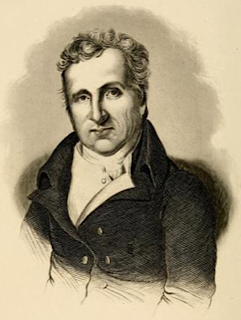
Barrington is born in 1756 or 1757 in Knapton, Abbeyleix, Queen’s County (now County Laois), the third son of John Barrington, an impoverished Protestantgentleman landowner in Queens’s County and his wife Sibella French of Peterswell, County Galway. He is raised and schooled by his grandparents in Dublin and enters Trinity College Dublin (TCD) in 1773, aged 16, but leaves TCD without a degree.
Barrington joins the Irish Volunteers and supports the Irish Patriot Party in the early 1780s. His father raises and commands two Corps: the Cullenagh Rangers and the Ballyroan Light Infantry.
Barrington’s elder brother commands both the Kilkenny Horse and the Durrow Light Dragoons. Through his correspondence with General Hunt Walsh, Barrington’s father secures him a commission in Walsh’s regiment. Upon learning that the regiment is to be sent to America to fight in the American Revolution, and fearful of dying on some foreign battlefield, he writes to Walsh asking him to present the commission to another candidate instead, claiming that he himself is too tender to be of any real use. His fears prove well founded when his replacement, the only child of one of Walsh’s friends, is killed in his first engagement.
Barrington is called to the Irish bar in 1788 and in 1789 he marries Catherine, daughter of Dublin mercer, Edward Grogan. They ultimately have seven children. The following year he enters by the purchase of the seat the pre-1801 Parliament of Ireland as MP for Tuam. He accepts a sinecure post in 1793 at the Dublin customhouse worth £1,000 p.a. generally supporting Henry Grattan and he takes silk the same year. He is a member of the Kildare Street Club in Dublin. Appointed an Admiralty court judge in 1798, he re-enters parliament the same year as member for Clogher and votes against the Act of Union in 1799–1800, rejecting John FitzGibbon, 1st Earl of Clare‘s offer of the solicitor-generalship in 1799. In 1802, he unsuccessfully contests a seat for Dublin City in the Parliament of the United Kingdom.
Barrington’s comments on the Act of Union has a continuing resonance with the Young Ireland, Fenian and Irish Parliamentary Party movements, which hope to re-establish “Grattan’s Parliament” in some way. In particular, his Rise and Fall of the Irish Nation (1833) provides the basis for this romantic idealisation of Grattan’s Parliament adopted by the Irish Parliamentary Party from the 1880s.
Appointed an Admiralty court judge in 1798 at a salary of £500, Barrington finds there is little work to be done and his lack of a degree restricts other opportunities to support extravagant tastes. His award of a knighthood in 1807 brings no increased income. His court orders the sale of two derelict vessels and he gives instructions that the proceeds are to go to his own bank account. In 1810 or 1811 he takes his wife and family to England and from that time on his work in Ireland is carried out by surrogates. Still retaining his judgeship and salary, he moves to France in 1814 to escape his creditors and never returns to Ireland.
In 1828, commissioners learn of Barrington’s financial irregularities. He crosses the channel to London and protests that he is innocent but does not answer the charges based on the documentary evidence produced by the commissioners. In 1830, a parliamentary commission recommends that he be removed from office, finding misappropriations of court funds in 1805, 1806 and 1810. Pursuant to a provision of the Act of Settlement 1701, which seeks to protect the independence of the judiciary, both Houses of the Parliament of the United Kingdom vote for an Address to King William IV praying for his removal, and the King duly dismisses Barrington from office. By then, Barrington’s first 1827 volume of memoirs has sold successfully, and they are republished and expanded. He is the first judge removed from office under the Act of Settlement, and to this day, is the only judge in the United Kingdom to be so removed.
According to one of Barrington’s sometimes spurious personal memoirs, on March 20, 1780, he travels to Donnybrook, Dublin, to duel with Richard Daly. Daly has fought 16 duels in three years – three with swords and thirteen with pistols. Remarkably, he, and his opponents, have always escaped serious injury. Barrington has no pistols so he and his second, Richard Crosbie, spend the previous night constructing a pair “from old locks, stocks and barrels.” At Donnybrook, Daly’s second, Jack Patterson, a nephew of the Chief Justice, approaches Crosbie, explains that it is all a mistake and asks that the two shake hands. Barrington is in favour, but Crosbie has none of it. Taking out a duelling handbook, he points to rule No.7 – “No apology can be received after the parties meet, without a fire.”
Taking up their positions, Barrington loses no time in pressing the trigger and Daly staggers back, puts his hand to his chest, and cries, “I’m hit, Sir.” The ball does not penetrate but does drive part of a brooch slightly into his breastbone. Barrington only then thinks to inquire why the duel is even taking place. This time the rule book notes: “If a party challenged accepts the challenge without asking the reason for it, the challenger is never bound to divulge it afterwards.”
Barrington is most notable today for his memoirs which include scathing but humorous thumbnail portraits of contemporary Irish lawyers, judges and politicians during the last years of the Protestant Ascendancy. Personal sketches also includes vignettes on Irish people from every background. His works are reprinted with frequent additions and renamings.
Since his death, Barrington’s work has been quoted by a wide selection of editors, primarily following two themes: the political drama surrounding the Act of Union and the colourful nature of life in 1700s Ireland.
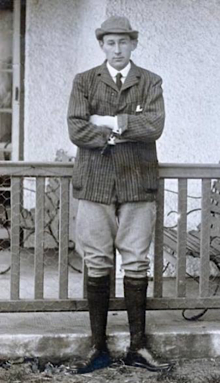
Moore is the eldest son of Queen Victoria‘s honorary physician in Ireland, Dr. William Moore of Rosnashane, Ballymoney, and Sidney Blanche Fuller. His ancestors came to Ulster during the Plantation of Ulster, settling at Ballymoney, at which time they were Quakers. The Moore Lodge estate is inherited from a relative. The family owns several other houses: Moore’s Grove and Moore’s Fort. He goes on to become a Deputy Lieutenant for County Antrim and a Justice of the Peace.
In 1903, Moore is one of the first landowners of Ireland to sell off their estates under the land acts. By the early 1920s he owns a Belfastpied-à-terre called “Glassnabreedon,” in the village of Whitehouse, four miles north of Belfast. This house is once owned by the son of Nicholas Grimshaw, Ireland’s first cotton pioneer.
Moore becomes a member of the General Synod of the Church of Ireland and is a founder member of the Ulster Council. He is a passionate Orangeman: his vehemence in defending Ulster’s right to oppose Irish Home Rule is said to alarm even those who share his views. Speaking in England on March 10, 1913, he makes his feelings clear on the possibility of Irish Home Rule: “I have no doubt, if Home Rule is carried, its baptism in Ireland will be a baptism in blood.” He shows little respect for English politicians, and has nothing but contempt for Southern Unionists. The eventual political settlement in 1921 meets with his approval.
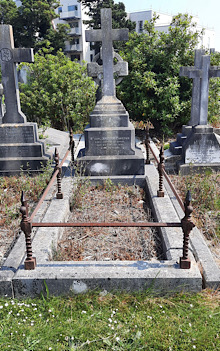
Moore dies at his home, Moore Lodge, in Ballymoney on November 28, 1944, less than a week after his 80th birthday. He is buried in the family burial ground, “Lamb’s Fold,” two days later.
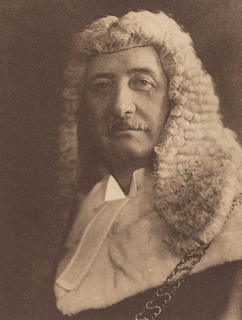
Babington is called to the Irish Bar in 1900. He briefly lectures in Equity at King’s Inns, and it is during this time, in 1910, that he re-arranges and re-writes R.E. Osborne’s Jurisdiction and Practice of County Courts in Ireland in Equity and Probate Matters. He takes silk in 1917.
In 1947, Babington chairs the Babington Agricultural Enquiry Committee, named in his honour, which is established in 1943 to examine agriculture in Northern Ireland. The committee’s first recommendation under Babington’s leadership is that Northern Ireland should direct all its energies to the production of livestock and livestock products and to their efficient processing and marketing.
Babington retires from the judiciary in 1949, taking up the chairmanship of the Northern Ireland Transport Tribunal, which exists until 1967, established under the Ulster Transport Act – promoting a car-centred transport policy – and which is largely responsible for the closure of the Belfast and County Down Railway. He endorses the closure on financial grounds and is at cross purposes with his co-chair, Dr. James Beddy, who advises against the closure, citing the disruption of life in the border region between the north and the south as his primary reason in addition to financial grounds.
Babington also chairs a government inquiry into the licensing of clubs, the proceeds of which results in new regulatory legislation at Stormont. While Attorney General, he is a proponent of renaming Northern Ireland as “Ulster.”
Babington is critical of the newly proposed Irish constitution, in which the name of the Irish state is changed to “Ireland,” laying claim to jurisdiction over Northern Ireland.
Michael McDunphy, Secretary to the President of Ireland, then Douglas Hyde, recalls Ernest Alton‘s correspondence with Babington on the question of Irish unity, in which Alton and Babington are revealed to be at cross purposes. The discussion is used as an example by Brian Murphy, in Forgotten Patriot: Douglas Hyde and the Foundation of the Irish Presidency, as an example of the office of the Irish President becoming embroiled in an initiative involving Trinity College Dublin and a senior Northern Ireland legal figure, namely Babington.
Babington writes to Alton, then Provost of Trinity College, Dublin, expressing his view that, as Murphy summarises, “… Severance between the two parts of Ireland could not continue, that it was the duty of all Irishmen to work for early unification and that in his opinion Trinity College was a very appropriate place in which the first move should be made.” When Alton arrives to meet with Hyde, it emerges, after conversing with Hyde’s secretary McDunphy, that he and Babington are at cross purposes. “It soon became clear that the united Ireland contemplated by Mr. [sic] Justice Babington of the Northern Ireland Judiciary was one within the framework of the British Commonwealth of Nations, involving recognition of the King of England as the Supreme Head, or as Dr. Alton put it, the symbol of unity of the whole system,” writes McDunphy.
Babington is a keen golfer. He is an international golfer from 1903 to 1913, during which he is runner-up in the Irish Amateur Golf Championships in 1909 and one of the Irish representatives at an international match in 1913. The Babington Room in the Royal Portrush Golf Club is named after him, as is the 18th hole on the course as a result of the key role he plays in shaping its history.
Babington dies at the age of 94 on April 10, 1972 at his home, Creevagh, Portrush, County Antrim.
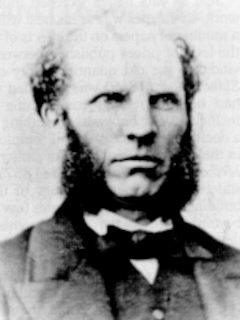
Christian is considered one of the best Irish lawyers of his time, but as a judge, he regularly courts controversy. His bitter and sarcastic temper and open contempt for most of his colleagues leads to frequent clashes both in Court and in the Press. Though he is rebuked for misconduct several times by the House of Commons, no serious thought is given to removing him from office.
Christian’s early years at the Bar are not successful, and he admits to being near to despair at times about his prospects. His practice lays in the Court of Chancery, with procedures that are extremely complex and he finds at first almost unintelligible. Gradually he masters the intricacies of Chancery practice becoming a leader of the Bar, and took silk in 1841. It is said that his expertise in Chancery procedures leave even the Lord Chancellor himself quite unable to argue with him.
Christian is appointed Law Adviser to the Lord Lieutenant of Ireland, an influential post which involves assisting the Attorney-General and Solicitor-General in advising the Crown in 1850, but resigns after only a few months on the grounds that it interferes with his private practice. He is appointed Third Sergeant later the same year but resigns in 1855, allegedly because he is disappointed at not receiving further promotion. Promotion does in time come his way. He is appointed Solicitor-General the following year and a judge of the Court of Common Pleas in 1858. He is unusual in having no strong political loyalty; it is said that his political allegiance is known only to himself.
As a judge of the Court of Common Pleas, Christian gets on well with his colleagues, and any dissenting judgements he writes are short and courteous. It is after his appointment as a Lord Justice of Appeal in Chancery in 1867 that his behaviour begins to attract unfavourable comment, as he goes out of his way to court controversy on a wide variety of topics.
His criticisms of legal rulings and arguments are invariably delivered in the form of a personal attack. Such exchanges are frequently continued through the letters page of The Times. Conservative in politics, he objects to the appointment of Thomas O’Hagan as Lord Chancellor in December 1868, dismissing him as a liberal “political necessity.” He goes to great lengths to point out legal flaws in the Landlord and Tenant (Ireland) Act 187, to the great annoyance of the Prime Minister, William Ewart Gladstone. His final public diatribe comes in 1877 when he launches an attack on the quality of law reporting, dismissing the contents of the Irish Reports as “a mass of utterly worthless rubbish.” He is vilified in the legal press and is the subject of cartoons in Dublin satirical journals. Pleading deafness, he retires in December 1878.
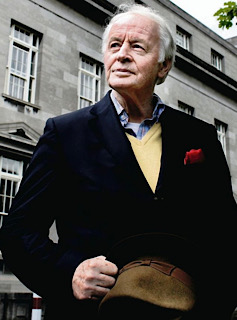
O’Connor is a well-known intellectual figure in contemporary Irish affairs and expresses strong opinions against censorship and the war on drugs. He contributes a regular poetry column to the Irish daily, the Evening Herald, also writes a column for the Sunday Mirror and a sporting column for TheSunday Times, as well as broadcasting on RTÉ.
O’Connor is also known for the autobiographical The Ulick O’Connor Diaries 1970-1981: A Cavalier Irishman (2001), which details his encounters with well-known Irish and international figures, ranging from political (Jack Lynch and Paddy Devlin) to the artistic (Christy Brown and Peter Sellers). It also documents the progress of the Northern Ireland peace process during the same time, and the progress of the Northern Ireland Assembly. Although he travels extensively, he lives in his parental home in Dublin’s Rathgar. He is a member of Aosdána.
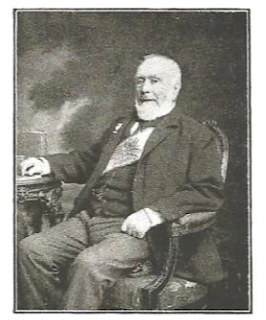
He marries firstly Mary Halloran of Cloyne, County Cork, in 1845. She dies in 1901. In the year of his retirement, he remarries Florence Henrietta Gore, widow of Edward Croker. He has no children. James Joyce remarks in Ulysses that his second marriage at the age of 85 infuriates his nephew, who had been waiting patiently for years to inherit his money.
Despite his many years of service on the Bench, Chatterton does not seem to be highly regarded as a judge. On his retirement the Bar pays tribute to his good qualities but adds several qualifications: “there might have been on the Bench lawyers more profound, reasoners more acute…” In his first decade on the Bench, Chatterton has to endure the continual denigration of Jonathan Christian, the Lord Justice of Appeal in Chancery. Christian is notoriously bitter-tongued, and while he despises most of his colleagues, he seems to have a particular dislike of Chatterton. He regularly votes on appeal to overturn his judgments, and frequently adds personal insults. Nor does he confine his attacks to the courtroom: there is controversy in 1870 when remarks of Christian that Chatterton is “lazy, stupid, conceited and so incompetent that he ought to be pensioned off” find their way into The Irish Times. The hint about pensioning off Chatterton is not taken up, no doubt because he enjoys the confidence of the Lord Chancellor of Ireland, Thomas O’Hagan, 1st Baron O’Hagan, who is also on bad terms with Christian. In an appeal from Chatterton in 1873, the two appeal judges clash publicly, with O’Hagan reprimanding Christian for insulting a judge who is not there to defend himself.
Chatterton becomes involved in controversy in 1885, over the first attempt to rename Sackville Street to O’Connell Street. Dublin Corporation votes for the name change, but it arouses considerable objections from local residents, one of whom seeks an injunction. Chatterton grants the injunction on the ground that the corporation has exceeded its statutory powers. Rather unwisely, he also attacks the merits of the decision, accusing the Corporation of “sentimental notions.” The corporation is angered by both the decision and the criticisms: while it may have been a coincidence, the fact that Temple Street is briefly renamed Chatterton Street is interpreted by some as an insult to the judge, since the street is much frequented by prostitutes. The controversy is short-lived as the corporation is granted the necessary statutory powers in 1890, and the new name becomes official in 1924, by which time it has gained popular acceptance.
Cairnes is born on December 26, 1823, at Castlebellingham, County Louth, the son of William Elliott Cairnes (1787–1863) of Stameen, near Drogheda, and Marianne Woolsey, whose mother is the sister of Sir William Bellingham, 1st Baronet of Castlebellingham. William decides upon a business career, against the wishes of his mother, Catherine Moore of Moore Hall, Killinchy, and becomes a partner in the Woolsey Brewery at Castlebellingham. In 1825, he starts on his own account in Drogheda, making the Drogheda Brewery an unqualified success. He is remembered for his great business capacity and for the deep interest he takes in charity.
After leaving school, Cairnes spends some years in the counting house of his father at Drogheda. His tastes, however, lay altogether in the direction of study, and he is permitted to enter Trinity College Dublin, where he takes the degree of BA in 1848, and six years later that of MA. After passing through the curriculum of Arts, he engages in the study of Law and is called to the Irish bar. But he lacks a desire to pursue the legal profession, and over some ensuing years, he devotes himself to writing in various publications about social and economic questions and treatises that relate to Ireland. He focuses mostly on political economy, which he studies thoroughly.
While residing in Dublin, Cairnes makes the acquaintance of the Archbishop of DublinRichard Whately, who conceives a very high respect for Cairnes’ character and abilities. In 1856, a vacancy occurs in the chair of political economy at Dublin, founded by Whately, and Cairnes receives the appointment. In accordance with the regulations of the foundation, the lectures of his first year’s course are published. The book appears in 1857 with the title Character and Logical Method of Political Economy. It follows up on and expands John Stuart Mill‘s treatment in the Essays on some Unsettled Questions in Political Economy and forms an admirable introduction to the study of economics as a science. In it the author’s peculiar powers of thought and expression are displayed to the best advantage. Logical exactness, precision of language, and firm grasp of the true nature of economic facts, are the qualities characteristic of this as of all his other works. If the book had done nothing more, it would still have conferred inestimable benefit on political economists by its clear exposition of the true nature and meaning of the ambiguous term law. To the view of the province and method of political economy expounded in this early work the author always remains true, and several of his later essays, such as those on Political Economy and Land, Political Economy and Laissez-Faire, are but reiterations of the same doctrine. His next contribution to economical science is a series of articles on the gold question, published partly in Fraser’s Magazine, in which the probable consequences of the increased supply of gold attendant on the Australian and Californian gold discoveries are analysed with great skill and ability. And a critical article on Michel Chevalier‘s work, On the Probable Fall in the Value of Gold, appears in the Edinburgh Review for July 1860.
In 1861, Cairnes is appointed to the professorship of jurisprudence and political economy in Queens College Galway, and in the following year he publishes his admirable work The Slave Power, one of the finest specimens of applied economic philosophy. The inherent disadvantages of the employment of slave labour are exposed with great fullness and ability, and the conclusions arrived at have taken their place among the recognised doctrines of political economy. The opinions expressed by Cairnes as to the probable issue of American Civil War are largely verified by the actual course of events, and the appearance of the book has a marked influence on the attitude taken by serious political thinkers in England towards the Confederate States of America.
During the remainder of his residence at Galway, Cairnes publishes nothing beyond some fragments and pamphlets, mainly upon Irish questions. The most valuable of these papers are the series devoted to the consideration of university education. His health, at no time very good, is still further weakened in 1865 by a fall from his horse. He is ever afterwards incapacitated from active exertion and is constantly liable to have his work interfered with by attacks of illness.
In 1866, Cairnes is appointed professor of political economy in University College, London. He is compelled to spend the session 1868–1869 in Italy, but on his return continues to lecture until 1872. During his last session he conducts a mixed class, ladies being admitted to his lectures. His health soon renders it impossible for him to discharge his public duties. He resigns his post in 1872 and retires with the honorary title of professor emeritus of political economy. In 1873 his own university confers on him the degree of LL.D.
Cairnes dies at the age of 51 at Blackheath, London, England, on July 8, 1875.
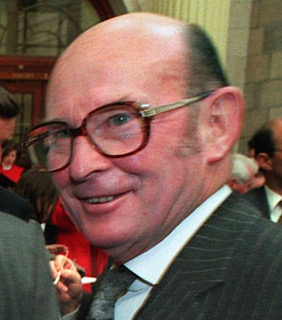
Lynch is called to the bar in 1949, and becomes a senior counsel in 1970. His practice is centered on the Midland circuit.
Lynch becomes a judge of the High Court in 1984. In December 1984, he is appointed the sole member of the tribunal into the Kerry Babies case. He is among three judges who sit in a divisional High Court which hears an unsuccessful challenge by Des Hanafin to result of the 1995 divorce referendum. He hears the High Court hearing of Bula Ltd v Tara Mines Ltd (No 6) in 1996 which runs for 277 days.
Lynch is appointed to the Supreme Court of Ireland in April 1996. He is delayed from first sitting on the court as the Bula case has not yet completed. He retires in December 1999.
Lynch is married to Bernadette, with whom he has five children. He dies at the age of 85 on October 31, 2013, in a nursing home near Croom, County Limerick.
MacCarthy is born in Lower O’Connell Street, Dublin, on May 26, 1817, and educated there and at St. Patrick’s College, Maynooth. He acquires an intimate knowledge of Spanish from a learned priest, who had spent much time in Spain, which he is later to turn to good advantage. In April 1834, before turning seventeen, he contributes his first verses to the Dublin Satirist. He is one of a coterie of writers whose works appear in The Nation, which is started by Charles Gavan Duffy in 1842. Writing under the pseudonym “Desmond,” most of MacCarthy’s patriotic verse appears in this organ.
In 1846, MacCarthy is called to the Irish bar but never practises. In the same year he edits The Poets and Dramatists of Ireland, which he prefaces with an essay on the early history and religion of his countrymen. About this time, he also edits The Book of Irish Ballads (by various authors), with an introductory essay on ballad poetry in general. His Ballads, Poems, and Lyrics appears in 1850, original and translated. His attention is first directed to Pedro Calderón de la Barca by a passage in one of Percy Bysshe Shelley‘s essays, and from then on, the interpretation of the “Spanish Shakespeare” claims the greater part of his attention.
The first volume of MacCarthy’s translations, containing six plays, appears in 1853, and is followed by further instalments in 1861, 1867, 1870, and 1873. His version of Daybreak in Capacabana is completed only a few months before his death.
Until 1864, MacCarthy resides principally on Killiney Hill, overlooking Dublin Bay. The delicate health of some members of his family then renders a change of climate imperative, and he pays a prolonged visit to continental Europe. On his return, he settles in London in 1871, where he publishes – in addition to his translations – Shelley’s Early Life, which contains an account of that poet’s visit to Dublin in 1812.
MacCarthy’s poems are distinguished by a sense of harmony and sympathy with natural beauty. Such poems as “The Bridal of the Year,” “Summer Longings” (alias “Waiting for the May”), and his long narrative poem, “The Voyage of St. Brendan,” are among his most enduring works. The last-mentioned, which paraphrases the “Ave Maria Stella” as the evening song of the sailors, is also marked by the earnest religious feeling which mark its author throughout life. But it is by his version of Calderon that he is considered to have won a permanent place in English letters. His success is sufficiently testified by George Ticknor, who declares in his History of Spanish Literature that MacCarthy “has succeeded in giving a faithful idea of what is grandest and most effective in [Calderon’s] genius… to a degree which I had previously thought impossible. Nothing, I think, in the English language will give us so true an impression of what is most characteristic of the Spanish drama, and of Spanish poetry generally.”
Costello is born on June 20, 1891, in Fairview, Dublin, the younger son of John Costello senior, a civil servant, and Rose Callaghan. He is educated at St. Joseph’s, Fairview, and then moves to O’Connell School, for senior classes, and later attends University College Dublin (UCD), where he graduates with a degree in modern languages and law. He studies at King’s Inns to become a barrister, winning the Victoria Prize there in 1913 and 1914. He is called to the Irish Bar in 1914, and practises as a barrister until 1922.
In 1922, Costello joins the staff at the office of the Attorney General in the newly established Irish Free State. Three years later he is called to the inner bar, and the following year, 1926, he becomes Attorney General of Ireland, upon the formation of the Cumann na nGaedheal government, led by W. T. Cosgrave. While serving in this position he represents the Free State at Imperial Conferences and League of Nations meetings.
Costello is also elected a Bencher of the Honourable Society of King’s Inns. He loses his position as Attorney General of Ireland when Fianna Fáil comes to power in 1932. The following year, however, he is elected to Dáil Éireann as a Cumann na nGaedheal TD. Cumann na nGaedheal soon merges with other parties to form Fine Gael.
During the Dáil debate on the Emergency Powers Act 1939, Costello is highly critical of the Act’s arrogation of powers, stating that “We are asked not merely to give a blank cheque, but to give an uncrossed cheque to the Government.” He loses his seat at the 1943 Irish general election but regains it when Éamon de Valera calls a snap election in 1944. From 1944 to 1948, he is the Fine Gael front-bench Spokesman on External Affairs.
In 1948, Fianna Fáil has been in power for sixteen consecutive years and has been blamed for a downturn in the economy following World War II. The 1948 Irish general election results show Fianna Fáil short of a majority, but still by far the largest party, with twice as many seats as the nearest rival, Fine Gael. It appears that Fianna Fáil is headed for a seventh term in government. However, the other parties in the Dáil realise that between them, they have only one seat fewer than Fianna Fáil, and if they band together, they would be able to form a government with the support of seven Independent deputies. Fine Gael, the Labour Party, the National Labour Party, Clann na Poblachta and Clann na Talmhan join to form the first inter-partygovernment in the history of the Irish state.
While it looks as if cooperation between these parties will not be feasible, a shared opposition to Fianna Fáil and Éamon de Valera overcomes all other difficulties, and the coalition government is formed.
Since Fine Gael is the largest party in the government, it has the task of providing a suitable candidate for Taoiseach. Naturally, it is assumed that its leader, Richard Mulcahy, will be offered the post. However, he is an unacceptable choice to Clann na Poblachta and its deeply republican leader, Seán MacBride. This is due to Mulcahy’s record during the Irish Civil War. Instead, Fine Gael and Clann na Poblachta agree on Costello as a compromise candidate. Costello had never held a ministerial position nor was he involved in the Civil War. When told by Mulcahy of his nomination, Costello is appalled, content with his life as a barrister and as a part-time politician. He is persuaded to accept the nomination as Taoiseach by close non-political friends.
During the campaign, Clann na Poblachta had promised to repeal the Executive Authority (External Relations) Act 1936 but does not make an issue of this when the government is being formed. However, Costello and his Tánaiste, William Norton of the Labour Party, also dislike the act. During the summer of 1948, the cabinet discusses repealing the act, however, no firm decision is made.
In September 1948, Costello is on an official visit to Canada when a reporter asks him about the possibility of Ireland leaving the British Commonwealth. For the first time, he declares publicly that the Irish government is indeed going to repeal the External Relations Act and declare Ireland a republic. It has been suggested that this is a reaction to offence caused by the Governor General of Canada at the time, Harold Alexander, 1st Earl Alexander of Tunis, who is of Northern Irish descent and who allegedly arranges to have placed symbols of Northern Ireland in front of Costello at an official dinner. Costello makes no mention of these aspects on the second reading of the Republic of Ireland Bill on November 24 and, in his memoirs, claims that Alexander’s behaviour had in fact been perfectly civil and could have had no bearing on a decision which had already been made.
The news takes the Government of the United Kingdom and even some of Costello’s ministers by surprise. The former had not been consulted and following the declaration of the Republic in 1949, the UK passes the Ireland Act that year. This recognises the Republic of Ireland and guarantees the position of Northern Ireland within the United Kingdom for so long as a majority there want to remain in the United Kingdom. It also grants full rights to any citizens of the Republic living in the United Kingdom. Ireland leaves the Commonwealth on April 18, 1949, when The Republic of Ireland Act 1948 comes into force. Frederick Henry Boland, Secretary of the Department of External Affairs, says caustically that the affair demonstrates that “the Taoiseach has as much notion of diplomacy as I have of astrology.” The British envoy, John Maffey, 1st Baron Rugby, is equally critical of what he calls a “slipshod and amateur” move.
Many nationalists now see partition as the last obstacle on the road to total national independence. Costello tables a motion of protest against partition on May 10, 1949, without result.
In 1950, the independent-minded Minister for Health, Noël Browne, introduces the Mother and Child Scheme. The scheme would provide mothers with free maternity treatment and their children with free medical care up to the age of sixteen, which is the normal provision in other parts of Europe at that time. The bill is opposed by doctors, who fear a loss of income, and Roman Catholic bishops, who oppose the lack of means testing envisaged and fear the scheme could lead to birth control and abortion. The cabinet is divided over the issue, many feeling that the state cannot afford such a scheme priced at IR£2,000,000 annually. Costello and others in the cabinet make it clear that in the face of such opposition they will not support the Minister. Browne resigns from the government on April 11, 1951, and the scheme is dropped. He immediately publishes his correspondence with Costello and the bishops, something which had hitherto not been done. Derivatives of the Mother and Child Scheme are introduced in Public Health Acts of 1954, 1957 and 1970.
The Costello government has a number of noteworthy achievements. A new record is set in housebuilding, the Industrial Development Authority and Córas Tráchtála are established, and the Minister for Health, Noel Browne, with the then new Streptomycin, bring about an advance in the treatment of tuberculosis. Ireland also joins a number of organisations such as the Organization for European Economic Co-operation and the Council of Europe. However, the government refuses to join NATO, allegedly because the British remain in Northern Ireland. The scheme to supply electricity to even the remotest parts of Ireland is also accelerated.
While the “Mother and Child” incident does destabilise the government to some extent, it does not lead to its collapse as is generally thought. The government continues; however, prices are rising, a balance of payments crisis is looming, and two TDs withdraw their support for the government. These incidents add to the pressure on Costello and so he decides to call a general election for June 1951. The result is inconclusive but Fianna Fáil returns to power. Costello resigns as Taoiseach. It is at this election that his son Declan is elected to the Dáil.
Over the next three years while Fianna Fáil is in power a dual-leadership role of Fine Gael is taking place. While Richard Mulcahy is the leader of the party, Costello, who has proved his skill as Taoiseach, remains as parliamentary leader of the party. He resumes his practice at the Bar. In what is arguably his most celebrated case, the successful defence of The Leader against a libel action brought by the poet Patrick Kavanagh, dates from this period. Kavanagh generously praises Costello’s forensic skill, and the two men become friends.
At the 1954 Irish general election Fianna Fáil loses power. A campaign dominated by economic issues results in a Fine Gael-Labour Party-Clann na Talmhan government coming to power. Costello is elected Taoiseach for the second time.
The government can do little to change the ailing nature of Ireland’s economy, with emigration and unemployment remaining high, and external problems such as the Suez Crisis compounding the difficulty. Measures to expand the Irish economy such as export profits tax relief introduced in 1956 would take years have sizable impact. Costello’s government does have some success with Ireland becoming a member of the United Nations in 1955, and a highly successful visit to the United States in 1956, which begins the custom by which the Taoiseach visits the White House each Saint Patrick’s Day to present the U.S. President with a bowl of shamrock. Although the government has a comfortable majority and seems set for a full term in office, a resumption of Irish Republican Army (IRA) activity in Northern Ireland and Great Britain causes internal strains. The government takes strong action against the republicans.
In spite of supporting the government from the backbenches, Seán MacBride, the leader of Clann na Poblachta, tables a motion of no confidence, based on the weakening state of the economy and in opposition to the government’s stance on the IRA. Fianna Fáil also tables its own motion of no confidence, and rather than face almost certain defeat, Costello again asks PresidentSeán T. O’Kelly to dissolve the Oireachtas. The general election which follows in 1957 gives Fianna Fáil an overall majority and starts another sixteen years of unbroken rule for the party. Some of his colleagues questioned the wisdom of his decision to call an election. The view is expressed that he was tired of politics and depressed by his wife’s sudden death the previous year.
Following the defeat of his government, Costello returns to the bar. In 1959, when Richard Mulcahy resigns the leadership of Fine Gael to James Dillon, he retires to the backbenches. He could have become party leader had he been willing to act in a full-time capacity. He remains as a TD until 1969, when he retires from politics, being succeeded as Fine Gael TD for Dublin South-East by Garret FitzGerald, who himself goes onto to become Taoiseach in a Fine Gael-led government.
During his career, Costello is presented with a number of awards from many universities in the United States. He is also a member of the Royal Irish Academy from 1948. In March 1975, he is made a freeman of the city of Dublin, along with his old political opponent Éamon de Valera. He practises at the bar until a short time before his death at the age of 84, in Ranelagh, Dublin, on January 5, 1976. He is buried at Dean’s Grange Cemetery in Dublin.


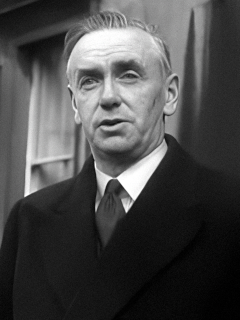
 seamus dubhghaill