Mitchel is born in Camnish, near Dungiven, County Derry, on November 3, 1815, the son of a Presbyterian minister. At the age of four, he is sent to a classical school, run by an old minister named Moor, nicknamed “Gospel Moor” by the students. He reads books from a very early age. When a little over five years old, he is introduced to Latin grammar by his teacher and makes quick progress. In 1830, not yet 15 years old, he enters Trinity College, Dublin (TCD) and obtains a law degree in 1834.
In the spring of 1836, Mitchel meets Jane Verner, the only daughter of Captain James Verner. Though both families are opposed to the relationship, they become engaged in the autumn and are married on February 3, 1837, by the Rev. David Babington in Drumcree Church, the parish church of Drumcree.
Mitchel works in a law office in Banbridge, County Down, where he eventually comes into conflict with the local Orange Order. He meets Thomas Davis and Charles Gavan Duffy during visits to Dublin. He joins the Young Ireland movement and begins to write for The Nation. Deeply affected by the misery and death caused by the Great Famine, he becomes convinced that nothing will ever come of the constitutional efforts to gain Irish freedom. He then forms his own paper, United Irishmen, to advocate passive resistance by Ireland’s starving masses.
In May 1848, the British tire of Mitchel’s open defiance. Ever the legal innovators in Ireland, they invent a crime especially for the Young Irelanders – felony-treason. They arrest him for violating this new law and close down his paper. A rigged jury convicts him, and he is deported first to Bermuda and then to Australia. However, in June 1853, he escapes to the United States.
Mitchel works as a journalist in New York City and then moves to the South. When the American Civil War erupts, he is a strong supporter of the Southern cause, seeing parallels with the position of the Irish. His family fully backs his commitment to the Southern cause. He loses two sons in the war, one at the Battle of Gettysburg in 1863 and another at the Battle of Fort Sumter in 1864, and another son loses an arm. His outspoken support of the Confederacy causes him to be jailed for a time at Fort Monroe, where one of his fellow prisoners is Confederate PresidentJefferson Davis.
In 1874, the British allow Mitchel to return to Ireland and in 1875 he is elected in a by-election to be a member of the Parliament of the United Kingdom representing the Tipperary constituency. However, his election is invalidated on the grounds that he is a convicted felon. He contests the seat again in the resulting by-election and is again elected, this time with an increased vote.
Unfortunately, Mitchel, one of the staunchest enemies to English rule of Ireland in history, dies in Newry on March 20, 1875. He is buried in his parents’ grave in the unitarian cemetery, High Street, Newry, where a monument is later erected by his widow. He is also commemorated by a statue in Newry. Thirty-eight years later, his grandson, John Purroy Mitchel, is elected Mayor of New York City.
In June 1846, Sir Robert Peel‘s Tory Ministry falls, and the Whigs under Lord John Russell comes to power. Daniel O’Connell, founder of the Repeal Association which campaigns for a repeal of the Acts of Union 1800 between Great Britain and Ireland, simultaneously attempts to move the Association into supporting the Russell administration and English Liberalism.
The intention is that Repeal agitation is to be damped down in return for a profuse distribution of patronage through Conciliation Hall, home of the Repeal Association. On June 15, 1846, Thomas Francis Meagher denounces English Liberalism in Ireland saying that there is a suspicion that the national cause of Repeal will be sacrificed to the Whig government and that the people who are striving for freedom will be “purchased back into factious vassalage.” Meagher and the other “Young Irelanders” (an epithet of opprobrium used by O’Connell to describe the young men of The Nation newspaper), as active Repealers, vehemently denounce in Conciliation Hall any movement toward English political parties, be they Whig or Tory, so long as Repeal is denied.
The “Tail” as the “corrupt gang of politicians who fawned on O’Connell” are named, and who hope to gain from the government places decide that the Young Irelanders must be driven from the Repeal Association. The Young Irelanders are to be presented as revolutionaries, factionists, infidels and secret enemies of the Church. For this purpose, resolutions are introduced to the Repeal Association on July 13 which declare that under no circumstances is a nation justified in asserting its liberties by force of arms. The Young Irelanders, as members of the association, have never advocated the use of physical force to advance the cause of repeal and oppose any such policy. Known as the “Peace Resolutions,” they declare that physical force is immoral under any circumstances to obtain national rights. Meagher agrees that only moral and peaceful means should be adopted by the Association, but if it is determined that Repeal cannot be carried by those means, a no less honourable one he would adopt though it be more perilous. The resolutions are again raised on July 28 in the Association and Meagher then delivers his famous “Sword Speech.”
Addressing the Peace Resolutions, Meagher holds that there is no necessity for them. Under the existing circumstances of the country, any provocation to arms will be senseless and wicked. He dissents from the Resolutions because by assenting to them he would pledge himself to the unqualified repudiation of physical force “in all countries, at all times, and in every circumstance.” There are times when arms will suffice, and when political amelioration calls for “a drop of blood, and many thousand drops of blood.” He then “eloquently defended physical force as an agency in securing national freedom.” Having been at first semi-hostile, Meagher carries the audience to his side and the plot against the Young Irelanders is placed in peril of defeat. Observing this he is interrupted by O’Connell’s son, John, who declares that either he or Meagher must leave the hall. William Smith O’Brien then protests against John O’Connell’s attempt to suppress a legitimate expression of opinion, and leaves with other prominent Young Irelanders, and never returns.
After negotiations for a reunion have failed, the seceders decide to establish a new organisation which is to be called the Irish Confederation. Its founders determine to revive the uncompromising demand for a national Parliament with full legislative and executive powers. They are resolute on a complete prohibition of place-hunting or acceptance of office under the existing Government. They wish to return to the honest policy of the earlier years of the Repeal Association, and are supported by the young men, who have shown their repugnance for the corruption and insincerity of Conciliation Hall by their active sympathy with the seceders. There are extensive indications that many of the previously Unionist class, in both the cities and among land owners, are resentful of the neglect of Irish needs by the British Parliament since the famine began. What they demand is vital legislative action to provide both employment and food, and to prevent all further export of the corn, cattle, pigs and butter which are still leaving the country. On this there is a general consensus of Irish opinion according to Dennis Gwynn, “such as had not been known since before the Act of Union.”
The first meeting of the Irish Confederation takes place in the Rotunda, Dublin, on January 13, 1847. The chairperson for the first meeting is John Shine Lawlor, the honorary secretaries being John Blake Dillon and Charles Gavan Duffy. Duffy is later replaced by Meagher. Ten thousand members are enrolled, but of the gentry there are very few, the middle class stand apart and the Catholic clergy are unfriendly. In view of the poverty of the people, subscriptions are purely voluntary, the founders of the new movement bearing the cost themselves if necessary.
Following mass emigration by Irish people to England, the Irish Confederation then organises there also. There are more than a dozen Confederate Clubs in Liverpool and over 700 members of 16 clubs located in Manchester and Salford.
Mitchel is born in Camnish, near Dungiven, County Derry on November 3, 1815, the son of a Presbyterian minister. At the age of four, he is sent to a classical school, run by an old minister named Moor, nicknamed “Gospel Moor” by the students. He reads books from a very early age. When a little over five years old, he is introduced to Latin grammar by his teacher and makes quick progress. In 1830, not yet 15 years old, he enters Trinity College, Dublin (TCD) and obtains a law degree in 1834.
In the spring of 1836, Mitchel meets Jane Verner, the only daughter of Captain James Verner. Though both families are opposed to the relationship, they become engaged in the autumn and are married on February 3, 1837, by the Rev. David Babington in Drumcree Church, the parish church of Drumcree.
Mitchel works in a law office in Banbridge, County Down, where he eventually comes into conflict with the local Orange Order. He meets Thomas Davis and Charles Gavan Duffy during visits to Dublin. He joins the Young Ireland movement and begins to write for The Nation. Deeply affected by the misery and death caused by the Great Famine, he becomes convinced that nothing will ever come of the constitutional efforts to gain Irish freedom. He then forms his own paper, United Irishman, to advocate passive resistance by Ireland’s starving masses.
In May 1848, the British tire of Mitchel’s open defiance. Ever the legal innovators in Ireland, they invent a crime especially for the Young Irelanders – felony-treason. They arrest him for violating this new law and close down his paper. A rigged jury convicts him, and he is deported first to Bermuda and then to Australia. However, on June 8, 1853, he escapes to the United States.
Mitchel works as a journalist in New York City and then moves to the South. When the American Civil War erupts, he is a strong supporter of the Southern cause, seeing parallels with the position of the Irish. His family fully backs his commitment to the Southern cause. He loses two sons in the war, one at the Battle of Gettysburg in 1863 and another at the Battle of Fort Sumter in 1864, and another son loses an arm. His outspoken support of the Confederacy causes him to be jailed for a time at Fort Monroe, where one of his fellow prisoners is Confederate PresidentJefferson Davis.
In 1874, the British allow Mitchel to return to Ireland and in 1875 he is elected in a by-election to be a member of the Parliament of the United Kingdom representing the Tipperary constituency. However, his election is invalidated on the grounds that he is a convicted felon. He contests the seat again in the resulting by-election and is again elected, this time with an increased vote.
Unfortunately, Mitchel, one of the staunchest enemies to English rule of Ireland in history, dies in Newry on March 20, 1875, and is buried there. Thirty-eight years later, his grandson, John Purroy Mitchel, is elected Mayor of New York City.
MacCarthy is born in Lower O’Connell Street, Dublin, on May 26, 1817, and educated there and at St. Patrick’s College, Maynooth. He acquires an intimate knowledge of Spanish from a learned priest, who had spent much time in Spain, which he is later to turn to good advantage. In April 1834, before turning seventeen, he contributes his first verses to the Dublin Satirist. He is one of a coterie of writers whose works appear in The Nation, which is started by Charles Gavan Duffy in 1842. Writing under the pseudonym “Desmond,” most of MacCarthy’s patriotic verse appears in this organ.
In 1846, MacCarthy is called to the Irish bar but never practises. In the same year he edits The Poets and Dramatists of Ireland, which he prefaces with an essay on the early history and religion of his countrymen. About this time, he also edits The Book of Irish Ballads (by various authors), with an introductory essay on ballad poetry in general. His Ballads, Poems, and Lyrics appears in 1850, original and translated. His attention is first directed to Pedro Calderón de la Barca by a passage in one of Percy Bysshe Shelley‘s essays, and from then on, the interpretation of the “Spanish Shakespeare” claims the greater part of his attention.
The first volume of MacCarthy’s translations, containing six plays, appears in 1853, and is followed by further instalments in 1861, 1867, 1870, and 1873. His version of Daybreak in Capacabana is completed only a few months before his death.
Until 1864, MacCarthy resides principally on Killiney Hill, overlooking Dublin Bay. The delicate health of some members of his family then renders a change of climate imperative, and he pays a prolonged visit to continental Europe. On his return, he settles in London in 1871, where he publishes – in addition to his translations – Shelley’s Early Life, which contains an account of that poet’s visit to Dublin in 1812.
MacCarthy’s poems are distinguished by a sense of harmony and sympathy with natural beauty. Such poems as “The Bridal of the Year,” “Summer Longings” (alias “Waiting for the May”), and his long narrative poem, “The Voyage of St. Brendan,” are among his most enduring works. The last-mentioned, which paraphrases the “Ave Maria Stella” as the evening song of the sailors, is also marked by the earnest religious feeling which mark its author throughout life. But it is by his version of Calderon that he is considered to have won a permanent place in English letters. His success is sufficiently testified by George Ticknor, who declares in his History of Spanish Literature that MacCarthy “has succeeded in giving a faithful idea of what is grandest and most effective in [Calderon’s] genius… to a degree which I had previously thought impossible. Nothing, I think, in the English language will give us so true an impression of what is most characteristic of the Spanish drama, and of Spanish poetry generally.”
Duffy is born in Nice, France, on July 17, 1884, the daughter of the Irish nationalist Sir Charles Gavan Duffy, one of the founders of The Nation and his third wife, Louise (née Hall) from Cheshire, England. Her mother dies when she is four. She is then raised in Nice by her Australian half-sisters from her father’s second marriage. It is a well-to-do and culturally vibrant home where she is exposed to political figures and ideas.
Duffy’s first visit to Ireland is in 1903, at the age of 18, when her father dies and is buried in Glasnevin Cemetery. This is when she first hears Irish spoken. She finds a grammar book in a bookshop and becomes curious. Her father was not an Irish speaker, though her grandmother in the early 1800s was likely fluent.
Duffy spends the years between 1903 and 1907 between France and England. She takes courses through Cusack’s College in London so that she can matriculate.
Duffy decides to continue her studies in Dublin but cannot afford to move until she receives a small inheritance from her grandmother on the Hall side of the family. Once in Ireland in 1907, at the age of 23, she begins her university studies, taking arts. She lives in the Women’s College, Dominican Convent, as women are not allowed to attend lectures in the Royal University of Ireland. She goes occasionally to the Gaeltacht to learn Irish. Graduating in 1911 with a Bachelor of Arts from University College Dublin (UCD), she is one of the first women to do so.
Given the lack of teachers, even without a full qualification, Duffy then teaches in Patrick Pearse‘s St. Ita’s school for girls in Ranelagh. She studies with the Dominicans again in Eccles Street, gaining a Teaching Diploma from Cambridge University.
A supporter of women’s suffrage, Duffy speaks at a mass meeting in Dublin in 1912 in favour of having the Home Rule bill include a section to grant women the vote. She also joins the Irish republican women’s paramilitary organisation Cumann na mBan, as a founding member in April 1914, serving on the provisional committee with Mary Colum, as a co-secretary.
Duffy is aware that being a suffragist and a nationalist are not necessarily the same thing, realising her involvement in Cumann na mBan is in support of nationalism. When St. Ita’s closes due to funding problems in 1912, she takes the opportunity to complete her qualifications. After receiving her Cambridge teacher’s diploma in 1913, she returns to UCD to study for a Master of Arts degree.
Duffy is in fact working on her master’s thesis during the Easter break in 1916 when the rumour comes to her that the Rising has begun in Dublin city centre. She walks to the Rebel headquarters in the GPO where she tells Pearse, one of the leaders, that she does not agree with the violent uprising.
Duffy spends all of Easter week working in the GPO kitchens with other volunteers like Desmond FitzGerald and a couple of captured British soldiers, ensuring the volunteers are cared for. The women in the GPO are given the opportunity to leave under the protection of the Red Cross on the Thursday as the shelling of the building has caused fires, but almost all of them refuse. In the end, she is among the second group of the people to leave the GPO on the Friday, tunnelling through the walls of the buildings to avoid coming under fire.
Duffy’s group makes it to Jervis Street Hospital where they spend the night. The next day, Saturday, Pearse formally surrenders. She heads for Jacob’s Biscuit Factory, another volunteer position, on the morning after the surrender, to see what is happening. There she finds a holdout of volunteers who are unaware of the surrender or that the fighting is over.
After 1916 Duffy is elected to the Cumann na mBan’s executive and in 1918 is one of the signatories to a petition for self-determination for Ireland which is presented to President Woodrow Wilson by Hanna Sheehy-Skeffington. During her time in the GPO, she had collected names of the volunteers and promised to take messages to their families. This possibly influences her in being involved in the National Aid Association and Volunteers Dependants Fund. In the aftermath of the rebellion there are 64 known dead among the volunteers, while 3,430 men and 79 women are arrested. Families need support. These organisations are able to arrange funding from the United States.
In 1917, Duffy co-founds and runs Scoil Bhríde, as a secondary school for girls in Dublin through the medium of Gaelic. It is still in operation as a primary school. Her co-founder is Annie McHugh, who later marries Ernest Blythe. The end of the Rising leads to the Irish War of Independence (1919-21). During this time, she is mostly focused on the school. However, it is raided by the military and Duffy later admits it is in fact used for rebel meetings and to safeguard documents. In October 1920, the Irish leader Michael Collins meets Archbishop Patrick Clune there in secret. In an effort to support the nationwide boycott of the police, the Royal Irish Constabulary (RIC), in 1920, she has a leaflet sent to all branches of Cumann na mBan which states in part that the RIC are the “eyes and ears of the enemy. Let those eyes and ears know no friendship.”
The war ends with the Anglo-Irish Treaty in 1921. The result is the Irish Civil War which lasts until 1923. Duffy is a supporter of the Treaty, which her brother had signed, and as such she leaves Cumann na mBan and joins Cumann na Saoirse, in which she is instrumental in founding as an Irish republican women’s organisation which supports the Pro-Treaty side.
Once the civil war is over, Duffy leaves the political arena and returns to education. She especially needs to focus on funding in the early years of the school. She works with UCD’s Department of Education from 1926, once Scoil Bhríde is recognised as a teacher training school. She publishes educational documents like School Studies in The Appreciation of Art with Elizabeth Aughney and published by UCD in 1932.
Until her retirement, Duffy also lectures on the teaching of French. She retires as principal in 1944.
Recognising the importance of her first-hand experience and with a good political understanding, Duffy records her memories of the events in which she has taken part. In 1949, she gives an account of her life in relation to nationalist activities to the Bureau of Military History. She is involved in a Radio Éireann broadcast in 1956 about the women in the Rising. In 1962, she takes part in the RTÉ TV program Self Portrait broadcast on March 20, 1962. In March 1966 she gives a lecture in UCD to mark the 50th anniversary of the Rising which is published in The Easter rising, 1916, and University College Dublin (1966).
Duffy dies, unmarried, on October 12, 1969, aged 85, and is interred in the family plot in Glasnevin Cemetery.
In 2014, An Post issues a stamp to commemorate the centenary of the founding of Cumann na mBan. In 2016, for the centenary, a documentary is produced, discussing seven of the women, including Duffy, who were involved in the Easter Rising.
Duffy is born on April 12, 1816, in Dublin Street, Monaghan, County Monaghan. Both of his parents die while he is still a child and his uncle, Fr. James Duffy, who is the Catholic parish priest of Castleblayney, becomes his guardian for a number of years. He is educated at St. Malachy’s College in Belfast and is admitted to the Irish Bar in 1845. He becomes a leading figure in Irish literary circles.
In August 1850, Duffy forms the Tenant Right League to bring about reforms in the Irish land system and protect tenants’ rights, and in 1852 is elected to the House of Commons for New Ross. By 1855, the cause of Irish tenants seems more hopeless than ever. Broken in health and spirit, Duffy publishes a farewell address to his constituency, declaring that he has resolved to retire from parliament, as it is no longer possible to accomplish the task for which he has solicited their votes.
In 1871, Duffy leads the opposition to Premier Sir James McCulloch‘s plan to introduce a land tax, on the grounds that it unfairly penalised small farmers. When McCulloch’s government is defeated on this issue, he becomes Premier and Chief Secretary. The majority of the colony is Protestant, and he is accused of favouring Catholics in government appointments. In June 1872, his government is defeated in the Assembly on a confidence motion allegedly motivated by sectarianism.
When Graham Berry becomes Premier in 1877, he makes Duffy Speaker of the Legislative Assembly, a post he holds without much enthusiasm until 1880, when he quits politics and retires to the south of France. Duffy remains interested in both the politics of his adoptive country and of Ireland. He is knighted in 1873 and is made KCMG in 1877.
Duffy spends his last years in Nice and dies at the age of 86 on February 9, 1903, at his home there, 12 Boulevard Victor Hugo. He is buried at Glasnevin Cemetery, Glasnevin, Dublin on March 8. 1903. The length of his career, the breadth of his experience, and his voluminous labours as a chronicler make him an important figure in the history of Ireland and the Irish diaspora in the nineteenth century. He also deserves attention as the most prominent and articulate Ulster catholic nationalist of his time. There are Duffy papers in the Royal Irish Academy and National Library of Ireland.
Sir Rory O’Moore (Irish: Ruaidhrí Ó Mórdha), Irish politician and landowner also known Sir Roger O’Moore or O’More or Sir Roger Moore, dies in obscurity on February 16, 1655. He is most notable for being one of the four principal organizers of the Irish Rebellion of 1641.
O’Moore’s uncle, Rory O’More, Lord of Laois, had fought against the English during the Tudor conquest of Ireland. In 1556, Queen Mary I confiscates the O’Mores’ lands and creates “Queens County” (modern-day County Laois). Over 180 family members, who are peaceful and have taken no part in any rebellion, are murdered with virtually all of the leaders of Laois and Offaly by the English at a feast at Mullaghmast, County Kildare, in 1577. Rory Óg and his wife Maighréad O’Byrne, sister of Fiach MacHugh O’Byrne, are hunted down and killed soon afterwards. This leads to the political downfall of the O’Moore family as their estates are given to English settlers.
Given the causes of the rebellion and the Crown’s weakness during the Bishops’ Wars into 1641, O’Moore plans a bloodless coup to overthrow the English government in Ireland. With Connor Maguire, 2nd Baron of Enniskillen, he plans to seize Dublin Castle, which is held by a small garrison, on October 23, 1641. Allies in Ulster led by Sir Phelim O’Neill are to seize forts and towns there. The leaders are to assume the governing of their own country and with this provision offer allegiance to King Charles. They are betrayed, and the plan is discovered on October 22 and the rising fails in its first objective. O’Neill has some success, and O’Moore quickly succeeds in creating an alliance between the Ulster Gaelic clans and the Old English gentry in Leinster.
In November 1641, the Irish forces besiege Drogheda, and a royalist force comes north from Dublin to oppose them. O’Moore is one of the leaders of the rebel army that intercepts and defeats the relief force at the Battle of Julianstown on November 29.
The Irish historian Charles Gavan Duffy writes: “Then a private gentleman, with no resources beyond his intellect and his courage, this Rory, when Ireland was weakened by defeat and confiscation, and guarded with a jealous care constantly increasing in strictness and severity, conceived the vast design of rescuing the country from England, and even accomplished it; for, in three years, England did not retain a city in Ireland but Dublin and Drogheda, and for eight years the land was possessed and the supreme authority exercised by the Confederation created by O’Moore. History contains no stricter instance of the influence of an individual mind.”
Bishop Michael Comerford writes that after O’Moore’s defeat at the Battle of Kilrush in April 1642 he retires and dies in Kilkenny city in the winter of 1642–43, having co-founded the Irish Catholic Confederation there a few months earlier. However, this ignores his contacts with Inchiquin and Ormonde in 1647–48.
In 1652, O’Moore goes to Inishbofin off the coast of Galway, one of the last Catholic strongholds, but as the parliamentary forces approach, he makes arrangements to flee. Walter Lynch, Bishop of Clonfert, sails in the last ship to leave the island without waiting for O’Moore, who is forced to make his own way. He finally escapes into Ulster but dies in obscurity on February 16, 1655. He is buried at Steryne churchyard, in the parish of Magilligan, County Londonderry.
St. Colman’s Church on the island once bears a tablet with the inscription: “In memory of many valiant Irishmen who were exiled to this Holy Island and in particular Rory O’More a brave chieftain of Leix, who after fighting for Faith and Fatherland, disguised as a fisherman escaped from his island to a place of safety. He died shortly afterwards, a martyr to his Religion and his County, about 1653. He was esteemed and loved by his countrymen, who celebrated his many deeds of valour and kindness in their songs and reverenced his memory, so that it was a common expression among them; ‘God and Our Lady be our help and Rory O’More’.”
The Balyna estate is inherited from Calvagh O’More by Rory’s brother Lewis. Balyna is passed down to Lewis’s last surviving O’More descendant, Letitia, who is also descended from Rory O’More because her grandfather married a second cousin. Letitia marries a Richard Farrell in 1751. This Farrell family henceforth takes the surname More O’Ferrall.
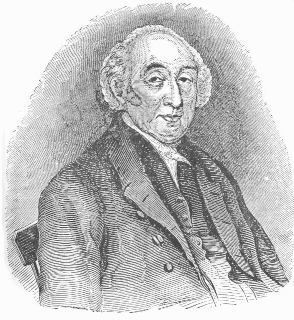
Holmes, the son of parents who are natives of Antrim, County Antrim, and settled in Belfast, is born during a visit by his parents to Dublin in 1765. He enters Trinity College, Dublin in 1782, and graduates B.A. in 1787. He at first devotes himself to medicine, but he soon turns his attention to the law. In 1795, he is called to the bar. He spends a substantial period of his professional life travelling the northeast circuit in Ireland, where he gains a reputation for great ability and legal skill.
Holmes studies law and becomes one of the best-known defenders of the Nationalist leaders in Ireland. He speaks in 1846 in defence of Charles Gavan Duffy, editor of The Nation. Duffy had been indicted over an article written by John Mitchel, which comes to be known as the “Railway Article.” His defence proves successful and his speech on behalf of his client is described by Lord Chief JusticeEdward Pennefather as “the most eloquent ever heard in a court of Justice.”
In 1798, during a parade of the lawyer’s corps of yeomanry, of which he is a member, Holmes throws down his arms on learning that the corps is to be placed under the military authorities, dreading that he might have to act against the populace. To one Joy, a barrister, who had used insulting language to him respecting this circumstance, he sends a challenge, for which he suffers three months’ imprisonment. In 1799, he publishes a satirical pamphlet on the projected Acts of Union, entitled A Demonstration of the Necessity of the Legislative Union of Great Britain and Ireland. With the rising of his brother-in-law, Robert Emmet, on July 23, 1803, he has no connection, although he is arrested on suspicion and imprisoned for some months. This retards his advancement. He declines to receive any favours from the government, refusing in succession the offices of Crown prosecutor, King’s Counsel, and Solicitor-General, and to the last he remains a member of the outer bar.
Holmes has for many years the largest practice of any member of the Irish courts, and is listened to with attention by judges, although he is not always very civil to them. His law arguments form an important set of articles in the Irish Law Reports, and he is an impressive advocate, notably in his speeches in Watson v. Dill, in defence of The Nation newspaper, and his oration on behalf of John Mitchel, tried for treason-felony on May 24, 1848. During the course of his practice he makes over £100,000.
Holmes marries, firstly, Mary Anne Emmet, daughter of Dr. Robert Emmet. She is the sister of Robert Emmet, who leads an unsuccessful rebellion in 1803, and whose brother, Thomas Addis Emmet, is a leading member, with Theobald Wolfe Tone, of the Society of United Irishmen. Both take part in the Irish Rebellion of 1798. The marriage produces one surviving child, a daughter, who later marries George William Lenox-Conyngham, chief clerk of the Foreign Office, and in turn has an only daughter who in 1861 marries Viscount Doneraile.
Holmes marries in 1810 at Childwall, Liverpool, as his second wife, the English educator and writer Eliza Lawrence. She dies in 1811.
After his retirement in 1852, Holmes resides in London with his only child Elizabeth. He dies at the age of 94 at her home, 37 Eaton Place, Belgrave Square, London, on October 7, 1859.
During the course of his life, Holmes is the author of three published works. The first, published in 1799, is entitled A Demonstration of the Necessity of the Legislative Union of Great Britain and Ireland, a satirical pamphlet ridiculing the arguments of its supporters. The next is An Address to the Yeomanry of Ireland, demonstrating the necessity of their declaring their opinions upon Political Subjects. His most important work however, according to Peter Aloysius Sillard, is The Case of Ireland Stated, which apparently goes through six editions, the last in 1847.
(Pictured: Image of Robert Holmes from Michael Doheny’s “The Felon’s Track”)
Duffy is born in 1809 probably in County Cavan, at either Shercock or Kingscourt, and is educated locally at a hedge school. He has at least two brothers and two sisters. He first makes a living as a pedlar in County Cavan and County Meath, dealing with Bryan Geraghty, a bookseller in Anglesea Street, Dublin, with whom he exchanges Irish manuscripts for Catholicprayer books. He also buys up Bibles distributed in Ireland by Protestant missionaries for resale in Great Britain. When aged about thirty he sets up in business in Anglesea Street as a publisher, printer and bookseller, specialising in low-priced Catholic books, such as A pocket missal for the use of the laity (1838) and a new edition of the Catechism (1848) by Andrew Donlevy, made possible by the invention of the stereotype. He moves his business to Wellington Quay in 1846. He also prints and distributes public statements by Catholic prelates, and is able to call himself “bookseller to the cardinal archbishop of Dublin.”
At the request of the editor of The Nation, Charles Gavan Duffy (to whom he is not related), he republishes an anthology of nationalistic ballads, The spirit of the nation (1843; 59th ed., 1934), a successful venture that links him to the Young Ireland movement and expands into the publication of numerous popular historical writings, beginning with Gavan Duffy’s Library of Ireland series. He publishes several periodicals for Catholic readers, which combine pietism and patriotism with hagiography: Duffy’s Irish Catholic Magazine (1847–8), Duffy’s Fireside Magazine (1850–54), and Duffy’s Hibernian Magazine (1860–64).
Judged by the distinction of his authors (who include William Carleton, Thomas Davis, John Mitchel, James Clarence Mangan and Richard Robert Madden, the number and popularity of his productions, and their formative influence on Catholic popular opinion, he can be considered the most important Irish publisher in the middle decades of the nineteenth century. He is particularly significant in providing the Young Ireland movement with a cheap and reliable publisher for the dissemination of their writings. Charles Gavan Duffy describes him as “a man of shrewd sense and sly humour but without cultivation or judgment in literature.” He never takes a holiday and, though a kindly employer, never allows his staff to take holidays. The Irish American newspaper Irish American Weekly credits him with providing employment for 500 people and with having bought enough land to give him an income of £5,000 a year. It also notes that his ruthlessness had made him unpopular within his trade.
In 1840 Duffy marries Frances Lynch in Kingscourt, County Cavan. They have five sons and five daughters. The family susceptibility to pulmonary illnesses takes a dreadful toll: none of the sons live beyond the age of twenty-three, three dying from tuberculosis, while one of his daughters dies of pneumonia at the age of fourteen and another two daughters succumb as relatively young adults to tuberculosis.
Duffy dies at the age of 62 on July 4, 1871, at his home at Clontarf, Dublin. He is buried at Glasnevin Cemetery. His will, which disposes of an estate worth almost £25,000, is contested unsuccessfully in court by the younger of his two surviving sons. His son-in-law, Edmund Burke, becomes managing director of James Duffy and Company Limited, but after his death in 1901 the company passes out of the control of its founder’s family.
(From: “Duffy, James” by C. J. Woods, Dictionary of Irish Biography, http://www.dib.ie, October 2009)
Meehan’s father, a native of Manorhamilton, County Leitrim, is a prosperous farmer at Ballymahon, County Longford. He receives his early education in a hedge school and from a local curate at Ballymahon. In 1828 he enters the Pontifical Irish College in Rome, where he is a brilliant student, acquiring fluency in several languages. As a child he had loved to listen to stories of the Flight of the Earls and the Flight of the Wild Geese, and during his time in Rome he discovers the neglected graves of Hugh O’Neill and Hugh O’Donnell in the church of San Pietro in Montorio. He begins his lifelong research on the seventeenth century by locating and transcribing hitherto unstudied documents held in Roman repositories. Ordained in 1835, he is appointed curate at Rathdrum, County Wicklow in August and five months later is transferred to the parish of Saints Michael and John, Dublin. He is an excellent preacher and a strong advocate of temperance, and zealously discharges his parish duties.
A supporter of Daniel O’Connell and the repeal movement, Meehan is particularly attracted by the ideals of Young Ireland and becomes friendly with the principal writers of The Nation, especially Charles Gavan Duffy and James Clarence Mangan. He is Mangan’s confessor and attends his deathbed in 1849. The Young Irelanders often meet in his presbytery in Lower Exchange Street. From 1842 he contributes occasional verse and translations to The Nation using the pseudonym ‘Clericus’ and the initials ‘C. P. M.’ He defends the Young Irelanders from accusations of irreligion. During the debates on physical force in Conciliation Hall in July 1846 he supports the Young Ireland position and is shouted down by O’Connellites.
He secedes with the Young Irelanders from the Repeal Association and becomes a member of their Irish Confederation on its foundation in January 1847. Later that year he becomes president of the St. Patrick’s Confederate Club and delivers lectures to it on Irish history. A strong believer in the importance of history in creating national pride and awareness, he contributes The Confederation of Kilkenny (1846) and a translation of Daniel O’Daly, The Geraldines, their Rise, Increase and Ruin (1847) to The Nation‘s Library of Ireland historical series. He publishes a translation, with a valuable introduction and notes, of John Lynch‘s Latin life of Francis Kirwan, bishop of Killala 1645–61, as Portrait of a Christian Bishop (1848). In 1848 he resigns his presidency of the St. Patrick’s Confederate Club in the hope of becoming librarian or professor of modern languages at Queen’s College Galway but is unsuccessful.
For the rest of his life Meehan devotes himself to parish work and historical research, occasionally publishing articles and poems in the Hibernian Magazine and Irish Catholic Magazine. He also edits six volumes of the second series of James Duffy‘s Duffy’s Hibernian Magazine (1862–65). Having acquired a vast store of anecdotes and curious information from his research, he is an interesting companion who loves the company of poets and scholars and forms friendships with many young nationalist writers, including Denis Florence MacCarthy, John Keegan Casey and John Francis O’Donnell.
Most of Meehan’s research is devoted to Irish history, but he occasionally tackles other subjects, such as his translation from the Italian of Vincenzo Marchese’s Lives of the most eminent sculptors and architects of the order of St Dominic (2 vols, 1852). Although his work is marked by a strong sympathy for Catholicism and Irish nationalism, he is among the more scholarly historians associated with the Young Ireland movement. He is elected Member of the Royal Irish Academy (MRIA) in February 1865. Gavan Duffy lauds his efforts and ranks him with the great patriotic clerical scholars of the past who had devoted their lives to the study of Irish history.
Meehan repeatedly takes the opportunity to amend and expand his published works, producing revised editions of The Geraldines (as The Geraldines, their Rise, Increase and Ruin (reprinted 1878)), Confederation of Kilkenny (1882), and Lynch’s Life of Kirwan (1884). His other important publications are The Fate and Fortunes of the Earls of Tyrone (Hugh O’Neill) and Tyrconnel (Rory O’Donel), their flight from Ireland and death in exile (1868), and Rise and Fall of the Irish Franciscan Monasteries and Memoirs of the Irish Hierarchy in the Seventeenth Century (1870). He edits the essays of the Young Irelanders in The Spirit of the Nation (1882) and publishes editions of the poetry of Mangan in The Poets and Poetry of Munster (1883), with an important biographical memoir. His last scholarly work is to re-edit Literary Remains of the United Irishmen (1887) to include material left in manuscript by Richard R. Madden.
A small man, Meehan always wears a monocle attached to a silk ribbon, a tall silk hat, and a stout blackthorn stick. He suffers badly from indigestion for most of his life, and this aggravates a testy personality and a waspish tongue. He regularly falls out with friends, and few parishioners are foolhardy enough to brave his confessional. He retains strong anti-English views all his life. In the 1880s he encounters the young Arthur Griffith pulling down a union flag from a lamppost in Dublin and astounds the boy by congratulating rather than chastising him. His Young Ireland nationalism and irascible personality ensure that he never progresses beyond the position of curate in his forty-five years at Saints Michael and John. Here, he works alongside Fr. James Healy, a renowned wit, and the two men delight in trading caustic remarks. Healy is present at Meehan’s deathbed and admits to brushing away a tear – the only thing, he remarks, that had been brushed in that room for many years.
Meehan dies on March 14, 1890, at his presbytery in Dublin, and is buried in Glasnevin Cemetery. He is survived by two brothers, one of whom is also a priest. He is commemorated by a mural tablet erected by his parishioners in the church of Saints Michael and John.
(From: “Meehan, Charles Patrick” by James Quinn and Linde Lunney, Dictionary of Irish Biography, http://www.dib.ie)







 seamus dubhghaill