seamus dubhghaill

Promoting Irish Culture and History from Little Rock, Arkansas, USA


Leave a comment

The Electricity Supply Board (ESB) is Established

The Electricity Supply Board (ESB; Irish: Bord Soláthair an Leictreachais), a state-owned electricity company operating in the Republic of Ireland, is established on August 11, 1927, by the fledgling Irish Free State government under the Electricity (Supply) Act 1927, to manage Ireland’s electricity supply after the successful Shannon hydroelectric scheme at Ardnacrusha and take over all existing projects for the electrification of Ireland. While historically a monopoly, the ESB now operates as a commercial semi-state concern in a “liberalised” and competitive market. It is a statutory corporation whose members are appointed by the government of Ireland.

The Shannon hydroelectric scheme at Ardnacrusha is Ireland’s first large-scale electricity plant and, at the time, it provides 80% of the total energy demands of Ireland. To give an idea of the growth in demand, the output of Ardnacrusha is now approximately two per cent of national peak demand for power.

By 1937, plans are being finalised for the construction of several more hydroelectric plants. The plans called for stations at Poulaphouca, Golden Falls, Leixlip (all in Leinster), Clady, Cliff and Cathaleen’s Fall (between Belleek and Ballyshannon in County Donegal), Carrigadrohid and Inniscarra (in County Cork). All these new plants are completed by 1949 and together harness approximately 75% of Ireland’s inland waterpower potential. Many of these plants are still in operation, however, as can be expected with continuing growth in demand, their combined capacity falls far short of Ireland’s modern needs.

With Ireland’s towns and cities benefiting from electricity, the new government pushes the idea of Rural Electrification. Between 1946 and 1979, the ESB connects in excess of 420,000 customers in rural Ireland. The Rural Electrification Scheme is described as “the Quiet Revolution” because of the major socio-economic change it brings about. The process is greatly helped in 1955 by the Electricity Supply Amendment Act, 1955.

In 1947, the ESB, needing ever more generation capacity, builds the North Wall station on a 7.5-acre site in Dublin‘s industrial port area on the north side of the River Liffey on the site of an old oil refinery. The original station consists of one 12.5 MW steam turbine that is originally purchased for a power station at Portarlington but instead used at North Wall. Other power stations built around this time include the peat fired stations at Portarlington, County Laois, and Allenwood, County Kildare.

Because of the risks of becoming dependent on imported fuel sources and the potential for harvesting and utilising indigenous peat, the ESB – in partnership with Bord na Móna – establishes those stations and ESB also builds Lanesboro power station in 1958. Located in County Longford, the plant burns peat, cut by Bord na Móna in the bogs of the Irish midlands. In 1965, the Shannonbridge station, located in County Offaly, is commissioned. The two stations have been replaced by new peat-fired stations near the same locations, and peat is also used to power the independent Edenderry Power Station in County Offaly.

As in most countries, energy consumption is low at night and high during the day. Aware of the substantial waste of night-time capacity, the ESB commissions the Turlough Hill pumped-storage hydroelectric station in 1968. This station, located in County Wicklow, pumps water uphill at night with the excess energy created by other stations, and releases it downhill during the day to turn turbines. The plant can generate up to 292 MW of power, but output is limited in terms of hours because of the storage capacity of the reservoir.

The 1970s bring about a continued increase in Ireland’s industrialisation and with it, a greater demand for energy. This new demand is to be met by the construction of the country’s two largest power stations – Poolbeg Generating Station in 1971 and Moneypoint Power Station in 1979. The latter, in County Clare, remains Ireland’s only coal-burning plant and can produce 915 MW, just shy of the 1015 MW capacity of Poolbeg. In 2002 and 2003, new independent stations, Huntstown Power (north Dublin) and Dublin Bay Power (Ringsend, Dublin), are constructed.

In 1991, the ESB establishes the ESB Archive to store historical documents relating to the company and its impact on Irish life.

On September 8, 2003, two of the last remaining places in Ireland unconnected to the national grid – Turbot Island and Inishturk Island (off the coast of County Galway)- are finally connected to the main supply. Some islands are still powered by small diesel-run power stations.

Sixty wind farms are currently connected to the power system and have the capacity to generate 590 MW of power, depending on wind conditions. These wind farms are mainly owned by independent companies and landowners.

On March 16, 2005, the ESB announces that it is to sell its ShopElectric (ESB Retail) chain of shops, with the exception of the Dublin Fleet Street and Cork Academy Street outlets, to Bank of Scotland (Ireland), converting them into main street banks. Existing staff are offered positions as bank tellers.

On March 27, 2008, the ESB announces a €22bn capital investment programme in renewable energy technology, with the aim to halve its carbon emissions within 12 years and achieve carbon net-zero by 2035.

2 Comments

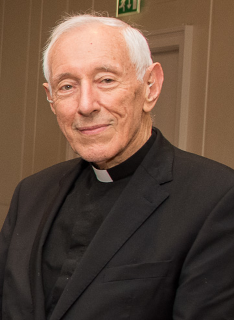
Birth of Patrick Coveney, Prelate of the Catholic Church

Patrick Coveney, Irish prelate of the Catholic Church who works in the diplomatic service of the Holy See from 1966 to 2009, is born in Tracton, County Cork, on July 29, 1934. He becomes an archbishop in 1985 and fulfills several assignments as Apostolic Nuncio, including stints in Zimbabwe, Ethiopia, New Zealand, and Greece.

Coveney obtains the academic degree of Bachelor of Arts in classical languages and literature at Maynooth College, and the Licentiate of Sacred Theology at the Pontifical Irish College in Rome, Italy. He is ordained as a priest at the age of twenty-four on February 21, 1959, by the archbishop vicegerent (deputy vicar general of Rome) Luigi Traglia in the Archbasilica of Saint John Lateran.

After doing parish work in Kidlington, England, Coveney teaches in St. Finbarr’s College, the minor seminary of the Diocese of Cork and Ross in Cork from 1960 to 1966. When use of the vernacular language is introduced into the celebration of the Roman Rite Mass, he edits a lectionary in English.

In September 1966, Coveney goes to work in the English-language section of the Secretariat of State in the Vatican. This sometimes involves acting as interpreter at audiences of Pope Paul VI, as when the Pope receives the three astronauts of the Apollo 11 mission that first lands human beings on the Moon.

At the Pontifical Lateran University Coveney obtains the degree of Doctor of Canon Law in 1969.

To prepare for a diplomatic career Coveney enters the Pontifical Ecclesiastical Academy in 1969 and enters the diplomatic service of the Holy See in 1971.

Coveney serves with the rank of Secretary in the Apostolic Nunciature in Buenos Aires from 1972 to 1976, returning then to the Secretariat of State in the Vatican. He is counselor of the nunciatures in New Delhi (1982–1984) and Khartoum (1984–1985).

On July 27, 1985, Coveney is appointed titular Archbishop of Satrianum and Apostolic Pro-Nuncio to Zimbabwe and Apostolic Delegate to Mozambique. He is ordained to the episcopate on September 15, 1985, in the Cathedral of St. Mary and St. Anne, Cork. The principal consecrator is the Cardinal Secretary of State Agostino Casaroli. The principal co-consecrators are Archbishop Gaetano Alibrandi, Apostolic Nuncio to Ireland, and Bishop Michael Murphy, Bishop of Cork and Ross. In Harare, capital of Zimbabwe, he represents the Holy See at the 8th Summit Conference of the Non-Aligned Movement on September 1–6, 1986.

On January 25, 1990, Coveney is appointed Nuncio to Ethiopia and also becomes Apostolic Delegate to Djibouti on March 26, 1992, and Nuncio to Eritrea on September 30, 1995.

Coveney becomes Apostolic Nuncio to New Zealand, Tonga, the Marshall Islands, and Samoa, and Apostolic Delegate for Oceania on hpril 27, 1996. His remit is expanded to include Apostolic Nuncio to Fiji, Kiribati, the Federated States of Micronesia, and Vanuatu on October 15, 1996, and Apostolic Nuncio to Nauru on December 7, 1996. He is also named Apostolic Nuncio to the Cook Islands and Palau on July 14, 2001. As the longest-serving resident diplomatic representative to New Zealand, Archbishop Coveney serves for a time as Dean of the Diplomatic Corps. While based in Wellington, he also represents the Holy See at the inauguration of Chen Shui-bian as president of the Republic of China (Taiwan) on May 18, 2004.

Coveney’s last diplomatic appointment is as Apostolic Nuncio to Greece on January 25, 2005. On November 5, 2008, he officiates at the presentation to the Acropolis Museum in Athens of a fragment of the Parthenon Frieze on loan from the Vatican Museums. He resides in Athens until his retirement in 2009.

Coveney returns to the Diocese of Cork and Ross to reside in Crosshaven Parish. He assists in Crosshaven parish and celebrates the Sacrament of Confirmation in many parishes throughout the Diocese of Cork and Ross. He dies at the age of 88 on October 22, 2022.


Leave a comment

Birth of Denis “Denny” Barry, Irish Volunteer & Trade Unionist

Denis “Denny” Barry, Irish Volunteer, commandant of the Cork No. 1 Brigade and trade unionist, is born into a farming family on July 15, 1883, in Riverstick, Cullen, County Cork.

Barry learns Irish from a young age. He attends Ballymartle National School but is unable to attend secondary school due to a lack of facilities in the area. He begins work on the family farm after primary school. In 1903, he moves to Cork to work as a draper‘s apprentice with the firm O’Sullivan and Howard, where he becomes involved in the Gaelic League and the Ancient Order of Hibernians. A successful athlete, he also plays for the Blackrock National Hurling Club and wins four senior county hurling championships between 1910–13.

In 1913, Barry joins the newly formed Irish Volunteers. In 1915, he moves to Kilkenny to take up employment there, where he continues his volunteer activities. Shortly after the 1916 Easter Rising, he is arrested in Kilkenny in a British Government crackdown, and sent to Frongoch internment camp in North Wales. In 1919, he returns to Cork, where he is Commandant of the Irish Republican Police (IRP) in Cork during the Irish War of Independence. In the Cork No. 1 Brigade of the Irish Republican Army (IRA), he helps with prisoner escapes and returning looted goods after the burning of Cork by Black and Tans. After the Anglo-Irish Treaty and the split that follows, he chooses the anti-Treaty branch of the IRA. He is captured by Irish Free State troops and is sent to Newbridge internment camp on October 6, 1922. He is not charged or convicted of any crime.

Irish Republican prisoners in Mountjoy Prison begin the 1923 Irish hunger strikes, protesting being interned without charges or trial and poor prison conditions. The strike quickly spreads to other camps and prisons, and Barry takes part starting on October 16. He dies 35 days later on November 20, 1923, at the hospital at Curragh Camp. IRA Volunteers Joseph Whitty from Newbawn, County Wexford, dies on September 2, 1923 and Andy O’Sullivan from Denbawn, County Cavan, dies as a result of hunger on November 22, 1923, in Mountjoy Prison. The 41-day hunger strike is called off the following day, November 23. Whitty, Barry and O’Sullivan are three of the 22 Irish Republicans who die on hunger-strike during the twentieth century. Barry is initially buried by the Free State army in the Curragh, but three days later, following a court order, his remains are disinterred. He is buried in the Republican plot at St. Finbarr’s Cemetery, Cork.

Prior to Barry’s body arriving in County Cork, the Bishop of Cork, Daniel Cohalan, issues a letter to the Catholic churches which forbids them to open their doors to his body. Bishop Cohalan expresses far different opinions on the 1920 death, also by hunger strike, of the Lord Mayor of Cork Terence MacSwiney. “Terence MacSwiney takes his place among the martyrs in the sacred cause of the Freedom of Ireland. We bow in respect before his heroic sacrifice. We pray that God may have mercy on his soul.”

In Barry’s hometown of Riverstick there stands a stone memorial, unveiled in 1966, in his honor and he is remembered with a wreath-laying commemoration every November.


Leave a comment

Death of Bill O’Herlihy, Broadcaster & Public Relations Executive

Bill O’Herlihy, Irish television broadcaster and public relations executive, dies in Dublin on May 25, 2015. He is best known for his broadcasts for Raidió Teilifís Éireann (RTÉ), primarily in the sporting arena.

Born and raised in Glasheen in Cork, County Cork, O’Herlihy is the son of a local government official and the grandson of William O’Herlihy, a news editor for The Cork Examiner. He is educated at Glasheen boys’ national school and later at St. Finbarr’s College, Farranferris.

After finishing his schooling at fifteen, O’Herlihy follows his grandfather into journalism and secures a job in the reading room of The Cork Examiner. He is only seventeen years-old when he subsequently becomes sub-editor of the Evening Echo, a position he holds for five years. He also graduates to the positions of news, features and sports reporter.

In the early 1960s O’Herlihy begins his broadcasting career when he starts to do local association football reports from Cork for Radio Éireann. In 1965, he makes his first television broadcast in a programme commemorating the sinking of the RMS Lusitania off the Cork coast. After three years O’Herlihy is asked to join RTÉ’s current affairs programme 7 Days to add the required field-reporting skills to the studio-based interviews. The programme has a reputation for its hard-hitting investigative reporting, and he reports on many varying stories from illegal fishing in Cork to the outbreak of the crisis in Northern Ireland. In November 1970, the 7 Days programme comes into controversy when O’Herlihy reports a story on illegal money lending. The report is unconventional as it is one of the first television pieces to use hidden cameras, it claims the government is not responding to illegal moneylending. A tribunal of inquiry follows, and O’Herlihy is forced to move away from current affairs.

Following this controversy, while O’Herlihy is not sacked as he has fifteen months left on his contract with RTÉ, he is moved to the RTÉ Sports department. There he works under Michael O’Hehir, who dislikes him and his broadcasting style. In spite of this O’Herlihy fronts RTÉ’s television coverage of the Olympic Games that year. He also becomes involved in the production of various sports programmes.

O’Herlihy is not long in the RTÉ Sports department when he becomes a regular presenter for such programmes as Sunday Sport and Sports Stadium. In 1978 he becomes RTÉ Soccer host alongside Eamon Dunphy and, in 1984, Johnny Giles joins the panel and Liam Brady follows in 1998. Since 1974 O’Herlihy becomes RTÉ’s chief sports presenter for such events as all Olympic Games until 2012, FIFA World Cups until 2014, UEFA European Football Championships until 2012 and European and World Track and Field Championships. He hosts RTÉ highlights of the Ryder Cup in 2006 when it is at the K Club in County Kildare and continues to present coverage of Ireland’s soccer internationals for RTÉ, along with Dunphy, Giles and Brady.

O’Herlihy hosts RTÉ’s coverage of rugby union in the 1980s and early 1990s. However, when RTÉ attains the rights to cover the English Premier League in 1992, Tom McGurk takes over as host of RTÉ’s coverage of rugby union. O’Herlihy covers the Premier League, Irish Internationals and The Champions League before dropping the Premier League in 2008. He continues to cover the Olympic Games and International Athletic Championships such as the European and World Athletics. He presents the first Rugby World Cup on RTÉ television in 1987 and, with Jim Carney, co-presents the first edition of The Sunday Game in 1979.

In 2012, while covering Chloe Magee‘s progress at the 2012 Summer Olympics O’Herlihy remarks that badminton was once considered “a mainly Protestant sport.” RTÉ subsequently receives a number of complaints, and while Magee criticises the remarks, the argument is made that the incident inadvertently reflected a complex historical reality.

O’Herlihy presents RTÉ Sport‘s coverage of the 2010 FIFA World Cup, his ninth FIFA World Cup. He fronts 18 European Championships and FIFA World Cups for RTÉ, the last of which comes in 2014. This proves to be the final tournament with O’Herlihy at the helm. He retires at its conclusion and dies the following year.

O’Herlihy attends the 12th Irish Film & Television Awards on Sunday, May 24, 2015. He dies peacefully in his sleep at his home the following day at the age of 76 nearly a year after his retirement. He is survived by wife Hillary and daughters Jill and Sally. Giles, Brady and Dunphy appear on The Late Late Show in tribute later that week. At the time of his death O’Herlihy is working on a sports version of Reeling in the Years, which RTÉ immediately cancels.


Leave a comment

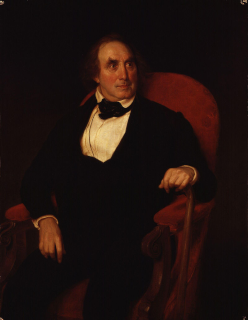
Birth of James Sheridan Knowles, Dramatist & Actor

James Sheridan Knowles, Irish dramatist and actor, is born in Cork, County Cork, on May 12, 1784. A relative of Richard Brinsley Sheridan, he enjoys success writing plays for the leading West End theatres. Later in his career he also produces several novels.

Knowles’s father is the lexicographer James Knowles, cousin of Richard Brinsley Sheridan. The family moves to London in 1793, and at the age of fourteen he publishes a ballad entitled The Welsh Harper, which, set to music, is very popular. His talents secure him the friendship of William Hazlitt, who introduces him to Charles Lamb and Samuel Taylor Coleridge. He serves for some time in the Wiltshire and afterwards in the Tower Hamlets militia, leaving the service to become a pupil of Dr. Robert Willan. He obtains the degree of M.D. and is appointed vaccinator to the Jennerian Society.

Although Dr. Willan offers him a share in his practice, Knowles decides to give up medicine for the stage, making his first appearance as an actor probably at Bath, and plays Hamlet at the Crow Street Theatre, Dublin. At Wexford he marries, in October 1809, Maria Charteris, an actress from the Edinburgh Theatre. In 1810, he writes Leo, a successful play in which Edmund Kean appears. Another play, Brian Boroihme, written for the Belfast Theatre in the next year, attracts crowds. Nevertheless, his earnings are so small that he is obliged to become assistant to his father at the Royal Belfast Academical Institution. In 1817 he moves from Belfast to Glasgow, where, besides keeping a flourishing school, he continues to write for the stage.

Knowles first important success is Caius Gracchus, produced at the Belfast Theatre in 1815. His Virginius, written for William Charles Macready, is first performed in 1820 at Covent Garden. In William Tell (1825), he writes for Macready one of his favourite parts. His best-known play, The Hunchback, is produced at Covent Garden in 1832, and he wins praise acting in the work as Master Walter. The Wife is brought out at the same theatre in 1833. The Daughter, better known as The Wrecker’s Daughter, in 1836, and The Love Chase in 1837. His 1839 play Love is praised by Mary Shelley for its “inspiring situations founded on sentiment and passion.” His second wife is the actress, Emma Knowles.

In his later years Knowles forsakes the stage for the pulpit and, as a Baptist preacher, attracts large audiences at Exeter Hall and elsewhere. He publishes two polemical works: the Rock of Rome and the Idol Demolished by Its Own Priests in both of which he combats the special doctrines of the Roman Catholic Church. He is for some years in the receipt of an annual pension of £200, bestowed by Sir Robert Peel in 1849. In old age he befriends the young Edmund Gosse, whom he introduces to Shakespeare. He makes a happy appearance in Gosse’s Father and Son.

Knowles dies at Torquay on November 30, 1862. He is buried under a huge tomb at the summit of the Glasgow Necropolis.

A full list of the works of Knowles and of the various notices of him can be found in The Life of James Sheridan Knowles (1872), privately printed by his son, Richard Brinsley Knowles (1820–1882), who is well known as a journalist. It is translated into German.


2 Comments

The 32 County Sovereignty Movement Launches Major Recruitment Campaign

The 32 County Sovereignty Movement, often abbreviated to 32CSM or 32csm, an Irish republican group that is founded by Bernadette Sands McKevitt, launches a major recruitment campaign in west Belfast on April 17, 1999.

The objectives of the 32CSM are:

  • The restoration of Irish national sovereignty.
  • To seek to achieve unity among the Irish people on the issue of restoring national sovereignty and to promote the revolutionary ideals of republicanism and to this end involve itself in resisting all forms of colonialism and imperialism.
  • To seek the immediate and unconditional release of all Irish republican prisoners throughout the world.

The 32CSM does not contest elections but acts as a pressure group, with branches, or cumainn, organised throughout the traditional counties of Ireland. It has been described as the “political wing” of the now defunct Real Irish Republican Army (Real IRA or RIRA), but this is denied by both organisations. The group originates in a split from Sinn Féin over the Mitchell Principles.

The organisation is founded on December 7, 1997, at a meeting of like-minded Irish republicans in the Dublin suburb of Finglas. Those present are opposed to the direction taken by Sinn Féin and other mainstream republican groups in the Northern Ireland peace process, which eventually leads to the Good Friday Agreement, also known as the Belfast Agreement, the following year. The same division in the republican movement leads to the paramilitary group now known as the Real IRA breaking away from the Provisional Irish Republican Army at around the same time.

Most of the 32CSM’s founders had been members of Sinn Féin, with some having been expelled from the party for challenging the leadership’s direction, while others felt they had not been properly able to air their concerns within Sinn Féin at the direction its leadership had taken. Bernadette Sands McKevitt, wife of Michael McKevitt and a sister of hunger striker Bobby Sands, is a prominent member of the group until a split in the organisation.

The name refers to the 32 counties of Ireland which were created during the Lordship of Ireland and Kingdom of Ireland. With the partition of Ireland in 1920–22, twenty-six of these counties form the Irish Free State which is abolished in 1937 and is now known as Ireland since 1949. The remaining six counties of Northern Ireland remain part of the United Kingdom. Founder Bernadette Sands McKevitt says in a 1998 interview with The Mirror that people did not fight for “peace” – “they fought for independence” – and that the organisation reaffirms to the republican position in the 1919 Irish Declaration of Independence.

Before the referendums on the 1998 Good Friday Agreement, the 32CSM lodges a legal submission with the United Nations challenging British sovereignty in Ireland. The referendums are opposed by the 32CSM but are supported by 71% of voters in Northern Ireland and by 94% in the Republic of Ireland. It is reported in February 2000 that the group had established a “branch” in Kilburn, London.

In November 2005, the 32CSM launches a political initiative titled Irish Democracy, A Framework for Unity.

On May 24, 2014, Gary Donnelly, a member of the 32CSM, is elected to the Derry and Strabane super council. In July 2014, a delegation from the 32CSM travels to Canada to take part in a six-day speaking tour. On arrival the delegation is detained and refused entry into Canada.

The 32CSM has protested against what it calls “internment by remand” in both jurisdictions in Ireland. Other protests include ones against former Democratic Unionist Party (DUP) leader Ian Paisley in Cobh, County Cork, against former British Prime Minister John Major being given the Keys to Cork city, against a visit to the Republic of Ireland by Police Service of Northern Ireland (PSNI) head Sir Hugh Orde, and against the Israeli occupation of Palestine and Anglo-American occupation of Iraq.

In 2015, the 32CSM organises a demonstration in Dundee, Scotland, in solidarity with the men convicted of shooting Constable Stephen Carroll, the first police officer to be killed in Northern Ireland since the formation of the PSNI. The organisation says the “Craigavon Two” are innocent and are victims of a miscarriage of justice.

The 32CSM also operates outside of the island of Ireland to some extent. The Gaughan/Stagg Cumann covers England, Scotland and Wales, and has an active relationship of mutual promotion with a minority of British left-wing groups and anti-fascist organisations. The James Larkin Republican Flute Band in Liverpool and the West of Scotland Band Alliance, the largest section of which is the Glasgow-based Parkhead Republican Flute Band, are also supporters of the 32CSM. As of 2014, the 32CSM’s alleged paramilitary wing, the Real IRA, is reported to still be involved in attempts to perpetrate bombings in Britain as part of the dissident Irish republican campaign, which has been ongoing since 1998.

The 32CSM is currently considered a foreign terrorist organization (FTO) in the United States, because it is considered to be inseparable from the Real IRA, which is designated as an FTO. At a briefing in 2001, a spokesman for the U.S. Department of State states that “evidence provided by both the British and Irish governments and open-source materials demonstrate clearly that the individuals who created the Real IRA also established these two entities to serve as the public face of the Real IRA. These alias organizations engage in propaganda and fundraising on behalf of and in collaboration with the Real IRA.” The U.S. Department of State’s designation makes it illegal for Americans to provide material support to the Real IRA, requires U.S. financial institutions to block the group’s assets and denies alleged Real IRA members travel visas into the United States.


Leave a comment

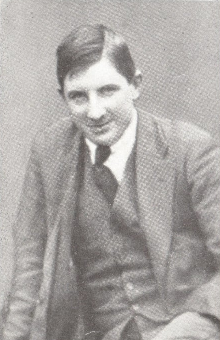
Death of Diarmuid O’Hegarty, Civil Servant & Revolutionary

Diarmuid O’Hegarty (Irish: Ó hÉigeartuigh), civil servant and revolutionary, dies in Dublin on March 14, 1958.

O’Hegarty is born Jeremiah Stephen Hegarty on December 26, 1892, in Lowertown, Skibbereen, County Cork, the eldest of seven children of Jeremiah Hegarty (1856–1934) and his wife Eileen (née Barry), both teachers. He is educated at the Christian Brothers school, St. Patrick’s Place, Cork, joins the Dublin civil service in 1910 and is posted to the Department of Agriculture and Technical Instruction, acquiring invaluable administrative experience as private secretary to T. P. Gill, secretary of the department.

O’Hegarty is a member of the Keating branch of the Gaelic League and the closely associated Teeling circle of the Irish Republican Brotherhood (IRB). In 1913 he becomes secretary and stage manager of a troupe of Gaelic players, Na hAisteoirí, which includes several who later become prominent revolutionaries: Piaras Béaslaí, Gearóid O’Sullivan, Fionán Lynch, and Con Collins. As second lieutenant of F Company, 1st Battalion, Dublin Brigade, Irish Volunteers, during the Easter Rising, he is in charge of barricades in Church Street, Mary Lane, Mary’s Abbey, and Jameson Distillery, an area which sees fierce fighting. Imprisoned in Knutsford (May 1-18), he is released in error and returns to his post in the civil service. On his return he is a key figure in the reorganisation of the Volunteers and IRB, becoming a member of the executive of the IRB’s supreme council along with Michael Collins and Seán Ó Murthuile. He also becomes a central figure in Kathleen Clarke‘s prisoner support group, the Irish Volunteer Dependents Fund, and when it amalgamates with the more moderate Irish National Aid Association to form the INA&VDF in August 1916, he helps to ensure that it is dominated by republicans.

O’Hegarty is very close to Michael Collins and Harry Boland and in 1918 this IRB triumvirate exercises considerable control in the nomination of Sinn Féin candidates for the 1918 Irish general election. In the same year he is dismissed from the civil service for refusing to take the oath of allegiance, but his administrative talents find ample outlet in the secretariat of the revolutionary Dáil and later in the service of the Irish Free State to such an extent that he has been called ‘the civil servant of the revolution’ and ‘the Grey Eminence of the Free State Government.’ As clerk of the First Dáil and secretary to the Dáil cabinet (1919–21), he is largely responsible for its success, organising meetings of the clandestine parliament and coordinating the work of various departments from his offices on the corner of O’Connell Street and Abbey Street and later in Middle Abbey Street. He is determined that the Dáil will demonstrate its worth by ‘functioning as any progressive government would be expected to function.’ He records the minutes and handles all correspondence of the Dáil cabinet. As the conduit through which the Dáil’s ministers communicate, his role is central to the effective operation of government on the run. The influence this gives him within the revolutionary movement is bolstered by his senior role within the IRB and the positions of military significance which he occupies. He is a member of the Volunteer Executive (Jun 1916–Nov 1921), Irish Republican Army (IRA) Director of Communications (Jul 1918–Mar 1920), and Director of Organisation (Mar 1920–Apr 1921). When convicted of illegal assembly and jailed in Mountjoy Prison (Nov 1919–Feb 1920), he immediately wields power within the prison, ordering Noel Lemass off a hunger strike.

O’Hegarty resigns his military duties in April 1921 to concentrate on his work in the Dáil secretariat and serves as secretary to the Irish delegation during the Anglo–Irish Treaty negotiations in London (Oct–Dec 1921). He is a vital voice for the Treaty within the IRB and is appointed secretary to the cabinet of the Provisional Government in 1922, participating in the unsuccessful army unification talks of May 1922. During the Irish Civil War, he is briefly seconded from his civil service post to serve as military governor of Mountjoy Prison (Jul-Aug 1922), where he threatens that prisoners who persist in leaning out of windows and talking to the public outside the prison will be shot. Peadar O’Donnell, who is a prisoner there at the time, remembers him as the focus of much “republican bitterness.” A member of the army council during the Irish Civil War, he serves as Director of Organisation (Jul–Dec 1922) and Director of Intelligence (Dec 1922–May 1923), leaving the army with the rank of lieutenant general on May 1, 1923, to resume his civil service career.

O’Hegarty is secretary to the Executive Council of the Irish Free State (1923–32) and principal private secretary to its president, W. T. Cosgrave. Again, he records the cabinet minutes and is the administrative pivot upon which government turns. He serves as secretary to numerous governmental delegations and is widely praised for his work in this role at the 1926 Imperial Conference and the 1930 Imperial Conference. In 1927 he goes to New York to represent the government at a hearing into the fate of republican funds in the United States. His career is the prime example of the influence of revolutionary veterans within the higher civil service in the early years of the state. After the change of government following the 1932 Irish general election, he is one of the very few senior civil servants who is effectively removed from his position. He is appointed to be a commissioner of public works, becoming chairman in 1949, a position he holds until his retirement in 1957. In 1939–40 he serves on the Economy Committee established by the government to advise on wartime spending, and in 1941 is a member of a tribunal of inquiry into public transport, which is principally concerned with the poor financial state of Great Southern Railways.

On April 27, 1922, with Michael Collins as his best man, O’Hegarty marries Claire Archer, daughter of Edward Archer, a post office telegraph inspector from Dublin, and Susan Archer (née Matthews). Her brother is William (Liam) Archer. They live at 9 Brendan Road, Donnybrook, Dublin.

O’Hegarty dies on March 14, 1958, in Dublin, leaving an estate of £5,441. His papers are in the University College Dublin (UCD) Archives.


Leave a comment

Death of Frank O’Connor, Poet & Novelist

Frank O’Connor, Irish writer of over 150 works and best known for his short stories and memoirs, dies of a heart attack in Dublin on March 10, 1966. The Frank O’Connor International Short Story Award is named in his honour.

O’Connor is born Michael Francis O’Donovan in Cork, County Cork, on September 17, 1903. The only child of Minnie (née O’Connor) and Michael O’Donovan, he attends Saint Patrick’s School on Gardiner’s Hill and North Monastery CBS. His early life is marked by his father’s alcoholism, debt, and ill-treatment of his mother. His childhood is shaped in part by his mother, who supplies much of the family’s income by cleaning houses, because his father is unable to keep steady employment due to his drunkenness. He adores his mother and is bitterly resentful of his father. In his memoirs, he recalls his childhood as “those terrible years,” and admits that he has never been able to forgive his father for his abuse of himself and his mother. When his mother is seventy, O’Connor is horrified to learn from his own doctor that she has suffered for years from chronic appendicitis, which she has endured with great stoicism, as she has never had the time nor the money to see a doctor.

In 1918 O’Connor joins the First Brigade of the Irish Republican Army (IRA) and serves in combat during the Irish War of Independence. He opposes the Anglo-Irish Treaty of 1921 and joins the Anti-Treaty IRA during the Irish Civil War, working in a small propaganda unit in Cork city. He is one of twelve thousand Anti-Treaty combatants who are interned by the government of the new Irish Free State. Between 1922 and 1923 he is imprisoned in Cork City Gaol and in Gormanston, County Meath.

Following his release, O’Connor takes various positions including that of teacher of the Irish language, theatre director, and librarian. He begins to move in literary circles and is befriended by George William Russell (Æ), through whom he comes to know most of the well-known Irish writers of the day, including William Butler Yeats, Lennox Robinson, F. R. Higgins and Lady Gregory. In his memoirs, he pays tribute to both Yeats and Russell for the help and encouragement they gave him.

In 1935, O’Connor becomes a member of the board of directors of the Abbey Theatre in Dublin, founded by Yeats and other members of the Irish National Theatre Society. In 1937, he becomes managing director of the Abbey. Following Yeats’s death in 1939, O’Connor’s long-standing conflict with other board members comes to a head and he leaves the Abbey later that year. In 1950, he accepts invitations to teach in the United States, where many of his short stories have been published in The New Yorker and have won great acclaim. He spends much of the 1950s in the United States, although it is always his intention to return eventually to Ireland.

From the 1930s to the 1960s O’Connor is a prolific writer of short stories, poems, plays, and novellas. His work as an Irish teacher complements his plethora of translations into English of Irish poetry, including his initially banned translation of Brian Merriman‘s Cúirt an Mheán Oíche (The Midnight Court). Many of his writings are based on his own life experiences – notably his well-known The Man of the House in which he reveals childhood details concerning his early life in County Cork. The Sullivan family in this short story, like his own boyhood family, is lacking a proper father figure.

O’Connor’s early years are recounted in An Only Child, a memoir published in 1961 which has the immediacy of a precocious diary. He continues his autobiography through his time with the Abbey Theatre in Dublin in his book My Father’s Son, which is published posthumously in 1968. It contains valuable character sketches of many of the leading Irish literary figures of the 1930s, in particular Yeats and Æ.

Frank O’Connor has a stroke while teaching at Stanford University in 1961, and he later dies from a heart attack in Dublin on March 10, 1966. He is buried in Deans Grange Cemetery two days later.


Leave a comment

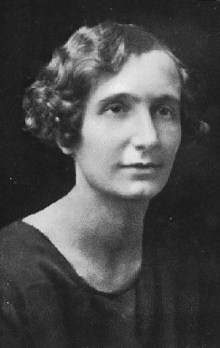
Birth of Geraldine Cummins, Spiritualist Medium, Novelist & Playwright

Geraldine Dorothy Cummins, spiritualist medium, novelist and playwright, is born in Cork, County Cork, on January 24, 1890. She began her career as a creative writer, but increasingly concentrates on mediumship and “channelled” writings, mostly about the lives of Jesus and Saint Paul, though she also publishes on a range of other topics. Her novels and plays typically document Irish life in a naturalist manner, often exploring the pathos of everyday life.

Cummins is the daughter of the physician Ashley Cummins, professor of medicine at the National University of Ireland and sister to Mary Hearn and Iris Cummins. In her youth she is an athlete, becoming a member of the Irish Women’s International Hockey Team. She is also active as a suffragette. Her desire to follow her father in a medical career is vetoed by her mother, so she begins a literary career as a journalist and creative writer. From 1913 to 1917 she writes three plays for the Abbey Theatre in collaboration with Suzanne R. Day, the most successful of which is the comedy Fox and Geese (1917). She publishes the novel The Land they Loved in 1919, a naturalistic study of working class Irish life.

As she concentrates on mediumship, Cummins’s literary work tails off. However, she continues to publish creative literature in her later years. Her solo-written play, Till Yesterday Comes Again, is produced by the Chanticleer Theatre, London, in 1938. She also publishes another novel, Fires of Beltane (1936) and a short-story collection Variety Show (1959).

Literary critic Alexander G. Gonzalez says that Cummins work tries to encompass the full range of Irish social life, from the aristocracy to the lower classes. In this respect she is influenced by Somerville and Ross. Gonzalez considers her short story The Tragedy of Eight Pence to be the “finest” of her writings, the tale of a “happily married woman trying to shield her ill husband from the knowledge that his death will leave her penniless.”

Cummins begins to work as a medium following prompting from Hester Dowden and E. B. Gibbes. She receives alleged messages from her spirit-guide “Astor” and is an exponent of automatic writing. Her books are based on these communications. In 1928 she publishes The Scripts of Cleophas, which provides channelled material on early Christian history complementing Acts of the Apostles and St. Paul’s writings, supposed to have been communicated by the spirit of Cleophas, one of Paul’s followers. This is later supplemented by Paul in Athens (1930) and The Great Days of Ephesus (1933).

Cummins’s next work describes human progress through spiritual enlightenment. The Road to Immortality (1932) provides a glowing vision of the afterlife. Its contents are purportedly communicated from the “other side” by the psychologist and psychic researcher Frederic W. H. Myers. Unseen Adventures (1951) is a spiritual autobiography. She also publishes several books of spiritually-derived knowledge about details of the life of Jesus.

During World War II Cummins allegedly works as a British agent, using her personal contacts to identify pro-Nazi factions within the Irish Republican movement. She also employs her psychic activities to support the Allied cause, sending channelled messages from sympathetic spirits to Allied leaders to support the war effort. This includes information from Theodore Roosevelt, Arthur Balfour and Sara Roosevelt, Franklin D. Roosevelt‘s mother.

In the 1940s and 50s Cummins works with psychiatrists to develop a model for using spiritualism to treat mental illness, ideas she explores in Perceptive Healing (1945) and Healing the Mind (1957). She collaborates with a psychiatrist who uses the pseudonym R. Connell on both books. Their method is for her to “read” an object associated with the patient and thus identify either childhood traumas or experiences of ancestors which have created the problem. This includes treating a patient who is concerned about his homosexual desires by discovering that this derives from the fact that his Huguenot ancestors were humiliated by Catholics in the 18th century.

Cummins’s biography of writer and spiritualist Edith Somerville is published in 1952. She also writes The Fate of Colonel Fawcett (1955) which offers her psychic insights into the disappearance of the explorer Percy Fawcett in Brazil in 1925. She claims she had received psychic messages from Fawcett in 1936. He was still alive at that time, informing her that he had found relics of Atlantis in the jungle, but was ill. In 1948 she has a message from Fawcett’s spirit reporting his death. Her last book is an account of her conversations with the spirit of Winifred Coombe Tennant, Swan on a Black Sea; a Study in Automatic Writing; the Cummins-Willett Scripts (1965).

The automatic writing and alleged channeled material from Cummins have been examined and have been described by some psychical researchers to be the product of her own subconscious. For example, Harry Price, who studies various mental mediums including Cummins, writes that “there is no question that most of the automatic writing which has been published is the product of the subconscious.” Paranormal researcher Hilary Evans notes that unlike most spiritualists, Cummins does not accept the phenomena at face value and questions the source of the material.

According to the psychical researcher Eric Dingwall information published in Cummins’ scripts allegedly from Winifred Coombe Tennant are discovered to be erroneous. Biographer Rodger Anderson writes that although spiritualists consider Cummins completely honest “some suspected that she occasionally augmented her store of knowledge about deceased persons by normal means if by doing so she could bring comfort to the bereaved.”

Cummins’ book The Fate of Colonel Fawcett (1955), contains her automatist scripts allegedly from the spirit of Colonel Fawcett. Spiritualists claim the scripts are evidence for survival. However, the psychical researcher Simeon Edmunds notes that before his disappearance Fawcett had written articles for The Occult Review. Cummins also contributes articles to the same review and Edmunds suggests it is likely she had read the work of Fawcett. Edmunds concludes the scripts are a case of subliminal memory and unconscious dramatization.

Other researchers such as Mary Rose Barrington have suspected fraud as Cummins had long standing connections with friends and families of the deceased that she claimed to have contacted and could have easily obtained information by natural means. The classical scholar E. R. Dodds writes that Cummins worked as a cataloguer at the National Library of Ireland and could have taken information from various books that would appear in her automatic writings about ancient history. Her writings were heavily influenced by literature and religious texts. Dodds also studies her book Swan on a Black Sea which was supposed to be an account of spirit conversation but writes there is evidence suggestive of fraud as Cummins had received some of the information by natural means.

Cummins dies in Cork on August 25, 1969, and is buried in St. Lappan’s churchyard, Little Island.


1 Comment

The Film Premiere of “Angela’s Ashes”

Despite the controversy over the book, people in Frank McCourt‘s hometown of Limerick turn out in huge numbers to attend the sold-out film premiere of Angela’s Ashes on January 12, 2000. A simultaneous premiere takes place in Dublin.

The 1999 drama film is based on McCourt’s memoir Angela’s Ashes: A Memoir, published in 1996. An international co-production between the United States, the United Kingdom, and Ireland, it is co-written and directed by Alan Parker, and stars Emily Watson, Robert Carlyle, Joe Breen, Ciaran Owens, and Michael Legge, the latter three playing the young, middle aged, and older Frank McCourt, respectively.

Although set in Limerick, many street scenes are filmed in Cork. For example, the “fleas in the mattress” scene is filmed at Farren Street, Blackpool, and other scenes are shot at Roche’s Buildings, Lower John Street and Barrack Street.

With an estimated $25 million budget, the film grosses only $13,042,112 in the United States, making it a box-office bomb.

On Rotten Tomatoes, the film has an approval rating of 52%, based on reviews from 87 critics, with an average rating of 5.8/10. The site’s consensus states: “In spite of its attempts to accurately record Frank McCourt’s memoirs, the onscreen adaptation fails to capture any of the drama or humor of his life.” On Metacritic, the film has a score of 54 out of 100, based on reviews from 32 critics, indicating “mixed or average reviews.”

Michael Legge is praised for his portrayal of the adolescent Frank. In particular, he is said to excel in his role as an innocent teenager growing up with typical coming of age rites involving sexuality, maturity and peer pressure in a Catholic Irish setting.

Despite the low approval ratings with the critics, the film captures several awards: Best Picture and Best Costume Design at the Irish Film & Television Awards, Best Director at the Karlovy Vary International Film Festival, Best Original Score from the Las Vegas Film Critics Society, and Best Actress (Emily Watson) from the London Film Critics’ Circle.

(Pictured: Film poster for Angela’s Ashes, © Paramount Pictures)