seamus dubhghaill

Promoting Irish Culture and History from Little Rock, Arkansas, USA


Leave a comment

Birth of William Randall Roberts, Fenian & U.S. Representative

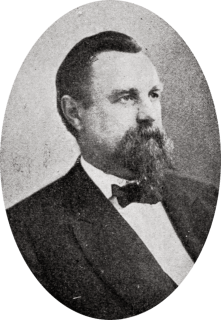
William Randall Roberts, Fenian Brotherhood member, United States Representative from New York (1871–1875), and a United States Ambassador to Chile, is born on February 6, 1830, in Mitchelstown, County Cork.

Roberts is the son of Randall Roberts, a baker, and Mary Roberts (née Bishop). He is educated locally and in July 1849 leaves with his family for the United States. For several years he works as a clerk for a dry goods company in New York City. In 1857, he sets up his own dry goods business, the Crystal Palace, which becomes successful. He retires in 1869 as a very wealthy man.

Having joined the American Fenian Brotherhood in 1863, Roberts gives it strong financial support for the remainder of the decade. He also supports several Irish American charitable organisations, including the Knights of St. Patrick, of which he is president. In October 1865, he is responsible for a change in the constitution of the Fenian Brotherhood, which results in a split in the movement. The majority of the Brotherhood supports his proposal to elect a “senate” to govern the organisation, with himself as president, in place of the autocratic leader, John O’Mahony. After the suppression of the Irish People and the arrest of the Irish Republican Brotherhood (IRB) leaders in Dublin in September 1865, he believes that it to be foolish to send American Fenian troops to Ireland.

Seeking to capitalise on the bad relations that develop between the United States and Britain during the American Civil War, Roberts hopes that a Fenian Brotherhood invasion Canada might provoke a war between Britain and the United States and thereby make a successful insurrection in Ireland more possible. Once the invasion takes place (May 31 – June 3, 1866), however, the American government seizes the Fenians’ supplies and reinforcements, thereby prompting him to abandon the attack. He is arrested in New York on June 7 and detained in prison but escapes prosecution and is released on June 15. Three days later, with the support of Irish American politicians, he is allowed to deliver an address to the United States Senate appealing for support for the cause of the amnesty of IRB prisoners in Ireland. Thereafter he goes on a lecture tour and argues that American politicians cannot hope to receive Irish American electoral support if they do not support the Fenian cause. In response to demands from Irish American politicians, in September 1866, President Andrew Johnson orders that the arms seized by the United States army be returned to the Fenian Brotherhood.

After the failure of the March 1867 rising in Ireland, Roberts sends men to Ireland to assume command of the IRB on his behalf. A significant number of IRB men follow his lead, and in June 1867 a convention is held in Paris over which he presides. At this he proposes the establishment of a Supreme Council to govern the IRB, a proposal that is soon accepted. He seeks to be appointed president of the new Supreme Council, but the IRB refuses owing to his being such a divisive figure within American Fenianism. In dismay he resigns as president of the Senate wing of the Fenian Brotherhood on December 31, 1867, and becomes less active in the revolutionary movement. In 1870, he opposes the attempt of Fenians to invade Canada once more, and in January 1871 organises a welcoming committee in New York for five recently released IRB leaders who had been banished from Ireland.

By that time, however, Roberts is more concerned with American politics. During 1870, he is elected to Congress as a Democratic Party candidate for New York, a seat he holds until 1874 when, due to financial difficulties, he decides not to run for reelection. As a congressman, he criticises the Republican government for its policy towards the former Confederate states, opposes the increasing power of railroad companies, demands greater protection for American citizens living in foreign countries (including the Fenians imprisoned in Canada), and supports civil rights for black people. He also attracts much praise for his strong criticism of British foreign policy.

After leaving Congress, Roberts becomes a member of the Tammany Society and attains prominence in New York municipal politics, being elected president of the New York City Board of Aldermen in 1878. The following year, he runs for the position of sheriff of New York but is defeated. Thereafter, he leaves the Tammany Society and establishes a rival organisation, the New York County Democracy. In 1882, he supports Grover Cleveland for the governorship of New York and in 1884 as the Democratic candidate for the United States presidency. He is rewarded on April 2, 1885, when President Cleveland appoints him Envoy Extraordinary and Minister Plenipotentiary to Chile.

Roberts’s term of office is cut short, however, when he suffers a paralytic stroke in May 1888. He is sent back to New York and to hospital, where he remains for nine years. He never regains his mental or physical health and dies on August 9, 1897. His funeral takes place on hospital grounds with few people in attendance. He had been separated from his wife, of whom nothing is known, except that they had at least one son, prior to being admitted to hospital. He is buried at Calvary Cemetery, Queens, New York City.

(From: “Roberts, William Randall” by Owen McGee, Dictionary of Irish Biography, http://www.dib.ie, October 2009)

Leave a comment

Eamonn Casey, Former Bishop of Galway & Kilmacduagh, Returns from Exile

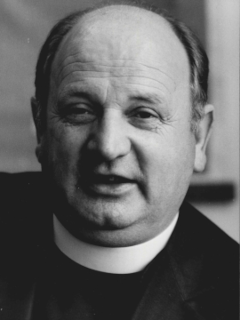
Eamonn Casey, Irish Catholic prelate who serves as bishop of Galway and Kilmacduagh from 1976 until his resignation 1992, returns to Ireland on February 5, 2006, following fourteen years in exile. He fled Ireland after he admitted to fathering his son, Peter.

Casey is born on April 24, 1927, in Firies, County Kerry. He is educated in Limerick before training for the priesthood at St. Patrick’s College, Maynooth. He is ordained a priest for the Diocese of Limerick on June 17, 1951, and appointed Bishop of Kerry on July 17, 1969.

Casey holds this position until 1976, when he is appointed Bishop of Galway and Kilmacduagh and apostolic administrator of Kilfenora. While in Galway, he is seen as a progressive. It is a significant change in a diocese that had been led for nearly forty years by the very conservative Michael Browne, bishop from 1937 to 1976. He is highly influential in the Irish Catholic hierarchy and a friend and colleague of another highly prominent Irish priest, Father Michael Cleary.

Casey works aiding Irish emigrants in Britain. In addition, he supports the Dunnes Stores‘ staff who are locked out from 1982 to 1986 for refusing to sell goods from apartheid South Africa.

Casey attends the funeral of the murdered Archbishop of San Salvador, Monsignor Óscar Romero. He witnesses first-hand the massacre of those attending the funeral by government forces. He then becomes a vocal opponent of United States foreign policy in Central America, and, as a result, opposes the 1984 visit of United States President Ronald Reagan to Ireland, refusing to meet him when he comes to Galway.

In 1992 it is reported that, despite the vow of chastity undertaken by Catholic clergy, Casey has a sexual relationship in the early 1970s with American woman Annie Murphy. When Murphy becomes pregnant, he is determined that the child should be given up for adoption in order to avoid any scandal for himself or the Catholic church. By contrast, Murphy is determined to accept responsibility for her child, and she returns to the United States with their son, Peter, who is born in 1974 in Dublin. He makes covert payments for the boy’s maintenance, fraudulently made from diocesan funds and channeled through intermediaries. In order to continue the cover up of his affair with Murphy and his fraudulent activities, he refuses to develop a relationship with his son, or acknowledge him. Murphy is very disappointed by this, and in the early 1990s contacts The Irish Times to tell the truth about Casey’s hypocrisy and deception. Having been exposed, he reluctantly admits that he had “sinned” and wronged the boy, his mother and “God, his church and the clergy and people of the dioceses of Galway and Kerry,” and his embezzlement of church funds. He is forced to resign as bishop and flees the country under a cloud of scandal. He is succeeded by his secretary, James McLoughlin, who serves in the post until his own retirement on July 3, 2005.

Murphy publishes a book, Forbidden Fruit, in 1993 revealing the truth of their relationship and the son she bore by Casey, exposing the institutional level of hypocrisy, moral corruption and misogyny within the Irish Catholic Church.

Casey is ordered by the Vatican to leave Ireland and become a missionary alongside members of the Missionary Society of St. James in a rural parish in Ecuador, whose language, Spanish, he does not speak. During this time, he travels long distances to reach the widely scattered members of his parish but does not travel to meet his own son. After his missionary position is completed, he takes a position in the parish of St. Pauls, Haywards Heath, West Sussex, England.

In 2005, Casey is investigated in conjunction with the sexual abuse scandal in Galway, Kilmacduagh and Kilfenora diocese, and cleared of any wrongdoing. In 2019, it emerges that he had faced at least three accusations of sexual abuse before his death, with two High Court cases being settled. The Kerry diocese confirms that it had received allegations against him, that Gardaí and health authorities had been informed and that the person concerned was offered support by the diocese.

Casey returns to Ireland on February 5, 2006, with his reputation in tatters, and is not permitted to say Mass in public.

In August 2011, Casey, in poor health, is admitted to a nursing home in County Clare. He dies on March 13, 2017, a month before his 90th birthday. He is interred in Galway cathedral’s crypt.

Casey is the subject of Martin Egan’s song “Casey,” sung by Christy Moore. He is also the subject of The Saw Doctors‘ song “Howya Julia.”


Leave a comment

Birth of Desmond “Des” O’Malley, Irish Politician

Desmond Joseph “Des” O’Malley, Fianna Fáil and Progressive Democrats politician, is born on February 2, 1939, in Limerick, County Limerick.

O’Malley is born into a storied Limerick political family. His maternal grandfather, Denis O’Donovan, is killed during the Irish War of Independence by the Black and Tans, two of his uncles and his father hold the office of Mayor of Limerick, and his uncle Donogh O’Malley is a Minister for Education. He is educated at the Jesuit Crescent College and at University College Dublin (UCD), from which he graduates with a degree in law in 1962.

In 1968, O’Malley enters politics upon the sudden death of his uncle Donogh who, at that the time, is the sitting Minister for Education. He is chosen after Donogh’s widow, Hilda, still in shock at the sudden death of her husband, turns down the opportunity to contest the by-election necessitated by his death.

O’Malley is subsequently elected as a Fianna Fáil TD for the Limerick East constituency in the by-election. Perhaps the first sign of the defiance that would define his career materialises during the 1969 Irish general election when Hilda asks her nephew to step aside and allow her to contest in the Limerick East constituency as the main Fianna Fáil candidate. He refuses and places third in the four-seat constituency, with his aunt, running as an independent, coming in fifth.

Following the general election, O’Malley is appointed Parliamentary Secretary to both Minister for Defence Jim Gibbons and Taoiseach Jack Lynch and serves as Government Chief Whip. In his role as a confidante of Lynch, the political lines within Fianna Fáil that put him on a collision course of over twenty years with Charles Haughey, are drawn. He plays a central role in the Arms Crisis prosecutions of Haughey and Neil Blaney in 1970. After their acquittals, the stage is set within Fianna Fáil for a long-term power struggle that eventually results in O’Malley’s expulsion from the party in 1984.

In the meantime, O’Malley’s next position within Lynch’s government comes when he is made Minister for Justice after Mícheál Ó Móráin is forced to resign due to ill-health. One of the most significant aspects of his legacy transpires during his tenure as Minister for Justice from 1970 to 1973. In response to the ongoing conflict in Northern Ireland, he tries and fails to introduce internment without trial for republicans within the State. He is, however, successful in reintroducing the Offences Against the State Act, which enables convictions for Irish Republican Amy (IRA) membership on the word of a Garda Superintendent, and the Special Criminal Court, a non-jury court presided over by three judges which tries cases of terrorism and serious organised crime.

When Lynch resigns the Fianna Fáil leadership following electoral defeat in 1979, O’Malley and Martin O’Donoghue manage the leadership campaign of George Colley, who subsequently loses to Haughey. Following Haughey’s ascent to leadership, O’Malley retains the industry and commerce ministerial portfolio he had been appointed to following the 1977 Irish general election.

In 1982, after Fianna Fáil loses its majority but stays in government by virtue of a confidence and supply agreement with Sinn Féin – The Workers Party and two independents, O’Malley is appointed Minister for Trade, Commerce and Tourism, but with the death of Colley and the loss of O’Donoghue’s seat, he becomes increasingly isolated within Fianna Fáil.

After the party whip is removed from him in 1984, amidst inter-party wrangling over the New Ireland Forum, O’Malley is expelled from the party the following year, the final straw being his famous “I stand by the Republic” speech in which he announces his intention to abstain on a vote regarding the liberalisation of the sales of contraceptives, which Fianna Fáil opposes.

O’Malley goes on to establish the Progressive Democrats, joined by Mary Harney (who had also been expelled by Fianna Fáil), and later by Fianna Fáil TDs Bobby Molloy and Pearse Wyse, as well as Fine Gael TD Michael Keating. In the 1987 Irish general election, the Progressive Democrats win fourteen seats, making them the third biggest party in the Dáil. Among those elected are O’Malley, his cousin Patrick O’Malley, Anne Colley, daughter of George Colley, Martin Gibbons, son of Jim Gibbons, Michael McDowell and Martin Cullen.

O’Malley’s animus for Haughey does not stop him from entering coalition with Fianna Fáil after the 1989 Irish general election, with him once again appointed Minister for Industry and Commerce. While in government, he finally witnesses the downfall of Haughey in 1992, when he is forced to resign over the emergence of new evidence concerning his tapping of journalists’ phones in the 1980s. The coalition with Fianna Fáil does not last long under new Taoiseach Albert Reynolds, with the Government collapsing after Reynolds accuses O’Malley of dishonesty during the Beef Tribunal.

O’Malley retires as leader of the Progressive Democrats in 1993, and the party moves into opposition, only to re-enter government with Fianna Fáil in 1997, where it remains upon O’Malley’s retirement from politics in 2002.

While the Progressive Democrats no longer exist, they are generally credited with the breaking up of the Fianna Fáil versus Fine Gael dichotomy of Irish politics that had dominated since the founding of the Free State. Since 1922, Irish governments have tended to be either single-party Fianna Fáil cabinets, be they minority or majority, or Fine Gael-led coalitions, typically involving the Labour Party. A Fine Gael-Labour coalition is in power at the time of the founding of the Progressive Democrats, and a single-party government or clear majority has not been won in Ireland since.

O’Malley dies in Dublin on July 21, 2021, at the age of 82, having been in poor health for some time. He is predeceased by his wife, Pat, and survived by their six children, four daughters including the former TD Fiona O’Malley, and two sons.

Perhaps O’Malley’s greatest legacy is the political reality of Ireland today: the low-tax, pro-business economic policies of the Progressive Democrats have been the dominant ideology in the State since the 1990s. Sinn Féin, the party most affected by his measures as Minister for Justice, no longer vote against the retention of the Offences Against the State Act and Special Criminal Court.

(From: “Desmond O’Malley: 1939-2021,” eolas Magazine, http://www.eolasmagazine.ie, August 2021)


Leave a comment

Founding of the Irish White Cross

The Irish White Cross is established during a meeting in Dublin’s Mansion House on February 1, 1921, as a mechanism for distributing funds raised by the American Committee for Relief in Ireland for the purpose of assisting with relief and reconstruction in the country.

It is envisaged that the Irish White Cross will act in cooperation with similar relief committees that have been established in the United States.

The meeting, presided over by the Lord Mayor of Dublin, Laurence O’Neill, hears that the Society of Friends in New York has already contributed $50,000 to help launch the initiative.

Among those to welcome the new organisation is Sinn Féin President, Éamon de Valera, who promises all the support he can offer. Cardinal Michael Logue, Catholic Primate of Ireland, also offers his assistance: “Even if peace were restored, of which there seems little prospect at present, all the help which can be obtained shall be necessary, to restore the country from the wreck to which it has been reduced, and to help those who have been left destitute by the murder of those on whom they depended, or ruined by the destruction of their property.”

Cardinal Logue becomes president of the new organisation, the trustees of which include William Walsh, Archbishop of Dublin, Arthur Griffith, Sinn Féin TD, Molly Childers, Jennie Wyse Power and Tom Johnston. The Executive Committee includes Hanna Sheehy Skeffington, Kathleen Clarke and Mary Kettle.

Barry Egan, deputy Lord Mayor of Cork, says that the moral effect of the organisation will be incalculable.

The Irish White Cross is managed by the Quaker businessman, and later Irish Free State senator, James G. Douglas. The organisation continues to operate until the Irish Civil War and its books are officially closed in 1928. From 1922, its activities are essentially wound down and remaining funds divested to subsidiary organisations. The longest running of these aid committees is the Children’s Relief Association which distributes aid to child victims of this troubled period, north and south of the border, until 1947. The head of the Children’s Relief Association is Áine Ceannt, the widow of Éamonn Ceannt who is perhaps one of the least known signatories of the 1916 Proclamation of the Irish Republic.


Leave a comment

Birth of Pete St. John, Irish Folk Singer-Songwriter

Peter Mooney, Irish folk singer-songwriter known professionally as Pete St. John, is born in Inchicore, Dublin on January 31, 1932. He is best known for composing “The Fields of Athenry.”

St. John is the eldest of six children born to Tommy and Lottie Mooney. He is educated at Scoil Muire Gan Smál and Synge Street CBS. He emigrates to Ontario, Canada in 1958 where he takes what labouring jobs he can find. Within six months he meets a woman named Gert Gorman who has an electrical contracting company in the United States. She and her husband sponsor him to move to Washington, D.C., where he is able to work as an electrician. He marries his sweetheart, Susie Bourke, who is from a well-known Dublin theatrical family with links to both the Gaiety and the Olympia theatres. They have two sons, Kieron and Brian. He travels widely and becomes involved in the peace movement and the civil rights movement. He remains in the United States until 1970, returning to settle in Collins Avenue in north Dublin.

The Dublin city that St. John returns to is a changed place from the one he had grown up in and proves to be the spur that inspires his songwriting. He chooses “St. John” as his nom de plume, inspired by a middle name he had been given while at school when all the boys in his class were assigned saints’ names. In 1975, he is running a theatre in Petticoat Lane on Marlborough Street, and while fixing an alarm outside a window on the first floor, the ledge on which he is leaning gives way, resulting in a bad fall. He breaks his elbow and hip and spends six months in the hospital recuperating. It is during this time that he takes to songwriting in earnest.

St. John is an extrovert who loves people. He is a voracious reader with a particular interest in Irish history. His son Kieron recalls his father writing “The Rare Aul Times” during this recovery period and singing it to his family. The Dublin City Ramblers is the first band to cover the song, but it is Danny Doyle’s version that achieves a real breakthrough, spending eleven weeks in the Irish Singles Chart, reaching No. 1 in 1978.

In 1978, St. John writes “The Fields of Athenry,” a tale of a man exiled to Botany Bay for stealing food to feed his family during the Famine. It has been recorded by several artists, charting in the Irish Singles Chart on a number of occasions. A recording by Paddy Reilly, which is released in 1982, remains in the Irish charts for 72 weeks.

St. John pays close attention to the melding of lyric and melody and has particular form in writing memorable melodies that sound timeless, resonating deeply with listeners across all walks of life. His songs sometime express regret for the loss of old certainties, for example, the loss of Nelson’s Pillar and the Metropole Ballroom, two symbols of old Dublin, as progress makes a “city of my town.”

St. John describes his chosen craft with affection. “Songs are magic carpets. They can tell a story over and over again without boring the pants off the listener and maybe take us out of ourselves for a few moments of peaceful escapism. With easy to remember melody lines, the words can tell of times and events in our daily lives that are worth noting or remembering.”

St. John’s songbook consists of hundreds of compositions, including “The Ferryman,” “Waltzing on Borrowed Time” and “The Furey Man” and are recorded by over 2,500 artists. He is a founding member of the Irish Music Rights Organisation (IMRO) and is always generous and supportive of younger writers, some of whom he continues to mentor well into his 80s.

St. John is surprised and delighted at the affiliation that emerges between “The Fields of Athenry” and rugby and football sporting events. He is present in Croke Park in 2007 when Ireland beats England in the Six Nations, and where the song is sung three times over. It is a song often heard in Anfield in Liverpool, and at Glasgow Celtic games, and reverberates around the stadium at Chicago’s Soldier Field when Ireland beats the All Blacks on November 5, 2016.

St. John wins several awards, including the Irish Music Rights Organisation “Irish Songwriter of the Year.”

St. John lives life to the fullest, and while he suffers ill health in his later years with both diabetes and Parkinson’s disease, he never loses his zest for life. His son Kieron describes his father with affection as a man who had nine lives and lived them all to the fullest. He lives independently at home until his admission to Beaumont Hospital in Dublin. He dies peacefully there at the age of 90 on March 12, 2022. After his funeral, Paddy Reilly and Glen Hansard perform “The Fields of Athenry” at Beaumont House in Dublin as a tribute.


Leave a comment

Assassination of INLA Chief of Staff Gino Gallagher

Gino Gallagher, Irish republican who is Chief of Staff of the Irish National Liberation Army, is killed in Belfast, Northern Ireland, at the age of 32 on January 30, 1996, while waiting in line for his unemployment benefit.

Gallagher is always on time. He often reprimands colleagues for their lack of punctuality. He arrives to sign on at the social security office on the Falls Road at exactly 11:00 a.m. every two weeks. Usually a friend goes with him, however, on this day he goes alone. He is talking to the woman at the counter when a man approaches from behind. He does not get a chance to turn around. Four bullets are fired into the back of his head. He slumps to the ground and dies instantly.

As the office descends into chaos, the killer calmly walks out. He is in his mid-20s but well disguised in a woolen cap, pony-tail wig and glasses. He was only 5’3″ tall.

The INLA vows revenge and immediately begins an investigation. Early on there are no concrete clues. “It was an unbelievably clean killing,” says one source in the Irish Republican Socialist Party (IRSP), the INLA`s political wing. “People in the dole office, the street, the houses nearby were all questioned. Nobody really saw anything. We don’t know if the gunman acted with others or alone. We don’t know where he drove to. No car has been found. He did a very professional job.”

Four groups of people could, in theory, be responsible: loyalist paramilitaries, disgruntled former INLA members, elements of British intelligence, or the Irish Republican Army (IRA).

In June 1994, Gallagher had shot dead three loyalists on the Shankill. But the INLA rules out possible retaliation by the Ulster Defence Association (UDA) or Ulster Volunteer Force (UVF), believing that a loyalist assassin would not move so confidently in a republican area.

The Royal Ulster Constabulary (RUC) and Sinn Féin politicians point to an INLA feud. The group has historically been riven by internal disputes and it suffered serious difficulties the previous April. A statement read aloud in a Dublin courtroom by four Northern Irish men arrested following an arms find in Balbriggan announces an unconditional INLA ceasefire.

Gallagher, supported by others, says that the men lack the authority to make the statement. He takes over as Chief-of-Staff, and the four are expelled from the republican socialist movement. They receive almost no internal backing, and a violent split is avoided.

The gut reaction of some members of the INLA is that people loyal to these former members could have carried out the attack on Gallagher. But others think it unlikely. “I don’t believe these people are leading suspects,” says one source. “They’re a beaten docket. It would be illogical anyway. They wanted an end to violence so why provoke conflict with us by killing Gino?”

Gallagher’s killing bears no resemblance to previous INLA feuds, when attacks were claimed by each faction. No one admits responsibility for his death. No splinter group is set up claiming to be the “real INLA” and no gang warfare breaks out on the streets.

There is some speculation that elements of British intelligence could be responsible. The INLA, which describes itself as Marxist, is the only paramilitary group in Northern Ireland which refuses to call a ceasefire. Although substantially smaller than the IRA, it is well armed. It has engaged in an 18-month suspension of violence, but there is a strong possibility it will eventually return to conflict. Gallagher had said that Irish unity and socialism could not be achieved through constitutional politics. He foresaw violence “having some part to play in our strategy.”

“He was a real threat to the state, and some of its agents could have wanted him out of the way before he caused any trouble,” says an IRSP source.

One of the most popular and controversial theories is that the IRA had killed Gallagher. In an internal IRSP document two weeks prior to his assassination, Gallagher expresses fear that his life is in danger from the IRA. He has also been warned by contacts in the Provisionals that he is at risk.

Gallagher was reorganising the INLA into a more formidable force than it had been in years. It was building a base in areas where it had been dormant. He had also taken over as the IRSP’s national organiser.

In December 1996, the IRSP refused to make a submission to the Mitchell Commission, saying to do so would be “collaborating” with the peace process. It had just started giving regular media interviews and had reopened offices on the Falls Road. It was considering contesting any elections to a talk’s convention in the North and challenging Sinn Féin in nationalist areas. Gallagher’s high profile as a gunman made him popular with IRA grassroots and it was feared that he could become a rallying point for dissidents.

“He led an organisation which was nowhere near the size of the Provos,” says one republican source, “but he really had them worried. He saw a vacuum emerging as republican supporters became disillusioned with the peace process and he wanted to fill it. Given time, he could have caused trouble. It wouldn’t be surprising if the Provos wanted to nip that in the bud.”

Notably, Sinn Féin does not condemn the killing. An unnamed spokesman, an unusual move, describes it as “tragic.” Similar language has been used about the assassination of drug dealers when the IRA has not wanted to admit responsibility.

The IRA issues a statement denying responsibility but, as one source says, “they aren’t likely to admit it.” If IRA involvement is established, the INLA will have to decide whether or not to retaliate. Arguments are made not to allow the Provisionals to walk over the INLA, but the organisation also fears being wiped out in a bitter republican feud.

If clues about the killing remain scarce, the less likely it is that former INLA members are involved. “They wouldn’t be able to fully cover their tracks,” says one source. “If the group responsible is able to do that, then it’s a really professional outfit. That points to the IRA or elements of British intelligence.”

(From: “Gallagher murder ‘an unbelievably clean killing'” by Susanne Breen, The Irish Times, http://www.irishtimes.com, February 3, 1996)


Leave a comment

Death of Esther Johnson, Close Friend of Jonathan Swift

Esther Johnson, an Englishwoman known as “Stella” and known to be a close friend of Jonathan Swift, dies on January 28, 1728. Whether or not she and Swift are secretly married, and if so, why the marriage is never made public, is a subject of debate.

Johnson is born in Richmond, Surrey, England, on March 13, 1681, and spends her early years at Moor Park, Farnham, home of Sir William Temple, 1st Baronet. Here, when she is about eight, she meets Swift, who is Temple’s secretary. He takes a friendly interest in her from the beginning and apparently supervises her education.

Johnson’s parentage has been the subject of much speculation. The weight of evidence is that her mother acts as companion to Temple’s widowed sister, Martha, Lady Giffard, and that Johnson, her mother and her sister Anne are regarded as part of the family. Her father is said to have been a merchant who died young. Gossip that she is Temple’s illegitimate daughter seems to rest on nothing more solid than the friendly interest he shows in her. There are similar rumours about his supposed relationship with Swift.

When Swift sees Johnson again in 1696, he considers that she has grown into the “most beautiful, graceful and agreeable young woman in London.” Temple, at his death in 1699, leaves her some property in Ireland, and it is at Swift’s suggestion that she move to Ireland in 1702 to protect her interests, but her long residence there is probably due to a desire to be close to Swift. She generally lives in Swift’s house, though always with female companions like Rebecca Dingley, a cousin of Temple whom she has known since childhood. She becomes extremely popular in Dublin and an intellectual circle grows up around her, although it was said that she finds the company of other women tedious and only enjoys the conversation of men.

In 1704, their mutual friend, the Reverend William Tisdall, tells Swift that he wishes to marry Johnson, much to Swift’s private disgust, although his letter to Tisdall, which outlines his objections to the marriage, is courteous enough, making the practical point that Tisdall is not in a position to support a wife financially. Little is known about this episode, other than Swift’s letter to Tisdall. It is unclear if Tisdall actually proposes to her. If he does, he seems to have been met with a firm rejection, and he marries Eleanor Morgan two years later. He and Swift, after a long estrangement, become friends once more after Johnson’s death.

Johnson’s friendship with Swift becomes fraught after 1707 when he meets Esther Vanhomrigh, daughter of the Dutch-born Lord Mayor of Dublin, Bartholomew Van Homrigh. Swift becomes deeply attached to her and invents for her the name “Vanessa.” She in turn becomes infatuated with him and after his return to Ireland follows him there. The uneasy relationship between the three of them continues until 1723 when Vanessa, who is by now seriously ill from tuberculosis, apparently asks Swift not to see Johnson again. This leads to a violent quarrel between them, and Vanessa, before her death in June 1723, destroys the will she had made in Swift’s favour, leaving her property to two men, George Berkeley and Robert Marshall, who though eminent in their respective callings are almost strangers to her.

Whether Swift and Johnson are married has always been a subject of intense debate. The marriage ceremony is allegedly performed in 1716 by St. George Ashe, Bishop of Clogher, with no witnesses present, and it is said that the parties agree to keep it secret and live apart. Johnson always describes herself as a “spinster” and Swift always refers to himself as unmarried. Rebecca Dingley, who lives with Johnson throughout her years in Ireland, says that Johnson and Swift were never alone together. Those who know the couple best are divided on whether a marriage ever took place. Some, like Mrs. Dingley and Swift’s housekeeper Mrs. Brent laugh at the idea as “absurd.” On the other hand, Thomas Sheridan, one of Swift’s oldest friends, believes that the story of the marriage is true. He reportedly gives Johnson herself as his source. Historians have been unable to reach a definite conclusion on the truth of the matter. Bishop Ashe dies before the story first becomes public, and there are no other witnesses to the supposed marriage.

A collection of Johnson’s witticisms is published by Swift under the titles of “Bon Mots de Stella” as an appendix to some editions of Gulliver’s Travels. A Journal to Stella, a collection of 65 letters from Swift to Johnson, is published posthumously.

In 1722, Martha, Lady Giffard, dies and leaves money to Johnson and Swift’s sister, Mrs. Fenton, who had been her companion in 1711.

Johnson’s health begins to fail in her mid-forties. In 1726, she is thought to be dying and Swift rushes back from London to be with her but finds her better. The following year it becomes clear that she is gravely ill. After sinking slowly for months, she dies on January 28, 1728, and is buried in St. Patrick’s Cathedral, Dublin. Swift is inconsolable at her death and writes The Death of Mrs. Johnson in tribute to her. When Swift dies in October 1745, he is buried beside her at his own request. A ward in St. Patrick’s University Hospital is named “Stella” in her memory.

In the 1994 film Words Upon the Window Pane, based on the play by William Butler Yeats, Johnson is played by Bríd Brennan. The plot turns on a séance in Dublin in the 1920s, where the ghosts of Swift, Johnson and Vanessa appear to resume their ancient quarrel.

In the 1982 Soviet film The House That Swift Built, Johnson is played by Aleksandra Zakharova.


Leave a comment

Birth of Mervyn Archdale, High Sheriff & Member of Parliament

Mervyn Edward Archdale DL, Irish soldier, High Sheriff and Member of Parliament (MP) known as Mervyn Edward Archdall until 1875, is born in Dublin on January 27, 1812.

Archdale is the eldest son of Edward Archdall of Riversdale, County Fermanagh, who serves as Sheriff of Fermanagh in 1813, and his wife Matilda, daughter of William Humphrys of Ballyhaise, County Cavan. He is educated at private schools in England at the expense of his uncle, General Mervyn Archdall, MP for Fermanagh (1801–34), and Brasenose College, Oxford, where he matriculates in 1830 but does not graduate.

Archdale joins the 6th (Inniskilling) Dragoons, becoming a cornet in 1832, a lieutenant in 1835 and a captain in 1841. He retires on half pay in 1847.

In June 1834, Archdale is elected the Member of Parliament for Fermanagh following the retirement of his uncle Mervyn Archdall. He is returned unopposed in the succeeding nine elections. From 1836, he is a noted member of the Orange Order and becomes treasurer of the Grand Lodge of Ireland. He votes in 1856 to disendow Maynooth College. When in 1868 he is asked to support a plea for the reprieve of Michael Barrett, a local Fenian under sentence of death in London, he refuses. He does not stand at the election of January 1874.

On the death of another uncle, Lt. Col. William Archdall, on January 1, 1857, Archdale inherits the family estates of Castle Archdale and Trillick in County Tyrone. He is appointed High Sheriff of Fermanagh in 1879.

Archdale has an interest in and also keeps racehorses. Other pursuits in which he is prominent are coursing and boating. He is a Freemason and member of five clubs.

Archdale marries Emma Inez, the daughter of Jacob Goulding of Kew, Surrey, with whom he has two sons, Mervyn Henry and Hugh James, and three daughters.

Archdale dies on December 22, 1895, at Cannes in the south of France. His estates pass to his brother, William Humphrys Archdale, who also takes over the representation of Fermanagh in Parliament.


Leave a comment

Birth of Joseph O’Sullivan, Irish Republican Army Volunteer

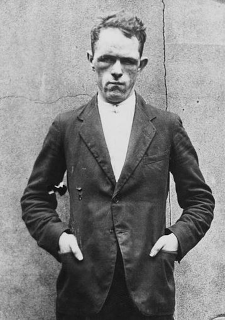
Joseph O’Sullivan, Irish Republican Army (IRA) volunteer, is born in London on January 25, 1897. Along with fellow IRA (London Battalion) volunteer Reginald Dunne, shoot dead Field Marshal Sir Henry Wilson outside Wilson’s home at 36 Eaton Place, Belgravia, London on June 22, 1922. Convicted by a jury, he is sentenced to death by Justice Montague Shearman. Despite a petition of 45,000 signatures, and a plea for clemency from many prominent figures at the time, including playwright George Bernard Shaw, O’Sullivan and Dunne are hanged for the murder on August 10, 1922, at Wandsworth Prison. The event provides the inspiration for the 1947 film Odd Man Out.

O’Sullivan’s father, John, is originally from Bantry, County Cork, and moves to London as a young man where he eventually becomes a successful tailor. His mother, Mary Ann O’Sullivan (née Murphy), is born in Inniscarra, County Cork. He is the youngest of thirteen children, all born in London, although only eleven survive to adulthood. As a boy he attends St. Edmund’s College, Ware. On January 25, 1915, his eighteenth birthday, he enlists into the Royal Munster Fusiliers, and later transfers to the London Regiment and serves with the rank of lance corporal during World War I, losing a leg at Ypres in 1917.

Upon being discharged from the army in 1918, O’Sullivan is employed by the Ministry of Munitions and, when the war ends, is transferred to the Ministry of Labour where he works as a messenger. The Ministry of Labour is located in Montagu House, adjacent to Scotland Yard, and later demolished and replaced by the present-day Ministry of Defence.

O’Sullivan becomes a member of the IRA detachment in London and is named by Rex Taylor as being responsible for the execution of Vincent Fovargue as a British spy at the Ashford Golf Links, Middlesex, on April 2, 1921. Fovargue is left with a label pinned to his body stating, “Let spies and traitors beware, IRA.” Fovargue had been an officer in the Dublin brigade of the IRA.

O’Sullivan’s brother, Patrick, is the first Vice-Commandant of the London IRA during its early days in 1919 but is seconded to the Cork No. 1 Brigade during the Irish War of Independence. Patrick also serves in the London Regiment during World War I, along with another brother, Aloysius, who is discharged from the army in 1916 suffering from shell shock. Patrick is also wounded in a gas attack during World War I. He fights with the Anti-Treaty IRA during the Irish Civil War and is wounded ten days after his brother is executed. Shortly before that, he crosses over to England to participate in an abortive attempt to rescue Dunne and his brother.

In 1923, John O’Sullivan tries to have the remains of his son and Dunne released for a funeral Mass. But it is not until after the abolition of capital punishment in the United Kingdom that Patrick O’Sullivan, with the assistance of the Irish Republican National Graves Association, is able to arrange for the bodies of O’Sullivan and Dunne to be sent to Ireland for burial. In mid-August 1929, Irish Republicans in London unveil a plaque commemorating Dunne and O’Sullivan. In 1967, after some political and diplomatic debate by the British and Irish governments, the British Government allows the bodies of Dunne and O’Sullivan to be exhumed. They are subsequently reburied in Dean’s Grange Cemetery, County Dublin.

(Pictured: Photograph of IRA member Joseph O’Sullivan taken before his 1922 execution)


Leave a comment

Death of St. John Greer Ervine, Playwright & Author

St. John Greer Ervine, unionist playwright, author, critic, and manager of the Abbey Theatre from 1915 to 1916, dies in a nursing home at Fitzhall, Ipling, Sussex, England, on January 24, 1971.

Ervine is born in Ballymacarrett, Belfast on December 28, 1883. He is considered to be the founding father of modern Northern Irish drama.

Although accepted to study at Trinity College, Dublin, circumstances force Ervine to leave school at the age of 15 to begin working in an insurance office.

Two years later, Ervine immigrates to London, where he discovers a love for the theatre. He begins his writing career with Mixed Marriage (1911), an Ulster tragedy, and produces three plays between 1911 and 1915. In 1915, after a meeting with William Butler Yeats in London, he becomes the director of the Abbey Theatre in Dublin. It is, however, not a happy appointment as his personality and politics clash with the management of the theatre.

Ervine then joins the Royal Dublin Fusiliers and fights in Flanders, losing a leg in the conflict. Returning home, he feels increasingly alienated by nationalism and more attracted to the unionism of his family background. He becomes a vehement detractor of the south, describing Ireland in a letter to George Bernard Shaw as brimming with “bleating Celtic Twilighters, sex-starved Daughters of the Gael, gangsters and gombeen men.”

Ervine is a distinctively Ulster orientated writer, focusing on a naturalistic portrayal of rural and urban life. His most famous and popular work amongst his Northern Irish audience is Boyd’s Shop (1936), which becomes one of the Ulster Group Theatre’s stalwart productions. The play is a classic of the homely yet sincere Ulster genre and centres around the struggles of the folk that Ervine grew up with in his grandmother’s shop on the Albertbridge Road. Ervine creates in Boyd’s Shop a template for Ulster theatre that is to dominate until the advent of Samuel Thompson‘s Over the Bridge.

Ervine’s reactionary unionism and anti-southern hatred becomes more pronounced as he ages and eclipses his more subtle characteristics and abilities as a writer. Although many of his novels and plays are at times clouded by his prejudices, they are also very often capable of tremendous feeling and humanity showing he is a writer of note.

St. John Greer Ervine dies at the age of 87 at Fitzhall, Ipling, Sussex on January 24, 1971.