seamus dubhghaill

Promoting Irish Culture and History from Little Rock, Arkansas, USA


Leave a comment

Birth of Joseph Campbell, Poet & Lyricist

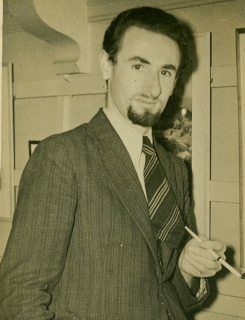
Joseph Campbell, Irish poet and lyricist, is born in Belfast on July 15, 1879. He writes under the Gaelic form of his name Seosamh Mac Cathmhaoil (also Seosamh MacCathmhaoil), as Campbell is a common anglicisation of the old Irish name MacCathmhaoil. He is now remembered best for words he supplied to traditional airs, such as “My Lagan Love” and “Gartan Mother’s Lullaby.” His verse is also set to music by Arnold Bax and Ivor Gurney.

Campbell is born into a Catholic and Irish nationalist family from County Down. He is educated at St. Malachy’s College, Belfast. After working for his father he teaches for a while. He travels to Dublin in 1902, meeting leading nationalist figures. His literary activities begin with songs, as a collector in Antrim, County Antrim and working with the composer Herbert Hughes. He is then a founder of the Ulster Literary Theatre in 1904. He contributes a play, The Little Cowherd of Slainge, and several articles to its journal Uladh edited by Bulmer Hobson. The Little Cowherd of Slainge is performed by the Ulster Literary Theatre at the Clarence Place Hall in Belfast on May 4, 1905, along with Lewis Purcell’s The Enthusiast.

Campbell moves to Dublin in 1905 and, failing to find work, moves to London the following year where he is involved in Irish literary activities while working as a teacher. He marries Nancy Maude in 1910, and they move shortly thereafter to Dublin, and then later to County Wicklow. His play Judgement is performed at the Abbey Theatre in April 1912.

Campbell takes part as a supporter in the Easter Rising of 1916, doing rescue work. The following year he publishes a translation from Irish of the short stories of Patrick Pearse, one of the leaders of the Rising.

Campbell becomes a Sinn Féin Councillor in Wicklow in 1921. Later in the Irish Civil War he is on the Republican side, and is interned in 1922-23. His marriage breaks up, and he emigrates to the United States in 1925 where he settles in New York City. He lectures at Fordham University, and works in academic Irish studies, founding the University’s School of Irish Studies in 1928, which lasts four years. He is the editor of The Irish Review (1934), a short lived “magazine of Irish expression.” The business manager is George Lennon, former Officer Commanding of the County Waterford Flying Column during the Irish War of Independence. The managing editor is Lennon’s brother-in-law, George H. Sherwood.

Campbell returns to Ireland in 1939, settling at Glencree, County Wicklow. He dies at Lacken Daragh, Enniskerry, County Wicklow on June 6, 1944.


Leave a comment

Death of Landscape Artist Dairine Vanston

Dairine (Doreen) Vanston, Irish landscape artist who works in a Cubist style, dies in Enniskerry, County Wicklow on July 12, 1988.

Vanston is born in Dublin on October 19, 1903. She is the daughter of solicitor John S. B. Vanston, and sculptor Lilla Vanston (née Coffey). She attends Alexandra College, going on to study at Goldsmith’s College, London under Roger Bissière. She then goes to Paris to the Académie Ranson, being sent there following the advice of Paul Henry. While in Paris she meets Guillermo Padilla, a Costa Rican law student at the University of Paris. They marry in 1926 and she takes the name Vanston de Padilla. The couple lives for a time in Italy, before moving to San José, Costa Rica. The marriage breaks down in the early 1930s, at which point she returns to Paris with her son and studies with André Lhote. She is living in France at the outbreak of World War II with Jankel Adler, but is able to escape to London in 1940, and later to Dublin.

Vanston’s time in Paris leaves a lasting impression on her work, including use of primary colours and a strong Cubist influence. She belongs to what critic Brian Fallon calls the “Franco-Irish generation of painters who looked to Paris,” along with Mainie Jellett, Evie Hone, and Norah McGuinness. Her time spent living in Costa Rica in the late 1920s and early 1930s imbues her work with tropical and highly toned colours. In Dublin in 1935, she exhibits 17 paintings, largely Costa Rican landscapes, at Daniel Egan’s gallery on St. Stephen’s Green. This is the closest thing to a solo show she would mount, with this show also featuring Grace Henry, Cecil Ffrench Salkeld, and Edward Gribbon.

Meeting the English artist Basil Rakoczi, who is also living in Dublin during World War II, leads Vanston to become associated with The White Stag group. In November 1941, she exhibits for the first time at a group show with 24 other artists, including Patrick Scott. One work that is shown at this exhibition is the painting Keel dance hall, which demonstrates that she spends time in the west of Ireland. The most important event staged by the group is the Exhibition of subjective art, which takes place at 6 Lower Baggot St. in January 1944. The Dublin Magazine notes her work at this show as the most effective of the experimental vanguard. This work, Dying animal, is a Cubist work with semi-representation forms rendered in bold colours. In 1945, her work is featured in a White Stag exhibition in London of young Irish painters at the Arcade gallery, Old Bond St.

In 1947, Vanston spends almost a year in Costa Rica where she paints primarily in watercolours. Apart from this period, she lives and works in Dublin, living at 3 Mount Street Crescent near St. Stephen’s Church. At the inaugural Irish Exhibition of Living Art in 1943, she exhibits five works. At the first Exhibition of Independent Artists in 1960, of which she is a founder, she exhibits three landscapes and a work entitled War. She largely exhibits with the Independent Artists, the Irish Exhibition of Living Art, and the Oireachtas na Gaeilge, and does not exhibit with the Royal Hibernian Academy. Later in life, she exhibits with the Figurative Image exhibitions in Dublin, and is amongst the first painters chosen for Aosdána. A number of her works are featured in the 1987 exhibition, Irish women artists, from the eighteenth century to the present arranged by the National Gallery of Ireland and The Douglas Hyde Gallery.

Vanston dies on July 12, 1988, in a nursing home in Enniskerry, County Wicklow. Her work is greatly admired, but has received little by way of critical attention, which may have been to do with her slow rate of output. A number of her works have proved difficult to trace. She was a private person, even refusing to cooperate with the Taylor Galleries in the 1980s when they wanted to mount a retrospective of her work. The National Self-Portrait Collection in Limerick holds a work by Vanston.

(Pictured: “Landscape with Lake and Hills” (1964), oil on paper (monotype) by Dairine Vanston)


Leave a comment

Birth of Gilbert Potter, District Inspector of the Royal Irish Constabulary

Gilbert Norman Potter, a District Inspector of the Royal Irish Constabulary, is born in Dromahair, County Leitrim on July 10, 1887. He is executed by the Irish Republican Army (IRA) on April 27, 1921, in reprisal for the British execution of Irish republican Thomas Traynor.

Potter receives his commission as District Inspector on April 27, 1901, having completed his cadetship at the Depot, Phoenix Park, Dublin. His first assignment is to Castlepollard, County Westmeath. During the 1909 ITGWU strike in Cork, he is temporarily posted there from Dublin and is also involved in policing the August 14 marches in Portadown. Having had charge of No. 4 Company at the Depot, he is assigned to Cahir in 1912.

On April 23, 1921, District Inspector Potter is captured by the 3rd Tipperary Brigade, IRA, following the Hyland’s Cross Ambush. This occurs near Curraghcloney, close to the village of Ballylooby. The ambush party is initially made up of a combination of the 1st and 2nd Flying Columns 3rd Tipperary Brigade. This is the largest force assembled to date by the Tipperary IRA in anticipation of a major battle. However, the convoy of military lorries that is expected never materialises. Dan Breen and Con Moloney return to Battalion Headquarters, while Seán Hogan‘s Column withdraws northward in the direction of the Galtee Mountains.

As Dinny Lacey‘s No.1 Column prepares to leave towards the south, a small party of British soldiers accompanying two horse-drawn carts unexpectedly approaches from Clogheen and are immediately fired upon. Amid some confusion Lacey’s scattered men withdraw southwards towards the Knockmealdown Mountains. One British soldier, Frank Edward Conday, is fatally wounded and two others from the relieving party are wounded.

By chance, Potter, who is returning by car from police duties at Ballyporeen, drives into a section of the withdrawing No.1 Column. Although in civilian attire, he is recognised by one of the IRA Volunteers and taken prisoner. As part of a new strategy, he is held as a hostage for the safe release of Thomas Traynor, an IRA volunteer and father of ten young children, then under sentence of death at Mountjoy Gaol. The IRA offers to release Potter in exchange for Traynor’s release. Traynor is executed. Traynor has since been honoured by the Irish state as one of “The Forgotten Ten.”

The Column, under sporadic fire from soldiers, alerted at the nearby Clogheen barracks, follow the contours of the mountains to the village of Newcastle. Losing their pursuers, they stay for a period of time at the townland of Glasha. Here Potter is detained in an out-building of a farm which is regularly used by the IRA as a safe house. From there the party is guided into the Nire Valley by a contingent of local Waterford Volunteers and on to the Comeragh Mountains.

Accounts from Rathgormack, County Waterford suggest he is kept for at least one night at a nearby Ringfort before being taken down the hill to a field then owned by Powers of Munsboro, where he meets his ultimate fate. At 7:00 PM, on April 27, following news of Traynor’s execution by hanging, he is shot to death, and hastily buried in a shallow grave on the banks of the River Clodiagh. A diary he kept during his period of captivity and some personal effects and farewell letters, are returned anonymously to his wife. It is the first confirmation she has that he has been killed. The artifacts are later lost when his son’s ship is torpedoed in 1942, during World War II.

(Pictured: Photo of District Inspector Gilbert Potter R.I.C. that appeared in the Press during his time in captivity)


Leave a comment

Birth of Mary Ann McCracken, Humanitarian & Social Reformer

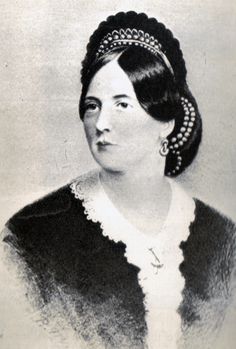
Mary Ann McCracken, Irish businesswoman, radical humanitarian, supporter of the Society of United Irishmen and a noted social reformer, is born in Belfast on July 8, 1770.

McCracken’s father is Captain John McCracken, a Presbyterian of Scottish descent and a prominent shipowner. Her mother, Ann Joy, comes from a French Protestant Huguenot family, which made its money in the linen trade and founded the Belfast News Letter. Her liberal and far-sighted parents send her to David Manson‘s progressive co-educational school, where ‘young ladies’ received the same education as the boys. She excels at mathematics.

As an adult, McCracken manages a successful muslin business in Belfast, which pioneers the production of patterned and checked muslin. She runs the business together with her sister and has at least one agent in Dublin.

McCracken is the sister of Henry Joy McCracken, one of the founding members of the Society of United Irishmen. In the aftermath of her brother’s defeat at the Battle of Antrim on June 7, 1798, she helps Henry Joy and some colleagues hide in the hills of south Antrim, bringing them clothes and money. She is arranging for a ship to take him to the United States when he is recognised by three Carrickfergus soldiers and arrested there on July 7, 1798.

McCracken shares her brother’s interest in reviving the oral-music tradition of Ireland and is a founding member of the Belfast Harp Society (1808–1813). She supports Edward Bunting in his collecting of traditional music, introducing him to people who can help, acting as his unofficial secretary and contributes anonymously to the second volume of his work The Ancient Music of Ireland in 1809. Bunting lives with the McCrackens for thirty-five years, before moving to Dublin 1819 and thereafter corresponds regularly with McCracken.

McCracken, like her brother, holds radical beliefs and these extend not just to the politics of the time, but to many social issues, such as poverty and slavery. She is dedicated to the poor of Belfast and from her earliest childhood she works to raise funds and provide clothes for the children of the Belfast Poorhouse, now known as Clifton House, Belfast. Following a visit from Elizabeth Fry she forms the Ladies Committee of the Belfast Charitable Society and is chair from 1832–1855. Thanks to the efforts of the committee a school, and later a nursery, is set up to educate the orphans of Belfast. She takes particular pains to find a suitable teacher, displaying a high level of dedication and compassion for her cause. The committee also inspects the homes where children of the poorhouse are apprenticed out.

McCracken leads the Women’s Abolitionary Ccmmittee in Belfast during the height of the anti-slavery movement and continues to promote the cause long after the spirit of radicalism had died in Belfast. By the 1850s, the liberality of the 1790s had largely evaporated in the aftermath of the failure of the Irish Rebellion of 1798, and the subsequent executions or exile of the leading protagonists.

At the age of 88, McCracken is to be seen at the Belfast docks, handing out anti-slavery leaflets to those boarding ships bound for the United States, where slavery is still practised. Her continued campaign long after the deaths of her counterparts serves to demonstrate the strength of radicalism that exists in certain circles of Belfast society at the close of the eighteenth century.

After her brother’s execution in Belfast, McCracken takes over the care of his illegitimate daughter, Maria, which is not universally accepted in her wider family. She lives with Maria and her family until her death at the age of 96 on July 26, 1866. She is buried in grave number 35 at Clifton Street Cemetery.

A blue plaque has been placed by the Ulster History Circle on the house at 62 Donegall Pass, Belfast, where McCracken lived for much of her later life.


Leave a comment

Death of Francis McPeake II, Uilleann Piper & Singer

Francis ‘Francie’ McPeake II, uilleann piper and singer, dies in Belfast on July 7, 1986. He is a crucial figure in preserving the great Ulster piping tradition.

McPeake is born on January 20, 1917 at 43 Malcolmson Street, Belfast, the son of Francis J. McPeake (1885–1971), piper and tram conductor, and Mary McPeake (née Loney). His father, a staunch nationalist, wins the Feis piping competition in Belfast in 1909 and represents Ireland together with a Welsh harper, John Page, at the Pan-Celtic Congress in Brussels in 1911. In July 1912 he wins first prize in the learners’ class when he attends the foundation of the Pipers’ Club in Dublin. He represents Ireland in many instances as one of relatively few pipers from Northern Ireland at the time.

McPeake continues the strong musical tradition in the family. He also plays the pipes and father and son are recorded by Peter Kennedy in 1952. They appear at the Royal Albert Hall in 1956 and later form the McPeake Trio along with his brother James, who plays the fiddle, the piano accordion, and later a harp made by McFall in Belfast. The trio comes to be known as The McPeakes. They sing in Irish and in English and are closely identified with particular songs, such as “The Jug of Punch,” “The Lament of Aughrim,” and “The Verdant Braes of Skreen,” though the one most associated with them is “Will You Go, Lassie, Go?”

The McPeakes win first prize at the international Eisteddfod in Wales in the late 1950s and acquire a strong international reputation with Bob Dylan being among their fans. The trio is later augmented by members of the next generation, recorded by Peter Kennedy again, and make several recordings, including Irish Folk (1964) and Welcome Home (1967), which is a cassette reissue of a 1962 album for the Topic Records label. Some of Kennedy’s recordings of the McPeake family are released on the compact disc Traditional Songs of Ireland (CD-SDL 411) in 1995. A fourth-generation family group follows, Clan McPeake, inheriting the commitment, much of the repertoire, and the verve of the earlier generations.

McPeakes’s gift for teaching is employed at the Francis McPeake School of Music, which is established in 1977, and he writes a well-reviewed tin whistle tutor entitled Smash the Windows, published by Appletree Press in 1981. He also forms the Clonard Traditional Music Society.

McPeake dies on July 7, 1986. The McPeake family remains closely associated with traditional music and with Belfast. The Francis McPeake International Summer School is established in 2004.

(From: “McPeake, Francis (‘Francie’)” by Ríonach uí Ógáin, Dictionary of Irish Biography, content licensed under a Creative Commons Attribution Non Commercial 4.0 International license)


Leave a comment

Death of John O’Reily, Archbishop of Adelaide

John O’Reily, the first Bishop of Port Augusta and the second Archbishop of Adelaide, dies in Adelaide, Australia on July 6, 1915.

O’Reily is born John O’Reilly on November 19, 1846, in Kilkenny, County Kilkenny, the son of Michael, a military officer, and Anne, née Gallagher. He completes his primary education at the parochial school of St. John’s Parish, and spends six and a half years at St. Kieran’s College. Due to poor health, he decides against pursuing a military career, and in 1864 he enters All Hallows College in Dublin to study for the priesthood. He learns the Irish language and studies mental philosophy, mathematics and ecclesiastical studies, achieving first prize in each of his classes.

After being ordained on June 21, 1869, O’Reily leaves Ireland for Western Australia in October, arriving in January 1870. Having served briefly in Newcastle (present day Toodyay) and Northam, he becomes a parish priest in Fremantle, establishing the West Australian Catholic Record in 1874 and serving as its publisher, editor and printer from 1883.

When the Diocese of Port Augusta is established in 1887, Pope Leo XIII names O’Reily as its first bishop. Concerned about the financial position of the diocese, which had inherited significant debt from the Diocese of Adelaide, he accepts the posting reluctantly. As bishop, he greatly improves the financial position of the new diocese, reducing its debt by half and earning a reputation as a competent administrator.

In 1894, O’Reily is appointed to replace the deceased Christopher Reynolds as Archbishop of Adelaide. The archdiocese he inherits is burdened with substantial debt, again left over from the old Diocese of Adelaide. Through the sale of church assets and a fundraising campaign, he is able to eliminate most of the Archdiocese’s liabilities while still investing in church infrastructure. He also actively participates in public discussions relating to education policy at a time when the role of the state in supporting religious education is topical. He publicly advocates government assistance for religious schools, stating that it is unfair Catholics pay taxes to support state schools, but receive no funding for their own.

In the later years of his life, poor health forces O’Reily to spend less time attending to his episcopal duties, and from 1905, he keeps to himself in his house in Glen Osmond, leading to the local press referring to him as the “Recluse of Glen Osmond.” Increasingly, his episcopal duties are fulfilled by Bishop of Port Augusta John Norton, who has to visit the more remote parts of O’Reily’s see on his behalf.

As he becomes more frail, O’Reily asks certain priests to accompany him when he travels, among whom is the Dominican prior Robert Spence. When O’Reily requests a coadjutor in 1913, he chooses Spence as his first preference for the role. Despite the reluctance of some clergy to the appointment of a religious as Archbishop, Spence is consecrated as coadjutor, with right of succession, in August 1914.

O’Reily dies at his house in Adelaide on July 6, 1915 and is buried under a large Celtic cross at the West Terrace Cemetery in Adelaide. He is highly regarded by many in South Australian society, with Adelaide’s daily newspapers praising his character, administrative ability and positive relations with non-Catholics.


Leave a comment

Birth of Sebastian Barry, Novelist, Playwright & Poet

Sebastian Barry, novelist, playwright and poet, is born in Dublin on July 5, 1955. He is noted for his lyrical literary writing style and is considered one of Ireland’s finest writers. He is named Laureate for Irish Fiction, 2019–2021.

Barry’s mother is acclaimed actress Joan O’Hara. He is educated at Catholic University School and Trinity College, Dublin, where he reads English and Latin. His literary career begins in poetry before he begins writing plays and novels.

Barry starts his literary career with the novel Macker’s Garden in 1982. This is followed by several books of poetry and a further novel, The Engine of Owl-Light (1987), before his career as a playwright begins with his first play produced in the Abbey Theatre, Boss Grady’s Boys (1988).

Barry’s maternal great-grandfather, James Dunne, provides the inspiration for the main character in his most internationally known play, The Steward of Christendom, which wins the Christopher Ewart-Biggs Memorial Prize, the Lloyd’s Private Banking Playwright of the Year Award and other awards. The main character in the play, Thomas Dunne, is the chief superintendent of the Dublin Metropolitan Police from 1913 to 1922. He oversees the area surrounding Dublin Castle until the Irish Free State takeover on January 16, 1922. One of his grandfathers belonged to the British Army Corps of Royal Engineers while the other is a painter, a Nationalist, and a devotee of Éamon de Valera.

Both The Steward of Christendom and the novel The Whereabouts of Eneas McNulty, are about the dislocations, physical and otherwise, of loyalist Irish people during the political upheavals of the early 20th century. The title character of the latter work is a young man forced to leave Ireland by his former friends in the aftermath of the Irish War of Independence.

Barry has been twice shortlisted for the Man Booker Prize for his novels A Long Long Way (2005) and The Secret Scripture (2008), the latter of which wins the 2008 Costa Book of the Year and the James Tait Black Memorial Prize. His fifth novel, On Canaan’s Side (2011), is longlisted for the 2011 Man Booker Prize and wins the 2012 Walter Scott Prize. In January 2017, he is awarded the Costa Book of the Year prize for Days Without End (2016), becoming the first novelist to win the prestigious prize twice. The novel also wins The Walter Scott Prize and The Independent Booksellers’ Prize, and is longlisted for the Man Booker Prize 2017.

Barry’s play Andersen’s English is inspired by children’s writer Hans Christian Andersen coming to stay with Charles Dickens and his family in the Kent marshes. Directed by Max Stafford-Clark and produced by the Out of Joint Theatre Company and Hampstead Theatre, the play tours in the United Kingdom from February 11 to May 8, 2010. Our Lady of Sligo is directed in 1998 by Stafford-Clark at the Royal National Theatre co−produced by Out of Joint.

In 2001, Barry establishes his personal and professional archive at the Harry Ransom Center. More than sixty boxes of papers document his diverse writing career and range of creative output which includes drawings, poetry, short stories, novels, essays, and scripts.

Barry has been awarded honorary degrees from NUI Galway, the Open University and the University of East Anglia. His academic posts include Honorary Fellow in Writing at the University of Iowa (1984), Heimbold Visiting Professor at Villanova University (2006) and Writer Fellow at Trinity College, Dublin (1995–1996).

Barry lives in County Wicklow with his wife, actor and screenwriter Alison Deegan.


Leave a comment

Death of Anne Butler Yeats, Painter, Costume & Stage Designer

Anne Butler Yeats, Irish painter, costume and stage designer, dies in Dublin on July 4, 2001.

Born in Dublin on February 26, 1919, Yeats is the daughter of the poet William Butler Yeats and Georgie Hyde-Lees, a niece of the painter Jack B. Yeats, and of Lily Yeats and of Elizabeth Corbet Yeats. Her aunts are associated with the Arts and Crafts movement in Ireland and are associated with the Dun Emer Press, Cuala Press, and Dun Emer industries. Her brother Michael Yeats is a politician. She is known as “feathers” by her family. Her birth is commemorated by her father with the poem “A Prayer for My Daughter.” She spends her first three years between Ballylee, County Galway and Oxford before her family moves to 82 Merrion Square, Dublin in 1922.

Yeats is very sick as a child, spending three years in two different hospitals. She then goes to the Pension Henriette, a boarding school in Villars-sur-Bex, Switzerland from 1928–1930. In 1923 her Aunt Elizabeth “Lolly” gives her brush drawing lessons which aids her in winning first prize in the RDS National Art competition for children under eight years old in 1925 and 1926.

Yeats trains in the Royal Hibernian Academy school from 1933 to 1936 and works as a stage designer with the Abbey Theatre in Dublin. In 1936, at the age of 16, she is hired by the Abbey Theatre as assistant to Tanya Moiseiwitsch. She studies for four months at the School of Theatrical Design in Paris with Paul Colin in 1937. At 18, she begins her costume career on sets with Ria Mooney‘s company. At the Abbey, she designs the sets and costumes for revivals of W.B. Yeats’ plays The Resurrection and On Baile’s Strand (1938).

In 1938 Yeats designs the first production of W.B. Yeats’ play Purgatory, which is her most successful achievement. Purgatory is the last play that W.B Yeats sees on stage, and when it is performed it is a full house. When working on Purgatory, Hugh Hunt wants to have a moon on the back cloth of the production but Yeats refuses. “If she does not win, she is going to say that she doesn’t wish to have her name on the programme as a designer of the setting.” This could be the main reason why her name is not on many productions that she works on. She also designs the first play of her uncle Jack Yeats to receive professional production, Harlequin’s Positions.

In 1939 Yeats is promoted to head of design at the Abbey until her departure in May 1941. In 1939 it is commented that her designs are “getting arty” and not in keeping with the style of the Abbey. One of her last designs is her father’s last play, The Death of Cuchulain, for the Lyric Theatre on the Abbey stage, in 1949. She designs and stage-manages for the Peacock Theatre, the Cork Opera House, the Olympia Theatre, the Gaiety Theatre, the Austin Clarke Lyric Theatre, the Abbey Theatre and Players’ Theatre.

Among the work Yeats is credited with in the Abbey Theatre, she is also recorded as having worked on five productions in the Peacock Theatre with the Theatre Company: Alarm Among the Clerks (1937), The Phoenix (1937), Harlequin’s Positions (1939), The Wild Cat (1940), and Cavaliero (The Life of a Hawk) (1948).

Yeats chooses to move towards painting full-time beginning a brief study at the Dublin Metropolitan School of Art in 1941. She experiments with watercolour and wax. She has a touching naive expressionist style and is interested in representing domestic humanity. She designs many of the covers for the books of Irish-language publisher Sáirséal agus Dill over a twenty-year period from 1958. She does illustrations for books by Denis Devlin, Thomas Kinsella and Louis MacNeice, and works with many young designers, such as Louis le Brocquy.

Yeats dies at the age of 82 in Dublin on July 4, 2001. She is buried near her brother, Michael Butler Yeats, at Shanganagh Cemetery in Shankill, County Dublin.

The Royal Hibernian Academy holds a retrospective of her work in 1995, as does the National Gallery of Ireland in 2002. She donates her collection of Jack B. Yeats’ sketch books to the National Gallery of Ireland, leading to the creation of the Yeats Museum within the Gallery. Her brother, Michael, in turn, donates her sketchbooks to the Museum.

(Pictured: “Gossip & Scandal,” 1943 oil on canvas, by Anne Butler Yeats)


Leave a comment

Birth of Sean Scully, Painter, Printmaker, Sculptor & Photographer

Sean Scully, Irish-born American-based artist working as a painter, printmaker, sculptor and photographer, is born in Dublin on June 30, 1945. His work is held in museum collections worldwide and he has twice been named a Turner Prize nominee.

Four years after his birth, Scully’s family moves to London where they live in a working-class part of South London, moving from lodging to lodging for a number of years. By the age of 9, he knows he wants to become an artist. From the age of 15 until he is 17, he is apprenticed at a commercial printing shop in London as a typesetter, an experience that greatly influences his future artwork.

Scully studies at Croydon School of Art between 1965-67 and at Newcastle University between 1967-71. He is awarded the Frank Knox Memorial Fellowship in 1972 to attend Harvard University. It is during this first stay in the United States that he begins to experiment with new techniques such as tape and spray paint. In 1975 he is awarded a Harkness Fellowship and establishes a studio in New York, where he settles, becoming an American citizen in 1983.

Over the years, Scully develops and refines his own recognisable style of geometric abstraction and most notably his characteristic motif of the ‘stripe.’ Although he is predominately known for his monumental paintings, he is also a gifted printmaker who has made a notable body of woodcuts and etchings.

Scully has his first solo exhibition at the Rowan Gallery, London in 1973. He has his first retrospective at the Ikon Gallery in Brindleyplace, Birmingham, in 1981, which travels throughout the United Kingdom. In 1989 his first solo exhibition in a European museum travels from the Whitechapel Gallery in London to Palacio Velázquez in Madrid and Städtische Galerie im Lenbachhaus in Munich. He has further solo exhibitions at Kunstsammlung Nordrhein Westfalen in Düsseldorf (2001) which travels to Haus der Kunst in Munich and the Institut Valencià d’Art Modern in Valencia; The Phillips Collection in Washington, D.C. (2005) travels to the Modern Art Museum of Fort Worth in Texas, the Cincinnati Art Museum in Ohio and finally the Metropolitan Museum of Art in New York City. A major retrospective tours multiple venues in China between 2015 and 2017.

Scully’s paintings and prints are held in the collections of Tate in London, the Albertina in Vienna, Museo Nacional Centro de Arte Reina Sofía in Madrid, Instituto Valencia d’Arte Modern in Valencia, the Metropolitan Museum of Art and the Solomon R. Guggenheim Museum in New York City, the National Gallery of Art in Washington D.C., Modern Art Museum of Fort Worth in Texas, Guangzhou Museum of Art in Guangzhou, China, and the Central Academy of Fine Arts in Beijing, China.

Scully has held teaching positions at Chelsea College of Arts and Goldsmith’s College of Art and Design, both in London, Princeton University in New Jersey, Parsons School of Design in New York, and most recently at the Akademie der Bildenden Künste in Munich. He is shortlisted for the Turner Prize in 1989 and in 1993, and is elected a Royal Academician in 2013. He participates for the first time at the Venice Biennale in 2014.

Sean Scully lives and works in New York and in Bavaria, Germany.


Leave a comment

Birth of Joss Lynam, Civil Engineer & Mountaineer

Joss Lynam, Irish civil engineer who is well known as a mountaineer, hillwalker, orienteer, writer and sports administrator, is born James Perry O’Flaherty Lynam in London on June 29, 1924. He is one of Ireland’s most influential figures in outdoor activities.

Lynam is born to Irish parents Edward and Martha (née Perry), both Galway natives. He and his older sister, Biddy, are both raised in London where his father works as curator of maps in the British Museum. This is where he is first introduced to orienteering and cartography. The family frequently returns to the west coast of Ireland to holiday. Here he finds his love for mountaineering and climbs his first mountain, Knocknarea in County Sligo, with his aunt.

At 18, Lynam joins the British Army and trains as an officer. He is deployed to India in 1944 under the Corps of Royal Engineers where he spends the remainder of World War II. While there, he participates in his first of many Himalayan expeditions, climbing Kolahoi Peak. When he returns in 1947, he immediately moves to Dublin and enrolls in Trinity College Dublin, after encouragement from his parents, where he begins to study engineering. He graduates and receives his degree with Upper Second Class (2.1) Honours.

Lynam is a civil engineer by profession but devotes most of his life developing the sport of mountaineering in Ireland. He climbs extensively in Ireland, Great Britain, the Alps and in India. He is leader, or deputy leader, of expeditions to Greenland, the Andes, Kashmir, Tian Shan, Garhwal, Tibet and India, including the 1987 expedition to Changtse, that is the forerunner to the successful first Irish ascent of Mount Everest in 1993.

With his involvement in developing adventure sport in Ireland Lynam is active in promoting access and developing waymarked trails. He is involved in the creation and administration of the Federation of Mountaineering Clubs in Ireland (now Mountaineering Ireland), the Association for Adventure Sports, Bord Oiliúint Sléibhte (Irish Mountain Training Board), Tiglin (National Outdoor Training Centre), Outdoor Education Ireland, and Cospóir (now Sport Ireland) and the National Waymarked Ways Advisory Committee (part of Sport Ireland).

Lynam is a founder member of the Irish Mountaineering Club (IMC) serving as president from 1982-1984. He is also a founder member of both the Irish Orienteers and Three Rock Orienteering club. He is president of the Union Internationale des Associations d’Alpinisme‘s expeditions commission in the 1990s.

Lynam writes and edits many guide books on walking and climbing in Ireland and helps create and is editor of The Mountain Log (the journal of Mountaineering Ireland).

In 2001, Lynam is awarded an honorary degree from Trinity College Dublin in acknowledgment of his volunteer work and remarkable achievements. He celebrates his 80th birthday by climbing the Paradise Lost Route and then goes on to abseil down Winder’s Slab for his 82nd birthday, both routes in Dalkey Quarry. Both climbs are to raise funds for cancer research, as he had been undergoing chemotherapy for Hodgkin’s Disease.

As a result of a short illness, which is being treated at St. Vincent’s University Hospital Dublin, Lynam dies on the January 9, 2011, aged 86. His funeral is held in the Church of St. Therésè, Mount Merrion, Dublin and then continues to Mount Jerome Cemetery and Crematorium.

After Lynam’s death, his two daughters, Clodagh and Ruth, donate his papers to his alma mater, Trinity College Dublin. These papers cover a vast range of topics such as his life and career, family, childhood, experience of war, his involvement with different mountaineering clubs, and his many writings. The collection also contains photos and slides that he captures himself of landscapes and mountaineering, and consists of maps that are collected by him and his father. There is so much material in the collection that it takes a year for the collection to be catalogued by an archivist.

Lynam’s ashes are scattered by his daughters over the Knocknarea Mountain on the February 12, 2011, being the first mountain he climbed. The Lynam Lecture is introduced in 2011 by Mountaineering Ireland in his memory and his achievements in climbing, hillwalking and mountaineering in Ireland and around the world. Every December the Lynam Lecture is held by leading national and international mountaineers and discusses the development and future of mountaineering in Ireland. Past speakers include Ines Papert, Frank Nugent and Paddy O’Leary.