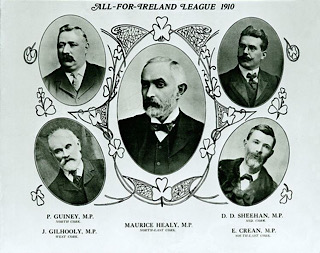
Guiney is the eldest son of Timothy Guiney, a shopkeeper and later clerk of Kanturkpoor law union, and Ellen Carver. He is educated at St. Patrick’s Monastery, Mountrath, County Laois. He serves three terms of imprisonment for activity in the Land War and later Plan of Campaign movement during the 1880s under the Coercion Act. He becomes a farmer and serves as councillor for Newmarket and on the Cork County Council (1908–11) as well as Chair of Newmarket Agricultural Society, Newmarket Gaelic League and Newmarket Old-Age Pensions Committee.
(Pictured: All-for-Ireland League group portrait of five of its Members of Parliament, in the “Cork Free Press”, 30 July 1910. These are: Patrick Guiney (North Cork), James Gilhooly (West Cork), Maurice Healy (North-east Cork), D. D. Sheehan (Mid Cork), and Eugene Crean (South-east Cork))
The Irish Catholic Hierarchy formally endorses Home Rule on February 16, 1886, a significant moment in the Irish political landscape.
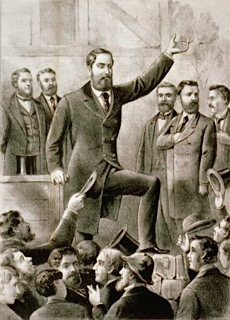
The Home Rule movement, led by Charles Stewart Parnell (pictured) and the Irish Parliamentary Party (IPP), seeks to establish a separate Irish parliament to handle domestic affairs while remaining within the British Empire. The campaign gains significant momentum throughout the late 19th century, but opposition from the British government and Irish unionists make progress difficult. Up to this point, the Catholic Church in Ireland had largely remained cautious about taking an overtly political stance on Home Rule. However, their endorsement on this day in 1886 changes the dynamic of the movement, giving it an unprecedented boost in legitimacy and support among the Irish people.
The Catholic Church plays a central role in Irish society, wielding immense influence over the daily lives of the majority Catholic population. Many of the clergy are already sympathetic to nationalist aspirations, but an official endorsement from the hierarchy signals a unified front that cannot be ignored. By formally backing Home Rule, the bishops strengthen nationalist demands and provide moral authority to the movement, reinforcing the argument that Home Rule is not just a political necessity but also a just and rightful cause.
This endorsement comes at a critical time. British Prime MinisterWilliam Ewart Gladstone is preparing to introduce the Government of Ireland Bill 1886, commonly known as the First Home Rule Bill, in April 1886, a legislative measure that, if passed, would grant Ireland limited self-government. The backing of the Catholic hierarchy is instrumental in rallying public support and reinforcing Parnell’s leadership. While the bill ultimately fails in the House of Commons on June 8, 1886, due to strong opposition from Conservative and Unionist factions, the Catholic Church’s stance ensures that Home Rule remains a dominant political issue for decades to come.
Despite the failure of the 1886 bill, the endorsement by the Catholic bishops has long-term implications. It solidifies a powerful alliance between Irish nationalism and the Church, an influence that persists well into the 20th century. The endorsement also helps to counteract Protestant unionist claims that Home Rule is merely a radical or sectarian endeavor, presenting it instead as a moderate and just political cause with widespread backing.
Over the following years, Home Rule remains a contentious issue, with subsequent attempts to pass similar legislation met with resistance. The Government of Ireland Bill 1893, commonly known as the Second Home Rule Bill, is again defeated in the House of Lords, and it is not until the Government of Ireland Act 1914, commonly referred to as the Third Home Rule Bill, that significant progress is made. Even then, implementation is delayed by World War I and ultimately overshadowed by the 1916 Easter Rising and the Irish War of Independence.
Looking back, the Catholic Church’s endorsement of Home Rule on February 16, 1886, is a defining moment in Ireland’s political history. It reinforces the nationalist cause, legitimizes the demand for self-governance, and plays a crucial role in shaping Ireland’s path toward eventual independence. While Home Rule itself is never fully realized in the form originally envisioned, its legacy influences the Irish Free State’s establishment in 1922 and Ireland’s eventual emergence as a fully independent republic.
(From: “February 16, 1886 – The Catholic Church Embraces Home Rule,” by Bagtown Clans, This Day in Irish History Substack, http://www.thisdayinirishhistory.substack.com, February 2025)
Williams is born on May 4, 1838, in Coleraine, County Londonderry. He claims to be descended on his father’s side from Worcestershireyeomen living in the parishes of Tenbury and Mamble. On his mother’s side he descends from Scottish settlers who planted Ulster in 1610. He is educated at Belfast Academy in Belfast under Dr. Reuben John Bryce and at a Greenwich private school under Dr. Goodwin. Later on, he goes to the southern United States for his health and takes part in a filibustering expedition to Nicaragua, where he sees some hard fighting and reportedly wins the reputation of a blockade runner. He is separated from his party and is lost in the forest for six days. Fevered, he discovers a small boat and manages to return to the nearest British settlement. He serves in the London Irish Rifles and has the rank of sergeant.
Williams returns to England in 1859, where he becomes a volunteer, and a leader writer for the London Evening Herald. In October 1859, he begins a connection with The Standard which lasts until 1884. From 1860 until 1863, he works as a first editor for the London Evening Standard and from 1882 until 1884, as editor of The Evening News.
Williams is best known for being a war correspondent. He is described as an admirable war correspondent, a daring rider as well as writer. For The Standard, he is at the headquarters of the Armée de la Loire, a French army, during the Franco-Prussian War in 1870. He is also one of the first correspondents in Strasbourg, where the French forces are defeated. In the summer and autumn of 1877, he is a correspondent to Ahmed Muhtar Pasha who commands the Turkish forces in Armenia during the Russo-Turkish War of 1877 and 1878. He remains constantly at the Turkish front, and his letters are the only continuous series that reaches England. In 1878, he publishes this series in a revised and extended form as The Armenian Campaign: A Diary of the Campaign on 1877, in Armenia and Koordistan, which is a large accurate record of the war, even though it is pro-Turkish. From Armenia, he follows Muhtar Pasha to European Turkey and describes his defence of the lines of Constantinople against the Imperial Russian Army. He is with General Mikhail Skobelev at the headquarters of the Imperial Russian Army when the Treaty of San Stefano is signed in March 1878. He reports this at the Berlin Congress.
At the end of 1878, Williams is in Afghanistan reporting the war, and in 1879 publishes the Notes on the Operations in Lower Afghanistan, 1878–9, with Special Reference to Transport.
In 1887, Williams meets with then General of the United States Army, Philip Sheridan, in Washington, D.C. to update the general on European affairs and the prospects of upcoming conflicts.
Williams is said to possess a voice of thunder and expresses with terrific energy. He conducts a lecture tour of the United States where he describes the six campaigns, illustrated by limelight photographs. His audience in Brooklyn, New York, is described by The New York Times as highly delighted by his lecture about the hardships and adventures. His presentation is “a feast for the eyes and ears and was highly appreciated by the large audience assembled.” He later tours England, Scotland, and Ireland speaking about his then seven campaigns.
Williams also writes fiction, including his book John Thaddeus Mackay, a tale about religious tolerance and understanding. With the sanction of Commander in Chief, Field MarshalGarnet Wolseley, he edits a book Songs for Soldiers for the March The Camp and the Barracks to improve morale and relieve boredom. Included in the book are a number of songs that he composed. He also writes about ecclesiastical questions, and contributes articles and stories to different periodicals.
Williams is a strong adherent to Wolseley’s military views and policy, and has considerable military knowledge. He also publishes military subjects in several publications such as the United Service Magazine, the National Review, and other periodicals. In 1892, he publishes Life of Sir H. Evelyn Wood, which is controversial as he defends the actions of Wood after the Battle of Majuba Hill in 1881. In 1902, he publishes a pamphlet, entitled Hush Up, in which he protests against the proposed limited official inquiry into the South African War and calls for an investigation.
Early in his career, Williams shares an office with friend and colleague Robert Gascoyne-Cecil, who later becomes Prime Minister of the United Kingdom. They have a standing tradition of always sending out for two beers with payment alternating between each man. Many years later, Williams is in the lobby of the House of Lords and Gascoyne-Cecil approaches him with an outstretched hand and asks, “By the way, Mr. Williams, whose turn is it to stand the beer?”
In 1884, the steamer carrying Williams and colleague Frederic Villiers of The Graphic overturns in the Nile River. Their rescue leads Williams to later commission a unique ivory and gold mitre for the Bishop of London as a thank-offering to God for his safe return from Khartoum.
Williams receives a personal invitation from King Edward VII to attend the funeral of his mother, Queen Victoria.
Both of Williams‘a sons became journalists. Frederick is a noted parliamentary reporter, writer, and historian in Canada. Francis Austin Ward Williams practices journalism in Sydney, Australia.
In the Nile Campaign of 1884-85, application is made to the War Office with the support of the Commander in Chief Lord Wolseley for medals for Willams and correspondent Bennet Burleigh. Williams has been twice requested to take command of some of the men by senior officers on the spot. The Secretary of War is unable to grant the recognition under the rules of the day but writes a letter saying that he regrets that this must be his decision.
Williams is a recipient of the Queen’s Sudan Medal, an award given to British and Egyptian forces which took part in the Sudan campaign between 1896 and 1898.
Field Marshall Garnet Wolseley recognizes the contributions of Williams on the battlefield. He says in a speech that from “Charles Williams, he had at various times received the greatest possible help in the field.”
Williams dies in Brixton, London, on February 9, 1904. He is buried in Nunhead Cemetery in London. His son, journalist Fred Williams, first learns of his father’s death on the wire service he is monitoring at his newspaper in Toronto, Ontario, Canada.
Williams’s funeral is well attended by the press as well as members of the military including Field Marshal Sir Evelyn Wood. Colleague Henry Nevison writes a long reflection on Williams. It includes, “On the field he possessed a kind of instinctive sense of what was going to happen. When I went to big field-days with him he was already an elderly man, and much broken down with the hardships of a war correspondent’s life; but he invariably appeared at the critical place exactly at the right moment, and I once heard the Duke of Connaught, who was commanding, say, ‘When I see Charlie Williams shut up his telescope, I know it’s all over.’ And now he is gone, with his rage, his generosity, his innocent pride, his faithful championship of every friend, and his memories of so many a strange event. His greatest joy was to encourage youth to follow in his steps, and the world is sadder and duller for his going.”
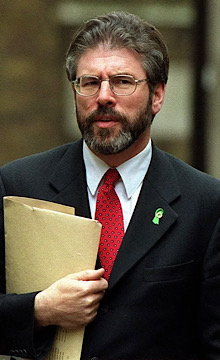
Adams tells reporters, “I don’t intend to spend the rest of my life trying to shore up a process that is going to be in perpetual crisis.” His words are taken as those of an exhausted and deeply frustrated politician, angry that the bulk of the blame for the impasse has been directed at him and his colleagues.
They also raise, in a very stark way, the question of what effect the suspension of the new political institutions will have on Sinn Féin. In the days leading up to Adams’s announcement, the efforts of London and Dublin are primarily directed at saving David Trimble‘s leadership of his party. Peter Mandelson, MP for Hartlepool, emphasises the importance of this in the House of Commons on February 8. To abandon Trimble at this time would be seen as a betrayal that would even further harden political attitudes in the broad unionist community.
This leads to both governments putting a degree of pressure on the republican movement, Sinn Féin as well as the Irish Republican Army (IRA), which is having entirely predictable and dangerous results. The old, familiar sense of beleaguered isolation, summed up in the party’s name, is reasserting itself. Adams has told the British government that he believes his position as Sinn Féin’s president will very quickly become untenable if the political institutions are suspended. The most common reaction to this news is, “Well, he would, wouldn’t he?” The inference is that Adams is firing a warning shot across the bows of both governments, that there are two parties to this dispute and both need to be protected.
There is deep pessimism among republicans about what will happen if the Executive is suspended for any length of time. The fear is that it will be extremely difficult, probably impossible, to put it together again. Over a period of weeks and months, confidence in the political process, already pretty fragile at grass roots level, will likely ebb even further. Adams, Martin McGuinness, Mitchel McLauglin and others closely identified with the move to a political strategy will be seen to have failed.
One Sinn Féin source, a staunch supporter of the peace process, says, “Already there’s a widespread suspicion that we’ve been suckered into this by the British government, helped by Dublin. The long-term aim has always been to destroy Sinn Féin politically. There’s no pressure on the loyalists to disarm because they don’t represent a political threat. If Adams is seen to have misjudged this, what else can he do but resign?”
Many dismiss this as the old republican paranoia coming once again into play. But it is important to understand how this crisis appears to very many people within Sinn Féin. It is not just a matter of a hundred or so IRA activists seeing the hand-over of weapons as a surrender. There has always been a profound suspicion of politics, not only within the IRA, but at many other levels. Politics has always failed to deliver the holy grail of a united Ireland.
Some of these people believe that Gerry Adams and Martin McGuinness are cynical opportunists who have sold out for the rewards of office. Many more see them as sincere, but mistaken, in their strategy. They genuinely believe that they have been seduced by the British government, probably with the active co-operation of Dublin, by the promise of political progress. Now they are in a position where Sinn Féin is carrying all the opprobrium for the breakdown.
If, as seems likely, it is necessary to hold an election for a new assembly, Sinn Féin will be greatly weakened. The party’s hopes of taking Dáil seats will also be diminished. As Sinn Féin is seen to lose ground, there will almost certainly be a drift back to violence, sporadic at first, but gathering momentum.
This conspiracy theory, and the bleak scenario it predicts probably sounds utterly fanciful to many, those who lay the blame for this threat to the peace process squarely on the IRA. Possibly the republican movement is simply preparing itself for a retreat to the political trenches, and putting forward reasons to justify this. But there is also a danger that such an interpretation of what has happened could gain much wider credibility in the nationalist community in Northern Ireland.
There is a profound sense of disappointment that the Executive is about to be suspended. It is quite striking how many professional interest groups – doctors, teachers, farmers – express their satisfaction with local politicians and a reluctance to go back to dealing with “remote, ignorant, arrogant” British ministers.
For nationalists there has been the added satisfaction of seeing their own elected representatives taking up posts in government and performing well. For the first time, many of them feel that they are equal citizens in Northern Ireland. Now, it seems, that could be put at risk, to save David Trimble’s “pretty valuable” skin.
If this does prove to be the case, sympathy will swing back to Sinn Féin. Within his own community, Adams is not seen as having betrayed the peace process. On the contrary, along with John Hume, he is seen as one of its main architects. If Adams had decided to resign the leadership of his party, or had been forced to do so, it would have been seen by many nationalists as proving that politics, within the context of Northern Ireland, cannot work.
(From: “What future if Adams walks away from peace efforts now?” by Mary Holland, The Irish Times, http://www.irishtimes.com, February 10, 2000)
Spring Rice is educated at Trinity College, Cambridge, and later studies law at Lincoln’s Inn, but is not called to the Bar. His family is politically well-connected, both in Ireland and Great Britain, and he is encouraged to stand for Parliament by his father-in-law, Lord Limerick.
Spring Rice first stands for election in Limerick City in 1818 but is defeated by the Tory incumbent, John Vereker, by 300 votes. He wins the seat in 1820 and enters the House of Commons. He positions himself as a moderate unionist reformer who opposes the radical nationalist politics of Daniel O’Connell and becomes known for his expertise on Irish and economic affairs. In 1824 he leads the committee which establishes the Ordnance Survey in Ireland.
Spring Rice’s fluent debating style in the Commons brings him to the attention of leading Whigs and he comes under the patronage of the Marquess of Lansdowne. As a result, he is made Under-Secretary of State for the Home Department under George Canning and Lord Goderich in 1827, with responsibility for Irish affairs. This requires him to accept deferral of Catholic emancipation, a policy which he strongly supports. He then serves as joint Secretary to the Treasury from 1830 to 1834 under Lord Grey. Following the Reform Act 1832, he is elected to represent Cambridge from 1832 to 1839. In June 1834, Grey appoints him Secretary of State for War and the Colonies, with a seat in the cabinet, a post he retains when Lord Melbourne becomes Prime Minister in July. A strong and vocal unionist throughout his life, he leads the Parliamentary opposition to Daniel O’Connell’s 1834 attempt to repeal the Acts of Union 1800. In a six-hour speech in the House of Commons on April 23, 1834, he suggests that Ireland should be renamed “West Britain.” In the Commons, he also champions causes such as the worldwide abolition of slavery and the introduction of state-supported education.
The Whig government falls in November 1834, after which Spring Rice attempts to be elected Speaker of the House of Commons in early 1835. When the Whigs return to power under Melbourne in April 1835, he is made Chancellor of the Exchequer. As Chancellor, he has to deal with crop failures, a depression and rebellion in North America, all of which create large deficits and put considerable strain on the government. His Church Rate Bill of 1837 is quickly abandoned and his attempt to revise the charter of the Bank of Ireland ends in humiliation. Unhappy as Chancellor, he again tries to be elected as Speaker but fails. He is a dogmatic figure, described by Lord Melbourne as “too much given to details and possessed of no broad views.” Upon his departure from office in 1839, he has become a scapegoat for the government’s many problems. That same year he is raised to the peerage as Baron Monteagle of Brandon, in the County of Kerry, a title intended earlier for his ancestor Sir Stephen Rice. He is also Comptroller General of the Exchequer from 1835 to 1865, despite Lord Howick‘s initial opposition to the maintenance of the office. He differs from the government regarding the exchequer control over the treasury, and the abolition of the old exchequer is already determined upon when he dies.
From 1839 Spring Rice largely retires from public life, although he occasionally speaks in the House of Lords on matters generally relating to government finance and Ireland. He vehemently opposes John Russell, 1st Earl Russell‘s policy regarding the Irish famine, giving a speech in the Lords in which he says the government had “degraded our people, and you, English, now shrink from your responsibilities.”
Spring Rice is well regarded in Limerick, where he is seen as a compassionate landlord and a good politician. An advocate of traditional Whiggism, he strongly believes in ensuring society is protected from conflict between the upper and lower classes. Although a pious Anglican, his support for Catholic emancipation wins him the favour of many Irishmen, most of whom are Roman Catholic. He leads the campaign for better county government in Ireland at a time when many Irish nationalists are indifferent to the cause. During the Great Famine of the 1840s, he responds to the plight of his tenants with benevolence. The ameliorative measures he implements on his estates almost bankrupts the family and only the dowry from his second marriage saves his financial situation. A monument in honour of him still stands in the People’s Park in Limerick.
Even so, Spring Rice’s reputation in Ireland is not entirely favourable. In a book regarding assisted emigration from Ireland, a process in which a landlord pays for their tenants’ passage to the United States or Australia, Moran suggests that Spring Rice was engaged in the practice. In 1838, he is recorded as having “helped” a boat load of his tenants depart for North America, thereby allowing himself the use of their land. However, he is also recorded as being in support of state-assisted emigration across the British Isles, suggesting that his motivation is not necessarily selfish.
Born in Limerick in 1844, Sheehy is the son of Richard Sheehy and Johanna Shea, and is the brother of Mary Sheehy and Fr. Eugene Sheehy. He is a student for the priesthood at the Irish College in Paris, but leaves due to a cholera epidemic and later marries Bessie McCoy. In his youth he is a member of the Irish Republican Brotherhood (IRB) and is active in the Irish National Land League. He is imprisoned on six occasions for his part in the Land War.
The two factions of the Irish Parliamentary Party reunite for the general election in 1900, but Sheehy does not stand again and is out of parliament for the next three years. After the death in August 1903 of James Laurence Carew, the Independent Nationalist MP for South Meath, he is selected as the Irish Parliamentary Party candidate in the resulting by-election in October 1903. Carew had allegedly been elected in 1900 as a result of a series of errors in nominations, and his predecessor John Howard Parnell stands again, this time as an Independent Nationalist. Sheehy wins with a majority of more than two to one, and holds the seat until he stands down at the 1918 United Kingdom general election in Ireland.
Sheehy and his wife, Bessie, have seven children, of whom six survive to adulthood. One of his daughters, Mary (born 1884), marries the MP Tom Kettle and has one daughter, Betty (1913–1996). Hanna (born 1877), becomes a teacher and marries the writer Francis Skeffington. They have one son, Owen, who is seven years old when his father is murdered by the Captain Bowen-Colthurst in Portobello Barracks, Rathmines, during the 1916 Easter Rising. Kathleen marries Freeman’s Journal and Irish Independentjournalist Frank Cruise O’Brien. The contrarian politician and writer Conor Cruise O’Brien is their son. Margaret (born 1879), an elocutionist, actress and playwright, marries solicitor Frank Culhane. They have four children. After his death she marries her godson, the poet Michael Casey. Sheehy’s two sons, Richard and Eugene, are barristers.
The writer James Joyce, who lives nearby as a youth, often visits the family home, 2 Belvedere Place, where musical evenings and theatricals take place every Sunday evening. Joyce entertains the family with Italian songs. In 1900, Margaret writes a play in which the Sheehys and their friends, including Joyce, act. Joyce takes a particular liking to Eugene and has a long-lasting but unrequited crush on Mary. Joyce’s novel Ulysses wittily describes an encounter between Sheehy’s wife, Bessie, and Father John Conmee, SJ, rector of Clongowes Wood College. Their daughter Mary is the spéirbhean longingly pursued by the protagonist in the story “Araby” in Joyce’s collection Dubliners. Another daughter, Kathleen, is possibly the model for the mockingly nationalist Miss Ivors in the story “The Dead“, which concludes Dubliners.
When Sheehy dies at the age of 88 in Dublin on December 17, 1932, it is reported that he has been the oldest surviving member of the Irish Parliamentary Party.
The Traditional Unionist Voice (TUV), a unionistpolitical party in Northern Ireland, is founded on December 7, 2007, by Jim Allister after he and others had resigned from the Democratic Unionist Party (DUP) in March of that year. In common with all other Northern Irish unionist parties, the TUV’s political programme has as its sine qua non the preservation of Northern Ireland’s place within the United Kingdom. A founding precept of the party is that “nothing which is morally wrong can be politically right.”
Prior to the St. Andrews Agreement, the DUP presents itself as an “anti-Agreement” unionist party opposed to numerous aspects of the Good Friday Agreement, e.g., the release of paramilitary prisoners before the end of their jail sentences, and the participation of Sinn Féin in the Northern Ireland government without complete decommissioning of Provisional Irish Republican Army (IRA) weapons and cessation of all IRA activity. The TUV has been an exception among Northern Irish unionist parties in consistently opposing the presence of Sinn Féin in the Northern Ireland government. After Allister’s resignation from the DUP, he continues to occupy his European Parliament seat, sitting as an Independent MEP until the 2009 European Parliament election in the United Kingdom, when he is not re-elected.
In terms of electoral success and financial income, Traditional Unionist Voice is the third largest unionist party in Northern Ireland, behind the Democratic Unionist Party and the Ulster Unionist Party (UUP). It is usually considered by political commentators to be a small party and characterised as being more hardline than other Northern Irish unionist parties.
Since 2011, the TUV has occupied one seat in the Northern Ireland Assembly. In 2024, they win their first seat in the United Kingdom House of Commons. The party also holds some seats on local councils in Northern Ireland. Its most prominent elected representative and best-known figure remains Jim Allister whose North Antrim constituency is the heartland of the party.
In March 2024, the party forms an electoral pact with Reform UK, stating that the two parties will stand mutually agreed candidates in Northern Ireland constituencies in the 2024 United Kingdom general election. In this election, the party wins its first Westminster Member of Parliament (MP), electing Jim Allister as MP for North Antrim.
An opinion poll, released by LucidTalk in August 2025, shows the TUV as the third most popular party for the first time, coming ahead of both the Alliance Party and Ulster Unionists, with 13%.
Moore is the eldest son of Queen Victoria‘s honorary physician in Ireland, Dr. William Moore of Rosnashane, Ballymoney, and Sidney Blanche Fuller. His ancestors came to Ulster during the Plantation of Ulster, settling at Ballymoney, at which time they were Quakers. The Moore Lodge estate is inherited from a relative. The family owns several other houses: Moore’s Grove and Moore’s Fort. He goes on to become a Deputy Lieutenant for County Antrim and a Justice of the Peace.
In 1903, Moore is one of the first landowners of Ireland to sell off their estates under the land acts. By the early 1920s he owns a Belfastpied-à-terre called “Glassnabreedon,” in the village of Whitehouse, four miles north of Belfast. This house is once owned by the son of Nicholas Grimshaw, Ireland’s first cotton pioneer.
Moore becomes a member of the General Synod of the Church of Ireland and is a founder member of the Ulster Council. He is a passionate Orangeman: his vehemence in defending Ulster’s right to oppose Irish Home Rule is said to alarm even those who share his views. Speaking in England on March 10, 1913, he makes his feelings clear on the possibility of Irish Home Rule: “I have no doubt, if Home Rule is carried, its baptism in Ireland will be a baptism in blood.” He shows little respect for English politicians, and has nothing but contempt for Southern Unionists. The eventual political settlement in 1921 meets with his approval.
Moore dies at his home, Moore Lodge, in Ballymoney on November 28, 1944, less than a week after his 80th birthday. He is buried in the family burial ground, “Lamb’s Fold,” two days later.
Shanahan is born in Hollyford on October 27, 1874. At some point he moves to Dublin, where he is a licensed vintner, maintaining an Irish pub in the notorious Montored-light district.
Shanahan is involved in the Easter Rising in Dublin in April 1916. This leads to him having legal difficulties over the licence of his public house. He consults the lawyer and politician Tim Healy who comments:
“I had with me today a solicitor with his client, a Dublin publican named Phil Shanahan, whose licence is being opposed, and whose house was closed by the military because he was in Jacob’s during Easter week. I was astonished at the type of man – about 40 years of age, jolly and respectable. He said he ‘rose out’ to have a ‘crack at the English’ and seemed not at all concerned at the question of success or failure. He was a Tipperary hurler in the old days. For such a man to join the Rebellion and sacrifice the splendid trade he enjoyed makes one think there are disinterested Nationalists to be found. I thought a publican was the last man in the world to join a rising! Alfred Byrne, MP, was with him, and is bitter against the Party. I think I can save Shanahan’s property.”
Shanahan is elected for Dublin Harbour at the 1918 United Kingdom general election in Ireland, defeating Alfred Byrne. Like other Sinn Féin MPs, he does not take his seat at Westminster, but becomes a member of the revolutionary Dáil. He represents Dublin Harbour in the First Dáil from 1919 to 1921. He is arrested and detained in custody by the British government in April 1920 but is released in time to attend the next meeting of the Dáil on June 29, 1920.
During the Irish War of Independence, Billy Dunleavy recalls, “The IRA were the best men we ever had at that time. The Tans used to go around in the tenders with a wire over the top and if it was going by up there in Talbot Street they’d (IRA) say, ‘Get out of the way, quick!’ and they’d throw a hand grenade into the car. Now Phil Shanahan, he owned a pub over there on the corner, he was a great man and he used to hide them after they’d been out on a job. He had cellars and all the IRA men used to go there and hide their stuff.”
Christian is considered one of the best Irish lawyers of his time, but as a judge, he regularly courts controversy. His bitter and sarcastic temper and open contempt for most of his colleagues leads to frequent clashes both in Court and in the Press. Though he is rebuked for misconduct several times by the House of Commons, no serious thought is given to removing him from office.
Christian’s early years at the Bar are not successful, and he admits to being near to despair at times about his prospects. His practice lays in the Court of Chancery, with procedures that are extremely complex and he finds at first almost unintelligible. Gradually he masters the intricacies of Chancery practice becoming a leader of the Bar, and took silk in 1841. It is said that his expertise in Chancery procedures leave even the Lord Chancellor himself quite unable to argue with him.
Christian is appointed Law Adviser to the Lord Lieutenant of Ireland, an influential post which involves assisting the Attorney-General and Solicitor-General in advising the Crown in 1850, but resigns after only a few months on the grounds that it interferes with his private practice. He is appointed Third Sergeant later the same year but resigns in 1855, allegedly because he is disappointed at not receiving further promotion. Promotion does in time come his way. He is appointed Solicitor-General the following year and a judge of the Court of Common Pleas in 1858. He is unusual in having no strong political loyalty; it is said that his political allegiance is known only to himself.
As a judge of the Court of Common Pleas, Christian gets on well with his colleagues, and any dissenting judgements he writes are short and courteous. It is after his appointment as a Lord Justice of Appeal in Chancery in 1867 that his behaviour begins to attract unfavourable comment, as he goes out of his way to court controversy on a wide variety of topics.
His criticisms of legal rulings and arguments are invariably delivered in the form of a personal attack. Such exchanges are frequently continued through the letters page of The Times. Conservative in politics, he objects to the appointment of Thomas O’Hagan as Lord Chancellor in December 1868, dismissing him as a liberal “political necessity.” He goes to great lengths to point out legal flaws in the Landlord and Tenant (Ireland) Act 187, to the great annoyance of the Prime Minister, William Ewart Gladstone. His final public diatribe comes in 1877 when he launches an attack on the quality of law reporting, dismissing the contents of the Irish Reports as “a mass of utterly worthless rubbish.” He is vilified in the legal press and is the subject of cartoons in Dublin satirical journals. Pleading deafness, he retires in December 1878.


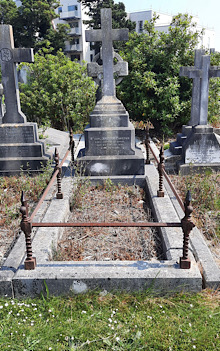
 seamus dubhghaill