seamus dubhghaill

Promoting Irish Culture and History from Little Rock, Arkansas, USA


Leave a comment

Death of Philip Shanahan, Sinn Féin Politician

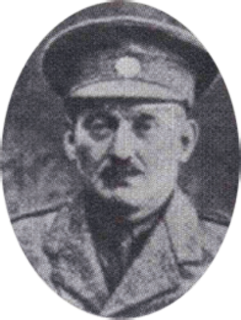
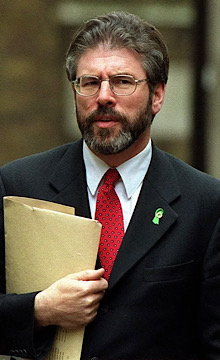
Philip Shanahan, Irish Sinn Féin politician, dies in Hollyford, County Tipperary, November 21, 1931. He is elected to the House of Commons of the United Kingdom in 1918 and serves as a Teachta Dála (TD) in Dáil Éireann from 1919 to 1922.

Shanahan is born in Hollyford on October 27, 1874. At some point he moves to Dublin, where he is a licensed vintner, maintaining an Irish pub in the notorious Monto red-light district.

Shanahan is involved in the Easter Rising in Dublin in April 1916. This leads to him having legal difficulties over the licence of his public house. He consults the lawyer and politician Tim Healy who comments:

“I had with me today a solicitor with his client, a Dublin publican named Phil Shanahan, whose licence is being opposed, and whose house was closed by the military because he was in Jacob’s during Easter week. I was astonished at the type of man – about 40 years of age, jolly and respectable. He said he ‘rose out’ to have a ‘crack at the English’ and seemed not at all concerned at the question of success or failure. He was a Tipperary hurler in the old days. For such a man to join the Rebellion and sacrifice the splendid trade he enjoyed makes one think there are disinterested Nationalists to be found. I thought a publican was the last man in the world to join a rising! Alfred ByrneMP, was with him, and is bitter against the Party. I think I can save Shanahan’s property.”

Shanahan is elected for Dublin Harbour at the 1918 United Kingdom general election in Ireland, defeating Alfred Byrne. Like other Sinn Féin MPs, he does not take his seat at Westminster, but becomes a member of the revolutionary Dáil. He represents Dublin Harbour in the First Dáil from 1919 to 1921. He is arrested and detained in custody by the British government in April 1920 but is released in time to attend the next meeting of the Dáil on June 29, 1920.

During the Irish War of Independence, Billy Dunleavy recalls, “The IRA were the best men we ever had at that time. The Tans used to go around in the tenders with a wire over the top and if it was going by up there in Talbot Street they’d (IRA) say, ‘Get out of the way, quick!’ and they’d throw a hand grenade into the car. Now Phil Shanahan, he owned a pub over there on the corner, he was a great man and he used to hide them after they’d been out on a job. He had cellars and all the IRA men used to go there and hide their stuff.”

In 1921 a general election is held for the House of Commons of Southern IrelandRepublicans use this as an election for the Second Dáil. Shanahan is elected unopposed for the four member Dublin Mid constituency. He is defeated at the 1922 Irish general election to the Third Dáil, as a member of the Anti-Treaty faction of Sinn Féin, which opposes the creation of the Irish Free State in the place of the Republic declared in 1919.

Shanahan leaves Dublin in 1928 and returns to his home village of Hollyford, County Tipperary. He dies there on November 21, 1931, at the age of 57.


Leave a comment

Death of Jonathan Christian, Irish Judge

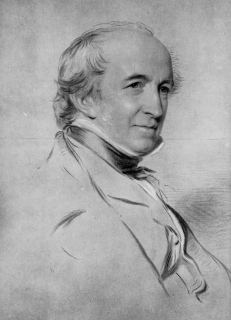
Jonathan ChristianSLQCPC (I), Irish judge, dies in Dublin on October 29, 1887. He serves as Solicitor-General for Ireland from 1856 to 1858. He is a judge of the Court of Common Pleas (Ireland) from 1858 to 1867 when he is appointed Lord Justice of Appeal in Chancery. On the creation of the new Irish Court of Appeal in 1878, he serves briefly on that Court, but retires after a few months.

Christian is considered one of the best Irish lawyers of his time, but as a judge, he regularly courts controversy. His bitter and sarcastic temper and open contempt for most of his colleagues leads to frequent clashes both in Court and in the Press. Though he is rebuked for misconduct several times by the House of Commons, no serious thought is given to removing him from office.

Christian is born in Carrick-on-Suir, County Tipperary, the third son of George Christian, a solicitor, and his wife Margaret Cormack. He is educated at the Trinity College Dublin, enters Gray’s Inn in 1831 and is called to the Irish Bar in 1834. He marries Mary Thomas in 1859 and they have four sons and four daughters. He lives at Ravenswell, Bray, County Wicklow.

Christian’s early years at the Bar are not successful, and he admits to being near to despair at times about his prospects. His practice lays in the Court of Chancery, with procedures that are extremely complex and he finds at first almost unintelligible. Gradually he masters the intricacies of Chancery practice becoming a leader of the Bar, and took silk in 1841. It is said that his expertise in Chancery procedures leave even the Lord Chancellor himself quite unable to argue with him.

Christian is appointed Law Adviser to the Lord Lieutenant of Ireland, an influential post which involves assisting the Attorney-General and Solicitor-General in advising the Crown in 1850, but resigns after only a few months on the grounds that it interferes with his private practice. He is appointed Third Sergeant later the same year but resigns in 1855, allegedly because he is disappointed at not receiving further promotion. Promotion does in time come his way. He is appointed Solicitor-General the following year and a judge of the Court of Common Pleas in 1858. He is unusual in having no strong political loyalty; it is said that his political allegiance is known only to himself.

As a judge of the Court of Common Pleas, Christian gets on well with his colleagues, and any dissenting judgements he writes are short and courteous. It is after his appointment as a Lord Justice of Appeal in Chancery in 1867 that his behaviour begins to attract unfavourable comment, as he goes out of his way to court controversy on a wide variety of topics.

His criticisms of legal rulings and arguments are invariably delivered in the form of a personal attack. Such exchanges are frequently continued through the letters page of The Times. Conservative in politics, he objects to the appointment of Thomas O’Hagan as Lord Chancellor in December 1868, dismissing him as a liberal “political necessity.” He goes to great lengths to point out legal flaws in the Landlord and Tenant (Ireland) Act 187, to the great annoyance of the Prime Minister, William Ewart Gladstone. His final public diatribe comes in 1877 when he launches an attack on the quality of law reporting, dismissing the contents of the Irish Reports as “a mass of utterly worthless rubbish.” He is vilified in the legal press and is the subject of cartoons in Dublin satirical journals. Pleading deafness, he retires in December 1878.

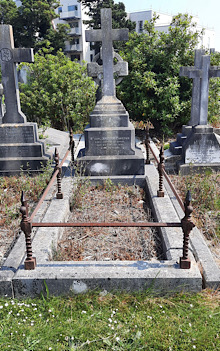
Christian dies on October 29, 1887, at his Dublin residence, 53 Merrion Square, and is buried in Dean’s Grange Cemetery, Deansgrange, County Dublin. In his will, approved in Dublin on December 3, 1887, he leaves an estate worth over £70,000. There is a fine portrait by Frank Reynolds in the dining hall of the Honourable Society of King’s Inns, Dublin.


Leave a comment

Birth of John Cuffe, 3rd Earl of Desart

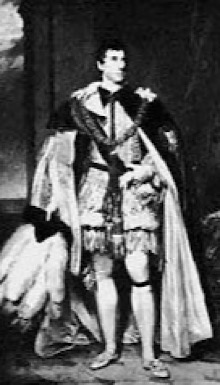
John Otway O’Conner Cuffe, 3rd Earl of Desart, an Irish Conservative politician styled Viscount Castlecuffe until 1820, is born on October 12, 1818. He serves as Under-Secretary of State for War and the Colonies between March and December 1852 in the first administration of Edward Smith-Stanley, 14th Earl of Derby.

Cuffe is the son of John Otway Cuffe, 2nd Earl of Desart, and Catherine, daughter of Maurice O’Connor. He succeeds in the earldom in November 1820, aged two, on the early death of his father. He is educated at Eton College and enters Christ Church, Oxford in 1836 but takes no degree.

Cuffe sits in the House of Commons of the United Kingdom as Member of Parliament for Ipswich between June and July 1842, when his election is declared void. He does not stand in the subsequent by-election. In 1846 he is elected an Irish representative peer and thus takes a seat in the House of Lords, which he holds until his death in 1865. He serves as Under-Secretary of State for War and the Colonies in Lord Derby’s short-lived protectionist government of 1852.

Cuffe marries Lady Elizabeth Lucy Campbell, daughter of John Campbell, 1st Earl Cawdor, in 1842. They have three sons and a daughter. He dies at the age of 46 at his home in Belgravia, City of Westminster, Greater London on April 1, 1865, due to a fall suffered during an attack of paralysis. He is buried in Castleinch Cemetery, Kilkenny, County Kilkenny. He is succeeded in the earldom by his son, William. The Countess of Desart dies in April 1898, aged 76.


Leave a comment

Birth of Fenian Leader Jeremiah O’Donovan Rossa

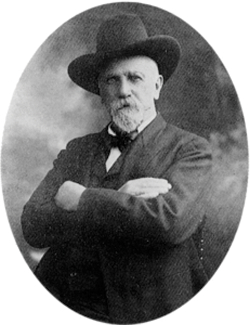
Jeremiah O’Donovan Rossa, Irish Fenian leader and prominent member of the Irish Republican Brotherhood (IRB), is born Jeremiah O’Donovan at Reenascreena, RosscarberyCounty Cork, on September 10, 1831.

Rossa becomes a shopkeeper in Skibbereen where, in 1856, he establishes the Phoenix National and Literary Society, the aim of which is “the liberation of Ireland by force of arms.” This organisation later merges with the IRB, founded two years later in Dublin.

In December 1858, Roosa is arrested and jailed without trial until July 1859. He is charged with plotting a Fenian rising in 1865, put on trial for high treason, and sentenced to penal servitude for life due to previous convictions. He serves his time in PentonvillePortland, and Chatham prisons in England.

In an 1869 by-election, Roosa is returned to the British House of Commons for the Tipperary constituency, defeating the Liberal Catholic Denis Caulfield Heron by 1,054 to 898 votes. The election is declared invalid because Rossa is an imprisoned felon.

After giving an understanding that he will not return to Ireland, Rossa is released as part of the Fenian amnesty of 1870. Boarding the S.S. Cuba, he leaves for the United States with his friend John Devoy and three other exiles. Together they were dubbed “The Cuba Five.”

Rossa takes up residence in New York City, where he joins Clan na Gael and the Fenian Brotherhood. He organises the first ever bombings by Irish republicans of English cities in what is called the “dynamite campaign.” The campaign lasts through the 1880s and makes him infamous in Britain. The British government demands his extradition from America but without success.

In 1885, Rossa is shot outside his office near Broadway by an Englishwoman, Yseult Dudley, but his wounds are not life-threatening. He is allowed to visit Ireland in 1894, and again in 1904. On the latter visit, he is made a “Freeman of the City of Cork.”

Rossa is seriously ill in his later years and is finally confined to a hospital bed in St. Vincent’s Hospital, Staten Island, where he dies suddenly at the age of 83 on June 29, 1915. His body is returned to Ireland for burial and a hero’s welcome. The funeral at Glasnevin Cemetery on August 1, 1915, is a huge affair, garnering substantial publicity for the Irish Volunteers and the IRB at time when a rebellion, later to emerge as the Easter Rising, is being actively planned. The graveside oration given by Patrick Pearse remains one of the most famous speeches of the Irish independence movement stirring his audience to a call to arms.


Leave a comment

Birth of Kevin Izod O’Doherty, Politician & Young Irelander

Kevin Izod O’Doherty, an Irish Australian politician who, as a Young Irelander, is transported to Tasmania in 1849, is born in Dublin on September 7, 1823, although other sources including the Dictionary of Australasian Biography indicate he is born in June 1824. He is first elected to the Legislative Assembly of Queensland in 1867. In 1885, he returns to Europe briefly serving as an Irish Home Rule MP at Westminster before returning in 1886 as a private citizen to Brisbane.

O’Doherty receives a good education and studies medicine, but before he is qualified, joins the Young Ireland party and in June 1848, together with Thomas Antisell and Richard D’Alton Williams, establish The Irish Tribune. Only five editions are issued, the first being on June 10, 1848. On July 10, 1848, when the fifth edition is issued, O’Doherty is arrested and charged with treason felony. At the first and second trials the juries disagree, but at the third trial, he is found guilty and sentenced to transportation for ten years.

O’Doherty arrives in Tasmania in November 1849, is at once released on parole to reside at Oatlands, and his professional services are utilised at St. Mary’s Hospital, Hobart. The other Irish prisoners nickname him “St. Kevin.”  In 1854 he receives a pardon with the condition that he must not reside in Great Britain or Ireland. He goes to Paris and carries on his medical studies, making one secret visit to Ireland to marry Mary Eva Kelly, to whom he is affianced before leaving Ireland. He receives an unconditional pardon in 1856, and completes his studies in Dublin, graduating FRCS in 1857. He practises in Dublin successfully, and in 1862 goes to Brisbane, Australia, and becomes well known as one of its leading physicians.

O’Doherty is elected a member of the Legislative Assembly of Queensland in 1867, in 1872 is responsible for a health act being passed, and is also one of the early opponents of the trafficking of Kanakas. In 1885, he resigns as he intends to settle in Europe.

In Ireland, O’Doherty is cordially welcomed, and is returned unopposed as Irish Parliamentary Party (IPP) MP for North Meath to the House of Commons of the United Kingdom in the November 1885 United Kingdom general election. However, finding the climate does not suit him, he does not seek re-election in 1886 and returns to Brisbane in that year. He attempts to take up his medical practice again but is not successful. He dies in poor circumstances in Brisbane on July 15, 1905.

O’Doherty’s wife and a daughter survive him. A fund is raised by public subscription to provide for his widow, a poet, who in her early days is well known as the author of Irish patriotic verse in The Nation under the soubriqet “Eva.” In Australia, she occasionally contributes to Queensland journals, and one of her poems is included in A Book of Queensland Verse. She dies at Brisbane on May 21, 1910.


Leave a comment

Death of Hedges Eyre Chatterton, Irish Conservative Party MP

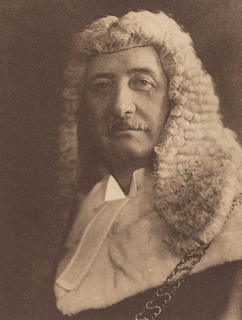
Hedges Eyre Chatterton, Irish Conservative Party Member of Parliament (MP) in the Parliament of the United Kingdom and subsequently Vice-Chancellor of Ireland, dies on August 30, 1910.

Chatterton is born in 1819 in Cork, County Cork, the eldest son of Abraham Chatterton, a solicitor, and Jane Tisdall of Kenmare, County Kerry. He attends Trinity College Dublin (TCD), before being called to the Irish Bar in 1843. He becomes a Queen’s Counsel (QC) in 1858. He is Solicitor-General for Ireland from 1866 to 1867 and Attorney-General for Ireland in 1867. He is made a member of the Privy Council of Ireland on March 30, 1867. He is elected MP for Dublin University in 1867. He leaves the House of Commons on his appointment to the newly created judicial office of Vice-Chancellor of Ireland in 1867, an office which is abolished when he retires in 1904.

He marries firstly Mary Halloran of Cloyne, County Cork, in 1845. She dies in 1901. In the year of his retirement, he remarries Florence Henrietta Gore, widow of Edward Croker. He has no children. James Joyce remarks in Ulysses that his second marriage at the age of 85 infuriates his nephew, who had been waiting patiently for years to inherit his money.

Despite his many years of service on the Bench, Chatterton does not seem to be highly regarded as a judge. On his retirement the Bar pays tribute to his good qualities but adds several qualifications: “there might have been on the Bench lawyers more profound, reasoners more acute…” In his first decade on the Bench, Chatterton has to endure the continual denigration of Jonathan Christian, the Lord Justice of Appeal in Chancery. Christian is notoriously bitter-tongued, and while he despises most of his colleagues, he seems to have a particular dislike of Chatterton. He regularly votes on appeal to overturn his judgments, and frequently adds personal insults. Nor does he confine his attacks to the courtroom: there is controversy in 1870 when remarks of Christian that Chatterton is “lazy, stupid, conceited and so incompetent that he ought to be pensioned off” find their way into The Irish Times. The hint about pensioning off Chatterton is not taken up, no doubt because he enjoys the confidence of the Lord Chancellor of IrelandThomas O’Hagan, 1st Baron O’Hagan, who is also on bad terms with Christian. In an appeal from Chatterton in 1873, the two appeal judges clash publicly, with O’Hagan reprimanding Christian for insulting a judge who is not there to defend himself.

Chatterton becomes involved in controversy in 1885, over the first attempt to rename Sackville Street to O’Connell StreetDublin Corporation votes for the name change, but it arouses considerable objections from local residents, one of whom seeks an injunction. Chatterton grants the injunction on the ground that the corporation has exceeded its statutory powers. Rather unwisely, he also attacks the merits of the decision, accusing the Corporation of “sentimental notions.” The corporation is angered by both the decision and the criticisms: while it may have been a coincidence, the fact that Temple Street is briefly renamed Chatterton Street is interpreted by some as an insult to the judge, since the street is much frequented by prostitutes. The controversy is short-lived as the corporation is granted the necessary statutory powers in 1890, and the new name becomes official in 1924, by which time it has gained popular acceptance.

Chatterton dies on August 30, 1910, and is buried in Dean’s Grange Cemetery in the suburban area of Deansgrange in Dún Laoghaire–RathdownCounty Dublin.


Leave a comment

Birth of James Kilfedder, Northern Ireland Unionist Politician

Sir James Alexander Kilfedder, Northern Irish unionist politician usually known as Sir Jim Kilfedder, is born on July 16, 1928, in KinloughCounty Leitrim, in what is then the Irish Free State. He is the last unionist to represent Belfast West in the House of Commons.

Kilfedder’s family later moves to Enniskillen in neighbouring County Fermanagh in Northern Ireland, where he is raised. He is educated at Portora Royal School in Enniskillen and at Trinity College, Dublin (TCD). During his time at TCD, he acts as Auditor of the College Historical Society (CHS), one of the oldest undergraduate debating societies in the world. He becomes a barrister, called to the Irish Bar at King’s Inns, Dublin, in 1952 and to the English Bar at Gray’s Inn in 1958. He practises law in London.

At the 1964 United Kingdom general election, Kilfedder is elected as an Ulster Unionist Party (UUP) Member of Parliament for Belfast West. During the campaign, there are riots in Divis Street when the Royal Ulster Constabulary(RUC) remove an Irish flag from the Sinn Féin offices of Billy McMillen. This follows a complaint by Kilfedder in the form of a telegram to the Minister of Home Affairs, Brian McConnell. It reads, “Remove tricolour in Divis Street which is aimed to provoke and insult loyalists of Belfast.” Kilfedder loses his seat at the 1966 United Kingdom general election to Gerry Fitt. He is elected again in the 1970 United Kingdom general election for North Down, and holds the seat until his death in 1995.

Kilfedder is elected for North Down in the 1973 Northern Ireland Assembly election, signing Brian Faulkner‘s pledge to support the White Paper which eventually establishes the Sunningdale Agreement, but becoming an anti-White Paper Unionist after the election. In 1975, he stands for the same constituency in the Northern Ireland Constitutional Convention election, polling over three quotas as a UUP member of the United Ulster Unionist Council (UUUC) although he refuses to sign the UUUC’s pledge of conduct.

Kilfedder leaves the UUP in 1977 in opposition to the party’s policies tending to integrationism, preferring to advocate the restoration of the Stormont administration. For a time he sits as an “Independent Ulster Unionist.” He contests the 1979 European Parliament election under that label, finishing fourth in the count for the three seats, having overtaken the UUP leader Harry West on transfers.

In 1980, Kilfedder forms the Ulster Popular Unionist Party (UPUP) and is re-elected under that label in all subsequent elections. He again tops the poll in the 1982 Northern Ireland Assembly election and is elected as Speaker of the Assembly, serving in the position until 1986. He generally takes the Conservative whip at Westminster. While Speaker, he is paid more than the Prime Minister.

On March 20, 1995, while traveling by train into London from Gatwick Airport, Kilfedder dies of a heart attack. This is the same day that the Belfast Telegraph carries a front-page story saying that an Ulster MP has been targeted as one of twenty MPs invited by the LGBT rights organisation OutRage! in a letter to come out. He dies unmarried and is survived by two sisters.

Kilfedder is described by Democratic Unionist Party MLA Peter Weir as “the best MP North Down ever had.”

The UPUP does not outlive Kilfedder, and the by-election for his Commons seat is won by Robert McCartney, standing for the UK Unionist Party (UKUP). McCartney had fought the seat in the 1987 United Kingdom general election as a “Real Unionist” with the backing of the Campaign for Equal Citizenship. At the 1987 election count, in his victory speech, Kilfedder “attacked his rival’s supporters as ‘a rag tag collection of people who shame the name of civil rights.’ He said they included communists, Protestant paramilitaries and Gay Rights supporters and he promised to expose more in future.” McCartney loses North Down in 2001 to Sylvia Hermon of the UUP.

Kilfedder’s personal and political papers (including constituency affairs) are held at the Public Record Office of Northern Ireland, reference D4127.

Kilfedder is buried in Roselawn Cemetery in East Belfast.


Leave a comment

Death of Isaac Corry, Lawyer & Member of Parliament

Isaac Corry FRS, PC (I), PC, an Irish and British Member of Parliament and lawyer, dies in Merrion Square, Dublin, on May 15, 1813, his 60th birthday.

Corry is born on May 15, 1753, in Newry, County Down, the son of Edward Corry, sometime Member of Parliament, and Catharine Bristow. His cousin is the writer Catherine Dorothea Burdett. He is educated at The Royal School, Armagh, where his contemporaries include Robert Stewart, Viscount Castlereagh, and later at Trinity College, Dublin, from which he graduates in 1773. On October 18, 1771, he is admitted to the Middle Temple and called to the bar at King’s Inns in 1779.

Corry succeeds his father as Member of Parliament for Newry in 1776, sitting in the Irish House of Commons until the Acts of Union 1800. From 1782 to 1789 he serves as equerry to Prince Henry, Duke of Cumberland, being described in 1794 by Rt. Hon. Sylvester Douglas as “a well-bred man…He has no brogue…He once acted as a sort of groom of the bedchamber to the late Duke of Cumberland.” In 1798, he is also elected for Randalstown, but chooses not to sit and, in 1802, he is returned to the British House of Commons for Newry. He serves as a Whig at Westminster until 1806. It is written in 1783 that he would expect to enter high office, given that “he lives expensively and does not pursue his profession, which is the law.” In 1788 he becomes Clerk of the Irish Board of Ordnance. The following year he is appointed a commissioner of the revenue. Finally in 1799 he is appointed Chancellor of the Exchequer of Ireland and a Lord High Treasurer of Ireland in place of Sir John Parnell, who quarreled violently with William Pitt the Younger over the projected union, which he categorically refuses to support. In 1795 he becomes a Privy Councillor.

In 1802 Corry is dismissed from the Exchequer and replaced by John Foster (later Lord Oriel), he is awarded, however, £2,000 p.a. in compensation. In 1806 the changes in ownership of the Newry estates alters his position. The lands pass to a senior line of the Needham family and they support General Francis Needham, 1st Earl of Kilmorey, at the general election. Corry does not have the funds needed, in excess of £5000, to purchase a seat elsewhere. However, Lady Downshire is inclined to support the Grenville ministry and comes to a formal agreement with Corry to give him £1000 towards his expenses should he be successful in Newry, and, if not, to bring him in for another borough. He fails against the Needham interest in Newry, but a seat at Newport, Isle of Wight, is purchased for him, with £4000 from Lady Downshire, and he is appointed to the Board of Trade. Six months later Grenville’s ministry has fallen and there is another general election. Corry stands, again unsuccessfully, for Newry.

Corry is unmarried but has a long-term relationship with Jane Symms. They have three sons and three daughters. His daughter Ann marries Lt. Col. Henry Westenra, the brother of Robert Cuninghame, 1st Baron Rossmore. His residence in Newry is the Abbey Yard, now a school, and Derrymore House, Bessbrook, County Armagh, which he had inherited from his father and sold in 1810. It is now the property of the National Trust. During his life, a road is constructed from near the main entrance of Derrymore House around Newry and links up with the Dublin Road on the southern side of the town primarily for his use. This road subsequently becomes known as “The Chancellor’s Road,” as a result of his term as the Irish Chancellor of the Exchequer. A local legend has it that the road is constructed after an incident in which Corry’s stagecoach is stoned while passing through Newry by people angry at an unpopular window tax he had introduced. The road has retained this name, but it is cut in half by the Newry by-pass in the mid-1990s, however, as a result of works associated with the new A1 dual carriageway, the two-halves of the road are now reconnected.

Corry dies at his house in Merrion Square, Dublin, on May 15, 1813, his 60th birthday. He is buried in St. Patrick’s Cathedral, Dublin.


Leave a comment

Birth of Timothy McCarthy Downing, Solicitor & Politician

Timothy McCarthy Downing, solicitor and an Irish Liberal Party and Home Rule League politician, is born at Kenmare, County Kerry, on May 11, 1814.

Downing is the second son of Eugene Downing, a local merchant, and his wife, Helena, daughter of Timothy McCarthy of Kilfadamore, County Kerry. They have two other sons and two daughters. He is apprenticed in 1830 to his elder brother, Francis Henry, who practises as a solicitor at Killarney. Once admitted as a solicitor himself in 1836, he moves to Skibbereen, County Cork, where he practises until the mid-1860s, making from his practice a large fortune. By the mid-1870s he owns 4,067 acres in Cork and Kerry valued at £1,413.

Downing is prominent locally in public affairs, supporting the repeal campaign of Daniel O’Connell and the temperance campaign of Fr. Theobald Mathew. He is the first chairman of Skibbereen town commissioners, from 1862 to 1879. He later helps James Stephens and Michael Doheny escape to France in 1849. After Jeremiah O’Donovan Rossa and other members of the Phoenix National and Literary Society are arrested on December 5, 1858, he acts as their solicitor. His chief clerk, Mortimer Moynahan, a member of the society, unwittingly takes on as an assistant a man who proves to be an informer.

Downing involves himself in the National Association of Ireland, the political pressure group formed by the Catholic Archbishop of Dublin, Paul Cullen, and succeeds in getting tenant-right added to its demands in March 1865. He is elected as one of the two MPs for County Cork on November 30, 1868, and is reelected without a contest on February 5, 1874. Nominally a liberal, he draws his main support from the Catholic bishops and most of the parish clergy and, more significantly, from the tenant farmer class. The farmers’ interests he vigorously pursues in parliament and outside.

After the passing of William Ewart Gladstone‘s first land act, Downing plays a prominent part in the formation of the Home Rule League under the leadership of Isaac Butt. He is always a moderate on the home-rule issue – he opposes the pledging of home-rule MPs always to act together and later the obstructive tactics of fellow home-rulers Joseph Gillis Biggar and Charles Stewart Parnell. He is one of the nine members of the standing committee of Butt’s Irish Parliamentary Party (1874–79) and proves a stalwart of Butt particularly in disputes with Parnell. It is he who draws to the attention of the House of Commons the condition of tenants on the Buckley estate in the foothills of the Galtee Mountains at Skeheenarinky in County Tipperary in March 1877. In Butt’s absence Downing introduces an Irish land tenure bill on February 6, 1878, which is, however, quickly defeated.

Downing dies January 10, 1879, at his residence, Prospect House, Skibbereen, a deputy lieutenant of County Cork. The cortège that follows his body to the Old Caheragh Graveyard, Skibbereen, for burial is said to be four miles long. In Emmet Larkin‘s judgement, “it was not altogether unlikely, if he had survived, that he would have eventually succeeded Butt as chairman of the Irish party.”

In 1837, Downing marries Jane, youngest daughter of Daniel McCarthy of Ave Hill, Dromore, County Cork, and with her has four sons and three daughters. His younger brother, Washington, is a parliamentary reporter and later the Rome correspondent for The Daily News of London, and husband of Mary McCarthy Downing.

(From: “Downing, Timothy McCarthy” by C.J. Woods, Dictionary of Irish Biography, http://www.dib.ie, October 2009)


Leave a comment

Death of Timothy Harrington, Journalist, Barrister & Politician

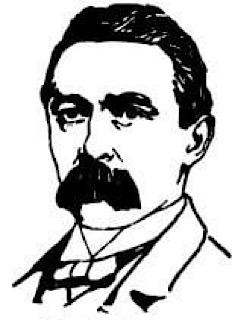
Timothy Charles Harrington, Irish journalist, barrister, nationalist politician and Member of Parliament (MP) in the House of Commons of the United Kingdom, dies in Dublin on March 12, 1910, following a stroke.

Harrington is born on September 20, 1851, in Castletownbere, County Cork, son of Denis Harrington and his wife, Eileen (née O’Sullivan). He is educated at the Catholic University of Ireland and Trinity College Dublin (TCD).

As a member of the Irish Parliamentary Party (IPP), Harrington represents Westmeath from February 1883 to November 1885. In 1885 he is elected for the new constituency of Dublin Harbour, which he represents until his death. He serves as Lord Mayor of Dublin three times from 1901 to 1904.

Harrington owns two newspapers, United Ireland and the Kerry Sentinel, and is a member of the so-called Bantry band of prominent nationalist politicians from the Bantry vicinity. They are also more pejoratively known as the Pope’s brass band. Tim Healy is another prominent member of this unofficial group.

In 1884, Harrington publishes a pamphlet, “Maamtrasna Massacres – Impeachment of the Trials,” in which he dismantles the Crown Prosecution’s case against the eight men accused of the murders of the Joyce family on August 17, 1882. He provides evidence that Crown Prosecutor George Bolton had deliberately suppressed evidence that would have acquitted Maolra Seoighe (English: Myles Joyce), who was hanged, and four men who were sentenced to twenty years of penal servitude.

Harrington is secretary and chief organiser of the Irish National League (INL), a supporter of Charles Stewart Parnell and is largely responsible for devising the agrarian Plan of Campaign in 1886. He becomes a Parnellite Nationalist when the party splits in 1891, continuing as secretary of the INL. In 1897 he proclaims himself an Independent Nationalist and sides with William O’Brien‘s United Irish League (UIL) from its early days. He is briefly considered as a possible alternative to John Redmond as leader of the re-united Irish Parliamentary Party in 1900 when he stands in the 1900 United Kingdom general election Ireland as a Nationalist again.

Thereafter Harrington becomes excluded from Redmond’s closed circle of confidants, retains sympathy with O’Brien, and represents the interests of the tenant farmers at the 1902 Land Conference negotiations which lead to the enactment of the unprecedented Wyndham Land Purchase (Ireland) Act 1903.

On September 7, 1901, as the Lord Mayor of Dublin, Harrington kicks off at the official ceremony to open Bohemian F.C.‘s new home, Dalymount Park.

Harrington retains the party nomination for the Dublin Harbour constituency in the January 1910 United Kingdom general election, largely because of local divisions about who should succeed him and because an O’Brienite offer to pay his election expenses deters rivals from going to the polls. He decides that the finely balanced result of the general election means that every nationalist vote would be required at Westminster. He therefore travels to London, but shortly after attending the parliamentary party meeting on February 23 he suffers a stroke. After some days’ recuperation he is brought home to Dublin, but his condition deteriorates and he dies on March 12, 1910, at his home, 70 Harcourt Street. He is buried near the Parnell circle at Glasnevin Cemetery.

Harrington is celebrated by a statue erected in 2001 at the east end of Castletownbere near the Millbrook bar.