seamus dubhghaill

Promoting Irish Culture and History from Little Rock, Arkansas, USA


Leave a comment

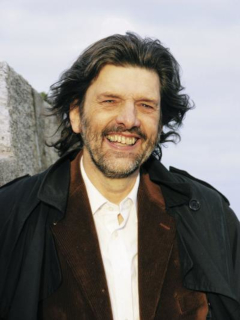
Birth of Uinseann MacEoin, Architect & Republican Campaigner

Uinseann Ó Rathaille MacEoin, Irish architect, journalist, republican campaigner and historian, is born in Pomeroy, County Tyrone, on July 4, 1920.

MacEoin is born Vincent O’Rahilly McGuone to Malachy McGuone, owner of the Central Hotel in Pomeroy and a wine and spirit merchant, and Catherine (née Fox). He has three siblings. Both of his parents are nationalists, and name all their children after leaders of the Easter Rising in 1916. Under the First Dáil in 1918, his father is appointed a judge. This results in him being interned on the prison ship Argenta on Larne Lough from 1922 to 1923. The family moves to Dublin after his release. His father dies in 1933, which leads to his wife running a workingmen’s café in East Essex Street. The family later lives on Marlborough Road, Donnybrook.

MacEoin attends boarding school at Blackrock College and is then articled to the architectural practice of Vincent Kelly in Merrion Square. As an active republican, he lives in a house on Northumberland Road from late 1939 to May 1940 where he helps in the production and distribution of an Irish Republican Army (IRA) weekly newspaper, War News. The IRA is banned by the Irish government in 1936, and its bombing campaign in Britain in 1939 is viewed by the government as a threat to Irish neutrality. MacEoin is among a group of republicans arrested in June 1940 and imprisoned in Arbour Hill Prison for a year. Once released, he is rearrested and interned at the Curragh for three years. He is sentenced to 3-months imprisonment in October 1943 for possession of incriminating documents. He is also charged with possession of ammunition, but testifies he was given the rounds against his will and never appears to have engaged in any violence. During his internment, he is taught the Irish language by Máirtín Ó Cadhain and is exposed to the socialist views of his fellow inmates. It is at this time that he adopts the Irish form of his name, Uinseann MacEoin.

While imprisoned in the 1940s, MacEoin continues his studies by correspondence and qualifies as an architect in 1945 at University College Dublin (UCD). His designs for a memorial garden in 1946 to those who died during the Irish War of Independence are commended. In 1959, he designs the site in Ballyseedy, County Kerry, for a monument by Yann Goulet commemorating those killed in the Irish Civil War and members of the IRA from Kerry who died. In 1948, he qualifies in town planning and takes up a position with Michael Scott‘s architectural practice. He works for a short time with Dublin Corporation, with their housing department, before establishing his own practice in 1955.

During the 1950s, MacEoin is a contributing editor on interior design in Hugh McLaughlin‘s magazine Creation, becoming editor of Irish Architect and Contractor in 1955. He enters into a partnership with Aidan Kelly in 1969 as MacEoin Kelly and Associates. In the early 1970s, he designs a shopping and housing development outside Dundalk, called Ard Easmuinn. Throughout the 1960s and 1970s, he continues as an influential architectural journalist, founding and editing Build from 1965 to 1969, and later Plan. His company, Pomeroy Press, publishes Plan along with other serials such as Stream and Field. He writes a large proportion of the copy in these periodicals, much under his own name, but he also uses pseudonyms, in particular in Plan as “Michael O’Brien.” He writes about his strong views on social housing, national infrastructure, and foreign and slum landlords, often libelously.

Despite his republican and socialist views, MacEoin is a staunch advocate for the preservation of Georgian Dublin, and campaigns for their preservation. On this topic, he writes letters to newspapers, takes part in television and radio discussions, writes comment pieces and editorials, speaks at public hearings, and takes part in direct protests such as sit-ins in buildings including those on Baggot Street, Pembroke Street, Hume Street, and Molesworth Street. He is also an active member of the Irish Georgian Society, and he campaigns actively against the road widening schemes in Dublin the 1970s and 1980s.

MacEoin and his wife purchase five Georgian houses on Mountjoy Square and three on Henrietta Street in the 1960s, all almost derelict. They refurbish them and lease them out, under the company name Luke Gardiner Ltd. He renames the 5 Henrietta Street property James Bryson House. His architectural practice moves into one of the Mountjoy Square houses. Along with fellow campaigners, Mariga Guinness and Deirdre Kelly, this demonstrates that these buildings can be salvaged and are not the dangerous structures other architects and developers claim them to be. He also purchases and saves Heath House, near Portlaoise, County Laois, living there toward the end of his life. He offers free conservation and architectural advice to community groups and is a volunteer on the renovation works on projects including Tailors’ Hall.

MacEoin remains politically active, joining Clann na Poblachta, the Wolfe Tone Societies (WTS), the Dublin Civic Group, the Northern Ireland Civil Rights Association (NICRA) and the Irish Anti-Apartheid Movement. To what extent he is involved in republican or IRA activities after 1945 is not clear. However, in March 1963, he is called a witness to a case in Scotland involving a Glasgow bookmaker by the name of Samuel Docherty and the Royal Bank of Scotland. Docherty claims the bank owes him £50,000. MacEoin testifies that in February 1962 he had travelled with £50,000 in cash from Dublin to lodge to Docherty’s account in the Royal Bank of Scotland in Belfast, as a loan. When asked about the origin of this large sum of money, he states it was supplied by another person but does not divulge that person’s name. This immediately triggers the court’s suspicions, and the judge warns MacEoin he will be contempt of court if he does not name the supplier of the money. He is placed in police custody for the day, and eventually he agrees to give the name in writing in confidence to the judge. The judge ultimately rules that Docherty is guilty of attempted fraud and perjury and that MacEoin’s involvement reeks of criminality. However, no further action is ever brought forward against Docherty or MacEoin.

In Sinn Féin‘s 1971 Éire Nua social and economic programme, MacEoin writes the chapter on “Planning,” and attends meetings in Monaghan in the early 1970s on the Dáil Uladh, a parliament for the 9-county Ulster province. In 1981, during the republican hunger strikes, one of his Mountyjoy Square houses is used as the national headquarters of the National H-Block Committee. Following the 1986 Sinn Féin split, he supports Republican Sinn Féin. He is a founding member of the Constitutional Rights Campaign in 1987, a group which aims to protect the rights of Irish citizens in the European Economic Community (EEC), having campaigned against Ireland joining the EEC in the early 1970s. In 1978, he is sentenced to two weeks in Mountjoy Prison for non-payment of a fine issued for not having a television licence. He had refused to buy one to protest the lack of Irish language programming.

As an environmentalist, MacEoin opposes private car ownership, and advocates for cycleways and the redevelopment of the railway lines. He writes about the “greenhouse effect” as early as 1969. As a hill walker and mountaineer, he claims to be the first Irishman to register successful climbs of all 284 Scottish peaks, known as the Munros, in 1987. He also climbs in the Alps and the Pyrenees.

MacEoin writes three books on his memories, and those of his former comrades: Survivors (1980), on the lives of leading Irish republicans, Harry (1986), a part biography part autobiography of Harry White, and The IRA in the twilight years 1923–48 (1997). He also publishes a novel, Sybil: a tale of innocence (1992) with his publishing house, Argenta, under the name Eoin O’Rahilly. He also interviews and records dozens of Republicans as part of his research for his books. These recordings are later converted into a digital oral history archive held in trust by the Irish Defence Forces.

MacEoin marries Margaret Russell in 1956 in Navan, County Meath. They have a daughter and two sons.

MacEoin dies in a nursing home in Shankill, Dublin, on December 21, 2007. His estate at the time of his death is valued at over €3 million. His son, Nuada, takes over his father’s architectural practice.

Leave a comment

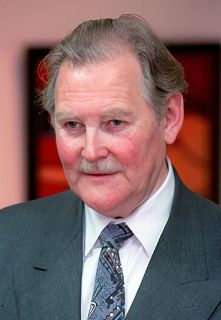
Birth of Proinsias Mac Aonghusa, Journalist, Writer & Presenter

Proinsias Mac Aonghusa (English: Francis McGuinness), Irish journalist, writer, television presenter and campaigner, is born into an Irish-speaking household on June 23, 1933, in Salthill, Galway, County Galway. He becomes one of the most noted Irish language broadcasters and journalists of the 20th century.

Mac Aonghusa is the son of Criostóir Mac Aonghusa, a writer and Irish language activist, and Mairéad Ní Lupain, a nurse and native Irish speaker. The eldest of four siblings, he grows up speaking Irish as his first language and allegedly does not learn English until the age of eleven. His parents are left-wing Irish republicans who support Fianna Fáil and associate with the like-minded Máirtín Ó Cadhain and Peadar O’Donnell. His parents split when he is ten years of age. His mother takes his siblings away to Dublin while he and his father remain in Rosmuc, a remote village and part of the Galway Gaeltacht. As a teenager he is educated at Coláiste Iognáid (also known as St. Ignatius College), a bilingual school in Galway.

Upon leaving school, Mac Aonghusa first works as an actor at the Abbey Theatre in Dublin, performing in Irish language productions. In 1952, he becomes involved in Radio Éireann, first as an actor but later as a reader of short stories before advancing to becoming a newsreader, presenter and interviewer. As he advances his career, he works for RTÉ, UTV and BBC television from the 1960s. In 1962, he begins presenting An Fear agus An Sceal (The Man & his Story) on RTÉ television, an Irish language show which sees him interviewing a different guest of note about their life each episode. That same year he wins a Jacob’s Award for An Fear agus an Sceal, which he continues to host until 1964.

As well as attracting awards, An Fear agus an Sceal also brings controversy. Two interviews, one with Máirtín Ó Cadhain, one with Con Lehane, both criticise the measures practised by the Fianna Fáil government during World War II to suppress and imprison Irish republicans. In response, the Fianna Fáil government intervenes with RTÉ, and those episodes are not aired. This is not to be Mac Aonghusa’s only run-in with the Fianna Fáil government. After he recorded a programme in which he questioned the effectiveness of Ireland’s civil defence measures in the face of nuclear war, then Minister for Defence Kevin Boland has the episode suppressed. He once again runs afoul of the Fianna Fáil government when, after criticising the party in his anonymous weekly political gossip column in the Sunday Independent, then Minister for Agriculture Neil Blaney sees to it that the column is dropped. He is not deterred and returns anonymously as “Gulliver” in The Sunday Press and a gossip column on the back page of The Hibernia Magazine.

The latter half of Mac Aonghusa’s 1960s/70s broadcasting career is primarily associated with the Irish language current events show Féach, which he both presents and edits. He resigns from Féach in 1972 following a bitter dispute with the broadcaster and commentator Eoghan Harris.

Influenced by O’Donnell and Ó Cadhain in his youth, Mac Aonghusa also pursues left-wing republican politics as an adult. In 1958, he becomes, alongside David Thornley, Noël Browne, Owen Sheehy-Skeffington and Desmond Ryan, a member of the “1913 Club,” a group which seeks to ideologically reconcile Irish nationalism and socialism.

In 1959, Mac Aonghusa writes a series of six articles for The Irish Times in which he vehemently opposes the Fianna Fáil government’s proposal to abolish single transferable vote in Ireland in favour of first-past-the-post voting. He contends that first-past-the-post voting gives too much influence to party bosses, while proportional representation gives even small minorities representation, preventing them from feeling excluded by the state such as nationalists in Northern Ireland. In the referendum held on the matter on June 17, 1959, voters reject first past the vote by a margin of 2%. Fianna Fáil attempts to repeal proportional representation again in the late 60s, at which point Mac Aonghusa once again throws himself into the fight, leading a group called “Citizens for PR.” In the referendum of 1968, voters reject the first past the post system by over 20%. He later recalls that his defence of proportional representation his greatest achievement in politics.

In the 1960s, both Mac Aonghusa and his wife, Catherine, join the Sean Connolly branch of the Labour Party in Dublin. The branch had established a reputation as a haven for intellectuals who want a branch to themselves away from the many other Labour branches dominated by trade unionists. The branch comes to advocate for expressly socialist policies combined with on-the-ground grass-roots campaigning. Through the Sean Connolly Branch, both he and his wife begin to develop significant influence over the leader of the Labour party Brendan Corish.

In the 1965 Irish general election, Mac Aonghusa stands on behalf of the Labour party in the Louth constituency but is not elected. In 1966, he publishes a book of speeches by Corish, the speeches themselves mostly having been ghostwritten by his wife Catherine. The introduction of the book proclaims that Corish had developed a “brand of democratic republican socialism … broadened by experience and built firmly on Irish‐Ireland roots” and had rid the party of “do‐nothing backwoodsmen”, thereby becoming the “first plausible and respected Labour leader in Ireland”. It is at this same time that he is elevated to vice-chairman of the party. As vice-chair, he tries to convince Corish to stand in the 1966 Irish presidential election. When he fails to do so, he supports Fine Gael‘s Tom O’Higgins in his bid for the presidency. O’Higgins comes within 0.5% of beating the incumbent, an ageing Éamon de Valera.

It was around this same time that Mac Aonghusa becomes active in the Wolfe Tone Societies, a republican organisation linked almost directly to Sinn Féin. He suggests that republicans with “progressive views” should join the Labour party. In 1966, alongside Máirtín Ó Cadhain and other Gaeilgeoirí, he counter-protests and disrupts the Language Freedom Movement, an organisation seeking the abolition of compulsory Irish in the education system. For this, he and his allies are criticised as acting illiberally, while he maintains that those who oppose the Irish language are “slaves” unworthy of tolerance.

Mac Aonghusa’s open disdain for the conservative and trade union wings of the Labour, as well as his open embrace of republican sensibilities and tendency to make pronouncements on Labour policy without first consulting the party’s structures, bring him many internal enemies. An attempt is made to censure him for backing breakaway trade unions, but he is able to survive this. In 1966, he encourages the formation of the Young Labour League, an unofficial youth wing of the party led by Brian Og O’Higgins, son of former Sinn Féin president Brian O’Higgins. Mirroring his own position, the Youth League are Corish loyalists that openly rebel against the views of Labour’s conservative deputy leader James Tully. When the youth league begins publishing their own weekly newsletter, Labour’s administrative council condemns it after discovering material which is “violently” critical of Tully and other Labour conservatives. An ensuing investigation into the newsletter leads to Mac Aonghusa admitting that he had financed it and written some of the content, but not the anti-Tully material. After he refuses to co-operate with further investigations into the matter, he is expelled on January 12, 1967 for “activities injurious” to the party. In the aftermath, he portrays himself a left-wing martyr purged by a right-wing “Star chamber,” a tactic that garners him sympathy. Nevertheless, his expulsion is confirmed at the October 1967 party conference, despite one last appeal. His wife leaves the party alongside him.

In the aftermath of his expulsion from Labour, Mac Aonghusa expresses an interest in the social democratic wing of Fine Gael, which had been developing under Declan Costello since the mid-1960s. However, he does not join the party and instead runs as an independent candidate in the 1969 Irish general election in Dún Laoghaire–Rathdown. When he is not elected, he begins to refocus on the revival of the Irish language and with nationalist politics rather than being elected himself.

Upon the onset of the Troubles, Mac Aonghusa is initially supportive of Official Sinn Féin, however by 1972 he comes to resent them and, through the Ned Stapleton Cumann, their secret influence over RTÉ. During the Arms Crisis in 1970, he supports Charles Haughey and Neil Blaney, who stand accused of arranging to supply weapons to the Provisional IRA, in the pages of the New Statesman and other left‐wing journals. In this time period, he warns editors not to reprint his material in the Republic of Ireland as there is a de facto ban on him, and indeed, official attempts are made to block the transmission of his telexed reports.

Despite his earlier famed stark criticism of Fianna Fáil, Mac Aonghusa’s defence of Haughey leads to a friendship between the two men which results in him becoming one of Haughey’s loudest defenders throughout the rest of his career. His columns in The Sunday Press and Irish language paper Anois are accused of descending into self-parody in their stringent defences of Haughey.

During the 1970s, Mac Aonghusa writes a number of books covering significant figures in Irish republicanism. In order, he releases books on James Connolly, Patrick Pearse, Wolfe Tone and Éamon de Valera. In his work on De Valera, he emphasises what he perceives as the more radical aspects of the Fianna Fáil founder. During 1974 and 1975, he works as a United Nations Special Representative to the Southern Africa region with Seán MacBride, where they involve themselves in the South African Border War, and during which time Mac Aonghusa becomes involved in setting up a radio station in Namibia, linked to the South West Africa People’s Organisation (SWAPO) nationalist party.

In the 1980s, Haughey twice appoints Mac Aonghusa to the Arts Council as well as naming him president of Bord na Gaeilge (1989-93). This is an issue as Mac Aonghusa is already president of Conradh na Gaeilge. Being head of the main Irish language lobbying body as well as the state body responsible for the Irish language has an obvious conflict of interest. In 1991, following the announcement by Haughey that the government is to fund the creation of an Irish-language television station (launched in 1996 as Teilifís na Gaeilge), an elated Mac Aonghusa suggests that Haughey would be “remembered among the families of the Gael as long as the Gaelic nation shall survive.”

In 1992 there are calls for Mac Aonghusa to step down from Bord na Gaeilge after he pronounces that “every respectable nationalist” in West Belfast should vote for Sinn Féin’s Gerry Adams over the Social Democratic and Labour Party (SDLP) candidate Joe Hendron in the 1992 United Kingdom general election as he considers a defeat for Adams “a victory for British imperialism.” Nevertheless, he simultaneously advises voters in South Down to vote for the SDLP’s Eddie McGrady over Sinn Féin. He rails against his detractors at the Conradh na Gaeilge ardfheis that year, declaring that “The mind of the slave, of the slíomadóir, of the hireling and the vagabond is still fairly dominant in Ireland.”

As of 1995, Mac Aonghusa continues to label himself a socialist. In the foreword to the book, he writes about James Connolly that is released that year, he declares that “the abolition of capitalism is essential if the great mass of the people in all parts of the globe are to be emancipated.”

However, with the recent collapse of the Soviet Union in mind, Mac Aonghusa declares that the Stalinist regimes of Eastern Europe have not been socialist and argues that the social democracies of Scandinavia are what James Connolly had envisioned as the desired socialist society. In the same text, he accuses the Irish education system as well as Ireland’s media of obfuscating Connolly’s views on socialism and nationalism.

Mac Aonghusa battles through ill health in his final years but remains able to continue writing a number of books. His last publication, Súil Tharam (2001), comes just two years before his death in Dublin on September 28, 2003.

In 1955, Mac Aonghusa marries Catherine Ellis, a member of the Church of Ireland from Belfast. For her married name, she chooses to use “McGuinness,” the English language equivalent of Mac Aonghusa. Catherine McGuinness goes on to become a Senator and a Judge of the Circuit Court, High Court and Supreme Court over the course of her legal career. Together they have three children together.


7 Comments

Death of Irish Language Writer Diarmaid Ó Súilleabháin

Diarmaid Ó Súilleabháin, Irish language writer whose chosen theme is contemporary urban life, dies on June 5, 1985. He is acknowledged as an important Irish language modernist. He is also active in the Irish republican movement and a member of Sinn Féin.

Ó Súilleabháin is born on the Beara Peninsula in County Cork on July 29, 1932. His mother, Máire Áine Ní Dhrisceoil, is a primary school teacher and his father, John O’Sullivan, is a small farmer. He marries Úna Ní Chléirigh on October 28, 1954, and they have two sons and three daughters.

Ó Súilleabháin is awarded a scholarship to Coláiste Íosagáin, a Catholic secondary school in Ballyvourney, where he is influenced by Friar Peadar Ó Loingsigh, and qualifies as a primary teacher in St. Patrick’s College, Drumcondra. He devotes his life to teaching. He settles in Gorey, County Wexford, and works there as a primary teacher for the Christian Brothers school.

Best known now for his literary work, Ó Súilleabháin writes ten novels, two of them for teenagers. Maeldún (1972) is a pioneering Irish novel that explores sexuality. He writes seven unpublished plays but most of them are shown in Damer Hall and the Peacock Theatre. Three plays that he writes include Bior, Ontos and Macalla and he writes a collection of short stories, Muintir (1970). A story from Muintir called ‘D’ is translated into English and adapted for the stage by Vivian McAlister and is performed by the Dublin University Players in May 1977.

Like Eoghan Ó Tuairisc, Ó Súilleabháin “challenged the critical orthodoxy by openly proclaiming that their standards could not be those of the Gaeltacht and by demanding a creative freedom that would acknowledge hybridity and reject the strictures of the linguistic purists.” He and Máirtín Ó Cadhain are considered the two most innovative Irish language authors to emerge in the 1960s. He often writes in a stream of consciousness, and his style influences younger writers. His writing “explores the problem of recovering idealism and cultural wholeness in an increasingly shallow and materialistic Irish society.” He is elected as a member of the Irish Academy of Letters and wins more literary prizes than any other living Irish author.

Ó Súilleabháin writes a collection of poetry, Cosa Gréine, which is published and launched in Dublin in 2013, twenty-eight years after his death.

Ó Súilleabháin is an active Irish republican, particularly in publicizing the republican struggle, and is a member of Sinn Féin’s ruling body beginning in 1971. He spends short periods in prison because of activities related to his political beliefs.


Leave a comment

IRA Army Council Declares War on England

Irish Republican Army (IRA) Army Council and Republican survivors of the Second Dáil declare war on England on January 15, 1939.

On January 12, 1939, the Army Council sends an ultimatum, signed by Patrick Fleming, to British Foreign Secretary Lord Halifax. The communiqué duly informs the British government of “The Government of the Irish Republic” intention to go to “war.” Excerpt from the ultimatum:

“I have the honour to inform you that the Government of the Irish Republic, having as its first duty towards its people the establishment and maintenance of peace and order here, demand the withdrawal of all British armed forces stationed in Ireland. The occupation of our territory by troops of another nation and the persistent subvention here of activities directly against the expressed national will and in the interests of a foreign power, prevent the expansion and development of our institution in consonance with our social needs and purposes, and must cease.”

“The Government of the Irish Republic believe that a period of four days is sufficient notice for your Government to signify its intentions in the matter of the military evacuation and for the issue of your Declaration of Abdication in respect of our country. Our Government reserves the right of appropriate action without further notice if upon the expiration of this period of grace, these conditions remain unfulfilled.”

~ General Headquarters, Dublin, January 12th, 1939, to His Excellency the Rt. Hon. Viscount Halifax, C.G.B.

On Sunday, January 15, with no reply from the British Government, a proclamation is posted in public places throughout Ireland announcing the IRA’s declaration of war on Britain. This proclamation is written by Joseph McGarrity, leader of Clan na Gael in the United States, and is signed by six members of the Army Council: Stephen Hayes, Patrick Fleming, Peadar O’Flaherty, George Oliver Plunkett, Larry Grogan and Seán Russell. The seventh Army Council member, Máirtín Ó Cadhain, refuses to sign as he believes the IRA is not ready to begin the campaign.

This proclamation also calls upon Irishmen both at home and “in Exile” to give their utmost support to compel the withdrawal of the British from the island of Ireland so that a free Irish Republic can be established. As the campaign begins in Britain the same proclamation appears posted around Irish communities in British cities. The proclamation references the December 17, 1938 statement by the group naming itself the “Executive Council of Dáil Éireann, Government of the Republic” and reads:

“On the twenty-third day of April in the year 1916 in the City of Dublin, seven men, who were representative in spirit and outlook and purpose of the Irish Nation that had never yielded to nor accepted the British conquest, set their humble and almost unknown names to the foregoing document that has passed into history, making the names of the seven signatories immortal. These signatures were sealed with the blood of the immortal seven, and of many others who followed them into one of the most gallant fights in the history of the world; and the Irish Nation rose from shame to honour, from humiliation to pride, from slavery to freedom….”

“Unfortunately, because men were foolish enough to treat with an armed enemy within their gates, the English won the peace. Weakness and treachery caused a resumption of the war and the old English tactics of ‘divide and conquer’ were exploited to the fullest extent. Partition was introduced, the country divided into two parts with two separate Parliaments subject to and controlled by the British Government. The armed forces of England still occupy six of our counties in the North and reserve the right ‘in time of war or strained relations’ to reoccupy the ports which they have just evacuated in the southern part of Ireland. Ireland is still tied, as she has been for centuries past, to take part in England’s wars. In the Six Counties, a large number of Republican soldiers are held prisoners by England. Further weakness on the part of some of our people, broken faith and make-believe, have postponed the enthronement of the living Republic, but the proclamation of Easter Week and the declaration of independence stand and must stand for ever. No man, no matter how far he has fallen away from his national faith, has dared to repudiate them. They constitute the rallying centre for the unbought manhood of Ireland in the fight that must be made to make them effective and to redeem the nation’s self-respect that was abandoned by a section of our people in 1923.”

“The time has come to make that fight. There is no need to redeclare the Republic of Ireland, now or in the future. There is no need to reaffirm the declaration of Irish independence. But the hour has come for the supreme effort to make both effective. So in the name of the unconquered dead and the faithful living, we pledge ourselves to that task. We call upon England to withdraw her armed forces, her civilian officials and institutions, and representatives of all kinds from every part of Ireland as an essential preliminary to arrangements for peace and friendship between the two countries; and we call upon the people of all Ireland, at home and in exile, to assist us in the effort we, are about to make, in God’s name, to compel that evacuation and to enthrone the Republic of Ireland.”

Significantly, there is an IRA bomb incident in or around a major British city almost every other day in the first nine months of 1939. During the campaign there are 300 explosions, 10 deaths and 96 injuries.

(From: “IRA Army Council Declare War on England and the Sabotage Campaign (S-Plan) Begins a Day Later,” Stair na hÉireann, https://stairnaheireann.net | Pictured: The aftermath of an IRA bike bomb in Coventry on August 25, 1939)


Leave a comment

Birth of Criostóir Mac Aonghusa, Teacher, Author, & Campaigner for Irish Language

Criostóir Mac Aonghusa, teacher, author, critic, and campaigner for the Irish language, is born on December 13, 1905, in Gort an Ghabhainn, Banagher, King’s County (now County Offaly), son of Francis McGuiness (surname thus on his birth certificate), farmer, and his wife, Rosanna (née Egan). He is educated at La Sainte Foi, Banagher, Reachra national school, Shannonbridge, and Naas CBS. He qualifies as a primary school teacher from De La Salle Training College, Waterford, in 1926 and has the distinction of being the first person to sit all exams through the medium of Irish. He graduates BA at University College Galway (UCG) in 1933 and his further education includes a diploma in Spanish literature from University of Barcelona and an MA on the Irish scholar Tomás Ó Máille.

Mac Aonghusa’s teaching career begins in 1926 when he becomes headmaster on Inis Treabhair, County Galway, spending fourteen months there. Afterwards he transfers to Gort Mór, Rosmuc, County Galway, where he continues teaching until 1962. He remains an active member of Cumann na Múinteoirí Náisiúnta throughout his life. Between 1962 and 1972 he is employed as an ad-hoc examiner at the civil service commission. An active member of Fianna Fáil, he helps to organise the party in County Galway in the 1920s and 1930s and is elected a member of Galway County Council in 1934.

Mac Aonghusa is a prominent advocate of the Irish language and together with his close friend Máirtín Ó Cadhain and another Connemara schoolteacher, Seosamh Mac Mathúna, founds Cumann na Gaeltachta to agitate for the civil rights of the Gaeltacht communities and of Irish speakers in general. He is one of the main campaigners for the establishment of the Rath Carn Gaeltacht in County Meath and forms part of the delegation that meets Éamon de Valera on November 11, 1932, and receives from him a promise to provide land in County Meath for that purpose. The Gaeltacht is established in 1935. Mac Aonghusa continues to support the project throughout his life and is involved in further campaigns relating to the area, including the recognition of Rath Carn’s Gaeltacht status. He is also an active member of Conradh na Gaeilge in the 1940s and is later involved in the campaign for the establishment of an Irish-language television broadcasting service.

Mac Aonghusa is a prolific writer and begins publishing short stories and articles from 1926 onward. His contributions appear in An tÉireannach, An Phoblacht, The Irish Tribune, An Stoc, and Ar Aghaidh. From 1948, he is a regular contributor to Feasta and his essays and reviews on Máirtín Ó Cadhain’s works appear in Comhar. He is a member of several literary organisations, including Cumann na Scríbhneoirí and the Galway Literary Society. His first book, An Cladóir agus scéalta eile, appears in 1952. Between 1963 and 1972 he is a contributor to The Irish Press and works also as a literary journalist. An essay on Pádraic Ó Conaire earns him a prize from Acadamh Liteartha na hÉireann.

Mac Aonghusa speaks a number of European languages including German, Spanish, French, Romanian, and Greek and travels widely throughout Europe. In the early 1970s he lives in Russia, and a collection of essays entitled Ó Rosmuc go Rostov is published in 1972. For health reasons he lives in Málaga, Spain, from the middle of the 1970s until 1987. While there, RTÉ produces a documentary on his life entitled Ó Ros Muc go Malaga.

Mac Aonghusa dies on April 9, 1991, in Portiuncula General Hospital, Ballinasloe, County Galway, and is interred in Clonmacnoise. In 1930 he marries Mairéad Ní Lupain, a nurse from Annaghvane in Connemara, and has four children, Proinsias (1933), Micheál (1937), Róisín (1939), and Máirín (1944). The couple separates in the 1940s. Proinsias follows in his father’s footsteps as a writer and journalist and becomes president of Conradh na Gaeilge and chairman of Bord na Gaeilge.

(From: “Mac Aonghusa, Criostóir” by Lesa Ní Mhunghaile, Dictionary of Irish Biography, http://www.dib.ie, October 2009)


Leave a comment

Birth of Michael O’Riordan, Founder of the Communist Party of Ireland

Michael O’Riordan, the founder of the Communist Party of Ireland who also fights with the Connolly Column in the International Brigades during the Spanish Civil War, is born at 37 Pope’s Quay, Cork, County Cork, on November 12, 1917.

O’Riordan is the youngest of five children. His parents come from the West Cork Gaeltacht of BallingearyGougane Barra. Despite his parents being native speakers of the Irish language, it is not until he is interned in the Curragh Camp during World War II that he learns Irish, being taught by fellow internee Máirtín Ó Cadhain, who goes on to lecture at Trinity College, Dublin.

As a teenager, O’Riordan joins the Irish nationalist youth movement, Fianna Éireann, and then the Irish Republican Army (IRA). The IRA at the time is inclined toward left-wing politics and socialism. Much of its activity concerns street fighting with the quasi-fascist Blueshirt movement and he fights Blueshirt fascism on the streets of Cork in 1933–34. He is friends with left-wing inclined republicans such as Peadar O’Donnell and Frank Ryan, and in 1934, he follows them into the Republican Congress, a short-lived socialist republican party.

O’Riordan joins the Communist Party of Ireland in 1935 while still in the IRA and works on the communist newspaper The Irish Workers’ Voice. In 1937, following the urgings of Peadar O’Donnell, several hundred Irishmen, mostly IRA or ex-IRA men, go to fight for the Spanish Republic in the Spanish Civil War with the XVth International Brigade. They are motivated in part by enmity towards the 800 or so Blueshirts, led by Eoin O’Duffy who go to Spain to fight on the “nationalist” side in the Irish Brigade. He accompanies a party led by Frank Ryan. In the Republic’s final offensive of July 25, 1938, he carries the flag of Catalonia across the River Ebro. On August 1, he is severely injured by shrapnel on the Ebro front. He is repatriated to Ireland the following month, after the International Brigades are disbanded.

In 1938 O’Riordan is offered an Irish Army commission by the Irish Free State but chooses instead to train IRA units in Cork. As a result of his IRA activities during World War II, or the Emergency as it is known in neutral Ireland, he is interned in the Curragh internment camp from 1939 until 1943 where he is Officer Commanding of the Cork Hut and partakes in Máirtín Ó Cadhain’s Gaelic League classes as well as publishing Splannc (Irish for “Spark,” named after Vladimir Lenin‘s newspaper).

In 1944 O’Riordan is founding secretary of the Liam Mellows Branch of the Labour Party and in 1945 is a founding secretary of the Cork Socialist Party, whose other notable members include Derry Kelleher, Kevin Neville and Máire Keohane-Sheehan.

O’Riordan subsequently works as a bus conductor in Cork and is active in the Irish Transport and General Workers Union (ITGWU). In 1946 he stands as a Cork Socialist Party candidate in the Cork Borough by-election and afterwards moves to Dublin where he lives in Victoria Street with his wife Kay Keohane of Clonakilty, continues to work as a bus conductor and remains active in the ITGWU.

In 1947, O’Riordan is a founding secretary of the Irish Workers’ League and general secretary thereafter, and of its successor organisation the Irish Workers’ Party from 1962–70.

In the 1960s, O’Riordan is a pivotal figure in the Dublin Housing Action Committee which agitates for clearances of Dublin’s slums and for the building of social housing. There, he befriends Fr. Austin Flannery, leading Minister for Finance and future Taoiseach Charles Haughey to dismiss Flannery as “a gullible cleric” while the Minister for Local Government, Kevin Boland, describes him as a “so-called cleric” for sharing a platform with O’Riordan.

In all O’Riordan runs for election five times, campaigning throughout for the establishment of a socialist republic in Ireland but given Ireland’s Catholic conservatism and fear of communism, he does so without success. He does, however, receive playwright Sean O’Casey‘s endorsement in 1951.

O’Riordan’s participation in the Spanish Civil War is always an important part of his political identity. In 1966 he attends the International Brigades’ Reunion in Berlin and is instrumental in having Frank Ryan’s remains repatriated from Germany to Ireland in 1979.

O’Riordan is a member of the Irish Chile Solidarity Committee and attends the 1st Party Congress of the Communist Party of Cuba in 1984. He also campaigns on behalf of the Birmingham Six and attends their Appeal trial in 1990. He serves as General Secretary of the Communist Party of Ireland (1970–83) and as National Chairman of the party (1983–88). He publishes many articles under the auspices of the CPI.

O’Riordan’s last major public outing comes in 2005 at the re-dedication of the memorial outside Dublin’s Liberty Hall to the Irish veterans of the Spanish Civil War. He and other veterans are received by President of Ireland Mary McAleese. He is also presented with Cuba’s Medal of Friendship by the Cuban Consul Teresita Trujillo to Ireland on behalf of Cuban President Fidel Castro.

In 1969, according to Soviet dissident Vasili Mitrokhin, O’Riordan is approached by IRA leaders Cathal Goulding and Seamus Costello with a view to obtaining guns from the Soviet KGB to defend Irish republican areas of Belfast during the communal violence that marks the outbreak of the Troubles. Mitrokhin alleges that O’Riordan then contacts the Kremlin, but the consignment of arms does not reach Ireland until 1972. The operation is known as Operation Splash. The IRA splits in the meantime between the Provisional IRA and the Official IRA and it is the latter faction who receives the Soviet arms. Mitrokhin’s allegations are repeated in Boris Yeltsin‘s autobiography.

O’Riordan’s book, Connolly Column – The Story of the Irishmen who fought for the Spanish Republic 1936–1939, is published in 1979 and deals with the Irish volunteers of the International Brigade who fought in support of the Spanish Republic against Francisco Franco in the Spanish Civil War (1936–1939). An updated version of the book is reprinted in 2005 and is launched by the Lord Mayor of Dublin, Cllr. Michael Conaghan at a book launch at SIPTU headquarters, Liberty Hall. The book is the inspiration for Irish singer-songwriter Christy Moore‘s famous song “Viva la Quinta Brigada.”

In 1991, O’Riordan’s wife dies at the age of 81 at their home. He continues to live in their family home before moving to Glasnevin in 2000 to be close to his son Manus who lives nearby. He lives there until falling ill in November 2005 and is taken to the Mater Hospital. His health rapidly deteriorates, and he quickly develops Alzheimer’s disease. Soon afterwards he is moved to St. Mary’s Hospital in the Phoenix Park where he spends the final few months of his life, before his death at the age of 88 on May 18, 2006.

O’Riordan’s funeral at Glasnevin Crematorium is attended by over a thousand mourners. Following a wake the previous night at Finglas Road, hundreds turn up outside the house of his son Manus and traffic grounds to a halt as family, friends and comrades – many of whom are waving the red flag of the Communist Party of Ireland – escort O’Riordan to Glasnevin Cemetery. A secular ceremony takes place led by Manus O’Riordan, Head of Research at SIPTU, with contributions from O’Riordan’s family, Communist Party general secretary Eugene McCartan and IBMT representative Pauline Frasier.

The funeral congregation includes politicians such as Labour Party leader Pat Rabbitte, his predecessor Ruairi Quinn, party front-bencher Joan Burton, Sinn Féin TD Seán Crowe and councillor Larry O’Toole, ex-Workers’ Party leader Tomás Mac Giolla and former Fianna Fáil MEP Niall Andrews. Also in attendance are union leaders Jack O’Connor (SIPTU), Mick O’Reilly (ITGWU) and David Begg (ICTU). Actors Patrick Bergin, Jer O’Leary, singer Ronnie Drew, artist Robert Ballagh, and newsreader Anne Doyle are also among the mourners. Tributes are paid by President of Ireland Mary McAleese, Taoiseach Bertie Ahern, Sinn Féin leader Gerry Adams and Labour Party TDs Ruairi Quinn and Michael D. Higgins.


Leave a comment

Birth of Eoghan Ó Tuairisc, Poet & Writer

Eoghan Ó Tuairisc (Eugene Rutherford Watters), Irish poet and writer, is born at Dunlo Hill, Ballinasloe, County Galway, on April 3, 1919.

Eugene Rutherford Watters is the eldest of two sons and two daughters born to Thomas Watters, a soldier, and his wife, Maud Sproule. His second name comes from his grandfather, Rutherford Sproule. He is educated at Garbally College. He enters St. Patrick’s Teacher Training College, Drumcondra, Dublin, in 1939, graduating with a Diploma in Education in 1945. He is awarded an MA, by University College Dublin in 1947.

Ó Tuairisc holds a commission in the Irish Army during the Emergency from 1939 to 1945. He is a teacher in Finglas, County Dublin from 1940 to 1969. From 1962 to 1965, he is editor of Feasta, the journal of Conradh na Gaeilge.

Ó Tuairisc writes novels, verse, drama and criticism in both Irish and English. His first major publication is his controversial novel Murder in Three Moves (1960), followed by the Irish-language prose epic L’Attaque (1962), which wins an Irish Book Club award. Both works have a strong poetic flavour. His next book is a volume of verse entitled Week-End. His narrative poem The Weekend of Dermot and Grace (1964), an Irish version of Venus and Adonis, is considered his finest work.

Ó Tuairisc’s first wife, the Irish artist Una McDonnell, dies in 1965. He produces little during the five years following McDonnell’s death, which is an unsettled period of limited productivity, changing residence and jobs, and, ultimately, serious depression. In 1972 he marries the writer Rita Kelly, also of Ballinasloe. They live in the lock house at the Maganey Lock on the River Barrow that he had bought near Carlow, County Carlow.

In 1981 Ó Tuairisc publishes The Road to Brightcity: and other stories (Swords: Poolbeg Press, 1981), a translation of nine of the best short stories written originally in Irish by Máirtín Ó Cadhain. Also in 1981, he and Rita Kelly publish a joint collection of their poems, Dialann sa Díseart.

Like Diarmaid Ó Súilleabháin, Ó Tuairisc “challenged the critical orthodoxy by openly proclaiming that their standards could not be those of the Gaeltacht and by demanding a creative freedom that would acknowledge hybridity and reject the strictures of the linguistic purists.”

Ó Tuairisc is an inaugural member of Aosdána, when it is founded in 1981, and the first of its members to die. He is a recipient of an Arts Council of Ireland prize, as well as an Abbey Theatre prize for a Christmas pantomime in Irish.

Ó Tuairisc dies on August 24, 1982. He is survived by his second wife, Rita. A bibliography of his work, together with biographical information, is published in Irish in 1988.


Leave a comment

Birth of Poet & Linguist Michael O’Siadhail

michael-o-siadhail

Micheal O’Siadhail, poet and linguist, is born in Dublin on January 12, 1947. Among his awards are The Marten Toonder Prize and The Irish American Culture Institute Prize for Literature.

O’Siadhail is born into a middle-class Dublin family. His father, a chartered accountant, is born in County Monaghan and works most of his life in Dublin, and his mother is a Dubliner with roots in County Tipperary. Both of them are portrayed in his work in several poems such as “Kinsmen” and “Promise”. From the age of twelve, he is educated at the Jesuit boarding school Clongowes Wood College, an experience he is later to describe in a sequence of poems “Departure” (The Chosen Garden).

At Clongowes O’Siadhail is influenced by his English teacher, the writer Tom MacIntyre, who introduces him to contemporary poetry. At thirteen he first visits the Aran Islands. This pre-industrial society with its large-scale emigration has a profound impact on him. His earlier work reflects this tension between his love of his native Dublin and his emotional involvement with those outlying communities and which features in the sequence “Fists of Stone” (The Chosen Garden).

O’Siadhail studies at Trinity College Dublin (1964–68) where his teachers include David H. Greene and Máirtín Ó Cadhain. He is elected a Scholar of the College and takes a First-Class Honours Degree. His circle at Trinity includes David McConnell (later professor of genetics), Mary Robinson and David F. Ford (later Regius Professor of Divinity at the University of Cambridge). He subsequently embarks on a government exchange scholarship studying folklore and the Icelandic language at the University of Oslo. He retains lifelong contacts with Norwegian friends and sees Scandinavian literature as a major influence.

In 1970 O’Siadhail marries Bríd Ní Chearbhaill, who is born in Gweedore, County Donegal. She is for most of her life a teacher and later head mistress in an inner-city Dublin primary school until her retirement in 1995 due to Parkinson’s disease. She is a central figure in his oeuvre celebrated in the sequence “Rerooting” in The Chosen Garden and in Love Life, which is a meditation on their lifelong relationship. One Crimson Thread travels with the progression of her Parkinson’s Disease. She dies on June 17, 2013.

For seventeen years, O’Siadhail earns his living as an academic; firstly, as a lecturer at Trinity College (1969–73) where he is awarded a Master of Letters degree in 1971 and then as a research professor at the Dublin Institute for Advanced Studies. During these years he gives named lectures in Dublin and at Harvard University and Yale University and is a visiting professor at the University of Iceland in 1982. In 1987 he resigns his professorship to devote himself to writing poetry which he describes as “a quantum leap.”

During his years as an academic, O’Siadhail, writing under the Irish spelling of his name, published works on the linguistics of Irish and a textbook for learners of Irish.

O’Siadhail serves as a member of the Arts Council of the Republic of Ireland (1987–93), of the Advisory Committee on Cultural Relations (1989–97) and is editor of Poetry Ireland Review. He is the founding chairman of ILE (Ireland Literature Exchange). As a founder member of Aosdána (Academy of Distinguished Irish Artists) he is part of a circle of artists and works with his friend the composer Seóirse Bodley, the painters Cecil King and Mick O’Dea and in 2008 gives a reading as part of Brian Friel‘s eightieth birthday celebration.

O’Siadhail represents Ireland at the Poetry Society‘s European Poetry Festival in London in 1981 and at the Frankfurt Book Fair in 1997. He is writer-in-residence at the Yeats Summer School in 1991 and writer in residence at the University of British Columbia in 2002.

O’Siadhail is now married to Christina Weltz, who is a native of New York, and Assistant Professor of surgical oncology at Mount Sinai Hospital. They reside in New York.


Leave a comment

Death of Irish Language Writer Máirtín Ó Cadhain

Máirtín Ó Cadhain, one of the most prominent Irish language writers of the twentieth century, dies on October 18, 1970. Perhaps best known for his 1949 work Cré na Cille, Ó Cadhain plays a key role in bringing literary modernism to contemporary Irish language literature.

Born in Connemara, County Galway, Ó Cadhain becomes a schoolteacher but is dismissed due to his membership in the Irish Republican Army (IRA). In the 1930s he serves as an IRA recruiting officer, enlisting fellow writer Brendan Behan, and participates in the land campaign of the native speakers, which leads to the establishment of the Ráth Cairn neo-Gaeltacht in County Meath. Subsequently, he is arrested and interned in the Curragh Camp in County Kildare during the Emergency years due to his continued involvement in the violent activities of the IRA.

Ó Cadhain’s politics are a nationalist mix of Marxism and social radicalism tempered with a rhetorical anti-clericalism. In his writings concerning the future of the Irish language he is, however, practical about the position of the Catholic Church as a social and societal institution, craving rather for a wholehearted commitment to the language cause even among Catholic churchmen. It is his view that, as the Church is there anyway, it would be better if it were more willing to address the Faithful in the national idiom.

As a writer, Ó Cadhain is acknowledged to be a pioneer of Irish language modernism. His Irish is the dialect of Connemara, but he is happy to cannibalise other dialects, classical literature and even Scottish Gaelic for the sake of linguistic and stylistic enrichment of his own writings. Consequently, much of what he writes is reputedly hard to read for a non-native speaker.

Ó Cadhain is a prolific writer of short stories. His collections of short stories include Cois Caoláire, An Braon Broghach, Idir Shúgradh agus Dháiríre, An tSraith Dhá Tógáil, An tSraith Tógtha and An tSraith ar Lár. He also writes three novels, of which only Cré na Cille is published during his lifetime. The other two, Athnuachan and Barbed Wire, appear in print only recently. He translates Charles Kickham‘s novel Sally Kavanagh into Irish as Saile Chaomhánach, nó na hUaigheanna Folmha. He also writes several political or linguo-political pamphlets. His political views can most easily be discerned in a small book about the development of Irish nationalism and extremism since Theobald Wolfe Tone, Tone Inné agus Inniu. In the early 1960s he writes, partly in Irish, partly in English, a comprehensive survey of the social status and actual use of the language in the west of Ireland, published as An Ghaeilge Bheo – Destined to Pass. In August 1969 he delivers a speech, published as Gluaiseacht na Gaeilge: Gluaiseacht ar Strae, in which he speaks of the role Irish speakers should take in ‘Athghabháil na hÉireann’, or the Re-Conquest of Ireland as James Connolly first coins the term.

He and Diarmaid Ó Súilleabháin are considered the two most innovative Gaelic authors to emerge in the 1960s. He has frequent difficulties to get his work edited, but unpublished writings have appeared at least every two years since the publication of Athnuachan in the mid-nineties.

Máirtín Ó Cadhain dies on October 18, 1970, in Dublin and is buried in Mount Jerome Cemetery.

A lecture hall at Trinity College, Dublin is named after Ó Cadhain who was professor of Irish. A bronze bust is also located in the Irish department.