The Royal Irish Constabulary (RIC), the police force in Ireland from 1822 until 1922, when all of the island was part of the United Kingdom, is disbanded on August 17, 1922, and replaced by the Garda Síochána.
A separate civic police force, the unarmed Dublin Metropolitan Police (DMP), patrols the capital and parts of County Wicklow, while the cities of Derry and Belfast, originally with their own police forces, later have special divisions within the RIC. For most of its history, the ethnic and religious makeup of the RIC broadly matches that of the Irish population, although Anglo-IrishProtestants are overrepresented among its senior officers.
The Peace Preservation Act 1814, for which Sir Robert Peel is largely responsible, and the Irish Constabulary Act 1822 forms the provincial constabularies. The 1822 act establishes a force in each province with chief constables and inspectors general under the United Kingdom civil administration for Ireland controlled by the Dublin Castle administration.
The RIC’s existence is increasingly troubled by the rise of the Home Rule campaign in the early twentieth century period prior to World War I.
In January 1922, the British and Irish delegations agree to disband the RIC. Phased disbandments begin within a few weeks with RIC personnel both regular and auxiliary being withdrawn to six centres in southern Ireland. On April 2, 1922, the force formally ceases to exist, although the actual process is not completed until August 17. The RIC is replaced by the Civic Guard (renamed as the Garda Síochána the following year) in the Irish Free State and by the Royal Ulster Constabulary (RUC) in Northern Ireland.
According to a parliamentary answer in October 1922, 1,330 ex-RIC men join the new RUC in Northern Ireland. This results in an RUC force that is 21% Roman Catholic at its inception in 1922. As the former RIC members retire over the subsequent years, this proportion steadily falls.
Just thirteen men transfer to the Garda Síochána. These include men who had earlier assisted Irish Republican Army (IRA) operations in various ways. Some retire, and the Irish Free State pays their pensions as provided for in the terms of the Anglo-Irish Treaty agreement. Others, still faced with threats of violent reprisals, emigrate with their families to Great Britain or other parts of the British Empire, most often to join police forces in Canada, Australia, New Zealand, South Africa and Southern Rhodesia. A number of these men join the Palestine Police Force, which is recruiting in the UK at the time.
In January 1919, Sinn Féin MPs refuse to recognise the Parliament of the United Kingdom and instead assembles in the Mansion House, Dublin as a revolutionary parliament called Dáil Éireann. McCan never sits in Dáil Éireann, dying in prison on March 6, 1919, during the Spanish flu pandemic. On March 9, 1919, he is buried in Dualla, Cashel, County Tipperary.
No by-election is called to replace him in the UK constituency. After April 1, 1922, the Irish Free State (Agreement) Act 1922 prohibits any by-election, and the constituency is abolished when parliament is dissolved on October 26, 1922, for the general election on November 15.
The First Dáil also considers how to fill the vacancy. A select committee in April recommends that the local Sinn Féin organisation which nominated him should nominate his replacement. A June proposal to postpone action, either for six months or until a Westminster by-election is held, is referred to another committee, which recommends that “in view of the circumstances which occasioned the vacancy, it was due to the memory of the late Pierce McCann that his place should not be filled at present.”
On April 10, 1919, Cathal Brugha tells the First Dáil: “Before I formally move the motion, as I have mentioned the name of Pierce McCan, I would ask the Members of the Dáil to stand up as a mark of our respect to the first man of our body to die for Ireland, and of our sympathy with his relatives. We are sure that their sorrow is lightened by the fact that his death was for the cause for which he would have lived, and that his memory will ever be cherished in the hearts of the comrades who knew him, and will be honoured by succeeding generations of his countrymen with that of the other martyrs of our holy cause.” The McCan Barracks in Templemore, County Tipperary, is named after him.
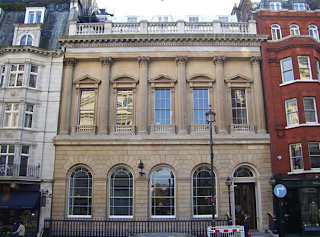
On June 25, 1990, shortly after 8:30 p.m., the Provisional Irish Republican Army detonates a bomb at the Carlton Club, a club in London popular among MPs and supporters of the ruling Conservative Party. The ground floor collapses to the basement and windows are shattered. The blast is felt up to half a mile away. The bombing injures twenty people, including Lord Donald Kaberry, a former Vice-Chairman of the Conservative Party, and a much-loved porter, Charles Henry. Neither ever regains full health. Kaberry dies the following March, though Henry is able to return to his duties after a serious operation, but dies three years later.
In a statement, the IRA says, “Like Brighton in 1984, the IRA has brought the war directly to those who keep the British Army on the streets and in the fields of Ireland. While such occupation continues, and the Nationalist people face daily oppression, the policy makers and their military arm will not be safe.” The attack is part of the IRA’s escalating campaign that started in early 1990 and which has claimed two lives and 27 injuries since May of that year. The conservative MP for FulhamMatthew Carrington calls the attack very “worrying” as it is a non-military target, suggesting a dangerous tactic from the IRA against members of the public.
The bomb contains 15 lbs. (6.8 kg) of Semtex explosives. Prime MinisterMargaret Thatcher arrives at the club shortly after the bombing and speaks with some of the victims.
(Pictured: Building of Arthur’s which has hosted the Carlton Club since 1943)
The eldest of the three sons and one daughter of Daniel Sheehan, tenant farmer, and his wife, Ellen (née Fitzgerald). He is educated at the local primary school. In his book Ireland since Parnell (1921) he states that witnessing the ragged poverty of labourers’ and smallholders’ children who attended the school made him determined to do something for the poor. The family’s Fenian tradition and his parents’ eviction from their holding in 1880 form his early years. At the age of sixteen he becomes a schoolteacher.
In 1890, Sheehan takes up journalism, serving as correspondent of the Kerry Sentinel and special correspondent of the Cork Daily Herald in Killarney. He also becomes correspondence secretary to the Kanturk trade and labour council, which campaigns on behalf of agricultural labourers. He manages to get reports of meetings into the Cork papers, and this helps the rapid spread of the association, which in 1890 becomes the Irish Democratic Trade and Labour Federation, under the leadership of Michael Davitt. It is, however, fatally disrupted by the Parnell split. While Sheehan continues to admire Davitt, and despite the pre-split Irish party leadership having opposed the federation as a threat to Charles Stewart Parnell‘s leadership, he becomes a Parnellite, and always remembers his only meeting with Parnell at Tralee, when the chief is presented with a loyal address (drafted by Sheehan) from his Killarney supporters. After Parnell’s death and the defeat of the Second Home Rule Bill, he temporarily drops out of Irish politics.
Following his marriage on February 6, 1894, to Mary Pauline O’Connor of Tralee, Sheehan joins the staff of the Glasgow Observer in pursuit of journalistic experience, then becomes editor of the Catholic News in Preston, Lancashire. In 1898, he returns to Ireland and works on various papers, including the Cork Constitution, before serving as editor of the Skibbereen-based Cork County Southern Star (1899–1901), where his Parnellism brings him into conflict with the Bishop of Ross, Denis Kelly. He expresses sympathy for the newly founded United Irish League (UIL), established by William O’Brien in Connacht with the dual aim of representing western smallholders and using a new land agitation as a vehicle for Irish Party reunion. He does not, however, join the UIL himself.
In August 1894, the Clonmel solicitor J. J. O’Shee, anti-Parnellite MP for West Waterford from 1895, forms the Irish Land and Labour Association (ILLA) to agitate on behalf of agricultural labourers and small tenant farmers. Its appearance reflects the breakdown of the centralised party discipline which had existed before the Parnell split, and recognition that the land war’s prime beneficiaries had been large and middle-sized tenant farmers rather than the nation as a whole. On returning from Britain in 1898, Sheehan throws himself into organising the ILLA and becomes its president. In 1900 there are 100 branches, mostly in Cork, Tipperary, and Limerick. The Irish Party leadership look on this organisation with some suspicion.
At the 1900 United Kingdom general election in Ireland Sheehan seeks the Irish Parliamentary Party (IPP) nomination for South Cork but was defeated by Edward Barry. After the death of Dr Charles Tanner, however, he succeeds in obtaining the IPP nomination for the constituency of Mid Cork, despite the party leadership’s attempts to deny recognition to ILLA branches in order to hand the nomination to its favoured candidate. Sheehan is elected unopposed on May 17, 1901. At the age of 28, he is the youngest Irish member of parliament. Although he has been admitted to the party, his position as a labour representative and his perceived independent base make him something of an outsider.
From October 1904 Sheehan allies himself with O’Brien, writing regularly for the latter’s weekly a TheIrish People. Redmondites accuse him of opportunism, but he always maintains that his personal inclination as an old Parnellite has been towards John Redmond and that his support for O’Brien derives from the older man’s willingness from 1904 to identify himself with the labourers’ campaign. Although their alliance originally likely contains elements of expediency, Sheehan and O’Brien develop a deep personal friendship.
Sheehan’s support for O’Brien leads to a split in the ILLA in 1906, with Tipperary and Waterford branches following O’Shee and Redmond, and Sheehan retaining the support of his Cork base and of some branches in Limerick and Kerry. He serves on the Cork advisory committee which represents tenant interests in land purchase negotiations under the Wyndham Land Act. It’s policy of “conference plus business” combines an offer to negotiate with willing landlords and a threat of agitation against those unwilling to give satisfactory terms. His faction of the ILLA becomes the basis for the grassroots organisation of O’Brien’s followers, and sporadic attempts, financed by O’Brien, are made to spread it outside its Munster base. Both factions of the ILLA claim credit for the passage of the 1906 and 1911 Labourers’ (Ireland) Acts which provide for the allocation of cottages and smallholdings to labourers. In Cork and some other parts of Munster these buildings become popularly known as “Sheehan’s cottages,” a term which long outlives Sheehan’s political career. He also helps to bring about the creation of a “model village” at Tower, near Blarney, the result of cooperation between the local ILLA branch and the rural district council.
At the 1906 general election the Redmond leadership attempts to avoid an open split by allowing O’Brien’s supporters to return unopposed. However, the continuing conflict between the two factions rapidly leads to a formal break. Shortly after the election Sheehan is excluded from the IPP, and thereby deprived of the parliamentary stipend paid to MPs with insufficient resources to maintain themselves. With the support of O’Brien and the small group of O’Brienite MPs, he maintains that the party has no right to exclude an elected MP willing to take the party pledge. After resigning his seat to which he was re-elected without opposition on December 31, 1906, he demands readmission to the party and mounts an unsuccessful lawsuit demanding payment of the stipend. He is subsequently supported from the proceeds of collections outside church gates on Sundays.
Sheehan and the other O’Brienite MPs are readmitted to the party in 1908 as part of an attempt at general reconciliation after the disruptions following the rejection of the Irish Council Bill. Dissensions rapidly reappear over Augustine Birrell‘s 1909 land act, which the O’Brienites see as wriggling out of the financial responsibilities accepted by the British government in the Wyndham land act and as sabotaging land purchase, since landlords will not accept the terms offered. Sheehan’s section of the ILLA is denied official recognition and thereby prevented from sending delegates to a party convention called to consider the bill. At the convention, groups of “heavies”recruited from Joseph Devlin‘s Ancient Order of Hibernians (AOH) exclude delegates with Cork accents, while O’Brienite speakers are howled down. This leads to the formation in March 1909 of the All-for-Ireland League (AFIL), a body based on the existing O’Brienite organisation and advocating O’Brien’s policy of gradually implementing home rule through step-by-step cooperation with moderate unionist supporters of devolution. Although O’Brien’s temporary retirement for health reasons in April 1909 leads to the suspension of the AFIL, it is revived in response to an attempted purge of the O’Brienite MPs by the leadership and by O’Brien’s reappearance in response to the January 1910 general election. Sheehan writes regularly for its paper, the Cork Free Press.
In the general election the O’Brienites hold their seats while two Cork Redmondites are displaced. Sheehan is re-elected for Mid Cork, defeating the Redmondite W. G. Fallon in a campaign marked by widespread rioting and impassioned clerical denunciations of Sheehan. Fallon subsequently attempts to get up a “red scare” against the ILLA. The Cork ILLA later splits over Sheehan’s slightly erratic leadership. While the split is initially personality-driven, the breakaway faction, led by Patrick Bradley and centred in east Cork, moves back toward alignment with Redmond. At the December 1910 election the AFIL consolidates its position in Cork, but is defeated everywhere else. Sheehan retains his Mid Cork seat against a local candidate but is defeated in a simultaneous contest in East Limerick. He is also defeated when he stands for Cork County Council in June 1911, though the AFIL wins control of that body.
Sheehan studies law at University College Cork (UCC) (1908–09), where he is an exhibitioner and prizeman, and at King’s Inns, where he graduated with honours. He is called to the bar in 1911 and practised on the Munster circuit. In 1913–14 he is active in the AFIL’s attempts to avert partition by trying to recruit sections of British political opinion in favour of a conference between the parties. He becomes vice-chairman of the Imperial Federation League. This receives considerable attention among the British political classes but contributes to the decline of the AFIL’s electoral base. The policy of conciliation has been driven to a considerable extent by the belief that it is the only way of achieving home rule. The abolition of the House of Lords’ veto and the introduction of the third home rule bill by the Asquith government undercuts this argument and increases Redmond’s prestige, while AFIL denunciations of Redmondism are seen as driven by personal resentment and playing into the hands of unionists. The decision of the AFIL MPs to abstain from supporting the bill on its final passage through the House of Commons in 1914 as a protest against the prospect of a partition-based compromise is represented by Redmondites as a vote against home rule itself and contributed to AFIL loss of Cork County Council in June 1914.
On the outbreak of World War I, Sheehan supports O’Brien in calling for Irish enlistment for foreign service. In November 1914, at the age of forty-two, he enlists himself and is gazetted as a lieutenant in the Royal Munster Fusiliers. It is claimed that he is almost single-handedly responsible for raising the 9th (service) battalion of this regiment. Three of his sons also enlist. Two of his sons are killed in action with the Royal Flying Corps, and a daughter is disabled by injuries received in an air raid while serving as a nurse. In the spring and summer of 1915 he organises and leads recruiting campaigns in Cork, Limerick, and Clare. This is part of a nationwide drive for recruits, aimed in particular at the farming community, which reflects the realisation that the war is going to last much longer than expected.
In 1915, Sheehan is promoted to the rank of captain and serves with his battalion on the Loos-en-Gohellesalient and at the Battle of the Somme, contributing a series of articles from the trenches to the London Daily Express. Various ailments, including deafness caused by shellfire, and hospitalisation necessitate his transfer to the 3rd Royal Munster Fusiliers (Reserve) Battalion, and he resigns his commission on January 13, 1918, due to ill health. In April 1918 he speaks at Westminster against the bill extending conscription to Ireland, threatening to resist it by force. One of his last parliamentary speeches (in October 1918) is in support of a bill providing land grants for Irish ex-servicemen. With the growth of Sinn Féin and the virtual demise of the AFIL, his position in Cork grows increasingly untenable. The Sheehan family faces intimidation and are obliged to leave their home on the Victoria Road for London, where he has secured the Labour Party nomination for the Limehouse–Stepney division of the East End, later represented by Clement Attlee.
Sheehan is unsuccessful in the 1918 United Kingdom general election, and is obliged to leave politics after a financially disastrous involvement in an Achill Island mining company leads to his bankruptcy. Unable to practise at the bar because of the hearing loss caused by his war service, he returns to journalism and becomes editor and publisher of TheStadium, a daily newspaper for sportsmen. In 1921, shortly before the Anglo-Irish truce, he publishes Ireland since Parnell, a history of recent events heavily dependent on the writings of O’Brien but incorporating some personal reminiscences. It concludes by blaming the outbreak of the IRA guerrilla campaign on provocation by Crown forces, denouncing reprisals, and pleading for British recognition of Dáil Éireann and dominion home rule for an undivided Ireland.
Sheehan moves to Dublin in 1926 after hearing that the threats against him have been lifted. His wife, who has never fully recovered from the stresses and bereavements she has experienced since 1914, dies soon afterward. Sheehan himself becomes managing editor of Irish Press and Publicity Services and, in 1928, publisher and editor of the South Dublin Chronicle. The paper gives critical support to the Irish Labour Party, publishes campaigning articles on slum conditions, and advocates housing reform. In September 1930, he is an unsuccessful Labour candidate for Dublin County Council. In the 1930s, as his health deteriorates further, he works as coordinator for the ex-servicemen’s group the Old Comrades’ Association, editing both northern and southern editions of its annual journal. In 1942, he offers himself to Richard Mulcahy as a Fine Gael candidate for Cork South-East, but is turned down. He dies on November 28, 1948, while visiting his daughter at Queen Anne Street, London. Both he and his wife are buried in Glasnevin Cemetery.
(From: “Sheehan, Daniel Desmond (‘D. D.’)” by Patrick Maume, Dictionary of Irish Biography, http://www.dib.ie, October 2009)
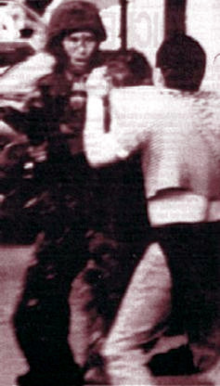
On May 12, 1992, a unit of the Provisional Irish Republican Army (IRA) East Tyrone Brigade launches a bomb attack on a British Army foot patrol near the republican stronghold of Cappagh, County Tyrone. One soldier of the Parachute Regiment, Alistair Hodgson, loses both legs as a result. The improvised land mine is described in an IRA statement as an “anti-personnel device.” Other paratroopers receive lesser wounds, according to the same statement. The incident triggers a rampage by members of the Parachute Regiment in the nearby, overwhelmingly Irish nationalist town of Coalisland, some ten miles to the east. The IRA attack is described as a “provocation” tactic, devised to produce an over-reaction by troops to make them even more unpopular among local nationalists.
The deployment of the paratroopers, which begins in April has already been criticised by republican activist and former Member of ParliamentBernadette Devlin McAliskey, who denounces beatings, shootings and damages to property reportedly carried out by the troops. These previous incidents include the destruction of fishing gear and boats in the townland of Kinturk, near Ardboe, and a brawl on April 22 between soldiers and motorists at a checkpoint in Stewartstown, in which plastic bullets are fired that end with a civilian and two paratroopers wounded. Unionist politician and Ulster Defence Regiment (UDR) officer Ken Maginnis, then-Member of Parliament for the area, calls for the withdrawal of the regiment after receiving a large number of complaints about their behaviour.
On May 12, two hours after the IRA ambush at Cappagh, members of the regiment seal off the town of Coalisland, ten miles east of Cappagh. According to a Social Democratic and Labour Party (SDLP) politician, the soldiers fabricate a bogus bomb warning, while the Royal Ulster Constabulary (RUC) states that the operation began when a joint police/military patrol was stoned by a crowd. Two pubs are ransacked by the troops and a number of civilian cars are damaged. Several people are allegedly hit with sticks. Following this, a lieutenant is suspended from duty and the regiment is removed from patrol duties in Coalisland.
On the evening of May 17, a fistfight begins at Lineside Road, where a group of young men are having a drink. A passing four-man patrol of the King’s Own Scottish Borderers regiment is challenged to a “boxing match” by the residents. The soldiers set aside their weapons and engage the youths. Noncritical injuries are reported on both sides. The official claim is that the patrol was attacked by a mob of at least 30 people. In the melée, a rifle and a light machine gun are stolen. The rifle is later recovered nearby. The youths smash a backpack radio which is left behind by the troops. Two KOSB soldiers are hospitalised, while in the end seven other soldiers, including paratroopers, receive lesser injuries, one of them hit by a car that crashes through two roadblocks set up by the British Army.
The Parachute Regiment is called to the scene again, and at 8:30 p.m., a major riot starts outside The Rossmore pub between local people and about 20 to 25 paratroopers. The soldiers claim one of their colleagues is isolated and dragged by the crowd. Some witnesses claim paratroopers were in a frenzy, showing their guns and inviting civilians to try to take them. Suddenly, shots are fired by the troops — first into the air and then toward the people outside the pub. Three civilians are rushed to hospital in Dungannon with gunshot wounds, while the soldiers return to their barracks. Another four civilians suffer minor injuries. The paratroopers claim that a “member of the growing crowd” attempted to fire the stolen machine gun at them, but the weapon jammed. One of the wounded is the brother of IRA volunteer Kevin O’Donnell, who had been killed by the Special Air Service (SAS) in February during an ambush at the nearby hamlet of Clonoe, shortly after carrying out a machine-gun attack on the local RUC base.
About 500 people attend a protest rally in Coalisland on May 19, and the wisdom of deploying the troops to patrol the town is questioned by members of the Dáil in Dublin. The Minister for Foreign Affairs of the Republic of Ireland, David Andrews, asks the British Government to withdraw the regiment. As a result, the paratroopers are redeployed outside the urban areas. The RUC claims that the stolen machine gun is found 11 days later at a farmhouse near Cappagh, along with another light machine gun and an AK-47 rifle. The IRA denies they had the machine gun in their possession. Republicans question whether the weapon had really been stolen, suggesting this was merely an excuse for the soldiers’ rampage in Coalisland. Bernardette McAliskey goes even further, suggesting that the recovery of the machine gun near Cappagh, where the initial IRA attack had taken place, was actually staged by the security forces as a publicity stunt. British officials accuse Sinn Féin of being the instigators of the riots, while Michael Mates, then Minister of State at the Northern Ireland Office, states that the incidents were due to “a gang of thugs motivated by the IRA.” Eventually the battalion’s 1992 tour in Northern Ireland is scaled down, with the patrols suspended before the official end of the deployment. The Third Brigade’s commander, Brigadier Tom Longland, is replaced by Brigadier Jim Dutton. This is the first occasion that a high-ranking officer is disciplined in such a way during the Troubles.
The last patrol takes place on June 27, when two paratroopers drown while crossing the River Blackwater. The same day there are further clashes with local residents, this time in the town of Cookstown, when a group of people that the BelfastNews Letter calls “drunken hooligans” assault a number of paratroopers trying to help an elderly man who is suffering a heart attack.
The 3rd Battalion of the Parachute Regiment is replaced by the 1st Battalion of the Coldstream Guards.
Six soldiers face criminal charges for their roles in the May riots but are acquitted one year later. Five are bound over. Maurice McHugh, the presiding magistrate, avers that the soldiers were “not entirely innocent,” while Sinn Féin sources dub the ruling “a farce.” Dungannon priest Father Denis Faul is of the opinion that the soldiers should have been charged with conspiracy. The Ulster TelevisiondocumentaryCounterpoint of June 1993 claims that Director of Public Prosecutions for Northern Ireland, Sir Alasdair Fraser, returned the case file to the RUC recommending no prosecution. The programme also interviews Alistair Hodgson, the soldier maimed at Cappagh, who says that “had another member of my unit been injured in the way that I was, I would have been with the rest of the lads attacking the locals.” Authors Andrew Sanders and Ian S. Wood suggest that the deployment of the battalion in Coalisland and elsewhere hindered the British policy of police primacy in Northern Ireland.
Fresh clashes between local residents and troops are reported at Coalisland on March 6, 1994, a few months before the first IRA ceasefire, when a crowd assaults two soldiers after the RUC searched a car. Plastic bullets are fired, and three civilians and two soldiers are slightly injured.
(Pictured: Confrontation between a British paratrooper and a civilian in Coalisland, May 1992)
Downing is the second son of Eugene Downing, a local merchant, and his wife, Helena, daughter of Timothy McCarthy of Kilfadamore, County Kerry. They have two other sons and two daughters. He is apprenticed in 1830 to his elder brother, Francis Henry, who practises as a solicitor at Killarney. Once admitted as a solicitor himself in 1836, he moves to Skibbereen, County Cork, where he practises until the mid-1860s, making from his practice a large fortune. By the mid-1870s he owns 4,067 acres in Cork and Kerry valued at £1,413.
Downing is prominent locally in public affairs, supporting the repeal campaign of Daniel O’Connell and the temperance campaign of Fr. Theobald Mathew. He is the first chairman of Skibbereen town commissioners, from 1862 to 1879. He later helps James Stephens and Michael Doheny escape to France in 1849. After Jeremiah O’Donovan Rossa and other members of the Phoenix National and Literary Society are arrested on December 5, 1858, he acts as their solicitor. His chief clerk, Mortimer Moynahan, a member of the society, unwittingly takes on as an assistant a man who proves to be an informer.
Downing involves himself in the National Association of Ireland, the political pressure group formed by the CatholicArchbishop of Dublin, Paul Cullen, and succeeds in getting tenant-right added to its demands in March 1865. He is elected as one of the two MPs for County Cork on November 30, 1868, and is reelected without a contest on February 5, 1874. Nominally a liberal, he draws his main support from the Catholic bishops and most of the parish clergy and, more significantly, from the tenant farmer class. The farmers’ interests he vigorously pursues in parliament and outside.
After the passing of William Ewart Gladstone‘s first land act, Downing plays a prominent part in the formation of the Home Rule League under the leadership of Isaac Butt. He is always a moderate on the home-rule issue – he opposes the pledging of home-rule MPs always to act together and later the obstructive tactics of fellow home-rulers Joseph Gillis Biggar and Charles Stewart Parnell. He is one of the nine members of the standing committee of Butt’s Irish Parliamentary Party (1874–79) and proves a stalwart of Butt particularly in disputes with Parnell. It is he who draws to the attention of the House of Commons the condition of tenants on the Buckley estate in the foothills of the Galtee Mountains at Skeheenarinky in County Tipperary in March 1877. In Butt’s absence Downing introduces an Irish land tenure bill on February 6, 1878, which is, however, quickly defeated.
Downing dies January 10, 1879, at his residence, Prospect House, Skibbereen, a deputy lieutenant of County Cork. The cortège that follows his body to the Old Caheragh Graveyard, Skibbereen, for burial is said to be four miles long. In Emmet Larkin‘s judgement, “it was not altogether unlikely, if he had survived, that he would have eventually succeeded Butt as chairman of the Irish party.”
In 1837, Downing marries Jane, youngest daughter of Daniel McCarthy of Ave Hill, Dromore, County Cork, and with her has four sons and three daughters. His younger brother, Washington, is a parliamentary reporter and later the Rome correspondent for The Daily News of London, and husband of Mary McCarthy Downing.
(From: “Downing, Timothy McCarthy” by C.J. Woods, Dictionary of Irish Biography, http://www.dib.ie, October 2009)
Kickham’s father, John Kickham, is the proprietor of the principal drapery in the locality and is held in high esteem for his patriotic spirit. His mother, Anne O’Mahony, is related to the Fenian leader John O’Mahony. He grows up largely deaf and almost blind, the result of an explosion with a powder flask when he is thirteen. He is educated locally, where it is intended that he study for the medical profession. During his boyhood the campaign for a repeal of the Acts of Union 1800 between Great Britain and Ireland is at its height, and he soon becomes versed in its arguments and is inspired by its principles. He often hears the issues discussed in his father’s shop and at home amongst all his friends and acquaintances.
From a young age Kickham is imbued with these patriotic ideals. He becomes acquainted with the teaching of the Young Irelanders through their newspaper The Nation from its foundation in October 1842. His father read the paper aloud every week for the family. Like all the young people of the time, and a great many of the old ones, his sympathies are with the Young Irelanders on their secession from the Repeal Association.
When he is 22 years old, Kickham contributes The Harvest Moon sung to the air of “The Young May Moon,” to The Nation on August 17, 1850. Other verses are to follow, but the finest of his poems according to A. M. O’Sullivan, appear in other journals. Rory of the Hill, The Irish Peasant Girl, and Home Longings, better known as Slievenamon, are published in the Celt. The First Felon appears in the Irishman. Patrick Sheehan, the story of an old soldier, is published in the Kilkenny Journal, and becomes very popular as an anti-recruiting song.
Kickham begins to write for a number of papers, including The Nation, but also the Celt, the Irishman, the Shamrock, and becomes one of the leading writers of The Irish People, the Fenian newspaper, in which many of his poems appear. His writings are signed using his initials, his full name, or the pseudonyms, “Slievenamon” and “Momonia.”
Kickham is the leading member of the Confederation Club in Mullinahone, which he is instrumental in founding. When the revolutionary spirit begins to grip the people in 1848, he turns out with a freshly made pike to join William Smith O’Brien and John Blake Dillon when they arrive in Mullinahone in July 1848. On hearing of the progress of O’Brien through the country, he sets to work manufacturing pikes and is in the forge when news reaches him that the leaders are looking for him. It is here that he meets James Stephens for the first time. At O’Brien’s request, he rings the chapel bell to summon the people and before midnight a Brigade has answered the summons. He later writes a detailed account about this period which brings his connection with the attempted Rising of 1848 to a close.
After the failed 1848 uprising at Ballingarry, Kickham has to hide for some time, as a result of the part he had played in rousing the people of his native village to action. When the excitement has subsided, he returns to his father’s house and resumes his interests in the sports of fishing and fowling and spends much of his time in literary pursuits. Some of the authors in which he is well versed are Alfred Tennyson and Charles Dickens and he greatly admires George Eliot, and after William Shakespeare, is Robert Burns.
In the autumn of 1857, a messenger arrives from New York with a message for James Stephens from members of the Emmet Monument Association, calling on him to get up an organization in Ireland. On December 23, Stephens dispatches Joseph Denieffe to the United States with his reply and outlines his conditions and his requirements from the organisation in America. Denieffe returnd on March 17, 1858, with the acceptance of Stephens’ terms and £80. That evening the Irish Republican Brotherhood commences. Those present in Langan’s, lathe-maker and timber merchant, 16 Lombard Street, for that first meeting are Stephens, Kickham, Thomas Clarke Luby, Peter Langan, Denieffe and Garrett O’Shaughnessy. Later it includes members of the Phoenix National and Literary Society, which is formed in 1856 by Jeremiah O’Donovan Rossa in Skibbereen, County Cork.
In mid-1863, Stephens informs his colleagues that he wishes to start a newspaper, with financial aid from O’Mahony and the Fenian Brotherhood in America. The offices are established at 12 Parliament Street, almost at the gates of Dublin Castle. The first issue of The Irish People appears on November 28, 1863. The staff of the paper along with Kickham are Luby and Denis Dowling Mulcahy as the editorial staff, O’Donovan Rossa and James O’Connor in charge of the business office, with John Haltigan being the printer. John O’Leary is brought from London to take charge in the role of Editor. Shortly after the establishment of the paper, Stephens departs on an America tour, and to attend to organizational matters. Before leaving, he entrusts to Luby a document containing secret resolutions on the Committee of Organization or Executive of the IRB. Though Luby intimates its existence to O’Leary, he does not inform Kickham as there seems no necessity. This document later forms the basis of the prosecution against the staff of The Irish People.
Kickham’s first contribution to The Irish People, entitled Leaves from a Journal, appears in the third issue and is based on a journal he kept on his way to America in 1863. This article leaves no doubt as to his literary capacity according to O’Leary. It falls to Kickham, as a good Catholic, to tackle the priests, though not exclusively with articles such as “Two Sets of Principles,” a rebuff to the doctrines laid down by Lord Carlisle, and “A Retrospect,” dealing with the tenant-right movement chiefly but also the events of the recent past and their bearing on the present. Kickham articulates the attitude held by the IRB in relation to priests, or more particularly in politics.
On July 15, 1865, American-made plans for a rising in Ireland are discovered when the emissary loses them at Kingstown railway station. They find their way to Dublin Castle and to Superintendent Daniel Ryan, head of G Division. Ryan has an informer within the offices of The Irish People named Pierce Nagle. He supplies Ryan with an “action this year” message on its way to the IRB unit in Tipperary. With this information, Ryan raids the offices of The Irish People on September 15, followed by the arrests of O’Leary, Luby, and O’Donovan Rossa. Kickham is caught after a month on the run. Stephens is also caught but with the support of Fenian prison warders John J. Breslin and Daniel Byrne is less than a fortnight in Richmond Bridewell when he vanishes and escapes to France. The last issue of The Irish People is dated September 16, 1865.
On November 11, 1865, Kickham is convicted of treason. Judge William Keogh, with many expressions of sympathy for the prisoner, and many compliments in reference to his intellectual attainments, sentences him to fourteen years’ penal servitude. The prisoners’ refusal to disown their opposition to British rule in any way, even when facing charges of life-imprisonment, earn them the nickname of “the bold Fenian men.” Kickham spends time from 1866 until his release in the Woking Convict Invalid Prison.
Kickham is given a free pardon from Queen Victoria on February 24, 1869, because of ill-health, and upon his release he is made Chairman of the Supreme Council of the IRB and the unchallenged leader of the reorganized movement. He is an effective orator and chairman of meetings despite his physical handicaps. He wears an ear trumpet and can only read when he holds books or papers within a few inches of his eyes. For many years he carries on conversations by means of the deaf and dumb alphabet.
Kickham is the author of three well-known stories, dealing sympathetically with Irish life and manners and the simple faith, the joys and sorrows, the quaint customs and the insuppressible humour of the peasantry. Knocknagow is deemed one of the finest tales of peasant life ever written. Sally Cavanagh is a touching story illustrating the evils of landlordism and emigration. For the Old Land deals with the fortunes of a small farmer’s family.
Kickham dies on August 22, 1882, at the house of James O’Connor, a former member of the IRB and afterward MP for West Wicklow, 2 Montpelier Place, Blackrock, Dublin, where he had been living for many years, and had been cared for by the poet Rose Kavanagh. He is buried in Mullinahone, County Tipperary.
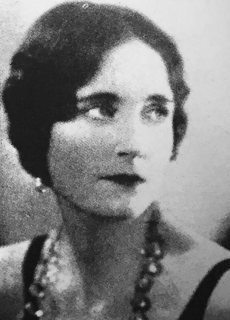
O’Connor is one of five children of Irish Republican Brotherhood (IRB) Supreme Council member and later MPJames O’Connor. He is IRB treasurer in 1870 and party to the discussions on the New Departure, a collaboration between constitutional and physical force nationalists, the open and the secret movements. Her uncle, John O’Connor, is a leading member of the Supreme Council.
In 1890, when O’Connor’s father is a journalist, her mother, Mary O’Connor, and four of her sisters – Annie, Aileen, Kathleen and Norah – die after eating contaminated mussels gathered on the seashore near where they lived in what became known as the Seapoint tragedy. She becomes violently ill, but survives.
O’Connor travels to London after a falling out with her stepmother six years later. She finds work as a civil servant and a paid speaker for the Liberal Party, through which she meets Crompton Llewelyn Davies, adviser to David Lloyd George and solicitor to the General Post Office, brother of Arthur Llewelyn Davies and uncle of the boys who inspire the creation of Peter Pan. They marry on December 8, 1910. The marriage produces two children: Richard and Catherine.
Davies is an orthodox home ruler but is radicalised by the 1916 Easter Rising. Davies and her husband raise funds for Roger Casement‘s legal defence and later lobby for his death sentence to be commuted. She is saluted as one of the “fond ones” in a letter from Casement to Margaret Gavan Duffy on the eve of his August 3, 1916, execution in Pentonville Prison.
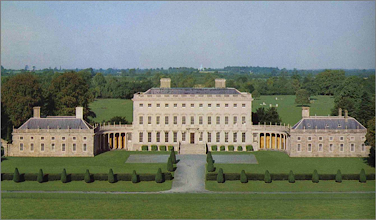
Following the Easter Rising, Davies takes her two children to Ireland and purchases Furry Park, a crumbling mansion near Dublin. She collaborates with Michael Collins during the Irish War of Independence and her home in Clontarf becomes one of Collins’ many safe houses as he directs the war. She is arrested and imprisoned in 1920. Collins also stays at her Portmarnock house, using it as a safe house.
Davies says in later life that she and Michael Collins had been lovers, but the historian Peter Hart claims her to be a stalker. It has been suggested that Collins is the father of her son Richard. Historian Meda Ryan denies this saying “Letters from him and a phone call confirmed that he was born December 24, 1912, before his mother met Collins.”
Historian Tim Pat Coogan in his book Michael Collins says that Davies claimed on the night that Collins learned that Éamon de Valera was going to reject the Anglo-Irish Treaty “he was so distressed that I gave myself to him.” Coogan refuses to give a source and in the footnotes, he says, “Confidential source.”
Davies makes a lasting contribution to Irish literature with a translation, with George Thomson, of the Muiris Ó Súilleabháin book Fiche Bliain faoi Bhláth as Twenty Years a-Flowering. She is thought to have helped Collins write his book The Path to Freedom.
As a member of the Irish Parliamentary Party (IPP), Harrington represents Westmeath from February 1883 to November 1885. In 1885 he is elected for the new constituency of Dublin Harbour, which he represents until his death. He serves as Lord Mayor of Dublin three times from 1901 to 1904.
Harrington owns two newspapers, United Ireland and the Kerry Sentinel, and is a member of the so-called Bantry band of prominent nationalist politicians from the Bantry vicinity. They are also more pejoratively known as the Pope’s brass band. Tim Healy is another prominent member of this unofficial group.
In 1884, Harrington publishes a pamphlet, “Maamtrasna Massacres – Impeachment of the Trials,” in which he dismantles the Crown Prosecution’s case against the eight men accused of the murders of the Joyce family on August 17, 1882. He provides evidence that Crown Prosecutor George Bolton had deliberately suppressed evidence that would have acquitted Maolra Seoighe (English: Myles Joyce), who was hanged, and four men who were sentenced to twenty years of penal servitude.
Thereafter Harrington becomes excluded from Redmond’s closed circle of confidants, retains sympathy with O’Brien, and represents the interests of the tenant farmers at the 1902 Land Conference negotiations which lead to the enactment of the unprecedented WyndhamLand Purchase (Ireland) Act 1903.
On September 7, 1901, as the Lord Mayor of Dublin, Harrington kicks off at the official ceremony to open Bohemian F.C.‘s new home, Dalymount Park.
Harrington retains the party nomination for the Dublin Harbour constituency in the January 1910 United Kingdom general election, largely because of local divisions about who should succeed him and because an O’Brienite offer to pay his election expenses deters rivals from going to the polls. He decides that the finely balanced result of the general election means that every nationalist vote would be required at Westminster. He therefore travels to London, but shortly after attending the parliamentary party meeting on February 23 he suffers a stroke. After some days’ recuperation he is brought home to Dublin, but his condition deteriorates and he dies on March 12, 1910, at his home, 70 Harcourt Street. He is buried near the Parnell circle at Glasnevin Cemetery.
Harrington is celebrated by a statue erected in 2001 at the east end of Castletownbere near the Millbrook bar.