seamus dubhghaill

Promoting Irish Culture and History from Little Rock, Arkansas, USA


Leave a comment

Birth of John Costello, Taoiseach and Fine Gael Politician

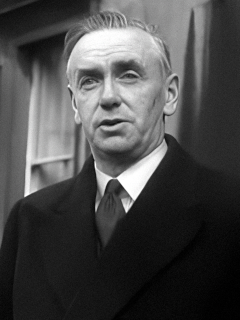
John Aloysius Costello, Fine Gael politician who serves as Taoiseach from 1948 to 1951 and from 1954 to 1957, Leader of the Opposition from 1951 to 1954 and from 1957 to 1959, and Attorney General of Ireland from 1926 to 1932, is born on June 20, 1891, in Fairview, Dublin. He serves as a Teachta Dála (TD) from 1933 to 1943 and from 1944 to 1969.

Costello is the younger son of John Costello senior, a civil servant, and Rose Callaghan. He is educated at St. Joseph’s, Fairview, and then moves to O’Connell School, for senior classes, and later attends University College Dublin (UCD), where he graduates with a degree in modern languages and law. He studies at King’s Inns to become a barrister, winning the Victoria Prize there in 1913 and 1914. He is called to the Irish Bar in 1914, and practises as a barrister until 1922.

In 1922, Costello joins the staff at the office of the Attorney General in the newly established Irish Free State. Three years later he is called to the inner bar, and the following year, 1926, he becomes Attorney General of Ireland, upon the formation of the Cumann na nGaedheal government, led by W. T. Cosgrave. While serving in this position he represents the Free State at Imperial Conferences and League of Nations meetings.

Costello is also elected a Bencher of the Honourable Society of King’s Inns. He loses his position as Attorney General of Ireland when Fianna Fáil comes to power in 1932. The following year, however, he is elected to Dáil Éireann as a Cumann na nGaedheal TD. Cumann na nGaedheal soon merges with other parties to form Fine Gael.

During the Dáil debate on the Emergency Powers Act 1939, Costello is highly critical of the Act’s arrogation of powers, stating that “We are asked not merely to give a blank cheque, but to give an uncrossed cheque to the Government.” He loses his seat at the 1943 Irish general election but regains it when Éamon de Valera calls a snap election in 1944. From 1944 to 1948, he is the Fine Gael front-bench Spokesman on External Affairs.

In 1948, Fianna Fáil has been in power for sixteen consecutive years and has been blamed for a downturn in the economy following World War II. The 1948 Irish general election results show Fianna Fáil short of a majority, but still by far the largest party, with twice as many seats as the nearest rival, Fine Gael. It appears that Fianna Fáil is headed for a seventh term in government. However, the other parties in the Dáil realise that between them, they have only one seat fewer than Fianna Fáil, and if they band together, they would be able to form a government with the support of seven Independent deputies. Fine Gael, the Labour Party, the National Labour Party, Clann na Poblachta and Clann na Talmhan join to form the first inter-party government in the history of the Irish state.

While it looks as if cooperation between these parties will not be feasible, a shared opposition to Fianna Fáil and Éamon de Valera overcomes all other difficulties, and the coalition government is formed.

Since Fine Gael is the largest party in the government, it has the task of providing a suitable candidate for Taoiseach. Naturally, it is assumed that its leader, Richard Mulcahy, will be offered the post. However, he is an unacceptable choice to Clann na Poblachta and its deeply republican leader, Seán MacBride. This is due to Mulcahy’s record during the Irish Civil War. Instead, Fine Gael and Clann na Poblachta agree on Costello as a compromise candidate. Costello had never held a ministerial position nor was he involved in the Civil War. When told by Mulcahy of his nomination, Costello is appalled, content with his life as a barrister and as a part-time politician. He is persuaded to accept the nomination as Taoiseach by close non-political friends.

During the campaign, Clann na Poblachta had promised to repeal the Executive Authority (External Relations) Act 1936 but does not make an issue of this when the government is being formed. However, Costello and his Tánaiste, William Norton of the Labour Party, also dislike the act. During the summer of 1948, the cabinet discusses repealing the act, however, no firm decision is made.

In September 1948, Costello is on an official visit to Canada when a reporter asks him about the possibility of Ireland leaving the British Commonwealth. For the first time, he declares publicly that the Irish government is indeed going to repeal the External Relations Act and declare Ireland a republic. It has been suggested that this is a reaction to offence caused by the Governor General of Canada at the time, Harold Alexander, 1st Earl Alexander of Tunis, who is of Northern Irish descent and who allegedly arranges to have placed symbols of Northern Ireland in front of Costello at an official dinner. Costello makes no mention of these aspects on the second reading of the Republic of Ireland Bill on November 24 and, in his memoirs, claims that Alexander’s behaviour had in fact been perfectly civil and could have had no bearing on a decision which had already been made.

The news takes the Government of the United Kingdom and even some of Costello’s ministers by surprise. The former had not been consulted and following the declaration of the Republic in 1949, the UK passes the Ireland Act that year. This recognises the Republic of Ireland and guarantees the position of Northern Ireland within the United Kingdom for so long as a majority there want to remain in the United Kingdom. It also grants full rights to any citizens of the Republic living in the United Kingdom. Ireland leaves the Commonwealth on April 18, 1949, when The Republic of Ireland Act 1948 comes into force. Frederick Henry Boland, Secretary of the Department of External Affairs, says caustically that the affair demonstrates that “the Taoiseach has as much notion of diplomacy as I have of astrology.” The British envoy, John Maffey, 1st Baron Rugby, is equally critical of what he calls a “slipshod and amateur” move.

Many nationalists now see partition as the last obstacle on the road to total national independence. Costello tables a motion of protest against partition on May 10, 1949, without result.

In 1950, the independent-minded Minister for Health, Noël Browne, introduces the Mother and Child Scheme. The scheme would provide mothers with free maternity treatment and their children with free medical care up to the age of sixteen, which is the normal provision in other parts of Europe at that time. The bill is opposed by doctors, who fear a loss of income, and Roman Catholic bishops, who oppose the lack of means testing envisaged and fear the scheme could lead to birth control and abortion. The cabinet is divided over the issue, many feeling that the state cannot afford such a scheme priced at IR£2,000,000 annually. Costello and others in the cabinet make it clear that in the face of such opposition they will not support the Minister. Browne resigns from the government on April 11, 1951, and the scheme is dropped. He immediately publishes his correspondence with Costello and the bishops, something which had hitherto not been done. Derivatives of the Mother and Child Scheme are introduced in Public Health Acts of 1954, 1957 and 1970.

The Costello government has a number of noteworthy achievements. A new record is set in housebuilding, the Industrial Development Authority and Córas Tráchtála are established, and the Minister for Health, Noel Browne, with the then new Streptomycin, bring about an advance in the treatment of tuberculosis. Ireland also joins a number of organisations such as the Organization for European Economic Co-operation and the Council of Europe. However, the government refuses to join NATO, allegedly because the British remain in Northern Ireland. The scheme to supply electricity to even the remotest parts of Ireland is also accelerated.

While the “Mother and Child” incident does destabilise the government to some extent, it does not lead to its collapse as is generally thought. The government continues; however, prices are rising, a balance of payments crisis is looming, and two TDs withdraw their support for the government. These incidents add to the pressure on Costello and so he decides to call a general election for June 1951. The result is inconclusive but Fianna Fáil returns to power. Costello resigns as Taoiseach. It is at this election that his son Declan is elected to the Dáil.

Over the next three years while Fianna Fáil is in power a dual-leadership role of Fine Gael is taking place. While Richard Mulcahy is the leader of the party, Costello, who has proved his skill as Taoiseach, remains as parliamentary leader of the party. He resumes his practice at the Bar. In what is arguably his most celebrated case, the successful defence of The Leader against a libel action brought by the poet Patrick Kavanagh, dates from this period. Kavanagh generously praises Costello’s forensic skill, and the two men become friends.

At the 1954 Irish general election Fianna Fáil loses power. A campaign dominated by economic issues results in a Fine Gael-Labour Party-Clann na Talmhan government coming to power. Costello is elected Taoiseach for the second time.

The government can do little to change the ailing nature of Ireland’s economy, with emigration and unemployment remaining high, and external problems such as the Suez Crisis compounding the difficulty. Measures to expand the Irish economy such as export profits tax relief introduced in 1956 would take years have sizable impact. Costello’s government does have some success with Ireland becoming a member of the United Nations in 1955, and a highly successful visit to the United States in 1956, which begins the custom by which the Taoiseach visits the White House each St. Patrick’s Day to present the U.S. President with a bowl of shamrock. Although the government has a comfortable majority and seems set for a full term in office, a resumption of Irish Republican Army (IRA) activity in Northern Ireland and Great Britain causes internal strains. The government takes strong action against the republicans.

In spite of supporting the government from the backbenches, Seán MacBride, the leader of Clann na Poblachta, tables a motion of no confidence, based on the weakening state of the economy and in opposition to the government’s stance on the IRA. Fianna Fáil also tables its own motion of no confidence, and rather than face almost certain defeat, Costello again asks President Seán T. O’Kelly to dissolve the Oireachtas. The general election which follows in 1957 gives Fianna Fáil an overall majority and starts another sixteen years of unbroken rule for the party. Some of his colleagues questioned the wisdom of his decision to call an election. The view is expressed that he was tired of politics and depressed by his wife’s sudden death the previous year.

Following the defeat of his government, Costello returns to the bar. In 1959, when Richard Mulcahy resigns the leadership of Fine Gael to James Dillon, he retires to the backbenches. He could have become party leader had he been willing to act in a full-time capacity. He remains as a TD until 1969, when he retires from politics, being succeeded as Fine Gael TD for Dublin South-East by Garret FitzGerald, who himself goes onto to become Taoiseach in a Fine Gael-led government.

During his career, Costello is presented with a number of awards from many universities in the United States. He is also a member of the Royal Irish Academy from 1948. In March 1975, he is made a freeman of the city of Dublin, along with his old political opponent Éamon de Valera. He practises at the bar until a short time before his death at the age of 84, in Ranelagh, Dublin, on January 5, 1976. He is buried at Dean’s Grange Cemetery in Dublin.

Leave a comment

Death of Robert Barton, Nationalist & Anglo-Irish Politician

Robert Childers Barton, Anglo-Irish politician, Irish nationalist and farmer who participates in the negotiations leading up to the signature of the Anglo-Irish Treaty, dies in Annamoe, County Wicklow, on August 10, 1975. His father is Charles William Barton, and his mother is Agnes Alexandra Frances Childers. His wife is Rachel Warren of Boston, daughter of Fiske Warren. His double first cousin and close friend is the English-born Irish writer Erskine Childers.

Barton is born in Annamoe on March 14, 1881, into a wealthy Irish Protestant land-owning family, namely of Glendalough House. His two younger brothers, Erskine and Thomas, die while serving in the British Army during World War I. He is educated in England at Rugby School and the University of Oxford and becomes an officer in the Royal Dublin Fusiliers on the outbreak of World War I. He is stationed in Dublin during the 1916 Easter Rising and comes into contact with many of its imprisoned leaders in the aftermath while on duty at Richmond Barracks. He resigns his commission in protest at the heavy-handed British government suppression of the revolt. He then joins the Irish Republican Brotherhood (IRB).

At the 1918 Irish general election to the British House of Commons, Barton is elected as the Sinn Féin member for West Wicklow. In common with all Sinn Féin members, he boycotts the Westminster parliament and sits instead in Dáil Éireann (the First Dáil). Arrested in February 1919 for sedition, he escapes from Mountjoy Prison on Saint Patrick’s Day, leaving a note to the governor explaining that, owing to the discomfort of his cell, he felt compelled to leave, and requests the governor to keep his luggage until he sends for it. He is appointed as Director of Agriculture in the Dáil Ministry in April 1919. He is recaptured in January 1920 and sentenced to three years’ imprisonment but is released under the general amnesty of July 1921.

In May of that year, prior to his release, Barton is elected as a Sinn Féin member for Kildare–Wicklow in the 1921 Irish election to the House of Commons of Southern Ireland. Once again, all Sinn Féin members boycott this parliament, sitting as the Second Dáil. In August 1921, he is appointed to cabinet as Secretary for Economic Affairs.

Barton is one of the Irish plenipotentiaries to travel to London for the Anglo-Irish Treaty negotiations. His cousin is a secretary to the delegation. He reluctantly signs the Treaty on December 6, 1921, defending it “as the lesser of two outrages forced upon me and between which I had to choose.”

Although he had signed the Treaty and voted for it in the Dáil, Barton stands in the 1922 Irish general election for Anti-Treaty Sinn Féin, the only TD who had voted for the Treaty to do so and wins a seat in the Third Dáil. In common with other Anti-Treaty TDs, he does not take his seat. In October 1922 he is appointed Minister for Economic Affairs in Éamon de Valera‘s “Emergency Government,” a shadow government in opposition to the Provisional Government and the later Executive Council of the Irish Free State. His memoir of this period is completed in 1954 and can be seen on the Bureau of Military History website. He is arrested and interned for most of the war at the Curragh Camp.

Barton is defeated at the 1923 Irish general election and retires from politics for the law, practicing as a barrister. He later becomes a judge. He is chairman of the Agricultural Credit Corporation from 1934 to 1954. He dies at home in County Wicklow on August 10, 1975, at the age of 94, the last surviving signatory of the Anglo-Irish Treaty. Éamon de Valera dies only nineteen days later, on August 29, 1975.

Glendalough House, run by Barton for over 70 years right up until his death, is still considered one of Ireland’s most notable properties, alongside nearby Powerscourt Estate. The house is the center of numerous political meetings and gatherings from 1910 to 1922. It has also been featured as a location in many large Hollywood films including Excalibur, Saving Private Ryan and Braveheart.


Leave a comment

Birth of Ronan Tynan, Singer & Former Paralympic Athlete

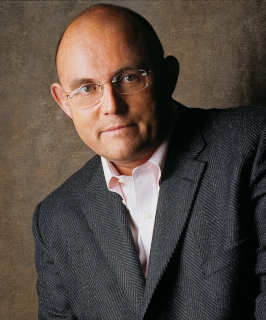
Ronan Tynan, Irish tenor singer and former Paralympic athlete, is born in Dublin on May 14, 1960. He is a member of The Irish Tenors re-joining in 2011 while continuing to pursue his solo career since May 2004. In the United States, audiences know him for his involvement with that vocal group and for his renditions of “God Bless America.” He is also known for participating in the 1984 and 1988 Summer Paralympics.

Although born in Dublin, Tynan’s family home is in Johnstown, County Kilkenny. He is born with phocomelia, causing both of his lower legs to be underdeveloped. Although now 6’4″ tall, his legs are unusually short, his feet are splayed outward, and he has three toes on each foot.  He is one of a set of twins, his twin brother Edmond dying at 11 months old. At age 20, he has his legs amputated below the knee following a back injury in a car accident. The injury to his back makes it impossible for him to continue using prosthetic legs without the amputation.  Within weeks of the accident, he is climbing stairs at his college dormitory on artificial legs. Within a year, he is winning in international competitions in track and field athletics. He represents Ireland in the 1984 and 1988 Summer Paralympics, winning four golds, two silvers, and one bronze medal. Between 1981 and 1984, he wins 18 gold medals from various competitions and sets 14 world records.

In the following years, Tynan becomes the first person with a disability to be admitted to the National College of Physical Education in Limerick. He works for about two years in the prosthetics industry, then goes to Trinity College, Dublin, becomes a physician specialising in Orthopedic Sports Injuries, and graduates in 1993. Encouraged to also study voice by his father Edmund, Tynan wins a series of voice competition awards and joins The Irish Tenors.

A devout Roman Catholic, Tynan has appeared on Eternal Word Television Network (EWTN). At the invitation of the Archbishop of New York, Timothy Dolan, he sings at the Archbishop’s installation Mass in St. Patrick’s Cathedral on April 15, 2009.

Tynan performs in several events attended by President George W. Bush, including Ronald Reagan’s state funeral, George H. W. Bush‘s 80th birthday, the prayer service marking George W. Bush’s second inauguration, the St. Patrick’s Day reception with Irish Taoiseach Bertie Ahern, the 2008 President’s Dinner, and George H. W. Bush’s state funeral.

Tynan sings “God Bless America” at sporting event venues, such as Yankee Stadium and on several occasions prior to games involving the National Hockey League‘s Buffalo Sabres including a performance before 71,217 fans at the AMP Energy NHL Winter Classic along with Sabres anthem singer Doug Allen, who performs the Canadian national anthem, on January 1, 2008, when the Sabres play the Pittsburgh Penguins. He has not performed for the Sabres since Terry Pegula purchased the team in 2011. Most recently, he sings “On Eagle’s Wings” at the 2017 Memorial Day Concert.

In 2004 Tynan sings the “Theme from New York, New York” at the Belmont Stakes where Smarty Jones fails in his attempt to win the Triple Crown. Less than a week later he is at the Washington National Cathedral for former United States President Ronald Reagan’s state funeral, where he sings “Amazing Grace” and Franz Schubert‘s “Ave Maria.”

Tynan sings for George H. W. Bush at Bush’s Houston home on the day of the president’s death on November 30, 2018. The first song is “Silent Night,” while the second is a Gaelic song. Bush’s friend and former aide James Baker says that while Tynan is singing “Silent Night,” “believe it or not, the president was mouthing the words.”

While a real estate agent and prospective buyer Dr. Gabrielle Gold-von Simson are looking at an apartment in Tynan’s building on Manhattan‘s East Side, Tynan makes what is construed to be an anti-semitic remark. Shortly after this, the New York Yankees cancel Tynan’s performance of “God Bless America” for Game 1 of the 2009 American League Championship Series on October 16, 2009 because of the incident.

According to Tynan’s version of the event, two Jewish women came to view an apartment in his building. Some time afterwards, another real estate agent shows up with a potential client. The agent jokes to Tynan “at least they’re not (Boston) Red Sox fans.” Tynan replies, “As long as they’re not Jewish,” referring to the exacting women he had met earlier. The prospective client, Jewish pediatrician Dr. Gabrielle Gold-Von Simson, takes umbrage and says, “Why would you say that?” Tynan replies, “That would be scary,” and laughs, referring to the previous incident. He subsequently apologises for his remark. The Anti-Defamation League (ADL) accepts his apology. He performs at an ADL event in Manhattan soon thereafter.

Only July 4, 2010 Tynan performs “God Bless America” for the Boston Red Sox at Fenway Park with the support of some in the local Jewish community.


Leave a comment

Birth of John Keegan “Leo” Casey, the Poet of the Fenians

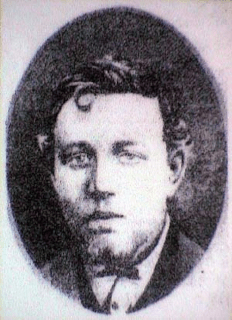
John Keegan “Leo” Casey, Irish poet, orator and republican known as the Poet of the Fenians, is born in Mount Dalton, County Westmeath on August 22, 1846. He is famous as the writer of the song “The Rising of the Moon” and as one of the central figures in the Fenian Rising of 1867. He is imprisoned by the English and dies on Saint Patrick’s Day in 1870.

Casey is born to a teacher during the height of the Great Famine of 1846. Eight years later he moves to Gurteen, near Ballymahon in County Longford, when his father is given the post of headmaster at the local school. His work would come to be closely associated with Ballymahon.

As a teenager Casey works as an assistant to his father and is expected to follow him into teaching. However, he is disillusioned by the insufficiently nationalistic nature of the curriculum and spends a great deal of time writing poetry. It is at this time, reputedly at the age of fifteen, that he writes his best-known song, “The Rising of the Moon,” which commemorates the Irish Rebellion of 1798.

Following the increasing popularity of his songs and ballads at nationalist gatherings, Casey moves to Dublin in the 1860s and becomes active in the Fenian movement. He is a major contributor to The Nation newspaper, for which he assumes his pen name of ‘Leo.’

In 1866, at the age of 20, Casey publishes a collection of poems, entitled A Wreath of Shamrocks. Most of the poems therein had already been published elsewhere, primarily in The Nation. The further fame engendered by the success of the book leads him to be sought after as a speaker. He addresses mass rallies in Dublin, Liverpool and London that year, in the lead up to the Fenian Rising in 1867.

When the uprising fails, Casey is imprisoned without trial for eight months in Mountjoy Prison. He is released on the understanding that he would leave for Australia and not return to Ireland. However, he chooses to stay on in Summerhill, Dublin in disguise, living as a Quaker and continuing to write and publish in secret.

Casey marries Mary Josephine Briscoe in January 1868 and they have a son Michael, who dies shortly after birth in October 1869. Casey’s health had been broken by the treatment he had received in prison. He falls from a cab on or near O’Connell Bridge in the centre of Dublin in 1870. He dies from his injuries on St. Patrick’s Day, March 17, 1870.

Following his death, Casey is buried in Glasnevin Cemetery. The newspapers report that between fifty and one hundred thousand mourners walk in his funeral procession.


Leave a comment

Death of Mother Mary Martin

Mother Mary of the Incarnation Martin, foundress of the Catholic religious institute of the Medical Missionaries of Mary, dies in Drogheda, County Louth, on January 27, 1975.

Martin is born Marie Helena Martin in Glenageary, County Dublin, on April 24, 1892, the second of twelve children of Thomas Martin and Mary Moore. In 1904, while attending classes for her First Communion, she contracts rheumatic fever, which is to affect her heart permanently. Tragedy hits the family on St. Patrick’s Day 1907, as her father is killed in what is presumed to be an accidental shooting. Later her mother sends her to schools in Scotland, England and Germany, all of which she leaves as quickly as possible.

Upon the outbreak of World War I, Martin joins the Voluntary Aid Detachment, a division of the Red Cross. In October 1915, she is assigned to work in Malta. After learning that her brother had been killed in the campaign of Gallipoli, she returns to Ireland in April 1916. She is called to serve again a month later at Neufchâtel-Hardelot, France, in a field hospital near the front lines of the Battle of the Somme. This assignment lasts until December of that year, followed by a brief stint in Leeds, England. After the war, she is called upon help in nursing victims of the Spanish flu, which had begun to devastate populations around the world.

In 1917 a new curate comes to the parish which Martin attends, the Reverend Thomas Roynane, to whom she turns for guidance. Roynane inspires her with an interest in pursuing missionary work. She goes to England in January 1919 for further medical training. Her mother’s severe illness the following year interrupts her training, however, as she has to return home to care for her.

In April 1920, Roynane arranges for Martin to meet the new bishop, and she volunteers her services as a lay missionary to work in his jurisdiction in southern Nigeria. Agnes Ryan, a local schoolteacher now in her fourth year of medical training, advises her that she wishes to join her in the African mission.

In April 1921, Martin and Ryan leave Ireland for Nigeria. They set sail for Africa from Liverpool on May 25 and arrive in the port of Calabar on June 14. They arrive prepared to provide medical care, only to learn that they are expected to run a school which had been staffed by French Religious Sisters until two years prior. To give the parents and children of the school a sense of continuity, the two women are addressed as “Sisters” by the priests and treated as if they are already members of an established religious institute.

By October, Ryan contracts malaria and develops a heart condition, which require her return to Ireland. Forced to fill in as Acting Headmistress, Martin meets with the bishop in his headquarters at Onitsha and is advised that caution is needed in providing medical care to the people of her mission, so as not to provoke objections by other missionaries in the region. Upon her return to Calabar, she makes a 30-day retreat.

In April 1922 the bishop travels there and holds two weeks of consultations with Martin, Roynane and another missioner, during which the Rule and Constitutions of a new congregation are hammered out, with the understanding that Martin will be the foundress. Martin does not see the bishop again for two years. During this time, she learns that the bishop is working to establish the new congregation in Ireland, a direction she feels will focus the congregation on teaching rather than the medical care. An Irish Sister of Charity, Sister Magdalen Walker, is released from her congregation to help in this new work and arrives in Calabar in October 1923.

The following January Martin is directed by the bishop to return to Ireland to make a canonical novitiate. In March she starts her time of postulancy, prior to admission to the novitiate year. After 18 months, however, upon completion of the novitiate year she leaves the community, as the training provided by the Dominican Sisters has not been oriented toward medical care.

In this formal step of forming the new congregation, Martin encounters the prohibition in the new Code of Canon Law of 1917 of the Catholic Church against members of religious orders practicing medicine. Facing this barrier, she still feels a call to consecrated life and considers following the example of the recently canonized Carmelite nun, Thérèse of Lisieux. In 1927 she applies to the community of that Order in Dublin, but her application is declined, solely on the decision of the prioress who feels that Martin is called to a different path in life. She then goes through a new period of confusion until she is requested to consider again serving the missions. She then forms a small group of women to provide the domestic service for the preparatory school run by the Benedictine monks Glenstal Abbey.

In 1933, following a long period of illness, Martin approaches the new Apostolic Nuncio to Ireland, Archbishop Paschal Robinson. He is supportive of her goals and encourages her continually over the next years. Finally, in February 1936, the Holy See lifts prohibition against Religious Sisters serving as doctors or midwives. She then seeks a diocese which will accept a new congregation, without success. In October of that same year, Antonio Riberi is named Apostolic Delegate in Africa, based in Kenya. He gives his support to having the congregation established in Calabar.

While still negotiating to purchase a house in Ireland as a local base, complicated by the fact that they are not yet a formal congregation, the small community sails for Nigeria at the end of 1936. Upon their arrival Martin suffers a heart attack and is hospitalized at Port Harcourt. It is there that she professes religious vows on April 4, 1937. With that the Medical Missionaries of Mary become established.

Martin’s health is always a source of concern, but she lives until 1975. Today the Medical Missionaries of Mary number some 400 women from 16 different nations, who serve in 14 different countries around the world.


Leave a comment

Birth of Eamonn Campbell of The Dubliners

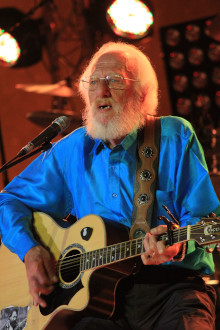
Eamonn Campbell, Irish musician who is a member of The Dubliners from 1987 until his death, is born in Drogheda, County Louth on November 29, 1946. He is also in The Dubliners when they record their 25th anniversary show on The Late Late Show hosted by Gay Byrne.

Campbell is known as a guitarist and has a rough voice similar to the late founding member of The Dubliners, Ronnie Drew. He tour with three other ex-Dubliners as “The Dublin Legends,” now that the group name has been retired with the death of Barney McKenna. Although originally from Drogheda in County Louth, he later lives in Walkinstown, a suburb of Dublin.

It was Campbell’s suggestion that The Dubliners work with London-based Irish band The Pogues in the mid-1980s, thus giving them their second biggest UK hit to date, “The Irish Rover.” Their biggest hit is “Seven Drunken Nights” which reaches number 7 in the charts in 1967 and an appearance on Top of the Pops.

Campbell produces all of The Dubliners’ albums from 1987 onwards, as well as albums for many other Irish artists, including Foster and Allen, Brendan Shine, Daniel O’Donnell and Paddy Reilly. He plays locally with the Delta Showband, The Bee Vee Five and the Country Gents before joining Dermot O’Brien and the Clubmen and first meets The Dubliners when both acts tour England together in 1967. In the mid to late 1970s he more or less retires from the road and becomes involved in the growing Irish recording scene, first as a session musician and later moving to production.

In 2002, Campbell puts a complaint to a commission to inquire into sexual abuse as he says he was abused by the Christian Brothers as a child. In an interview he says “I felt emotional with hate at what this arsehole had got away with. He was abusing the whole class. I still haven’t heard anything back.”

Campbell is the Grand Master for the 2009 Drogheda St. Patrick’s Day Parade. In his younger years he teaches guitar lessons at the “Music Shop” in Drogheda. His granddaughter Megan Campbell is a Republic of Ireland international footballer.

While on tour in the Netherlands with The Dublin Legends, Campbell feels unwell during his final performance. He returns to his hotel at around 1:00 AM and goes to bed. He dies during the early hours of the morning of October 18, 2017. His body is flown back to Dublin where his funeral takes place on October 26, 2017.

(Pictured: Eamonn Campbell during the Festival Interceltique de Lorient in 2014 | This file is licensed under the Creative Commons Attribution-Share Alike 4.0 International license)


Leave a comment

Death of The Chieftains Harpist Derek Bell

George Derek Fleetwood Bell, harpist, pianist, oboist, musicologist and composer best known for his accompaniment work on various instruments with The Chieftains, dies unexpectedly on October 17, 2002 in Phoenix, Arizona during a recovery period from minor surgery.

Bell is born in Belfast, Northern Ireland. He is something of a child prodigy, composing his first concerto at the age of twelve. He graduates from the Royal College of Music in 1957. While studying there, he became friends with the flautist James Galway. From 1958 to 1990 he composes several classical works, including three piano sonatas, two symphonies, Three Images of Ireland in Druid Times (in 1993) for harp, strings and timpani, Nocturne on an Icelandic Melody (1997) for oboe d’amore and piano and Three Transcendental Concert Studies (2000) for oboe and piano.

As manager of the Belfast Symphony Orchestra, Bell is responsible for maintaining the instruments and keeping them in tune. Out of curiosity, he asks Sheila Larchet-Cuthbert to teach him how to play the harp. In 1965 he becomes an oboist and harpist with the BBC Northern Ireland Orchestra. He serves as a professor of harp at the Academy of Music in Belfast.

Bell is briefly featured in a 1986 BBC documentary, The Celts, in which he discusses the role and evolution of the harp in Celtic Irish and Welsh society. He also appears with Van Morrison at the Riverside Theatre at the University of Ulster in April 1988.

Bell is an admirer of the music of Nikolai Karlovich Medtner and is the co-founder, with the bass-baritone Hugh Sheehan, of the first British Medtner Society which gives a series of successful concerts of Medtner’s music in the 1970s long before Medtner’s music is recognised as it is today.

On St. Patrick’s Day in 1972 Bell performs on the radio the music of Turlough O’Carolan, an 18th-century blind Irish harpist. At that time O’Carolan’s music is virtually unknown, though today almost every album of harp music contains one of his compositions. Working with him on the project are several members of The Chieftains. Bell becomes friends with the leader of The Chieftains, Paddy Moloney. For two precarious years, he records both with the BBC Northern Ireland Orchestra and with The Chieftains, until finally becoming a full-time member of the Chieftains in 1975.

Bell is the only member of the band to wear a necktie at every public performance. He favours socks with novelty designs, such as images of Looney Tunes characters. He wears scruffy suits, often with trousers that are too short. He is eccentric and tells obscene jokes. The title of his 1981 solo album Derek Bell Plays With Himself has a conscious double entendre.

While touring in Moscow he grabs his alarm clock and puts it in his pocket while rushing to catch a plane. He is then stopped by the Soviet police on suspicion of carrying a concealed weapon. Paddy Moloney affectionately calls him “Ding Dong” Bell. He relishes the eclectic collaborations, such as those with Van Morrison, Sting and the Chinese orchestra. In 1991 he records with his old friend James Galway. He is awarded an MBE in the 2000 Queen’s Birthday Honours for services to traditional music.

Bell dies of cardiac arrest in Phoenix, Arizona on October 17, 2002, just four days shy of his 67th birthday. He is remembered at Cambridge House Grammar School, Ballymena, as House Patron of Bell House.


Leave a comment

Birth of Irish Tenor Frank Patterson

Frank Patterson, internationally renowned Irish tenor following in the tradition of singers such as Count John McCormack and Josef Locke, is born on October 5, 1938, in Clonmel, County Tipperary. He is known as “Ireland’s Golden Tenor.”

As a boy Patterson performs with his local parish choir and is involved in maintaining the annual tradition of singing with the “Wrenboys.” He sings in the local St. Mary’s Choral Society and at a production of The Pirates of Penzance performed with both his parents. His interests extend beyond music and as a boy he represents Marlfield GAA hurling club, plays tennis at Hillview and golf at the Mountain Road course. He quits school at an early stage to work in the printing business of his mother’s family. He moves to Dublin in 1961 to enroll at the National Academy of Theatre and Allied Arts where he studies acting while at the same time receiving vocal training from Hans Waldemar Rosen. In 1964, he enters the Feis Ceoil, a nationwide music competition, in which he wins several sections including oratorio, lieder and the German Gold Cup.

Patterson gives classical recitals around Ireland and wins scholarships to study in London, Paris and in the Netherlands. While in Paris, he signs a contract with Philips Records and releases his first record, My Dear Native Land. He works with conductors and some of the most prestigious orchestras in Europe including the London Symphony Orchestra and Orchestre de Paris. He also gains a reputation as a singer of Handel, Mozart, and Bach oratorios and German, Italian and French song. He has a long-running programme on RTÉ titled For Your Pleasure.

In the early 1980s Patterson moves to the United States, making his home in rural Westchester County, New York. A resurgence of interest in Irish culture encourages him to turn towards a more traditional Irish repertoire. He adds hymns, ballads, and traditional as well as more popular tunes to his catalogue. In March 1988 he is featured host in a St. Patrick’s Day celebration of music and dance at New York City‘s famous Radio City Music Hall. He also gives an outdoor performance before an audience of 60,000 on the steps of the United States Capitol in Washington, D.C. with the National Symphony Orchestra.

Patterson is equally at home in more intimate settings. His singing in the role of the Evangelist in Bach’s St. John Passion is given fine reviews. Further recordings follow, of Beethoven arrangements, Irish songs, Berlioz songs, Purcell songs and others, all on the Philips label.

Patterson performs sold-out concerts from London’s Royal Albert Hall to New York’s Carnegie Hall, and with his family he presents two concerts at the White House, for presidents Ronald Reagan in 1982 and Bill Clinton in 1995. He records over thirty albums in six languages, wins silver, gold and platinum discs and is the first Irish singer to host his own show in Radio City Music Hall in New York.

Rising to greater prominence with the new popularity of Celtic music in the 1990s, Patterson sees many of his past recordings reissued for American audiences, and in 1998 he stars in the PBS special Ireland in Song. His last album outsells Pavarotti.

In recognition of his musical achievements, he is awarded an honorary doctorate from Salve Regina University in Newport, Rhode Island in 1990, an honorary doctorate in fine arts from Manhattan College in 1996 and the Gold Medal of the Éire Society of Boston in 1998.

In 1999, Patterson learns he has a brain tumour. He has several operations in the following year and his condition appears to stabilise. He is diagnosed with a recurrence of his illness on May 7, 2000. He briefly recuperates and resumes performing. His last performance is on June 4, 2000, at Regis College in the Boston suburb of Weston, Massachusetts. Shortly thereafter he is admitted to the Memorial Sloan Kettering Cancer Center in New York where he lapses into a coma and dies on June 10, 2000, at the age of 61.

At his death accolades and tributes came from, among others, President of Ireland Mary McAleese, Taoiseach Bertie Ahern and Opposition leader John Bruton who said he had “the purest voice of his generation.”


Leave a comment

Irish Celtic Rock Band Horslips Disbands

horslips

Horslips, the Irish Celtic rock band regarded as the “founding fathers of Celtic rock,” disbands on October 12, 1980. The name originates from a spoonerism on The Four Horsemen of the Apocalypse which becomes “The Four Poxmen of The Horslypse.”

Barry Devlin, Eamon Carr and Charles O’Connor meet when they work at the Ark advertising company in Dublin. They are cajoled into pretending to be a band for a Harp Lager commercial but need a keyboard player. Devlin says he knows a Jim Lockhart who would fit the bill. The four enjoy the act so much that they decide to try being proper rock performers. They join guitarist Declan Sinnott, a colleague of Eamon Carr’s from Tara Telephone and, briefly, Gene Mulvaney to form Horslips (originally Horslypse) in 1970.

The band goes professional on St. Patrick’s Day 1972 having shed Mulvaney and released a single, “Johnny’s Wedding”, on their own record label, Oats. Declan Sinnott leaves soon after, primarily due to his annoyance at the group appearing in an advert for Mirinda orange drink. He is replaced by Gus Guest briefly, then Johnny Fean.

Following the release of six studio albums between 1972 and 1977, the ever-ambitious band tries to make it in the United States. In 1977 they produce Aliens, about the experience of the Irish in nineteenth-century America, which includes very little folk music. The Man Who Built America (1978), produced by Steve Katz of Blood, Sweat & Tears and The Blues Project fame, concerns Irish emigration to the United States and is commercially their most successful album. The heavier sound does bring some acceptance in America, but they lose their folk base and their freshness. Short Stories, Tall Tales (1979) is their last studio album and is panned by the record company and critics alike.

At a time when The Troubles are at its peak, Horslips plays gigs in both Northern Ireland and the Republic of Ireland without prejudice and are accepted everywhere. Their last recordings are from live performances at the Whitla Hall at Queen’s University Belfast in April and May 1980. A few months later, on October 12, 1980, they play their final gig in the Ulster Hall. They make no public announcement. They simply give an encore, The Rolling Stones‘ song “The Last Time,” and the final act is Charles O’Connor throwing his mangled fiddle into the audience. Ten years after they formed, they disband.

Although Horslips has limited commercial success when the band is playing in the 1970s, there is a revival of interest in their music in the late 1990s and they come to be regarded as one of the defining bands of the Celtic rock genre. There have since been small scale reunions including appearances on The Late Late Show and RTɑs Other Voices. The band reforms for two Irish shows in the Odyssey Arena in Belfast and the 3Arena in Dublin at the end of 2009 and have continued to play shows since then.


Leave a comment

Birth of Major General Patrick Ronayne Cleburne

patrick-ronayne-cleburne

Patrick Ronayne Cleburne, called the “Stonewall of the West” and one of the finest generals produced by either side during the American Civil War is born on March 17, 1828 at Bride Park Cottage in Ovens, County Cork, just outside Cork City.

Born on St. Patrick’s Day, this native Irishman is nevertheless extremely loyal to his adopted country, saying, “if this [Confederacy] that is so dear to my heart is doomed to fail, I pray heaven may let me fall with it, while my face is toward the enemy and my arm battling for that which I know to be right.” Sadly, Cleburne ultimately receives his wish.

Cleburne begins his military career in an unlikely manner. When he fails the entrance exam at Trinity College, Dublin, he cannot face his family. He enlists in the 41st Regiment of Foot in the British Army. In 1849 he purchases his discharge and leaves for the United States, eventually settling in Helena, Arkansas in June 1850 and earning his citizenship in 1855. He loves his new country, taking part in many community projects, and even being one of the few volunteers to care for the sick during a yellow fever outbreak.

In January 1861 Cleburne joins the local militia company, the Yell Rifles.  He leads the company in the seizure of the U.S. Arsenal in Little Rock in January 1861. When Arkansas left the Union, the Yell Rifles became part of the 1st Arkansas Infantry Regiment. By fall of 1861 he has risen to command the 2nd Brigade, Hardee’s Division, in the Army of Central Kentucky. His first major battle is at the Battle of Shiloh, April 6-7, 1862. At the Battle of Richmond (Kentucky) in August 1862, he is wounded in the mouth and loses several of his teeth. Still, he earns the thanks of the Confederate States Congress for his actions there. During the October 1862 Battle of Perryville he is wounded again – twice, yet stays in command during the battle. In December 1862 he is promoted to Major General.

At the December 1862 Battle of Stones River, Cleburne and his division earn the praise of General Braxton Bragg for their incredible skill and valor. Cleburne’s actions and character play a large role in his men’s determination during battle.

In 1863 Cleburne faces off against Union General George Henry Thomas at the Battle of Chickamauga. His and General John C. Breckinridge’s assaults force General Thomas to call repeatedly for reinforcements. In November 1863 the Confederate army is forced to retreat after the Chattanooga Campaign. However, Cleburne has defeated every assault against his men eventually charging his attackers. After the battle, he and his men are charged with covering the retreat.

On January 2, 1864, Cleburne makes his most controversial decision ever. He gathers the corps and division commanders in the Army of Tennessee to present his proposal. The Confederacy is unable to fill its ranks due to a lack of manpower. He states that slavery is their “most vulnerable point, a continued embarrassment, and in some respects an insidious weakness.” His proposed solution is for the Confederacy to arm slaves to fight in the army. In time, these soldiers would receive their freedom. The proposal is not well received at all. In fact, Jefferson Davis, President of the Confederate States of America, directs that the proposal be suppressed.

In the spring of 1864 the Army of Tennessee moves towards Atlanta, Georgia. Cleburne and his men fight at Dalton, Tunnel Hill, Resaca, Pickett’s Mill, Ringgold and Kennesaw. The Atlanta Campaign begins in the summer and lasts until September, when General John Bell Hood evacuates Atlanta. Hood had taken command from General Joseph E. Johnston, which Cleburne felt to be a disaster for the Confederacy.

General Hood hopes to stop Union General John Schofield and his men before they can reach Nashville to reinforce General Thomas. Due to poor communications and nightfall, Schofield slips past the Army of Tennessee into Franklin.

The November 30, 1864 Battle of Franklin is a tragic loss for the Confederacy. Hood throws his men into well-fortified Union troops. The results are disastrous. About 6,000 men are killed or wounded including six generals who are killed or mortally wounded. Cleburne is one of these six, killed while attacking Union breastworks. He is last seen advancing on foot toward the Union line with his sword raised, after his horse had been shot out from under him. Accounts later say that he is found just inside the Federal line and his body is carried back to an aid station along the Columbia Turnpike. Confederate war records indicate he died of a shot to the abdomen, or possibly a bullet that went through his heart. When Confederates find his body, he has been picked clean of any valuable items, including his sword, boots and pocket watch.

Cleburne’s remains are first laid to rest at Rose Hill Cemetery in Columbia, Tennessee. At the urging of Army Chaplain Biship Quintard, Judge Mangum, staff officer to Cleburne and his law partner in Helena, his remains are moved to St. John’s Episcopal Church near Mount Pleasant, Tennessee, where they remain for six years. In 1870, he is disinterred and returned to his adopted hometown of Helena, Arkansas, with much fanfare, and buried in the Helena Confederate Cemetery located in the southwest corner of the Maple Hill Cemetery, overlooking the Mississippi River.

Several geographic features are named after Patrick Cleburne, including Cleburne County in Alabama and Arkansas, and the city of Cleburne, Texas. The Patrick R. Cleburne Confederate Cemetery is a memorial cemetery in Jonesboro, Georgia that is named in honor of General Patrick Cleburne.