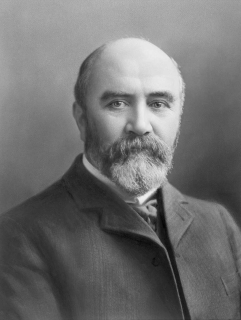
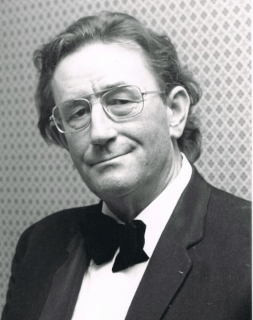
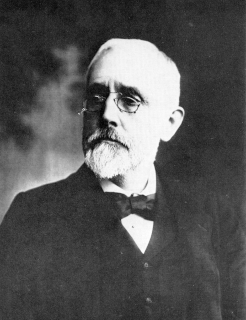
Born on January 5, 1944 in Waterford, County Waterford, Stewart grows up in Dublin. He begins playing guitar when he is thirteen, influenced by guitarists Les Paul and Barney Kessel. He begins his professional career performing in Dublin showbands. In 1968, he wins an award as the most outstanding soloist at the Montreux Jazz Festival. Soon after, he spends three years with Benny Goodman.
In 1981, ahead of Stewart’s debut in the United States as a leader, The New York Times states, “Mr. Stewart seems to have his musical roots in bebop. He leans toward material associated with Charlie Parker and he spins out single-note lines that flow with an unhurried grace, colored by sudden bright, lively chorded phrases. His up-tempo virtuosity is balanced by a laid-back approach to ballads, which catches the mood of the piece without sacrificing the rhythmic emphasis that keeps it moving.”
Stewart is prominently featured in Norman Mongan’s book, The History Of The Guitar In Jazz, in a chapter devoted to guitarists who are considered to be contemporary masters (along with players such as Jim Hall, Pat Martino, and George Benson). In a review of his live album Overdrive (Hep, 1993), AllMusic states, “Louis Stewart is one of the all-time greats, and it is obvious from the first notes he plays on any occasion.”
Stewart receives an honorary doctorate from Trinity College, Dublin, in 1998. In 2009, he becomes only the second jazz musician to be elected to Aosdána, an Irish affiliation of people engaged in literature, music, and visual arts that was established by the Irish Arts Council in 1981 to honour those whose work has made an outstanding contribution to the creative arts in Ireland.
In 2015, Stewart is diagnosed with cancer and dies on August 20, 2016 in Harold’s Cross, Dublin, at the age of 72.
Richard Lalor Sheil, Irish politician, writer and orator, is born at Drumdowney, Slieverue, County Kilkenny on August 17, 1791. The family is temporarily domiciled at Drumdowney while their new mansion at Bellevue, near Waterford, is under construction.
Shiel’s father is Edward Sheil, who acquires considerable wealth in Cadiz in southern Spain and owns an estate in County Tipperary. His mother is Catherine McCarthy of Springhouse, near Bansha, County Tipperary, a member of the old aristocratic family of Mac Cárthaigh Riabhach of Springhouse, who in their time were Princes of Carbery and Counts of Toulouse in France. He is taught French and Latin by the Abbé de Grimeau, a French refugee. He is then sent to a Catholic school in Kensington, London, presided over by a French nobleman, M. de Broglie. For a time, he attends the lay college in St. Patrick’s College, Maynooth. In October 1804, he is removed to Stonyhurst College, Lancashire, and in November 1807 enters Trinity College, Dublin, where he specially distinguishes himself in the debates of the Historical Society.
After taking his degree in 1811 Sheil is admitted a student of Lincoln’s Inn and is called to the Irish bar in 1814. He is one of the founders of the Catholic Association in 1823 and draws up the petition for inquiry into the mode of administering the laws in Ireland, which is presented in that year to both Houses of Parliament.
In 1825, Sheil accompanies Daniel O’Connell to London to protest against the suppression of the Catholic Association. The protest is unsuccessful, but, although nominally dissolved, the association continues its propaganda after the defeat of the Catholic Relief Bill in 1825. He is one of O’Connell’s leading supporters in the agitation persistently carried on until Catholic emancipation was granted in 1829.
In the same year Shiel is returned to Parliament for Milborne Port, and in 1831 for County Louth, holding that seat until 1832. He takes a prominent part in all the debates relating to Ireland, and although he is greater as a platform orator than as a debater, he gradually wins the somewhat reluctant admiration of the House. In August 1839, he becomes Vice-President of the Board of Trade in Lord Melbourne‘s ministry.
After the accession of Lord John Russell to power in 1846, Shiel is appointed Master of the Mint, and in 1850 he is appointed minister at the court of Tuscany. He dies in Florence on May 23, 1851. His remains are conveyed back to Ireland by a British ship-of-war, and interred at Long Orchard, near Templetuohy, County Tipperary.
George W. E. Russell says of Shiel, “Sheil was very small, and of mean presence, with a singularly fidgety manner, a shrill voice, and a delivery unintelligibly rapid. But in sheer beauty of elaborated diction not O’Connell nor anyone else could surpass him.”
Shiel’s play, Adelaide, or the Emigrants, is performed at the Crow Street Theatre in Dublin, on February 19, 1814, with success, and, on May 23, 1816, it is performed at Covent Garden in London. The Apostate, produced at the latter theatre on May 3, 1817, establishes his reputation as a dramatist. His other principal plays are Bellamira (written in 1818), Evadne (1819), Huguenot (produced in 1822) and Montini (1820).
In 1822, Sheil begins, with William Henry Curran, to contribute to The New Monthly Magazine a series of papers entitled “Sketches of the Irish Bar.” Curran, in fact, does most of the writing. These pieces are edited by Marmion Wilme Savage in 1855 in two volumes, under the title of Sketches Legal and Political. Sheil’s Speeches are edited in 1845 by Thomas MacNevin.
In 1816, Shiel marries a Miss O’Halloran, niece of Sir William MacMahon, Master of the Rolls in Ireland. They have one son, who predeceases Sheil. His wife dies in January 1822. In July 1830, he marries Anastasia Lalor Power, a widow. He then adds the middle name Lalor.
In 1883, Ridgeway is elected Professor of Greek at Queen’s College, Cork, then Disney Professor of Archaeology at Cambridge in 1892. He also holds tenure as Gifford lecturer in Religion at the University of Aberdeen from 1909 to 1911 from which is published The Evolution of Religions of Ancient Greece and Rome.
Ridgeway contributes articles to the Encyclopedia Biblica (1903), Encyclopædia Britannica (1911) and writes The Origin of Metallic Currency and Weight Standards (1892), and The Early Age of Greece (1901) which are significant works in Archaeology and Anthropology.
In addition to Beckett’s activity as a music critic for The Irish Times, he also writes biographical articles for dictionaries, in particular for the first edition of Die Musik in Geschichte und Gegenwart. His books include studies on Franz Liszt and ballet music.
Beckett’s more ambitious musical works from the 1940s and 1950s are a Suite for Orchestra (1945), Four Higgins Songs (1946), The Falaingin Dances (1958) and a Suite of Planxties (1960) for harp and orchestra.
In 1963 Beckett moves to England, where he teaches music at various schools before returning to Ireland in 1970 to succeed A. J. Potter at the RIAM as professor of harmony and counterpoint. In the 1980s he produces a number of remarkable works such as Quartet for Strings (1980) and Dublin Symphony (1989) for narrator, chamber choir and large orchestra. While he is never a modernist, his later works nevertheless contain some advanced harmony, particularly in the quartet.
Beckett is forced to retire from the RIAM in 1985 after suffering a stroke. In 1986 he is elected a member of Aosdána and an Honorary Fellow of the RIAM in 1990. He dies in Dublin on April 3, 1996.
Doyle studies piano from the age of nine. After leaving school he attends the Royal Irish Academy of Music for three years, studying composing, during which time he is awarded two composition scholarships. He also studies at the Institute of Sonology at Utrecht University in the Netherlands and the Finnish Radio Experimental Music Studio on scholarships.
As a performer Doyle begins as a drummer with the groups Supply Demand and Curve and Jazz Therapy, playing free improvisatory and fusion music. He releases his first LP, Oizzo No, in 1975, and his second, Thalia, in 1978 on CBS Classics. Rapid Eye Movements (1981) is his third LP, and his attempt at a “masterpiece before the age of thirty.”
Doyle begins his magnum opus, Babel, in 1989, a 5-CD set that takes ten years to compose. Each track corresponds to a ‘room’ or place within an imagined giant tower city, a kind of aural virtual reality. It celebrates the multiplicity of musical language. One hundred three pieces of music are composed for it and he works with 48 collaborators. From 2002 to 2007 he works on the three-volume electronic work Passades. Twenty-seven albums of his music have been released. He has also composed scores for several films including Budawanny, Pigs and the documentary Atlantean by Bob Quinn.
In 2013 Doyle founds META Productions with opera director Eric Fraad, committed to exploring new forms of opera for the 21st century. Their first production is the electronic opera Heresy. Originally titled The Death by Fire of Giordano Bruno, a 40-minute ‘in development’ version is performed as part of a fully staged concert of his works at both the Kilkenny Arts Festival and in the Dublin Theatre Festival 2013. The two hour Heresy is presented as part of ‘Project 50’, a season of work celebrating 50 years of Project Arts Centre in November 2016. The opera is based on episodes from the life and works of Giordano Bruno. It is broadcast on RTÉ Lyric fm in September 2017 and released as a double album on Heresy records in 2018. Recent album releases are The Thousand Year Old Boy (2013), Time Machine (2015), Frail Things In Eternal Places (2016), and The Heresy Ostraca (2019).
Doyle founds the music theatre company Operating Theatre with Irish actress Olwen Fouéré. They produce many important site-specific productions, including Passades, Here Lies and Angel/Babel, all featuring his music as an equal partner in the theatrical environment. Operating Theatre performs in conventional and site-specific venues in Ireland, England, the Netherlands, France, Venezuela and the United States and releases several records. With Icontact Dance Company, he produces Tower of Babel – Delusional Architecture, featuring as much of Babel as he has composed by that point. This work is originally performed in a whole wing of the Irish Museum of Modern Art in 1992. Arguably his most famous theatre work is the music he wrote and performs on piano onstage for the Steven Berkoff version of the Oscar Wilde play Salome which plays in Dublin‘s Gate Theatre, in London‘s West End and on three world tours. The Irish Times notes that “his name is revered in the realm of theatre.”
Doyle’s works Four Sketches and All the Rage are awarded second and first prizes in the Dublin Symphony Orchestra composition competition in 1970 and 1974 respectively. He has won the Programme Music Prize (1997) and the Magisterium Award (2007) at the Bourges International Electro-Acoustic Music Competition in Bourges, France. He also receives the Irish Arts Council‘s Marten Toonder Award in 2000 in recognition of his innovative work as a composer. He is a member of Aosdána, and has recently been made Adjunct Professor of Music at Trinity College Dublin.
PresidentMichael D. Higgins confers the honour of Saoi on Doyle on August 16, 2019 by placing a gold torc around his neck. This is the highest honour of Aosdána that can be bestowed by fellow Aosdána members. No more than seven living members can be so honoured at one time. The Irish Times describes his album Chalant – Memento Mori as “a richly rewarding work that runs the full, glorious gamut of human emotion.” It is Album of the Week on March 30, 2012 in the same paper.
Sebastian Barry, novelist, playwright and poet, is born in Dublin on July 5, 1955. He is noted for his lyrical literary writing style and is considered one of Ireland’s finest writers. He is named Laureate for Irish Fiction, 2019–2021.
Barry starts his literary career with the novel Macker’s Garden in 1982. This is followed by several books of poetry and a further novel, The Engine of Owl-Light (1987), before his career as a playwright begins with his first play produced in the Abbey Theatre, Boss Grady’s Boys (1988).
Both The Steward of Christendom and the novel The Whereabouts of Eneas McNulty, are about the dislocations, physical and otherwise, of loyalist Irish people during the political upheavals of the early 20th century. The title character of the latter work is a young man forced to leave Ireland by his former friends in the aftermath of the Irish War of Independence.
Barry has been twice shortlisted for the Man Booker Prize for his novels A Long Long Way (2005) and The Secret Scripture (2008), the latter of which wins the 2008 Costa Book of the Year and the James Tait Black Memorial Prize. His fifth novel, On Canaan’s Side (2011), is longlisted for the 2011 Man Booker Prize and wins the 2012 Walter Scott Prize. In January 2017, he is awarded the Costa Book of the Year prize for Days Without End (2016), becoming the first novelist to win the prestigious prize twice. The novel also wins The Walter Scott Prize and The Independent Booksellers’ Prize, and is longlisted for the Man Booker Prize 2017.
In 2001, Barry establishes his personal and professional archive at the Harry Ransom Center. More than sixty boxes of papers document his diverse writing career and range of creative output which includes drawings, poetry, short stories, novels, essays, and scripts.
Joss Lynam, Irish civil engineer who is well known as a mountaineer, hillwalker, orienteer, writer and sports administrator, is born James Perry O’Flaherty Lynam in London on June 29, 1924. He is one of Ireland’s most influential figures in outdoor activities.
Lynam is born to Irish parents Edward and Martha (née Perry), both Galway natives. He and his older sister, Biddy, are both raised in London where his father works as curator of maps in the British Museum. This is where he is first introduced to orienteering and cartography. The family frequently returns to the west coast of Ireland to holiday. Here he finds his love for mountaineering and climbs his first mountain, Knocknarea in County Sligo, with his aunt.
Lynam is a civil engineer by profession but devotes most of his life developing the sport of mountaineering in Ireland. He climbs extensively in Ireland, Great Britain, the Alps and in India. He is leader, or deputy leader, of expeditions to Greenland, the Andes, Kashmir, Tian Shan, Garhwal, Tibet and India, including the 1987 expedition to Changtse, that is the forerunner to the successful first Irish ascent of Mount Everest in 1993.
With his involvement in developing adventure sport in Ireland Lynam is active in promoting access and developing waymarked trails. He is involved in the creation and administration of the Federation of Mountaineering Clubs in Ireland (now Mountaineering Ireland), the Association for Adventure Sports, Bord Oiliúint Sléibhte (Irish Mountain Training Board), Tiglin (National Outdoor Training Centre), Outdoor Education Ireland, and Cospóir (now Sport Ireland) and the National Waymarked Ways Advisory Committee (part of Sport Ireland).
Lynam is a founder member of the Irish Mountaineering Club (IMC) serving as president from 1982-1984. He is also a founder member of both the Irish Orienteers and Three Rock Orienteering club. He is president of the Union Internationale des Associations d’Alpinisme‘s expeditions commission in the 1990s.
Lynam writes and edits many guide books on walking and climbing in Ireland and helps create and is editor of The Mountain Log (the journal of Mountaineering Ireland).
In 2001, Lynam is awarded an honorary degree from Trinity College Dublin in acknowledgment of his volunteer work and remarkable achievements. He celebrates his 80th birthday by climbing the Paradise Lost Route and then goes on to abseil down Winder’s Slab for his 82nd birthday, both routes in Dalkey Quarry. Both climbs are to raise funds for cancer research, as he had been undergoing chemotherapy for Hodgkin’s Disease.
After Lynam’s death, his two daughters, Clodagh and Ruth, donate his papers to his alma mater, Trinity College Dublin. These papers cover a vast range of topics such as his life and career, family, childhood, experience of war, his involvement with different mountaineering clubs, and his many writings. The collection also contains photos and slides that he captures himself of landscapes and mountaineering, and consists of maps that are collected by him and his father. There is so much material in the collection that it takes a year for the collection to be catalogued by an archivist.
Lynam’s ashes are scattered by his daughters over the Knocknarea Mountain on the February 12, 2011, being the first mountain he climbed. The Lynam Lecture is introduced in 2011 by Mountaineering Ireland in his memory and his achievements in climbing, hillwalking and mountaineering in Ireland and around the world. Every December the Lynam Lecture is held by leading national and international mountaineers and discusses the development and future of mountaineering in Ireland. Past speakers include Ines Papert, Frank Nugent and Paddy O’Leary.
William Parsons, 3rd Earl of Rosse, Anglo-Irishastronomer, naturalist, and engineer, is born in York, England on June 17, 1800. He is President of the Royal Society (UK), the most important association of naturalists in the world in the nineteenth century. He builds several giant telescopes. His 72-inch telescope, built in 1845 and colloquially known as the “Leviathan of Parsonstown,” is the world’s largest telescope, in terms of aperture size, until the early 20th century. From April 1807 until February 1841, he is styled as Baron Oxmantown.
Parsons marries Mary Field, daughter of John Wilmer Field, on April 14, 1836. They have thirteen children, of which four sons survive to adulthood: Lawrence, 4th Earl of Rosse, Rev. Randal Parsons, the Hon. Richard Clere Parsons, and the Hon. Sir Charles Algernon Parsons.
During the 1840s, Parsons has the Leviathan of Parsonstown built, a 72-inch telescope at Birr Castle, Parsonstown, County Offaly. He has to invent many of the techniques he uses for constructing the Leviathan, both because its size is without precedent and because earlier telescope builders had guarded their secrets or had not published their methods. Details of the metal, casting, grinding and polishing of the 3-ton ‘speculum’ are presented in 1844 at the Belfast Natural History Society. His telescope is considered a marvelous technical and architectural achievement, and images of it are circulated widely within the British commonwealth. Building of the Leviathan begins in 1842, and it is first used in 1845, with regular use waiting another two years due to the Great Famine. Using this telescope, he sees and catalogues a large number of nebulae, including a number that would later be recognised as galaxies.
Parsons performs astronomical studies and discovers the spiral nature of some nebulas, today known to be spiral galaxies. His telescope Leviathan is the first to reveal the spiral structure of M51, a galaxy nicknamed later as the “Whirlpool Galaxy,” and his drawings of it closely resemble modern photographs.
Parsons’s son publishes his father’s findings, including the discovery of 226 New General Catalogue of Nebulae and Clusters of Stars (NGC) objects in the publication Observations of Nebulae and Clusters of Stars Made With the Six-foot and Three-foot Reflectors at Birr Castle From the Year 1848 up to the Year 1878, Scientific Transactions of the Royal Dublin Society Vol. II, 1878.
Bloomsday is a commemoration and celebration of the life of Irish writer James Joyce, observed annually in Dublin and elsewhere on June 16, the day his novel Ulysses (1922) takes place in 1904, the date of his first outing with his wife-to-be, Nora Barnacle, and named after its protagonist Leopold Bloom.
The first mention of such a celebration is found in a letter by Joyce to Miss Weaver of June 27, 1924, which refers to “a group of people who observe what they call Bloom’s Day – 16 June.”
The day involves a range of cultural activities, including Ulysses readings and dramatisations, pub crawls and other events, some of it hosted by the James Joyce Centre in North Great George’s Street. Enthusiasts often dress in Edwardian costume to celebrate Bloomsday, and retrace Bloom’s route around Dublin via landmarks such as Davy Byrne’s pub. Hard-core devotees have even been known to hold marathon readings of the entire novel, some lasting up to 36 hours.
The James Joyce Tower and Museum at Sandycove, site of the opening chapter of Ulysses, hosts many free activities around Bloomsday including theatrical performances, musical events, tours of the iconic tower and readings from Joyce’s masterpiece.
In 1954, on the 50th anniversary of the events in the novel, artist, critic, publican and founder of Envoy magazine, John Ryan, and the novelistBrian O’Nolan organise what is to be a daylong pilgrimage along the Ulysses route. They are joined by Patrick Kavanagh, Anthony Cronin, Tom Joyce (Joyce’s cousin, representing the family interest) and A. J. Leventhal, a lecturer in French at Trinity College, Dublin. Ryan engages two horse-drawn cabs, of the old-fashioned sort, in which in Ulysses Mr. Bloom and his friends drive to Paddy Dignam’s funeral. The party are assigned roles from the novel. They plan to travel around the city through the day, starting at the Martello tower at Sandycove where the novel begins, visiting in turn the scenes of the novel, ending at night in what had once been the brothel quarter of the city, the area which Joyce called Nighttown. The pilgrimage is abandoned halfway through when the weary pilgrims succumb to inebriation and rancour at the Bailey pub in the city centre, which Ryan owns at the time, and at which in 1967 he installs the door to No. 7 Eccles Street (Leopold Bloom’s front door), having rescued it from demolition. A Bloomsday record of 1954, informally filmed by John Ryan, follows this pilgrimage.
A five-month-long festival, ReJoyce Dublin 2004, takes place in Dublin between April 1 and August 31, 2004. On the Sunday before the 100th “anniversary” of the fictional events described in the book, 10,000 people in Dublin are treated to a free, open-air, full Irish breakfast on O’Connell Street consisting of sausages, rashers, toast, beans, and black and white puddings.
The 2006 Bloomsday festivities are cancelled, the day coinciding with the funeral of former TaoiseachCharles Haughey.
(Pictured: Firstbloom (L to R) John Ryan, Anthony Cronin, Brian O’Nolan, Patrick Kavanagh and Tom Joyce (James Joyce’s cousin); Sandymount, 1954)
Deane is educated at Trinity College, Dublin, from 1845 to 1849. On January 29, 1850, he marries Henrietta Manly, daughter of Joseph H. Manly of Ferney, County Cork. He and his wife have several children.
Deane’s work on the conservation of St. Canice’s Cathedral, Kilkenny, is less successful and brings him into conflict with the dean and chapter, and in particular with the treasurer James Graves. It is possibly his interest in the restoration of medieval buildings which leads to his appointment as the first Inspector of National Monuments under the Irish Board of Works after the disestablishment of the Church of Ireland brought ruined buildings under their care. His work includes St. Cronan’s Church, Roscrea, County Tipperary.
In contemporary circles, Deane’s partner Woodward is seen as the creative influence behind the business, and their practice suffers after his early death on May 15, 1861. Nevertheless, Deane continues to work with his son, Thomas Manly Deane, designing the National Museum of Ireland and National Library of Ireland in Kildare Street, Dublin. He is knighted in 1890.
On November 8, 1899, Deane dies suddenly in his office on St. Stephen’s Green, into which he had only just moved. He is buried in Deans Grange Cemetery, where his son Thomas designs and erects a cross in his memory.