Bedford then mainly works in theatre in the United States, on both coasts, but mainly in New York City both on and off Broadway. He is in the premiere of Tennessee Williams‘s last play Small Craft Warnings at the New Theatre in New York in 1972. Other stage appearances include Brian Friel’s The Mundy Scheme in New York in 1969 and as John Adams in the nationwide tour of the musical 1776. He appears in over 200 stage productions throughout his career.
Bedford dies at the age of 67 on November 20, 1999, in Manhattan, New York City, of cancer six weeks after entering the hospital.
The son of a member of the Royal Air Force (RAF), Keenan is born on July 17, 1941, in Swatragh, County Londonderry, Northern Ireland, before his family moves to Belfast. As a teenager, he moves to England to find work, for a time working as a television repairman in partnership with his brother in Corby, Northamptonshire. During this time, he comes to the attention of the police when he damages a cigarette machine, which leads to police having his fingerprints on file. He returns to Northern Ireland when the Troubles begin and starts working at the Grundig factory in the Finaghy area of Belfast where he acquires a reputation as a radical due to his involvement in factory trade union activities.
Despite his family having no history of republicanism, Keenan joins the Provisional Irish Republican Army in 1970 or 1971, and by August 1971 is the quartermaster of the Belfast Brigade. He is an active IRA member, planning bombings in Belfast and travelling abroad to make political contacts and arrange arms smuggling, acquiring contacts in East Germany, Libya, Lebanon and Syria. In 1972, he travels to Tripoli to meet with Libyan leader Muammar Gaddafi in order to acquire arms and finance from his government. In early 1973 he takes over responsibility for control of the IRA’s bombing campaign in England and also becomes IRA Quartermaster General. In late 1973, he is the linchpin of the kidnap of his former employer at Grundig, director Thomas Niedermayer.
In early 1974, Keenan plans to break Gerry Adams and Ivor Bell out of Long Kesh using a helicopter, in a method similar to Seamus Twomey‘s escape from Mountjoy Prison in October 1973, but the plan is vetoed by Billy McKee. He is arrested in the Republic of Ireland in mid-1974 and sentenced to twelve months imprisonment for IRA membership. On March 17, 1975, he is shot and wounded while attempting to lead a mass escape from Portlaoise Prison. While being held in Long Kesh, Gerry Adams helps to devise a blueprint for the reorganisation of the IRA, which includes the use of covert cells and the establishment of a Southern Command and Northern Command. As the architects of the blueprint, Adams, Bell and Brendan Hughes, are still imprisoned, Martin McGuinness and Keenan tour the country trying to convince the IRA Army Council and middle leadership of the benefits of the restructuring plan, with one IRA member remarking “Keenan was a roving ambassador for Adams.” The proposal is accepted after Keenan wins support from the South Derry Brigade, East Tyrone Brigade and South Armagh Brigade, with one IRA member saying, “Keenan was really the John the Baptist to Adams’ Christ.”
In December 1975, members of an IRA unit based in London are arrested following the six-day Balcombe Street siege. The IRA unit had been active in England since late 1974 carrying out a series of bombings, and a few months after his release from prison Keenan visits the unit in Crouch Hill, London, to give it further instructions. In follow-up raids after the siege, police discover crossword puzzles in his handwriting and his fingerprints on a list of bomb parts. A warrant is issued for his arrest.
Garda Síochána informer Sean O’Callaghan claims that Keenan recommended IRA Chief of Staff Seamus Twomey to authorise an attack on Ulster Protestants in retaliation to an increase in sectarian attacks on Catholic civilians by Protestant loyalist paramilitaries, such as the killing of three Catholics in a gun and bomb attack by the Ulster Volunteer Force (UVF) on Donnelly’s Bar in Silverbridge, County Armagh on December 19, 1975. According to O’Callaghan “Keenan believed that the only way, in his words, to put the nonsense out of the Prods [Protestants] was to just hit back much harder and more savagely than them.” Soon after the sectarianKingsmill massacre occurs, when ten Protestant men returning home from their work are ordered out of a minibus they are travelling in and executed en masse with a machine gun on January 5, 1976.
Keenan is arrested on the basis of the 1975 warrant near Banbridge on March 20, 1979, when the Royal Ulster Constabulary (RUC) stopped two cars travelling north on the main road from Dublin to Belfast and is extradited to England to face charges relating to the Balcombe Street Gang‘s campaign in England. His capture is a blow to the IRA, in particular as he was carrying an address book listing his contacts including Palestinian activists in the United Kingdom. The IRA responds by dispatching Bobby Storey and three other members to break Keenan out of prison using a helicopter, but all four are arrested and remanded to Brixton Prison. Keenan stands trial at the Old Bailey in London in June 1980 defended by Michael Mansfield and is accused of organising the IRA’s bombings in England and being implicated in the deaths of eight people including Ross McWhirter and Gordon Hamilton Fairley. He is sentenced to eighteen years imprisonment after being found guilty on June 25, 1980.
Keenan continues to support Gerry Adams while in prison. In August 1982 Adams is granted permission by the IRA’s Army Council to stand in a forthcoming election to the Northern Ireland Assembly, having been refused permission at a meeting the previous month. In a letter sent from Leicester Prison, Keenan writes that he “emphatically” supports the move and endorses the Army Council’s decision.
Keenan is released from prison in June 1993 and by 1996 is one of seven members of the IRA’s Army Council. Following the events after the IRA’s ceasefire of August 1994, he is openly critical of Gerry Adams and the “tactical use of armed struggle,” or TUAS, strategy employed by the republican movement. After the Northern Ireland peace process becomes deadlocked over the issue of the IRA decommissiong its arms, he and the other members of the Army Council authorise the Docklands bombing which kills two people and marks the end of the IRA’s eighteen-month ceasefire in February 1996.
Keenan outlines the IRA’s public position in May 1996 at a ceremony in memory of hunger striker Seán McCaughey at Milltown Cemetery, where he states, “The IRA will not be defeated…Republicans will have our victory…Do not be confused about decommissioning. The only thing the Republican movement will accept is the decommissioning of the British state in this country.” In the same speech he accuses the British of “double-dealing” and denounces the Irish government as “spineless.”
On February 25, 2001, Keenan addresses a republican rally in Creggan, County Armagh, saying that republicans should not fear “this phase” of “the revolution” collapsing should the Good Friday Agreement fail. He confirms his continued commitment to the Armalite and ballot box strategy, saying that both political negotiations and violence are “legitimate forms of revolution” and that both “have to be prosecuted to the utmost.” He goes on to say, “The revolution can never be over until we have British imperialism where it belongs—in the dustbin of history,” a message aimed at preventing rank-and-file IRA activists defecting to the dissident Real IRA.
Keenan plays a key role in the peace process, acting as the IRA’s go-between with the Independent International Commission on Decommissioning (IICD). Gerry Adams remarks, “There wouldn’t be a peace process if it wasn’t for Brian Keenan.” Keenan resigns from his position on the Army Council in 2005 due to ill-health, and is replaced by Bernard Fox, who had taken part in the 1981 Irish hunger strike. On May 6, 2007, he is guest speaker at a rally in Cappagh, County Tyrone, to commemorate the 20th anniversary of the deaths of the so-called “Loughgall Martyrs,” eight members of the IRA East Tyrone Brigade killed by the Special Air Service (SAS) in 1987.
In July 2002, Keenan is diagnosed as suffering from terminal colorectal cancer. It is alleged by the Irish Independent and The Daily Telegraph that Keenan succeeded Thomas “Slab” Murphy as Chief of Staff of the Provisional IRA at some point between the late 1990s and the mid-2000s before he relinquished the role to deal with his poor health caused by cancer.
Keenan’s last years are spent living with his wife in Cullyhanna, County Armagh, where he dies of cancer on May 21, 2008. He is an atheist and receives a secular funeral, representing a major republican show of strength.
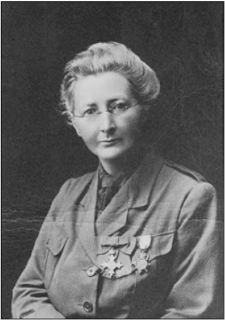
MacMahon, who is educated at home, is also literary. From the 1890s she begins contributing to periodicals such as the New Ireland Review, for which she writes on local history. Her first novel, A New Note, appears in 1894 and over the next thirty-five years she is prolific, publishing over twenty novels as well as making numerous contributions to magazines, and several to BBC radio programmes. She is unmarried and writing is her main source of income, but during World War I she works as a civil servant in various government departments including War, Trade, and the newly created Intelligence department. Afterward she lives in Brockenhurst, Hampshire, England, and converts at some stage to Catholicism.
MacMahon’s novels are romances. Typical of them is An Honorable Estate (1898), which features an English heiress marrying an impoverished Irish clergyman in a fit of pique, only to fall in love with him. They are undemanding but entertaining and occasionally ironic, with clever social commentary. Irish Book Lover, a quarterly review of Irish literature and bibliography, commends The Job (1914) for its insightful and sympathetic characterisation. It is an account of a baronet‘s struggle to improve his Irish estate despite the fecklessness of the inhabitants. Ireland is a frequent setting for her stories. Her view of it verges on the sentimental, and she often features eccentric but ultimately good-hearted country people.
However, MacMahon’s last book, Wind of Dawn (1927), is a more profound, interesting study. Set during the Irish War of Independence and the truce, it looks at the complexities within Irish society and the differences in attitude between the Anglo- and native Irish. Rich in characters, it features a naive English girl in love with Ireland, a papist-hating domestic servant, and an ascendancy grande dame who finds England monotonous but is adamant that her children will be educated there and will not acquire a brogue. Unlike MacMahon’s other books, it is not a romance and ends in tragedy and then acceptance for the coming change of regime. It reads like a lesser novel by Elizabeth Bowen and resembles in theme and argument, though not in quality, The Last September (1929), which it predates. Unfortunately, she is not inspired to go further in this line. She writes no more and retires on a government civil pension.
By the time of her death on April 19, 1956, MacMahon has fallen into complete obscurity, and surprisingly, given the quantity and relative merit of her work, she has no entry to date in any of the numerous anthologies of Irish or women writers.
Long comes from a carpentry and blacksmithing background. In 1959, he enters Queen’s University Belfast to study civil engineering. He graduates with first class honours and then takes a PhD at Queens. In 1967, he moves to Canada, working as a bridge designer for Fenco Engineering in Toronto.
Long, however, spends only a year in Canada, returning to Belfast in 1968 to become an associate professor of civil engineering at Queen’s University Belfast. In 1976, he is promoted to a full professorship. His work is largely in the field of concrete structures, particularly in chloride resistance, maintenance problems and arch bridge structures. He publishes twenty papers in journals managed by the Institution of Civil Engineers and wins eight of the institution’s medals for these, including the ICE Gold Medal.
From 1997 Long works on the FlexiArch, a precast concrete arch in which the individual voussoirs are joined by a flexible polymeric membrane. The arch arrives to site flat packed and when lifted into position by a crane, the gaps between the voussoirs close under gravity and form the correct arch profile. He patents the product, which is produced by Irish precast manufacturer Macrete, in 2004. The product can be constructed within a day and, containing no corrodible elements, has been stated to have a design lifespan of 300 years. More than fifty FlexiArch bridges have been constructed in the UK and Ireland and spans up to 30m are possible.
By 2002, Long is appointed dean of the faculty of engineering at QUB. In November of that year, he is appointed president of the ICE for the 2002–2003 session, the first Northern Irish person to hold that position. He is also a Fellow of the Royal Academy of Engineering and of the Institute for the Advancement of Engineering.
Long is appointed an officer of the Order of the British Empire in the 2006 New Year Honours for services to higher education and civil engineering. He resigns as professor at QUB in 2006 but remains there as an emeritus professor in the School of Natural and Built Environment. Since 2015, the ICE Northern Ireland awards the Adrian Long medal to the best paper in an ICE journal to be authored by a Northern Ireland member. The medal features a bust of Long.
The two leaders meet at Hillsborough Castle and begin their sessions on April 7 with a half-hour walk through the gardens before dinner. The following day they hold a press conference and further talks, including a session on the Northern Ireland peace effort.
Bush and Blair, Bush’s closest ally in confronting Saddam Hussein, come together to discuss questions made increasingly urgent by the rapid military progress American and British forces have made and to plan for a postwar Iraq. They seek to bridge their differences over how much of a role to give the United Nations in rebuilding the country and putting together a new government.
Blair has been under pressure at home and from much of Europe to support giving the United Nations a strong role in stabilizing Iraq. The White House, however, has consistently signaled that it wants the United States and Britain to play the lead role in creating a new Iraqi government.
United States Secretary of StateColin L. Powell tells reporters traveling with the president that the United States is sending officials to the region to begin assembling a group of Iraqis who will constitute an interim governing authority and will be put in place alongside the American-led military and civilian authorities. In a sign of the speed with which the maneuvering for power in post-Hussein Iraq is unfolding, Ahmed Chalabi, the leader of the main Iraqi exile opposition group, the Iraqi National Congress (INC), is reported to be heading to Baghdad from southern Iraq.
“The hostilities phase is coming to a conclusion,” Powell says. “It’s time for all of us to think about the post-hostilities phase, how we create a representative government consisting of all elements of Iraqi society.”
Powell and British officials play down the magnitude of the differences between the United States and Britain over the United Nations role. The United Nations, Powell says, will have “an endorsing role to play to the interim authority to give it legitimacy,” a formulation that appears to reserve for the United States and Britain the right to select the leaders of the temporary postwar administration. A spokesman for Blair uses similar language, referring to the United Nations’ being involved “in a way that endorses that new Iraqi authority” as a step toward establishing a full-fledged Iraqi government.
Initially, primary responsibility for administering Iraq would rest with a team led by a retired United States Armylieutenant general, Jay Garner, and the interim Iraqi authority would be likely to begin assuming power after that, perhaps 90 days later, the British spokesman says.
Clearly wary of getting into another diplomatic squabble with other members of the United Nations Security Council, Powell and other administration officials have emphasized in recent days that the United States and Britain, having waged the war and paid for it with blood and money, will not be drawn into a negotiation with countries like France and Germany over the immediate postwar period.
Powell emphasizes, however, that part of his focus will now be on “healing” diplomatic wounds and granting the United Nations an important role once Iraq is stabilized.
At the United Nations, Secretary-GeneralKofi Annan says he will travel to Britain, France, Germany and Russia in the coming week to test whether the Security Council might be able to agree on a postwar plan. He announces that he has been working on post-conflict issues with a special adviser, Rafeeuddin Ahmed. He says he expects the United Nations to play an important role, whether as a political facilitator or dealing with issues like reconstruction or human rights. “Above all, the U.N. involvement does bring legitimacy, which is necessary, necessary for the country, for the region and for the peoples around the world,” Annan says.
Bush’s trip to see Blair here is the third British-American summit meeting in as many weeks. It coincides with news that American forces are attacking the presidential palaces and other symbols of the Iraqi government in the heart of Baghdad and that British soldiers have taken control of Iraq’s second-largest city, Basra.
The presence of the two leaders draws crowds of antiwar protesters and set off a local debate about whether this city, which has been trying to put behind it a history of sectarian violence, is an appropriate location for a war council.
The city authorities in Belfast have to divert traffic and clear public buildings in various locations following a series of bomb scares. The scenes are reminiscent of the conflicted time before the Northern Ireland peace agreement in 1998 put an end to organized sectarian violence that cost the lives of more than 3,600 people over three decades.
In the conversations about Iraq, Blair plays his customary role of trying to bridge trans-Atlantic differences. He hopes to placate criticism at home and ease relations with his European neighbors by pushing for a United Nations resolution authorizing an interim governing authority.
He had earlier envisaged a more prominent role for the United Nations, but he emerged from his last meeting with Bush, at Camp David on March 27, emphasizing the need for the United Nations to endorse the transition plans rather than play a central part in the plans, as he had advocated at the first summit meeting, in the Azores on March 16.
Europeans express alarm at what they see as the marginalization of the United Nations. At the same time, European critics of the war, like France, Germany and Russia, may object to Blair’s compromise proposal on grounds that it legitimizes a war they oppose. Even in Britain, the one European country where the war has majority support, there is great resistance to American domination of the postwar running of Iraq. An opinion poll in The Daily Telegraph shows that while Britons’ enthusiasm for the war has grown to a high of 60 percent and their approval of Blair’s conduct has also risen, there is only 2 percent approval of an American-controlled administration of Iraq.
Powell says the United States is only trying to lay out a plan under which military control of Iraq can give way to a mix of civilian and military control, including substantial involvement by Iraqis, and then to a full-fledged government. He says United Nations involvement might be necessary to convince banks and financial markets that they can safely and legally lend money to Iraq. Asked about peacekeeping duties, he says NATO is open to the possibility of helping to provide postwar security or assisting in the search for weapons of mass destruction.
Planning for the peace has exposed differences not only between the United States and Britain, but also within the Bush administration and between the administration and Congress.
Blair chose to hold his meeting with Bush in Northern Ireland in part so that the president can lend his support to the long-running efforts by Britain and Ireland to find a peaceful solution to the strife between Catholics and Protestants in the province. The White House, however, seems not to be paying much attention to Northern Ireland diplomacy. The schedules and credentials it distributes to reporters list the site as “Belfast, Ireland.”
(From: “Bush Meets With Blair to Discuss Postwar Iraq” by Richard W. Stevenson and Warren Hoge, The New York Times, http://www.nytimes.com, April 8, 2003)
Roupell is born into a military family. His father, Francis Frederick Fyler Roupell, having served with the British Army in the 70th (Surrey) Regiment of Foot and commanded the 1st Battalion, East Surrey Regiment from 1895 to 1899, is promoted to colonel in 1901. He had married Edith Maria Bryden at Kingston in 1887.
At the outbreak of war in the summer of 1914, the 1st Battalion the East Surreys are deployed as part of the British Expeditionary Force (BEF) into northern Belgium. Roupell commands a platoon in the BEF’s first major action, the Battle of Mons, in August 1914. He keeps a diary throughout the war, which has since been a, sometimes humorous, source of insight and observation on the events that he witnessed and participated in. In the trenches at Mons, he recounts how he had to hit his men on the backside with his sword in order to gain their attention and remind them to fire low as they had been taught.
Soon after, following the retreat from Mons in September 1914, Roupell leads his platoon in the First Battle of the Aisne. Once again, he comes under heavy fire, this time while crossing the Aisne on a raft. The Surreys’ advance is pushed back with heavy casualties.
On April 20, 1915, during the continued fighting around Ypres, Roupell is commanding a company of his battalion in a front trench on “Hill 60,” which is subjected to a most severe bombardment throughout the day. Although wounded in several places, he remains at his post and leads his company in repelling a strong German assault. During a lull in the bombardment, he has his wounds hurriedly dressed, and then insists on returning to his trench, which is again being subjected to severe bombardment. Toward evening, his company being dangerously weakened, he goes back to his battalion headquarters, represents the situation to his commanding officer, and brings up reinforcements, passing back and forth over ground swept by heavy fire. With these reinforcements he holds his position throughout the night, and until his battalion is relieved next morning. For these actions he is awarded the Victoria Cross.
Roupell is presented with his VC by King George V on July 12, 1915. In addition to his Victoria Cross, he is awarded the Russian Order of St. George (4th Class) and the French Croix de guerre and is mentioned in dispatches. He is retrospectively appointed temporary captain with effect from December 29, 1914, to April 20, 1915, inclusive, and again later the same year.
Roupell is aboard TSS The Queen when it is captured and sunk in the English Channel in October 1916. He is appointed acting brigade major on December 29, 1917. On May 9, 1918, he is seconded to the general staff with the rank of temporary major.
Following the end of hostilities in Europe, Roupell, still an acting major, is promoted to acting lieutenant colonel in charge of a battalion from December 1918 to March 1919. His appointment to the general staff is confirmed on July 1, 1919. During this time, he is attached to the allied force under Edmund Ironside and sent to support Tsarist Russians as part of the Allied intervention in the Russian Civil War. On a visit to a Tsarist unit, they mutiny, and he and others are taken prisoner near Arkhangelsk, sent to Moscow, and finally repatriated in 1920.
Early in 1921, Roupell marries Doris P. Sant in Paddington. Daughter Phoebe and son Peter are born in 1922 and 1925, respectively.
Roupell’s inter-war military career continues with appointments as staff captain (1921), brigade major (1926), and promotion to substantive major (1928). During the inter-war period, he serves in Gibraltar, the Regimental Depot, India and the Sudan and he attends the Staff College, Camberley. As major (GSO2), he spends two years from 1929 at the Royal Military College of Canada, and in 1934 a year with the British troops in China. Following his return, he is promoted to lieutenant colonel in 1935.
At the outbreak of World War II, in September 1939, Roupell is promoted to colonel and made an acting brigadier, placed in command of 36th Infantry Brigade from October 7, 1939. His brigade is deployed as part of the 12th (Eastern) Division in April 1940 and becomes part of the British Expeditionary Force (BEF), taking part in the Battle of France. The German thrust near the river Somme toward Abbeville eventually cuts off the BEF, northern French and Belgian forces from the rest of France. His brigade headquarters near Doullens is attacked by enemy troops and, on being told of the threat, he exclaims, “Never mind the Germans. I’m just going to finish my cup of tea.”
When the brigade headquarters is overrun on May 20, 1940, Roupell gives the order for the survivors to split up into small groups and endeavour to re-contact Allied troops. He, with a captain and French interpreter, avoid capture, hiding by day and walking at night for over a month. They arrive at a farm near Rouen where the two officers remain for almost two years, working as labourers. With the help of the French Resistance, they are moved through unoccupied France into non-belligerent Spain, finally boarding a ship in Gibraltar and returning to the United Kingdom.
Following his return, Roupell is appointed commanding officer of the 114th Brigade, part of the 38th (Welsh) Infantry Division, on March 18, 1943, a command he holds until November 2 of that year. The brigade is not destined to see battle, however, and he is soon appointed as garrison commander at Chatham, where he remains until retirement.
In 1946, Roupell is formally retired from the army on retirement pay and granted the honorary rank of brigadier and, at the age of 58, is excused from the reserve list of officers in 1950. He is appointed a Deputy lieutenant of Surrey in 1953.
In 1954, Roupell is appointed Colonel of the East Surreys, succeeding Lieutenant General Arthur Dowler, and is to be the last Colonel of the East Surrey Regiment, relinquishing office in 1959 when amalgamation with the Queen’s Royal Regiment (West Surrey) takes place to form the Queen’s Royal Surrey Regiment. He is appointed a Companion of the Order of the Bath in 1956.
Roupell dies at the age of 81 in Shalford, Surrey, on March 4, 1974. His body is cremated at Guildford Crematorium, where his ashes are scattered.
The second of two bombing attacks in early 1993 in Warrington, Cheshire, England, takes place on March 20, 1993. The first attack takes place on February 26, when a bomb explodes at a gas storage facility. This explosion causes extensive damage, but no injuries. In the March 20 attack, two smaller bombs explode in litter bins outside shops and businesses on Bridge Street. Two children are killed and 56 people are injured.
The attacks are carried out by the Provisional Irish Republican Army (IRA). From the early 1970s, the IRA had been carrying out attacks in both Northern Ireland and England with the stated goal of putting pressure on the UK Government to withdraw from Northern Ireland. The IRA is designated a terrorist organisation in the United Kingdom.
Shortly before midday on Saturday, March 20, 1993, the Samaritans in Liverpool receive a bomb warning by telephone. According to police, the caller says only that a bomb has been planted outside a Boots shop. Merseyside Police send officers to branches of Boots in Liverpool and warn the Cheshire Constabulary, who patrols nearby Warrington. About 30 minutes later, at about 12:25 p.m., two bombs explode on Bridge Street in Warrington, about 100 yards apart. The blasts happen within a minute of each other. One explodes outside Boots and McDonald’s, and the other outside the Argos catalogue store. The area is crowded with shoppers. Witnesses say that shoppers flee from the first explosion into the path of the second. It is later found that the bombs had been placed inside cast iron litter bins, causing large amounts of shrapnel. Buses are organised to ferry people away from the scene and twenty paramedics and crews from seventeen ambulances are sent to deal with the aftermath.
Three-year-old Johnathan Ball dies at the scene. He had been in town with his babysitter, shopping for a Mother’s Day card. The second victim, 12-year-old Tim Parry, is gravely wounded. He dies on March 25, 1993, when his life support machine is switched off, after tests find only minimal brain activity. Another 54 people are injured, four of them seriously. One of the survivors, 32-year-old Bronwen Vickers, the mother of two young daughters, has to have a leg amputated, and dies just over a year later from cancer.
The Provisional IRA issues a statement the day after the bombing, acknowledging its involvement but saying:
“Responsibility for the tragic and deeply regrettable death and injuries caused in Warrington yesterday lies squarely at the door of those in the British authorities who deliberately failed to act on precise and adequate warnings.”
A day later, an IRA spokesman says that “two precise warnings” had been given “in adequate time,” one to the Samaritans and one to Merseyside Police. He adds, “You don’t provide warnings if it is your intention to kill.” Cheshire’s assistant chief constable denies there had been a second warning and says, “Yes, a warning was given half-an-hour before, but no mention was made of Warrington. If the IRA think they can pass on their responsibility for this terrible act by issuing such a nonsensical statement, they have sadly underestimated the understanding of the British public.”
The deaths of two young children ensures that the March 20 bombings receive major coverage in the media and cause widespread public anger. Shortly after the bombings, a group called “Peace ’93” is set up in Dublin. The main organiser is Susan McHugh, a Dublin housewife and mother. On March 25, 1993, thousands hold a peace rally in Dublin. They sign a condolence book outside the General Post Office and lay bouquets and wreaths, with messages of sorrow and apology, to be taken to Warrington for the boys’ funerals. Some criticise Peace ’93 for focusing only on IRA violence and for not responding to the deaths of children in Northern Ireland.
On September 19, 1994, Irish rock band The Cranberries release the song “Zombie,” which is written in protest of the bombings. The song goes on to become their biggest hit.
On November 14, 1996, the Duchess of Kent officially inaugurates a memorial called The River of Life, depicting “a symbol of hope for future generations,” in Bridge Street. It is developed in the aftermath of the bomb attack and commissioned by the Warrington Borough Council. The project, consisting of a symbolic water sculpture that features a commemorative plaque, is designed by the local primary school and Stephen Broadbent.
The parents of Tim Parry set up the Tim Parry Trust Fund to promote greater understanding between Great Britain and Ireland. The Tim Parry Johnathan Ball Foundation for Peace works jointly with the National Society for the Prevention of Cruelty to Children (NSPCC) to develop The Peace Centre, close to Warrington town centre, which opens on the seventh anniversary of the attack in 2000. Its purpose is to promote peace and understanding amongst all communities affected by conflict and violence. The centre hosts an annual peace lecture, as well as being home to the local NSPCC and is the home of Warrington Youth Club until 2022.
The bombings receive further attention in 2019 after the Brexit Party selects former Living Marxism writer Claire Fox as their lead candidate in the North West England constituency for the 2019 European Parliament election. The Revolutionary Communist Party, of which Fox is a leading member in 1993, defends the IRA’s bombing in their party newsletter. Despite the controversy, which sees another Brexit Party candidate resign from the party list in protest at the comments, Fox and the Brexit Party top the poll in several areas of the North West, including in Warrington.
The killing of Ball and Parry is still on Cheshire Police’s list of unsolved murders.
A piece on BBC North West‘s Inside Out programme in September 2013 speculates that the bombing may have been the work of a “rogue” IRA unit, which was supported by the IRA but operated independently and who used operatives who were from England to avoid suspicion. The programme also examines a possible link between the attack and British leftist political group Red Action, though nothing is ever proven.
(Pictured: Army bomb disposal at the Warrington Bomb scene in March 1993, photo credit: Walker Howard)
Having begun his career as a freelance musician, playing with the BBC Philharmonic orchestra and English National Opera North, an accident ends Cusack’s career as a musician, resulting in him pursuing a career in arts administration. Initially he focuses on the classical music sector, working at two leading concert venues in London, the Wigmore Hall and the Southbank Centre.
In 1992, Cusack makes his first move into theatre following his appointment as Administrative Director of West Yorkshire Playhouse in Leeds, alongside Jude Kelly, where he produces a number of plays including the touring production of Five Guys Named Moe for Cameron Mackintosh Limited. In 1996, he is appointed Head of Planning of the Royal National Theatre under the outgoing artistic director, Sir Richard Eyre, and subsequently with Sir Trevor Nunn and Sir Nicholas Hytner. In 2009, he becomes the National Theatre’s Associate Producer. During this period, he produces numerous productions for tour both in the UK and internationally, taking the work of the National Theatre to five continents. Alongside this, he works as a touring consultant for the Abbey Theatre in Dublin, the Royal Court Theatre, London, Fiery Angel in London’s West End, Canadian Stage in Toronto, Bangarra Dance Theatre in Sydney, TheEmergencyRoom and Corn Exchange in Dublin and Galway International Arts Festival. In June 2016, he is appointed Executive Producer of Wales Millennium Centre in Cardiff. In addition to this, he is Consultant Producer to the National Centre for the Performing Arts (India) in Mumbai.
As well as his theatre producing work, Cusack offers representation to a number of Irish artists including the director Annie Ryan, the composer Mel Mercier and the British playwrightMatt Wilkinson.
In 2023, Cusack is the recipient of the Olwen Wymark Award from the Writers’ Guild of Great Britain for his championing of new writing which is presented at the 18th Annual Awards Ceremony in London.
On Monday, February 26, 2001, the Irish Government imposes a temporary ban on the country’s 120 livestock marts as the devastating foot-and-mouth disease spreads and threatens to become an epidemic in Great Britain. Strict procedures are also implemented in airports around Ireland to keep the disease out of the country. All marts along the border counties have been suspended since the previous Friday, February 23.
Joe Walsh, the Minister for Agriculture and Food, announces the emergency measure on Sunday night. The total suspension comes into force immediately and is intended to dramatically reduce the number of livestock movements. The ban is to remain in place for at least a fortnight.
In a related move, Central Statistics Office staff undertaking survey work are instructed not to enter farm premises until further notice.
The Government orders emergency staff to ports and airports on Sunday as the foot-and-mouth outbreak nears epidemic proportions in Britain and Continental countries begin the wholesale slaughter of thousands of animals imported from the United Kingdom.
In an atmosphere of mounting alarm, the Irish Farmers’ Association demands a ban on movement of all animals including racehorses to Britain and for the thorough disinfection of “every foot and tyre” entering Ireland from the UK. Horses and horseboxes arriving at British racecourses are already being disinfected and Sunday’s meeting at Newcastle is abandoned because of its proximity to one of the affected areas. Additional measures are expected to be announced.
Irish rugby fans are asked not to travel to Cardiff on Saturday, March 3, to minimise the risk of spreading the disease, and it seems likely the Government will urge punters to stay away from the Cheltenham Festival if, indeed, the festival goes ahead as scheduled. The Jockey Club says it will follow the Government’s request, but the decision angers the British government, which may order the meeting to be cancelled.
Five new cases of the disease are confirmed in Britain on Sunday, bringing the total to 12 confirmed cases with two suspected outbreaks. The suspected outbreak of most concern to Ireland is at Welsh Country Foods, an abattoir on Anglesey. It remains cordoned off.
British Ministry of Agriculture officials continue tests on the suspect sheep found at the plant over the weekend. Final results of the tests are not available until Monday morning.
A 10-mile exclusion zone is ordered around the Gaerwen plant, which is located adjacent to the Menai Suspension Bridge. However, both exporters and the Farmers’ Union of Wales believe the foot-and-mouth virus is, in fact, present in the plant, which is located less than 15 miles from Holyhead.
British veterinarians are alarmed at the increase in new cases. An epidemic is to be declared if the number of new cases reaches more than 30 per day.
(From: “All marts closed in threat of epidemic” by Ralph Riegel, Irish Independent, http://www.independent.ie, February 26, 2001)
Nolan is born to parents Joseph and Bernadette Nolan in Mullingar, County Westmeath on September 6, 1965. Due to asphyxiation at birth, he is born with permanent impairment of his nerve-signaling system, a condition now labelled dystonia. Because of these complications, he is born with cerebral palsy and can only move his head and eyes. Due to the severity of the cerebral palsy, he uses a wheelchair. In an interview, his father, Joseph, explains how, at the age of 10, he is placed on medication that “relaxed him so he could use a pointer attached to his head to type.” To write, he uses a special computer and keyboard. In order to help him type, his mother holds his head in her cupped hands while he painstakingly picks out each word, letter by letter, with a pointer attached to his forehead.
Nolan communicates with others by moving his eyes, using a signal system. When he is young, his father tells him stories and reads passages from James Joyce, Samuel Beckett and D. H. Lawrence to keep his mind stimulated. His mother strings up letters of the alphabet in the kitchen, where she keeps up a stream of conversation. His sister, Yvonne, sings songs and acts out skits. His mother states that “he wrote extensively since the age of 11 and went on to write many poems, short stories and two plays, many of which were published.” Many of the writings are compiled for his first publication, the chapbookDam-Burst of Dreams.
Nolan spends more than a decade writing The Banyan Tree. According to The New York Times, the book is a multigenerational story of a dairy-farming family in Nolan’s native county of Westmeath. The story is seen through the eyes of the aging mother. It is inspired, he tells Publishers Weekly, by the image of “an old woman holding up her skirts as she made ready to jump a rut in a field.” A review of the book is done in The New York Times by Meghan O’Rourke. She reviews the book and relates it to James Joyce’s A Portrait of the Artist as a Young Man; in the story the protagonist leaves his mother in Ireland while he moves on to travel the world. Nolan, however, gives the reader a version of the mother’s story. “And so, in the end, one suspects that he wants Minnie’s good-natured, commonplace ways to stand as their own achievement, reminding us that life continues in the places left behind.”
At the age of 43, while working on a new novel, Nolan dies in Beaumont Hospital in Dublin at 2:30 a.m. on February 20, 2009. His death is the result of a piece of salmon becoming trapped in his airway. Nothing from the novel he was working on has been released since his death.
Upon hearing the news of Nolan’s death, President of IrelandMary McAleese says, “Christopher Nolan was a gifted writer who attained deserved success and acclaim throughout the world for his work, his achievements all the more remarkable given his daily battle with cerebral palsy.”