seamus dubhghaill

Promoting Irish Culture and History from Little Rock, Arkansas, USA


Leave a comment

Birth of Cornelius Ryan, Journalist & Author

cornelius-ryan

Cornelius Ryan, Irish journalist and author mainly known for his writings on popular military history, is born in Dublin in June 5, 1920. He is especially known for his World War II books The Longest Day: 6 June 1944 D-Day (1959), The Last Battle (1966), and A Bridge Too Far (1974).

Ryan is educated at Synge Street CBS, Portobello, Dublin. He is an altar boy at St. Kevin’s Church, Harrington Street and studies the violin at the Irish Academy of Music in Dublin. He is a boy scout in the 52nd Troop of the Catholic Boy Scouts of Ireland and travels on their pilgrimage to Rome on the liner RMS Lancastria in 1934. He moves to London in 1940 and becomes a war correspondent for The Daily Telegraph in 1941.

Ryan initially covers the air war in Europe, flying along on fourteen bombing missions with the Eighth and Ninth United States Army Air Forces (USAAF). He then joins General George S. Patton‘s Third Army and covers its actions until the end of the European war. He transfers to the Pacific theater in 1945 and then to Jerusalem in 1946.

Ryan emigrates to the United States in 1947 to work for Time, where he reports on the postwar tests of atomic weapons carried out by the United States in the Pacific. He then reports for Time on the Arab-Israeli war in 1948. This is followed by work for other magazines, including Collier’s Weekly and Reader’s Digest.

Ryan marries Kathryn Morgan, a novelist, and becomes a naturalized citizen of the United States in 1951.

On a trip to Normandy in 1949 Ryan becomes interested in telling a more complete story of Operation Overlord than has been produced to date. He begins compiling information and conducting over 1,000 interviews as he gathers stories from both the Allies and the Germans, as well as the French civilians.

In 1956 Ryan begins to write down his World War II notes for The Longest Day: 6 June 1944 D-Day, which tells the story of the D-Day Invasion of Normandy, published three years later in 1959. It is an instant success, and he assists in the writing of the screenplay for the 1962 film of the same name. Darryl F. Zanuck pays the author U.S.$175,000 for the screen rights to the book.

Ryan’s 1957 book One Minute to Ditch! is about the successful ocean ditching of a Pan American Boeing 377 Stratocruiser. He had written an article about the ditching for Collier’s in their December 21, 1956, issue and then expanded it into the book.

Ryan’s next work is The Last Battle (1966), about the Battle of Berlin. The book contains detailed accounts from all perspectives: civilian, American, British, Russian and German. It deals with the fraught military and political situation in the spring of 1945, when the forces of the western allies and the Soviet Union contend for the chance to liberate Berlin and to carve up the remains of Germany.

This work was followed by A Bridge Too Far (1974), which tells the story of Operation Market Garden, the ill-fated assault by allied airborne forces on the Netherlands culminating in the Battle of Arnhem. It is made into a major 1977 film of the same name.

Ryan is awarded the French Legion of Honour and an honorary Doctor of Literature degree from Ohio University, where the Cornelius Ryan Collection is housed in the Alden Library. He is diagnosed with prostate cancer in 1970 and struggles to finish A Bridge Too Far during his illness. He dies in Manhattan on November 23, 1974, while on tour promoting the book, only two months after publication. He is buried in the Ridgebury Cemetery in northern Ridgefield, Connecticut.

Four years after his death, Ryan’s struggle with prostate cancer is detailed in A Private Battle, written by his widow, from notes he had secretly left behind for that purpose.


Leave a comment

Birth of Alice Stopford Green, Historian & Nationalist

NPG x74642,Alice Stopford Green (nÈe Alice Sophia Amelia Stopford),by Henry Herschel Hay Cameron (later The Cameron Studio)

Alice Stopford Green, Irish historian and nationalist, is born in Kells, County Meath on May 30, 1847. She is noted for proving the Irish had a rich culture before English rule. A strong supporter of the Anglo-Irish Treaty of 1921, she is nominated to the first Seanad Éireann in December 1922.

Stopford Green is born Alice Sophia Amelia Stopford. Her father, Edward Adderley Stopford, is Rector of Kells and Archdeacon of Meath. Her paternal grandfather is Edward Stopford, the Church of Ireland Bishop of Meath, and she is a cousin of Stopford Brooke and Mother Mary Clare. From 1874 to 1877 she lives in London where she meets the historian John Richard Green. They are married in Chester on June 14, 1877; however, he dies in 1883. John Morley publishes her first historical work, Henry II, in 1888.

In the 1890s Stopford Green becomes interested in Irish history and the nationalist movement as a result of her friendship with John Francis Taylor. She is vocal in her opposition to English colonial policy in South Africa during the Boer Wars and supports Roger Casement‘s Congo Reform movement. Her 1908 book The Making of Ireland and its Undoing argues for the sophistication and richness of the native Irish civilisation. She is active in efforts to make the prospect of Home Rule more palatable to Ulster Unionists. She is closely involved in the Howth gunrunning.

Stopford Green moves to Dublin in 1918 where her house at 90 St. Stephen’s Green becomes an intellectual centre. She supports the pro-Treaty side in the Irish Civil War and is among the first nominees to the newly formed Seanad Éireann in 1922, where she serves as an independent member until her death in Dublin on May 28, 1929, two days shy of her 82nd birthday. She is one of four women elected or appointed to the first Seanad in 1922.


Leave a comment

Birth of Ewart Milne, Irish Poet

ewart-milne

Ewart Milne, Irish poet, is born in Dublin on May 25, 1903, He describes himself on various book jackets as “a sailor before the mast, ambulance driver and courier during the Spanish Civil War, a land worker and estate manager in England during and after World War II” and also “an enthusiast for lost causes – national, political, social and merely human.”

Milne is born of English and Welsh Irish parents and is educated at Christchurch Cathedral Grammar School. In 1920 he signs on as a seaman and works on boats, off and on, until 1935. During the 1930s he begins writing and has his first poems published in 1935.

The background to the Spanish Civil War contributes to Milne’s political awakening and he comes to England to work as a voluntary administrator for the Spanish Medical Aid Committee in London, for whom he often acts as a medical courier. He also was once unwillingly involved in an arms deal while visiting Spain on their behalf.

After Spanish Medical Aid Committee is wound up, Milne returns to Ireland but remains politically active in support of the campaign for the release of Frank Ryan, the leader of the Connolly Column of Irish volunteers on the Republican side, who had been captured and imprisoned in Spain. At one point he takes part in a delegation to Westminster seeking Labour Party support for this. In August 1938 he is reported in The Worker’s Republic as being one of the twelve-member committee of the James Connolly Irish club in London.

During his time in England and Spain, Milne gets to know the left-leaning poets who support the Republican cause, including W. H. Auden, Stephen Spender and Cecil Day-Lewis. In 1938 his first collection of poems, Forty North Fifty West, is published in Dublin, followed by two others in 1940 and 1941. Having taken a pro-British line in neutral Ireland, he is informed by Karl Petersen, the German press attaché in Dublin, that he is on the Nazi death list. This convinces him to help in the British war effort and he returns to England with the help of John Betjeman, then working at the British embassy in Ireland.

Between 1942–1962 Milne is resident in England and an active presence on the English literary scene. In particular he becomes associated with the poets grouped around the magazine Nine, edited by Peter Russell and Ian Fletcher. He and his wife Thelma also back the young Irish poet Patrick Galvin when he launches his own magazine, Chanticleer. This generous encouragement of younger writers is later extended to several others, including John F. Deane, Gerald Dawe and Maurice Scully.

Milne regards his return to Dublin in 1962 as a disaster, as his four-year stay is overshadowed by quarrels with the establishment, the discovery of betrayal by a friend and the death of his wife from lung cancer. The misery of those events is recorded in Time Stopped (1967). The artistic frustration of the time also results in the poems included in Cantata Under Orion (1976). Returning to England in 1966, he settles in Bedford. Politically he remains involved and speaks alongside Auberon Waugh at the rally on behalf of Biafra in 1968, but his views move further to the right in later years. He writes to The Irish Times on April 13, 1976, saying that he has been “taken in by Stalin and that Leninism is Satanism.” He also sides with the Loyalist position in the Ulster conflict. He dies in Bedford of a heart attack on January 14, 1987.

Milne is twice married, first to Kathleen Ida Bradner in 1927, by whom he has two sons; then in 1948 to Thelma Dobson, by whom he has two more sons.

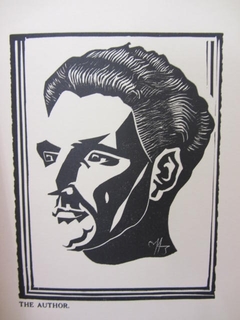
(Pictured: A portrait of Ewart Milne by Cecil F. Salkkeld, as it appears in Milne’s book Forty North Fifty West)


Leave a comment

Birth of Writer James Plunkett Kelly

james-plunkett

James Plunkett Kelly, Irish writer who writes under the pseudonym of James Plunkett, is born in Dublin on May 21, 1920.

Plunkett is the son of a World War I veteran who was a member of James Larkin‘s Irish Transport and General Workers Union, which had a life-long impact on the young writer. He is educated at Synge Street CBS. He works as a clerk in the Dublin Gas Company and later joins the trade union movement, serving under Larkin between 1946 and 1947.

Plunkett grows up among the Dublin working class and they, along with the petite bourgeoisie and lower intelligentsia, make up the bulk of the dramatis personae of his oeuvre. His best-known works are the novel Strumpet City, set in Dublin in the years leading up to the lockout of 1913 and during the course of the strike, and the short stories in the collection The Trusting and the Maimed. His other works include a radio play on Larkin, who figures prominently in his work.

During the 1960s, Plunkett works as a producer at Telefís Éireann. He wins two Jacob’s Awards, in 1965 and 1969, for his TV productions. In 1971 he writes and presents “Inis Fail – Isle of Destiny,” his very personal appreciation of Ireland. It is the final episode of the BBC series Bird’s Eye View, shot entirely from a helicopter, and the first co-production between the BBC and RTÉ. He is a member of Aosdána.

Plunkett dies in a Dublin nursing home at the age of 83 on May 28, 2003. A second-year class, “2 Plunkett” at Synge Street CBS, is named in his honour.


Leave a comment

Birth of Poet James Clarence Mangan

Mangan bust

James Clarence Mangan, Irish poet, is born on May 1, 1803, in Dublin. His poetry fits into a variety of literary traditions. Most obviously, and frequently, his work is read alongside such nationalist political authors as John Mitchel, as they appear in The Nation, The Vindicator and the United Irishman newspapers or as a manifestation of the 19th-century Irish Cultural Revival. He is also frequently read as a Romantic poet.

Mangan is the son of James Mangan, a former hedge school teacher and native of Shanagolden, County Limerick, and Catherine Smith from Kiltale, County Meath. Following his marriage to Smith, James Mangan takes over a grocery business in Dublin owned by the Smith family, eventually becoming bankrupt as a result. Mangan describes his father as having “a princely soul but no prudence,” and attributes his family’s bankruptcy to his father’s suspect business speculations and tendency to throw expensive parties. Thanks to poor record keeping, inconsistent biographies, and his own semi-fictional and sensationalized autobiographical accounts, his early years are the subject of much speculation. However, despite the popular image of him as a long-suffering, poor poet, there is reason to believe that his early years are spent in middle class comfort.

Mangan is educated at a Jesuit school where he learns Latin, Spanish, French, and Italian. He attends three schools before the age of fifteen. Obliged to find a job in order to support his family, he then becomes a lawyer’s clerk, and is later an employee of the Ordnance Survey and an assistant in the library of Trinity College, Dublin.

Mangan’s first verses are published in 1818. From 1820 he adopts the middle name Clarence. In 1830 he begins producing translations – generally free interpretations rather than strict transliterations – from German, a language he had taught himself. Of interest are his translations of Johann Wolfgang von Goethe. From 1834 his contributions begin appearing in the Dublin University Magazine. In 1840 he begins producing translations from Turkish, Persian, Arabic and Irish. He is also known for literary hoaxes as some of his “translations” are in fact works of his own, like Twenty Golden Years Ago, attributed to a certain Selber.

Mangan is friends with the patriotic journalists Thomas Davis and John Mitchel, who ultimately writes his biography. His poems are published in their newspaper The Nation.

Although Mangan’s early poetry is often apolitical, after the Great Famine he begins writing patriotic poems, including influential works such as Dark Rosaleen, a translation of “Róisín Dubh,” and A Vision of Connaught in the Thirteenth Century.

Mangan’s best known poems include Dark Rosaleen, Siberia, Nameless One, A Vision of Connaught in the Thirteenth Century, The Funerals, To the Ruins of Donegal Castle, Pleasant Prospects for the Land-eaters and Woman of Three Cows. He writes a brief autobiography, on the advice of his friend Charles Patrick Meehan, which ends mid-sentence. This is apparently written in the last months of his life, since he mentions his narrative poem of the Italian Gasparo Bandollo, which is published in the Dublin University Magazine in May 1849.

Mangan is a lonely and often difficult man who suffers from mood swings, depression and irrational fears, and becomes a heavy drinker and opium user. His appearance grows eccentric, and he is described by the artist WF Wakeman as frequently wearing “a huge pair of green spectacles,” padded shirts to hide his malnourished figure and a hat which “resembled those which broomstick-riding witches are usually represented with.” On June 20, 1849, weakened by poverty, alcoholism and malnutrition, he succumbs to cholera at the age of 46. He is buried in Glasnevin Cemetery in Dublin.

(Pictured: Memorial bust of James Mangan in St. Stephen’s Green, sculpted by Oliver Sheppard)


Leave a comment

Birth of Clare Boylan, Author & Journalist

clare-boylan

Clare Boylan, Irish author, journalist and critic for newspapers, magazines and many international broadcast media, is born in Dublin on April 21, 1948.

After leaving St. Louis convent, Boylan takes a job as a sales assistant in a bookshop before beginning her career as a journalist at The Irish Press, now defunct. In 1974 she wins the Journalist of the Year award when working in the city for the Evening Press. Later in her career she edits the glossy magazine Image, before largely giving up journalism to focus on a career as an author.

Boylan’s novels are Holy Pictures (1983), Last Resorts (1984), Black Baby (1988), Home Rule (1992), Beloved Stranger (1999), Room for a Single Lady (1997), which wins the Spirit of Light Award and is optioned for a film, and Emma Brown (2003). The latter work is a continuation of a 20-page fragment written by Charlotte Brontë before her death.

Boylan’s short stories are collected in A Nail on the Head (1983), Concerning Virgins (1990) and That Bad Woman (1995). The film Making Waves, based on her short story “Some Ladies on a Tour”, is nominated for an Oscar in 1988.

Boylan’s non-fiction includes The Agony and the Ego (1994) and The Literary Companion to Cats (1994). She writes introductions to the novels of Kate O’Brien and Molly Keane and adapts Keane’s novel Good Behaviour as the classic serial for BBC Radio 4 (2004). Her work has been translated as far afield as Russia and Hong Kong.

In later life, Boylan lives in County Wicklow with her husband Alan Wilkes. When she is diagnosed with ovarian cancer, she faces her illness with characteristic strength. She takes up kickboxing and spends time in France, shopping, cooking and entertaining friends. She succumbs to cancer at the age of 58 on May 16, 2006.


Leave a comment

Birth of Robert Wilson Lynd, Writer & Irish Nationalist

robert-wilson-lynd

Robert Wilson Lynd, Irish writer, editor of poetry, urbane literary essayist and strong Irish nationalist, is born in Belfast on April 20, 1879.

Lynd is born to Robert John Lynd, a Presbyterian minister, and Sarah Rentoul Lynd, the second of seven children. His paternal great-grandfather emigrated from Scotland to Ireland. He is educated at Royal Belfast Academical Institution and Queen’s University Belfast. His father serves a term as Presbyterian Church Moderator, but he is just one of a long line of Presbyterian clergy in the family.

Lynd begins as a journalist with the Northern Whig in Belfast. He moves to London in 1901, via Manchester, sharing accommodation with his friend the artist Paul Henry. Initially he writes drama criticism for Today, edited by Jerome K. Jerome. He also writes for The Daily News (later the News Chronicle), being its literary editor from 1912 until 1947.

Lynd marries the writer Sylvia Dryhurst on April 21, 1909. They meet at Gaelic League meetings in London. Their daughters Máire and Sigle become close friends of Isaiah Berlin. Sigle’s son, born in 1941, is artist Tim Wheeler. In March 1924, they move to what is to be their long-term married home, the elegant Regency house of 5 Keats Grove in the leafy suburb of Hampstead in northwest London. The house had been lived in by various members of Sylvia’s family.

The Lynds are literary hosts, in the group including J. B. Priestley. They are on good terms also with Hugh Walpole. Priestley, Walpole and Sylvia Lynd are founding committee members of the Book Society. Irish guests include James Joyce and James Stephens. On one occasion reported by Victor Gollancz in Reminiscences of Affection, Joyce intones Anna Livia Plurabelle to his own piano accompaniment. Joyce and his wife Nora Barnacle hold their wedding lunch at the Lynds’ house after getting married at Hampstead Town Hall on July 4, 1931.

Lynd uses the pseudonym Y.Y. in writing for the New Statesman. According to C. H. Rolph‘s Kingsley, Lynd’s weekly essay, which runs from 1913 to 1945, is “irreplaceable.” In 1941, editor Kingsley Martin decides to alternate it with pieces by James Bridie on Ireland, but the experiment is not at all a success.

Lynd’s political views are at a certain point radicalised by his experience of how Ulster and Home Rule develop in the 1912–1914 period. He is appalled at the threat of the use of violence to deliver Ulster from Home Rule and the later decision to postpone the implementation of the Third Home Rule Bill. He later writes, “Then came August 1914 and England began a war for the freedom of small nations by postponing the freedom of the only small nation in Europe which it was within her power to liberate with the stroke of a pen.”

Lynd becomes fluent in the Irish language and is a Gaelic League member. As a Sinn Féin activist, he uses the name Robiard Ó Flionn/Roibeard Ua Flionn. He dies in Hampstead, London on October 6, 1949. He is buried in Belfast City Cemetery.


4 Comments

Birth of Novelist Katherine Cecil Thurston

katherine-cecil-thurston

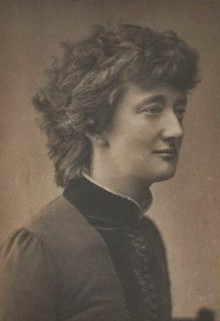
Katherine Cecil Thurston, Irish novelist best known for two political thrillers, is born at 14 Bridge Street, Cork, County Cork on April 18, 1875.

Born Kathleen Annie Josephine Madden, she is the only daughter of banker Paul J. Madden, who is Mayor of Cork in 1885–1886 and a friend of Charles Stewart Parnell, and Eliza Madden (née Dwyer). She is educated privately at her family home, Wood’s Gift, Blackrock Road.

By the end of the 19th century Madden is contributing short stories to various British and American publications, such as The Pall Mall Magazine, Blackwood’s Edinburgh Magazine, Harper’s Magazine, The Windsor Magazine and others.

On February 16, 1901, five weeks after her father’s death, she marries the writer Ernest Temple Thurston. They separate in 1907 and are divorced in 1910 on grounds of his adultery and desertion. The suit goes undefended. Thurston “complained that she was making more money by her books than he was, that her personality dominated his, and had said that he wanted to leave her.”

Thurston’s novels achieve success in Britain and the United States. Her best-known work is a political thriller entitled John Chilcote, M.P. (as The Masquerader in the United States), published in 1904 and on The New York Times bestseller list for two years, ranking as third best-selling book for 1904 and seventh best in 1905. Her next book, The Gambler, comes out in 1905 and it too makes the U.S. best-selling lists for that year. This is the first time The New York Times had recorded any author, female or male, as having two top ten books in a single year. In 1910, she is back on the same list at No. 4 with her novel Max, the story of a young Russian princess, who flees disguised as a boy to the Montmartre Quarter of Paris, on the night before her arranged marriage.

John Chilcote, M.P. is adapted for the stage by John Hunter Booth and opens on Broadway in 1917. It is filmed four times, the first silent film by American Pathé in 1912 under the title The Compact and starring Crane Wilbur. The second film is a 1920 Russian/French co-production entitled Chlen parlamenta. Two more films are made using the American book title The Masquerader, in 1922 and then by The Samuel Goldwyn Company in 1933 as a “talkie” starring Ronald Colman.

An epileptic, Thurston’s blossoming career is cut short at the age of 36 when she is found dead in her hotel room in Cork on September 5, 1911. The official enquiry the following day gives the cause of death as asphyxia as result of a seizure. She had been due to remarry later in the month to Dr. A. T. Bulkeley Gavin. She is buried in St. Joseph’s Cemetery, Cork. The story of her final years and her relations with Bulkeley Gavin are the subject of a published thesis by C. M. Copeland, written while studying at the Napier University, Edinburgh.


Leave a comment

Birth of Robert Tressell, Irish Writer

robert-tressell

Robert Noonan, Irish writer born Robert Croker and best known by the pen name Robert Tressell, is born in Dublin on April 17, 1870. He is best known for his novel The Ragged-Trousered Philanthropists.

Noonan is the illegitimate son of Samuel Croker, a senior member of the Royal Irish Constabulary. He is baptised and raised a Roman Catholic by his mother Mary Noonan. His father, who is not Catholic, has his own family, but attempts to provide for Robert until his death in 1875.

By 1875 Noonan is living in London. When he is sixteen, he shows signs of a radical political consciousness. He leaves his family declaring he “would not live on the family income derived largely from absentee landlordism.” It is around this time he changes his surname to his mother’s maiden name.

In 1890, Noonan is a sign writer living in Queen’s Road, Everton, Liverpool. On June 10, 1890, he appears at Liverpool County Intermediate Sessions court at County Sessions House, Islington, Liverpool on charges of housebreaking and larceny. He is found guilty and given a six-month prison sentence.

By 1891, Noonan has moved to Cape Town, South Africa, where he is a painter and decorator. He marries in 1891, but the marriage is an unhappy one, with his wife having numerous affairs after the birth of their daughter, Kathleen. They divorce in 1895, and Noonan acquires all the property, including their house in an affluent suburb of Cape Town.

Noonan and his daughter move to Johannesburg, where he secures a well-paying job with a construction company. It is here that he learns the ways of the industry he would later write about in his novel, although Noonan’s actual circumstances vary greatly from the proletarian characters of the book. After becoming Secretary of the Transvaal Federated Building Trades Council, he is able to send his daughter to an exclusive convent school and also to employ a black manservant called Sixpence.

In 1897, Noonan leads a successful protest against the employment of black skilled labour. During 1898, he becomes a member of the Transvaal Executive Committee of the Centennial of 1798 Association, which commemorates the revolutionary nationalist Society of United Irishmen. As a 1798 Association member, he helps form the Irish Brigades, an anti-British force that fights alongside the Boers in the Second Boer War. At this point, accounts of his life differ. Some assert he takes up arms and is interned by the British until the end of the war, when he returns to Britain. Others say he leaves South Africa just before hostilities began in October 1899.

In any event, around the turn of the century, Noonan ends up in Hastings, Sussex. Here, he finds work as a sign writer, but at much lower wages and in far poorer conditions than he had experienced in South Africa. He has to take part-time jobs in addition to his full-time position.

Influenced by the Marxist-influenced ideas of designer and socialist William Morris, he joins the Social Democratic Federation in 1906. The next year, after a dispute with his employer, he loses his job. Despite the demand for his skills, his health begins to deteriorate, and he eventually develops tuberculosis. Unemployed and unable to remain politically active, he starts writing, something he hopes will earn enough money to keep him from the workhouse.

He writes under the pen name Robert Tressell as he fears the socialist views expressed in the book will have him blacklisted. He completes The Ragged-Trousered Philanthropists in 1910, but the 1,600-page hand-written manuscript is rejected by three publishing houses. The rejections severely depress him, and his daughter has to save the manuscript from being burned.

Unhappy with his life in Britain, Noonan decides that he and Kathleen should emigrate to Canada. However, he only reaches Liverpool when he is admitted to the Royal Liverpool Infirmary, where he dies of pulmonary tuberculosis on February 3, 1911, at the age of 40. He is buried in a pauper’s grave at Liverpool Parochial Cemetery, later known as Walton Park Cemetery. The location of the grave is not rediscovered until 1970. Twelve other people are buried in the same plot. The plot is now marked although the land is no longer used as a cemetery and is now used by Rice Lane City Farm.

Kathleen mentions her father’s novel to a friend, writer Jessie Pope, who recommends it to her publisher. In April 1914, the publisher purchases the rights to the book for £25, and it appears in Britain, Canada and the United States later that year, in the Soviet Union in 1920, and in Germany in 1925. The version as originally published is heavily abridged by Pope, with much of the socialist ideology removed.

The original manuscript is subsequently located by F. C. Ball and, after he raises funds to acquire and reassemble the original version, an unabridged edition is published in 1955.


2 Comments

Death of Francis Arthur Fahy, Songwriter & Poet

francis-arthur-fahy

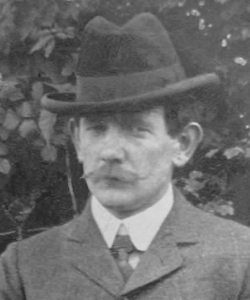
Francis Arthur Fahy, Irish nationalist, songwriter and poet, dies on April 1, 1935. He is probably best remembered as the composer of the evergreen “The Ould Plaid Shawl”. He collaborates with various composers, including Alicia Adélaide Needham, an associate of the Royal Academy of Music.

Fahy is born in Kinvara, County Galway, on September 29, 1854 into a family of seventeen, eight of whom survive. His father, Thomas, comes from the Burren area and his mother, Celia Marlborough, is born near Gort, County Galway.

In 1896, Fahy becomes president of the emerging Conradh na Gaeilge (Gaelic League) in London, a position he holds until 1908. He is also a long time member of the London Irish Literary Society. Described as a small, brisk man, his enthusiasm and energy knows no bounds. His most memorable poems and songs include “The Ould Plaid Shawl,” “The Queen of Connemara,” the original “Galway Bay,” and “The Tide Full In.” His publications include The Child’s Irish Song Book (1881), The Irish Reciter (1882), Irish History in Rhyme (1882) and Irish Songs and Poems (1887).

Fahy retires from the Civil Service at the age of 65. He dies at the age of 81 on April 1, 1935.