The Most Reverend William MacNeely, the Bishop of Raphoe from 1923 until 1963, is born in County Donegal on December 28, 1889. He has the distinction of being Raphoe’s first completely Roman-educated bishop.
MacNeely is the son of a butcher in Donegal Town. He is educated at the High School in Letterkenny, and in Rome from 1906–12. He is ordained to the priesthood on February 4, 1912, and upon his return to Ireland is appointed to the staff of St. Eunan’s College.
On July 27, 1923, at the comparatively young age of 35, MacNeely is ordained as Bishop of Raphoe in succession to Bishop Patrick O’Donnell who had been appointed coadjutorArchbishop of Armagh the previous year. In this role he is responsible for the completion of the Cathedral of St. Eunan and St. Columba in Letterkenny and negotiating with Harry Clarke to finish the work of glazing the cathedral.
Keen to develop religious life in his diocese, MacNeely invites the Capuchin Franciscans to the Creeslough area in 1930 to a site that becomes known as Ards Priory.
In a diocese where farming is the main industry, MacNeely maintains a strong interest in farming, being himself a successful breeder of Shorthorn cattle.
In 2008, it is reported that MacNeely was one of the two Irish episcopal coordinators who worked alongside “an intelligence-gathering secret service” set up in 1948 to monitor any sign of a “Communist takeover” of Ireland.
In 1953, MacNeely is a member of the inaugural Episcopal Commission for Emigrants reflecting the high levels of migration that afflict his diocese and wider Donegal for much of the twentieth century.
MacNeely serves as Bishop for over forty years, attending the early sessions of the Second Vatican Council. Shortly before his death, he is appointed Assistant to the Papal Throne. He dies on December 11, 1963, and is interred beside the Cathedral of St. Eunan and St. Columba.
Dickson is born on December 25, 1744, the eldest son of John Dickson, a tenant farmer of Ballycraigy, in the parish of Carnmoney, County Antrim. His mother is Jane Steel and, on the death of his uncle, William Steel, on May 13, 1747, the family adds his mother’s maiden name to their own.
In his boyhood, Dickson is educated by Robert White, a Presbyterian minister from Templepatrick and enters University of Glasgow in November 1761. Following graduation, he is apparently employed for a time in teaching, and in 1771 he is ordained as a Presbyterian minister. Until the outbreak of the American Revolutionary War, he occupies himself mainly with parochial and domestic duties. His political career begins in 1776, when he speaks and preaches against the “unnatural, impolitic and unprincipled” war with the American colonies, denouncing it as a “mad crusade.” On two government fast-days his sermons on “the advantages of national repentance” (December 13, 1776), and on “the ruinous effects of civil war” (February 27, 1778) create considerable excitement when published. Government loyalists denounce Dickson as a traitor.
Political differences are probably at the root of a secession from his congregation in 1777. The seceders form a new congregation at Kircubbin, County Down, in defiance of the authority of the general synod.
In 1771 Dickson marries Isabella Gamble, a woman of some means, who dies on July 15, 1819. They have at least eight children, but he outlives them all. One of his sons is in the Royal Navy and dies in 1798.
Dickson enters with zest into the volunteer movement of 1778, being warmly in favour of the admission of Roman Catholics to the ranks. This is resisted “through the greater part of Ulster, if not the whole.” In a sermon to the Echlinville volunteers on March 28, 1779, he advocates the enrolment of Catholics and though induced to modify his language in printing the discourse, he offends “all the Protestant and Presbyterian bigots in the country.” He is accused of being a papist at heart, “for the very substantial reason, among others, that the maiden name of the parish priest’s mother was Dickson.”
Though the contrary has been stated, Dickson is not a member of the Volunteer conventions at Dungannon in 1782 and 1783. He throws himself heart and soul into the famous election for County Down in August 1783, when the families of Hill and Stewart, compete for the county seat in Parliament. He, with his forty-shilling freeholders, fails to secure the election of Robert Stewart. But in 1790 he successfully campaigns for the election of Stewart’s son, better known as Lord Castlereagh. Castlereagh proves his gratitude by referring at a later date to Dickson’s popularity in 1790, as proof that he was “a very dangerous person to leave at liberty.”
In December 1791, Dickson joins Robert White’s son, John Campbell White, taking the “test” of the first Society of United Irishmen, organised in October in Belfast following a meeting held with Theobald Wolfe Tone, Protestant secretary of the Catholic Committee in Dublin. According to Dickson himself, he attends no further meetings of the Society but devotes himself to spreading its principles among the volunteer associations, in opposition to the “demi-patriotic” views of the Whig Club.
At a great volunteer meeting in Belfast on July 14, 1792, Dickson opposes a resolution for the gradual removal of Catholic disabilities and assists in obtaining a unanimous pledge in favour of total and immediate emancipation. Parish and county meetings are held throughout Ulster, culminating in a provincial convention at Dungannon on February 15, 1793. He is a leading spirit at many of the preliminary meetings, and, as a delegate from the Barony of Ards, he has a chief hand in the preparation of the Dungannon resolutions. Their avowed object is to strengthen the throne and give vitality to the constitution by “a complete and radical reform.” He is nominated on a committee of thirty to summon a national convention. The Irish parliament goes no further in the direction of emancipation than the Roman Catholic Relief Act 1793, which receives the royal assent on April 9, and remains unextended until 1829. While the passing of Lord Clare‘s Convention Act, still in force, makes illegal all future assemblies of delegates “purporting to represent the people, or any description of the people.”
In March and April 1798, Dickson is in Scotland arranging some family affairs. During his absence plans are made for an insurrection in Ulster, and soon after his return he agrees to take the place of Thomas Russell, who had been arrested, as adjutant-general of the United Irish forces for County Down. A few days before the county is to rise, he is himself arrested at Ballynahinch.
Dickson is conveyed to Belfast and lodged in the “black hole” and other prisons until August 12 when he is removed to a prison ship with William Tennant, Robert Hunter, Robert Simms, David Bailie Warden and Thomas Ledlie Birch, and detained there amid considerable discomfort. On March 25, 1799, Dickson, Tennant, Hunter, and Simms join the United Irish “State Prisoners” on a ship bound for Fort George, Highland prison in Scotland. This group, which includes Samuel Neilson, Arthur O’Connor, Thomas Russell, William James MacNeven, and Thomas Addis Emmet, arrives in Scotland on April 9, 1799. He spends two years there.
Unlike the more high-profile prisoners like O’Connor and MacNeven who are not released until June 1802, Tennant, Dickson, and Simms are permitted to return to Belfast in January 1802.
Dickson returns to liberty and misfortune. His wife has long been a helpless invalid, his eldest son is dead, his prospects are ruined. His congregation at Portaferry had been declared vacant on November 28, 1799. William Moreland, who had been ordained as his successor on June 16, 1800, at once offers to resign, but Dickson will not hear of this. He has thoughts of emigration but decides to stand his ground. At length, he is chosen by a seceding minority from the congregation of Keady, County Armagh, and installed minister on March 4, 1803.
Dickson’s political engagement ends with his attendance on September 9, 1811, of a Catholic meeting in Armagh, on returning from which he is cruelly beaten by Orangemen. In 1815 he resigns his charge in broken health and henceforth subsists on charity. Joseph Wright, an Episcopalian lawyer, gives him a cottage rent-free in the suburbs of Belfast, and some of his old friends make him a weekly allowance. His last appearance in the pulpit is early in 1824. He dies on December 27, 1824, having just passed his eightieth year, and is buried “in a pauper’s grave” at Clifton Street Cemetery, Belfast.
MacHale is born in Tubbernavine, near Lahardane, County Mayo on March 6, 1791, to Patrick and Mary Mulkieran MacHale. He is so feeble at birth that he is baptised at home by Father Andrew Conroy. By the time he is five years of age, he begins attending a hedge school. Three important events happen during his childhood: the Irish Rebellion of 1798, the landing at Killala of French troops, whom the boy, hidden in a stacked sheaf of flax, watches marching through a mountain pass to Castlebar, and a few months later the brutal hanging of Father Conroy on a false charge of high treason.
With his friend and ally, Daniel O’Connell, MacHale takes a prominent part in the important question of Catholic emancipation, impeaching in unmeasured terms the severities of the former penal code, which had branded Catholics with the stamp of inferiority. During 1826 his zeal is omnipresent. He calls on the Government to remember how the Act of Union in 1800 was carried by William Pitt the Younger on the distinct assurance and implied promise that Catholic emancipation, which had been denied by the Irish Parliament, should be granted by the Parliament of the Empire.
Oliver Kelly, Archbishop of Tuam, dies in 1834, and the clergy selects MacHale as one of three candidates, to the annoyance of the Government who despatches agents to induce Pope Gregory XVI not to nominate him to the vacant see. Disregarding their request, the pope appoints MacHale Archbishop of Tuam. He is the first prelate since the Reformation who has received his entire education in Ireland. The corrupt practices of general parliamentary elections and the Tithe War cause frequent rioting and bloodshed and are the subjects of denunciation by the new archbishop, until the passing of a Tithes bill in 1838. He also leads the opposition to the ProtestantSecond Reformation, which is being pursued by evangelical clergy in the Church of Ireland, including the Bishop of Tuam, Killala and Achonry, Thomas Plunket.
The repeal of the Acts of Union 1800, advocated by O’Connell, enlists MacHale’s ardent sympathy and he assists the Liberator in many ways, and remits subscriptions from his priests for this purpose. In his zeal for the cause of the Catholic religion and of Ireland, so long downtrodden, but not in the 1830s, he frequently incurs from his opponents the charge of intemperate language, something not altogether undeserved. In his anxiety to reform abuses and to secure the welfare of Ireland, by an uncompromising and impetuous zeal, he makes many bitter and unrelenting enemies, particularly British ministers and their supporters.
The Great Famine of 1846–47 affects his diocese more than any. In the first year he announces in a sermon that the famine is a divine punishment on his flock for their sins. Then by 1846 he warns the Government as to the state of Ireland, reproaches them for their dilatoriness, and holds up the uselessness of relief works. From England as well as other parts of the world, cargoes of food are sent to the starving Irish. Bread and soup are distributed from the archbishop’s kitchen. Donations sent to him are acknowledged, accounted for, and disbursed by his clergy among the victims.
The death of O’Connell in 1847 is a setback to MacHale as are the subsequent disagreements within the Repeal Association. He strongly advises against the violence of Young Ireland. Over the next 30 years he becomes involved in political matters, particularly those involving the church. Toward the end of his life, he becomes less active in politics.
MacHale attends the First Vatican Council in 1869. He believes that the favourable moment has not arrived for an immediate definition of the dogma of papal infallibility. Better to leave it a matter of faith, not written down, and consequently he speaks and votes in the council against its promulgation. Once the dogma had been defined, he declares the dogma of infallibility “to be true Catholic doctrine, which he believed as he believed the Apostles’ Creed“. In 1877, to the disappointment of the archbishop who desires that his nephew should be his co-adjutor, Dr. John McEvilly, Bishop of Galway, is elected by the clergy of the archdiocese, and is commanded by Pope Leo XIII after some delay, to assume his post. He had opposed this election as far as possible but submits to the papal order.
Every Sunday MacHale preaches a sermon in Irish at the cathedral, and during his diocesan visitations he always addresses the people in their native tongue, which is still largely used in his diocese. On journeys he usually converses in Irish with his attendant chaplain and has to use it to address people of Tuam or the beggars who greet him whenever he goes out. He preaches his last Irish sermon after his Sunday Mass, April 1881. He dies in Tuam seven months later, on November 7, 1881, and is buried in the cathedral at Tuam on November 15.
Father Des Wilson, Irish Catholic priest and church dissident who in the course of the Northern IrelandTroubles embraces ideas and practice associated, internationally, with liberation theology, dies in his native Belfast on November 5, 2019. He believes the Word of God can never be silent in the face of oppression, injustice and suffering. He seeks to apply the ideas of liberation theology to the North, supporting and empowering marginalised communities, and acting as a voice for the voiceless.
Wilson is born in Belfast on July 8, 1925, the youngest of five sons to William Wilson, a publican and native of County Cavan, and his wife Emma (née McAvoy), a native of south County Down. He spends his earliest years above his father’s pub in Belfast, before the family moves to a house in the suburbs.
Wilson attends primary school locally, then receives secondary education at St. Malachy’s College. During his time there Belfast is blitzed in April and May 1941. Almost 1,000 are killed. The carnage he sees is a factor in his deciding on the priesthood.
After ordination Wilson serves as chaplain in Belfast’s Mater Infirmorum Hospital, then spends 15 years in St. Malachy’s as spiritual director. Former pupils remember him as fair, and able to play jazz excellently on the organ.
Wilson lives out his beliefs, spending half a century in Belfast’s Ballymurphy estate, among the North’s most deprived, and one of the areas which suffers worst from the Troubles. There he plays a role in community development, establishing projects to provide employment in the area. He suffers, finding himself for years outside the official Catholic Church.
Wilson plays a significant role in providing adult education. He wants an education that does not just provide qualifications and open career paths but is psychologically liberating.
Life changes in 1966 when Wilson is moved to St. John’s Parish in West Belfast as a curate. Having come from a comfortable background in Ballymurphy, he is shocked by the poverty, the poor housing and the treatment of women. Unusual for a priest at the time, he moves into a terraced house in the estate. He finds the Catholic Church unable to respond to the multiple problems people are facing. That inability worsens as the Troubles erupt.
Wilson’s personal probity is so recognised that he is accepted as a mediator in feuds between the Provisional Irish Republican Army and Official Irish Republican Army in the 1970s and is able to broker permanent peace. He also helps bring about the ceasefires in the 1990s.
Wilson does not shirk unpopular stances. In the 1970s he refuses to condemn the Irish Republican Army (IRA). Later he says the conviction of former Real Irish Republican Army leader Michael McKevitt for directing terrorism is unsafe. He also publicly visits and supports a Ballymurphy couple which has a very bitter falling out with Sinn Féin, leading to a picket on their home.
By 1975 relations with his bishop has broken down and Wilson resigns but continues ministering in Ballymurphy. Forbidden to say Mass in a church, his pay cut off, he says Mass in his house. He suffers hardship, living from savings, some earnings from writing, broadcasting and lecturing, and help from Quaker and Presbyterian friends. By the early 1980s his Ballymurphy home becomes too small for the many classes he organises. His classes are rehoused and expanded as the Conway Education Centre in a vacant mill. He is able to offer a range of vocational and non-vocational courses with almost 1,000 students. In the mid-1980s his relationship with the Dioceses of Down and Connor is re-established, and he is allowed to continue his ministry.
Personally, Wilson has great gifts of head and heart and is incapable of rancour. A strong belief is that it is important to share food to talk, as happened in Biblical times. Thus, a lunch would last an afternoon.
Wilson dies on November 5, 2019, in Belfast. Instead of wreaths, he asks mourners to donate to the Ballymurphy Massacre Memorial Garden. The garden is dedicated to the victims of the Ballymurphy massacre of August 1971, which saw the killing in the district of eleven civilians by soldiers of the 1st Battalion, Parachute Regiment. The victims include Fr. Hugh Mullan, who had been a student of Wilson’s at St. Malachy’s. He was shot while going to the aid of a wounded man.
Brady is born in 1527, but his parentage is uncertain, as are most of the details of his early life. He is said to be a graduate of the University of Oxford and later a professor of divinity there, but there is no evidence of this in the college registers.
Brady’s first patron is Edmund Grindal, Bishop of London, under whose auspices he secures a prestigious appointment to the rectorship of St. Mary Aldermary, London, in early 1561. Over the next two years he becomes acquainted with a relative and chief advisor of Queen Elizabeth I, William Cecil. He is eager to return to Ireland and is appointed Bishop of Meath on October 21, 1563, while still in England. He is ideally qualified for this role, being a native of the diocese and a skilled preacher fluent in English and Irish. Arriving in Dublin on December 3, 1563, he is consecrated on December 19, being made a member of the Privy Council of Ireland soon thereafter.
On reaching his diocese, Brady is dismayed at its dilapidated state. His diocesan income scarcely exceeds £60 a year, many of the churches are in ruins, his clergy are uneducated and largely pro-Catholic, and the right to appoint clergy to many parish churches is in the hands of Catholic landowners. Further, the rival Catholic Bishop of Meath, William Walsh, is dedicated, capable, and popular. Although Walsh is belatedly arrested in 1565, his willingness to lead by example and suffer persecution for his beliefs stiffens Catholic resistance in Meath.
Brady is always diligent in attendance at Council meetings. He is vigorous in beating off raids on his diocese by Shane O’Neill, the effective ruler of Ulster. He enjoys the friendship of Sir Henry Sidney, the Lord Deputy of Ireland, who praises his sound judgment, hospitality and blameless private life. His good qualities lead Sidney and Adam Loftus, Archbishop of Armagh, to propose Brady as Archbishop of Dublin, after they have lobbied successfully for the recall of Archbishop Hugh Curwen. However, soon after, Brady and Loftus quarrel, and Loftus blocks Brady’s nomination in order to obtain the See of Dublin for himself.
Nonetheless, Brady retains Sidney’s confidence and finds a new ally in 1567 when Robert Weston becomes Lord Chancellor of Ireland. Weston sympathises with his educational and evangelical bent while gaining the respect of the querulous Loftus, thereby defusing the animosity between Ireland’s leading Protestant clergy.
In 1569, Brady’s diocese is amalgamated with the diocese of Clonmacnoise. He now heads a sprawling diocese that includes Gaelic areas where the crown has very little authority. In practice, he appears to have largely ignored Clonmacnoise. In Meath, a government inquiry in 1575 shows that he has made little headway in spreading the Protestant faith or in restoring the fabric and finances of the church. He has found clergy for nearly every church in the diocese, but most are of a poor standard. He contributes to the diocese’s worsening finances by alienating church land to family and associates. The free school he establishes is also forced to close due to a lack of suitable premises.
Following Sidney’s dismissal as Lord Deputy of Ireland in 1578, Protestant hard-liners begin to dominate the Irish government, causing Brady to lose influence. He complains in 1581 that his letters to London are being opened and read by his colleagues and sometimes being suppressed. His influence declines in Meath also as discontent with the government increases. In 1577, his men capture a number of friars at Navan but are attacked by locals and forced to free their captives. Thereafter, local officials and landowners routinely defy his authority. His conciliatory policies totally discredited, he stays away from Dublin and resides mainly at his episcopal palace at Ardbraccan.
From 1582 Brady suffers from ill health, forcing him to curtail his preaching. He dies on February 14, 1584, and is buried near the parish church at Dunboyne.
Brady marries twice, but little is known of his first wife. In 1568, following the death of his first wife, he marries Weston’s daughter Alice. They had at least four children, including Luke, their eldest son, and Nicholas, grandfather of his namesake the poet. After Brady’s death, his widow marries Sir Geoffrey Fenton and has further issue, including Catherine, Countess of Cork. The poet Nicholas Brady is the bishop’s great-grandson. Maziere Brady, Lord Chancellor of Ireland, is a nineteenth-century descendant of the bishop.
D’Alton is born to Joseph D’Alton and his wife Mary Brennan, at the height of the Land Wars in Ireland. He is baptised four days later, on October 15, 1882, with Michael and Mary Brennan acting as his godparents. His mother has a daughter, Mollie Brennan, from a previous marriage, she remarries again after the Cardinal’s father dies in 1883.
D’Alton occupies important roles at the National Seminary and is successively Professor of Ancient Classics (1912), Greek (1922), Vice-President (1934), and President (1936). He is raised to the rank of Monsignor on June 27, 1938.
D’Alton is named Archbishop of Armagh and thus Primate of All Ireland on June 13, 1946, and is created Cardinal Priest of Sant’ Agata de’ Goti in Rome by Pope Pius XII in the consistory of January 12, 1953. As a cardinal elector in the 1958 papal conclave, he gives a hint of the difficulties involved in that papal conclave and achieving unanimity in the voting.
One highlight of D’Alton’s time in Armagh is the Patrician Year Celebrations in 1961, marked by the Irish Catholic hierarchy as the 1,500th anniversary of the death of Saint Patrick and as such an opportunity to promote the “spiritual empire” created by the Irish Catholic church in the wider anglophone world. He writes a pastoral letter to mark the occasion.
Cardinal D’Alton is seen to be more ecumenical in outlook than other members of the Irish hierarchy. He tries to broker talks between the Irish Free State and the United Kingdom to ease the tensions between both countries, even going so far as to address the situation regarding the Irish ports, but to little avail.
In 1952, D’Alton becomes the first individual from the Republic of Ireland to receive an honorary degree from Queen’s University Belfast (QUB), when he is conferred with a Doctorate in Literature. He already possesses a Doctor of Divinity, so this degree is a recognition of his earlier works such as Horace and His Age: A Study in Historical Background (1917), Roman Literary Theory and Criticism: A Study in Tendencies (1931), and Selections from St. John Chrysostom (1940).
In D’Alton’s hometown of Claremorris, the Dalton Inn Hotel and Dalton Street (formerly Church Street) are named after him. A plaque commemorating him is unveiled at the Dalton Inn Hotel on September 28, 2023. Plans to canonise him have been discussed.
Thomas Pelham, the Chief Secretary for Ireland, introduces a bill for the foundation of a Catholic college, and this is enacted by parliament. It is built to hold up to 500 students for the Catholic priesthood of whom up to 90 are to be ordained each year. It is once the largest seminary in the world.
The town of Maynooth is the seat of the FitzGeralds, Earls of Kildare. The ivy-covered tower attached to St. Mary’s Church of Ireland is all that remains of the ancient college of St. Mary of Maynooth, founded and endowed by Gerald FitzGerald, 8th Earl of Kildare, and dedicated to the Blessed Virgin Mary. On October 7, 1515, Henry VIII grants licence for the establishment of a college. In 1518, the 9th Earl presents a petition to the Archbishop of Dublin, William Rokeby, for a license to found and endow a college at Maynooth, the College of the Blessed Virgin Mary. In 1535 the college is suppressed and its endowments and lands confiscated as part of the Reformation.
The present college is created in the 1790s against the background of the upheaval during the French Revolution and the gradual removal of the penal laws. The college is particularly intended to provide for the education of Catholic priests in Ireland, who until this Act had to go to Continental Europe for their formation and theological education. Many are educated in France, and the church and government are concerned at the Dechristianization of France during the French Revolution, and at the same time at the risk of revolutionary thinking arising from training in revolutionary France. A number of the early lecturers in Maynooth, are exiles from France. Also among the first professors is a layman, James Bernard Clinch, recommended by Edmund Burke. Also relevant is the enactment of the Roman Catholic Relief Act 1793.
The college is legally established on June 5, 1795, by the Maynooth College Act 1795 as The Royal College of St. Patrick, by act of the Parliament of Ireland, to provide “for the better education of persons professing the popish or Roman Catholic religion.” The college is originally established to provide a university education for Catholic lay and ecclesiastical students, the lay college is based in Riverstown House on the south campus from 1802. With the opening of Clongowes Wood College in 1814, the lay college is closed and the college functions solely as a Catholic seminary for almost 150 years.
In 1800, John Butler, 12th Baron Dunboyne, dies and leaves a substantial fortune to the college. Butler had been a Roman Catholic, and Bishop of Cork, who had embraced Protestantism in order to marry and guarantee the succession to his hereditary title. However, there are no children to his marriage, and it is alleged that he had been reconciled to the Catholic Church at his death. Were this the case, a Penal Law demands that the will is invalid, and his wealth is to pass to his family. Much litigation follows before a negotiated settlement in 1808 that leads to the establishment of a Dunboyne scholarship fund.
The land is donated by William FitzGerald, 2nd Duke of Leinster, who had argued in favour of Catholic emancipation in the Irish House of Lords. He lives nearby at Carton House and also at Leinster House. The building work is paid for by the British Government with the parliament continuing to give it an annual grant until the Irish Church Act 1869. When this law is passed the college receives a capital sum of £369,000. The trustees invest 75% of this in mortgages to Irish landowners at a yield of 4.25% or 4.75% per annum. This is considered a secure investment at the time but agitation for land reform and the depression of the 1870s erodes this security. The largest single mortgage is granted to the Earl of Granard. Accumulated losses on these transactions reaches £35,000 by 1906.
The first building to go up on the site is designed by, and named after, John Stoyte. Stoyte House, which can still be seen from the entrance to the old campus, is a well-known building to Maynooth students and stands very close to the very historic Maynooth Castle. Over the next 15 years, the site at Maynooth undergoes rapid construction so as to cater for the influx of new students, and the buildings which now border St. Joseph’s Square (to the rear of Stoyte House) are completed by 1824.
The Rev. Laurence F. Renehan (1797–1857), a noted antiquarian, church historian, and cleric, serves as president of St. Patrick’s from 1845 until 1857. Under Renehan, many of the college’s most important buildings are constructed by Augustus Pugin.
In 1876, the college becomes a constituent college of the Catholic University of Ireland, and later offers Royal University of Ireland degrees in arts and science. Even after the granting of the Pontifical Charter in 1896 the college becomes a recognised college of the National University of Ireland in 1910, and from this time its arts and science degrees are awarded by the National University of Ireland. However, during this time the Pontifical University of Maynooth continues to confer its degrees in theology, because until 1997 theology degrees are prohibited by the Royal University of Ireland and its successor the National University of Ireland.
In 1997, the Universities Act, 1997 is passed by the Oireachtas. Chapter IX of the Act provides for the creation of the separate Maynooth University. This new university is created from the college’s faculties of Arts, Celtic Studies and Philosophy, and Science.
In 1994, W. J. Smyth had been appointed to the position of Master of St. Patrick’s College Maynooth (NUI). In 1997, this position is converted into President of Maynooth University. After his 10-year term ends in 2004, he is replaced by John Hughes as president of Maynooth University and a new line of heads for the college.
By 2016, the number of resident seminarians has dropped from several hundreds to just 40 to 60. In August 2016, it is revealed that, due to frequent use of Grindr by college students, the then Archbishop of DublinDiarmuid Martin decides to transfer the students from his diocese to the Irish Pontifical College in Rome. According to Martin, “there are allegations on different sides,” one of which of an “atmosphere that was growing in Maynooth” of a “homosexual, a gay culture, that students have been using an app called Grindr,” which “would be fostering promiscuous sexuality, which is certainly not in any way the mature vision of sexuality one would expect a priest to understand.” Subsequently, the college trustees order a review of the college’s policy on social media use.
Campbell is the eldest son of Thomas Campbell and Jane Campbell (née Corneigle), who marry in 1787 and later have four daughters and two younger sons. His father, the son of soldier Archibald Campbell and his wife Alice McNally, is born on February 1, 1763, at Sheepbridge, near Newry, County Down. The Presbyterian minister William Campbell may have been a relation.
Archibald Campbell is born Catholic but joins the Church of Ireland, while his son joins the seceding branch of the Presbyterian church and studies at the University of Glasgow, graduating with a Master of Arts degree in 1786, although he does not appear in the published records of the university. He becomes a teacher but is determined to become a minister, and studies in the Anti-Burgher Divinity Hall in Whitburn, West Lothian (or the Seceder Theological Seminary in Whithorn, Wigtownshire, according to another source) for two months each year for five years. He is ordained a minister in the seceding congregation of Ahorey, County Armagh, probably in 1798. Although at first a member of the Anti-Burgher party in his church, Thomas Campbell begins to believe that divisions between and within denominations are prejudicial to true Christianity. He writes a report in 1804 suggesting that Burgher and Anti-Burgher Presbyterians in Ireland should unite. When this is vetoed in 1805 by the General Associate Synod of Scotland, Thomas Campbell, then moderator of the Irish Seceding Synod, initiates an unsuccessful move to seek independence from Scottish control. His experiences with church authorities undoubtedly increase his belief in the need to rediscover the scriptural basis of religion, freed from man-made creeds.
In 1804, Thomas Campbell sets up an academy at Richhill, County Armagh. In 1798, he is one of the founders of the Evangelical Society of Ulster in which clergymen from differing sects cooperate but resigns when this enterprise is frowned on by seceding authorities.
In poor health in 1806, Thomas Campbell resigns from Ahorey, and goes to the United States in 1807, where he preaches in small congregations around Washington, Pennsylvania. He is soon accused of doctrinal unsoundness, of disciplinary laxity and of administering the sacraments to non-Presbyterians. His appeal to the Associate Synod of North America is unsuccessful, and in 1809 he ceases to be a minister of the seceder church. His liberal views on Christian unity and on the paramount importance of the Bible attract supporters, and in 1809 they found the Christian Association of Washington. He publishes a declaration and address in which he sets out the principles of this body. His followers claim it represents a “second reformation” or a “restoration.” It forms the basis of the doctrine of what becomes America’s most important indigenous religious development, and is regarded as significant in the history of the wider ecumenical movement. He publishes a great many other tracts and articles. Thomas Campbell dies in Bethany, West Virginia, on January 4, 1854.
Thomas had married Jane Corneigle in 1787 and their eldest son Alexander is born on September 12, 1788, in Broughshane, County Antrim, where his father is teaching. His parents intend him for the ministry, and he receives a good education, partly from his father, and religious training from both parents. He is greatly influenced by his strongminded and pious mother. In October 1808 his family sets sail for America to join his father. The ship is wrecked on the island of Islay, off Scotland. All on board are saved, partly thanks to Alexander’s strength and leadership. Rather than continuing the voyage by other means, Alexander spends eight months in the University of Glasgow to prepare himself for the ministry.
In the summer of 1809, the family finally arrives in Pennsylvania, among many emigrants from Ulster. On January 1, 1812, Campbell is ordained as a minister by his father’s Brush Run Church, and quickly takes over the leadership of the fledgling church. By 1812, most of their followers, thenceforth often called Campbellites, have undergone baptism by immersion; a union with the Baptist denomination results, but does not survive after 1830, by which date Campbell’s work on a translation of the Greek New Testament has convinced him that baptism is unscriptural. Controversy between the two groups continues for many years.
A very able preacher and debater, whose public discussions attract much attention, Campbell attacks the creeds and governance of established churches. In 1823, he founds the journal the Christian Baptist. Subsequently in 1830, after the break with the Baptists, he starts the Millennial Harbinger. Both periodicals are largely written by Campbell and his father, Thomas, and are widely influential. He is convinced that church unity will usher in a millennial age of peace and harmony. Primitive Christianity is thus to bring about a utopian future. His book Christianity Restored (1835) is widely read, in Britain as well as in the United States. In 1826, a translation of the Greek New Testament is printed by Campbell’s press in Bethany, West Virginia. Largely based on recent translations by others, it nonetheless contains variant readings by Campbell and furthers his aim of providing followers with authoritative texts on which to base their beliefs. In 1841, he founds Bethany College, West Virginia, and is its president until his death in Bethany on March 4, 1866, when he leaves it $10,000 and a large library.
In 1832, several fledgling churches join the Campbellites, and form a new body called the Christian Church, or Disciples of Christ, which today has over 3,000 congregations in the United States. The two guiding principles of the lifelong beliefs of the Campbells are in the end irreconcilable. An emphasis on the literal interpretation of scripture allows believers to form beliefs at variance from those of co-religionists, and neither Alexander Campbell’s great authority in the denomination nor Thomas Campbell’s emphasis on the need for church unity are enough to prevent the fissions inevitable in a church that so strongly opposes man-made creeds. There are now at least six major divisions of the Church of Christ, one of several alternative names.
On March 2, 1811, Campbell marries Margaret Brown, and thenceforth derives his income from the large farm that had belonged to her family. They have eight children, who all die in their father’s lifetime. Margaret Brown Campbell dies on October 22, 1827. On July 31, 1828, in fulfilment of his wife’s dying request, the widower marries the English-born Selina Huntington Bakewell, and has six children with her. Four of those children survive him. Selina Campbell writes a memoir of her husband, published in 1882, and lives until 1897.
(From: “Campbell, Alexander” by Linde Lunney, Dictionary of Irish Biography, http://www.dib.ie, last revised May 2021)
Harty is born on August 11, 1867, in Knocknagurteeny, Murroe, County Limerick, the son of Francis Harty and his wife, Johana (née Ryan). He is educated locally and at the Jesuits‘ Crescent College, Limerick. In 1884, he goes to St. Patrick’s College, Thurles, and two years later proceeds to Maynooth College, where he trains for the priesthood. After ordination at Clonliffe College, Dublin, on May 20, 1894, he returns to Maynooth. The following year he is appointed to the chair of philosophy and theology there. However, he defers this for a year while he attends lectures at the Ecclesiastical university in Rome, as one of two professors who has been granted the new privilege of leave of absence on full salary to study abroad.
Back at Maynooth Harty is a prominent member of staff. In 1906, he co-founds the Irish Theological Quarterly, of which he is for many years editor, and is also editor for a time of the Irish Ecclesiastical Record. His contributions to these and other periodicals are numerous and include an essay on the “Sacredness of fetal life” for the Irish Theological Quarterly in 1906. As a founder member of the Maynooth manuscripts publication committee, which runs from 1906 to 1915, he helps oversee the publication of the edition of the Black Book of Limerick (1907) by his colleague James MacCaffrey and of some impressive student publications, including Gadaidhe Géar na Geamh-oidche (1915), a volume of tales from the Fenian cycle from manuscripts in the library. He is appointed senior professor of moral theology but ceases teaching after he is consecrated Archbishop of Cashel on January 18, 1914.
Harty is early involved with the Gaelic Athletic Association – he had been a hurler in his youth – and is a strong supporter of the Irish Parliamentary Party (IPP). In late 1915 he furnishes John Redmond with a letter of support, and a few months later is denouncing the Easter Rising and congratulating the people of Cashel for abstaining from insurrection. Later that year he is involved in a French propaganda drive to boost the war effort in Ireland. As one of the four bishop delegates to the 1917 Irish Convention, he speaks against a Methodist delegate’s call for mixed education. Criticising the Protestant educational system in Belfast, he claims the Catholic church has a right to teach its own children, and effectively closes down the discussion. By April 1918 he has moved toward tacit acceptance of Sinn Féin and is at the forefront of the anti-conscription campaign. In a speech he calls conscription unjust and hypocritical and calls for “every man with a drop of Irish blood in his veins” to sign the protest against it.
On the establishment of the Free State, Harty preaches support for Cumann na nGaedheal, but by the 1930s is closer to Éamon de Valera, and is a strong advocate of protectionism, which he feels will ensure a self-sufficient Ireland of traditional values. In 1933, he applauds the tax set on imported daily papers, as he believes English papers are corrupting the young. At the golden jubilee of the GAA the following year he makes a speech in Cashel calling for Irish industries, Irish music, and Irish dances. As president of the congress committee, he is a key organiser of the massive Eucharistic Congress of 1932. His other great concerns are the foreign missions and the promotion of Catholic literature – he is president of the Catholic Truth Society of Ireland. His practical work for his diocese includes heading a deputation to the minister for agriculture in October 1932 to press Thurles’s claims for the new sugar beet factory. It opens there in December 1934.
Although tall, athletic, and fond of open air, Harty is for many years in poor health and from about 1933 petitions the Holy See for a coadjutor-archbishop. This finally comes about in 1942 when Bishop Jeremiah Kissane of Waterford comes to Cashel as his dean and coadjutor. Four years later Harty dies at his residence in Thurles on September 11, 1946, and is buried at the Cathedral of the Assumption, Thurles. He is survived by a brother and a sister. The GAA ground in his native Murroe is named after him.
(From: “Harty, John” by Bridget Hourican, Dictionary of Irish Biography, www. dib.ie, October 2009)
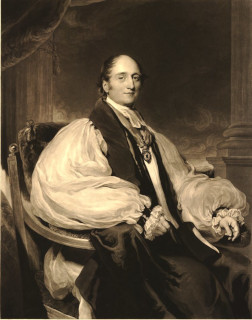
Beresford employs Lewis Nockalls Cottingham, one of the most skilled architects of the time, to restore St. Patrick’s Cathedral, Armagh. Cottingham removes the old, stunted spire and shores up the belfry stages while he rebuilds the piers and arches under it. The arcade walls which had fallen away as much as 21 inches from the perpendicular on the south side and 7 inches on the north side, are straightened by means of heated irons, and the clerestory windows which had long been concealed, are opened out and filled with tracery.
Beresford dies on July 18, 1862, at Woburn, Bedfordshire, England, the home of his niece, in the parish of Donaghadee and is buried in the cathedral. There is a memorial to him in the south aisle at St. Patrick’s Cathedral, Armagh.


 seamus dubhghaill