seamus dubhghaill

Promoting Irish Culture and History from Little Rock, Arkansas, USA


Leave a comment

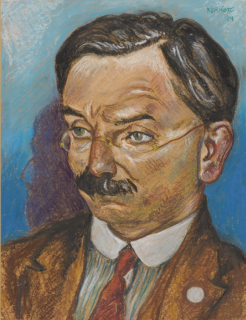
Birth of Sir Anthony Babington, Barrister, Judge & Politician

Sir Anthony Brutus Babington PC (NI)Anglo-Irish barristerjudge and politician, is born on November 24, 1877, at Creevagh House, County Londonderry, to Hume Babington JP, son of Rev. Hume Babington and a landowner of 1,540 acres, and Hester (née Watt), sister of Andrew Alexander Watt.

Babington is born into the Anglo-Irish Babington family that arrives in Ireland in 1610 when Brutus Babington is appointed Bishop of Derry. Notable relations include Robert BabingtonWilliam BabingtonBenjamin Guy Babington and James Melville Babington and author Anthony Babington.

Babington is educated at Glenalmond SchoolPerthshire, and Trinity College, Dublin, where he wins the Gold Medal for Oratory of the College Historical Society in 1899.

Babington is called to the Irish Bar in 1900. He briefly lectures in Equity at King’s Inns, and it is during this time, in 1910, that he re-arranges and re-writes R.E. Osborne’s Jurisdiction and Practice of County Courts in Ireland in Equity and Probate Matters. He takes silk in 1917.

Babington moves to the newly established Northern Ireland in 1921 and practises as a barrister until his election to the House of Commons of Northern Ireland as the Ulster Unionist Party member for Belfast South in the 1925 Northern Ireland general election and subsequent appointment as Attorney General for Northern Ireland the same year in the cabinet of James Craig, 1st Viscount Craigavon. His appointment to the Privy Council of Northern Ireland in 1926 entitles him to the style “The Right Honourable.” From 1929 he is the MP for Belfast Cromac, the Belfast South constituency having been abolished. He is made an honorary bencher of the Middle Temple in 1930.

Babington resigns from politics in 1937 upon his appointment as a Lord Justice of Appeal and is knighted in the 1937 Coronation Honours.

In 1947, Babington chairs the Babington Agricultural Enquiry Committee, named in his honour, which is established in 1943 to examine agriculture in Northern Ireland. The committee’s first recommendation under Babington’s leadership is that Northern Ireland should direct all its energies to the production of livestock and livestock products and to their efficient processing and marketing.

Babington retires from the judiciary in 1949, taking up the chairmanship of the Northern Ireland Transport Tribunal, which exists until 1967, established under the Ulster Transport Act – promoting a car-centred transport policy – and which is largely responsible for the closure of the Belfast and County Down Railway. He endorses the closure on financial grounds and is at cross purposes with his co-chair, Dr. James Beddy, who advises against the closure, citing the disruption of life in the border region between the north and the south as his primary reason in addition to financial grounds.

Babington also chairs a government inquiry into the licensing of clubs, the proceeds of which results in new regulatory legislation at Stormont. While Attorney General, he is a proponent of renaming Northern Ireland as “Ulster.”

Babington is critical of the newly proposed Irish constitution, in which the name of the Irish state is changed to “Ireland,” laying claim to jurisdiction over Northern Ireland.

Michael McDunphy, Secretary to the President of Ireland, then Douglas Hyde, recalls Ernest Alton‘s correspondence with Babington on the question of Irish unity, in which Alton and Babington are revealed to be at cross purposes. The discussion is used as an example by Brian Murphy, in Forgotten Patriot: Douglas Hyde and the Foundation of the Irish Presidency, as an example of the office of the Irish President becoming embroiled in an initiative involving Trinity College Dublin and a senior Northern Ireland legal figure, namely Babington. 

Babington writes to Alton, then Provost of Trinity College, Dublin, expressing his view that, as Murphy summarises, “… Severance between the two parts of Ireland could not continue, that it was the duty of all Irishmen to work for early unification and that in his opinion Trinity College was a very appropriate place in which the first move should be made.” When Alton arrives to meet with Hyde, it emerges, after conversing with Hyde’s secretary McDunphy, that he and Babington are at cross purposes. “It soon became clear that the united Ireland contemplated by Mr. [sic] Justice Babington of the Northern Ireland Judiciary was one within the framework of the British Commonwealth of Nations, involving recognition of the King of England as the Supreme Head, or as Dr. Alton put it, the symbol of unity of the whole system,” writes McDunphy.

On September 5, 1907, Babington marries Ethel Vaughan Hart, daughter of George Vaughan Hart of Howth, County Dublin (the son of Sir Andrew Searle Hart) and his wife Mary Elizabeth Hone, a scion of the Hone family. They have three children.

Babington is a member of the Apprentice Boys of Derry. From 1926 to 1952, he is a member of the board of governors of the Belfast Royal Academy. He serves as warden (chairman) of the board from 1941 to 1943. Through his efforts the school acquires the Castle Grounds from Anthony Ashley-Cooper, 9th Earl of Shaftesbury in 1934.

Babington is a keen golfer. He is an international golfer from 1903 to 1913, during which he is runner-up in the Irish Amateur Golf Championships in 1909 and one of the Irish representatives at an international match in 1913. The Babington Room in the Royal Portrush Golf Club is named after him, as is the 18th hole on the course as a result of the key role he plays in shaping its history.

Babington dies at the age of 94 on April 10, 1972 at his home, Creevagh, Portrush, County Antrim.


Leave a comment

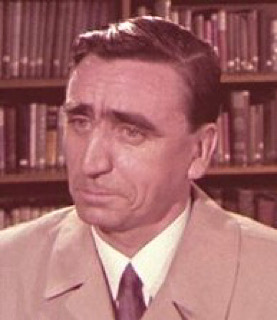
Death of William Trevor, Writer & Playwright

William Trevor Cox KBE, Irish novelist, playwright, and short story writer, dies in Crediton, Devon, England, on November 20, 2016. One of the elder statesmen of the Irish literary world, he is widely regarded as one of the greatest contemporary writers of short stories in the English language. He wins the Whitbread Prize three times and is nominated five times for the Booker Prize, the last for his novel Love and Summer (2009), which is also shortlisted for the International Dublin Literary Award in 2011. His name is also mentioned in relation to the Nobel Prize in Literature.

Trevor wins the 2008 International Nonino Prize in Italy. In 2014, he is bestowed with the title of Saoi within Aosdána. He resides in England from 1954 until his death in 2016, at the age of 88.

Trevor is born as William Trevor Cox on May 24, 1928, in Mitchelstown, County Cork, to a middle classAnglo-Irish Protestant (Church of Ireland) family. He moves several times to other provincial locations, including SkibbereenTipperaryYoughal and Enniscorthy, as a result of his father’s work as a bank official.

Trevor is educated at a succession of schools including St Columba’s College, Dublin (where he is taught by Oisín Kelly) and at Trinity College Dublin (TCD), from which he receives a degree in history. He works as a sculptor under the name Trevor Cox following his graduation from TCD, supplementing his income by teaching

Trevor marries Jane Ryan in 1952 and emigrates to England, working as a teacher, a sculptor and then as a copywriter for an advertising agency. During this time he and his wife have their first son. In 1952, he becomes an art teacher at Bilton Grange, a prep school near Rugby. He is commissioned to carve reliefs for several churches, including All Saints’ ChurchBraunstonNorthamptonshire. In 1956, he moves to Somerset to work as a sculptor and carries out commissions for churches. He stops wood carving in 1960. 

Trevor’s first novel, A Standard of Behaviour, is published in 1958 by Hutchinson & Co. of London, but receives little critical success. He later disowns this work, and, according to his obituary in The Irish Times, “refused to have it republished.” It is, in fact, republished in 1982 and in 1989.

In 1964, at the age of 36, Trevor is awarded the Hawthornden Prize for The Old Boys. This success encourages him to become a full-time writer.

In 1971, he and his family move from London to Devon in South West England, first to Dunkeswell, then in 1980 to Shobrooke, where he lives until his death. Despite having spent most of his life in England, he considers himself to be “Irish in every vein”.

Trevor dies peacefully in his sleep, at the age of 88, at Crediton, Devon, England, on November 20, 2016.


Leave a comment

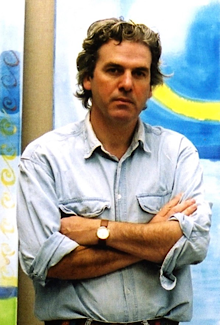
Birth of Jasmine Guinness, Designer & Fashion Model

Jasmine Leonora Guinness, Irish designer and a fashion model active since 1994, is born on September 28, 1976. She is a member of Anglo-Irish brewing Guinness family.

Guinness is the daughter of Patrick Guinness and Liz Casey. She is educated at St. Columba’s CollegeRathfarnham, in Dublin. She also spends a year at Winchester School of Art, the art school of the University of Southampton, situated 10 miles (14 km) north of Southampton in the city of Winchester near the south coast of England.

Guinness and Gawain O’Dare Rainey are engaged on January 31, 2005, and married on July 1, 2006, in Leixlip, County Kildare. The wedding is extensively covered in the July 18, 2006 issue of Hello! magazine and is attended by 500 guests, including the designer of her draped silk dress, Jasper ConranMario TestinoPaddy MoloneyAnjelica HustonJacquetta WheelerJade ParfittErin O’ConnorGarech Browne and Philip Treacy.

Her husband is the son of Michael Rainey and the Hon. Jane Ormsby-Gore, a daughter of David Ormsby-Gore, 5th Baron Harlech. They have two sons and a daughter together.

Guinness opens the toy shop Honeyjam on London‘s Portobello Road in 2006.

A portrait of Guinness is held at the National Portrait Gallery in London. She has modeled for various perfume and make-up campaigns, including Armani and Shu Uemura. She is the face of the Goffs Million horse races at the Curragh Racecourse in September 2007, an event that pays the highest winnings of any race meeting in Europe.

In 2009, Guinness is the face of the Arthur’s Day event celebrating her ancestor Arthur Guinness. In March and December 2011 she is again the subject of articles in Hello! magazine.

The year 2014 marks a revival of Guinness’s modeling career as she leads Jaeger‘s AW14 campaign alongside her mother Liz and fellow models Kirsty Hume and Jodie Kidd. Her range largely includes knitwear, including cardigans, skirts and sweater dresses.

Guinness is the great-granddaughter of Diana Mitford (later Lady Mosley), who is one of the Mitford sisters, and her first husband Bryan Guinness, later the 2nd Lord Moyne. Her paternal grandfather, Desmond Guinness, is a conservationist specialising in Georgian and classical architecture, while her paternal grandmother, Mariga Guinness, is born Marie-Gabrielle, Princess of Urach. Desmond and Mariga Guinness are co-founders of the Irish Georgian Society. Guinness’s maternal family is researched in the RTÉ programme Where Was Your Family During the Famine?


Leave a comment

Death of Arthur Hill, 3rd Marquess of Downshire

Arthur Blundell Sandys Trumbull Hill, 3rd Marquess of Downshire KP, an Anglo-Irish peer, styled Viscount Fairford from 1789 until 1793 and Earl of Hillsborough from 1793 to 1801, dies on September 12, 1845, in Blessington, County Wicklow.

Hill is born in Hanover Square, on October 8, 1788, the eldest son of Arthur Hill, 2nd Marquess of Downshire, and his wife, Mary Sandys. He becomes Marquess of Downshire on the early death of his father in 1801. He is educated at Eton College and Christ Church, Oxford, gaining his MA in 1809 and a DCL in 1810.

During his early political career, Hill is identified with the Whigs and supports the reform of Parliament. After the Grey Ministry comes to power, he receives a succession of appointments, becoming Colonel of the South Down Militia on March 25, 1831, and carrying the second sword at the coronation of William IV on September 8. He is appointed a deputy lieutenant of Berkshire on September 20, Lord Lieutenant of Down on October 17 (a new office replacing the Governor of Down), and finally a Knight of the Order of St Patrick on November 24, 1831. He receives an honorary LL.D. from the University of Cambridge on July 6, 1835.

Hill is a very strong supporter of the Irish language, and is president of the Ulster Gaelic Society (est. 1830). In this capacity he plays an important role in helping preserve records of the language, poetry, folk and song collections and much else.

Hill is disliked by Elizabeth Smith, diarist at Baltyboys HouseCounty Wicklow, who feels snubbed by him when she and her husband first move into the area. Writing of him after his death she recalls “The late Lord never called upon me when I first came here although the Colonel waited upon him. The Colonel never went near him again.”

High-minded, if also at times high-handed in manner and self-important, Hill works hard himself and expects all his employees and tenants to be equally conscientious. Naturally, he is often disappointed. He is particularly concerned about his failure, despite all efforts and exhortations, to make his southern estates as efficient and well behaved as those in the north. Though an absentee owner in the south, he visits both Blessington and Edenderry regularly. It is during one of these periodic tours of inspection that he drops dead at Blessington on September 12, 1845. He is buried in St. Malachy Parish Churchyard at Royal Hillsborough, County Down. The funeral attracts an enormous crowd of mourners and is reported at some length in The Illustrated London News. His memory is perpetuated in an impressive pillar monument, with his statue on top, erected at Hillsborough in 1848.


Leave a comment

The Royal Irish Constabulary is Disbanded

The Royal Irish Constabulary (RIC), the police force in Ireland from 1822 until 1922, when all of the island was part of the United Kingdom, is disbanded on August 17, 1922, and replaced by the Garda Síochána.

A separate civic police force, the unarmed Dublin Metropolitan Police (DMP), patrols the capital and parts of County Wicklow, while the cities of Derry and Belfast, originally with their own police forces, later have special divisions within the RIC. For most of its history, the ethnic and religious makeup of the RIC broadly matches that of the Irish population, although Anglo-Irish Protestants are overrepresented among its senior officers.

The first organised police forces in Ireland come about through Dublin Police Act 1786, which is a slightly modified version of the failed London and Westminster Police Bill 1785 drafted by John Reeves at the request of Home Secretary Thomas Townshend, 1st Viscount Sydney, following the Gordon Riots of 1780. The force is viewed as oppressive by local elites and becomes a strain on the city budget. The arguably excessive budget is used as a pretext by Irish nationalist MP Henry Grattan and short-lived Lord Lieutenant of Ireland William Fitzwilliam, 4th Earl Fitzwilliam, to essentially abolish the Dublin Police in 1795 and even temporarily move it under Dublin Corporation.

The Peace Preservation Act 1814, for which Sir Robert Peel is largely responsible, and the Irish Constabulary Act 1822 forms the provincial constabularies. The 1822 act establishes a force in each province with chief constables and inspectors general under the United Kingdom civil administration for Ireland controlled by the Dublin Castle administration.

The RIC’s existence is increasingly troubled by the rise of the Home Rule campaign in the early twentieth century period prior to World War I.

In January 1922, the British and Irish delegations agree to disband the RIC. Phased disbandments begin within a few weeks with RIC personnel both regular and auxiliary being withdrawn to six centres in southern Ireland. On April 2, 1922, the force formally ceases to exist, although the actual process is not completed until August 17. The RIC is replaced by the Civic Guard (renamed as the Garda Síochána the following year) in the Irish Free State and by the Royal Ulster Constabulary (RUC) in Northern Ireland.

According to a parliamentary answer in October 1922, 1,330 ex-RIC men join the new RUC in Northern Ireland. This results in an RUC force that is 21% Roman Catholic at its inception in 1922. As the former RIC members retire over the subsequent years, this proportion steadily falls.

Just thirteen men transfer to the Garda Síochána. These include men who had earlier assisted Irish Republican Army (IRA) operations in various ways. Some retire, and the Irish Free State pays their pensions as provided for in the terms of the Anglo-Irish Treaty agreement. Others, still faced with threats of violent reprisals, emigrate with their families to Great Britain or other parts of the British Empire, most often to join police forces in Canada, Australia, New Zealand, South Africa and Southern Rhodesia. A number of these men join the Palestine Police Force, which is recruiting in the UK at the time.


Leave a comment

Death of John Bowes, 1st Baron Bowes

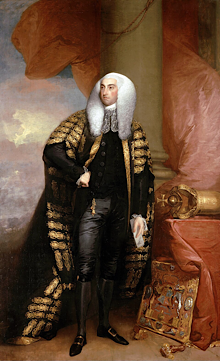
John Bowes, 1st Baron BowesPC (I), Anglo-Irish peer, politician and judge, dies in Dublin on July 22, 1767. He is noted for his great legal ability, but also for his implacable hostility to Roman Catholics.

Bowes is born in London, the second son of Thomas Bowes, a merchant and member of the Worshipful Company of Turners, and his wife, a Miss North, and is called to the Bar in 1712. He comes to Ireland as a member of the staff of Richard West, the Lord Chancellor of Ireland, in 1723. He builds up a large practice at the Irish Bar and is appointed Solicitor-General for Ireland in 1730, and Attorney-General for Ireland in 1739. He is raised to the Bench as Lord Chief Baron of the Irish Exchequer in 1741, having previously failed to become third Baron (which is a surprisingly lucrative office, as the Baron receives several extra fees). He is appointed Lord Chancellor of Ireland by King George II in 1757, despite the chronic ill-health which afflicts him. In his last years, his legs are so swollen that he can scarcely walk.

Bowes epitomizes the severity of the 18th century Penal Laws against Irish Catholics when he rules, in about 1759, that: “The law does not suppose any such person to exist as an Irish Roman Catholic, nor could such a person draw breath without the Crown’s permission”. Such views, given that Roman Catholics make up more than 90% of the Irish population at the time, inevitably make him bitterly unpopular, and in 1760 he is assaulted during a riot outside the House of Commons.

In spite of his religious bigotry, Bowes is considered one of the outstanding judges of his time. In particular, he is a reforming Lord Chancellor, who is praised for making the Court of Chancery “a terror for fraud, and a comfort and protection for honest men”. As Attorney-General he shows considerable courage in going on assize during the Irish Famine (1740–1741) despite the infectious fever which is raging at the time, and which claims the lives of three other judges who decide to brave the dangers.

Between 1731 and 1742, Bowes represents Taghmon in the Irish House of Commons.

Bowes is considered one of the finest speakers of his time. His speech for the prosecution at the trial of Henry Barry, 4th Baron Barry of Santry, who is charged with murder in 1739, is described by those who hear it as a masterpiece of eloquence and logic, and leads to the Irish House of Lords bringing in a unanimous verdict of guilty against Santry.

Bowes is raised to the peerage of Ireland in 1758 as Baron Bowes, of Clonlyon in the County of Meath.

Bowes dies in Dublin on July 22, 1767, his mental faculties fully intact despite his bodily infirmities. He is buried in Christ Church Cathedral, Dublin, where his brother raises a memorial to him. He never marries, and his title becomes extinct on his death. He lives at Belvedere House, Drumcondra. His estates passes to his brother Rumsey Bowes of BinfieldBerkshire.


Leave a comment

The Union with Ireland Act 1800 Receives Royal Assent

The Union with Ireland Act 1800, which is one of the two complimentary Acts of Union 1800, receives royal assent on July 2, 1800, uniting the Kingdom of Great Britain and the Kingdom of Ireland to create the United Kingdom of Great Britain and Ireland. The act means Ireland loses its own independent Parliament and is now to be ruled from England. It will be 1922 before Ireland regains legislative independence.

Two acts are passed in 1800 with the same long titleAn Act for the Union of Great Britain and Ireland. The short title of the act of the British Parliament is Union with Ireland Act 1800, assigned by the Short Titles Act 1896. The short title of the act of the Irish Parliament is Act of Union (Ireland) 1800, assigned by a 1951 act of the Parliament of Northern Ireland, and hence not effective in the Republic of Ireland, where it was referred to by its long title when repealed in 1962.

Before these acts, Ireland has been in personal union with England since 1542, when the Irish Parliament passes the Crown of Ireland Act 1542, proclaiming King Henry VIII of England to be King of Ireland. Since the 12th century, the King of England has been technical overlord of the Lordship of Ireland, a papal possession. Both the Kingdoms of Ireland and England later come into personal union with that of Scotland upon the Union of the Crowns in 1603.

In 1707, the Kingdom of England and the Kingdom of Scotland are united into a single kingdom: the Kingdom of Great Britain. Upon that union, each House of the Parliament of Ireland passes a congratulatory address to Queen Anne, praying her: “May God put it in your royal heart to add greater strength and lustre to your crown, by a still more comprehensive Union.” The Irish Parliament is both before then subject to certain restrictions that made it subordinate to the Parliament of England and after then, to the Parliament of Great Britain; however, Ireland gains effective legislative independence from Great Britain through the Constitution of 1782.

By this time access to institutional power in Ireland is restricted to a small minority: the Anglo-Irish of the Protestant Ascendancy. Frustration at the lack of reform among the Catholic majority eventually leads, along with other reasons, to a rebellion in 1798, involving a French invasion of Ireland and the seeking of complete independence from Great Britain. This rebellion is crushed with much bloodshed, and the motion for union is motivated at least in part by the belief that the union will alleviate the political rancour that led to the rebellion. The rebellion is felt to have been exacerbated as much by brutally reactionary loyalists as by United Irishmen (anti-unionists).

Furthermore, Catholic emancipation is being discussed in Great Britain, and fears that a newly enfranchised Catholic majority will drastically change the character of the Irish government and parliament also contributes to a desire from London to merge the Parliaments.

According to historian James Stafford, an Enlightenment critique of Empire in Ireland lays the intellectual foundations for the Acts of Union. He writes that Enlightenment thinkers connected “the exclusion of the Irish Kingdom from free participation in imperial and European trade with the exclusion of its Catholic subjects, under the terms of the ‘Penal Laws’, from the benefits of property and political representation.” These critiques are used to justify a parliamentary union between Britain and Ireland.

Complementary acts are enacted by the Parliament of Great Britain and the Parliament of Ireland.

The Parliament of Ireland gains a large measure of legislative independence under the Constitution of 1782. Many members of the Irish Parliament jealously guard that autonomy (notably Henry Grattan), and a motion for union is legally rejected in 1799. Only Anglicans are permitted to become members of the Parliament of Ireland though the great majority of the Irish population are Roman Catholic, with many Presbyterians in Ulster. Under the Roman Catholic Relief Act 1793, Roman Catholics regain the right to vote if they own or rent property worth £2 annually. Wealthy Catholics are strongly in favour of union in the hope for rapid religious emancipation and the right to sit as MPs, which only comes to pass under the Roman Catholic Relief Act 1829.

From the perspective of Great Britain’s elites, the union is desirable because of the uncertainty that follows the French Revolution of 1789 and the Irish Rebellion of 1798. If Ireland adopts Catholic emancipation willingly or not, a Roman Catholic Parliament could break away from Britain and ally with the French, but the same measure within the United Kingdom would exclude that possibility. Also, in creating a regency during King George III‘s “madness”, the Irish and British Parliaments give the Prince Regent different powers. These considerations lead Great Britain to decide to attempt the merger of both kingdoms and Parliaments.

The final passage of the Act in the Irish House of Commons turns on an about 16% relative majority, garnering 58% of the votes, and similar in the Irish House of Lords, in part per contemporary accounts through bribery with the awarding of peerages and honours to critics to get votes. The first attempt is defeated in the Irish House of Commons by 109 votes to 104, but the second vote in 1800 passes by 158 to 115.


Leave a comment

Birth of Catherine Drew, Journalist & Writer

Catherine Drew, Anglo-Irish journalist and writer, is born in Broughshane, County Antrim, on May 27, 1832.

Drew’s parents are the Rev. Thomas Drew and Isabella (née Dalton) Drew. She is the third of the couple’s eight daughters and four sons, although most of her siblings die young. She spends her childhood in Belfast, where her father is the rector of Christ Church in Durham Street from 1833 to 1859. In 1866, she moves to 60 Upper Sackville Street, Dublin, to live with her brother, the architect Thomas Drew.

From here she appears to begin her journalist career, writing articles for the Irish Builder, going on to eventually become its assistant editor. She goes on to write for Belfast’s News Letter, and following advice from its proprietor James Alexander Henderson, she moves to London in 1871 becoming the paper’s London correspondent. She writes two columns, Metropolitan gossip and Ladies’ letter, which are among some of the earliest regular columns written specifically for women, providing society news for her readers in Belfast. Articles by her also appear in The Literary WorldThe British Architect and London Society.

Drew is one of the founding members of the Ladies’ Press Association, and campaigns for greater rights for women journalists. She becomes a prominent figure in the Institute of Journalists, representing the Institute at several international congresses. She is serving as the vice-president of the Institute at the time of her death. She also works on its Orphan Fund for many years, an initiative she originally suggests in 1891.

In 1894, Drew is one of the signatories of the Frances Power Cobbe memorial campaigning for greater recognition and rights for women journalists, alongside Millicent Fawcett and Jessie Boucherett. She writes a number of novels, including Harry Chalgraves’s Legacy (1876) and The Lutanistes of St. Jacobi’s (1881). In March 1885, she gives a lecture titled Dress, Economic and Technical at the Loan Exhibition of Women’s Industries in Bristol, which later appears as a pamphlet.

Drew dies at her home in Holland Street, Kensington, on August 26, 1910, and is buried at the Royal Borough of Kensington and Chelsea Cemetery, Hanwell. Lady Drew, her sister-in-law, erects a Celtic cross memorial there in her honour. She bequeaths a jewel-studded gold bracelet to the Institute of Journalists, which had been presented to her by the Institute to mark her retirement in 1908. It is worn by women presidents or the wives of male presidents, and is known as the “Drew Bracelet.”


Leave a comment

Death of John Roberts, Anglo-Irish Architect

John RobertsAnglo-Irish architect working in the Georgian style, dies in Waterford, County Waterford, on May 23, 1796. He is best known for the buildings he designed in that city.

Roberts is born in Waterford in 1712 or 1714, the son of Thomas Roberts, an architect and builder. Little is known of his early life, although he possibly trains in London for a time. At 17, he elopes with Mary Susannah Sautelle, a Huguenot heiress who also lives in Waterford.

In 1746, Roberts is asked by the Church of Ireland (ProtestantBishop of Waterford and LismoreRichard Chenevix, to complete the new Bishop’s Palace.

Around 1760 Roberts designs Mount Congreve, near Kilmeadan.

In 1785, Roberts builds a house in Waterford for William Morris, now the Harbour Commissioners’ headquarters and the Chamber of Commerce. In 1786, he designs Newtown House, later Newtown School, a Quaker school. In 1787, he designs The Leper Hospital and Church of St. Stephen. He also builds the Assembly Rooms on Waterford’s Mall in 1788, which is now the Theatre Royal and City Hall.

Roberts had the unusual distinction of designing both the Protestant and Catholic cathedrals of Waterford: Christ Church Cathedral (1770s) and the Cathedral of the Most Holy Trinity (1790s) respectively.

Outside of Waterford, Roberts designs Curraghmore and Mount Congreve (both in County Waterford), St Iberius’ Church (Wexford) and is reputed to have designed Tyrone House (County Galway), Cappoquin House(County Waterford) and Moore Hall, County Mayo.

Roberts has between 21 and 24 children with his wife Susannah, of whom eight live to adulthood, including the painters Thomas Roberts and Thomas Sautelle Roberts. They live for many years in the old bishop’s palace, opposite the cathedral, with a country residence at Roberts Mount. He is nicknamed “Honest John” because he pays his workers so reliably, sometimes giving half their pay directly to their wives so that it would not be wasted on alcohol.

Roberts dies on May 23, 1796, after falling asleep on the floor of the Cathedral of the Most Holy Trinity, Waterford, and contracting pneumonia. The main square in Waterford is named John Roberts Square in his honour.

His son, the Reverend John Roberts became a magistrate and rector. The Rev. John’s son is Abraham Roberts, a general in the East India Company, and Abraham’s son is Frederick Roberts, 1st Earl Roberts, a World War I field marshal. Roberts’ sons Thomas and Sautelle become artists, as does his daughter, who paints scenery for the Waterford Theatre and landscapes.

Another great-grandson is the architect Samuel Ussher Roberts (1821–1900).


Leave a comment

Death of Basil Maturin, Catholic Priest & Writer

Basil William Maturin, Irish-born Anglican priest, preacher and writer who later converts to Catholicism, dies aboard the RMS Lusitania after it is torpedoed by a German U-boat and sinks on May 7, 1915.

Maturin is born on February 15, 1847, at All Saints’ vicarage, Grangegorman, Dublin, the third of the ten children of the Rev. William Basil Maturin and his wife, Jane Cooke (née Beatty). The Maturins, a prominent Anglo-Irish family of Huguenot ancestry, have produced many influential Church of Ireland clergymen over the generations, the most notable being Maturin’s grandfather, the writer Charles Robert Maturin. His own father, whose tractarian convictions are considered too “high church” for many in Dublin, is a somewhat controversial figure in the church. Religion plays a huge part in the Maturin children’s lives. Two of his brothers enter the church and two sisters become nuns. As a young man, he assists in training the choir and playing the organ at his father’s church. Educated at home and at a Dublin day school, he goes on to attend Trinity College Dublin (TCD), from where he graduates BA in 1870.

Though he initially intends to make a career in the army as an engineer, a severe attack of scarlet fever around 1868, and the death of his brother Arthur, changes his outlook on life, and he decides to become a clergyman. He is ordained a deacon in 1870 and later that year goes as a curate to Peterstow, Herefordshire, England, where his father’s friend Dr. John Jebb is rector. He subsequently joins the Society of St. John the Evangelist, entering the novitiate at Cowley, Oxford, in February 1873. As a Cowley father he is sent in 1876 to establish a mission in Philadelphia, Pennsylvania, where he works as an assistant priest and, from 1881, as rector of Saint Clement’s Church. Though he proves to be an effective clergyman and popular preacher, his growing religious doubts and increasing interest in Catholicism results in his returning to Oxford in 1888. Then follows a six-month visit in 1889–90 to a society house in Cape Town, South Africa. He returns to Britain, where he preaches, and conducts retreats around the country and occasionally on the continent. In 1896 he produces the first in a series of religious publications, Some Principles and Practices of Spiritual Life.

Maturin’s continuing religious anxieties eventually lead to his conversion to Catholicism on March 5, 1897, at the Jesuit Beaumont College outside London. He then studies theology at the Canadian College, Rome, and is ordained there in 1898. Following his return to England he lives initially at Archbishop’s House, Westminster, and undertakes missionary work. He then serves at St. Mary’s, Cadogan Street, in 1901. He becomes parish priest of Pimlico and, in 1905, having joined the newly established Society of Westminster Diocesan Missionaries, organises the opening of St. Margaret’s chapel on St. Leonard’s Street, where huge crowds come to hear his sermons. As a Catholic priest, he returns to Ireland on several occasions, and frequently preaches at the Carmelite church, Clarendon Street, Dublin. His attempt, at the age of sixty-three, to enter into monastic life at the Benedictine monastery at Downside, in 1910, proves unsuccessful. He returns to London and begins working in St. James’s, Spanish Place, while maintaining his preaching commitments. He continues to write, publishing Self-Knowledge and Self-Discipline (1905), Laws of the Spiritual Life (1907) and his autobiographical The Price of Unity (1912), in which he traces his gradual move toward Catholicism. His sermons, like his approach when hearing confessions, are said to have much appeal for their integrity. Despite his influence as a preacher, he seems often feel that his life and vocation lack real purpose and at times he suffers from depression.

After a brief visit to the United States in 1913, Maturin accepts the post of Catholic chaplain at the University of Oxford in 1914. He travels to New York in 1915 and, after preaching there throughout the spring, boards the RMS Lusitania in May to return to England. The liner is torpedoed and sinks on May 7, 1915, off the southern coast of Ireland. He assists his fellow passengers in the last minutes, and it is presumed that he refuses a life jacket, as they are in short supply. His body washes ashore. A service is held for him at Westminster Cathedral.

Maturin’s friend Wilfrid Philip Ward edits a collection of his spiritual writings, Sermons and Sermon Notes, in 1916.

(From: “Maturin, Basil William” by Frances Clarke, Dictionary of Irish Biography, http://www.dib.ie, October 2009)