seamus dubhghaill

Promoting Irish Culture and History from Little Rock, Arkansas, USA


Leave a comment

Birth of Cathal O’Shannon, Journalist & Television Presenter

Cathal O’Shannon, Irish journalist and television presenter, is born in Marino, Dublin, on August 23, 1928. He is a reporter with The Irish Times, and television reporter/presenter and documentary film maker with RTÉ. The Irish radio and television broadcaster Terry Wogan describes O’Shannon as possibly the greatest Irish television journalist of the 20th century.

O’Shannon is the son of Cathal O’Shannon (Sr.), a Socialist and Irish Republican. He receives his formal education at Colaiste Mhuire School, in Parnell Square, Dublin. Despite his father’s politics, as a 16-year-old he volunteeres for war time service with the Royal Air Force (RAF) in Belfast in 1945 during World War II. He utilizes a forged birth certificate to disguise being underage for enlistment with the British Armed Forces. After air crew training, he is posted to the Far East, as a tail gunner in an Avro Lancaster bomber to take part in the Burma campaign, but the war ends with the downfall of the Japanese Empire before he is required to fly combat sorties.

O’Shannon first becomes a journalist with The Irish Times on leaving the RAF in 1947. Later he joins the Irish state broadcasting service Raidió Teilifís Éireann (RTÉ).

In July 1972 O’Shannon records a notable television interview with 31-year-old Muhammad Ali, when Ali is in Dublin to compete at Croke Park in a bout with Alvin Lewis.

O’Shannon receives a Jacob’s Award for his 1976 TV documentary, Even the Olives are Bleeding, which details the activities of the “Connolly Column” in the Spanish Civil War. Two years later he is honoured with a second Jacob’s Award for his television biography Emmet Dalton Remembers (1978).

In 1978, O’Shannon leaves RTÉ to join Canadian company Alcan, which is setting up an aluminum plant at Aughinish, County Limerick, in 1978. He is head-hunted to become its Director of Public Affairs, an important post at a time when there are environmental concerns about the effects of aluminium production. He admits that he was attracted by the salary, “five times what RTÉ were paying me,” but he also later says that one of the reasons for the move is that he had become unhappy with working at RTÉ, stating in an interview that “The real reason I got out of RTÉ was that they wouldn’t let me do what I wanted to do journalistically.” He had submitted proposals to the station’s editors for a television documentary series on the Irish Civil War, and also one on the wartime Emergency period, but they had been rejected. While he enjoys the social life with lavish expenses which his public relations duties involve, his friends believe that he missed the varied life and travel of journalism. He retires early from Aughinish in 1992 and returns to making television documentaries with RTÉ.

In January 2007, O’Shannon’s last documentary, Hidden History: Ireland’s Nazis, is broadcast by RTÉ as a two-part series. It explores how a number of former Nazis and Nazi collaborators from German-occupied Europe go to live in the Republic of Ireland after World War II — the best known of whom is Otto Skorzeny, who lives for a period in County Kildare. Others include such Breton nationalists as Alan Heusaff, Yann Fouéré and Yann Goulet, as well as two Belgians, Albert Folens and Albert Luykx.

O’Shannon announces his retirement at the age of 80 on January 12, 2007.

O’Shannon is awarded lifetime membership in the Irish Film & Television Academy in 2010, to which he says is “particularly gratifying that it occurs before I pop my clogs.”

After weakening health for two years, and spending his last days in hospice at Blackrock, O’Shannon dies at the Beacon Hospital in Dublin on October 22, 2011. His body is reposed at Fanagans Funeral Home in Dublin on October 25, 2011, followed by a funeral the following day at Glasnevin Cemetery Chapel, where it is afterwards cremated.

O’Shannon’s wife, Patsy, whom he met while they were working for The Irish Times office in London, dies in 2006. They are married for more than 50 years. In a 2008 television documentary O’Shannon admits that throughout his marriage he had been a serial womaniser, who had repeatedly engaged in extra-marital affairs unbeknownst to his wife.

Director-General of RTÉ Noel Curran says O’Shannon had brought into being “some of the great moments in the RTÉ documentary and factual schedule over the past five decades.” In tribute, RTÉ One shows the documentary Cathal O’Shannon: Telling Tales on November 10, 2011. It had originally aired in 2008 to mark his 80th birthday.


Leave a comment

Birth of Susan Denham, First Female Chief Justice of Ireland

Susan Jane Denham, SC (née Gageby), Irish judge who is the first woman to hold the position of Chief Justice of Ireland (2011-17), is born in Dublin on August 22, 1945. She serves as a Judge of the Supreme Court of Ireland (1992-2017) and is the longest-serving member of the court on her retirement. She also serves as a Judge of the High Court (1991-92).

Gageby is the daughter of the former editor of The Irish Times, Douglas Gageby, the sister of another barrister, Patrick Gageby, and maternal granddaughter of Seán Lester. She is from a Church of Ireland background. She is educated at Alexandra College, Dublin, and attends Trinity College Dublin, the King’s Inns, and the Law School of Columbia University, New York City (LL.M. 1972). She is involved with the Free Legal Advice Centres while studying in Dublin and is a founder and president of the Archaeology and Folklife Society at Trinity College.

Gageby is called to the bar in July 1971 and becomes a Senior Counsel in October 1987. She is the fourth woman to enter the Inner Bar. She becomes a senior counsel on the same day as future Supreme Court colleague Mary Laffoy. She works on the Midland circuit until 1979, following which she is based in Dublin. She is involved in a number of leading cases while a junior barrister and a Senior Counsel particularly in the area of judicial review. She becomes a High Court judge in 1991.

Gageby marries paediatrician Dr. Brian Denham in 1992. Also in 1992, at the age of 47, Denham is the first woman appointed to the Supreme Court. She is considered for appointment to the role of President of the High Court in 1994 but declines to have her name put forward. She makes two dissents early on in her period on the Court. Throughout her tenure as a judge, she is seen by commentators to be a “liberal” judge.

In Kelly v Hennessy in 1996, Denham outlines criteria for a court to consider the evidence of the existence of nervous shock in Ireland. In 2001, she is the sole member of the Supreme Court to dissent in TD v Minister for Education. The court overturns a decision of Peter Kelly in the High Court to direct the government to build secure care units for certain children.

From 1995 to 1998, Denham chairs the Working Group on a Courts Commission, which is responsible for a significant reform of the organisation of the courts since the foundation of the state. It leads to the establishment of the Courts Service. She is on the Interim Board of the Court Service and serves on the Board of the Court Service from its inception and chairs the board from 2001 to 2004. She chairs the Committee on Court Practice and Procedure which recommends in 2002 the establishment of a commercial court within the High Court.

From 2006, Denham chairs the Working Group on a Court of Appeal. The report of the group is published by the government in August 2009 and recommends the establishment of a general Court of Appeal. This is ultimately established in 2014, after a referendum in 2013.

Denham is part of the Irish delegation which, with the Netherlands and Belgium, establishes the European Network of Councils for the Judiciary (ENCJ) and she continues an involvement in this Network. From January 1, 2015, to December 31, 2016, she is President of the Network of the Presidents of the Supreme Judicial Courts of the European Union which is an association of Supreme Court Presidents and Chief Justices of EU Member States.

Denham writes the judgment in McD v. L (2009), upholding the parental rights of a sperm donor.

On July 4, 2011, Denham is nominated by Taoiseach Enda Kenny to become Chief Justice of Ireland and is appointed as Chief Justice by President Mary McAleese on July 25, 2011. She is the first woman appointed to the office and as a member of the Church of Ireland, she is the first non-Catholic to hold the position. She is also the first graduate of Trinity College Dublin to have been appointed as Chief Justices have largely been graduates of University College Dublin. She succeeds John L. Murray.

During Denham’s tenure as Chief Justice, the Supreme Court issues suspended declarations of unconstitutionality for the first time. The possibility to delay the effect of a court declaration that a piece of legislation is contrary to the Constitution is first explored by Denham in A v Governor of Arbour Hill Prison. The court first adopts this approach in N.V.H. v Minister for Justice & Equality in May 2017.

As Chief Justice, Denham oversees changes in the operations of the Supreme Court and the courts generally. She oversees the removal of the requirement for judges to wear wigs while hearing cases. In 2015, the Supreme Court sits outside Dublin for the first time since 1931, sitting in Cork. She corresponds with the Office of Public Works over the lack of heating in the Four Courts, threatening to cancel sittings if the issue is not resolved. She advocates for the inclusion of a new courtroom for the Supreme Court in plans to develop a new family court complex on Hammond Lane.

In her capacity as Chief Justice, Denham oversees the administration of the Presidential Declaration of Office at the inauguration of President Michael D. Higgins in Dublin Castle in November 2011.

Denham retires from the position in July 2017 and is succeeded by Judge Frank Clarke. She is the third-longest serving Supreme Court judge ever at the time of her retirement. In her remarks on her retirement, she draws attention to the government’s failure to institute a judicial council, having first attempted to persuade the government to establish one in 1997.

In 2019, Denham is made an honorary fellow of Trinity College Dublin, where she was a Pro-Chancellor from 1996-2010.

The Courts Service announces on August 24, 2020, that the Supreme Court has appointed Denham to review the attendance of Supreme Court judge Séamus Woulfe at a dinner organised by the Oireachtas Golf Society. She is appointed on a non-statutory basis as the relevant section in the Judicial Council Act 2019 on judicial conduct has not yet been commenced.


Leave a comment

Birth of Poet Francis Edward Ledwidge

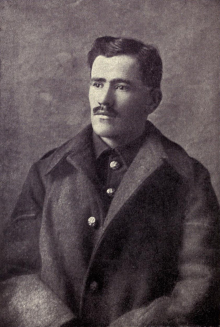
Francis Edward Ledwidge, Irish poet sometimes known as the “poet of the blackbirds,” is born on August 19, 1887, to a poor family in Slane, County Meath. He is later also known as a World War I war poet.

Ledwidge starts writing at an early age and is first published in a local newspaper at the age of fourteen. Finding work as a labourer and miner, he is also a trade union activist and a keen patriot and nationalist, associated with Sinn Féin. He becomes friendly with a local landowner, the writer Lord Dunsany, who gives him a workspace in the library of Dunsany Castle and introduces him to literary figures including William Butler Yeats and Katharine Tynan, with whom he has a long-term correspondence. He is elected to a local authority post and helps organise the local branch of the Irish Volunteers, while Dunsany edits and helps him secure publication for a first volume of his poetry.

Having sided with the faction of the Irish Volunteers which oppose participation in the war, he enlists in the Royal Inniskilling Fusiliers in October 1914, and continues to write poetry on assignment, sending work to Lord Dunsany and to family and other friends. The poems he writes on active service reveal his pride at being a soldier, as he believes, in the service of Ireland. He often wonders whether he would find a soldier’s death.

On July 31, 1917, a group from Ledwidge’s battalion of the Royal Inniskilling Fusiliers are road-laying in preparation for an assault during the Third Battle of Ypres, near the village of Boezinge, Ypres Salient, Belgium.

According to Irish author and lecturer Alice Curtayne, “Ledwidge and his comrades had been toiling since the early morning at roadmaking. The army’s first need was men; their second, guns; their third roads. These latter consisted mainly of heavy beech planks bolted together, which could be rapidly laid down. No advance could be supported in that sodden land without a sufficiency of these communications tracks, six or seven feet wide. Supplies were conveyed by pack mules over the wooden paths. Survivors concur in placing the road work done by B Company that day one mile northeast of Hellfire Corner, so called because it was very exposed to German shelling. There was a violent rainstorm in the afternoon, shrouding the region in a gray monochrome. Sullenly, the enemy’s long-range guns continued to fling their shells far behind the lines. Roadwork could not be suspended, however, as the tracks were in use as fast as they were laid down. Tea was issued to the men and drenched to the skin, they stopped to swallow it. A shell exploded beside Ledwidge, and he was instantly killed.”

A Roman Catholic military chaplain, Father Devas, is the first on the scene. That night, Father Devas writes in his diary, “Crowds at Holy Communion. Arranged for service but washed out by rain and fatigues. Walk in rain with dogs. Ledwidge killed, blown to bits, at Confession yesterday and Mass and Holy Communion this morning. R.I.P.”

Ledwidge is first buried at Carrefour de Rose, and later re-interred in the nearby Artillery Wood Military Cemetery, at Boezinge, where the Welsh poet Hedd Wyn, who was killed in action on the same day, also lies buried.

Dunsany arranges for the publication of more of Ledwidge’s poems, and a collected edition in 1919. Further poems, from the archives at Dunsany Castle and some material held by family, are later published by Ledwdige’s biographer, Alice Curtayne, and by one of the Ledwidge memorial societies. Ledwidge is selected as one of twelve prominent war poets for the exhibition Anthem for Doomed Youth at the Imperial War Museum in London in 2002, and memorialised at an event in Inchicore, Dublin, in 2017, with his work set to music by Anúna. A museum of his life and work is opened in his birthplace cottage in 1982. Some of his manuscripts are held in the National Library of Ireland and more in the archives of Dunsany Castle.


Leave a comment

The Battle of Ramillies

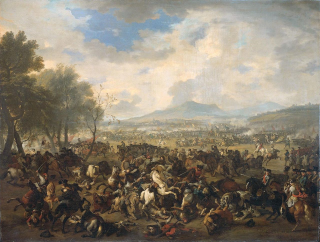
The Irish Brigade of France fights at the Battle of Ramillies in the War of the Spanish Succession on May 23, 1706. For one hundred years Irishmen are smuggled from Ireland to France, where their rights are stripped by foreign invaders to fill the ranks of the famous Irish Brigade. During those one hundred years they fight all over Europe, in North America, the Caribbean, and even India. They shed their blood freely on several hundred fields “from Dunkirk to Belgrade,” in the words of Thomas Davis.

For the Grand AllianceAustria, England, and the Dutch Republic – the Battle of Ramillies follows an indecisive campaign against the Bourbon armies of King Louis XIV of France in 1705. Although the Allies capture Barcelona that year, they are forced to abandon their campaign on the Moselle, stall in the Spanish Netherlands and suffer defeat in northern Italy. Yet despite his opponents’ setbacks Louis XIV wants peace, but on reasonable terms. Because of this, as well as to maintain their momentum, the French and their allies take the offensive in 1706.

The campaign begins well for Louis XIV’s generals. In Italy, Marshal of France Louis Joseph, Duke of Vendôme, defeats the Austrians at the Battle of Calcinato in April, while in Alsace Marshal Claude Louis Hector de Villars forces Louis William, Margrave of Baden-Baden, back across the Rhine. Encouraged by these early gains Louis XIV urges Marshal François de Neufville, Duke of Villeroy, to go over to the offensive in the Spanish Netherlands and, with victory, gain a ‘fair’ peace. Accordingly, the French Marshal sets off from Leuven at the head of 60,000 men and marches toward Tienen, as if to threaten Zoutleeuw. Also determined to fight a major engagement, John Churchill, 1st Duke of Marlborough, commander-in-chief of Anglo-Dutch forces, assembles his army of some 62,000 men near Maastricht, and marches past Zoutleeuw. With both sides seeking battle, they soon encounter each other on the dry ground between the rivers Mehaigne and Gete, close to the small village of Ramillies, Belgium.

In less than four hours Marlborough’s Dutch, English, and Danish forces overwhelm Villeroi’s and Maximilian II Emanuel‘s Franco-Spanish-Bavarian army. The Duke’s subtle moves and changes in emphasis during the battle, something his opponents fail to realise until it is too late, catches the French in a tactical vice. With their foe broken and routed, the Allies are able to fully exploit their victory. Town after town falls, including Brussels, Bruges and Antwerp. By the end of the campaign Villeroi’s army has been driven from most of the Spanish Netherlands. With Prince Eugene of Savoy‘s subsequent success at the Siege of Turin in northern Italy, the Allies impose the greatest loss of territory and resources that Louis XIV would suffer during the war. Thus, the year 1706 proves, for the Allies, to be an annus mirabilis.

(Pictured: “The Battle of Ramillies between the French and the English, 23 May 1706” by Jan van Huchtenburgh, oil on canvas painted between 1706 and 1710)


1 Comment

Birth of Nancy Wynne-Jones, Welsh & Irish Landscape Artist

Nancy Wynne-Jones HRHA, Welsh and Irish artist, is born Mary Esperance Wynne-Jones on December 10, 1922, in Penmaenucha, Dolgellau, Wales.

Wynne-Jones is born to landowner Charles Llewellyn Wynne-Jones and Sybil Mary Gella Scott. The family spends half the year in Wales and half the year in Thornhill, Stalbridge, Dorset, England. She has two brothers, Andrew and Ronald (“Polly”), both of whom die in Africa during World War II.

Wynne-Jones is educated at home. Her skill in art leads to her getting lessons in Sherborne from a children’s book illustrator. Her music is encouraged by the family doctor, and she begins to compose and study the violin, receiving lessons in Bournemouth with the first violinist of the symphony orchestra and continues in Aberystwyth after the start of World War II. She goes on to study the violin and composition at the Royal Academy of Music, London (1940–43). While in London she also serves as a Voluntary Aid Detachment nurse until 1943 and later as a draughtswoman at the Ordnance Survey.

After the war Wynne-Jones purchases and manages a bookshop on the King’s Road in Chelsea, but it is not a financial success. She returns to painting, studying at the Heatherley School of Fine Art, London (1951-52) and the Chelsea School of Art (1952–55). She travels extensively through Portugal and Italy painting landscapes. An interest in completing landscapes in an abstract manner leads her to study with Peter Lanyon in St. Ives, Cornwall.

Wynne-Jones begins study in Cornwall in 1957 and remains there for fifteen years. Her first public exhibition is in a group show (1957) at the Pasmore Edwards Gallery, Newlyn. Other group shows are Jefferson Place Gallery, Washington, D.C., (1959), and in Falmouth, Cornwall (1960). Her solo exhibitions are at the New Vision Centre, London (1962 and 1965), Florence (1963) and Dolgellau (1964). From the 1960s through the 1990s she exhibits in Great Britain, Italy, Belgium, Germany, Ireland, Spain, Holland, South Africa, and the United States.

In 1962 Wynne-Jones purchases Trevaylor House near Penzance and provides accommodation for other artists including renowned Irish painter Tony O’Malley, sculptor Conor Fallon, and English poet and writer W. S. ‘Sydney’ Graham. In the 1970s she exhibits in Ireland at the Project Arts Centre, Dublin (1970) and at the Emmet Gallery, Dublin (1975 and 1977). During the 1980s she exhibits at the Lincoln and Hendricks galleries in Dublin before joining the Taylor Galleries, run by John and Patrick Taylor. She is elected honorary member of the Royal Hibernian Academy (RHA) in 1994 and becomes a member of Aosdána in 1996. Originally an abstract artist, her contact with the Irish countryside slowly transforms her work to that of a landscape artist, albeit with an influence of abstraction attached to it. She becomes well known in Irish art circles as an eminent Irish landscape artist.

Wynne-Jones is involved with artist Derek Middleton before moving to Cornwall. There she becomes romantically involved with Graham who is in an open marriage, however it is the death of her mentor Peter Lanyon that devastates her. She meets the sculptor Conor Fallon through their mutual friend Tony O’Malley. Fallon had arrived in Cornwall ostensibly to meet Lanyon. They marry in 1966. Their honeymoon in Provence is immortalised in expressionist paintings done by Wynne-Jones. The couple adopts a boy and a girl, siblings, John and Bridget. In 1972 she moves with her family to Kinsale, County Cork. It is in this area that a number of her paintings are created. She moves to Ballard House, near Rathdrum, County Wicklow in 1987. There she paints the mountain visible from her home.

Wynne-Jones dies at the age of 83 on November 9, 2006. She is buried in Ballinatone (Church of Ireland), Rathdrum.

(Pictured: “Klein Constantia with Table Mountain” by Nancy Wynne-Jones, acrylic on paper, 16 1/2″ x 23″)


Leave a comment

Death of Painter William Dermod O’Brien

William Dermod O’Brien, Irish painter commonly known as Dermod O’Brien, dies in Dublin on October 3, 1945. Most of his paintings are landscapes and portraits. His work is part of the painting event in the art competition at the 1928 Summer Olympics in Amsterdam, Netherlands.

O’Brien is born on June 10, 1865, at Mount Trenchard House near Foynes in County Limerick, the son of Edward William O’Brien and Hon. Mary Spring Rice, granddaughter of Thomas Spring Rice, 1st Baron Monteagle of Brandon. For a time after his mother’s death, he is raised by his aunt Charlotte Grace O’Brien, along with his sisters, Nelly and Lucy. His father subsequently remarries in 1880. He is educated at Harrow School and Trinity College, Cambridge.

O’Brien marries Mabel Emmeline Smyly, daughter of Sir Philip Crampton Smyly, on March 8, 1902. Together they have five children. His son Brendan, a surgeon in Dublin, marries artist Kitty Wilmer O’Brien. His daughter Rosaleen Brigid becomes an artist, also known as Brigid Ganly after her marriage to Andrew Ganly. Another artistic relative is Geraldine O’Brien.

Unlike many of his Irish contemporaries, after graduating from Cambridge O’Brien does not study art in Dublin, opting instead to travel to Paris, where he studies the paintings at the Louvre. In 1887, he visits galleries in Italy and then enrolls at the Royal Academy of Fine Arts in Antwerp, Belgium. At the Academy he is a fellow student of Walter Osborne. He leaves Antwerp in 1891 and returns to Paris, where he studies at Académie Julian. He relocates to London in 1893 and then Dublin in 1901.

O’Brien is designated an associate of the Royal Hibernian Academy in 1906, a member in 1907, and is later president between 1910 and 1945. He is made an honorary member of the Royal Academy of Arts, London in 1912.

O’Brien holds the office of High Sheriff of County Limerick in 1916 and serves as Deputy Lieutenant of County Limerick. He serves in the Artists Rifles during World War I.

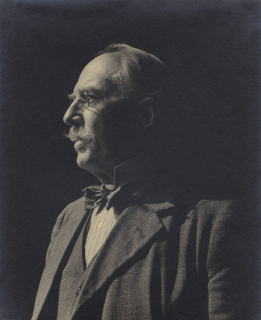
(Pictured: Dermod O’Brien by Howard Coster, print, late 1930s, given to the National Portrait Gallery, London by the estate of Howard Coster, 1978)


Leave a comment

Birth of John Dillon, Last Leader of the Irish Parliamentary Party

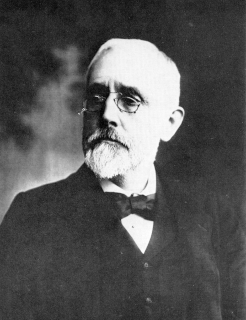
John Dillon, a Member of Parliament (MP) for over 35 years and the last leader of the Irish Parliamentary Party (IPP) in the struggle to secure Home Rule by parliamentary means, is born in Blackrock, Dublin on September 4, 1851. Through the 1880s he is perhaps the most important ally of the greatest 19th-century Irish nationalist, Charles Stewart Parnell, but, following Parnell’s involvement as co-respondent in a divorce case, he repudiates Parnell for reasons of political prudence.

Dillon is the son of the former “Young IrelanderJohn Blake Dillon (1814–1866). Following the premature death of both his parents, he is partly raised by his father’s niece, Anne Deane. He is educated at Catholic University School, at Trinity College, Dublin and at the Catholic University of Leuven in Belgium. He afterwards studies medicine at the Royal College of Surgeons in Dublin, then ceases active involvement in medicine after he joins Isaac Butt‘s Home Rule League in 1873

Dillon is a member of the British House of Commons during 1880–1883 and 1885–1918. For his vigorous work in the Irish National Land League, which seeks fixed tenure, fair rents, and free sale of Irish land, he is imprisoned twice between May 1881 and May 1882. He is Parnell’s fellow inmate in Kilmainham Gaol in Dublin from October 1881. For six months in 1888 he is imprisoned for aiding William O’Brien, author of the “plan of campaign” against high rent charges by English absentee landlords in Irish farming districts.

When Parnell is named co-respondent in Captain William Henry O’Shea’s divorce suit in 1890, Dillon and O’Brien at first affirm their support of him, but they finally decide that he will thenceforth be a liability as party leader. The party then splits, the anti-Parnellite majority forming the Irish National Federation, of which Dillon serves as chairman from 1896. In 1900, however, he agrees to join a reunited party under the Parnellite John Redmond.

During the prime ministry of Arthur James Balfour (1902–1905), Dillon comes to believe that the British Conservative government intends to grant Irish reforms without independence, thereby “killing Home Rule by kindness.” In 1905 he advises Irishmen to vote for Liberal Party candidates for Parliament, and, after the Liberals had taken office that year, he supports their reform program.

Throughout World War I Dillon vehemently opposes the extension of British military conscription to Ireland, both because that measure would strengthen the agitation by the more extreme nationalist Sinn Féin party and because he never accepted the view that British imperial interests necessarily coincided with those of Ireland. After the Easter Rising in Dublin in 1916, he protests against the harsh measures that ensue and, in the House of Commons, makes a passionate speech in defense of the Irish rebels.

Upon Redmond’s death on March 6, 1918, Dillon, who had broken with him over Irish support for the British war effort, succeeds him as Irish Parliamentary Party leader. By that time, however, the party has been discredited and in the 1918 Irish general election Sinn Féin wins easily. On losing his House of Commons seat to Éamon de Valera, the future president of the Republic of Ireland, he retires from politics.

Dillon dies in a London nursing home at the age of 76, on August 4, 1927. He is buried four days later in Glasnevin Cemetery in Dublin. There is a street named after him in Dublin’s Liberties area, beside the old Iveagh Markets. One of his six children is James Mathew Dillon (1902–1986), a prominent Irish politician and leader of the National Centre Party and of Fine Gael (1957–1966) and also serves as Minister for Agriculture (1954-1957).


Leave a comment

Grote Markt, Brussels Bombing

On August 28, 1979, a bomb explodes under an open‐air stage on the Grote Markt in Brussels, Belgium where a British Army band is preparing to give a concert, injuring at least 15 persons, including four bandsmen, and causes extensive damage. Mayor Pierre van Halteren of Brussels says the Irish Republican Army (IRA) claims responsibility for the bombing in a telephone call to city hall.

The bombing comes just a day after Earl Mountbatten of Burma and three others are killed in a bombing in the Irish Republic, and 18 British soldiers die in an attack in Northern Ireland. The IRA claims responsibility for both attacks.

The band is from the Duke of Edinburgh’s Royal Regiment, which is stationed in Osnabrück, West Germany. The bombing occurs only minutes before the band is to have begun a concert in the broad square, a major tourist site surrounded by centuries‐old buildings. However, only 6 of the 30 members of the band are on the makeshift stage when the bomb explodes at about 3:00 PM. The others had left the stage to change into their red dress uniforms after setting up music stands and instruments.

The band is held up in traffic and is late arriving for the concert. The police say that if the bomb had gone off later, during the concert, the casualty toll would have been heavier.

Before the IRA telephone call is reported, Earl Nicoll, military attaché at the British Embassy in Brussels, says, “I’d guess it is either the IRA or people sympathetic to their aims. It is clearly a manifestation they wanted to hit the band, not any Belgians.”

The temporary stage is used for daily concerts to mark the city’s 1,000th birthday. A police spokesman says the explosives were under the stage floor in the back, on the side away from the square. At the time of the explosion only a few hundred people, most of them tourists, are in the square, which is lined by outdoor cafes, flower stalls and centuries‐old guildhalls.

The blast creates a 90‐by‐30‐foot hole in the stage floor, and severely damages the back wall and the ceiling. It shatters windows in the ancient buildings. A police spokesman says investigators did not yet know what kind of bomb was used. Officials estimate the damage at $134,000 to $167,000.

Irish guerrillas are accused of responsibility for several other attacks in Belgium in recent months, including one in June 1979 involving Gen. Alexander M. Haig Jr., then Supreme Allied Commander Europe for the North Atlantic Treaty Organization (NATO).

A number of other recent terrorist attacks on the continent are blamed on the IRA. On March 22, 1979, Sir Richard Sykes, Britain’s Ambassador to the Netherlands, and his Dutch valet are shot and killed as the envoy leaves for work in The Hague. On the same day, a Belgian bank employee is shot to death in front of his home in suburban Brussels in what police believe is a case of mistaken identity on the part of the IRA. Officials believe the gunmen were after Sir John Killick, deputy chief of Britain’s mission to the North Atlantic Treaty Organization, which has its headquarters in Belgium.

On July 6, a bomb that officials believe to be planted by the IRA goes off in the British consulate building in Antwerp, Belgium, causing damage but no injuries. Four days later, two bombs go off at two British Rhine Army barracks in Dortmund, West Germany, causing extensive damage but again no injuries. The IRA claims responsibility for those and other bombings at facilities of the 50,000‐member Rhine Army.

(From: “I.R.A. Sets Off Bomb at Belgian Concert,” The New York Times, August 29, 1979)


Leave a comment

Death of Irish Poet Francis Edward Ledwidge

Francis Edward Ledwidge, Irish poet from County Meath, sometimes known as the “poet of the blackbirds,” is killed in action He was later also known as a World War I war poet. He was killed in action on July 31, 1917, at the Battle of Pilckem Ridge near Boezinge, Ypres Salient, Belgium.

Born on August 19, 1887, to a poor family in Slane, County Meath, Ledwidge starts writing at an early age, and is first published in a local newspaper at the age of fourteen. Finding work as a labourer and miner, he is also a trade union activist and a keen patriot and nationalist, associated with Sinn Féin. He becomes friendly with a local landowner, the writer Lord Dunsany, who gives him a workspace in the library of Dunsany Castle and introduces him to literary figures including William Butler Yeats and Katherine Tynan, with whom he has a long-term correspondence. He is elected to a local authority post and helps organise the local branch of the Irish Volunteers, while Dunsany edits and helps him secure publication for a first volume of his poetry.

Having sided with the faction of the Irish Volunteers which oppose participation in the war, he enlists in the Royal Inniskilling Fusiliers in October 1914, and continues to write poetry on assignment, sending work to Lord Dunsany and to family and other friends. The poems he writes on active service reveal his pride at being a soldier, as he believes, in the service of Ireland. He often wonders whether he would find a soldier’s death.

On July 31, 1917, a group from Ledwidge’s battalion of the Royal Inniskilling Fusiliers are road-laying in preparation for an assault during the Third Battle of Ypres, near the village of Boezinge, northwest of Ypres.

According to Irish author and lecturer Alice Curtayne, “Ledwidge and his comrades had been toiling since the early morning at roadmaking. The army’s first need was men; their second, guns; their third roads. These latter consisted mainly of heavy beech planks bolted together, which could be rapidly laid down. No advance could be supported in that sodden land without a sufficiency of these communications tracks, six or seven feet wide. Supplies were conveyed by pack mules over the wooden paths. Survivors concur in placing the road work done by B Company that day one mile northeast of Hellfire Corner, so called because it was very exposed to German shelling. There was a violent rainstorm in the afternoon, shrouding the region in a gray monochrome. Sullenly, the enemy’s long-range guns continued to fling their shells far behind the lines. Roadwork could not be suspended, however, as the tracks were in use as fast as they were laid down. Tea was issued to the men and, drenched to the skin, they stopped to swallow it. A shell exploded beside Ledwidge and he was instantly killed.”

A Roman Catholic military chaplain, Father Devas, is the first on the scene. That night, Father Devas writes in his diary, “Crowds at Holy Communion. Arranged for service but washed out by rain and fatigues. Walk in rain with dogs. Ledwidge killed, blown to bits; at Confession yesterday and Mass and Holy Communion this morning. R.I.P.”

Ledwidge is first buried at Carrefour de Rose, and later re-interred in the nearby Artillery Wood Military Cemetery, at Boezinge, where the Welsh poet Hedd Wyn, who was killed in action on the same day, also lies buried.

Dunsany arranges for the publication of more of Ledwidge’s poems, and a collected edition in 1919. Further poems, from the archives at Dunsany Castle and some material held by family, are later published by Ledwdige’s biographer, Alice Curtayne, and by one of the Ledwidge memorial societies. Ledwidge is selected as one of twelve prominent war poets for the exhibition Anthem for Doomed Youth at the Imperial War Museum in London in 2002, and memorialised at an event in Inchicore, Dublin, in 2017, with his work set to music by Anúna. A museum of his life and work is opened in his birthplace cottage in 1982. Some of his manuscripts are held in the National Library of Ireland and more in the archives of Dunsany Castle.


Leave a comment

Birth of Architect George Coppinger Ashlin

George Coppinger Ashlin, Irish architect particularly noted for his work on churches and cathedrals, is born in County Cork on May 28, 1837. He becomes President of the Royal Institute of the Architects of Ireland.

Ashlin is the son of J. M. Ashlin, J.P. He receives his early education at the Collège de St. Servais in Liège, Belgium. He later enrolls at St. Mary’s College, Oscott (1851-55) where he is subsequently a pupil of Edward Welby Pugin. It is during this time that he develops an interest in architecture. By 1858, he enters the Royal Academy Schools, London.

When Pugin receives the commission for SS Peter and Paul’s, Carey’s Lane, Cork, in 1859, he makes Ashlin a partner with responsibility for their Irish work. This partnership lasts until late 1868. In 1861 they open their office at St. Stephen’s Green, Dublin. The practice is primarily ecclesiastical, designing some 25 religious buildings. Their churches and Cathedrals are mainly located in the counties of Wexford, Cork and Kerry, and are all of similar design. By far the most important commission undertaken by this partnership is the building of St. Colman’s Cathedral, Cobh for Bishop William Keane.

In 1867 Ashlin marries Mary Pugin (1844-1933), sister of Edward Welby Pugin and daughter of Augustus Welby Pugin, the Gothic revivalist. Their only daughter, Miriam, is born ten years later.

The partnership with Pugin is dissolved in 1870. Thereafter Ashlin practises in his own right, branching out to cover the entire island nation. His works of this period include Ballycotten (1901), Ballybunion (1892), Church of the Most Holy Rosary, Midleton (1893) and the Munster & Leinster Bank, both of Midleton, and finally Kildare (1898).

Ashlin is a member of the Royal Hibernian Academy and Fellow of the Royal Institute of British Architects.

George Coppinger Ashlin dies at the age of 84 on December 10, 1921. He is buried at Glasnevin Cemetery in Dublin.