Dorrian is born in Downpatrick, County Down, on March 29, 1814, one of four sons of Patrick Dorrian and his wife Rose (née Murphy). He is educated first by a Unitarian minister in the classical school in the town, where he excels, and then in St. Patrick’s College, Maynooth, where he is ordained in 1833.
Dorrian’s first appointment is as a curate in the then developing town of Belfast, attached to St Patrick’s Church, Belfast, where he ministers for ten years. At a relatively young age he is appointed parish priest in Loughinisland, County Down, (1847-60) at which time he becomes Bishop of Gabala (Qabala) and Coadjutor Bishop of the Diocese of Down and Connor to assist the ailing, frail and irenic Bishop Cornelius Denvir.
Dorrian is consecrated bishop on August 19, 1860, in St. Malachy’s Church, Belfast, and eventually succeeds as bishop five years later on May 4, 1865. He is known for his authoritarian style of leadership, referred to as “Cullenite“. As the post-famine population of Belfast grows, so too does sectarian attitudes, especially among those moving into the city from rural districts all over Ulster looking for work. He seeks to defend Catholic interests, insisting on the necessity of separate Catholic education and seeking, where possible, to influence the social and political interests of his church.
In this respect, historiansSean Connolly and Gillian McIntosh refer to Dorrian’s “pugnacious” presiding over the rapid expansion in priests, churches and religious houses in contrast to the “scholarly but ineffective” Bishop Denvir.
It is estimated Dorrian is responsible for doubling the number of Catholic churches in the city of Belfast, and in 1866, early in his episcopate, St. Peter’s Cathedral, Belfast in Derby Street in the Lower Falls area is first used as a pro-cathedral. His episcopal chair, placed in that church for the occasion, is still in use by the bishops of the Diocese of Down and Connor. He attends the First Vatican Council and is one of the leading Irish delegation to the event.
Dorrian dies at the Episcopal Palace, Chichester Park, Belfast, at 7:00 a.m., on November 3, 1885. His remains are interred within the chancel of St. Patrick’s Church, Belfast, on Friday, November 6.
At a meeting of the parish priests held in the chapel of St. Malachy’s College, on November 6, 1885, immediately after Dorrian’s funeral, Patrick MacAlister is elected Vicar Capitular of Down and Connor. McAllister is then named by Pope Leo XIII as Dorrian’s successor as the 24th Lord Bishop of Down and Connor.
In November 2017, the historic chapel of Belfast’s Mater Infirmorum Hospital is re-opened after extensive refurbishment. It has, as a result of its connection with Dorrian, become known as the Dorrian Chapel.
During the Irish Confederate Wars, like most Irish Catholics, O’Brien sides with Confederate Ireland. His services to the Catholic Confederation are highly valued by the Supreme Council. He treats the wounded and supports Confederate soldiers throughout the conflict. He is against a peace treaty that does not guarantee Catholic freedom of worship in Ireland and in 1648 signs the declaration against the Confederate’s truce with Murrough O’Brien, 1st Earl of Inchiquin, who has committed atrocities such as the Sack of Cashel against Catholic clergy and civilians, and the declaration against the Protestant royalist leader, James Butler, 1st Duke of Ormond, in 1650 who, due to his failure to resist the Cromwellian conquest of Ireland is not deemed fit to command Catholic troops. He is one of the prelates, who, in August 1650 offers the Protectorate of Ireland to Charles IV, Duke of Lorraine.
In 1651, Limerick is besieged and O’Brien urges a resistance that infuriates the Ormondists and Parliamentarians. Following surrender, he is found ministering to the wounded and ill inside a temporary plague hospital. As previously decided by the besieging army, O’Brien is denied quarter and protection. Along with Alderman Thomas Stritch and English Royalist officer Colonel Fennell, he is tried by a drumhead court-martial and sentenced to death by New Model Army General Henry Ireton. On October 30, 1651, O’Brien is first hanged at Gallows Green and then posthumously beheaded. His severed head is afterward displayed spiked upon the river gate of the city.
After the successful fight that is eventually spearheaded by Daniel O’Connell for Catholic emancipation between 1780 and 1829, interest revives as the Catholic Church in Ireland is rebuilding after three hundred years of being strictly illegal and underground. As a result, a series of re-publications of primary sources relating to the period of the persecutions and meticulous comparisons against archival Government documents in London and Dublin from the same period are made by Daniel F. Moran and other historians.
The first Apostolic Process under Canon Law begins in Dublin in 1904, after which a positio is submitted to the Holy See.
In the February 12, 1915 Apostolic decree, In Hibernia, heroum nutrice, Pope Benedict XV formally authorizes the formal introduction of additional Causes for Roman Catholic Sainthood.
During a further Apostolic Process held in Dublin between 1917 and 1930 and against the backdrop of the Irish War of Independence and the Irish Civil War, the evidence surrounding 260 alleged cases of Roman Catholic martyrdom are further investigated, after which the findings are again submitted to the Holy See.
On September 27, 1992, O’Brien and sixteen other Irish Catholic Martyrs are beatified by Pope John Paul II. June 20th, the anniversary of the 1584 execution of Elizabethan era martyr Dermot O’Hurley, is assigned as the feast day of all seventeen. A large backlighted portrait of him is on display in St. Michael’s Church, Cappamore, County Limerick, which depicts him during The Siege of Limerick.
Concannon is educated by the Loreto nuns in Coleraine, County Londonderry. In 1897, she studies modern languages at the Royal University of Ireland on a three-year scholarship. She studies abroad during these years as in 1899, she travels to Germany and studies German in Berlin University accompanied by her friend, Mary Macken. She then travels to France to study French at Sorbonne University. In 1900, she graduates Bachelor of Arts with first class honours and goes on to study Master of Arts in 1902 at the Royal University of Ireland. She is fortunate to being one of the first generation of educated women.
In 1906, Concannon marries Tomás Bán Ó Conceanainn, who she met in 1900 when he arrived home from the United States. They settle down in County Galway where they share the same love for the Irish language and write many Irish texts. They have no children. In Galway, she is a professor at University College Galway where she teaches history, which mainly involves the history of Irish women. In 1909, she is offered a lectureship at University College Dublin, in Italian, but the offer is then withdrawn before she can accept it, so she decides to pursue a writing career.
Concannon produces over twenty books, including works on religion, the history of Ireland and Irish women’s history. Her works are highly impacted by her political and nationalist views. Her analyses of Irish history is based on Catholicism and patriotism. She is also an advocate of Irish language restoration. Her first writings are love poems to her husband. These poems are ”simple, sensuous and passionate.”
Concannon also produces a number of imaginative historical text for children. She uses her married name for her publications and her first book, entitled A Garden of girls, or the famous schoolgirls of former days, is published in 1914. It is about “school life and education of real little girls” Her next well known piece is the Life of St. Columban in 1915, which is a study about the Irish ancient monastic life and a biography of a sixth-century saint.
Two of Concannon’s books, Daughters of Banba (1922) and St. Patrick (1932), receive the Tailteann Medal for Literature, and The Poor Clares in Ireland (1929) wins the National University Prize, a D.Litt. higher doctorate degree for historical research.
Concannon’s most common publication, Women of ‘Ninety Eight, is dedicated to all the dead women and all the living ones who have given their loved ones. This book emerges on the ideologies of Catholicism and patriotism “praising the devotion of Irish nationalist women while emphasising the centrality of women’s spiritual and domestic role in the home to the well-being of the nation.” As this work is written during the time of the Irish War of Independence, she stresses the importance of women help during the rebellion as “they acted as messengers and intelligence officers,” and in some cases, they fought as any men.
Concerning the Land Purchase (Guarantee Fund) Bill 1935, which according to George Cecil Bennett will negatively impact the rural middle class of which he is a representative, Bennett accuses Concannon and her fellow Dublin men of not caring about the people of the country. Concannon goes on to vote that the Dáil should disagree with the Seanad Éireann-proposed bill with 71 others.
Though Concannon is a TD as a university representative, she votes with her party to remove university representation from the Dáil, leading one TD to say, “I am very much surprised to see such a distinguished scholar and such a great contributor to Irish literature as Deputy Mrs. Concannon voting for the disfranchisement of the University that she has so well and so ably represented.”
Concannon speaks on behalf of Irish women in the Dáil in 1936. She speaks on how Irish women play a fundamental role in Ireland’s agricultural economy and therefore more money should be put toward educating these women.
Concannon is one of the minority voices against the role appointed to women in Éamon de Valera‘s constitution. She does not contest the Dáil election of 1937.
After the adoption of the Constitution of Ireland in 1937, the National University of Ireland constituency is reconstituted in the new Seanad Éireann. The first election takes place in 1938, and Concannon is elected. She is a popular figure and is re-elected each election in the Seanad until she dies in office on February 27, 1952.
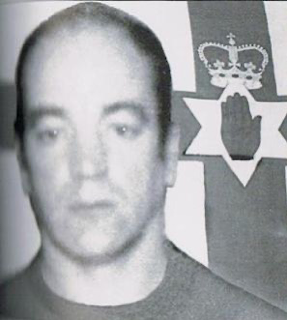
Johnny Adair, leader of “C Company” of the Ulster Loyalistparamilitary organisation Ulster Freedom Fighters (UFF), a cover name of the Ulster Defence Association, is born in Belfast, Northern Ireland, on October 27, 1963. He is known as Mad Dog. He is expelled from the organisation in 2002 following a violent power struggle. Since 2003, he, his family and a number of supporters have been forced to leave Northern Ireland by other loyalists.
Adair is born into a working class loyalist background and raised in Belfast. He grows up in the Lower Oldpark area, a site of many sectarian clashes during “The Troubles.” By all accounts, he has little parental supervision, and does not attend school regularly. He takes to the streets, forming a skinheadstreet gang with a group of young loyalist friends, who “got involved initially in petty, then increasingly violent crime.” Eventually, he starts a rock band called Offensive Weapon, which during performances espouses support for the British National Front.
While still in his teens, Adair joins the Ulster Young Militants (UYM), and later the Ulster Defence Association, a loyalist paramilitary organisation which also calls itself the Ulster Freedom Fighters.
By the early 1990s, Adair has established himself as head of the UDA/UFF’s “C Company” based on the Shankill Road. When he is charged with terrorist offences in 1995, he admits that he had been a UDA commander for three years up to 1994. During this time, he and his colleagues are involved in multiple and random murders of Catholic civilians. At his trial in 1995, the prosecuting lawyer says he is dedicated to his cause against those whom he “regarded as militant republicans – among whom he had lumped almost the entire Roman Catholic population.” Royal Ulster Constabulary (RUC) detectives believe his unit killed up to 40 people during this period.
Adair once remarks to a Catholic journalist from the Republic of Ireland upon the discovery of her being Catholic, that normally Catholics travel in the boot of his car. According to a press report in 2003, he is handed details of republican suspects by British Army intelligence, and is even invited for dinner in the early 1990s. In his autobiography, he claims he was frequently passed information by sympathetic British Army members, while his own whereabouts were passed to republican paramilitaries by the RUC Special Branch, who, he claims, hated him.
The Provisional Irish Republican Army (IRA) bombing of a fish shop on the Shankill Road in October 1993 is an attempt to assassinate Adair and the rest of the UDA’s Belfast leadership in reprisal for attacks on Catholics. The IRA claims that the office above the shop is regularly used by the UDA for meetings and one is due to take place shortly after the bomb is set to explode. The bomb goes off early, killing one IRA man, Thomas Begley, and nine Protestant civilians. The UFF retaliates with a random attack on the Rising Sun bar in Greysteel, County Londonderry, which kills eight civilians, two of whom are Protestants. Adair survives 13 assassination attempts, most of which are carried out by the IRA and Irish National Liberation Army (INLA).
During this time, undercover officers from the Royal Ulster Constabulary record months of discussions with Adair, in which he boasts of his activities, producing enough evidence to charge him with directing terrorism. He is convicted and sentenced to 16 years in HM Prison Maze. In prison, according to some reports, he sells drugs such as cannabis, ecstasy tablets and amphetamines to other loyalist prisoners, earning him an income of £5000 a week.
In January 1998, Adair is one of five loyalist prisoners visited in the prison by British Secretary of State for Northern Ireland, Mo Mowlam. She persuades them to drop their objection to their political representatives continuing the talks that leads to the Good Friday Agreement in April. In 1999, he is released early as part of a general amnesty for political prisoners after the Agreement.
Following his release, much of Adair’s activities are bound up with violent internecine feuds within the UDA and between the UDA and other loyalist paramilitary groupings. The motivation for such violence is sometimes difficult to piece together. It involves a combination of political differences over the loyalist ceasefires, rivalry between loyalists over control of territory and competition over the proceeds of organised crime.
In 1999, shortly after his release from prison, Adair is shot at and grazed in the head by a bullet at a UB40 concert in Belfast. He blames the shooting on republicans, but it is thought that rival loyalists are to blame.
In August 2000, Adair is again mildly injured by a pipe bomb he is transporting in a car. He again attempts to blame the incident on an attack by republicans, but this claim is widely discounted. A feud breaks out at the time between the UDA and the Ulster Volunteer Force (UVF) leaving several loyalists dead. As a result of Adair’s involvement in the violence, the then Secretary of State for Northern Ireland, Peter Mandelson, revokes his early release and returns him to prison.
In May 2002, Adair is released from prison again. Once free, he is a key part of an effort to forge stronger ties between the UDA/UFF and the Loyalist Volunteer Force (LVF), a small breakaway faction of the UVF loyalist paramilitary organization in Northern Ireland. The most open declaration of this is a joint mural depicting Adair’s UDA “C company” and the LVF. Other elements in the UDA/UFF strongly resist these movements, which they see as an attempt by Adair to win external support in a bid to take over the leadership of the UDA. Some UDA members dislike his overt association with the drugs trade, with which the LVF are even more heavily involved. A loyalist feud begins, and ends with several men dead and scores evicted from their homes.
On September 25, 2002, Adair is expelled from the UDA/UFF along with close associate John White, and the organisation almost splits as Adair tries to woo influential leaders such as Andre Shoukri, who are initially sympathetic to him. There are attempts on Adair’s and White’s lives.
Adair returns to prison in January 2003, when his early release licence is revoked by Secretary of State for Northern Ireland, Paul Murphy, on grounds of engaging in unlawful activity. On February 1, 2003, UDA divisional leader John Gregg is shot dead along with another UDA member, Rab Carson, on returning from a Rangers F.C. match in Glasgow. The killing is widely blamed on Adair’s C Company as Gregg is one of those who organised his expulsion from the UDA. Five days later, on February 6, about twenty Adair supporters, including White, flee their homes for Scotland, widely seen as a response to severe intimidation.
Adair is released from prison again on January 10, 2005. He immediately leaves Northern Ireland and joins his family in Bolton, Lancashire, where it is claimed he stays with supporters of Combat 18 and the Racial Volunteer Force.
The police in Bolton question Adair’s wife, Gina, about her involvement in the drugs trade, and his son, nicknamed both “Mad Pup” and “Daft Dog,” is charged with selling crack cocaine and heroin. Adair is arrested and fined for assault and threatening behaviour in September 2005. He had married Gina Crossan, his partner for many years and the mother of his four children, at HM Prison Maze on February 21, 1997. She is three years Adair’s junior and grew up in the same Lower Oldpark neighbourhood.
After being released, Adair is almost immediately arrested again for violently assaulting Gina, who suffers from ovarian cancer. Since this episode he reportedly moves to Scotland, living in Troon in Ayrshire.
In May 2006, Adair reportedly receives £100,000 from John Blake publishers for a ghost-written autobiography.
In November 2006, the UK’s Five television channel transmits an observational documentary on Adair made by Dare Films.
Adair appears in a documentary made by Donal MacIntyre and screened in 2007. The focus of the film centers around Adair and another supposedly reformed character, a Neo-Nazi from Germany called Nick Greger, and their trip to Uganda to build an orphanage. Adair is seen to fire rifles, stating it is the first time he has done so without wearing gloves. He also admits to being “worried sick” and “pure sick with worry” after Greger disappears in Uganda for days on end. It turns out that he had gone off and married a Ugandan lady. Adair confesses via telephone that he “thought something might have happened to Nick.”
On July 20, 2015, three Irish republicans, Antoin Duffy, Martin Hughes and Paul Sands, are found guilty of planning to murder Adair and Sam McCrory. Charges against one of the accused in the trial are dropped on July 1.
On September 10, 2016, Adair’s son, Jonathan Jr., is found dead in Troon, aged 32. He dies from an accidental overdose while celebrating the day after his release from prison for motoring offences. He had been in and out of prison since the family fled Northern Ireland. He served a five-year sentence for dealing heroin and crack cocaine. The year before, he had been cleared of a gun raid at a party and in 2012 is the target of a failed bomb plot. He was also facing trial later that year on drugs charges.
In December 2023, while recording a podcast with far-right activist Tommy Robinson, Adair surprisingly expresses a grudging respect for the IRA hunger strikers, describing the manner of their deaths as “dedication at the highest level” for a political cause and admitting that he would not have volunteered to do the same if asked.
Clery is the son of Arthur Clery (who also uses the names Arthur Patrick O’Clery and Arthur Ua Cléirigh), a barrister, and Catherine Moylan. His father, who practises in India, publishes books on early Irish history.
Clery’s principal themes include the difficulties of Roman Catholic graduates seeking professional employment, dramatic criticism (he hails Lady Gregory‘s play Kincora as the Abbey Theatre‘s first masterpiece but is repulsed by the works of John Millington Synge), Catholic-Protestant rivalry, tension within the Dublin professional class, and the vagaries of the Gaelic revival movement.
Clery advocates partition on the basis of a two nations theory, first advanced in 1904–1905, possibly in response to William O’Brien‘s advocacy of securing Home Rule through compromise with moderate Unionists. Several of his articles on the subject are reprinted in his 1907 essay collection, The Idea of a Nation.
Clery derives this unusual view for a nationalist from several motives, including a belief that arguments for Irish nationalists’ right to self-determination can be used to justify Ulster Unionists’ right to secede from Ireland, fear that it might be impossible to obtain Home Rule unless Ulster is excluded, and distaste for both Ulster Protestants and Ulster Catholics, whom he sees as deplorably anglicised. He remains a partitionist for the rest of his life. He is not particularly successful as a barrister, but on the establishment of University College Dublin (UCD) in 1909, he is appointed to the part-time post of Professor of the Law of Property.
Clery does not take his seat and does not contest the September 1927 Irish general election since new legislation obliges candidates to pledge in advance that they will take their seat. He is one of the lawyers who advises Éamon de Valera that the Irish Free State is not legally obliged to pay the Land Annuities which had been agreed in the Anglo-Irish Treaty of 1922.
Clery was a close friend of Tom Kettle, with whom he founds a dining club, the “Cui Bono.” Hugh Kennedy is also a lifelong friend. As Auditor of the L & H, he tries to prevent James Joyce from reading a paper praising Henrik Ibsen, asserting that “the effect of Henrik Ibsen is evil,” but Joyce succeeds in reading it after he argues his case with the college president. The principal influence on Clery is the Irish Ireland editor D. P. Moran, to whose weekly paper, The Leader, Clery becomes a frequent contributor. In addition to The Idea of a Nation, he publishes Dublin Essays (1920) and (as Arthur Synan) The coming of the king.
After a period at the University of Göttingen, de Brún is appointed professor of mathematics at St. Patrick’s Pontifical University, Maynooth, in 1914. In April 1945, he is elected by the Senate of the National University of Ireland to succeed John Hynes as President of University College, Galway, an office he holds until his retirement in 1959. His friend Thomas MacGreevy refers to de Brún as, “Rector Magnificus,” and praises his, “Olympian capacity to appreciate the most exalted works of art and literature, ancient and modern.”
The School of Mathematics, Mathematical Physics and Statistics is based in Áras de Brún, a building named in de Brún‘s honour. He subsequently becomes Chairman of the Arts Council of Ireland, a position he holds until his death in 1960. He also serves as chairman of the Council of the Dublin Institute for Advanced Studies (DIAS).
De Brún is close friend of 1916 Easter Rising leader Seán Mac Diarmada and is deeply affected by the latter’s execution.
De Brún was a prolific writer of Irish poetry in the Irish language, including the well-known poem “Tháinig Long ó Valparaiso.” He further translates into Modern Irish many great works of the Western canon, including Homer‘s Iliad and Odyssey, Sophocles‘ Antigone and Oedipus Rex, and Plutarch‘s Parallel Lives, as well as French stage plays by Jean Racine and Dante Alighieri‘s Divine Comedy. With regards to his importance to modern literature in Irish, he is recently termed “one of the most distinguished literary figures of his time.”
De Brún purchases land at Dunquin in the Dingle PeninsulaGaeltacht. In the 1920s, he also builds a house there known as Tigh na Cille, where his sister and her children often visit and stay at length. Through his literary mentorship of his niece, the future poet Máire Mhac an tSaoi, he has been credited with having an enormous influence upon the future development of modern literature in Irish.
After suffering a heart attack at his house at Seapoint, Dún Laoghaire, into which he had recently moved, de Brún dies on June 5, 1960, in St. Vincent’s nursing home, Leeson Street, Dublin.
In the mid-1750s, Fitzsimons’s family immigrates to Philadelphia, Pennsylvania, where his father dies soon thereafter. He has enough education that he begins work as a clerk in a mercantile house. He marries Catherine Meade on November 23, 1761, and forms a business partnership with her brother George. Their firm, which specializes in the West Indies trade, operates successfully for over 41 years.
The firm is soon hit by the new revenue measures created to help support the finances of the British Empire, including the much reviled Stamp Act of 1765. Concerned with these ideas, Fitzsimons becomes active in the Irish merchant community in Philadelphia. He is a founding member of the Friendly Sons of St. Patrick in 1771 and later, in 1774, a steering committee organized to protest the Coercive Acts.
When Pennsylvania begins mobilizing and organizing a militia to fight the British, Fitzsimons is soon involved. He serves as captain of a company of home guards under the command of Colonel John Caldwalader. Initially his company serves as part of the soldiers who man posts along the New Jersey coast. His unit later serves as part of the reserve at the Battle of Trenton in 1776. Later in the war, he serves on the Pennsylvania Council of Safety and heads a board to oversee the newly formed Pennsylvania Navy.
Fitzsimons enters active politics as a delegate to the Continental Congress in 1782 and 1783. He is a member of the Pennsylvania House of Representatives from 1786 until 1795. He is also a delegate to the U.S. Constitutional Convention in 1787. Although not a leading member of that convention, he supports a strong national government, the end of slavery, the United States Congress‘s powers to impose a tariff on imports and exports, the granting the House of Representatives, and power in equal to the United States Senate in making treaties. He is one of only two Catholic signers of the Constitution of the United States, the other being Daniel Carroll of Maryland.
After the Constitution is established, Fitzsimons serves in the first three sessions of the House of Representatives as a Federalist, where he favors protective tariffs and a strong navy, co-drafting the Naval Act of 1794 authorizing the original six frigates of the United States Navy. He fails to win re-election in 1794. This is partially attributed to public opinion turning against the Federalist Party over the forceful suppression of the Whiskey Rebellion. Although he never holds elective office again, he serves in 1798 as head of the committee of merchants overseeing the subscription-loan to build a warship at private expense for use in the Quasi-War.
In 1796, Fitzsimons, along with James Innes of Virginia, is appointed by President John Adams to serve as one of two American members on the five-man debt commission charged under Article VI of the Jay Treaty with examining the claims of British subjects unable to collect debts incurred by Americans prior to the American Revolution. Fitzsimons, Innes and Samuel Sitgreaves, who replaces Innes upon the latter’s death, become annoyed with the arguments used by their British counterparts to inflate the claims total. Fitzsimons and Sitgreaves angrily and permanently secede from the board in July 1799. The claims are eventually disposed of by a lump-sum payment, agreed upon by United States Minister to BritainRufus King with British Foreign SecretaryRobert Banks Jenkinson and approved by PresidentThomas Jefferson and the Senate in 1802.
O’Callaghan is born into a family with a Fenianparamilitary history. His paternal grandfather had taken the Anti-Treaty side during the Irish Civil War, and his father had been interned by the Irish Government at the Curragh Camp in County Kildare for IRA activity during World War II.
By the late 1960s, O’Callaghan ceases to practise his Catholic faith, adopts atheism and has become interested in the theories of Marxist revolutionary politics, which finds an outlet of practical expression in the sectarian social unrest in Northern Ireland at the time, centered on the activities of the Northern Ireland Civil Rights Association. In 1969, communal violence breaks out in Northern Ireland and believing that British imperialism is responsible, he joins the newly founded Provisional IRA at the age of 17.
Soon afterward, O’Callaghan is arrested by local Gardaí after he accidentally detonates a small amount of explosives, which cause damage to the homes of his parents and their neighbours. After demanding, and receiving, treatment as a political prisoner, he quietly serves his sentence.
After becoming a full-time paramilitary with the IRA, in the early to mid-1970s O’Callaghan takes part in over seventy operations associated with Irish Republican political violence including bomb materials manufacture, attacks on IRA targets in Northern Ireland, and robberies to provide funding for the organisation.
In 1976, O’Callaghan ends his involvement with the IRA after becoming disillusioned with its activities. He later recalls that his disenchantment with the IRA began when one of his compatriots openly hoped that a female police officer who had been blown up by an IRA bomb had been pregnant so they could get “two for the price of one.” He is also concerned with what he perceives as an undercurrent of ethnic hatred in its rank and file toward the Ulster Scots population. He leaves Ireland and moves to London. In May 1978, he marries a Scottish woman of Protestantunionist descent. During the late 1970s, he runs a successful mobile cleaning business. However, he is unable to fully settle into his new life, later recalling, “In truth there seemed to be no escaping from Ireland. At the strangest of times I would find myself reliving the events of my years in the IRA. As the years went on, I came to believe that the Provisional IRA was the greatest enemy of democracy and decency in Ireland.”
In 1979, O’Callaghan is approached by the IRA seeking to recruit him again for its paramilitary campaign. In response, he decides to turncoat against the organisation and becomes an agent within its ranks for the Irish Government. He decides to become a double agent even though he knows that even those who hate the IRA as much as he now does have a low opinion of informers. However, he feels it is the only way to stop the IRA from luring teenagers into their ranks and training them to kill.
Soon after being approached by the IRA to re-join, O’Callaghan returns to Tralee from London, where he arranges a clandestine meeting with an officer of the Garda Special Detective Unit in a local cemetery, at which he expresses his willingness to work with it to subvert the IRA from within. At this point, he is still opposed to working with the British Government. A few weeks later, he makes contact with Kerry IRA leader Martin Ferris and attends his first IRA meeting since 1975. Immediately afterward, he telephones his Garda contact and says, “We’re in”.
During the 1981 hunger strike in the Maze Prison, O’Callaghan attempts to start his own hunger strike in support of the Maze prisoners but is told to desist by the IRA for fear it will detract focus from the prisoners. He successfully sabotages the efforts of republicans in Kerry from staging hunger strikes of their own.
In 1984, O’Callaghan notifies the Garda of an attempt to smuggle seven tons of AK-47assault rifles from the United States to Ireland aboard a fishing trawler named Valhalla. The guns are intended for the arsenal of the Provisional IRA’s units. As a result of his warning, a combined force of the Irish Navy and Gardaí intercept the boat that received the weaponry, and the guns are seized. The seizure marks the complete end of any major attempt by the IRA to smuggle guns out of the United States.
In 1983, O’Callaghan claims to be tasked by the IRA with placing 25 lbs. of Frangex in the Dominion Theatre in London, in an attempt to kill Prince Charles and Princess Diana who are due to attend a charity pop music concert there. A warning is phoned into the Garda, and the Royal couple are hurriedly ushered from the theatre by their police bodyguard during the concert. The theatre had been searched before the concert and a second search following the warning reveals no device.
In 1985, O’Callaghan is elected as a Sinn Féin councillor for Tralee Urban District Council, and unsuccessfully contests a seat on Kerry County Council.
After becoming disillusioned with his work with the Irish Government following the murder of another of its agents within the IRA, which it had failed to prevent despite O’Callaghan’s warnings of the threat to him, and sensing a growing threat to himself from the organisation which had become suspicious of his own behaviour, he withdraws from the IRA and leaves Ireland to live in England, taking his wife and children with him. His marriage ends in a divorce in 1987, and on November 29, 1988, he walks into a police station in Tunbridge Wells, Kent, England, where he presents himself to the officer on duty at the desk, confesses to the murder of Ulster Defence Regiment (UDR) Greenfinch (female member) Eva Martin and the murder of D.I. Peter Flanagan during the mid-1970s, and voluntarily surrenders to British prosecution.
Although the Royal Ulster Constabulary (RUC) offers him witness protection as part of the informer policy, O’Callaghan refuses it and is prosecuted under charges of two murders and 40 other crimes, to all of which he pleads guilty, committed in British jurisdiction with the IRA. Having been found guilty, he is sentenced to a total of 539 years in prison. He serves his sentence in prisons in Northern Ireland and England. While in jail, he publishes his story in The Sunday Times. He is released after being granted the royal prerogative of mercy by Queen Elizabeth II in 1996.
In 1998, O’Callaghan publishes an autobiographical account of his experiences in Irish Republican paramilitarism, entitled The Informer: The True Life Story of One Man’s War on Terrorism (1998).
In 2002, O’Callaghan is admitted to Nightingale Hospital, Marylebone, an addiction and rehab center where he undergoes a rehabilitation program for alcohol dependency. His identity and past activities are not revealed to the other patients. He lives relatively openly in London for the rest of his life, refusing to adopt a new identity. He is befriended in the city by the Irish writer Ruth Dudley Edwards, and works as a security consultant, and also occasional advisor to the Ulster Unionist Party (UUP) on how to handle Irish republicanism in general, and Sinn Féin in particular.
In 2006, O’Callaghan appears in a London court with regard to an aggravated robbery that occurs in which he is the victim.
In 2015, O’Callaghan publishes James Connolly: My Search for the Man, the Myth & his Legacy (2015), a book containing a critique of the early 20th century Irish revolutionary James Connolly, and what he considers to be his destructive legacy in Ireland’s contemporary politics.
O’Callaghan dies by drowning after suffering a heart attack at the age of 63 while in a swimming pool in Kingston, Jamaica, on August 23, 2017, while visiting his daughter. A memorial service is held in his memory on March 21, 2018, at St. Martin’s-in-the-Fields, a Church of England parish church at the northeast corner of Trafalgar Square in the City of Westminster, London. The service is attended by representatives from Ulster Unionist parties and the Irish Government.
Daly studies Classics at Queen’s University Belfast (QUB). He earns his BA with Honours and also the Henry Medal in Latin Studies in 1937 and completes his MA the following year. He enters St. Patrick’s College, Maynooth and is ordained to the priesthood on June 22, 1941. He continues studies in theology in Maynooth, from where he obtains a doctorate in divinity (DD) in 1944. His first appointment is as Classics Master in St. Malachy’s College (1944–45).
In 1945, Daly is appointed Lecturer in Scholastic Philosophy at Queen’s University, Belfast, retaining the post for 21 years. In the academic year 1952–53 QUB grants him sabbatical leave, which he spends studying at the Catholic University of Paris where he receives a licentiate in philosophy. He returns to France at many points, particularly for holidays. He persists with his studies well into his retirement. He is a popular figure with the university and fondly remembered by his students. He is named a Canon of the Cathedral Chapter of Diocese of Down and Connor in 1966.
Daly is a peritus, or theological expert, at the Second Vatican Council (1962–65) to Bishop William Philbin during the first session of the Council and to Cardinal William Conway for the rest of the council. He dedicates himself to scholarship for 30 years, and publishes several books seeking to bring about understanding between the warring factions in Northern Ireland.
Daly is appointed Reader in Scholastic Philosophy at QUB in 1963, a post he holds until 1967, when he is appointed Bishop of Ardagh and Clonmacnoise on May 26.
Daly spends 15 years as bishop in Longford and is diligent about parish visitation and confirmations gradually assume a greater national profile. From 1974 onward, he devotes himself especially to ecumenical activities for the Pontifical Council for Promoting Christian Unity. His pastoral letter to Protestants, written in 1979, pleads for Christian unity.
Daly succeeded William Philbin as the 30th Bishop of Down and Connor when he is installed as bishop of his native diocese at a ceremony in St. Peter’s Cathedral, Belfast, on October 17, 1982.
On November 6, 1990, Daly is appointed Archbishop of Armagh and, as such, Primate of All Ireland. His age makes him an unexpected occupant of the post. Despite this it is requested that he stay in the role for three years before usual age of episcopal retirement at 75. Cardinal Daly takes a notably harder line against the Irish Republican Army (IRA) than his predecessor, Cardinal Tomás Ó Fiaich.
Daly is respectful of Protestant rights and opposes integrated education of Catholics and Protestants. This policy is criticised by those who see segregated education as one of the causes of sectarianism in Northern Ireland, but is seen by the Catholic clergy as important for passing on their faith to future generations. He is utterly orthodox in opposing divorce, contraception, abortion, the ordination of women and any idea of dropping clerical celibacy.
Daly is heckled by the audience on live television during a broadcast of The Late Late Show on RTÉ One on the topic of pedophilia in the 1990s. After his retirement in 1996, he makes no public statement on the issue.
Daly retires as Archbishop of Armagh on his 79th birthday, October 1, 1996, and subsequently suffers ill health. Although it is announced that he will attend the funeral of Pope John Paul II, he stays home on the advice of his doctors. His age makes him ineligible to participate in the 2005 conclave that elects Pope Benedict XVI.
Daly is admitted to the coronary unit of Belfast City Hospital on December 28, 2009. His health has already been declining, leading to prayers being ordered for him. He dies in hospital in Belfast on December 31, 2009, aged 92. His family are at his bedside at the time. His death brings to an end a two-year period during which Ireland has, for the first time in its history, three living Cardinals.
Daly lay in state in Belfast and then his remains are taken to Armagh. Pope Benedict XVI pays tribute at this stage. Large numbers of people travel from as far as County Westmeath to attend Mass at Armagh on January 4, at which Monsignor Liam McEntaggart, the former parish priest of Coalisland, says, “When the history of peace making in Ireland comes to be written, the contribution of Cardinal Daly will be accorded a high place.” Monsignor McEntaggart himself dies on August 22, 2010, aged 81, less than eight months after Cardinal Daly’s passing.
Jackson is one of seven children of John Jackson, farmhand, and his wife Eileen. As a teenager he participates in Paisleyite demonstrations against the Northern Ireland civil rights movement. He is already a local “hard man” who cultivates an air of menace. After a brief period in Australia, he returns home and serves in the Ulster Defence Regiment (UDR) from 1972 to 1975. He also joins the Ulster Volunteer Force (UVF) and is alleged to have committed his first murders in 1973. He is arrested in 1973 after the doorstep killing of a BanbridgeCatholic who works in the shoe factory that employs Jackson. The victim’s wife identifies Jackson as the murderer, but the charge is withdrawn after she admits to a degree of prompting by the police.
Jackson is a leading member of a UVF gang linked to about 100 murders carried out at random against Catholic civilians between 1973 and 1979, earning for the north Armagh and east Tyrone area the nickname “the murder triangle.” He also allegedly helps to plan the Dublin and Monaghan car bombings of May 17, 1974, killing thirty-three civilians, and orchestrates the attack on the Miami Showband on July 31, 1975. He becomes UVF Mid-Ulster Brigade commander in 1975. Never convicted of any of the numerous murders attributed to him, he is however jailed between 1979 and 1983 for arms possession.
Jackson marries Eileen Maxwell in the late 1960s. They have a son and two daughters. The marriage does not survive his imprisonment and after his release he moves to Donaghcloney, County Down, where he lives with a much younger girlfriend. He remains active in loyalist paramilitarism but takes a less prominent role. He survives several Irish Republican Army (IRA) attempts on his life, including the detonation of a car bomb outside his house. In 1984, the editor of the Belfast edition of the Sunday World is shot and wounded after publishing articles denouncing “the Jackal,” the nickname by which the press calls Jackson during his lifetime.
After the Anglo–Irish Agreement of 1985, Jackson is briefly linked to Ulster Resistance (UR), a paramilitary group founded by associates of Ian Paisley. He allegedly assists the rearming and reorganisation of the Mid-Ulster UVF under Billy Wright after the killing of his brother-in-law and alleged accomplice, Roy Metcalf, by the IRA in 1988. Relations between Wright and Jackson cool after the killing of a Catholic in Donaghcloney by Wright’s men leads to Jackson being called in for questioning, and he supports the UVF leadership in its 1996–97 dispute with Wright. He is also the focus of recurring allegations about collusion between loyalist paramilitaries and elements of the security forces in mid-Ulster, including claims that he operated on behalf of British military intelligence who shielded him from prosecution.
Jackson dies of lung cancer at the age of 49 at his Donaghcloney home on May 30, 1998. He is buried on June 1 in a private ceremony in the St. Bartholomew Church of Ireland churchyard in his native Donaghmore, County Down. His grave, close to that of his parents, is unmarked apart from a steel poppy cross. His father had died in 1985 and his mother outlives him by five years.
Considerable uncertainty surrounds his involvement in many of the crimes attributed to him, but there is no doubt that he is a cold-blooded multiple murderer and one of the most sinister “hard men” of loyalist paramilitarism.
(From: “Jackson, Robin” by Patrick Maume, Dictionary of Irish Biography, http://www.dib.ie, October 2009)


 seamus dubhghaill