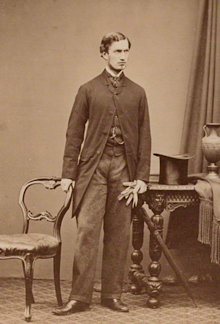
O’Conor is an active member of parliament, an effective though not an eloquent speaker, and a leading exponent of Catholic opinion. He is deeply involved in the education question, being a critic of the queen’s colleges. In 1867 he introduces a measure to extend the industrial schools act to Ireland, which becomes law the following year. He opposes William Ewart Gladstone‘s university bill of 1873, is appointed to the intermediate education board in 1878, and in May 1879 proposes the transformation of St. Patrick’s College, Maynooth, into a chartered Catholic university. He withdraws this in July, following a government bill creating the Royal University of Ireland. He is on the senate of the university for many years, and is conferred with the honorary degree of LL.D. in 1892. A leading exponent of the Irish language, in 1878 he proposes that it be introduced into secondary schools.
O’Conor is a supporter of Isaac Butt and a keen advocate of land law reform, which leads to his proposing in 1870 the extension of Ulster tenant right to the rest of the country. His brother Denis, MP for County Sligo 1868–83, is a home ruler, but Charles is only ever described as a camp follower. The Nation (October 18, 1873) observes that he “achieved the feat of speaking for two hours at a home rule meeting in Roscommon without telling his audience if he was a home ruler.” He has concrete criticisms such as the hostility of the northern counties, and wants to be allowed to take an independent stance, but Butt strongly deprecates his ambiguity. He does stand on the home rule platform in 1874 and 1880, but his tentative sympathy does nothing to protect him from the drive by Charles Stewart Parnell to establish the Irish Parliamentary Party (IPP). In March 1880, Parnell goes to Roscommon to support his candidate James O’Kelly against O’Conor, who is a popular representative. Parnell calls him a “sample of West Britonism in Ireland . . . if you deprive him of the representation of Roscommon you strike the greatest blow that has been struck against English misgovernment in Ireland since Isaac Butt was elected for the city of Limerick,” which successfully leads to O’Conor’s being ousted. Ironically, he had briefly been Parnell’s landlord when in 1860 he rented a house near Kingstown (now Dún Laoghaire) to the recently widowed Delia Parnell and her family, including the 13-year-old Charles Stewart.
Appointed to the Bessborough commission into the workings of the 1870 land act some months later, O’Conor answers Parnell by going even further than the commission’s proposal to reform land law on the basis of the “three Fs.” He supports outright peasant proprietorship as the only effective and lasting remedy. In 1883, he makes an attempt to return to parliament as a liberal candidate for Wexford Borough, but is defeated by the home ruler Willie Redmond. Always an inveterate committee member, he spends the last twenty-five years of his life on various committees, including the parliamentary committee of 1885 and the royal commission of 1894 on the financial relations between Great Britain and Ireland. He is elected to Roscommon County Council in 1899 and is Lord Lieutenant of Roscommon from 1888 until his death. In 1881 he is sworn to the Privy Council of Ireland.
An ancestor is Charles O’Conor, the noted antiquarian, and O’Conor has his own interest in this area. He is a member of the Royal Irish Academy (RIA) from 1867 and joins the Royal Society of Antiquaries of Ireland (RSAI) in 1869, is a fellow in 1888, and president 1897–9. His antiquarian research is largely confined to his own family. In 1891, he publishes The O’Conors of Connaught, an historical memoir compiled from the manuscripts of John O’Donovan. He first marries Georgina Mary, daughter of Thomas Perry of Warwickshire, England, on April 21, 1868. Secondly he marries Ellen, daughter of John Lewis More O’Ferrall of County Longford, on September 16, 1879. He has four sons by his first marriage.
O’Conor dies at Clonalis, Castlerea, County Roscommon, on June 30, 1906. He is buried in St. Joseph’s Cemetery in Castlerea.
(From: “O’Conor, Charles Owen” by Bridget Hourican, Dictionary of Irish Biography, http://www.dib.ie, October 2009)
Todd is born in Rathfarnham, on April 23, 1805. He is noted for his efforts to place religious disagreements on a rational historical footing, for his advocacy of a liberal form of Protestantism, and for his endeavours as an educator, librarian, and scholar in Irish history.
Todd is the son of Charles Hawkes Todd, a professor of surgery, and Eliza Bentley, and is the oldest of fifteen children. Noted physician Robert Bentley Todd is among his younger brothers. His father dies a year after he receives a BA from Trinity College Dublin (TCD) in 1825, diminishing his prospects for success. However, he is able to remain at the college by tutoring and editing a church periodical.
Todd obtains a premium in 1829, and two years later is elected Fellow, taking deacon’s orders in the same year. From that time until 1850, when he becomes a Senior Fellow, he is among the most popular tutors in TCD.
Todd takes priest’s orders in 1832. He begins publishing in earnest, including papers on John Wycliffe, church history, and the religious questions of his day. He is Donnellan Lecturer in 1838 and 1839, publishing works related to the Antichrist in which he opposes the views of the more extreme of his co-religionists who apply this term to the Roman Catholicism and the Pope. In 1840 he graduates Doctor of Divinity.
In 1837, Todd is installed Treasurer at St. Patrick’s Cathedral in Dublin and becomes Precentor in 1864. His style of preaching is described as simple and lucid, and his sermons interesting. He co-founds Saint Columba’s College in 1843, a school which promotes the Irish language for those who intend to take orders, as well as promoting the principles of the Church of Ireland.
In 1849, Todd is made Regius Professor of Hebrew at Trinity, and a Senior Fellow the following year. In 1852, he is appointed Librarian, and working alongside John O’Donovan and Eugene O’Curry, he classifies and arranges the collection of manuscripts. When his office receives money, he spends it on the acquisition of manuscripts and rare books, and he deserves much credit for the library’s high ranking as one of the chief libraries of Europe.
Todd’s secular achievements are no less remarkable. In 1840, he co-founds the Irish Archaeological Society and acts as its honorary secretary. He is elected a member of the Royal Irish Academy (RIA) and strives actively to acquire transcripts and accurate accounts of Irish manuscripts from foreign libraries. He is honorary secretary from 1847 to 1855, and president from 1856 to 1861. In 1860, he is given an ad eundem degree at the University of Oxford.
Todd is a notable person among notable people. His work is widely respected and cited. Among his friends and acquaintances are lawyer and poet Sir Samuel Ferguson, Conservative Member of Parliament (MP) and Roman Catholic convert Edwin Wyndham-Quin, fellow historian William Reeves, artist Sir George Petrie, and the Stokes family (physician father William, future lawyer and Celticist son Whitley, and future antiquarian daughter Margaret).
Todd dies at his home in Rathfarnham on June 28, 1869, and is buried in the churchyard of St. Patrick’s Cathedral.
At the time of the attack, a Friday evening, a cabaret show is taking place, and the bar contains approximately forty people. The attackers spray the pub with an ArmaLite AR-15assault rifle. While some sources suggest that a grenade is thrown into the bar before the attackers escape, contemporary news sources state that a bomb is left behind.
Three people are killed and approximately six are injured. Those killed, all Protestant civilians from the same extended family, included Ruby Kidd (28), Francis Walker (17) and Joseph McBride (56).
The “West Belfast Republican Action Force” subsequently claims responsibility for the shooting, stating that it was “carried out in retaliation” for the Chlorane Bar attack earlier in June 1976.
A week after the gun attack in Templepatrick, the UVF carries out a gun attack on a Catholic-owned pub, the Ramble Inn. While described as a “reprisal” for the Walker’s bar attack, five of the six people killed in the Ramble Inn attack are Protestants, while the other victim is Catholic. Considered a failure or “own goal” by the UVF, the attack is carried out because the bar owners are Catholics and the gunmen expect that the patrons would mainly be Catholic.
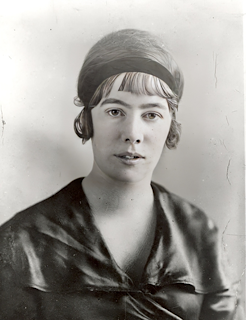
Born Helen Ruth Gifford on November 9, 1880, in Phibsborough, Dublin, to Frederick Gifford, a solicitor, and Isabella Julia Gifford (née Burton), Gifford is the fifth child and second eldest daughter of the family of six daughters and six sons. Her father is a Catholic while her mother, a niece of the painter Frederic Burton, is rigorously Protestant. All the children are brought up in the Church of Ireland. The men, emigrate and remain unionist while the women are active nationalists. Most famous are the two youngest, the artistGrace Gifford, and the journalist and broadcaster Sidney Czira.
Gifford grows up in Rathmines and goes to school at Alexandra College. She trains as a domestic economy teacher and works for seven years at a series of positions in County Meath.
Gifford experiences the living conditions of the landless rural poor while lodging in labourers’ cottages during this time. As a result, she becomes a supporter of the campaigns of the land agitator and nationalist MPLaurence Ginnell.
During the 1913 Dublin lock-out Gifford assists James Larkin enter the Imperial Hotel, on August 31 to address the crowd. He enters in disguise, that of an elderly and infirm clergyman. She poses as his niece. She speaks to the hotel staff to prevent Larkin’s strong Liverpool accent giving away his identify. This is the speech which precipitates the “Bloody Sunday” police baton charge. Gifford goes on to be a founding member of the Irish Citizen Army (ICA). This group is attractive to many women due to the feminist beliefs of James Connolly.
Gifford gives lessons on camp cookery in Liberty Hall and finds jobs for recruits coming in from abroad. As a result of this work she, very fatefully, introduces Michael Collins to her future brother-in-law Joseph Plunkett who go on to serve together in the 1916 Easter Rising. Collins is Plunkett’s aide-de-camp.
Gifford is the only one of her sisters to actively participate in the rising itself. She is with the ICA’s St. Stephen’s Green contingent alongside Countess Markievicz. Throughout the week she supervises the garrison’s provisions in the Royal College of Surgeons building, commandeering food from shops and bread vans, and by courier from other garrisons. She also ensures the delivery of provisions to troops both in the college with her and in outlying posts. She is one of the women arrested at the surrender and jailed in Kilmainham Gaol. At the same time, in the same prison her sister Grace marries Joseph Plunkett hours before his execution. Only twelve women are detained after the main release of women prisoners on May 8, 1916. Gifford is one of those transferred to Mountjoy Prison until her release on June 4, 1916. Afterward she continues to be as involved in the campaigns.
After her time in prison, Gifford travels through England to the United States where she and other women veterans of Easter week lecture throughout America. While there she marries Joseph Donnelly, of Omagh, County Tyrone in 1918. In 1921 she and their year-old daughter Maeve leave him to return to Ireland.
Frederick Gifford dies in September 1917 and leaves Gifford £800. However, she is was not well off. She becomes a broadcaster and journalist for the national radio and the Irish press. Holding to her upbringing, she remains a staunch Protestant, unlike four of her sisters, who had married Catholics.
Gifford becomes devoted to preserving the historical record of the independence movement. Noticing the huge number of visitors for the 1932 Eucharistic Congress, she organises a small exhibition there of 1916 memorabilia for the National Museum of Ireland. She is irritated by the display of Catholic religious artifacts there. She campaigns for a permanent exhibition of recent Irish nationalist history. She coordinates a substantial body of material pertinent to nationalist organisations, the Easter Rising, and the Irish War of Independence, which now forms the core of the present collection.
Over the years Gifford is secretary of the Old IRA Association, a member of the Old Dublin Society, and a founder of the Kilmainham Gaol Restoration Society. She also looks after stray and neglected dogs and cats. She dies at the age of 90 on June 23, 1971, at the Gascoigne nursing home in Rathmines, Dublin.
(Pictured: Irish nationalist Nellie Gifford taken in Boston in 1917)
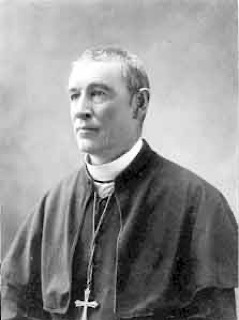
On an 1880 trip through the Colony of Victoria, Gibney is traveling by train between Benalla and Albury when at Glenrowan, he disembarks to offer assistance during the Siege of Glenrowan. Ned Kelly and his gang have been cornered by the police in a local hotel, which the police set afire in order to draw out the remaining bushrangers. Gibney enters the burning building in an attempt to rescue anyone inside, and finds the bodies of gang members Joe Byrne, Dan Kelly and Steve Hart, as well as the mortally wounded hostage Martin Cherry, who he helps retrieve and to whom he gives the last rites. He also tends to the injured Ned Kelly following his capture, hears his confession and gives him the last rites.
In January 1887, Gibney is consecrated as Bishop of Perth. His episcopate is marked by a number of poor investment decisions as the diocese purchases shops, offices, houses, and a hotel in Perth as well as a newspaper, exerting editorial influence by banning the publication of horse racing information, which leads to the paper’s eventual demise. As the diocese’s debts mount, he is forced to resign in May 1910. During his episcopate he is closely involved with the founding of the Beagle BayAboriginal community north of Broome, along with what eventually becomes St. John of God Health Care.
During restoration work in the cathedral from 2003 to 2006, the brick and plaster crypt containing the coffins of Gibney and Bishop Martin Griver are discovered by archaeologists under the floorboards of the cathedral.
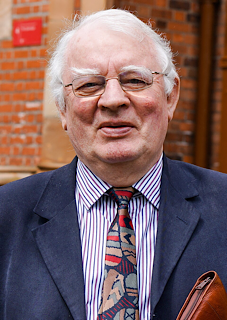
Currie becomes an active member in the Northern Ireland Civil Rights Association (NICRA). He later speaks about the effect of partition on Catholics in Northern Ireland: “Partition was used to try to cut us off from the rest of the Irish nation. Unionists did their best to stamp out our nationalism and, the educational system, to the extent it could organise it, was oriented to Britain and we were not even allowed to use names such as Séamus or Seán. When my brothers’ godparents went to register their birth, they were told no such names as Séamus or Seán existed in Northern Ireland and were asked for the English equivalent.”
Currie contests the 1979 United Kingdom general election and 1986 by-election in the Fermanagh and South Tyrone seat, but is unsuccessful on both attempts. He also is elected to the Northern Ireland Assembly in 1982 for the same seat. That Assembly, which is an attempt by the Government of the United Kingdom to reintroduce devolved power-sharing, collapses in 1986 without executive ministerial functions ever being transferred to it from the UK Secretary of State for Northern Ireland as no political agreement can be reached on power-sharing between the parties owing to nationalists abstentionism over the constituency boundaries used to elect members, and unionist opposition to the Anglo-Irish Agreement of 1985.
Following his decision to quit Northern Ireland politics, and relocate his family to County Kildare, Currie becomes actively involved in politics in the Republic of Ireland. Partly due to his long-standing doubts about the commitment of politicians in the Republic to the plight of northern nationalists, he join the Fine Gael party in 1989. He is elected as a Fine Gael TD for Dublin West at the 1989 Irish general election.
In 1990, Fine Gael selects Currie as their candidate for the 1990 Irish presidential election, running against Tánaiste and Fianna Fáil TD, Brian Lenihan Sr, and Senator Mary Robinson for the Labour Party. The 1990 election is the first contested election for the Irish Presidency in 17 years. Currie receives 267,902 first-preference votes (approximately 17%) and is eliminated on the first count. The distribution of his votes sees Mary Robinson elected as Ireland’s first female president on the second count, beating Lenihan by more than 86,000 votes.
In his 2004 autobiography All Hell will Break Loose, Currie writes about his experience of running in the presidential election, and the prejudice he faced as a nationalist from Ulster in southern politics: “What annoyed, indeed angered me most was the suggestion that because I came from the North, I was not a real Irishman … what I called the partitionist mentality … [during the election campaign] the [then Fianna Fáil] Minister for Justice [Ray Burke] said Fine Gael leader Alan Dukes ‘had to go to Tyrone to find a candidate for the presidency’ … it was hard to take, particularly from so-called republicans.”
Following his defeat in the presidential election, Currie holds his Dáil seat in Dublin West at the 1992 and 1997 Irish general elections. Following the formation of the so-called Rainbow Coalition between Fine Gael, Labour and Democratic Left, on December 20, 1994, newly appointed TaoiseachJohn Bruton appoints him as a Minister of State with responsibility for Children’s Rights at the Departments of Health, Education and Justice, becoming the first ever minister in an Irish Government with dedicated responsibility for children. He holds this post until the appointment of a new Irish Government on June 26, 1997, following the 1997 Irish general election.
At the 2002 Irish general election Currie contests the new constituency of Dublin Mid-West, and fails to be elected. He immediately announces his retirement from electoral politics. He continues to speak and campaign for civil rights across the island of Ireland and for causes he believes in, such as justice for the families of the Disappeared during the Troubles. He and his wife and family are personal friends of the family of one of the Disappeared, Columba McVeigh, from Donaghmore, County Tyrone. His daughter Emer Currie is elected in his former constituency of Dublin West at the 2024 Irish general election.
Following the deaths of Seamus Mallon and John Hume in January and August 2020 respectively, Currie becomes the last surviving founder of the SDLP.
Currie dies on November 9, 2021, at the age of 82 at his residence in Derrymullen, County Kildare. Following an initial funeral mass in Allentown, County Kildare, his remains are transferred to his original family home in Edendork, near Dungannon, County Tyrone, where a second funeral mass was celebrated at St. Malachy’s Church, Edendork. He is buried alongside his parents in the cemetery adjoining the church.
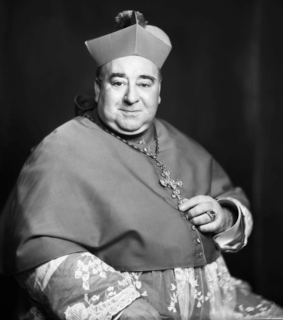
Downey’s tenure sees the construction and dedication of the crypt of Liverpool Metropolitan Cathedral, built to a design by Sir Edwin Lutyens, although the Cathedral itself is never completed as he had envisaged. A picture of Lutyens proposed cathedral is printed on postcards sold to raise funds.
In 1929, before the actual construction begins, Downey states, “Hitherto all cathedrals have been dedicated to saints. I hope this one will be dedicated to Christ himself with a great figure surmounted on the cathedral, visible for many a mile out at sea.” He also declares that while the Cathedral will not be medieval and Gothic, neither will it be as modern as the works of Jacob Epstein, a statement somewhat at odds with the design that is finally realised after his death.
Downey dies in Liverpool at the age of 72 on June 16, 1953, having served as Liverpool’s archbishop for twenty-four years. His remains are interred in a crypt at Liverpool Metropolitan Cathedral, Liverpool.
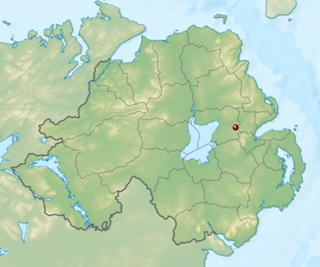
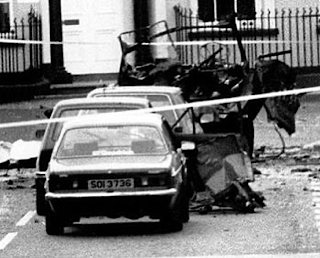
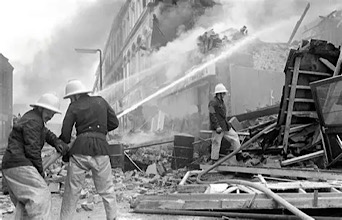
On June 15, 1988, an unmarked military van carrying six British Army soldiers is blown up by the Provisional Irish Republican Army (IRA) at Market Place in Lisburn, County Antrim, Northern Ireland. The explosion takes place at the end of a charity marathon run in which the soldiers had participated. All six soldiers are killed in the attack – four outright, one on his way to hospital and another later on in hospital.
Lisburn is the headquarters of the British Army in Northern Ireland. Four of the dead are from the Royal Corps of Signals while the other two are from the Green Howards and the Royal Army Ordnance Corps. A booby trap bomb is hidden under the Ford Transit van in which the soldiers are traveling, and is designed in such a way that the blast goes upward to cause maximum damage to the vehicle. Eleven civilian bystanders are injured, including a two-year-old child and 80-year-old man. The bombing is sometimes referred to as the Lisburn “Fun Run” bombing.
On Wednesday, June 15, 1988, at 8:50 p.m., an unmarked blue Ford Transit van carrying six off-duty British soldiers in civilian clothes drives off from a leisure centre carpark in Lisburn. The soldiers have just taken part in the “Lisburn Fun Run”, a 13-mile (21 km) charity half marathon held in the town. They leave the van unattended in the car park, which is the start and finish point for the run. It is there that an IRA active service unit (ASU), who has been following the van, hides a bomb underneath the vehicle. The half marathon and shorter “fun runs” are organised by Lisburn Borough Council, together with the YMCA, to raise funds for the disabled. There are 4,500 participants that day and at least 200 British Army personnel have been given leave to participate in the event.
Nine minutes later, the van stops at traffic lights at Market Place, in Lisburn’s town centre. As the van moves on, the seven-pound (3.2 kg) bomb detonates, turning the van into a massive fireball and instantly killing four of the soldiers as the vehicle disintegrates with the force of the blast. The Semtex device has been designed in a cone shape to channel the blast upward, thereby causing maximum damage to the vehicle and the soldiers inside. The area around Market Place is crowded with onlookers, including many teenagers and families with young children, although the biggest crowd is at the carpark. In all, about 10,000 onlookers have attended the charity run. There is pandemonium as frightened parents search for their children, while others rush to give aid to the dead and dying soldiers before fire engines and ambulances arrive.
Eleven civilian bystanders are injured in the attack, including a two-year-old child and an 80-year-old man. Another soldier dies on the way to hospital while a sixth soldier dies later that night after undergoing surgery for severe head injuries. The dead soldiers are stationed at Ebrington Barracks in Derry and are returning to base when the bomb goes off. Four of the men – Sergeant Michael Winkler (31), Signalman Mark Clavey (24), Lance Corporal Graham Lambie (22), and Corporal William Patterson (22) – are from the Royal Corps of Signals, while the other two – Corporal Ian Metcalf (36) and Lance Corporal Derek Green (20) – are from the Green Howards and Royal Army Ordnance Corps respectively.
Lisburn is a mainly Ulster Protestant town, 14 miles (23 km) southwest of Belfast. It serves as the garrison headquarters of the British Army in Northern Ireland. Six months before the van bombing, a booby trap bomb planted by the IRA kills Ulster Defence Association (UDA) leader John McMichael in the town.
The van bombing results in the greatest loss of life suffered by the British Army since eleven soldiers were killed in the Droppin Well Disco bombing on December 6, 1982.
On June 16, the Provisional IRA Belfast Brigade claims responsibility for the bombing, promising to wage “unceasing war” against the British security forces in Northern Ireland. Sinn Féin president Gerry Adams allegedly says that the IRA’s killing of the six soldiers is “vastly preferable” to killing members of the (locally recruited) Ulster Defence Regiment (UDR) or Royal Ulster Constabulary (RUC). The leisure centre is forced to remain shut for a time after the loyalistProtestant Action Force (a cover-name of the UVF) issues a warning that they regard Catholic staff working there as “legitimate targets,” inferring that they may have had a hand in the bombing. Lisburn mayor Councillor William Bleakes condemns the threats by the PAF.
That same day, Tom King, then Secretary of State for Northern Ireland, travels to Lisburn where he holds a meeting with Lieutenant General Sir John Waters, the British Army Commander in Northern Ireland, and senior RUC officers. They discuss the attack and proposals for heightened security. The soldiers had failed to follow proper security procedures, as they had left their vehicle unguarded for over two hours and had then driven off without having checked under it beforehand. After the Lisburn meeting, King flies to London where he reports directly to British Prime MinisterMargaret Thatcher, who describes the attack as a “terrible atrocity.” However, she rejects demands from Conservative members of Parliament to bring back internment, regarding the proposal as “a very serious step.”
In his statement to the House of Commons, Tom King suggests that there would have been a much higher death toll had the bomb exploded in the carpark, where thousands of people had gathered after the run.
The Republic of Ireland‘s government also strongly condemns the killings and extends its sympathy to the families of the dead soldiers. The bombing is a topic of debate in the Seanad Éireann on June 16, 1988. Bishop Cahal Daly of the Roman Catholic Diocese of Down and Connor denounces the bombers and the killings in the “strongest possible terms.”
Questions are raised as to how the IRA knew the soldiers were attending the charity run in Lisburn, how they recognised their unmarked van, and how the unit was able to plant a bomb in the predominantly loyalist town without being spotted, despite the number of people in the carpark. The RUC believes that the bombers may have been wearing sports gear as they mingled with the crowd that evening. They appeal to onlookers who had attended the event to hand over any film they may have taken of the “fun run” in an attempt to identify the IRA bombers.
The following Saturday, between 1,000 and 2,000 people gather in Lisburn town centre to attend a remembrance service for the six soldiers. A book of condolences is also opened.
McNamara and Newman are particularly outspoken on the issue of a proposed anti-abortion amendment to the Constitution of Ireland. While other bishops advocate people vote with their conscience in the referendum on the issue, McNamara and Newman instruct Catholics that they have a duty to “vote yes” to the referendum.
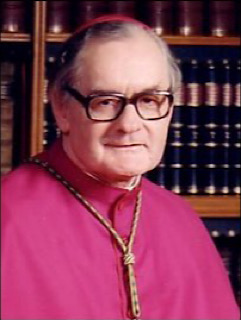
In 1984, the Archdiocese of Dublin becomes vacant when Archbishop Ryan is given a senior appointment in the Roman Curia. Ryan is expected to be made a cardinal as a result of the appointment but dies suddenly in office before a consistory can be held. McNamara’s selection to replace the more liberal Ryan in Dublin creates media reports linking his appointment to the ongoing tensions between the papal nuncio in Ireland, Archbishop Gaetano Alibrandi, and the liberal Fine Gael–Labour Partycoalition under Garret FitzGerald. Relations between Alibrandi and the coalition break down, with the government requesting that Alibrandi be removed because of his suspected closeness to Irish republicans in Sinn Féin and to the opposition Fianna Fáil party and in particular its leader, Charles Haughey. Critics accused Alibrandi of engineering McNamara’s appointment in the belief that the outspoken McNamara can help derail the coalition’s liberal policies on divorce and contraception.
McNamara, as expected, takes a far more outspoken stance of issues than had Ryan previously. While the coalition succeeds in liberalising the law on contraception, its efforts to amend the constitution on divorce are defeated.
McNamara’s service in Dublin is short-lived. Already suffering from what proves to be terminal cancer, he dies on April 8, 1987 after a three year battle with the disease, months after the Fine Gael minority government is defeated in the 1987 Irish general election. He is succeeded as archbishop by a university lecturer, Desmond Connell.
In the early 2000s, amid growing scandals within the Catholic Church in Ireland about clerical sex abuse, it is revealed that as archbishop McNamara had sought legal advice as to the Church’s liability arising from such abuse.
On June 5, 1976, a bomb explodes at the door of the Times Bar on York Road, killing two Protestants. The pub is frequented by members of the Ulster Defence Association (UDA), a legal loyalist paramilitary group. Irish republicans are blamed for the bombing. Shortly after, the UVF Brigade Staff (its Shankill Road-based leadership) decide to hit back by attacking the Chlorane Bar. It is a hastily arranged operation devised by its military commander “Bunter,” whom investigative journalistMartin Dillon refers to as “Mr. F.” The Chlorane Bar is located at 23 Gresham Street in Belfast’s city centre, near Smithfield Market. Its clientele is mixed (Protestant and Catholic), which is unusual during The Troubles. On August 17, 1973, the Chlorane Bar had been firebombed, however, no one was injured as the pub was closed at the time of the attack. Later that same month, the Ulster Freedom Fighters (UFF), a cover name sometime used by the UDA, claim responsibility for a car bomb which exploded in Gresham Street. Although there were no human casualties, a pet shop located near the bomb’s epicentre was damaged in the blast and a number of animals inside the building were either killed or injured.
The attack is planned and executed by the UVF platoons based at the Brown Bear and the Windsor Bar respectively. These are two pubs located on the Shankill Road and regularly frequented by UVF members. Dillon sometimes refers to the former platoon as the “Brown Bear Team” because the members generally meet at that particular pub, which faces Shankill Library on the corner of Mountjoy Street. To carry out the attack, along with the procuring of weapons and masks, a black taxi is hijacked by two young men outside the Long Bar on the Shankill Road to transport the gunmen to the Chlorane Bar. Taxi driver Mark Hagan and a passenger are held hostage at the Windsor Bar.
The Chlorane Bar is likely chosen for its nearness to the Shankill Road, affording the attackers a speedy getaway. There is not much of a security presence that evening in the area. The driver of the taxi, with four specifically chosen armed men seated in the rear of the vehicle in the manner of genuine passengers, makes his way from the Shankill Road to North Street and turns south into Gresham Street. Upon arrival outside the Chlorane Bar, the four gunmen don their masks, devised from yellow money bags, and exit the taxi.
At 10:00 p.m., the four masked gunmen storm through Chlorane Bar’s front door leading to the public bar. There are about sixteen customers inside the pub at the time. One of the four gunmen is Robert “Basher” Bates, a member of the violent Shankill Butchers gang led by Lenny Murphy, who is in police custody at the time the attack against the Chlorane takes place. Bates is the only one of the four to have been from the “Brown Bear Team.” The hit squad is commanded by a “Mr. G,” leader of the Windsor Bar UVF platoon, with “Mr. D” as his second-in-command and “Mr. C” completing the team. Entering the bar in single file, “Mr. G” orders everybody to stand up, and then asks the startled customers whether there are any “Prods” (Protestants) among them. William Greer, a Protestant, thinking the gunmen are from the Irish Republican Army, quickly flees to the men’s toilet where he places his feet up against the door. Customer Frederick Graham and his girlfriend, Pat Mahood, assume the same thing. “Mr. G” tells the customers to separate into two groups, with the Protestants standing at the bottom end of the bar, and the Catholics at the top.
When one man, Edward Farrell, admits to being a Catholic, the UVF men open fire. Farrell tries to run toward the toilet but is shot dead. The Catholic owner of the Chlorane, 64-year-old James Coyle, is standing behind the bar when he is hit at close-range. The bullet enters his heart and he dies instantly. The gunmen continue firing and two Protestant men, Daniel McNeil and Samuel Corr, are also struck by the hail of bullets. McNeil is killed on the spot and Corr is fatally wounded. Another Catholic man, John Martin, is shot and dies of his injuries on June 23. Several other customers are hit as gunfire is sprayed around the bar. One customer pretends to be dead, however, a gunman walks over to where he lay and deliberately fires three shots into his thigh, knee, and below the ankle. The man later recounts that he had then looked up to see “men lying shot all over the place.” William Greer, hiding in the toilet, is shot when one of the gunmen fire through the door. He survives despite being hit in the leg and neck. There are more customers upstairs in the lounge area, but although they hear the gunshots, the gunmen never go near them. Dillon maintains that it had not been the UVF unit’s intention to kill any Protestants.
“Mr. G” calls a halt to the shooting, saying “that’s it,” and the four-man UVF team nonchalantly walks out of the pub and re-enters the hijacked black taxi, which is parked so the driver has easy access to North Street. This route offers a quick return to the Shankill. After the four men get into the back seat, the driver (“Mr. H”) drives off. As the taxi passes by the Catholic Unity Flats area, three shots are fired from the vehicle. Two young men walking nearby get a look at the driver. He is described as being around 38 to 40 years old and having shoulder-length, black curly hair. Upon the taxi’s return to the Shankill, Mark Hagan and the passenger are released. They immediately go to the Tennent Street Royal Ulster Constabulary (RUC) Station off the Shankill where they report the taxi’s hijacking. The shooting team proceeds to the Long Bar pub where “Mr. I” (commander of UVF 1st Battalion) procures a forty-ounce bottle of vodka for “Mr. G” and “Mr. D” – their payment for leading the operation.
Having heard the gunshots, a barmaid serving in the upstairs lounge goes downstairs to investigate and discovers the body of her employer, James Coyle, lying on the floor behind the bar and those of the other dead and wounded. The first policeman on the scene is Constable George McElnea, from the RUC Special Patrol Group in Tennent Street. He quickly notices the pile of bodies near the men’s toilet as Samuel Corr stumbles toward him, gravely injured. McElnea places Corr on a bench and offers what assistance he can but to no avail. Corr dies of his gunshot wounds before the ambulance arrives. Alan McCrum, a Scenes of Crime officer, appears at the Chlorane fifteen minutes after the shootings. He retrieves 24 spent bullet casings from the floor and determines that most of the shots had been fired at the rear of the pub. Later ballistic testing establishes that the weapons used in the attack were a .22 caliber pistol, a 9 mm pistol, and two .45 snub-nosed revolvers. Police believe one of the victims, Daniel McNeil, had tenuous UVF connections, although he is not an active member.
The hijacked black taxi is found by police the following morning in a cul-de-sac in Beresford Street, off the Shankill Road. A cyclist, who had witnessed the masked gunmen entering the Chlorane Bar, describes the four men as having been in the 20 to 30 age group, all about 5’10 in height and well-built. The last gunman to enter had shoulder-length brown hair. The witness had gone to a nearby British Army post where he told soldiers what he had seen.
Ten days after the gun attack, the Chlorane Bar is blown up by a bomb. Three weeks after the attack the Provisional IRA, using their sometime cover-name of the “Republican Action Force“, enter Walker’s Bar in Templepatrick and kill three Protestant civilians in retaliation for the Chlorane attack. As part of this series of deadly tit for tat attacks on pubs, the UVF responds by killing six customers at the Catholic-owned Ramble Inn outside Antrim.
No one is ever charged with the shootings. In February 1979, Bates is convicted of the murders he had committed as part of the Shankill Butchers, and given ten life sentences. In his statement to the police following his arrest in 1977, he recounts his role in the Chlorane Bar attack. He alleges while working as a barman in the Long Bar on the evening of June 5, 1976, he is approached by the UVF military commander, “Mr. F”, who informs him of a job in which he is to take part that same evening. It is decided to attack the city centre pub in retaliation for the IRA’s earlier bombing of The Times pub. Bates goes on to say that “Mr. I” provides the weapons which are used in the shooting and “Mr. J” (UVF Provost Marshal) procures the masks. Bates claims that his revolver malfunctions and therefore he never fires his gun during the attack. However, forensic evidence proves that two .45 revolvers had been fired inside the Chlorane. Upon his release from the HM Prison Maze, Bates is gunned-down in June 1997 by the son of James Curtis Moorhead, a UDA man he had killed in 1977.