seamus dubhghaill

Promoting Irish Culture and History from Little Rock, Arkansas, USA


Leave a comment

Disbandment of the Ulster Special Constabulary

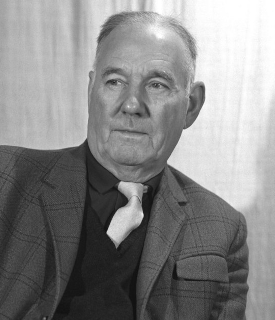
The Ulster Special Constabulary (USC), a quasi-military reserve special constable police force in Northern Ireland commonly called the “B-Specials” or “B Men,” is disbanded on April 30, 1970 following the release of the Hunt Report.

The USC is set up in October 1920, shortly before the partition of Ireland. It is an armed corps, organised partially on military lines and called out in times of emergency, such as war or insurgency. It performs this role most notably in the early 1920s during the Irish War of Independence (1920-22) and the Irish Republican Army (IRA) Border Campaign (1956-1962).

During its existence, 95 USC members are killed in the line of duty. Seventy-two of these are killed in conflict with the IRA in 1921 and 1922. Another eight die in air raids or IRA attacks during World War II. Of the remainder, most die in accidents but two former officers are killed during the Troubles in the 1980s.

The force is almost exclusively Ulster Protestant and as a result is viewed with great mistrust by Catholics. It carries out several revenge killings and reprisals against Catholic civilians during the Irish War of Independence. Unionists generally support the USC as contributing to the defence of Northern Ireland from subversion and outside aggression.

The abolition of the B Specials is a central demand of the Northern Ireland civil rights movement in the late 1960s. On April 30, 1970, the USC is finally stood down as a result of the Hunt Report, produced by a committee headed by John Hunt, Baron Hunt in 1969. Hunt concludes that the perceived bias of the Special Constabulary, whether true or not, has to be addressed. One of his other major concerns is the use of the police force for carrying out military style operations.

It has been argued that the USC’s failure to deal with the 1969 disturbances were due to a failure on behalf of the Northern Ireland government to modernise their equipment, weaponry, training and approach to the job. Upon the disbandment of the USC, many of its members join the newly established Ulster Defence Regiment (UDR), the part-time security force which replaces the B Specials. Unlike the Special Constabulary, the UDR is placed under military control. Other B Specials join the new part-time Reserve of the Royal Ulster Constabulary (RUC). The USC continues to do duties for a month after the formation of the UDR and RUC Reserve to allow both of the new forces time to consolidate.

In the final handover to the Ulster Defence Regiment, the B Specials have to surrender their weapons and uniforms. Despite the government’s concerns about the handover of weapons and equipment, every single uniform and every single weapon is surrendered.

After implementation of the Hunt report, the last night of duties for most B Men is March 31, 1970. On April 1, 1970 the Ulster Defence Regiment begins duties. Initially, the Regiment has 4,000 members who work part-time while the new special constabulary, the RUC Reserve which replaces the B-Specials, initially consists of 1,500 members.

Since disbandment the USC has assumed a place of “almost mythic proportions” within unionist folklore, whereas in the Nationalist community they are still reviled as the Protestant only, armed wing of the unionist government “associated with the worst examples of unfair treatment of Catholics in Northern Ireland by the police force.” An Orange Order lodge is formed to commemorate the disbandment of the force called “Ulster Special Constabulary LOL No. 1970.” An Ulster Special Constabulary Association is also set up soon after the disbandment.


Leave a comment

Birth of Irish Writer Francis Stuart

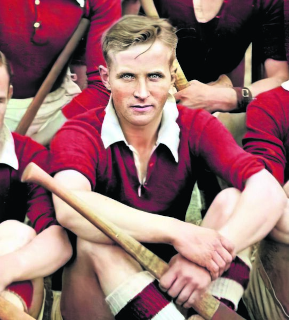
Henry Francis Montgomery Stuart, Irish writer, is born in Townsville, Queensland, Australia on April 29, 1902. He is awarded one of the highest artistic accolades in Ireland, being elected a Saoi of Aosdána, before his death in 2000. His years in Nazi Germany lead to a great deal of controversy.

Stuart is born to Irish Protestant parents, Henry Irwin Stuart and Elizabeth Barbara Isabel Montgomery. His father is an alcoholic and kills himself when Stuart is an infant. This prompts his mother to return to Ireland and Stuart’s childhood is divided between his home in Ireland and Rugby School in England, where he boards.

In 1920, at age 17, Stuart becomes a Catholic and marries Iseult Gonne, daughter of Maud Gonne. Her father is the right-wing French politician Lucien Millevoye, with whom Maud Gonne had had an affair between 1887 and 1899. Because of her complex family situation, Iseult is often passed off as Maud Gonne’s niece in conservative circles in Ireland. Iseult has a brief affair with Ezra Pound prior to meeting Stuart. Pound and Stuart both believe in the primacy of the artist over the masses and are subsequently drawn to fascism, Stuart to Nazi Germany and Pound to Fascist Italy.

Gonne and Stuart have a baby daughter who dies in infancy. Perhaps to recover from this tragedy, they travel for a while in Europe but return to Ireland as the Irish Civil War begins. Unsurprisingly given Gonne’s strong opinions, the couple are caught up on the anti-Treaty Irish Republican Army (IRA) side of the fight. Stuart is involved in gun running and is interned following a botched raid.

After independence, Stuart participates in the literary life of Dublin and writes poetry and novels. His novels are successful, and his writing is publicly supported by W. B. Yeats.

Stuart’s time with Gonne is not an entirely happy time as both he and his wife apparently struggle with personal demons and their internal anguish poisons their marriage. In letters to close friend W. B. Yeats, Maud Gonne characterizes Stuart as being emotionally, financially, and physically abusive towards Iseult.

During the 1930s Stuart becomes friendly with German Intelligence (Abwehr) agent Helmut Clissmann and his Irish wife Elizabeth. Clissmann is working for the German Academic Exchange Service and the Deutsche Akademie (DA). He is facilitating academic exchanges between Ireland and the Third Reich but also forming connections which might be of benefit to the Abwehr. Clissmann is also a representative of the Nazi Auslandorganisation (AO), the Nazi Party’s foreign organisation, in pre-war Ireland.

Stuart is also friendly with the head of the German Legation in Dublin, Dr. Eduard Hempel, largely as a result of Maud Gonne MacBride’s rapport with him. By 1938 he is seeking a way out of his marriage and the provincialism of Irish life. Iseult intervenes with Clissmann to arrange for Stuart to travel to Germany to give a series of academic lectures in conjunction with the DA. He travels to Germany in April 1939 and visits Munich, Hamburg, Bonn and Cologne. After his lecture tour, he accepts an appointment as lecturer in English and Irish literature at Berlin University to begin in 1940. At this time, under the Nuremberg Laws, the German academic system has barred Jews.

In July 1939, Stuart returns home to Laragh, County Wicklow, and after his plans for traveling to Germany are finalised, he receives a visit from his brother-in-law, Seán MacBride, following the seizure of an IRA radio transmitter on December 29, 1939, which had been used to contact Germany. Stuart, MacBride, Seamus O’Donovan, and IRA Chief of Staff Stephen Hayes then meet at O’Donovan’s house. Stuart is told to take a message to Abwehr HQ in Berlin. Upon arrival in Berlin in January 1940, he delivers the IRA message and has some discussion with the Abwehr on conditions in Ireland and the fate of the IRA-Abwehr radio link. Around August 1940, he is asked by Sonderführer Kurt Haller if he will participate in Operation Dove and he agrees, although he is later dropped in favour of Frank Ryan.

Between March 1942 and January 1944 Stuart works as part of the Redaktion-Irland team, reading radio broadcasts containing Nazi propaganda which are aimed at and heard in Ireland. In his broadcasts he frequently speaks with admiration of Adolf Hitler and expresses the hope that Germany will help unite Ireland. He is dropped from the Redaktion-Irland team in January 1944 because he objects to the anti-Soviet material that is presented to him and deemed essential by his supervisors. His passport is taken from him by the Gestapo after this event.

In 1945 Stuart plans to Ireland with a former student Gertrude Meissner. They are arrested and detained by Allied troops. Following their release, Stuart and Meissner live in Germany and then France and England. They marry in 1954 after Iseult’s death and in 1958 they return to settle in Ireland. In 1971 Stuart publishes his best-known work, Black List Section H, an autobiographical fiction documenting his life and distinguished by a queasy sensitivity to moral complexity and moral ambiguity.

In 1996 Stuart is elected a Saoi of Aosdána, a high honour in the Irish art world. Influential Irish language poet Máire Mhac an tSaoi objects strongly, referring to Stuart’s actions during the war and claiming that he holds anti-Semitic opinions. When it is put to a vote, she is the only person to vote for her motion. She resigns from Aosdána in protest, sacrificing a government stipend by doing so. While the Aosdána affair is ongoing, The Irish Times columnist Kevin Myers attacks Stuart as a Nazi sympathiser. Stuart sues for libel and the case is settled out of court. The statement from The Irish Times read out in the High Court accepts “that Mr. Stuart never expressed anti-Semitism in his writings or otherwise.”

For some years before his death Stuart lives in County Clare with his partner Fionuala and in County Wicklow with his son Ian and daughter-in-law Anna in a house outside Laragh village. He dies of natural causes on February 2, 2000, at the age of 97 in County Clare.


Leave a comment

Birth of Robin Eames, Primate of All Ireland & Archbishop of Armagh

Robert Henry Alexander “Robin” Eames, Anglican Primate of All Ireland and Archbishop of Armagh from 1986 to 2006, is born in Belfast on April 27, 1936, the son of a Methodist minister.

Eames spends his early years in Larne, with the family later moving to Belfast. He is educated at the city’s Belfast Royal Academy and Methodist College Belfast before going on to study at Queen’s University Belfast, graduating LL.B. (Upper Second Class Honours) in 1960 and earning a Ph.D. degree in canon law and history in 1963. During his undergraduate course at Queen’s, one of his philosophy lecturers is his future Roman Catholic counterpart, Cahal Daly.

Turning his back on legal studies for ordination in the Church of Ireland, Eames embarks on a three-year course at the divinity school of Trinity College, Dublin in 1960, but finds the course “intellectually unsatisfying.” In 1963 he is appointed curate assistant at Bangor Parish Church, becoming rector of St. Dorothea’s in Belfast in 1966, the same year he marries Christine Daly.

During his time at St. Dorothea’s, in the Braniel and Tullycarnet area of east Belfast, Eames develops a “coffee bar ministry” among young people but is interrupted by the Troubles. He turns down the opportunity to become dean of Cork and in 1974 is appointed rector of St. Mark’s in Dundela in east Belfast, a church with strong family links to C. S. Lewis.

On May 9, 1975, at the age of 38, Eames is elected bishop of the cross-border Diocese of Derry and Raphoe. Five years later, on May 30, 1980, he is translated to the Diocese of Down and Dromore. He is elected to Down and Dromore on April 23 and that election is confirmed on May 20, 1980. In 1986, he becomes the 14th Archbishop of Armagh and Primate of All Ireland since the Church of Ireland’s break with Rome. It is an appointment that causes some level of astonishment among other church leaders.

Drumcree Church, a rural parish near Portadown, becomes the site of a major political incident in 1996, when the annual Orangemen‘s march is banned by the Chief Constable of the Royal Ulster Constabulary from returning to the centre of Portadown via the nationalist Garvaghy Road after attending worship at Drumcree Church. Public unrest and violence escalate over the next three summers as other parades come under first police and later commission sanction.

Eames, as diocesan bishop and civil leader finds himself immersed in the search for a resolution to the issue. Within the wider Church of Ireland there is unease as it is a broad church in theology and politics including within its congregations nationalists in the south and unionists in the north. Eames, along with the rector of Drumcree, has to navigate this political and social controversy and seeks political assistance to diffuse tension. Some bishops in the Republic of Ireland call for Eames to close the parish church, including Bishop John Neill who later becomes Archbishop of Dublin. He refuses to do so, believing this action could precipitate greater unrest and possible bloodshed.

Eames is, for many years, a significant figure within the general Anglican Communion. In 2003, the self-styled ‘divine optimist’ is appointed Chairman of the Lambeth Commission on Communion, which examines significant challenges to unity in the Anglican Communion. The Commission publishes its report, the Windsor Report, on October 18, 2004.

At the Church of Ireland General Synod in 2006 Eames announces his intention to retire on December 31, 2006. Church law permits him to continue as primate until the age of 75 but he resigns, in good health, at the age of 69. On January 10, 2007, the eleven serving bishops of the Church of Ireland meet at St. Patrick’s Cathedral in Dublin and elect Alan Harper, Bishop of Connor, as Eames’s successor.


Leave a comment

Birth of Margaret Hassan, Irish-born Aid Worker in Iraq

Margaret Hassan, Irish-born aid worker also known as “Madam Margaret,” is born Margaret Fitzsimons in Dalkey, County Dublin on April 18, 1945. She works in Iraq for many years until she is abducted and murdered by unidentified kidnappers in Iraq in 2004. Her remains have never been recovered.

Soon after the end of World War II Hassan’s family moves to London, where she spends most of her early life and where her younger siblings are born. At the age of 27, she marries Tahseen Ali Hassan, a 29-year-old Iraqi studying engineering in the United Kingdom. She moves to Iraq with him in 1972, where she begins work with the British Council of Baghdad, teaching English. Eventually she learns Arabic and becomes an Iraqi citizen.

During the early 1980s, Hassan becomes the assistant director of studies at the British Council, later becoming director. Meanwhile, her husband works as an economist. She remains in Baghdad during the 1991 Gulf War, although the British Council suspends operations in Iraq, and she is left jobless at the end of it.

Hassan joins humanitarian relief organisation CARE International in 1991. Sanitation, health, and nutrition become major concerns in the sanctioned Iraq. She is crucially involved in bringing leukemia medicine to child cancer victims in Iraq in 1998. She becomes a vocal critic of the United Nations restrictions. She is opposed to the United States invasion of Iraq in 2003, arguing that the Iraqis are already “living through a terrible emergency. They do not have the resources to withstand an additional crisis brought about by military action.”

By 2004, Hassan is head of Iraqi operations for CARE. Well known in many of Baghdad’s slums and other cities, she is especially interested in Iraq’s young people, whom she calls “the lost generation.” Her presence draws large crowds of locals.

Hassan is kidnapped in Baghdad on October 19, 2004, and is killed some weeks later on November 8. In a video released of her in captivity she pleads for help and begs British Prime Minister Tony Blair to remove British troops from Iraq. She adds that she does not “want to die like Mr. Bigley,” a reference to Kenneth Bigley, who had been executed in Iraq only weeks earlier.

Patients of an Iraqi hospital take to the streets in protest against the hostage takers’ actions. On October 25, between 100 and 200 Iraqis protest outside CARE’s offices in Baghdad, demanding her release. Prominent elements of the Iraqi insurgency and Iraqi political figures condemn the kidnapping and call for her release. On November 2, Al Jazeera reports that the kidnappers threatened to hand her over to the group led by Abu Musab al-Zarqawi and who is responsible for the execution of Bigley. On November 6, a statement purportedly from al-Zarqawi appears on an Islamist website calling for the release of Hassan unless the kidnappers have information she is aligned with the invading coalition. The statement cannot be authenticated and Hassan’s whereabouts in the video are unknown.

On 15 November, U.S. Marines in Fallujah uncover the body of an unidentified blonde- or grey-haired woman with her legs and arms cut off and throat slit. The body cannot be immediately identified, but is thought unlikely to be Hassan, who has brown hair. There is one other western woman known missing in Iraq at the time the body is discovered, Teresa Borcz Khalifa, a Polish-born long-time Iraqi resident. Khalifa is released by her hostage takers on November 20.

On November 16, CNN reports that CARE has issued a statement indicating that the organisation is aware of a videotape showing Hassan’s execution. Al-Jazeera reports that it has received a tape showing Hassan’s murder but is unable to confirm its authenticity. The video shows Hassan being shot with a handgun by a masked man. It is not known who is responsible for Hassan’s abduction and murder. The group holding her never identifies itself in the hostage videos.

She remains a Roman Catholic throughout her life and never converts to Islam as is widely reported after her death. A Requiem Mass is held for her, after her death is confirmed, at Westminster Cathedral by Cardinal Cormac Murphy-O’Connor.

CARE International suspends operations in Iraq because of Hassan’s kidnapping. At least eight other women kidnapped by insurgents during the conflict are released unharmed by their captors. It is unclear why Hassan, who was opposed to the war, lived in Iraq for many years, held Iraqi citizenship, was married to an Arab Muslim and spoke fluent Arabic was killed.

On May 1, 2005, three men are questioned by Iraqi police in connection with the murder. On June 5, 2006, news reports emerge that an Iraqi man by the name of Mustafa Salman al-Jubouri has been sentenced to life imprisonment for “aiding and abetting the kidnappers” but two other men are acquitted. Al-Jubouri appeals this sentence and is given a shorter imprisonment.

An Iraqi man named Ali Lutfi Jassar al-Rawi, also known as Abu Rasha, an architect from Baghdad, is arrested by Iraqi and U.S. forces in 2008 after contacting the British Embassy in Baghdad and attempting to extort 1 million dollars in return for disclosing the location of Hassan’s body. Though Jassar signs statements confessing to the charges, he pleads not guilty, stating he was forced to sign them after receiving beatings and electrical shocks during questioning.

On June 2, 2009, the Press Association reports that Jassar is given a life sentence by Baghdad’s Central Criminal Court for being involved in Hassan’s abduction and murder, and for attempting to blackmail the British Embassy. Hassan’s family welcomes the court’s decision but pleads with Jassar to tell them where her body is so they can return her to Britain for burial. On July 14, 2010, a day before Jassar is due to appear in court for retrial, it is reported that he could not be located in the prison facility where he was being held. He had been missing for a month.


Leave a comment

Death of Charles Leslie, Jacobite Propagandist & Non-Juror

Charles Leslie, former Church of Ireland priest who becomes a leading Jacobite propagandist after the 1688 Glorious Revolution, dies in Glaslough, County Monaghan on April 13, 1722. One of a small number of Irish Protestants to actively support the Stuarts after 1688, he is best remembered today for his role in publicising the 1692 Massacre of Glencoe.

Leslie is born on July 27, 1650, in Dublin, the sixth son and one of eight surviving children of John Leslie (1571-1671) and Katherine Conyngham (or Cunningham), daughter of Dr. Alexander Cunningham, Dean of Raphoe. He is allegedly named after the executed Charles I and educated at Enniskillen school and Trinity College, Dublin. After his father dies in 1671, he studies law in London before changing career and being ordained as an Anglican priest in 1681. Shortly afterwards, he returns to the family estate at Glaslough in County Monaghan and marries Jane Griffith. They have a daughter, Vinigar Jane, who appears to have died young and two sons, Robert (1683-1744) and Henry who are also Jacobites and spend time in exile.

Leslie is appointed assistant curate for the Church of Ireland parish of Donagh but as most of his parish is Roman Catholic or Presbyterian, he has few duties. His father had been chaplain to Charles I and a key supporter of Caroline religious reforms, first in Scotland, then in Ireland as Bishop of Raphoe in 1633, while the estate at Glaslough was granted by Charles II in 1660 as a reward for his service. With this background, Leslie is a firm supporter of the Stuart dynasty, although deeply hostile to Catholicism and soon becomes involved in political and theological disputes.

When the Catholic James II becomes King in 1685, his brother-in-law Henry Hyde, 2nd Earl of Clarendon, is appointed Lord Lieutenant of Ireland. In July 1686, Leslie’s legal training results in Clarendon making him chancellor of Connor cathedral and later Justice of the Peace. Clarendon’s authority is overshadowed by his Catholic deputy Richard Talbot, 1st Earl of Tyrconnell, who begins undermining legal restrictions on Catholics embodied in the Test Act. Clarendon employs Leslie’s polemical skills to oppose the appointment of Catholics to public office, but he is recalled in 1687. When James is deposed by the Glorious Revolution in December 1688, Leslie is in the Isle of Wight.

Shortly afterwards, Leslie becomes Clarendon’s personal chaplain and like his patron refuses to take the oath of allegiance to William III and Mary II. Like other non-jurors, he is deprived of his Church offices and becomes instead one of the most prominent Jacobite and Tory propagandists. This includes a long dispute with his Trinity College contemporary William King, who supports the Revolution. Gilbert Burnet, Bishop of Salisbury, later names him ‘the violentest Jacobite’ active in England during these years.

Much of Leslie’s early writing focuses on Scotland, where the 1690 Settlement ends Episcopacy and restores a Presbyterian kirk. He uses this to inspire concern about William’s intentions towards the Church of England. Ironically, his modern fame now rests primarily on a pamphlet written in 1695, called Gallienus Redivivus, or Murther will out, &c. Being a true Account of the De Witting of Glencoe, Gaffney. The focus of this is William’s alleged complicity in the 1672 death of Dutch Republican leader Johan de Witt, with other crimes including Glencoe included as secondary charges. During the Jacobite rising of 1745, Charles Stuart orders Leslie’s pamphlet and the 1695 Parliamentary minutes of the investigation to be reprinted in the Edinburgh Caledonian Mercury.

During the 1690s, Leslie serves as a messenger between James’ court in exile at Château de Saint-Germain-en-Laye and the Non-Juror community in England, including the non-juror bishops Jeremy Collier, Thomas Ken and George Hickes. He defends Collier and two other non-juror priests when they become involved in a furor over the execution of Sir John Friend and Sir William Parkyns for their role in the 1696 Jacobite plot to assassinate William. Immediately prior to the execution, the clergymen declare the two absolved of their sins, effectively declaring the correctness of their actions, while also performing a rite not recognised by the Church of England.

In 1702, the accession of Queen Anne, the last Stuart monarch, causes a resurgence in Jacobite activity and in 1704, Leslie begins a weekly periodical initially called The Observator, later The Rehearsal of Observator and finally The Rehearsal. Although his Tory readership shares his High Church principles, he is primarily a Jacobite and violently opposes the common practice of ‘occasional conformity.’ The Rehearsal is forced to close in 1709 and he falls out with his former allies, including Henry Sacheverell whose trial helped the Tories win a landslide victory in the 1710 British general election.

Despite his Tory allies now being in government, a warrant is issued for Leslie’s arrest for his tract The Good Old Cause, or, Lying in Truth. In 1711 he escapes to Paris, where James Francis Edward Stuart has succeeded his father as the Stuart heir in 1701. He continues to write polemics and act as a Jacobite agent. However, after the failed Jacobite rising of 1715, France withdraws support for the Stuarts who are forced to leave France, eventually being invited to settle in Rome by Pope Benedict XIV. The Spanish-sponsored 1719 Rising in Scotland is judged to have done more damage to the Jacobite cause than otherwise, one of its leaders concluding “it bid fair to ruin the King’s Interest and faithful subjects in these parts.”

Despite these failures, Leslie remains a dedicated Jacobite but his lifelong antipathy towards Catholicism makes living in Rome as a Papal pensionary difficult, while hopes of converting James to Anglicanism fades due to his devout personal Catholicism. He returns to Paris in 1717 and in 1719 publishes a two folio-volume edition of his Theological Works. It is later claimed these placed him ‘very high in the list of controversial authors, the ingenuity of the arguments being equalled only by the keenest and pertinacity with which they are pursued.’ He invites friends and supporters to subscribe to these and by 1721, over 500 members of the House of Lords and House of Commons have pledged a total of £750. Charles Spencer, 3rd Earl of Sunderland finally allows him to return home, with the stipulation he cease his political activities.

Charles Leslie dies at Glaslough on April 13, 1722. His grandchildren include Charles Leslie MP, whose son in turn is John Leslie, Bishop of Kilmore, Elphin and Ardagh.

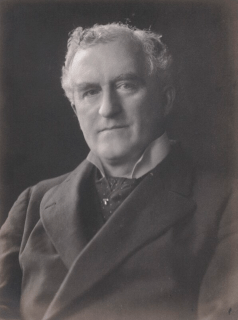
(Pictured: Charles Leslie, mezzotint by Unknown artist, National Portrait Gallery, NPG D5066)


Leave a comment

Introduction of the Third Home Rule Bill

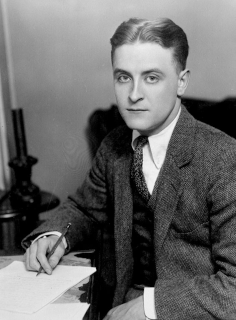
Prime Minister of the United Kingdom Herbert Henry Asquith, a member of the Liberal Party, introduces the Third Home Rule Bill on April 11, 1912, which would provide self-government for Ireland, an apparent triumph for Nationalist leader John Redmond.

As a minority party after 1910 elections, the Liberal Party depends on the Irish vote, controlled by John Redmond. To gain Irish support for the budget and the parliament bill, Asquith promises Redmond that Irish Home Rule will be the highest priority. It proves much more complex and time-consuming than expected. Support for self-government for Ireland had been a tenet of the Liberal Party since 1886, but Asquith has not been as enthusiastic, stating in 1903 (while in opposition) that the party should never take office if that government would be dependent for survival on the support of the Irish Nationalist Party. After 1910, though, Irish Nationalist votes are essential to stay in power. Retaining Ireland in the Union is the declared intent of all parties, and the Nationalists, as part of the majority that keep Asquith in office, are entitled to seek enactment of their plans for Home Rule, and to expect Liberal and Labour support. The Conservatives, with die-hard support from the Protestant Orange Order of Ulster, are strongly opposed to Home Rule. The desire to retain a veto for the House of Lords on such bills has been an unbridgeable gap between the parties in the constitutional talks prior to the December 1910 United Kingdom general election.

The cabinet committee (excluding Asquith) that in 1911 plans the Third Home Rule Bill opposes any special status for Protestant Ulster within majority-Catholic Ireland. In 1913, Asquith writes to Winston Churchill, stating that the Prime Minister has always believed and stated that the price of Home Rule should be a special status for Ulster. In spite of this, the bill as introduced in April 1912 contains no such provision and is meant to apply to all Ireland. Neither partition nor a special status for Ulster is likely to satisfy either side. The self-government offered by the bill is very limited, but Irish Nationalists, expecting Home Rule to come by gradual parliamentary steps, favours it. The Conservatives and Irish Unionists oppose it. Unionists begin preparing to get their way by force if necessary, prompting nationalist emulation. Though very much a minority, Irish Unionists are generally better financed and more organised.

Since the Parliament Act the Unionists can no longer block Home Rule in the House of Lords, but only delay Royal Assent by two years. Asquith decides to postpone any concessions to the Unionists until the bill’s third passage through the House of Commons, when he believes the Unionists will be desperate for a compromise. Biographer Roy Jenkins concludes that had Asquith tried for an earlier agreement, he would have had no luck, as many of his opponents wanted a fight and the opportunity to smash his government. Sir Edward Carson, MP for the University of Dublin and leader of the Irish Unionists in Parliament, threatens a revolt if Home Rule is enacted. The new Conservative leader, Bonar Law, campaigns in Parliament and in Northern Ireland, warning Ulstermen against “Rome Rule,” that is, domination by the island’s Catholic majority. Many who oppose Home Rule feel that the Liberals have violated the Constitution by pushing through major constitutional change without a clear electoral mandate, with the House of Lords, formerly the “watchdog of the constitution,” not reformed as had been promised in the preamble of the 1911 Act and thus justified actions that in other circumstances might be treason.

The passions generated by the Irish question contrast with Asquith’s cool detachment, and he writes about the prospective partition of the county of Tyrone, which has a mixed population, deeming it “an impasse, with unspeakable consequences, upon a matter which to English eyes seems inconceivably small, and to Irish eyes immeasurably big.” As the House of Commons debate the Home Rule bill in late 1912 and early 1913, unionists in the north of Ireland mobilise, with talk of Carson declaring a Provisional Government and Ulster Volunteer Forces (UVF) built around the Orange Lodges, but in the cabinet, only Churchill views this with alarm.

These forces, insisting on their loyalty to the British Crown but increasingly well-armed with smuggled German weapons, prepare to do battle with the British Army, but Unionist leaders are confident that the army will not aid in forcing Home Rule on Ulster. As the Home Rule bill awaits its third passage through the House of Commons, the so-called Curragh incident occurs in March 1914. With deployment of troops into Ulster imminent and threatening language by Churchill and the Secretary of State for War, John Seely, around sixty army officers, led by Brigadier General Hubert Gough, announce that they would rather be dismissed from the service than obey. With unrest spreading to army officers in England, the Cabinet acts to placate the officers with a statement written by Asquith reiterating the duty of officers to obey lawful orders but claiming that the incident had been a misunderstanding. Seely then adds an unauthorised assurance, countersigned by Sir John French, the professional head of the army, that the government has no intention of using force against Ulster. Asquith repudiates the addition, and requires Seely and French to resign, taking on the War Office himself, retaining the additional responsibility until hostilities against Germany begin.

Within a month of the start of Asquith’s tenure at the War Office, the UVF lands a large cargo of guns and ammunition at Larne, but the Cabinet does not deem it prudent to arrest their leaders. On May 12, Asquith announces that he will secure Home Rule’s third passage through the House of Commons (accomplished on May 25), but that there will be an amending bill with it, making special provision for Ulster. But the House of Lords make changes to the amending bill unacceptable to Asquith, and with no way to invoke the Parliament Act on the amending bill, Asquith agrees to meet other leaders at an all-party conference on July 21 at Buckingham Palace, chaired by King George V. When no solution can be found, Asquith and his cabinet plans further concessions to the Unionists, but this does not occur as the crisis in Europe erupts into war.

In September 1914, after the outbreak of the conflict, Asquith announces that the Home Rule bill will go on the statute book as the Government of Ireland Act 1914 but will not go into force until after the war. He adds that in the interim a bill granting special status to Ulster will be considered. This solution satisfies neither side.

(Pictured: H.H. Asquith, former Prime Minister of the United Kingdom)


Leave a comment

Death of William Walsh, Archbishop of Dublin

William Joseph Walsh, archbishop and nationalist, dies in Dublin on April 9, 1921. He serves as the Roman Catholic Archbishop of Dublin from July 3, 1885, until his death.

Walsh is born at 11 Essex Quay in Dublin, the only child of Ralph and Mary Perce Walsh. His father is a watchmaker and jeweler. He inherits his sympathy for Irish nationalism and independence from his father, who has the boy enrolled in the Repeal Association before he is two years old. He is educated locally at Mr. Fitzpatrick’s School on Peter St. and at St. Laurence O’Toole Seminary School, Harcourt Street, Dublin. In 1856, he goes to the Catholic University of Ireland and three years later to St. Patrick’s College, Maynooth where he becomes Professor of Theology in 1867. He is appointed vice-president of Maynooth in 1878 and president in 1880. A poor preacher, he makes the press his pulpit, making a name for himself in the areas of land law and education.

Walsh is ordained into the priesthood on May 22, 1866. He is appointed Archbishop of Dublin on July 3, 1885, followed by his consecration on August 2, 1885. He serves in this position until his death in 1921 and is succeeded by Edward Joseph Byrne.

The Land issue divides the Irish hierarchy. Walsh supports agrarian reform on behalf of the rural population. He is openly sympathetic to Irish nationalism, and an advocate of both Home Rule and agrarian land reform. It is his support for this movement, led by Michael Davitt, which leads the Vatican to honour Michael Logue in Armagh with the dignity of Cardinal in 1893 rather than Walsh in Dublin.

Walsh serves on the Senate of the Royal University of Ireland (1883–84) and as part of the Commission of National Education (1885–1901). He is appointed Chancellor of the newly founded National University of Ireland in 1908, a position he holds until his death, after which he is succeeded by Éamon de Valera.

Walsh has been described as “the greatest archbishop of Dublin since Laurence O’Toole (Lorcán Ua Tuathail). Walsh Road in Drumcondra, Dublin is named after him.


Leave a comment

Introduction of the Special Powers Act 1922

The Civil Authorities (Special Powers) Act (Northern Ireland) 1922, often referred to simply as the Special Powers Act, is an Act introduced by the Parliament of Northern Ireland on April 7, 1922, shortly after the establishment of Northern Ireland, and in the context of violent conflict over the issue of the partition of Ireland. Its sweeping powers make it highly controversial, and it is seen by much of the Irish nationalist community as a tool of Ulster unionist oppression. The Act is eventually repealed by the Northern Ireland (Emergency Provisions) Act 1973, following the abolition of Northern Ireland’s parliament and the imposition of direct rule by the British government.

At the start of the twentieth century, the people of Ireland are divided into two mutually hostile factions. The much larger group (nationalists) are mostly Roman Catholic, identified primarily as Irish, and want some form of Irish home rule or independence from Britain. The smaller group (unionists), concentrated primarily in the province of Ulster, are mostly Protestant, identified primarily as British and are committed to remaining within the United Kingdom. In the years before World War I, both groups establish armed militias intended to enforce their aims and protect their communities from the other side’s militias. The British government resolves to partition Ireland in an effort to alleviate unionists and nationalists, with the six most Protestant counties of Ulster forming Northern Ireland while the rest of Ireland achieves self-rule. This is accepted by most unionists as the best deal they are likely to get, but bitterly disappoints many nationalists, especially those who live in the six counties which become Northern Ireland. Many nationalists on both sides of the border feel that their country has been unjustly divided, and for many decades the Irish government claims that Northern Ireland is rightfully its territory.

Partition is formally established with the Government of Ireland Act 1920. This also establishes the Parliament of Northern Ireland, which comes into being the following year. Partition is followed by high levels of inter-communal violence, especially in Belfast. The Irish Republican Army (IRA), although it spends most of these years fighting in the Irish Civil War, aims to use armed force to end partition and compel the United Kingdom to withdraw sovereignty from Northern Ireland.

The Special Powers Act is presented as being necessary to re-establish peace and law and order in Northern Ireland and enable the government to “take all such steps and issue all such orders as may be necessary for preserving the peace and maintaining order,” although it is specified that the ordinary course of law should be interfered with as little as possible. The Minister of Home Affairs is empowered to make any regulation felt necessary to preserve law and order in Northern Ireland. Anyone who breaks these regulations can be sentenced to up to a year in prison with hard labour, and in the case of some crimes, whipping. A special summary jurisdiction is enabled to hear cases involving such crimes. The Minister of Home Affairs is also permitted to forbid the holding of inquests if he feels this is required to preserve order and peace.

The Schedule to the Act specifies actions which the government can take in order to preserve peace, although the body of the Act enables the government to take any steps at all which it thinks necessary. Actions specified in the Schedule include the closing of licensed premises, the banning in any area of meetings and parades in public places, the closing of roads, the taking of any land or property, and the destruction of any building. The Schedule also forbids the spreading by word of mouth or text any “reports or…statements intended or likely to cause disaffection to subjects of His Majesty.”

Because it is presented as emergency legislation, the Special Powers Act is initially current for only one year and has to be renewed annually. In 1928, however, it is renewed for five years and when this period expires in 1933 the Act is made permanent. According to John Whyte, this happens because, from 1925, nationalist MPs begin sitting in the Stormont parliament which they had initially boycotted. Unsurprisingly, they object strenuously to the renewal of the Act, and it is felt by the Ulster Unionist Party Minister of Home Affairs that it would be better to make the Act permanent than for Parliament annually to “wrangle” over it.

Initially, regulations under the Act are used mostly to curb immediate violence and disorder. One of the most controversial of these is internment without trial, outlined in Paragraph 23 of the Schedule. In the period from May 1922 to December 1924, 700 republicans are interned under the Act.

Political violence declines dramatically by 1925, and the government gradually shifts its emphasis from broad measures designed to return civil order to the province to more preventative regulations aimed at suppressing the threat posed by republican aspirations. Regulations banning meetings and parades and restrictions on the flying of the Irish tricolour become more common. Between 1922 and 1950, the government bans nearly 100 parades and meetings, the vast majority of which are nationalist or republican. No loyalist gathering is ever directly banned under the Act, although a few are caught in blanket bans against parades or meetings in a particular area. From 1922 until 1972, 140 publications are banned, the vast majority of which express republican viewpoints.

After the troubles of the early 1920s has died down, the provision for internment is not used until the IRA’s border campaign of the 1950s, in which several hundred republicans are interned. Following the outbreak of the Troubles in 1968, many within the Protestant community call for the reintroduction of internment. This occurs in 1971 and authorises internment of those suspected to be involved in terrorism. Although there is loyalist as well as republican terrorists at this time, of the 1,981 men interned, only 107 are loyalists.

Internment ends in 1975 but is credited with increasing support and sympathy for the Provisional Irish Republican Army amongst the Catholic community and outside of Northern Ireland. It helps to create political tensions which culminate in the 1981 Irish Hunger Strike and the death of MP Bobby Sands. Imprisonment under anti-terrorism laws specific to Northern Ireland continue until the 1998 Good Friday Agreement, but these laws require the right to a fair trial be respected.

The Act encounters further controversy in the 1970s due to the deployment of the British Army in Northern Ireland and its role in maintaining order and similar policing-style duties. In 1972, the government is forced to amend the Act in order to legalise the detention of internees arrested by soldiers. Martin Meehan had been arrested after escaping from Crumlin Road Gaol and charged with escaping from lawful custody. At his trial he successfully argues that under the Special Powers Act a soldier has no power of arrest and, as such, he has the legal right to escape. He is awarded £800 in compensation for being illegally detained for twenty-three days.


Leave a comment

Birth of Irish Novelist John Banim

John Banim, Irish novelist, short story writer, playwright, poet and essayist, sometimes called the “Scott of Ireland,” is born in Kilkenny, County Kilkenny on April 3, 1798. He also studied art, working as a painter of miniatures and portraits, and as a drawing teacher, before dedicating himself to literature.

At age four, Banim’s parents send him to a local school where he learns the basics of reading and grammar. At age five, he is sent to the English Academy at Kilkenny where his older brother Michael (1796–1874) is a student. After five years at the English Academy, he is sent to a seminary run by a Reverent Magrath, considered to be the finest Roman Catholic school in Ireland. After a year at the seminary, he transfers to another academy run by a teacher named Terence Doyle. Throughout his school years, he reads avidly and writes his own stories and poems. When he is ten, he visits the poet Thomas Moore, bringing along some of his own poetry in manuscript. Moore encourages him to continue writing and gives him a season ticket to his private theatre in Kilkenny.

At the age of 13, Banim enters Kilkenny College and devotes himself specially to drawing and miniature painting. He pursues his artistic education for two years in the schools of the Royal Dublin Society, and afterwards teaches drawing in Kilkenny, where he falls in love with one of his pupils, a 17-year-old girl named Anne. His affection is returned, but her parents disapprove of their relationship and send her out of town. Anne dies two months later of tuberculosis. Her death makes a deep impression on him and his health suffers severely and permanently.

In 1820 Banim goes to Dublin and settles finally to the work of literature. He publishes a poem, The Celt’s Paradise, and his play Damon and Pythias is performed at Covent Garden in 1821. During a short visit to Kilkenny he marries, and in 1822, in conjunction with Michael, plans a series of tales illustrative of Irish life, which should be for Ireland what the Waverley Novels are for Scotland. The influence of his model is distinctly traceable in his writings.

Banim then sets out for London, and supports himself by writing for magazines and for the stage. A volume of miscellaneous essays is published anonymously in 1824, called Revelations of the Dead Alive. The first series of Tales of the O’Hara Family appears in April 1825, which achieves immediate and decided success. One of the most powerful of them, Crohoore of the Bill Hook, is by Michael Banim.

In 1826, a second series is published, containing the Irish novel, The Nowlans. Banim’s health has given way, and the next effort of the “O’Hara family” is almost entirely the production of his brother Michael. The Croppy, a Tale of 1798 (1828), a novel of the Irish Rebellion of 1798, is hardly equal to the earlier tales, though it contains some wonderfully vigorous passages.

The Mayor of Windgap, and The Ghost Hunter (both by Michael Banim), The Denounced (1830) and The Smuggler (1831) follow in quick succession, and are received with considerable favour. Most of these deal with the darker and more painful phases of life, but the feeling shown in his last, Father Connell, is brighter and tenderer. Banim, meanwhile, suffers from illness and consequent poverty. In 1829, he goes to France, and while he is abroad a movement to relieve his wants is set on foot by the English press, headed by John Sterling in The Times. A sufficient sum is obtained to remove him from any danger of actual want.

Banim returns to Ireland in 1835, taking up residence in Dublin. On meeting him again in August, Michael Banim finds his brother’s condition to be that of a complete invalid. He is often in pain and has to use opiates to sleep, but during the short intervals between the attacks of his illness, he is able to enjoy conversation and the company of his brother and friends. In September he returns to Kilkenny and is received with an address from the citizens of Kilkenny showing their appreciation of him, and a subscription from them of £85. After a short stay in his childhood home, he settles in Windgap Cottage, then a short distance from Kilkenny. He passes the remainder of his life there, dying on August 13, 1842.

Michael Banim acquires a considerable fortune which he loses in 1840 through the bankruptcy of a firm with which he had business relations. After this disaster he writes Father Connell (1842), Clough Fionn (1852), and The Town of the Cascades (1862). He dies at Booterstown.

An assessment in the Encyclopædia Britannica Eleventh Edition (1911) reads:

“The true place of the Banims in literature is to be estimated from the merits of the O’Hara Tales; their later works, though of considerable ability, are sometimes prolix and are marked by too evident an imitation of the Waverley Novels. The Tales, however, are masterpieces of faithful delineation. The strong passions, the lights and shadows of Irish peasant character, have rarely been so ably and truly depicted. The incidents are striking, sometimes even horrible, and the authors have been accused of straining after melodramatic effect. The lighter, more joyous side of Irish character, which appears so strongly in Samuel Lover, receives little attention from the Banims.”


Leave a comment

Death of Saint Gelasius of Armagh

Saint Gelasius of Armagh B (AC), also known as Giolla Iosa and Gioua-Mac-Liag, dies on March 27, 1174. The son of the Irish poet Diarmaid, Saint Gelasius (meaning `servant of Jesus’) is the learned abbot of Derry for sixteen years. He is consecrated Archbishop of Armagh c. 1137, when Saint Malachy resigns and serves as Primate of Ireland until 1174.

During his long episcopacy, Gelasius has to deal with the events before and after the Norman invasion, including the alleged Donation of Ireland by Pope Adrian IV to Henry II of England, Henry’s arrival in Ireland in 1171, and Pope Alexander III’s confirmation of everything granted by Adrian IV.

Gelasius reconstructs the Cathedral of Armagh and, in 1162, consecrates Saint Laurence O’Toole as Archbishop of Dublin, although the invasion and settlement of Dublin by Norsemen means that the Christians of that see are looking more to Canterbury than Armagh. That same year, during the Synod of Clane in County Kildare, a uniform liturgy is ensured throughout Ireland by requiring that only Armagh-trained or Armagh-accredited teachers of divinity may teach in any school attached to the Irish Church.

Gelasius is an indefatigable prelate. He makes constant visitations throughout Ireland, reorganizes old monasteries, and convenes synods. He is said to be the first Irish bishop to whom the pallium is sent. Pope Eugene III’s papal legate, Cardinal Giovanni Paparoni, brings four pallia with him to the Synod of Kells in 1152 for the archbishops of Armagh, Cashel, Dublin, and Tuam. The records of this synod include the first mention of tithes in Irish annals, which Cardinal Paparoni proposes but none of the participants support. The matter of tithes and the Peter’s Pence is an important consideration in subsequent negotiations between Pope Adrian IV and Henry II of England.

Gelasius convenes another synod at Armagh in 1170 in the hope of finding some means to expel the Anglo-Normans, who had invaded the country the previous year, before they become too entrenched. In 1171, Henry II of England arrives, lavishly entertains the civic and ecclesiastic Irish leaders, and requests the convening of the Synod of Cashel, during which he presents a plan for improving the Church of Ireland. At this time there is no mention of any claim of Canterbury or the Donation. However, the eighth canon of the synod decrees that the Irish Church will celebrate the Divine Office according to the usage of the Church of England, which is still Catholic at the time.

The bishop of Armagh does not attend the Synod of Cashel. At the time he is occupied in a visitation of Connacht and Ulster in an attempt (in concert with the high king) to organize a defense of Ireland. He realizes that Henry II has duped many Irish princes by masking his true intentions.

The following year Henry II falls under interdict for his murder of Saint Thomas Becket. When news of HenryII’s penitential, bare-foot walk to the shrine of Saint Thomas and his plans for the `uplift’ of the Irish Church reaches Rome, Pope Alexander III confirms the Donation of Ireland made by Pope Adrian IV. Shortly thereafter the Church of Ireland became English, the School of Armagh is closed (c. 1188) and the last native bishop of Armagh until the Reformation dies in 1313.

(From: “Saints of the Day – Gelasius of Armagh” by Katherine I Rabenstein, CatholicSaints.Info (www.catholicsaints.info) | Pictured: Arms of the Archbishop of Armagh, in the Church of Ireland)