seamus dubhghaill

Promoting Irish Culture and History from Little Rock, Arkansas, USA


Leave a comment

Death of David Sheehy, Irish Nationalist Politician

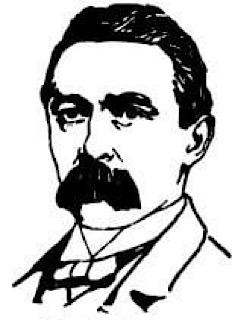
David SheehyIrish nationalist politician, dies in Dublin on December 17, 1932. He is a member of parliament (MP) from 1885 to 1900 and from 1903 to 1918, taking his seat as a member of the Irish Parliamentary Party (IPP) in the House of Commons of the United Kingdom of Great Britain and Ireland.

Born in Limerick in 1844, Sheehy is the son of Richard Sheehy and Johanna Shea, and is the brother of Mary Sheehy and Fr. Eugene Sheehy. He is a student for the priesthood at the Irish College in Paris, but leaves due to a cholera epidemic and later marries Bessie McCoy. In his youth he is a member of the Irish Republican Brotherhood (IRB) and is active in the Irish National Land League. He is imprisoned on six occasions for his part in the Land War.

At the 1885 United Kingdom general election in Ireland, Sheehy is elected unopposed as MP for South Galway and holds that seat until the 1900 United Kingdom general election in Ireland. His re-election in Galway is unopposed in 1886 and 1895. When the Irish Party splits over the leadership of Charles Stewart Parnell, he joins the anti-Parnellite Irish National Federation majority. At the 1892 United Kingdom general election in Ireland, he is opposed by a Parnellite Irish National League candidate, whom he defeats with a majority of nearly two to one. In the same election he stands in Waterford City, but fails to unseat the Parnellite John Redmond.

The two factions of the Irish Parliamentary Party reunite for the general election in 1900, but Sheehy does not stand again and is out of parliament for the next three years. After the death in August 1903 of James Laurence Carew, the Independent Nationalist MP for South Meath, he is selected as the Irish Parliamentary Party candidate in the resulting by-election in October 1903. Carew had allegedly been elected in 1900 as a result of a series of errors in nominations, and his predecessor John Howard Parnell stands again, this time as an Independent Nationalist. Sheehy wins with a majority of more than two to one, and holds the seat until he stands down at the 1918 United Kingdom general election in Ireland.

Sheehy and his wife, Bessie, have seven children, of whom six survive to adulthood. One of his daughters, Mary (born 1884), marries the MP Tom Kettle and has one daughter, Betty (1913–1996). Hanna (born 1877), becomes a teacher and marries the writer Francis Skeffington. They have one son, Owen, who is seven years old when his father is murdered by the Captain Bowen-Colthurst in Portobello BarracksRathmines, during the 1916 Easter Rising. Kathleen marries Freeman’s Journal and Irish Independent journalist Frank Cruise O’Brien. The contrarian politician and writer Conor Cruise O’Brien is their son. Margaret (born 1879), an elocutionist, actress and playwright, marries solicitor Frank Culhane. They have four children. After his death she marries her godson, the poet Michael Casey. Sheehy’s two sons, Richard and Eugene, are barristers.

The writer James Joyce, who lives nearby as a youth, often visits the family home, 2 Belvedere Place, where musical evenings and theatricals take place every Sunday evening. Joyce entertains the family with Italian songs. In 1900, Margaret writes a play in which the Sheehys and their friends, including Joyce, act. Joyce takes a particular liking to Eugene and has a long-lasting but unrequited crush on Mary. Joyce’s novel Ulysses wittily describes an encounter between Sheehy’s wife, Bessie, and Father John Conmee, SJ, rector of Clongowes Wood College. Their daughter Mary is the spéirbhean longingly pursued by the protagonist in the story “Araby” in Joyce’s collection Dubliners. Another daughter, Kathleen, is possibly the model for the mockingly nationalist Miss Ivors in the story “The Dead“, which concludes Dubliners.

When Sheehy dies at the age of 88 in Dublin on December 17, 1932, it is reported that he has been the oldest surviving member of the Irish Parliamentary Party.


Leave a comment

Birth of Patrick Francis Moran, Third Archbishop of Sydney

Patrick Francis Moran, a prelate of the Catholic Church, the first cardinal appointed from Australia and the third Archbishop of Sydney, is born at LeighlinbridgeCounty Carlow, on September 16, 1830. Before his promotion to Archbishop, his scholarly research into the lives and times of the Irish Catholic Martyrs leads to the publication of many primary sources for the first time. These publications have since been used in recent beatifications and at least one canonization.

Moran’s parents are Patrick and Alicia Cullen Moran. Of his three sisters, two become nuns, one of whom dies nursing cholera patients. His parents die by the time he is 11 years old. In 1842, at the age of twelve, he leaves Ireland in the company of his uncle, Paul Cullen, rector of the Pontifical Irish College in Rome. There he studies for the priesthood, first at the minor seminary and then at the major seminary.

Moran is considered so intellectually bright that he gains his doctorate by acclamation. By The age of 25 he speaks ten languages, ancient and modern. He focuses on finding and editing important documents and manuscripts related to Irish ecclesiastical history. Some editions of his works remain important source materials to this day.

Moran is appointed vice-rector at the Pontifical Irish College and also takes the chair of Hebrew at Congregation for the Evangelization of Peoples (CEP). He is also some-time vice-rector of the Scots College in Rome. In 1866, he is appointed secretary to his mother’s half-brother, Cardinal Paul Cullen of Dublin. He is also appointed professor of scripture at Holy Cross College, Dublin. He founds the Irish Ecclesiastical Record (on which he later models the Australasian Catholic Record).

In 1869, Moran accompanies Cardinal Cullen to the First Vatican Council, a council also attended by Melbourne‘s then-first archbishop, James Alipius Goold. According to Michael Daniel, it is generally agreed that the definition of the Catholic doctrine of papal infallibility is based on Cullen’s proposal, and Ayres suggests that there is strong evidence that Cullen’s proposal is largely drafted by Moran. While in Rome and Ireland he is very active politically in opposing English Benedictine plans for monastic foundations undergirding the Catholic Church in Australia.

Moran is appointed coadjutor bishop of Ossory on December 22, 1871, and is consecrated on March 5, 1872 in Dublin by his uncle, Cardinal Paul Cullen. On the death of Bishop Edward Walsh, he succeeds as Bishop of Ossory on August 11, 1872. He champions Home Rule and is consulted by William Ewart Gladstone prior to the introduction of his Home Rule Bills.

Moran is personally chosen and promoted by Pope Leo XIII to head the Archdiocese of Sydney – a clear policy departure from the previous English Benedictine incumbents, John Bede Polding and Roger Vaughan, who were experiencing tension leading the predominantly Irish Australian Catholics. In the archbishop’s farewell audience with Leo XIII, it is evident that the intrigues of parties, the interference of government agencies and the influence of high ecclesiastics had made the matter almost impossible to decide by Propaganda. In the presence of others, the Pope says clearly: “We took the selection into our own hands. You are our personal appointment.” Moran is appointed to Australia on January 25, 1884, and arrives on September 8, 1884. He is created cardinal-priest on July 27, 1885, with the title of St. Susanna. The new Irish Australian cardinal makes it his business to make his presence and leadership felt.

Moran begins transforming the Sydney Saint Patrick’s Day festivities by inaugurating the celebration of a Solemn Mass at St. Mary’s Cathedral on Saint Patrick’s Day 1885. Over time the day’s events change from an Irish nationalist and political day into an occasion “for the demonstration of Irish Catholic power and respectable assimilation” as well as “for the affirmation of Irish Catholic solidarity.”

In 1886, it is estimated that Moran travels 2,500 miles over land and sea, visiting all the dioceses of New Zealand. In 1887, he travels 6,000 miles to consecrate fellow Irishman Matthew Gibney at Perth. He also travels to BallaratBathurstBendigoHobartGoulburnLismore, Melbourne and Rockhampton for the consecration of their cathedrals. Following the 1891 encyclical Rerum Novarum, he supports the right of labourers to better their conditions.

During his episcopate, Moran consecrates 14 bishops (he is the principal consecrator of William WalshMichael VerdonPatrick Vincent DwyerArmand Olier and also assists in consecrating Patrick Clune, among others). He ordains nearly 500 priests, dedicates more than 5,000 churches and professes more than 500 nuns. He makes five journeys to Rome on church business between 1885 and 1903, but does not participate in the papal conclave of 1903 because of the relatively short notice and the distance, making it impossible for him to reach Rome within 10 days of the death of Pope Leo.

Moran is a strong supporter of Federation, and in November 1896 attends the People’s Federal Convention in Bathurst. In March 1897, he stands as a candidate election of ten delegates from New South Wales to the Australasian Federal Convention. Although he states he will not attend the Convention in any official capacity, but in a solely individual one, his candidacy sparks a sectarian reaction. Twenty-nine per cent of voters give one of their ten votes to Moran, but he comes only thirteenth in number of total votes and is not elected.

From 1900 to 1901, Moran’s leadership survives a crisis when his personal secretary, Denis O’Haran, is named as co-respondent in the divorce case of the cricketer Arthur Coningham. Moran vigorously defends O’Haran and a jury finds in his favour.

Moran dies in Manly, Sydney, on August 16, 1911, aged 80. A quarter of a million people, the largest crowd ever to gather in Australia prior to that date, witness his funeral procession through the centre of Sydney. He is buried in St. Mary’s Cathedral, Sydney.


Leave a comment

Birth of John Gray, Physician, Journalist & Politician

Sir John Gray JP, Irish physician, surgeon, newspaper proprietor, journalist and politician, is born in Claremorris, County Mayo, on July 13, 1815. He is active both in municipal and national government for much of his life and has nationalist ideals, which he expresses as owner of the Freeman’s Journal, chairman of the Dublin Corporation Water Works Committee between 1863 and 1875, and Member of Parliament in the House of Commons of the United Kingdom of Great Britain and Ireland for Kilkenny City from 1865 until his death.

Gray is the third son of John and Elizabeth Gray of Mount Street. He is educated at Trinity College Dublin and obtains the degree of M.D. and Master of Surgery at the University of Glasgow in 1839. Shortly before his marriage in the same year, he settles in Dublin and takes up a post at a hospital in North Cumberland Street. He is admitted as a licentiate of the Royal College of Physicians in due course.

Gray is publicly minded and contributes to periodicals and the newspaper press. In 1841, he becomes joint proprietor of the Freeman’s Journal, a nationalist paper which is then published daily and weekly. He acts as political editor of the Journal for a time, before becoming sole proprietor in 1850. As owner, he increases the newspaper’s size, reduces its price and extends its circulation.

Gray enters politics at a relatively young age and attaches himself to Daniel O’Connell‘s Repeal Association. As a Protestant Nationalist, he supports the movement for the repeal of the Acts of Union with Britain. In October 1843, he is indicted with O’Connell and others in the Court of the Queen’s Bench in Dublin on a charge of sedition and “conspiracy against the queen.” The following February, he, together with O’Connell, is condemned to nine months imprisonment, but in early September 1844 the sentence is remitted on appeal. The trial has a strong element of farce, as the hot-tempered Attorney-General for Ireland, Sir Thomas Cusack-Smith, challenges Gray’s counsel, Gerald Fitzgibbon, to a duel, for which he is sternly reprimanded by the judges. From then on Gray is careful to distance himself from the advocacy of violence in the national cause, though he is sympathetic to the Young Ireland movement without being involved in its 1848 rebellion. Through the growing influence of the Freeman’s Journal, he becomes a significant figure in Dublin municipal politics. He is also active in national politics during an otherwise quiet period of Irish politics up until 1860. With the resurgence of nationalism after the famine, he helps to organise the Tenant’s League founding conference in 1850, standing unsuccessfully as the League’s candidate for Monaghan in the 1852 United Kingdom general election.

Later Gray originates and organises the “courts of arbitration” which O’Connell endeavours to substitute for the existing legal tribunals of the country. Following O’Connell’s death, in 1862 he inaugurates an appeal for subscriptions to build a monument to O’Connell on Sackville Street (now O’Connell Street). Independent from O’Connell, he continues to take a prominent part in Irish politics and in local affairs.

In municipal politics, Gray is elected councillor in 1852 and alderman of Dublin Corporation and takes an interest in the improvement of the city. As chairman of the committee for a new water supply to Dublin, he actively promotes what becomes the “Vartry scheme.” The Vartry Reservoir scheme involves the partial redirection and damming of the River Vartry in County Wicklow, and the building of a series of water piping and filtering systems (and related public works) to carry fresh water to the city. This work is particularly important in the improvement of conditions in the city, and to public health, as it improves sanitation and helps reduce outbreaks of cholera, typhus and other diseases associated with contaminated water. On the opening of the works on June 30, 1863, he is knighted by the Earl of Carlisle, then Lord Lieutenant of Ireland. Partially in recognition of these efforts, he is later be nominated for the position of Lord Mayor of Dublin for the years 1868–69, but he declines to serve.

In national politics, the Liberal government at the time is keen to conciliate an influential representative of the moderate nationalists to support British Liberalism and who will resume O’Connell’s constitutional agitation. In an unusual alliance with the Catholic Archbishop of Dublin, Paul Cullen, a man devoted to O’Connell’s memory, Gray’s newspaper exploits this shift in government policy. It supports the archbishop’s creation, the National Association of Ireland, established in 1864 with the intention of providing a moderate alternative to the revolutionary nationalism of the Fenians. The Freeman’s Journal adopts the aims of the Association as its own: it advocates the disestablishment of the Anglican Church of Ireland, reform of the land laws, educational aspirations of Irish Catholicism and free denominal education.

In the 1865 United Kingdom general election Gray is elected MP for Kilkenny City as a Liberal candidate. In this capacity he campaigns successfully at Westminster and in Ireland for the reforms also advocated in his paper. His newspaper’s inquiry into the anomalous wealth of the established church amidst a predominately Catholic population contributes considerably to William Ewert Gladstone‘s Irish Church Act 1869. He helps to furnish the proof that Irish demands are not to be satisfied by anything other than by radical legislation. He fights for the provision in the new Landlord & Tenant (Ireland) Act 1870 for fixity of tenure, which Gladstone eventually concedes. The Act’s other weaknesses, however, result in its failure to resolve the “land question,” the accompanying coercion, the disappointment with Gladstone’s handling of the university question and national education, causing Gray to deflect from the Liberals and become mistrusted in Britain. In the 1874 United Kingdom general election he is re-elected as a Home Rule League MP for Kilkenny, joining its Home Rule majority in the House of Commons, and holds his seat until his death the following year.

Gray dies at Bath, Somerset, England, on April 9, 1875. His remains are returned to Ireland, and he is honoured with a public funeral at Glasnevin Cemetery. Almost immediately afterwards public subscriptions are sought for the erection in O’Connell Street, of a monument to Gray. The monument is completed in 1879 and is dedicated to the “appreciation of his many services to his country, and of the splendid supply of pure water which he secured for Dublin.” His legacy also includes his contributions to the passage of the Irish Church and Land Bills, his advocacy for tenant’s rights and his support of the Home Rule movement.

Gray marries Mary Anna Dwyer of Limerick in 1839, and they have five children, three sons and two daughters. One of his sons, Edmund Dwyer Gray, takes over the management of the Freeman’s Journal. Edmund also follows his father into politics, eventually becoming MP for Dublin St. Stephen’s Green, Lord Mayor of Dublin (1880–1881), and a supporter of Charles Stewart Parnell. Edmund John Chisholm Dwyer-Gray, Edmund Dwyer Gray’s son and John Gray’s grandson, becomes Premier of Tasmania.

(Pictured: Statue to Sir John Gray on Dublin’s O’Connell Street, designed by Thomas Farrell and unveiled on June 24, 1879. Photo credit: Graham Hickey)


Leave a comment

The First Famine Ship Arrives at Grosse Île

The Syria, the first ship to arrive during what Québécois call the “Summer of Sorrow,” lands at the Canadian quarantine station in the St. Lawrence River, just north of Quebec on May 15, 1847.

When the authorities in Quebec hear the news of ships arriving with sick passengers, they quickly set up Grosse Île as a port of entry and quarantine station at which all ships are required to dock before moving on to the mainland. The island had dealt with epidemics before. In 1830, about 30,000 immigrants arrived in Quebec, and two-thirds were Irish. These huge waves of immigration were concurrent with cholera epidemics in Great Britain and Europe.

Areas in the west of Ireland – mostly Mayo, Donegal, and Galway – are experiencing potato crop failure. In fact, the crop fails to various degrees all over the country throughout the 1830s, though no one is sure exactly when the blight that caused the successive crop failures of 1845-49 arrived in Ireland. In 1847, 100,000 Irish people travel to Grosse Île to escape starvation, unaware of the hardships they will encounter upon arrival.

The Syria, the first “coffin ship,” named for their crowded and deadly conditions, arrives on May 17, 1847, the ice still an inch thick on the river. Of the ship’s 241 passengers, 84 are stricken with fever and 9 died on board during the Atlantic crossing. The first victim dies on the day the Syria arrives. Her name is Ellen Kane, a four-year-old from Kilmore, County Mayo.

With the hospital equipped for only 150 cases of fever, the situation quickly spins out of control. More and more ships arrive at Grosse Île each day, sometimes lining up for miles down the St. Lawrence River throughout the summer. On these coffin ships the number of passengers stricken by fever increases exponentially.

The island is ill-equipped, to say the least. Hastily built, the quarantine hospitals lack proper sanitation, supplies, and space to accommodate all the sick patients. Many of the doctors dispatched to Grosse Île have never even seen the effects of cholera let alone treated it, and all are overworked. Being taken to a quarantine hospital is soon viewed as more of a death sentence than an opportunity to get better.

Between 1832 and 1937, Grosse Île’s term of operation, the official register lists 7,480 burials on the island. In 1847 alone, 5,424 burials take place, the majority are Irish immigrants. In that same year, over 5,000 Irish people on ships bound for Canada are listed as having been buried at sea.

Today, the island is a National Historic Site that serves as a Famine memorial. It is dedicated in 1996 after a four-year-long campaign to protect the mass gravesite.

The Grosse Île Celtic Cross, erected by the Ancient Order of Hibernians in 1909, bears an inscription in Irish commemorating the victims of the epidemic and condemning colonial rule. In English, it reads: “Children of the Gael died in their thousands on this island having fled from the laws of foreign tyrants and an artificial famine in the years 1847-48. God’s blessing on them. Let this monument be a token and honor from the Gaels of America. God Save Ireland.”

(From: “When 40 Irish Famine ships anchored at Grosse Île quarantine station in 1847” by Aliah O’Neill, IrishCentral, http://www.irishcentral.com, May 31, 2023)


Leave a comment

Death of Daniel Murray, Roman Catholic Archbishop of Dublin

Daniel Murray, Roman Catholic Archbishop of Dublin, dies in Dublin on February 26, 1852.

Murray is born on April 18, 1768, at Sheepwalk, near Arklow, County Wicklow, the son of Thomas and Judith Murray, who are farmers. At the age of eight he goes to Thomas Betagh‘s school at Saul’s Court, near Christ Church Cathedral, Dublin. At sixteen, Archbishop John Carpenter sends him to the Irish College at Salamanca, completing his studies at the University of Salamanca. He is ordained priest in 1792 at the age of twenty-four.

After some years as curate at St. Paul’s Church, Dublin, Murray is transferred to Arklow and is there in 1798 when the rebellion breaks out. The yeomanry shoots the parish priest in bed and Murray, to escape a similar fate, flees to the city where for two years he serves as curate at St. Andrew’s Chapel on Hawkins Street. As a preacher, he is said to be particularly effective, especially in appeals for charitable causes, such as the schools. He is then assigned to the Chapel of St. Mary in Upper Liffey Street where Archbishop John Troy is the parish priest.

In 1809, at the request of Archbishop Troy, Murray is appointed coadjutor bishop and consecrated on November 30, 1809. In 1811 he is made Administrator of St. Andrew’s. That same year he helps Mary Aikenhead establish the Religious Sisters of Charity. While coadjutor he fills for one year the position of president of St. Patrick’s College, Maynooth.

Murray is an uncompromising opponent of a proposal granting the British government a “veto” over Catholic ecclesiastical appointments in Ireland, and in 1814 and 1815, makes two separate trips to Rome concerning the controversy.

Murray becomes Archbishop of Dublin in 1825 and on November 14, 1825, celebrates the completion of St. Mary’s Pro-Cathedral. He enjoys the confidence of successive popes and is held in high respect by the British government. His life is mainly devoted to ecclesiastical affairs, the establishment and organisation of religious associations for the education and relief of the poor. With the outbreak of cholera in the 1830s, in 1834 he and Mother Aikenhead found St. Vincent’s Hospital. He persuades Edmund Rice to send members of the Christian Brothers to Dublin to start a school for boys. The first is opened in a lumber yard on the city-quay. He assists Catherine McAuley in founding the Sisters of Mercy, and in 1831 professes the first three members.

Edward Bouverie Pusey has an interview with Murray in 1841, and bears testimony to his moderation, and John Henry Newman has some correspondence with him prior to Newman’s conversion from the Anglican Church to the Roman Catholic Church in 1845. A seat in the privy council at Dublin, officially offered to him in 1846, is not accepted. He takes part in the synod of the Roman Catholic clergy at Thurles in 1850.

Towards the end of his life, Murray’s eyesight is impaired, and he reads and writes with difficulty. Among his last priestly functions is a funeral service for Richard Lalor Sheil who had died in Italy, and whose body had been brought back to Ireland for burial. Murray dies in Dublin on February 26, 1852, at the age of eighty-four. He is interred in the St. Mary’s Pro-Cathedral, Dublin, where a marble statue of him has been erected in connection with a monument to his memory, executed by James Farrell, president of the Royal Hibernian Academy of Fine Arts.

(Pictured: Portrait of Daniel Murray, Archbishop of Dublin, by unknown 19th century Irish portrait painter)


Leave a comment

Death of Poet James Clarence Mangan

James Clarence Mangan (Irish: Séamus Ó Mangáin), Irish poet, weakened by poverty, alcoholism and malnutrition, dies of cholera on June 20, 1849.

Mangan is born on May 1, 1803, in Dublin. His poetry fits into a variety of literary traditions. Most obviously, and frequently, his work is read alongside such nationalist political authors as John Mitchel, as they appear in The Nation, The Vindicator and the United Irishman newspapers or as a manifestation of the 19th-century Irish Cultural Revival. He is also frequently read as a Romantic poet.

Mangan is the son of James Mangan, a former hedge school teacher and native of Shanagolden, County Limerick, and Catherine Smith from Kiltale, County Meath. Following his marriage to Smith, James Mangan takes over a grocery business in Dublin owned by the Smith family, eventually becoming bankrupt as a result. Mangan describes his father as having “a princely soul but no prudence,” and attributes his family’s bankruptcy to his father’s suspect business speculations and tendency to throw expensive parties. Thanks to poor record keeping, inconsistent biographies, and his own semi-fictional and sensationalized autobiographical accounts, his early years are the subject of much speculation. However, despite the popular image of him as a long-suffering, poor poet, there is reason to believe that his early years are spent in middle class comfort.

Mangan is educated at a Jesuit school where he learns Latin, Spanish, French, and Italian. He attends three schools before the age of fifteen. Obliged to find a job in order to support his family, he then becomes a lawyer’s clerk, and is later an employee of the Ordnance Survey and an assistant in the library of Trinity College, Dublin.

Mangan’s first verses are published in 1818. From 1820 he adopts the middle name Clarence. In 1830 he begins producing translations – generally free interpretations rather than strict transliterations – from German, a language he had taught himself. Of interest are his translations of Johann Wolfgang von Goethe. From 1834 his contributions begin appearing in the Dublin University Magazine. In 1840 he begins producing translations from Turkish, Persian, Arabic and Irish. He is also known for literary hoaxes as some of his “translations” are in fact works of his own, like Twenty Golden Years Ago, attributed to a certain Selber.

Mangan is friends with the patriotic journalists Thomas Davis and John Mitchel, who ultimately writes his biography. His poems are published in their newspaper The Nation.

Although Mangan’s early poetry is often apolitical, after the Great Famine he begins writing patriotic poems, including influential works such as Dark Rosaleen, a translation of “Róisín Dubh,” and A Vision of Connaught in the Thirteenth Century.

Mangan’s best known poems include Dark Rosaleen, Siberia, Nameless One, A Vision of Connaught in the Thirteenth Century, The Funerals, To the Ruins of Donegal Castle, Pleasant Prospects for the Land-eaters and Woman of Three Cows. He writes a brief autobiography, on the advice of his friend Charles Patrick Meehan, which ends mid-sentence. This is apparently written in the last months of his life, since he mentions his narrative poem of the Italian Gasparo Bandollo, which is published in the Dublin University Magazine in May 1849.

Mangan is a lonely and often difficult man who suffers from mood swings, depression and irrational fears, and becomes a heavy drinker and opium user. His appearance grows eccentric, and he is described by the artist WF Wakeman as frequently wearing “a huge pair of green spectacles,” padded shirts to hide his malnourished figure and a hat which “resembled those which broomstick-riding witches are usually represented with.” On June 20, 1849, weakened by poverty, alcoholism and malnutrition, he succumbs to cholera at the age of 46. He is buried in Glasnevin Cemetery in Dublin.

(Pictured: Memorial bust of James Mangan in St. Stephen’s Green, sculpted by Oliver Sheppard)


Leave a comment

Birth of Daniel Murray, Archbishop of Dublin

Daniel Murray, Roman Catholic Archbishop of Dublin, is born on April 18, 1768, at Sheepwalk, near Arklow, County Wicklow.

Murray is the son of Thomas and Judith Murray, who are farmers. At the age of eight he goes to Thomas Betagh‘s school at Saul’s Court, near Christ Church Cathedral, Dublin. At sixteen, Archbishop John Carpenter sends him to the Irish College at Salamanca, completing his studies at the University of Salamanca. He is ordained priest in 1792 at the age of twenty-four.

After some years as curate at St. Paul’s Church in Dublin, Murray is transferred to Arklow and is there in 1798 when the rebellion breaks out. The yeomanry shoots the parish priest in bed and Murray, to escape a similar fate, flees to the city where for two years he serves as curate at St. Andrew’s Chapel on Hawkins Street. As a preacher, he is said to be particularly effective, especially in appeals for charitable causes, such as the schools. He is then assigned to the Chapel of St. Mary in Upper Liffey Street where Archbishop John Troy is the parish priest.

In 1809, at the request of Archbishop Troy, Murray is appointed coadjutor bishop and consecrated on November 30, 1809. In 1811 he is made Administrator of St. Andrew’s. That same year he helps Mary Aikenhead establish the Religious Sisters of Charity. While coadjutor he fills for one year the position of president of St. Patrick’s College, Maynooth.

Murray is an uncompromising opponent of a proposal granting the British government a “veto” over Catholic ecclesiastical appointments in Ireland, and in 1814 and 1815, makes two separate trips to Rome concerning the controversy.

Murray becomes Archbishop of Dublin in 1825 and on November 14, 1825, celebrates the completion of St. Mary’s Pro-Cathedral. He enjoys the confidence of successive popes and is held in high respect by the British government. His life is mainly devoted to ecclesiastical affairs, the establishment and organisation of religious associations for the education and relief of the poor. With the outbreak of cholera in the 1830s, in 1834 he and Mother Aikenhead found St. Vincent’s Hospital. He persuades Edmund Rice to send members of the Christian Brothers to Dublin to start a school for boys. The first is opened in a lumber yard on the city-quay. He assists Catherine McAuley in founding the Sisters of Mercy, and in 1831 professes the first three members.

Edward Bouverie Pusey has an interview with Murray in 1841, and bears testimony to his moderation, and John Henry Newman has some correspondence with him prior to Newman’s conversion from the Anglican Church to the Roman Catholic Church in 1845. A seat in the privy council at Dublin, officially offered to him in 1846, is not accepted. He takes part in the synod of the Roman Catholic clergy at Thurles in 1850.

Towards the end of his life, Murray’s eyesight is impaired, and he reads and writes with difficulty. Among his last priestly functions is a funeral service for Richard Lalor Sheil who had died in Italy, and whose body had been brought back to Ireland for burial. Murray dies in Dublin on February 26, 1852, at the age of eighty-four. He is interred in the St. Mary’s Pro-Cathedral, Dublin, where a marble statue of him has been erected in connection with a monument to his memory, executed by James Farrell, president of the Royal Hibernian Academy of Fine Arts.

(Pictured: Portrait of Daniel Murray, Archbishop of Dublin, by unknown 19th century Irish portrait painter)


Leave a comment

Death of Sister Catherine McAuley, Founder of the Sisters of Mercy

Catherine Elizabeth McAuley, Irish religious sister who founds the Sisters of Mercy in 1831, dies in Dublin on November 11, 1841. The Sisters of Mercy has always been associated with teaching, especially in Ireland, where the sisters teach Catholics, and at times Protestants, at a time when education is mainly reserved for members of the established Church of Ireland.

McAuley is born on September 29, 1778, at Stormestown House in Dublin to James and Elinor (née Conway) McAuley. Her father dies in 1783 when she is five and her mother dies in 1798. She first goes to live with a maternal uncle, Owen Conway, and later joins her brother James and sister Mary at the home of William Armstrong, a Protestant relative on her mother’s side. In 1803, she becomes the household manager and companion of William and Catherine Callaghan, an elderly, childless, and wealthy Protestant couple and friends of the Armstrongs, at their estate in Coolock, a village northeast of Dublin. For 20 years she gives catechetical instruction to the household servants and the poor village children. Catherine Callaghan, who is raised in the Quaker tradition, dies in 1819. When William Callaghan dies in 1822, McAuley becomes the sole residuary legatee of their estate.

McAuley inherits a considerable fortune and chooses to use it to build a house where she and other compassionate women can take in homeless women and children to provide care and education for them. A location is selected at the junction of Lower Baggot Street and Herbert Street in Dublin, and in June 1824, the cornerstone is laid by the Rev. Dr Blake. As it is being refurbished, she studies current educational methods in preparation for her new endeavour. On the feast of Our Lady of Mercy, September 24, 1827, the new institution for destitute women, orphans, and schools for the poor is opened and McAuley, with two companions, undertake its management.

For three years, McAuley and her companions continue their work as lay women. She never intends to found a community of religious women. Her initial intention is to assemble a lay corps of Catholic social workers. In 1828 Archbishop of Dublin Daniel Murray permits the staff of the institute to assume a distinctive dress and to publicly visit the sick. The uniform adopted is a black dress and cape of the same material reaching to the belt, a white collar and a lace cap and veil – such a costume as is now worn by the postulants of the congregation. In the same year the archbishop desires McAuley to choose some name by which the little community might be known, and she chooses that of “Sisters of Mercy,” having the design of making the works of mercy the distinctive feature of the institute.

McAuley is desirous that the members should combine with the silence and prayer of the Carmelites, with the active labours of a Sister of Charity. The position of the institute is anomalous, its members are not bound by vows nor are they restrained by rules. The clergy and people of the church of the time, however, are not supportive of groups of laywomen working independently of church structures. The main concern is for the stability and continuity of the works of mercy which the women had taken on. Should any of them get married or lose interest, the poor and the orphans whom they are caring for would then be at a loss.

McAuley’s clerical mentor urges her to form a religious institute. Along with two other women, Mary Ann Doyle and Mary Elizabeth Harley, she enters the novitiate of the Presentation Sisters to formally prepare for life as women religious in September 1830. On December 12, 1831, they profess vows and return to the House of Mercy. The Sisters of Mercy consider December 12, 1831, as the day of their founding as a religious community. Archbishop Murray assists McAuley in founding the Sisters of Mercy and professes the first three members. He then appoints her Mother Superior.

Between 1831 and 1841 McAuley founds additional Convents in Tullamore, Charleville, Cork, Carlow, Galway, Limerick, Birr, Bermondsey and Birmingham and branch houses in Kingstown and Booterstown. A cholera epidemic hits Dublin in 1832, and she agrees to staff a cholera hospital on Townsend Street.

The rule of the Sisters of Mercy is formally confirmed by Pope Gregory XVI on June 6, 1841. McAuley lives only ten years as a Sister of Mercy, Sister Mary Catherine.

McAuley dies of tuberculosis at the age of sixty-three on November 11, 1841, at Baggot Street. She is buried at Baggot Street Cemetery. At the time of her death, there are 100 Sisters of Mercy in ten foundations. Shortly thereafter, small groups of sisters leave Ireland to establish new foundations on the east and west coasts of the United States, in Newfoundland, Australia, New Zealand, and Argentina.

Total worldwide membership consists of about 5,500 Sisters of Mercy, 5,000 Associates, and close to half a million partners in ministry. The Mercy International Centre in Dublin is the international “home” of Mercy worldwide and the mercyworld.org website is the virtual home.

In 1978, the cause for the beatification of the Servant of God Catherine McAuley is opened by Pope Paul VI. In 1990, upon recognition of her heroic virtues, Pope John Paul II declares her Venerable.


Leave a comment

Death of John Blake Dillon, Founding Member of Young Ireland

John Blake Dillon, Irish writer and politician who is one of the founding members of the Young Ireland movement, dies in Killiney, County Dublin on September 15, 1866.

Dillon is born on May 5, 1814, in the town of Ballaghaderreen, on the border of counties Mayo and Roscommon. He is a son of Anne Blake and her husband Luke Dillon (d. 1826), who had been a land agent for his cousin Patrick Dillon, 11th Earl of Roscommon. His niece is Anne Deane, who helps to raise his family after his death.

Dillon is educated at St. Patrick’s College, Maynooth, leaving after only two years there, having decided that he is not meant for the priesthood. He later studies law at Trinity College, Dublin, and in London, before being called to the Irish Bar. It is during his time at Trinity College that he first meets and befriends Thomas Davis.

While working for The Morning Register newspaper Dillon meets Charles Gavan Duffy, with whom he and Davis found The Nation in 1842, which is dedicated to promoting Irish nationalism and all three men become important members of Daniel O’Connell‘s Repeal Association, which advocates the repeal of the Act of Union 1800 between Great Britain and Ireland.

The young wing of the party, of which they are key members with William Smith O’Brien and Thomas Francis Meagher, come to be known as Young Ireland and advocate the threat of force to achieve repeal of the Act of Union. This is in contrast to the committed pacifism of O’Connell’s “Old Ireland” wing. This posturing eventually leads to the Young Ireland rebellion of 1848 where a countryside devastated by the Great Famine fails to rise up and support the rebels.

According to fellow Irish nationalist, Justin McCarthy, “…it has been said of him that while he strongly discouraged the idea of armed rebellion and had no faith in the possibility of Ireland’s succeeding by any movement of insurrection, yet when Smith O’Brien risked Ireland’s chances in the open field, he cast his lot with his leader and stood by his side in Tipperary.”

After the failure of Young Ireland’s uprising, Dillon flees Ireland, escaping first to France and, eventually, to the United States, where he serves the New York Bar.

Dillon returns to Ireland on amnesty in 1855 and in 1865 is elected as a Member of Parliament for Tipperary. By now he advocates a Federal union of Britain and Ireland and denounces the violent methods advocated by the Irish Republican Brotherhood or Fenian movement.

Dillon dies of cholera on September 15, 1866, in Killiney, County Dublin, at the age of 52, and is buried in Glasnevin Cemetery in Dublin.

Dillon is the father of John Dillon and grandfather of James Dillon.


Leave a comment

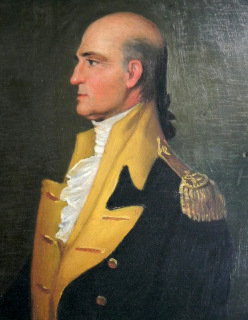
Birth of Edward Hand, Soldier, Physician & Politician

Edward Hand, Irish soldier, physician, and politician who serves in the Continental Army during the American Revolutionary War, is born in Clyduff, King’s County (now County Offaly) on December 31, 1744. He rises to the rank of general and later is a member of several Pennsylvania governmental bodies.

Hand, the son of John Hand, is baptised in Shinrone. Among his immediate neighbours are the Kearney family, ancestors of United States President Barack Obama. He is a descendant of either the families of Mag Fhlaithimh (of south Ulaidh and Mide) or Ó Flaithimhín (of the Síol Muireadaigh) who, through mistranslation became Lavin or Hand.

Hand earns a medical certificate from Trinity College, Dublin. In 1767, he enlists as a Surgeon’s Mate in the 18th (Royal Irish) Regiment of Foot. On May 20, 1767, he sails with the regiment from Cobh, County Cork, arriving at Philadelphia on July 11, 1767. In 1772, he is commissioned an ensign. He marches with the regiment to Fort Pitt, on the forks of the Ohio River, returning to Philadelphia in 1774, where he resigns his commission.

In 1774, Hand moves to Lancaster, Pennsylvania, where he practices medicine. On March 13, 1775, he marries Catherine Ewing. Lancaster is the region of some of the earliest Irish and Scotch-Irish settlements in Pennsylvania. As a people, they are well known for their anti-English and revolutionary convictions. He is active in forming the Lancaster County Associators, a colonial militia. He is a 32nd degree Freemason, belonging to the Montgomery Military Lodge number 14.

Hand enters the Continental Army in 1775 as a lieutenant colonel in the 1st Pennsylvania Regiment under Colonel William Thompson. He is promoted to colonel in 1776 and placed in command of the 1st Continental, then designated the 1st Pennsylvania. Promoted to brigadier general in March 1777, he serves as the commander of Fort Pitt, fighting British loyalists and their Indian allies. He is recalled, after over two years at Fort Pitt, to serve as a brigade commander in Major General La Fayette‘s division.

In 1778, Hand attacks the Lenape, killing Captain Pipe‘s mother, brother, and a few of his children during a military campaign. Failing to distinguish among the Native American groups, he had attacked the neutral Lenape while trying to reduce the Indian threat to settlers in the Ohio Country, because other tribes, such as the Shawnee, had allied with the British.

After a few months, he is appointed Adjutant General of the Continental Army and serves during the Siege of Yorktown in that capacity. In recognition of his long and distinguished service, he is promoted by brevet to major general in September 1783. He resigns from the Army in November 1783.

Hand returns to Lancaster and resumes the practice of medicine. A Federalist, he is also active in civil affairs. Beginning in 1785, he owns and operates Rock Ford plantation, a 177-acre farm on the banks of the Conestoga River, one mile south of Lancaster, Pennsylvania. The Georgian brick mansion remains today, and the farm is a historic site open to the public.

Hand dies from typhoid fever, dysentery or pneumonia at Rock Ford on September 3, 1802, although medical records are unclear with some sources stating he died of cholera. There is no evidence Lancaster County suffered from a cholera epidemic in 1802. He is buried in St. James’s Episcopal Cemetery in Lancaster, the same church where he had served as a deacon.