seamus dubhghaill

Promoting Irish Culture and History from Little Rock, Arkansas, USA


Leave a comment

Birth of Thomas William Croke, Archbishop of Cashel and Emly

Thomas William Croke, the second Catholic Bishop of Auckland in New Zealand (1870–74) and later Archbishop of Cashel and Emly in Ireland, is born in Castlecor, County Cork, on May 28, 1824. He is important in the Irish nationalist movement especially as a Champion of the Irish National Land League in the 1880s. The main Gaelic Athletic Association stadium in Dublin is named Croke Park in his honour.

Croke is educated in Charleville, County Cork, the Irish College in Paris and the Pontifical Irish College in Rome, winning academic distinctions including a Doctor of Divinity with honours. He is ordained in May 1847. Returning to Ireland for a short time he is appointed a Professor in St. Patrick’s, Carlow College. The Irish radical William O’Brien says that Croke fought on the barricades in Paris during the French Revolution of 1848. Croke returns to Ireland and spends the next 23 years working there. In 1858 he becomes the first president of St. Colman’s College, Fermoy, County Cork and then serves as both parish priest of Doneraile and Vicar General of Cloyne diocese from 1866 to 1870. Croke attends the First Vatican Council as the theologian to the Bishop of Cloyne 1870.

Croke gains the good opinion of the Irish ecclesiastical authorities and is rewarded in 1870 by his promotion to Bishop of Auckland in New Zealand. His former professor, Paul Cullen, by then Cardinal Archbishop of Dublin, is largely responsible for filling the Australasian Catholic church with fellow Irishmen. His strong recommendations lead to Croke’s appointment. Croke arrives at Auckland on December 17, 1870, on the City of Melbourne. During his three years as bishop, he restores firm leadership to a diocese left in disarray by his predecessor, Bishop Jean Baptiste Pompallier. He devotes some of his considerable personal wealth to rebuilding diocesan finances and also takes advantage of Auckland’s economic growth following the development of the Thames goldfields to further his aims, ensuring that all surplus income from parishes at Thames and Coromandel is passed on to him, and he institutes a more rigorous system for the Sunday collection at St. Patrick’s Cathedral. He imports Irish clergy to serve the growing Catholic community, and with Patrick Moran, the first Catholic Bishop of the Diocese of Dunedin, he tries unsuccessfully to secure an Irish monopoly on future episcopal appointments in New Zealand. Croke supports separate Catholic schools and their right to state aid and voices his opposition to secular education as Auckland’s Catholic schools are threatened by the provincial council’s Education Act 1872, which helps to create a free, secular and compulsory education system. However, generally, Croke’s image is uncontroversial. On January 28, 1874, after barely three years in office, Croke departs for Europe, on what is ostensibly a 12-month holiday, and he does not return to New Zealand.

Croke becomes a member of the Irish hierarchy when he is translated to be Archbishop of Cashel, one of the four Catholic Irish archbishoprics in 1875. Archbishop Croke is a strong supporter of Irish nationalism, aligning himself with the Irish National Land League during the Land War, and with the chairman of the Irish Parliamentary Party, Charles Stewart Parnell. In an 1887 interview he explains that he had opposed the League’s “No rent manifesto” in 1881, preferring to stop payment of all taxes.

Croke also associates himself with the Temperance Movement of Fr. Theobald Mathew and Gaelic League from its foundation in 1893. Within Catholicism he is a supporter of Gallicanism, as opposed to the Ultramontanism favoured by the Archbishop of Dublin, Cardinal Cullen. His support of nationalism causes successive British governments and Lord Lieutenant of Ireland‘s governments in Dublin to be deeply suspicious of him, as are some less politically aligned Irish bishops.

Following the scandal that erupts over Parnell’s relationship with Katharine O’Shea, the separated wife of fellow MP Captain William O’Shea, Archbishop Croke withdraws from active participation in nationalist politics.

Thomas Croke, 78, dies at the Archbishop’s Palace in Thurles, County Tipperary on July 22, 1902. He is buried at the Cathedral of the Assumption in Thurles. In honour of Croke, his successors as Archbishop of Cashel and Emly traditionally are asked to throw in the ball at the minor Gaelic football and All-Ireland Senior Hurling Championship finals.


Leave a comment

Death of Suzanne R. Day, Feminist, Novelist & Playwright

Suzanne Rouviere Day, Irish feminist, novelist and playwright, dies in London on May 26, 1964. She founds the Munster Women’s Franchise League, is one of Cork‘s first women poor law guardians and serves a support role in both World Wars.

Day is born in Cork, County Cork, on April 24, 1876 to Robert and Rebecca Day. Her father runs a saddler and ironmonger business and is a well known antiquarian and photographer.

In 1910 Day forms the local Irish Women’s Franchise League branch in Cork as an activist group for women’s suffrage. The following year she leaves that group and founds the non-militant Munster Women’s Franchise League. Her new interest in politics leads to her winning the election of poor law guardians the same year. Her later writings reveal that she sees the Cork workhouses as an expensive self-perpetuating evil run by amateurs. This leads to her first novel, The Amazing Philanthropists (1916). From 1913 to 1917 she writes three plays for the Abbey Theatre in collaboration with Geraldine Cummins, Broken Faith (1913), The Way of the World (1914), and Fox and Geese (1917), which is the most successful of the three.

The Battle of Verdun lasts most of 1916 and during that time Day is amongst a group from the Society of Friends who cares for the wounded. She is in France for fifteen months and uses the experience to create her 1918 book Round about Bar-le-Duc. Where the Mistral Blows is published in 1933 and describes her time in Provence in France.

Day works as a member of the fire service in London during World War II. She lives in Cork, France and London. At the time of her death she is living at 47 Argyle Road, Kensington, London. She dies in the Cromer and District Hospital on May 26, 1964.

The work of Suzanne Rouviere Day and Geraldine Cummins has been described as a mixture of paganism and melodrama and has been suggested as a precursor to John B. Keane.

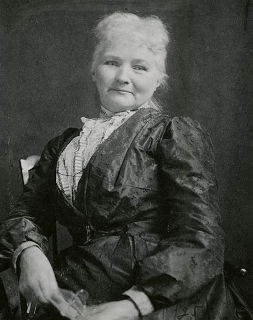
(Pictured: Suzanne R. Day in the cast of the 1901 production of The Mikado, Cork, County Cork)


Leave a comment

Birth of Sir Eyre Coote, Soldier, Politician & Governor of Jamaica

Sir Eyre Coote, Irish-born British soldier and politician who serves as Governor of Jamaica, is born on May 20, 1759.

Coote is the second son of the Very Reverend Charles Coote of Shaen Castle, Queen’s County (now County Laois), Dean of Kilfenora, County Clare, and Grace Coote (née Tilson). Educated at Eton College (1767–71), he enters Trinity College Dublin (TCD) on November 1, 1774, but does not graduate. In 1776 he is commissioned ensign in the 37th (North Hampshire) Regiment of Foot and carries the regiment’s colours at the Battle of Long Island on August 27, 1776, during the American Revolutionary War. He fights in several of the major battles in the war, including Rhode Island (September 15, 1776), Brandywine (September 11, 1777) and the siege of Charleston (1780). He serves under Charles Cornwallis, 1st Marquess Cornwallis, in Virginia and is taken prisoner during the siege of Yorktown in October 1781.

On his release Coote returns to England, is promoted major in the 47th (Lancashire) Regiment of Foot in 1783, and in 1784 inherits the substantial estates of his uncle Sir Eyre Coote. He inherits a further £200,000 by remainder on his father’s death in 1796. He resides for a time at Portrane House, Maryborough, Queen’s County, and is elected MP for Ballynakill (1790–97) and Maryborough (1797–1800). Although he opposes the union, he vacates his seat to allow his elder brother Charles, 2nd Baron Castle Coote, to return a pro-union member. He serves with distinction in the West Indies (1793–95), particularly at the storming of Guadeloupe on July 3, 1794, and becomes colonel of the 70th (Surrey) Regiment of Foot (1794), aide-de-camp to King George III (1795), and brigadier-general in charge of the camp at Bandon, County Cork (1796).

Coote is active in suppressing the United Irishmen in Cork throughout 1797, and in June arrests several soldiers and locals suspected of attempting to suborn the Bandon camp. On January 1, 1798, he is promoted major-general and given the command at Dover. He leads the expedition of 1,400 men that destroy the canal gates at Ostend on May 18, 1798, holding out stubbornly for two days against superior Dutch forces until he is seriously wounded and his force overwhelmed. Taken prisoner, he is exchanged and in 1800 commands a brigade in Sir Ralph Abercromby‘s Mediterranean campaign, distinguishing himself at Abu Qir and Alexandria. For his services in Egypt, he receives the thanks of parliament, is made a Knight of the Bath, and is granted the Crescent by the Sultan.

In 1801 Coote returns to Ireland. Elected MP for Queen’s County (1802–06), he generally supports the government and is appointed governor of the fort of Maryborough. He gives the site and a large sum of money towards the building of the old county hospital in Maryborough. In 1805 he is promoted lieutenant-general, and he serves as lieutenant-governor of Jamaica (1806–08). His physical and mental health deteriorates in the West Indian climate, and he is relieved of his post in April 1808. He is second in command in the Walcheren Campaign of 1809 and leads the force that takes the fortress of Flushing. However, he shows signs of severe stress during the campaign and asks to be relieved from command because his eldest daughter is seriously ill.

Coote is conferred LL.D. at Trinity College, Cambridge in 1811. Elected MP for Barnstaple, Devon (1812–18), he usually votes with government, but opposes them by supporting Catholic emancipation, claiming that Catholics strongly deserve relief because of the great contribution Catholic soldiers had made during the war. He strongly opposes the abolition of flogging in the army. Despite a growing reputation for eccentricity, he is promoted full general in 1814 and appointed Knight Grand Cross (GCB) on January 2, 1815, but his conduct becomes increasingly erratic. In November 1815 he pays boys at Christ’s Hospital school, London, to allow him to flog them and to flog him in return. Discovered by the school matron, he is charged with indecent behaviour. The Lord Mayor of London dismisses the case and Coote donates £1,000 to the school, but the scandal leads to a military inquiry on April 18, 1816. Although it is argued that his mind had been affected by the Jamaican sun and the deaths of his daughters, the inquiry finds that he is not insane and that his conduct is unworthy of an officer. Despite the protests of many senior officers, he is discharged from the army and deprived of his honours.

Coote continues to decline and dies in London on December 10, 1823. He is buried at his seat of West Park, Hampshire, where in 1828 a large monument is erected to him and his uncle Sir Eyre Coote.

Coote first marries Sarah Robard in 1785, with whom he has three daughters, all of whom die young of consumption. Secondly, he marries in 1805, Katherine, daughter of John Bagwell of Marlfield, County Tipperary, with whom he has one son, his heir Eyre Coote III, MP for Clonmel (1830–33). He also has a child by Sally, a slave girl in Jamaica, from whom Colin Powell, United States Army general and Secretary of State, claims descent.


Leave a comment

Birth of Timothy Michael Healy, Politician, Journalist, Author & Barrister

Timothy Michael “Tim” Healy, Irish nationalist politician, journalist, author, barrister, and one of the most controversial Irish Members of Parliament (MPs) in the House of Commons of the United Kingdom of Great Britain and Ireland, is born in Bantry, County Cork on May 17, 1855.

Healy is the second son of Maurice Healy, clerk of the Bantry Poor Law Union, and Eliza Healy (née Sullivan). His elder brother, Thomas Healy (1854–1924), is a solicitor and Member of Parliament (MP) for North Wexford and his younger brother, Maurice Healy (1859–1923), with whom he holds a lifelong close relationship, is a solicitor and MP for Cork City.

Healy’s father is transferred in 1862 to a similar position in Lismore, County Waterford. He is educated at the Christian Brothers school in Fermoy, and is otherwise largely self-educated, in 1869, at the age of fourteen, he goes to live with his uncle Timothy Daniel Sullivan in Dublin.

Healy then moves to England in 1871, working first as a railway clerk and then from 1878 in London as parliamentary correspondent of The Nation, writing numerous articles in support of Charles Stewart Parnell, the newly emergent and more militant home rule leader, and his policy of parliamentary obstructionism. Healy takes part in Irish politics and becomes associated with Parnell and the Irish Parliamentary Party. After being arrested for intimidation in connection with the Irish National Land League, he is promptly elected as member of Parliament for Wexford Borough in 1880.

In Parliament, Healy becomes an authority on the Irish land question. The “Healy Clause” of the Land Law (Ireland) Act 1881, which protects tenant farmers’ agrarian improvements from rent increases imposed by landlords, not only makes him popular throughout nationalist Ireland but also wins his cause seats in Protestant Ulster. He breaks with Parnell in 1886 and generally remains at odds with subsequent leaders of the Irish Parliamentary Party, though he is a strong supporter of proposals for Irish Home Rule. Meanwhile, he is called to the Irish bar in 1884 and becomes a queen’s counsel in 1899.

Dissatisfied with both the Liberals and the Irish Nationalists after the Easter Rising in 1916, Healy supports Sinn Féin after 1917. He returns to considerable prominence in 1922 when, on the urging of the soon-to-be Irish Free State‘s Provisional Government of W.T. Cosgrave, the British government recommends to King George V that Healy be appointed the first “Governor-General of the Irish Free State,” a new office of representative of the Crown created in the 1921 Anglo-Irish Treaty and introduced by a combination of the Irish Free State Constitution and Letters Patent from the King.

Healy believes that he has been awarded the Governor-Generalship for life. However, the Executive Council of the Irish Free State decides in 1927 that the term of office of Governors-General will be five years. As a result, he retires from the office and public life in January 1928 and publishes his extensive two volume memoirs later in that year. Throughout his life he is formidable because he is ferociously quick-witted, because he is unworried by social or political convention, and because he knows no party discipline. Towards the end of his life, he becomes more mellowed and otherwise more diplomatic.

Healy dies on March 26, 1931, at the age of 75, in Chapelizod, County Dublin. He is buried in Glasnevin Cemetery in Dublin.


Leave a comment

Death of Liam Tobin, Irish Army Officer & IRA Intelligence Officer

Liam Tobin, officer in the Irish Army and the instigator of the Irish Army Mutiny in March 1924, dies in Dublin on April 30, 1963. During the Irish War of Independence, he serves as an Irish Republican Army (IRA) intelligence officer for Michael CollinsSquad.

Tobin is born William Joseph Tobin at 13 Great Georges Street in Cork, County Cork, on November 15, 1895, the eldest son of Mary Agnes (nee Butler) and David Tobin, a hardware clerk. He has two younger siblings, Katherine and Nicholas Augustine Tobin, also born in Cork. His family moves to John Street in Kilkenny and then to Dublin. He goes to school in Kilkenny and is an apprentice in a hardware shop at the time of the 1916 Easter Rising. As a participant in the Rising he fights in the Four Courts garrison under Edward Daly. He is arrested, court martialed, and sentenced to death but his sentence is commuted to life imprisonment. He is a prisoner in Kilmainham, Mountjoy, Lewes, Dartmoor, Broadmoor and Pentonville prisons. He is released in June 1917.

In early 1919 Tobin becomes Collins’ chief executive in the Intelligence Directorate handling the many spies in Dublin Castle, including double agent David Neligan. Nancy O’Brien works for Under-Secretary for Ireland James Macmahon, decoding messages sent from London. Each day between 2:30 and 3:30 she passes any information acquired to either Tobin, Joseph McGrath, or Desmond FitzGerald. Tobin is involved in planning the assassinations of British soldiers, informants, members of the Royal Irish Constabulary, the Dublin Metropolitan Police, and operatives of MI5. He constructs detailed profiles of everyone remotely connected to the British government, often using Who’s Who, The Morning Post, and The Times, a newspaper that describes him as “one of the most formidable of [the] Twelve Apostles.”

In October 1921, Tobin travels with the Irish Treaty Delegation as part of Collins’ personal staff.

Tim Pat Coogan and James Mackay have examined Tobin’s involvement in the assassination of British Field Marshal Sir Henry Wilson. Wilson’s public tirades about Collins is evidence of mutual personal dislike between the two men. In May 1922 Collins tells Tobin “We’ll kill a member of that bunch” to the news of “bloody pogroms” in Belfast. Wilson is intimately involved with the Ulster loyalist cause, including the Curragh Mutiny and the establishment of the Ulster Special Constabulary. Just before the shooting, Coogan places Tobin in London. He meets courier Peig Ni Braonain at Euston Station collecting a document that has been sent from Dublin. Returning to Dublin before the incident, he is jubilant when he tells defence minister Richard Mulcahy about Wilson’s death. Mulcahy is appalled and threatens to resign.

Following the Anglo-Irish Treaty, Tobin is appointed deputy director of intelligence in the new state and assigned to the Criminal Investigation Department based at Oriel House. However Collins soon replaces him with Joseph McGrath. Tobin is placed on the Army Council and is Director of Intelligence from September 1922 until his appointment as Senior Aide-de-Camp to the new GovernorGeneral of the Irish Free State, Tim Healy, in November 1922. The position provides an apartment in Viceregal Lodge.

In October 1922, Tobin’s brother Nicholas, a Free State captain, is accidentally shot dead by his own troops during the raid and capture of a bomb making factory at number 8 Gardiner’s Place, Dublin.

Tobin believes in the stepping stone doctrine which sees the Treaty as a stage towards full independence. With the outbreak of the Irish Civil War he remains loyal to Collins and takes the Pro-Treaty side. He leads in the fight against the Anti-Treaty IRA in the south. Disillusioned with the continuing hostilities and in the aftermath of the death of Collins, he forms an association called the IRA Organisation (IRAO) or “Old Irish Republican Army” to distinguish themselves from the anti-treaty insurgents.

Richard Mulcahy, the new Irish defence minister, proposes to reduce the army from 55,000 to 18,000 men in the immediate post- Civil-War period. Tobin knows his own position is to be affected and shares the perception that the Irish Army treats former British officers better than former IRA officers. On March 7, 1924, Tobin, together with Colonel Charlie Dalton, sends an ultimatum to President of the Executive Council of the Irish Free State W. T. Cosgrave demanding an end to the army demobilisation. The immediate response is an order for the arrest of the two men on a charge of mutiny. The cabinet, already wary of the Irish Army, orders an inquiry and appoints Garda Commissioner Eoin O’Duffy to the army command.

On March 18, the mutineers assemble with hostile intent at a Dublin pub. An order is made to arrest the mutineers and the cabinet demands the resignation of the army council. The generals resign, affirming the subservience of the military to the civilian government of the new state.

In later years, Tobin rebuilds relations with his Civil War foes and joins Éamon de Valera‘s Anti-Treaty Fianna Fáil party. He joins up with Joseph McGrath to form the Irish Hospitals’ Sweepstake in the 1930s. Many other former army comrades find work in this lottery. He leaves the Sweep in 1938. After World War II, he becomes Superintendent of the Oireachtas for the Irish Dáil.

On October 14, 1929, Tobin marries Monica “Mona” Higgins at the Church of the Holy Family, Aughrim Street, Dublin. They have two daughters, Máire and Anne Tobin. Following the death of his father, David, in 1956, Tobin’s health declines, resulting in his death in Dublin on April 30, 1963.

Tobin is portrayed by actor Brendan Gleeson in Neil Jordan‘s biopic Michael Collins.


Leave a comment

Birth of Thomas Addis Emmet, Lawyer, Politician & Revolutionary

Thomas Addis Emmet, Irish and American lawyer and politician, is born in the Hammond’s Marsh area of Cork, County Cork, on April 24, 1764. He is a senior member of the revolutionary republican group Society of United Irishmen in the 1790s and Attorney General of New York 1812–1813.

Emmet is a son of Dr. Robert Emmet from County Tipperary (later to become State Physician of Ireland) and Elizabeth Mason of County Kerry, both of whose portraits are today displayed at Cork’s Crawford Art Gallery. He is the elder brother of Robert Emmet, who is executed for leading the Irish Rebellion of 1803, becoming one of Ireland’s most famous republican martyrs. His sister, Mary Anne Holmes, holds similar political beliefs.

Emmet is educated at Trinity College, Dublin and is a member of the committee of the College Historical Society. He later studies medicine at the University of Edinburgh and is a pupil of Dugald Stewart in philosophy. After visiting the chief medical schools on the continent, he returns to Ireland in 1788. However, the sudden death of his elder brother, Christopher Temple Emmet (1761–1788), a student of great distinction, induces him to follow the advice of Sir James Mackintosh to forsake medicine for the law as a profession.

Emmet is a man of liberal political sympathies and becomes involved with a campaign to extend the democratic franchise for the Irish Parliament and to end discrimination against Catholics. He is called to the Irish bar in 1790 and quickly obtains a practice, principally as counsel for prisoners charged with political offenses. He also becomes the legal adviser of the Society of the United Irishmen.

When the Dublin Corporation issues a declaration of support of the Protestant Ascendancy in 1792, the response of the United Irishmen is their nonsectarian manifesto which is largely drawn up by Emmet. In 1795 he formally takes the oath of the United Irishmen, becoming secretary in the same year and a member of the executive in 1797. As by this time the United Irishmen had been declared illegal and driven underground, any efforts at peaceful reform of government and Catholic emancipation in Ireland are abandoned as futile, and their goal is now the creation of a non-sectarian Irish republic, independent from Britain and to be achieved by armed rebellion. Although Emmet supports this policy, he believes that the rebellion should not commence until French aid has arrived, differing from more radical members such as Lord Edward FitzGerald.

British intelligence infiltrates the United Irishmen and manages to arrest most of their leaders on the eve of the rebellion. Though not among those taken at the house of Oliver Bond on March 12, 1798, Emmet is arrested about the same time and is one of the leaders imprisoned initially at Kilmainham Gaol and later in Scotland at Fort George until 1802. Upon his release he goes to Brussels where he is visited by his brother Robert in October 1802 and is informed of the preparations for a fresh rising in Ireland in conjunction with French aid. However, at that stage France and Britain are briefly at peace, and the Emmets’ pleas for help are turned down by Napoleon.

Emmet receives news of the failure of his brother’s rising in July 1803 in Paris, where he is in communication with Napoleon Bonaparte. He then emigrates to the United States and joins the New York bar where he obtains a lucrative practice.

After the death of Matthias B. Hildreth, Emmet is appointed New York State Attorney General in August 1812 but is removed from office in February 1813 when the opposing Federalist Party obtains a majority in the Council of Appointment.

Emmet’s abilities and successes become so acclaimed, and his services so requested that he becomes one of the most respected attorneys in the nation, with United States Supreme Court Justice Joseph Story declaring him to be “the favourite counsellor of New York.” He argues the case for Aaron Ogden in the landmark United States Supreme Court case of Gibbons v. Ogden, 22 U.S. 1 (1824) relating to the Commerce and Supremacy clauses of the United States Constitution.

Emmet dies on November 14, 1827, while conducting a case in court regarding the estate of Robert Richard Randall, the founder of Sailors’ Snug Harbor, a home for needy seamen in Staten Island, New York. He is buried in St. Mark’s Church in-the-Bowery churchyard in the East Village, New York City, where a large white marble monument marks his grave.


Leave a comment

Death of Sir Thomas de Rokeby, Justiciar of Ireland

Sir Thomas de Rokeby, a soldier and senior Crown official in fourteenth-century England and Ireland, who serves as Justiciar of Ireland, dies on April 23, 1357. He is appointed to that office to restore law and order to Ireland, and has considerable early success in this task, but he is recalled to England after the military situation deteriorates. He is later re-appointed Justiciar, and returns to Ireland to take up office, but dies soon afterwards.

The Rokebys are a prominent landowning family from Mortham in North Yorkshire. He is probably the son of Thomas de Rokeby, who dies in 1318. His nephew, also named Thomas, the son of his brother Robert, is closely associated with him in his later years and the elder Thomas is often called “l’oncle” to distinguish him from his nephew.

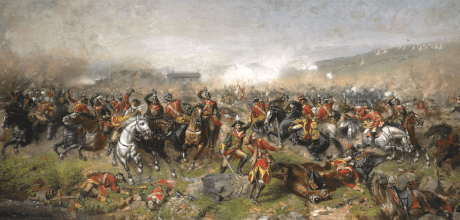
Rokeby first comes to public attention in 1327 when, after his return from prison in Scotland, he receives the thanks of the new King Edward III for being the squire who had first pointed out the approach of the Scots army during the invasion of the previous July. As a reward he is knighted and given lands worth £100 a year. He sees action against the Scots regularly between 1336 and 1342 and has charge of Stirling Castle and Edinburgh Castle while they are held by the English. He is High Sheriff of Yorkshire from 1342 to 1349. He is one of the English commanders at the Battle of Neville’s Cross in 1346, and it is said, “gave the Scots such a draught as they did not care to taste again.” He is then entrusted with bringing King David II of Scotland as a captive to London, and he receives further grants of land as a reward for his good services.

In 1349 Rokeby is appointed Justiciar of Ireland, and given a large armed retinue to accompany him, as it is recognised by the English Crown that “Ireland is not in good plight or good peace.” While there is some surprise at the appointment of an old soldier to such a sensitive political position, the more informed view is that Rokeby is well suited to the task of enforcing justice by military force. He arrives in December and makes a quick circuit of the south of Ireland, mainly to keep watch on the powerful but troublesome magnate Maurice FitzGerald, 1st Earl of Desmond.

Rokeby is praised by his contemporaries for his regard for justice and his zeal in checking extortion by Crown officials. He undertakes a general overhaul of the Irish administration, aimed particularly at the detection and prevention of corruption and the removal of incompetent officials. Arguably he shows excessive zeal in arresting and imprisoning the Lord High Treasurer of Ireland, Robert de Emeldon, a man who enjoys the King’s personal regard. Admittedly the charges against Emeldon are very serious, including rape, robbery and manslaughter, but the King, out of regard for their long friendship and Emeldon’s record of good service to the Crown in Ireland, had already pardoned Emeldon for killing one Ralph de Byrton, a knight, in 1336. Emeldon is once more pardoned and quickly released.

In November 1351 Rokeby holds a Great Council at Kilkenny. It deals partly with the problem of official corruption already mentioned, partly with the problem of defence of the Pale, and partly with the question of intermarriage and other close contacts between the Anglo-Irish and the Old Irish. Otway-Ruthven notes that little of the legislation is new, apart from the application to Ireland of the English Statute of Labourers of 1351, and that much of it is repeated in the better-known Statutes of Kilkenny of 1366.

In 1353 the Clan MacCarthy of Muskerry, the dominant clan in central County Cork, who had until then been loyal to the English Crown, rebels. Rokeby shows considerable skill in crushing the uprising and succeeds in replacing the rebellious head of the clan, Dermot MacCarthy, with his more compliant cousin Cormac. Cormac’s descendants gain great wealth, extensive lands and the title Earl of Clancarty.

This promising state of good order does not last long. A rebellion by the O’Byrne Clan of Wicklow in 1354 is followed by a general uprising headed by the MacMurrough-Kavanagh dynasty. Although Muirchearteach MacMurrough-Kavanagh, the self-styled King of Leinster, is captured and executed, Rokeby suffers several military defeats. He is unable to suppress the O’Byrnes’ rebellion, and other risings take place in Tipperary, Kildare and Ulster.

Rokeby, now an ageing and discouraged man, is recalled in 1355. His replacement, rather surprisingly, is that Earl of Desmond whom it had been one of his main tasks to keep in check. Desmond dies a year later on July 26, 1356. Rokeby is reappointed Justiciar, and returns to Ireland, only to die soon afterwards on April 23, 1357 at Kilkea Castle.

Rokeby is married and his wife is named Juliana, but little else is known of her. They have no children, and his estates pass to his nephew, the younger Thomas.

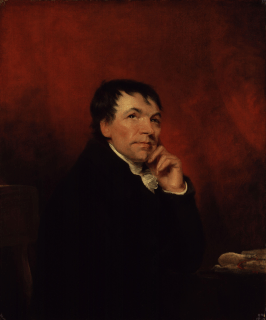
(Pictured: Portrait of Sir Thomas de Rokeby, painting by Godfried Schalcken)


Leave a comment

Brig. Gen. Thomas Smyth Mortally Wounded in the American Civil War

Thomas Alfred Smyth, a brigadier general in the Union Army during the American Civil War, is mortally wounded in a battle near Farmville, Virginia, on April 7, 1865. He dies two days later. He is the last Union general killed in the war.

Smyth is born on December 25, 1832, in Ballyhooly, Cork County, and works on his father’s farm as a youth. He emigrates to the United States in 1854, settling in Philadelphia, Pennsylvania. He participates in William Walker‘s expedition to Nicaragua. He is employed as a wood carver and coach and carriage maker. In 1858, he moves to Wilmington, Delaware.

Smyth is a Freemason. He is raised on March 6, 1865, in Washington Lodge No. 1 in Wilmington, Delaware.

Smyth enlists in 1861 in the Union Army in an Irish American three-months regiment, the 24th Pennsylvania, and quickly makes the rank of captain. He is later commissioned as major of the 1st Delaware Infantry, a three-years regiment. He serves at the battles of Fredericksburg (following which he is promoted to lieutenant colonel and then to colonel) and Chancellorsville. During the Gettysburg campaign, he commands the 2nd Brigade, 3rd Division of the II Corps. During the Battle of Gettysburg, his men help defend Cemetery Ridge and advance to the area of the Bliss farm to oust enemy sharpshooters. He is wounded on the third day of the battle and relinquishes command briefly.

Smyth retains brigade command during the reorganization of II Corps before General Ulysses S. Grant‘s Overland Campaign. He leads the second brigade of the first division from March 25 to May 17, 1864. When Col. Samuel S. Carroll is wounded, Smyth is transferred to his command, the third brigade of second division, the Gibraltar Brigade. In October 1864, he is promoted to brigadier general during the Siege of Petersburg. He retains command of his brigade throughout the siege.

Between July 31, 1864, and August 22, 1864, and between December 23, 1864, and February 25, 1865, Smyth commands the 2nd division of the corps. On April 7, 1865, near Farmville, Virginia, he is shot through the mouth by a Confederate sniper, with the bullet shattering his cervical vertebrae and paralyzing him. He dies two days later at Burke’s Tavern; the same day Confederate General Robert E. Lee and his army surrender at Appomattox Court House.

On March 18, 1867, President of the United States Andrew Johnson nominates Smyth for posthumous appointment to the grade of brevet major general of volunteers to rank from April 7, 1865, the date he was mortally wounded, and the United States Senate confirms the appointment on March 26, 1867. Smyth is the last Union general killed or mortally wounded during the war and is buried in Wilmington and Brandywine Cemetery in Wilmington, Delaware.


Leave a comment

Birth of Terence MacSwiney, Playwright, Author & Lord Mayor of Cork

This image has an empty alt attribute; its file name is terence-macswiney.jpg

Terence James MacSwiney, Irish playwright, author, politician and Sinn Féin Lord Mayor of Cork during the Irish War of Independence, is born at 23 North Main Street, Cork, County Cork, on March 28, 1879.

MacSwiney is one of eight children of John and Mary MacSwiney. His father had volunteered in 1868 to fight as a papal guard against Giuseppe Garibaldi, had been a schoolteacher in London and later opened a tobacco factory in Cork. Following the failure of this business, John MacSwiney emigrates to Australia in 1885, leaving the children in the care of their mother and his eldest daughter.

MacSwiney is educated by the Christian Brothers at the North Monastery school in Cork but leaves at fifteen to help support the family. He becomes an accountancy clerk but continues his studies and matriculates successfully. He continues in full-time employment while he studies at the Royal University (now University College Cork), graduating with a degree in Mental and Moral Science in 1907.

In 1901 MacSwiney helps to found the Celtic Literary Society, and in 1908 he founds the Cork Dramatic Society with Daniel Corkery and writes a number of plays for them. His first play, The Last Warriors of Coole, is produced in 1910. His fifth play, The Revolutionist (1915), takes the political stand made by a single man as its theme.

Described as a sensitive poet-intellectual, MacSwiney’s writings in the newspaper Irish Freedom bring him to the attention of the Irish Republican Brotherhood. He is one of the founders of the Cork Brigade of the Irish Volunteers in 1913 and is President of the Cork branch of Sinn Féin. He founds a newspaper, Fianna Fáil, in 1914, but it is suppressed after only eleven issues. In April 1916, he is intended to be second in command of the Easter Rising in counties Cork and Kerry but stands down his forces on the order of Eoin MacNeill.

Following the rising, MacSwiney is imprisoned by the British Government under the Defence of the Realm Act 1914 in Reading and Wakefield Gaols until December 1916. In February 1917 he is deported from Ireland and imprisoned in Shrewsbury and Bromyard internment camps until his release in June 1917. It is during his exile in Bromyard that he marries Muriel Murphy of the Cork distillery-owning family. In November 1917, he is arrested in Cork for wearing an Irish Republican Army (IRA) uniform, and inspired by the example of Thomas Ashe, goes on a hunger strike for three days prior to his release.

In the 1918 Irish general election, MacSwiney is returned unopposed to the first Dáil Éireann as Sinn Féin representative for Mid Cork, succeeding the Nationalist MP D. D. Sheehan. After the murder of his friend Tomás Mac Curtain, the Lord Mayor of Cork, on March 20, 1920, he is elected as Lord Mayor. On August 12, 1920, he is arrested in Cork for possession of “seditous articles and documents,” and also possession of a cipher key. He is summarily tried by a court on August 16 and sentenced to two years’ imprisonment at Brixton Prison in England.

In prison MacSwiney immediately starts a hunger strike in protest of his internment and the fact that he was tried by a military court. Eleven other Irish Republican prisoners in Cork Jail go on hunger strike at the same time. On August 26, the British Government states that “the release of the Lord Mayor would have disastrous results in Ireland and would probably lead to a mutiny of both military and police in south of Ireland.”

MacSwiney’s hunger strike gains world attention. The British Government is threatened with a boycott of British goods by Americans, while four countries in South America appeal to Pope Benedict XV to intervene. Protests are held in Germany and France as well. An Australian member of Parliament, Hugh Mahon, is expelled from the Parliament of Australia for “seditious and disloyal utterances at a public meeting,” after protesting against the actions of the British Government. Two weeks later, the Spanish Catalan organization Autonomous Center of Employees of Commerce and Industry (CADCI) sends a petition to British Prime Minister David Lloyd George calling for his release and the newspaper of the organization, Acció (Acción in Spanish), begins a campaign for MacSwiney.

Food is often placed near MacSwiney to persuade him to give up the hunger strike. Attempts at force-feeding are undertaken in the final days of his strike. On October 20, 1920, he slips into a coma and dies in London’s Brixton Prison on October 25, after 73 days on hunger strike. His body lay in St. George’s Cathedral, Southwark in London where 30,000 people file past it. Fearing large-scale demonstrations in Dublin, the authorities divert his coffin directly to Cork, and his funeral in the Cathedral of St. Mary and St. Anne on October 31 attracts huge crowds. He is buried in the Republican plot in St. Finbarr’s Cemetery in Cork. Arthur Griffith delivers the graveside oration. His death brings him and the Irish Republican campaign to international attention.


1 Comment

Death of Joseph McGrath, Politician & Businessman

Joseph McGrath, Irish politician and businessman, dies in Ballsbridge, Dublin, on March 26, 1966. He is a Sinn Féin and later a Cumann na nGaedheal Teachta Dála (TD) for various constituencies: Dublin St James’s (1918–1921), Dublin North-West (1921–1923) and Mayo North (1923–1924), and develops widespread business interests.

McGrath is born in Dublin on August 12, 1888. By 1916 he is working with his brother George at Craig Gardiner & Co., a firm of accountants in Dawson Street, Dublin. He works with Michael Collins, a part-time fellow clerk and the two strike up a friendship. In his spare time he works as secretary for the Volunteer Dependents’ Fund.

McGrath soon joins the Irish Republican Brotherhood. He fights in Marrowbone Lane in the 1916 Easter Rising. He is arrested after the rising, and jailed in Wormwood Scrubs and Brixton prisons in England. In the 1918 Irish general election, he is elected as Sinn Féin TD for the Dublin St. James’s constituency, later sitting in the First Dáil. He is also a member of the Irish Republican Army (IRA), and successfully organises many bank robberies during the Irish War of Independence (1919–1921), where a small percentage of the proceeds is retained as a reward by him and his fellow-soldiers. During this time he is interred briefly at Abercorn Barracks but escapes by dressing in army uniform and walking out of the gate with soldiers going on leave. He is eventually recaptured and spends time in jail in Belfast.

In October 1921 McGrath travels with the Irish Treaty delegation to London as one of Michael Collins’ personal staff. When the Provisional Government of Ireland is set up in January 1922, he is appointed Minister for Labour. In the Irish Civil War of 1922–1923, he takes the pro-Treaty side and is made Director of Intelligence, replacing Liam Tobin. In a strongly worded letter, written in red ink, he warns Collins not to take his last, ill-fated trip to County Cork.

McGrath is later put in charge of the police Intelligence service of the new Irish Free State, the Criminal Investigation Department (CID). It is modelled on the London Metropolitan Police department of the same name, but is accused of the torture and killing of a number of republican (anti-Treaty) prisoners during the civil war. It is disbanded at the war’s end with the official reason given that it is unnecessary for a police force in peacetime. He goes on to serve as Minister for Labour in the Second Dáil and the Provisional Government of Ireland. He also serves in the 1st and 2nd Executive Councils holding the Industry and Commerce portfolio.

In September 1922 McGrath uses strikebreakers to oppose a strike by Trade Unionists in the Post Office service, despite having threatened to resign in the previous March of the same year when the government threatened to use British strikebreakers.

In December 1922 McGrath is a reluctant supporter of the government’s decision to execute four high profile IRA prisoners: Liam Mellows, Dick Barrett, Rory O’Connor, and Joe McKelvey.

McGrath resigns from office in April 1924 because of dissatisfaction with the government’s attitude to the Army Mutiny officers and as he says himself, “government by a clique and by the officialdom of the old regime.” By this he means that former IRA fighters are being overlooked and that the Republican goals on all Ireland has been sidelined. He and eight other TDs, who had resigned from Cumann na nGaedheal, resign their seats in the Dáil and form a new political party, the National Party. However, the new party does not contest the subsequent by-elections for their old seats. Instead, Cumann na nGaedheal wins seven of the seats and Sinn Féin wins the other two.

In 1927, McGrath takes a libel case against the publishers of The Real Ireland by poet Cyril Bretherton, a book that claims he is responsible for the abduction and murder of Noel Lemass, the brother of Seán Lemass, in June 1923 during the civil war, as well as a subsequent coverup. He wins the court case. During the 1930s, he and Seán Lemass reconcile and regularly play poker together.

Following his political career, McGrath goes on to become involved in the building trade. In 1925 he becomes labour adviser to Siemens-Schuckert, German contractors for the Shannon hydroelectric scheme near Limerick. He founds the Irish Hospitals’ Sweepstake in 1930, and the success of its sweepstakes makes him an extremely wealthy man. He has other extensive and successful business interests always investing in Ireland and becomes Ireland’s best-known racehorse owner and breeder, winning The Derby with Arctic Prince in 1951.

McGrath dies at his home, Cabinteely House, in Ballsbridge, Dublin on March 26, 1966. Cabinteely House is donated to the state in 1986 and the land is developed as a public park. His son, Patrick W. McGrath, inherits many of his father’s business interests, and also serves as Fine Gael Senator from 1973 to 1977.

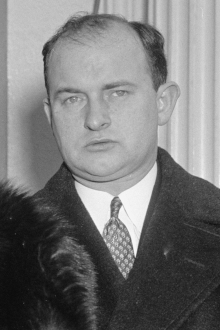
(Pictured: Screenshot of a film of Irish politician Joseph McGrath shot in 1922)