seamus dubhghaill

Promoting Irish Culture and History from Little Rock, Arkansas, USA


Leave a comment

Birth of Éamon de Valera, Third President of Ireland

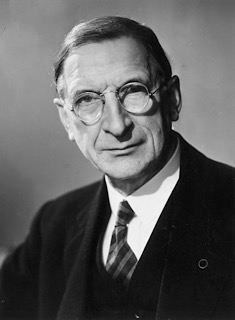
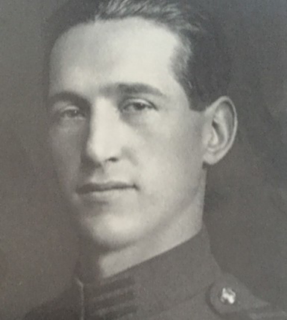
Éamon de Valera, Irish politician and patriot, is born George de Valero on October 14, 1882, in Lennox Hill, a neighborhood on the Upper East Side of Manhattan in New York City. He serves as Taoiseach (1932–48, 1951–54, 1957–59) and President of Ireland (1959–73). An active revolutionary from 1913, he becomes president of Sinn Féin in 1917 and founds the Fianna Fáil party in 1926. In 1937, he makes his country a sovereign state, renamed Ireland, or Éire. His academic attainments also inspire wide respect. He becomes chancellor of the National University of Ireland in 1921.

De Valera is the son of Catherine Coll, who is originally from Bruree, County Limerick, and Juan Vivion de Valera, described on the birth certificate as a Spanish artist born in 1853. His father dies when he is two years old. He Is then sent to his mother’s family in County Limerick, and studies at the local national school and at Blackrock College, Dublin. He graduates from the Royal University of Ireland and becomes a teacher of mathematics and an ardent supporter of the Irish language revival. In 1913, he joins the Irish Volunteers, which had been organized to resist opposition to Home Rule for Ireland.

In the 1916 Easter Rising in Dublin, de Valera commands an occupied building and is the last commander to surrender. Because of his American birth, he escapes execution by the British but is sentenced to penal servitude. Released in 1917 but arrested again and deported in May 1918 to England, where he is imprisoned, he is acclaimed by the Irish as the chief survivor of the uprising and in October 1917 is elected president of the Irish republican and democratic socialist Sinn Féin political party, which wins three-fourths of all the Irish constituencies in December 1918.

After a dramatic escape from HM Prison Lincoln in February 1919, de Valera goes in disguise to the United States, where he collects funds. He returns to Ireland before the Irish War of Independence ends with the truce that takes effect on July 11, 1921, and appoints plenipotentiaries to negotiate in London. He repudiates the Anglo-Irish Treaty of December 6, 1921, that they signed to form the Irish Free State, however, primarily because it imposes an oath of allegiance to the British crown.

After Dáil Éireann ratifies the treaty by a small majority in 1922, de Valera supports the republican resistance in the ensuing Irish Civil WarW. T. Cosgrave’s Irish Free State ministry imprisons him, but he is released in 1924 and then organizes a republican opposition party that does not sit in Dáil Éireann. In 1927, however, he persuades his followers to sign the oath of allegiance as “an empty political formula,” and his new Fianna Fáil (“Soldiers of Destiny”) party then enters the Dáil, demanding abolition of the oath of allegiance, of the governor-general, of the Seanad Éireann (senate) as then constituted, and of land-purchase annuities payable to Great Britain. The Cosgrave ministry is defeated by Fianna Fáil in 1932, and de Valera, as head of the new ministry, embarks quickly on severing connections with Great Britain. He withholds payment of the land annuities, and an “economic war” results. Increasing retaliation by both sides enables de Valera to develop his program of austere national self-sufficiency in an Irish-speaking Ireland while building up industries behind protective tariffs. In the new Constitution of Ireland, ratified by referendum in 1937, the Irish Free State becomes Ireland, a sovereign, independent democracy tenuously linked with the British Commonwealth (under the Executive Authority (External Relations) Act 1936) only for purposes of diplomatic representation.

De Valera’s prestige is enhanced by his success as president of the council of the League of Nations in 1932 and of its assembly in 1938. He also enters negotiations with British Prime Minister Neville Chamberlain in which he guarantees that he will never allow Ireland to be used as a base for attacking Britain in the event of war. This culminates in the Anglo-Irish defense agreement of April 1938, whereby Britain relinquishes the naval bases of Cobh, Berehaven, and Lough Swilly (retained in a defense annex to the 1921 treaty), and in complementary finance and trade treaties that end the economic war. This makes possible de Valera’s proclamation in September 1939, upon the outbreak of World War II, that Ireland will remain neutral and will resist attack from any quarter. In secret, however, de Valera also authorizes significant military and intelligence assistance to both the British and the Americans throughout the war. He realizes that a German victory will imperil Ireland’s independence, of which neutrality is the ultimate expression. By avoiding the burdens and destruction of the war, de Valera achieves a relative prosperity for Ireland in comparison with the war-torn countries of Europe, and he retains office in subsequent elections.

In 1948, a reaction against the long monopoly of power and patronage held by de Valera’s party enables the opposition, with the help of smaller parties, to form an interparty government under John A. Costello. Ironically, this precarious coalition collapses within three years after Ireland becomes a republic by means of the repeal of the Executive Authority (External Relations) Act 1936 and the severance of all ties with the British Commonwealth, an act de Valera had avoided. De Valera resumes office until 1954, when he appeals unsuccessfully for a fresh mandate, and Costello forms his second interparty ministry. No clearly defined difference now exists between the opposing parties in face of rising prices, continued emigration, and a backward agriculture. De Valera claims, however, that a strong single-party government is indispensable and that all coalitions must be weak and insecure. On this plea he obtains, in March 1957, the overall majority that he demands.

In 1959, de Valera agrees to stand as a candidate for the presidency. He resigns his position as Taoiseach and leader of the Fianna Fáil party. In June he is elected president, and is reelected in 1966. He retires to a nursing home near Dublin in 1973 and dies there on August 29, 1975.

De Valera’s career spans the dramatic period of Ireland’s modern cultural and national revolution. As an anticolonial leader, a skillful constitutionalist, and a symbol of national liberation, he dominates Ireland in the half century following the country’s independence.

(From: “Éamon de Valera, president of Ireland,” Encyclopedia Britannica, http://www.britannica.com, last updated August 14, 2025)


Leave a comment

Birth of Pádraig de Brún, Catholic Priest & Linguist

Pádraig de Brún, also called Patrick Joseph Monsignor Browne, a Roman Catholic priestlinguistClassicist, and Celticist, is born in Grangemockler, County Tipperary, on October 13, 1889. With regard to his contribution to modern literature in Irish, he, who Louis de Paor terms in 2014 “one of the most distinguished literary figures of his time,” is also a writer of Irish poetry in the Irish language and the literary translator of many of the greatest works of the Western canon into Modern Irish. He serves as President of University College, Galway (UCG), and is known in friendly and informal circles as Paddy Browne.

De Brún is the son of a primary school teacher, Maurice Browne. He is educated locally, at Rockwell CollegeCashel, and at Holy Cross College, Drumcondra, Dublin (at both he is tutored in mathematics by Éamon de Valera). In 1909, he is awarded a BA from the Royal University of Ireland. He is awarded an MA degree by the National University of Ireland, and wins a traveling scholarship in mathematics and mathematical physics, enabling him to pursue further studies in Paris. He is ordained as a Catholic priest at the Irish College in Paris in 1913, the same year he earns his D.Sc. in mathematics from the University of Paris under Émile Picard.

After a period at the University of Göttingen, de Brún is appointed professor of mathematics at St. Patrick’s Pontifical University, Maynooth, in 1914. In April 1945, he is elected by the Senate of the National University of Ireland to succeed John Hynes as President of University College, Galway, an office he holds until his retirement in 1959. His friend Thomas MacGreevy refers to de Brún as, “Rector Magnificus,” and praises his, “Olympian capacity to appreciate the most exalted works of art and literature, ancient and modern.”

The School of Mathematics, Mathematical Physics and Statistics is based in Áras de Brún, a building named in de Brún‘s honour. He subsequently becomes Chairman of the Arts Council of Ireland, a position he holds until his death in 1960. He also serves as chairman of the Council of the Dublin Institute for Advanced Studies (DIAS).

De Brún is close friend of 1916 Easter Rising leader Seán Mac Diarmada and is deeply affected by the latter’s execution.

De Brún was a prolific writer of Irish poetry in the Irish language, including the well-known poem “Tháinig Long ó Valparaiso.” He further translates into Modern Irish many great works of the Western canon, including Homer‘s Iliad and OdysseySophocles‘ Antigone and Oedipus Rex, and Plutarch‘s Parallel Lives, as well as French stage plays by Jean Racine and Dante Alighieri‘s Divine Comedy. With regards to his importance to modern literature in Irish, he is recently termed “one of the most distinguished literary figures of his time.”

The French Government awards de Brún the title of Chevalier of the Legion d’Honneur in 1949, and in 1956, the order Al Merito della Repubblica Italiana is conferred on him by the President of Italy. He is created a Domestic Prelate (a Monsignor) by Pope Pius XII in 1950.

De Brún purchases land at Dunquin in the Dingle Peninsula Gaeltacht. In the 1920s, he also builds a house there known as Tigh na Cille, where his sister and her children often visit and stay at length. Through his literary mentorship of his niece, the future poet Máire Mhac an tSaoi, he has been credited with having an enormous influence upon the future development of modern literature in Irish.

After suffering a heart attack at his house at Seapoint, Dún Laoghaire, into which he had recently moved, de Brún dies on June 5, 1960, in St. Vincent’s nursing home, Leeson Street, Dublin.


Leave a comment

Death of David Neligan, Intelligence Agent & Police Detective

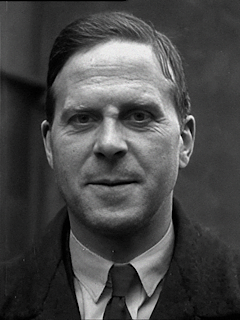
David Neligan, intelligence agent, police detective and superintendent known by his sobriquet “The Spy in the Castle,” dies on October 6, 1983, at St. Vincent’s Hospital in Dublin. He is a figure involved in the Irish War of Independence (1919–21) and subsequently becomes Director of Military Intelligence for the Irish Army after the Irish Civil War (1922–23).

Neligan is born on October 14, 1899, at TempleglantineCounty Limerick, where his parents, David and Elizabeth Neligan (née Mullan), are primary school teachers. He is an accomplished hurler with his local Templeglantine GAA club. In 1917, he joins the Irish Volunteers, the military organisation established in 1913 by Irish nationalists.

Against his father’s wishes, Neligan joins the Dublin Metropolitan Police (DMP) – also in 1917. Picking up travel documentation from the local Royal Irish Constabulary barracks, he declines a suggestion that he enlist in this armed rural force. After service as a uniformed constable with the DMP, he is promoted to Detective and transferred into the Department’s widely hated counterintelligence and anti-political-subversion unit, the G Division, in 1919. In May 1920, his elder brother Maurice (1895–1920), an Irish Republican Army (IRA) member and friend of Michael Collins, persuades him to resign from the DMP.

After his resignation, Neligan returns to his native County Limerick with the intention of joining the Limerick IRA. Shortly afterward, Maurice is killed in a motorcycle accident, near their home in Templeglantine. In the meantime, Neligan also receives word from a family friend that Michael Collins wishes to meet with him in Dublin. Collins is outraged that Neligan has been allowed to resign and persuades him to rejoin the DMP as a mole for the intelligence wing of the IRA. Along with Detectives Eamon Broy and James McNamara, Neligan acts as a highly valuable agent for Collins and passes on reams of vital information. He leaks documents about the relative importance of police and military personnel and also warns insurgents of upcoming raids and ambushes. There are unconfirmed rumors that Neligan might be a double agent working for British interests.

In 1921, Collins orders Neligan to let himself be recruited into MI5 and he uses the opportunity to memorise their passwords and the identities of their agents. All of this is passed on to Collins. After Broy and McNamara are dismissed in 1921, Neligan becomes Collins’ most important mole inside Dublin Castle.

On the outbreak of the Irish Civil War in June 1922, Neligan joins the Irish Army in Islandbridge Barracks with the rank of Commandant, and is attached to the Dublin Guard. He is involved in the seaborne assault on Fenit, County Kerry, and spends the remainder of the war serving as a military intelligence officer operating between Ballymullen BarracksTralee and Killarney. He is involved in atrocities alongside Paddy Daly including the Ballyseedy massacre, mock executions and the torture of prisoners using crowbars and is sometimes referred to as the “Butcher of Kerry.” In 1923, he is posted to Dublin, where he is promoted to Colonel and succeeds Diarmuid O’Hegarty as the Irish Army’s Director of Military Intelligence.

In 1924, Neligan hands over his post to the youthful Colonel Michael Joe Costello and takes command of the DMP, which still continues as a force separate from the newly established Garda Síochána, with the rank of Chief Superintendent. The next year he transfers to the Garda when the two police forces are amalgamated, and is instrumental in the foundation of the Garda Special Branch. When Éamon de Valera becomes head of government in 1932, his republican followers demand Neligan’s dismissal. Instead, Neligan is transferred to an equivalent post in the Irish Civil Service. In June 1935, he is married to fellow civil servant Sheila Maeve Rogan. They have one son and three daughters, and reside at 15 St. Helen’s Road, Booterstown, Dublin.

Neligan draws pensions from the DMP, the British MI5, the Garda Síochána and the Irish Civil Service. He also receives an “Old IRA” pension through the Department of Defence.


Leave a comment

Death of James Ryan, Doctor, Revolutionary & Fianna Fáil Politician

James Ryan, medical doctor, revolutionary and politician who serves in every Fianna Fáil government from 1932 to 1965, dies on his farm at Kindlestown, County Wicklow, on September 25, 1970.

Ryan is born on the family farm at Tomcoole, near TaghmonCounty Wexford, on December 6, 1892. The second-youngest of twelve children, he is educated at St. Peter’s College, Wexford, and Ring College, Waterford. In 1911, he wins a county council scholarship to University College Dublin (UCD) where he studies medicine.

In March 1917, Ryan passes his final medical examinations. That June he sets up medical practice in Wexford. In 1921, he moves to Dublin where he opens a doctor’s practice at Harcourt Street, specialising in skin diseases at the Skin and Cancer Hospital on Holles Street. He leaves medicine in 1925, after he purchases Kindlestown, a large farm near Delgany, County Wicklow. He lives there and it remains a working farm until his death.

In July 1919, Ryan marries Máirín Cregan, originally from County Kerry and a close friend of Sinéad de Valera throughout her life. Cregan, like her husband, also fought in the Easter Rising and is subsequently an author of children’s stories in Irish. They have three children together.

One of Ryan’s sisters, Mary Kate, marries Seán T. O’Kelly, one of Ryan’s future cabinet colleagues and a future President of Ireland. Following her death O’Kelly marries her sister, Phyllis Ryan. Another of Ryan’s sisters, Josephine (‘Min’) Ryan, marries Richard Mulcahy, a future leader of Fine Gael. Another sister, Agnes, marries Denis McCullough, a Cumann na nGaedheal TD from 1924 to 1927. He is also the great-grandfather of Ireland and Leinster Rugby player James Ryan.

While studying at university in 1913, Ryan joins the Gaelic League at Clonmel. The company commander recruits the young Catholic nationalist, who becomes a founder-member of the Irish Volunteers and is sworn into the Irish Republican Brotherhood (IRB) the following year. In 1916, he goes first to Cork to deliver a message from Seán Mac Diarmada to Tomás Mac Curtain that the Easter Rising is due to happen on Easter Sunday, then to Cork again in a 12-hour journey in a car to deliver Eoin MacNeill‘s cancellation order, which attempts to stop the rising. When he arrives back on Tuesday, he serves as the medical officer in the General Post Office (GPO) and treats many wounds, including James Connolly‘s shattered ankle, a wound which gradually turns gangrenous. He is, along with Connolly, one of the last people to leave the GPO when the evacuation takes place. Following the surrender of the garrison, he is deported to HM Prison Stafford in England and subsequently Frongoch internment camp. He is released in August 1916.

Ryan rejoins the Volunteers immediately after his release from prison, and in June 1917, he is elected Commandant of the Wexford Battalion. His political career begins the following year when he is elected as a Sinn Féin candidate for the constituency of South Wexford in the 1918 United Kingdom general election in Ireland. Like his fellow Sinn Féin MPs, he refuses to attend the Westminster Parliament. Instead he attends the proceedings of the First Dáil on January 21, 1919. As the Irish War of Independence goes on, he becomes Brigade Commandant of South Wexford and is also elected to Wexford County Council, serving as chairman on one occasion. In September 1919, he is arrested by the British and interned on Spike Island and later Bere Island. In February 1921, he is imprisoned at Kilworth Internment Camp, County Cork. He is later moved on Ballykinlar Barracks in County Down and released in August 1921.

In the 1922 Irish general election, Ryan and one of the other two anti-Treaty Wexford TDs lose their seats to pro-Treaty candidates. During the Irish Civil War, he is arrested and held in Mountjoy Prison before being transferred to Curragh Camp, where he embarks on a 36-day hunger strike. While interned he wins back his Dáil seat as an abstentionist at the 1923 Irish general election. He is released from prison in December 1923.

In 1926, Ryan is among the Sinn Féin TDs who follow leader Éamon de Valera out of the party to found Fianna Fáil. They enter the Dáil in 1927 and spend five years on the opposition benches.

Following the 1932 Irish general election, Fianna Fáil comes to office and Ryan is appointed Minister for Agriculture, a position he continuously holds for fifteen years. He faces severe criticism over the Anglo-Irish trade war with Britain as serious harm is done to the cattle trade, Ireland’s main export earner. The trade war ends in 1938 with the signing of the Anglo-Irish Trade Agreement between both governments, after a series of talks in London between the British Prime Minister Neville Chamberlain, de Valera, Ryan and Seán Lemass.

In 1947, after spending fifteen years as Minister for Agriculture, Ryan is appointed to the newly created positions of Minister for Health and Minister for Social Welfare. Following Fianna Fáil’s return to power at the 1951 Irish general election, he returns as Minister for Health and Social Welfare. Following the 1954 Irish general election, Fianna Fáil loses power and he moves to the backbenches once again.

Following the 1957 Irish general election, Fianna Fáil are back in office and de Valera’s cabinet has a new look to it. In a clear message that there will be a change to economic policy, Ryan, a close ally of Seán Lemass, is appointed Minister for Finance, replacing the conservative Seán MacEntee. The first sign of a new economic approach comes in 1958, when Ryan brings the First Programme for Economic Development to the cabinet table. This plan, the brainchild of T. K. Whitaker, recognises that Ireland will have to move away from self-sufficiency toward free trade. It also proposes that foreign firms should be given grants and tax breaks to set up in Ireland.

When Lemass succeeds de Valera as Taoiseach in 1959, Ryan is re-appointed as Minister for Finance. Lemass wants to reward him for his loyalty by also naming him Tánaiste. However, the new leader feels obliged to appoint MacEntee, one of the party elders to the position. Ryan continues to implement the First Programme throughout the early 1960s, achieving a record growth rate of 4 percent by 1963. That year an even more ambitious Second Programme is introduced. However, it overreaches and has to be abandoned. In spite of this, the annual growth rate averages five percent, the highest achieved since independence.

Ryan does not stand in the 1965 Irish general election, after which he is nominated by the Taoiseach to Seanad Éireann, where he joins his son, Eoin Ryan Snr. At the 1969 dissolution he retires to his farm at Kindlestown, County Wicklow, where he dies at age 77 on September 25, 1970. He is buried at Redford Cemetery, Greystones, County Wicklow. His grandson, Eoin Ryan Jnr, serves in the Oireachtas from 1989 to 2007 and later in the European Parliament from 2004 to 2009.


Leave a comment

Death of R. M. “Bertie” Smyllie, Editor of “The Irish Times”

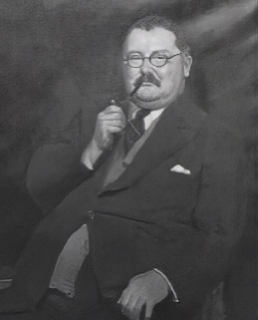
Robert Maire Smyllie, known as Bertie Smyllie, editor of The Irish Times for twenty years, dies on September 11, 1954.

Smyllie is born on March 20, 1893, at Hill Street, ShettlestonGlasgowScotland. He is the eldest of four sons and one daughter of Robert Smyllie, a Presbyterian printer originally from Scotland who is working in Sligo, County Sligo, at the time, and Elisabeth Follis, originally from Cork, County Cork. His father marries in Sligo on July 20, 1892, and later becomes proprietor and editor of the unionist Sligo Times. Smyllie attends Sligo Grammar School in 1906 and enrolls at Trinity College Dublin (TCD) in 1911.

After two years at TCD, Smyllie’s desire for adventure leads him to leave university in 1913. Working as a vacation tutor to an American boy in Germany at the start of World War I, he is detained in Ruhleben internment camp, near Berlin, during the war. As an internee, he is involved in drama productions with other internees. Following his release at the end of the war, he witnesses the German revolution of 1918–1919. During this period, he encounters revolutionary sailors from Kiel who temporarily make him a representative of the Workers’ and Soldiers’ Council, and he observes key events including the looting of the Kaiser’s Palace and violent clashes between rival factions in Berlin. It is also during this period that he secures a personal interview with David Lloyd George at the Paris Convention of 1919. This helps Smyllie gain a permanent position with The Irish Times in 1920, where he quickly earns the confidence of editor John Healy. Together, they take part in secret but unsuccessful attempts to resolve the Irish War of Independence.

Smyllie contributes to the Irishman’s Diary column of the paper from 1927. In 1927, he publishes an exclusive report outlining a draft government including both Labour Party and Fianna Fáil TDs, signaling the volatile politics of the early state years.

Smyllie’s knowledge of languages (particularly the German he had learned during his internment) led to numerous foreign assignments. His reports on the rise of National Socialism in 1930s Germany are notably prescient and instill in him a lasting antipathy towards the movement.

When Healy dies in 1934, Smyllie becomes editor of The Irish Times and also takes on the role of Irish correspondent for The Times (London), a position that brings significant additional income. Under Healy’s leadership, The Irish Times shifted from representing the Anglo-Irish ascendancy to becoming an organ of liberal, southern unionism, and eventually becomes a critical legitimising force in the Irish Free State. Smyllie enthusiastically supports this change. He establishes a non-partisan profile and a modern Irish character for the erstwhile ascendancy paper. For example, he drops “Kingstown Harbour” for “Dún Laoghaire.” He also introduces the paper’s first-ever Irish-language columnist. He is assisted by Alec Newman and Lionel Fleming, recruits Patrick Campbell and enlists Flann O’Brien to write his thrice-weekly column “Cruiskeen Lawn” as Myles na gCopaleen. As editor, he introduces a more Bohemian and informal style, establishing a semi-permanent salon in Fleet Street’s Palace Bar. This becomes a hub for journalists and literary figures and a source of material for his weekly column, Nichevo.

One of Smyllie’s early political challenges as editor concerns the Spanish Civil War. At a time when Irish Catholic opinion is strongly pro-Franco, he ensures The Irish Times coverage is balanced and fair, though advertiser pressure eventually forces the withdrawal of the paper’s young reporter, Lionel Fleming, from the conflict. His awareness of the looming European crisis earns him the Order of the White Lion of Czechoslovakia in 1939. However, during World War II, he clashes with Ireland’s censorship authorities, especially under Minister Frank Aiken. He challenges their views both publicly and privately, though his relationship with the editor of the Irish Independent, Frank Geary, is cold, reducing the effectiveness of their joint opposition to censorship.

During the 1943 Irish general election, Smyllie uses the paper to promote the idea of a national government that could represent Ireland with authority in the postwar world. He praises Fine Gael’s proposal for such a government and criticises Éamon de Valera for dismissing it as unrealistic. This leads to a public exchange between de Valera and Smyllie, with the latter defending The Irish Times’s role as a constructive voice for Ireland’s future rather than a partisan interest.

Following the war, Smyllie’s editorial stance shifts toward defending Ireland’s neutrality and diplomatic position. When Winston Churchill accuses de Valera of fraternising with Axis powers, Smyllie counters by revealing Ireland’s covert collaboration with the Allies, such as military and intelligence cooperation, despite official neutrality. In the same period, he continues to oppose censorship, particularly the frequent banning of Irish writers by the Censorship of Publications Board. This opposition features prominently in a controversy on The Irish Times letters page in 1950, later published as the liberal ethic. The paper also adopts a critical stance toward the Catholic Church, notably during the 1951 resignation of Minister for Health Noël Browne amid opposition from bishops and doctors to a national Mother and Child Scheme. His editorials suggest the Catholic Church is effectively the government of Ireland, though he maintains a cordial relationship with Archbishop of DublinJohn Charles McQuaid, who invites him annually for dinner.

Smyllie is also wary of American foreign policy, showing hostility particularly during the Korean War. American diplomats in Dublin allege that Smyllie is “pro-communist“. Despite growing readership among an educated Catholic middle class, The Irish Times’s circulation in 1950 remains under 50,000, far below the Irish Independent and the Fianna Fáil-aligned The Irish Press.

In later years, Smyllie’s health declines, prompting a quieter lifestyle. He moves from his large house in Pembroke Park, Dublin, to DelganyCounty Wicklow. As he does not drive, he becomes less present in the newspaper office in D’Olier Street, contributing to a decline in the paper’s dynamism. His health deteriorates further, resulting in frequent absences from his editorial duties, though he retains his position despite management attempts to limit his authority, especially over finances. He dies of heart failure on September 11, 1954.

In 1925, Smyllie marries Kathlyn Reid, eldest daughter of a County Meath landowner. They have no children.

Smyllie is an eccentric: he hits his tee shots with a nine iron, speaks in a curious mix of Latin phrases and everyday Dublin slang, and weighs 22 stone (308 lbs.; 140 kg) yet still cycles to work wearing a green sombrero.


Leave a comment

Death of Teresa Brayton, Irish Republican & Poet

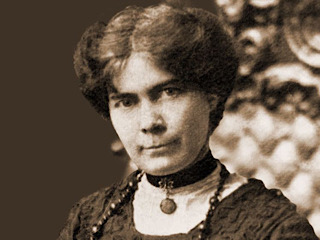
Teresa Brayton, an Irish republican and poet who uses the pen name T. B. Kilbrook, dies in Kilbrook, a small village near Kilcock, County Kildare, on August 19, 1943.

Brayton is born Teresa Coca Boulanger in Kilbrook, the youngest daughter and fifth child of Hugh Boylan and Elizabeth Boylan (née Downes). Her family are long-time nationalists, with her great grandfather previously leading a battalion of pikesmen at the Battle of Prosperous.

Brayton later becomes a notable member of Irish national parties, the United Irish League and Cumann na mBan. She is described as “a patriot, but never in the vulgar sense a politician” in The Irish Times. She is closely associated with leaders of the 1916 Easter Rising, and writes poems in honour of Irish patriots including Charles Stewart ParnellRoger Casement and Patrick Pearse.

Brayton is educated from the age of 5 in Newtown National School. She writes her first poem at the age of twelve, and soon after wins her first literary award. Later on, she trains to be a teacher, and then becomes an assistant teacher to her older sister Elizabeth in the same school she received her education.

Brayton’s father is a tenant farmer, and from a young age she witnesses the effects of the land wars in Ireland. She is a supporter of Parnell, the Irish National Land League and the Irish Home Rule movement. Her work is largely influenced by her family history and Irish nationalism.

In September 1895, Brayton emigrates to the United States at the age of 27. She first lives in Boston, Chicago, and later moves to New York City. She meets Richard H. Brayton, a French-Canadian who works as an executive in the Municipal Revenue Department, who she then marries. She looks after their home and focuses on her career as a freelance journalist. She lives in the United States for 40 years and becomes well known in Irish American circles as a prominent figure in the Celtic Fellowship. It was in the United States that her reputation is established.

In the 1880s, Brayton begins her career as a poet, writing poetry for both national and provincial Irish newspapers, including Young Ireland and the King’s County Chronicle. She uses the pseudonym “T. B. Kilbrook” while contributing to these papers.

Brayton continues writing under the pseudonym until moving to the United States, where she becomes an acclaimed writer and continues to contribute to papers including the Boston newspaper The PilotNew York Monitor and Rosary Magazine. Her target audience is the Irish immigrant population of the United States. After establishing herself she releases her poetry in collections including Songs of Dawn (1913) and The Flame of Ireland (1926).

Brayton makes return trips to Ireland regularly and develops a relationship with nationalist peers, and the leaders of the Easter Rising. Upon returning to the United States, she becomes an activist for the Irish Republic and participates in organising the distribution of information to the Irish population through pamphlets and public speaking. Her contribution is acknowledged by Constance Markievicz. Her patriotism to Ireland admit her to the Celtic Fellowship in America, where she shares her poetry at events.

Brayton’s best-known poem is “The Old Bog Road,” which is later set to music by Madeline King O’Farrelly. It has since been recorded and released by many Irish musicians including Finbar FureyDaniel O’Donnell and Eileen Donaghy, among many others. Many more of her best-known ballads include, The Cuckoo’s CallBy the Old Fireside and Takin’ Tea in Reilly’s.

Brayton makes her permanent return to Ireland at the age of 64 following the death of her husband in 1932 and continues her career as a journalist writing for Irish newspapers and publishes religious poetry in the volume Christmas Verses in 1934. A short story called The New Lodger written by Brayton is published by the Catholic Trust Society in 1933. She dedicates much of her work to the exiled Irish living in the United States, incorporating themes of nostalgia, the familiarity of home and religion throughout her poetry.

Initially upon moving back to Ireland, she lives for a few years with her sister in Bray, County Wicklow. She then moves to Waterloo Avenue, North StrandCounty Dublin. Here, she witnesses the bombing of the North Strand on May 31, 1941 during World War II. Shortly after the bombing, she eventually settles back in Kilbrook, where she was born, and lives there for the rest of her life. She spends a brief period of time in the Edenderry Hospital before her death. During her stay there she becomes a good friend with Padraig O’Kennedy, the “Leinster Leader,” who is able to reveal to her something that is linked to a family member of his. A copy of her The Old Bog Road which had been set to music and autographed by her while she was living in the United States. She had it sent to O’Kennedy’s eldest son and on it she wrote the words: “To the boy who sings the Old Bog Road so sweetly.”

Two years after her return to Kilbrook, on August 19, 1943, Brayton dies in the same room where her mother had given birth to her over 75 years previously. She is buried at the Cloncurry cemetery in County Kildare. Her funeral is attended by many, including the then TaoiseachÉamon de Valera.

From the vivid imagery she speaks of in her poetry, Brayton, both a poet and a novelist, is described by some as “the poet of the homes of Ireland.” Such scenes include the vivid imagery of the fireside chats, the sound of her latch lifting as neighbours in to visit at night from her poem “The Old Boreen” and about her home cooking and work from “When the Leaves Begin to Fall.” Such images can be compared to most Irish households and can depict a vivid picture to those reading her poetry.

Brayton’s poetry leaves a lasting sense of Irish beauty and community. This can be seen in such poems as “A Christmas Blessing” where she speaks of “taking and giving in friendship” during Christmas. Since her passing she has continued to keep an audience from overseas from Boston and New York primarily, this as a result of the reminder her poems give to Irish exiles of Irish traditions and music which was close to them. While her poems are more often serious, some portray an almost comical undertone tone. In an article in The Irish Times, her poetry is also said to have a racy feel to them.


Leave a comment

The Copley Street Riot

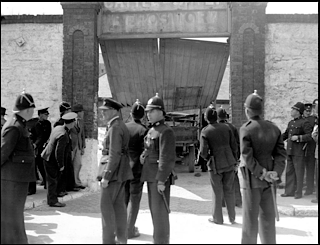
The Copley Street riot occurs on August 13, 1934, at the Copley Street Repository, Cork, County Cork, after Blueshirts opposed to the collection of annuities from auctioned cattle ram a truck through the gate of an ongoing cattle auction. The Broy Harriers open fire and one man, 22 year old Michael Lynch, is killed and several others injured.

Following the Irish War of Independence (1919–21), Britain relinquishes its control over much of Ireland. However, aspects of the Anglo-Irish Treaty, which had marked the end of the war, lead to the Irish Civil War (1922–23). The aftermath leaves Ireland with damaged infrastructure and hinders its early development.

Éamon de Valera, who had voted against the Anglo-Irish treaty and headed the Anti-Treaty movement during the civil war, comes to power following the 1932 Irish general election and is re-elected in 1933. While the treaty stipulates that the Irish Free State should pay £3.1 million in land annuities to Great Britain, and despite advice that an economic war with Britain could have catastrophic consequences for Ireland (as 96% of exports are to Britain), de Valera’s new Irish government refuses to pay these annuities – though they continue to collect and retain them in the Irish exchequer.

This refusal leads to the Anglo-Irish trade war (also known as the “Economic War”), which persists until 1935, when a new treaty, the Anglo-Irish Trade Agreement, is negotiated in 1938. During this period, a 20% duty is imposed on animals and agricultural goods, resulting in significant losses for Ireland. Specifically, poultry trade declines by 80%, butter trade by 50% and cattle prices drop by 50%. Some farmers are forced to kill and bury animals because they cannot afford to maintain them.

In 1933, Fine Gael emerges as a political party—a merger of Cumann na nGaedheal and the National Centre Party. Fine Gael garners substantial support from rural farmers who are particularly affected by the Economic War. They strongly object to the collection of land annuities by the Fianna Fáil government. The Blueshirts, a paramilitary organisation founded as the Army Comrades Association in 1932 and led by former Garda Commissioner Eoin O’Duffy, transforms into an agrarian protest organisation, mobilising against seizures, cattle auctions, and those tasked with collecting annuities.

O’Duffy, a key figure in Irish politics, encourages farmers to withhold payment of land annuities to the government. Arising from this stance, Gardaí start to seize animals and farm equipment, auctioning them to recover the outstanding funds. While seized cattle are auctioned, local farmers rarely participate. Instead, Northern Ireland dealers, often associated with the name O’Neill, are the primary buyers. These auctions are protected by the Broy Harriers, an armed auxiliary group linked to the police.

By 1934, tensions escalate, and a series of anti-establishment incidents are attributed to the Blueshirts. These incidents range from minor acts of violence, such as breaking windows, to more serious offenses like assault and shootings.

On August 13, 1934, an auction takes place at Marsh’s Yard on Copley Street in Cork, featuring cattle seized from farms in Bishopstown and Ballincollig. The police establish a cordon by 10:00 a.m., with 300 officers on duty. Lorries arrived at 11:00 a.m.

Around noon, three thousand protestors assemble. Within twenty-five minutes, an attempt is made to breach the yard gate by ramming it with a truck. According to Oireachtas records, there are approximately 20 men in the truck which they run against the gate. The Minister for Justice P. J. Ruttledge, says that the truck “with those people in it charged through those cordons of Guards; that several Guards jumped on to the lorry and tried to divert the driver by catching hold of the steering wheel and trying to twist it.” Some contemporary news sources suggest that the ramming truck knocked down the surrounding police cordon “like ninepins and crush[ed] a police inspector against a gate.” Later sources suggest that the senior officer (a superintendent) was injured in a fall, while attempting to avoid being struck, rather than being hit directly by the truck.

A man named Michael Lynch, wearing the distinctive blue shirt, and approximately 20 others reportedly manage to enter the yard. As soon as they enter the yard they are fired upon by armed “special branch” police detectives who are in the yard. Lynch later succumbs to his injuries at the South Infirmary. Thirty-six others are wounded. Despite the violence, the auction proceeds after a one-hour delay.

Following the shooting, a riot ensues, but when news of Lynch’s death reaches the participants, they cease rioting, kneel, and recited a Rosary.

The funeral of Michael Lynch occurs on August 15, 1934. The funeral procession is planned to depart from Saints Peter and Paul’s Church, Cork at 2:30 PM.

The occasion allows for a significant show of force for Eoin O’Duffy and the Blueshirts, and features Roman salutes and military drills. Farmers in Munster reportedly stop work for an hour, and Blueshirt members ask shopkeepers to close their businesses, as a show of respect for the “martyr.” Lynch is afforded a “full Blueshirt burial,” and the coffin is adorned with the flag of the Blueshirts (the Army Comrades Association).

According to the  Minister for Justice, at the funeral W. T. Cosgrave stands beside O’Duffy as the Blueshirt leader gives an oration saying, “We are going to carry on until our mission is accomplished […] those 20 brave men, whose deed will live for ever, not only in Cork but in every county in Ireland, broke through in the lorry […] all Blueshirts should try to emulate his bravery and nobleness. Every Blueshirt is prepared to go the way of Michael for his principles.”

The court grants the family £300 in 1935. This is appealed to the High Court, followed by the Supreme Court, which dismisses the case. In the Supreme Court, Henry Hanna describes the Broy Harriers as “an excrescence” upon the Garda Síochána.

When the matter is discussed in the Seanad in September 1934, and before a vote is taken to “[condemn] the action of the members of the special branch of the Gárda Síochána […] on Monday, the 13th August 1934,” the senators who support Éamon de Valera’s government walk out.

In August 1940, a memorial is unveiled on the tomb of Lynch in Dunbulloge Cemetery in Carrignavar, County Cork, consisting of a limestone Celtic cross and pedestal. The pedestal is engraved with a quote from the American orator, William Jennings Bryan: “The humblest citizen of all the land, when clad in the armour of a righteous cause is stronger than all the hosts of error.”

(Pictured: Aftermath of the ramming of Marsh’s Yard, Copley Street, that leads to the death of Michael Lynch and the Copley Street Riot on August 13, 1934)


Leave a comment

Reopening of New Abbey Theatre

The newly unveiled Abbey Theatre opens its doors for the first time on July 18, 1966.

Fifteen years earlier, in 1951, the original buildings of the theatre are destroyed by fire during the run of The Plough and the Stars. Ironically, the play closes to the strains of “Keep the Home Fires Burning.” The fire forces the theatre company to find a new home.

They relocate to the Queen’s Theater on Pearse Street for what is intended to be a temporary stay but instead lasts for a decade and a half. A week before the brand new premises on Abbey Street are opened, the company has its final performance at the Queen’s Theatre in what is a bittersweet evening. For the Abbey Theatre it signals the end of an era and the beginning a new one, but the future of the Queen’s Theatre is far less bright.

After the final performances from the Abbey, Never the Time and the Place by Lennox Robinson and The Irishwoman of the Year by John Power, uncertainty shrouds the fate of the theatre with the Irish Independent reporting that “It will be used for variety performances up to the end of September, but after that it is just a matter for speculation.” It is ultimately closed in 1969 and is demolished in 1975.

The jubilee year of the 1916 Easter Rising, the 1966 Abbey opening recalls memories of the events that had taken place fifty years earlier.

In an article published the day after opening night, the Irish Independent recalls that “Thomas MacDonagh, one of the executed leaders of the Rising was himself an Abbey playwright and when news of the seizure of the General Post Office reached the theatre at a rehearsal, members of the Abbey players and other hands made a hurried exit to join the fighting. And by then others of the company were already at the barricades.”

A world away from the battleground of the Rising, the opening of the new Abbey Theatre is attended by a who’s who of arts, culture and politics.

Alongside Abbey actors, playwrights and staff are members of parliament including President of Ireland Éamon de Valera, Minister for Finance Jack Lynch, James Dillon and Lord Mayor of Dublin Eugene Timmons. Eammon Andrews, Raidió Teilifís Éireann’s director-general Kevin McCourt, theatre personalities Hilton Edwards and Micheál Mac Liammóir and Lord Moyne, himself an Abbey playwright and who gave the Company its temporary home immediately after the fire in Rupert Guinness Memorial Home, are also there on the night.

The Abbey’s new home is opened by President Éamon de Valera, who once graced the Abbey Stage as an amateur actor.

The new building is designed by Irish architect Michael Scott, who also designed the nearby Busáras building. He is considered one of the great modern architects and his vision for the new Abbey is thought to be the last word in modern-day design.


Leave a comment

Death of Dr. Douglas Hyde, First President of Ireland

Dr. Douglas Hyde, Gaelic scholar and the first President of Ireland, dies in Dublin on July 12, 1949, at the age of 89.

Hyde is born at Longford House in Castlerea, County Roscommon, on January 17, 1860. In 1867, his father is appointed prebendary and rector of Tibohine, and the family moves to neighbouring Frenchpark, in County Roscommon. He is home schooled by his father and his aunt due to a childhood illness. While a young man, he becomes fascinated with hearing the old people in the locality speak the Irish language.

Rejecting family pressure to follow previous generations with a career in the Church, Hyde instead becomes an academic. He enters Trinity College, Dublin (TCD), where he gains a great facility for languages, learning Latin, Greek, Hebrew, French, and German, but his great passion in life is the preservation of the Irish language.

After spending a year teaching modern languages in Canada, Hyde returns to Ireland. For much of the rest of his life he writes and collects hundreds of stories, poems, and folktales in Irish, and translates others. His work in Irish helps to inspire many other literary writers, such as W. B. Yeats and Lady Gregory.

In 1892, Hyde helps establish the Gaelic Journal and in November of that year writes a manifesto called The necessity for de-anglicising the Irish nation, arguing that Ireland should follow her own traditions in language, literature, and even in dress.

In 1893, Hyde founds the Gaelic League (Conradh na Gaeilge) along with Eoin MacNeill and Fr. Eugene O’Growney and serves as its first president. Many of the new generation of Irish leaders who play a central role in the fight for Irish independence in the early twentieth century, including Patrick PearseÉamon de ValeraMichael Collins, and Ernest Blythe first become politicised and passionate about Irish independence through their involvement in the Gaelic League. Hyde does not want the Gaelic League to be a political entity, so when the surge of Irish nationalism that the Gaelic League helps to foster begins to take control of many in the League and politicize it in 1915, Hyde resigns as president.

Hyde takes no active part in the armed upheaval of the 1910s and 1920s, but does serve in Seanad Éireann, the upper house of the Irish Free State’s Oireachtas, as a Free State senator in 1925-26. He then returns to academia, as Professor of Irish at University College Dublin (UCD), where one of his students is future Attorney General and President of Ireland Cearbhall Ó Dálaigh.

In 1938, Hyde is unanimously elected to the newly created position of President of Ireland, a post he holds until 1945. Hyde is inaugurated on June 26, 1938, in the first inaugural ceremony in the nation’s history. Despite being placed in a position to shape the office of the presidency via precedent, Hyde by and large opts for a quiet, conservative interpretation of the office. In April 1940, he suffers a massive stroke and plans are made for his lying in state and state funeral, but to the surprise of everyone he survives, albeit paralysed and confined to a wheelchair. One of his last presidential acts is a visit to the German ambassador Eduard Hempel on May 3, 1945, to offer his condolences on the death of Adolf Hitler, a visit which remains a secret until 2005.

Hyde leaves office on June 25, 1945, opting not to nominate himself for a second term. He opts not return to his Roscommon home due to his ill-health, but rather moves into the former Secretary to the Lord Lieutenant’s residence in the grounds of Áras an Uachtaráin, where he lived out the remaining four years of his life.

Hyde dies in Dublin on July 12, 1949, at age 89. As a former President of Ireland he is accorded a state funeral which, as a member of the Church of Ireland, takes place in Dublin’s St. Patrick’s Cathedral. Since contemporary rules of the Roman Catholic Church in Ireland at the time prohibit Roman Catholics from attending services in non-Catholic churches, all but one member of the Catholic cabinet remain outside the cathedral grounds while Hyde’s funeral takes place. Hyde is buried in Frenchpark, County Roscommon at Portahard Church.


Leave a comment

Birth of Catherine O’Brien, Irish Stained Glass Artist

Catherine Amelia “Kitty” O’Brien, Irish stained glass artist and a member and director of An Túr Gloine, is born in Durra House, Spancill Hill, County Clare, on June 19, 1881.

O’Brien is one of five children of Pierce O’Brien, a gentleman landowner, and Sophia Angel St John O’Brien. Her first cousin is woodcarver Sophia St John Whitty. She attends the Mercy Convent in Ennis, going on to win a scholarship to the Dublin Metropolitan School of Art. While there she studies under William Orpen and Alfred E. Child who teach her the art of stained glass.

Among O’Brien’s first commissions is the St. Ita window for St. Brendan’s cathedral in Loughrea, County Galway, in 1904, which is designed by Sarah Purser. She joins An Túr Gloine in 1906, beginning her career there by designing Angel of the Annunciation window in the Enniskillen convent chapel. For a window in the Wilson private chapel at Coolcarrigan House, NaasCounty Kildare, in 1912, she incorporates Celtic design, some drawing on the Book of Durrow. In 1914, she tours the cathedrals of ParisRouen, and Chartres with Purser and Wilhelmina Geddes. She designs three windows depicting St. John, St. Flannan, and St. Munchin, for the Honan Chapel at University College Cork in 1916. Her 1923 design of the centenary memorial window in St. Andrew’s church, Lucan, represents the parable of the Good Shepherd. When in 1925 An Túr Gloine becomes a cooperative society, she becomes a shareholder along with Ethel RhindEvie Hone, and Michael Healy.

O’Brien’s 1926 lunette The Spirit of Night represents night, twilight, and dawn, and is for the private home of Keng Chee in Singapore, which is later demolished. The window of St. Catherine of Siena for the Sacred Heart convent chapel in Newton, Massachusetts dates from 1927. Her 1931 St. Patrick window, for the De La Salle school, East Coast Rd., Singapore, commissioned by architect Denis Santry, is the only extant stained-glass work by an Irish artist in that country. Much like Rhind, O’Brien also employs opus sectile, such as in her 1936 Mass in Penal Days in the Franciscan friary, AthloneCounty Westmeath. She contributes two windows, Pelican and Lamb and Host and Chalice: Wheat and Grapes, to the ten windows An Túr Gloine produces for Brophy College ChapelPhoenix, Arizona in 1937. From 1937 until 1947, she works on 22 opus sectile panels for the Protestant Church in Ennis.

Purser retires from An Túr Gloine in 1940, and O’Brien succeeds her as director, going on to purchase it and the contents in 1944. She rents a section of the premises to fellow stained-glass artist Patrick Pollen from 1954 onwards. She exhibits at the 1953 Irish Exhibition of Living Art, and the 1958 exhibition of the Arts and Crafts Society of Ireland. When the An Túr Gloine studios are damaged by fire in 1958, she rebuilds them and reopens by 1959. She is an active member of the Soroptimists and the Guild of Irish Art Workers. The last work she completes is a three-light window for the Church of St. MultoseKinsale, County Cork, in 1962. A commission for two windows for the private chapel of Áras an Uachtaráin for President Éamon de Valera is left unfinished at her death.

O’Brien dies in Dublin on July 18, 1963, and is buried in Whitechurch Parish Graveyard, County Dublin. She is commemorated in a window designed by Pollen in St. Laurence O’Toole chapel, Christ Church Cathedral, Dublin, where for forty years she made floral arrangements. Over 150 of her An Túr Gloine drawings from notebooks are now in the National Gallery of Ireland.

(Pictured: Stained glass window in the south wall of Ferns Cathedral, Ferns, County Wexford)