seamus dubhghaill

Promoting Irish Culture and History from Little Rock, Arkansas, USA


Leave a comment

Birth of D. D. Sheehan, Nationalist Politician & Labour Leader

Daniel Desmond (‘D. D.’) Sheehan, Irish nationalist, politicianlabour leader, journalistbarrister and author, is born on May 28, 1873, at Dromtariffe, Kanturk, County Cork.

The eldest of the three sons and one daughter of Daniel Sheehan, tenant farmer, and his wife, Ellen (née Fitzgerald). He is educated at the local primary school. In his book Ireland since Parnell (1921) he states that witnessing the ragged poverty of labourers’ and smallholders’ children who attended the school made him determined to do something for the poor. The family’s Fenian tradition and his parents’ eviction from their holding in 1880 form his early years. At the age of sixteen he becomes a schoolteacher.

In 1890, Sheehan takes up journalism, serving as correspondent of the Kerry Sentinel and special correspondent of the Cork Daily Herald in Killarney. He also becomes correspondence secretary to the Kanturk trade and labour council, which campaigns on behalf of agricultural labourers. He manages to get reports of meetings into the Cork papers, and this helps the rapid spread of the association, which in 1890 becomes the Irish Democratic Trade and Labour Federation, under the leadership of Michael Davitt. It is, however, fatally disrupted by the Parnell split. While Sheehan continues to admire Davitt, and despite the pre-split Irish party leadership having opposed the federation as a threat to Charles Stewart Parnell‘s leadership, he becomes a Parnellite, and always remembers his only meeting with Parnell at Tralee, when the chief is presented with a loyal address (drafted by Sheehan) from his Killarney supporters. After Parnell’s death and the defeat of the Second Home Rule Bill, he temporarily drops out of Irish politics.

Following his marriage on February 6, 1894, to Mary Pauline O’Connor of Tralee, Sheehan joins the staff of the Glasgow Observer in pursuit of journalistic experience, then becomes editor of the Catholic News in Preston, Lancashire. In 1898, he returns to Ireland and works on various papers, including the Cork Constitution, before serving as editor of the Skibbereen-based Cork County Southern Star (1899–1901), where his Parnellism brings him into conflict with the Bishop of Ross, Denis Kelly. He expresses sympathy for the newly founded United Irish League (UIL), established by William O’Brien in Connacht with the dual aim of representing western smallholders and using a new land agitation as a vehicle for Irish Party reunion. He does not, however, join the UIL himself.

In August 1894, the Clonmel solicitor J. J. O’Shee, anti-Parnellite MP for West Waterford from 1895, forms the Irish Land and Labour Association (ILLA) to agitate on behalf of agricultural labourers and small tenant farmers. Its appearance reflects the breakdown of the centralised party discipline which had existed before the Parnell split, and recognition that the land war’s prime beneficiaries had been large and middle-sized tenant farmers rather than the nation as a whole. On returning from Britain in 1898, Sheehan throws himself into organising the ILLA and becomes its president. In 1900 there are 100 branches, mostly in Cork, Tipperary, and Limerick. The Irish Party leadership look on this organisation with some suspicion.

At the 1900 United Kingdom general election in Ireland Sheehan seeks the Irish Parliamentary Party (IPP) nomination for South Cork but was defeated by Edward Barry. After the death of Dr Charles Tanner, however, he succeeds in obtaining the IPP nomination for the constituency of Mid Cork, despite the party leadership’s attempts to deny recognition to ILLA branches in order to hand the nomination to its favoured candidate. Sheehan is elected unopposed on May 17, 1901. At the age of 28, he is the youngest Irish member of parliament. Although he has been admitted to the party, his position as a labour representative and his perceived independent base make him something of an outsider.

From October 1904 Sheehan allies himself with O’Brien, writing regularly for the latter’s weekly a The Irish People. Redmondites accuse him of opportunism, but he always maintains that his personal inclination as an old Parnellite has been towards John Redmond and that his support for O’Brien derives from the older man’s willingness from 1904 to identify himself with the labourers’ campaign. Although their alliance originally likely contains elements of expediency, Sheehan and O’Brien develop a deep personal friendship.

Sheehan’s support for O’Brien leads to a split in the ILLA in 1906, with Tipperary and Waterford branches following O’Shee and Redmond, and Sheehan retaining the support of his Cork base and of some branches in Limerick and Kerry. He serves on the Cork advisory committee which represents tenant interests in land purchase negotiations under the Wyndham Land Act. It’s policy of “conference plus business” combines an offer to negotiate with willing landlords and a threat of agitation against those unwilling to give satisfactory terms. His faction of the ILLA becomes the basis for the grassroots organisation of O’Brien’s followers, and sporadic attempts, financed by O’Brien, are made to spread it outside its Munster base. Both factions of the ILLA claim credit for the passage of the 1906 and 1911 Labourers’ (Ireland) Acts which provide for the allocation of cottages and smallholdings to labourers. In Cork and some other parts of Munster these buildings become popularly known as “Sheehan’s cottages,” a term which long outlives Sheehan’s political career. He also helps to bring about the creation of a “model village” at Tower, near Blarney, the result of cooperation between the local ILLA branch and the rural district council.

At the 1906 general election the Redmond leadership attempts to avoid an open split by allowing O’Brien’s supporters to return unopposed. However, the continuing conflict between the two factions rapidly leads to a formal break. Shortly after the election Sheehan is excluded from the IPP, and thereby deprived of the parliamentary stipend paid to MPs with insufficient resources to maintain themselves. With the support of O’Brien and the small group of O’Brienite MPs, he maintains that the party has no right to exclude an elected MP willing to take the party pledge. After resigning his seat to which he was re-elected without opposition on December 31, 1906, he demands readmission to the party and mounts an unsuccessful lawsuit demanding payment of the stipend. He is subsequently supported from the proceeds of collections outside church gates on Sundays.

Sheehan and the other O’Brienite MPs are readmitted to the party in 1908 as part of an attempt at general reconciliation after the disruptions following the rejection of the Irish Council Bill. Dissensions rapidly reappear over Augustine Birrell‘s 1909 land act, which the O’Brienites see as wriggling out of the financial responsibilities accepted by the British government in the Wyndham land act and as sabotaging land purchase, since landlords will not accept the terms offered. Sheehan’s section of the ILLA is denied official recognition and thereby prevented from sending delegates to a party convention called to consider the bill. At the convention, groups of “heavies”recruited from Joseph Devlin‘s Ancient Order of Hibernians (AOH) exclude delegates with Cork accents, while O’Brienite speakers are howled down. This leads to the formation in March 1909 of the All-for-Ireland League (AFIL), a body based on the existing O’Brienite organisation and advocating O’Brien’s policy of gradually implementing home rule through step-by-step cooperation with moderate unionist supporters of devolution. Although O’Brien’s temporary retirement for health reasons in April 1909 leads to the suspension of the AFIL, it is revived in response to an attempted purge of the O’Brienite MPs by the leadership and by O’Brien’s reappearance in response to the January 1910 general election. Sheehan writes regularly for its paper, the Cork Free Press.

In the general election the O’Brienites hold their seats while two Cork Redmondites are displaced. Sheehan is re-elected for Mid Cork, defeating the Redmondite W. G. Fallon in a campaign marked by widespread rioting and impassioned clerical denunciations of Sheehan. Fallon subsequently attempts to get up a “red scare” against the ILLA. The Cork ILLA later splits over Sheehan’s slightly erratic leadership. While the split is initially personality-driven, the breakaway faction, led by Patrick Bradley and centred in east Cork, moves back toward alignment with Redmond. At the December 1910 election the AFIL consolidates its position in Cork, but is defeated everywhere else. Sheehan retains his Mid Cork seat against a local candidate but is defeated in a simultaneous contest in East Limerick. He is also defeated when he stands for Cork County Council in June 1911, though the AFIL wins control of that body.

Sheehan studies law at University College Cork (UCC) (1908–09), where he is an exhibitioner and prizeman, and at King’s Inns, where he graduated with honours. He is called to the bar in 1911 and practised on the Munster circuit. In 1913–14 he is active in the AFIL’s attempts to avert partition by trying to recruit sections of British political opinion in favour of a conference between the parties. He becomes vice-chairman of the Imperial Federation League. This receives considerable attention among the British political classes but contributes to the decline of the AFIL’s electoral base. The policy of conciliation has been driven to a considerable extent by the belief that it is the only way of achieving home rule. The abolition of the House of Lords’ veto and the introduction of the third home rule bill by the Asquith government undercuts this argument and increases Redmond’s prestige, while AFIL denunciations of Redmondism are seen as driven by personal resentment and playing into the hands of unionists. The decision of the AFIL MPs to abstain from supporting the bill on its final passage through the House of Commons in 1914 as a protest against the prospect of a partition-based compromise is represented by Redmondites as a vote against home rule itself and contributed to AFIL loss of Cork County Council in June 1914.

On the outbreak of World War I, Sheehan supports O’Brien in calling for Irish enlistment for foreign service. In November 1914, at the age of forty-two, he enlists himself and is gazetted as a lieutenant in the Royal Munster Fusiliers. It is claimed that he is almost single-handedly responsible for raising the 9th (service) battalion of this regiment. Three of his sons also enlist. Two of his sons are killed in action with the Royal Flying Corps, and a daughter is disabled by injuries received in an air raid while serving as a nurse. In the spring and summer of 1915 he organises and leads recruiting campaigns in Cork, Limerick, and Clare. This is part of a nationwide drive for recruits, aimed in particular at the farming community, which reflects the realisation that the war is going to last much longer than expected.

In 1915, Sheehan is promoted to the rank of captain and serves with his battalion on the Loos-en-Gohelle salient and at the Battle of the Somme, contributing a series of articles from the trenches to the London Daily Express. Various ailments, including deafness caused by shellfire, and hospitalisation necessitate his transfer to the 3rd Royal Munster Fusiliers (Reserve) Battalion, and he resigns his commission on January 13, 1918, due to ill health. In April 1918 he speaks at Westminster against the bill extending conscription to Ireland, threatening to resist it by force. One of his last parliamentary speeches (in October 1918) is in support of a bill providing land grants for Irish ex-servicemen. With the growth of Sinn Féin and the virtual demise of the AFIL, his position in Cork grows increasingly untenable. The Sheehan family faces intimidation and are obliged to leave their home on the Victoria Road for London, where he has secured the Labour Party nomination for the LimehouseStepney division of the East End, later represented by Clement Attlee.

Sheehan is unsuccessful in the 1918 United Kingdom general election, and is obliged to leave politics after a financially disastrous involvement in an Achill Island mining company leads to his bankruptcy. Unable to practise at the bar because of the hearing loss caused by his war service, he returns to journalism and becomes editor and publisher of The Stadium, a daily newspaper for sportsmen. In 1921, shortly before the Anglo-Irish truce, he publishes Ireland since Parnell, a history of recent events heavily dependent on the writings of O’Brien but incorporating some personal reminiscences. It concludes by blaming the outbreak of the IRA guerrilla campaign on provocation by Crown forces, denouncing reprisals, and pleading for British recognition of Dáil Éireann and dominion home rule for an undivided Ireland.

Sheehan moves to Dublin in 1926 after hearing that the threats against him have been lifted. His wife, who has never fully recovered from the stresses and bereavements she has experienced since 1914, dies soon afterward. Sheehan himself becomes managing editor of Irish Press and Publicity Services and, in 1928, publisher and editor of the South Dublin Chronicle. The paper gives critical support to the Irish Labour Party, publishes campaigning articles on slum conditions, and advocates housing reform. In September 1930, he is an unsuccessful Labour candidate for Dublin County Council. In the 1930s, as his health deteriorates further, he works as coordinator for the ex-servicemen’s group the Old Comrades’ Association, editing both northern and southern editions of its annual journal. In 1942, he offers himself to Richard Mulcahy as a Fine Gael candidate for Cork South-East, but is turned down. He dies on November 28, 1948, while visiting his daughter at Queen Anne Street, London. Both he and his wife are buried in Glasnevin Cemetery.

(From: “Sheehan, Daniel Desmond (‘D. D.’)” by Patrick Maume, Dictionary of Irish Biography, http://www.dib.ie, October 2009)

Leave a comment

Birth of Brendan Bracken, Politician & Businessman

Brendan Bracken, Irish-born businessman, politician and a Minister of Information and First Lord of the Admiralty in Winston Churchill‘s War Cabinet, is born on February 15, 1901, in Church Street, Templemore, County Tipperary.

Bracken is the third child and second of three sons of Joseph Kevin (J. K.) Bracken and Hannah Bracken (née Ryan). The family moves to Kilmallock, County Limerick, in 1903, the year before his father’s death. By 1908, his mother takes the family to live in Glasnevin, a new suburb in north Dublin, and subsequently off the North Circular Road. He is educated in St. Patrick’s National School, Drumcondra, and at the Christian BrothersO’Connell School in North Richmond Street. He is a mischievous, delinquent child, one time throwing a schoolfellow into the Royal Canal. In February 1915 he is sent to Mungret College, a Jesuit boarding school near Limerick. He is not amenable to the regime and runs away on several occasions, finding accommodation in local hotels under a false name.

At the end of 1915 Bracken goes to Australia with £14 in his pocket. He is first based in Echuca, Victoria, where he is put up in a convent. Later he moves to other houses run by religious orders. A voracious reader, he claims that he is doing research for a life of Cardinal Patrick Francis Moran, and signs himself “Brendan Newman Bracken.” He seeks admission as a pupil to Riverview, the fashionable Jesuit school in Sydney, claiming that he had been educated at Clongowes Wood College. Unfortunately for him, a priest who had just come out from Clongowes exposes him. Opinionated and argumentative, he does not conceal his skepticism about the Catholic religion. For a time, he teaches in a Protestant school in Orange, New South Wales.

Bracken returns to Ireland in 1919. By this time his mother has remarried and is living with her new husband, Patrick Laffan, on a farm in Beauparc, County Meath. After a short stay there, he moves to Liverpool and finds employment as a teacher at the Liverpool Collegiate School, claiming that he had been to the University of Sydney. He teaches at the school for two terms in 1920, earning extra money as tutor to a young boy. With his savings he is able to gain admission to Sedbergh School, a public school in the town of Sedbergh in Cumbria, North West England, giving his name as Brendan Rendall Bracken, born 1904, and stating that his parents had perished in a bush fire in Australia, leaving him money to complete his education. He remains only one term but distinguishes himself by winning a prize for history. After Sedbergh, Bracken teaches at Rottingdean preparatory school and then at Bishops Stortford School. He cuts a flamboyant figure and drops the name of famous acquaintances with gay abandon. He stands over 6 feet and has a powerful presence and a domineering personality; his mop of red hair and pale freckled skin combine with black teeth to give him a bizarre appearance.

In 1922 Bracken moves to London. He takes charge of the Illustrated Review when its editor, Hilaire Belloc, resigns. Renamed English Life and covering political and social events, it affords Bracken an opportunity to meet prominent people, including J. L. Garvin, editor of The Observer. In autumn 1923 Garvin introduces him to Winston Churchill, who had lost his parliamentary seat in 1922 and decided to contact Leicester West in the 1923 United Kingdom general election. Bracken offers his services as campaign manager. The friendship between Churchill and Bracken is soon so close that Bracken is rumoured to be Churchill’s natural son. Churchill’s wife Clementine dislikes Bracken and discourages the friendship.

Meanwhile Bracken enjoys the life of a ubiquitous socialite and builds up his career in publishing. He becomes a director of Eyre & Spottiswoode in 1926, starting The Banker, a monthly magazine, for them, and acquiring the Financial News in 1928 and a half-share in The Economist. To these are added in due course the Investors Chronicle and The Practitioner. His success in business enables him to acquire a home in North Street in 1928, near the Houses of Parliament. He is driven about in a chauffeured Hispano-Suiza car.

In 1929, Bracken has himself adopted as conservative candidate for Paddington North, a marginal seat. After a hard-fought campaign characterised by minor violence provoked by Bracken’s intemperate language, he wins the seat by 528 votes. At one point a rumour is put about that Bracken is in reality a Polish Jew, which he has to disprove by exhibiting a copy of his birth certificate. His background is a subject of speculation among acquaintances, and in throwaway remarks he gives different fictitious versions of it, Ireland figuring in none of them. He does however remain in constant touch with his mother, to whom he seems to have been deeply devoted, until her death in 1928. However, he has as little contact as possible with his brother and sisters, although he does give assistance to some of them and their families at various times.

In parliament Bracken voices right-wing views on economic issues and is an enthusiastic imperialist. After Churchill resigns from the conservative front bench in 1930 because they would not oppose the Labour government’s proposal for Indian self-government, he is supported by Bracken. During the 1930s, when Churchill is in the wilderness, disagreeing with the party leadership on India and on what he sees as a policy of appeasement toward Hitler‘s Germany, Bracken is his sole political ally. Stanley Baldwin calls him Churchill’s “faithful chela.”

In September 1939, Churchill joins Neville Chamberlain‘s war cabinet as First Lord of the Admiralty. Bracken is appointed his parliamentary private secretary, continuing in that role when Churchill becomes Prime Minister. Despite the king’s opposition, Churchill insists in June 1940 that Bracken should be appointed a privy councillor. Bracken shuts up his house and moves to the Prime Minister’s residence for the duration of the war. As a confidant of the Prime Minister, he often acts as a go-between with other politicians and newspapermen. He is allowed to oversee patronage and takes a special interest in ecclesiastical appointments. In July 1941, he is persuaded by Lord Beaverbrook and Churchill to become Minister for Information. He wins over most of the proprietors by giving them more news, often on a confidential basis, and censorship is kept to a minimum. The BBC is also allowed a fair measure of freedom as long as it behaves responsibly; under the leadership of Cyril Radcliffe, the civil service head of the ministry, it operates more smoothly. Bracken was generally acclaimed for that success.

After the resignation of the Labour ministers from the government at the end of the war in Europe, Bracken joins the cabinet as First Lord of the Admiralty. He is prominent in the general election campaign that follows and is the only conservative minister apart from Churchill to give more than one radio broadcast. He is accused, probably unjustly, of provoking Churchill to take extreme positions, and blamed when the conservatives are heavily defeated at the polls. Bracken himself loses Paddington North to Lt. Gen. Sir Noel Mason-MacFarlane. However, he is soon back in parliament representing Bournemouth, and as front-bench spokesman is an uncompromising opponent of the nationalisation measures of the Labour government (1945–51). He is out of sympathy with the leftward drift of the conservative party associated with Rab Butler and Harold Macmillan.

In December 1951, when Churchill is again Prime Minister, Bracken declines an invitation to serve as Colonial Secretary, pleading that his recurring sinusitis makes it impossible. He resigns his seat in the House of Commons and is created a peer, Viscount Bracken of Christchurch in Hampshire, but never takes his seat in the House of Lords. Although he retires from politics, he remains close to political events through his friendship with Churchill. He is deeply involved in concealing the severe stroke that Churchill suffers in 1953, so that he can carry on as Prime Minister.

In the postwar period, Bracken has important business interests. The Financial News group acquires the Financial Times in 1945, and he is returned as chairman of the expanded company. He writes a weekly Financial Times column until 1954. He oversees the building near St. Paul’s of a new head office, named “Bracken House” after his death. He is also chairman of the Union Corporation mining house, with interests in South Africa, which he frequently visits. From 1950 he is chairman of the board of governors of Sedbergh School, where he goes frequently and often walks for miles across the fells. He organises and finances the restoration of the eighteenth-century school building as a library, with a commemoratory inscription, “Remember Winston Churchill.”

From 1955 Bracken is a trustee of the National Gallery. He is an unrelenting opponent of the proposal to return to Ireland the impressionist paintings bequeathed to it by Hugh Lane, because a codicil willing them to Dublin has not been witnessed. Throughout the postwar period he carries on a prolific correspondence with friends such as Lord Beaverbrook, the American ambassador Lewis Douglas, and the Australian entrepreneur W. S. Robinson. These are a valuable and entertaining source on the political history of the time.

In January 1958, Bracken, who has always been a heavy smoker, is diagnosed with throat cancer. He lingers on until August 8, 1958, when he dies at the flat of his friend Sir Patrick Hennessy in Park Lane. He resists efforts made to reconcile him to the church of Rome. By his own wish he is cremated, and his ashes are scattered on Romney Marsh, Kent. On his instructions his papers are burned by his chauffeur. His estate comes to £145,032.

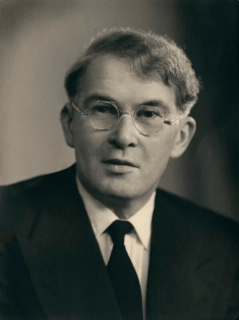
(From: “Bracken, Brendan” by Charles Lysaght, Dictionary of Irish Biography, www. dib.ie, October 2009 | Pictured: Brendan Bracken, bromide print by Elliott & Fry, January 13, 1950, National Portrait Gallery, London)


Leave a comment

Birth of Irish Actress Sinéad Cusack

Sinéad Moira Cusack, award winning Irish actress, is born Jane Moira Cusack in Dalkey, County Dublin, on February 18, 1948.

Cusack is the daughter of actress Maureen Cusack and actor Cyril Cusack. She is the sister of actresses Sorcha Cusack, Niamh Cusack, and half-sister to Catherine Cusack. Her father is born in South Africa, to an Irish father and an English mother, and had worked with Micheál Mac Liammóir at Dublin‘s Gate Theatre.

Cusack’s first acting roles are at the Abbey Theatre in Dublin. In 1975, she moves to London and joins the Royal Shakespeare Company (RSC) starring in Dion Boucicault‘s London Assurance in the West End. Her work with the RSC continues with an award-winning performance as Celia in As You Like It which includes the Clarence Derwent Award and her first Laurence Olivier Award nomination. She secures a second Olivier Award nomination for her performance in The Maid’s Tragedy by Francis Beaumont and John Fletcher in 1981, followed two years later with a third Olivier Award nomination as Kate in The Taming of the Shrew.

Cusack makes her Broadway debut in 1984 performing in repertory with the Royal Shakespeare Company. Starring opposite Derek Jacobi, she plays Roxane in Anthony Burgess‘s translation of Edmond Rostand‘s Cyrano de Bergerac and Beatrice in William Shakespeare‘s Much Ado About Nothing, directed by Terry Hands. Much Ado is first produced at the Royal Shakespeare Theatre in Stratford-upon-Avon in 1982–83, then moves to London’s Barbican Centre for the 1983–1984 season where it is joined by Cyrano, before both plays transfer to New York‘s Gershwin Theatre from October 1984 to January 1985, for which Cusack received a Tony Awards nomination for her performance as Beatrice, and costar Derek Jacobi wins the award for his Benedick. The production of Cyrano de Bergerac is later filmed in 1985.

During this period, Cusack and her husband, Jeremy Irons, appear in a Shakespeare Winter’s Eve, a major fundraiser for the Riverside Shakespeare Company in New York, along with other members of the Royal Shakespeare Company. Following the Broadway run, the plays tour the United States, making stops in Washington, D.C. and Los Angeles. Her connection with the Royal Shakespeare Company continues with a series of leading roles include Portia in The Merchant of Venice opposite David Suchet, Lady Macbeth opposite Jonathan Pryce in Macbeth and Cleopatra in Antony and Cleopatra in Stratford-upon-Avon and at London’s Theatre Royal Haymarket in the West End.

In 1990, Cusack, in the role of Masha, joins two of her sisters, Niamh (as Irina) and Sorcha (as Olga), and her father, Cyril Cusack (as Chebutykin) for a well-received production of Anton Chekhov‘s tragicomedy Three Sisters in a new version by Frank McGuinness, directed by Adrian Noble at the Gate Theatre, Dublin, before transferring to the Royal Court Theatre in London. The production also features Niamh’s husband, Finbar Lynch, as Solenyi and Lesley Manville as Natasha. The production wins the three real-life sisters the Irish Life Award in 1992.

One of Cusack’s best known stage roles is Our Lady of Sligo by Sebastian Barry in 1998, in which she plays the principal role of Mai O’Hara in performances in Ireland, on Broadway and at the National Theatre. For this she wins the 1998 Evening Standard Theatre Award for Best Actress, the 1998 Critics’ Circle Theatre Award for Best Actress and her fourth Olivier Award nomination for Best Actress. In 2006-07 she stars with Rufus Sewell in Tom Stoppard‘s Rock ‘n’ Roll at the Royal Court Theatre in London which transfers to the West End and Broadway, winning Cusack her fifth Olivier Award nomination and her second Tony Award nomination.

In 2015, Cusack returns to Ireland’s Abbey Theatre, where she begins her theatre career. She appears in the world première of Mark O’Rowe‘s play Our Few and Evil Days, acting opposite long-time collaborator Ciarán Hinds. She wins the Irish Times Irish Theatre Award for Best Actress.

Cusack stars with Peter Sellers in the film Hoffman (1970). She guest stars in an episode of The Persuaders! (1971), a TV series starring Tony Curtis and Roger Moore, as Jenny Lindley, a wealthy heiress who suspects that a man claiming to be her dead brother is in fact an impostor. In 1975, she makes three appearances in the TV series Quiller as the character Roz.

Cusack and her husband appear together in the film Waterland (1992), in a television adaptation of Christopher Hampton‘s Tales from Hollywood (also 1992), and again in Bernardo Bertolucci‘s Stealing Beauty (1996). Further film work includes Passion of Mind (2000), V for Vendetta (2005), and Eastern Promises (2007), a thriller directed by David Cronenberg. Her performance in The Tiger’s Tail (2007) wins her a first Irish Film & Television Academy (IFTA) Award nomination for Best Actress in a Supporting Role. She wins the IFTA Award for her performance in The Sea (2013), adapted from the novel by John Banville. She is nominated once more for an IFTA Award for her performance in John Boorman‘s drama film Queen and Country (2014), which premières at the Cannes Film Festival.

Further starring roles include lead roles in Oliver’s Travels (1995), Have Your Cake and Eat It (1997) for which Cusack wins the Royal Television Society‘s RTS Award for Best Actress and Frank McGuinness’s The Hen House (1989) for BBC Television. She stars in the title role of George du Maurier‘s Trilby (1976), in an adaptation for the BBC’s Play of the Month, with Alan Badel as Svengali. She also stars in the BBC mini-series North & South (2004, from the novel by Elizabeth Gaskell) as Mrs. Thornton. She stars in the BBC sitcom Home Again (2006) and appears in the TV series Camelot (2011), which runs for one season. She has featured roles in the mini-series The Deep (2014) and the series Marcella (2016), an eight-episode murder mystery.

Along with other actresses, including Paola Dionisotti, Fiona Shaw, Juliet Stevenson and Harriet Walter, Cusack contributes to a book by Carol Rutter called Clamorous Voices: Shakespeare’s Women Today (1994). The book analyses modern acting interpretations of female Shakespearean roles.

Cusack marries British actor Jeremy Irons in 1978, and they have two sons, Samuel James and Maximilian Paul. Prior to marrying Irons, she gives birth to a son in 1967 and places the boy for adoption. In 2007, a journalist for the Irish Sunday Independent, Daniel McConnell, reveals that Cusack is the mother of left-wing general election candidate and now member of Irish parliament Richard Boyd Barrett. The two have since been reunited.

Cusack is a patron of the Burma Campaign UK, the London-based group campaigning for human rights and democracy in Burma. In 1998, she is named, along with her husband, in a list of the biggest private financial donors to the British Labour Party. In August 2010, she signs the “Irish artists’ pledge to boycott Israel” initiated by the Palestine Solidarity Campaign.

(Pictured: Sinéad Cusack reciting poetry for the British Library in October 2021)


Leave a comment

Birth of John Hume, Northern Ireland Nationalist Politician

John Hume KCSG, Irish nationalist politician from Northern Ireland, is born into a working-class Catholic family in Derry, County Londonderry, on January 18, 1937. He is widely regarded as one of the most important figures in the recent political history of Ireland and is credited as being the thinker behind many political developments in Northern Ireland, from the power sharing Sunningdale Agreement to the Anglo-Irish Agreement and the Good Friday Agreement. He wins the Nobel Peace Prize in 1998 alongside the leader of the Ulster Unionist Party (UUP), David Trimble.

Hume is the eldest of seven children of Samuel Hume, a former soldier and shipyard worker, and Anne “Annie” (née Doherty), a seamstress. He has a mostly Irish Catholic background, though his surname derives from one of his great-grandfathers, a Scottish Presbyterian who migrated to County Donegal. He attends St. Columb’s College and goes on to St. Patrick’s College, Maynooth, the leading Catholic seminary in Ireland and a recognised college of the National University of Ireland, where he intends to study for the priesthood. Among his teachers is Tomás Ó Fiaich, the future cardinal and Primate of All Ireland.

Hume does not complete his clerical studies but does obtain an M.A. degree in French and history from the college in 1958. He then returns home to his native Derry, where he becomes a teacher at his alma mater, St. Columb’s College. He is a founding member of the Credit Union movement in the city and is chair of the University for Derry Committee in 1965, an unsuccessful fight to have Northern Ireland’s second university established in Derry in the mid-1960s.

Hume becomes the youngest ever President of the Irish League of Credit Unions at age 27. He serves in the role from 1964 to 1968. He once says that “all the things I’ve been doing, it’s the thing I’m proudest of because no movement has done more good for the people of Ireland, north and south, than the credit union movement.”

Hume becomes a leading figure in the civil rights movement in the late 1960s along with people such as Hugh Logue. He is a prominent figure in the Derry Citizens’ Action Committee. The DCAC is set up in the wake of the October 5, 1968, march through Derry which had caused much attention to be drawn towards the situation in Northern Ireland. The purpose of the DCAC is to make use of the publicity surrounding recent events to bring to light grievances in Derry that had been suppressed by the Unionist Government for years. The DCAC, unlike the Northern Ireland Civil Rights Association (NICRA), is aimed specifically at a local campaign, improving the situation in Derry for everyone, and maintaining a peaceful stance. The committee also has a Stewards Association that is there to prevent any violence at marches or sit-downs.

Hume becomes an Independent Nationalist member of the Parliament of Northern Ireland in 1969 at the height of the civil rights campaign. He is elected to the Northern Ireland Assembly in 1973 and serves as Minister of Commerce in the short-lived power-sharing Executive in 1974. He stands unsuccessfully for the Westminster Parliament for the Londonderry constituency in October 1974, and is elected for Foyle in 1983.

In October 1971, Hume joins four Westminster MPs in a 48-hour hunger strike to protest at the internment without trial of hundreds of suspected Irish republicans. State papers that have been released under the 30-year rule that an Irish diplomat eight years later in 1979 believes Hume supported the return of internment.

In 1977, Hume challenges a regulation under the Civil Authorities (Special Powers) Act (Northern Ireland) 1922 which allows any soldier to disperse an assembly of three or more people. The Lord Chief Justice of Northern Ireland, Robert Lowry, holds that the regulation is ultra vires under Section 4 of the Government of Ireland Act 1920 which forbids the Parliament of Northern Ireland to make laws in respect of the army.

A founding member of the Social Democratic and Labour Party (SDLP), Hume succeeds Gerry Fitt as its leader in 1979. He also serves as one of Northern Ireland’s three Members of the European Parliament and serves on the faculty of Boston College, from which he receives an honorary degree in 1995.

Hume is directly involved in secret talks with the British government and Sinn Féin, in an effort to bring Sinn Féin to the discussion table openly. The talks are speculated to lead directly to the Anglo-Irish Agreement in 1985.

The vast majority of unionists reject the agreement and stage a massive and peaceful public rally in Belfast City Centre to demonstrate their distaste. Many Republicans and nationalists also reject it, as they see it as not going far enough. Hume, however, continues dialogue with both governments and Sinn Féin. The “Hume–Adams process” eventually delivers the 1994 Irish Republican Army (IRA) ceasefire which ultimately provides the relatively peaceful backdrop against which the Good Friday agreement is brokered.

On February 4, 2004, Hume announces his complete retirement from politics and is succeeded by Mark Durkan as SDLP leader. He does not contest the 2004 European Parliament election where his seat is won by Bairbre de Brún of Sinn Féin, nor does he run in the 2005 United Kingdom general election, in which Mark Durkan retains the Foyle constituency for the SDLP.

Hume and his wife, Pat, continue to be active in promoting European integration, issues around global poverty and the Credit Union movement. He is also a supporter of the Campaign for the Establishment of a United Nations Parliamentary Assembly, an organisation which campaigns for democratic reformation of the United Nations.

In 2015, Hume is diagnosed with Alzheimer’s disease, of which he had first displayed symptoms in the late 1990s. He dies in the early hours of August 3, 2020, at a nursing home in Derry, at the age of 83. On his death, former Labour Party leader and prime minister Tony Blair says, “John Hume was a political titan; a visionary who refused to believe the future had to be the same as the past.” The Dalai Lama says on Twitter, “John Hume’s deep conviction in the power of dialogue and negotiations to resolve conflict was unwavering… It was his leadership and his faith in the power of negotiations that enabled the 1998 Good Friday Agreement to be reached. His steady persistence set an example for us all to follow.”

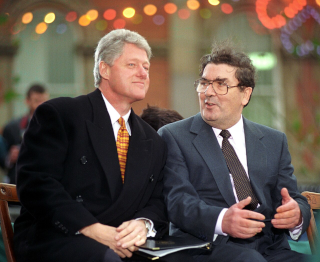
(Pictured: John Hume with U.S. President Bill Clinton in 1995)


Leave a comment

Death of Irish Poet Ewart Milne

Ewart Milne, Irish poet, dies in Bedford, Bedfordshire, England, of a heart attack on January 14, 1987. He describes himself on various book jackets as “a sailor before the mast, ambulance driver and courier during the Spanish Civil War, a land worker and estate manager in England during and after World War II” and also “an enthusiast for lost causes – national, political, social and merely human.”

Milne is born in Dublin on May 25, 1903, to English and Welsh Irish parents and is educated at Christchurch Cathedral Grammar School. In 1920 he signs on as a seaman and works on boats, off and on, until 1935. During the 1930s he begins writing and has his first poems published in 1935.

The background to the Spanish Civil War contributes to Milne’s political awakening and he comes to England to work as a voluntary administrator for the Spanish Medical Aid Committee in London, for whom he often acts as a medical courier. He also was once unwillingly involved in an arms deal while visiting Spain on their behalf.

After Spanish Medical Aid Committee is wound up, Milne returns to Ireland but remains politically active in support of the campaign for the release of Frank Ryan, the leader of the Connolly Column of Irish volunteers on the Republican side, who had been captured and imprisoned in Spain. At one point he takes part in a delegation to Westminster seeking Labour Party support for this. In August 1938 he is reported in The Worker’s Republic as being one of the twelve-member committee of the James Connolly Irish club in London.

During his time in England and Spain, Milne gets to know the left-leaning poets who support the Republican cause, including W. H. Auden, Stephen Spender and Cecil Day-Lewis. In 1938 his first collection of poems, Forty North Fifty West, is published in Dublin, followed by two others in 1940 and 1941. Having taken a pro-British line in neutral Ireland, he is informed by Karl Petersen, the German press attaché in Dublin, that he is on the Nazi death list. This convinces him to help in the British war effort and he returns to England with the help of John Betjeman, then working at the British embassy in Ireland.

Between 1942–1962 Milne is resident in England and an active presence on the English literary scene. In particular he becomes associated with the poets grouped around the magazine Nine, edited by Peter Russell and Ian Fletcher. He and his wife Thelma also back the young Irish poet Patrick Galvin when he launches his own magazine, Chanticleer. This generous encouragement of younger writers is later extended to several others, including John F. Deane, Gerald Dawe and Maurice Scully.

Milne regards his return to Dublin in 1962 as a disaster, as his four-year stay is overshadowed by quarrels with the establishment, the discovery of betrayal by a friend and the death of his wife from lung cancer. The misery of those events is recorded in Time Stopped (1967). The artistic frustration of the time also results in the poems included in Cantata Under Orion (1976). Returning to England in 1966, he settles in Bedford. Politically he remains involved and speaks alongside Auberon Waugh at the rally on behalf of Biafra in 1968, but his views move further to the right in later years. He writes to The Irish Times on April 13, 1976, saying that he has been “taken in by Stalin and that Leninism is Satanism.” He also sides with the Loyalist position in the Ulster conflict. He dies in Bedford of a heart attack on January 14, 1987.

Milne is twice married, first to Kathleen Ida Bradner in 1927, by whom he has two sons; then in 1948 to Thelma Dobson, by whom he has two more sons.

(Pictured: A portrait of Ewart Milne by Cecil F. Salkkeld, as it appears in Milne’s book Forty North Fifty West)


Leave a comment

Birth of John Cole, Northern Irish Journalist & BBC Broadcaster

John Morrison Cole, Northern Irish journalist and broadcaster best known for his work with the BBC, is born in Belfast, Northern Ireland, on November 23, 1927. He serves as deputy editor of The Guardian and The Observer and, from 1981 to 1992, is the BBC’s political editor. Donald Macintyre, in an obituary in The Independent, describes him as “the most recognisable and respected broadcast political journalist since World War II.”

Cole is the son of George Cole, an electrical engineer, and his wife Alice. The family is Ulster Protestant, and he identifies himself as British. He receives his formal education at the Belfast Royal Academy.

Cole starts his career in print journalism in 1945, joining the Belfast Telegraph as a reporter and industrial correspondent. He subsequently works as a political reporter for the paper. He gains a scoop when he interviews the then Prime Minister, Clement Attlee, who is holidaying in Ireland.

Cole joins The Guardian, then The Manchester Guardian, in 1956, reporting on industrial issues. He transfers to the London office in 1957 as the paper’s labour correspondent. Appointed news editor in 1963, succeeding Nesta Roberts, he takes on the task of reorganising the paper’s “amateurish” system for gathering news. He heads opposition to a proposed merger with The Times in the mid-1960s, and later serves as deputy editor under Alastair Hetherington. When Hetherington leaves in 1975, Cole is in the running for the editorship, but fails to secure the post, for reasons which may include his commitment to the cause of unionism in Northern Ireland, as well as what is seen by some as inflexibility and a lack of flair. Unwilling to continue at The Guardian, he then joins The Observer as deputy editor under Donald Trelford, remaining there for six years.

After Tiny Rowland takes over as proprietor of The Observer in 1981, Cole gives evidence against him at the Monopolies Commission. The following day he receives a call from the BBC offering him the job of political editor, succeeding John Simpson. He has little previous television experience but proves a “natural broadcaster.” Reporting through most of the premiership of Margaret Thatcher, he becomes a familiar figure on television and radio.

Cole’s health is put under strain by the workload, and he suffers a heart attack in February 1984. Returning to report on that year’s conference season, he covers the Brighton hotel bombing, getting a “memorable” interview with Thatcher on the pavement in its immediate aftermath, in which she declares that the Tory conference will take place as normal. An astute observer of the political scene, he is one of the earliest to forecast Thatcher’s resignation as Prime Minister in 1990, in what colleague David McKie refers to as “perhaps his greatest exclusive.”

Cole establishes a strong reputation for his “gentle but probing” interviewing style, for his political assessments, and for presenting analysis rather than “bland reporting.” Held in enormous affection by viewers, he is trusted by both politicians and the public. He is known for speaking in the language used by ordinary people rather than so-called Westminster experts. His distinctive Northern Irish accent leads the way for BBC broadcasters with regional accents.

Cole retires as political editor in 1992 at the age of 65, compulsory at the time, but continues to appear on television, including making programmes on golf and travel. He also continues to appear on the BBC programme Westminster Live for several years after he retired as political editor.

In addition to his journalistic writing, Cole authors several books. The earliest are The Poor of the Earth, on developing countries, and The Thatcher Years (1987). After his retirement as BBC political editor, he spends more time writing. His political memoir, As It Seemed to Me, appears in 1995 and becomes a best-seller. He also publishes a novel, A Clouded Peace (2001), set in his birthplace of Belfast in 1977.

In 2007, Cole writes an article for the British Journalism Review, blaming both politicians and the media for the fact that parliamentarians are held in such low esteem, being particularly scathing of Alastair Campbell‘s influence during Tony Blair‘s premiership.

In 1966, the Eisenhower Fellowships selects Cole to represent Great Britain. He receives the Royal Television Society‘s Journalist of the Year award in 1991. After his retirement in 1992, he is awarded an honorary degree from the Open University as Doctor of the University and receives the Richard Dimbleby Award from BAFTA in 1993. He turns down a CBE in 1993, citing the former The Guardian newspaper rule that journalists can only accept gifts which can be consumed within 24 hours.

In his private life Cole is a supporter of the Labour Party and is a believer in the trades union movement. He considers that the combating of unemployment is one of the most important political issues. He is a British Republican and a committed Christian, associating in the latter part of his life with the United Reformed Church at Kingston upon Thames.

Cole suffers health problems in retirement including heart problems and two minor strokes. In 2009, he is diagnosed with cancer. He subsequently develops aphasia. He dies at his home at Claygate in the county of Surrey on November 7, 2013.

Tributes are paid by journalists, broadcasters and politicians across the political spectrum. Prime Minister David Cameron calls Cole a “titan at the BBC” and an “extraordinary broadcaster.” Labour Party leader Ed Miliband says that “my generation grew up watching John Cole. He conveyed the drama and importance of politics.” The Scottish First Minister Alex Salmond says that Cole is “an extremely able journalist but also extraordinarily helpful and generous to a young politician.” The BBC’s political editor at the time, Nick Robinson, writes that Cole “shaped the way all in my trade do our jobs.”


Leave a comment

Birth of T. P. O’Connor, Politician & Journalist

Thomas Power O’Connor, PC, Irish nationalist politician and journalist known as T. P. O’Connor and occasionally as Tay Pay (mimicking his own pronunciation of the initials T. P.), is born in Athlone, County Westmeath, on October 5, 1848. He serves as a Member of Parliament (MP) in the House of Commons of the United Kingdom of Great Britain and Ireland for nearly fifty years.

O’Connor is the eldest son of Thomas O’Connor, an Athlone shopkeeper, and his wife Teresa (née Power), the daughter of a non-commissioned officer in the Connaught Rangers. He is educated at The College of the Immaculate Conception in Athlone, and Queen’s College Galway, where he wins scholarships in history and modern languages and builds up a reputation as an orator, serving as auditor of the college’s Literary and Debating Society.

O’Connor enters journalism as a junior reporter on Saunders’ Newsletter, a Dublin journal, in 1867. In 1870, he moves to London and is appointed a sub-editor on The Daily Telegraph, principally on account of the utility of his mastery of French and German in reportage of the Franco-Prussian War. He later becomes London correspondent for the New York Herald. He compiles the society magazine Mainly About People (M.A.P.) from 1898 to 1911.

O’Connor is elected Member of Parliament for Galway Borough in the 1880 United Kingdom general election, as a representative of the Home Rule League, which is under the leadership of William Shaw, though virtually led by Charles Stewart Parnell, who wins the party’s leadership a short time later. At the next general election in 1885, he is returned both for Galway Borough and for the Liverpool Scotland constituencies, which has a large Irish population. He chooses to sit for Liverpool and represents that constituency in the House of Commons from 1885 until his death in 1929. He remains the only British MP from an Irish nationalist party ever to be elected to a constituency outside of the island of Ireland. He continues to be re-elected in Liverpool under this label unopposed in the 1918, 1922, 1923, 1924 and 1929 general elections, despite the declaration of a de facto Irish Republic in early 1919, and the establishment by the 1921 Anglo-Irish Treaty of a quasi-independent Irish Free State in late 1922.

From 1905, O’Connor belongs to the central leadership of the United Irish League. During much of his time in parliament, he writes a nightly sketch of proceedings there for The Pall Mall Gazette. He becomes “Father of the House,” with unbroken service of 49 years, 215 days. The Irish Nationalist Party ceases to exist effectively after the Sinn Féin landslide of 1918, and thereafter he effectively sits as an independent. On April 13, 1920, he warns the House of Commons that the death on hunger strike of Thomas Ashe will galvanise opinion in Ireland and unite all Irishmen in opposition to British rule.

O’Connor founds and is the first editor of several newspapers and journals: The Star, the Weekly Sun (1891), The Sun (1893), M.A.P. and T.P.’s Weekly (1902). In August 1906, he is instrumental in the passing by Parliament of the Musical Copyright Act 1906, also known as the T.P. O’Connor Bill, following many of the popular music writers at the time dying in poverty due to extensive piracy by gangs during the piracy crisis of sheet music in the early 20th century. The gangs often buy a copy of the music at full price, copy it, and resell it, often at half the price of the original. The film I’ll Be Your Sweetheart (1945), commissioned by the British Ministry of Information, is based on the events of the day.

O’Connor is appointed as the second president of the British Board of Film Censors (BBFC) in 1916 and appears in front of the Cinema Commission of Inquiry (1916), set up by the National Council of Public Morals where he outlines the BBFC’s position on protecting public morals by listing forty-three infractions, from the BBFC 1913–1915 reports, on why scenes in a film may be cut. He is appointed to the Privy Council by the first Labour government in 1924. He is also a Fellow of the Chartered Institute of Journalists, the world’s oldest journalists’ organisation. It continues to honour him by having a T.P. O’Connor charity fund.

In 1885, O’Connor marries Elizabeth Paschal, the daughter of a judge of the Supreme Court of Texas.

O’Connor dies in London on November 18, 1929, and is buried at St. Mary’s Catholic Cemetery, Kensal Green, in north-west London. He is the last Father of the House to die as a sitting MP until Sir Gerald Kaufman in 2017.


Leave a comment

Death of Patrick Mayhew, British Barrister, Politician & Northern Ireland Secretary

Patrick Barnabas Burke Mayhew, Baron Mayhew of Twysden, PC, QC, DL, British barrister, politician and Secretary of State for Northern Ireland, who serves during a critical period in the Northern Ireland peace process, dies at his home in Kent, England, on June 25, 2016. He is a key figure in the December 1993 Downing Street Declaration which leads to the Provisional Irish Republican Army (IRA) ceasefire on August 31, 1994

Mayhew is born on September 11, 1929. His father, George Mayhew, is a decorated army officer turned oil executive. His mother, Sheila Roche, descendant of members of the Anglo-Irish Protestant ascendancy, is a relative of James Roche, 3rd Baron Fermoy, an Irish National Federation MP for East Kerry. Through his father, Mayhew is descended from the Victorian social commentator Henry Mayhew. He is educated at Tonbridge School, an all boys public school in Tonbridge, Kent.

Mayhew then serves as an officer in the 4th/7th Royal Dragoon Guards, studies law at Balliol College, Oxford, and is president of the Oxford University Conservative Association (OUCA) and of the Oxford Union. He is called to the Bar by the Middle Temple in 1955.

In 1963, Mayhew marries The Rev. Jean Gurney, and they have four sons.

Mayhew contests Dulwich at the 1970 United Kingdom general election, but the incumbent Labour Party member, Samuel Silkin, beats him by 895 votes. He is Member of Parliament (MP) for Tunbridge Wells from its creation at the February 1974 United Kingdom general election, standing down at the 1997 United Kingdom general election.

Mayhew is Under Secretary of Employment from 1979 to 1981, then Minister of State at the Home Office from 1981 to 1983. After this, he serves as Solicitor General for England and Wales from 1983 to 1987, and then Attorney General for England and Wales and simultaneously Attorney General for Northern Ireland from 1987 to 1992.

Mayhew is Secretary of State for Northern Ireland from 1992 to 1997, the longest anyone has served in this office.

Mayhew is one of only five Ministers (Tony Newton, Kenneth Clarke, Malcolm Rifkind and Lynda Chalker are the others) to serve throughout the whole 18 years of the premiership of Margaret Thatcher and John Major. This represents the longest uninterrupted Ministerial service in Britain since Henry John Temple, 3rd Viscount Palmerston, in the early 19th century.

Mayhew is knighted in 1983. On June 1997, he is given a life peerage as Baron Mayhew of Twysden, of Kilndown in the County of Kent. He retires from the House of Lords on June 1, 2015.

Mayhew suffers from cancer and Parkinson’s disease in his later years. He dies at the age of 86 on June 25, 2016, in his home in Kent.

Mayhew’s son, The Honourable Henry Mayhew, appears in the fourth episode of the series The Secret History Of Our Streets, discussing life in the Portland Road, Notting Hill, London. Another son, Tristram, co-founds the outdoor adventure company Go Ape. His son Jerome is the Conservative Party MP for the constituency of Broadland in Norfolk since December 2019.


Leave a comment

Death of Newspaper Editor Douglas Gageby

(Robert John) Douglas Gageby, one of the pre-eminent Irish newspaper editors of his generation, dies on June 24, 2004, following a lengthy illness. His life is well documented and a book of essays about him, Bright Brilliant Days: Douglas Gageby and the Irish Times, written by many of his colleagues, some of whom had attained fame for their literary achievements, is published in 2006.

Gageby is born at 54 Upper Beechwood Avenue, Ranelagh, Dublin, to Thomas Gageby, a Belfast-born civil servant. His mother, Ethel Elizabeth (née Smith), is a schoolteacher from County Cavan. The Gageby family moves to Belfast when he is about three years old as his father goes to work for the Northern Ireland Civil Service following partition. His paternal grandfather, Robert Gageby, stands as a Labour Party parliamentary candidate in Belfast North in 1910, and is a Belfast City Councillor for 20 years, first elected in 1898 as a trade union candidate supported by the Independent Labour Party.

Gageby is educated at Belfast Royal Academy and Trinity College Dublin, where he is elected a scholar in Modern Languages (French and German) in 1940. He is also actively involved with the student newspaper, Trinity News. He enlists in the Irish Army as a private soldier at the outbreak of World War II. He is commissioned later, and he serves as an intelligence officer. He reports from post-war Germany for The Irish Press and goes on to work under Conor Cruise O’Brien in the Irish News Agency. In 1954 he is the first editor of the Evening Press. In 1963 he becomes editor of The Irish Times, a post he holds until 1986, having been brought back from a short retirement in 1974. He is credited with moving The Irish Times from a Unionist organ into a successful Irish journal of record.

In 2003 it is revealed that a director, and later Chairman, of The Irish Times, Major Thomas Bleakley McDowell, had referred to Gageby as a “white nigger” for his views and role in the paper during the Northern Ireland civil rights movement‘s campaign in the 1960s. The comment appears in a letter from the British Ambassador to Dublin, Sir Andrew Gilchrist, to Kelvin White, head of the Irish Section of the British Foreign Office and is dated October 2, 1969. Gilchrist is referring to conversations which he had with McDowell where the latter professes himself to be fully behind the British government in the North and hostile to Gageby’s coverage of the civil rights movement. However, historian Mark O’Brien notes, “Despite his contacts with London, McDowell’s actions did not interfere with Gageby’s editorials on Northern Ireland”, due to the fact McDowell believes in editorial independence (even though McDowell strongly disagrees with Gageby’s nationalist views), and because Gageby is making the newspaper commercially successful. Under the 30 year rule, this letter is made available to newspapers on December 22 and 23, 1999, but no newspaper publishes it at that time.

The communiqué is later discovered by the historian Jack Lane and published in the Irish Political Review, a small magazine strongly antagonistic to The Irish Times, in January 2003. He brings it to the attention of The Irish Times editor, Geraldine Kennedy, on January 10, 2003, and she replies on January 15, 2003 saying she is “unable to confirm the veracity of it” and does not publish it. When, on January 26, 2003, the Sunday Independent (Ireland) publishes the story, The Irish Times finally follows the next day, January 27. Nonetheless, on April 24, 2004, Kennedy defends her position by saying, “The contents of the letter in question were published on January 27, 2003, as soon as its existence was drawn to my attention.”

Gageby dies on June 24, 2004, following a two year illness. His private funeral is conducted by Rev. Terence McCaughey, a family friend. The Irish Times endows an annual Douglas Gageby Fellowship for young journalists and a stand of trees is planted in his memory at Moynalty. His papers are presented to Dublin City University (DCU).

Gageby is married to Dorothy, daughter of Seán Lester, last Secretary General of the League of Nations. His daughter, Susan Denham, is the Chief Justice of the Supreme Court of Ireland from 2011 to 2017.


Leave a comment

Birth of Joseph Devlin, Journalist & Influential Nationalist Politician

Joseph Devlin, journalist and nationalist leader, is born on February 13, 1871, at Hamill Street in the Lower Falls area of Belfast, fourth son of Charles Devlin, car driver, and Elizabeth Devlin (née King), both recent migrants from the Lough Neagh area of east County Tyrone. He is educated at St. Mary’s Christian Brothers’ Grammar School in Divis Street until he is twelve. He proceeds to employment in Kelly’s Cellars public house near the city centre. From this unpromising background, he rises through a combination of ability, connections, and ambition to journalism with The Irish News (1891–93) and Freeman’s Journal (1895) and political position.

In his early years, Devlin is active in various local debating societies, where his associates include Cathal O’Byrne, who he retains a personal friendship despite later political differences. A committee member of the Belfast branch of the Irish National League (INL) in 1890, he joins the anti-Parnellite faction during the O’Shea divorce scandal (1891), becoming local secretary of the Irish National Federation (INF). His political model at this time is Thomas Sexton, MP for Belfast West, whose campaign he organises at the 1892 United Kingdom general election.

Although Healyism is strong in Catholic Ulster, Devlin aligns himself with the faction led by John Dillon and, from 1899, with the United Irish League (UIL), founded by William O’Brien. From the late 1890s this brings Devlin into conflict with the Belfast Catholic Association of Dr. Henry Henry, bishop of Down and Connor (1895–1908). This organisation, though sometimes regarded as Healyite, is essentially based on the view that mass nationalist political mobilisation in Belfast can only bring trouble and ostracism, and that Catholic interests are best represented by allowing a small group of lay and clerical notables to broker concessions from the unionist majority. After a series of local election contests in Catholic wards and controversies between the pro-Devlin weekly Northern Star and the clerically controlled The Irish News, Devlin succeeds in marginalising the politically maladroit Henry by 1905. In the process, however, he takes on some of the qualities of his “Catholic establishment” opponents. At the same time, he moves onto the national political stage.

Returned unopposed for North Kilkenny (1902–06), Devlin is appointed secretary of the United Irish League of Great Britain in 1903, and of the parent body in Dublin in 1904. A speaking tour of the United States in 1902–03 convinces him of the organisational potential of Catholic fraternal organisations, and in 1905 he takes over the presidency of the Board of Erin faction of the Ancient Order of Hibernians (AOH), a specifically Catholic body which he proceeds to develop as an organisational arm of the Nationalist Party. Under his tutelage the AOH expands from 10,000 members in 1905 to 60,000 in 1909, despite opposition from some Catholic bishops who distrust it because of its close affiliation to Dillonism, its secrecy, and its habit of staging dances and other entertainments without paying what they regard as due deference to local priests. His AOH also faces opposition from a rival separatist body, the Irish-American Alliance AOH. Though far less numerous, this group is able to draw on the support of separatists within the American AOH and hinder Devlin’s attempts to mobilise the American organisation in his support. The AOH expands further after 1910 and is strengthened by becoming an approved society under the National Insurance Act 1911.

Belfast is where Devlin’s political career begins and where it ends. Organisational skill contributes substantially to his hold on the largely working-class seat of Belfast West, which he wins in 1906 on a platform that seeks to transcend religious boundaries by combining labour issues with the home rule demand. A lifelong bachelor, though short in stature, he is apparently highly attractive to women, and takes a special interest in their problems, no doubt mindful of the influence they might have on the political behaviour of their spouses. He founds a holiday home for working-class women. When the scholar Betty Messenger interviews former Belfast linen workers in the late 1960s and early 1970s, she is startled to discover the extent to which Devlin is remembered as a champion of the workers decades after his death. This image persists among Protestant workers as well as Catholics, and he is generally credited with various ameliorations of workplace conditions even when he had not been responsible for them.

Possessed of great oratorical skills and even greater organisational ability, Devlin effectively becomes the key organiser of the Nationalist Party from the early years of the twentieth century, relieving the party leader, John Redmond, of a great deal of the administrative burden of party affairs, and becoming well known abroad through fund-raising trips, especially in North America. His personal geniality makes him a great favourite at Westminster, and Irish socialists are dismayed at the willingness of British Labour Party MPs to accept him as an authentic Labour representative. Several MPs elected after 1906 can be identified as his protégés, and groups of Hibernian strong-arm men uphold the party leadership in such contests as the 1907 North Leitrim by-election and the 1909 “baton convention” which witnesses the final departure of William O’Brien and his supporters from the UIL. He is the only post-Parnellite MP to be admitted to the tight leadership group around Redmond. In 1913 he is a leading organiser of the National Volunteers.

When William O’Brien embarks on his personal initiative to deal with the Ulster problem through conciliation in the early Edwardian period, he finds a stern critic in Devlin and in turn demonises the “Molly Maguires” as sectarian corruptionists. Personally non-sectarian, Devlin, like other party leaders, endorses the shibboleth that home rule will prove a panacea for Ireland’s problems, including Ulster, and uses his credentials as a labour representative to dismiss popular unionism as a mere product of elite manipulation. In a period when the Vatican‘s Ne Temere decree on religiously mixed marriages is heightening Protestant fears about the “tyranny” of Rome, he seems to be oblivious to how his integration of Hibernianism and nationalism is exacerbating that problem. As the third home rule bill passes through Parliament and the Ulster Volunteer Force (UVF) mobilises, he encourages the Irish party leaders in the view that the Ulster unionist campaign is a gigantic bluff, dismissing contrary opinions even when held by other nationalist MPs. During these years the AOH clashes with the Irish Transport and General Workers’ Union (ITGWU) during the Dublin lock-out, and from late 1913 the AOH spearheads the Redmondite attempt to take over and dominate the Irish Volunteers.

Devlin endorses Redmond’s support for the British war effort and engages in extensive recruiting activity. He seems to be motivated, at least in part, by the belief that after the war nationalist ex-soldiers can be used to overawe the Ulster unionists by the threat of force. According to Stephen Gwynn, Devlin wishes to apply for an officer’s commission but is asked not to do so by Redmond on the grounds that the party needs his organisational skills.

Devlin’s career is decisively shaped by his decision to use his influence to persuade northern nationalists to accept temporary partition, in fulfilment of the flawed agreement arrived at between David Lloyd George, Sir Edward Carson, and Redmond in the aftermath of the 1916 Easter Rising. He later claims he has been decisively influenced by the prospect that under this agreement the excluded area would be governed directly from Westminster, rather than by a local, Orange-dominated parliament. He forces the agreement through a Belfast-based convention despite protests from west Ulster nationalists, but the proposal collapses after it transpires that Lloyd George has made incompatible commitments to nationalists and unionists. Northern nationalism immediately splits between west and south Ulster dissidents and Devlin’s loyalists predominant in Belfast and east Ulster, and the next year sees massive secessions of AOH members outside Ulster to Sinn Féin. Although he retains a core of loyal supporters, he is reduced from a national to a sectional leader. As a member of the Irish convention (1917–18) he sides with Bishop Patrick O’Donnell against Redmond on the issue of seeking a compromise settlement with southern unionists on the basis of home rule without fiscal autonomy. He is offered the leadership of the Nationalist Party on Redmond’s death in 1918, but concedes the honour to his long-standing mentor, John Dillon.

Devlin holds Belfast West until 1918 and easily sweeps aside an attempt by Éamon de Valera to displace him from the Falls division of Belfast at the general election of that year, though the electoral decimation of the Nationalist Party elsewhere leaves him leading a rump of only seven MPs. In the ensuing parliament he is an outspoken critic of government policy towards Ireland and highlights sectarian violence against northern nationalists. Clearly discouraged and with boundary changes militating against retention of the Falls seat, he unsuccessfully contests the Liverpool Exchange constituency as an Independent Labour candidate in 1922. Elected for Antrim and Belfast West to the Parliament of Northern Ireland in 1921, he eventually takes his seat in 1925, holding it until 1929, when he combines representation for Belfast Central with that for Fermanagh and South Tyrone at Westminster.

Only after the boundary commission ends the border nationalists’ hopes of speedy incorporation in the Irish Free State is Devlin able to assert leadership of northern nationalism as a whole on the basis of attendance at the northern parliament. Even then he is considerably handicapped by recriminations over the events of 1916–25. He embarks on his last significant political campaign in 1928, when he seeks to unite minority politics through the agency of the National League of the North (NLN). The initiative, emphasising social reform, is unsuccessful. His own political baggage is a hindrance to the unity of the factions that minority politics had thrown up over the previous ten years, while the minority community itself is politically demoralised by the fate that has overtaken it, and the unionist government shows itself unwilling to make concession to him. The project, moreover, coincides with the onset of the gastric illness, exacerbated by heavy smoking, that takes his life on January 18, 1934. For some time before his death he ceases to attend the Northern Ireland parliament.

Devlin’s political career is one of great promise only partially fulfilled, its ultimate realisation undermined firstly by the fallout from the Easter Rising that destroyed the vehicle of his political ambitions, and secondly by the sequence of events that led to the creation of a constitutional entity so constructed that all nationalist politicians, regardless of talent, were effectively denied a route to power. Only at his death does the unionist regime adequately acknowledge his political stature. His funeral is attended by at least three Northern Ireland cabinet ministers, together with representatives of the government of the Irish Free State. Northern nationalism never again produces a leader of his ability in the Stormont era. His ability to use Westminster to promote the interests of Ulster nationalists is comparable to John Hume‘s use of Europe for the same purpose from the mid 1970s. After his death the nationalist party in Belfast grows increasingly reliant on middle-class leadership and is eventually displaced by nationalist labour splinter groups, some of whose prominent activists, such as Harry Diamond, had begun their careers as election workers for Devlin.

A portrait of Devlin by Sir John Lavery is held by the Ulster Museum, Belfast. His papers are in the Public Record Office of Northern Ireland (PRONI).

(From: “Devlin, Joseph” by James Loughlin, Dictionary of Irish Biography, http://www.dib.ie, October 2009)