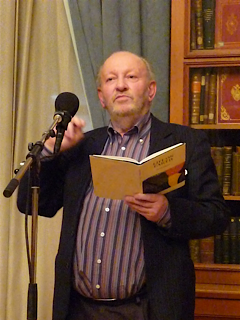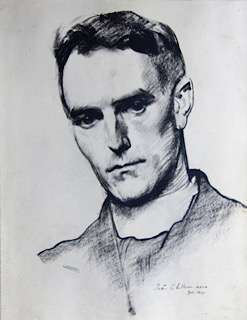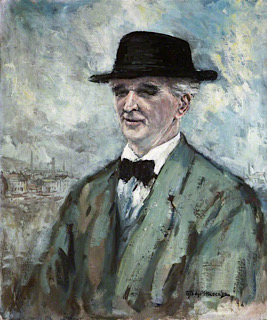
Norman Derek Mahon, Irish poet, is born in Belfast, Northern Ireland, on November 23, 1941, but lives in a number of cities around the world. At his death it is noted that his “influence in the Irish poetry community, literary world and society at large, and his legacy, is immense.” President of IrelandMichael D. Higgins says of Mahon, “he shared with his northern peers the capacity to link the classical and the contemporary but he brought also an edge that was unsparing of cruelty and wickedness.”
At Inst Mahon encounters fellow students who share his interest in literature and poetry. The school produces a magazine in which he produces some of his early poems. According to the critic Hugh Haughton, his early poems are highly fluent and extraordinary for a person so young. His parents cannot see the point of poetry, but he sets out to prove them wrong after he wins his school’s Forrest Reid Memorial Prize for the poem ”The power that gives the water breath.”
At times expressing anti-establishment values, Mahon describes himself as an “aesthete” with a penchant “for left-wingery […] to which, perhaps naively, I adhere.”
In March 2020, at the beginning of the COVID-19 pandemic, RTÉ News ends its evening broadcast with Mahon reading his poem Everything Is Going to Be All Right.
Mahon dies in Cork, County Cork, on October 1, 2020, after a short illness, aged 78. He is survived by his partner, Sarah Iremonger, and his three children, Rory, Katy, and Maisie. His papers are held at Emory University.
Mahon features on the Irish Leaving Certificate course with ten of his poems (Grandfather, Day Trip to Donegal, Ecclesiastes, After the Titanic, As It Should Be, A Disused Shed in Co. Wexford, Rathlin, The Chinese Restaurant in Portrush, Kinsale and Antarctica)
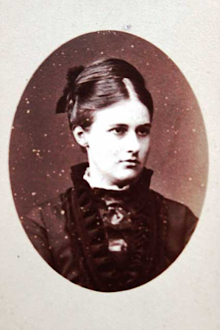
Josephine McNeill, Irish diplomat, dies in Dublin on November 19, 1969. She is the first Irish female diplomat appointed to represent Ireland abroad in a ministerial capacity.
McNeill is born Josephine Ahearne on March 31, 1895, in Fermoy, County Cork, the daughter of shopkeeper and hotelier, James Ahearne, and his wife Ellen Ahearne (née O’Brien). She attends the Loretto Convent, Fermoy, and goes on to graduate from University College Dublin (UCD) with a BA, H.Dip.Ed. in French and German. With this she begins a teaching career, at St. Louis’ Convent, Kiltimagh, at the Ursuline Convent, Thurles, and at Scoil Íde. Scoil Íde, the female counterpart to St. Enda’s School, had been established by her friend, Louise Gavan Duffy. She is fluent in the Irish language and takes an active part in the cultural elements of the Irish independence movement, such as literature and music. She is a member of Cumann na mBan, serving as a member of the executive committee in 1921.
After the death of her husband in 1938, McNeill becomes the honorary secretary of the council of the Friends of the National Collections, as well as serving as chair of the executive committee of the Irish Countrywomen’s Association until 1950. As a member of the Department of External Affairs advisory committee on cultural relations, she writes on economic, social and cultural issues. She represents Ireland at the UNESCO general assembly in Paris in 1949.
McNeill is an active member of Clann na Poblachta from its foundation in 1946. She is appointed the minister to the Netherlands in 1950 by Seán MacBride, making her the first Irish female diplomat to represent the Republic of Ireland abroad in a ministerial capacity. This appointment is not well received by diplomats in the Department of External Affairs. Her reports from The Hague focus on the issues the Netherlands faces with decolonisation. In 1955, she becomes the minister to Sweden, going on to hold the joint appointment to Austria and Switzerland from 1956 to 1960, after which she retires. While serving in Switzerland she puts aside the resentment she feels towards Éamon de Valera based on how he had treated her husband, to sit with him during a convalescence while de Valera recovers from an eye operation.
McNeill is an amateur pianist and collects paintings and porcelains. In 1933, she publishes the Irish language book, Finnsgéalta ó India.
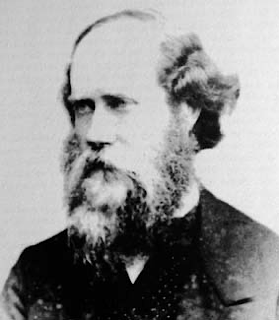
Smith is the fourth child of John Smith (1792–1828), a barrister, who dies when Henry is two. His mother, Mary Murphy (d.1857) from Bantry Bay, very soon afterward moves the family to England. He has thirteen siblings, including Eleanor Smith, who becomes a prominent educational activist. He lives in several places in England as a boy. His mother does not send him to school but educates him herself until age 11, at which point she hires private tutors. In 1841, at the age of 15, he is admitted to Rugby School in Warwickshire, where Thomas Arnold is the school’s headmaster. This comes about because his tutor, Henry Highton, takes up a housemaster position there.
At the age of 19 Smith wins an entrance scholarship to Balliol College, Oxford. He graduates in 1849 with high honours in both mathematics and classics. He is fluent in French having spent holidays in France, and he takes classes in mathematics at the College of Sorbonne in Paris during the 1846–47 academic year. He is unmarried and lives with his mother until her death in 1857. He then brings his sister, Eleanor, to live with him as housekeeper at St. Giles.
Smith remains at Balliol College as a mathematics tutor following his graduation in 1849 and is soon promoted to Fellow status.
In 1874, Smith becomes Keeper of the University Museum and moves, along with his sister, to the Keeper’s House on South Parks Road in Oxford.
On account of his ability as a man of affairs, Smith is in demand for academic administrative and committee work: he is Keeper of the Oxford University Museum of Natural History, a Mathematical Examiner for the University of London, a member of a Royal Commission to review scientific education practice, a member of the commission to reform University of Oxford governance, chairman of the committee of scientists overseeing the Meteorological Office and twice president of the London Mathematical Society.
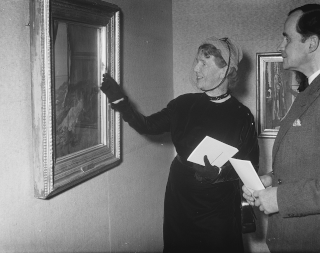
Vanston’s time in Paris leaves a lasting impression on her work, including use of primary colours and a strong Cubist influence. She belongs to what critic Brian Fallon calls the “Franco-Irish generation of painters who looked to Paris,” along with Mainie Jellett, Evie Hone, and Norah McGuinness. Her time spent living in Costa Rica in the late 1920s and early 1930s imbues her work with tropical and highly toned colours. In Dublin in 1935, she exhibits 17 paintings, largely Costa Rican landscapes, at Daniel Egan’s gallery on St. Stephen’s Green. This is the closest thing to a solo show she would mount, with this show also featuring Grace Henry, Cecil Ffrench Salkeld, and Edward Gribbon.
Meeting the English artist Basil Rakoczi, who is also living in Dublin during World War II, leads Vanston to become associated with The White Stag group. In November 1941, she exhibits for the first time at a group show with 24 other artists, including Patrick Scott. One work that is shown at this exhibition is the painting Keel dance hall, which demonstrates that she spends time in the west of Ireland. The most important event staged by the group is the Exhibition of subjective art, which takes place at 6 Lower Baggot St. in January 1944. The Dublin Magazine notes her work at this show as the most effective of the experimental vanguard. This work, Dying animal, is a Cubist work with semi-representation forms rendered in bold colours. In 1945, her work is featured in a White Stag exhibition in London of young Irish painters at the Arcade gallery, Old Bond Street.
In 1947, Vanston spends almost a year in Costa Rica where she paints primarily in watercolours. Apart from this period, she lives and works in Dublin, living at 3 Mount Street Crescent near St. Stephen’s Church. At the inaugural Irish Exhibition of Living Art in 1943, she exhibits five works. At the first Exhibition of Independent Artists in 1960, of which she is a founder, she exhibits three landscapes and a work entitled War. She largely exhibits with the Independent Artists, the Irish Exhibition of Living Art, and the Oireachtas na Gaeilge, and does not exhibit with the Royal Hibernian Academy. Later in life, she exhibits with the Figurative Image exhibitions in Dublin, and is amongst the first painters chosen for Aosdána. A number of her works are featured in the 1987 exhibition, Irish women artists, from the eighteenth century to the present arranged by the National Gallery of Ireland and The Douglas Hyde Gallery.
Vanston dies on July 12, 1988, in a nursing home in Enniskerry, County Wicklow. Her work is greatly admired, but has received little by way of critical attention, which may have been to do with her slow rate of output. A number of her works have proved difficult to trace. She was a private person, even refusing to cooperate with the Taylor Galleries in the 1980s when they wanted to mount a retrospective of her work. The National Self-Portrait Collection in Limerick holds a work by Vanston.
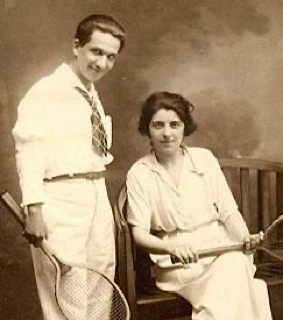
(Pictured: Dairine Vanston with Guillermo Padilla in Paris)
After a period at the University of Göttingen, de Brún is appointed professor of mathematics at St. Patrick’s Pontifical University, Maynooth, in 1914. In April 1945, he is elected by the Senate of the National University of Ireland to succeed John Hynes as President of University College, Galway, an office he holds until his retirement in 1959. His friend Thomas MacGreevy refers to de Brún as, “Rector Magnificus,” and praises his, “Olympian capacity to appreciate the most exalted works of art and literature, ancient and modern.”
The School of Mathematics, Mathematical Physics and Statistics is based in Áras de Brún, a building named in de Brún‘s honour. He subsequently becomes Chairman of the Arts Council of Ireland, a position he holds until his death in 1960. He also serves as chairman of the Council of the Dublin Institute for Advanced Studies (DIAS).
De Brún is close friend of 1916 Easter Rising leader Seán Mac Diarmada and is deeply affected by the latter’s execution.
De Brún was a prolific writer of Irish poetry in the Irish language, including the well-known poem “Tháinig Long ó Valparaiso.” He further translates into Modern Irish many great works of the Western canon, including Homer‘s Iliad and Odyssey, Sophocles‘ Antigone and Oedipus Rex, and Plutarch‘s Parallel Lives, as well as French stage plays by Jean Racine and Dante Alighieri‘s Divine Comedy. With regards to his importance to modern literature in Irish, he is recently termed “one of the most distinguished literary figures of his time.”
De Brún purchases land at Dunquin in the Dingle PeninsulaGaeltacht. In the 1920s, he also builds a house there known as Tigh na Cille, where his sister and her children often visit and stay at length. Through his literary mentorship of his niece, the future poet Máire Mhac an tSaoi, he has been credited with having an enormous influence upon the future development of modern literature in Irish.
After suffering a heart attack at his house at Seapoint, Dún Laoghaire, into which he had recently moved, de Brún dies on June 5, 1960, in St. Vincent’s nursing home, Leeson Street, Dublin.
Warden is born in the townland of Ballycastle, near Newtownards in County Down, the eldest among three sons of Robert Warden, tenant farmer, and Elizabeth Warden (née Bailie). Educated locally, he studies for the Presbyterian ministry, despite being told by a clergyman that he is a “blockhead.” Entering the University of Glasgow, he wins a silver medal for his work on barometers, receives a certificate in midwifery, and graduates MA in April 1797. Returning to Ireland, he accepts a provisional license to preach from the Presbytery of Bangor, County Down, and becomes a popular preacher in the region. A patriot in politics, he joins the United Irishmen. Because of this a warrant was issued for his arrest in 1798 and he surrenders himself to the government. Banished from Ireland, he decides to emigrate to the United States and writes a pamphlet explaining his decision, A farewell address to the junto of the presbytery of Bangor, in which he accuses the church leaders of “meanness, injustice and cruelty.”
On his arrival in New York City in 1799, Warden decides to abandon his career as a clergyman and become a teacher. Interested in mathematics, science and literature, he becomes principal of the Columbia Academy in Kinderhook, New York, and is appointed in 1801 the head tutor at Kingston Academy in Ulster County, New York. Employed by General John Armstrong, Jr. to teach his children, he makes useful connections in American society. He becomes a citizen in 1804 and is asked to accompany Armstrong to France when he is appointed ambassador. Arriving in Paris in 1806, he gives strong support to Armstrong and defends him from criticism in the American press. He is appointed acting consul in 1808, and serves as head of the legation on two occasions when Armstrong is absent. Surprisingly, despite their ties of friendship, Armstrong does not recommend Warden to succeed him permanently, and advises President Thomas Jefferson that although “honest and amiable” he is “not well qualified for business.” Stung by these comments, Warden reacts angrily and his friendship with Armstrong ends acrimoniously. As a result he is swiftly recalled from Paris.
Once back in America, Warden lobbies vigorously to be appointed French consul. Supported by Jefferson, now out of office, he returns to Paris in August 1811 having convinced the government of his credentials. Befriending the new ambassador, Joel Barlow, he soon allows pride to get the better of him. Arrogantly styling himself “consul general” after Barlow dies in December 1812, he provokes much anger and is dismissed from office on June 10, 1814. He never holds a diplomatic appointment again.
Deciding to remain in France, he resumes his scholarly activities and publishes his first book, On the Origin, Nature, Progress and Influence of Consular Establishments in 1813. A friend of many of the leading French writers and intellectuals, he also offers assistance to visiting scholars from America, providing a bridge between the European and American intellectual communities. His reputation increases with the publication of Chorographical and Statistical Description of the District of Columbia (1816) and A Statistical, Political and Historical Account of the United States of North America (3 vols., 1819). The publishers of a series, L’art de vérifier les dates, commissions him to research the volumes on North and South America in 1821. These run to ten volumes and are written over thirteen years.
Beset by financial difficulties, Warden is twice forced to sell part of his vast library to raise money. He dies on October 9, 1845, in Paris, after a long illness. He never marries.
(From: “Warden, David Bailie” by Patrick M. Geoghegan, Dictionary of Irish Biography, http://www.dib.ie, October 2009)
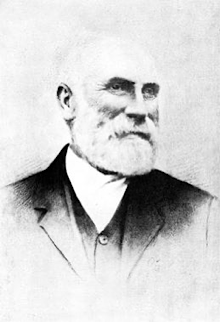
Kettle is one among six children of Thomas Kettle, a prosperous farmer, and his wife, Alice (née Kavanagh). His maternal grandmother, Mary O’Brien, had smuggled arms to United Irishmen in the district in 1798, while her future husband, Billy Kavanagh, had been a senior figure in the movement. He is educated at Ireland’s most prestigious Catholicboarding school, Clongowes Wood College. His education is cut short when he is called to help full-time on the farm. Though an autodidact and always a forceful writer, he is beset later by an exaggerated sense of his “defective education and want of talking powers.” Fascinated by politics, he enjoys the repeal excitement of 1841–44 and in his late teens speaks once or twice at Tenant Right League meetings in Swords. Through the 1850s and most of the 1860s he sets about expanding the family farm into a composite of fertile holdings in Swords, St. Margaret’s, Artane, and Malahide (c.150 acres). Getting on well with the Russell-Cruise family of Swords, his first landlords, he benefits from a favourable leasehold arrangement on their demesne in the early 1860s. The farm is mostly in tillage, though Kettle also raises some fat cattle and Clydesdale horses, which he eventually sells to Guinness’s.
Kettle first enters politics in 1867, when he disagrees with John Paul Byrne of Dublin Corporation in public and in print over the right of graziers to state aid during an outbreak of cattle distemper. In 1868, he joins an agricultural reform group initiated by Isaac Butt. He becomes friendly with Butt and later claims to have converted him to support tenant-right. His memoirs, which are somewhat egocentric, contain a number of such questionable claims. It is, however, the case that he habitually writes up, for his own use, cogent summaries of the direction of current political tendencies, which sometimes become useful confidential briefs for Butt and later Charles Stewart Parnell. He is among the published list of subscribers to the Home Rule League in July 1870.
In 1872, disappointed by the Landlord and Tenant (Ireland) Act 1870, Kettle organises a Tenants’ Defence Association (TDA) in north County Dublin, soon sensing the need for a central body to coordinate the grievances of similar groups around the country. The Dublin TDA effectively acts as this central body, under his guidance as honorary secretary. At the 1874 United Kingdom general election in Ireland, the Dublin TDA decides to challenge the electoral control of certain corporation interests in County Dublin. Kettle secures the cautious approval of CardinalPaul Cullen for any candidate supporting the principle of denominational education. He is also one of a deputation to ask Parnell to fight the constituency, which the latter loses. He becomes closely acquainted with Parnell, who frequently attends Dublin TDA meetings after his election for Meath in April 1875.
Taking a sombre view of the threat of famine in the west of Ireland after evidence of crop failure appears in early summer 1879, Kettle calls a conference of TDA delegates at the European Hotel in Bolton Street, Dublin, in late May. After a heated debate in which a proposal for a rent strike is greatly modified, Parnell comes to seek Kettle’s advice on whether to become involved in the evolving land agitation in County Mayo. Kettle urges him to go to the Westport meeting set for June 8, 1879, and claims later to have stressed in passing that “if you keep in the open you can scarcely go too far or be too extreme on the land question.” If the incident is correctly recounted, this is a most important statement, which virtually defines Parnell’s oratorical strategy throughout the land war. In October 1879, Kettle agrees to merge the TDA with a new Irish National Land League, set up at a meeting in the Imperial Hotel, Dublin, chaired by Kettle. As honorary secretary of the Land League, Kettle frankly admits that he is able to attend meetings without “the necessity of working.” His attendance is, however, among the most regular of all League officers, with him taking part in 73 of 107 meetings scheduled between December 1879 and October 1881.
In March 1880, Kettle disputes Michael Davitt‘s reluctance to use League funds in the general election. He canvasses vigorously together with Parnell in Kildare, Carlow, and Wicklow and is later pressed by his party leader into standing for election in County Cork, though aware that the local tenant movement has already prepared their own candidates. His association with Parnell antagonises the catholic hierarchy in Munster, who issues a condemnation of his candidacy. The hurly-burly of this election creates the persistent impression that Kettle is anti-clerical in politics, and he is defeated by 151 votes.
On a train journey to Ballinasloe in early April 1880, Kettle confides to Parnell his idea that land purchase can be facilitated by the recovery of tax allegedly charged in excess on Ireland by the British government since the act of union. At League meetings in June and July 1880, he advances his “catastrophist” plan: to cease attempts to prevent the development of an irresistible crisis among the Irish smallholding population, by diverting the application of League funds from general relief solely to the aid of evicted tenants, who might be temporarily housed “encamped like gypsies and the land lying idle,” in the belief that the British government will thereby be compelled to introduce radical remedial legislation. Smallholders do not have enough faith in either League or parliamentary politicians to listen.
At a meeting of the League executive in London and in Paris, before and after Davitt’s arrest on February 3, 1881, Kettle presents his plan that the parliamentary party should, if faced with coercive legislation, withdraw from Westminster, “concentrate” in Ireland, and call a general rent strike. Republicans on the League executive continually find themselves embarrassed by Kettle’s radical calls to action motivated solely by the project of agrarian reform. Parnell is later supposed to have lamented party failure to execute the plan at this juncture.
Kettle is arrested in June 1881 for calling for a collective refusal of rent. After two weeks in Naas jail he is transferred to Kilmainham Gaol, where in October he is, with some misgivings, one of the signatories to the No Rent Manifesto. Discharged from Kilmainham in late December 1881 owing to poor health, he returns principally to work on the family farm for most of the 1880s, though he claims to have formulated a draft solution for the plight of the agricultural labourer and “pushed it through” in correspondence with Parnell. He reemerges in 1890 to defend Parnell after the divorce scandal breaks. Attempting to establish a new ”centre” party independent of extreme Catholic and Protestant interests, he stands for election as a Parnellite at the 1891 County Carlow by-election, where he is comprehensively beaten, having endured weeks of insinuating harangues by Tim Healy, and raucous mob insults to the din of tin kettles bashed by women and children at meetings around the county. He is intermittently involved in County Dublin politics in the 1890s and 1900s and maintains a brusque correspondence on matters of the day in the national press.
Kettle dies on September 22, 1916, at his residence, St. Margaret’s, County Dublin, anguished by the death on September 9 of his brilliant son, Tom Kettle, near the village of Ginchy during the Battle of the Somme. He is buried at St. Colmcille’s cemetery, Swords.
Kettle marries Margaret McCourt, daughter of Laurence McCourt of Newtown, St. Margaret’s, County Dublin, farmer and agricultural commodity factor. They have five sons and six daughters.
O’Doherty receives a good education and studies medicine, but before he is qualified, joins the Young Ireland party and in June 1848, together with Thomas Antisell and Richard D’Alton Williams, establish The Irish Tribune. Only five editions are issued, the first being on June 10, 1848. On July 10, 1848, when the fifth edition is issued, O’Doherty is arrested and charged with treason felony. At the first and second trials the juries disagree, but at the third trial, he is found guilty and sentenced to transportation for ten years.
O’Doherty arrives in Tasmania in November 1849, is at once released on parole to reside at Oatlands, and his professional services are utilised at St. Mary’s Hospital, Hobart. The other Irish prisoners nickname him “St. Kevin.” In 1854 he receives a pardon with the condition that he must not reside in Great Britain or Ireland. He goes to Paris and carries on his medical studies, making one secret visit to Ireland to marry Mary Eva Kelly, to whom he is affianced before leaving Ireland. He receives an unconditional pardon in 1856, and completes his studies in Dublin, graduating FRCS in 1857. He practises in Dublin successfully, and in 1862 goes to Brisbane, Australia, and becomes well known as one of its leading physicians.
O’Doherty is elected a member of the Legislative Assembly of Queensland in 1867, in 1872 is responsible for a health act being passed, and is also one of the early opponents of the trafficking of Kanakas. In 1885, he resigns as he intends to settle in Europe.
In Ireland, O’Doherty is cordially welcomed, and is returned unopposed as Irish Parliamentary Party (IPP) MP for North Meath to the House of Commons of the United Kingdom in the November 1885 United Kingdom general election. However, finding the climate does not suit him, he does not seek re-election in 1886 and returns to Brisbane in that year. He attempts to take up his medical practice again but is not successful. He dies in poor circumstances in Brisbane on July 15, 1905.
O’Doherty’s wife and a daughter survive him. A fund is raised by public subscription to provide for his widow, a poet, who in her early days is well known as the author of Irish patriotic verse in The Nation under the soubriqet “Eva.” In Australia, she occasionally contributes to Queensland journals, and one of her poems is included in A Book of Queensland Verse. She dies at Brisbane on May 21, 1910.
Cronin is the only son among three children of Con Cronin, a member of the Irish Republican Army (IRA), and his wife Kate. After his father’s death, his mother works as a cook in a boarding school while the children are brought up by relatives in Ballinskelligs in the County KerryGaeltacht. Educated locally, he is deeply influenced by his Gaeltacht childhood; his later writings often refer to the hypocrisy of a state that romanticises the Gaeltacht while neglecting its social problems.
During World War II, Cronin’s sisters emigrate to England to train as nurses while he works as a labourer for Kerry County Council. In December 1941, he joins the Irish Army and is selected in 1943 for an officers’ training course, on which he forms a lifelong friendship with the future theatre directorAlan Simpson. He is commissioned and remains in the army until 1948.
Shortly thereafter Cronin emigrates to New York City, where he finds work as a journalist writing for The Advocate, an Irish American newspaper. He is strongly influenced by interviewing 1916 veterans for The Advocate and by contact with left-wing Irish American associates of Michael Quill, who played leading roles in the foundation of the Transport Workers Union of America. He becomes active in the semi-secret separatist organisation Clan na Gael, and in autumn 1955 returns to Ireland with the aim of helping the IRA to prepare for another military campaign.
Cronin begins work as a sub-editor with the Evening Press and also contributes summaries of world affairs to The Irish Times.
Cronin establishes contact with the IRA, and his military experience leads to his rapid assignment to GHQ staff. He is initially placed in charge of training and instruction, composing a manual on guerrilla warfare and twelve lectures on battlefield training. He teaches new military techniques and new recruits, such as the future IRA Chief of Staff Ruairí Ó Brádaigh, find him deeply impressive.
Cronin becomes a leading advocate of an early IRA campaign against Northern Ireland and becomes the chief strategist for Operation Harvest, a campaign which sees the carrying out of a range of military operations from direct attacks on security installations to disruptive actions against infrastructure. He is arrested on January 8, 1957, near the border in County Cavan. He is imprisoned several times over the course of the campaign (1956–1962).
Most of the IRA and Sinn Féin leadership are interned by the Dublin government on July 6, 1957. Cronin, one of the few to escape, becomes IRA Chief of Staff. He also acts for a time as editor of the movement’s newspaper, United Irishman. He tries to secure weapons from various sources, leading an unsuccessful raid on a British Army base at Blandford Camp in Dorset on February 16, 1958, and through contacts with Spanish republican exiles in Paris. The Irish American community remains the IRA’s main source of external support.
Cronin is arrested on September 30, 1958, and interned, causing considerable disarray, as he had been running much of the campaign single-handed. When the internees are released in March 1959, he resumes his position as Chief of Staff after a factional dispute causes the resignations of Tomás Óg Mac Curtain and the former Chief of Staff Tony Magan. He continues to argue that a sustained guerrilla campaign might yet succeed, but in June 1960 is again arrested and imprisoned for six months.
In November 1960, the Irish Freedom Committee (IFC), a Clan na Gael splinter group, accuses Cronin of being a communist and a “Free State agent,” supposedly implicated in the 1944 execution of Charlie Kerins. The IRA supports Cronin, but he nevertheless decides to resign successively as Chief of Staff, as a member of the Army Council, and as an IRA volunteer, on the grounds that his presence endangers the American support necessary for the continuance of the campaign. He then secures a job as a journalist on the Irish Independent. He withdraws his resignation in November 1961 after the Irish government reinstates military tribunals to try suspected IRA men. He is subsequently sentenced to six months’ imprisonment by a military tribunal and is in prison when the border campaign ends on February 26, 1962. Released on amnesty on April 19, 1962, he finally resigns from the IRA the next day.
By February 1966, Cronin has returned to the United States, where he resides for the remainder of his life, with regular visits to Ireland. He works as a journalist on the Newark Evening News and the Dow Jones News Service and is the U.S. correspondent of The Irish Times from 1967 to 1991, becoming that paper’s first Washington, D.C. correspondent.
In the 1970s Cronin takes a degree at New York University, then teaches and studies for a doctorate at The New School for Social Research in New York under Hans Morgenthau. His dissertation forms the basis for his magnum opus, Irish nationalism: its roots and ideology (1980). Although limited by its colonial model and socialist-republican intellectual framework, this historically oriented account draws on his extensive research and personal contacts to some effect.
Cronin is the author of a dozen books and pamphlets, including a biography of republican Frank Ryan, Washington’s Irish Policy 1916-1986: independence, partition, neutrality (1987), an authoritative account of Irish-US relations, Our Own Red Blood: The Story of the 1916 Rising (1966), and a number of works on guerrilla strategy, including an early Sinn Féin pamphlet Resistance under the pseudonym of J. McGarrity.
After the death of his first wife in 1974, Cronin marries Reva Rubinstein, a toxicologist. In 1980 they move to Washington, D.C. He has no children by either marriage, though his second wife brings him a stepson. After several years of illness, he dies in Baltimore, Maryland, on March 9, 2011. He is survived by his second wife, Reva Rubenstein Cronin.
Born Leslie Yodaiken into a Russian–Jewish family in Portobello, Dublin, Daiken is the son of Samuel and Rosa Yodaiken. His father is a dealer in rubber and scrap metal, with premises in Dublin and Glasgow, and he is educated at two independent fee-paying schools, St. Andrew’s College and Wesley College, and then in 1930 he enters Trinity College Dublin. In his first year, one of his lecturers in French literature was Samuel Beckett. He is an active member of the Dublin University Socialist Society and a founding member of the college’s Gaelic Society.
In 1933, Daiken is present at the house of Charlotte Despard in Eccles Street, Dublin, also used as a Workers’ College, when it is attacked by a mob of Blueshirts. He leads the immediate defence of the building, which is saved on that occasion by the intervention of Irish Republican Army (IRA) men posing as the police.
In 1934, as Yodaiken, he graduates with a BA from Trinity in English and French Literature, with a Second Class degree. After graduating, Daiken works briefly as a schoolteacher in Dublin. In April 1935, his short story “Angela” is published in The New English Weekly under the pen name of Ned Kiernan. That year, he migrates to London.
Soon after his arrival in London, Daiken is one of the three founders of a duplicated publication called Irish Front, together with two other poets, Charles Donnelly and Ewart Milne.
In England, Daiken starts to shorten his surname from Yodaiken to Daiken, for his publications, but he does not make this change formally until doing so by deed poll in 1943.
In December 1935, The Irish Times reviews a production in Camden Town of Ireland Unfree, a stage version by Daiken of Patrick Pearse’s poem “The Rebel.” It states that “Mr. Daiken carries Pearse’s theme beyond his idealistic conclusion to the revolutionary viewpoint of the Irish workers.”
Daiken keeps up his links with leftist Irish writers and dissidents and edits the collection of working-class political verse Goodbye Twilight: songs of the struggle in Ireland (1936), illustrated by Harry Kernoff. The Irish Press describes this as “forty young poets with blazing eyes and clenched fists.” In another review, Louis MacNeice calls the book a “collection of proletarian poems – some communist, some Irish republican, and all written in a defiant spirit of opposition … a violent reaction against Yeats and all that he stood for.”
In 1939, Mairin Mitchell is highly critical of the Irish leftists, and in particular Daiken, for their views on the Molotov–Ribbentrop Pact, and writes to Desmond Ryan in September, “Brian O’Neill, Bloomsbury, and Daiken will sing Russia right or wrong.”
In October 1939, at the time of the wartime National Registration Act, Daiken is living in a studio at Old Castle Wharf, Twickenham, and describes himself as “Script-writer and advertising copywriter.”
During World War II, Daiken enlists in the Corps of Signals of the Irish Army, a neutral force, and also works for Reuters as a correspondent on education. In 1944, he edits They Go, the Irish, a collection of essays, including one from Seán O’Casey. In 1945, a collection of his verse is published under the title Signatures of All Things. In the summer of that year, Samuel Beckett gives Daiken his unpublished novel Watt, in the hope that he can find a publisher for it, but he fails to do so. They continue to write to each other and meet in London and Paris in the 1950s. He also keeps up with another friend from Trinity, Con Leventhal.
After he becomes a father in 1945, Daiken’s main interest moves on from political activism to children’s games and toys, and by 1951 the basement of his London home has become a toy museum. He writes on the subject and makes television and radio programmes for the BBC about it. His film One potato, two potato, a compilation of children’s street rhymes, wins the Festival Mondial du Film prize in 1958. His radio play The Circular Road is about a Jewish-Irish child.
In the 1950s Daiken founds the National Toy Museum and Institute of Play, today part of the Toy Collection at Hove Museum of Creativity.
Daiken returns to Ireland many times as a visitor. In the early 1960s he completes a radio play about the Jewish community of Dublin in the 1920s, which is broadcast on RTÉ.
In October 1963, Conor Cruise O’Brien, Vice Chancellor of the University of Ghana, recruits Daiken as a lecturer in education, and not long before his death he makes a film called The Piano about teaching white and black children in a school in Africa. He dies on August 15, 1964, while spending the summer vacation at home in London, leaving an estate valued at £3,865. He is cremated. His widow survives him until 1981.
In a tribute to Daiken, his 1930s communist associate Brian O’Neill writes, “He was always busy, always with a half dozen irons in the fire, always trying to give a hand to some Irish writer who needed it.”
In the early 1990s, Katrina Goldstone interviews Daiken’s brother, Aubrey Yodaiken, and later reports: “I was left with a faint sense of melancholy, as my interviewee had become distressed speaking about his brother, Leslie Daiken, and recalling his irrepressible and exasperating personality, his many projects, half-started novels…”
Aubrey Yodaiken is distressed by the lack of appreciation of his brother’s many cultural efforts and by the fact that his “scattershot literary endeavours” seem to have come to naught.
The National Library of Ireland holds a collection of Daiken’s papers, in particular his publications and correspondence, presented to it in 1995 by his elder daughter, by then Melanie Cuming, and his younger brother, Aubrey Yodaiken. The papers are mostly in English, French, German, Dutch, Italian, Hebrew, and Irish.