seamus dubhghaill

Promoting Irish Culture and History from Little Rock, Arkansas, USA


Leave a comment

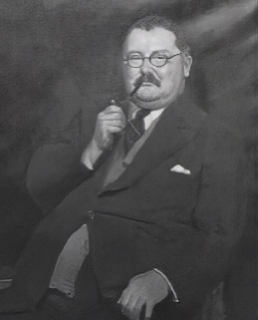
Death of R. M. “Bertie” Smyllie, Editor of “The Irish Times”

Robert Maire Smyllie, known as Bertie Smyllie, editor of The Irish Times for twenty years, dies on September 11, 1954.

Smyllie is born on March 20, 1893, at Hill Street, ShettlestonGlasgowScotland. He is the eldest of four sons and one daughter of Robert Smyllie, a Presbyterian printer originally from Scotland who is working in Sligo, County Sligo, at the time, and Elisabeth Follis, originally from Cork, County Cork. His father marries in Sligo on July 20, 1892, and later becomes proprietor and editor of the unionist Sligo Times. Smyllie attends Sligo Grammar School in 1906 and enrolls at Trinity College Dublin (TCD) in 1911.

After two years at TCD, Smyllie’s desire for adventure leads him to leave university in 1913. Working as a vacation tutor to an American boy in Germany at the start of World War I, he is detained in Ruhleben internment camp, near Berlin, during the war. As an internee, he is involved in drama productions with other internees. Following his release at the end of the war, he witnesses the German revolution of 1918–1919. During this period, he encounters revolutionary sailors from Kiel who temporarily make him a representative of the Workers’ and Soldiers’ Council, and he observes key events including the looting of the Kaiser’s Palace and violent clashes between rival factions in Berlin. It is also during this period that he secures a personal interview with David Lloyd George at the Paris Convention of 1919. This helps Smyllie gain a permanent position with The Irish Times in 1920, where he quickly earns the confidence of editor John Healy. Together, they take part in secret but unsuccessful attempts to resolve the Irish War of Independence.

Smyllie contributes to the Irishman’s Diary column of the paper from 1927. In 1927, he publishes an exclusive report outlining a draft government including both Labour Party and Fianna Fáil TDs, signaling the volatile politics of the early state years.

Smyllie’s knowledge of languages (particularly the German he had learned during his internment) led to numerous foreign assignments. His reports on the rise of National Socialism in 1930s Germany are notably prescient and instill in him a lasting antipathy towards the movement.

When Healy dies in 1934, Smyllie becomes editor of The Irish Times and also takes on the role of Irish correspondent for The Times (London), a position that brings significant additional income. Under Healy’s leadership, The Irish Times shifted from representing the Anglo-Irish ascendancy to becoming an organ of liberal, southern unionism, and eventually becomes a critical legitimising force in the Irish Free State. Smyllie enthusiastically supports this change. He establishes a non-partisan profile and a modern Irish character for the erstwhile ascendancy paper. For example, he drops “Kingstown Harbour” for “Dún Laoghaire.” He also introduces the paper’s first-ever Irish-language columnist. He is assisted by Alec Newman and Lionel Fleming, recruits Patrick Campbell and enlists Flann O’Brien to write his thrice-weekly column “Cruiskeen Lawn” as Myles na gCopaleen. As editor, he introduces a more Bohemian and informal style, establishing a semi-permanent salon in Fleet Street’s Palace Bar. This becomes a hub for journalists and literary figures and a source of material for his weekly column, Nichevo.

One of Smyllie’s early political challenges as editor concerns the Spanish Civil War. At a time when Irish Catholic opinion is strongly pro-Franco, he ensures The Irish Times coverage is balanced and fair, though advertiser pressure eventually forces the withdrawal of the paper’s young reporter, Lionel Fleming, from the conflict. His awareness of the looming European crisis earns him the Order of the White Lion of Czechoslovakia in 1939. However, during World War II, he clashes with Ireland’s censorship authorities, especially under Minister Frank Aiken. He challenges their views both publicly and privately, though his relationship with the editor of the Irish Independent, Frank Geary, is cold, reducing the effectiveness of their joint opposition to censorship.

During the 1943 Irish general election, Smyllie uses the paper to promote the idea of a national government that could represent Ireland with authority in the postwar world. He praises Fine Gael’s proposal for such a government and criticises Éamon de Valera for dismissing it as unrealistic. This leads to a public exchange between de Valera and Smyllie, with the latter defending The Irish Times’s role as a constructive voice for Ireland’s future rather than a partisan interest.

Following the war, Smyllie’s editorial stance shifts toward defending Ireland’s neutrality and diplomatic position. When Winston Churchill accuses de Valera of fraternising with Axis powers, Smyllie counters by revealing Ireland’s covert collaboration with the Allies, such as military and intelligence cooperation, despite official neutrality. In the same period, he continues to oppose censorship, particularly the frequent banning of Irish writers by the Censorship of Publications Board. This opposition features prominently in a controversy on The Irish Times letters page in 1950, later published as the liberal ethic. The paper also adopts a critical stance toward the Catholic Church, notably during the 1951 resignation of Minister for Health Noël Browne amid opposition from bishops and doctors to a national Mother and Child Scheme. His editorials suggest the Catholic Church is effectively the government of Ireland, though he maintains a cordial relationship with Archbishop of DublinJohn Charles McQuaid, who invites him annually for dinner.

Smyllie is also wary of American foreign policy, showing hostility particularly during the Korean War. American diplomats in Dublin allege that Smyllie is “pro-communist“. Despite growing readership among an educated Catholic middle class, The Irish Times’s circulation in 1950 remains under 50,000, far below the Irish Independent and the Fianna Fáil-aligned The Irish Press.

In later years, Smyllie’s health declines, prompting a quieter lifestyle. He moves from his large house in Pembroke Park, Dublin, to DelganyCounty Wicklow. As he does not drive, he becomes less present in the newspaper office in D’Olier Street, contributing to a decline in the paper’s dynamism. His health deteriorates further, resulting in frequent absences from his editorial duties, though he retains his position despite management attempts to limit his authority, especially over finances. He dies of heart failure on September 11, 1954.

In 1925, Smyllie marries Kathlyn Reid, eldest daughter of a County Meath landowner. They have no children.

Smyllie is an eccentric: he hits his tee shots with a nine iron, speaks in a curious mix of Latin phrases and everyday Dublin slang, and weighs 22 stone (308 lbs.; 140 kg) yet still cycles to work wearing a green sombrero.

Leave a comment

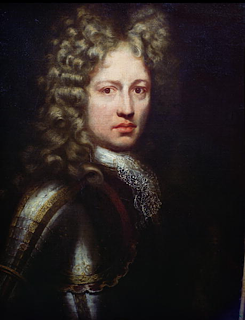
Death of Patrick Sarsfield, 1st Earl of Lucan

Patrick Sarsfield, 1st Earl of Lucan, an Irish army officer, is killed at Huy, Belgium, on August 21, 1693, while serving in the French Royal Army. He is now best remembered as an Irish patriot and military hero.

Originally of English descent, Sarsfield is born into a wealthy Catholic family around 1655. His father, Patrick, is an Irish landowner and soldier, and his mother is Anne O’Moore, daughter of Rory O’Moore, a Gaelic noble who plays a leading part in the Irish Rebellion of 1641.

There are few surviving records of Sarsfield’s early life, although it is generally agreed he is brought up on the family estates at Tully. While some biographies claim he is educated at a French military college, there is no evidence for this.

In the 1670 Secret Treaty of Dover, Charles II agrees to support a French attack on the Dutch Republic, and supply 6,000 troops for the French army. When the Franco-Dutch War begins in 1672, Sarsfield is commissioned into his brother-in-law James Scott, 1st Duke of Monmouth‘s regiment. Although England leaves the war in 1674, the brigade continues to serve in the Rhineland, under Henri de La Tour d’Auvergne, Viscount of Turenne. Sarsfield transfers into a regiment commanded by Irish Catholic Sir George Hamilton.

Sarsfield fights at EntzheimTurckheim and Altenheim. He and Hamilton are standing next to Turenne when he is killed by a chance shot at Salzbach in July 1675. He remains in France until the war ends in 1678, then returns to London to join a new regiment being recruited by Thomas Dongan, 2nd Earl of Limerick. However, the Popish Plot then results in Sarsfield and other Catholics being barred from serving in the military.

This leaves Sarsfield short of money, and he becomes involved in an expensive legal campaign to regain Lucan Manor from the heirs of his brother William, who dies in 1675. This ultimately proves unsuccessful amid allegations of forged documents, and in 1681 he returns to London, where he makes two separate attempts to abduct an heiress and is lucky to escape prosecution. When Charles’s Catholic brother James becomes king in 1685, Sarsfield rejoins the army and fights in the decisive Battle of Sedgemoor, which ends the Monmouth Rebellion. James is keen to promote Catholics, whom he views as more loyal, and by 1688 Sarsfield is colonel of a cavalry unit.

After Richard Talbot, 1st Earl of Tyrconnell, is appointed Lord Deputy of Ireland in 1687, he begins creating a Catholic-dominated Irish army and political establishment. Aware of preparations for invasion by his nephew and son-in-law William of Orange, James sends Sarsfield to Dublin in September to persuade Tyrconnell to provide him with Irish troops. This proves unsuccessful, and in November James is deposed by the Glorious Revolution. Sarsfield takes part in the Wincanton Skirmish, one of the few military actions during the invasion. He remains in England until January when he is allowed to join James in France.

Accompanied by French troops and English exiles, James lands in Ireland in March 1689, beginning the Williamite War in Ireland. Sarsfield is promoted brigadier, elected to the 1689 Irish Parliament for County Dublin, and commands cavalry units in the campaign in Ulster and Connacht. When an Irish brigade is sent to France in October, French ambassador Jean-Antoine de Mesmes proposes Sarsfield as its commander. He notes that while “not…of noble birth […], (he) has distinguished himself by his ability, and (his) reputation in this kingdom is greater than that of any man I know […] He is brave, but above all has a sense of honour and integrity in all that he does”.

James rejects this, stating that although unquestionably brave, Sarsfield is “very scantily supplied with brains.” His role at the Battle of the Boyne is peripheral, although the battle is less decisive than often assumed, Jacobite losses being around 2,000 from a force of 25,000. James returns to France, leaving Tyrconnell in control. He is the leader of the “Peace Party,” who want to negotiate a settlement preserving Catholic rights to land and public office. Sarsfield heads the “War Party,” who feel they can gain more by fighting on. It includes the Luttrell brothers, Nicholas Purcell and English Catholic William Dorrington, a former colleague from Monmouth’s Regiment.

The position of the War Party is strengthened by the Declaration of Finglas, which offers the rank and file amnesty but excludes senior officers. French victories in the Low Countries briefly increases hopes of a Stuart restoration, and the Jacobites establish a defensive line along the River Shannon. Sarsfield cements his reputation with an attack on the Williamite artillery train at Ballyneety, widely credited with forcing them to abandon the  first siege of Limerick. The Jacobites also retain Athlone, offset by the loss of Kinsale and Cork, which make resupply from France extremely difficult.

With Tyrconnell absent in France, Sarsfield takes control and in December 1690, arrests several leaders of the peace faction. He then bypasses James by asking Louis XIV directly for French support, and requesting the removal of Tyrconnell and the army commander James FitzJames, 1st Duke of Berwick, James’ illegitimate son. The latter, who later describes Sarsfield as “a man […] without sense”, albeit “very good-natured,” leaves Limerick for France in February.

Tyrconnell returns in January 1691, carrying letters from James making Sarsfield Earl of Lucan, an attempt to placate an “increasingly influential and troublesome figure.” A large French convoy arrives at Limerick in May, along with Charles Chalmot de Saint-Ruhe, appointed military commander in an attempt to end the conflict between the factions. Saint-Ruhr and 7,000 others die at Aughrim in July 1691, reputedly the bloodiest battle ever on Irish soil. Sarsfield’s role is unclear: one account claims he quarrels with Saint-Ruhe and is sent to the rear with the cavalry reserves.

The remnants of the Jacobite army regroup at Limerick. Tyrconnell dies of a stroke in August, and in October, Sarsfield negotiates terms of surrender. He is criticised for this, having constantly attacked Tyrconnell for advocating the same thing, while it is suggested the Williamite army is weaker than he judged. However, the collapse of the Shannon line and surrender of Galway and Sligo leaves him little option. Without French supplies, the military position is hopeless, and defections mean his army is dissolving.

The military articles of the Treaty of Limerick preserve the Jacobite army by allowing its remaining troops to enter French service. About 19,000 officers and men, including Sarsfield, choose to leave in what is known as the Flight of the Wild Geese. Sarsfield’s handling of the civil articles is less successful. Most of its protections are ignored by the new regime, although Sarsfield possibly views it as temporary, hoping to resume the war.

On arrival in France, Sarsfield becomes Major-General in the army of exiles, an appointment James makes with great reluctance. In addition to other acts of perceived insubordination, Sarsfield allegedly tells William’s negotiators at Limerick “change but kings with us, and we will fight it over again.” After the planned invasion of England is abandoned in 1692, the exiles become part of the French army, and Sarsfield a French maréchal de camp.

Sarsfield fights at Steenkerque in August 1692, and is fatally wounded at the Battle of Landen in 1693, dying at Huy on August 21, 1693. Despite several searches, no grave or burial record has been found, although a plaque at St. Martin’s Church, Huy, has been set up in commemoration and an announcement in 2023 states that, pending exhumation and identification, his remains have been located. Like much else, his reputed last words, “Oh that this had been shed for Ireland!” are apocryphal.


Leave a comment

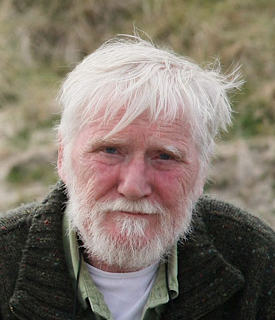
Death of Dermot Healy, Novelist, Playwright, Poet & Short Story Writer

Dermot Healy, Irish novelistplaywrightpoet and short story writer, dies at his home in Ballyconnell, Sligo, County Sligo, on June 29, 2014. A member of Aosdána, he is also part of its governing body, the Toscaireacht. He is described variously as a “master,” a “Celtic Hemingway” and as “Ireland’s finest living novelist.”

Healy is born in FinneaCounty Westmeath, on November 9, 1947, the son of a Guard. As a child the family moves to Cavan, County Cavan, where he attends the local secondary school. In his late teens he moves to London and works in a succession of jobs, including barman, security man and as a labourer. He later returns to Ireland, settling in Ballyconnell, County Sligo, a small settlement on the Atlantic coast.

Often overlooked due to his relatively low public profile, Healy’s work is admired by his Irish literary predecessors, peers and successors alike, many of whom idolise him. Among the writers to have spoken highly of him are Seamus HeaneyEugene McCabeRoddy DoylePatrick McCabe and Anne Enright.

Healy’s work is influenced by an eclectic range of writers from around the world, including Anna AkhmatovaJohn ArdenIsaac BabelMatsuo BashōSamuel BeckettJorge Luis BorgesAngela CarterJ. M. CoetzeeEmily DickinsonMaria EdgeworthT. S. EliotHermann HesseNâzım HikmetAidan HigginsMiroslav HolubEugène IonescoFranz KafkaMary LavinFederico García LorcaGuy de MaupassantEdgar Allan PoeSylvia PlathEzra PoundWilliam Shakespeare and Robert Louis Stevenson. Healy writes in a shed and is fascinated by etymology. However, on being a writer, he is quoted as saying, “I know writing is what I do but I still don’t see myself as one.”

Healy is longlisted for the Booker Prize with his novel A Goats Song. He wins the Hennessy Literary Award (1974 and 1976), the Tom-Gallon Trust Award (1983), and the Encore Award (1995). In 2011, he is shortlisted for the Poetry Now Award for his 2010 poetry collection, A Fool’s ErrandLong Time, No See is nominated for the International Dublin Literary Award, the world’s most valuable literary award for a single work in the English language, by libraries in Russia and Norway.

Healy dies at his home in Ballyconnell on June 29, 2014, while awaiting an ambulance after suddenly being taken ill. He is laid to rest at Carrigans Cemetery following funeral mass by Fr. Michael Donnelly at St. Patrick’s Church in Maugherow, County Sligo.


Leave a comment

The Wellington Barracks Mutiny

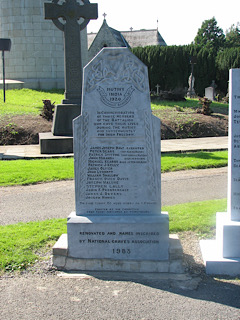
On June 28, 1920, four men from C Company of the 1st Battalion, Connaught Rangers, based at Wellington Barracks, Jalandhar in the Punjab Province, India, protest against martial law in Ireland by refusing to obey orders. One of them, Joe Hawes, had been on leave in County Clare in October 1919 and had seen a hurling match prevented from happening by British forces with bayonets drawn. Poor accommodation conditions in the Wellington Barracks likely provide an additional cause of the dispute.

The protestors are soon joined by other Rangers, including several English soldiers, such as John Miranda from Liverpool and Sergeant Woods. By the following morning, when a rebel muster takes place, 350 Irish members of the Rangers are involved in the mutiny.

On June 30, 1920, two mutineers from the Jalandhar barracks (Frank Geraghty and Patrick Kelly) travel to Solon barracks where C Company are stationed and, despite arrest, help spark a mutiny there, led by Private James Daly, whose brother William also takes part in the protest.

Initially, the protests are peaceful with the men involved donning green, white and orange rosettes and singing Irish nationalist songs. At Solon, however, on the evening of July 1, a party of about thirty men led by James Daly, carrying bayonets, attempt to seize their company’s rifles, stored in the armoury. The troops guarding the magazine open fire and two men are killed: Private Smythe who is with Daly’s party, and Private Peter Sears, who had not been involved in the attack on the magazine but is returning to his billet when hit by a stray bullet. Within days, both garrisons are occupied by other British troops. Daly and his followers surrender and are arrested. Eighty-eight mutineers are court-martialed: seventy-seven are sentenced to imprisonment and ten are acquitted. James Daly is shot by a firing squad at Dagshai Prison on November 2, 1920. He is the last member of the British Armed Forces to be executed for mutiny. The bodies of Privates Sears and Smythe are buried at Solan, while Daly and Miranda (who later dies in prison) are buried at a cemetery in Dagshai. Among those who receive a sentence of life in prison is Martin Conlon, a half brother to the eight brothers from Sligo town who fight in World War I, in which four are killed in action.

In 1923, following Irish Independence, the imprisoned mutineers are released and returned to Ireland. In 1936, the Irish Free State‘s Fianna Fáil government awards pensions to those whose British Army pensions were forfeited by conviction for their part in the mutiny. The bodies of Privates Sears, Smythe, and Daly are repatriated from India to Ireland for reburial in 1970.

(Pictured: Connaught Rangers mutineers’ memorial, Glasnevin Cemetery, Dublin)


Leave a comment

Birth of Irish Artist Estella Solomons

Estella Frances Solomons, one of the leading Irish artists of her generation, is born into a prominent Jewish family in Dublin on April 2, 1882. She is noted for her portraits of contemporaries in the republican movement and her studio is a safe house during the Irish War of Independence.

Solomons is born to Maurice Solomons and poet Rosa Jane Jacobs. Her father is an optician whose practice in 19 Nassau Street, Dublin, is mentioned in Ulysses. Her father is also the Vice-Consul of Austria-Hungary. The Solomons family, who came to Dublin from England in 1824, are one of the oldest continuous lines of Jews in Ireland.

Solomons grandmother, Rosa Jacobs Solomons, who is born in Hull in England, is the author of a book called Facts and Fancies (Dublin 1883). Her brother, Bethel Solomons, a renowned physician, a master of the Rotunda Hospital and Irish international rugby player, is mentioned in Finnegans Wake. Her brother Edwin is a stockbroker and prominent member of the Dublin Jewish community. Her younger sister Sophie is a trained opera singer. A portrait of Sophie, by her cousin the printmaker Louise Jacobs, survives in the Estella Solomons archives in the Library of Trinity College Dublin (TCD).

In 1898, at the age of 16, Solomons enters the Dublin Metropolitan School of Art where she wins a significant prize. Her classmates include future Irish artists including Mary Swanzy, Eva Hamilton and William J. Leech. She also attends the Chelsea School of Art from 1903 to 1906. A visit to the tercentenary exhibition of the work of Rembrandt in Amsterdam in 1903 impacts her creative practice and possibly influences her adoption of printmaking as her principal vehicle of expression. She studies under two of Ireland’s leading artists, Walter Osborne, who is another major influence, and William Orpen. With her friends Cissie Beckett (aunt of Samuel Beckett) and Beatrice Elvery, she goes to study in Paris at Académie Colarossi. On her return she exhibits in Leinster Hall, Molesworth Street, with contemporaries such as Beatrice Elvery, Eva Hamilton and Grace Gifford. Her work is also included in joint exhibitions with other artists at Mills Hall and the Arlington Gallery, London. She also exhibits at her Great Brunswick Street studio in December 1926.

Solomons illustrates Padraic Colum‘s The Road Round Ireland (1926) and DL Kelleher’s The Glamour of Dublin in 1928. Originally published after the devastation of the 1916 Easter Rising, the later edition features eight views of familiar locations in the city centre including Merchant’s Arch and King’s Inns. Her etching “A Georgian Doorway” is included in Katherine MacCormack’s Leabhar Ultuin in 1920. This publication features illustrations by several prominent Irish artists and is sold in aid of the new Saint Ultan’s Children’s Hospital in Charlemont Street, Dublin, that had been founded by two prominent members of Cumann na mBan, Dr. Kathleen Lynn and Madeleine ffrench-Mullen.

Solomons paints landscapes and portraits, including of artist Jack Yeats, politician Arthur Griffith, poet Austin Clarke, and writers James Stephens and George Russell (Æ).

Solomons is elected an associate of the Royal Hibernian Academy (RHA) in July 1925, but it is not until 1966 that she is elected an honorary member. Her work is included in the Academy’s annual members’ exhibition every year for sixty years.

Solomons is married to poet and publisher Seumas O’Sullivan, whose birth name is James Sullivan Starkey. Her parents oppose the relationship as O’Sullivan is not of the Jewish faith. They marry in 1925, when she is 43 and he 46, after her parents have died. She collaborates with her husband on The Dublin Magazine (1923–58), the renowned literary and art journal, of which O’Sullivan is editor for 35 years. She provides vital financial support to the magazine, particularly in sourcing advertising, which is difficult in the tough economic climate of the new Free State. She is helped in this endeavour by poet and writer, Kathleen Goodfellow, a lifelong friend. When Solomons and O’Sullivan are looking to move from their house in Rathfarnham because of a damp problem, Goodfellow offers them the house beside her own on Morehampton Road for a nominal rent. Two of Solomons’ portraits of Goodfellow are in the Model Arts and Niland Gallery in Sligo.

Solomons joins the Ranelagh branch of Cumann na mBan at the same time as Goodfellow. They are taught first aid, drilling and signaling by Phyllis Ryan. She is active before and during the Irish War of Independence. She conceals ammunition in the family vegetable garden before delivering it to a Sinn Féin agent. Her studio at Great Brunswick Street is used as a safe house by republican volunteers. During this time, she paints the portraits of a number of revolutionaries, some of which she has to later destroy to avoid incriminating them. Her work includes a portrait of Frank Aiken when we was chief of staff of the Irish Republican Army (IRA).

Solomons takes up a teaching position at Bolton Street College, Dublin. In 1939, she organises an exhibition in Dublin to help refugee artists from Europe.

Solomons dies on November 2, 1968, and is buried in Woodtown Cemetery, Rathfarnham. Her friend Kathleen Goodfellow gifts the Morehampton Road Wildlife Sanctuary, where Solomons liked to paint, to An Taisce. Two plaques have subsequently been erected there, one in memory of Solomons and one for Goodfellow.

Some of Solomons works are held in the Niland Collection, at The Model gallery in Sligo and in the National Gallery of Ireland. Her archives, which include artwork and photographs (and prints by Louise Jacobs), and the archives of The Dublin Magazine are in the Library of Trinity College Dublin.


Leave a comment

Death of Waddell Cunningham, Belfast Merchant

Waddell Cunningham, merchant and public figure in Georgian-era Belfast, dies at his restored house in Hercules Street (now Royal Avenue) in Belfast on December 15, 1797, seven months before the Irish Rebellion of 1798.

Cunningham is born in 1728 or 1729 at Ballymacilhoyle in the parish of Killead, County Antrim, the youngest son in the large family of John Cunningham and his wife, Jane, daughter of James Waddell of Islandderry, a townland in the parish of Dromore, County Down. The extended families of Cunningham and Waddell have interests in farming, linen, provisioning, and overseas trade. By 1752, no doubt with support from his family, Cunningham is in New York City trading near the meal market. Just as the Seven Years’ War is beginning in May 1757, he becomes the local partner of a Belfast merchant, Thomas Greg. While carrying on a wide range of commercial activities, the firm of Greg & Cunningham specialises in the flaxseed trade with Ireland and becomes “the most successful Irish American transatlantic trading partnership of the colonial period.” He amasses a large fortune from trade, some of it illicit, during the war, and becomes one of the largest shipowners in the American port. This enables the partners to purchase a 150-acre estate, which they rename “Belfast,” on the West Indies island of Dominica, just as it is passing, by the Treaty of Paris (1763), from French to British rule. It is possible that the estate is managed by Greg’s brother, John.

Sometime after suffering imprisonment for assaulting a fellow merchant (July–August 1763), Cunningham returns to Ireland, leaving the firm in the charge of junior partners until its dissolution in 1775. In Belfast he enters into a second partnership with Greg in May 1765 comprising all their business activities other than those in New York. In November 1765, he also marries Greg’s sister-in-law Margaret, second daughter of a Belfast merchant, Samuel Hyde. He lives in a large house in Hercules Street, later renamed Royal Avenue, which serves also as the premises for his many business interests, commercial, financial, industrial, and agricultural. In 1767, he and Greg start the manufacture of vitriol at a factory by the River Lagan at Lisburn, 12 km from Belfast. They open up fisheries in Donegal and Sligo, exporting herring to the West Indies as food for slaves. They also trade Irish horses and mules for West Indian sugar and American tobacco, the sugar being processed by them at the New Sugar House in Waring Street, Belfast. During the American Revolutionary War (1775–83), he illegally ships linen uniforms to the insurgent colonists. He becomes a middleman on the estate of Arthur Chichester, 5th Earl of Donegall, by obtaining leases of land in the Templepatrick district of County Antrim, a venture that involves him in disputes with tenant farmers resulting in an attack by the Hearts of Steel on Belfast and the destruction by fire of his home on December 23, 1771.

Despite this setback, Cunningham becomes the foremost Belfast merchant. As well as those mentioned, he has interests in shipping, brewing, glass manufacture and flour milling. When a chamber of commerce is set up in 1783, he is elected president, a position he holds until 1790. In the 1780s, in partnership with William Brown, John Campbell and Charles Ranken, he opens a bank. Known as Cunningham’s Bank, it closes on December 31, 1793, likely as a result of the recession brought on by the outbreak of war between England and France.

A prominent Volunteer, Cunningham joins the movement as a lieutenant in 1778 and is captain of the 1st Belfast company from 1780 until the dissolution of the Volunteers in 1793. Entering politics, he fails to be nominated as a parliamentary candidate for Belfast by its patron, Lord Donegall, at the general election of 1783, but stands for Carrickfergus at a February 1784 by-election on a platform of parliamentary reform and is returned – a rare distinction for a Presbyterian – by 474 votes to 289. A petition against his return is lodged successfully, but he remains an MP until March 1785, when he is defeated in a new election. It is during this period that he, probably the wealthiest, most enterprising merchant in Belfast and having, as he does, Caribbean interests, proposes in December 1784 fitting out a ship to engage in the Atlantic slave trade. The proposal comes to nothing but is the subject of intense debate in the 1920s between two rival Belfast local historians, Francis Joseph Bigger and Samuel Shannon Millin.

Cunningham plays a prominent role on several Belfast boards – those of White Linen Hall, the harbour, poorhouse, and dispensary. He gives money to the first Catholic chapel, St. Mary’s, opened in the town in 1784, and to the First Belfast Presbyterian congregation, as well as providing a site for a meeting house for his own congregation, Second Belfast, in 1767. Staunch in his advocacy of the reform of parliament, he becomes a member of the Northern Whig Club in 1790. He is cautious, however, about Catholic relief, for he fears its possible consequences. On July 14, 1792, an organiser of a Volunteer display to mark the third anniversary of the fall of the Bastille, he balks even at a very moderately worded resolution in favour of the Catholics. Thereafter he becomes increasingly ill-disposed toward reform and when the Belfast yeoman infantry is formed in 1797, he becomes captain of the 4th company.

Cunningham dies on December 15, 1797, at his restored house in Hercules Street. He and his wife have no children. His property in Ireland (worth £60,000) passes to James Douglas, youngest son of his sister Jane, who had married their first cousin, Cunningham’s personal clerk Robert Douglas. His name had already passed to Thomas Greg’s son, Cunningham Greg, who takes over Greg’s business after his death. Cunningham’s portrait is painted by Robert Home. A mausoleum is built over the Cunningham vault at Knockbreda Church cemetery overlooking Belfast.

(From: “Cunningham, Waddell” by C. J. Woods, Dictionary of Irish Biography, http://www.dib.ie, October 2009)


Leave a comment

The Battle of Collooney

The Battle of Collooney, also called the Battle of Carricknagat, occurs on September 5, 1798, during the Irish Rebellion of 1798 when a combined force of French troops and Irish rebels defeat a force of British troops outside of Collooney near Sligo.

A long-anticipated French landing to assist the Irish rebellion takes place on August 22, when almost 1,100 troops under the command of General Jean Joseph Amable Humbert land at Kilcummin Strand (Cill Chuimín), Killala Bay, County Mayo. Although the force is small, the remote location ensures an unopposed landing away from the tens of thousands of British soldiers concentrated in the east in Leinster, engaged in mopping up operations against remaining pockets of rebels. The nearby town of Killala is quickly captured after a brief resistance by local yeomen and Ballina is also taken two days later, following the rout of a force of cavalry sent from the town to oppose their march. Irish volunteers begin to trickle into the French camp from all over Mayo following the news of the French landing.

The victory of General Humbert at Castlebar, despite gaining him about 5,000 Irish recruits, does not lead to a renewed outbreak of the rebellion as hoped. A British army of some 26,000 men is assembled under Field Marshal Charles Cornwallis, 1st Marquess Cornwallis, the newly appointed Lord Lieutenant of Ireland, and is steadily moving towards his forces. Abandoning Castlebar, Humbert moves towards Ulster via Sligo with the intention of igniting a rising there.

The combined Franco-Irish forces march northeast towards Sligo on their way to County Donegal in Ulster. When they get to the village of Collooney they are confronted by a unit of British troops from the garrison in Sligo, which is approximately five miles to the north of Collooney. A minor battle ensues at Carricknagat, a small townland to the immediate north of Collooney, hence the alternate name for the battle: the Battle of Carricknagat.

On September 5, 1798, the Franco-Irish troops push north through County Sligo but are halted by a cannon which the British forces have installed above Union Rock near Collooney.

A young Irish aide to General Humbert, Lieutenant Bartholomew Teeling, distinguishes himself during the encounter. Teeling clears the way for the advancing Irish-French army by single-handedly disabling a British gunnery post located high on Union Rock when he breaks from the French ranks and gallops toward the gunner’s position. Teeling is armed with a pistol and he shoots the cannon’s marksman and captures the cannon. After the loss of the cannon position, the French and Irish advance and the British retreat toward their barracks at Sligo, leaving 120 dead and 100 prisoners.

Colonel Charles Vereker, who commands the Limerick militia in the standoff, is awarded a peerage for his role in the battle.

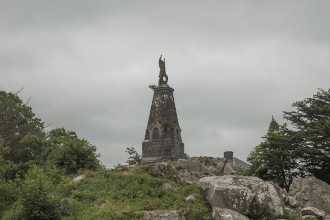
In 1898, the centenary year of the battle, a statue of Teeling is erected in Carricknagat. Johnnie Woods of Aughamore, Sligo, County Sligo, a far-famed reliable scaffolder, erects the spire for this monument.

(Pictured: The monument commemorating the battle)


Leave a comment

Birth of Pauline Flanagan, Stage & Television Actress

Pauline Flanagan, Irish-born actress who has a long career on stage, is born in Sligo, County Sligo, on June 29, 1925. She is best known in the United States for her role as Annie Colleary, on the television soap opera Ryan’s Hope in 1979 and again in 1981. She later returns to the show as Sister Mary Joel.

Flanagan is born to Patrick and Elizabeth (née Mulligan) Flanagan, who are strongly nationalist and republican, and support the Republican Anti-Treaty during the Irish Civil War, both serving as Lord Mayor of Sligo. Her paternal family, originally from County Fermanagh, are driven out by anti‐Catholic pogroms and resettle in Sligo, where her parents manage a retail business. She is good friends with fellow Irish actresses Joan O’Hara and Paddy Croft. She spends much of the early 1950s touring with Anew McMaster, where she meets Harold Pinter at the Gate’s Pinter Festival.

Flanagan appears in many Broadway plays, making her debut in 1957 in the first Main Stem production of Dylan Thomas‘s Under Milk Wood. She stars as Mrs. Grose in the 1976 Broadway revival of the William Archibald play The Innocents. She also appears on Broadway in Brian Friel‘s play Philadelphia, Here I Come! in 1994.

Flanagan also acts in Off-Broadway productions on several occasions with the Irish Repertory Theatre, including Harold Prince‘s Grandchild of Kings (1992), Seán O’Casey‘s Juno and the Paycock (1995). and Hugh Leonard‘s A Life (2001). For her performance in Grandchild of Kings, she receives the 1992 Outer Critics Circle Awards nomination for Best Actress. Other Off-Broadway work includes Yeats! A Celebration by William Butler Yeats.

Flanagan appears as Myra White in Hugh Leonard’s play Summer (1974), both in the original production at the Olney Theatre Center in Olney, Maryland, and at the Olympia Theatre in the Dublin Theatre Festival.

Flanagan is nominated for the 1982 Drama Desk Award for Outstanding Featured Actress in a Play for Medea in which she performs on Broadway in 1982.

In 1997, Flanagan wins the Barclays Theatre Awards for Best Actress in a Supporting Role for her role in Jennifer Johnston‘s The Desert Lullaby: A Play in Two Acts, at the Lyric Theatre, Belfast. The Barclays Theatre Awards are for outstanding regional theatre (including opera and dance) in the United Kingdom.

In 2001, Flanagan wins a Laurence Olivier Award for Best Actress in a Supporting Role, for her performance in Frank McGuinness‘s Dolly West’s Kitchen at The Old Vic in Waterloo, London.

A resident of Glen Rock, New Jersey, Flanagan dies at The Valley Hospital in Ridgewood, New Jersey, on June 28, 2003, one day before her 78th birthday, of heart failure following a battle with lung cancer. She is survived by her husband, George Vogel (whom she married in 1958), a sister, Maura McNally, and her daughters Melissa Brown and Jane Holtzen.


Leave a comment

Death of Alexander McCabe, Teacher, Revolutionary & Politician

Alexander McCabe (Irish: Alasdar Mac Cába), teacher, revolutionary, Sinn Féin politician, and founder of the Educational Building Society (EBS), dies in Dublin on May 31, 1972.

McCabe is born in Keash, County Sligo, on June 5, 1886. He is educated at Summerhill College, Sligo. He wins a scholarship to St. Patrick’s College of Education, Drumcondra, Dublin, and later obtains a diploma from University College Dublin (UCD). He is appointed headmaster of Drumnagranchy national school, County Sligo, in 1907. He joins the Irish Republican Brotherhood (IRB) in 1913.

McCabe is elected as a Sinn Féin MP for the South Sligo constituency at the 1918 Irish general election. In January 1919, Sinn Féin MPs refuse to recognise the Parliament of the United Kingdom and instead assemble at the Mansion House in Dublin as a revolutionary parliament called Dáil Éireann, though McCabe does not attend as he is in prison in Lincoln Gaol.

At the 1921 Irish elections, McCabe is re-elected for Sligo–Mayo East. He supports the Anglo-Irish Treaty and votes in favour of it. He is again re-elected for Sligo–Mayo East at the 1922 Irish general election, this time as pro-Treaty Sinn Féin Teachta Dála (TD). During the Treaty debate, he asserts that the counties of Ulster which comprise “Northern Ireland” can never be incorporated into an Irish Republic while the British Empire is what it is.

At the 1923 Irish general election, McCabe is elected as a Cumann na nGaedheal TD for Leitrim–Sligo. He resigns from Cumann na nGaedheal in 1924 because of dissatisfaction with government attitude to certain army officers and joins the National Party led by Joseph McGrath.

McCabe resigns his Dáil seat on October 30, 1924, along with several other TDs, and the resulting by-election on March 11, 1925, is won by the Cumann na nGaedheal candidate Martin Roddy. He does not stand for public office again and returns to his post as a schoolteacher.

In the 1930s McCabe is involved with the short-lived but widely followed Irish Christian Front (ICF), serving as the organisation’s secretary and announcing its creation to the public on August 22, 1936. He is also a member of the Blueshirts during this period and later the Irish Friends of Germany (later known as the “National Club”) during World War II, a would-be Nazi Collaborator group in the event Germany were to invade Ireland. He chairs their meetings, denies the group is a fifth column and expresses the belief that a German victory will lead to a United Ireland. He is interned in 1940–41 because of his pro-German sympathies, which he claims resulted from the desire to “see the very lifeblood squeezed out of England.”

In 1935, McCabe co-founds the Educational Building Society with Thomas J. O’Connell. He retires from teaching in the 1940s and becomes the full-time managing director of the EBS.

McCabe dies in Dublin on May 31, 1972, leaving his wife, son, and three daughters. There is a bronze bust of him in the headquarters of the Educational Building Society, Westmoreland Street, Dublin.


Leave a comment

Albert Reynolds Succeeds Charles Haughey as Taoiseach

Albert Reynolds, Fianna Fáil politician and businessman, succeeds Charles Haughey as Taoiseach on February 11, 1992, following Haughey’s retirement as leader of Fianna Fáil.

Reynolds is born in Rooskey, County Roscommon on November 3, 1932. He serves as a Teachta Dála (TD) from 1977 to 2002, Minister for Posts and Telegraphs from 1979 to 1981, Minister for Transport from 1980 to 1981, Minister for Industry and Energy from March 1982 to December 1982, Minister for Industry and Commerce from 1987 to 1988, Minister for Finance from 1988 to 1991, Leader of Fianna Fáil from 1992 to 1994 and as Taoiseach from 1992 to 1994.

Reynolds is educated at Summerhill College in Sligo, County Sligo and works for a state transport company before succeeding at a variety of entrepreneurial ventures, including promoting dances and owning ballrooms, a pet-food factory, and newspapers. In 1974 he is elected to the Longford County Council as a member of Fianna Fáil. He enters Dáil Éireann, lower house of the Oireachtas, the Irish parliament, in 1977 as a member representing the Longford-Westmeath parliamentary constituency and becomes Minister for Posts and Telegraphs in Haughey’s Fianna Fáil government (1979–81). He is subsequently Minister of Industry and Commerce (1987–88) and Minister for Finance (1988–91) in Haughey’s third and fourth governments. He breaks with Haughey in December 1991. On January 30, 1992, Haughey retires as leader of Fianna Fáil at a parliamentary party meeting. Reynolds easily defeats his rivals Mary O’Rourke and Michael Woods in the party leadership election and succeeds Haughey as Taoiseach on February 11, 1992.

The Fianna Fáil–Progressive Democrats coalition that Reynolds inherits breaks up in November 1992 but, after the general election later that month, he surprises many observers by forming a new coalition government with the Labour Party in January 1993. He plays a significant part in bringing about a ceasefire between the Irish Republican Army (IRA) and unionist paramilitary groups in Northern Ireland in 1994, but he is less effective in maintaining his governing coalition. When this government founders in November 1994, he resigns as Taoiseach and as leader of Fianna Fáil, though he remains acting prime minister until a new government is formed the following month. He unsuccessfully seeks his party’s nomination as a candidate for the presidency of Ireland in 1997. He retires from public life in 2002.

In December 2013, it is revealed by his son that Reynolds is in the final stages of Alzheimer’s disease. Reynolds dies on August 21, 2014. The last politician to visit him is former British Prime Minister John Major. His funeral is held at Church of the Sacred Heart, in Donnybrook on August 25, 2014. Attendees include President Michael D. Higgins, Taoiseach Enda Kenny, former British Prime Minister John Major, former Social Democratic and Labour Party (SDLP) leader and Nobel Prize winner John Hume, Sinn Féin President Gerry Adams, Secretary of State for Northern Ireland Theresa Villiers, former President of Ireland Mary McAleese, former Taoiseach Liam Cosgrave, Archbishop of Dublin Diarmuid Martin and the Lord Mayor of Dublin Christy Burke. An unexpected visitor from overseas is the frail but vigorous Jean Kennedy Smith, former United States Ambassador to Ireland, who is the last surviving sibling of John Fitzgerald Kennedy. Reynolds is buried at Shanganagh Cemetery with full military honours.