Lyons is a lecturer in history at the University of Hull and then at Trinity College Dublin. He becomes the founding Professor of Modern History at the University of Kent in 1964, serving also as Master of Eliot College from 1969 to 1972.
Lyons principal works include Ireland Since the Famine, the standard university textbook for Irish history from the mid-19th to late-20th century, which The Times calls “the definitive work of modern Irish history” and a biography of Charles Stewart Parnell.
Lyons is critical of Cecil Woodham-Smith‘s much-acclaimed history of the Great Irish Famine and has generally been considered among the “revisionist” historians who reconsiders the role of the British state in events like the Famine.
Lyons marries Jennifer Ann Stuart McAlister in 1954, and has two sons, one of whom, Nicholas, is a former Lord Mayor of London.
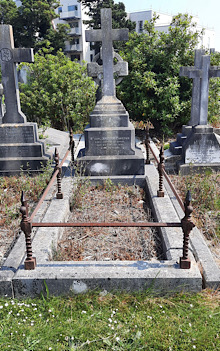
On September 15, 1983, Lyons is nominated, unopposed, as chancellor of Queen’s University Belfast (QUB). But less than a week later he is dead, succumbing in Dublin on September 21 to acute pancreatitis, which had struck him in mid-August. He had begun to write the first draft of his W. B. Yeats biography (having accumulated a great archive of material) only a few weeks before. His ashes are buried beside Trinity College chapel.
Christian is considered one of the best Irish lawyers of his time, but as a judge, he regularly courts controversy. His bitter and sarcastic temper and open contempt for most of his colleagues leads to frequent clashes both in Court and in the Press. Though he is rebuked for misconduct several times by the House of Commons, no serious thought is given to removing him from office.
Christian’s early years at the Bar are not successful, and he admits to being near to despair at times about his prospects. His practice lays in the Court of Chancery, with procedures that are extremely complex and he finds at first almost unintelligible. Gradually he masters the intricacies of Chancery practice becoming a leader of the Bar, and took silk in 1841. It is said that his expertise in Chancery procedures leave even the Lord Chancellor himself quite unable to argue with him.
Christian is appointed Law Adviser to the Lord Lieutenant of Ireland, an influential post which involves assisting the Attorney-General and Solicitor-General in advising the Crown in 1850, but resigns after only a few months on the grounds that it interferes with his private practice. He is appointed Third Sergeant later the same year but resigns in 1855, allegedly because he is disappointed at not receiving further promotion. Promotion does in time come his way. He is appointed Solicitor-General the following year and a judge of the Court of Common Pleas in 1858. He is unusual in having no strong political loyalty; it is said that his political allegiance is known only to himself.
As a judge of the Court of Common Pleas, Christian gets on well with his colleagues, and any dissenting judgements he writes are short and courteous. It is after his appointment as a Lord Justice of Appeal in Chancery in 1867 that his behaviour begins to attract unfavourable comment, as he goes out of his way to court controversy on a wide variety of topics.
His criticisms of legal rulings and arguments are invariably delivered in the form of a personal attack. Such exchanges are frequently continued through the letters page of The Times. Conservative in politics, he objects to the appointment of Thomas O’Hagan as Lord Chancellor in December 1868, dismissing him as a liberal “political necessity.” He goes to great lengths to point out legal flaws in the Landlord and Tenant (Ireland) Act 187, to the great annoyance of the Prime Minister, William Ewart Gladstone. His final public diatribe comes in 1877 when he launches an attack on the quality of law reporting, dismissing the contents of the Irish Reports as “a mass of utterly worthless rubbish.” He is vilified in the legal press and is the subject of cartoons in Dublin satirical journals. Pleading deafness, he retires in December 1878.
Smyllie is born on March 20, 1893, at Hill Street, Shettleston, Glasgow, Scotland. He is the eldest of four sons and one daughter of Robert Smyllie, a Presbyterian printer originally from Scotland who is working in Sligo, County Sligo, at the time, and Elisabeth Follis, originally from Cork, County Cork. His father marries in Sligo on July 20, 1892, and later becomes proprietor and editor of the unionistSligo Times. Smyllie attends Sligo Grammar School in 1906 and enrolls at Trinity College Dublin (TCD) in 1911.
After two years at TCD, Smyllie’s desire for adventure leads him to leave university in 1913. Working as a vacation tutor to an American boy in Germany at the start of World War I, he is detained in Ruhleben internment camp, near Berlin, during the war. As an internee, he is involved in drama productions with other internees. Following his release at the end of the war, he witnesses the German revolution of 1918–1919. During this period, he encounters revolutionary sailors from Kiel who temporarily make him a representative of the Workers’ and Soldiers’ Council, and he observes key events including the looting of the Kaiser’s Palace and violent clashes between rival factions in Berlin. It is also during this period that he secures a personal interview with David Lloyd George at the Paris Convention of 1919. This helps Smyllie gain a permanent position with TheIrish Times in 1920, where he quickly earns the confidence of editor John Healy. Together, they take part in secret but unsuccessful attempts to resolve the Irish War of Independence.
Smyllie contributes to the Irishman’s Diary column of the paper from 1927. In 1927, he publishes an exclusive report outlining a draft government including both Labour Party and Fianna FáilTDs, signaling the volatile politics of the early state years.
Smyllie’s knowledge of languages (particularly the German he had learned during his internment) led to numerous foreign assignments. His reports on the rise of National Socialism in 1930s Germany are notably prescient and instill in him a lasting antipathy towards the movement.
When Healy dies in 1934, Smyllie becomes editor of TheIrish Times and also takes on the role of Irish correspondent for The Times (London), a position that brings significant additional income. Under Healy’s leadership, The Irish Times shifted from representing the Anglo-Irish ascendancy to becoming an organ of liberal, southern unionism, and eventually becomes a critical legitimising force in the Irish Free State. Smyllie enthusiastically supports this change. He establishes a non-partisan profile and a modern Irish character for the erstwhile ascendancy paper. For example, he drops “Kingstown Harbour” for “Dún Laoghaire.” He also introduces the paper’s first-ever Irish-language columnist. He is assisted by Alec Newman and Lionel Fleming, recruits Patrick Campbell and enlists Flann O’Brien to write his thrice-weekly column “Cruiskeen Lawn” as Myles na gCopaleen. As editor, he introduces a more Bohemian and informal style, establishing a semi-permanent salon in Fleet Street’s Palace Bar. This becomes a hub for journalists and literary figures and a source of material for his weekly column, Nichevo.
One of Smyllie’s early political challenges as editor concerns the Spanish Civil War. At a time when Irish Catholic opinion is strongly pro-Franco, he ensures TheIrish Times coverage is balanced and fair, though advertiser pressure eventually forces the withdrawal of the paper’s young reporter, Lionel Fleming, from the conflict. His awareness of the looming European crisis earns him the Order of the White Lion of Czechoslovakia in 1939. However, during World War II, he clashes with Ireland’s censorship authorities, especially under Minister Frank Aiken. He challenges their views both publicly and privately, though his relationship with the editor of the Irish Independent, Frank Geary, is cold, reducing the effectiveness of their joint opposition to censorship.
During the 1943 Irish general election, Smyllie uses the paper to promote the idea of a national government that could represent Ireland with authority in the postwar world. He praises Fine Gael’s proposal for such a government and criticises Éamon de Valera for dismissing it as unrealistic. This leads to a public exchange between de Valera and Smyllie, with the latter defending The Irish Times’s role as a constructive voice for Ireland’s future rather than a partisan interest.
Following the war, Smyllie’s editorial stance shifts toward defending Ireland’s neutrality and diplomatic position. When Winston Churchill accuses de Valera of fraternising with Axis powers, Smyllie counters by revealing Ireland’s covert collaboration with the Allies, such as military and intelligence cooperation, despite official neutrality. In the same period, he continues to oppose censorship, particularly the frequent banning of Irish writers by the Censorship of Publications Board. This opposition features prominently in a controversy on TheIrish Times letters page in 1950, later published as the liberal ethic. The paper also adopts a critical stance toward the Catholic Church, notably during the 1951 resignation of Minister for HealthNoël Browne amid opposition from bishops and doctors to a national Mother and Child Scheme. His editorials suggest the Catholic Church is effectively the government of Ireland, though he maintains a cordial relationship with Archbishop of Dublin, John Charles McQuaid, who invites him annually for dinner.
Smyllie is also wary of American foreign policy, showing hostility particularly during the Korean War. American diplomats in Dublin allege that Smyllie is “pro-communist“. Despite growing readership among an educated Catholic middle class, TheIrish Times’s circulation in 1950 remains under 50,000, far below the Irish Independent and the Fianna Fáil-aligned The Irish Press.
In later years, Smyllie’s health declines, prompting a quieter lifestyle. He moves from his large house in Pembroke Park, Dublin, to Delgany, County Wicklow. As he does not drive, he becomes less present in the newspaper office in D’Olier Street, contributing to a decline in the paper’s dynamism. His health deteriorates further, resulting in frequent absences from his editorial duties, though he retains his position despite management attempts to limit his authority, especially over finances. He dies of heart failure on September 11, 1954.
In 1925, Smyllie marries Kathlyn Reid, eldest daughter of a County Meath landowner. They have no children.
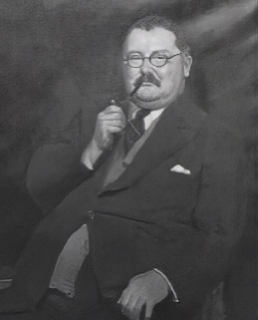
Smyllie is an eccentric: he hits his tee shots with a nine iron, speaks in a curious mix of Latin phrases and everyday Dublin slang, and weighs 22 stone (308 lbs.; 140 kg) yet still cycles to work wearing a green sombrero.
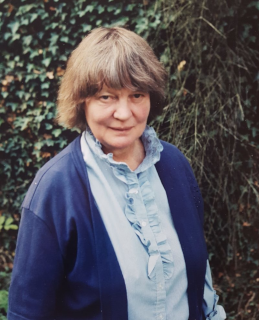
Murdoch is the daughter of Irene Alice (née Richardson) and Wills John Hughes Murdoch. Her father, a civil servant, comes from a mainly Presbyterian sheep farming family from Hillhall, County Down. In 1915, he enlists as a soldier in King Edward’s Horse and serves in France during World War I before being commissioned as a second lieutenant. Her mother trains as a singer before Iris is born and is from a middle-class Church of Ireland family in Dublin. Her parents first meet in Dublin when her father is on leave and are married in 1918. Iris is the couple’s only child. When she is a few weeks old the family moves to London, where her father had joined the Ministry of Health as a second-class clerk. She is a second cousin of the Irish mathematician Brian Murdoch.
From 1947 to 1948 Murdoch studies philosophy as a postgraduate at Newnham College, Cambridge. She meets Ludwig Wittgenstein at Cambridge but does not hear him lecture, as he had left his Trinity College professorship before she arrives. In 1948 she becomes a fellow of St. Anne’s College, Oxford, where she teaches philosophy until 1963. From 1963 to 1967 she teaches one day a week in the General Studies department at the Royal College of Art.
In 1956 Murdoch marries John Bayley, a literary critic, novelist, and from 1974 to 1992 Warton Professor of English at Oxford University, whom she had met in Oxford in 1954. The unusual romantic partnership lasts more than forty years until Murdoch’s death. Bayley thinks that sex is “inescapably ridiculous.” She in contrast has “multiple affairs with both men and women which, on discomposing occasions, Bayley witnesses for himself.”
Murdoch’s first novel, Under the Net, is published in 1954 and is selected in 1998 as one of Modern Library’s 100 best English-language novels of the 20th century. She had previously published essays on philosophy, and the first monograph about Jean-Paul Sartre published in English. She goes on to produce 25 more novels and additional works of philosophy, as well as poetry and drama.
Murdoch’s last novel, Jackson’s Dilemma, is published in 1995. She is diagnosed with Alzheimer’s disease in 1997 and dies on February 8, 1999, in Oxford, England. There is a bench dedicated to her in the grounds of Lady Margaret Hall, Oxford, where she enjoyed walking.
A 1966 review by Howard Klein in The New York Times of Greevy’s recording of Handel arias states: “The voice has the firm, compact resonance of a true contralto. She has endless breath and can move her voice with agility and precision.”
Greevy has a special affinity with Mahler, in particular his orchestral song cycles. In 1966, she performs Kindertotenlieder in London with the then RTÉ National Symphony Orchestra. The Times praises the 26-year-old Greevy’s “full, glowing voice, rich and firm at the bottom, radiant at the top, and gloriously expressive phrasing.” Later, in the 1990s, she performs all Mahler’s vocal works with orchestra over a four-year period in the Teatro Colón, Buenos Aires, Argentina.
Greevy chooses to live in her native Dublin throughout her career rather than be based in one of the world’s major music centres. She maintains confidently that “if you’re good enough you can live where you like.” Nevertheless, this decision undoubtedly curtails her opportunities in the recording studio and on the concert stage.
Greevy dies at the age of 68 on September 26, 2008, following a short illness. She is married to Peter Tattan, who predeceases her in 1983. They have one son, Hugh.
Fagan is born in Belfast on May 18, 1873, the eldest of the five children of Sir James Fagan, a surgeon at the Belfast Royal Hospital and an inspector of Irish reformatories, and Mary Catherine Fagan (née Hughes). He attends Clongowes Wood College near Clane, County Kildare and then moves to England. Initially interested in a career in the church, he begins studying law at Trinity College, Oxford in 1892 but leaves in 1893 without a degree. He works for a time in the Indian Civil Service but abandons this career for the stage.
Fagan begins his career as an actor with the company of Sir Frank Benson for two years, then joining, from 1895 to 1899, the company of Herbert Beerbohm Tree at Her Majesty’s Theatre. There he appears in Katherine and Petruchio, A Man’s Shadow, Julius Caesar, The Musketeers and Carnac Sahib. He starts writing plays in 1899, with The Rebels, for the time forsaking acting. In 1913, he returns to the stage touring as the Rt. Hon. Denzil Trevena in his own play, The Earth. He next writes The Fourth of August (1914) and Doctor O’Toole (1917). In 1917 he produces his first play, his own adaptation of the Eugène Brieux play Damaged Goods at St. Martin’s Theatre. He next produces The Wonder Tales and The Little Brother at the Ambassadors Theatre in London.
Fagan is persuaded by Jane Ellis, the actress who with Alfred Ballard founds the Oxford Playhouse “Red Barn” in 1923, to be its first manager. His first production at the Oxford Playhouse is a restaging of Shaw’s Heartbreak House and numbered Shaw among the audience. He produces The Cherry Orchard, at various theatres, to favourable reviews, popularising Anton Chekhov in Britain. From November 16, 1925, with Dennis Eadie, he presents Juno and the Paycock at the Royalty Theatre, thus bringing Seán O’Casey to the attention of London’s theatre-going public. O’Casey’s The Ploughand the Stars follows the next year.
Fagan receives little support from the University of Oxford or the play-going public and resigns in 1929. His successor is Stanford Holme, who broadens its appeal and, despite the straitened times, makes it financially viable. In 1929, he is a director of the Festival Theatre, Cambridge, where his friend Terence Gray is director. He also produces many works for the Irish Players.
Beginning in the 1920s, several of Fagan’s plays are adapted for film. He moves to Hollywood in 1929 for the filming by Paramount Pictures of his play The Wheel as The Wheel of Life. Other film work includes his co-adaptation of the screenplay for the 1932 film Smilin’ Through, and he co-writes Paramount’s Forgotten Commandments the same year. His play Bella Donna is filmed four times, including posthumously in 1946, and a 1936 film, The Improper Duchess is based on his 1931 play of the same name.
James Bernard Fagan dies in Hollywood, California, on February 17, 1933, at the age of 59 of a heart attack following a bout of influenza.
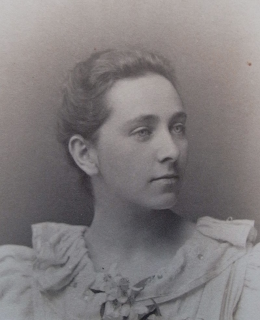
Stoney is born into an old-established Anglo-Irish scientific family at 40 Wellington Road, Ballsbridge, Dublin, on January 6, 1869. The daughter of George Johnstone Stoney, FRS, an eminent physicist who coins the term “electron” in 1891 as the “fundamental unit quantity of electricity,” and his wife and cousin, Margaret Sophia Stoney. One of her two brothers, George Gerald, is an engineer and a Fellow of the Royal Society (FRS). One of her two sisters, Florence Stoney, is a radiologist and receives an OBE. Her cousin is the Dublin-based physicist George Francis FitzGerald FRS (1851–1901), and her uncle Bindon Blood Stoney FRS is Engineer of Dublin Port, renowned for building a number of the main Dublin bridges and developing the Quayside.
Stoney demonstrates considerable mathematical talent and gains a scholarship at Newnham College, Cambridge, where she achieves a First in the Part I Tripos examination in 1893. However, she is not awarded a University of Cambridge degree as women are excluded from graduation until 1948. During her time at Newnham, she is in charge of the College telescope. She is later awarded a BA and an MA from Trinity College Dublin, after they accept women in 1904.
Following the 1876 Medical Act, it is illegal for academic institutions to prevent access to medical education based on gender. The first medical school for women in Britain is established in 1874 by Dr. Sophia Jex-Blake in anticipation of this law. The London School of Medicine for Women quickly becomes part of the University of London, with clinical teaching at the Royal Free Hospital. Stoney’s sister Florence is a student at the school, graduates in medicine with honours in 1895 (MB BS) and obtains her MD in 1898. Meanwhile, Stoney gains an appointment as a physics lecturer at the school in 1899. Her first tasks are to set up a physics laboratory and design the physics course. The laboratory is planned for 20 students, and the course content is pure physics, as required by university regulations. It includes mechanics, magnetism, electricity, optics, sound, heat and energy. In her obituary in The Lancet, an ex-student of hers notes: “Her lectures on physics mostly developed into informal talks, during which Miss Stoney, usually in a blue pinafore, scratched on a blackboard with coloured chalks, turning anxiously at intervals to ask ‘Have you taken my point?’. She was perhaps too good a mathematician … to understand the difficulties of the average medical student, but experience had taught her how distressing these could be”.
In 1901, the Royal Free Hospital appoints Florence into a new part-time position of medical electrician. The following April, the two sisters open a new x-ray service in the electrical department. During their time at the Royal Free Hospital, the two sisters actively support the women’s suffrage movement, though oppose the direct violent action with which it is later associated.
During her time at the school, Stoney also plays a central role in the British Federation of University Women (BFUW). She is elected treasurer, in her absence, at the first executive meeting on October 9, 1909, a position she holds until the end of May 1915. She becomes increasingly engaged with the political lobbying of the Federation. At the executive meeting on October 19, 1912, she proposes the names of two members for a subcommittee to secure the passing into law of a bill to enable women to become barristers, solicitors or parliamentary agents. The legislation is eventually enacted after the war within the Sex Disqualification (Removal) Act 1919.
Stoney resigns her post at the school in March 1915 and it is recorded that “with due regret and most unwillingly a change is desirable in the physics lectureship.” She is offered £300 on tendering her resignation.
Both Stoney and Florence offer their services to the British Red Cross at the War Office in London, to provide a radiological service to support the troops in Europe, on the day Britain declares war. Their offer is refused, because they are women. Florence sets up her own unit with the Women’s Imperial Service League and spends the next 6 months in Europe. Stoney organises supplies from London where she also serves on the League’s committee. Florence returns to London at the time Stoney resigns from the London School of Medicine for Women. She contacts the Scottish Women’s Hospitals (SWH), an organisation formed in 1914 to give medical support in the field of battle and financed by the women’s suffrage movement. The organisation has gained agreement to set up a new 250-bed tented hospital at Domaine de Chanteloup, Sainte-Savine, near Troyes (France), funded by the Cambridge women’s colleges of Girton and Newnham and it becomes her role to plan and operate the x-ray facilities. She establishes stereoscopy to localise bullets and shrapnel and introduces the use of x-rays in the diagnosis of gas gangrene, interstitial gas being a mandate for immediate amputation to give any chance of survival.
The hospital is near the front line and, in her own words, by September 1915, “the town had been evacuated, the station had been mined, and we heard the heavy guns ever going at nighttime.” The unit is entirely female, except for two part-time male drivers, and her technical assistant, Mr. Mallett.
They are assigned to the Corps Expéditionnaire d’Orient and ordered to move to Serbia. After boarding the steamship Mossoul in Marseille, they reach Salonika (known as Thessaloniki in modern Greece) on November 3, where they take the night train north to Ghevgheli (now Gevgelija in modern North Macedonia), on the Serbian side of the Greek border. They set up a hospital in an unused silk factory where they treat 100 patients with injuries ranging from frostbite to severe lung and head wounds. Following defeats at the hands of Bulgarian forces, Stoney and her staff retreat to Salonika by December 6, 1916. Eleven days later, they have re-established the hospital on a drained low swamp by the sea, and by New Year’s Day 1917 she has the lights on and the x-rays working. Despite the lack of equipment and resources, she establishes an electrotherapy department and various equipments for the muscular rehabilitation of the soldiers in their care. She also assists with problems on two British hospital ships, on which the x-ray systems have been damaged during a storm and gives support to the SWH unit in Ostrovo (now Arnissa on Lake Vegoritida formerly lake Ostrovo in Northern Greece), which arrives during September 1916. She has a break for sick leave in December 1917 and returns the following summer. She applies for an appointment as an army camp radiologist in Salonika, but her demand is blocked by the War Office.
In October 1917, Stoney returns to France to lead the x-ray departments at the SWH hospitals of Royaumont and Villers-Cotterêts. In March 1918, she has to supervise a camp closure and retreat for the third time, when Villers-Cotterêts is overrun by the German troops. During the final months of the war the fighting intensifies and there is a steep increase in workload. In the month of June alone the x-ray workload peaks at over 1,300, partly because of an increased use of fluoroscopy.
On returning to England, Stoney takes a post as lecturer in physics in the Household and Social Science department at King’s College for Women which she holds until retirement in 1925. After leaving King’s she moves to Bournemouth, where she lives with her sister Florence, who is suffering from spinal cancer, dying in 1932.
During her retirement, Stoney resumes her work with the BFUW for which she had acted as the first treasurer before the war. She becomes one of the earliest (and oldest) members of the Women’s Engineering Society and plays an active part in the organisation until shortly before her death. She travels widely and, in 1934, she speaks to the Australian Federation of University Women on the subject of women in engineering, highlighting the contribution made by women workers during the war. In 1936, she establishes the Johnstone and Florence Stoney Studentship in the BFUW, for “research in biological, geological, meteorological or radiological science undertaken preferably in Australia, New Zealand or South Africa.” The studentship is now administered by Newnham College, Cambridge, and supports clinical medical students going abroad for their elective period. The declaration of Trust is dated February 11, 1942 and the Johnstone And Florence Stoney Studentship Fund Charity is registered on March 25, 1976.
Stoney dies on June 25, 1938, at age 69, and obituaries are printed in both the scientific and medical press – Nature, The Lancet, The Woman Engineer and national newspapers in England, The Times and Australia.
Stoney is remembered for her considerable bravery and resourcefulness in the face of extreme danger, and her imagination in contributing to clinical care under the most difficult conditions of war. As a strong advocate of education for women, she enables young graduate women to spend time on research overseas and another to enable physicists to enter medical school thanks to the fund she created. Through her work and engagements, she is remembered as a pioneer of medical physics.
(Pictured: Edith Anne Stoney during her time in Cambridge in the early 1890s)
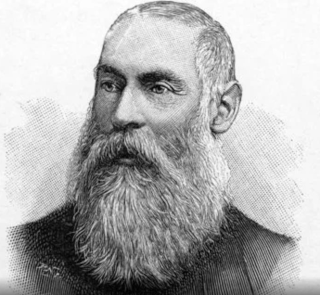
Boycott is born on March 12, 1832, at Burgh St. Peter, Norfolk, England, eldest surviving son of William Boycatt (1798–1877), rector of Wheatacrebury, Norfolk, and Elizabeth Georgiana Boycatt (née Beevor). The family name is changed to Boycott by his father in 1862. Educated at a boarding school in Blackheath, London, and the Royal Military Academy, Woolwich, he is commissioned ensign in the 39th (Dorsetshire) Regiment of Foot on February 15, 1850, and serves briefly in Ireland. He sells his commission on December 17, 1852, having attained the rank of captain, marries Annie Dunne of Queen’s County (County Laois) in 1852, and leases a farm in south County Tipperary.
In 1855, Boycott leaves for Achill Island, County Mayo, where he sub-leases 2,000 acres and acts as land agent for a friend, Murray McGregor Blacker, a local magistrate. He settles initially near Keem Strand but after some years builds a fine house near Dooagh overlooking Clew Bay. He clashes with local landowners and agents and is regularly involved in litigation. Twice summonsed unsuccessfully for assault (1856, 1859), he is involved (1859–60) in a bitter dispute with a land agent over salvage rights for shipwrecks, one of the few lucrative activities on the island. Achill’s remoteness and the difficulties of wresting a living from its harsh environment adds a roughness to the island’s social relations and probably aggravates Boycott’s tendency to high-handedness.
In 1873, Boycott inherits money and moves to mainland County Mayo, leasing Lough Mask House near Ballinrobe and its surrounding 300 acres. He also becomes agent for John Crichton, 3rd Earl Erne‘s neighbouring estate of 1,500 acres, home to thirty-eight tenant farmers paying rents of £500 a year, of which he receives 10 per cent as agent. He also serves as a magistrate and is unpopular because of his brusque and authoritarian manner, and for denying locals such traditional indulgences as collecting wood from the Lough Mask estate or taking short cuts across his farm. In April 1879, he purchases the 95-acre Kildarra estate between Claremorris and Ballinlough and an adjoining wood for £1,125, taking out a mortgage of £600 which stretches his finances.
Boycott is no brutal tyrant, but he is aloof, stubborn, and pugnacious, and believes that the Irish peasantry is prone to idleness and require firm handling. Such qualities and beliefs are unremarkable enough, but in the peculiar circumstances of the land war in County Mayo, they are enough to catapult this rather ordinary man to worldwide notoriety.
In autumn 1879, concerted land agitation begins in County Mayo, and on August 1, 1879, Boycott receives a notice threatening his life unless he reduces rents. He ignores it and evicts three tenants, which embitter relations on the estate. Lough Mask House is placed under Royal Irish Constabulary (RIC) surveillance beginning in November 1879. In August 1880, his farm labourers, encouraged by the Irish National Land League, strike successfully for a wage increase from 7s. –11s. to 9s. –15s. Since the harvest is poor, Lord Erne allows a 10 per cent rent abatement. But in September 1880, when Boycott demands the rent, most tenants seek a 25 per cent abatement. Lord Erne refuses, and on September 22, Boycott attempts to serve processes against eleven defaulters. Servers and police are attacked by an angry crowd of local women and forced to take refuge in Boycott’s house. Almost immediately he is subjected to the ostracism against land grabbers advocated by Charles Stewart Parnell in his September 19 speech at Ennis, County Clare. This weapon proves as devastating against an English land agent as an Irish land-grabber. His servants leave him, labourers refuse to work his land, his walls and fences are destroyed, and local traders refuse to do business with him. He is jeered on the roads, is hissed and hustled by hostile crowds in Ballinrobe, and requires police protection.
The campaign against Boycott is largely orchestrated by Fr. John O’Malley, a local parish priest and president of the Neale branch of the Irish National Land League. It is probably O’Malley who coins the term “boycott” as an alternative to the word “ostracise,” which he believes would mean little to the local peasantry. Propagated by O’Malley’s friend, the American journalist, James Redpath, it is adopted by advocates and opponents alike.
On October 22, 1880, before his story breaks on the world, Boycott gives evidence of his treatment to the Bessborough Commission in Galway. He publicises his plight in an October 18, 1880, letter to The Times, and in a long interview with The Daily News on October 24, which is reprinted in Irish unionist newspapers and arouses considerable sympathy for him. Although he rarely uses his former military rank, he becomes universally known as “Captain Boycott,” since it suits both sides to portray him as someone of social standing. Letters of support appear in unionist papers and the Belfast News Letter sets up a “Boycott Relief Fund” and proposes a relief expedition, portraying Boycott as a peaceable English gentleman unjustly subjected to intimidation.
The prospect of hundreds of armed loyalists descending on County Mayo alarms the government, who announced on November 8 that they will provide protection for a small group of labourers to harvest Boycott’s crops. On November 12, fifty-seven loyalists from counties Cavan and Monaghan, “the Boycott Relief Expedition,” arrive at Lough Mask with an escort of almost a thousand troops. After harvesting Boycott’s crops, they leave on November 26. The entire operation costs £10,000 – about thirty times the value of the crops. Although the expedition passes off largely without incident, it focuses international media attention on the affair and establishes the word “boycott” in English and several other languages as a standard term for communal ostracism.
On November 27, Boycott and his wife go to the Hammam hotel, Dublin, where he receives death threats. On December 1, he travels to London and then to the United States (March–May 1881) to see Murray McGregor Blacker, the friend from his time on Achill Island who has since settled in Virginia. In an interview with the New York Herald, he criticises the liberal government’s weakness toward the Land League and claims that the Irish land question is an intractable problem that can only be solved in the long term by emigration and industrialisation.
Boycott returns to Lough Mask on September 19, 1881, and at an auction in Westport is mobbed and burned in effigy. This, however, is the last outburst of hostility against him, and as the land agitation wanes so does his unpopularity. Although unsuccessful in efforts to win compensation from the government, he receives a public subscription of £2,000. He remains in County Mayo as Lord Erne’s agent until February 1886, when he obtains the post of land agent for Sir Hugh Adair in Flixton, Suffolk, but he keeps the small Kildarra estate, where he continues to holiday. On December 12, 1888, he gives evidence of his treatment to the parliamentary commission on “Parnellism and crime.”
After suffering from ill-health for some years, Boycott dies at Flixton on June 19, 1897, and is buried in the churchyard of Burgh St. Peter. A British-made film, Captain Boycott (1947), stars Cecil Parker in the title role.
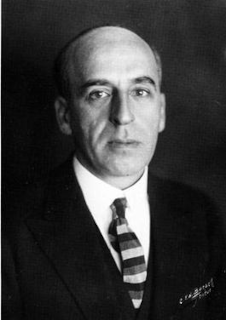
Lester is born on September 28, 1888, in Carrickfergus, County Antrim, as John Ernest Lester, the son of a Protestant grocer Robert Lester and his wife, the former Henrietta Ritchie. Although the town of Carrickfergus is strongly Unionist, he joins the Gaelic League as a youth and is won over to the cause of Irish nationalism. As a young man, he joins the Irish Republican Brotherhood (IRB). He works as a journalist for the North Down Herald and a number of other northern papers before he moves to Dublin, where he finds a job at the Freeman’s Journal. By 1919, he has risen to its news editor.
After the Irish War of Independence, a number of Lester’s friends join the new government of the Irish Free State. He is offered and accepts the position as director of publicity.
Lester marries Elizabeth Ruth Tyrrell in 1920 by whom he has three daughters.
In 1923, Lester joins Ireland’s Department of External Affairs. He is sent to Geneva in 1929 to replace Michael MacWhite as Ireland’s Permanent Delegate to the League of Nations. In 1930, he succeeds in organising Ireland’s election to the Council (or executive body) of the League of Nations for three years. He often represents Ireland at Council meetings and stands in for the Minister for External Affairs. He becomes increasingly involved in the work of the League, particularly in its attempts to bring a resolution to two wars in South America. His work brings him to the attention of the League Secretariat and begins his transformation from national to international civil servant.
When Peru and Colombia have a dispute over a town in the headwaters of the Amazon River, Lester presides over the committee that finds an equitable solution. He also presides over the less-successful committee when Bolivia and Paraguay go to war over the Gran Chaco.
In 1933, Lester is seconded to the League’s Secretariat and sent to Danzig (now Gdańsk, Poland), as the League of Nations’ High Commissioner from 1934 to 1937. The Free City of Danzig is the scene of an emerging international crisis between Nazi Germany and the international community over the issue of the Polish Corridor and the Free City’s relationship with the Third Reich. He repeatedly protests to the German government over its persecution and discrimination of Jews and warns the League of the looming disaster for Europe. He is boycotted by the representatives of the German Reich and the representatives of the Nazi Party in Danzig.
Lester returns to Geneva in 1937 to become Deputy Secretary General of the League of Nations. In 1940, he becomes Secretary General of the body, becoming the League’s leader a year after the beginning of World War II which shows that the League has failed its primary purpose. The League has only 100 employees, including guards and janitors, out of the original 700.
Lester remains in Geneva throughout the war and keeps the League’s technical and humanitarian programs in limited operation for the duration of the war. In 1946, he oversees the League’s closure and turns over the League’s assets and functions to the newly established United Nations.
Despite rumours that he would be prepared to stand for election as President of Ireland, Lester seeks no permanent office and retires to Recess, County Galway, in the west of Ireland, where he dies on June 13, 1959. In its obituary, The Times describes him as an “international conciliator and courageous friend of refugees.”
In August 2010, a room in the Gdańsk City Hall, the building that had been Lester’s residence during his stay, is renamed by Mayor Paweł Adamowicz as the Seán Lester Room.
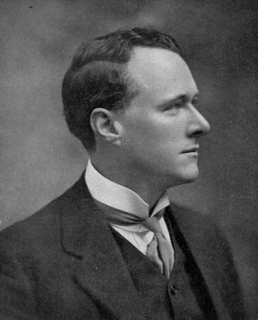
Gwynn spends his early childhood in rural County Donegal, which is to shape his later view of Ireland. He attends Brasenose College, Oxford, where, as scholar, in 1884 he is awarded first-class honours in classical moderations and in 1886 literae humaniores. During term holidays he returns to Dublin, where he meets several of the political and literary figures of the day.
After graduating, Gwynn spends ten years from 1886 tutoring as a schoolmaster, for a time in France, which creates a lifelong interest in French culture, as expressed in his Praise of France (1927). By 1896 he has developed an interest in writing, becoming a writer and journalist in London focused on English themes, until he comes into contact with the emerging Irish literary revival, when he serves as secretary of the Irish Literary Society.
This is the beginning of a long and prolific career as a writer covering a wide range of literary genres, from poetry and biographical subjects to general historical works. The eighteenth century is Gwynn’s particular specialism. He writes numerous books on travel and on the topography of his own homeland, as well as on his other interests: wine, eighteenth-century painting and fishing.
Gwynn returns to Ireland in 1904 when he enters politics. In the 1906 Galway Borough by-election he wins a seat for Galway Borough, which he represents as a member of the Irish Parliamentary Party until 1918. During this period, he is active in the Gaelic League and is one of the few Irish MPs to have close links to the Irish literary revival. Along with Joseph Maunsel Hone and George Roberts he founds the Dublin publishing house of Maunsel and Company. He is opposed to the demand for the Irish language to be a compulsory subject for matriculation. He supports the campaign which wins the establishment of a Catholic university when he serves on the Irish University Royal Commission in 1908. During the debate on the third Home Rule Bill, and at the request of his party leader John Redmond, he writes The case for Home Rule (1911) and is in charge of much of the party’s official publicity and its replies to criticism from Sinn Féin.
On the outbreak of World War I in August 1914, Gwynn strongly supports Redmond’s encouragement of Irish nationalists and the Irish National Volunteers to support the Allied and British war effort by enlisting in Irish regiments of the Irish Divisions, especially as a means to ensure the implementation of the suspended Home Rule Act at the end of an expectedly short war. Now over fifty, he enlists in January 1915 with the 7th Leinster Regiment in the 16th (Irish) Division. In July he is commissioned as a captain in the 6th (Service) Battalion, Connaught Rangers and serves with them on the Western Front at Messines, the Somme and elsewhere.
Gwynn is one of five Irish Nationalist MPs who enlist and serve in the army, the others being John L. Esmonde, Willie Redmond, William Redmond and D. D. Sheehan, as well as former MP Tom Kettle. Together with Kettle and William Redmond, he undertakes a recruitment drive for the Irish divisions, co-operating with Kettle on a collection of ballads called Battle Songs for the Irish Brigade (1915). He is made a chevalier of the Legion of Honour in July 1915. In 1916, he is appointed to the Dardanelles Commission.
Recalled to Ireland in late 1917 to participate in the Irish Convention chaired by Sir Horace Plunkett, Gwynn sides with the Redmondite faction of the Irish Party in supporting a compromise with the southern unionists in an attempt to reach consensus on a Home Rule settlement which would avoid partition. On the death of Redmond in March 1918, he takes over as leader of the moderate nationalists in the Convention. He opposes the threat of compulsory military service during the Conscription Crisis of 1918, though as a member of the Irish Recruiting Council he continues to support voluntary recruitment, encountering intense opposition led by Sinn Féin.
Gwynn forms the Irish Centre Party in 1919 and stands unsuccessfully as an Independent Nationalist for Dublin University in the 1918 Irish general election. The party merges with Plunkett’s Irish Dominion League to press for a settlement by consent on the basis of dominion status, but Gwynn subsequently breaks with Plunkett due to his willingness to accept partition as a temporary compromise. The polarities which divide Ireland during the Irish War of Independence and Irish Civil War increasingly sideline his brand of moderate cultural nationalism. Although he supports the newly emergent nation, he equally condemns some of the excesses, such as the burning of houses belonging to Free State senators.
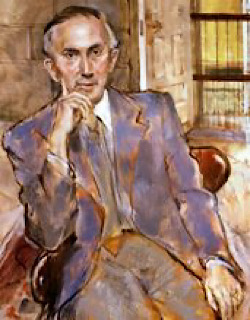
Gwynn’s personal life also becomes complicated at this stage and around 1920. He has a romantic association with married artist Grace Henry who is perhaps the best-known female artist in Ireland at the time. During this period, he and Grace travel in France and Italy and at various stages in his life she painted portraits of him including a very distinguished looking one of him in his late 60s or early 70s. Their relationship contributes significantly to the separation of Henry from her artist husband Paul Henry in 1930.
During the 1920s, Gwynn also devotes himself to writing, covering political events as Irish correspondent to The Observer and The Times. Later in his career, he writes some substantial works, and together with his son Denis Gwynn (The Life of John Redmond, 1932) does much to shape the retrospective image and self-justification of John Redmond. In the mid-1930s he authors three books with a connecting theme of fishing with the artist Roy Beddington serving as illustrator: The Happy Fisherman (1936), From River to River (1937), and Two in a Valley (1938).
Gwynn is awarded an honorary D.Litt. by the National University of Ireland in 1940, and a Litt.D. by the University of Dublin in 1945. The Irish Academy of Letters awards him the Gregory Medal in April 1950. In his literary writings he stands for a humanism and tolerance, which qualities, due to political upheavals, were relatively rare in the Ireland of his day.
Gwynn dies on June 11, 1950, at his home in Terenure, Dublin, and is buried at Tallaght Cemetery, south County Dublin.
Gwynn marries his cousin Mary Louisa (d. 1941), daughter of Rev. James Gwynn. She later converts to Catholicism. They have three sons and two daughters who are brought up in her religion, of whom Aubrey (1892–1983) becomes a Jesuit priest and professor of medieval history at University College Dublin (UCD). Their second son, Denis Rolleston (1893–1971), is professor of modern Irish history at University College Cork (UCC).
Gwynn’s brother Edward John (1868–1941) becomes provost of Trinity College and another brother Robert Malcolm becomes its senior dean. His sister Lucy Gwynn is the first woman registrar of Trinity. A third brother, Charles, has a successful career in the British Army and retires as a Major General. Younger brothers Lucius and Jack are noted cricketers.